



Abstract
Development interventions in sub-Saharan Africa often frame food and nutrition insecurity primarily as a production problem, emphasizing technical solutions such as the adoption of high-yielding seeds and the intensive use of chemical fertilizers and agrochemicals. This narrow perspective overlooks the complex, multiscalar factors that contribute to food insecurity and undernutrition in the region. Drawing on surveys and participatory engagement conducted in six communities in northern Ghana, this study explores these complexities among smallholder food producers. Findings reveal that factors such as seasonal variations in food production, limited access to storage facilities and markets, and farmers’ consumption preferences significantly influence food and nutrition security. Based on these insights, we argue that development strategies must move beyond simplistic, production-focused solutions and address the broader set of interconnected factors that shape food and nutrition security in northern Ghana. This research contributes to the growing body of scholarship on food systems by demonstrating how diverse factors across scales drive food insecurity and undernutrition in sub-Saharan Africa. The study also offers important implications for policy interventions aimed at improving food and nutrition security in the region.
Introduction
Across the globe, many families face challenges in securing reliable access to safe, adequate, and nutritious food, which is essential for a healthy life. Recent estimates suggest that between 638 and 720 million people—equivalent to 7.8% and 8.8% of the global population—experienced hunger in 2024 (FAO et al., 2025). Food insecurity is unevenly distributed, with some regions such as Africa and Southern Asia experiencing higher incidences of food insecurity compared to other parts of the world (World Bank, 2023; Wudil et al., 2022). In Africa, for instance, the state of food insecurity is worsening, with 20.2% of the region’s population—representing 307 million individuals—experiencing hunger in 2024 (FAO et al., 2025). Extreme poverty remains the leading cause of hunger and food insecurity in Africa, where many households lack the financial means to access sufficient and nutritious food (Armstrong, 2022; FAO et al., 2022). Other known causes of hunger across many African countries include conflicts, climate change, low agricultural productivity, and inadequate infrastructure, including limited access to transportation and storage facilities, all of which impede farmers’ access to markets, limiting their ability to sell and distribute their products (Armstrong, 2022; FAO et al., 2022; WFP, 2022).
Although Ghana has reduced the number of food-insecure people by 75% between 1990 and 2004, a recent food security assessment indicates a reversal of this trend. According to the WFP (2022), an estimated 3.6 million people, equivalent to 11.7% of Ghana’s population, are hungry. Indeed, COVID-19 contributed to a reversal of progress in combating hunger in Ghana. Nonetheless, the traditional causes of hunger in Ghana—including poverty, low food production, limited access to local markets, overreliance on the global supply chain, and ecological changes—remain unchanged (World Bank, 2023).
Hunger and food insecurity in Ghana are unevenly distributed across regions. In the north, between 20% and 40% of the population is food insecure compared to only 5%–10% in the south (WFP, 2022). Paradoxically, 80% of households in the north engage in agricultural activities, compared to 6%–50% in other parts of the country (Ministry of Food and Agriculture (MoFA), 2019). The northern part of Ghana is widely regarded as a deprived area, with high incidences of poverty, food insecurity, and undernutrition. For instance, the Upper East Region is the poorest in Ghana, with approximately 80% of the population living in extreme poverty (Ghana Statistical Service (GSS), 2014). Furthermore, the region has limited access to essential social services, including modern infrastructure, extension services, irrigation, electricity, markets, and roads, which are crucial for the development of a vibrant agricultural sector (GSS, 2014).
Development initiatives by donor organizations and the Ghanaian government have largely approached food insecurity in northern Ghana as a technical issue. This perspective emphasizes the limited adoption of high-yielding seeds, chemical fertilizers, and other agrochemicals to boost crop output. Consequently, there has been an increasing reliance on these techno-fixes in the Upper East Region to address poverty, food insecurity, and undernutrition (Nyantakyi-Frimpong, 2021; Vercillo et al., 2022). However, framing food insecurity narrowly as a technical problem overlooks the complex interplay of factors operating across multiple scales that contribute to poverty, food security, and undernutrition in northern Ghana.
This research examines the state of food and nutrition security among smallholder food producers in northern Ghana, focusing on the multiple factors operating at various scales that influence food security and undernutrition. To achieve this, the study was guided by two key questions: (a) What complex factors shape food access and availability in northern Ghana? (b) What are the dietary consumption patterns among farmers in the region? By addressing these questions, the study contributes to a growing body of scholarly work that explores the multifaceted drivers of food and nutrition security among smallholder food producers in developing countries.
The article is organized as follows. The next section reviews relevant literature on food systems and food security. We then described the case study setting in the Kassena Nankana Municipality, located in the Upper East Region of Ghana, and outlined the methods used for data collection and analysis. A presentation and discussion of the findings follows this. In the conclusion, we argue that efforts by donor organizations and the government to achieve food and nutrition security in northern Ghana must move beyond narrowly defined technical solutions—such as high-yielding seeds, chemical fertilizer, and other agrochemicals—and instead address a broader set of factors, including seasonality of production, access to storage facilities and markets, intra-household politics and socio-cultural considerations.
Conceptualizing the Food System as a Determinant of Food Security
The United Nations defines food security as a situation “when all people, at all times, have physical, social, and economic access to sufficient, safe, and nutritious food that meets their dietary needs and food preferences for an active and healthy life” (1996, p. 3). Based on this definition, food security is built on four key pillars: availability, access, utilization, and stability. Food availability refers to the quantity, quality, and diversity of food available for consumption. Food access refers to the ability of people, households, and nations to obtain adequate food through social, political, legal, and economic means. Food utilization refers to the appropriate biological utilization of food, which depends on factors such as eating practices, dietary diversity, food preparation methods, and nutrient absorption. The last pillar, food stability, was introduced more recently in response to growing concerns about climate variability, political instability, and economic shocks that affect consistent access to food. Stability, according to Sassi (2018), is the sufficiency and dependability of food sources for everyone “at all times,” guaranteeing that nutritional status does not decline. Thus, while availability, access, and utilization are essential components of food security, they are insufficient without stability. Unlike past theories, the United Nations’ conceptualization of food security recognizes the multiplicity of factors, including economic, social, and cultural, that contribute to food security. It then draws attention to a food system analysis to help capture the complex system of activities and processes that contribute to food (in)security beyond food production.
A food system comprises a series of interconnected activities and processes that span from production to consumption (Brouwer et al., 2020; Fanzo et al., 2021). These processes are often described using phrases such as “farm to fork,” “field to table,” and “land to mouth” (Chase & Grubinger, 2014; SARE, 2015). Ericksen (2008) categorizes food system activities into four broad groups: (a) food production, (b) food processing and packaging, (c) food distribution and retailing, and (d) food consumption. This classification reflects the complexity of modern food systems, which typically involve long supply chains and numerous resources and actors from farm to dining table. However, food system structures vary across contexts. For instance, in rural northern Ghana, food systems are characterized by relatively short chains involving local production, processing, storage, and marketing of cereals, legumes, tubers, and vegetables locally by a few actors, typically farmers and petty traders (Nyantakyi-Frimpong, 2021; Vercillo et al., 2022). Many households produce a substantial share of their own food, maintain storage facilities for off-season consumption and rely on local markets for items such as confectionery, condiments, seasonings, and other products that cannot be produced locally.
The food system approach has emerged as a practical framework for analyzing and understanding household food security among smallholder farmers in developing countries (Drimie et al., 2011; Ingram et al., 2013). For instance, Drimie et al. (2011) applied this approach to examine policies aimed at addressing ecological challenges that exacerbate food shortages in Southern Africa. Their analysis highlights the effects of climate change on food production and other household livelihoods, thereby affecting food security. These findings underscore the need to prioritize climate resilience in strategies to combat food insecurity. Policymakers often resort to simplistic solutions, such as increasing food production, to address food insecurity. In contrast, the food system perspective enables recognition of other critical dimensions, including retailing and affordability, nutrition, processing, and food safety, thereby providing a broader framework that addresses the multiple factors affecting food security (HLPE, 2017; Ingram, 2011, 2012).
Although the food systems approach is valuable for understanding the interplay of factors influencing food security, it is not without limitations. Scholars have highlighted gaps, such as insufficient attention to cultural relevance and justice, the lack of integration of policy dimensions, and limited consideration of food systems actors and governance (Haysom, 2014; Hospes & Brons, 2016). Moreover, this approach is rarely applied in microlevel analyses of food security (Ecker & Breisinger, 2012; Kirwan & Maye, 2013). This research adopts the food systems framework to understand the food and nutrition situation among smallholder food producers in northern Ghana. This research emphasizes how food production activities intersect with complex factors that shape food availability and access among food producers in northern Ghana.
Study Setting
This study was conducted in Ghana’s Upper East Region, which was selected due to its status as the poorest region and its high prevalence of food and nutrition insecurity. According to the World Food Programme (2022), 49% of the population in the area is food insecure, compared to 23%–33% in other parts of northern Ghana. Additionally, the Upper East Region is the second-poorest region in Ghana, with a poverty rate of 55% (World Bank, 2023). Many residents lack access to essential services, including healthcare, electricity, sanitation, employment, and other basic social needs.
The fieldwork was carried out in the Kassena Nankana Municipality (KNM) of the Upper East Region (Figure 1). The administrative capital, Navrongo, is located approximately 30.5 km from Bolgatanga, the regional capital, and about 799.5 km from Accra, Ghana’s capital city. According to the latest census, KNM has a population of 99,895, comprising 48.7% males and 51.3% females (GSS, 2021). The data also show that the municipality has 23,176 households, with an average household size of about 4.1 persons. A typical household in KNM, as in many parts of the region, includes the family head, his wives—polygamy is common—unmarried sons and daughters, married sons and their spouses, and grandchildren.
A Map of KNM Showing the Study Communities.
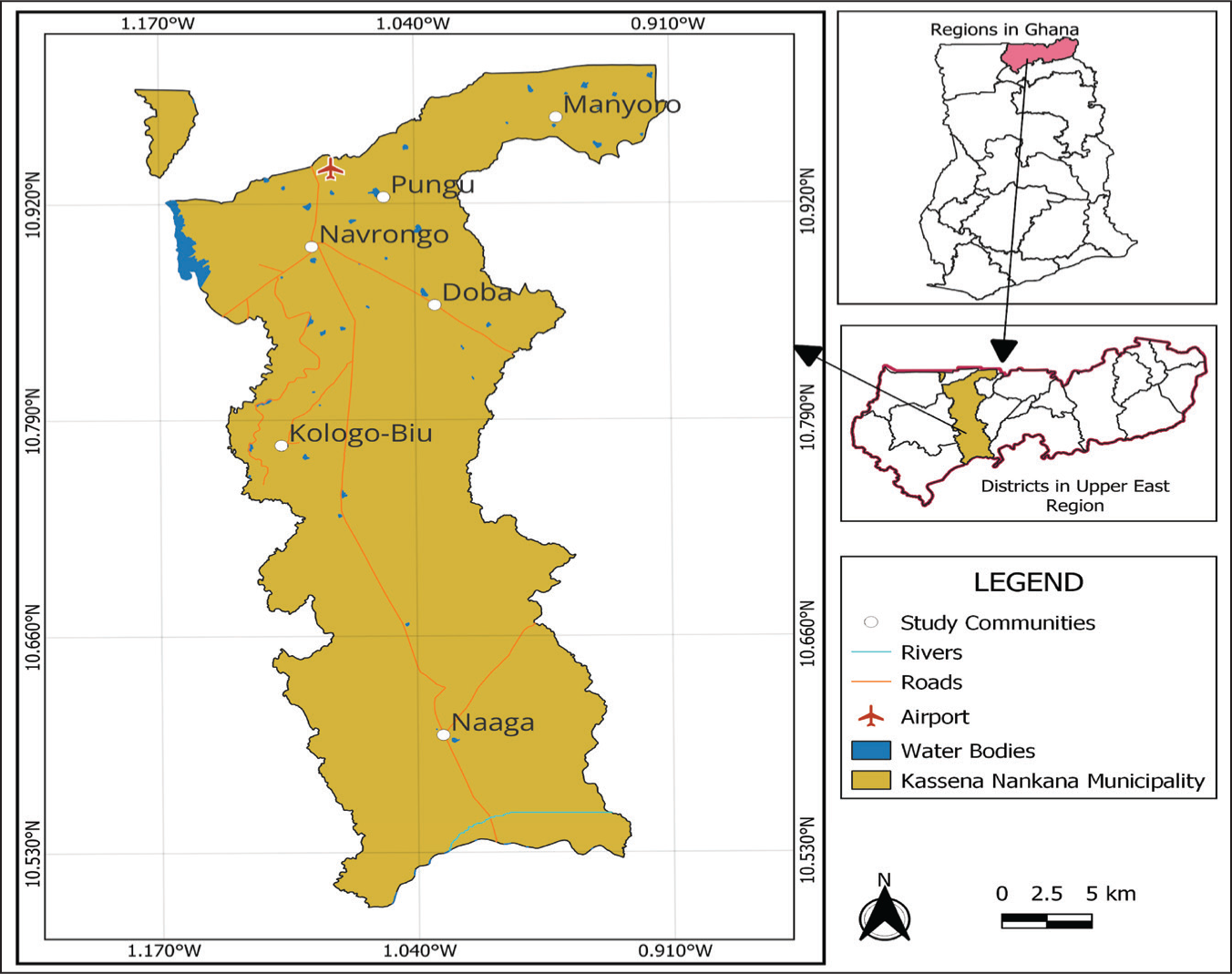
KNM lies within the semi-arid Sudan Savannah agro-climatic zone of Ghana, an area directly adjacent to the Sahel and subject to increasing climate variabilities (Figure 1). The municipality experiences a short and highly variable rainfall season, lasting from May to September, with average monthly rainfall ranging from 600 mm to 1,300 mm. Dry seasons are much longer and associated with average maximum temperatures ranging from 38°C to 43°C (Adiku et al., 2015; Incoom et al., 2020). These climatic conditions expose food production and related post-production activities to a higher risk of losses. Despite having a generally low-lying topography with savannah vegetation, KNM experiences a high rate of land degradation. As a result, its main groundwater laterites and savannah ochrosols, well-drained, loamy, and mildly acidic soils, which enable agricultural production in the region (Carrier et al., 2011; Tetteh et al., 2016), have become highly exposed to extreme temperatures.
Agriculture is the dominant economic activity for most households (82.7%), with farm sizes typically ranging from 0.4 to 4.0 hectares (1 acre) (GSS, 2014; UNDP, 2011). Major crops cultivated include maize, rice, millet, groundnuts, beans, tomatoes, peppers, onions, cabbage, eggplants, okra, sesame, and kenaf. Farming takes place on two types of fields: small, intensively used compound fields and more distant bush fields. Irrigation farming is critical for crop production in the dryland environment of the study area. However, there are only 24 dams/dugouts, and about 2,043 hectares of farmland are under irrigation (MoFA, 2017)—restricted access to irrigation significantly constrains productivity. Consequently, farmers primarily rely on the rainy season for cultivation and face high risks of crop losses due to the unpredictable rainfall patterns and shorter rainy periods.
Additionally, post-harvest losses are common due to inadequate storage facilities and poor handling practices, which make stored crops vulnerable to pests such as rodents, birds, weevils, and grain borers. Although crop production is primarily for household consumption, farmers often sell small quantities to meet basic expenses. The central market hub is located in Navrongo, complemented by several smaller markets in Biu, Naaga, Kologo-Kulengo, Manyoro, Natugnia, Kologo-Nayire, and Gaani.
Research Methods
Data Collection Methods
Fieldwork for this research was conducted from January to June 2021 in six communities in the KNM, namely, Navrongo, Doba, Manyoro, Pungu, Kologo, and Naaga. The primary respondents were heads of smallholder households, defined as household heads, who cultivate food crops on less than five acres of land primarily for family consumption (Chamberlin, 2007; MoFA, 2019). Data collection involved a combination of household surveys and participatory engagement. The survey consisted of questionnaires administered to 288 households, selected using a combination of random and non-random techniques. These methods facilitated access to a broad pool of potential and contributed to achieving a high response rate (Bryman, 2016).
The sample for this study was calculated using the World Food Programme sampling guideline (2009): n = (D)[Z2 * P * (1 – P)] / d2, where n represents the sample size, D is the design effect (assumed to be 2 for a two-stage sampling design), and d 2 is the variance. Z is the z-value for a 95% confidence level (1.96), P is the prevalence level of food insecurity in the KNM (39.7% based on a recent assessment; WFP, 2022), and d is the desired precision level of 5%, as recommended by the WFP for one-time research and advocacy projects. Applying this formula and anticipating a possible nonresponse rate of 8%, 288, representing 0.8% of households in KNM, were randomly selected for the survey. Accordingly, 48 households were selected from each of the six communities for the survey.
Each survey lasted between 45 and 70 minutes. The questions covered households’ demographic background, food security context, and food system activities. The Likert scale was used to measure the monthly food availability of households. Household heads were asked to rate on a scale of 1 to 3 the adequacy of food in household stores. Household heads were also asked to identify the predominant means of securing access to food for each month of the year. Finally, participants were asked to confirm their access to key assets, including resources and services, for the food system activities they pursued, such as production, harvesting, storage, transportation, and marketing. All questionnaires were administered using Open Data Kit (ODK), an open-source data collection tool that works on mobile devices.
In addition to the household surveys, focus group discussions were conducted to gather more detailed insights. Groups were formed based on the availability of existing associations, such as the Korania Women’s Group and the Nimbasnia Result Project Women’s Group, as well as the keenness and availability of households to participate in the discussions. To ensure that women could freely express their views—particularly on gender-related issues—separate focus groups were held for men and women in each community. Two focus groups were organized in each of the six study communities, with groups comprising six to twelve participants. Discussions lasted about two and a half hours.
The discussions enabled participants to share their views on food availability and sources. Participants also discussed the timing of food-related activities and their level of access to supporting resources and services such as seeds, fertilizer, threshers, storage facilities, information, and access to transportation to market. A seasonal calendar tool was used to facilitate discussions on the timing of food-related activities. It allows participants to list key food-related activities and plot each against the month(s) when the activities are carried out in the communities. The focus groups were conducted in the Kassem and Nankani languages, which are the dominant languages spoken in KNM.
Data Analysis Methods
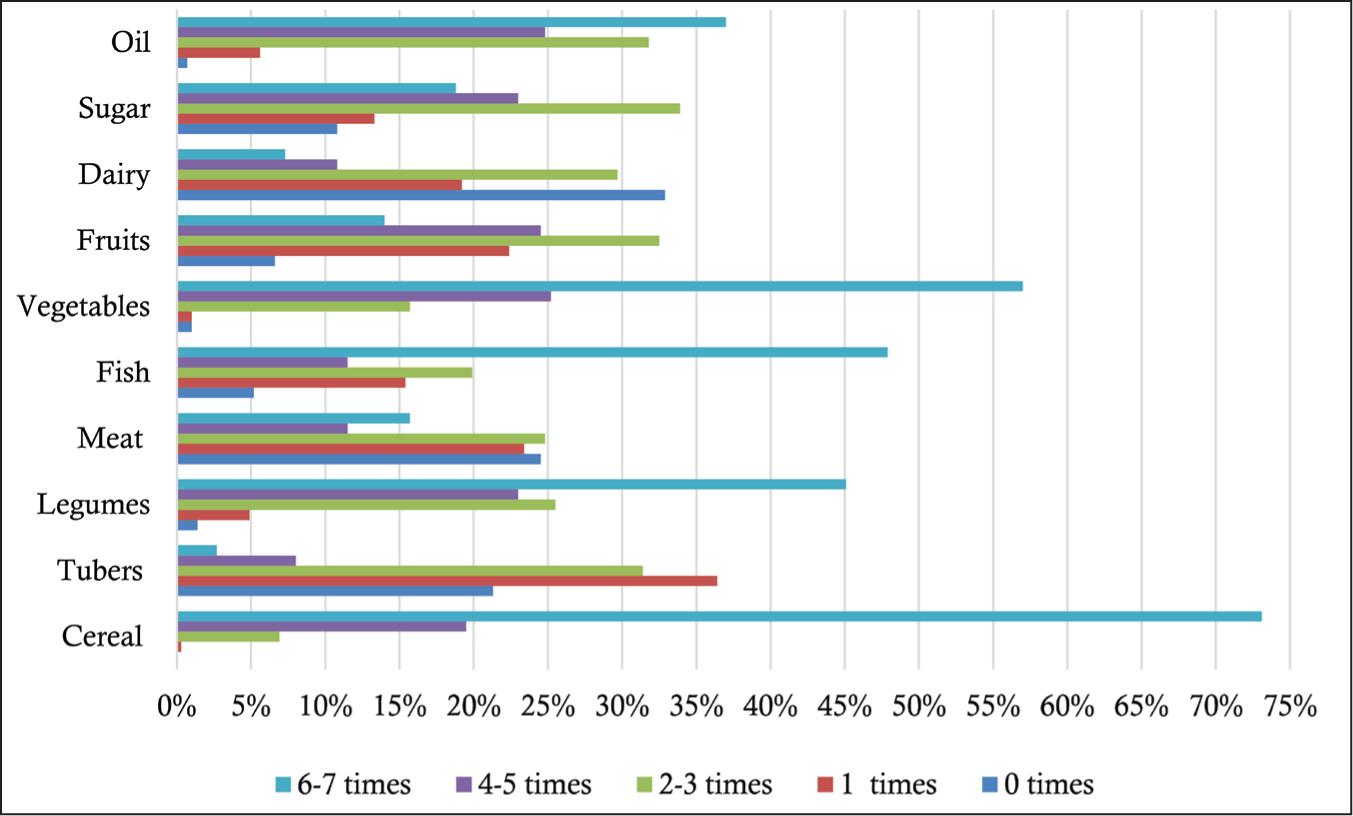
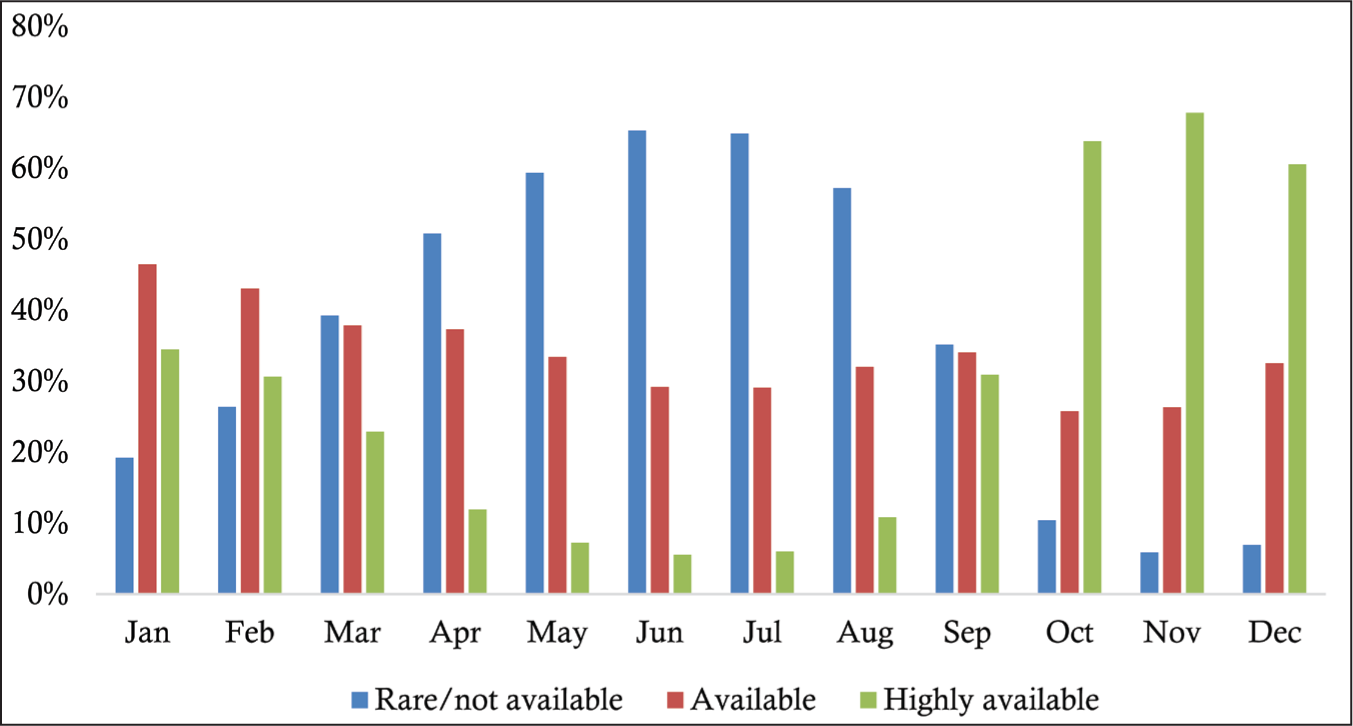
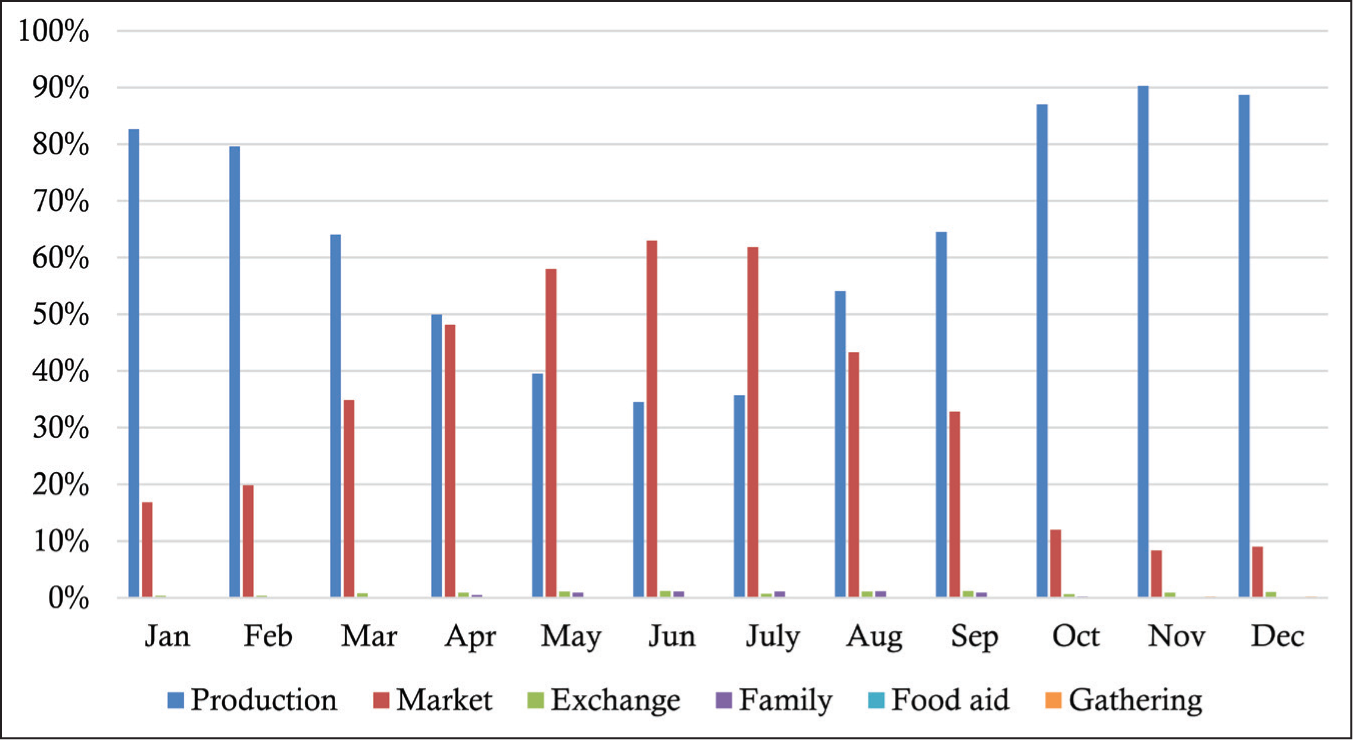
Survey data were sorted, cleaned, coded, and entered into SPSS Version 21.0 for analysis. Descriptive statistics such as frequencies and percentages were used to analyze the data. The results were displayed using bar graphs and histograms (see Figures 2–4).
The audio files from the focus group discussions were translated into English by a research assistant to capture the exact meaning and context of the responses before they were transcribed. The transcripts were analyzed using thematic coding, including cross-checking transcribed files with field notes and audio recordings to verify accuracy and completeness. We engaged in repeated reading of the transcripts to become familiar with the data and developed an inductive coding framework comprising codes and subcodes (Miles & Huberman, 1994). Key themes that emerged from the focus groups were integrated into the survey results using direct quotations. Additional information on the timelines of food-related activities was compiled into a municipal seasonal calendar (see Table 1).
Results
Timeline of Food Production and Post-production Activities
The livelihood activities, particularly farming in our study communities, were seasonal. During the fieldwork, food production and post-production activities of farmers were mapped to produce a calendar (see Table 1). The seasonal calendar illustrated the timing of and livelihood activities within the communities. As shown in Table 1, farming households predominantly cultivated food crops once annually, typically between June and September. This farming cycle aligns with the unimodal rainfall pattern characteristics of the study area, owing to its proximity to the Sahel region of Africa. The primary farming season begins in April with the onset of the rains, during which farmers engage in land acquisition, preparation, and plowing from April through June. This was followed by the planting of crops, which also began in May. Agronomic practices, including weed control, fertilizer application, pest control, and earthing up, started in June. Subject to the types of crops and specific circumstances of the individual farmer, these agronomic activities may commence at a later stage and extend for a duration of up to three months. Following the completion of agronomic practices, harvesting activities—such as cutting, picking, and gathering crops—were carried out between August and December. Some early-maturing crops, such as millet and guinea corn, were harvested in August. Farmers who produced twice a year also harvested their crops in December. Similarly, pearl rice was harvested twice—first in September and again in early December.
Seasonal Calendar of Food Production and Post-production Activities.
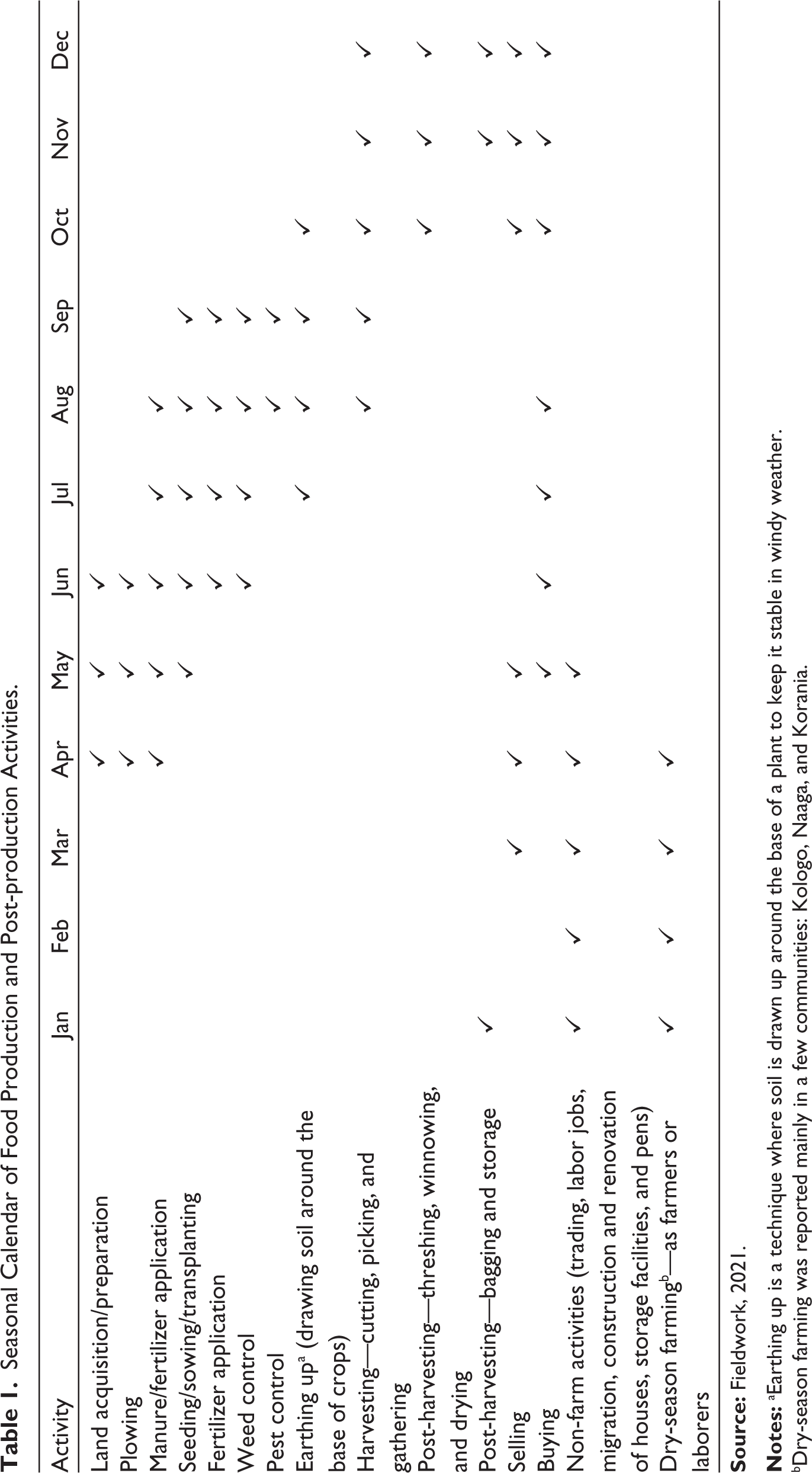
bDry-season farming was reported mainly in a few communities: Kologo, Naaga, and Korania.
Moreover, it is clear from Table 1 that post-harvest activities, including threshing, winnowing, drying, marketing, bagging, and storage, took place from October to January of the following year.
Although farmgate prices of crops were low during the harvesting season, farmers sold, or bartered their crops to repay their loans and pay for services such as mechanized harvesting. Most often, lenders prefer loan repayment after harvest so they can trade with it. Farmers usually require cash to cover essential expenses, such as healthcare and their children’s school fees. During the post-harvest period (January to May), they focused on reconstructing houses, barns, and animal shelters. In addition, women participated in activities such as collecting and trading in firewood, charcoal, and shea nuts. At the same time, men worked as laborers in irrigation farms and on construction sites, both within and outside their communities, to earn an income.
A few farmers (32%) engaged in dry-season farming from January to April. These farmers were able to afford the cost of irrigation, including dugout wells, small dams, canals, and mechanized boreholes. Such farmers cultivated only vegetables such as lettuce, carrots, peppers, and tomatoes on small plots of land ranging from 0.2 to 1.5 acres. They explained that limited access to water for irrigation, the high cost of inputs, and livestock grazing often drove their decision to farm on small plots of land during the dry season.
Diversity of Household Food Consumption
Dietary diversity at both individual and household levels constitutes an aspect of food utilization (FAO, 2011). It involves consuming a wide range of foods to ensure adequate intake of essential micro- and macronutrients necessary for maintaining nutritional balance and overall health (FAO, 2011). In this study, dietary diversity within the communities was assessed based on the variety of foods consumed by households during the preceding week.
Figure 2 indicates that cereals and vegetables were the most frequently consumed foods during the previous week. Approximately 73.1% of the households reported consuming cereals, and 57% reported eating vegetables 6–7 times during the last week. Fish and legumes were consumed 6–7 times by approximately 47.9%–45.1% of the households, respectively. It was also observed that only 24.5%–32.9% of the households consumed meat and dairy products, respectively, in the previous week. However, almost half of the households (47%) consumed fish 6–7 times in the last week. It can therefore be deduced from Figure 2 that legumes and fish, which are significant sources of protein, were consumed almost daily by about half of the households. It can also be inferred that a large proportion of households, exceeding 75%, did not consume meat, a major source of protein, in the previous week. The limited consumption of meat and dairy products, along with the low intake of legumes, was attributed to the high economic value of livestock and poultry, as well as the low value of legumes. In essence, households derive higher income from selling these commodities compared to other crops, such as cereals and vegetables. Reflecting this, more than half of the households consume vegetables and cereals instead. During a focus group, a lead farmer in Naaga said:
In our community, crop prices are generally low, particularly during the harvesting season. But during the dry season, when prices are better, one bowl [2.10 kg-2.40 kg] of rice could sell for Gh¢7 ($1), and beans could sell for Gh¢12 ($2). If I need Gh¢ 50 ($8), I must sell six to seven bowls of rice, but I will sell only four bowls of beans or one guinea fowl to make the same amount. Additionally, I have three wives, many children, and grandchildren, so cereals – specifically rice and maize – are crucial for me and other farmers to feed our families. I can feed my family with one bowl of maize or rice for a day, but if I kill a chicken, guinea fowl, or even a sheep, it will not be sufficient for my family. No, it is not even possible to feed on sheep; that is expensive. (A lead farmer from the Naaga community)
This illustration typified the case of many households across all six study communities. Farmers’ decision to produce different types of crops and keep animals is not driven by their desire to meet the dietary needs of their households. However, farmers’ decisions to produce different kinds of crops and keep animals are driven by market demand and consumption preferences. Moreover, the high consumption of cereals in the study communities enables households to meet their food needs by feeding large numbers of household members. This is because it is cheaper to feed a lot of people with cereals compared to other crop types. Thus, farmers engage in food production and livestock and poultry keeping for both household consumption and sale; the latter primarily influences farmers’ decisions regarding the types of crops to grow and livestock and poultry to raise. In contrast to dietary guidelines recommendations for a balanced, varied, and appropriate combination of different food groups (World Health Organization, 2020), households in northern Ghana rarely consume a balanced and diverse diet throughout the week, a situation that contributes to undernutrition (see, for instance, Nyantakyi-Frimpong, 2021).
Monthly Food Availability
It became clear during the fieldwork that the seasonality of food production, combined with the decision to produce for the market, affects food availability in the study communities. The data presented in Figure 3 indicate that more than 50% of households experienced food insecurity from April to August. By this time of year, households had run out of food stocks from the previous farming season. During this period, farmers prepare their land and plant their crops, awaiting the harvest.
Results further show that September was the dominant harvesting month, during which most crops were harvested for both sale and household consumption. In September, it is expected that all productive households will have enough food. Nevertheless, approximately one-third (35%) of respondents indicated that food was unavailable due to the limited harvest at that time. This is because farmers primarily harvest millet and guinea corn at this time, as they were planted early due to their drought-tolerant traits. However, most farmers avoid cultivating these crops in large quantities owing to their vulnerability to windstorms and shifting dietary preferences toward rice and maize. Additionally, many households did not have food in September because they had not yet harvested their crops.
Between 60% and 70% of the households reported high food availability between October and December, when farmers have harvested and brought all their crops home for storage. Despite this, a small proportion of households (5%–10%) reported not having food during this period. These were mainly less productive or landless households that cultivate tiny plots of land and do not have access to farm inputs to increase production. Moreover, beyond the immediate post-harvest month (January to March), the number of households without food had increased. During this period, the majority of households would have sold and consumed more than half of their harvest. In subsequent months (April to August), an increasing number of households face food scarcity problems and seek alternative food sources to feed their families until the next harvesting season.
Results further indicate that improper storage facilities and poor post-harvest handling of crops contributed to food scarcity in the months following harvest. The decision of households to sell and consume most of their food stock immediately after harvest is shaped by post-harvest losses resulting from a lack of proper storage facilities. Results show that only 40% of households included in our research used mechanized harvesting and threshing services; the remaining 60% harvested their crops through manual labor. A farmer in Manyoro said in an interview:
We thresh our crops manually (by hand and with sticks). I have not seen anything like a machine for threshing yet. Most farmers dry their harvested crops and use sticks to thresh them. Some farmers specifically use a mortar and pestle to pound the crops to get rid of the husk or cobs.
Farmers manually thresh cereal crops, such as rice, maize, millet, and guinea corn, resulting in a loss of some fraction of their harvest through over-threshing. For instance, a farmer in Naaga said”
Sometimes we lose the grains by over-threshing them, but we don’t throw them away; we use them to feed our livestock and poultry. Imagine collecting all those broken grains, which are enough to feed the family for a month, but we lose them to the sand.
Results also show that 77% of households stored their harvests in standard rooms and spaces in their bedrooms. About 22% of households stored their crops in mud-constructed barns. Only 0.7% of households stored their crops in a maintained warehouse with facilities. Farmers store their harvests in regular rooms because they lack access to grain warehouses, as there are only a few scattered across the entire Upper East Region. Traditional stores were primarily constructed with mud and wood, which was often unsuitable for storing grains for long periods. Conventional storage methods allow farmers to preserve harvested crops for only a few months after harvest, ensuring both marketing flexibility and food availability during the non-farming periods. Reflecting this, farmers reported losing their crops to pests in a manner that reduces food availability during the off-farming season. Similarly, Sugri et al. (2021) found that farmers in northern Ghana lose up to 35% of their grains per harvest, equivalent to weeks’ worth of consumption, due to improper storage and post-harvest handling.
Households’ Food Sources
The data presented in Figure 3 show that the majority of households run out of food from their farms during a significant part of the year. This suggests that most of the households explore alternative sources of food to feed their families. Alternative sources of food included the market, exchange, family support, food aid and gathering. However, households’ reliance on market purchases emerged as a significant alternative source of food in all six study communities.
From Figure 4, it is evident that “own production” is the predominant source of food for households in the study communities, as many of them rely on foods from their farms. From September through to March of the following year, farm production was the primary source of food for 60%–90% of the households. Within the same period, 9%–35% of households relied on the market to supplement food from their farms. These farmers had low productivity and purchased food during the harvest and early post-harvest periods when prices were relatively low. By buying food from the market, these households were able to supplement their limited harvest for future consumption. Their own production remained a major food source throughout the post-harvest season until April, after which market purchase became the primary source of food.
However, market purchases were the primary source of food for approximately 60% of households in May, June, and July. The dependence on the market for food during these three consecutive months is consistent with the data presented in Figure 4, which shows that more than 60% of households experienced food shortages during the same period. Households with limited financial means to purchase food from the market often relied on support from relatives and friends. Some resorted to collecting leftover crops from other farms. In many cases, these households worked on commercial farms in nearby towns such as Tumu and Fumbisi in exchange for cash or food. It is essential to highlight that the growing dependence on market-sourced food during the early post-harvest period largely stems from inadequate storage facilities and limited food processing technologies for preserving crops safely after harvest.
Although our study communities were among the most resource-poor and food-insecure in Ghana, the households do not rely on food aid as a source of food. Nevertheless, households occasionally receive food aid from the government and donor agencies during droughts or floods (Antwi-Agyei & Nyantakyi-Frimpong, 2021). Indeed, our study region is the most climate-vulnerable in Ghana because of its proximity to the Sahel region of Africa. The area experiences perennial floods and droughts, which often impact livelihoods, leaving households reliant on food aid from the government and donor agencies at times (WFP, 2022).
Although markets serve as the second most important source of food for households, the market infrastructure in these communities remains underdeveloped. The KNM spans a large area, but it has only one primary market, located in Navrongo, the district capital. In addition, seven smaller markets serve dispersed communities and attract a limited number of buyers and sellers. Despite having access to these satellite markets, households still rely on the central market to secure higher farmgate prices for their produce and fair prices for food purchases during off-season periods. Consequently, many households travel long distances to Navrongo to buy or sell food, often facing challenges in obtaining transportation. For example, results show that almost half of the households (46%) traveled more than 20 km to the closest market and even more to the main market. For example, Naaga is located approximately 35 km from the central market, while Manyoro is located about 16 km away. Despite these distances, vehicle transportation services are largely unavailable. As a result, most households depend on tricycles, motorbikes, bicycles, or travel on foot. Only 4.2% of the households, especially those close to Navrongo, traveled by car. Lack of access to vehicles is a result of poor roads in the study communities. The situation worsens in the wet season, when roads become impassable. Lack of access to markets and transport also affects access to food during the off-farming season, when farmers rely heavily on the market for food.
Discussion
The study examined the state of food and nutrition security among smallholder farmers in northern Ghana. To achieve this, the study focused on two key questions: (a) What complex factors influence food access and availability in northern Ghana? (b) What are the dietary consumption patterns among farmers in the region? To address these questions, we engaged with household heads who are farmers across six communities within the KNM in Ghana’s Upper East Region. They shared their lived experiences, including daily challenges related to food production, access, and consumption. Our analysis highlights two major themes central to the scholarship on food and nutrition security. First, the findings underscore the need to move beyond viewing food insecurity in sub-Saharan Africa as merely a technical issue. Instead, it is shaped by multiple factors such as seasonal variations in food production, access to storage facilities, market availability, and farmers’ consumption preferences. Second, the study highlights how market demand and household consumption needs influence dietary consumption patterns among smallholder farmers. By illustrating how interconnected factors at different scales contribute to food and nutrition security, this research adds to existing literature on the subject (also see Masipa, 2017; Wudil et al., 2022).
We found that food production activities occur once a year, consistent with the unimodal rainfall pattern in semi-arid regions. The unimodal rainfall pattern only allows farmers to produce food once a year. Thus, farmers are forced to produce all their crops within the farming season, usually from April to August. The farming season also depends on when the rains start, a season that is currently very variable due to changing climatic conditions (Amoak et al., 2023). During the farming season, farmers produce various types of crops on small plots intended to meet households’ food needs until the next farming season. However, this is not the case, as households often run out of food a few months following the harvest. Thus, the inability of farmers to produce food throughout the year affects household food availability. These findings are consistent with existing studies (see, for instance, Bonuedi et al., 2022; Devereux et al., 2008; Sibhatu & Qaim, 2017) on the impact of seasonality on food production and availability in Africa. Bonuedi et al. (2022) reported that dietary diversity and food security decline during the off-farming season in rural Sierra Leone. Similarly, Sibhatu and Qaim (2017) showed that seasonal variations lead most rural households in Ethiopia to depend more on purchasing food for their calorie intake than on subsistence farming.
The findings also highlight how harvesting and storage practices affect food availability in the study communities. We found that harvesting and storage practices are not effective in ensuring the safekeeping of cereals, legumes, and grains beyond the harvesting and immediate post-harvest seasons. Households rely on manual and obsolete threshing techniques that lead to crop damages and post-harvest losses. Also, they store their food in regular rooms, barns, and pots, usually without proper ventilation or protection. This exposes their crops to insect and pest infestations, thereby reducing the quantity of food in stock. Our findings align with existing studies (Abass et al., 2014; Darfour, 2019; Martey et al., 2020; Sugri et al., 2021) on food storage and post-harvest losses in northern Ghana and other parts of Africa. For instance, Sugri et al. (2021) found that poor storage practices among farmers in northern Ghana expose food crops to pests and molds, causing losses of up to 35% of crop volume, equivalent to weeks’ worth of consumption.
Findings from our study also highlight the market as a major source of food in the study communities. We demonstrated that households do not rely only on the food they grow but also on the market. While households rely heavily on their own production during harvesting and immediate post-harvest months, they rely more on the market for their food supply for the rest of the year. During this period, households supplement their depleted food stock by buying food from the market. These results align with earlier research highlighting the critical role of purchased food in ensuring food security in the rural African context (Baiphethi & Jacobs, 2009; Sibhatu & Qaim, 2017; WFP, 2017).
Despite the reliance on the market for food supply, poor road networks, a lack of access to vehicles, underdeveloped markets, and long distances prevent market access in the study communities. We found only one central market, which is a minimum of 16 km away from the nearest study community; the rest of the study communities are very far away. This ultimately affects food access during the off-farming season when the market becomes a major source of food for households.
Our findings further highlight that, although farmers produce a variety of crops, generally classified as cereals, legumes, tubers, vegetables, and pulses, and rear livestock and poultry, they exhibit poor dietary consumption patterns. Households typically consume cereals and vegetables daily, whereas food such as meat, tubers, dairy products, legumes, fish, and fruits is generally eaten about once a week. Notably, many households go an entire week without consuming meat or poultry, despite raising livestock and poultry for their own use. Common cereals include rice and maize, while vegetables often consist of tomatoes, onions, peppers, and kenaf. Although these staples provide some nutritional value, maintaining good health requires a more varied diet. Farmers primarily consume cereals and vegetables to meet market demands. For instance, legumes, livestock, and poultry have more market value than cereals. Farmers earn more money by selling legumes, livestock, and poultry than by selling cereals and vegetables. Hence, they store cereals and vegetables for the household, consuming almost everything within a week. The regular intake of cereals and vegetables, along with the irregular intake of protein-rich foods, affects the nutrition of households, particularly children. Similarly, many other existing studies (see, for instance, Nyantakyi-Frimpong, 2017; Ntakyo & van den Berg, 2019; WFP, 2016) have found that several rural communities in Ghana primarily consume cereals and vegetables, which affects their nutritional well-being.
While our focus in assessing and understanding food security revolves around seasonality, market access, infrastructure, and consumption preferences, the study also acknowledges that household politics shape food production and nutrition intake. Household power dynamics and gender norms intimately shape dietary consumption patterns. In northern Ghana’s patriarchal context, men typically control household resources and make key decisions, including those related to food production, marketing, and consumption. For example, although men and women contribute equally to farming activities such as cultivation, harvesting, and storage, men ultimately decide which crops are sold and which are kept for household consumption. Such decisions by men also impact the dietary diversity of households, as men often prefer to sell highly valued crops to earn a higher income (also see Apusigah, 2009; Nyantakyi-Frimpong, 2017; Vercillo, 2020).
Conclusion
This article presents empirical evidence from northern Ghana, where a combination of factors, including low food production, seasonal fluctuations in food production, underdeveloped market infrastructure, inadequate storage facilities, and household politics, impacts food security, and dietary consumption patterns. Although several narratives (see, for instance, Alliance for a Green Revolution in Africa (AGRA), 2015; 2017; Toenniessen et al., 2008) have framed food and nutrition security in Africa primarily as a production challenge, limited attention has been given to the diverse multiscalar factors influencing food security. Our study contributes to recent social science scholarship (Nyantakyi-Frimpong, 2017; Vercillo et al., 2022) by demonstrating that achieving food and nutrition security in Ghana necessitates more than technical interventions, such as the adoption of hybrid seeds, chemical fertilizers, and other agrochemicals aimed at boosting production. Instead, there is a need to consider multiple perspectives, including the seasonality of production, storage, market access, and farmers’ preferences, all of which impact household food and nutrition security.
This research has implications for policies aimed at transforming food systems in rural areas of Ghana. For instance, our findings could guide government and donor programs aimed at transforming local food systems into more productive and profitable ventures for farming households, who serve as both producers and consumers. Specifically, the results emphasize the importance of implementing robust policies, regulations, and investment strategies to support innovative approaches that boost production, improve rural transportation, provide modern storage facilities, and link farmers to markets and financial services, including affordable insurance for smallholders. Additionally, introducing community-based grain storage systems and social protection programs is essential to shield populations from price volatility and post-harvest losses—key barriers to year-round food availability and access in rural communities across developing countries.
Footnotes
Acknowledgements
We thank the research assistant who assisted in the data collection process and translation of interviews and focus groups into English.
Author Contribution
Balikisu Osman: Conceptualization, data collection, analysis, Writing – original draft, Writing – review and editing. James Boafo: Writing – original draft, Writing – review and editing.
Data Availability Statement
The data used is confidential.
Declaration of Conflicting Interests
Parts of this article are drawn from the first author’s PhD dissertation submitted to York University, Canada. The study received ethical clearance from York University’s Office of Research Ethics and adhered to the guidelines set by its Human Participants Review Committee. It also complied with the Senate Policy for Research Involving Human Participants.
Funding
The authors received no financial support for the research, authorship, and/or publication of this article.