



Abstract
Gulf countries—Bahrain, Kuwait, Oman, Qatar, the UAE, and Saudi Arabia—have been key destinations for South Asian migrants since the 1970s’ oil boom. However, the COVID-19 pandemic exposed the extreme vulnerabilities of migrant workers, particularly low-skilled laborers, due to their precarious status under the kafala system. The system ties workers to their employers, restricting mobility and access to rights. The pandemic exacerbated these challenges, with widespread wage losses, limited healthcare access, and rising deaths among migrant workers. These issues underscore the unsustainability of current migration regimes and highlight the urgency for resilient, equitable policies. This article examines the trends in Gulf migration from South Asia and evaluates short-term policy measures implemented to address vulnerabilities during crises like COVID-19. It argues that a regional alliance among South Asian labor-sending countries is essential to address systemic challenges, promote sustainable migration practices, and protect migrant workers’ welfare. By focusing on policy reforms that prioritize social security, mobility rights, and equitable treatment, the article emphasizes the need for collaborative approaches between origin and destination countries. The study concludes that such alliances can enhance the resilience of migration regimes and ensure the long-term sustainability of South Asian workers’ contributions to Gulf economies.
Introduction
The uncovering of abundant oil resources during the mid-twentieth century transformed the Gulf region. This transformation significantly impacted the six Gulf nations (i.e., Saudi Arabia, the United Arab Emirates (UAE), Bahrain, Oman, Kuwait, and Qatar), bringing major changes across various sectors. These changes prompted a remarkable revamp of their physical territories, epitomized by the emergence of sizeable urban development, and a significant shift in their demographic composition, propelled by an outburst of infrastructural projects (Babar, 2020). The monumental initiatives encompassing urban infrastructure, public utilities, and service sector development in these countries necessitated a workforce far beyond their indigenous capacity. Consequently, an imbalance emerged wherein the demand for labor surpassed the supply contingent on the national population, instigating a substantial influx of foreign workers to bridge this gap (Edwards, 2011; Fargues, 2011; Kamrava & Babar, 2012). Over the span of recent decades, the numbers have increased so much so that indications of a reduction in dependency on outsourced labor have emerged in the government policies.
At present, foreign workers constitute roughly 52% (an estimated equivalent of 23 million) of the population in some GCC countries, playing a pivotal role in sustaining their economies (Amnesty International, 2020; GLMM, 2020). Lori (2012), UN DESA (2019a), and GLMM (2020) attest that it has emerged as a distinctive demographic distribution epitomizing a remarkable aspect of these Gulf states while considering the influence of these foreign laborers on the labor markets of the host nations. The kafala system predominantly regulates the governance of this transnational labor migration in the Gulf. This system is a sponsorship regime that binds the legal status of migrant workers to their employer. The kafala system shapes how regional migration flows are managed especially in the private sector. It also underscores the essential roles played by labor recruiters and manpower agencies. Initiated in the 1950s, this system has maintained a continuous supply of workers during high economic activities and slashing the numbers during economic depressions. For example, during the recessions of 2008, 2015, and COVID-19, repatriation was adopted as a form of coping mechanism to unburden the economy and public health sector. The migration governance and dependence on a kafeel (sponsor) for livelihood, residence, and security testify to the control over their lives and agency, which has created environment for the violation of different sorts like erosion of living standards. It is also responsible for escalation of investigations and reform in the governance of migrant workforce (especially “essential workers”) (Anderson et al., 2021).
The kafala system is a foundational mechanism of labor migration governance in the GCC countries. It operates in two primary channels. First, it regulates the employment and immigration status of foreign workers. It does this by binding their legal residency to a specific employer or sponsor (kafeel). Second, it ensures strict state and employer control over migrant labors. This control has historically supported the economic stability and low-cost development model of Gulf economies. This is especially important for the small size of national population. However, this often comes at the expense of workers’ rights and welfare. The system is usually justified as a protective arrangement. Sponsors are said to help migrant workers who may not understand local languages, laws, or cultural norms. But this paternalistic explanation hides the real issue. It creates a system where migrant workers are disempowered. By shifting the government’s responsibilities to private employers, migrants are placed outside the protection of national labor laws.
Under this framework, sponsors retain near-total control over key aspects related to the migrant workers. These include employment, mobility, work permits, visa renewals, contract termination, and legal dispute resolution. Migrants are typically prohibited from changing employers or leaving the country without the sponsor’s consent, rendering them vulnerable to exploitative practices such as wage theft, contract substitution, forced repatriation, and abuse—particularly visible during crises such as the COVID-19 pandemic. As noted by ILO (2020) and Human Rights Watch (2020a, 2020b), many migrant workers faced arbitrary dismissals, denial of benefits, unpaid wages, and heightened health risks during the pandemic, exposing the fragility of their rights under the kafala regime. This system not only limits workers’ autonomy and access to justice but also absolves Gulf governments from legal and institutional accountability for migrant welfare. The power asymmetry between sponsors and migrants institutionalizes precarity, making rights enforcement contingent on private actors rather than state mechanisms. Consequently, meaningful reform must address this structural imbalance by reasserting state responsibility over labor governance, ensuring legal protections irrespective of sponsorship, and integrating migrant workers more equitably into the legal and economic fabric of host societies. Recognizing the contributions of migrant workers to both host and home economies requires not merely administrative reforms but also a fundamental reconfiguration of the labor governance architecture in the GCC.
One of the critical aspects of the kafala system is the near-total erosion of migrant agency, particularly in relation to employment mobility and legal status. By binding a worker’s residency and labor rights to a specific sponsor (kafeel), the system confers unchecked authority to private individuals or corporations to renew or revoke work permits, exit visas, and contractual agreements. This structural dependency severely restricts migrants from changing jobs or terminating employment without the sponsor’s approval. Any attempt to do so independently is criminalized, often resulting in deportation, blacklisting, or legal penalties. This highlights the absence of effective state oversight, which relegates the protection of migrant rights to private actors with vested interests. The arbitrary application of the kafala system becomes particularly evident during periods of economic downturn, such as the COVID-19 pandemic, when many expatriate workers were subjected to sudden terminations, unpaid wages, and forced repatriations, underscoring their legal and economic precarity (citation). These practices reveal the systemic exploitation embedded within the sponsorship model and the lack of institutional recourse available to foreign workers.
The COVID-19 period highlighted the “social insignificance” of the migrant workers in both host and home communities. In host communities, expatriates were seen as vectors of infection, exacerbating their exclusion from social safety nets and pushing them into heightened anxiety and fear (Amnesty International, 2020). South Asian governments lacked robust mechanisms to address the vilification of migrants abroad or to facilitate their rehabilitation and reintegration into suitable employment. This systemic overload left migrant workers stranded, with no place in either host or home societies. On the other hand, the pandemic also caused a dramatic shift in the flow of remittances, transforming them from contributors to a perceived burden (Mustaqeem, 2023). The resulting economic strain highlighted the costs of resilience under the kafala regime: host states protected system continuity at the expense of human welfare, while sending nations bore the social and financial fallout. These issues highlight the urgent need for an institutionalized framework to address the needs of migrant workers from departure to repatriation. Such dynamics make clear that incremental, non-binding reforms cannot redress structural exploitation.
Despite increasing global awareness of the exploitative nature of the kafala system, recent reforms introduced by Gulf regimes have been limited in scope and effectiveness. Scholars argue that such reforms, instead of dismantling structural inequities, are strategically designed to enhance the resilience and sustainability of these regimes in the face of mounting international scrutiny and crisis-induced disruptions (Anderson et al., 2020, 2021; Ewers, Diop, Le, et al., 2023; Yeoh, 2020). These selective adjustments have not fundamentally altered the nature of migrant precarity in the region. Indeed, these adjustments often aim to protect the developmental and demographic model of Gulf states, without redistributing power or responsibility within the migration governance framework. Ironically, many South Asian migrant workers continue to accept these exploitative conditions, viewing migration as a necessary livelihood strategy in the face of unemployment, stagnating economies, and limited state welfare at home. As the World Bank (2018) notes, international migration remains a vital poverty alleviation mechanism for South Asian countries, encouraging states to prioritize remittance flows over migrant protections. This complex interplay between state interests, regime resilience, and migrant aspirations underscores the urgent need for a transformative, rights-based framework and regionally coordinated migration governance to govern Gulf migration more equitably. The persistent structural imbalance embedded in the current system, particularly the kafala model, raises pressing questions about its efficacy in safeguarding migrant workers’ rights. Incremental reforms have proven insufficient in addressing the systemic vulnerabilities and exploitative conditions that define much of Gulf migration. Therefore, a collaborative and comprehensive governance mechanism is essential to ensure the protection, welfare, and dignity of migrant workers throughout the migration cycle.
Methodology
This study employs a qualitative research approach, analyzing the policy documents, regional initiatives, and labor migration statistics. The qualitative investigation is supplemented by primary sources, including World Bank remittance reports, labor migration statistics, and national policy documents from six Gulf states and major South Asian labor-sending countries. Thematic analysis is used to identify systemic challenges in existing migration governance frameworks and to evaluate the effectiveness of recent reforms. This methodological approach allows for a comprehensive understanding of the vulnerabilities faced by migrant workers and the potential for a regional alliance to address these issues. In light of these challenges, this article is structured as follows: First, it examines the trends and patterns of South Asia–Gulf migration, along with short-term policy measures implemented to address the vulnerabilities of migrant workers during crises like COVID-19. Second, it discusses how the pandemic has necessitated a regional alliance among labor-sending states and identifies critical policy areas that must be addressed to ensure the long-term sustainability of migrant workers in Gulf labor-receiving states.
Literature Review and Theoretical Argument
Migration governance has historically been characterized by the sovereign power of nation-states, which maintain exclusive control over the legal frameworks governing the cross-border movement of individuals. Migration has emerged as a crucial issue in international relations, similar to other areas of governance, including trade, energy, health, and the environment. States engage between international migration governance and the inter-regional consultations or dialogues to balance economic, social, and political interests while managing migration flow (Betts, 2011; Malit, 2024). However, the presence of non-state actors, such as international organizations, civil society, and human rights advocacy groups, often challenges the prominent role of the state in migration governance. Organizations such as the International Organization for Migration (IOM), the United Nations, and Human Rights Watch have all campaigned for a global migration governance framework centered on migrant rights and protections. Such frameworks are resisted by host nations, notably those in the Gulf, who see them as threats to their sovereign rights, particularly when it comes to control over domestic labor markets and irregular migration (Betts & Kainz, 2017; Bretts, 2011; Malit, 2024). The GCC states, in particular, maintain strict labor migration policies based on the kafala (sponsorship) system, a structure that institutionalizes migrant workers’ reliance on their employers, limiting their access to justice, mobility, and social protection.
The Gulf migration regime serves as an example of a sovereign control mechanism that deliberately employs non-binding interregional discussions to uphold a cooperative front while opposing legally binding rights-based reforms (Aarthi & Sahu, 2021). Frameworks such as the Global Compact for Migration (GCM), the Abu Dhabi Dialogue (ADD), and the Colombo Process (CP) have been established to enhance coordination between labor-sending and -receiving nations. Despite their importance in promoting communication, these initiatives are primarily consultative and non-binding. They frequently fall short of addressing systemic problems like contract violations, wage theft, or health access because they lack enforceability, rights safeguards, and tangible implementation mechanisms. This gap is particularly noticeable during emergencies like the COVID-19 pandemic (Diop et al., 2018; ILO, 2020). While ADD does recognize standard procedures, workers’ protection by endorsing ethical recruitment, and skill mobility, the consultative nature of these dialogues restricts their effectiveness. The sixth ministerial-level consultation (October 26–27, 2021) drafted a few priorities, such as access to justice, skill mobility, inclusion of gender, and fostering multilateral cooperation on migration governance (ADD, 2024). However, considering the long-standing kafala system and the uneven implementation of reforms across Gulf states, such priorities continue to be aspirational rather than practical. Bahrain and Qatar have implemented limited reforms, whereas Saudi Arabia and the UAE have exhibited slower progress in this regard (Diop et al., 2018; Ewers, Diop, Duma, et al., 2023). The absence of a legal enforcement mechanism in the ADD diminishes its capacity to affect the actual conditions of migrant workers (FairSquare, 2022).
This article argues that a rights-based migration governance framework is necessary to counterbalance state-centric, economic-first approaches that marginalize or neglect the migrant welfare in destination countries. The rights-based model is derived from international legal instruments and normative frameworks, such as the International Convention on the Elimination of All Forms of Racial Discrimination (ICERD), ILO Conventions No. 97 and 143 concerning migrant workers, the Universal Declaration of Human Rights (UDHR), and the International Covenant on Economic, Social, and Cultural Rights (ICESCR). These instruments establish fundamental principles including non-discrimination, access to justice, fair remuneration, safe working conditions, social protection, and the right to organize. Despite their potential, regional consultative processes such as the ADD and CP have not adequately incorporated the United Nations Sustainable Development Goals (SDGs), specifically SDG 8 (decent work and economic growth) and SDG 10 (reducing inequalities) (ILO, 1998; IOM, 2016; MFA, 2024; UN, 1948, 2015, 2018). The kafala system and its persistence, marked by limited mobility, wage exploitation, and lack of legal recourse, fundamentally undermines the principles of global development objectives (UN, 2015). SDG 8.8 emphasizes the protection of labor rights and the promotion of safe working conditions for all workers, including migrants. In parallel, SDG 10.7 supports the facilitation of orderly, safe, and responsible migration through the implementation of well-managed migration policies.
This article advances theoretical proposition that a rights-based, regionally coordinated migration governance framework is essential for transforming the South Asia–Gulf migration corridor. This requires aligning the goals of labor-sending South Asian states with the labor demands of Gulf countries via a legally established multilateral framework. Such an approach must emphasize equal treatment, legal protections, access to social services, and the agency of migrant workers, including their involvement in decision-making processes. The South Asian Migrant Workers Support Alliance (SAMWSA) aims to establish a collective bargaining framework that integrates national migration policies with international human rights standards and development objectives. The COVID-19 pandemic revealed significant deficiencies in current migration governance frameworks and highlighted the necessity for structural reforms. Migrant workers in the Gulf faced wage theft, contract terminations, deportations, and denial of healthcare, issues that were insufficiently addressed by regional consultative platforms. A revised governance model based on legal accountability, shared responsibility, and regional support is essential for protecting migrant rights, mitigating systemic vulnerabilities, and attaining long-term resilience and economic justice for both sending and receiving countries.
South Asian: Gulf Migration and Remittances—Trends and Patterns
Migration, both within and beyond the region, is inherent to South Asian countries. Notably, the South Asia–Gulf migration corridor is a major global route, with 5 out of 20 corridors originating from South Asia and converging on Gulf nations (UN DESA, 2020). The corridor gained importance due to the Gulf’s oil exploration in 1970 and subsequent economic growth, attracting migrant workers from South Asia, especially India, to fulfil demands in construction and development (Oommen, 2015). This migration wave has profoundly reshaped the socio-economic dynamics of both regions (Mustaqeem, 2020).
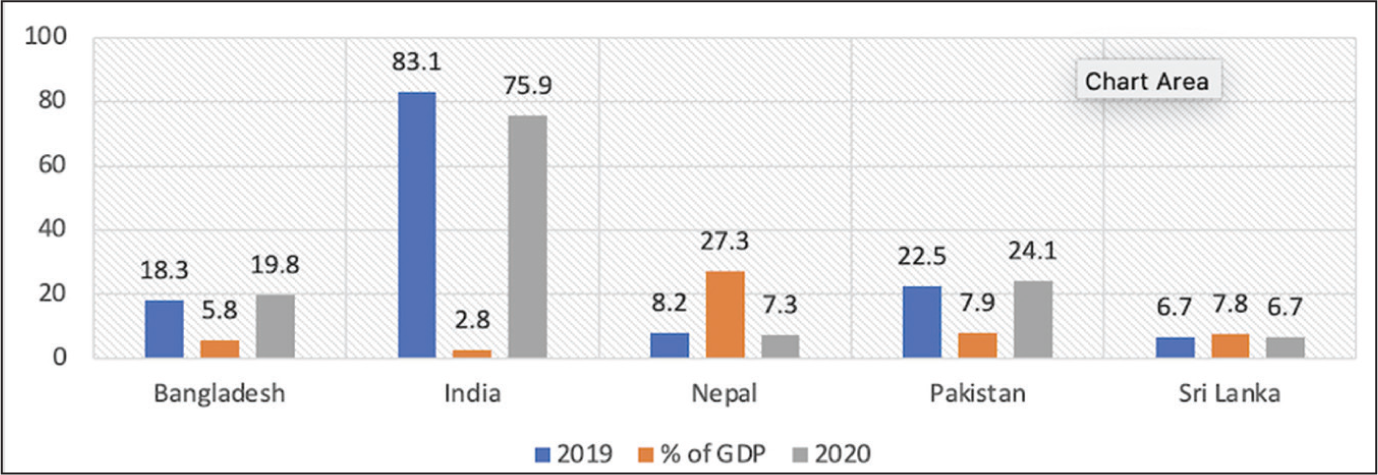
Prior to the disruptions to migration flows caused by COVID-19, in the year 2019, approximately 36 million out of the estimated 112 million international migrants emanated from South Asian countries (UN DESA, 2019b). In particular, India played a pivotal role in this migratory movement with over 17.5 million expats. Bangladesh and Pakistan ranked as the sixth and seventh largest nations that send migrants, respectively (IOM, 2019). As per the data shown in Table 1, the total number of migrant laborers departed to Gulf was recorded as 2,326,500. The remittance received by these countries of origin in 2019 reached US$140 billion, nearly 20% of the global remittance sum of US$714 billion. Notably, India constituted the primary recipient of remittances within South Asia, receiving an influx of US$83.1 billion (see Figure 1).
Trend and Patterns of Labor Migration from South Asia to the Gulf Countries.
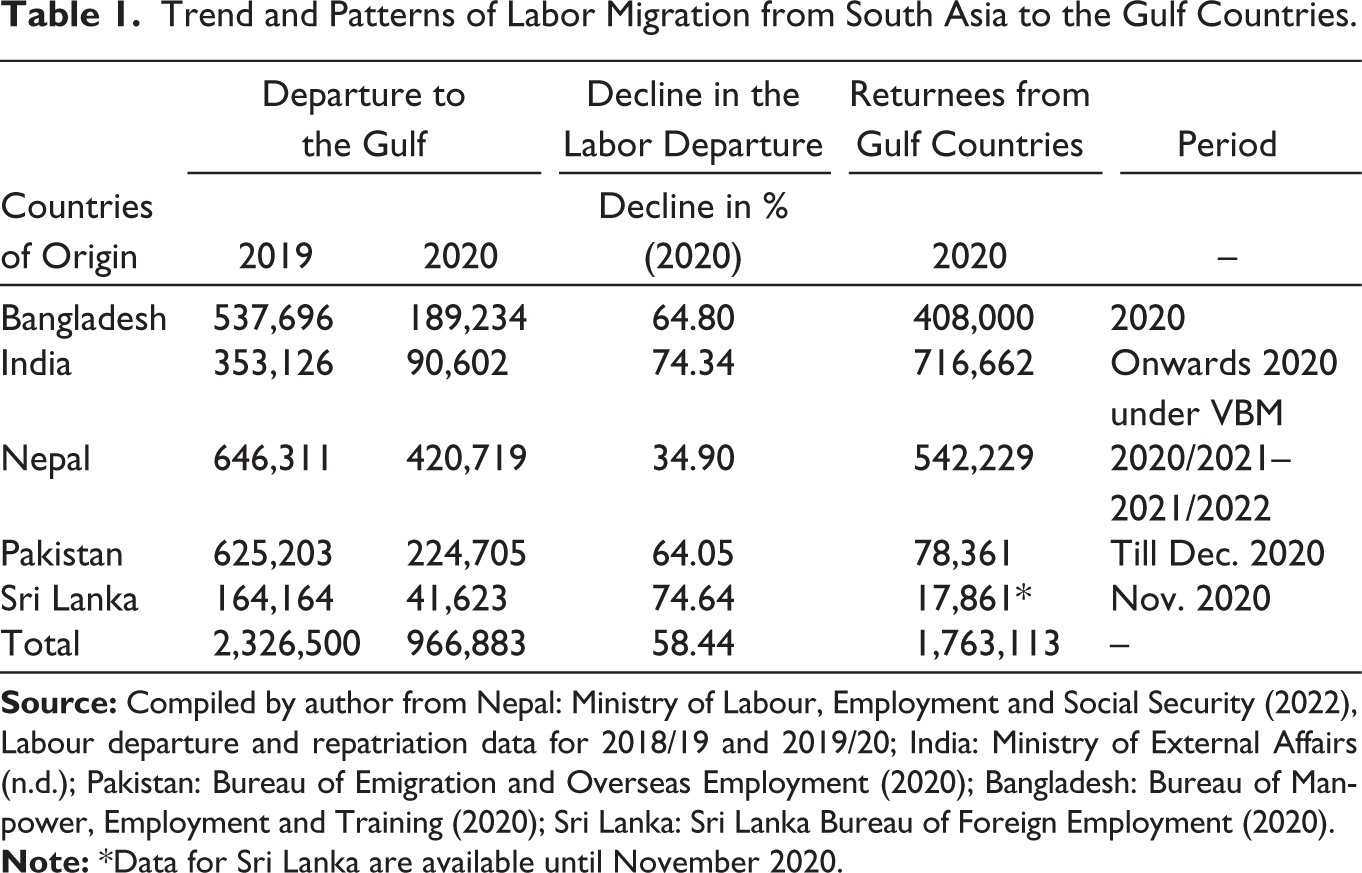
The outflow of migrants from South Asia to the Gulf experienced a substantial decline in 2020, with the number of departures dropping to 966,883 (see Table 1). This decline was accompanied by a projected 22% reduction in remittances to labor-origin countries during the first 4 months of 2020, driven by widespread repatriations and layoffs (World Bank, 2020). The weakening of labor emigration during this period can be attributed to several factors. Gulf countries, such as Kuwait, strategically leveraged the pandemic to impose restrictions on the number of expatriate residents (Rahman, 2020). This policy was implemented with a dual purpose: to reduce labor demand, thereby addressing long-standing challenges related to population imbalance, and to increase the participation of nationals in the local workforce. Additionally, these measures aimed to curb the outflow of remittances, which are a critical source of income for many South Asian economies (Alsahi, 2020).
The impact of these policies was evident in the sharp decline in the outbound movement of temporary migrant workers from South Asia. According to data from various South Asian government sources, the year 2020 saw a 58.44% decrease in departures to Gulf countries compared to the previous year (see Table 1). This dramatic reduction underscores the profound effects of the pandemic and related policy measures on migration flows and the livelihoods of migrant workers and their families.
Temporary Migration Regimes, Resilience, and Sustainability
In the GCC countries, labor migration governance remains deeply rooted in structurally unequal frameworks, in which the kafala system serves as the central institution. This system formalizes legal and social distinctions between national and foreign workers while creating sperate labor policies and rights hierarchies (Aarthi & Sahu, 2021; Diop et al., 2018). It has created a structure that prioritizes “transience and non-integration,” obliging migrants to short-term, employer-centric contracts while excluding them from labor protections and social safety nets (Yeoh, 2020). This structure inequality reflects a neoliberal economic rationale that regards migrants as disposable labor, redirecting the social costs onto sending countries (Collins & Bayliss, 2020). State-led initiatives like the Saudi’s Nitaqat program only reinforce these inequalities. The Nitaqat program further marginalized these workers to low-wage sectors and employments that national populations often hesitate or dislike (Ahmed, 2016; GLMM, 2020). As part of the reforms policy and diversification, Nitaqat is a measure to reduce reliance on foreign workers and sustain the labor market but structurally devalues migrant workers. As Anderson et al. (2020) highlight, such arrangements are not accidental but are part of a “system effect” that embeds precarity into migration governance to ensure flexibility and cost-efficiency at the expense of equity.
These vulnerabilities were exposed by COVID-19 and oil plunge in 2019–2020, when migrant workers were caged in overcrowded dormitories with disproportionate affects by infection risks, xenophobic scapegoating, and abrupt layoffs (Chulov, 2020; Guadagno, 2020; Mustaqeem, 2024). Lockdowns stranded workers without income, legal recourse, or repatriation options, pushing many into debt or extensive detention (Ferdous & Ullah, 2022; Hashmi, 2020; Ullah, 2020). It blocked labor mobility even across essential sectors, highlighting the unsuitability of kafala regime for crisis adaptation. The critiques questioned the aspect of systemic resilience while analyzing the Gulf regime’s reluctance to replace the kafala system. Scholars like Anderson et al. (2020, 2021) argued that the systemic resilience of migration regimes requires its ability to “withstand, recover from, and adapt to unexpected external shocks.” The Gulf migration regime dwindled during the crises years because it excluded migrant workers from public healthcare and welfare systems. Kafala regime infringed migrants rights like denying healthcare access or terminating contracts, leaving them undocumented or the laying-off practice by companies.
These pitfalls and contradiction of kafala generated criticism from international organizations, media outlets and academics regarding the exploitative nature of the Gulf migrant regime. The GCC states reluctantly introduced several measures to enhance systemic resilience of the migration regime. These measures were dubbed as reforms; however, they fall short in overhauling or genuinely reforming the regime or reducing the vulnerability of migrant workers (see Table 2). These measures are selective, fragmented, and often performative (Zayadin, 2019). For example, Qatar abolished exit permits and allowed some job mobility, while the UAE introduced wage protection systems. Saudi Arabia extended pandemic-era healthcare access to migrants, and Bahrain standardized contracts. However, these reforms were not extended to groups such as domestic and agricultural workers and also failed to address subcontracting such as wage theft, entrenching sponsor control in new forms (Amnesty International, 2020; FairSquare, 2022; HRW, 2020). Qatar’s reforms during the World Cup preparations were marred by reports of excessive working hours and unsafe conditions (Business & Human Rights Resource Centre, 2023).
Recent Reforms in the Gulf Regime and Measures Taken to Reduce Migrants Vulnerabilities During COVID-19.
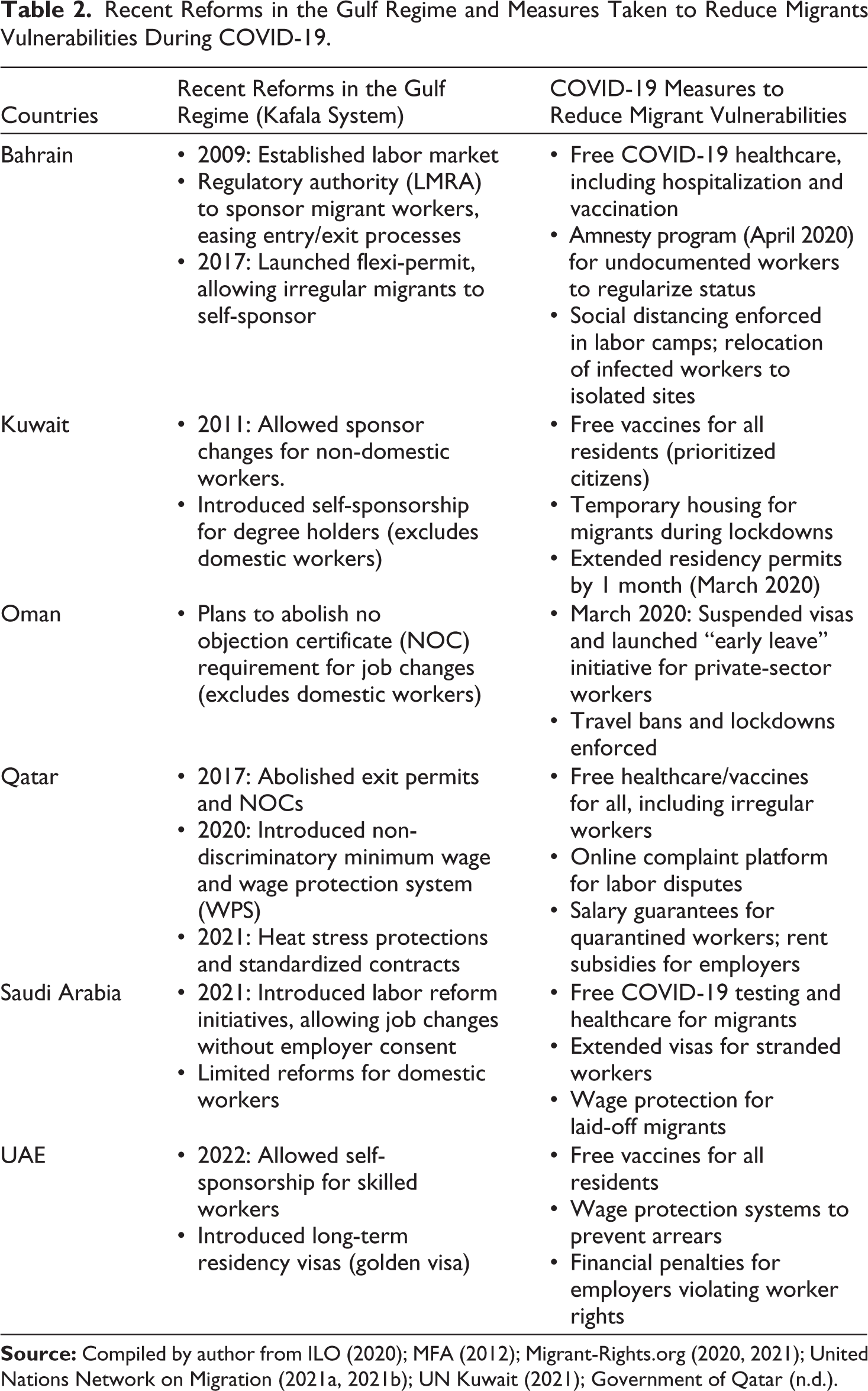
These efforts reveal that GCC states impose their own vision of sustainability, one that is designed to ensure the survival of the kafala system. They seek to construct a migration regime that appears to align with international labor standards, while largely maintaining the underlying structures of control and exclusion. In this context, sustainability is not synonymous with fairness, equity, or long-term integration. Instead, their approach centers on preserving the kafala system through incremental reforms that balance three core objectives: (a) maintaining uninterrupted labor inflows for essential sectors, (b) suppressing domestic dissent by prioritizing citizen employment and welfare, and (c) mitigating international backlash through performative compliance with global norms. This regime-centric model of “sustainability” diverges sharply from rights-based frameworks, the SDGs or ILO standards.
Sustainable migration governance demands the dismantling of unequal power dynamics and prioritization of migrant rights, representation, and well-being (Anderson et al., 2021; Yeoh, 2020). The Gulf strategy, however, prioritizes strategic adaptation, which involves selective reforms that maintain the kafala’s foundational exploitative functions while projecting progressiveness. Qatar’s partial reforms or the UAE’s wage systems prioritize regime stability over equity, perpetuating a “use-and-discard” logic that sacrifices long-term resilience for short-term control. The GCC states perpetuate systemic fragility by equating sustainability with preservation of kafala system, thus protecting institutional control while compromising migrants’ dignity.
Regional Initiatives in Migration Governance
In their quest to balance international migration standards with domestic governance, Gulf regimes have initiated regional cooperation through consultative dialogue platforms. One such initiative is the ADD, a forum that brings together labor-sending and host countries to address migration-related challenges. While these consultative forums represent a step toward sustainable migration governance and policy exchange, their effectiveness remains limited due to several systemic issues.
These consultative forums serve host regime interests rather than prioritizing the migrant-centric political and economic interests. In a way, these reform initiatives shield firms, businesses and societal interests over the rights and welfare of migrant workers (Diop et al., 2018; Natter & Thiollet, 2022). The regional consultative forums have not so far discussed the bottom-up mechanism to replace or alter kafala system, which remains a major obstacle to sustainable development goals (UNDESA SDGs, 2015) like the equitable treatment of contractual workers (ILO, 2023a, 2023b, 2023c). In the consultative diplomatic forum, power asymmetry is visible in the form of decisions being dominated by the host regimes (Babar, 2014). It is also evident that sending states, for example, from South Asia, lack bargaining power that brings about unequal labor agreements favoring GCC employers’ interests (Jureidini, 2019). These agreements debar migrant workers from seeking redressal and legal security in the matters of violation (Harns, 2013). The regional forums focus on skill upgradations and recruitment procedures overlooking grave issues such as “equality of treatment” (ILO, 2023), dispute resolution and access to justice (Malit, 2024). It is also imperative to highlight that the informal diplomatic forums have not developed social security agreements (ILO, 2021a, 2021b) to benefit the migrant workers. The UAE’s pilot project “Skills Development, Certification, and Recognition,” initiated to exchange skill mobility, has not achieved success in harmonization of skills and qualification since its inception (ADD, n.d.). Despite recruitment regulations in the South Asian countries, migrant workers are exploited by recruitment agents for recruitment, skill certificates, upgradation, and training as part of their employment process and their costs are imposed on low-skilled workers (ADD, 2024).
These host-state-led consultative forums systematically exclude migrant workers from policy formulation, rendering reforms ineffective (Diop et al., 2018). For instance, the ADD, despite its interregional reach, operates as a state-led process that sidelines civil society and migrant advocacy groups, severely limiting its ability to address the lived realities of migrant workers (Malit, 2024). This exclusion is compounded by the neglect of social integration efforts, such as equitable access to healthcare, essential services, and anti-discrimination measures.
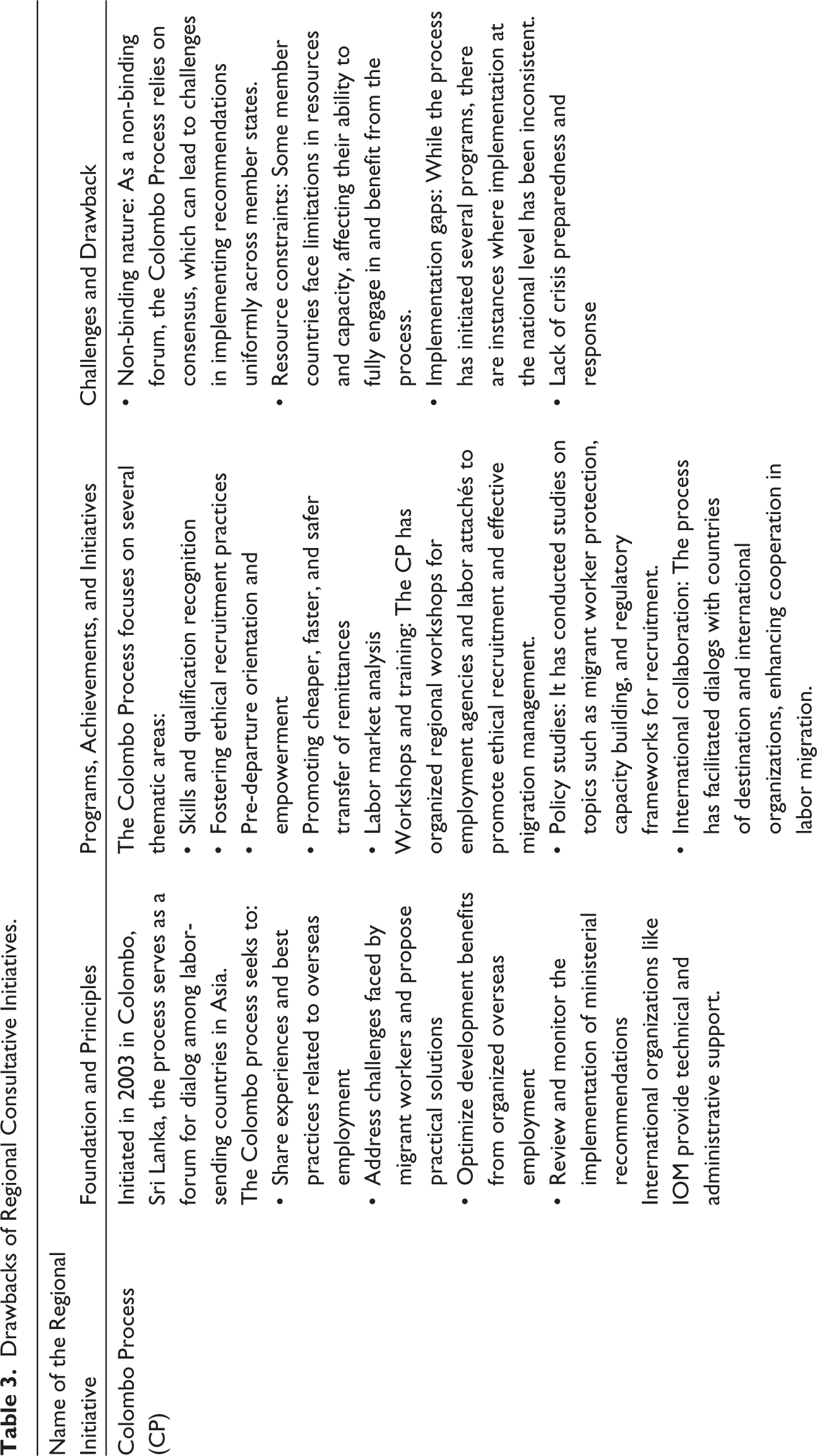
In this context, regional consultative mechanisms such as the ADD and the CP have made significant strides in advancing discussions on migration governance, particularly by prioritizing ethical recruitment, skills recognition, and remittance optimization at the regional level (Malit, 2024). However, their structural and operational limitations—rooted in non-binding, consensus-based frameworks—have resulted in uneven implementation of protections across member states. For instance, while the ADD has fostered dialogue on labor mobility, its exclusion of migrant workers and civil society from policy formulation undermines its ability to address critical issues such as wage theft, workplace safety, and accountability during health crises (Diop et al., 2018; Malit, 2024). Similarly, the Colombo Process, despite its focus on ethical migration, struggles with resource constraints and institutional weaknesses, leading to fragmented policy adoption at the national level.
These mechanisms also fail to systematically integrate the 2030 Agenda for Sustainable Development (UN, 2015), neglecting urgent concerns such as climate-induced migration and reintegration challenges for returning workers. For example, during the COVID-19 pandemic, migrant workers in the Gulf were denied equitable healthcare access, exposing systemic vulnerabilities exacerbated by the absence of enforceable safeguards (FairSquare, 2022). Such shortcomings reflect deeper structural flaws: a lack of accountability mechanisms for employers and authorities, insufficient monitoring systems, and a reluctance to address power asymmetries between labor-sending and host states.
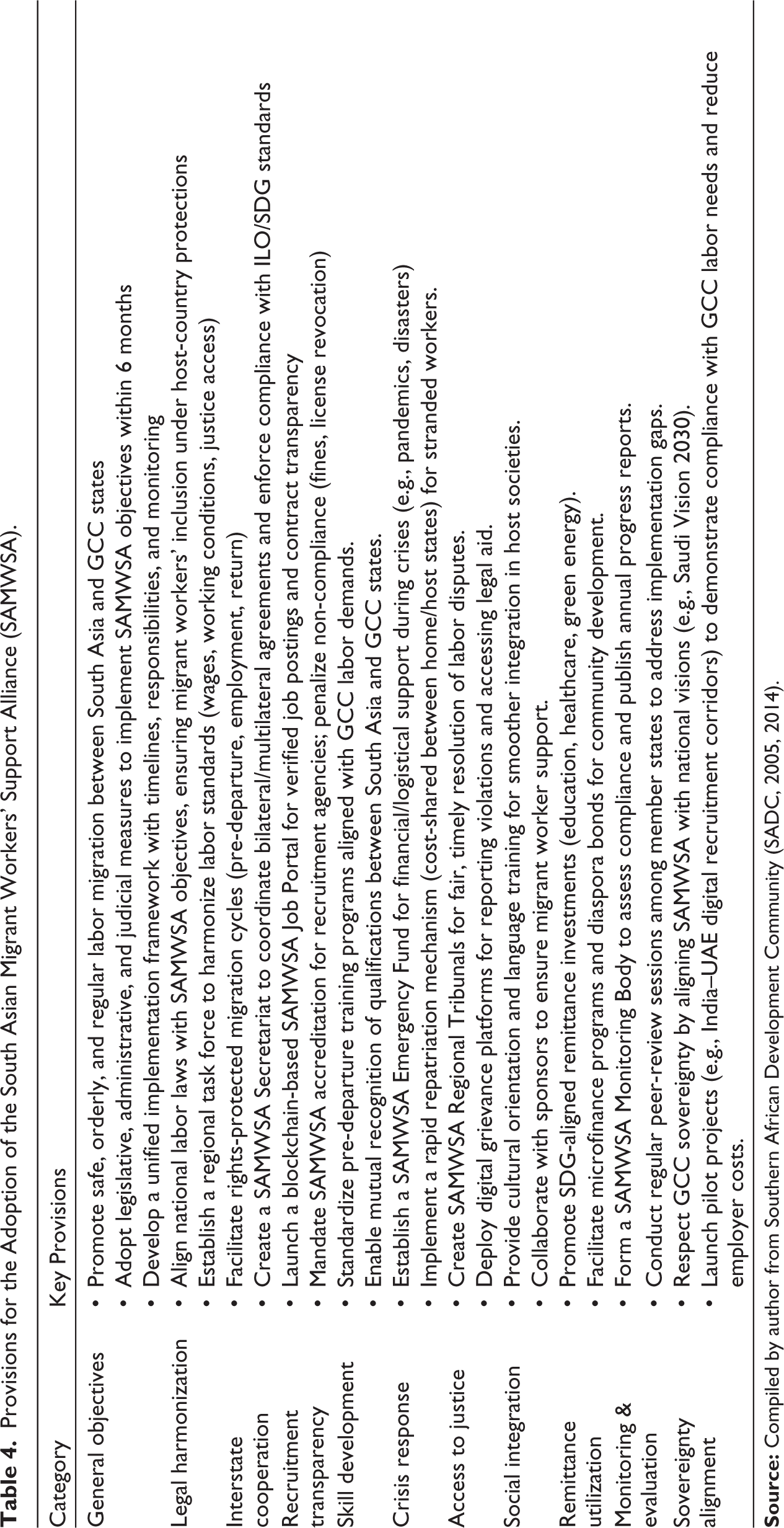
To bridge these gaps, the proposed SAMWSA offers a transformative alternative. Unlike the ADD and CP, SAMWSA would institutionalize enforceable policies such as mandatory wage protection, occupational safety standards, and climate-resilient migration pathways while ensuring migrant representation through worker councils and civil society partnerships (Ewers, Diop, Duma, et al., 2023). By aligning with the SDGs, SAMWSA could address reintegration challenges and climate migration, fostering sustainable development across the Gulf–South Asia corridor. For instance, SAMWSA’s digital grievance redressal platforms and regional tribunals would provide migrants with direct access to justice, countering the ADD’s state-centric approach. In prioritizing transparency and accountability, SAMWSA would not only fill the governance voids left by existing frameworks but also recalibrate power dynamics, ensuring migration policies serve migrant rights rather than state or employer interests. This shift is critical to creating an inclusive, equitable migration system that reflects the realities of South Asian workers in a rapidly changing global landscape.
Proposing the South Asian Migrant Workers’ Support Alliance: A Sustainable Vision for Regional Migration Governance
In the global labor migration, South Asian migration has emerged as a cornerstone generating about over 50 million labor flow. The migration to Gulf is a unique reality of the migration culture of South Asian states. The South Asian migrant demography significantly contributes to the economies of both their home and host countries, requiring a better governance framework (Thiollet, 2016). Besides, the profound challenges in terms of exploitation, precarious working conditions, and restrictions on mobility, migrant workers are denied rights-based treatment and welfare and lack legal protections. They are further out of sustainable development parameters as discussed above. The standard law procedures regulate the transnational migration; however, the Gulf states have engaged with global stakeholders and interregional forums for a better management of migration. Despite criticism from global supervisory bodies, such as Human Rights Watch, ILO and IOM, and regional agencies like the South Asia Forum, the Gulf states have come up with alternative mechanisms to discuss the management of migration. As discussed above, ADD and CP stand out to discuss alterations, reforms, and ethical procedures for addressing the violation issues. These forums are a piecemeal approach towards regional cooperation between labor-sending and labor-receiving countries. However, crucial gaps remain principally in addressing the rights, welfare, and sustainable growth of the migrant workers. To fill these gaps, this article proposes the establishment of the SAMWSA—a comprehensive and sustainable regional governance framework designed to protect migrant workers and enhance the management of labor migration in South Asia (Table 3).
Drawbacks of Regional Consultative Initiatives.
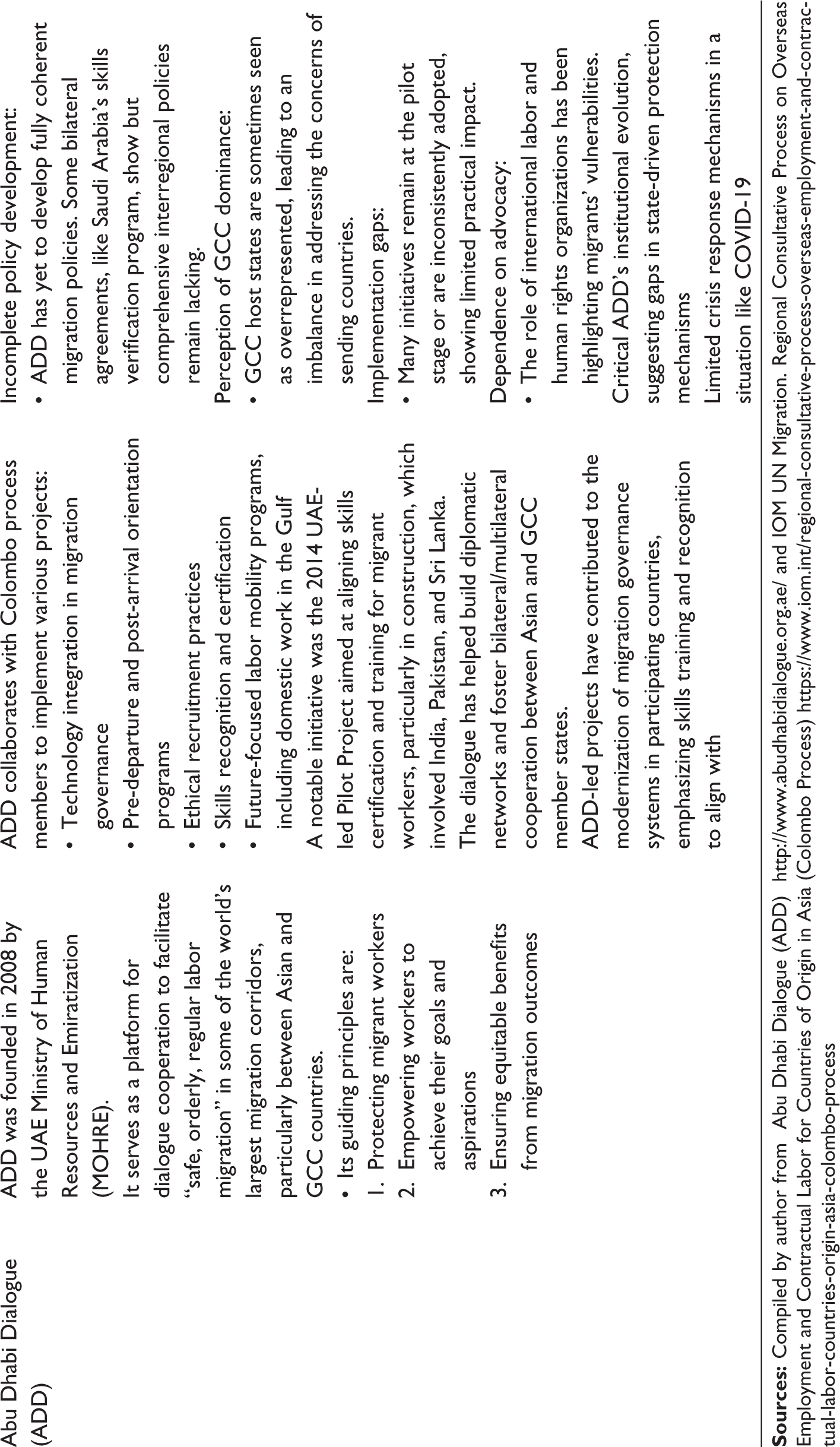
The central objective of the SAMWSA would be to nurture collaboration between South Asian countries and the GCC states to secure rights, legal accessibility, protection, and social integration for South Asian migrant workers. The first step toward this end could be to establish a central advisory consultative forum, a pilot project for the advocacy of legal and policy influence framework for the protection of rights according to global labor rights standards. As explained earlier, migrant workers are not governed by labor ministries within the GCC and hence do not fall under the legal rights framework (Jureidini, 2019), neither can they seek remedial action according to their country of origin’s regulation system. Therefore, it becomes imperative to enshrine a rights charter for migrant workers, in consultation with GCC labor ministries and advocacy groups. For this purpose, regional integration and cooperation have been recognized as a crucial initiative to “address common issues of migration governance in a given region” (IOM, 2017). “This is the process through which sovereign States enter into regional agreements, form supranational institutional structures, and/or design common institutions and rules to benefit national and joint interests, including in the realm of industrial, political, legal, economic, social or cultural integration” (IOM, 2017).
To enhance bargaining power with Gulf states, South Asian countries must strengthen regional cooperation on labor migration through platforms like the South Asia–Middle West Asia (SAMWA) dialogue. Drawing lessons from the Economic Community of West African States (ECOWAS, n.d.), South Asia should pursue formalized migration legislation and coordination. The European Union’s Global Approach to Migration and Mobility (EU GAMM, 2011) offers a useful framework, with its four pillars, for example, facilitating regular migration, preventing irregular flows, promoting protection, and maximizing developmental impact (IOM, 2017). These can guide South Asia in developing coherent policies toward the Gulf.
Internally, the EU’s Blue Card Directive (2021) illustrates how binding legal instruments can embed migrant rights, ensure benefit portability, and enable redress. While South Asia lacks such political integration, it can still adopt shared standards and accountability mechanisms. ASEAN’s 2017 Consensus, though non-binding, has encouraged bilateral agreements on ethical recruitment and social protection, such as the Philippines–Saudi Arabia domestic worker reforms. South Asia can similarly institutionalize coordinated bilateralism within a regional alliance. Together, these models highlight the need for South Asian countries to move beyond fragmented diplomacy. A coordinated regional approach can empower them to negotiate more equitably with GCC states while embedding rights and resilience in migration governance.
Drawing inspiration from the Southern African Development Community (SADC) protocol framework, the following provisions outline the structure, objectives, and operational mechanisms for SAMWSA, tailored to the Gulf–South Asia migration corridor (Table 4). These provisions ensure SAMWSA is rights-based, enforceable, and aligned with international labor standards while respecting the sovereignty of GCC states (Nita et al., 2017). In this way, SAMWSA can enable alignment with the migration policies of GCC states to tailor labor laws and standards that protect the rights of workers, set up legal aid services to assist South Asian migrant workers in navigating legal processes and addressing grievances, Establish effective dispute resolution mechanisms to address labor disputes and ensure fair treatment of workers, and provide information to South Asian migrant workers about their rights, legal resources, and available support services.
Provisions for the Adoption of the South Asian Migrant Workers’ Support Alliance (SAMWSA).
Conclusion
The migration regime–induced exploitation is prevalent and will continue in the foreseeable future. The reforms pre- and post-COVID do not indicate withering away of the system; rather these reflect the resolute of the Gulf regimes to make it more resilient. However, sustainability has been put to question by scholars, international civil society and organizations advocating for humane treatment of migrants in the Gulf region. Numerous studies have suggested, including that the exploitation continues unabated despite reforms. It can be exemplified through migrant exploitation during the construction of the Qatar stadiums, the wage cuts, broken contracts, forced terminations, employment without salaries, or delayed or non-payment of dues and many other practices such as visa and passport confiscations, denial of contract renewal, hiring for one post at the time of emigration, and forcing to join other menial or house services. These exemplify the subjugation to which migrant workers are subjected; above all, these workers have no right to challenge their employer as highlighted in this study, as legal access is denied and workers are governed by kafala law itself.
This research points out that the exploitation of the migrant workers is to be compulsorily rooted out, given the significance of these workers for remittance contributions and poverty reduction in the South Asian region. Therefore, a joint regional effort in the form of an alliance is necessary for harmonious economic growth and welfare of migrant laborers in Gulf countries. In this regard, this article suggests the formation of the SAMWSA for safeguarding the rights and lives of these transnational workers. Such an initiate will make this region a potential global contender in the international migration. By enhancing the skill of the migrants, especially those in the blue-collar category, the framework potentially can help Gulf regimes evade criticism and better manage these transnational migrants. This alliance could potentially help Gulf regimes in enhancing sustainability of the kafala regimes by integrating certain suggestions provided in the research.
Footnotes
Declaration of Conflicting Interests
The author declared no potential conflicts of interest with respect to the research, authorship, and/or publication of this article.
Funding
The author received no financial support for the research, authorship, and/or publication of this article.