




Abstract
Reducing carbon emissions is a social and economic trend in the context of global warming. This essentially involves a shift in energy consumption patterns and sustainable development. However, many less developed countries are faced with the dilemma of lack of carbon reduction funds and technologies. Fortunately, such countries like Nepal are often rich in clean energy resources such as water, wind, and light. Nepal is an important Himalayan country with abundant hydropower resources. Now, Nepal produces more and more hydropower—how do you use this clean energy? Nepal needs electric vehicles (electromobiles like new energy cars) to develop a green economy, so as to make full use of abundant hydropower resources and promote the upgrading of industries to a low-carbon direction, which is a win-win. Nevertheless, this energy transition requires the government to develop long-term and systematic plans for electric vehicles, which is an important prerequisite for the success of the green revolution.
Introduction
Coping with climate change has become one of the most important issues in the 21st century. The global challenges that we face under climate change include heatwave attack (hot weather or high temperature ), droughts (dry land), floods and debris flow (or mud flow), etc (Biyela, 2024; Lenton et al., 2023; Li et al., 2022; IPCC, 2023). These risks further exacerbate food shortages, poverty, conflicts between people and land, and regional development imbalances (IPCC, 2023). This situation is more pronounced in some high mountain areas, for example, Himalayan region (Allen et al., 2021; Li et al., 2022). Melting glaciers and permafrost degradation in warming alpine regions have been triggering barrier lake and landslide. The frequency of glacial lake outburst floods has doubled in the region (Li et al., 2022).
According to the Synthesis Report during the Sixth Assessment Report (AR6) cycle of the IPCC, losses and damage to the most vulnerable populations and ecosystems are particularly severe. Lenton et al. (2023) quantified the human cost of global warming and suggested that current policies lead to around 2.7°C warming, and could leave one-third of people outside the niche. There is no doubt that the capacity of different regions or countries to deal with climate change varies. Unfortunately, more than two thirds of the world’s countries are less developed countries, and most of them are located in arid and semi-arid regions and mountainous regions. There are currently 45 economies designated by the United Nations (UN) as the least developed countries (LDCs) (see UN list of LDCs, https://unctad.org/topic/least-developed-countries/list). Most of them are found in Africa (33 countries) and Asia (8 countries).
We have to face such a question: How to protect the earth and how to develop the economy? Under the emerging trend of green revolution and clean energy development, what can the majority of underdeveloped countries do and whether there are opportunities to seize is a very valuable research topic (e.g. Duan et al., 2024; Huang et al., 2024; Liu et al., 2024; Manigandan et al., 2024). Here, we present the case of Nepal from a regional perspective and fieldwork to respond to the development dilemma of less developed countries. This report aims to introduce the linkage of Nepal’s untapped hydropower potential with the promotion of electric vehicles (EVs), suggesting a leapfrogging opportunity for underdeveloped countries towards more sustainable modes of production and consumption. It’s particularly important for international scientific community to pay more attention to underdeveloped countries such as Nepal in energy transition.
The energy dilemma of decarbonizing in underdeveloped countries
Reducing carbon emissions is a social and economic trend in the context of global warming. However, many less developed countries are faced with the dilemma of lack of carbon reduction funds and technologies, and to be precise, there is no feasible path, and thus lack of internal motivation (Behrer and Heft-Neal, 2024; Cornwall, 2020). In the broadest sense, the dilemma is the problem of balancing economic development and environmental protection in underdeveloped countries (Huang et al., 2024; Manigandan et al., 2024). Pollution first, treatment later, or to curb economic growth for the sake of environmental protection (Yu et al., 2022)? That in itself is a difficult balancing act. Most of today’s developed countries benefited from the second Industrial Revolution in the late 19th and first half of the 20th centuries, when there was no concept of environmental protection. What was worse, for many countries in the heart of the third world like Asia and Africa, the traditional path to industrialization based on fossil fuels like coal and oil is very narrow (Aquilas et al., 2024; Behrer and Heft-Neal, 2024; Sharma and Shrestha, 2023). Thus, reducing carbon emissions is essentially energy transformation and economic and social sustainability.
In South Asia, biomass energy is an important source of energy in the vast rural areas, but biomass-burning emissions like burning of crop straw brings pollution of atmospheric organic carbon (Black carbon/elemental carbon and related organic acids). The data from the Qomolangma Observation Station (4276 m a.s.l.) showed higher annual average concentrations of dicarboxylic acids than Arctic Ocean and Antarctica, that is, 109 ng m−3, accounting for 7.45% of total organic carbon (Cong et al., 2015). Organic acids are major components of the aerosols in the high mountains of Inner Asia known as the Third Pole (TP), based on the contribution (~15.5%) of dicarboxylic acids and related compounds to aerosol organic carbon. Furthermore, the contribution of black carbon aerosols from South Asia and Southeast Asia to the black carbon aerosols over the Tibetan Plateau is more than 60% (Chen et al., 2024).
Many studies have focused on glacier changes and water resources in this region (TP), including glacial lake outbursts and the impact on downstream dams (Li et al., 2022; Qiu, 2013). The environmental effect of carbonaceous aerosols has heightened people’s concerns for this climate-sensitive area, such as the water crisis. Despite geological hazards and climate uncertainties, the development and utilization of water resources is indispensable to the development of local economy, especially sustainable hydropower development (Basheer, 2024). Thus, it is not helpful to simply discuss the serious impact of climate change on mountain water resources. This will not solve the local energy dilemma and development issues of countries in the region.
Clean energy resources in the least developed countries: The case of Nepal
Nepal is an important Himalayan country, located on the southern slope of this mountain belt, with rich hydropower resources and topographic differences. It is estimated that Nepal’s national hydropower potential is 83,500 MW, with 2689.83 MW already developed in 2023, which is only 6% (3% less in 2020 1 ), which is much lower than neighboring China and India, and even lower than Bhutan (this study; Vaidya et al., 2021). In comparison, the proportion of hydropower development in India, Pakistan and Bhutan in 2021 is 33.9%, 16.5%, and 9.7%, respectively (Li et al., 2022; Vaidya et al., 2021). At the same time, Nepal is also an underdeveloped country with a considerable population of 30.548 million people, and per capita GDP is only about 1336 US dollars in 2022, which is listed by the UN as one of the least developed countries in the world (The World Bank, 2023). The impression is that the country’s infrastructure remains weak, with many areas lacking electricity, roads, and sanitation.
However, Nepal has rapidly become a net electricity exporter in the region over the past decade (Especially in the last 5 years)—thanks to the development of hydropower (see Nepal Electricity Authority, https://www.nea.org.np/). Nepal has received a lot of investment in hydropower plants from China over the past decade under the Belt and Road Initiative (BRI), and later India’s investment. Dams have been built in the eastern Koshi River basin and Kathmandu Valley, and the capital’s power supply is more stable than it used to be. Step charging for civil electricity (domestic consumers) is implemented based on monthly consumption and current size (e.g. at 51–150 kWh/monthly unit and 5 A, service and energy charges as Rs 84.5). However Nepal’s industrial development is lagging, the total consumption of power energy is limited, for example, industry sector only shares 38% of total electricity available in Nepal and household sector shares 45% (Sharma and Shrestha, 2023). A lot of electricity has to be exported to India and India because of geopolitical reasons, often restrict the import of Nepal’s hydropower. In 2023, Nepal also tried to export hydropower to China (exploring this possibility). Another measure is that earlier this year (2024) Nepal and Bangladesh were negotiating tariffs on a 40 MW electricity transaction—based on the Nepal Power Transit Agreement signed with India in May 2023.
Nepal produces hydropower, and more and more of it—how do you use this clean energy? Considering Nepal’s resource base and social development, Nepal needs to expand its thinking and show determination to develop a green economy, and new energy vehicles (EVs) or electromobiles like new energy cars will be an effective tool. At present, the streets of Kathmandu are filled with gasoline and diesel cars (Figure 1a), and those used cars made by Japan and Tata cars made by Indian companies have made Nepalese people heavily dependent on fossil fuels such as oil, which Nepal does not produce.
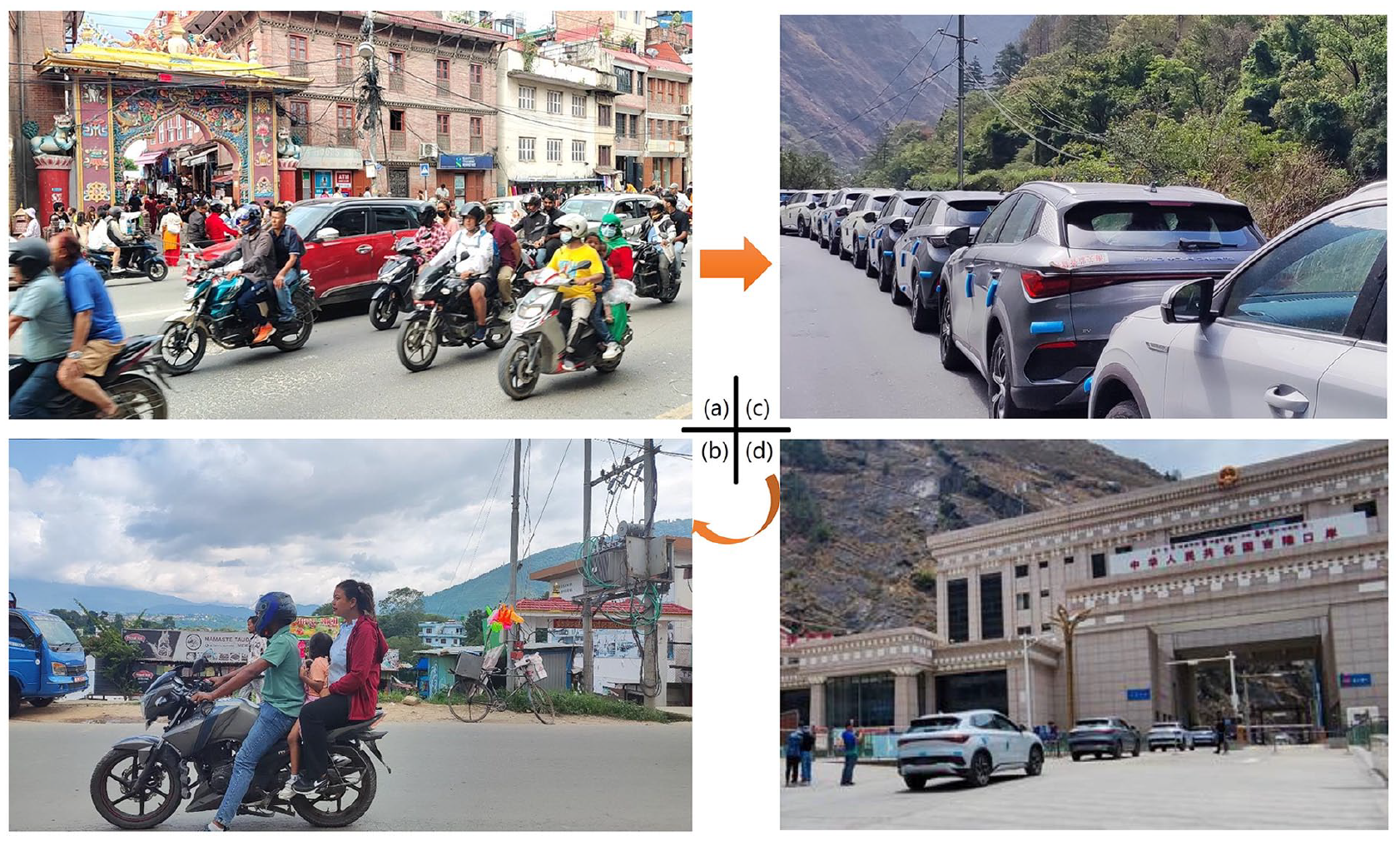
Nepalese traditional vehicles and imported electric vehicles: (a) transportation on the streets of Kathmandu, (b) motorcycles are one of the most popular means of transportation for Kathmandu residents (photograph by Chen H. in August 2023), (c) BYD Electric cars at Jilong (Gyirong) Town (Xizang Autonomous Region, China), (d) electric cars waiting for export at Jilong Port (photograph in June 2024).
Nepal is heavily dependent on imports of oil, with the annual cost of imported oil products accounting for about 10% of GDP and 13% (or more) of the trade deficit (Ghimire, 2016; Sharma and Shrestha, 2023). The current energy consumption in Nepal is dominated by traditional energy sources such as gasoline and diesel. Between mid-July 2021 and mid-June 2022, Nepal imported 1.7 million liters of diesel oil, worth Rs 15,642 crore (Figure 2a). Meanwhile, 92.2% of its petrol was bought from India. According to Kathmandu Post, Nepal’s oil imports fell 4.35% to Rs 33,734 crore in the fiscal year just ended (2023–2024AD). 2 Despite a surge in new energy vehicles imports and growth in domestic power generation, Nepal is still dependent on fossil fuels. In another word, Nepal survives by relying on massive imports of fossil fuels in a long time. Thus, Nepal’s domestic gasoline retail price is sensitive to international crude oil supplies (Figure 2b). For instance, the price of oil, which soared to Rs 190 a litre 2 years ago because of the crisis in Ukraine, has now fallen to Rs 171.
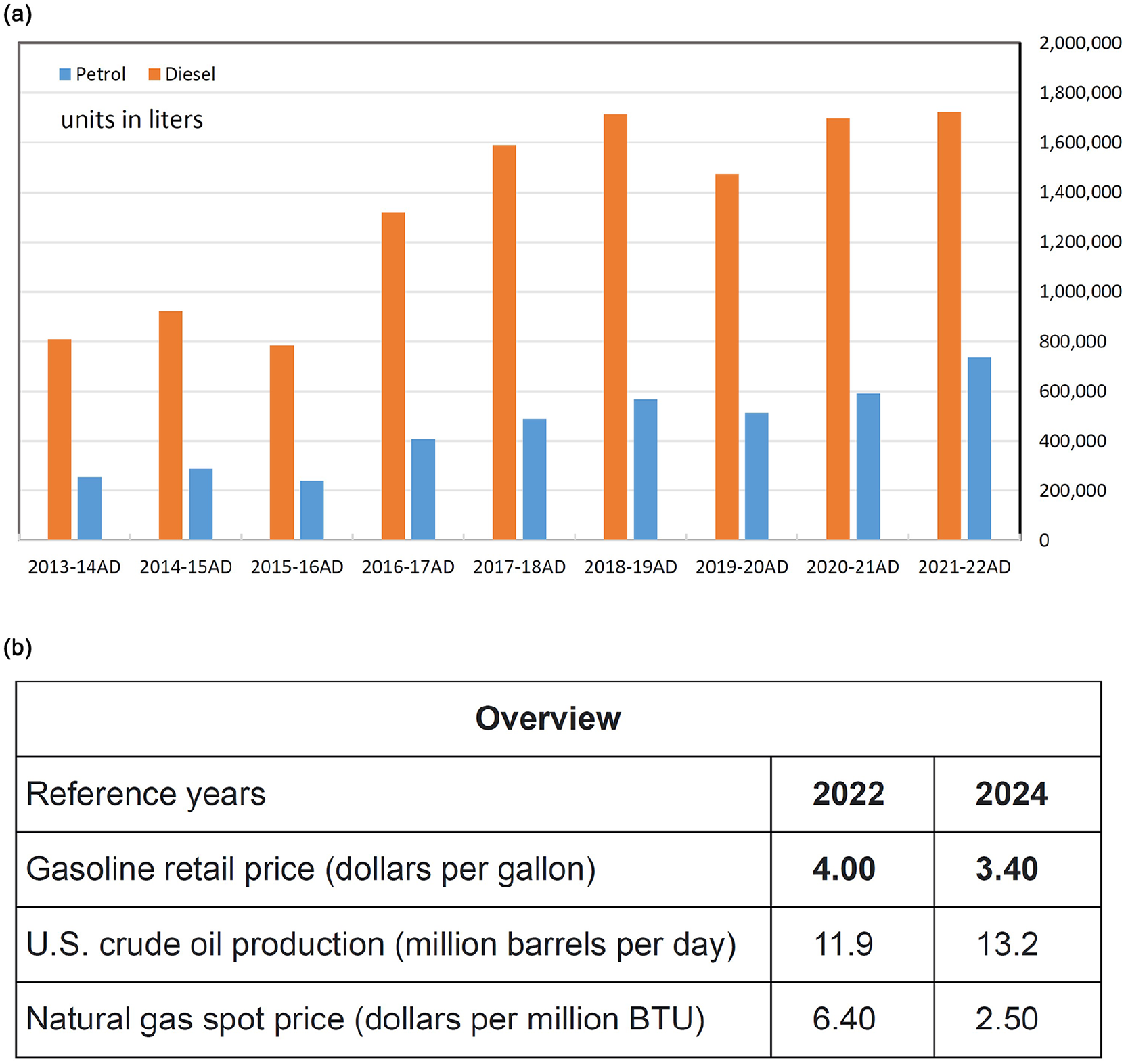
Current situation of energy consumption of Nepal: (a) the amount of oil Nepal imports per year, (b) the price of traditional energy (gas, gasoline) (as dollar unit, 1 USD = 134 NPR) in 2024.
In addition, exhaust pollution from fuel cars is another air pollution source except for the above-mentioned biomass-burning emissions. They are essentially traditional energy consumption. Winter and early Spring are the most severe period of air pollution in South Asia every year, with biomass burning and crowded cars producing large amounts of aerosols (Lewis, 2023; Nair et al., 2023), so the responsibility for global carbon reduction cannot be achieved without the participation of South Asia and the Himalayan countries, which have one-fifth of the world’s population (2022).
Discussion and prospect
Underdeveloped countries such as Nepal need electromobiles to develop a green economy, promote industrial upgrading towards low carbon by upgrading the means of transport and develop modern transportation. The obvious advantages are to make full use of clean energy like abundant hydropower resources as well as the upgrading of industries, which is a win-win. In Nepal, not only will people need new energy vehicles, they may also need electric motorcycles (see Figure 1). This is a win-win strategy for environmental protection and economic-social development. In short, Nepal can do more and do better.
For example, over the past decade, China has rapidly grown into the largest market for EVs and one of the leaders in the fight against climate change. The proportion of hydropower development in China is currently ~55% (Li et al., 2022). At the same time, in the first half of April this year, China’s new energy vehicle market ushered in a milestone breakthrough, and the retail penetration rate reached 50.39%. 3 According to current observation, new energy cars will be major trends of future world development (Qi and Li, 2024).
Recent industrial clean energy dynamics in Nepal
The above assumption about subject matter of clean energy development in Nepal and its integration with industrial clean energy technologies is a path worth considering. And in the last 2 years it has been put into practice. As follows to encompass the challenges to broad EV adoption, including but not limited to infrastructure development, cost implications, and public sentiment, we can examine clean energy policy of Nepal and the current status of EV adoption in Nepal. Such discussions might provide a more holistic view of the prospects and obstacles facing the EV sector in underdeveloped countries.
Clean energy policy of Nepal
The Nepalese government has ambitious plans for hydropower development. Through the introduction of funds and technology from China, India, and other countries, large-scale hydropower stations are being built in Nepal. For example, the Upper Tamaxi Hydropower Station, which is the largest hydropower station installed in Nepal, has become a major project of the Nepalese government, and meets the domestic electricity needs of more than half of the Nepalese people. The power station located on the Tamaxi River in Nepal on the China-Nepal border, owns the total installed capacity of 456 MW, and the designed annual average power generation is 2,281 GWh. According to media reports, 4 Nepal’s largest hydropower station was built by Chinese enterprises, known as Nepal’s “Three Gorges Project,” and was fully put into operation in March 2022. Nepalese Prime Minister Deupa attended the ceremony. As a result, Nepal has surplus hydropower.
The government of Nepal launched the “National Green Hydrogen Policy 2080” at the start of this year, which aims to utilize its vast hydroelectricity network to produce some of the world’s cheapest green hydrogen (Acharya, 2024). We understand this hydrogen policy promotes the production and utilization of green hydrogen through electricity generated from renewable sources such as hydropower, in order to reduce the impact on the climate and dependence on petroleum products. This indeed provides another path which aims to convert Nepal to a low-carbon economy while exploring export opportunities (Acharya, 2024). However, based on current renewable energy prices, hydrogen production generated in Nepal does not yet have a high comparative advantage in Asia. The cost of production ranges from €3.50 to €3.75/kg in Nepal, 5 comparable to China but slightly higher than Russia. Certainly, as the scholars say, utilization of surplus hydropower could push such a Himalayan country become one of world’s lowest-cost producers.
In addition, the consumer markets for green hydrogen are China, India, Southeast Asia and other regions, green hydrogen exports may still face the same geopolitical troubles as hydropower exports. Moreover, the export of green hydrogen is only a derivative product of natural resources, and has no direct effect on the green transformation of local social energy consumption.
Anyway, as far as our actual observations, Nepal has made many encouraging progress in clean energy policies, practices and public activities. Among various targets, Nepal’s second INDC aims to expand clean energy generation to 15,000 MW by 2030, of which 5%–10% will come from small micro-hydro, solar, wind and bio-energy, Energy Minister Bhamba Busar said in 2022. 6 Thus, Nepal needs financial and technical assistance to adopt innovative and efficient ways to scale up clean energy projects in Nepal to combat and ameliorate climate change and ensure an inclusive energy transition. New Energy Minister also calls on international community to invest in Nepal’s energy sector in 2023. 7 The Nepalese business community has responded positively, and private capital is also investing in small and medium-sized hydropower plants. Nepal’s industrial sector is cooperating with international companies from China, India, the United States and other countries in the field of clean energy development. Totally, this country keeps an open mind when it comes to manufacturing and market dynamics.
The current status of EV adoption in Nepal
As mentioned above, Nepalese demand for new energy vehicles is rising rapidly. By plotting a bar chart of three types (Two Wheelers, Three Wheelers, and Four Wheelers) of EVs, Sharma and Shrestha (2023) presented rise in the number of EVs in Nepal from 2016/17 to 2022/23. Three-wheelers (e-rickshaw/tempo) vehicles had reached 10,114 in 2016/17, and then dropped to less than 1000 in the following years. Nepal has been importing four-wheelers (cars, jeeps, work trucks, and others) vehicles powered by electricity in the past 7 years (see Figure 1c and d), and the largest number was 4999 in 2017/18. We has seen new energy vehicles (hybrid) driving on the street of Kathmandu at times. However, imported EV numbers are not increasing in an expected way (Sharma and Shrestha, 2023). This could be influenced by energy prices, the global pandemic and people’s preference for different types of EVs.
In Nepal, fuel vehicles (motorcycles, cars, and gasoline tricycles) are still the main mode of transportation, as shown in Figure 1a. We can see busy Kathmandu’s streets, and there are many fuel cars or gasoline motorcycles. Motorcycles are one of the most commonly used means of transport in Nepal (Figure 1b). However, the price of motorcycles is not low, selling between Rs 180,000 and Rs 360,000, and buying a motorcycle is a huge financial burden for locals, requiring years of savings.
We concluded that the main factors affecting the EV adoption may be the high price and the lack of related supporting facilities. The price is closely related to the lack of transport capacity and import channels. Actually, the current state of EV adoption in Nepal is that recent demand is growing rapidly, but planning is lagging. According to Nepal Customs data, Nepal imported 4050 assembled EVs in the 2022–2023 financial year, double the previous year, and in the first 4 months (2023–2024), that is, 2787 electric vehicles were imported, an increase of 174% year-on-year. 8 The Nepal Electricity Authority and the private sector have been building charging piles, but there is no overall plan on how and where to build them, the government has not been able to formulate a plan for the number of charging piles, and the policy has often been lagging.
According to Economic and Commercial Office, Embassy of the People’s Republic of China in Nepal, 9 there are also some challenges with Nepal’s EV policy. For example, the government has increased duties and excise duties on entry-level EVs, which may run counter to the government’s policy goals of increasing electricity consumption and achieving zero carbon emissions. In contrast, the government has reduced taxes on mid-range EVs, but not significantly increased taxes on high-end EVs. Hence, to sum up, Nepal’s demand for EVs is growing rapidly, but infrastructure construction and policy planning are relatively lagging behind, which limits the further popularization and development of EVs to a certain extent.
Policy prospect
The above-mentioned facts have policy implications for developing countries, especially for less developed countries considering the transition to EVs. The government can gradually influence people’s way of life through administrative, economic, and tax means, encourage people to switch to new energy transportation, and cultivate a large market for domestic clean energy consumption. Meanwhile, less developed countries should strengthen international cooperation in technology and integrate it into the industrial chain and supply chain of clean energy. Of course, governments need systematic green economic planning.
Take the case of Nepal, potential measures include: (1) Formulate a systematic green transportation development plan for EVs and promote the construction of charging pile infrastructure; (2) Vigorously introduce small EVs (e.g. motorcycles or three wheelers) and provide appropriate government subsidies, to change people’s travel habits; (3) Cultivate local green economy industry chain with the integration of hydropower, secondary development of renewable energy and modern new-energy transportation.
We should see the potential of EVs, and guidability of public sentiment, further understanding the shift in energy consumption behind the new green revolution, marked by EVs, will have the most profound environmental, social, and political impact (Sharma and Shrestha, 2023; Figure 3). The implications of Nepal’s recent clean energy developments for other developing countries rich in clean energy potential lie in encouraging those countries to use clean technologies to actively develop their own renewable energy sources. Nevertheless, this energy transition requires the government to develop long-term and systematic plans (including policy frameworks, international cooperation, and economic strategies) for EVs, which is an important prerequisite for the success of the green economy.
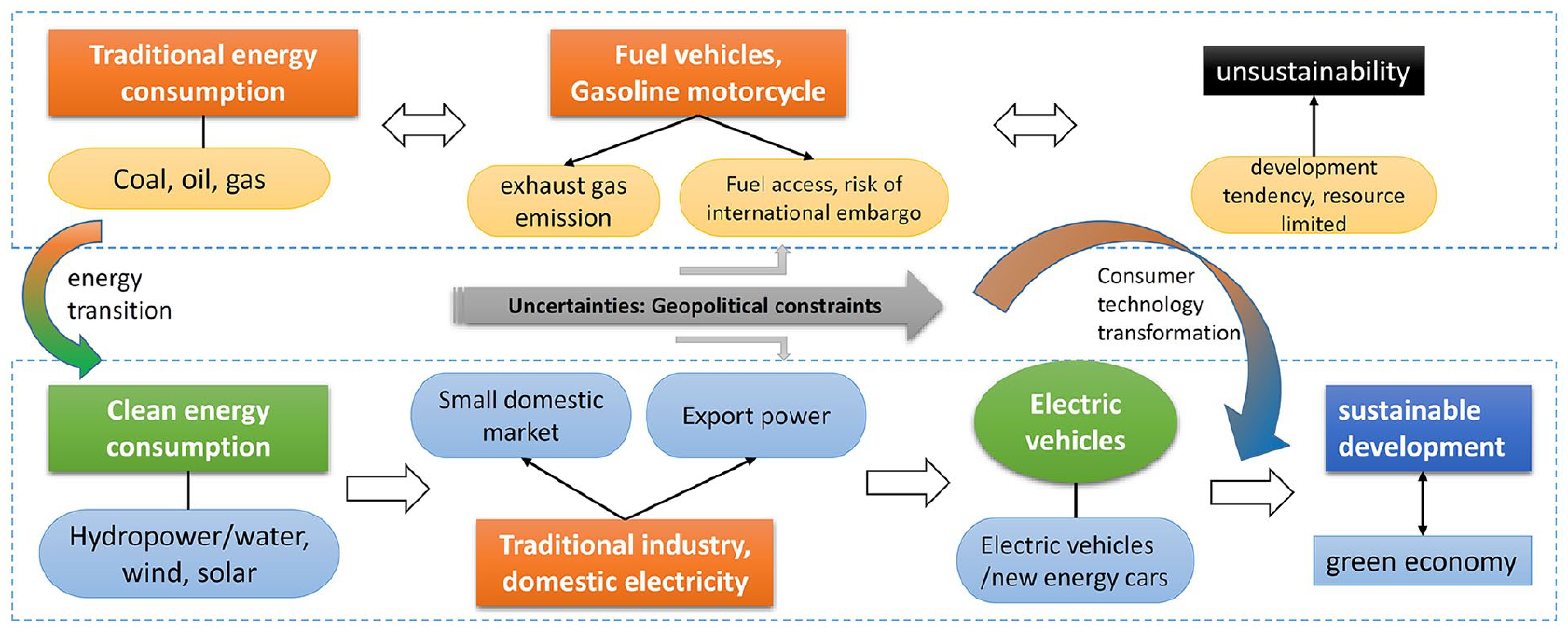
Energy transition and economic sustainability (the case of Nepal).
Footnotes
Acknowledgements
We thank Dr. XU Tianli for his assistance in field expedition, and also thank our friends in Tribhuvan University, Kathmandu. Thanks are also given to two anonymous reviewers for their constructive comments.
Data availability
Data will be made available on request except the public data already indicated in the text.
Declaration of conflicting interests
The author(s) declared no potential conflicts of interest with respect to the research, authorship, and/or publication of this article.
Funding
The author(s) disclosed receipt of the following financial support for the research, authorship, and/or publication of this article: This work was supported by the Second Tibetan Plateau Scientific Expedition and Research Program (No. 2019QZKK0601).