




Abstract
Hopes that the growth of platform work in Africa will provide new opportunities for women's employment have not yet been matched by empirical research. Based on a five-country survey of workers on 18 platforms across four sectors (ride-hailing, delivery, professional, microtasks), the research reported here makes the first direct, systematic comparison of men's and women's experiences of platform work in multiple African countries. The paper finds an absence of specific gender differences across many core operational structures of platform work including general shortcomings related to social protection, contracts, human/algorithmic management and representation being experienced similarly by both men and women. However, the paper also finds that these processes occur within a wider gender-unequal context in which gendered norms skew the presence of men and women in different sectors, and in which wider exclusions encourage women into platform work but lead them to experience greater precarity and dependency than men on that work. For example, women on average earn less than men because they work demonstrably fewer hours. This also limits the purported flexibility of platform work for women workers and denies them a pay premium to reflect their generally higher levels of education. While experienced by only a minority of women workers surveyed, gender-discriminatory cancellations, complaints and abuse were reported. The paper ends with recommendations for actions to address gender inequalities in platform work, and reflections on future research.
Introduction
The global expansion of the platform economy has created many employment opportunities, including what is termed ‘platform work’ or 'gig work’ – the performance of short-term tasks in which customers and workers are matched via a digital platform (ILO, 2021; Woodcock and Graham, 2019). That growth has also been seen in Africa, and there have been hopes that platform work might particularly provide an opportunity for women, who have faced important barriers to participation in local labour markets (AfDB, 2018; World Bank, 2016).
While gender and platform work – especially women's unequal gains from it – has been gaining attention in the last few years, the experiences of women platform workers in Africa have received little attention in the literature to date, and the existing studies paint a mixed picture. Platform work has provided a new source of livelihood for women in Africa; one that has relatively low entry barriers and which can in theory provide greater flexibility in working hours compared to traditional employment (Rizk et al., 2018). On the other hand, wider gender inequalities have spilled into platform work, making it more difficult for women than men to enter, and subsequently perpetuating gender inequalities, with platform work sectors such as ride-hailing and delivery services being heavily male-dominated, while domestic work is heavily female-dominated, following their non-platformised counterparts (Hunt et al., 2019; Hunt and Samman, 2020). Other reported problems include gendered discrimination and harassment, and challenges brought on by expectations that women will undertake unpaid home/care labour alongside their jobs (Anwar, 2022).
However, these findings are based on very little evidence. Gender and platform work scholar Al James points out that research on the gig economy and gender is sparse overall, accounting for less than 1% of articles to date on platform work (GEP, 2023). Our review found that studies concerned with gender and platform work that look at Africa as a region are even more sparse. We identified only a few papers on platform work in Africa that include some mention of gender issues; a few papers on gender and platform work that include a passing reference to Africa; and a few gender-focused papers studying individual countries or platforms. There was just a single primary study that covered more than one country and platform work sector (Anwar, 2022). There is thus a pressing need for more fieldwork-based research on this topic to reflect on the broader policy aspirations for the region for women's economic empowerment through platform work. Hence, the motivation for the current paper emerged, to provide a deeper and broader understanding of the similarities and differences between women's and men's experiences of platform work in Africa.
Its evidence base is a five-country study (Egypt, Tunisia, Ghana, Tanzania, South Africa) drawn from the global Fairwork project involving a questionnaire-based survey of 148 workers – split equally between men and women – working for 18 platforms across four different sectors (ride-hailing, delivery, professional (tutoring, IT freelancing), and microtasks). The paper is thus the first of its kind making a direct and systematic comparison of men's and women's experiences of platform work in Africa across a range of sectors and countries. Covering a broad set of issues related to working conditions, the paper demonstrates that while at first glance many platform work processes could be deemed gender-neutral or even gender-blind, there are important ways in which gender inequalities are reproduced through platform work. Subsequently, even within similar operational systems that facilitate access, retention, attainment and progression in the platform economy, women overall end up experiencing lower overall pay, greater dependency, lower flexibility and more discrimination than their male counterparts. The findings indicate that focusing only on the operation of platforms will not be sufficient to ensure equality of women platform workers in these African countries; policy interventions are needed.
The paper is presented as follows. First, it provides an overall review of the literature on gender and platform work; then reviews the emerging Africa-focused literature on the topic. Next, the paper describes the methodology utilised in the research reported here. This is followed by a results section. Findings are divided into those where differences were not found between women and men, and those where differences were found. A discussion and conclusion provide the final parts of the paper.
Women and platform work
The rise of the platform economy and the emergence of digital labour platforms have been celebrated as having the potential to overcome existing gendered barriers to access in order to provide gainful employment (Datta et al., 2023; The Asia Foundation, 2020). Platforms themselves often join in this narrative with branding, features and policies to highlight their gender-inclusiveness. For instance, Uber has a ‘Women Rider Preference’ feature (currently available in 23 countries) which enables customers to request women drivers only, in an effort to motivate more women drivers to join the platform and earn from the platform (Payne and Maiolino, 2023). Kwan (2022) highlights that academic scholarship has sometimes shared this narrative as systemic issues such as gender wage gap, gender bias in hiring and recognition and reward schemes, as well as overall structural issues such as choice of work, sector and hours were hoped to be overcome by the flexibility, autonomy and seemingly objective work processes that digital labour platforms introduced (see Chaudhary, 2021; Rhode, 2014; Zanoni, 2019; cf. Kwan, 2022). In practice, too, other literature has highlighted benefits from women's engagement with platform work (D’Cruz and Noronha, 2016; Zainudeen and Samaratunga, 2023).
Despite the hopes and in some instances hype, critical studies on platform work and gender draw a different picture, arguing that, just because work is mediated through digital interfaces, does not make it any less gender-blind or more gender-inclusive. Even though platform work emerges as an attractive choice for women workers, due to the potential flexibility and autonomy it offers to balance their care responsibilities around their work schedule, it introduces and reproduces significant gender inequalities (Churchill and Craig, 2019; Tandon and Sekharan, 2022).
Reports of sexual harassment, assault and continued exposure to mental and physical harm have been reported (Fairwork, 2023; James, 2022; Ma et al., 2022; Ticona and Mateescu, 2018). Other studies have noted that due to algorithmic allocation of jobs, women experience a disadvantage (Cook et al., 2018) as they often receive less favourable reviews from customers due to established gender norms and stereotypes, which contribute to an overall gender pay gap (see also Churchill, 2024). Barzilay and Ben-David (2016), for instance, found that on average women's earnings were two-thirds of their male counterparts on Uber, despite working long hours. Gender pay gaps were also found to be a major issue on cloudwork platforms such as Amazon MTurk (Adams, 2020; Adams and Berg, 2021; Litman et al., 2020).
Several studies so far have indicated that the inequalities women experience in traditional labour markets transfer over to their digitally-mediated versions on digital labour platforms (Churchill and Craig, 2019; Gerber, 2022; James, 2022; Milkman et al., 2021), including access to jobs, poor overall access to full-time and gainful employment, and under-valuation of jobs that are typically considered as women's work (e.g. cleaning and care work). For instance, Churchill and Craig (2019) find that whereas men make up the majority of workers on delivery and driving platforms, women are typically channelled into digital carework platforms, offering domestic work, childcare and elder care services (gendered sectoral segregation is also reported by Berg et al., 2018; Berg and Rani, 2021; Huws et al., 2019; ILO, 2021; Van Doorn, 2017). Hence, some scholars argue that platforms often perpetuate women's unequal participation in the labour market (Kampouri, 2022; Kasliwal, 2020).
The literature to date has provided a rich understanding of platform work from a gender perspective but we identified two gaps that we felt might usefully be addressed. The majority of research has been focused on high-income countries, with little work reported from the majority world of low- and middle-income countries. Where middle-income countries such as India are researched, the focus is typically on online platform work (sometimes referred to as cloudwork, crowdwork or online freelancing). Yet there are significant differences between this and location-based platform work (sometimes referred to as offline or geographically-tethered platform work) (Woodcock and Graham, 2019); and these pose different challenges for women workers in terms of access, continued work opportunities and long-term outcomes, including pay levels, social protection and exposure to risk (Fairwork, 2023). We thus particularly lack an evidence base about gender and location-based work in low- and middle-income countries.
We also perceived a second opportunity to supplement current research. Some of the studies reviewed report only on the experiences of women workers, somewhat constraining the conclusions that can be drawn about gender inequalities. Where direct comparisons are made, they have tended to focus on individual issues, such as the gender pay gap, or on individual platform sectors.
Hence, based on this review of literature on women and platform work, we saw the potential to expand the existing evidence base. We decided to focus on Africa because – as discussed in the next section which provides a more region-specific review of literature on gender and platform work – there has been a dearth of research from the region. Rather than investigating a single platform or specific sector, or only focusing on the experiences of women workers, we sought to further expand the analysis on gender and platform work by comparing women's and men's experiences on platforms where both women and men are part of the worker base. Finally, we focus only on location-based platform work: to avoid conflation with the very different experience of online platform work; to address the gap around gender and location-based work in low-/middle-income countries; and because – again in contrast to online platform work – it much more often forms the sole basis of income for workers (ILO, 2021).
Women and platform work in Africa
The platform work economy in Africa has been growing strongly, in part accelerated by the Covid-19 pandemic, with extrapolation from one estimate suggesting up to 10 million platform workers across Africa at the start of the 2020s (Hunt et al., 2019; Wasilwa and Maangi, 2020). This growth, alongside the association of platform work with the creation of new livelihoods and with flexibility of working hours, has led it to be lauded as a mechanism for the economic empowerment of women in Africa (Shah et al., 2021; World Bank, 2016), echoing the overall hype of women in platform work identified more broadly above.
Despite this size, growth and potential importance as a basis for greater gender equality in Africa, there has been a striking lack of research on the topic of gender and platform work. Our review of literature located only one paper researching the topic across multiple countries and sectors in Africa on the basis of primary fieldwork (Anwar, 2022). In what follows, we have therefore included a broader range of papers: sector- or country-specific studies based on primary fieldwork (Babo and Odame, 2023; Chibanda et al., 2022; Hunt et al., 2019; Hunt and Machingura, 2016; Rizk et al., 2018); papers discussing gender and platform work in Africa but based solely on secondary sources (Chiweshe, 2019; Natabaalo, 2022; Shah et al., 2021); studies of the domestic work platform, SweepSouth in South Africa where women workers are over-represented (Hunt and Samman, 2020; Kalla, 2022; Lesala Khethisa et al., 2020; Nhleko and Tame, 2023; Sibiya and du Toit, 2022); and general studies of platform work in Africa that include some mention of gender-related issues (Anwar et al., 2023; Cieslik et al., 2022; Van Belle et al., 2023; Wasilwa and Maangi, 2020).
We start with two general reflections from the review. First, papers sometimes merge features of online platform work and location-based platform work. In practice, and as outlined above, these have quite different gendered implications. Hence, as noted, our focus solely on one of these: location-based platform work. A second reflection from the review is that it can sometimes be difficult to differentiate typical features of platform work from specifically gendered elements, especially given the broader experiences of precarity and informality in Africa (Anwar and Graham, 2021). For example, benefits of platform work for women raised in the literature include provision of an income, some flexibility of working hours, and access to formal financial systems such as a bank account and insurance (Hunt et al., 2019; Hunt and Machingura, 2016; Lesala Khethisa et al., 2020; Nhleko and Tame, 2023; Rizk et al., 2018). Downsides of platform work for women include pay levels below the minimum wage, insecurity and precarity of employment, lack of social protection, lack of flexibility due to algorithmic control of work, and performative pressures to invest emotional labour with clients given the platform rating system (Anwar, 2022; Chibanda et al., 2022; Fairwork, 2023; Hunt et al., 2019; Hunt and Machingura, 2016; Nhleko and Tame, 2023; Shah et al., 2021; Sibiya and du Toit, 2022). However, these are not solely experienced by female platform workers; they are universal issues reported worldwide in relation to platform work (Fairwork, 2022a) and point towards wider precarity involved in platform work. While, as discussed below, some may intersect with gender issues, they do not necessarily do so. That does not mean, however, that gender-related findings have not already been raised by the literature covering location-based platform work in Africa.
Labour force participation rates in Africa for women are lower than those for men and unemployment rates are higher (Asongu and Odhiambo, 2020; UNDP, 2022). While barriers to entry for women into platform work can be lower than found in traditional employment, the potential opportunities for female economic empowerment arising from platform work are seen to be reduced due to wider gender inequalities (Rizk et al., 2018; Shah et al., 2021). These include women's lower access to digital devices, lower access to education and training, and cultural barriers such as the belief that some types of location-based activity are not appropriate work for women or are unsafe for women (Anwar, 2022; Babo and Odame, 2023; Chibanda et al., 2022; Chiweshe, 2019; Hunt et al., 2019; Shah et al., 2021). The presence of women in all sectors of the platform work economy in Africa demonstrates that these gendered constraints – with the added burden of unpaid work that restricts women's labour force participation generally – are not insurmountable. However, the asymmetrical gender distribution of traditional occupations has readily bled into platform work in Africa (Cieslik et al., 2022; Hunt et al., 2019; ILO, 2021; Rizk et al., 2018; Wasilwa and Maangi, 2020). Rough estimates from these sources (which are based on a very small sample of countries) could suggest that around 1% of ride-hailing workers in Africa are women; around 3% of delivery platform workers; and around 93% of domestic platform workers.
In terms of the implications of platform work, we find the Africa-specific literature reflecting the overall pattern of positives and negatives identified in the broader literature reviewed above. Three positive and gendered features of platform work in Africa were mentioned in the literature, reflecting a potential to escape some of the constraints of traditional societies and economies. Women can use the income from platform work to gain some measure of financial independence, for example from traditionally male control of finance within families; though of course, this would likely be true of most forms of paid employment (Hunt et al., 2019; Natabaalo, 2022). Flexibility potentially offered by platform work is of particular value to women in enabling them to earn a living alongside fulfilling the cultural expectations of them to undertake unpaid reproductive labour (e.g. childcare, housework, cooking and elder care) (Nhleko and Tame, 2023; Rizk et al., 2018; Sibiya and du Toit, 2022; Van Belle et al., 2023). Women platform workers have sometimes reported the psychological self-identity benefit of working successfully in a male-dominated sector and/or for a multinational, technology-oriented company (Rizk et al., 2018).
The negative gendered features mentioned in the Africa-focused literature fell into two categories that echo findings from the broader literature. There are gendered harms including discriminatory actions of customers such as cancelling rides when they see the driver is a woman, sexual harassment of women platform workers by men, and fears of women workers that they may be more likely than men to be victims of work-related crime such as robbery (Anwar, 2022; Anwar et al., 2023; Rizk et al., 2018). And there are the impacts of gendered expectations in Africa that women will undertake reproductive labour alongside their productive labour (Anwar, 2022; Hunt et al., 2019). This combination can increase the work intensity of female platform workers and reduce the realities of flexible working as they labour throughout each day in both roles. Reproductive labour responsibilities – alongside safety concerns – create a gender wage gap by excluding women from platform work during the most-lucrative periods such as evenings and weekends for delivery work and the same plus nights for ride-hailing.
In sum, the literature provides some general sense of the interaction between gender and platform work in Africa, which overall follows the same patterns reported in studies investigating other regions and internationally; but that sense is based on very little field evidence in the context of Africa. Hence, the calls for more research on platform work and gender in the global South generally, and in Africa specifically (Anwar, 2022; Chibanda et al., 2022; Hunt et al., 2019). The research reported here seeks to address those calls with, as noted above, the specific aim of discovering the similarities and differences between women's and men's experiences of platform work in Africa. As described next, it therefore analysed the reported experiences of men and women working for the same platforms, in order to try to avoid conflating the generic and gendered features of platform work in Africa.
Methods
In gathering data for this paper, we made use of a survey of workers conducted for the global Fairwork project, which has published research on location-based platforms in 39 countries worldwide. For this study, we selected five African countries – Egypt, Tunisia, Ghana, Tanzania and South Africa. Egypt, Ghana, Tanzania and South Africa were part of the 2022/2023 annual ratings on location-based platform work and Tunisia was part of a special study on gender and platform work in the Middle East and North Africa (Fairwork, 2022b). While these are only five of the 54 countries in Africa, they represent major markets for platform work on the continent and also represent four main regions (North, East, West and South).
In total across the five countries, 42 platforms were surveyed 1 for the study. The Fairwork project uses a questionnaire-style protocol of standardised and mainly-closed questions for workers, relating to five principles of fair work; on pay, conditions, contracts, management, and representation. 2 The standard protocol for questions and analysis used for platforms and workers across different countries ensures that data would be comparable. 3 However, the dataset obtained from merging data from different countries did come with some limitations. We were constrained by the pre-set questions of the Fairwork questionnaire, and we did not have the ability to add any additional topics ex-post, as the data was compiled after the country studies were completed. The closed nature of most questions and the limited number of respondents for each study meant that the dataset was not suitable for a rich qualitative or inferential quantitative analysis. Our findings below are therefore based mainly on descriptive statistics and tests of statistical significance. While these tests might seem relatively simple, they are suitable to make direct comparison of experiences of men and women workers on different platforms. Our initial comparison frame for data analysis was based on six categories within the Fairwork survey form: worker demographics, plus the five Fairwork principles on pay, conditions, contracts, management and representation. These were then subject to re-categorisation, based on those analysed issues recording similarities between men and women, and those issues recording differences.
From the overall survey of workers, we only used data from those platforms for which both male and female workers had been surveyed for Fairwork research. Thus, platforms where only men and only women were surveyed were excluded from the study. This meant that domestic work platforms were excluded, as all those surveyed on these platforms were women. This methodological choice enabled the research team to identify issues that affect women and men differently; as well as issues that women and men experience similarly on platforms.
The dataset consisted of 148 workers in total, working for 18 platforms (out of the 42 platforms that were initially compiled for the Fairwork study) (see Tables 1 and 2). The distribution of platforms includes ride-hailing and delivery platforms; platforms that provide professional services, such as tutoring and IT freelancing jobs conducted at the client's home or office; and a third group of platforms which we refer to as microtasks in this study, such as 'secret shopper’ activities undertaken in restaurants or shops. The sample was balanced in gender terms with an exact 50:50 split, and the length of time working for their platform was the same for both women and men: on average a little over 2 years.
Survey dataset.

Survey overview.
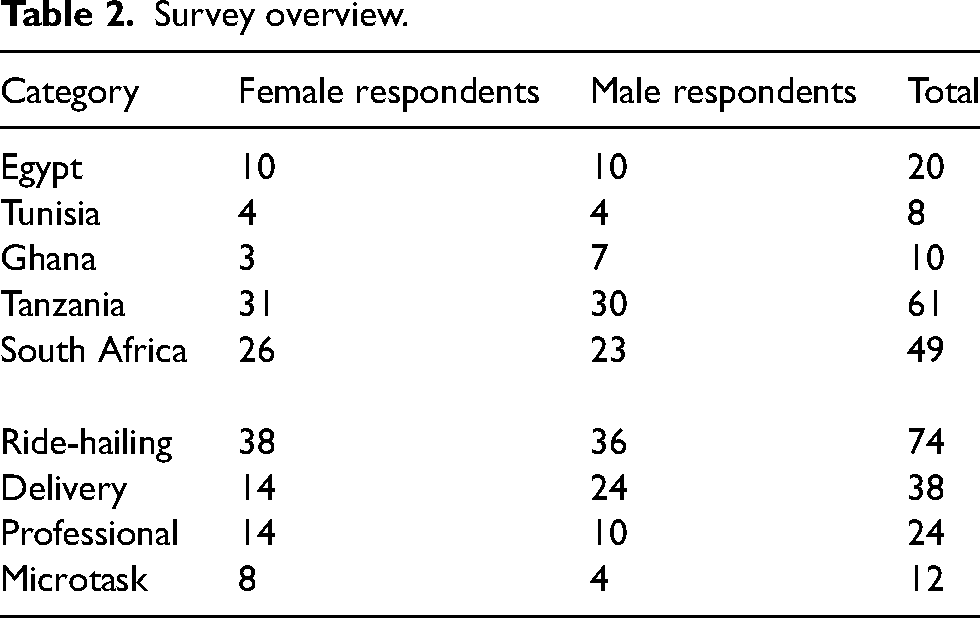
The survey distribution overall is not even across different sectors, platforms or countries included in the study (see Table 2). Three-quarters of the workers come from South Africa and Tanzania; and half of the respondents from the ride-hailing sector, one-quarter from delivery and the remainder from professional and microtask platforms. The samples drawn from the different sectors were evenly split between men and women, but men were overrepresented in ride-hailing and delivery work (mainly motorcycle-based) (c. two-thirds of sample); and women were over-represented in professional work and microtasking (c. two-thirds of sample). As discussed below, this to some extent reflects gender differentiation between different types of platform work.
Some care must therefore be taken in interpreting the results below, and generalisation from the results is not directly possible to other sectors and countries in Africa. For example, the two sectors with a majority of female respondents – professional and microtask – represent just under a quarter of total respondents, but these sectors generally have better pay and conditions than ride-hailing and delivery. As one representation of this, the average 2022/2023 Fairwork score for the professional and microtask platforms covered here was 4.25, whereas for ride-hailing and delivery platforms it was 1.75 (10 being the highest score). Where germane, we will identify these sectoral differences in the findings. However, in general, we were limited by our sample size from making any systematic, statistical comparisons either between sectors or between countries. Nevertheless, the results reported below highlight important convergences and divergences between women's and men's experience of work in platforms.
Analysis of findings
Gender-differentiated demographics of platform workers
In a number of ways, the platform economy seems to reflect and reproduce wider gender inequalities in Africa. One obvious manifestation of this is reproduction of the wider gender differentiation of access to work. In Africa overall, around 40% of women are in some form of employment whereas the figure for men is around 70% (Anyanwu, 2013; ILOStat, 2023). Women in Africa are relatively more excluded than men from formal wage employment, with less than 30% of wage earners in Africa being women, and that exclusion making women who seek paid livelihoods more likely than men to seek alternative forms of employment (Hallward-Driemeier, 2013; ILO, 2019). While there are no formal statistics, estimates strongly suggest that location-based platform work in Africa overall employs significantly more men than women (Anwar, 2022; Heeks et al., 2021). 4 This employment stratification is despite the fact that one might well expect women to be more likely than men to be seeking employment in the platform economy, given their overall lack of access to the traditional labour market.
In part, this mismatch between women's demand for work and their actual employment may be explained by platform work reproducing wider notions of ‘men's work’ and ‘women's work’ (Bay, 1982; Kes and Swaminathan, 2006; Kevane, 2004). Driving a vehicle is associated more with men than women and hence, as noted above, the estimates that overall employment in ride-hailing and delivery in Africa is heavily dominated by men (Anwar, 2022; Heeks et al., 2021). By contrast, activities like IT freelancing, tutoring and microtasking are seen as more ‘acceptable’ work for women and hence employment levels of men and women are probably more even. This might be reflected in our fieldwork sample, where just over 60% of respondents in these sectors were women, but the only broader data we could find comes from microtasking in South Africa where a preponderance (two-thirds) of workers are women (M4Jam, 2022). This is also reflected in the exclusion of domestic work platforms from our study, as all the domestic workers surveyed were women; indicating a strong sector-segregation of women and men, and also a continuation of gender norms about domestic work being women's work.
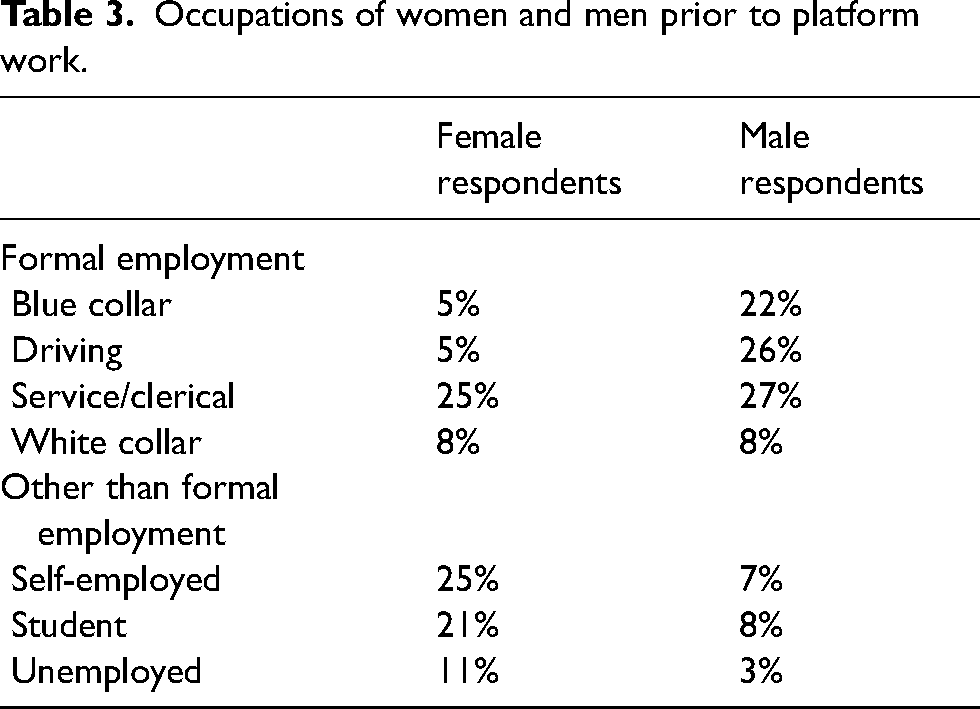
That platform work is shaped by the wider gender dynamics of African societies is also reflected in differences between the male and female workers we surveyed, which we can understand as three strands of gender exclusion. First, echoing the point above about relative exclusion from other forms of work, women were over three times more likely than men to have previously been in a role other than formal employment: either unemployed or a student or self-employed (see Table 3: chi-squared tests were performed on Tables 3–5 to determine if there was an association between gender and each factor, and all were significant at the 0.05 level). Women had therefore turned to platform work in part because of the greater relative absence of formal employment opportunities for them as compared to men; which confirms their overall exclusion from the labour market.
Occupations of women and men prior to platform work.
Marital status of women and men platform workers.

Migrant status of women and men platform workers in South Africa and Ghana.

Second, the women we surveyed were slightly older than men – average age of 34 as opposed to 32 – and fewer of them had a partner: the proportion of women surveyed who were single, widowed or divorced was 70% higher than the figure for men (see Table 4). There is thus a greater relative exclusion, at least for these women, from opportunities for financial support from a partner. This exclusion potentially also indicates a greater burden of care for women and a restriction of possible working hours, if they are the sole caregivers in their families.
Third, our data also reflected the greater exclusion of women in Africa from labour migration opportunities, indicating broader restrictions on their mobilities for access to work. We only had migration data for South Africa and Ghana in this study but even from this restricted sample we found more than 75% of the male platform workers were international or domestic migrants, whereas this was the case for only 14% of female workers (see Table 5); an asymmetry actually much greater than the more limited overall skew to male labour migration in Africa more generally (Gugler and Ludwar-Ene, 1995; IOM, 2022, 2023). Hence, women's access to opportunities is not only restricted in their native countries but also much more widely in the region.
Gender-similar treatment of platform workers
Having emphasised some differences, we found that across a whole raft of working conditions, platform work does not appear to discriminate between men and women; treating workers equally – equally well or equally badly depending on the issue. We saw this in responses to some questions about most of the Fairwork principles (see Table 6), especially pertaining to the technical aspects of work. In relation to conditions of work, there were no significant differences, for instance, between the proportions of men and women reporting presence or absence of platform safety measures, training, sick leave, paid holidays, provision of insurance and data protection measures (chi-squared tests were performed on all items within Table 6 to determine if there was an association between gender and each factor, but none was significant at the 0.05 level). In relation to contracts, there were no significant differences between the proportions of men and women reporting presence or absence of terms and conditions that they needed to sign in order to start work, their ability to understand and access those terms and conditions on an ongoing basis, and whether or not they were notified in advance of any changes. In relation to management, none of the workers reported direct experiences of gender-based discrimination by either human managers of the platform or algorithmic management via the app. In relation to representation, men and women were equally likely to report presence or absence of formal channels for collective negotiation with platforms.
Working conditions eliciting similar responses from women and men.

Much of this is expected as conditions of work are standardised for all workers – a feature of the platform economy – and all that this tells us is that men and women workers are equally aware of them and the core operational structures of platforms treat women and men similarly.
Women's and men's attitudes to a number of platform work-related issues were also very similar; likely deriving from the lack of difference in treatment and conditions (see Table 7: chi-squared tests were performed on all items within the table to determine if there was an association between gender and each factor, but none was significant at the 0.05 level). Views about the utility or otherwise of communication channels with the platform showed no significant difference. This was also true of overall satisfaction with platform work, which varied by sector and by specific platform but with no pattern of difference based on gender: only around one-fifth of both men and women felt negatively overall about platform work, and two-thirds felt positive. This could be seen as fitting with there being no clear gender difference around the low likelihoods that workers had participated in strikes or belonged to a trade union.
Similarities in attitudes to platform work among women and men.

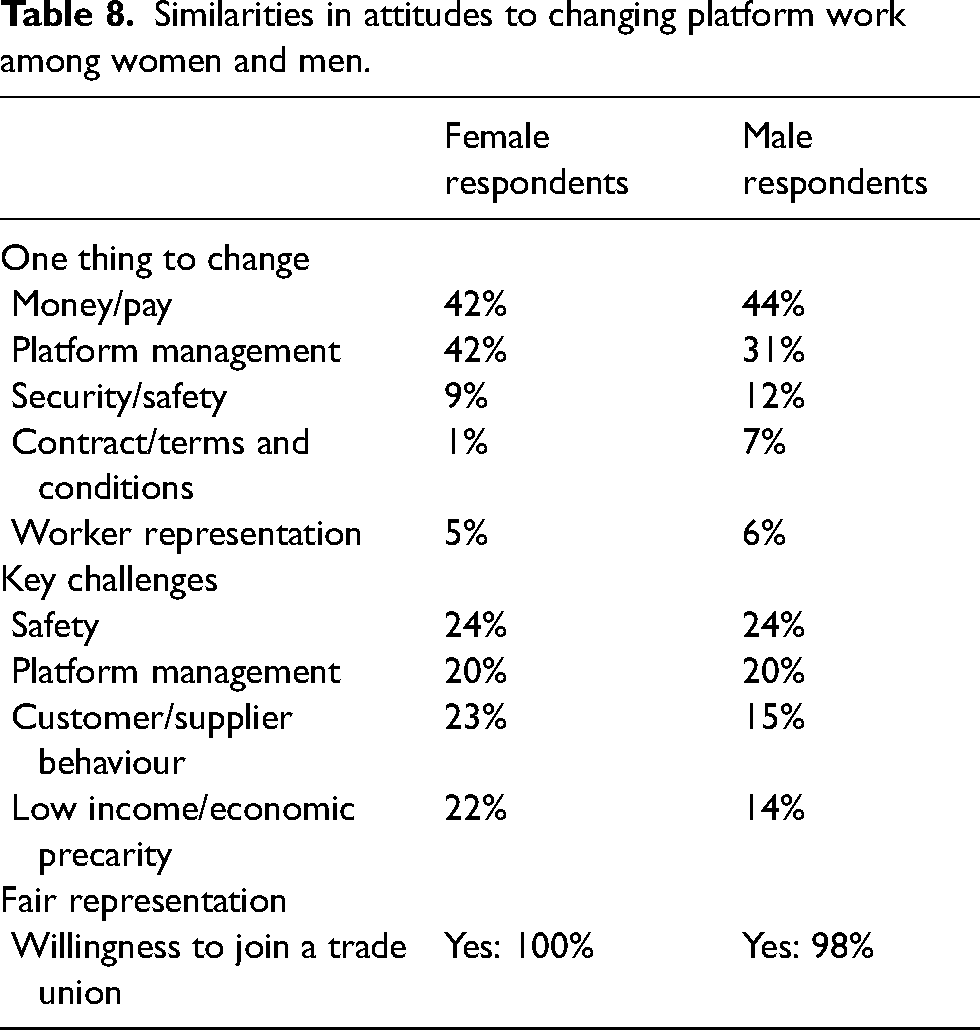
Evidence of similar experiences of many aspects of platform work was also seen when workers were asked what improvements they would like to see (see Table 8: chi-squared tests were performed on all items within the table to determine if there was an association between gender and each factor, but none was significant at the 0.05 level). Men and women gave a similar distribution of responses (dominated by higher pay, then improved management in relation to communication and customer-centricity in resolving disputes, and then safety). Likewise, the main challenges of platform work (those identified by at least 10% of female and male workers) were exactly the same for men and women in relation to safety and platform management. Related to these equalities of treatment and perceptions of downsides, when asked if they would wish to join a trade union to help address the problems of platform work, male and female non-members were equally likely to say that they would.
Similarities in attitudes to changing platform work among women and men.
Gender-different treatment of platform workers
In contrast to the gender-similar experiences just reported, our survey exposed several gender differences in the experiences of platform workers. For example, the situation of male and female workers was reflected in the attitudes of respondents: women platform workers were roughly twice as likely as men to say that the main risk they face at work was economic precarity 5 ; and 90% of the workers who said they felt they could not turn down work were women (see Table 9, note that this data was only gathered in South Africa: chi-squared tests were performed on both risk and turning down work to determine if there was an association between gender and each factor; both were significant at the 0.05 level). While the latter figure also relates to differing perceptions about platform rules, together these suggest that women experience both a greater precarity and a greater dependency on platform work compared to men; likely in part due to their wider exclusions from the labour market.
Perceived ability to turn down work of women and men platform workers.

As well as wider gender inequalities impacting attitudes and perceptions, they also could be seen to impact worker behaviour in a number of ways. Men worked longer hours than women: 54 h per week on average compared to 42 h, with the differences particularly pronounced in delivery and microtasking (see Table 10: this difference was significant at the 0.05 level using a z-test). This difference likely stems from the greater domestic and care responsibilities that women bear in Africa, which leaves them with less time for paid work (Blackden and Wodon, 2006; Matulevich and Viollaz, 2019).
Average weekly hours of work for women and men platform workers in different sectors.

At first sight, reported gross hourly pay was similar for men and women (see Table 11), 6 but the differences in working hours meant men were on average earning more than women from platform work (e.g. see weekly gross figures in Table 12). This follows the overall pay inequity found in Africa regionally (and globally) (Diagana, 2022).
Average gross hourly income for women and men platform workers in different sectors.

Average gross weekly income for women and men platform workers in different sectors.

One intriguing consequence of this is that on average, and based on those who reported earnings from previous employment, 7 men were earning more from platform work than from their previous employment whereas women were earning less (71% more for men compared to 47% less for women). Another facet comes from the expression of a recently-recognised phenomenon in location-based platform work: that some workers are earning negative income; in other words, their expenses exceed their earnings and they are effectively paying to work (Fairwork, 2022a). Of 24 workers surveyed who were experiencing negative income, three-quarters were women.
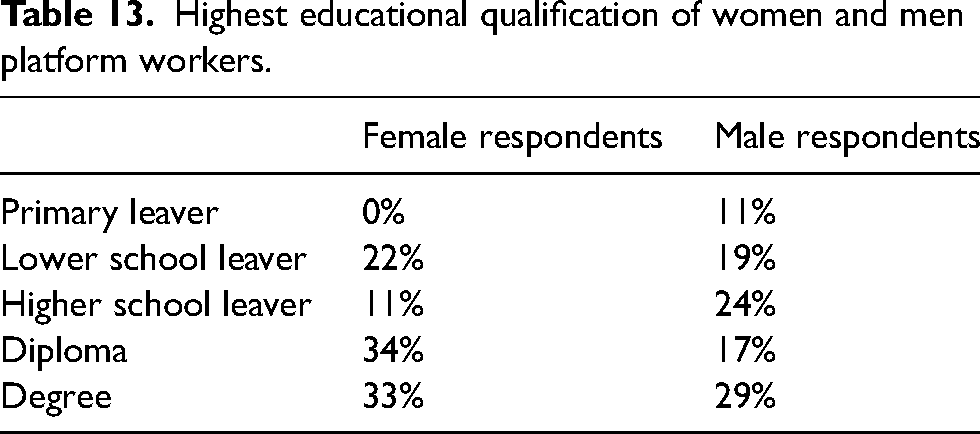
This all occurred despite the fact that women in our survey were on average more highly-qualified than men. For example, all of the primary school-certified workers were men, while 60% of diploma/degree-holders were women (see Table 13: a chi-squared test was performed on Table 13 to determine if there was an association between gender and educational qualifications; this was significant at the 0.05 level). Within sectors, too, there were differences; for example, 60% of male ride-hailing drivers had only school-level qualifications, whereas the same was the case for only 30% of female drivers. Higher qualifications are associated with higher earnings in Africa, particularly for women and including in the informal sector (Kuepie et al., 2009; Michaelowa, 2000). However. the combination of higher qualifications but lower pay for women shows there is some gender-based disruption to that pattern in the platform economy. 8 This may reflect the barriers to other forms of employment for women, even those who are well-educated, who then turn to the platform economy and end up being stuck in low-paying jobs with limited opportunities for making ends meet. It certainly seems to reflect perceived barriers to employment with better pay: two-thirds of women had joined in the hope of higher income than they could otherwise earn, 9 yet the findings above suggest this hope may not have been achieved for a number of them.
Highest educational qualification of women and men platform workers.
The survey also found a cluster of other gender-linked differences in behaviours (see Table 14: chi-squared tests were performed on all items within Table 14 to determine if there was an association between gender and each factor; this was significant at the 0.05 level for deactivation and turning down work, but not for health insurance). Women were half as likely to have been deactivated by the platform they worked for. They were almost twice as likely as men to take out health insurance (this data was only gathered in Tanzania and did not meet the test of statistical significance). As already noted above (see Table 9 and again noting data was from South Africa only), women were roughly ten times more likely to say they did not feel able to turn down allocated tasks. Based on the survey alone, we can offer no definitive generalisable trend for these differences. However, we note that they could be consistent with differences in attitudes towards, and behaviours involving risk-taking and risk-management. Alongside domestic and care work differences, there is evidence – albeit with contextual and chronological variation – that men and women in Africa fit the general pattern of greater risk-taking by the former (Byrnes et al., 1999; Neneh et al., 2016; Sepahvand and Shahbazian, 2021).
Experiences of women and men platform workers for potentially risk-related behaviours.

A second cluster of gender-linked differences related to communications (see Table 15: chi-squared tests were performed on all items within Table 15 to determine if there was an association between gender and each factor; this was significant at the 0.05 level for the use of communications but not for the other two factors (though recommendations were significant at the 0.1 level)). One-half of women had used interactive communications channels with the platform compared to only one-third of men.
Experiences of women and men platform workers for communication-related behaviours.
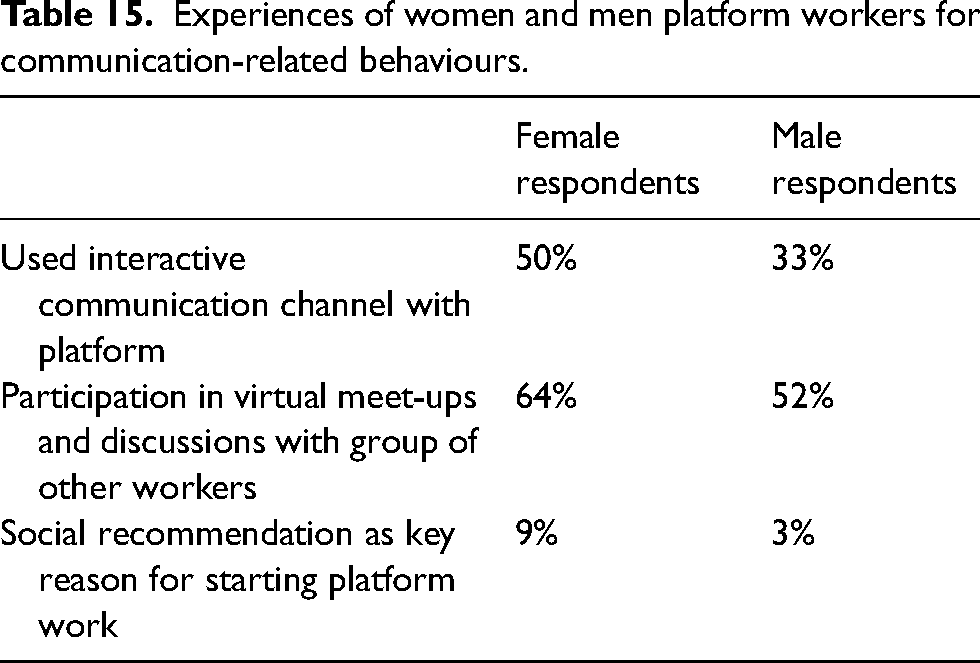
There are two other findings that were not statistically significant but the differences are nevertheless important to note. Women were more likely to belong to groups of workers and to participate in virtual meet-ups and discussions: roughly two-thirds of women compared to just over half of men. Women were three times more likely to give social recommendations of family or friends as their reason for starting platform work, albeit the proportions reporting this were low. One could interpret this as women needing or providing more support but it could also be consistent with gender differences along an individualism – collectivism continuum. There is some evidence of this in Africa, with men tending somewhat more towards individualism and women somewhat more towards collectivism (Darwish and Huber, 2003; Eaton and Louw, 2000; Obioma et al., 2022). As with risk-taking, this is seen to arise from differences in cultural norms and expectations rather than from innate differences.
One final way in which wider gender asymmetries penetrate into platform work is through the behaviour of others (see Table 16: chi-squared tests were performed on all items within Table 16 to determine if there was an association between gender and each factor; this was significant at the 0.05 level for experience of gender-based discrimination but not for customer behaviour as the main challenge or for overall experience of discrimination). Though overall proportions were low, and the difference was not statistically significant, women were 50% more likely than men to cite problems with the behaviour of customers as the main challenge they faced; a view that was matched by actual experiences. On the positive side, three-quarters of women who responded said they had not experienced any form of discrimination; and as noted above there were no reports of discrimination against women by the platforms or their algorithms. 10 However, whereas no men reported gender discrimination, 18% of women had experienced a form of discrimination from customers, including passengers cancelling rides when they saw the driver was a woman; passengers complaining that the driver was a woman; and verbal and physical abuse related to their gender. These experiences mirror wider gender inequalities reported in Africa in relation to discrimination and abuse (Muluneh et al., 2021; Oyewumi, 2005).
Experiences of women and men platform workers of behaviour of others.

Discussion
Overall and as outlined in more detail below, our research contributes three main findings in relation to existing knowledge. It shows that some negative operational features of platform work sometimes associated in the literature with women workers may be gender-blind as they were experienced similarly by men and women in the countries we covered. Conversely, it confirms Western-centric and other literature by finding wider gender inequalities within our focal African countries reflected in platform work inequalities around pay, precarity, dependency, sectoral differentiation and experience of gender-based discrimination. It finally expands the scope of potential gender differences to be investigated in platform work by adding initial evidence on gendered risk aversion and collectivist action.
First, then, our findings confirm the reports from the literature of a number of negative aspects of platform work experienced by women workers (Anwar, 2022; Fairwork, 2023; Hunt et al., 2019; Ma et al., 2022; Ticona and Mateescu, 2018). These included an absence of social protections, unfair contract terms, poor data protection, limited training and a lack of mechanisms for collective representation. However, these, alongside a number of other features of platform work around terms and conditions, and human and algorithmic management, were experienced similarly by both men and women, and thus we could not associate them with gender inequalities directly. In other words, overall core operational structures of platform work in the African countries we studied appear gender-blind.
However, secondly, platform work in Africa sits within a wider and gender-unequal context (see Kalla, 2022; Sibiya and du Toit, 2022; Van Belle et al., 2023). Our evidence thus supports the arguments from earlier literature about some features of platform work having worse outcomes for women. Many platform workers struggle with low levels of pay but our findings showed that women are earning less than men; not on a per-hour basis but overall. This is largely because they are not able to work as many hours as men: a finding consistent with having to devote time to the burdens of reproductive labour (Churchill and Craig, 2019; Kalla, 2022; Tandon and Sekharan, 2022). Of particular concern was the finding that women were by far the majority of those suffering negative income and that at least within individual sectors, there was little evidence of an education premium for women in terms of their higher levels of education equating with higher pay. Linked to this, our findings support past literature that argues, that while platform work can be precarious for all, it is women who experience greater precarity; a finding reported from both Africa-focused (Anwar and Graham, 2021; Hunt and Machingura, 2016; Hunt and Samman, 2020) and other sources (Churchill and Craig, 2019; Gerber, 2022). In our case, this could be linked to greater difficulty in finding alternative employment (including a much more restricted mobility) and alternative sources of household income, making women also more dependent than men on the money they earned from platform work.
Past literature has both celebrated platform work in Africa for the flexibility it can potentially offer women but also decried it for a lack of flexibility in practice (see Kalla, 2022; Rizk et al., 2018; Sibiya and du Toit, 2022). Our evidence found that platform work may in theory allow women greater flexibility than conventional employment to take on the burden of both productive and reproductive labour. However, this comes at a gendered cost of lower earnings than men. Any sense of flexibility is undermined by the greater economic precarity and hence dependency on platform work that women feel; something reflected in their feeling far less able than men to turn down offered tasks.
We gathered no evidence about gendered digital divides, and our sample reversed more general evidence that women have less access to education and training. In other ways, though, wider African-gendered differences that have appeared in past literature were corroborated by our findings (Cieslik et al., 2022; Hunt et al., 2019; ILO, 2021; Rizk et al., 2018; Wasilwa and Maangi, 2020). The overall Fairwork survey sample reflected the much greater employment of men generally in platform work. It also reflected a differentiation of types of platform work into those dominated by men such as ride-hailing and delivery, and those in which women formed a majority such as domestic work. While core elements of platform work may be gender-blind, the behaviour of customers is not and this allows further gender inequalities to spill over to platform work. While it must be acknowledged that most women had not experienced discriminatory behaviour directly, there was nonetheless confirmation from a minority of some of the gendered harms reported in the literature (Anwar, 2022; Ma et al., 2022; Rizk et al., 2018). These included gender-based cancellations, complaints and verbal and physical abuse.
Third, we found some evidence of wider gendered differences spilling into platform work that has not been previously discussed, relating to data on insurance take-up and deactivation. These findings suggested that women in the African countries we studied might be more risk-averse than men in their platform work behaviours. Data on group activity and communications suggested women might be more collectivist than men in their platform work behaviours. However, given the lack of deeper explanatory data relating to these behaviours and lack of statistical significance in some instances, these can only be pointers to areas for further investigation.
Conclusions
There are three novel evidential contributions of this paper. It is the first of its kind to bring together multiple countries and multiple platforms in Africa, studying the gendered experiences of work. The country selection covers all regions in Africa (North, East, West, South) and the platform selection brings together a variety of experiences across different sectors for women and men in platform work. As such, it contributes to an existing primary evidence gap in the literature on the platform economy in Africa and more generally to the limited research on gender and location-based platforms in low- and middle-income countries. It provides a breadth of evidence not found in studies of single countries, platforms and sectors. Second, the findings are not single-issue but offer a rich breadth of evidence on gender and platform work covering a comprehensive set of work-related experiences due to the wide-ranging nature of the underlying survey. Third, rather than only focusing on platforms where men or women are over-represented (e.g. ride-hailing and domestic work, respectively), the platforms studied demonstrate the experiences of women and men where they are both represented and where they both have access to work opportunities. This is key for understanding the convergences and divergences between women and men's access to work, experience of work, as well as outcomes of their work in the platform economy.
From the novelty of this evidence base, the paper evidences the new livelihoods that have been created for women, the generally positive satisfaction they feel for platform work, and the lack of experience of gender discrimination for the majority of women. It exposes the ways in which – while often falling short of decent work standards – some core operational elements of platform work do not appear to have reproduced gender inequalities, with both men and women reporting equivalent treatment regarding many terms and conditions of work, including issues of social protection, contracts, management and representation.
However the paper has also shown that, while these core platform work processes may be gender-blind, they do not operate in a gender-equal context. It has exposed the several ways in which more deeply-rooted gender norms in some African countries intersect with platform work to create or reproduce gendered inequalities. This work is divided into sectors dominated by men and sectors dominated by women: reproducing the concept of ‘men's work’ and ‘women's work’. Women's broader exclusions from formal employment have encouraged their move into platform work, as have exclusions from opportunities for migration or alternative household financial support. But these have also made women's platform work more precarious and more dependent than that of men.
This is particularly problematic because African women's reproductive labour burden is likely reflected in their working fewer hours and being able to earn less than men; sometimes to the extent of losing money from their work. The relatively higher education levels of the women surveyed had not translated into higher earnings within most sectors, and some of the promises of flexibility from platform work were not clearly realised by them either. There were some signs of gendered behavioural norms around risk-taking and collectivism influencing the behaviour of women workers. More problematically, sexist behaviours by customers had spilled into platform work, with a minority of women experiencing cancellations, complaints and abuse because of their gender.
There are many general recommendations one could make about platform work in these African countries, relating to improvements in pay and conditions for all workers. Here, though, we focus on gender-specific points arising from the main findings of concern. Our findings indicate there are important decisions to be made around improving women's experience and outcomes from platform work. These require going beyond simple technical fixes to the platform design or operational structures of the platforms but involve significant re-thinking of the gendered inequalities of platform work.
Women are heavily under-represented in ride-hailing and delivery, and platforms should take action – as some in Africa have (Fairwork, 2020) – to overcome the wider barriers that constrain women's entry into this type of platform work; for example, through outreach activities to facilitate that entry. On average, women earn less than men from platform work. While individual human and algorithmic decisions may be, as reported, gender-blind, the overall distribution of earnings opportunities is not. Platforms need to address these systemic inequalities; finding ways to compensate for the reproductive labour burdens that women in Africa bear. Then, there are the not commonplace but still present discriminatory actions of customers. Platforms need to undertake more active promotion of anti-discrimination policies, to make women workers feel better able to report such actions, and to enact negative consequences for sexist and abusive customers.
Other customers and worker associations can pressurise platforms on these issues; threatening boycotts and protests for those platforms which fail to address these gender inequalities. But there is also a likelihood that government intervention will be required if platforms are to be pushed to act. At a generic level, formal legitimisation and recognition for platform worker associations and unions should enable better representation and greater power for workers, including for the particular problems discussed above that women platform workers face. This will, though, require these organisations to take seriously the unequal participation of women in the platform economy that has been outlined in our findings, and to consider the overall gendered labour market context when negotiating with platforms. The legitimisation of worker rights should also include access to the mechanisms of legal redress enjoyed by other workers, such as tribunals since these can provide a formal channel through which issues identified in our findings – for example, around earnings inequalities and around gender-based harassment – can be exposed and potentially redressed.
The findings here support another policy recommendation arising from Fairwork's wider research, which is a stipulation that platforms provide gender-disaggregated data on worker numbers and pay (Fairwork, 2023). This would provide clarity on the sectoral under-representations noted from the research. In turn, this could encourage governments to collaborate with platforms in developing initiatives to facilitate entry of women into the under-represented sectors; following a pattern already adopted by a number of government-supported programmes around Africa seeking to reduce gendered barriers to entry into digital economy work (UN Women, 2022; USAID, 2024). Similarly, gender-disaggregated data on pay could provide evidence allowing for action under existing pay anti-discrimination legislation.
While this paper has been able to illuminate gendered experiences of an extensive range of platform work-related issues, some limitations must be noted. The multi-country, multi-sector coverage provided a breadth of evidence but this was at the expense of depth of qualitative investigation into individual experiences and into national and sectoral differences. We are, for example, aware that specific labour market contexts and norms about women's participation in economic life could be different between the countries selected for this study, and with other countries in the region. Future research with a larger sample size would allow a deeper exploration of these differences which in turn could allow insights into implications of the two main unevenesses within our data: towards South Africa and Tanzania, and towards ride-hailing and delivery. It could also allow insights into differences between countries which in turn could reinforce the value of incorporation of data from the other 49 countries on the continent. The fixed questionnaire design gave a consistency of data that facilitated aggregation but a future gender-specific fieldwork design could probe issues such as household impact of income generation, reproductive labour or comparison of platform work with prior employment. Inclusion only of platforms where both men and women workers had been surveyed was original, and allowed for a direct comparison of experience. However, it did mean that a key platform work sector – domestic work – was excluded because we included no male workers in this round of fieldwork. Finally, our focus here was solely on data from workers, leaving the views of other stakeholders – platform managers, representatives of worker associations, government officials, and other household members of workers – unheard. All of these lacunae represent useful areas for future research.
Footnotes
Acknowledgements
Research work reported in this paper was supported by the German Federal Ministry for Economic Cooperation and Development (BMZ), under a commission by the Deutsche Gesellschaft für Internationale Zusammenarbeit (GIZ). Ethical approval for the work was provided by the Social Sciences and Humanities Inter-Divisional Research Ethics Committee of the University of Oxford, ref SSH OII C1A 19 002. We acknowledge the contributions of those who assisted in collecting data analysed in this paper and in supporting that process including Oğuz Alyanak, Daniel Arubayi, Thomas Anning-Dorson, Haya Sayed El Zayat, Khadiga Hassan, Lucas Katera, Jamal Msami, Obed Penu, Murali Shanmugavelan, Lilian Sylvester, Jean-Paul Van Belle, and Nadine Weheba, and acknowledge the contribution of Nick Heeks in supporting the statistical analysis.
Authorship
BAM: provision of country data, writing draft of literature review, data analysis; SG: provision of country data, data collation, review of interim draft, data analysis; NR: provision of country data, writing draft of literature review, data analysis; FUS: writing draft of literature review, revision of paper; EA: writing draft of literature review, data analysis; JB: data analysis, PT: research supervision, data analysis; RB: provision of country data, research supervision; HM: provision of country data, research supervision; MG: methodology, funding acquisition; RH: conceptualisation, data curation, data analysis, and writing of paper.
Declaration of conflicting interests
The authors declared no potential conflicts of interest with respect to the research, authorship, and/or publication of this article.
Funding
The authors disclosed receipt of the following financial support for the research, authorship, and/or publication of this article: This work was supported by the Deutsche Gesellschaft für Internationale Zusammenarbeit, German Federal Ministry for Economic Cooperation and Development.
