



Abstract
The National Institutes of Health (NIH) has developed the NIH HEAL Integrative Management of chronic Pain and OUD for Whole Recovery (IMPOWR) network to address the interconnected nature of chronic pain (CP) and opioid use disorder (OUD), which are influenced by mental health. The network aims to develop integrated treatment pathways across multiple sites in the United States. The IMPOWR Dissemination, Education, and Coordination Center (IDEA-CC) is proposed to support the NIH HEAL IMPOWR network by developing a CP- and OUD-focused infrastructure that includes measures of stigma, trauma, and quality of life. This includes deploying a data framework to link clinical sites, developing an educational infrastructure to address stigma and health disparities, and disseminating research findings. The IDEA-CC will standardize data collection processes, develop web-based data commons, and facilitate data sharing opportunities. The IDEA-CC will support the development and validation of composite CP and OUD measures and will develop educational materials to address stigma and health disparities. Overall, the IDEA-CC will create a research community and data commons that connect NIH HEAL IMPOWR centers to translate findings and develop a key CP-OUD research data, and education infrastructure.
Highlights
Addressing the interconnectedness of chronic pain (CP), opioid use disorder (OUD), and mental health through Integrative Management of chronic Pain and OUD for Whole Recovery (IMPOWR) network.
IMPOWR network to support data collection standardization across multiple clinical sites and development of novel cloud computing data commons.
Share data and education infrastructure with the research community addressing stigma, CP, and OUD.
Background/Rationale
The National Institutes of Health (NIH)’s development and support of the NIH HEAL Integrative Management of chronic Pain and OUD for Whole Recovery (IMPOWR) network 1 reflects the growing understanding of the potential interconnections of chronic pain (CP) and opioid use disorder (OUD). 2 The vision of the NIH HEAL IMPOWR network was to develop integrated treatment pathways across multiple sites in the United States. 3 NIH HEAL IMPOWR departs from the traditional hub-and-spoke clinical trial model by focusing on the factors influencing CP and OUD across a wide range of potential interventions. One of the major challenges of the diverse projects and interventions is how to connect these data in a way that answers larger questions. 4 In addition to the innovative network-focused diverse interventions for CP and OUD, what IMPOWR brings is a series of innovative data advances and solutions. To provide context, the NIH HEAL ecosystem has begun the work of connecting the 2.5 billion dollar portfolio of CP and addiction research through their data to understand these complex and often bidirectional conditions. The NIH HEAL Initiative is at the beginning of developing data standards, starting with common data elements (CDE) for pain. Advancing beyond the NIH’s minimum CP CDE, NIH IMPOWR is developing network-specific CDE, standardizing collection across research domains, and will provide a novel cloud computing platform to allow cross-study discovery and data visualization.
The IMPOWR Dissemination, Education, and Coordination Center (IDEA-CC) propose developing a CP- and OUD-focused infrastructure support to amplify and create momentum for the findings of NIH HEAL IMPOWR and other linked research networks. IDEA-CC will move beyond the NIH CDE minimum standards bringing in a focus on interaction social determinants of health, stigma, and trauma on CP and OUD. Building on existing work, this center will develop the infrastructure for the NIH HEAL IMPOWR network through several key domains: (1) deploy a data framework to link NIH HEAL IMPOWR clinical sites with each other and the larger NIH HEAL data ecosystem,5,6 (2) develop an educational infrastructure addressing stigma and health disparities in patients with comorbid CP and OUD, and (3) effectively disseminate research findings to targeted audiences.
The IDEA-CC was charged with several components, the first of which involves harmonizing the data element across the projects with the network sites.4,7,8 The next component of this work is to take these data elements and build a data dashboard that supports the integration of these unique projects. To support this ambitious goal, the key factor involves harmonizing data and standardizing data collection across these diverse studies.5,9 Our work extends beyond this initial charge of connecting data between network sites with the goal of developing frameworks for data connections across the NIH HEAL ecosystem and into other existing health data sources, such as claims and electronic health record data. The design focus is on creating a novel approach to deidentification that provides a unique combined dataset for CP and OUD with multiple applications for future use and study following completion of the network projects.
The rationale for the proposed research is that understanding the relationship between CP and OUD is critical to designing the most effective interventions for patients with comorbid CP-OUD. The objective of the IDEA-CC is to create a research community and data commons that connects NIH HEAL IMPOWR centers to translate findings and develop a key CP-OUD research and education infrastructure. Our central hypothesis is that improving comorbid CP and OUD treatment will involve integrated clinical approaches and a fundamental shift in how we educate healthcare providers and the community.
Methods
Data Harmonization and Data Commons Development
The IDEA-CC will harmonize processes for data collection and CDE of CP (eg, HEAL Chronic Pain CDE Screen Questions, Michigan Body Map, Pain Intensity) and OUD (eg, medications for OUD Use, Opioid Misuse via Patient-Reported Outcomes Measurement Information System [PROMIS] opioid misuse item bank) measures across the NIH HEAL IMPOWR research centers, providing a coordinated platform for gathering data from these studies. Our data management design will focus on harmonizing CDE within the NIH HEAL IMPOWR network,5-7 expanding on the use of HEAL Pain Core CDE (eg, PEG, GAD-2, PHQ-2, TAPS-1) to merge with agreed on opioid-related measures (eg, addiction severity for use across the NIH HEAL IMPOWR research sites). Our primary goal is to develop systems that will enable coordination of harmonization beyond the minimum standards by converting and mapping to Observational Medical Outcomes Partnership standards (Figure 1). While this requires an additional step for data processing, the potential for expanding implementation of the combined data elements and data collection will support additional future work. By creating a bidirectional pipeline between research projects within the NIH HEAL IMPOWR network and beyond, the IDEA-CC will facilitate practice-based research and improve early identification, intervention effectiveness, service delivery, and optimal components that will drive integrated care delivery for comorbid CP-OUD (Figure 1).
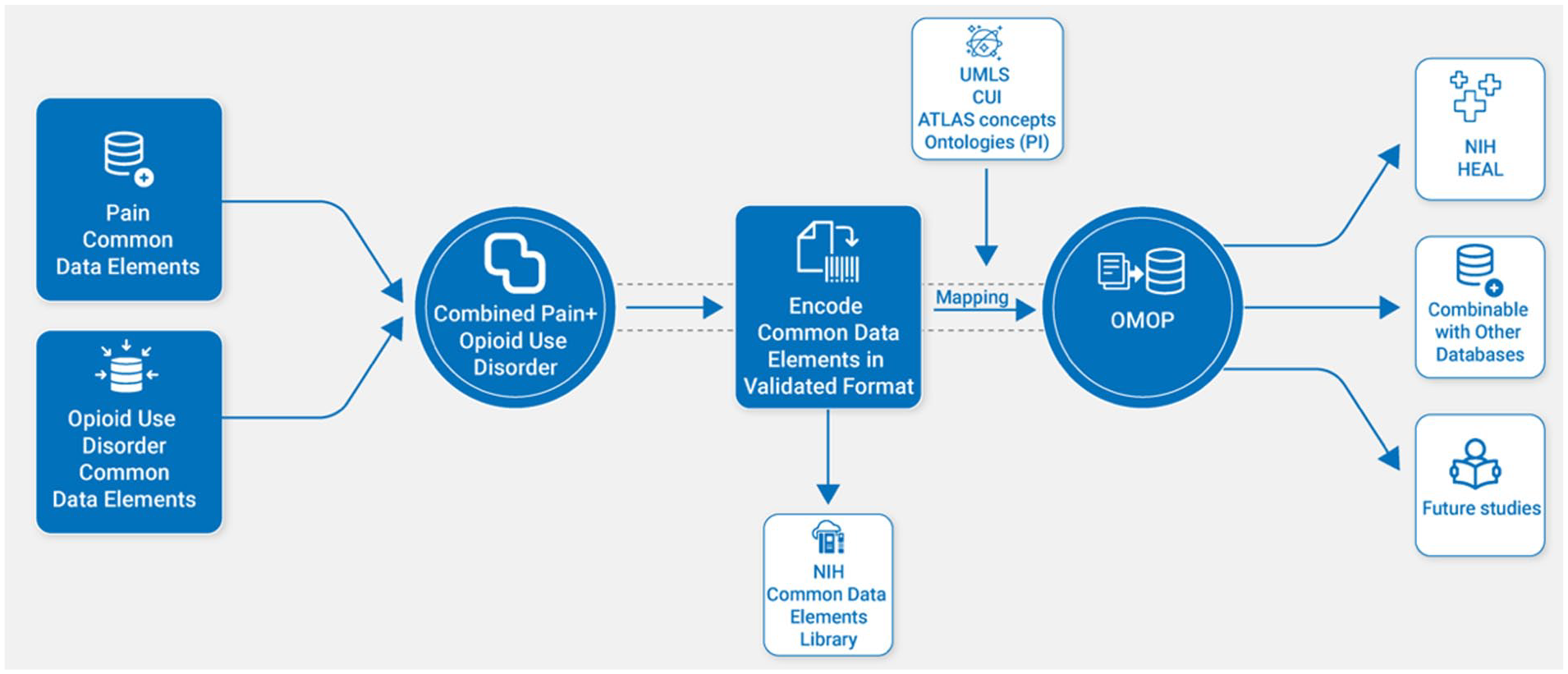
Common data elements harmonization process.
Using Gen3, we will develop and implement a web-based data commons for NIH HEAL IMPOWR that incorporates components of the CDE harmonized by the network 10 (Figure 2). Gen3 is a cloud computing data platform used to build, manage, and share data commons with researchers across health organizations. 11 This will allow for combinations of data for idea development with planned enrollment of 3500 participants across the network. We will develop a query system to catalogue studies that have used the harmonized data collection format in CP-OUD studies. We anticipate that this will provide investigators within IMPOWR network with access to descriptive statistics (ie, means, variances) within user-specified subsets of participants (eg, age groups, studies, etc) for all studies using the CP-OUD CDE that would be accessible in the password-protected investigators section of the site, allowing authorized investigators access while maintaining data security.
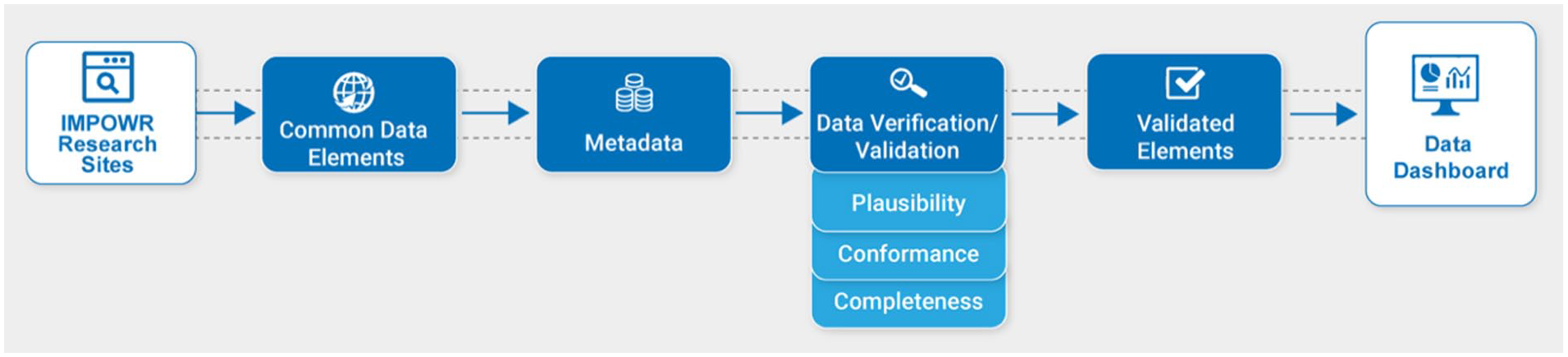
Gen3 data commons and dashboard.
Data Sharing and Dissemination
The IDEA-CC will disseminate information regarding network research and data sharing opportunities to the larger scientific community and community partners in the fields of pain, addiction, and mental health (Figure 3). Our focus on creating a functional and efficient IDEA-CC is to create a virtual and in-person community that creates spaces to discuss and share research findings/resources. In addition, our network will strive to support collaborative cross-cutting efforts (data analytics/alignment/best practices) by leveraging the resources of the larger group. Our team will coordinate logistics for the NIH HEAL IMPOWR Executive Committee, ensuring that each research center, as well as the Coordination and Dissemination center, has representation from research investigators, patients, and stakeholders. To amplify the impact of the NIH HEAL IMPOWR center research, we plan to share frequent and comprehensive information about research findings through scientific channels, research summaries, social media, and other contexts that reflect the preferences of our community partners.
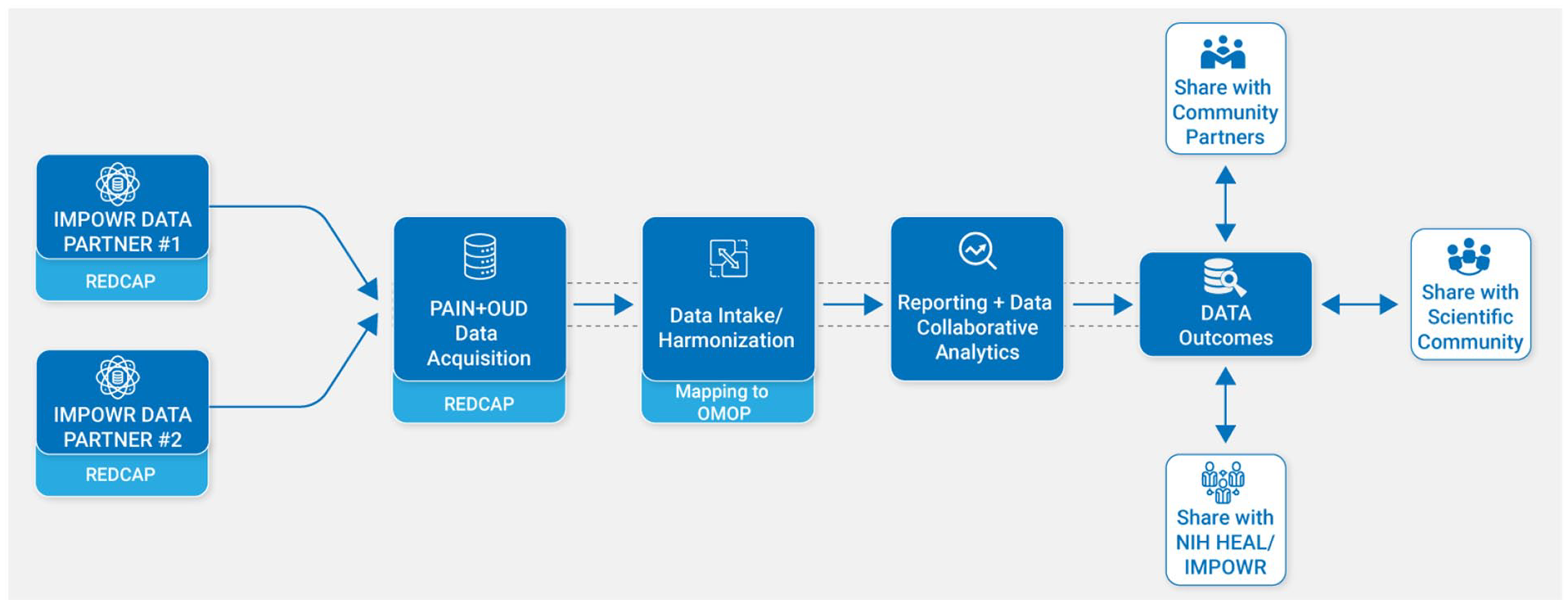
Data harmonization and dissemination for IMPOWR network.
Composite CP and OUD Measure
The IDEA-CC will support the NIH HEAL IMPOWR network development and the validation of key instruments/measures of composite CP and OUD measures. A priority will be to discuss and agree on a relatively consistent battery of instruments and techniques for co-occurring CP and OUD across the NIH HEAL IMPOWR network as part of the harmonization process. The harmonized measures will provide a robust database for validation in CP-OUD patients and comparisons versus subjects. The first steps by the IDEA-CC to establish preferred measures will be (1) the development of an existing pain/substance use/opioid use CDE guide; (2) needs analysis of planned projects at NIH HEAL IMPOWR clinical trial sites; and (3) gap analysis of existing and needed elements for both successful project completion and ideal needs by research community (eg, subgroup responders, OUD severity phenotyping, holistic screening, opioid cravings in comorbid CP-OUD).
CP and OUD Educational Material Development
The IDEA-CC proposes an educational infrastructure that addresses stigma and health disparities for comorbid CP and OUD. These educational materials will be informed by partner priorities. The IDEA-CC team will develop an educational infrastructure covering subspecialty populations and plan to develop different levels of education for each year of the grant (medical students, advance practice clinicians, faculty/attending level, and allied health professionals). The team will provide in-person training at mentoring sites; provide online material consisting of webinars and videos; develop implementation toolkits including training on the toolkit(s) and its functions/features; translate research and journal articles into brief articles and editorials for publication; and publish frequent articles throughout the lifecycle of the grant. The IDEA-CC will disseminate research findings to scientific and community audiences to translate research findings into clinical practice, while also developing materials to strengthen the link between research and practice, particularly when treating OUDs.
Summary
The Wake Forest IDEA-CC will create a shared research platform to amplify and accelerate investigations at the interface of CP and OUD. In addition to CP and OUD, the research themes for the network will support multidimensional analyses of areas ranging from stigma to economic impact and implementation. Understanding these components may identify areas for future solutions focused on adoption and implementation barriers. NIH HEAL’s goal is to enhance the clinical impact of existing treatments at the critical intersection of OUD and CP conditions, while actively working to destigmatize treatment in a way that promotes health equity.
The Wake Forest IDEA-CC supports an interdisciplinary team in using informatics approaches to answer research questions for comorbid CP and OUD. This project will adapt and apply novel data harmonization tools and models, bringing cross-cutting insight and connection to the siloed pain and addiction communities. Ultimately, this research center’s work will inform and support the development of novel prevention strategies, evaluate health disparities, and enhance the clinical impact of existing treatment interventions at the critical intersection of OUD and CP conditions.
Footnotes
Author Contributions
MCBA and RWH developed project design and obtained funding. MCBA, RWH, and UT drafted the initial manuscript. MCBA and UT secured the data and conducted the analyses. All authors participated in interpreting the results, contributed to the writing of the manuscript, provided critical feedback to the manuscript, and approved the final manuscript draft for submission.
Declaration of Conflicting Interests
The author(s) declared no potential conflicts of interest with respect to the research, authorship, and/or publication of this article.
Funding
The author(s) disclosed receipt of the following financial support for the research, authorship, and/or publication of this article: This work was supported by the National Institute on Drug Abuse through the NIH HEAL Initiative® of the National Institutes of Health under award number R24DA055306. The content is solely the responsibility of the authors and does not necessarily represent the official views of the National Institutes of Health.
Compliance,Ethical Standards,and Ethical Approval
Institutional Review Board approval was not required.
