



Abstract
Background and Purpose:
Ayahuasca can produce a dynamic set of both positive and negative acute effects. Commonly reported challenges include physical symptoms (e.g., nausea, vomiting) and emotional distress (e.g., frightening hallucinations, paranoia). Despite these difficulties, many individuals describe their challenging experiences as contributing to personal healing and beneficial outcomes. However, little is known about how individual psychological capacities, such as resilience, influence the nature of these acute experiences and their psychospiritual outcomes. Resilience, defined as a dynamic capacity to adapt to adversity, may play a role in shaping both acute and enduring effects of ayahuasca. This study is among the first to assess whether baseline resilience predicts the intensity of acute challenging effects of ayahuasca and whether resilience moderates the relationship between acute effects and psychospiritual outcomes.
Methods:
This study adopted a longitudinal design with three timepoints (baseline/before ayahuasca retreats, T1; immediately post-retreat, T2; 1-month follow-up, T3). A total of 233 participants completed surveys across all timepoints (Mage=41.20, SD = 11.41; residency in North America = 86.7%; biological female = 56.2%; White/Caucasian = 83.3%).
Results:
Higher levels of baseline resilience significantly predicted more intensity of acute challenging experiences [
Conclusions and Implications:
These findings contribute to our understanding of how resilience influences the effects of ayahuasca and offer early evidence that resilience may play a role in how individuals process and make meaning from these challenging experiences over time. This highlights the importance of considering resilience as a factor that may support the transformation of difficult moments into psychospiritual growth. Future research and practice may consider incorporating a resilience framework into pre-retreat resilience promotion and post-retreat integration programs to enhance individuals’ overall experience and long-term benefits.
Keywords
Introduction
Ayahuasca, often referred to as the “great medicine” from the Amazon basin, is a psychoactive brew traditionally used by indigenous communities as an herbal or plant medicine for religious and therapeutic purposes.1–4 Commonly reported acute effects of ayahuasca involve challenging physical symptoms (e.g., nausea, vomiting, diarrhea) and emotional distress (e.g., frightening hallucinations, paranoia). While some individuals who consume ayahuasca describe these experiences as a “bad trip,” many report that these challenging effects ultimately contribute to healing and beneficial outcomes and describe their trip as a “good trip.” Understanding how people perceive and cope with these challenging experiences may provide valuable insights into the psychological and emotional factors that influence their overall ayahuasca experiences and outcomes.
Ayahuasca’s effects can be both profound and complex, including mystical experiences,5,6 psychological insight, 7 emotional breakthroughs, 8 and challenging experiences. 9 Many individuals who consume ayahuasca describe a transcendental experience in a spiritual world, such as encountering spiritual entities, connecting with their “God” or higher power, experiencing the interconnectedness with the universe, and reporting enhanced mindfulness.10–12 However, consuming ayahuasca can also lead to challenging effects, including emotional and physical discomforts.13,14 The varied acute effects highlight the complex nature of ayahuasca influence, where individual interpretation plays an important role.
Although it is not uncommon to experience intense challenging effects after taking ayahuasca, people’s reactions to these acute effects differ widely. Some individuals cope well with the physical and emotional distress and view these acute effects as part of an ongoing relationship with the substance, 15 and report healing from the “cleaning experience” or “spiritual purging.” 3 Specifically, those who report positive outcomes of their ayahuasca experience claim relief from symptoms such as posttraumatic stress disorder (PTSD), depression, anxiety, substance cravings, and improved personal meaning and psychological insight.2,16–21 Conversely, some individuals describe their challenging experiences as “bad trips,” reporting “suffering” and feeling “not better but worse.”9,22 The discomfort caused by acute physical and emotional effects of ayahuasca sometimes contributes to their negative perceptions of acute effects of ayahuasca.20,21,23,24 However, it is still unclear the extent to which differences in one’s interpretation of the experience of the acute challenging effects of ayahuasca depend on one’s individual psychological differences.
Regardless of these acute effects one experiences after consuming ayahuasca, many report long-term positive psychospiritual outcomes following its use. Psychospiritual outcome, or psychospiritual well-being, refers to one construct that interconnects psychological well-being and spiritual dimensions. 25 These outcomes reflect people’s experiences and the impact of their experiences on both psychological well-being and spiritual well-being/meaning in life. 26 Studies have revealed that individuals who engage with ayahuasca report enhanced self-awareness, emotional growth, personal well-being, life satisfaction, and life’s purpose.16,27
Several studies have examined baseline predictors (e.g., personality, age, acceptance, surrender, intention) of acute psychedelic effects in order to better understand who will and will not experience such effects.28–30 For example, more past psychedelic experiences, older age, and an open mindset have been linked to more positive experiences. 28 Similarly, individuals with clear spiritual motivation and recreational intention are less likely to report adverse effects. 28 In addition, younger age and those with greater pretreatment depression and anxiety symptoms tend to show greater improvements in mental health and psychological outcomes. 30 Furthermore, non-pharmacological factors, such as set (mindset) and setting (environmental context), have also been revealed in research studies about their impacts on the behavioral and psychological effects of psychedelics. 29
Because acute effects of ayahuasca can be perceived as both challenging and transformative, baseline factors related to how people interpret and cope with challenging experiences may help us understand how these acute ayahuasca experiences might influence enduring effects and psychospiritual outcomes. One significant factor that has demonstrated its effectiveness and importance in coping with challenging, difficult, or stressful situations is resilience. 31 Resilience, originating from the Latin word resilire, “to jump back,” 32 generally refers to the process of achieving positive adaptation to “bounce back” despite experiencing challenges and adversities.33–36 Resilience has been conceptualized in various ways across foundational models, including trait-based views, 37 process-based models, 38 and systems-oriented capacity. 39 In current psychological research, resilience is most often understood as a dynamic capacity rather than a fixed personality trait.38,40 This capacity is supported by relatively stable intrapersonal and interpersonal resources (e.g., personality, cognitive skills, psychological flexibility, and social support) that contribute to individuals’ ability to manage stress effectively and adapt positively in the face of challenges.40–43
Previous studies have examined psychological flexibility as an important resilience factor and mechanism for supporting individuals coping with mental health conditions, including PTSD, depression, or chronic pain.41,44–47 Although studies have suggested the potential overlap between these two constructs (i.e., psychological flexibility and resilience both emphasize the ability to utilize adaptive coping strategies when responding to environmental demands), they are distinct concepts.44,46,47 Specifically, psychological flexibility is context-sensitive and process-oriented, focusing on present-moment awareness and acceptance, whereas resilience is often assessed as a capacity or an outcome of adapting positively to adversity across time.44,46,47 Recent psychedelic research has shown psychological flexibility as a mediator for therapeutic outcomes following a psychedelic experience. For example, Davis et al. found that increases in psychological flexibility mediated the relationship between acute psychedelic effects on psychological insights and challenging experience and decreases in racial trauma (i.e., race-based trauma48,49) symptoms among black, indigenous, and people of color. 50 Similarly, another prospective study reported that improvements in psychological flexibility after psychedelic experiences correlated with reduced depressive symptoms. 51 While psychological flexibility has received growing attention in psychedelic research, resilience remains an understudied yet equally important construct, particularly in the context of challenging psychedelic experiences. Given that ayahuasca experiences often involve both challenging effects alongside transformative insights, resilience may offer a particularly relevant framework for understanding how individuals make meaning from such complex experiences.
Research on resilience has consistently supported its protective role in navigating challenging situations.52–55 For example, Joyce et al. found that greater levels of resilience at baseline predicted fewer symptoms of PTSD and depression among first responders repeatedly exposed to stressful and challenging situations. 53 Similarly, baseline resilience has been shown to protect against adverse effects of stress exposure, enhance efficient emotion regulation, and facilitate individuals’ ability to find positive meaning in life during times of difficulties.52,56,57 In addition, prior studies have revealed resilience’s moderating role on the relationship between stress/challenges and psychological outcomes. For example, Havnen et al. reported that resilience moderated and weakened the relationship between stress and negative symptoms of depression and anxiety during the COVID-19 pandemic. 52 Likewise, Nuttman-Shwartz found that resilience resources moderated the relationship between continuous traumatic stress situations (i.e., sense of fear) and psychological distress among youth living around the war zone. 58
While resilience has often been conceptualized as a protective buffer against psychological distress,59,60 in the context of psychedelic experiences, resilience may play a more dynamic and complex role. When heavily weighted cognitive and emotional priors are “relaxed” and “top-down suppressive influence” is loosened under psychedelics, 61 resulting in increased cognitive openness, individuals high in resilience may be better equipped to engage with difficult emotional materials rather than avoid it. These perspectives align with trait-state interaction models, where preexisting psychological resources (e.g., absorption, acceptance, connectedness, openness, surrender) shape the quality and depth of psychedelic experiences.8,62,63
This study is guided by Masten’s Resilience Framework, which conceptualizes resilience as the capacity of a dynamic and evolving system that facilitates positive adaptation in the face of challenges. 39 The framework highlights protective factors that mitigate negative health outcomes, which is particularly relevant when examining how individuals navigate the psychological and emotional challenges of ayahuasca experiences. Masten’s Resilience Framework not only aligns with our longitudinal design that investigates resilience across multiple assessments surrounding ayahuasca use but is also well suited to the context of psychedelic experiences, which often involve simultaneous shifts across multiple systems (e.g., emotional, cognitive, physiological, social). In this study, resilience is defined as a dynamic capacity to achieve positive adaptation despite adversity and find positive meaning from challenging ayahuasca experiences. The present study utilized the Resilience Scale for Adults (RSA), 64 which captures both intrapersonal (e.g., perception of self, structured life) and interpersonal (e.g., family cohesion, social resources) protective resources, consistent with our selected Resilience Framework.
To date, no study has assessed whether resilience influences acute effects of ayahuasca, particularly acute challenging effects, and/or moderates the relationship between acute effects and psychospiritual outcomes. Therefore, this study examined the following two aims:
Materials and Methods
Procedure and participants
Data were collected between August 2022 and August 2023 from two Soltara Healing Center retreat locations in Costa Rica and Peru. The study employed a longitudinal prospective cohort study design with three timepoints: baseline (pre-ayahuasca, T1), post-ayahuasca (T2), 1-month follow-up (T3). The baseline/T1 survey was sent to participants 1 week prior to their scheduled ayahuasca retreat, with the expectation that it would be completed before the retreat began for formal study enrollment. The T2 survey link was automatically emailed to participants on the final day of their retreat, based on the schedule participants provided in the screening survey. Participants were encouraged to complete the T2 survey within 1 week. For T3, participants were contacted via email exactly 30 days after their final retreat day and were encouraged to complete the follow-up survey within 1 week. For both T2 and T3, participants who had not completed the surveys 1 week after the initial invitation received reminder emails and texts. Participants who still had not responded by 2 weeks post the initial invitations received a final reminder via email and text. These reminder procedures were designed to reduce recall bias and improve response rates. For additional details on recruitment and reminder templates, see Xin. 24
For participant recruitment, a representative from Soltara Healing Center assisted the research team by distributing recruitment emails to all their registered and upcoming clients and published a blog post introducing the study to its ayahuasca community. Both the email and blog post contained a link to the confidential Qualtrics survey, which included an informed consent form and the study introduction. Individuals who confirmed their eligibility and completed the screening survey were contacted via email by the research team for formal enrollment and incentive distribution. The study received Institutional Review Board (IRB) approval (IRB #2022B0158) from The Ohio State University and obtained a Certificate of Confidentiality from the National Institutes of Health to further protect participant data privacy and security.
Inclusion criteria for study participation were the following: (1) be at least 18 years old; (2) successfully pass Soltara’s medical intake screening, which includes a comprehensive health questionnaire assessing current medical conditions, psychiatric history (e.g., psychosis), prescribed and over-the-counter medications and supplements, and contraindicated health conditions (e.g., cardiovascular issues, psychiatric disorders, or selective serotonin reuptake inhibitor [SSRI] antidepressant use), as well as a follow-up consultation with medical or mental health professionals if needed to clarify any health concerns, in order to attend ayahuasca ceremonies; (3) be able to read, write, and speak English fluently; (4) attend a five to seven night retreat that included 3 to 4 ayahuasca ceremonies. Incentives were provided for eligible participants who completed the survey at the following rate: $15 at T1, $20 at T2, and $25 at T3, totaling $60 in e-gift cards to a local retail store of their choice from the list of the university-approved vendors.
Prior to data collection, a priori power analyses were conducted in G*Power 3 65 and SPSS version 27 66 to determine the appropriate sample size for this study. Based on effect sizes reported in a previous study examining resilience as a predictor of psychospiritual outcomes 67 (r = 0.48–0.69), we estimated that a sample size of 250 would provide 95% power to detect moderate effects at an alpha level of 0.05 (two-tailed). To account for expected attrition across timepoints, we set the recruitment goal of 313 participants at baseline. This target is also consistent with a separate study that assessed resilience as a moderator between stress and alcohol-related consequences, which used a sample of 320 participants and found significant moderation effects. 68 A detailed explanation of the sample size rationale is available in Xin. 24
The recruitment emails were sent to approximately 480 registered clients in Soltara during the recruitment period. Among the potential participants who came across the research project information and were interested in participating, 374 clicked the screening survey and 291 met inclusion criteria of the study. A total of 267 participants completed the baseline survey and were enrolled in the study. At follow-ups, 247 completed the T2 survey (92.5% retention from T1 to T2), and 233 completed the T3 survey (94.3% retention from T2 to T3). All 233 participants who completed T3 survey had also completed T1 and T2 surveys, with an overall retention rate of 87% from T1 to T3.
Measures
Demographics
Participants were asked to report age, gender, biological sex, race, Hispanic ethnicity, resident country, the highest level of education, occupation, annual household income, employment status, religious beliefs, relationship status, and English proficiency (read, write, and speak English fluently).
Resilience scale for adults
The RSA is a 33-item measure of participants’ protective factors that promote positive adaptation to adversity in six categories: perception of self (e.g., “My personal problems: are unsolvable vs. I know how to solve”), planned future/perception of future (e.g., “My plans for the future are: difficult to accomplish vs. possible to accomplish”), social competence (e.g., “I enjoy being: together with other people vs. by myself”), family coherence (e.g., “I feel: very happy with my family vs. very unhappy with my family”), social resources (e.g., “I can discuss personal issues with: no one vs. friends/family-members”), structured style (e.g., “When I start on new things/projects: I rarely plan ahead, just get on with it vs. I prefer to have a thorough plan”). 64 The original RSA scale was designed with the format of semantic differential response to reduce “potential acquiescence bias.” 64 For this study, modifications were made to have participants self-report their responses to statements that best describe their level of resilience on a 5-point scale, ranging from 1 (e.g., negative response) to 5 (e.g., positive response), with a theoretical total score range of 33–165. Prior research has shown that both Likert-type and semantic differential response formats demonstrate adequate psychometric properties for the RSA. 69 Scores were summed to compute a total resilience score across six subscales and used in the present analyses, with higher scores indicating greater protection. Internal consistency reliability for the adapted scale at baseline/T1 was excellent (α = 0.90). The RSA is a frequently used measure of resilience in adults, and prior studies demonstrated that RSA has good construct validity, internal consistency, criterion-related validity,68,70 and reliability.70,71 Previous evidence also showed RSA’s promising cross-cultural validity after being tested in diverse cultural settings (e.g., English-speaking population sample, 71 Spanish-speaking population sample, 70 Belgium and Brazil,72,73 South Africa, 74 Iran, 75 and China 76 ). Considering the diverse background of ayahuasca retreat participants, RSA appeared to be the most suitable resilience measure for this study.
Challenging experience questionnaire
The challenging experience questionnaire (CEQ) is a 26-item measure 9 that was included in this study at T2 to evaluate challenging experiences related to the ayahuasca experience (i.e., feelings of grief, experience of fear, feeling of despair, death, and isolation/loneliness). Participants were oriented to think back on their ayahuasca experience and rate their challenging experience (e.g., “I had the profound experience of my own death”) on a 6-point scale ranging from 0 (No/Not at all) to 5 (Extremely/More than ever before in my life). Mean scores were calculated across all items and used in the present analyses, with higher scores indicating greater challenging experience. The theoretical mean score range was 0 to 5. Internal consistency reliability for the scale was excellent (α = 0.94).
Ayahuasca Experience Inventory-Discomfort Subscale
The Ayahuasca Experience Inventory-Discomfort Subscale (AEI-DS) is a 15-item measure. 77 Considering some of the duplicate statements with the CEQ, only 12-item from the discomfort subscale was included in this study at T2 to capture unpleasant or uncomfortable feelings (e.g., “I experienced everything as frighteningly distorted”) related to the ayahuasca experience. Participants were oriented to think back on their ayahuasca experience and rate the degree of thoughts/feelings that arise within ayahuasca ceremonies on a 6-point scale ranging from 0 (None; not at all) to 5 (Extreme). Mean scores were calculated across all subscale items and used in the present analyses, with higher scores indicating greater discomfort. The theoretical mean score range was 0 to 5. Internal consistency reliability for the subscale was excellent (α = 0.91).
Ayahuasca purging experience
The ayahuasca purging experience (APE) is a 16-item measure specifically designed for this study to assess participants’ purging experiences (i.e., diarrhea, vomiting, shivering, laughing, crying) at T2. Participants were oriented to think back on the entirety of their ayahuasca experience and rate their purging experience after taking ayahuasca on a 6-point scale ranging from 0 (None; not at all) to 5 (Extreme; one of the most significant purging memories/experiences in life). Mean scores were calculated across all items and used in the present analyses, with higher scores indicating greater purging intensity. The theoretical mean score range was 0 to 5. Internal consistency reliability for the scale was acceptable (α = 0.76).
Meaning in life questionnaire
The meaning in life questionnaire (MLQ) is a 10-item measure 78 that was included in this study to assess two dimensions of meaning in life: “presence of meaning” subscale, which examines how participants feel about their lives of meaning (5 items; e.g., “My life has a clear sense of purpose”); and “search for meaning” subscale, which examines how participants feel engaged and motivated to find meaning or deepen their understanding of meaning in their lives (5 items; e.g., “I am always searching for something that makes my life feel significant”). Participants were asked to rate these statements on a 5-point scale ranging from −2 (Absolutely false) to 2 (Absolutely True), with a theoretical mean score range of −2 to 2 for each subscale. Mean scores were calculated for each subscale and used in the present analyses, with higher scores indicating greater presence or search for meaning. Meaning in life was assessed at T1, T2, and T3. For Aim 2, this study assessed meaning in life as an outcome observed during the post-retreat psychological integration phase (T3). Internal consistency reliability was excellent for both the “presence of meaning” subscale (α = 0.91) and the “search for meaning” subscale (α = 0.91) at T3.
Lifetime use of psychedelic compounds
The Lifetime Use of Psychedelic Compounds is a 2-item measure 77 that was used at baseline/T1 to explore participants’ previous use of classic psychedelic compounds and previous ceremonial use of ayahuasca in their lifetime.
Setting questionnaire for the ayahuasca experience
The setting questionnaire for the ayahuasca experience (SQAE) is a 28-item measure 79 that was used in this study at T2 to explore the influences of the setting on participants during the ayahuasca experience. Participants were asked to evaluate the setting where they consumed ayahuasca and report their experience with questions categorized into six dimensions, including social (5 items; e.g., “I have characteristics in common with that group of people”), leadership (6 items; e.g., “The ritual leadership gave me a sense of security”), decoration (3 items; e.g., “For my taste, the decoration was adequate”), comfort (4 items; “My physical position was comfortable during the ritual”), infrastructure (6 items; “There were accessible places for me to take care of my needs”), and instruction (4 items; “The ritual took place in the manner expected”). Participants were asked to score their experience on a 5-point scale ranging from 1 (strongly disagree) to 5 (strongly agree), with a theoretical mean score range of 1–5. Mean scores were calculated across all dimension items for the total group and used in the present analyses, with higher scores indicating more positive perceptions of the setting. Internal consistency reliability was excellent for the scale (α = 0.84).
Big five inventory-10
The brief version of the Big five inventory-10 is a 10-item measure 80 that was used in this study to explore changes of five dimensions in personality: extraversion vs. introversion, agreeableness vs. antagonism, conscientiousness vs. lack of direction, neuroticism vs. emotional stability, and openness vs. closedness to experience. Participants were asked to rate statements such as “I see myself as someone who is reserved” and “I see myself as someone who is generally trusting” on a 5-point scale ranging from 1 (Strongly disagree) to 5 (Strongly agree). Mean scores were computed for each subscale, with a theoretical mean range of 1–5 and higher scores reflecting greater endorsement of each trait. Internal consistency reliability was acceptable for both the extraversion subscale (α = 0.69) and neuroticism subscale (α = 0.73) at baseline/T1. Internal consistency reliability was unacceptable for agreeableness subscale, conscientiousness subscale, and openness to experience subscale with Cronbach’s Alpha < 0.5 and were not included in the data analysis due to low reliability.
Analytic strategy
All collected data were exported from Qualtrics into SPSS software for data cleaning and analysis. Missing data were systematically re-coded, and summary variables were calculated for data analysis and interpretation. Little’s Missing Completely at Random tests were conducted for key variables (e.g., resilience, acute effects of ayahuasca, psychospiritual outcomes) across all timepoints, and results suggested the missingness of this study for key variables was unrelated to either the observed values or unobserved missing data. In addition, considering the high retention rate and completeness of cases, the listwise deletion method was utilized to deal with missing data to ensure the integrity and validity of the dataset.
For preliminary analyses, Pearson and Spearman’s rank correlation analyses were conducted to determine if it is statistically necessary to include all controls in the regression model based on the theoretical evidence (e.g., age, personality, spiritual and recreational intentions, and prior experience with psychedelics), along with baseline resilience level, acute effects of ayahuasca, and psychospiritual outcomes. In line with standard recommendations for covariate selection in regression, control variables were selected based on both theoretical justification and prior evidence of potential confounding. To improve model efficiency and reduce the risk of overadjustment, we prioritized variables that were significantly associated with the outcome variable. Variables associated only with the predictor were not included, as adjusting for such near-instrumental variables may inflate variance and amplify bias.81,82 Although there is no universally agreed-upon standard for r cutoff values, much of the existing literature suggests that values below r = 0.20 are considered very weak.83,84 Considering the large number of variables included in the primary analyses, only those with a p-value smaller than 0.01 and a coefficient value of r > 0.19 were included as controls in regression to maintain statistical rigor and minimize the risk of type I error. In addition, Bonferroni correction was applied in relevant regression models to further reduce the risk of type I error due to multiple comparisons, as recommended in prior research. 85 Aim 1 analyses comprised three regression models (one per acute challenging outcome), and Aim 2 comprised six moderation models (three acute effect predictors and two meaning in life dimensions). Lastly, prior to conducting regression analyses, statistical assumptions were examined. Data normality was assessed through skewness and kurtosis values; multicollinearity was evaluated using tolerance values and variance inflation factor (VIF) values. Skewness and kurtosis values indicated approximate normality. Multicollinearity diagnostics showed all tolerance values exceeded 0.66 and all VIF values remained below 1.60 (see Supplementary Table S1), indicating minimal multicollinearity concerns. Residual plots confirmed no major violations of regression assumptions (see Supplementary Fig. S1). These diagnostics supported the appropriateness of using regression for the main analyses. Additional diagnostic details are reported in Xin. 24
For Aim 1, hierarchical multiple regressions were utilized to evaluate the relationship between the independent variable (IV) of baseline resilience reported at T1 and dependent variables of acute challenging effects of ayahuasca reported at T2. For Aim 2, multiple regressions with an interaction term analysis were conducted to assess whether baseline resilience (the moderator/interaction term) moderated the relationship between the acute challenging effects of ayahuasca reported at T2 and the psychospiritual outcomes reported at T3. To reduce the multicollinearity concerns, continuous IVs were mean-centered before regression analyses. In the regression output, the R, R2, and the adjusted R2 were assessed to determine how much of the variance in the outcome explained by the entered variables. The “Sig” p-value < 0.05 and the standardized beta coefficient β [−1, 1] were checked in the output.86,87 To facilitate interpretation of the primary outcome variables, histograms were generated to illustrate the distributions of baseline resilience, acute challenging effects at T2, and meaning in life at T3. See Figures 1–3.Exact p values are reported throughout this article to provide transparency and allow readers to evaluate findings under different correction frameworks.
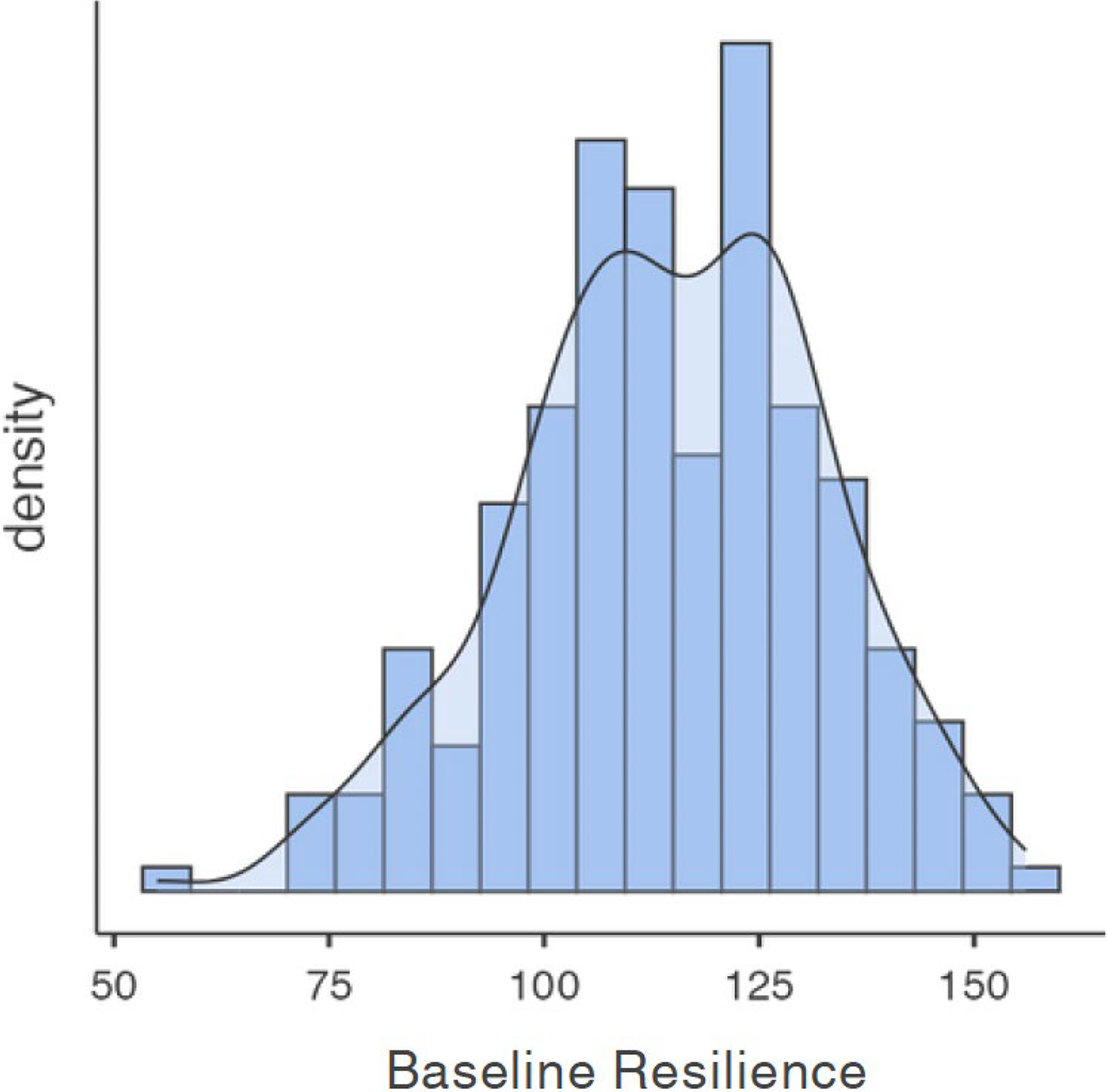
Histogram of baseline resilience.
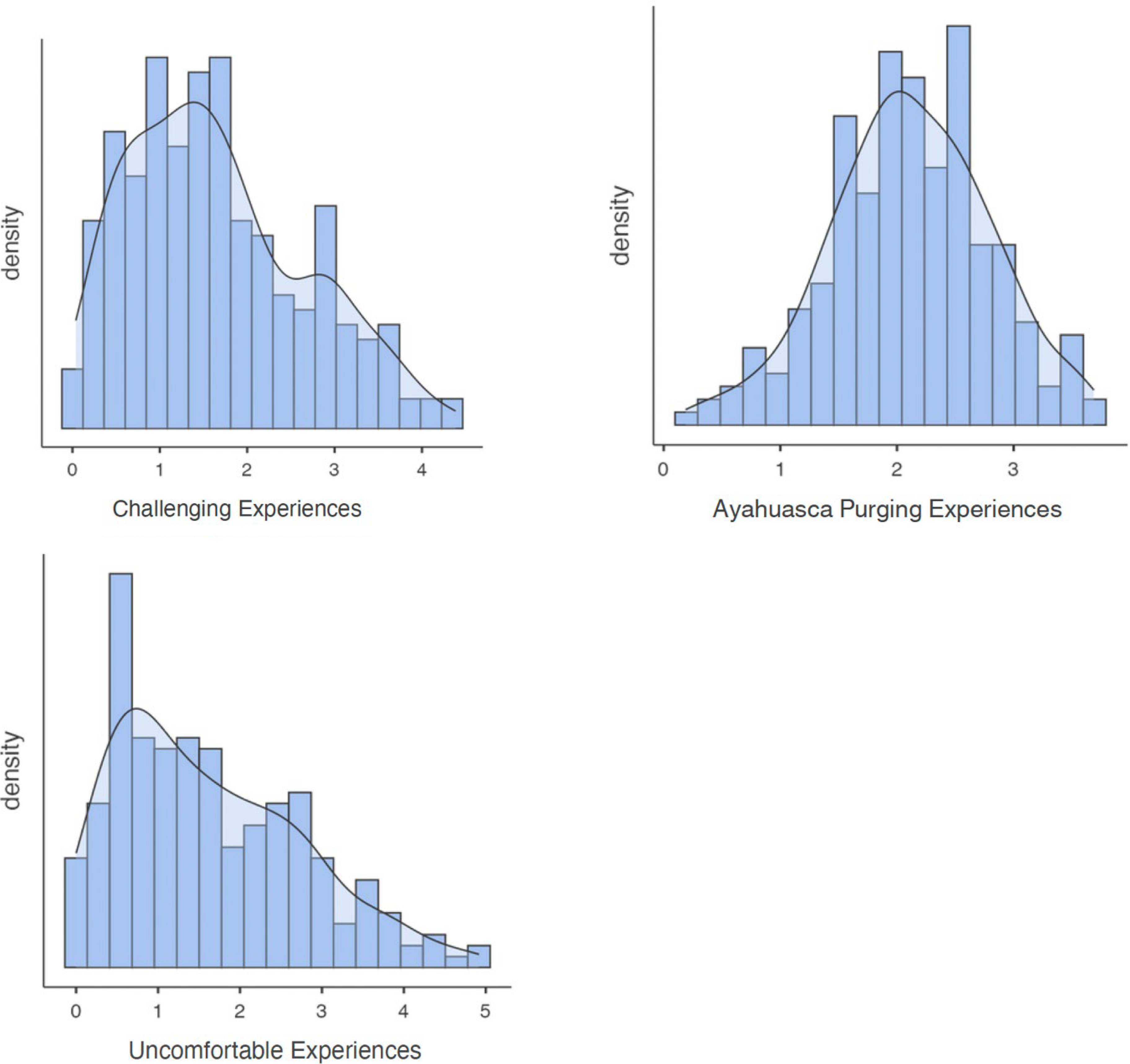
Histogram of acute challenging effects reported at T2.
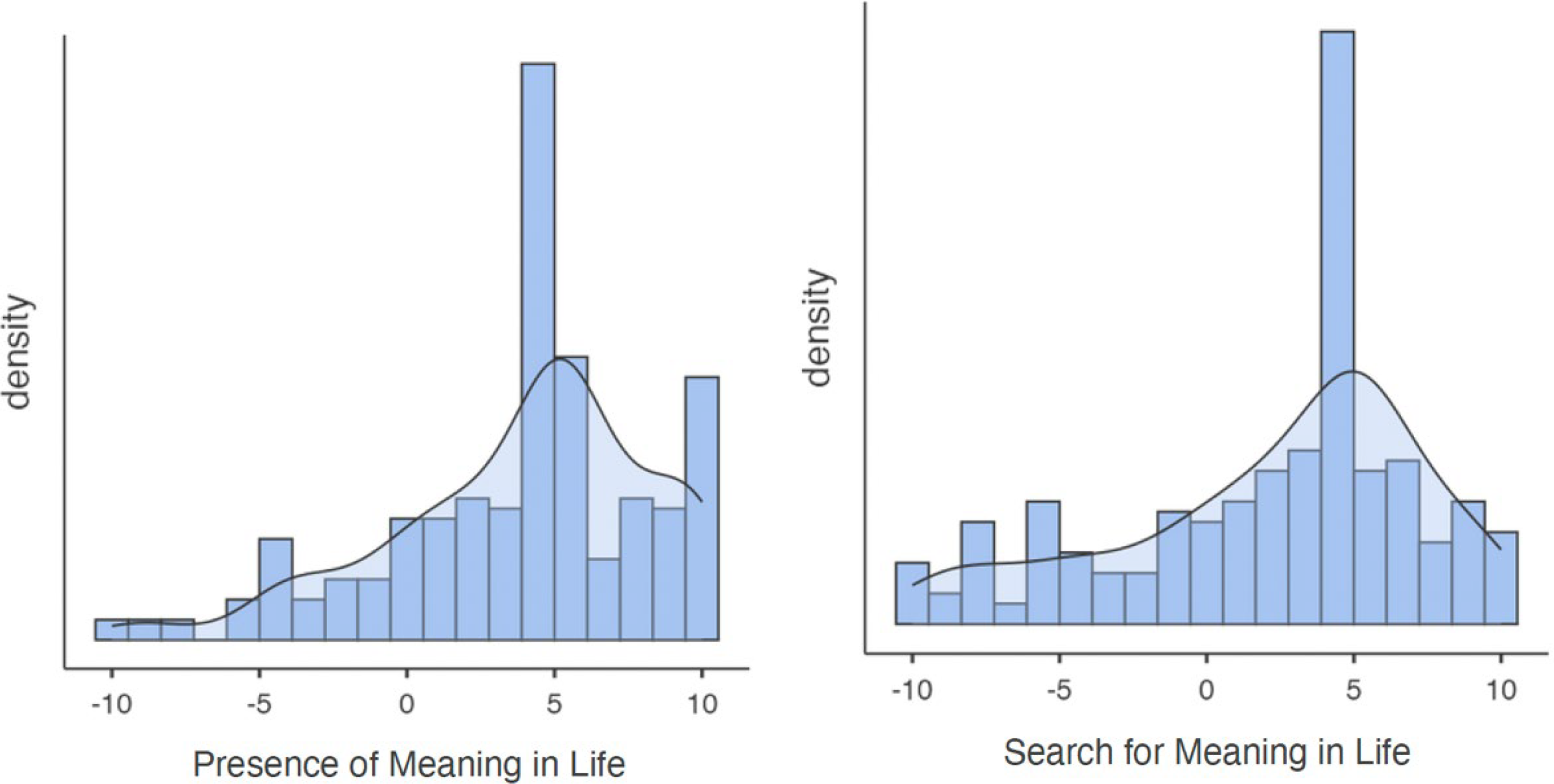
Histogram of meaning in life reported at T3.
Results
Demographic characteristics
Table 1 displays the demographic characteristics of the 233 participants who completed surveys at all three timepoints. The mean age of the sample was 41.20 years (SD = 11.41). The majority (86.7%, n = 202) were from North America (174 came from the U.S., and 28 came from Canada). Approximately half of the participants reported their biological sex as female (56.2%) and their gender identity as female (54.1%). Most participants (83.3%) identified as White or Caucasian, and the majority (92.3%) identified as non-Hispanic. Regarding education, 95.3% had attended or completed a college degree. In terms of employment and income, 54.5% reported a full-time employment status and 71.2% reported an annual household income of $75,000 or more. Lastly, 79.4% of the sample reported past psychedelic use experience, and 21.9% had past ayahuasca use prior to their ayahuasca retreat. When asked about their intentions for attending ayahuasca retreat, 83.7% of the sample reported intention for treatment, 85.4% reported intention for spiritual experience and improvement, and 24.5% reported intention for recreation.
Demographic Characteristics of Participants Who Attended Different Recruitment Locations and Retreat Length Groups (N = 233)
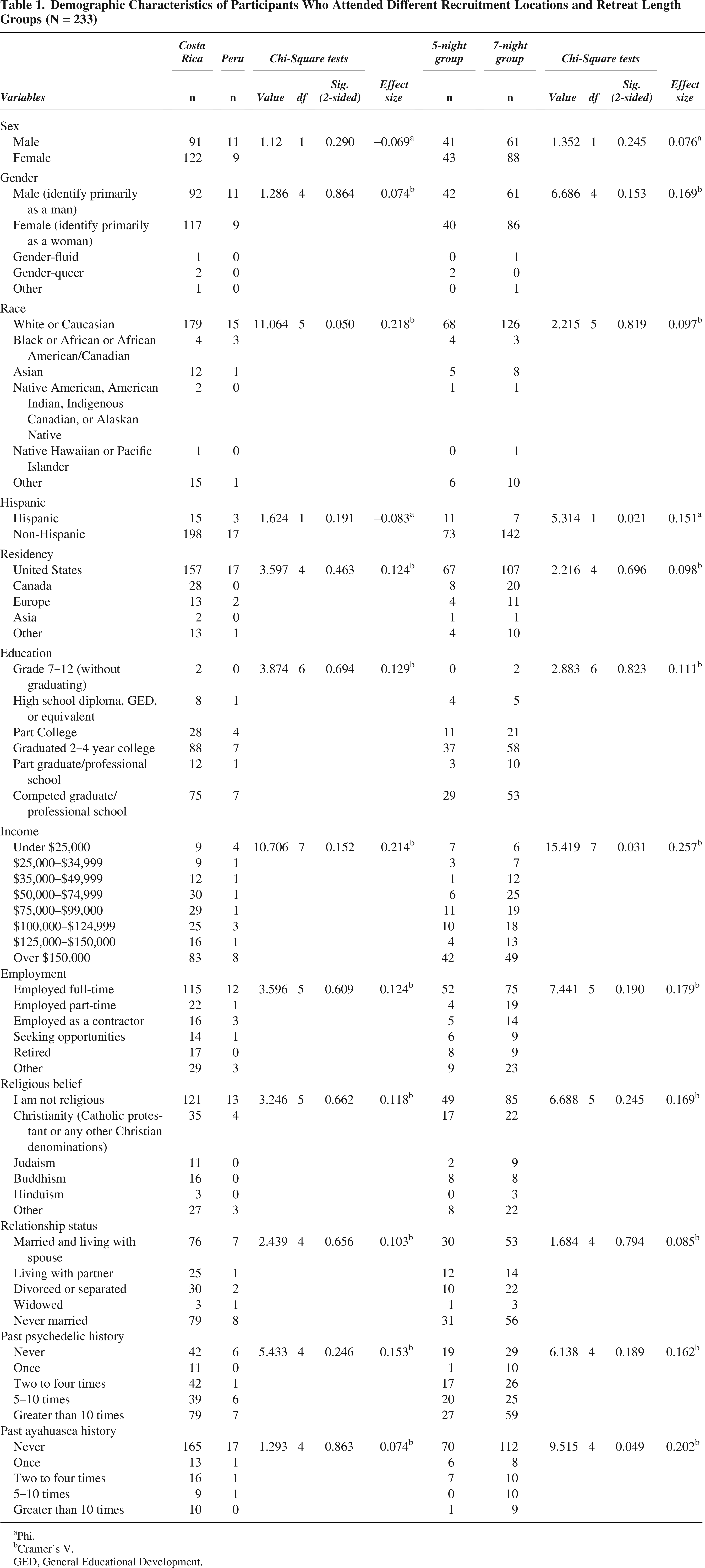
Phi.
Cramer’s V.
GED, General Educational Development.
To evaluate potential attrition bias, we compared demographic characteristics among participants who only completed the baseline survey (T1, n = 20), those who only completed T1 and T2 (n = 14), and those who completed all three timepoints (n = 233). Chi-square tests and one-way ANOVA revealed no significant differences in demographic variables across the groups, suggesting no evidence of systematic attrition bias. In addition, independent samples t-test and chi-square tests were conducted to examine whether there were demographic differences between the two recruitment locations (Costa Rica and Peru). Results indicated no significant differences across demographic variables between sites. Similarly, comparisons between participants attending the two retreat length groups (5-night vs. 7-night) revealed no significant differences in age, demographic characteristics, or primary outcome variables (i.e., resilience, acute ayahuasca effects, and psychospiritual outcomes). For a detailed report and interpretation of these analyses, see Xin. 24
Acute challenging ayahuasca effects
The CEQ items (hereafter referred to as “challenging experiences”; range: 0–5) had mean scores ranging from 0.31 (“I had the feeling that people were plotting against me”) to 3.04 (“I felt like crying”), APE items (hereafter referred to as “purging experiences”; range: 0–5) had mean scores ranging from 0.66 (“Changes in the color of the face”) to 3.72 (“Yawning”), and AEI-Discomfort Subscale (hereafter referred to as “uncomfortable experiences”; range: 0–5) had mean scores ranging from 0.70 (“I felt threatened”) to 3.21 (“I felt exhausted”). Interestingly, more than half of the participants indicated having at least a “moderate” (score > 2) intensity in challenging experiences of emotional and/or physical suffering, body shaking/trembling, feelings of grief, and feelings that led to crying. In contrast, less than 5.0% of participants reported experiencing at least a “moderate” intensity in challenging experiences of feeling people were plotting against them. For the purging experiences, over 60.0% of participants reported experiencing at least a “moderate” intensity of yawning, crying and spontaneous tears, and changes in body temperature. Conversely, only 4.70% of participants reported experiencing at least a “moderate” intensity of changes in the color of the face. Regarding uncomfortable experiences after taking ayahuasca, more than two-thirds of participants indicated feeling at least a “moderate” intensity of exhaustion, while only one-tenth of participants reported feeling at least a “moderate” intensity of being threatened. See details in Table 2.
Participants’ Self-Reported Acute Challenging Effects of Ayahuasca (N = 233)
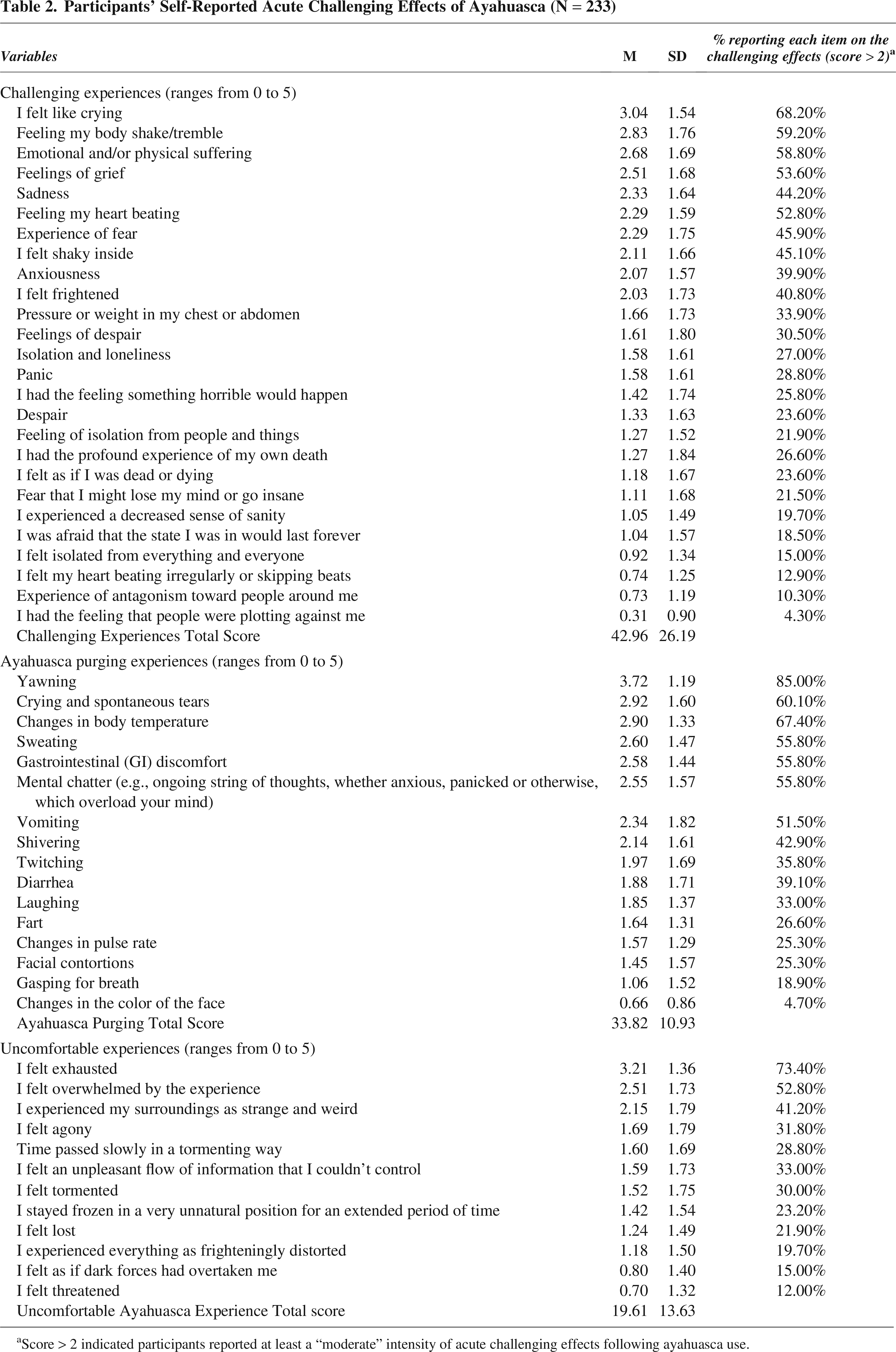
Score > 2 indicated participants reported at least a “moderate” intensity of acute challenging effects following ayahuasca use.
Correlation analyses for identifying potential control variables in primary analyses
Regarding control variables for acute ayahuasca effects, as Tables 3 and 4 show, the correlation analysis revealed that neuroticism reported at T1 was significantly and positively correlated with acute challenging experiences (r = 0.195, p = 0.003). In addition, in exploratory analyses, age showed a significant and negative correlation with acute purging experiences (r = −0.195, p = 0.003). Moreover, data showed that the influence of setting on participants’ ayahuasca experience reported at T2 was significantly and negatively correlated with uncomfortable experiences (r = −0.259, p < 0.001). Therefore, the variables of age (as a predictor for purging experiences), neuroticism (as a predictor for challenging experiences), and setting (as a predictor for uncomfortable experiences) were included as control variables in their respective Aim 1 regression models. Although previous literature suggests participants’ intention for use and past psychedelic use may be important predictors of psychedelic effects, 28 these theoretically relevant variables were not significantly associated with any primary acute effect outcomes in the current dataset. Therefore, intention and past psychedelic use were not included as covariates in final analyses. For full correlation tables, see Xin. 24
Pearson Correlations Analysis to Identify Potential Control Variables for Acute Ayahuasca Effects (N = 233)
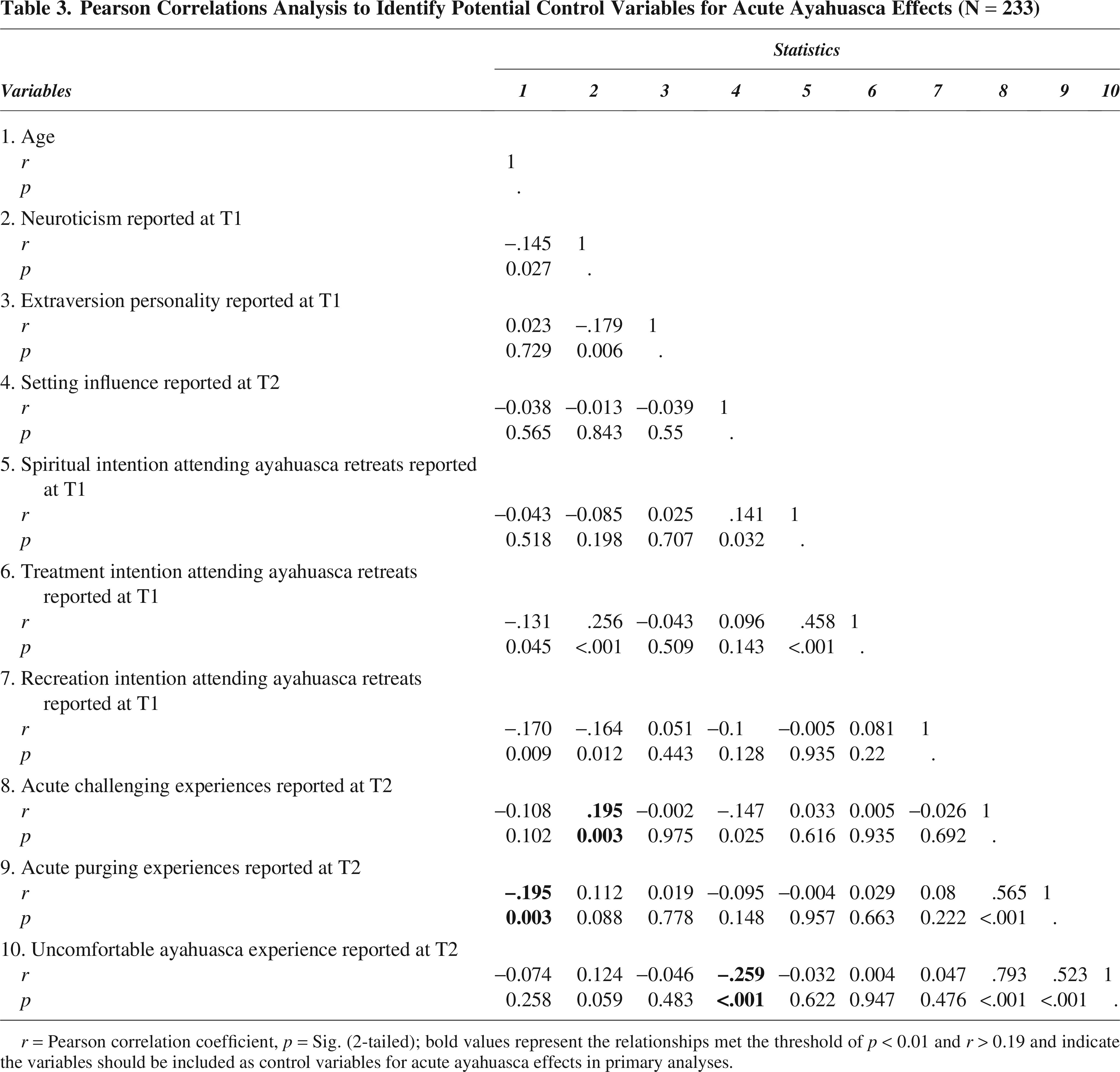
r = Pearson correlation coefficient, p = Sig. (2-tailed); bold values represent the relationships met the threshold of p < 0.01 and r > 0.19 and indicate the variables should be included as control variables for acute ayahuasca effects in primary analyses.
Spearman’s Rank Correlation Analysis to Identify Potential Categorical Control Variables for Acute Ayahuasca Effects (N = 233)
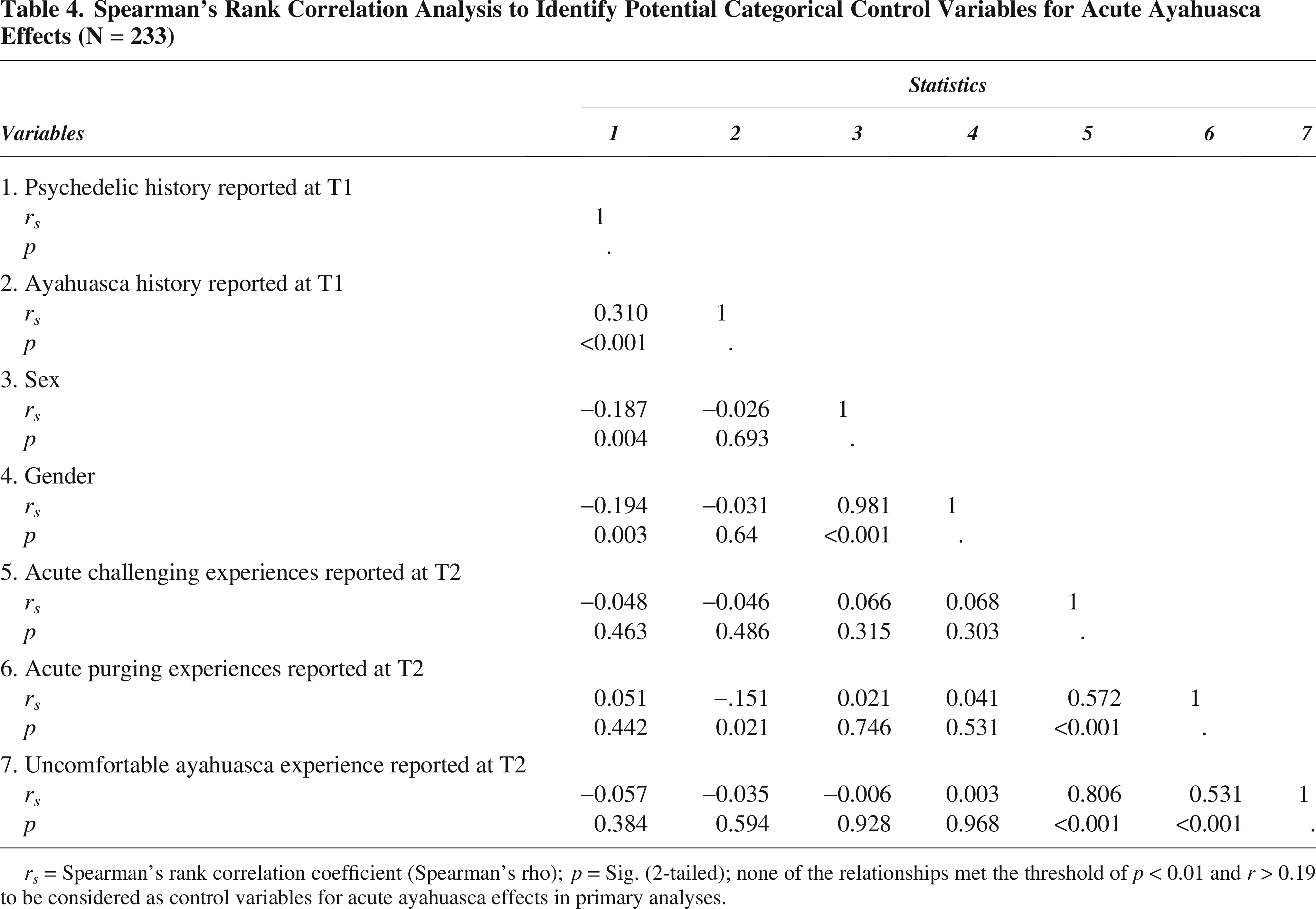
rs = Spearman’s rank correlation coefficient (Spearman’s rho); p = Sig. (2-tailed); none of the relationships met the threshold of p < 0.01 and r > 0.19 to be considered as control variables for acute ayahuasca effects in primary analyses.
Similarly, in evaluating potential control variables for psychospiritual outcomes reported at T3, correlation analyses showed that neuroticism at T1 was significantly associated with both the presence of meaning (r = −0.219, p < 0.001) and search for meaning in life (r = 0.246, p < 0.001). Neuroticism was therefore included as a control variable in all moderation models. In addition, the influence of setting on participants’ ayahuasca experience reported at T2 was significantly associated with the presence of meaning (r = 0.317, p < 0.001) and was included as a control variable in that specific moderation model. However, setting was only weakly correlated with search for meaning in life (r = −0.137, p = 0.037) and did not meet the prespecified threshold (r > 0.19 and p < 0.01), and thus was not included as a control variable in the moderation model predicting search for meaning.
Aim 1 results
Multiple regression coefficients of predictors on acute challenging effects are reported in Table 5. For challenging experiences, Model 1, including baseline neuroticism, was statistically significant, F(1,231) = 9.092, p = 0.003, and accounted for 3.4% (adjusted R2 = 0.034) of variance in acute challenging experiences. Model 2, controlling for neuroticism and adding baseline resilience in Block 2, showed a statistically significant improvement in the model,
Aim 1 Results: Baseline Predictors on Acute Challenging Effects of Ayahuasca
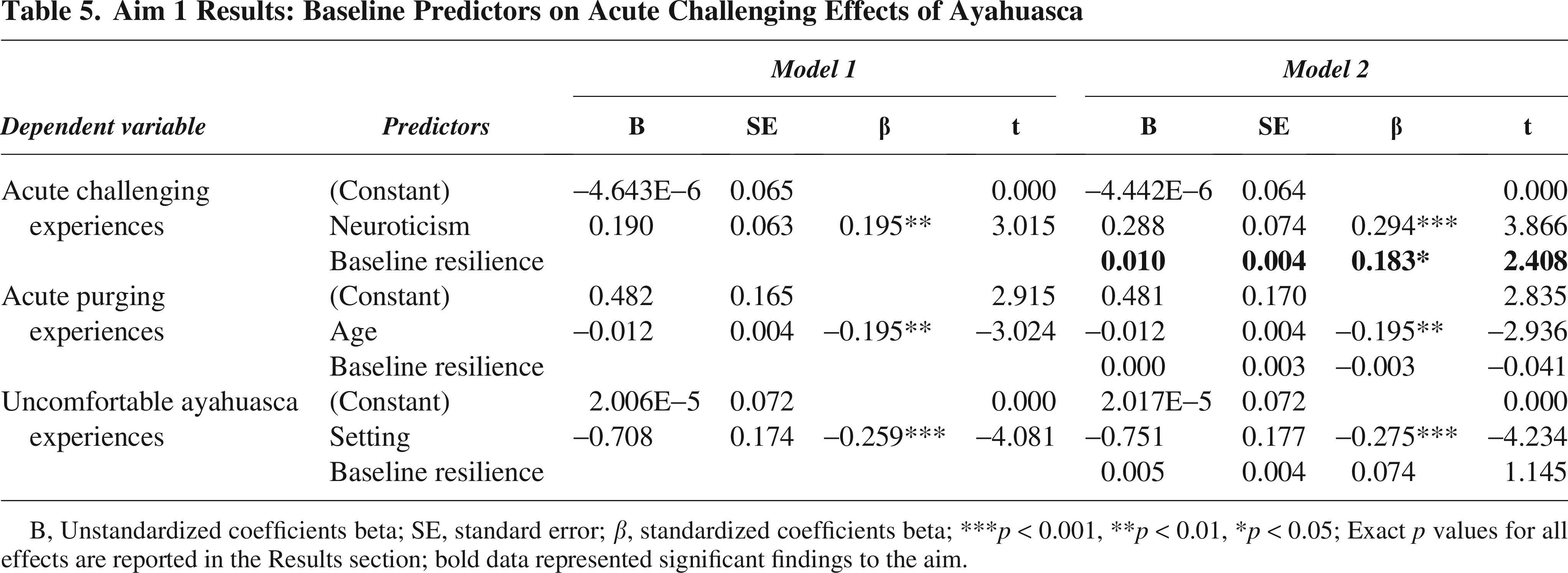
B, Unstandardized coefficients beta; SE, standard error; β, standardized coefficients beta; ***p < 0.001, **p < 0.01, *p < 0.05; Exact p values for all effects are reported in the Results section; bold data represented significant findings to the aim.
As Table 5 shows, in exploratory analyses of purging experiences, Model 1, including age, was statistically significant, F(1,231) = 9.147, p = 0.003, and accounted for 3.4% (Adjusted R2 = 0.034) of variance in acute purging experiences. Model 2, controlling for age and adding baseline resilience in Block 2, was not significant,
As shown in Table 5, for uncomfortable experiences, Model 1, including setting, was statistically significant, F(1,231) = 16.657, p < 0.001, and accounted for 6.3% (adjusted R2 = 0.063) of variance in uncomfortable experiences. Model 2, controlling for setting and adding baseline resilience in Block 2, was not significant,
Aim 2 results
Moderation regression coefficients are reported in Table 6. When examining the moderating effects of baseline resilience on the relationship between acute challenging experiences and the search for meaning in life at 1-month follow-up while controlling for neuroticism, there was a significant moderation effect (β = 0.154, t = 2.444, p = 0.015). This finding suggested the relationship between acute challenging experiences and post-retreat search for meaning in life is moderated and strengthened by higher levels of resilience. The interaction explained an additional 2.3% of variance in the search for meaning [ΔR2 = 0.023, ΔF(1,228) = 5.974, p = 0.015, f2 = 0.026], representing a statistically significant but small effect size that suggests a modest but meaningful contribution of the interaction term. The interaction effects are plotted in Figure 4.
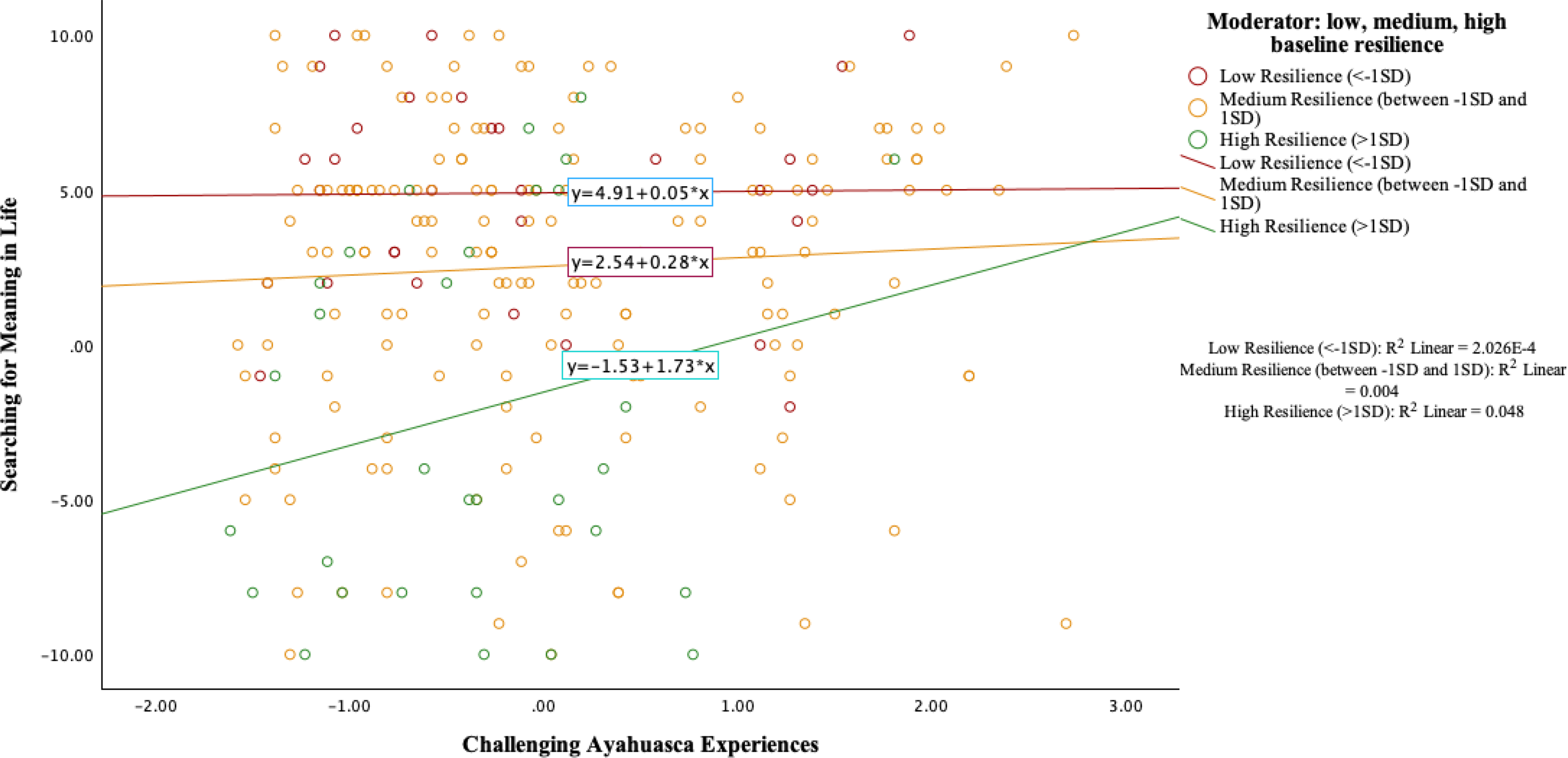
Interaction effects plot: challenging experience, search for meaning in life, resilience.
Aim 2 Results: Significant Moderation Regression Effects on The Relationship Between Acute Challenging Effects of Ayahuasca and Search for Meaning in Life
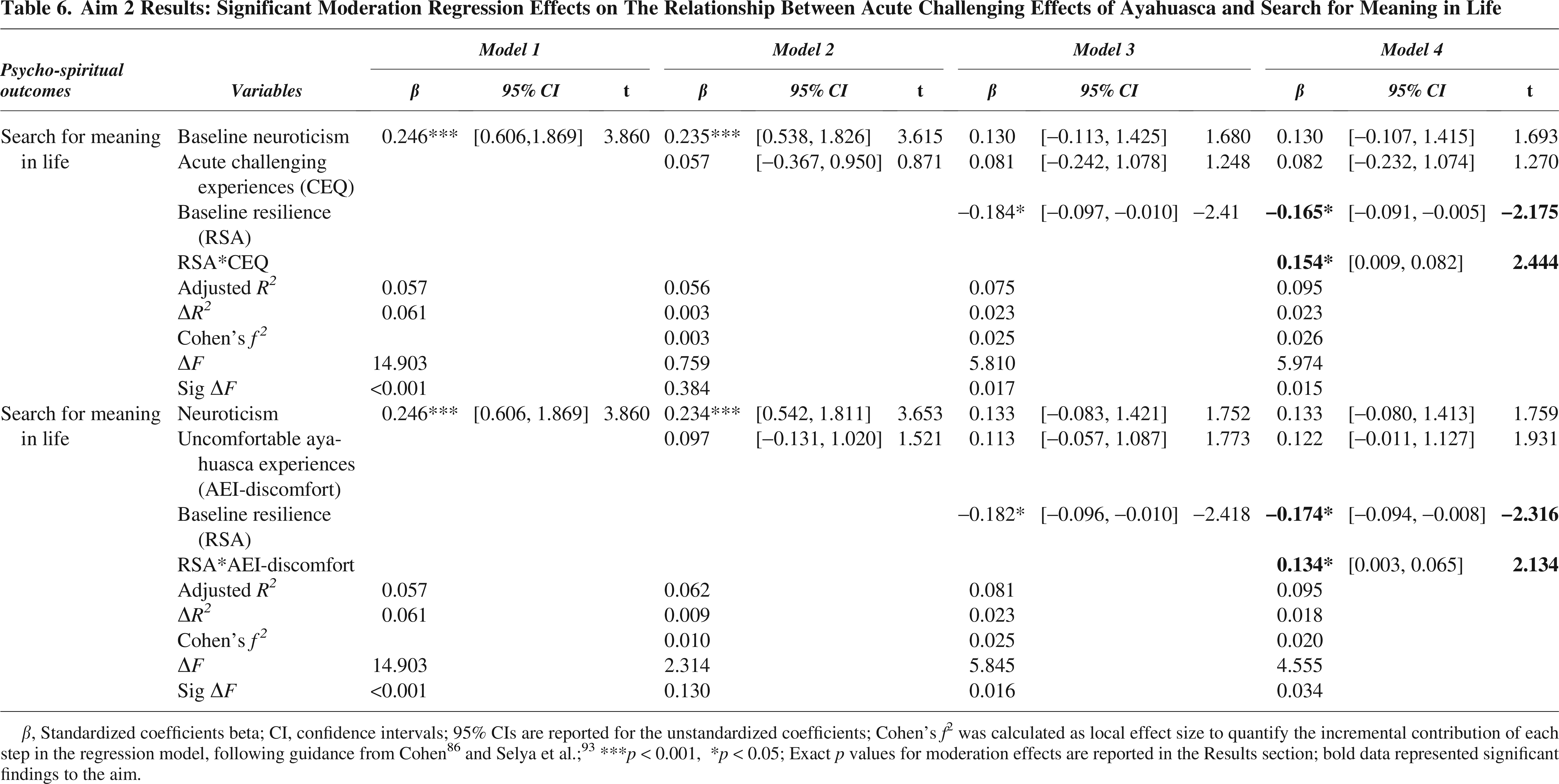
β, Standardized coefficients beta; CI, confidence intervals; 95% CIs are reported for the unstandardized coefficients; Cohen’s f2 was calculated as local effect size to quantify the incremental contribution of each step in the regression model, following guidance from Cohen 86 and Selya et al.; 93 ***p < 0.001, *p < 0.05; Exact p values for moderation effects are reported in the Results section; bold data represented significant findings to the aim.
Similarly, when examining the moderating effects of baseline resilience on the relationship between uncomfortable experiences and the search for meaning in life at 1-month follow-up while controlling for neuroticism, a significant positive association was found (β = 0.134, t = 2.134, p = 0.034). This finding indicated the relationship between ayahuasca uncomfortable experiences and post-retreat search for meaning in life was moderated by higher levels of resilience. The interaction explained an additional 1.8% of variance in the search for meaning in life [ΔR2 = 0.018, ΔF(1,228) = 4.555, p = 0.034, f2 = 0.020], representing a statistically significant, small effect size that suggests a modest but meaningful contribution of the interaction term. See details in Table 6. The interaction effects are plotted in Figure 5.
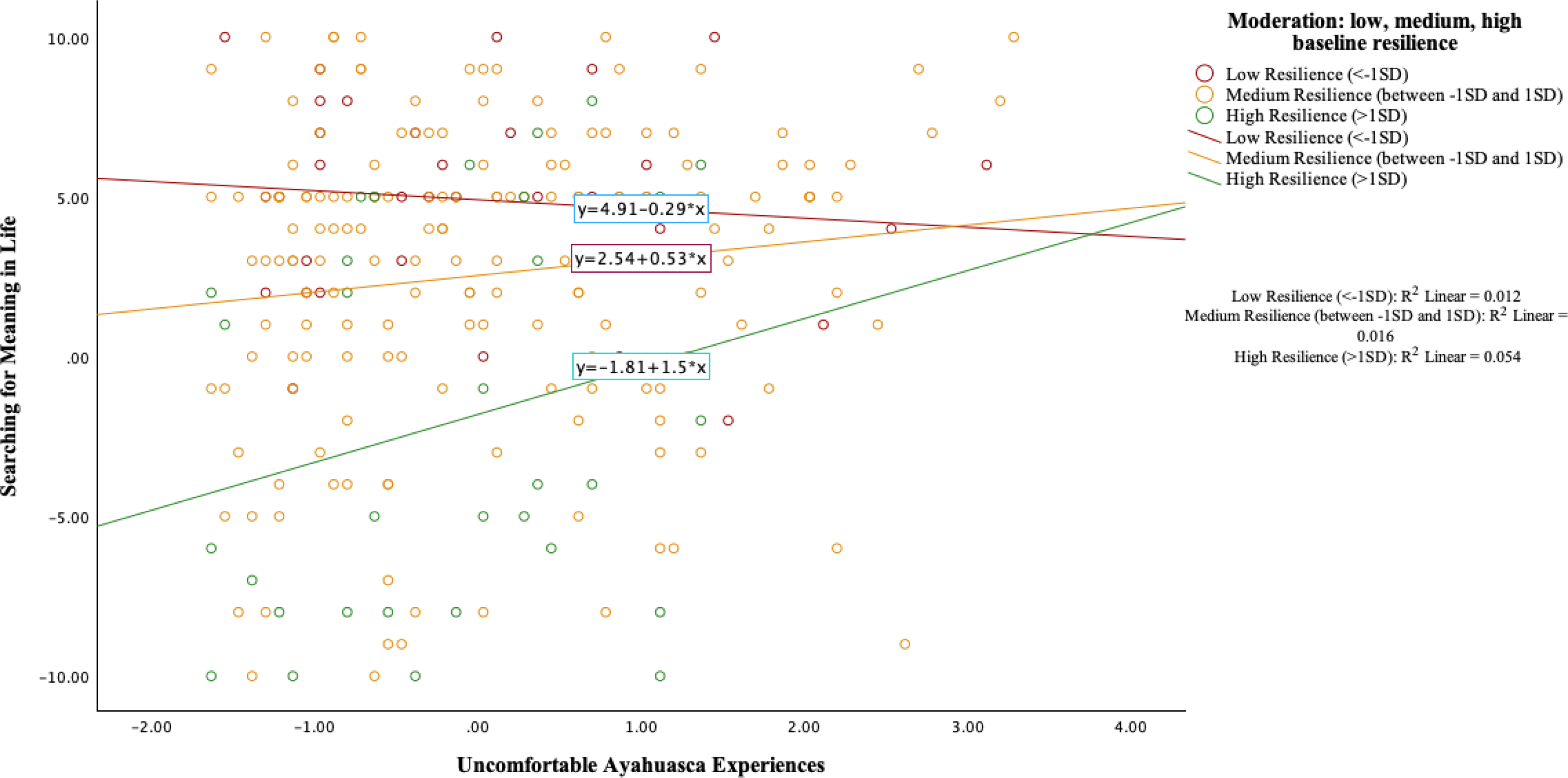
Interaction effects plot: uncomfortable experience, search for meaning in life, resilience.
Although the main effects of acute challenging experiences and uncomfortable experiences on the search for meaning in life were not statistically significant, the interaction terms accounted for a small but statistically meaningful incremental variance (ΔR2 = 0.023 and ΔR2 = 0.018, respectively), indicating resilience plays a moderating role in these relationships. These moderation analyses were conducted because resilience was theoretically hypothesized to play an important role in shaping how individuals experience post-retreat meaning-making processes following challenging psychedelic experiences. The presence of meaning subscale was also tested in the moderation analyses but did not yield any significant results and is, therefore, not reported further. Because baseline meaning in life was not assessed in this study, these moderation results reflect post-retreat associations and should not be interpreted as evidence of change over time. Given the cross-sectional nature of these post-retreat associations and the exploratory framing of these moderation tests, these findings should be interpreted as preliminary patterns requiring replication in future studies with event-specific measures and extended follow-up periods.
Discussion
This study investigated baseline resilience as a predictor of acute challenging effects of ayahuasca and its potential moderating role in the relationship between these effects and psychospiritual outcomes. Findings revealed that resilience significantly predicted acute challenging experiences of ayahuasca, while controlling for neuroticism, where higher levels of baseline resilience predicted more intense acute challenging experiences. In addition, exploratory analyses suggested moderating effects of resilience on the relationship between acute challenging experiences and the search for meaning in life, as well as the relationship between uncomfortable experiences and the search for meaning in life. Specifically, results suggested that individuals with higher levels of resilience not only coped more effectively with challenging experiences but were also likely to engage in an active search for meaning in life.
Results from Aim 1 showed that higher levels of resilience predicted more intense acute challenging experiences following ayahuasca retreats. This finding is inconsistent with existing research evidence that higher levels of resilience would predict less acute challenging effects given resilience’s buffering effects in mitigating the impacts of stressors and challenging situations.52–55 There are several possible explanations for this discrepancy. First, it is possible that individuals with higher levels of resilience might perceive challenges or stressful situations as less severe and feel more confident in handling them, making them more open to the potential challenging experiences associated with ayahuasca use. Existing research evidence shows a close association between coping and resilience and suggests individuals with higher levels of resilience tend to utilize more adaptive coping strategies due to their unique approach in appraisals to evaluate the severity of the stressor and their capacity to manage them.88–90 In addition, evidence demonstrates a positive association between resilience and openness, indicating individuals with higher levels of resilience are more open to experiences in life.91,92 Thus, it is possible that participants with higher levels of resilience might be more open to potential challenging experiences, better at recognizing their physical and emotional symptoms, perceive these challenging effects as less severe and dangerous, and feel more confident in their capacity to manage these effects with adaptive coping strategies, which could lead to more intense challenging experiences reported in their self-evaluation. Furthermore, the RElaxed Beliefs Under pSychedelics (REBUS) model suggests that psychedelics relax the precision of rigid priors or beliefs, thereby liberating bottom-up information flow and creating space for new perspectives to emerge. 61 Within this more open cognitive landscape, it is possible that individuals high in resilience may be especially equipped to engage with emotionally intense content, which could potentially lead to more intensely challenging experiences being reported. However, the exact mechanisms behind the dynamic interaction between resilience and challenging experiences and the discrepancy between findings and study hypothesis remain unclear and warrant further investigation.
Results for Aim 2 provided preliminary evidence that resilience may moderate the relationship between acute challenging effects of ayahuasca (challenging experiences and uncomfortable experiences) and the search for meaning in life, which is consistent with existing research evidence showing resilience moderates the relationship between stress/challenges and psychological outcomes.52,58 These findings supported the applicability of the Resilience Framework for understanding acute ayahuasca effects and related outcomes. Specifically, individuals with higher levels of resilience may be more capable of returning to baseline functioning after challenging experiences with an enhanced capacity for adaptation, 94 suggesting participants may enhance their responsiveness to future stressors through this process. It is possible that these individuals were more effective in using adaptive coping strategies to engage with the distress88–90 associated with ayahuasca use, which may have supported their ability to find meaning in these experiences. In addition, individuals with higher levels of resilience report gaining new insights from their challenging experiences and view such challenges as opportunities for personal growth in meaning-making. 94 In the context of this study, it is possible that resilience helped participants reinterpret challenging effects as meaningful or growth opportunities, which may have further facilitated a transformative reflection on their experiences and fostered an active search for meaning in life.
The study findings highlight resilience’s role in both coping with stressors and thriving from them with positive outcomes, which indicates possible moderating effects of resilience on the relationship between acute challenging effects of ayahuasca and psychospiritual outcomes. Importantly, given that resilience is a well-established protective factor in promoting health52–55 and the growing interest in interventions to build resilience for future adversity, 95 ayahuasca retreat attendees may benefit from pre-retreat preparation programs promoting resilience and post-retreat integration programs to help process their experiences. Such programs could be valuable in providing effective coping strategies for managing acute challenging effects and encouraging a deeper search for meaning in their experiences.
This study took an innovative approach by adopting a conceptual model of the Resilience Framework and offered a novel and insightful perspective to understand the acute effects of ayahuasca and use-related psychological and spiritual outcomes from a resilience and strength-based standpoint. As such, this study is the first of its kind to explore how resilience influences acute challenging effects of ayahuasca and psychospiritual outcomes across different timepoints, which provides unique contributions to the psychedelic science literature. Furthermore, the Resilience Framework also offered a valuable perspective on one important extra pharmacological factor, the individuals’ resilience, alongside previously identified extra pharmacological factors (e.g., setting, set, and past experience with psychedelics) that impact ayahuasca experiences.28,79,96 Future studies should consider resilience as an important factor impacting participants’ experiences in ayahuasca (and perhaps all classic psychedelics) studies and seek to validate and verify these findings through replication in a more diverse sample.
Although the Resilience Framework provides a novel and insightful perspective to understand acute effects of ayahuasca and associated outcomes, the inconsistency between study hypotheses and results indicates the possibility that adopting an existing definition of resilience, which was not specifically designed for psychedelic science, may not fully capture the complexity of resilience as it manifests during and after ayahuasca experiences. The discrepancy between Aim 1 hypothesis and the actual findings in this study suggested that the Resilience Framework may need to be tailored specifically for psychedelic research. For example, additional psychological constructs should be explored as predictors, such as resilience-related perceptions and openness to experiences, to more accurately predict the acute challenging effects associated with ayahuasca use. The mismatch also highlights the need for a more comprehensive framework and conceptualization that considers physiological, emotional, and cognitive dimensions and how these elements dynamically interact with each other over time. Particularly, given the unique experience of purging experiences during ayahuasca sessions, it is crucial to take physiological resilience into consideration, such as measuring the body’s response to the intense sensory and somatic effects of ayahuasca (e.g., “My body is able to purge without resistance during ayahuasca experience” “I am able to tolerate the physical discomforts during ayahuasca sessions” “My body quickly recovered from the ayahuasca challenging effects”). Potential biological markers that could provide insights may include heart rate, blood pressure, inflammatory markers, and electroencephalogram patterns. In addition, there may be emotional and cognitive characteristics that demonstrate resilience but were not fully captured by the selected Resilience Framework and Resilience Scale, which may explain the discrepancy between study hypotheses and findings as well as the small effect sizes observed in the regression analyses.
Study Limitations
There are several limitations of the present study. First, this study relied on self-reported measures for data collection, which may introduce biases such as social desirability and recall bias that potentially influence the accuracy of the data. Second, this is an observational study without a control group, which limits causal inferences about whether the observed changes were directly related to ayahuasca use rather than to other factors. That is, without a control group comparison, it is difficult to isolate the unique effects of ayahuasca use on mental health and psychospiritual outcomes from other extra pharmacological factors (e.g., setting, mindset, past history of psychedelics) 96 and draw causal conclusions. In addition, the acute purging experience was measured using an exploratory scale (APE) developed for this study, which has not undergone full psychometric validation (e.g., confirmatory factor analysis, convergent/discriminant validity). While the scale demonstrated an acceptable internal consistency reliability, the lack of empirical validation may limit the accuracy in capturing purging experiences following ayahuasca use. Additional data and external measures will be needed to support a more comprehensive validation of the scale in future research. Moreover, this study used the total SQAE score as a covariate to represent overall setting quality, without including subscale level scores that may offer additional nuance. Future research may benefit from examining specific setting dimensions using individual SQAE subscales. Also, the RSA was adapted from a semantic differential format to a 5-point Likert format to accommodate the retreat setting. While the adapted scale demonstrated high internal consistency, we did not conduct formal validation of this modified format. It is also important to note that sensitivity analyses were not conducted due to the exploratory nature of the study. Future studies may benefit from such analyses to test the robustness of our findings across alternative analytical approaches. Because the moderation analyses did not adjust for baseline meaning in life, the results reflect post-retreat associations rather than change over time. These findings should therefore be interpreted as exploratory and preliminary. Future longitudinal research with baseline assessments, event-specific measures designed to capture psychedelic-specific change, and extended follow-up is needed to determine whether resilience shapes meaning-making after challenging psychedelic experiences. Furthermore, considering the substantial costs associated with attending ayahuasca retreats, it is possible that participants were likely to be a highly motivated group seeking specific outcomes, which may impact the results by providing more favorable outcomes in self-reported surveys due to their expectations and investments. Lastly, the financial barriers to attending ayahuasca retreats may involve a potential selection bias, as the majority of participants were White, North American, and socioeconomically stable; findings may not generalize to broader populations.
Conclusion
This study is the first of its kind to explore the roles of baseline resilience in relation to acute challenging effects of ayahuasca and psychospiritual outcomes. Findings from this study contribute to our understanding of ayahuasca effects and resilience, highlighting ayahuasca’s therapeutic potential from a resilience standpoint. Evidence from this study could be used by mental health providers in support of preparation or integration therapy practices for individuals who seek out help following their ayahuasca retreat experience or those who are interested in attending retreats. Given the rising prevalence of psychological distress, trauma, and mental health concerns, understanding how resilience interacts with psychedelic experiences is particularly relevant. Future studies should consider more rigorous study designs, such as the inclusion of a control group, to closely examine the unique impacts of resilience on ayahuasca effects and related outcomes. Such research may help clarify the underlying therapeutic mechanisms and enhance supportive practices within psychedelic-assisted interventions.
Broader Context and Future Directions
In light of rising rates of depression, anxiety, and suicide, the need for expanding therapeutic options has become urgent. This need has been further intensified by the ongoing impacts of the global COVID-19 pandemic, social and economic pressures, and the accumulating weight of daily life in an era marked by rapid change and uncertainty. Individuals across different backgrounds need opportunities to recover and heal from trauma, distress, and emotional suffering. Ayahuasca shares a rich history in many cultures as a sacred plant used for healing and spiritual growth. Exploring its therapeutic potential through scientific research may contribute to humanity’s path toward healing. Studying ayahuasca in the context of today’s global challenges offers not only clinical insights but also a unique opportunity to reflect on human well-being and pathways toward resilience, recovery, and renewal.
Authors’ Contributions
Y.X. led the conceptualization, data collection and analysis, funding acquisition, investigation, methodology, project administration, resource management, validation, visualization, original drafting, and overall writing process. A.K.D. contributed to the conceptualization, methodology, supervision, and validation and provided resources and feedback. S.Y. contributed to the formal analysis, and methodology and provided feedback. M.L. contributed to the methodology and provided feedback. All authors contributed to the final review and editing of the article.
Footnotes
Acknowledgments
The authors thank Soltara Healing Center for their support with participant recruitment and extend our gratitude to all participants for their time and willingness to share their experience.
Author Disclosure Statement
A.K.D. is a board member at Source Research Foundation. This organization was not involved in the study design or the interpretation of findings.
Funding Information
This study was supported by multiple research grants, including Alumni Grants for Graduate Research, College of Social Work Student Seed Grant, and International Research and Scholarship Grant at The Ohio State University; the 2022 Dissertation Grant from the Center for Psychedelic Drug Research and Education at The Ohio State University; and the 2022 Student Grant from the Source Research Foundation. Dissemination of this study was supported by anonymous private donors. AKD is supported by the Center for Psychedelic Drug Research and Education, funded by anonymous private donors. The funding sources had no role in the study, data analysis, interpretation, or communication of findings.
Supplemental Material
References
Supplementary Material
Please find the following supplemental material available below.
For Open Access articles published under a Creative Commons License, all supplemental material carries the same license as the article it is associated with.
For non-Open Access articles published, all supplemental material carries a non-exclusive license, and permission requests for re-use of supplemental material or any part of supplemental material shall be sent directly to the copyright owner as specified in the copyright notice associated with the article.
