




Abstract
Studies have documented racial and gender-based disparities in civil jury awards. Legal scholars have raised concerns that biases might be especially prevalent in awarding pain and suffering damages, which are particularly open-ended and difficult to estimate. We contribute to this body of literature by providing experimental evidence of a causal relationship between the perceived race and gender of victims, the perception of their pain and suffering, and the damages awarded to them. We focus on two types of injuries: head and knee injuries, on the intersection of gender and race and on related evaluations of victims’ behavior. We find that people perceive the pain and suffering of White victims to be greater than that of Black victims afflicted by the same head injury. The most alarming finding of our experiment is that Black male victims receive significantly lower amounts of damages for pain and suffering associated with both head and knee injuries compared to all other victims. By contrast, Black female victims are not penalized compared to White women and men, and receive significantly higher amounts of damages for their pain and suffering associated with both head and knee injuries compared to Black men.
1. Introduction
Are evaluations of the pain and suffering of tort victims and the damages awarded for them in court biased by perceived race and gender?
Studies have documented racial- and gender-based disparities in civil jury awards (Girvan & Marek, 2016; Cardi et al., 2020; Bitton & Kricheli-Katz, 2023). Legal scholars have raised the worry that biases may be especially prevalent in awarding pain and suffering damages, which are by nature open-ended and difficult to estimate (McCaffery et al., 1995; Geistfeld, 1995; Gilboa, 2022). The concern is that when jurors have wide discretion and no concrete criteria for assessment, stereotypes and cultural beliefs about race and gender may influence their impressions and evaluations and thus affect the decisions they make. These concerns were validated in a study using data from real decisions made by jurors in tort cases, showing that when jurors have greater discretion, as in the case of pain and suffering damages, they tend to award less to Black plaintiffs than to White ones (Girvan & Marek, 2016). We contribute to this body of literature by providing experimental evidence of a causal relationship between the perceived race and gender of victims, the perception of their pain and suffering, and the damages awarded to them. In other words, we go beyond real-world correlations and provide evidence of causation to document racial- and gender-based biases in pain and suffering damages and explore the mechanisms generating them. Our experimental design—using randomized stimuli and controlled conditions—allows us to isolate the causal impact of race and gender while holding all else constant. At the same time, we acknowledge that the online experimental setting does not fully capture the complexity of real-world decision-making, though our participant pool includes potential jurors drawn from the general population.
In the US, pain and suffering damages for victims who suffered bodily injury are typically assessed by the jury. Many studies have documented racial biases in jury decisions in different contexts (Wuensch et al., 2002; Levinson, 2007; Sommers, 2007; Thompson, 2018), which linger even when procedures designed to reduce biases are in place (Thompson, 2018). Jurors might make biased decisions without being aware of doing so, convinced that their view is objective (Levinson, 2007). The obscure nature of pain and suffering damages and the broad discretion involved in assessing them raise concerns that biases are coloring the evaluations of pain and suffering of tort victims and, as a result, also the damages awarded to them (McCaffery et al., 1995; Geistfeld, 1995; Avraham, 2016; Gilboa, 2022).
The challenge of assessing the extent of pain and converting it into monetary terms stems from the elusive nature of pain. Consequently, there is a lack of consistency and predictability in quantifying such damages (Chapman, 1995; King, 2004). Indeed, some scholars have proposed alternative methods for determining compensation for pain and suffering, aiming to improve consistency in evaluating this type of damages (Bovbjerg et al., 1989; Geistfeld, 1995; Avraham, 2016). Others have expressed concerns that the subjective nature of pain assessment may create a loophole through which factors such as racial and gender biases may infiltrate our tort compensation system (Geistfeld, 1995; Chase, 1995; Gilboa, 2022). This concern is particularly significant given the extensive literature documenting racial disparities in the perception of others’ pain (Green et al., 2003; Trawalter et al., 2012; Trawalter & Hoffman, 2015; Hoffman et al., 2016; Druckman et al., 2018; Kissi et al., 2022; Mende-Siedlecki et al., 2022).
Studies have suggested that the stereotype belief that Black people suffer less pain than White people reflects stereotypical beliefs about biological differences between the races (Waytz et al., 2014; Hoffman et al., 2016). The latter beliefs are rooted in the myth that Black bodies are fundamentally stronger than White ones (Fleming, 2001; Hall, 2001; Williams & Eberhardt, 2008). Researchers have argued that racial discrepancies in pain perception may derive from the perception that hardship leads to toughness (Hoffman & Trawalter, 2016).
The effects of racial biases in the perception of others’ pain on the decisions people make have been documented in various areas of life. Examples include discrepancies in decision-making in medical assessment of pain and treatment recommendations (Young et al., 2013; Goyal et al., 2015; Hoffman et al., 2016), and in decisions about the readiness of injured athletes to return to the game following an injury (Trawalter et al., 2012). Recently, attention has been focused on the legal field, specifically on damages awarded to tort victims for pain and suffering (Girvan & Marek, 2016; Gilboa, 2022).
Our study contributes to this growing body of literature on the effects of biases on pain and suffering damages, by providing experimental evidence of causality and exploring the mechanisms that generate biases. We experimentally focus on two injury types: head and knee injuries. We find that people perceive the pain and suffering of White victims to be greater than that of Black victims afflicted by the same head injury.
We also move beyond race and gender binaries to show that, when it comes to pain and suffering, cultural beliefs about race intersect with those about gender and produce different outcomes for Black women, Black men, White women, and White men (Ridgeway & Kricheli-Katz, 2013). Specifically, we find that Black male victims receive significantly lower amounts of damages for pain and suffering related to both their head and knee injuries compared to all other victims. Nonetheless, Black female victims are not penalized compared to all other victims, and receive significantly higher amounts of damages for pain and suffering for both head and knee injuries compared to Black men.
2. Stereotypes and Cultural Beliefs About Pain and Suffering
Studies in social psychology have shown that under conditions of uncertainty, people tend to automatically and unconsciously rely on stereotypes and cultural beliefs to make sense of and evaluate people, behaviors, and interactions (Brewer, 1997; Chwe, 2013; Ridgeway, 2011). Race and gender in the US are “primary cultural categories” for framing social interactions (Ito & Urland, 2003; Schneider, 2004; Ridgeway, 2011). This means that people automatically and immediately categorize one another in social interactions by perceived race and gender. When people are categorized by perceived race and gender, stereotypes about who they are (and should be) are instantly evoked (Krieger, 1995; Dorfman, 2024). In other words, stereotypes tend to color our expectations, perceptions, and evaluations of others. Thus, the same behavior may be evaluated differently, depending on the perceived race and gender of the people involved (Bohren et al., 2019; Wynn & Correll, 2018), producing inequalities in resources and rewards (Bertrand & Mullainathan, 2004; Castilla, 2008; Wynn & Correll, 2018; Ridgeway, 2011).
The literature on racial stereotypes suggests that Black people are viewed as less cooperative, more threatening, and less competent than White people (Neckerman & Kirschenman, 1991; Plous & Williams, 1995; Wilson, 1996; Moss & Tilly, 2001; Waldinger & Lichter, 2003; Green et al., 2007). Black people are also perceived to possess more physical strength and endurance compared to White people (Waytz et al., 2014; Hoffman et al., 2016). Relatedly, Black people are stereotypically believed to display higher resistance to pain compared to White people (Jones, 2005; Waytz et al., 2014; Hoffman et al., 2016).
Studies on gender stereotypes have shown that women, in general, are stereotypically viewed as more emotional and warmer, but less agentic and competent than men (Timmers et al., 2003; Ridgeway, 2011). These stereotypes may influence the perception of the severity of women’s pain. This intuition is supported by a recent study that found a correlation between biases arising from the perception of women’s pain as less intense or serious—due to stereotypes of women as “hysterical” or emotional—and the undertreatment of women’s pain in emergency departments compared to that of men presenting with similar symptoms (Guzikevits et al., 2024).
Finally, studies on the intersection of perceived race and gender in the U.S. suggest that some of the stereotypes about Black women tend to be different from those about both White women and Black men. For example, Black women tend to be viewed as having more dependents to care for (Beauboeuf-Lafontant, 2009), stronger and more agentic than White women and Black men (Crenshaw, 1991; Vertinsky & Captain, 1998; Richardson et al., 2011; Livingston et al., 2012; Ridgeway & Kricheli-Katz, 2013). These stereotypes that portray Black women as physically capable may translate into assumptions about their ability to withstand higher levels of pain.
In general stereotypes and cultural beliefs may be unconsciously and automatically evoked when jurors are asked to evaluate the pain and suffering of victims of otherwise similar injuries and to award damages accordingly.
Building on these bodies of literature, we asked participants in an experiment to evaluate the pain and suffering of victims who vary by their perceived race and gender and who have suffered from either a knee or a head injury. We predicted that pain and suffering evaluations and damages awards would vary not only by the perceived race and gender of victims, but also by the type of injury. Generally, we predicted that the pain and suffering of Black victims would be evaluated as less severe than that of White victims. Building on the literature on intersectionality, we also predicted that the pain and suffering of Black women would be viewed as less severe than that of both White women and Black men. Finally, based on the literature on stereotypes about competence, we predicted that racial disparities would be prevalent especially for head injuries, which may be more directly stereotypically associated with cognitive rather than physical abilities.
2.1. Experimental Design
The experiment was conducted in the summer of 2023. 1 Participants, recruited through Prolific (a crowdsourcing marketplace), were randomly assigned to one of the experimental conditions in which they were asked to evaluate the pain and suffering of victims of car accidents, report the amount they would award in damages for pain and suffering, and evaluate different aspects of the victim’s behavior.
About half of the participants were asked to evaluate the pain and suffering following a head injury, whereas the others were asked to evaluate the pain and suffering following a knee injury. We focused on knee and head injuries in an effort to disentangle perceptions of physical competence and pain (knee injuries) from perceptions of cognitive competence and pain (head injuries).
Victims were presented as either Black or White and female or male. We manipulated the perceived race and gender of the victim by the names used (see the appendix for the materials used in the experiment). The experiment involved eight experimental conditions (2 race * 2 gender * 2 injuries). We used the following first names to manipulate the race and gender of the victims: Barbara, Brenda, Charlotte, Claire, Deborah, Emily, Erica, Heidi, Katelyn, Laurie, Madeline, Megan, Sarah, Stephanie, and Susan; Todd, Neil, Geoffrey, Brett, Brendan, Greg, Matthew, Jay, Brad, Luke, Dustin, Hunter, Robert, Ethan, Connor, Rasheed, Kareem, Darnell, Tyrone, Hakim, Jamal, Leroy, Jermaine, Darius, Jarome, Denzel, Dewayne, DaQuan, DeAndre, Lakisha, Shania, Kiara, Janae, Aisha, Keisha, Tamika, Tanisha, Latoya, Latonya, Kenya, Ebony, Jasmine, Monique (see also, Gaddis, 2017). 2
The physical injuries and the damages the victims were awarded for them were described in the vignettes. For example, in the head condition, participants were told that: “[the victim] was diagnosed with post-concussive syndrome (PCS), which means that symptoms lasted beyond the expected recovery period after the initial injury. Some of the symptoms (difficulty concentrating and memory loss) lasted 12 weeks after the initial injury. The total damages for [the victim’s] physical injury (economic loss) were set at $160,000 (consisting of damages for loss of income - $120,000 and damages for medical expenses - $40,000).” The damages for the economic loss were therefore held constant by design. 3
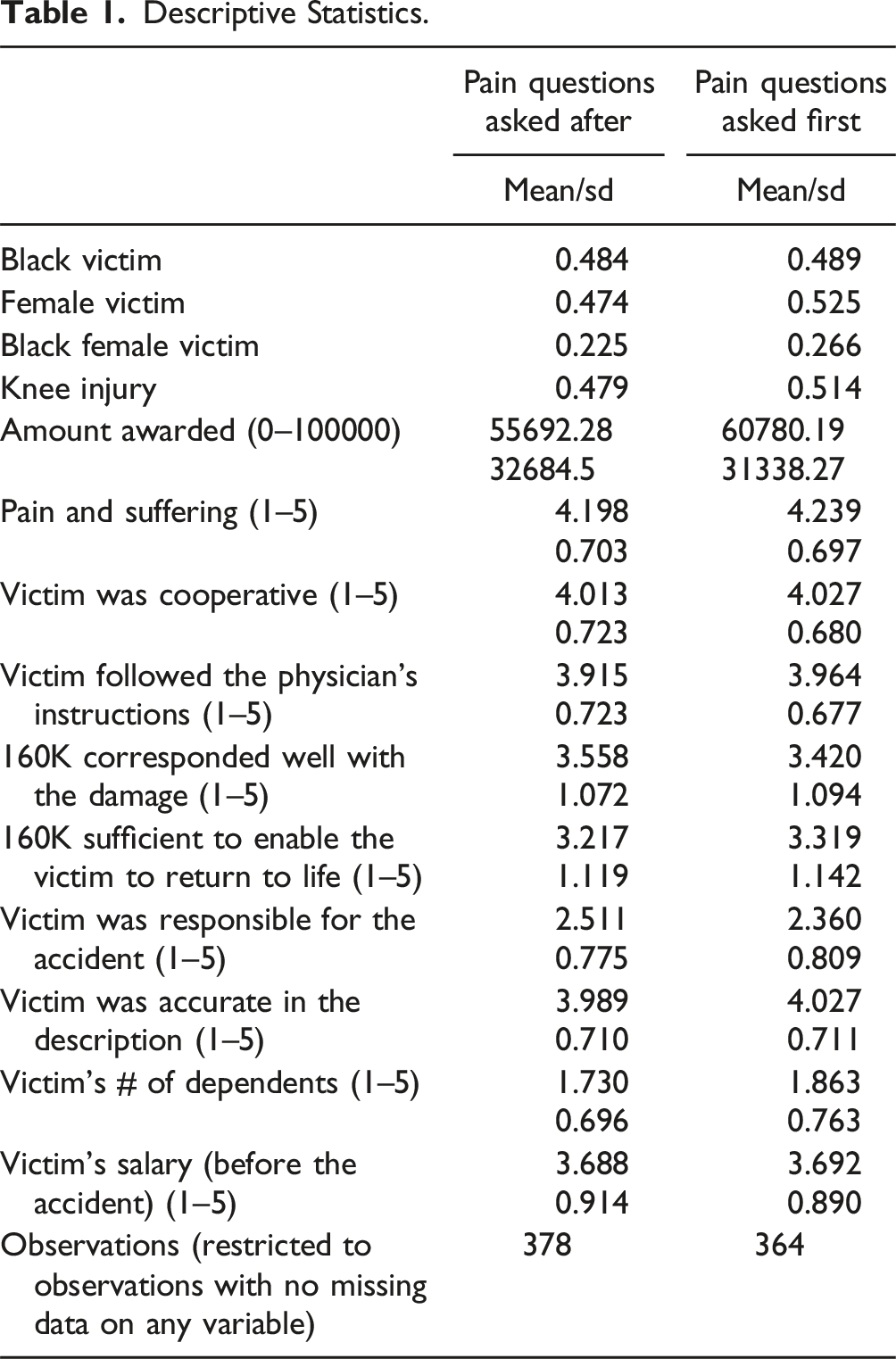
Half of the participants were first asked to report their perception of the victim’s pain and suffering. After reporting the perceived pain and suffering of the victim (on a graphic scale of 1–5) and reporting the amount of damages they would award (ranging from $0-100,000), participants were asked to answer a set of questions assessing the victim’s injury and response (evaluation measures). Specifically, they were asked to rate on a scale of 1–5 how cooperative the victim was with the medical crew and physicians; how well the victim followed the physician’s instructions in the recovery process; whether the $160K total damages awarded to the victim by the court for their physical injury corresponded well with the damage that happened to the victim; whether the $160K (the damages awarded for their loss of income and medical expenses) were sufficient to enable the victim to return to the life they had before the injury; how responsible the victim was for the accident; how accurate they thought the victim’s description of the symptoms suffered following the injury was when the victim described them to the jury. Participants were also asked to estimate the victim’s annual salary (before the accident, on a scale ranging from significantly below the average to significantly above the average) and the number of dependents the victim had.
These evaluation measures were chosen as potential mediators that might influence participants’ race- and gender-based perceptions of victims—specifically, factors that could shape perceived deservingness and the appropriateness of the damages awarded. We view this component of the analysis as exploratory.
The other half of participants were first asked the evaluation questions and only later to report the perceived pain and suffering of victims and award damages. We randomly switched the order of questions (pain and suffering first or evaluation measures first) because we wanted to be able to assess the perceived pain and suffering and damages awarded without directing participants to reflect on our evaluation measures as well as to be able to assess the mediating effects of our evaluation measures on the perceived pain and suffering and damages. At the end, all participants were asked to answer a set of demographic questions and were then given instructions on how to receive payment for their participation.
Note that we bounded the pain and suffering awards at $100,000 to reduce variability and provide participants with a meaningful frame of reference. Our goal was to facilitate comparisons across conditions and to minimize the likelihood of outliers resulting from open-ended estimations.
Altogether, there were 831 participants in the study. Half (416) were asked to evaluate the pain and suffering of a victim of a head injury, and the other half were asked to evaluate the pain and suffering of a victim of a knee injury. 4
Descriptive Statistics.
3. Results
Overall, participants evaluated the pain and suffering associated with a knee injury as marginally significantly greater than that associated with a head injury (4.27 compared to 4.2, p < .1, t-test). However, the differences are statistically non-significant for the full sample as well as for the 430 participants who were first asked to evaluate the pain and suffering of victims.
Recall that by design, half of the participants completed the pain and suffering and damages evaluations before responding to the evaluation measures (e.g., perceived pain, credibility, likability). Our main analysis focuses only on this group (N = 430) in order to avoid potential bias introduced by prior exposure to the evaluative questions.
However, for the mediation analysis we report below, we used the full sample, as we did not want to assume a directional relationship between evaluations and damage awards and sought to test for indirect effects in both directions.
Figure 1(a) presents perceptions of pain and suffering by perceived race and gender (with 95% confidence intervals). Perceived pain and suffering by injury and by perceived race and gender.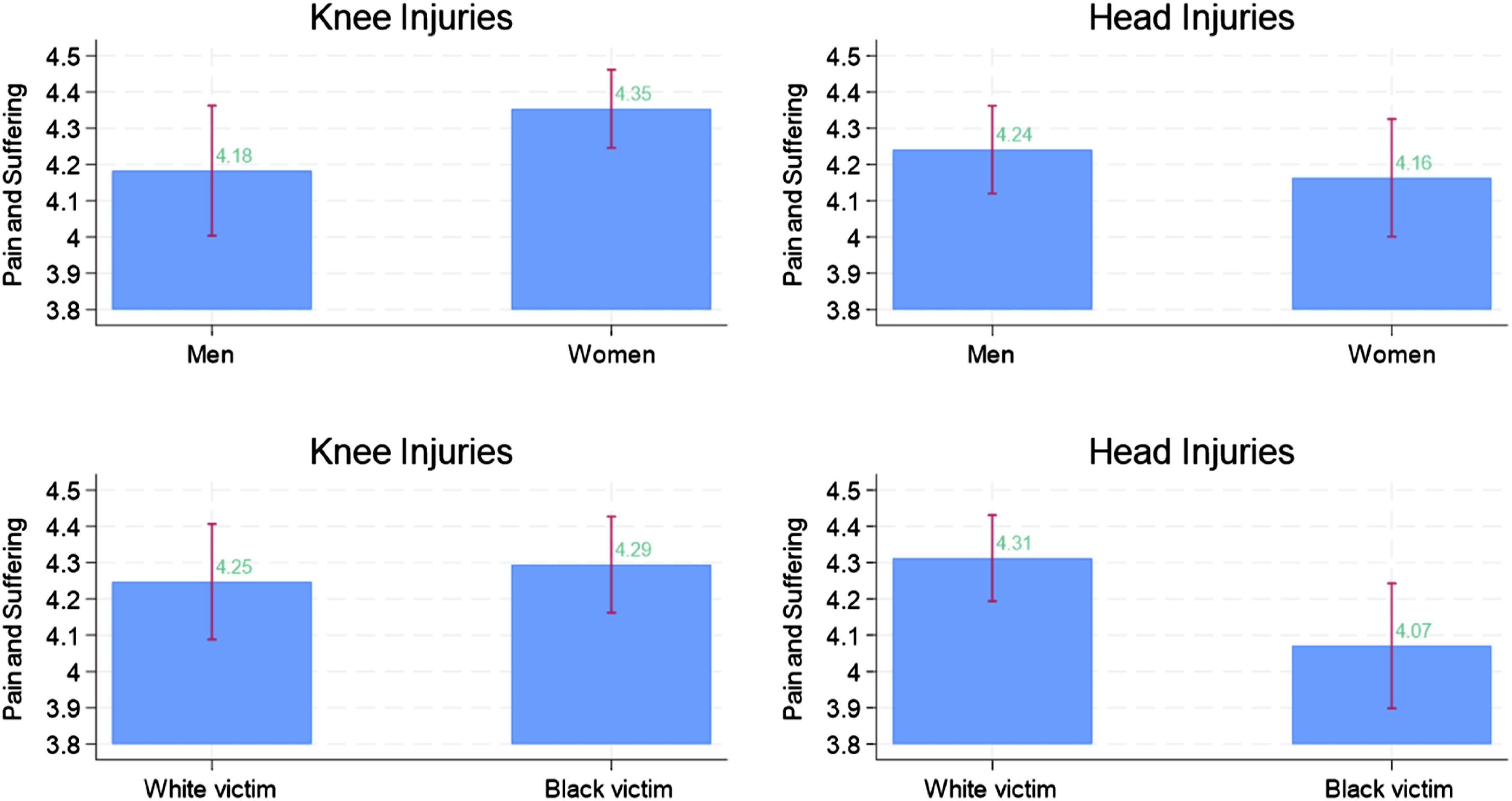
As demonstrated in Figure 1, participants evaluated the pain and suffering of female victims with knee injuries as greater than that of male victims (p = .05, t-test), and of White victims with head injuries as greater than that of Black victims (p < .01, t-test).
We now turn to explore whether differences are driven by the intersection of perceived gender and race. Figure 2 presents the participants’ evaluations of the victim’s pain and suffering by victim’s perceived race and gender and type of injury. Perceived pain and suffering by injury, and the intersection of perceived gender and race.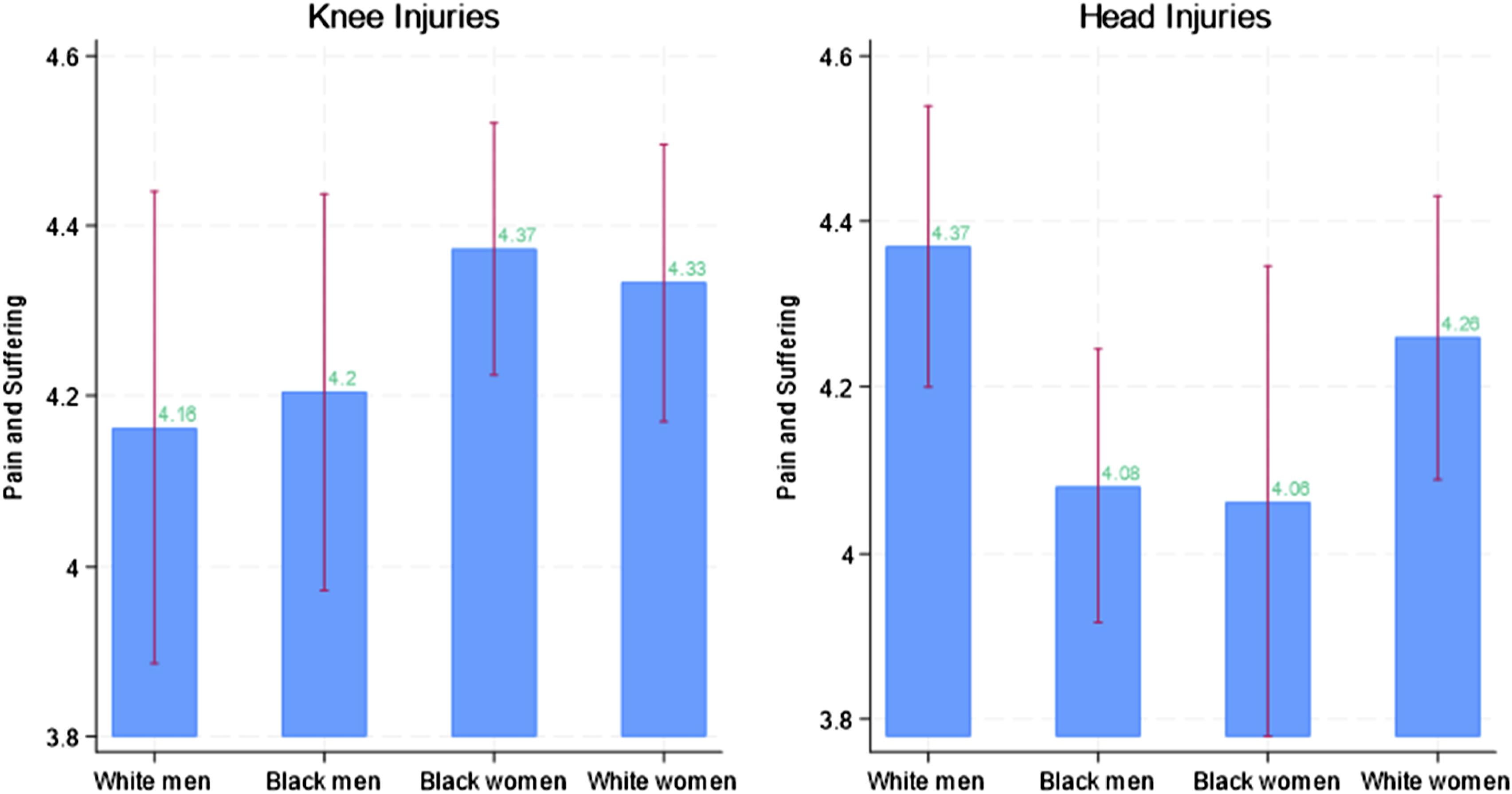
As demonstrated in Figure 2, for head injuries, the pain and suffering of Black women were evaluated as marginally significantly lower than that of all other groups (p < .10, t-test), whereas for knee injuries, their pain and suffering were evaluated as greater than that of all other groups (differences are only marginally significant, p = .12, t-test). Additionally, the pain and suffering of White male victims with head injuries were evaluated as significantly greater than that of all other victims (p < .05, t-test). By contrast, their pain was evaluated as lower than that of all other victims in the knee injury condition (differences are marginally significant, p = .12, t-test). Finally, the pain and suffering of Black male victims with head injuries were evaluated as lower than that of all other victims (marginally significant difference, p = .13, t-test). All other observed differences were statistically non-significant.
In Figure 3, we present the damages awarded, by perceived race and gender. Pain and suffering damages by injury and by perceived race and gender of victim.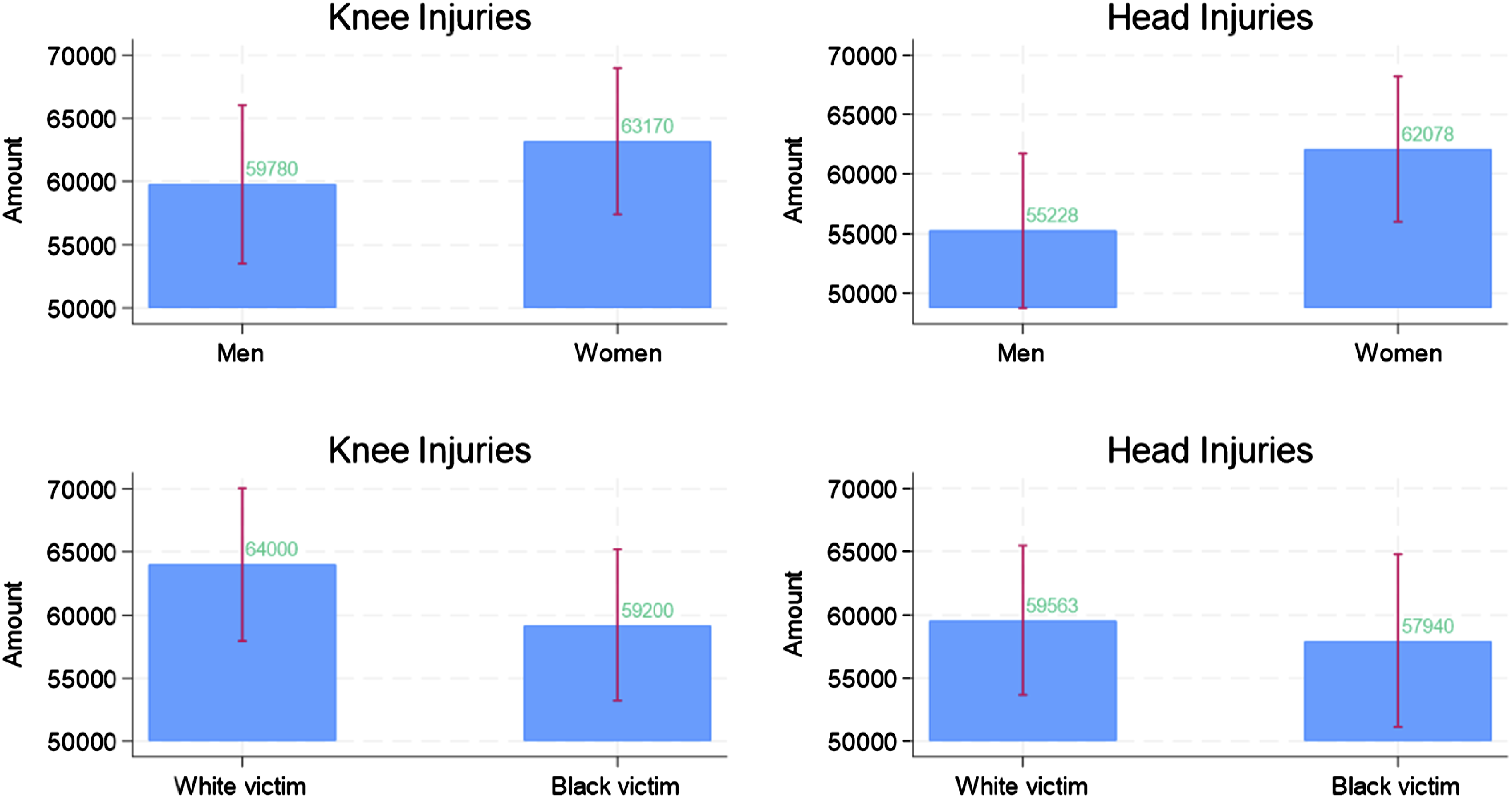
As demonstrated in Figure 3, participants awarded greater amounts to female victims with head injuries than to male victims (p = .10, t-test), and awarded lower amounts to Black victims with knee injuries than to White victims (marginally significant difference, p = .13, t-test).
In Figure 4, we present the damages awarded to victims, focusing on the intersection of the perceived race and gender. Pain and suffering damages by injury and the intersection of the perceived race and gender.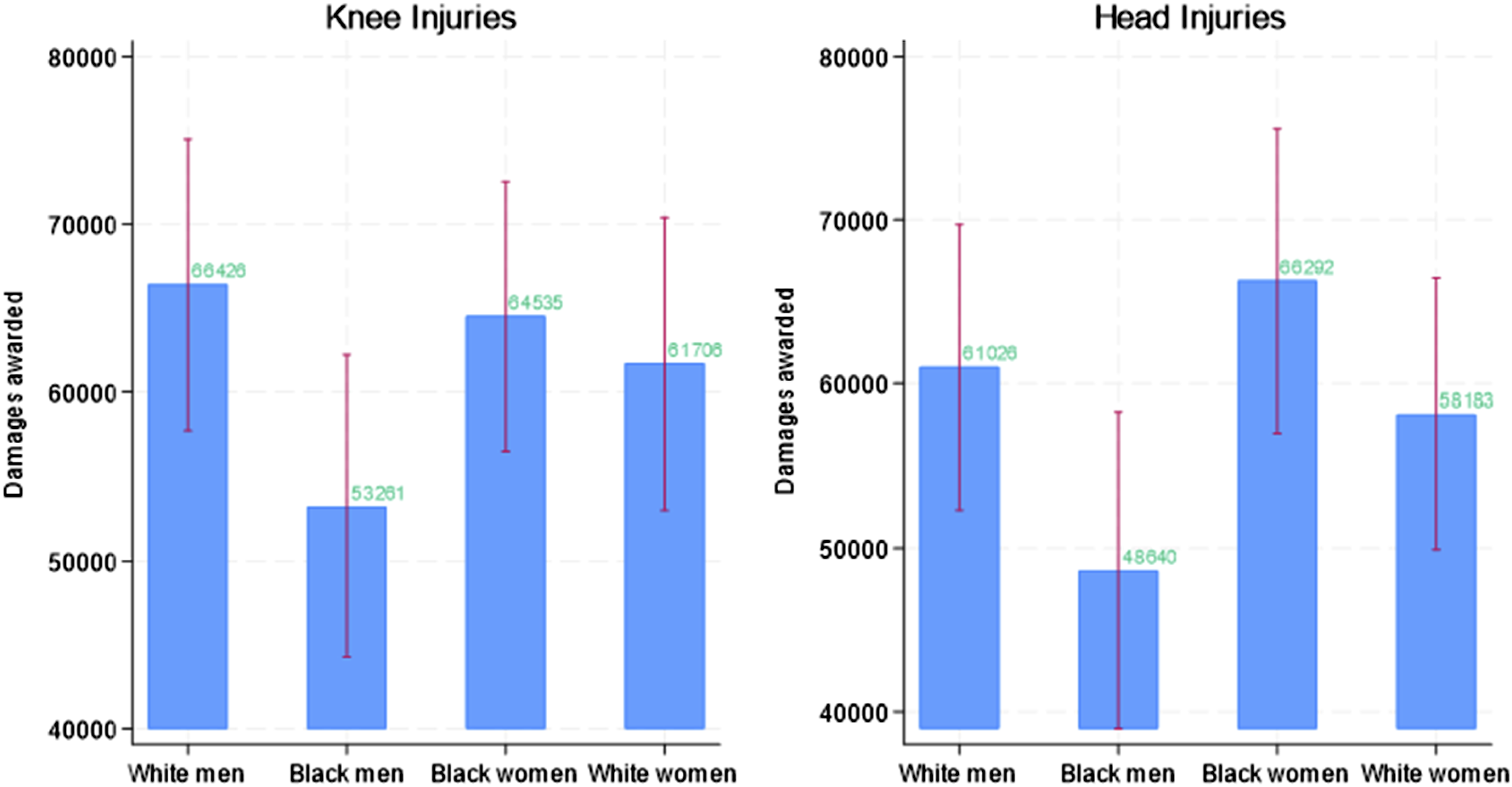
As demonstrated in Figure 4, the pain and suffering damages awarded to Black male victims—for both knee and head injuries—were significantly lower than the amounts awarded to all other victims (p < .05, t-test). By contrast, the pain and suffering damages awarded to Black female victims with head injuries were significantly greater than those awarded to all other groups (p < .05, t-test). Additionally, the pain and suffering damages awarded to White male victims with knee injuries was greater than the amount awarded to all other victims (marginally significant difference, p = .10, t-test). All other observed differences were statistically non-significant.
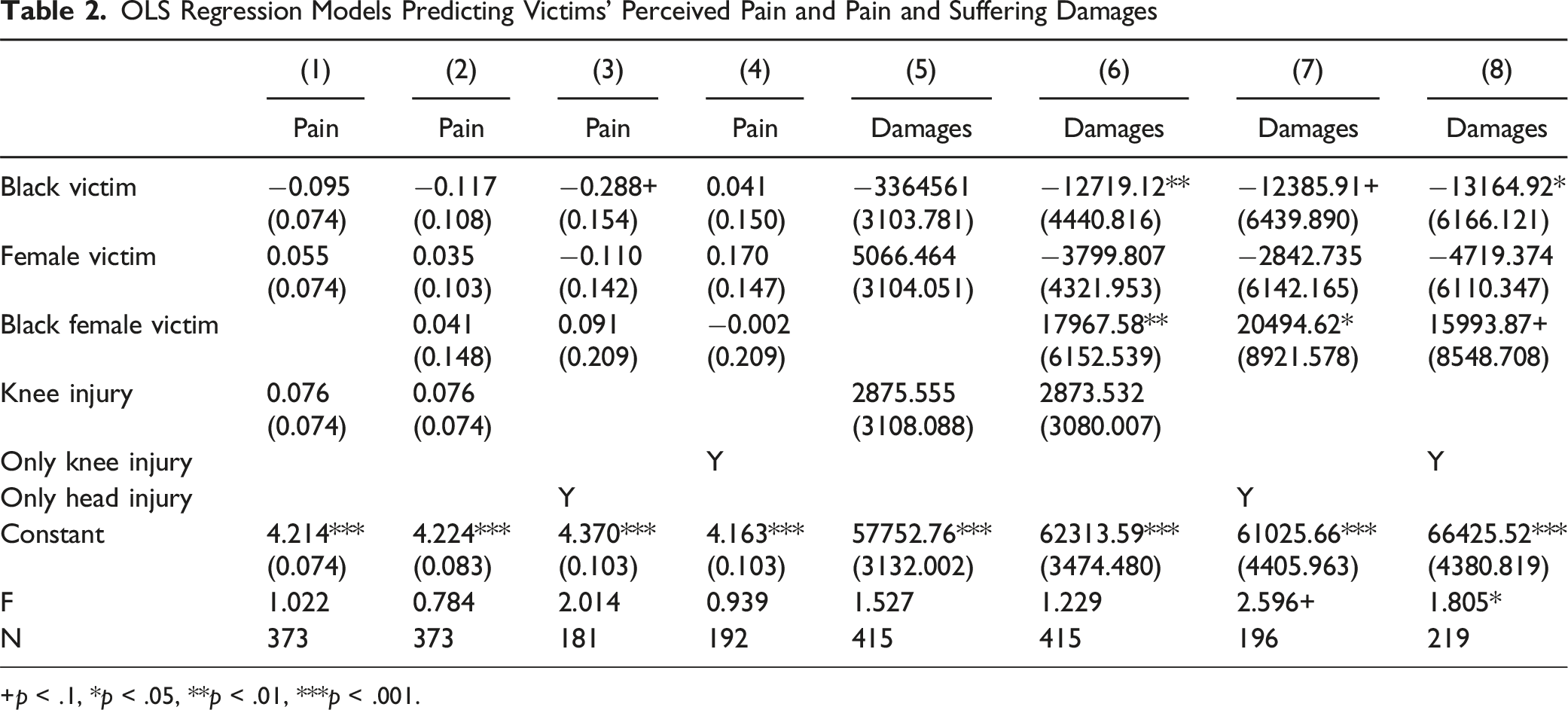
OLS Regression Models Predicting Victims’ Perceived Pain and Pain and Suffering Damages
+p < .1, *p < .05, **p < .01, ***p < .001.
Models 1–4 examine perceptions of pain, and Models 5–8 predict the amount of damages awarded. In Models 1 and 5, we include only the main effects of victim race (Black vs. White), gender (female vs. male), and injury type (knee vs. head injury). Models 2 and 6 add an interaction term for Black female victims. Models 3 and 7 are estimated only on cases involving head injuries, and Models 4 and 8 focus on knee injuries. In all models, White male victims serve as the reference category.
Consistent with our expectations, Black victims with head injuries were perceived to be in marginally significantly less pain than comparable White victims (Model 3, p < .10). Across both injury types, Black male victims were awarded marginally significantly lower damages than White men (p < .01), with awards at least $12,386 lower on average. By contrast, Black female victims were awarded significantly more than Black male victims (at least $15,994 more on average). This pattern is reflected in a significant negative coefficient for being a Black victim, a non-significant effect for being female, and a significant positive interaction term for being a Black female (Model 6). These results highlight how race and gender intersect in shaping pain and suffering awards.
In sum, we find that the pain and suffering of Black victims with head injuries is evaluated as lower than that of White victims. Additionally, Black men are awarded lower pain and suffering damages for both head and knee injuries compared to White men and women. However, not only are Black women not penalized in the amounts of damages they are awarded, but they also receive premiums compared to Black men.
Recall that about half of the participants in our experiment were first asked to consider the evaluation measures before evaluating the pain and suffering of victims and awarding damages. In Figures 5(a), 5(b), and 5(c), we report the evaluation measures by the perceived race and gender of the victims for participants who were first asked to consider the evaluation measures. (a) Evaluation measures by injury and by perceived race and gender of victim (b) Evaluation measures by injury and by perceived race and gender (c) Evaluation measures by injury and by perceived race and gender of victim.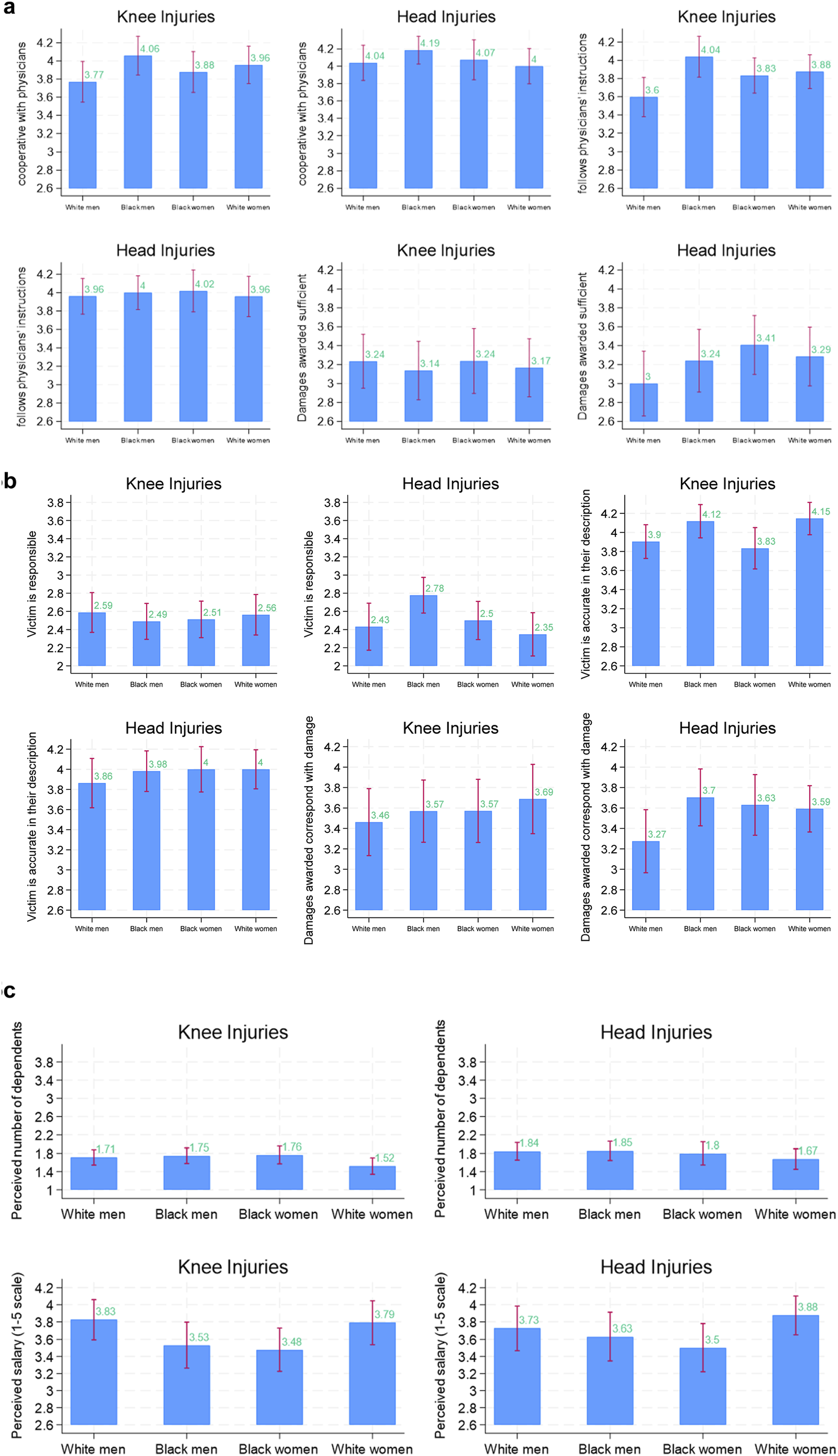
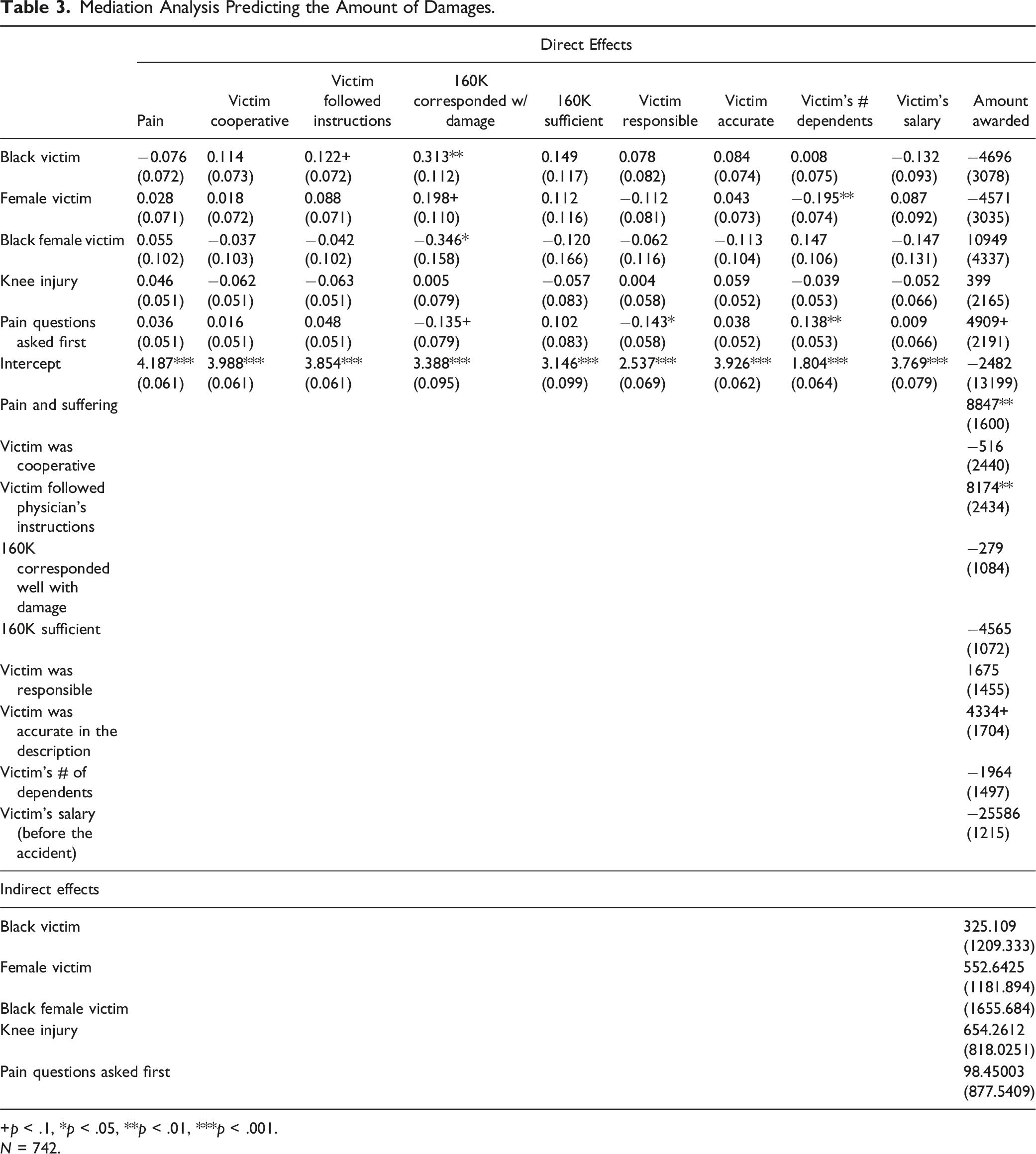
To better understand the mechanisms through which the perceived race and gender of victims affect the damages awarded by participants in the experiment, we conducted a mediation analysis on the 742 participants who participated in our study. For this analysis, we used the full sample, as we did not want to assume a directional relationship between evaluations and damage awards and sought to test for indirect effects in both directions.
In our analysis, the dependent variable is the amount of damages awarded, the independent variables are the perceived race and gender of victims (the experimental conditions), and the injury type (head or knee). The mediators are the set of evaluation measures. Our models also control for whether participants were first asked to assess the pain and suffering of victims or whether they were first asked to respond to the evaluation measures.
Mediation Analysis Predicting the Amount of Damages.
+p < .1, *p < .05, **p < .01, ***p < .001.
N = 742.
We observe that, on average, participants found Black victims marginally significantly more likely to follow physician instructions (p < .1). Additionally, participants found that the $160K awarded for physical damages corresponded more closely to the damage suffered by Black male victims compared to White male victims (p < .01), and by female victims compared to male victims (p < .05). Finally, participants also thought that male victims, regardless of the type of injury, had more dependents than female victims (p < .01). This finding corresponds with gender stereotypes about the division of household labor and breadwinning (Ridgeway, 2011). Participants may have inferred that male victims were more likely to be primary providers, even though no such information was given.
The mediation analysis did not reveal any statistically significant indirect effects for the perceived race and gender of victims on the amount awarded.
One potential concern is that participants may not have fully distinguished between the economic damages—set in advance—and the pain and suffering damages they were asked to determine, particularly since they did not actively calculate the economic losses themselves. Interestingly, although participants assessed the economic damages as more appropriate for Black male victims than for White male victims (p < .01), these perceptions did not mediate the relationship between the victim's race or gender and pain and suffering awards. These findings suggest that a potential confusion between economic and noneconomic damages is not driving the disparities we document.
In an exploratory analysis, we interacted the question order variable (‘pain first’) with victim’s race and gender using the full sample. These interaction terms were not statistically significant, suggesting that the effects of race and gender on pain and suffering awards were not moderated by question order.
Finally, in an unreported analysis we included in our models control variables for the reported race and gender of participants in our experiment. The inclusion did not significantly change the results we observed.
4. Discussion
Tort scholars have long cautioned that biases might be especially prevalent in awarding pain and suffering damages due to their open-ended nature, which makes them particularly difficult to estimate (McCaffery et al., 1995; Geistfeld, 1995). Our study is the first to present experimental evidence that validates these concerns.
First, our findings suggest that people perceive the pain and suffering of White victims to be greater than that of Black victims afflicted by the same head injury. Recall that we predicted greater racial disparities for head injuries, which may be more directly stereotypically associated with cognitive rather than physical abilities.
The most alarming finding of our experiment is that Black male victims receive significantly lower amounts of pain and suffering damages for both their head and knee injuries compared to all other victims. By contrast, Black female victims are not penalized compared to all other victims and receive significantly higher amounts of pain and suffering damages compared to Black men. Our findings align with the literature in social psychology on intersectionality. This body of research suggests that some stereotypes about Black women differ both from those about White women and those about Black men. Additionally, this literature has shown that, in some (but not all) contexts, Black women are viewed more positively than Black men and White women. Specifically, Black women tend to be perceived as more agentic than White women and warmer than Black men (Ridgeway & Kricheli-Katz, 2013; Livingston et al., 2012; Richardson et al., 2011).
Our findings may be explained by intersectional stereotypes, where Black women are simultaneously perceived as resilient and deserving of support, eliciting greater sympathy from decision-makers. In contrast, Black men may be penalized by stereotypes associating them with strength and invulnerability, while White women may be subject to skepticism about their deservingness of compensation for pain and suffering.
Our analysis did not identify any mediators from our list of evaluation measures. This raises the possibility that unconscious biases directly contribute to racial disparities in the awarded damages.
While we found no mediation effects, we did find differences in evaluations by the perceived race and gender of victims: participants found Black victims to be more likely to follow physician instructions. Additionally, participants found that the $160k awarded for physical damages corresponded more closely to the damage suffered by Black male victims compared to white male victims and by female victims compared to male victims. Finally, participants also thought that male victims, regardless of the type of injury, had more dependents than female victims.
Our study has several limitations. The controlled setting enabled us to isolate the causal effects of perceived race and gender on the perception of pain and suffering. Yet, the setting of the study is different from a court setting where jurors are asked to assess the pain and suffering of real victims of car accidents. The real process may take longer and involve more evidence. Jurors may also develop stronger emotional reactions toward real victims in court. It is therefore unclear whether the effects of the biases we observed in the experiment are greater or smaller when real victims are involved.
The results of our study raise some policy-related questions. The difficulty of evaluating pain and suffering is one of the reasons these damages were highly criticized and led some scholars to call for their abolition (O’Connell, 1975; Chapman, 1995; King, 2004). Pain and suffering damages, however, still make up a significant portion of total compensatory awards (Geistfeld, 1995; Avraham & Yuracko, 2017). Thus, the investigation of racial and gender disparities in these damages remains relevant and essential (Gilboa, 2022). Our experiment reveals a reality in which two plaintiffs with identical injuries are compensated differently for their pain and suffering as a result of their perceived race, gender, or both.
Systematically under-compensating Black men, first, frustrates the concept of fairness as equality according to which like cases should be treated alike (Avraham & Yuracko, 2017; Chamallas & Wriggins, 2010). Second, it may be viewed as undermining the idea of corrective justice, according to which the remedy is designed to restore tort victims to their pre-accident condition (Coleman, 1992; Weinrib, 2012). Last, Black men’s under-compensation for pain and suffering hinders deterrence. On the one hand, under prevailing tort law, the standard of care is similar for Black and White, men and women, so that all people should be treated with the same amount of care regardless of their perceived race, gender, social status, or any other consideration (Porat, 2011). On the other hand, awarding lower pain and suffering damages to Black men compared to other segments of the population results in setting a lower standard of care toward them than toward other victims by potential offenders. Thus, Black men not only receive lower compensation for their pain and suffering but are also exposed to less careful conduct toward them (Porat, 2011; Gilboa, 2022). Our results therefore expose a potentially severe problem of under-deterrence, whereby people are generally incentivized to act more cautiously toward White than Black people, and particularly under-deterred to act with due care toward Black men.
The results of our study call for further research into racial and gender discrepancies in pain and suffering damages to uncover existing inequalities in the application of the civil justice system, and tort law in particular, and the mechanisms generating them. As our results indicate, future studies on this topic should consider the possibility that such discrepancies in damages derive from the victim’s intersectionality, rather than merely their perceived race or gender.
Footnotes
Declaration of Conflicting Interests
The author(s) declared no potential conflicts of interest with respect to the research, authorship, and/or publication of this article.
Funding
The author(s) disclosed receipt of the following financial support for the research, authorship, and/or publication of this article: The author(s) acknowledge the financial support provided by Tel Aviv University and Bar Ilan University for the experiments conducted as part of this research.
