



Abstract
Neurodivergent people appear to be over-represented among homeless populations. Neurotypically-designed systems may exclude neurodivergent people, leading to increased economic hardship and likelihood of homelessness. The research was commissioned by a local authority, to better understand neurodivergent people's experiences of homelessness and accessing support in their region. Six participants shared their experiences through semi-structured interviews and life maps. Reflexive thematic analysis was used to determine patterns across participants’ experiences. Codes were organised into three main themes (a) Ambiguity and Grey Areas, particularly regarding diagnosis, (b) Falling Through the Gaps – critical points at which support was lacking, and (c) Moving Through the Maze – navigating support services. Findings suggest that persistent experiences of exclusion, without appropriate support, contributed towards participants becoming homeless. Participants appeared to internalise these experiences, impacting upon their sense of identity. Improving inclusion in all areas of life, including education and employment, is key to homelessness prevention.
Lay Abstract
There is evidence that higher than expected numbers of neurodivergent people are facing homelessness. A local council asked us to do this research, to find out why this might be, and to learn more about how neurodivergent people experience homelessness. Six people took part in the research. They talked about their lives in interviews and made ‘life maps’ to show their journeys. We found three main patterns in what they said. Firstly, people said they had experienced lots of uncertainty which made it difficult to get help. Secondly, there was a lack of support for people when they faced difficult times during education or employment. Finally, when people became homeless it was very hard to work out what to do and where to get help. Because they didn’t get the right help, some people started to believe the problems were their fault, which affected their confidence and how they saw themselves. These findings show how making sure neurodivergent people get the right support during education and employment is important in preventing homelessness.
Introduction
Homelessness in England hit a record high following the COVID-19 lockdown (Crisis, 2023), with over a quarter of households who approached their council as homeless being affected by Section 21 no-fault evictions (Shelter, 2023). Homelessness is not straightforward to define; in the UK, the term means having no accommodation that one is entitled to occupy, or having accommodation of such poor quality that it is not reasonable to expect a person to occupy it (Shelter, 2012). Against this backdrop, this research was commissioned by an English local authority to better understand neurodivergent people's experiences of homelessness. Neurodivergence is defined as referring ‘to those who differ from societally perceived norms of brain or mind functioning’ (Shaw et al., 2024). ‘Neurodivergence’, thus, is a broad umbrella term, encompassing developmental neurodivergences (e.g., attention deficit hyperactivity disorder [ADHD], autism, dyslexia, dyspraxia, tic conditions and many others) and acquired neurodivergence (e.g., dementia, stroke, traumatic brain injury, post traumatic stress disorder [PTSD] and more: Walker, 2021). This research focuses on developmental neurodivergence; to the extent that it is represented in the literature and in our small participant cohort.
Recent anecdotal reports suggest that homelessness services are supporting a growing proportion of neurodivergent people (e.g., McMullan, 2023) and research indicates that neurodivergence may be over-represented in people experiencing homelessness. A systematic review concluded that there was an elevated rate of autistic traits in the homeless community of up to 50% (Osborn & Young, 2024) and people diagnosed with ADHD in childhood have a 3.6 times increased likelihood of becoming homeless in adulthood (Murillo et al., 2016). However, robust research about the prevalence of minority neurotypes such as ADHD, dyslexia and Tourette's among people facing homelessness remains scarce.
Homelessness does not exist in isolation, but rather is set against political and economic contexts (Finney, 2023), such as compounding inequalities in the UK housing market, with a shortage of homes built, long waiting lists for social housing and rapid increases in rent (End Youth Homelessness Cymru, 2023). People who experience poverty, adversity and trauma face a much higher risk of homelessness and in some ways, homelessness represents an extreme manifestation of inequality (Finney, 2022). Without a robust welfare system, economic hardship such as sudden unemployment creates precarity that increases homelessness (Fitzpatrick & Pawson, 2016; Johnsen & Watts, 2014). Disabled people are more likely than non-disabled peers to face economic hardship, placing them at an increased likelihood of homelessness (Stone & Wertans, 2023). The complexity of welfare and support systems themselves can be disabling for neurodivergent people; for example, legal letters about housing duties that use complex technical language (End Youth Homelessness Cymru, 2023). Despite facing additional barriers, neurodivergent people are not always eligible for specialist support; for example, having an autism diagnosis does not usually qualify someone for support or prioritised housing (Stone, 2022).
This research was commissioned in 2023 by an employment support team working with residents in homelessness (and other forms of supported) accommodation within one local authority. They sought to understand why neurodivergent people were over-represented within their homeless client base, according to their quarterly review data. Our research approach sought to move away from deficit-based narratives that assign blame to the individual, to instead consider how normative systems and structures may exclude and fail neurodivergent people. Such an approach aligns with Critical Disability Studies (Stone, 2022) and Critical Neurodiversity Studies, reflecting the priorities shared by 115 neurodivergent individuals in a consultation about future housing research (England et al., 2025). Most existing research has focused specifically on autistic people's experiences: noting that autistic people are more likely to experience known risk factors such as poverty and unemployment which increase likelihood of homelessness (Lockwood Estrin et al., 2022). Stone (2022) interprets these findings through a Critical Disability Studies lens to show how social and economic exclusion from education and employment contributed to autistic participants becoming homeless.
With this approach and evidence base in mind, we sought to collect narratives of homelessness from neurodivergent people within the local authority region, to better understand:
Possible risk factors that contribute to becoming homeless, to indicate recommendations for earlier intervention Unmet needs of neurodivergent people accessing support for housing, employment and homelessness Neurodivergent people's experiences of being homeless, living in homelessness accommodation and of employment, using their own voice to enable stories to be shared with professionals and providers.
Methods
Research Approach and Positionality
This research was grounded in a social constructionist epistemology, which views reality as constructed through social interactions on a societal level (Harris, 2006). This worldview embraces the subjective experiences of both researchers and participants (Shaw et al., 2023a, 2023b) and aligns with insider research teams, somewhat like our own – GW and SS both being multiply neurodivergent. LB is a full-time researcher at a non-profit organisation, specialising in participatory and creative methods. This positioning helps to address epistemic injustices that have traditionally permeated neurodivergence and housing research (England et al., 2025): Much too often, less powerful experts—whether or not by specialisation or lived experience—in… marginalised communities are systematically excluded from owning the production or interpretation of knowledge that determines their destiny. Knowledge held or produced by such experts is not deemed legitimate. (Abimbola, 2023, p.340)
It is worth noting, however, that we (GW and SS) are only partial insiders, as we have not experienced homelessness: only periods of insecure housing (GW). It felt ethically and epistemically imperative to facilitate the active involvement of our participants in telling their stories during data collection, resulting in the use of a creative life-mapping method (see Materials and Procedure section).
Ethical Approval
Ethical approval was given following the lead organisation, The National Development Team for Inclusion's, independent internal review process, based on the Social Research Association ethical framework (2021). Key considerations included responding to potential distress during life-mapping interviews and safeguarding disclosures. Both were addressed through clear procedures developed with the local authority and explained during the consent process.
Materials and Procedure
Meetings were offered either in-person (GW) or online (LB) for participant convenience. In-person meetings took place over two meetings of 1–1.5 hours each, with breaks. For Zoom meetings, 2–3 shorter meetings of around 45 minutes were scheduled to allow for movement and screen breaks. Two participants met the researcher at their Supported Living accommodation, one with their personal Support Worker present at their request. Other in-person meetings took place in familiar local authority premises where participants regularly met their Key Workers. At the start of the first meeting, researchers reviewed the Participant Information Sheet and consent form with participants, to obtain informed consent.
Participants were invited to create a life-map: a timeline of their life including key events that were meaningful to them, such as education, employment, becoming homeless, seeking support and diagnosis. Participants and researchers worked together to create and add to the maps during each meeting, which formed the basis for semi-structured interview questions about supports that participants did or did not receive at key moments. Paper and pens were used during in-person meetings, whilst online participants were supported to make their life-maps using collaborative design website Canva.com.
Life mapping has been used in previous research about homelessness (e.g., Flaherty & Garratt, 2022; Patterson et al., 2012) as it can help participants to ‘go beyond the usual story’ (Flaherty & Garratt, 2022, p. 2), especially if they have had to repeat their story to gain access to services. This approach positions the participant as the storyteller, offering them agency to shape the discussion and to interpret their own experiences (Flaherty & Garratt, 2022). This was intended to counteract some of the power imbalances and epistemic injustice discussed in Research Approach and Positionality section.
Life mapping can support the discussion of sensitive or traumatic topics, as the act of drawing provides focus and the map itself acts as a ‘material go-between’ for powerful emotions (Flaherty & Garratt, 2022, p. 13). However, some people may find visual methods daunting, so we followed their preferences; some participants added to their life maps throughout the discussion, whilst one person used the map as a starting point then preferred to just talk.
Participants, Sampling and Recruitment
Recruitment for this study was purposeful in order to study ‘information-rich cases in depth and detail’ (Patton, 1999, p. 1197). Potential participants were identified by their Key Workers, according to the inclusion criteria (living in the local area; having experience of homelessness; and being known to be neurodivergent). Key Workers shared a 3.5-min introductory video providing an outline of the aims and involvement expectations of the project. Interested parties were invited to contact LB and GW and were sent a Participant Information Sheet (PIS), with an Easy Read version available.
Ten people in total expressed interest in taking part and seven opted to take part (four in-person and three online). The remaining three either did not respond to attempts to contact, were unavailable or changed their mind about participating. All participants received a £50 voucher for their time.
In keeping with the life-mapping approach, we have used short narratives to describe our participants. Given that participants were recruited from a small population already known to the service, detailed demographic information was not collected and gender-neutral pseudonyms and pronouns are used throughout for each participant to preserve anonymity. All participants consented to taking part on the understanding that their anonymised responses would be fed back in a report to the service provider.
The life-mapping methodology allows participants to direct the conversation and share personally meaningful parts of their story (Flaherty & Garratt, 2022). As such, we did not ask direct questions about previous experience of homelessness or of mental health challenges, but some participants opted to share such experiences during the conversations. The following narratives provide some background information about our participants:
Ashley had received a diagnosis of autism in childhood and had been diagnosed with bipolar disorder. They lived in supported accommodation. Charlie self-identified as autistic and had been diagnosed with dyslexia. They lived in supported accommodation. Drew had received a diagnosis of autism after university and reported also experiencing mental health challenges. They lived in their own flat. Frankie was in the process of pursuing an ADHD assessment and lived in a homeless hostel. Rowan had been diagnosed with ADHD, epilepsy and dyslexia, as well as a diagnosis of schizophrenia. They lived in supported accommodation. Sam had been diagnosed with schizophrenia and identified as autistic. They lived in supported accommodation.
A seventh participant was put forwards for the research, on the basis that staff believed them to be neurodivergent. They chose to take part after receiving information about the research and the eligibility criteria. However, it became clear throughout the conversation that the person did not necessarily identify as neurodivergent and was instead referring to significant mental health challenges. Whilst their experiences and challenges were powerful, due to the ambiguity of neurodivergent status they were beyond the remit of this research and so the decision was made to exclude their data from this analysis.
Data Analysis
The analysis drew on meeting transcripts (recorded with permission), researcher field notes and participant life-maps. A reflexive thematic analytic framework was used (Braun & Clarke, 2019) undertaking the following steps:
Familiarisation: LB and GW transcribed the recorded interviews and read through field notes several times, sharing observations about commonalities over several meetings. Coding: LB and GW coded the dataset section-by-section. Simple deductive codes (School and education; Housing; and Getting into and sustaining work) were generated from the research aims and local authority requirements. Inductive codes reflecting reoccurring facets of the data were derived iteratively. Generating initial themes: after initial deductive and inductive coding, we again reviewed the transcripts and life-maps to generate candidate themes such as ‘ambiguity / grey areas’, ‘precarity and transience’, ‘the role of other people’, ‘available supports not hitting the mark’, ‘capitalism and cruel optimism’ and ‘bullying’. Developing and reviewing themes: we (LB, GW and SS) checked candidate themes against the entire dataset and together amalgamated smaller potential sub-themes into larger main themes. Candidate themes which were not seen to tell a convincing story across the full dataset were dropped. Refining, defining and naming themes: Finally, we organised the themes into a map, to see connections and to develop the hierarchical tree structure (Figure 1).
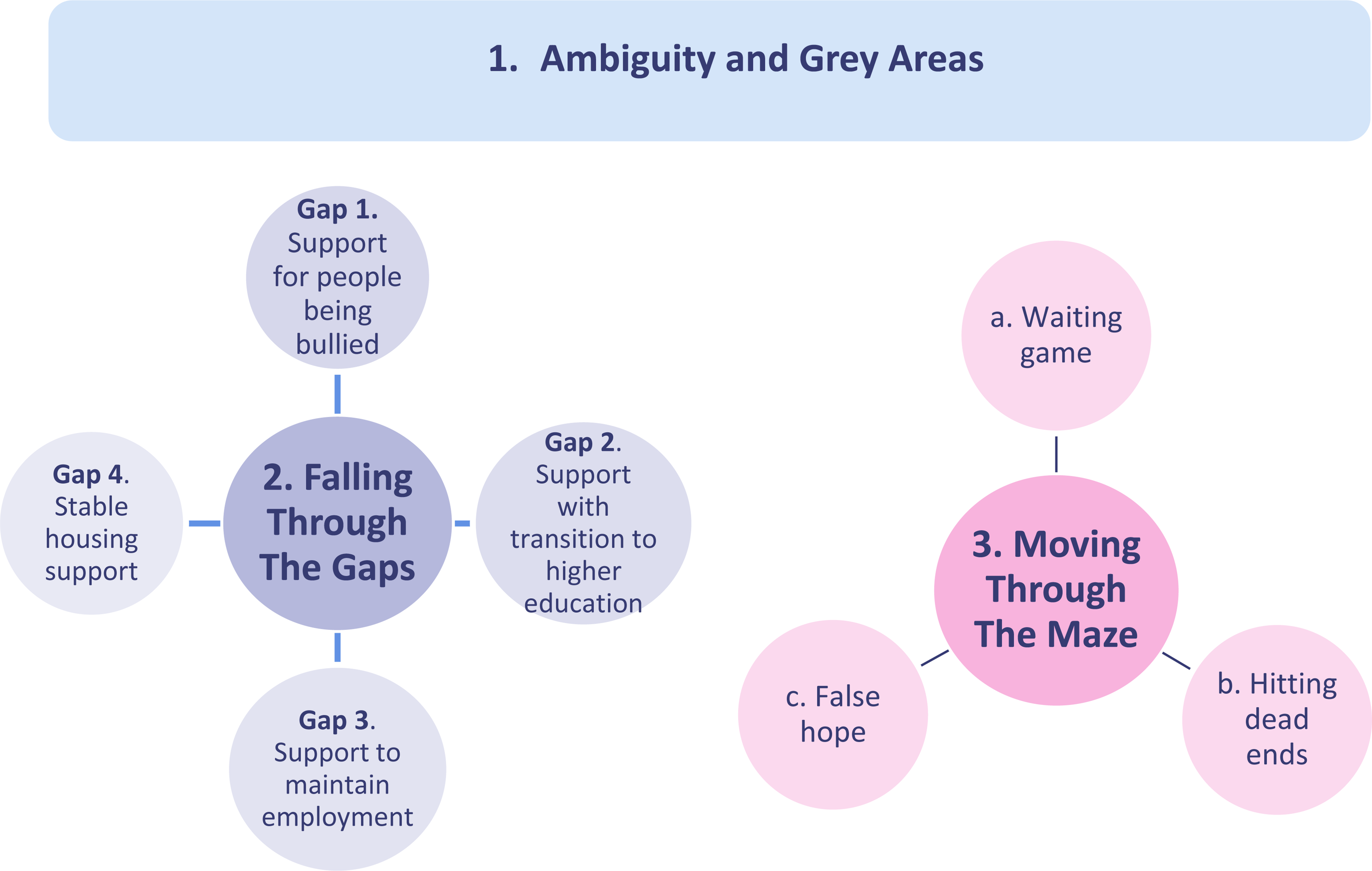
Theme map.
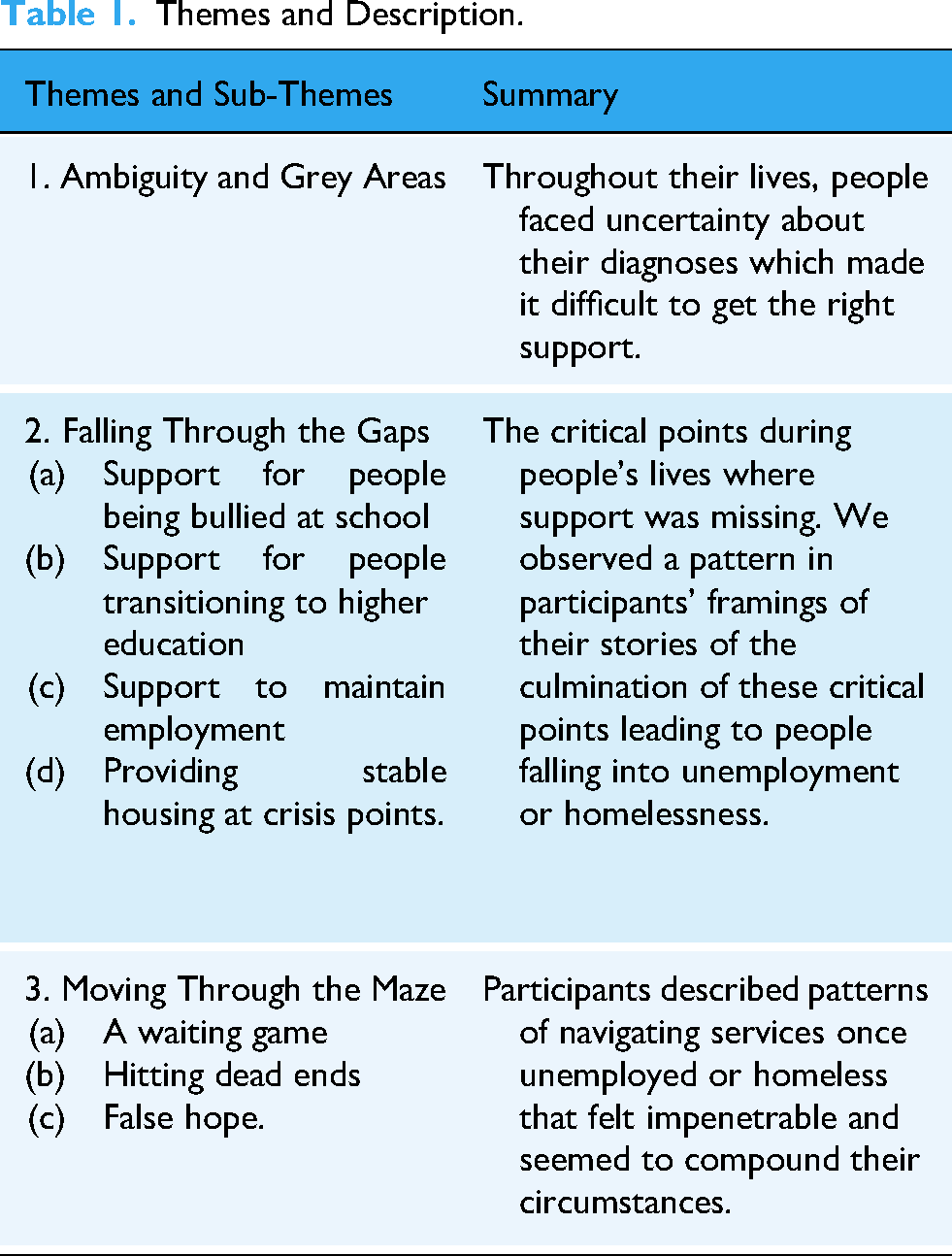
The main themes of (a) Ambiguity and Grey Areas, (b) Falling Through the Gaps and (c) Moving Through the Maze give insight into participants’ journeys into and through homelessness. They are summarised in Table 1.
Themes and Description.
Results
Theme 1: Ambiguity and Grey Areas
Ambiguity and a sense of existing within a grey area threaded throughout participants’ stories. Uncertainties relating to diagnosis and neurotype status were prominent in accounts of becoming and remaining homeless. Several participants reported feeling unclear about their neurodivergence or the relevance of certain other formal diagnoses. For example, Rowan had a schizophrenia diagnosis alongside their diagnosed neurodivergence, but questioned whether it was quite right: I still suffer from schizophrenia … I’m not sure whether the diagnosis is entirely correct but I definitely have had some of the symptoms and I will always take my medication. (Rowan)
For those who had been formally diagnosed as neurodivergent, it marked a pivotal moment in shaping their self-understanding. Drew described their life as ‘recast’ after being diagnosed as autistic: I used to say I was hatched from an egg and came from Mars. (Drew)
In other instances, participants sought diagnoses but faced obstacles. Frankie was advised by their therapist to pursue an ADHD diagnosis but felt dismissed by support staff. Ashley, who had received an Asperger's diagnosis in childhood, was referred for reassessment against their wishes. This ambiguity also impacted service eligibility, as Ashley described being passed between services during a crisis period: I’d already been seen by the crisis team and had been in hospital … from overdosing, I don’t really know how much more they needed information-wise that I was struggling. (Ashley)
Ambiguity continued even within support services. As mentioned in Participants, Sampling and Recruitment section, one individual was put forward for the research by staff and attended a life-mapping interview but did not appear to identify as neurodivergent themselves. Another participant with a diagnosis of dyslexia was thought by staff to also have an intellectual disability, but did not self-identify that way. This ambiguity made it difficult to have strict eligibility criteria for this research. In reflection of the real-world complexity and in alignment with emancipatory research methods, we chose to prioritise participants’ own self-identification and excluded the person who did not identify as neurodivergent.
Theme 2: Falling Through the Gaps
Throughout participants’ narratives, many described crucial points at which support could have been put in place to maintain education, employment and housing. Unfortunately, this support was often missing, causing people to fall through the gaps.
Gap #1 – Support for People Being Bullied at School
Several participants experienced disruptions in their education, typically due to bullying rather academic ability. Often the bullying stemmed from being perceived as different to their peers: I got picked on quite a lot because I was quite sensitive as well and prone to getting overwhelmed and having a meltdown. (Ashley)
Participants felt that schools did little to address the bullying, and when action was taken, it left them feeling unsupported. For example, Drew was sent to anger management classes (Figure 2) after retaliating, while no action was taken against the bullies. They wondered ‘why am I being blamed?’ and this contributed to a sense of distrust towards authority.
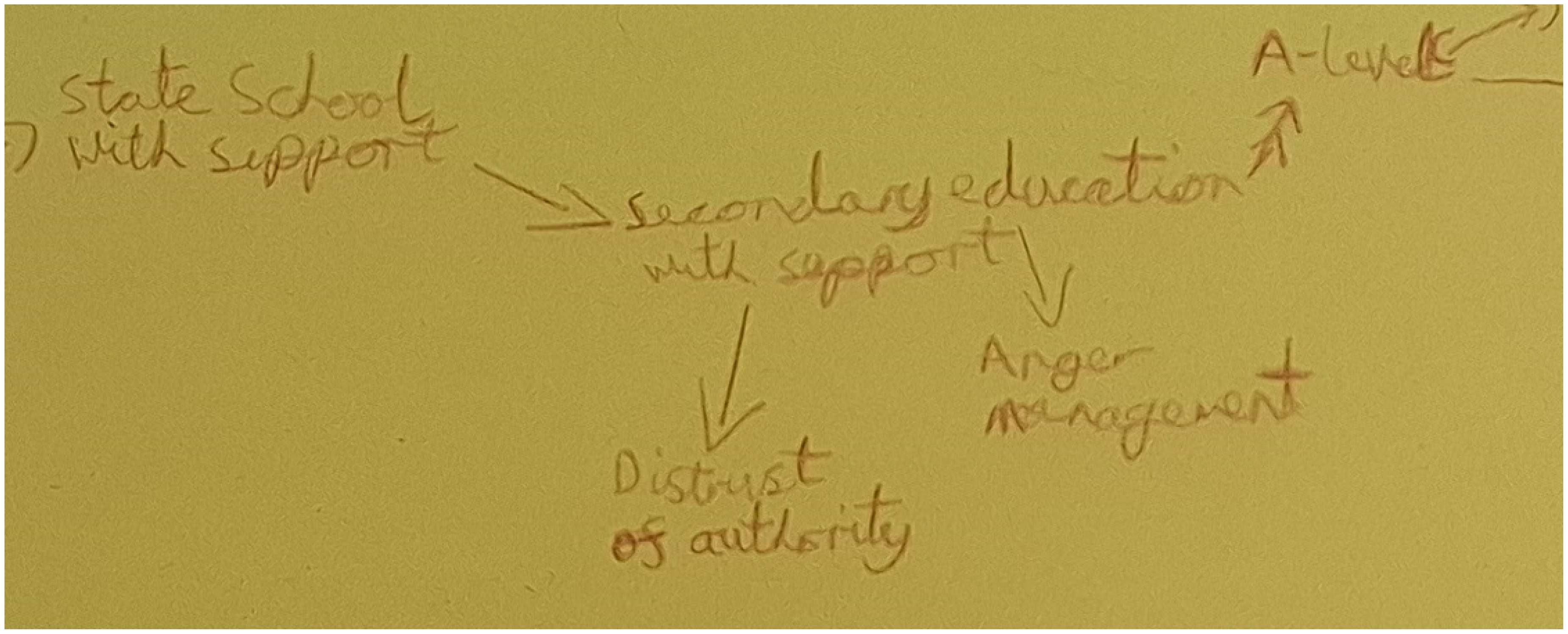
Extract from Drew's life map.
Other participants described taking actions to escape the bullying: by changing schools, moving areas or even leaving school altogether. Whilst early childhood experiences such as bullying may not seem directly linked to adult homelessness, participants felt they experienced lasting disruption to their education and subsequent career prospects, as well as how they viewed themselves and others.
Gap #2 – Support for People Transitioning to Higher Education
Participants who went on to higher education described limited support for neurodivergent students living away from home. Whilst this came with many social opportunities (e.g., Figure 3), participants described struggling with severe social anxiety and Ashley described turning to alcohol to help them ‘loosen up’ and manage social encounters: I don’t really like being in a crowd, but when I’m drunk it's fine. And it almost makes me feel like everyone else in a way. (Ashley)

Extract from Rowan's life map.
Whilst drinking made socialising easier, Rowan found themselves ultimately ‘losing track’ of their studies and ‘breaking down as I handed in my last assignment’ whilst Ashley was asked to withdraw from their course after their mental health deteriorated. This impacted their access to housing, which was directly linked to their student status. These experiences compounded participants’ sense of isolation and affected their long-term employment prospects, contributing to financial precarity that is known to impact homelessness.
Gap #3 – Support to Maintain Employment
Following education, participants described numerous challenges when it came to securing and keeping a job. Rowan described being unable to find vocational work experience needed to complete a qualification. They believed that this was due to stigma associated with their diagnosis: I passed all the paperwork and then it came to doing the placement and no-one would have me. I searched all around and part of it is because [my local town] was so small but I could tell people were making choices based on prejudice, just by the sort of questions I’d get asked in the interviews. (Rowan)
For others, jobs that may be considered ‘entry-level’ such as customer service or retail jobs presented unanticipated difficulties. For example, Drew described working as a barista as ‘the crap job everyone has once, usually when a teenager: I just had it in my thirties’. They felt this was the ‘worst match for an autistic person’ due to the fast pace and need to multi-task in a noisy, busy environment. Another described leaving work in tears due to the stress of interacting with customers.
UK employers are required by law to make changes to remove or reduce potential disadvantage faced by disabled employees; these are known as ‘reasonable adjustments’ (Equality Act, 2010). However, participants reported a lack of these in practice. For example, Ashley asked not to work night shifts due to medication side effects, but their employer was unsympathetic. They felt that the employer's equal opportunities policies were something that ‘they [had] in words, but not in practice’ (Ashley).
These experiences often led to participants leaving their jobs on bad terms, damaging their confidence and causing them to belief they were unemployable. Unstable or low-paid work contributed to financial precarity, a known risk factor for homelessness.
Gap #4 – Providing Stable Housing at Crisis Points
There were also missed opportunities to prevent people becoming homeless. Sam's life map shows how they moved around frequently, becoming increasingly ‘confused’ before moving in with their parents and ultimately becoming homeless (Figure 4).
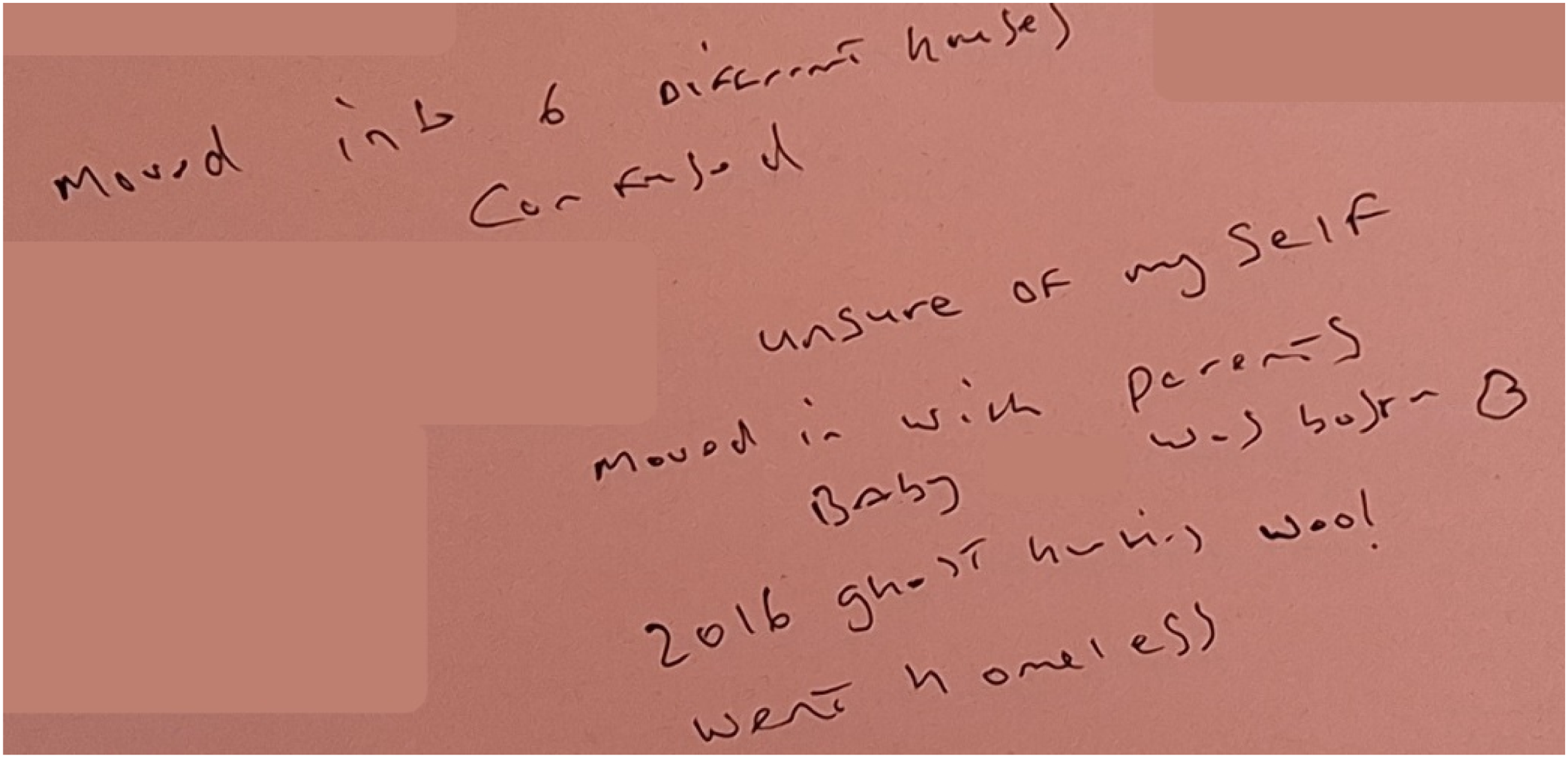
Extract from Sam's life map.
Other participants (Ashley and Frankie) described situations where they lacked the informal support networks that might otherwise help them through difficult times, such as the critical points previously discussed. For example, Ashley felt they had no one to turn to when they lost their place at university, forcing them to sleep rough: A lot of relationships I left by the wayside sort of thing. Which made asking people harder. Yeah. And in a lot of cases, I just didn't ask people because it was like, two, three years since I last spoke to them, you know? (Ashley)
Frankie became homeless as a teenager and was left sofa-surfing for months whilst waiting for a hostel room. They felt this could have been prevented with support for families experiencing conflict. Instead, they felt that they had to wait until becoming homeless to qualify for help. They’ll say, well you’re not homeless… when you are homeless come back to us. It's like, why does it have to take it to the extreme to get to the answer? (Frankie)
These examples show how informal social networks of friends and chosen family may or may not act as a safety net when someone loses their housing. Participants lacking this informal safety net found themselves reliant upon statutory services.
Theme 3: Moving Through the Maze
This theme captures participants’ experiences of seeking support for homelessness or unemployment, indicating unmet needs for neurodivergent clients as well as broader improvements for services. Upon seeking help, participants were confronted with a complex system of services, with areas of duplication and gaps where support was lacking. Many felt lost while trying to navigate these systems: I find it tends to be direction. So like, say if you’re in the situation of becoming homelessness or you are homeless, where do you go? (Frankie)
The following subthemes reflect participants’ descriptions of specific aspects of services and systems that contributed to frustration and distress.
A Waiting Game
Participants were determined to take steps to move on from their current situation and secure employment and housing. However, many experienced ‘waiting’ around (Frankie) for various support and services. One of the most taxing waits was spending long periods of time in unsuitable, temporary accommodation (Sam, Frankie, Ashley, Rowan). Challenges such as conflict with other residents, sensory distress and being sent out of area contributed to mental health deterioration.
Most people lived in shared supported housing as a stepping-stone towards getting their own accommodation. It was often challenging to share space with other residents, and particularly difficult for people in recovery to live with others who were actively drinking alcohol or using substances: I lived on my own [without support] and had to fend for myself, people started getting aggressive in the house towards all of us, so we started drinking and smoking and that was not good. (Sam)
People tried to keep to themselves and wait it out, leading to isolation.
The sensory environment of the accommodation could be an additional challenge. Frankie described the hostel they were staying in as ‘manic’ and ‘chaotic’ which made it hard for them to focus and compounded difficulties with executive function and organisation. Rowan lived in temporary accommodation near to a nightclub, which played loud music throughout the night and impacted their sleep. This was particularly distressing for someone with sensory processing differences. Ashley described feeling desperate’ to move out of shared accommodation into their own self-contained flat, however was expected to move the same day that a place became available, despite living several hours away and needing to transport their belongings.
Other examples included long waiting lists to access therapy, diagnostic or service assessments, and waiting for new key workers due to staff turnover. These waiting periods were disempowering as participants felt unable to move forward with their lives, as shown in Figure 5.

Extract from Frankie's life map.
Hitting Dead Ends
Participants shared some of the different paths they had taken to try and move forward, which often felt like dead ends. They expressed frustration at cycling through different training and vocational courses recommended by support services, which rarely led to stable employment.
For example, Rowan showed the researcher a folder full of qualifications they had achieved. However, these certifications did not translate into the job they were hoping for: I’ve done so many courses and it's just exhausting now. All at the same time my debt's going up. (Rowan)
Charlie said, ‘I’ve been at college many years, teachers told me maybe it's time I moved on’. It appeared that this decision was made for them, rather than based on their wishes. Charlie struggled to understand why they faced barriers to securing employment or independent housing, which they represented on their life-map with a thick black line blocking the pathway between themselves (the circular figure on the left) and their aspirations of a ‘job’ and ‘home’ (Figure 6).
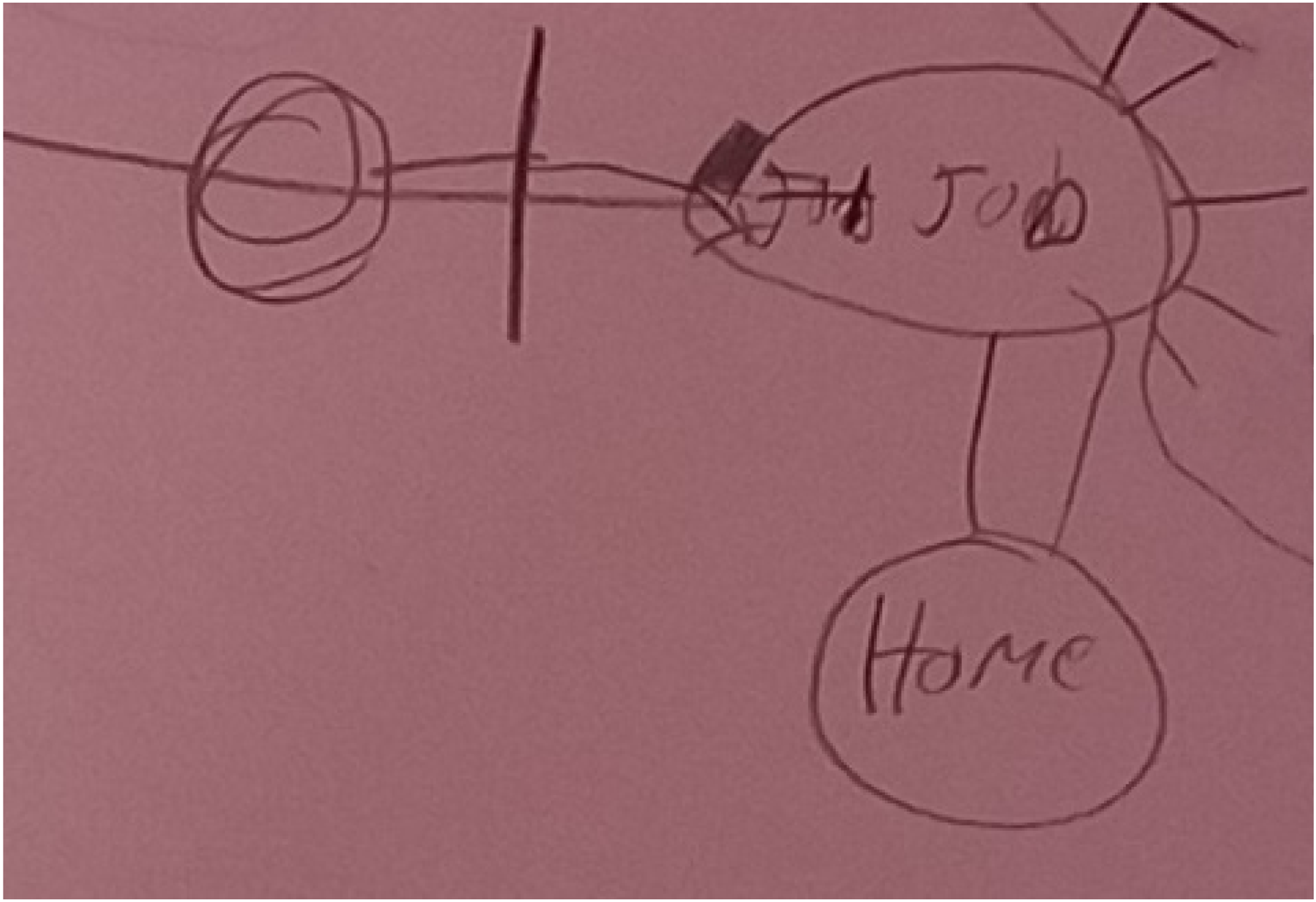
Extract from Charlie's life map.
Drew spoke about their growing sense of hopelessness after dropping out of their postgraduate course and trying several jobs that didn’t work out. They felt unable to see a way forward, culminating in several suicide attempts.
False Hope
Frustrations around waiting and dead ends were compounded by experiences of being given ‘false hope’ by those in positions of authority: for example, attending employment courses and obtaining qualifications which did not lead to secure employment (Rowan). Frankie was encouraged to find paid work, but realised that it would significantly raise their living costs and so could not see the benefit of working.
Repeated difficult experiences had led participants to believe that the others did not care about them. This included employers, who were ‘indifferent’ (Ashley) during times of distress or only seemed to care about making money: You’re just squeezed to work as much as possible. (Drew) I’ve sat in that office so many times going, what do I do, how do I get out of it… I just don’t understand how they’re, like, just sitting there blank-faced like, not doing anything. (Frankie)
Participants’ experiences of trauma, exclusion and lack of support during times of need had contributed to a belief that, in general, society did not care about people like them: Society doesn’t care about you. (Drew)
Repeated experiences of exclusion became internalised, which had profound implications for their self-esteem, trust in others and engagement with services.
Discussion
Reflective thematic analysis generated three primary themes: (a) Ambiguity and Grey Areas, (b) Falling Through The Gaps and (c) Moving Through the Maze. Theme One captured a lack of clarity around neurodivergent statuses and support eligibility. Theme Two encompassed the perilousness of adversity alongside scant services that accumulates across a lifetime. Finally, Theme Three covered the hall of mirrors that participants navigated to find themselves support and stable housing.
The first theme of Ambiguity and Grey Areas related not just to services and systems, but also impacted upon the research process. We reflected that a fogginess shrouded the process of theme generation, as ambiguity appeared ever-present. We wondered whether this mirrors an extant vagueness around neurodiversity: both in terms of uncertainty and disagreement around what neurodivergence is (Stenner et al., 2025) and the manifold barriers to accessing diagnoses in the UK (Grant et al., 2023). Prior research has noted the additional challenge of obtaining a timely diagnosis during a crisis period (End Youth Homelessness Cymru, 2023) and the potential for diagnostic overshadowing, such as Rowan's questioning of their schizophrenia diagnosis.
The second theme, Falling Through The Gaps, highlights events that contributed towards homelessness for our participants. We do not claim that these findings are directly predictive, rather should be understood as experiences that neurodivergent participants themselves found to be significant, in keeping with our emancipatory approach. Theme Two suggests that cumulative experiences of exclusion, starting in education, impacted upon participants’ employment prospects and financial security. This mirrors research about homelessness in the general population, in which narrative analysis suggests that ‘becoming homeless is a process characterised by a progressive waning of resilience capacity to cope with life challenges created by a series of adverse incidents in one's life’ (Mabhala et al., 2017, p. 1). Whilst not unique to neurodivergence, neurodivergent people face a higher risk of adverse life events such as interpersonal victimisation (Douglas & Sedgewick, 2024), that may make their experiences of homelessness distinct.
For example, subtheme 2.1 relating to bullying echoes Stone's (2022) findings that autistic people experiencing homelessness were suspended or expelled due to behaviour being misinterpreted following rejection or bullying at school. Like Drew, who was sent to anger management classes after retaliating against months of bullying, this social exclusion is made even more isolating in its adjacency to ‘ethical loneliness’ – a form of abandonment by those in a position to help when pleas are being made (Quadt et al., 2024; Stauffer, 2015; Williams, 2024). Disruption to education and impact upon self-esteem affected participants’ later ability to secure employment, combined with contemporaneous barriers such as a lack of reasonable adjustments at work.
Many people face similar circumstances yet do not necessarily find themselves homeless. However, for our participants, precarity was heightened by reduced social networks to fall back on during hard times. Reasons included difficulties staying in contact with friends and family breakdown due to a rejection of difference, a story echoed in End Youth Homelessness Cymru's (2023) report. Evidence suggests that neurodivergent people face a higher risk of exploitation and abuse, putting them at social and economic disadvantage (Homeless Link, 2022). Differences in communication styles between autistic and neurotypical people, and the resultant ‘double empathy problem’ (Milton et al., 2018) may make it harder for autistic and otherwise neurodivergent people to make friends and build networks (Sasson et al., 2017), contributing to the possible lack of a ‘safety net’ when facing a crisis (Garratt & Flaherty, 2023).
The third theme, Moving Through the Maze, captures experiences of accessing support, characterised by long waits, dead ends and false hope. Such challenges affect all service users, but represent a further disabling barrier for neurodivergent individuals with additional needs around communication and information. For example, without reasonable adjustments, mismatches in communication between staff and autistic clients may be misinterpreted as the client being difficult or self-sabotaging (Garratt & Flaherty, 2023). Sensory-unfriendly environments (Manning et al., 2023) can also render services inaccessible to neurodivergent individuals. Among our participants, both the sensory and social environments of temporary accommodation were flagged as serious challenges, consistent with prior research (e.g., End Youth Homelessness Cymru, 2023; Homeless Link, 2022). These experiences echo End Youth Homelessness Cymru's (2023) findings that services were ‘impossible to navigate’ for neurodivergent young people, who typically approached services at a time of heightened distress and dysregulation.
Taken as a whole, our findings provide insight into the intersection of neurodivergence and homelessness. Experiences of persistent and pervasive exclusion, starting in early life, pave the way to homelessness and continue as participants are met with services designed according to neurotypical norms. We noticed that participants appeared to have internalised these experiences, for example blaming themselves and feeling like others don’t care. While there are echoes of ethical loneliness in these accounts, they also reflect the ‘responsibilisation’ that is strategically enacted by a welfare state that abandons its subjects to manage on their own (England, 2023, p. 148).
Several participants highlighted moments of being offered false hope regarding employment and financial prospects, a phenomenon which is perhaps not an accident. ‘Cruel optimism’ (Berlant, 2011) describes how ‘desire and hope for a better future are used to engender and sustain compliance’ (England, 2024, p. 52), creating punitive conditions to justify the limited state support available. Many frontline staff care deeply about their clients, yet must operate within this system (England, 2023). The demoralisation of being offered false hope may not be unique to neurodivergent individuals, yet in the context of reduced social networks and safety nets, its impact is more potent. False hope in the absence of meaningful solutions is characteristic of ethical loneliness: a hardship that neurodivergent people may disproportionately face due to normative social structures (Quadt et al., 2024; Williams, 2024).
Even when good intentions abound, services appear to be missing the mark in providing appropriate support for neurodivergent people experiencing homelessness. A growing number of guidance toolkits oriented around neurodivergent needs could be applied to the homelessness sector, for example Meeting Sensory Needs in Housing (NDTi, 2020), More Than Words communication guidance (Godfree et al., 2022) and the SPACE framework for healthcare settings (Doherty et al., 2023) and education (McGoldrick et al., 2025). In addition, there is an emerging evidence base providing recommendations for intersection of neurodivergence and homelessness (e.g.,End Youth Homelessness Cymru, 2023; Homeless Link, 2022). It is urgent that services apply these recommendations to better meet the needs of neurodivergent clients.
Strengths and Limitations
Reflecting upon our research methodology, we note that our sample leans primarily towards autistic participants, a limitation prevalent in existing research (England et al., 2025). Whilst we did include participants with possible ADHD and dyslexia, further research is warranted into the specific risks and experiences of homelessness for other neurotypes. The decision to mask the gender of participants was made to protect their identity within a small sample that was known to services. This prevents further analysis of gender differences in trajectories of homelessness and the experiences of neurodivergent women, non-binary and transgender people facing homelessness remain crucial for further research (e.g., Lockwood Estrin et al., 2022).
The use of creative methods and the expertise of our neurodivergent researchers support our emancipatory research approach, combatting the epistemic injustice that permeates traditional research (Abimbola, 2023; England et al., 2025). However, the use of qualitative methods prevents causal inferences about potential risk factors and their contribution to homelessness. Further research should explore systemic, longitudinal risks factors. In keeping with emancipatory approaches, we tried to draw out examples of strengths and resilience during our conversations. However, our analysis focused on more structural challenges, and there have been calls for further research centred on strengths and mutual aid (England et al., 2025).
Conclusion
This research gathered narratives through life-mapping with neurodivergent people who have experienced homelessness. Whilst every story was unique, there were parallels that provide insight into distinct pathways into and through homelessness. Participants faced persistent ambiguity around diagnosis and available supports and repeated experiences of exclusion throughout their lives, which culminated in becoming homeless. Furthermore, they experienced a sense of disorientation and frustration whilst trying to navigate complex and inaccessible support services. Pervasive exclusion, before and after the point of homelessness, affected participants’ sense of self and trust in others; reflecting the ‘cruel optimism’ of welfare services and ‘ethical loneliness’ disproportionately faced by neurodivergent people.
Addressing exclusion of neurodivergent people in all areas of life, including education and employment, appears key to homelessness prevention. There is an urgent need to redesign frontline homelessness services to improve accessibility for neurodivergent people. In keeping with our emancipatory approach, we suggest that coproducing these efforts with neurodivergent people is vital. Future research should include longitudinal homelessness trajectories for neurodivergent people, and deeper exploration of the experiences of neurotypes such as ADHD and dyslexia.
Footnotes
Acknowledgements
We would like to thank the participants who generously took the time to share their experiences. We would also like to thank the local authority staff and key workers who supported the research and for their efforts in improving services. Thank you to Paul Gutherson and Dr. Victoria Mason-Angelow for their supervision and contributions to the research.
Ethical Approval and Informed Consent Statements
This research underwent an internal review process at the National Development Team for Inclusion, by someone independent from the research team. This ethical review process is based on the Social Research Association ethical framework ( ) and ensures compliance with relevant legislation regarding data protection, confidentiality, informed consent and safeguarding. Written consent was provided by participants who took part in-person and verbal consent was recorded for participants taking part remotely.
Funding
The authors disclosed receipt of the following financial support for the research, authorship, and/or publication of this article: The name of the local authority who funded this research is withheld to protect anonymity. The employability programme which funded this research was jointly funded Public Health England and the UK Shared Prosperity Fund.
Declaration of Conflicting Interests
The authors declared no potential conflicts of interest with respect to the research, authorship, and/or publication of this article.
Data Availability Statement
The data used for this research is not publicly available, due to the agreement with the local authority and risk of identifying participants.