



Abstract
Little is known about the effectiveness of psychoeducation for autistic children and young people (CYP), though evidence supports this approach in other populations. This is the first systematic review to assess the impact of psychoeducational interventions on autistic CYPs’ social, communication and interaction, and to provide recommendations for future intervention development. Eleven studies, including 727 participants, met the inclusion criteria. Findings suggest interventions with psychoeducation can support specific skills such as initiating and maintaining interactions, recognising social cues and navigating peer relationships. However, evidence quality was generally low, and there is limited clarity on what works best, for whom, or over time. Interventions frequently lacked theoretical grounding and long-term follow-up, and often adopted a medical model, overlooking autistic perspectives and priorities. Future research should adopt participatory approaches to ensure diversity, inclusivity and co-production with autistic people. Transparent reporting of participant characteristics and meaningful, neurodiversity-affirming outcome measures are also essential. Interventions may further benefit from incorporating non-autistic peers to promote mutual understanding and acceptance of different, not deficient, social practices between autistic and non-autistic CYP. This review highlights the potential of psychoeducation but underscores the need for more rigorous, inclusive and context-sensitive research to support autistic CYP's wellbeing and social development.
Lay Abstract
We don’t know much about how well psychoeducation works for autistic children and young people, even though it has helped other groups. Psychoeducation means learning about autism and developing skills to live well with it. These skills might include understanding autism, finding ways to navigate challenges, and feeling more confident in social situations. This review is the first to explore whether psychoeducation can improve social communication and interaction skills for autistic young people and to suggest how these supports could be improved. We looked at 11 studies with a total of 727 participants. The findings show that psychoeducation can help autistic young people with social skills such as starting and keeping conversations and understanding social cue. However, we don’t yet know which methods work best or who benefits most. The evidence is generally low quality, and there isn’t enough information about long-term effects. Many interventions focus on ‘fixing’, rather than recognising that autistic people may simply socialise differently. Future research should involve autistic people in designing studies to include a wide range of experiences. Researchers should clearly describe who is involved and measure outcomes that matter to autistic people. Including non-autistic peers in interventions may also help both groups understand and accept each other's different ways of communicating.
Background
Over four decades, autism's conceptualisation has evolved (Happe & Frith, 2020). The Diagnostic Statistical Manual 5 (DSM5) defines autism as a lifelong neurodevelopmental condition characterised by challenges in reciprocal social communication, interaction and restricted, repetitive behaviours (American Psychiatric Association, 2000). Critics argue DSM5 criteria favour young boys, neglecting autistic girls’ and women's unique challenges and the influence of severity, demographics and individual factors on presentation (Happe & Frith, 2020; National Autistic Society, 2024; National Autistic Society, 2025). In this review, we use the term ‘gender’ rather than ‘sex’ to reflect the relevance of gender identity, social roles, and lived experiences in shaping autism presentation and access to support. This choice aligns with intersectionality-informed approaches that recognise how gender diversity intersects with other axes of identity to influence autistic CYP's experiences (Cho et al., 2013; Crenshaw, 1989). Autistic children and young people (CYP) are shown to face challenges with emotional regulation, executive functioning, academic attainment, social interactions, and bullying – especially in girls (Chouinard et al., 2019; Dai et al., 2019). These reduce quality of life (Adams et al., 2019), exacerbated by reduced mental flexibility, the ability to adapt thoughts and behaviours in changing social situations (Scott, 1962), and literal interpretation of abstract language, which can complicate friendships (American Psychiatric Association, 2000).
Debates challenge deficit-based views that frame autism as impairing symptoms (American Psychiatric Association, 2000), with neurodiversity perspectives, attributing challenges to an unaccommodating society and emphasising autistic strengths, which can improve quality of life (Kapp, 2020; Taylor et al., 2023; van Heijst & Geurts, 2015).
Social Skills in Autism: Deficient or Different?
‘Social skills’ encompass behaviours facilitating positive interactions, including verbal/nonverbal communication like initiating conversations, turn-taking, reading social cues, using body language and perspective-taking (Elliott & Gresham, 1987). However, this term can imply autistic communication as deficient. This review uses ‘social skills’ pragmatically, recognising autistic individuals communicate differently, not poorly, with skills supporting meaningful social engagement.
Deficit-based approach evidence suggests autistic CYP have impaired social skills and may lack interest in interactions (American Psychiatric Association, 2000). However, many autistic CYP desire interaction but lack confidence and skills (Salah et al., 2023). In response, interventions termed ‘psychosocial’ support social skills in autistic CYP (Morsa et al., 2022). These include clinic-based groups (Olsson et al., 2017), school-based programmes (de Bruin et al., 2013) and parent-assisted training (Park et al., 2023). However, autistic CYP's limited mental flexibility (Scott, 1962) often hinders skill generalisation (Olsson et al., 2017; Powell et al., 2022).
Other approaches focus on autism education, such as technology-assisted tools including emotion recognition technologies (e.g. facial expression analysis software for emotion identification (Garcia-Garcia et al., 2022), virtual reality platforms that create immersive social scenarios to practice social interactions (Dixon et al., 2020; Liao et al., 2022), and e-coaching via digital devices to support real-time feedback and guidance (Tunc-Paftali & Tekin-Iftar, 2021)
Interventions promoting empathy, peer integration, mental health and wellbeing (Kose et al., 2023) often draw on the Theory of Mind (ToM) hypothesis, suggesting autistic individuals struggle to understand others’ emotions (Frith, 1989), although empirical findings remain mixed (Shalev et al., 2022). Emotional empathy (feeling others’ emotions) and cognitive empathy (recognising mental states) are often studied separately. For example, autistic children show lower emotional empathy than non-autistic peers (Scambler et al., 2007), but no cognitive empathy differences in adults (Lombardo et al., 2016). These findings challenge the assumption of a distinct cognitive empathy deficit (Shalev et al., 2022).
Such interventions often adopt a deficit-based perspective, framing social and communicative differences as impairments. This view is contested by the Double Empathy Problem, which conceptualises communication challenges as arising from mutual differences in experience and understanding between autistic and non-autistic individuals, rather than from individual deficits (Radley et al., 2020). Consequently, deficit-based models are criticised for presuming incompetence and disempowering autistic individuals (Donaldson et al., 2017).
Peer-mediated training and structured engagement report positive outcomes, including increased social initiations, enhanced reciprocal conversations and improved social cue understanding (McGovern & Sigman, 2005; Radley et al., 2020). These involve guided peer interactions in naturalistic settings, fostering skills like turn-taking and emotional responsiveness. Effective social skills are associated with improved mental health, academic achievement and peer acceptance (Hartup, 1989). However, peer-mediated training and structured peer-engagement programs are costly, time-limited and require unfamiliar environments, limiting accessibility (Lam et al., 2008; Powell et al., 2022).
Psychoeducation
Psychoeducation definitions range from patient education and problem-solving (Anderson et al., 1980) to promoting self-understanding and skill development (Bai et al., 2015; Ferrin et al., 2014). This review defines it as fostering autism understanding and skills for autistic individuals to thrive (Powell et al., 2022). Evidence supports psychoeducation for social communication and interaction in CYP with mental health conditions (Cummings & Fristad, 2007), Attention Deficit Hyperactivity Disorder (ADHD) (Powell et al., 2021), and autism (Dawson, 1997; Howlin, 2005; Powell et al., 2024; Smith, 1999). A recent scoping review highlights psychoeducation's potential for autistic CYP but notes intervention heterogeneity and research gaps (Morsa et al., 2022). A co-designed, paper-based psychoeducational resource for UK primary-aged autistic CYP in mainstream schools showed promise (Powell et al., 2024), enhancing communication, providing age-appropriate autism knowledge and supporting coping strategies. Families valued its strengths-based approach, and challenge recognition, e.g. by asking grown-ups for help.
Evidence synthesis on psychoeducation for autistic CYP is limited but critical to identify effective approaches and target groups. Therefore, this systematic narrative review aims to assess the effectiveness of interventions with psychoeducation for social skills in autistic 5-12-year-olds. Findings will inform future intervention development, research and contribute to shaping policy and practice through theoretically and practically significant recommendations.
Methods
The systematic review protocol was registered with PROSPERO (CRD42022307971) and followed Preferred Reporting Items for Systematic Reviews and Meta-Analysis (PRISMA) (Rethlefsen et al., 2013).
Author Positionality
It is important to recognise the positionality of authors. Author LP is a late-diagnosed ADHD and autistic woman; JP identifies as neurodivergent; JS is a clinical professional and EC is diagnosed with obsessive compulsive disorder. Lived experience researchers provide unique and valuable perspectives therefore this author composition is considered a strength to this work.
Search Strategy
Search terms and inclusion criteria were informed by Cochrane literature, information specialist advice and the Cochrane Handbook (Campbell et al., 2020). The Population Intervention Comparison Outcome Study Design (PICOS) framework guided criteria (Richardson et al., 1995). The population is autistic 5–12-year-olds in mainstream education. Interventions target specific social, communication and interaction skills broadly defined to encompass abilities such as initiating and maintaining interactions, recognising social cues, and navigating peer relationships, as reported in the included studies. This broad definition reflects the varied ways social skills are conceptualised in psychoeducational interventions for autistic CYP. Only RCTs with control groups receiving no other interventions were included for clearer effect size comparisons.
Searches covered 2013–2024, post-DSM5 release (Edition, 2013), limited to English due to translation constraints. Databases searched in April 2024 included MEDLINE, APA PsychINFO via Ovid, The Cochrane Library, CINAHL via EBSCO, Web of Science (Core Collection), ProQuest, ASSIA via ProQuest and Scopus, selected for comprehensive coverage across health, psychology, education, and interdisciplinary social sciences. Database search strategies can be found in supplemental material. Medical Subject Headings (MeSH) keywords used were child, students, minors, adolescent, young adult, autism, autistic disorder, autism spectrum disorder, Asperger syndrome, education, schools, knowledge, social skills, communication, empathy, friends, knowledge.
Text terms were ‘young people, young person, teenage, student, school age, minor, boy, girl, YP, teen, youth, juvenile, juvenescent, pubescent, ASD, ASC, Autistic spectrum disorder, autistic spectrum condition, Asperger, pervasive developmental disorder, PDD, psychoeducation, train, teach, school, tuition, tutor, coach, guide, instruct, inform, develop, lesson, learn, social skill, social develop, disrupt, peer reject, peer problem, peer interact, peer dysfunction, peer relation, peer function, friendship, know, understand, comprehend, inform’. Terms like ‘adolescent’ and ‘young adult’ were included in the initial search to maximise sensitivity and capture a broad range of studies. However, only studies with a mean participant age of 5–12 were included, aligning with the review's focus on middle childhood. Peer interaction terms reflected school-age social contexts, with broader social skills like communication, empathy, and understanding included. Boolean logic (‘AND’, ‘OR’) combined terms. MeSH and free-text terms, adapted from prior work (Powell et al., 2021) were reviewed by LP, JP, JS to ensure completeness. No additional study identification methods were used. Search limits included English language, human participants, children under 18, 2013–2024 publications and RCTs. References were managed in Endnote for de-duplication.
Quality Assessment
RCT methodological quality was assessed using the Cochrane Risk of Bias 2 Tool (CRoB2) (Higgins et al., 2019), which assesses bias in randomisation, intervention deviations, missing data, outcome measurement and result selection. Studies were rated some concerns, low or high risk per CRoB2 algorithms (Richardson et al., 1995). Low risk indicates methodological robustness; high risk suggests validity concerns. LP and JP conducted assessments, resolving disagreements via discussion or adjudication by JS and EC.
Study Selection
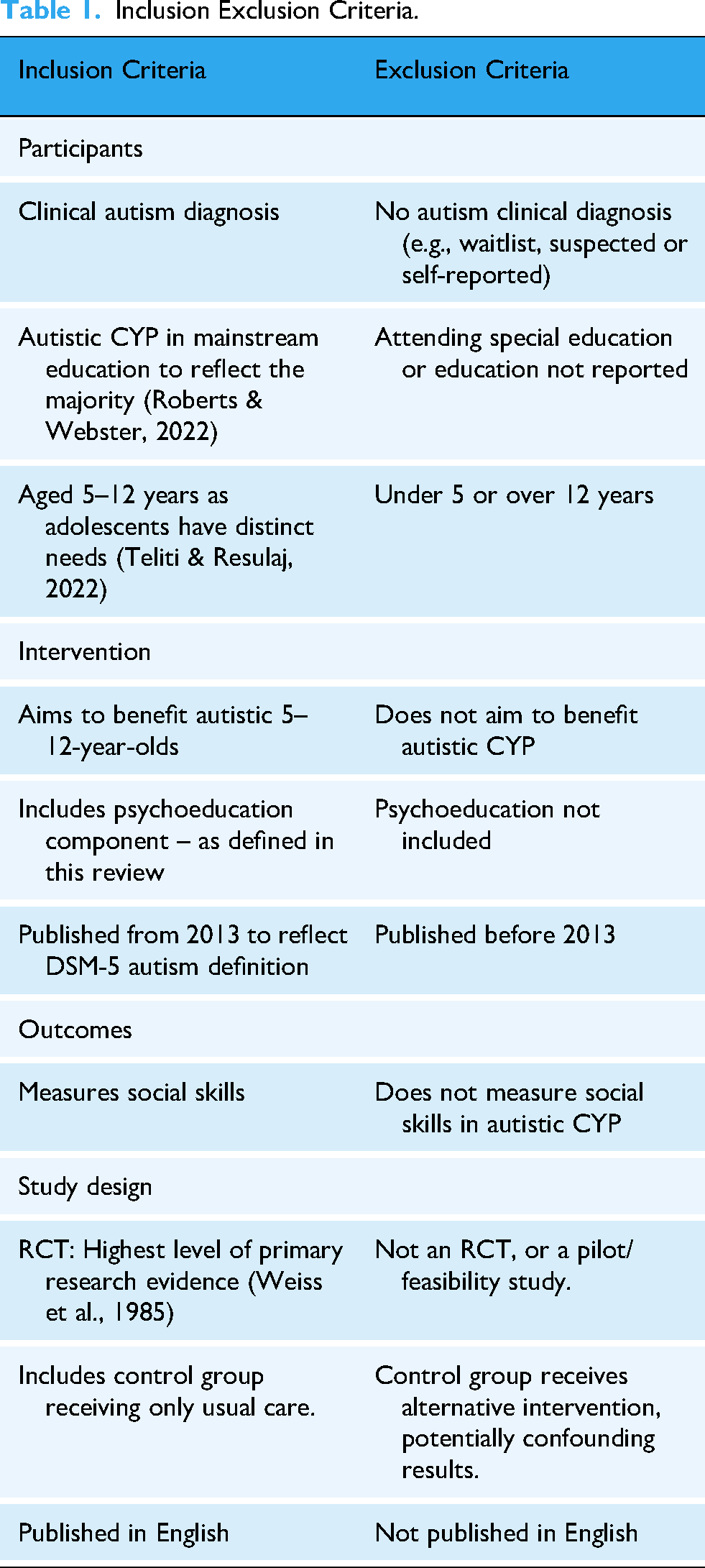
LP and JP independently screened titles, abstracts and full texts against inclusion criteria (Table 1). Agreement was reached at each stage, with all authors resolving discrepancies through discussion. Study characteristics (location, participants, intervention, comparator, results) were recorded. LP extracted data, verified by JP, JS and EC.
Inclusion Exclusion Criteria.
Data Extraction
Extracted data included author, year, country, study design, sample characteristics (age, gender, ethnicity, how diagnosis confirmed, occurring conditions), recruitment, social skills outcome measures and results.
Data Synthesis
Due to inconsistent outcome measures, meta-analysis was not feasible. Data were narratively synthesised using tables, graphs, and text, focusing on participant characteristics, intervention intensity, duration, content, participant involvement and outcome associations. All authors reviewed the synthesis, resolving discrepancies through discussion.
Results
Summary of Included Studies
The literature search yielded 4,199 records (4,183 after deduplication). No additional citations were identified via reference checks. LP and JP screened 4,183 citations, excluding 3,676 by title and 390 by abstract. Of 117 full texts reviewed, 104 were excluded, leaving 13 papers covering 11 studies.
Exclusion reasons:
Age outside 5–12 years (n = 55) Non-autistic populations (n = 8) Not primary research (n = 2) Non-RCT (n = 1) No clinical autism diagnosis (n = 4) Pre-2013 publication (n = 1) No psychoeducation (n = 3) Unclear (n = 6) or non-mainstream school attendance (n = 8) No pure control group (n = 6) Outcomes not measuring social skills (n = 7) or not autistic CYP (n = 2)
Table 2 details screening; supplemental material show PRISMA diagrams per database.
Search Results for the Seven Databases Searched.

Participant Composition of Included Studies
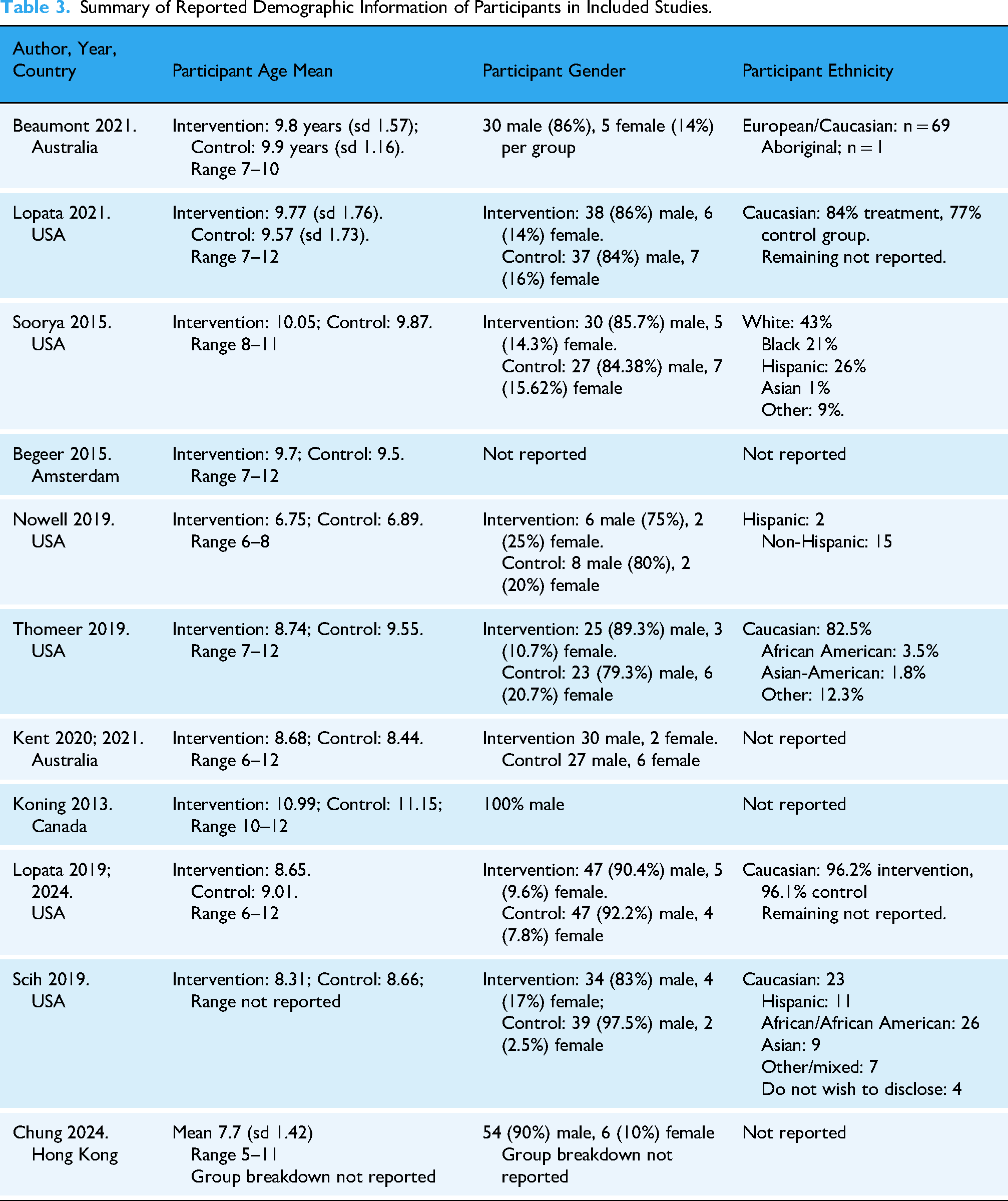
The 11 studies included 727 autistic CYP were included (mean n = 66), with 619 at follow-up (mean n = 56.3) and 108 dropouts. Mean age was 8.9 years (range 5–12). Studies spanned 2013–2024. Most participants were male and Caucasian /European/White (Table 3).
Summary of Reported Demographic Information of Participants in Included Studies.
All but one study (Koning et al., 2013) included males and females, with 548 males, 78 females and 202 unreported (Figure 1).
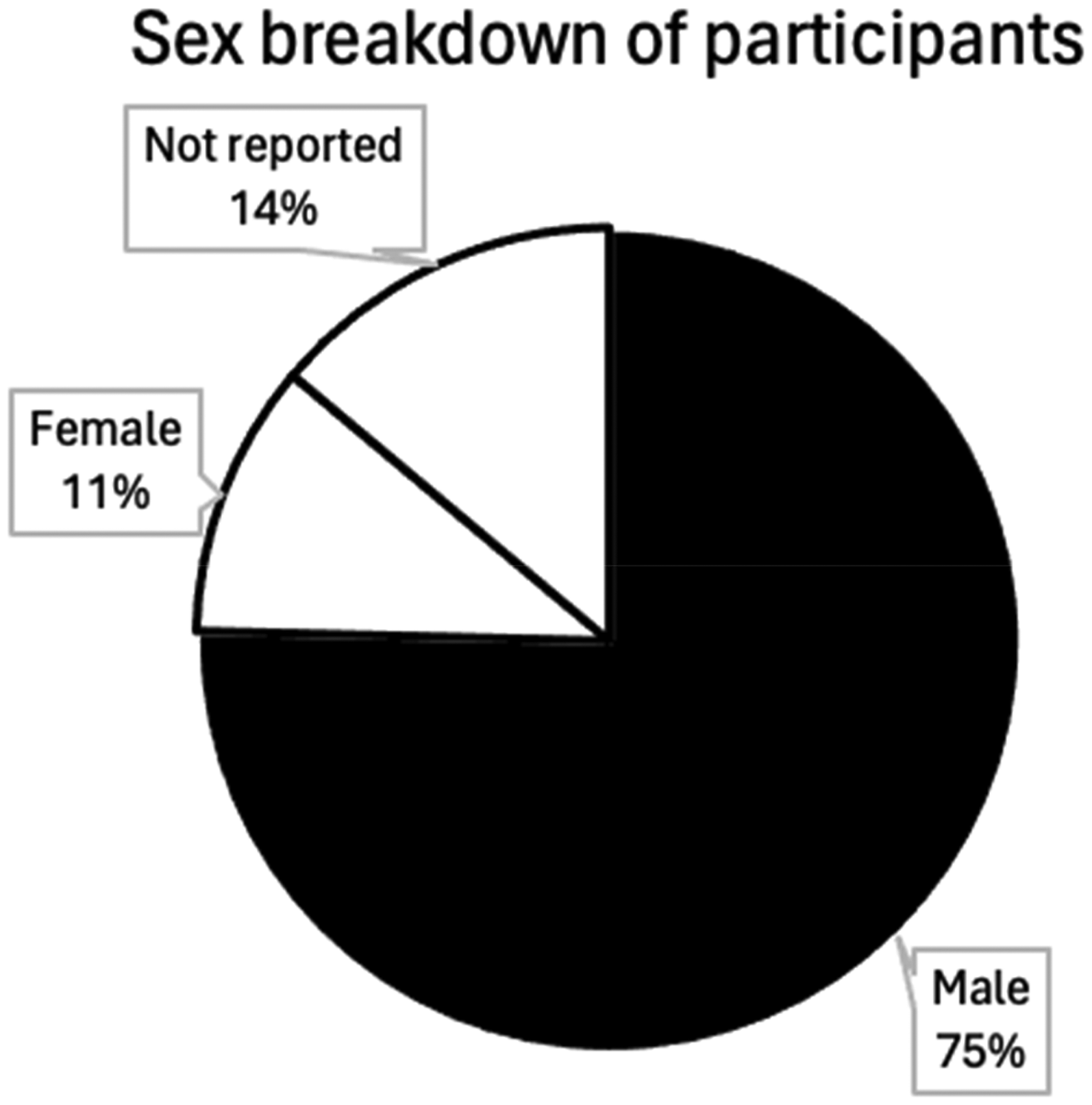
Breakdown of Male and Female Participants Across All Included Studies.
Studies were conducted in Hong Kong (Chung et al., 2024), Australia (Beaumont et al., 2021; Kent et al., 2020), USA (Lopata et al., 2019, 2021; Nowell et al., 2019; Shih et al., 2019; Soorya et al., 2015; Thomeer et al., 2019), Netherlands (Begeer et al., 2015) and Canada (Koning et al., 2013). Four studies (264 participants) omitted ethnicity (Begeer et al., 2015; Chung et al., 2024; Kent et al., 2020; Koning et al., 2013). Of 463 with reported ethnicity, 339 (73.2%) were Caucasian/European/White (Figure 2).

Breakdown of Participant Ethnicity Across Included Studies in This Review.
Eight studies omitted co-occurring conditions (Chung et al., 2024; Kent et al., 2020; Koning et al., 2013; Lopata et al., 2019; Lopata et al., 2021; Nowell et al., 2019; Shih et al., 2019; Thomeer et al., 2019). One included them without breakdown (Soorya et al., 2015), another reported ADHD (n = 17), ODD (n = 2), OCD (n = 3), anxiety (n = 5), Tourette's (n = 1), depression (n = 2) (Beaumont et al., 2021), and one noted 14% had ADHD, 10% had hyperactivity symptoms, 4% ODD, and 2% Conduct Disorder (Begeer et al., 2015). Table 4 summarises studies.
Summary of Included Studies in This Review.
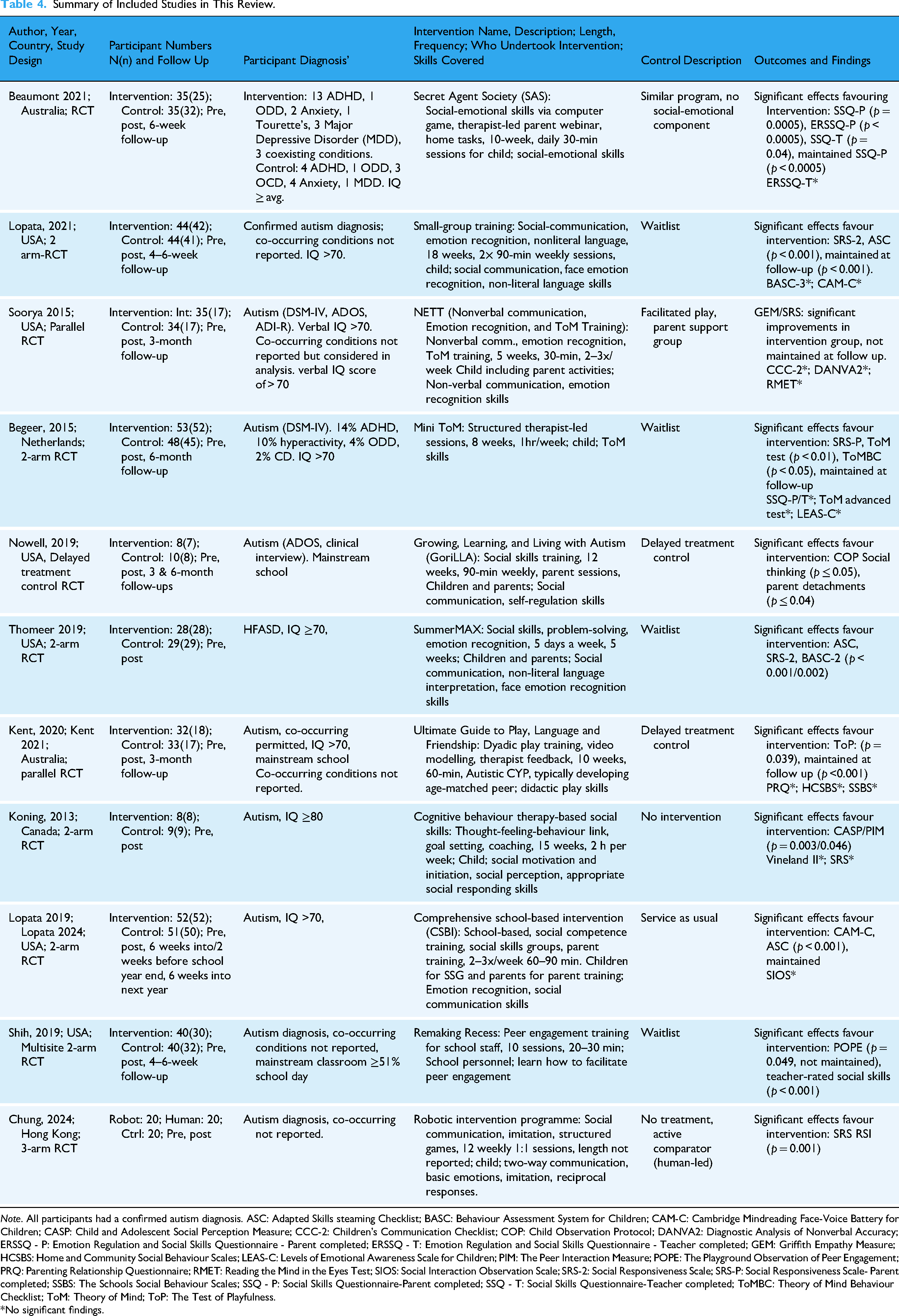
Note. All participants had a confirmed autism diagnosis. ASC: Adapted Skills steaming Checklist; BASC: Behaviour Assessment System for Children; CAM-C: Cambridge Mindreading Face-Voice Battery for Children; CASP: Child and Adolescent Social Perception Measure; CCC-2: Children's Communication Checklist; COP: Child Observation Protocol; DANVA2: Diagnostic Analysis of Nonverbal Accuracy; ERSSQ - P: Emotion Regulation and Social Skills Questionnaire - Parent completed; ERSSQ - T: Emotion Regulation and Social Skills Questionnaire - Teacher completed; GEM: Griffith Empathy Measure; HCSBS: Home and Community Social Behaviour Scales; LEAS-C: Levels of Emotional Awareness Scale for Children; PIM: The Peer Interaction Measure; POPE: The Playground Observation of Peer Engagement; PRQ: Parenting Relationship Questionnaire; RMET: Reading the Mind in the Eyes Test; SIOS: Social Interaction Observation Scale; SRS-2: Social Responsiveness Scale; SRS-P: Social Responsiveness Scale- Parent completed; SSBS: The Schools Social Behaviour Scales; SSQ - P: Social Skills Questionnaire-Parent completed; SSQ - T: Social Skills Questionnaire-Teacher completed; ToMBC: Theory of Mind Behaviour Checklist; ToM: Theory of Mind; ToP: The Test of Playfulness.
*No significant findings.
Intervention Components: Context and Delivery
Interventions, rooted in deficit-based models, aimed to improve social skills, presumed deficient in autistic CYP. All required trained personnel: school staff (Lopata et al., 2019), study team (Shih et al., 2019), clinicians/therapists (Beaumont et al., 2021; Begeer et al., 2015; Chung et al., 2024; Kent et al., 2020; Lopata et al., 2021; Nowell et al., 2019; Soorya et al., 2015; Thomeer et al., 2019), or unspecified “trained individuals” (Koning et al., 2013). Delivery setting included online (Beaumont et al., 2021), in clinics (Kent et al., 2020), schools (Lopata et al., 2019; Shih et al., 2019), local agency (Thomeer et al., 2019) or community education (Chung et al., 2024). Settings were unreported in five studies (Begeer et al., 2015; Kent et al., 2020; Koning et al., 2013; Lopata et al., 2021; Soorya et al., 2015).
Intervention Components: Participating Audiences and Content
Interventions targeted autistic CYP, parents or staff. Examples include Secret Agent Society (Beaumont et al., 2021) which offered therapist-led parent webinars and home tasks to support children's social-emotional skills. Similarly, the Growing, Learning and Living with Autism programme (Nowell et al., 2019) combined parent and child training for social communication and self-regulation. Remaking Recess (Shih et al., 2019) trained staff for peer engagement during recess.
One intervention focussed on didactic play, language and friendship-building by pairing autistic CYP with non-autistic, age- and gender-matched peers (Kent et al., 2020), one trained school staff for peer engagement during unstructured school times (Shih et al., 2019), two targeted autistic CYP, one used CBT-based training to improve social motivation (Koning et al., 2013); and another employed a weekly robot-assisted group to teach two-way communication, emotion recognition, imitation and reciprocal social interactions (Chung et al., 2024).
Eight interventions involved the child and parent: (1) Two focused on non-verbal communication, emotion recognition, and ToM training with parents engaged in complementary activities to reinforce skills at home (Soorya et al., 2015; Nowell et al., 2019). (2) Targeted social communication, nonliteral language interpretation, facial emotion recognition and interest expansion, incorporating behavioural reinforcement with parents trained to support these skills outside of sessions (Thomeer et al., 2019). (3) Addressed social competence through social skills groups, emotion recognition, therapeutic activities and parent training (Lopata et al., 2019), involving parents as active learners and facilitators in everyday environments. (4) Computer game-based social-emotional skills development plus therapist-led parent webinars and home tasks (Beaumont et al., 2021). (5) Focused on social communication, facial emotion recognition, nonliteral language, and interest expansion (Lopata et al., 2021) with parent involvement aimed at generalising learned skills beyond intervention sessions. (6) Focussed ToM skills, including parent-guided activities to reinforce concepts in daily life (Begeer et al., 2015). (7) Focussed on parents observing their childs play in clinic and at home and discussing observations with a therapist (Kent et al., 2020, 2021).
Social Skills Outcomes
All studies reported improved social skills post intervention. Five studies (reported across seven papers) maintained effects at follow-up (Beaumont et al., 2021; Begeer et al., 2015; Kent et al., 2020; Kent et al., 2021; Lopata et al., 2019; Lopata et al., 2021; Lopata et al., 2024) two did not (Shih et al., 2019; Soorya et al., 2015), and four lacked follow-up data (Chung et al., 2024; Koning et al., 2013; Nowell et al., 2019; Thomeer et al., 2019). Follow-up periods ranged from six weeks (Beaumont et al., 2021) to one year (Lopata et al., 2024) (Table 5).
Cochrane Risk of Bias 2 Judgements Summary.

Comparative Intervention Outcomes
Table 6 compares social skills outcomes, highlighting interventions with consistent, sustained improvements in emotion recognition, ToM, and peer engagement, noting follow-up maintenance.
Comparison of Outcomes Across Interventions.

Quality Assessment: Summary
Overall, four studies had some concerns (Lopata et al., 2019; Shih et al., 2019; Soorya et al., 2015; Thomeer et al., 2019), and seven studies were considered high risk (Beaumont et al., 2021; Begeer et al., 2015; Chung et al., 2024; Kent et al., 2020; Koning et al., 2013; Lopata et al., 2021; Nowell et al., 2019) (see Table 5 and supplemental material).
Quality Assessment: Domain 1: Randomisation Process
Six studies were low risk (Beaumont et al., 2021; Begeer et al., 2015; Chung et al., 2024; Kent et al., 2020; Lopata et al., 2021; Nowell et al., 2019), five had some concerns (Koning et al., 2013; Lopata et al., 2019; Shih et al., 2019; Soorya et al., 2015; Thomeer et al., 2019).
Domain 2: Deviations From Intended Intervention
Three studies were low risk (Beaumont et al., 2021; Kent et al., 2020; Lopata et al., 2019) and eight had some concerns (Begeer et al., 2015; Chung et al., 2024; Koning et al., 2013; Lopata et al., 2021; Nowell et al., 2019; Shih et al., 2019; Soorya et al., 2015; Thomeer et al., 2019).
Domain 3: Missing Outcome Data
Nine studies were low risk (Beaumont et al., 2021; Begeer et al., 2015; Kent et al., 2020; Lopata et al., 2019; Lopata et al., 2021; Nowell et al., 2019; Shih et al., 2019; Soorya et al., 2015; Thomeer et al., 2019); two were high risk (Chung et al., 2024; Koning et al., 2013).
Domain 4: Outcome Measurement
Five studies had high risk (Beaumont et al., 2021; Begeer et al., 2015; Kent et al., 2020; Lopata et al., 2021; Nowell et al., 2019); six had low risk (Beaumont et al., 2021; Chung et al., 2024; Kent et al., 2020; Koning et al., 2013; Lopata et al., 2019; Lopata et al., 2021; Shih et al., 2019; Soorya et al., 2015; Thomeer et al., 2019).
Domain 5: Selection of Reported Results
Eight studies had low risk (Beaumont et al., 2021; Chung et al., 2024; Kent et al., 2020; Koning et al., 2013; Lopata et al., 2019; Lopata et al., 2021; Shih et al., 2019; Thomeer et al., 2019), two had some concerns (Begeer et al., 2015; Soorya et al., 2015), one had high risk (Nowell et al., 2019).
Discussion and Implications
Results Summary
This review evaluates social skills interventions incorporating psychoeducation for autistic 5–12-year-olds. All studies reported statistically significant post-intervention improvements (p < 0.05), though follow-up gains varied (Table 3). Participants were predominantly male (75%) and Caucasian (73.2%). Psychoeducation formats differed, engaging parents, school staff, autistic CYP and peers. As the first systematic narrative review focusing on such interventions, it offers guidance for future research, intervention design and support strategies.
Participant Representation
Despite UK calls for inclusive research (Department for Business, Energy and Inditrial Strategy, 2021; Guyan & Oloyede, 2020), ethnic minority groups and autistic girls were underrepresented, limiting conclusions about interventions efficacy for these groups. This highlights the need for broader inclusion to capture varied and distinct social experiences, challenges and strengths that influence how they respond to interventions. Categorising autism as a single condition risks neglecting such marginalised groups (Woods, 2017).
Interventions: From a Deficit to Neurodiversity Approach?
Interventions in this review adopted a deficit-based approach viewing social skills as impaired (Sonuga-Barke, 2023). Critics argue this ignores environment influences (Bertilsdotter Rosqvist et al., 2023; Kapp, 2020), and that framing social interaction as deficient may harm autistic CYP's mental health, fostering shame, low self-esteem and masking, which causes distress and burnout (Bertilsdotter Rosqvist et al., 2023). All included studies were RCTs, a design aligned with medical model assumptions, raising questions about their suitability for neurodiversity-affirming approaches. Neurodiversity-based interventions should validate autistic communication and promote acceptance to foster authentic social development and well-being.
One peer-mediated intervention (PMI) paired autistic CYP with non-autistic age-matched peers to address social skill deficits (Kent et al., 2020; Kent et al., 2021). PMIs have been criticised for their negative impact on non-autistic peers, risking emotional fatigue (Chang & Locke, 2016), yet autistic CYP face greater burnout from societal pressures (Phung et al., 2021). Evidence also shows that non-autistic CYP benefit from regular contact with CYP with disabilities, which can facilitate positive interactions (Reiter & Vitani, 2007). Relatedly, the Double Empathy Theory suggests mutual misunderstandings, not deficits, drive social challenges, urging interventions to foster bidirectional understanding (Milton et al., 2023).
Intervention Context and Delivery
Interventions required sustained attention, often in unfamiliar settings. This can pose several challenges for autistic CYP who may experience attention challenges (van der Meer et al., 2012) and prefer predictability, routine and familiarity (National Autistic Society, 2020). Most interventions required trained professionals, raising suitability concerns post-research funding. The studies included verbally able CYP in mainstream education, necessitating careful consideration of intervention suitability for broader autistic populations. Co-production methods, meaning collaborative development processes involving autistic CYP, their families and professionals, should be used to ensure interventions are accessible, acceptable and relevant to the needs of diverse autistic individuals (Chung et al., 2024).
Intervention Components: What Works?
Successful interventions used engaging, visual activities (e.g. computer games, PMI, robots), accommodating autism's heterogeneity and varied reward preferences (Frober & Dreisbach, 2021). Intensive programs (10–18 weeks) with sustained effects included home activities, weekly goals, and interactive tasks. Findings suggest importance of: (1) support networks, (2) interactive learning, supported by recent systematic review and meta-analysis evidence in ADHD CYP (Powell et al., 2022), and (3) generalisation beyond intervention settings, critical given mental flexibility challenges (Morsa et al., 2022; Scott, 1962). However, intervention heterogeneity prevents definitive conclusions on what drives success.
Parent and Teacher Reported Outcomes
Varied social skills measurements prevented meta-analysis. Teacher and parent reports often diverged, with potential parent bias from intervention investment (Murray et al., 2021). Some studies showed parent-reported gains absent in teacher reports (Begeer et al., 2015; Kent et al., 2021), though three found consistent parent and teacher improvements (Beaumont et al., 2021; Lopata et al., 2024; Thomeer et al., 2019). Balanced reporting is needed to address observer bias.
Strengths and Limitations of This Review and Included Studies
This review is the first to explore the benefits and synthesise evidence of interventions incorporating psychoeducation to support social skills in autistic CYP. If offers unique insights from diverse author experiences (Sonuga-Barke, 2023), and explores the implications of a neurodiversity approach for future intervention development, contributing to important considerations around supporting autistic CYP, ultimately improving their outcomes.
Included studies are not without limitations. All studies followed a medical model of disability, viewing autistic social skills as deficient, not different. Most positioned neurotypical skills as the ideal, reinforcing a socialisation hierarchy (Sharma et al., 2012) and not recognising strengths of autistic CYP (Black et al., 2019; Scott et al., 2019).
Interventions varied in components, intensity and duration, limiting the ability to draw firm conclusions (Morsa et al., 2022). Many did not label their approach as psychoeducation, or include explicit education about autism, despite evidence that understanding one's condition and presuming competence (Donaldson et al., 2017) supports well-being (Powell et al., 2021; Powell et al., 2024). Though co-design with autistic people enhances impact and ethical practice, studies did not adopt participatory methods, including when selecting outcome measures. Most assessed social skills against normative standards, contradicting calls for mutual understanding of autistic and non-autistic communication (Crompton et al., 2021) and for outcomes that matter to autistic individuals (Benevides & Cassidy, 2020).
Another notable limitation was the reliance on low-quality methodologies, weakening robustness and generalisability. This reduces confidence in intervention effectiveness and risks misdirecting future research and policy. Real-world application could therefore be inefficient or ineffective, highlighting the need for rigorous studies with diverse samples and ecologically valid outcomes. While all studies were RCTs, often viewed as the gold standard, such designs may not suit neurodiversity-affirming approaches. RCTs typically reflect medical model assumptions, which may constrain the development or evaluation of socially grounded lived experience-informed interventions.
Homogeneity and poor reporting of participant characteristics raise concerns around how representative the studies are of broader autistic communities. Further, none of the studies explored whether intervention suitability, uptake or benefits varied by gender – warranting caution in generalising findings. Lastly, future research should also include parent and teacher reported outcomes to address potential observer bias.
Future Research and Intervention Development Recommendations
This review demonstrates promise in psychoeducational approaches to support social skills in autistic 5–12-year-olds. The following recommendations for future intervention development aim to contribute to a research standard where research and interventions are suitable and relevant to autistic CYP:
Intersectionality and structural inequalities: To understand the intersectionality of sex, gender, race, socioeconomic status, disability and autism, and enable transparent integration of autistic individuals from diverse groups in intervention design, delivery and research. Recognising intersectionality is crucial because autistic CYP's experiences and needs vary widely across identities and backgrounds, which are shaped by structural inequalities and interlocking systems of power (Cho et al., 2013; Crenshaw, 1989). For example, autistic girls and young women may show social differences differently than boys, and cultural or ethnic backgrounds influence social expectations, stigma and support access. However, these differences are not only individual or cultural but also reflect systemic barriers such as racial discrimination in diagnostic processes, socioeconomic exclusion from services, and ableism within education and healthcare. Without explicit attention to these intersecting systems of oppression, interventions risk being less effective, culturally insensitive or inaccessible. Future intervention development must actively challenge these inequities by prioritising inclusion, detailed demographic reporting, and equity-oriented design. This will allow research to uncover the unique challenges, strengths and barriers faced by marginalised subpopulations, leading to more just, relevant, and effective interventions and policies that reflect the lived realities of the autistic community. Approach: To adopt a neurodiversity approach that recognises challenges and strengths of autistic CYP (Lopez et al., 2018; Seligman & Csikszentmihalyi, 2000). Participatory methods: Co-production with autistic people and their supporters should guide intervention and research design. This means involving autistic individuals as equal partners at all stages, from setting research priorities and designing interventions to selecting outcomes and interpreting findings. Strategies like advisory panels, lived-experience co-researchers and accessible consultation workshops enable meaningful engagement. Offering flexible participation formats, fair compensation and autism-friendly communication support is essential to include and value diverse voices. These practices ensure interventions are relevant, respectful and truly reflect autistic CYP's lived experiences and needs, enhancing ethical integrity and impact. Personalisation: Interventions must be flexible and tailored to individual needs, considering preferred learning styles and real-world applications. Outcome measures: Standardised, validated measures sensitive to neurodivergent social development are needed and must be carefully selected with individuals with lived experience.
By addressing these areas, future research can move beyond the limitations of current evidence, fostering rigorous, inclusive and impactful interventions that truly support autistic CYP in diverse real-world contexts.
Recommendations for Support Networks
Educators should facilitate structured peer interactions, meaning planned and supervised social activities that support positive engagement and social skill development. For example, guided group games or collaborative classroom tasks with defined roles may benefit autistic CYP's social development (Aldabas, 2020). Educators and parents/carers may also wish to carefully encourage autistic CYP's interactions with age-matched typically developing peers, as evidence suggests these can promote mutual understanding of different social practices and preferences (Milton et al., 2023). Neurodiversity based approaches recognise strengths and challenges experienced by neurodivergent individuals and can improve outcomes and well-being, reinforcing the need for research agendas to prioritise diversity and inclusion (Bertilsdotter Rosqvist et al., 2023; Happe & Frith, 2020; Kapp, 2020). Greater adherence to such agendas (Department for Business, Energy and Inditrial Strategy, 2021; Guyan & Oloyede, 2020) may help embed this more widely in practice.
Conclusions
Findings indicate that interventions with psychoeducation could be beneficial for supporting social communication differences and interaction preferences in autistic CYP. Study quality is limited, sample compositions were homogenous, and questions are raised regarding the deficit-based approach interventions were rooted within. Future research should include autistic individuals who represent diverse groups and be rooted within a neurodiversity approach to recognise differences not deficits, and embrace individual strengths, thus moving away from categorising autism as a singular condition. This must be achieved through participatory methods that work towards support and interventions that are flexible, provide learning opportunities outside intervention setting and tailored to individual needs. Lastly, future intervention development should assume competence and support all CYP to understand communication differences to make a more inclusive and accepting world.
Supplemental Material
sj-jpg-1-ndy-10.1177_27546330251356718 - Supplemental material for The Impact of Psychoeducation Interventions on Social Skills in Autistic 5–12-Year-Olds: A Narrative Systematic Review
Supplemental material, sj-jpg-1-ndy-10.1177_27546330251356718 for The Impact of Psychoeducation Interventions on Social Skills in Autistic 5–12-Year-Olds: A Narrative Systematic Review by Lauren Powell, Jack Parker, Jonathan Stott and Elizabeth Jane Colbert in Neurodiversity
Supplemental Material
sj-jpg-2-ndy-10.1177_27546330251356718 - Supplemental material for The Impact of Psychoeducation Interventions on Social Skills in Autistic 5–12-Year-Olds: A Narrative Systematic Review
Supplemental material, sj-jpg-2-ndy-10.1177_27546330251356718 for The Impact of Psychoeducation Interventions on Social Skills in Autistic 5–12-Year-Olds: A Narrative Systematic Review by Lauren Powell, Jack Parker, Jonathan Stott and Elizabeth Jane Colbert in Neurodiversity
Supplemental Material
sj-jpg-3-ndy-10.1177_27546330251356718 - Supplemental material for The Impact of Psychoeducation Interventions on Social Skills in Autistic 5–12-Year-Olds: A Narrative Systematic Review
Supplemental material, sj-jpg-3-ndy-10.1177_27546330251356718 for The Impact of Psychoeducation Interventions on Social Skills in Autistic 5–12-Year-Olds: A Narrative Systematic Review by Lauren Powell, Jack Parker, Jonathan Stott and Elizabeth Jane Colbert in Neurodiversity
Supplemental Material
sj-jpg-4-ndy-10.1177_27546330251356718 - Supplemental material for The Impact of Psychoeducation Interventions on Social Skills in Autistic 5–12-Year-Olds: A Narrative Systematic Review
Supplemental material, sj-jpg-4-ndy-10.1177_27546330251356718 for The Impact of Psychoeducation Interventions on Social Skills in Autistic 5–12-Year-Olds: A Narrative Systematic Review by Lauren Powell, Jack Parker, Jonathan Stott and Elizabeth Jane Colbert in Neurodiversity
Supplemental Material
sj-jpg-5-ndy-10.1177_27546330251356718 - Supplemental material for The Impact of Psychoeducation Interventions on Social Skills in Autistic 5–12-Year-Olds: A Narrative Systematic Review
Supplemental material, sj-jpg-5-ndy-10.1177_27546330251356718 for The Impact of Psychoeducation Interventions on Social Skills in Autistic 5–12-Year-Olds: A Narrative Systematic Review by Lauren Powell, Jack Parker, Jonathan Stott and Elizabeth Jane Colbert in Neurodiversity
Supplemental Material
sj-jpg-6-ndy-10.1177_27546330251356718 - Supplemental material for The Impact of Psychoeducation Interventions on Social Skills in Autistic 5–12-Year-Olds: A Narrative Systematic Review
Supplemental material, sj-jpg-6-ndy-10.1177_27546330251356718 for The Impact of Psychoeducation Interventions on Social Skills in Autistic 5–12-Year-Olds: A Narrative Systematic Review by Lauren Powell, Jack Parker, Jonathan Stott and Elizabeth Jane Colbert in Neurodiversity
Supplemental Material
sj-jpg-7-ndy-10.1177_27546330251356718 - Supplemental material for The Impact of Psychoeducation Interventions on Social Skills in Autistic 5–12-Year-Olds: A Narrative Systematic Review
Supplemental material, sj-jpg-7-ndy-10.1177_27546330251356718 for The Impact of Psychoeducation Interventions on Social Skills in Autistic 5–12-Year-Olds: A Narrative Systematic Review by Lauren Powell, Jack Parker, Jonathan Stott and Elizabeth Jane Colbert in Neurodiversity
Supplemental Material
sj-jpg-8-ndy-10.1177_27546330251356718 - Supplemental material for The Impact of Psychoeducation Interventions on Social Skills in Autistic 5–12-Year-Olds: A Narrative Systematic Review
Supplemental material, sj-jpg-8-ndy-10.1177_27546330251356718 for The Impact of Psychoeducation Interventions on Social Skills in Autistic 5–12-Year-Olds: A Narrative Systematic Review by Lauren Powell, Jack Parker, Jonathan Stott and Elizabeth Jane Colbert in Neurodiversity
Footnotes

Funding
The authors received no financial support for the research, authorship, and/or publication of this article.
Declaration of Conflicting Interests
The authors declared no potential conflicts of interest with respect to the research, authorship, and/or publication of this article.
Data Availability Statement
Anonymised data is available upon request.
Supplemental Material
Supplemental material for this article is available online.
References
Supplementary Material
Please find the following supplemental material available below.
For Open Access articles published under a Creative Commons License, all supplemental material carries the same license as the article it is associated with.
For non-Open Access articles published, all supplemental material carries a non-exclusive license, and permission requests for re-use of supplemental material or any part of supplemental material shall be sent directly to the copyright owner as specified in the copyright notice associated with the article.


