



Abstract
Keywords
Introduction
The neurodiversity term refers to natural human variation in neurocognitive processing (Walker, 2021). Use of this term in research has been aligned with strengths-based, identity-affirming principles, and is commonly positioned in opposition to the medical model of disability (McLennan et al., 2025). Correspondingly, the neurodiversity paradigm demonstrates a shift in the way neurodevelopmental conditions such as autism, dyslexia, attention deficit hyperactivity disorder (ADHD) and other neurocognitive differences are understood and supported (Bertilsdotter Rosqvist et al., 2023b; Pellicano & den Houting, 2022). This shift in perspective contrasts with a medical view of neurocognitive difference which typically focuses on remediation (Bölte et al., 2021). Accordingly, provision of support for neurodivergent people has been transformed, commonly branded ‘neurodiversity-affirming practice’ (Dallman et al., 2022, p. 1). Rather than seeking aims of normalisation (Wolfensberger & Tullman, 1982), supports are targeted to meet the priorities of neurodivergent people and focus is on enhancing quality of life (den Houting, 2019). Neurodivergent people stand to benefit from the transformation of the way in which neurocognitive diversity is understood (Hartman et al., 2023; Izuno-Garcia et al., 2023). This paradigm shift can be enhanced by policy and practice informed by research (Bauer et al., 2015) and lived experiences (Murray et al., 2022; Russell, 2020). Review of empirical research is therefore useful for interrogating current positioning of the neurodiversity concept and informing recommendations for future research. As such, the aim of this study was to conduct a review of empirical research where neurodiversity was a central, explicit focus. That is, neurodiversity was both defined in the article, and embedded in the study as either a theoretical framework, research aim, or central topic of investigation. Restriction to this inclusion criteria means not all neurodiversity research has been included in this review, and therefore caution should be taken when interpreting results. Nevertheless, the review provides a snapshot of research trajectory where neurodiversity has been an explicit focus of investigation. As such, areas of concentration and gaps in explicit neurodiversity research can be acknowledged and, when positioned alongside broad reviews of neurodiversity research and perspectives of neurodivergent people, priorities for future research that informs neurodiversity-affirming support provisions can be identified.
Research elements captured in this review
Investigation of empirical neurodiversity research in this review included: (a) research topics; (b) population focus; (c) research methods and data sources; (d) research participation; and (e) terminology use. The relevance of these topics to the neurodiversity paradigm is discussed next.
Neurodiversity research topics
Investigating common topics researched in the neurodiversity field paints a picture of the areas that current focus is placed, and where gaps in understanding may lie.
Neurominority group inclusion
The term neurodiversity was initially used with reference to autism, with autistic people advocating for their rights and to reduce marginalisation and discrimination encountered (Botha et al., 2024; Singer, 1998). The term is now also used with reference to other populations, including dyslexia, ADHD, Tourette's, and developmental language disorder (Honeybourne, 2018; Koi, 2021; Macdonald, 2019). While some neurodivergent people identify with these formal diagnoses, self-identification is also commonplace (Overton et al., 2024). Further, some (e.g., Asasumasu, 2016; Walker, 2021) have extended the neurodivergence term to include more diversity, such as people living with mental health conditions or those who have cognitive profiles altered by certain life experiences. Neurominority group representation will be investigated in the current review to explore the focus of research to date and identify research gaps. We sought to engage in this investigation without imposing our own preconceptions about what constitutes neurodivergence, so to highlight findings with minimal bias.
Other population considerations
An additional consideration for the neurodivergent population includes gender representation. For example, autism is reported to be more common for males, than females, with female characteristics reportedly less likely to meet the diagnostic threshold (Tsirgiotis et al., 2024). However, some advocates have suggested representation of females – as well as non-binary and transgender people – remains underrepresented in autism research (D’Mello et al., 2022; Strang & Fischbach, 2023). An exploration of gender representation in neurodiversity research is therefore pertinent. Further, the voices of neurodivergent people who are minimally speaking or have a co-occurring intellectual disability are poorly represented in the neurodiversity paradigm (den Houting, 2019). To better highlight that all neurodivergent people have a place in the neurodiversity paradigm (as advocates have argued, e.g., Kapp, 2023), neurodiversity research should be inclusive of people with higher support needs. In addition, consideration of population in this review includes making a comparison between adult and child populations. In traditional research relating to neurodevelopmental conditions, focus has predominantly been placed on studies about children and childhood, while studies focusing on adult populations and topics have been in the minority (Howlin, 2021).
Research methods and source of data
To examine how neurodiversity research is being conducted, review of methods and targeted sources of data are relevant undertakings, especially as the neurodiversity paradigm prioritises the voices of neurodivergent people (Pellicano & den Houting, 2022). While interviews and surveys are common methods for capturing participant perspectives directly in research (Walliman, 2021), other research methods are useful in disability studies, including ethnography, and autoethnography (Doan & Darcy, 2025). There should be consideration for hearing directly from neurodivergent people, rather than relying solely on other sources of data, such as parent perspectives, which is reported to be common in research with autistic children (Simpson et al., 2022). Therefore, the way in which the perspectives of neurodivergent people are captured in research, including for children and people who communicate in ways other than verbal communication, needs to be considered (Lewis et al., 2024; Nicolaidis et al., 2019).
Research participation
A further relevant consideration is the contribution of neurodivergent people to research. Participatory research is a method where community members – in this case, neurodivergent people and their allies – are involved in co-producing research (Fletcher-Watson et al., 2019). This has been identified a priority and benefit in research with marginalised communities (Wallerstein & Duran, 2010). The level of community contribution can vary, from limited involvement of neurodivergent members to research comprised of neurodivergent contingents exclusively (den Houting, 2021). In this review, investigation includes whether a statement is made about the neurotype of research team members and/or other neurodivergent community participation. While these indicators alone do not necessarily constitute authentic participatory research, and some team members may choose not to disclose their neurotype, it provides some insight to whether researchers have included neurodivergent community members in research implementation.
Terminology use
The term neurodiversity has been described as an inclusive construct (Legault et al., 2021), reflecting natural variation in thinking and cognitive styles that exists across humanity (Walker, 2021). Neurodivergence, on the other hand, reflects processing styles that diverge from the majority neurotypical mind (Asasumasu, 2016). To highlight the marginalisation and discrimination that some neurodivergent people experience, Walker (2021) coined an additional term, neurominority, which is used to describe populations subscribing to a shared form of neurodivergence (e.g., autism). The neurodiversity paradigm also subscribes to a shift in terminology use from that employed in the medical model of disability, where person-first terminology (e.g., person with ASD/autism) is predominant (e.g., Lee et al., 2022). In the neurodiversity paradigm, identity-first terminology is often preferred (e.g., autistic person; Bury et al., 2023) and is aligned with the notion that neurodivergence is an inseparable component of one's identity, not an appendage to one's personhood (Baker, 2006; Sinclair, 1993). There are exceptions to this terminology use, with some neurominority groups still frequently represented by person-first terminology in academic literature (e.g., person with ADHD; Sonuga-Barke et al., 2023) and some geographical variation in language preferences (Buijsman et al., 2023). There is a relative consensus view, however, that individual preference in terminology use be respected (Flowers et al., 2023; Vivanti, 2020). The use of terminology in neurodiversity-specific research, namely, identity-first compared to person-first terminology, will be a final element investigated in this review.
Research aim
The aim of this study was to map the current scope of empirical research where neurodiversity was a central, explicit focus. The results highlight the current positioning of explicit neurodiversity research and research gaps. The guiding research questions were:
What is the focus of neurodiversity research? Who is being represented in neurodiversity research? How is neurodiversity research being undertaken?
Method
A scoping review was employed to address the aims of this study. Scoping reviews provide synthesis of knowledge on a given topic and are used to highlight the range of research available (Colquhoun et al., 2014). The preferred reporting items for systematic reviews and meta-analyses extension for scoping reviews (PRISMA-ScR) was used as a guide to this review, with every compulsory element followed. A critical appraisal of articles was not completed as this was not deemed required for the purposes of the broad investigation. Furthermore, no protocol exists for this review.
Engagement with the neurodivergent community
The research team consisted of one neurodivergent team member (second author), who is an autistic research assistant with experience engaging in research tasks. This member's contribution to the study included involvement in the article selection process, review of the data extraction and analysis process, determination of discussion key points, and editor to the final article. The other three authors of this review identify as neurotypical but neurodivergent community allies.
Search strategy
The search strategy was determined collaboratively by all research team members with input from two university librarians. The search took place across two time points; (a) initial search, June 2022; and (b) final search, July 2024 (to collate articles to end 2023). No restrictions were placed on start date as researchers were interested in the scope of neurodiversity research over time. The search terms used were limited to approximations of neurodiversity, neurodivergent, and neurodiverse. The search was further limited to title, abstract, and key words/subjects, as well as articles published in English (see Supplemental Material A). These limits were applied to identify articles featuring neurodiversity as a central focus of the study. The research aim did not extend to studies exploring individual neurominority groups (e.g., autism) if a neurodiversity focus was not explicitly stated, nor articles where the neurodiversity term was only used to label participants. The 10 databases searched were five via the EBSCOhost platform, along with Informit, PubMed, Scopus, and Web of Science.
Inclusion and exclusion criteria
The inclusion and exclusion criteria for this review are listed in Table 1. Determining whether neurodiversity was a central focus of the study was a subjective process and required collaboration between team members alongside establishment of clear eligibility criteria.
Inclusion/exclusion criteria.

Article selection
The article selection process is detailed in the PRISMA diagram in Figure 1. After duplicate removal, a total of 1697 articles were retrieved from the combined searches comprising no start date, until end December 2023. The first author conducted a review of title and abstracts, and this scan was cross-checked by the third listed author for articles that were difficult to classify. This process left 91 articles for a full-text scan. The first and second listed authors conducted the full text scan independently, with initial agreement between these authors at 78%. The third listed author provided a further independent review of full text articles that the first and second authors did not agree upon. Collectively, an agreement of 100% was reached on the final number of articles to be included in this review (n = 46).

PRISMA flow chart.
Charting the data
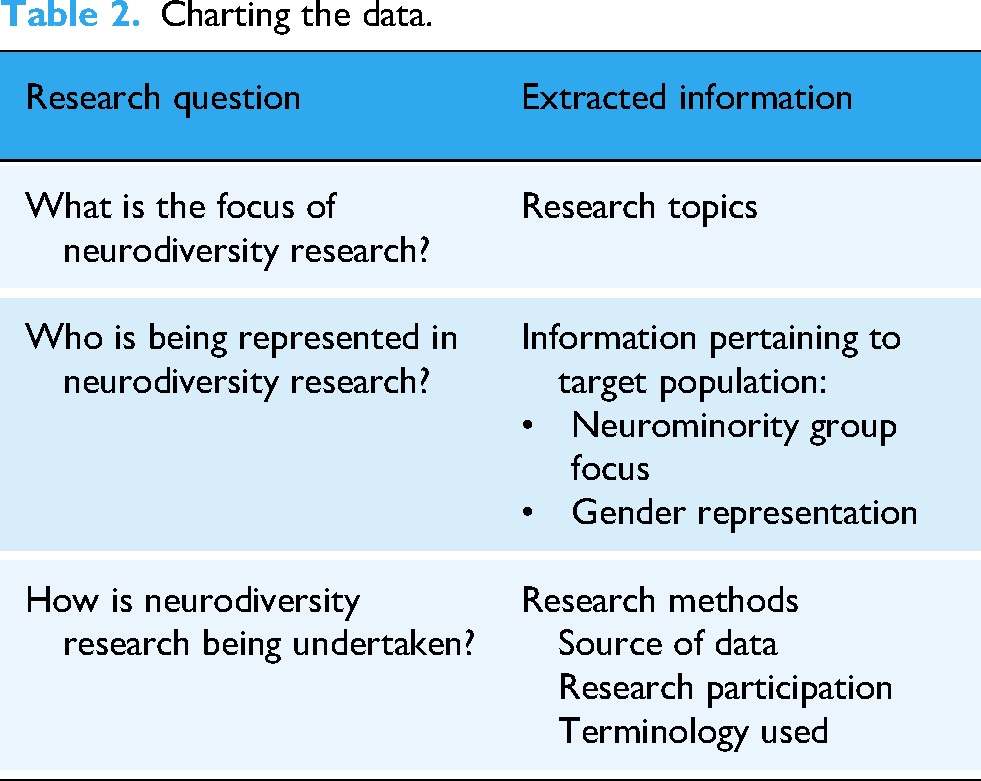
After classifying the publication year of each included article, descriptive information was extracted to address the three research questions (see Table 2). Of note, it was not possible to extract meaningful information about the support needs of the neurodivergent people at the focus of the studies – such as prevalence of co-occurring intellectual disability and participants who were non-speaking – as this was infrequently reported in the articles. Also somewhat infrequently reported was the ethnicity/racial background of neurodivergent people in the studies. Consequently, analysis of race/ethnicity was not a focus of this review. Last, to map the differences in neurodiversity research across the lifespan, separate age-group categories were created for comparative analysis. These categories are described in the results section.
Charting the data.
Results
Of the 91 articles that underwent a full-text examination, 46 articles met the inclusion criteria and were included in this review. These articles span 2009–2023. The results provide a summary of empirical research of which our research team determined neurodiversity was a central, explicit study theme. The data breakdown for the descriptive analysis is included in Supplemental Material B.
Determination of research categories
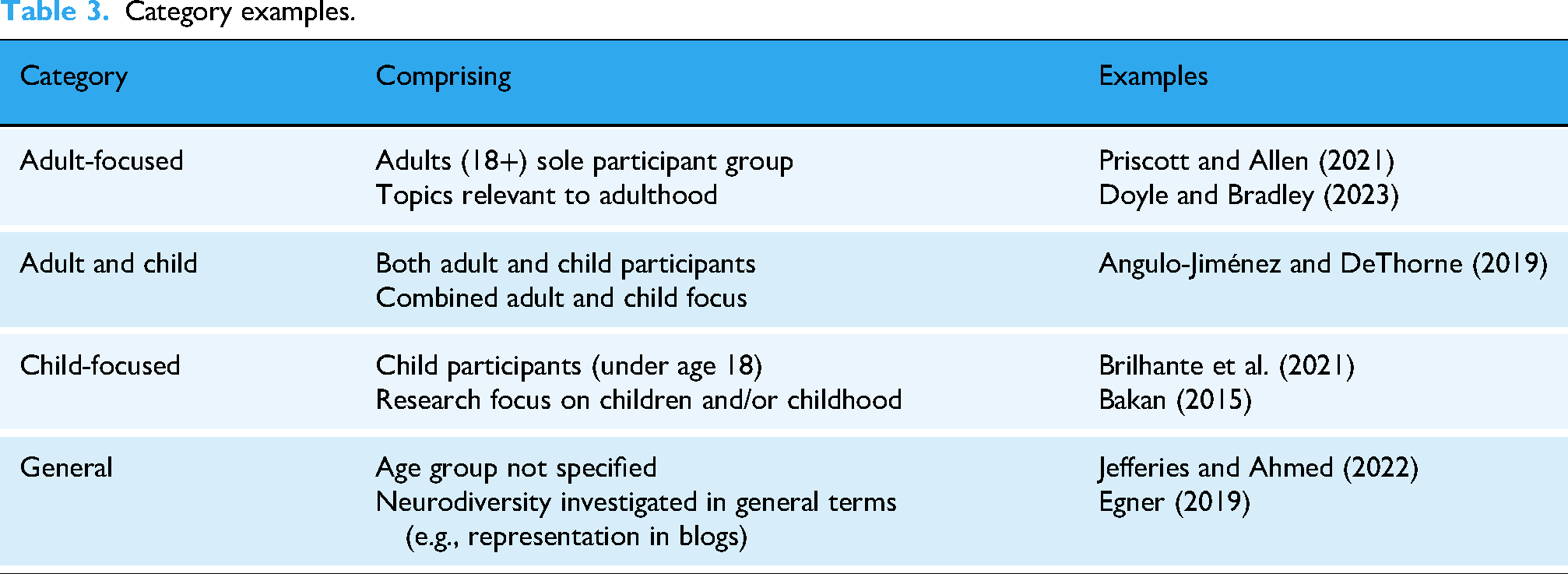
Throughout this article, a comparison is made between adult-focused research – which was the majority age group represented (n = 27), combined adult and child research (n = 8), child-focused research (n = 4), and more general neurodiversity research, where age group was not specified or not relevant (n = 7). The determination of these categories was made based on the focus of the research and populations included. Category examples are included in Table 3.
Category examples.
Year of publication
The number of articles published each year between 2009 and 2023 is featured in Figure 2. The first empirical study comprising an explicit neurodiversity focus captured in this review was published in 2009 (Griffin and Pollak, 2009), with the next articles (Cascio, 2012; Orsini, 2012) published in 2012. The average number of total publications per year was relatively stagnant in the period 2012 through 2020 (mean 1.4 publications per year). However, neurodiversity-related studies published in 2021 (n = 8), 2022 (n = 8), and 2023 (n = 16) was markedly higher than this previous average. Of note, only three adult-focused neurodiversity studies were published 2010–2017, however, adult-focused research increased considerably in 2021 (n = 4), 2022 (n = 5), and 2023 (n = 12). In contrast to this, child-focused research and combined adult and child research has remained relatively stagnant in recent years.

Year of publication.
Research question 1: What is the focus of neurodiversity research?
Research topics
The breadth of empirical neurodiversity research topics is represented in Figure 3. Some articles are represented by more than one topic in this graph. The topic most investigated in neurodiversity research was representation of autism through a neurodiversity lens (n = 15). For example, representation of autism aligned to the neurodiversity concept was investigated in the general population (e.g., McMahon et al., 2022), newspaper articles (e.g., Lewin & Akhtar, 2021), and in relation to perspectives of the autism community (including autistic people, parents, and other allies; e.g., Jaysane-Darr, 2020; Kapp et al., 2013). This topic was featured across all age group categories. Taking a broader approach, representation of neurodivergence and the concept of neurodiversity generally was also a prominent topic (n = 13), particularly in more recent neurodiversity research (e.g., Meinen, 2023; Sochacka, 2022). The separation of these two categories was made to highlight the difference between studies that focused very specifically on the individual autism neurotype through a neurodiversity lens, compared to those that investigated a more encompassing view of neurodiversity. Less prevalent, three studies investigated representation of ADHD (Bertilsdotter Rosqvist et al., 2023b; Yücel, 2023) and dyslexia (Lambert & Harriss, 2022) through a neurodiversity lens.

Research topics.
The other most prevalent topic across included articles was wellbeing and identity. This group included exploration of disability identity (e.g., Shmulsky et al., 2021), strengths and ‘impediments’ (e.g., Halder & Bruyere, 2022, p. 900), and intersectionality such as ‘neuroqueer’ identities (Egner, 2019, p. 123). There was greater representation of adult-focused studies (n = 10) in this category, than child-focused (n = 2) and adult and child studies (n = 2) combined. Workforce-related topics (n = 6), alongside higher education and academia (n = 6) were featured in adult-focused neurodiversity research, but school-aged education (included in ‘other’ data here) was only featured in one study (Bailey, 2023). This education-related study by Bailey featured perspectives of adults, rather than current students, and was therefore classified an adult-focused article. Of note, other education studies narrowly missed the inclusion criteria for this review (e.g., Hunt et al., 2022; Rahman & Woollard, 2019).
Research question 2: Who is being represented in neurodiversity research?
Neurodivergent populations studied
Overall, the most prevalent neurominority group investigated in neurodiversity research, across all four age-group categories, was autism. For child-focused research (see Figure 4), three of the four studies included autistic participants or an autism focus (75%). The child-focused study that explicitly included neurominority groups other than autism (Day, 2022) included a broader participant group categorised as neurodivergent. For combined adult and child neurodiversity research (see Figure 5), autism was again the majority representation, with only one of the eight studies in this category (Ekblad, 2013) inclusive of neurominority groups other than autism.

Neurodivergent populations studied in child-focused research (n = 4).
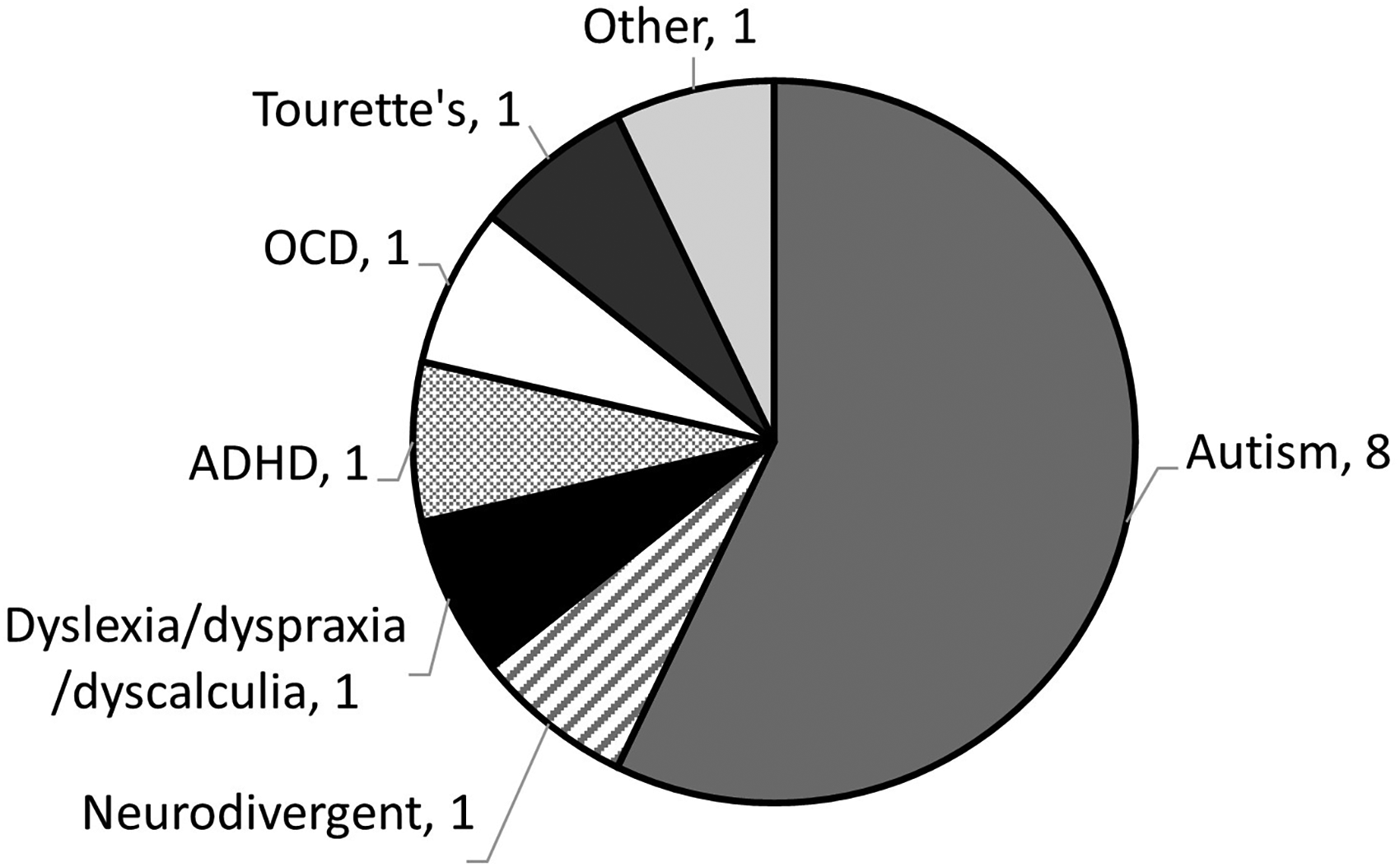
Neurodivergent populations studied in combined adult and child research (n = 8).
In contrast, there was more variance in neurominority group representation in the adult-focused research category (see Figure 6). Autism representation, still in the majority, was represented in 78% (n = 21) of the adult-focused research. The additional neurominority groups represented included a broad classification of neurodivergent (i.e., specific neurominority groups were not classified, such as in Budy, 2021; n = 9), ADHD (n = 12; e.g., Moore et al., 2021), dyslexia and other learning disabilities (n = 9), Tourette's (n = 2), obsessive compulsive disorder (OCD; e.g., Mellifont, 2021; n = 2), and rare inclusion of other groups such as mental health conditions and stroke (n = 5). Where participants were identified as multiply neurodivergent, for example, both autistic and ADHD (‘AuDHDer’; Bertilsdotter Rosqvist et al., 2023b, p. 3652), both groups have been reported in the data. It was outside the scope of this review to separate data into single minority group identification compared to instances of participants with intersecting neurodivergent identities. The general research category again contained majority autism focus (see Figure 7).

Neurodivergent populations studied in adult-focused research (n = 27).
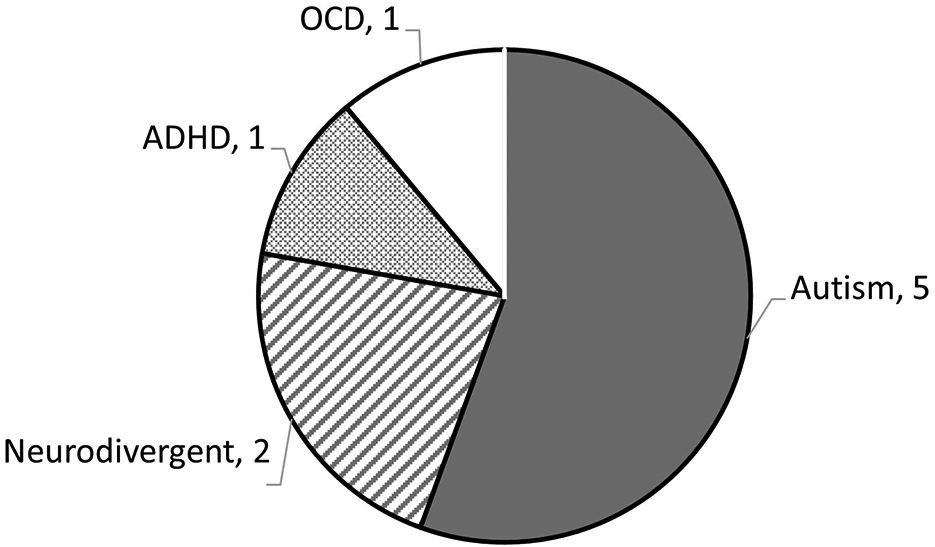
Neurodivergent populations studied in general research (n = 7).
Gender diversity
Gender representation across the total article yield was difficult to categorise, as nearly half the articles (n = 22) did not include reports on gender. For articles that reported on gender distribution for their neurodivergent participants, there was slightly higher representation of males than females. However, all adult-focused studies that reported neurodivergent gender in their data set (n = 12) had at least 25% female representation, and more than half (n = 7) of these adult-focused articles included female representation over 50% (e.g., Kenna, 2023). This distribution contrasts somewhat with child-focused studies and combined adult and child studies that included reports of gender. One of the child-focused studies (Day, 2022) reported female representation as less than 25% in their sample, as did 50% of adult and child combined studies reporting gender (n = 3; e.g., Ferenc et al., 2021). Across the total number of neurodiversity articles captured in this review, only eight (17%) included mention of non-binary gender and/or transgender in the data, with most of these articles (n = 6; 75%) being published 2021–2023, and only one of which was a study including children (Brilhante et al., 2021).
Research question 3: How is neurodiversity research being undertaken?
Research methods
Qualitative methods were dominant in neurodiversity research captured in this review, with 70% (n = 32) of the articles employing qualitative analyses. Across all articles, research methods commonly included interviews (n = 12), surveys (n = 12), review of content in blogs/newspapers/social media (n = 12), and ethnography (n = 12; see Figure 8). In this review, categorisation of ethnography includes traditional ethnography as well as autoethnography and collaborative autoethnographic methods. Of note, a sharp increase in adult-focused autoethnographic research was observed in 2023 publications (n = 6; e.g., Lewis & Arday, 2023). Some articles in this review have been recorded across two method categories in this data.
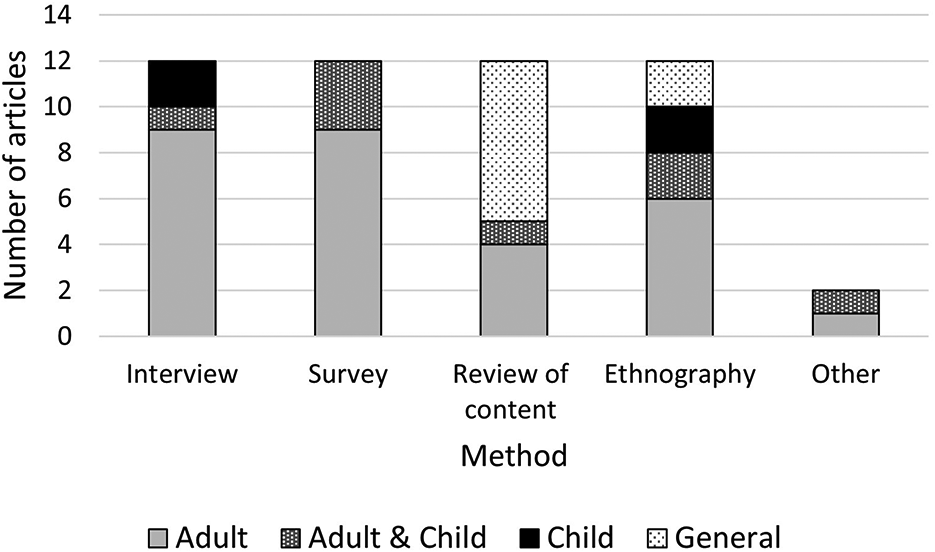
Research methods.
Source of data
Data generated about neurodiversity and/or neurodivergence referenced in the articles came from a variety of sources. Data generated directly from neurodivergent people (i.e., directly observed, surveyed, interviewed, or quoted) is indicated in this section as direct report. Data generated about neurodiversity or neurodivergence from other sources (e.g., parent, professional, or wider community member report) is designated other report. Where both direct and other sources were employed, both were included in the data (see Figure 9). Data captured in half of the child-focused studies was generated by both direct and other sources. Two of the child-focused articles, which featured adolescent participants and that were published more recently (Brilhante et al., 2021; Day, 2022), included data exclusively from direct participant report. The distribution of data source was similar in the combined adult and child research category, where six studies included a direct data source from child participants, consisting of child observations (Hart, 2014), and adolescent contributions (e.g., Ferenc et al., 2023b; Kapp et al., 2013), alongside five studies that included other sources of data (e.g., Ferenc et al., 2021). Adult-focused studies included considerably more instances of direct report (n = 21; 78%) than other report (n = 11; 41%). Only four of the 27 adult-focused studies (15%) did not include any direct report from neurodivergent adults in the included articles (Branton et al., 2023; Loiacono & Ren, 2018; McMahon et al., 2022; Richards et al., 2019). The general category featured majority other report (n = 6; 86%), with these articles mostly comprising reviews of content, such as in newspapers.

Source of data.
Research participation
To gain insight as to whether research was co-designed with one or more members of the neurodivergent community, review of the articles included noting whether it was stated the research team included a neurodivergent member or if there was other neurodivergent community involvement. Of the 46 articles included in this review, 27 research groups (59%) did not include a statement about researcher neurotype or neurodivergent community involvement. Of the 19 groups that referenced neurotype or community participation, 17 indicated they included at least one neurodivergent person as either an author (e.g., Bailey, 2023; Betts et al., 2023; Meads, 2022) or non-author member of the team (e.g., Angulo-Jiménez & DeThorne, 2019; Ferenc et al., 2023a). Two articles included positionality of research team members being either non-autistic (Orsini, 2012) or (implied) neurotypical (Karaminis et al., 2023; the latter noted involvement of parents of neurodivergent children in the team). There may have been other neurodivergent researchers across the included articles who chose not to disclose their neurotype. No mention was made of participatory research with neurodivergent children in any of the neurodiversity articles. In more recent articles, both the number of articles explicitly stating inclusion of neurodivergent team members rose substantially, as did the apparent level of neurodivergent contribution, for example, more recent articles included sole authorship from a neurodivergent person (e.g., Jacobs, 2023; Meinen, 2023) or an exclusively neurodivergent research team (e.g., Bertilsdotter Rosqvist et al., 2023b). Examples of ‘neuromixed’ (Bertilsdotter Rosqvist et al., 2023a, p. 408) research teams also featured, with this research group providing an explicit example of the possible benefit of neurotypical and neurodivergent people researching neurodiversity together.
Terminology used
Identity-first terminology was used frequently to describe neurodivergent people throughout the included articles (n = 24; 52%), for example, ‘autistic child’ (Bakan, 2014, p. 137) and ‘neurodivergent individuals’ (Hotez et al., 2023, p. 8; see Figure 10). This included two more recent articles featuring ADHD (Bertilsdotter Rosqvist et al., 2023b; Jacobs, 2023) which used an identity-first term – ‘ADHDer’ (Jacobs, 2023, p. 586). An outlier in the review data was Wright Stein et al. (2022) – being a recent article focusing on autistic children but using ‘with ASD’ (p. 5623). Authors sometimes explained reasons for using identity-first terminology throughout their articles, referring to personal preferences (e.g., Guberman, 2023; Meads, 2022) and reported preferences of (primarily) the autistic community (e.g., Shiloh & Lagasse, 2014). Only two articles included terminology preferences of child participants, being Kapp et al. (2013) and Angulo-Jiménez and DeThorne (2019).
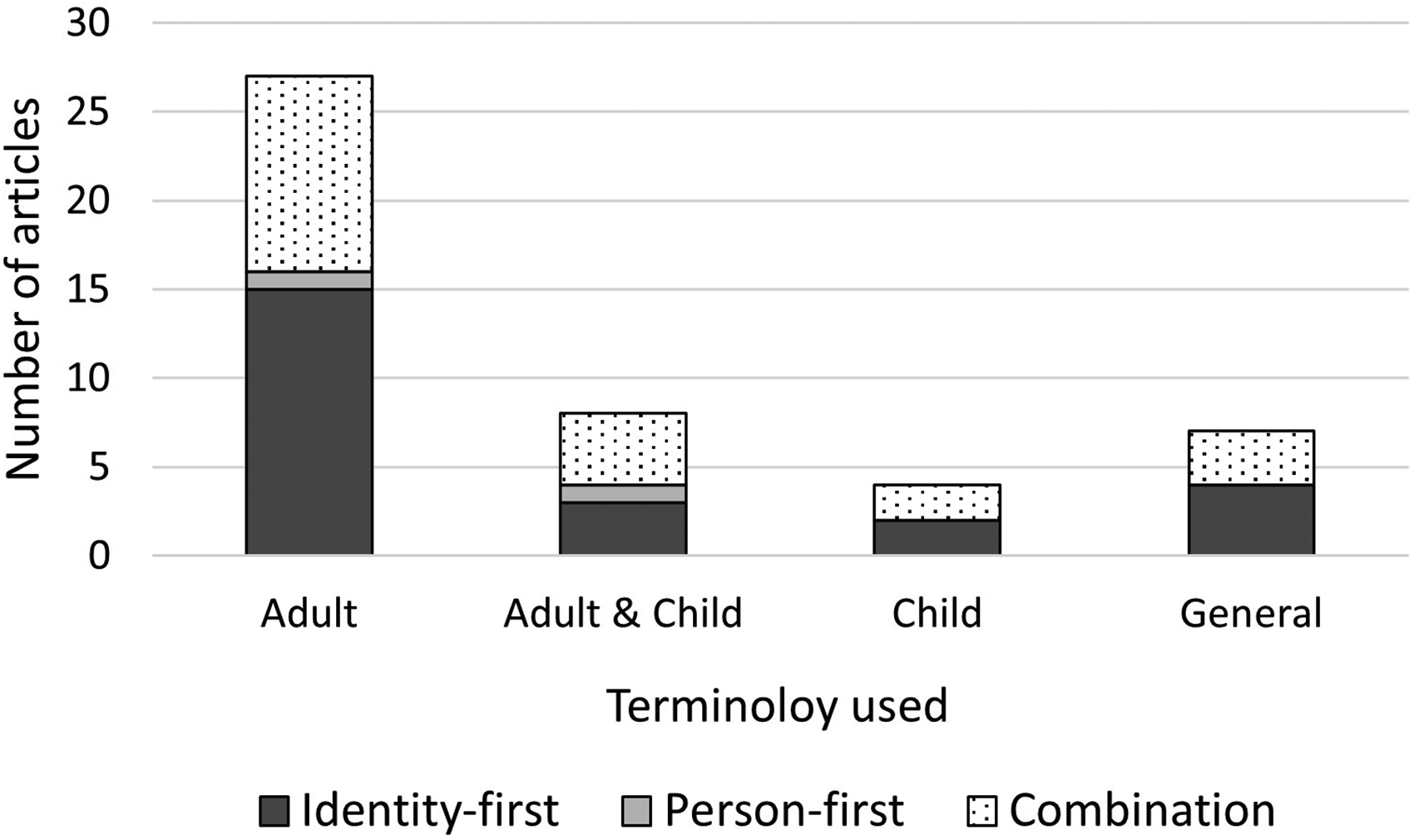
Terminology used.
Discussion
The aim of this review was to map the scope of empirical research where neurodiversity was deemed to be a central, explicit focus. The results and recommendations for future research are discussed in this section. Although several limitations present for this review (see Limitations section), particularly in relation to restriction of inclusion criteria to explicit mention of neurodiversity in study aims and/or investigation topic, the results provide an (albeit narrow) perspective to the trajectory of neurodiversity research. This can be used alongside broader research reviews and lived experiences of neurodivergent people to inform future neurodiversity research and impact how neurocognitive differences are perceived, understood, and supported. A summary of recommendations based on the current review results is provided in Table 4.
Summary of recommendations for future neurodiversity empirical research.

Research question 1: What is the focus of neurodiversity research?
Research topics
The results include a review of topics featured in explicit neurodiversity research across the four age-group categories. A notable finding was the prevalence of adult-focused topics, including workplace and higher education studies, but a dearth of research into child-focused topics such as early childhood and school education. Considering the growing awareness of the benefit of neurodiversity-affirming approaches in education (Saggers et al., 2023), explicit neurodiversity research should expand further to education topics. For example, there is scope for future research to investigate application of a neurodiversity lens to the support provisions provided for neurodivergent students, like studies captured in the current review conducted in higher education contexts (e.g., Budy, 2021). There is also scope for exploring alignment of neurodiversity-affirming practice with inclusive education priorities, such as a model presented by Rajotte et al. (2024) which was published outside the date range of the current review. Of note, child-focused research that narrowly missed inclusion in this review (e.g., where neurodiversity was deemed to be a peripheral, not central, focus) does exist and includes exploration of neurodiversity principles and related student supports. Examples include investigation of teaching practices grounded in neurodiversity (Hunt et al., 2022) and a study focus on student strengths in an early childhood context (Naples & Tuckwiller, 2021). Regardless, the current review highlights there is presently a more explicit focus on the neurodiversity concept in research topics relating to adults and adulthood, than for topics relating to children and childhood.
The results of this scoping review also demonstrate the rise in research exploring neurodiversity-aligned identity and wellbeing topics – especially in adult-focused research. This is both unsurprising and advantageous, considering the emphasis placed on identity in the neurodiversity paradigm (Baker, 2006; Sinclair, 1993) and an aim of neurodiversity-affirming support being to improve quality of life (den Houting, 2019). The results of this review, however, highlight there is a relative research gap in exploring identity perception for neurodivergent children aligned explicitly with the neurodiversity paradigm. Future researchers should seek to include children in neurodiversity-aligned research about identity and wellbeing. There is also scope in future neurodiversity research to further highlight considerations for identity where neurodivergence intersects with other minority groups, including those associated with gender and race. The results of this review indicate intersectionality is only a more recent inclusion to neurodiversity research (e.g., Egner, 2019) and scholars (e.g., Nair et al., 2024; Strang & Fischbach, 2023) have advocated for more focus on neurodiversity and intersectionality.
Research question 2: Who is being represented in neurodiversity research?
Low representation of children and childhood
Findings show growth in research that focuses explicitly on the neurodiversity paradigm appears to be driven by the rise in adult-focused research, not child-focused research, which instead has remained stagnant over time. These findings contrast with traditional autism research (for example), where research about children and childhood dominate (Howlin, 2021). While there have been justified calls for increases in adult-focused research (e.g., Doyle & McDowall, 2022), child-focused neurodiversity research must not be left behind. Including a focus on children and childhood in the rising production of neurodiversity research will help ensure future policy and practice is responsive to contemporary neurodiversity-affirming approaches relevant for all neurodivergent people, children included.
Narrow scope of represented populations
A further finding of this review is the narrow scope of child-focused neurodiversity research compared to adult-focused research. The majority focus on autism in research featuring children, compared to the wider representation of neurominority groups in adult-focused research highlights a need for more variety of neurominority groups to be included in research with children. This finding aligns with calls from Bertilsdotter Rosqvist et al. (2023b) for a more pronounced paradigm shift toward neurodiversity in the field of ADHD, and suggestions from Wilmot et al. (2023) that neurodivergent identity and wellbeing (for example) is under-investigated in the field of dyslexia. By increasing neurominority group inclusion in explicit neurodiversity research, there is increased scope for voices of more neurodivergent people to be heard.
Variety in future neurodiversity research should also extend to gender diversity. An interesting finding of this review, however, was the relatively equal distribution of gender in adult-focused research (for studies reporting on gender of neurodivergent people). This compares again to traditional autism research (for example), where female populations are reported to be under-represented (D’Mello et al., 2022). There remains scope for further balancing of gender in child-focused neurodiversity research, and more inclusion of non-binary and transgender participants across the board (Strang & Fischbach, 2023). Further, although not able to be analysed in this review due to limited detail provided in the included studies, it appears crucial that future neurodiversity research includes people who are minimally speaking, or who have an intellectual disability – the voices of whom appear to remain in the minority in the neurodiversity paradigm (den Houting, 2019). Neurodiversity research should also be more inclusive of people from different racial/ethnic backgrounds to expand neurodiversity scholarship beyond White populations (Nair et al., 2024).
Research question 3: how is neurodiversity research being undertaken?
Methods and source of data
Results highlight a range of qualitative methods (primarily) have been employed in neurodiversity research, with ethnography a notably common method employed across all age group categories. In particular, the recent inclusion of autoethnographic neurodiversity research, including collaborative autoethnographies, appeared a useful method for highlighting the voices of neurodivergent scholars directly (e.g., Guberman, 2023; Jacobs, 2023) and promotion of ‘neuromixed’ (Bertilsdotter Rosqvist et al., 2023a, p. 408) collaboration in this field. Autoethnographies are suggested to be an asset to the field of disability studies as they provide opportunity to empower marginalised voices, challenge dominant narratives, and invite connection and empathy (Doan & Darcy, 2025; Smith & Sparkes, 2007). As such, continued inclusion of this method in neurodiversity research appears worthwhile.
Alongside inclusion of ethnography in child-focused research captured in this review, the results demonstrate it is also possible for methods such as interviews to be employed with neurodivergent children, particularly adolescents (e.g., Brilhante et al., 2021; Day, 2022). However, there must be consideration for how interviews are designed and carried out in future research, especially with younger neurodivergent children, and this should include seeking to elicit perspectives beyond verbal answers (James et al., 1998; Lewis et al., 2024). Consideration for multi-modal approaches to data generation, for example, the Mosaic approach (Clark & Moss, 2011), is worthy of consideration for future child-focused neurodiversity research. By eliciting an individualised, multi-modal approach to data generation with children, like that presented by Lewis et al. (2024), there is increased scope for children's voices to be captured directly in research (Clark & Moss, 2011). This is needed, as the current review highlights neurodiversity research pertaining to child-focused topics such as education, is at times represented through sources other than neurodivergent children (e.g., Bailey, 2023).
Research participation and terminology
A further component of this review was exploration into research participation of neurodivergent community members. This was an important factor to investigate as advocates have called for neurodivergent voices to be a central facilitator of neurodiversity research (e.g., Dwyer, 2022; Pellicano & den Houting, 2022). Of note, recently published, adult-focused research captured in this review included several instances of neurodivergent co-authorship and other community involvement. This may indicate increased implementation of participatory research, although the degree of contribution was not always clear. A potential rise in research co-production again compares to more traditional autism research, where participatory research is in its infancy (den Houting et al., 2021). Continued efforts toward genuine co-production across the breadth of neurodiversity research is recommended, however, the format in which this is reported could be flexible – as is supported by this journal (Shah & Holmes, 2023).
Finally, the finding related to prevalence of identity-first terminology use in the included articles aligns with research demonstrating a preference for this terminology in the neurodiversity field (Bury et al., 2023). This also contrasts with traditional autism research, especially that aligned with the medical model of disability and the premise of normalisation (e.g., Lee et al., 2022). Of note, however, research citing community preferences has in the majority been conducted with autistic people, and adults specifically, not children (e.g., Bury et al., 2023; Keating et al., 2023). There is a research gap exploring terminology preferences of neurodivergent children, and scope for more researchers to be seeking the terminology preferences of their participants. Further, person-first terminology is still commonly employed in research comprising ADHD, OCD, and Tourette's communities. The recent academic articles captured in this review by Bertilsdotter Rosqvist et al., (2023b) and Jacobs (2023) are among the first to include identity-first terminology for ADHD, that is, ADHDer. Continued consideration for use of identity-first terminology in neurodiversity research is required, but this should accompany further investigation into terminology preferences, including those of children and people identifying with neurominority groups other than autism.
Limitations
Neurodiversity is a growing area of research and an evolving concept that influences how it is defined, researched, and applied in practice. While the current review is novel and has implications for future research, the recommendations made must be treated with caution for the following reasons: (a) narrow inclusion criteria applied; (b) subjective process used for determining neurodiversity as a central study theme; and (c) how neurodiversity is applied in research may not always be explicitly outlined or clearly apparent in articles.
The inclusion criteria for this review were restricted to studies deemed to include neurodiversity as a central, explicit focus. Specifically, following a series of trial searches, the search was restricted to approximations of the neurodiversity term and restricted to title, abstract, and key words/subjects. Inclusion criteria also required a definition of neurodiversity in the front matter of the article. As such, the review did not capture all academic work containing approximations of the neurodiversity term, nor did it include empirical studies of individual neurominority groups if our research team deemed neurodiversity was merely a peripheral or implicit focus of the study. Our team acknowledges the neurodiversity term and concept may feature in additional research not captured in this review. As an example, some research groups do not have resources to extend research studies of single neurominority groups to additional populations, and this may impact whether an explicit neurodiversity focus is stated in the article title and abstract. Consequently, this review does not encapsulate an all-encompassing picture of empirical neurodiversity research, rather, a snapshot highlighting trajectory of research where the neurodiversity concept has been included in the title, abstract, and/or key words/subjects and the term has been defined and stated an explicit focus of the study.
Further, restricting the criteria to English articles limits the breadth in research location of the studies and reduces the cultural reach of the results. Related to this, review of race/ethnicity of neurodivergent people featured in neurodiversity research should be a focus of future reviews. In addition, being a scoping review with the intent of mapping empirical neurodiversity research broadly, a review of study quality was not completed, nor was an interrogation into the conceptualisation of neurodiversity applied by the researchers. The latter is presented in a separate article by the same authors (McLennan et al., 2025). Different results and alternate conclusions may be drawn, should a review of study quality be completed in future systematic reviews of neurodiversity research or if other research groups make different decisions about what constitutes a study with a central focus on neurodiversity.
Conclusion
Although results and recommendations from this review must be considered with caution, there is evidence that there is recent growth in empirical research where neurodiversity is a central, explicit focus. This growth is due primarily to the rise in adult-focused research, which is much more prevalent than child-focused research with neurodiversity an explicit theme. Common topics investigated include perception of autism through a neurodiversity lens, identity and wellbeing topics, and adult-focused topics like workplace and higher education. There is a dearth of explicit neurodiversity research into topics of childhood, such as school education, which is needed in future research to better inform neurodiversity-affirming support provisions in this sector. Further examination and recommendations are provided relating to the narrow scope of included neurodivergent populations, alongside recommendations for methods and design of future research, such as hearing directly from neurodivergent people, continued focus on research participation, and terminology use in articles.
Supplemental Material
sj-docx-1-ndy-10.1177_27546330251337874 - Supplemental material for Neurodiversity: A scoping review of empirical research
Supplemental material, sj-docx-1-ndy-10.1177_27546330251337874 for Neurodiversity: A scoping review of empirical research by Helen McLennan, Rachel Aberdein, Beth Saggers and Jenna Gillett-Swan in Neurodiversity
Supplemental Material
sj-docx-2-ndy-10.1177_27546330251337874 - Supplemental material for Neurodiversity: A scoping review of empirical research
Supplemental material, sj-docx-2-ndy-10.1177_27546330251337874 for Neurodiversity: A scoping review of empirical research by Helen McLennan, Rachel Aberdein, Beth Saggers and Jenna Gillett-Swan in Neurodiversity
Footnotes
Acknowledgements
The authors acknowledge the work of two Queensland University of Technology librarians who contributed to the search strategy.

Funding
The first author received financial support from an Australian Government Research Training Program Scholarship. The second author received financial support from the first author's HDR individual support funds.
Declaration of conflicting interests
The authors declared no potential conflicts of interest with respect to the research, authorship, and/or publication of this article.
Supplemental material
Supplemental material for this article is available online.
References
Supplementary Material
Please find the following supplemental material available below.
For Open Access articles published under a Creative Commons License, all supplemental material carries the same license as the article it is associated with.
For non-Open Access articles published, all supplemental material carries a non-exclusive license, and permission requests for re-use of supplemental material or any part of supplemental material shall be sent directly to the copyright owner as specified in the copyright notice associated with the article.
