



Abstract
Interpretations of the goals and meaning of the neurodiversity movement (NDM) have varied within scholarly, advocacy, and general public communities, as it has become more widely discussed since its original development. The current study focuses on understanding the public's opinions on the NDM and their perceptions of its goals. The research team conducted a thematic analysis of open-ended text responses by 99 adults. Most participants approved of the movement, though many also offered critiques. The most frequently endorsed subthemes about the goals of the movement included acceptance, utilizing a diversity framework, discussing society, and empowering the neurodivergent community through the expansion of opportunities. The variety within responses demonstrates the range of definitions of the NDM, despite some efforts within academic or advocacy circles to promote a unified, top-down definition. Public interpretations of the NDM have implications for informing attitudes and decision-making toward disability advocacy, treatment-seeking, and collective identity development.
Lay Abstract
The neurodiversity movement (NDM) began in the 1990s in autistic communities. However, more people in academic, advocacy, and general communities have been discussing it more recently. Many experts have proposed definitions of neurodiversity and the NDM. It is also important to understand how everyday people think about the NDM because these conceptualizations may differ from expert definitions. In this study, we wanted to understand (1) how people from the general American public defined the goals of the NDM, and (2) how they felt about the NDM. We analyzed written responses to online surveys from 99 participants. We categorized their responses into themes and subthemes. People in our study were most likely to say that the goals of the NDM involve acceptance, using a diversity framework, society, and empowerment of the neurodivergent community through the expansion of opportunities. Most people in our study approved of the NDM, but they also had some critiques. These critiques included concerns that the NDM is too extreme or excludes the perspectives of people with severe disabilities or their caregivers. This study shows how people have diverse definitions and opinions of the NDM, but that they have some commonalities. Some details of these definitions or opinions contradict how experts would define the NDM. However, these perspectives from the public are important because they reflect what people actually believe in practice. These beliefs and attitudes could influence how people relate to disability communities and identities, as well as how people make decisions about treatment or supports.
Neurodiversity Movement
Arising collectively from online autism self-advocacy communities in the 1990s, as a reference to the need to respect and accept neurological diversity, the term neurodiversity has since risen in popularity, leading to a wide range of interpretations and definitions (Blume, 1998; Botha et al., 2024; Chapman, 2020; Singer, 1998). Some prominent advocates within the contemporary or historical neurodiversity movement (NDM) have put forth their own definitions. For example, Singer (n.d.), an influential figure in the historical development of the NDM, defines neurodiversity as “A biological truism that refers to the limitless variability of human nervous systems on the planet, in which no two can ever be exactly alike due to the influence of environmental factors,” with the NDM being “a continuously evolving public discourse, discussion, or debate that aims to improve the status of Neurominorities.” Walker (2014), as both a scholar and contemporary NDM advocate, also proposes her own definitions and recommendations for “proper usage” that purports that the NDM “is a social justice movement that seeks civil rights, equality, respect, and full societal inclusion for the neurodivergent.” Scholars have defined the NDM in terms of an acceptance-focused identity politics approach to advocating for the rights of neurodivergent–usually autistic–individuals, based in part out of the influence of the Social Model of disability (Bagatell, 2010; Baker, 2006; Fung & Doyle, 2021). Additionally, some scholars and advocates have critiqued previous scholarly and popular representations of the NDM or its relationship to the social model of disability as ill-informed and incomplete (Bailin, 2019; Ellis, 2023). Thus, the specifics of the definition of neurodiversity and the NDM remain a “moving target” that evolves due to the interactions between the people who define it and the contexts they live in (Chapman, 2020).
In practice, there is no singular definition of neurodiversity, despite efforts to propose one. There are merits to taking a prescriptive approach to defining the NDM, such as improving communication and clarity. However, it is also important to take a descriptive approach to investigate how everyday people conceptualize the NDM in practice. This approach parallels folk psychiatry, which investigates laypeople's concepts of mental illness—regardless of their scientific accuracy—because these concepts have real-world consequences and reveal aspects of the culture in which they are shaped (Haslam, 2005). For example, lay beliefs about the causes of mental illness correlate to the types of treatments individuals would recommend (Pattyn et al., 2013). Although folk psychiatry focuses more on the public's beliefs about how the mind or mental illness works rather than beliefs about advocacy movements such as the NDM, the lens of folk psychiatry highlights the importance of understanding public perceptions of phenomena that may diverge from top-down definitions. This lens is particularly salient given how perceptions of the NDM may include beliefs about the nature of autism, ADHD, or disability in general. Thus, perceptions of the NDM likely influence opinions and decision-making regarding issues of relevance to the NDM, such as interventions, disability disclosure, and well-being. For example, greater self-reported support for the NDM is associated with reduced stigma toward autistic characteristics (Kim & Gillespie-Lynch, 2023), and endorsement of the neurodiversity framework is negatively correlated with stigma against autism, ADHD, and dyslexia (Schuck et al., 2024).
Literature examining neurodiversity-related attitudes does not fully explore how the public defines the NDM. Schuck et al. (2024) utilized a quantitative scale based on academic literature, first-person accounts, and expert feedback, to measure individuals’ level of endorsement of the neurodiversity framework, while providing a definition of neurodivergent in the questionnaire prompt. Although familiarity with the NDM was positively correlated with its endorsement using the scale, it is possible that individuals held personal definitions of the NDM that differed from the scale or were unfamiliar with NDM but still would have endorsed its tenets. Alternatively, Kim and Gillespie-Lynch (2023) utilized a single-item measure of agreement with the NDM. This type of measurement allows for participants to self-report based on their own definitions of the NDM, though the content of their particular definitions is unknown. Although both articles provide valuable insight into how neurodiversity-affirming attitudes relate to stigma and inclusion, they do not specifically address what people mean when they say they endorse the NDM. This can be complicated by the emergence of “neurodiversity lite,” the use of neurodiversity rhetoric within academic or service provision contexts without understanding or implementing the values behind the rhetoric (den Houting, 2019). Additionally, different approaches within the NDM, such as liberal rights-based approaches, Neurodivergent Marxism, and neuro-Thatcherism, all use the terminology of the NDM and aspects of values from the NDM while holding different assumptions and seeking different goals (Chapman, 2023, 2024).
The closest approaches to the question of individual meanings ascribed to the NDM come from Kapp et al. (2013) and Dwyer et al. (2024). Kapp et al. (2013) coded responses to the question, “What is the neurodiversity movement in your words?” in terms of positive or neutral, mixed, or negative valence, though further qualitative analyses of definitions were not explored. More recently, Dwyer et al. (2024) used content analysis to examine definitions of the NDM, especially as it relates to models of disability, amongst people with a connection to the autistic community. Although this serves as a crucial step for understanding how individuals conceptualize the NDM, Dwyer et al. (2024) focus on people with a connection to the autism community, rather than other neurodivergent populations. Additionally, unlike these previous works, we explicitly ask participants their opinion of the NDM, leading to distinct insights from participants.
Current Study
Given the range of definitions of the NDM and its increasing public prominence, it is important to understand how the general public understands the NDM, as such definitions may differ from expert-led definitions. The present study utilizes thematic analysis of responses to open-ended questions from an online survey to better understand (1) how individuals define the goals of the NDM and (2) their opinions of it.
Methods
Procedures
Data were collected as part of a larger-scale development study about the NDM (VanDaalen et al., 2025). Adult participants (i.e., at least 18 years of age) were recruited through social media and both cross-disability and autism-focused disability organizations. Only participants living in the United States were used due to the possibility of culturally-specific conceptualizations of neurodiversity. After informed consent, eligible participants (N = 508) completed demographic questions and scales related to the larger study. Additionally, participants were asked about their level of familiarity with the NDM. For respondents who reported that they were “somewhat” (n = 163) or “very” familiar (n = 126) with it, participants were asked:
How would you define the goals of the neurodiversity movement? What is your opinion of the neurodiversity movement?
The present study considers respondents’ responses to the above questions. All procedures were approved by the Arizona State University Institutional Review Board.
Thematic Analysis
Incorporating aspects of consensual qualitative analysis (Hill et al., 1997), we conducted a thematic analysis on participant responses. We chose this method due to its ability to be applied to a large dataset and our aim of understanding general patterns across populations. We utilized an inductive approach to analysis due to our interest in understanding how members of the public conceptualize the NDM, rather than a top-down focus using existing definitions.
Utilizing steps from Braun and Clarke (2006), three research assistants (RAs) independently reviewed responses to develop initial codes. Next, we compiled their proposed codes into one list, and these three individuals coded all participant responses independently. Then, for responses that did not have 100% agreement across coders, we engaged in consensus building through a re-examination of responses and codes independently by four team members. These individuals then discussed each code in question to reach a full consensus, as well as to synthesize data into broader themes.
We engaged in reflexive practice in order to understand the aspects of lived experience and philosophical viewpoints that may have influenced data analysis. Our team consists of both neurodivergent and neurotypical members with psychology backgrounds. There was a variety of representation in terms of race/ethnicity, gender identity, and sexual orientation, as well as experience, knowledge, and attitudes toward the NDM. We discussed preconceived beliefs and biases about the research content and power dynamics within our team.
Results
Participant Characteristics
A total of 99 individuals provided substantive responses to at least one qualitative question. See Table 1 for demographic information. Ages ranged from 18 to 70, with a mean of 35.66 (SD = 13.50). Most were middle to upper-middle class, with a mean of 5.88 (SD = 1.98) on a 10-point scale of socioeconomic status (Adler et al., 2000). Among those who self-identified as disabled, the most commonly endorsed disabilities were autism (n = 56), ADHD (n = 10), depression (n = 10), anxiety disorders (n = 9), and learning disabilities (n = 7). When asked directly about different conditions and neurodivergent identity labels, a larger number of participants endorsed having such identities. See Supplementary Material for further details.
Demographic Characteristics (
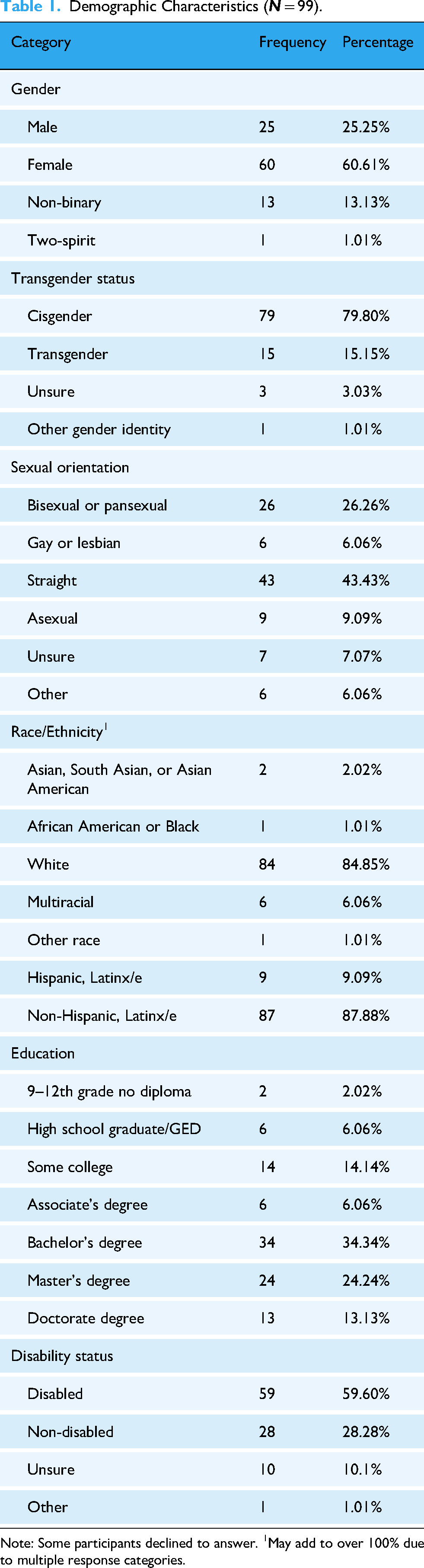
Note: Some participants declined to answer. 1May add to over 100% due to multiple response categories.
Goals of the NDM
We identified six main themes and 18 subthemes regarding participant beliefs about the goals of the NDM (see Figure 1). The most frequently endorsed subthemes included acceptance, diversity framework, society, and empowering the neurodivergent community/expansion of opportunities. See Supplementary Table 1 for frequencies and quotes. Subthemes were not mutually exclusive within their categorization into broader themes due to the high overlap between themes, as well as the different ways that individuals utilized the concepts within each subtheme.

Diagram of Goals of the NDM.
Biological Terms
Biological terms included references to elements of biology or neurology, such as brain development, genetics, and evolution. These terms were frequently used to frame neurodivergent conditions as differences in brains or neurology. Some individuals referred to particular diagnoses such as autism or ADHD, whereas others spoke more broadly about biological or neurological differences.
Framing of Disability and Diagnosis
The use of biological terms was related to the theme of Framing of disability and diagnosis (“framing”). Respondents endorsing this theme expressed that the NDM seeks to reframe disability and/or diagnosis in a way that may redefine disability and normality, reframe the meaning of diagnostic labels–especially autism and ADHD–and situate disability within a diversity framework rather than the medical model. For example, one commonly utilized redefinition was viewing neurodivergent conditions as “a difference, not a disorder.” By recategorizing neurodivergent conditions as differences, many respondents sought to portray them in a more positive light. Other respondents clarified that, “a disability or difference is not inherently negative” and that neurodivergent conditions can still be considered to be disabilities. Although these respondents depathologized neurodivergent conditions, they continued to view such conditions within the realm of disability and recognize the difficulties faced by neurodivergent individuals. These difficulties were often discussed in accordance with the social model of disability. Despite removing neurodivergent conditions from a medical model that promotes treatment and cure, many respondents still used biological terms as a description of the conditions. Instead of using such biological terms within a medical framework, respondents used these terms in their justification of societal changes to promote acceptance or accommodation of neurodivergent individuals. For example, one respondent wrote, “Society must change to allow all people to have meaningful lives. Having a brain that works differently than average is not ‘worse’ it's just different…” Such responses indicate a belief in neurodivergence as a form of neurological difference but also indicate that the NDM seeks to improve the quality of life for neurodivergent people through societal change rather than individual treatment. Another manifestation of reconceptualizing disability and neurodiversity came in the form of drawing parallels between the NDM and other civil rights movements. Some respondents drew parallels between neurodivergent conditions and other sociodemographic characteristics, such as sexuality or race. These responses framed neurodivergent conditions as aspects of identity that should be respected and accepted, as part of social justice efforts (see “Justice Oriented Framework” section).
Many respondents who discussed framing referred to ideas about normality. Some respondents positioned neurodivergent conditions as “normal human differences in worldview and behavior.” Such respondents viewed the NDM as a movement that seeks to include neurodivergent conditions under the umbrella of normality. Other respondents critiqued the construct of normality and its application to individuals, reporting statements such as, “categorizing individuals in a binary system of ‘normal’ and ‘abnormal’ constitutes a violation of diverse personhood and experiences that is inherently oppressive.” Thus, instead of seeking to subsume neurodivergent conditions under normality, these respondents believed that the NDM serves to overthrow or critique a system that categorizes individuals as normal or abnormal. Both interpretations portray the NDM as one that grapples with the pathologization of disability and seeks to empower disabled individuals.
Reference to Community or Society
Respondents frequently made references to community or society (“references”) in their discussions of the goals of the NDM, whether with respect to framing or to other ideas. Although community and society were coded separately, they frequently coincided due to the social interconnectedness implied by both terms. Some respondents discussed the neurodivergent community specifically, whereas others discussed community in broader terms or discussed integrating neurodivergent individuals into mainstream communities. When discussing society, respondents frequently referred to goals related to creating a more just or accepting society or made reference to the social model of disability. Therefore, references may also be considered to fit within perceived objectives, but may not be completely explained by it.
Perceived Objectives
Many respondents described the goals of the NDM in terms of several perceived objectives, including empowering the neurodivergent community and expansion of opportunities (“empowering”), acceptance, community, justice, education, safety of neurodivergent individuals (“safety”), society, equality, accommodation, focus on strengths (“strengths”), and contexts. Responses that referred to empowering included educating others about neurodiversity and creating safe spaces for neurodivergent individuals. Empowerment includes both those within the neurodivergent community, as well as empowering those outside of the community to advocate alongside them. Sometimes specific opportunities were mentioned (e.g., “create more workplaces that will hire neurodiversity…”), whereas other respondents discussed these more broadly. Another common and related objective was acceptance. Responses within the acceptance subtheme focused both on self-acceptance and acceptance of neurodiversity by society at large. Some respondents differentiated acceptance as a desired goal that promotes a positive integration into society, rather than a more neutral stance toward neurodivergence. For example, one participant specified promoting “acceptance (not tolerance or awareness, acceptance!!) of neurodivergent people…” Another aspect of acceptance included the practice of acceptance toward differences rather than changing neurodivergent individuals to fit societal norms. This may take place at either a clinical level or at a broader societal level.
A related goal was accommodation of neurodivergent individuals, either in general or in specific settings, such as school or work. Responses that discussed accommodations reported that the NDM sought to increase access to accommodations or to make them more socially acceptable. Responses about the perceived objectives of the NDM referred to community and society. Such subthemes sometimes discussed these contexts with respect to building community or improving society to be more accepting or accommodating.
Another perceived objectives subtheme includes a discussion of context, such as school or work. Such contexts provide examples of where the objectives of the NDM can be implemented. Some responses did not mention a specific context but referred to contextual factors within the objectives of the NDM by discussing “legal/structural ways” of promoting acceptance of neurodivergent individuals in addition to interpersonal ones. Thus, discussion of contexts indicates that for many respondents, one goal of the NDM is to make either systemic or practical changes with respect to common challenges faced by neurodivergent individuals, rather than solely focusing on interpersonal acceptance or conceptual changes in disability definitions.
Justice also emerged as a subtheme. This subtheme involves action to create equality, equity, or other justice-oriented outcomes, such as fighting stigma or improving society. Some responses explicitly mentioned justice, but most responses within this subtheme implicitly referred to justice-oriented ideals by discussing related terms, such as rights-based frameworks. Related to justice was the equality subtheme. Responses within the equality subtheme regarding perceived objectives of the NDM centered on the promotion of equality between neurodivergent and neurotypical members of society in terms of practical opportunities and accommodations, as well as attitudes regarding acceptance.
Another perceived objective is the promotion of safety. Although this subtheme was endorsed less frequently than equality or acceptance, it fit similar ideas regarding concern for the well-being of neurodivergent individuals due to stigma or discrimination. For example, one respondent wrote that one goal of the NDM is to, “protect neurodivergent people (especially children) from psychological and physical harm or abuse.” Other respondents made broader remarks about safety that referenced societal attitudes in general.
Many respondents discussed strengths as a perceived objective. This strengths-based focus is similar to the theme of framing due to their shared focus on emphasizing strengths rather than deficits of neurodivergent individuals. For example, one respondent wrote that one goal of the NDM is “to disseminate the view that neurodiversity is valuable, valid, and even, essential to our survival as a species.” Other responses indicated specific domains of strength, including “positive contributions,” “great skills,” and “pattern recognition.” Responses within the perceived objectives theme emphasized how strengths is a goal in and of itself of the NDM. However, some respondents framed strengths as a mechanism for achieving objectives of the NDM, to be discussed in that section.
Finally, the subtheme of education was a perceived objective. This subtheme included education about disabilities, as well as education about accepting neurodivergent individuals. Therefore, many respondents who discussed acceptance also discussed education. Other individuals discussed education in a broad sense, without adding additional context regarding the aims or scope of this education. Like respondents who discussed strengths within perceived objectives, respondents who discussed education as a subtheme within perceived objectives discussed this theme in terms of how education is a goal in and of itself. However, many individuals also discussed education as a mechanism for achieving objectives of the NDM.
Mechanisms for Achieving Objectives
In addition to the objectives described above, many respondents described proposed mechanisms for achieving objectives (“Mechanisms”). Mechanisms included strengths, contexts, acceptance, accommodation, and education. Notably, all of these subthemes were also discussed within perceived objectives. However, depending on the respondent, some individuals viewed the same constructs as either mechanisms or objectives of the NDM. For example, strengths can be used to achieve goals of acceptance, empowerment, accommodation, equality, and justice with respect to neurodivergent individuals. To illustrate, one respondent wrote that the goals of the NDM are “to have both those on the autism spectrum and those around them learn to understand and accept their differences and appreciate their strengths.” In this respect, this respondent utilized strengths as a basis for acceptance and empowerment. Likewise, acceptance was discussed by some respondents as a means of achieving societal change or improved well-being of neurodivergent individuals. For example, one respondent wrote that the goals of the NDM are to “create understanding and acceptance of neurodivergent people in order to improve the quality of life for all people.” In this way, acceptance serves as a means to an end, with the end being improved quality of life for all individuals, including neurodivergent people. Similarly, many respondents framed education as a means of achieving ultimate goals of the NDM. For example, one respondent wrote that the goals of the NDM are “increasing public awareness and understanding of neurodiversity with the goal if [sic] improving public acceptance and decreasing fear and stigma of neurodiverse people.” Therefore, education serves as a mechanism of achieving the ultimate goals of improving acceptance and decreasing stigma.
Justice-Oriented Framework
The goals of the NDM, both in terms of its perceived objectives and mechanisms may be subsumed within a more general justice-oriented framework that addresses issues related to justice, stigma, equality, and diversity framework. This framework combines aspects of the perceived objectives and mechanisms with aspects of framing and the subtheme of stigma. Stigma referred to discussions of issues related to stigmatizing views of neurodivergent and disabled individuals. Stigma emerged as either an implied or explicit construct with respect to pursuing justice, promoting acceptance, advocating for valuing and humanizing neurodivergent individuals, and redefining disability. For example, many respondents cited “decreasing fear and stigma” as important components, amongst others, of the NDM. When combined with a focus on justice and equality through a diversity framework, the justice-oriented framework of the NDM seeks to decrease stigma and promote a more just and equal society through the revaluation of neurodivergent conditions as valuable aspects of human diversity.
Opinions About the NDM
Amongst responses about opinions of the NDM, we identified three main themes and 16 subthemes (see Figure 2 and Supplementary Table 2). The most frequently endorsed subthemes included being in favor of the NDM, viewing it as necessary and/or important, viewing it as important but bothersome (IBB), and discussing acceptance.

Summarized Opinions of the NDM.
Approval or Disapproval of NDM
When asked about their opinions of the NDM, individuals often cited their feelings of approval or disapproval. Of these participants, the majority voiced that they were generally in favor of the NDM, often citing subthemes described in the Reasons for Agreement. Although many individuals cited overall positive feelings and agreement with the movement, a significant subgroup of them discussed both positives and negatives, under the subtheme IBB. Individuals in this category viewed the NDM as having overall positive goals, but they had critiques about the limitations of its philosophy or the attitudes displayed by some advocates. These individuals cited both Reasons for Agreement as well as Reasons for Disagreement in their responses but ultimately viewed the movement as promoting important ideals. Finally, a minority of participants voiced overall disapproval of the NDM, citing subthemes within the Reasons for Disagreement theme.
Reasons for Agreement
Individuals who endorsed an agreement with the NDM reported that they found it to be necessary or important, noted its novelty, and discussed themes of community, justice, education, acceptance, expansion of opportunities/access, awareness, and stigma and discrimination. Many of the subthemes within Reasons for Agreement overlap with those endorsed when describing NDM goals, such as justice, stigma, acceptance, and education. Thus, individuals’ perceptions of the goals of the NDM likely influenced their levels of approval, or vice versa. Other times, respondents provided an overall indication of agreement without explanation for their rationale. However, the high endorsement of necessary or important, acceptance, and awareness indicate that for the most part, individuals who agree with the NDM are likely to view it as promoting acceptance and awareness of neurodivergent individuals and their needs, which they believe is an important goal. Promoting acceptance or awareness may involve education, building community, and fighting stigma, both within oneself and amongst others. Additionally, some individuals framed the movement's importance in terms of its importance to society, whereas others defined its importance with respect to one's personal well-being or identity.
Reasons for Disagreement
Individuals who endorsed disagreement with the NDM provided critiques related to extremism, ignorance of the disabling and severe aspects of the autism spectrum, ignorance of family/caregiver perspectives, and overemphasis on autism. Critiques related to extremism focused either on the tactics and proponents of the movement or on the ideas promoted by the movement itself. For example, extremism-related critiques that focused on the tactics or proponents of the NDM cited concerns related to “the division, anger, personal attacks on advocates, and certain extremism views that some neurodiverse individuals and groups display.” Extremism-related critiques that focused on ideas within the NDM tended to express concerns regarding “unrealistic” portrayals of autism and neurodivergent conditions while being closed to “other perspectives.” Extremism-related critiques varied in terms of how broadly respondents characterized the movement. Some respondents viewed the extremism with respect to a small portion of neurodiversity advocates, whereas others viewed the NDM overall as too extreme.
Related to extremism are critiques that characterize the NDM of ignoring the disabling or severe aspects of autism and of ignoring the perspectives of family/caregivers of disabled individuals with high support needs. Many respondents indicated that the NDM does not adequately address the needs of nonspeaking autistic individuals or individuals with co-occurring conditions, in contrast to their belief that the NDM is potentially beneficial to people with “mild autism” who can be accepted “as a quirky variant.” Such respondents indicated that the NDM erases the perspectives of autistic individuals who are in favor of a cure or treatments, “silences the voices of families caring for severely autistic children,” and “comes from people who don't see their own privilege.” Some respondents disagreed with the perspective often endorsed by neurodiversity advocates that neurodivergent–especially autistic–individuals do not need a cure, and instead stated that treatment or cure may “improve their quality of life.” Additionally, some respondents advocated “to continue to research a cure to autism” because individuals with “severe low-functioning autism…can't communicate and may be in pain or distress.” At the same time, this respondent proposed that “any cure or therapy should be optional and on an informed consent basis, and if someone doesn't want it, their decision must be respected and they shouldn't be judged.” Thus, not all critics of the NDM wholeheartedly endorsed focusing on curing or treating autism but instead framed these efforts as an option for improving quality of life. Other respondents indicated that ignoring the disabling aspects of neurodivergent conditions through redefining them would lead to negative consequences in practical terms, such as insurance coverage and eligibility for support services. Thus, they raised concerns that promoting the NDM may inadvertently decrease access to care or resources. Finally, some critiques discussed how the NDM overemphasizes autism in its focus. Sometimes this critique was framed in a way that endorsed the movement (e.g., “I like it and wish that it more often mentioned other brain differences besides autism”), whereas others listed it amongst other critiques. Therefore, this critique either illuminates the hidden potential of this movement or portrays how it is too limited in scope.
Discussion
The present study highlights the ways in which the American public conceptualizes the NDM in terms of their general opinions and beliefs about its goals. Of the larger participant pool, approximately 56.89% of individuals reported that they were at least somewhat familiar with the NDM, which falls within the 42.7–75.8% range reported by Kapp et al. (2013), but less than the 95.6–98.9% range reported by Dwyer et al. (2024) in their sample of individuals with a connection to the autistic community. Although the NDM has increased in popularity since the 2013 study (Ellis, 2023), public awareness of the movement is limited to particular contexts. Amongst study participants, individual definitions and opinions were multifaceted. However, several common themes were observed.
Goals of the NDM
Many individuals characterized the NDM as a reframing of disability and diagnosis—especially autism—in a more positive or neutral lens rather than a pathologizing one, while also understanding the biological differences that neurodivergent conditions may encapsulate. Such characterizations are consistent with scholar- and advocate-led definitions of neurodiversity that center biological framings and terminologies—as well as other research with members of the public with relationships to the autistic community (Dwyer et al., 2024)—but unlike medical models of disability, view such biological differences as neutral or positive (Blume, 1998; Fung & Doyle, 2021; Schuck et al., 2024; Singer, n.d.; Walker, 2014). Some scholars (e.g., Bumiller, 2008; Ortega, 2009) have noted or critiqued the use of biological essentialism implied in such definitions, whereas others note that such biological essentialism may serve as strategic means of engaging with dominant narratives of autism in society and within medicine, rather than a wholehearted endorsement of essentialism (Ellis, 2023). Such emphasis on biology is not used in service of the medical model of disability. Instead, it is reframed in terms of appealing to nature, as well as resisting psychologizing narratives about the causes or treatment of disability, which is especially relevant in the history of autism (Bumiller, 2008; Dekker, 1999; Meyerding, 1998). Indeed, some of Dwyer et al.'s (2024) participants spoke of neurodivergence as a “naturally-occurring” difference within human neurology–though Dwyer (2022) articulated disagreement on this point. Like those in Dwyer et al. (2024), many participants explicitly referred to autism, consistent with the historical roots of the NDM and how it continues to be represented in the media and scholarly texts (Botha et al., 2024; Dekker, 1999). Therefore, many participants agreed with the framing of autism, disability, and the use of biological terms that tend to be portrayed by experts in the field of neurodiversity.
In addition to reframing disability, many participants discussed the goals of the NDM in terms of a justice--oriented framework that promotes empowerment, expansion of opportunities for neurodivergent individuals, acceptance, education, safety, equality, respect for accommodations, a focus on strengths, and/or societal or interpersonal change in various contexts. Such goals are consistent with expert definitions of the NDM that emphasize the strengths of neurodivergent individuals and the need for civil rights, societal inclusion, equal opportunities, and accommodations for neurodivergent individuals (Fung & Doyle, 2021; Graby, 2015; Kapp, 2020; Walker, 2014). Consistent with the social model of disability, these goals focus on changing societal attitudes, norms, and practices rather than the neurodivergent individual, in order to improve accessibility and inclusion. Such perspectives also note the role of society in disabling neurodivergent individuals, separate from the need to reform society, as also seen in the respondents in Dwyer et al. (2024). Some individuals discussed school or work as specific settings in which to promote neurodiversity-affirming practices, which is consistent with Schuck et al.'s (2024) scale. Therefore, as in many expert- and public-driven definitions of NDM (Dwyer et al., 2024), many individuals’ definitions of the goals of the NDM go beyond the framing of disability to describe how such framing may contribute to societal change and improved quality of life for neurodivergent individuals.
Although many definitions included the above-stated components that are consistent with expert-driven definitions, it is important to note that individual definitions varied in comprehensiveness. The majority of responses did not include all of the identified subthemes, and many focused on specific aspects of the NDM while ignoring others. For example, many responses only focused on certain elements of the justice-oriented framework, such as acceptance or education, while not including other elements like biological terminology or redefining disability. Other participant definitions contradicted expert perspectives. For example, one participant wrote that the goal of the NDM is “refusing to view autism as a disability,” which is not congruent with how many scholars and activists define it (Ellis, 2023). Thus, the goals of the movement as defined by members of the public center on common themes, but the interpretation may be fragmented or inconsistent.
Agreement and Disagreement with the NDM
Given the justice-oriented framing endorsed by many individuals, it makes sense that many of these same individuals agreed with the movement overall and viewed it as necessary and/or effective at meeting its goals. This is consistent with the investigation by Kapp et al. (2013), which coded 80.5% of participant descriptions of the NDM as either positive or neutral, with 3.4% as mixed and 1.8% as negative in valence. Therefore, amongst individuals sampled who already knew about the NDM, the majority agreed with its goals.
Reasons for disagreement with the NDM reveal perceptions that many individuals may hold of the goals or inadvertent consequences of the movement. Participants’ main critique of the NDM was that they believe it ignores the perspectives of individuals who are highly affected by their disabilities, such as nonspeaking individuals, people with co-occurring conditions, and people with “severe” disabilities. Such critiques are consistent with those noted in the literature (Ellis, 2023; Fung & Doyle, 2021; Jaarsma & Welin, 2012; Ortega, 2009; Russell, 2020). Given that family members often serve as caregivers for disabled individuals, the aforementioned critiques are congruent with a related critique from some participants that they believe the NDM does not take into account family and caregiver perspectives. This critique may also reflect the historical roots of the autistic self-advocacy movement that served as a response to parent-led movements (Pripas-Kapit, 2020). Neurodiversity advocates have argued that the NDM includes nonspeaking individuals, individuals with intellectual disabilities and high support needs, and caregivers of neurodivergent individuals (Ellis, 2023; Schuck et al., 2024). However, regardless of the accuracy of the critique that the NDM is exclusionary, this belief persists.
Another critique centers on perceived extremism within the movement. Some respondents framed this extremism in terms of the interpersonal dynamics of advocates, whereas others framed extremism in terms of the beliefs expressed within the NDM. In part, general critiques citing extremism may be made of any social justice movement from the perspective of individuals who uphold the status quo. Additionally, critiques citing extremism also demonstrate some of the fragmentation and differences of opinions within and about the NDM. Some critiques of extremism center on concerns regarding the clinical treatment of neurodivergent conditions, as many neurodiversity advocates believe that searching for a “cure” to autism, for example, is harmful (Dean, 2012). Although neurodiversity advocates often take a pragmatic approach to treatment for individual distress and sometimes support for cures for certain co-occurring conditions, nuance related to cures or interventions may become lost within popular discourse (Dwyer et al., 2024; Graby, 2015).
Finally, some individuals critiqued the overemphasis on autism within the NDM. Although scholars and advocates have noted how the NDM extends beyond autism (e.g., Dean, 2012), such critiques indicate that public understandings of the NDM still center on autism. Indeed, some individuals have begun using “neurodiversity” as a euphemism for “autism” without necessarily changing the framework in which they view autism (Meadows, 2021; Walker, 2014). Such critiques of the NDM demonstrate the need (1) for neurodiversity-focused efforts to be more explicitly inclusive of all neurodivergent conditions, and (2) to clearly differentiate between definitions of “autism” and definitions of “neurodivergence” in public discourse.
Limitations and Future Directions
Although this manuscript provides a significant contribution to the literature, there are limitations. First, because recruitment focused on oversampling from autistic and disabled communities, it is not a random, representative sample. The perspectives of people outside of autistic and disabled communities may be underrepresented in the current sample, and it is possible that such perspectives on the NDM differ. Our sample is skewed towards those with college educations and higher degrees. This may indicate that knowledge of the NDM is more popular amongst more highly educated populations or that NDM discourse may exclude those with lower levels of formal education. Additionally, our sample includes a disproportionately high number of White, non-Latine participants. It is possible that this is due in part to the underrepresentation of people of color within neurodiversity-focused communities due to the underdiagnosis of autism in many communities of color (H. Kim et al., 2024) and racism within neurodiversity-focused groups and discourse (Nair et al., 2024; Onaiwu, 2020). Similarly, participation was limited to those in the United States. to prevent confounding results due to cultural differences internationally. Therefore, future research should investigate how individuals from racially and ethnically minoritized groups, as well as individuals from varying national and cultural backgrounds and educational levels, conceptualize the NDM, as these are crucial perspectives to understand. Finally, this research is conducted within a changing historical landscape. As neurodiversity remains a “moving target” (Chapman, 2020), conceptualizations of the NDM will inevitably change. However, the current research serves as a foundational point for future work that explores such historical change as it unfolds.
The wide variety of definitions of the NDM and its increasing presence in the public sphere emphasize the importance of understanding public perceptions of the NDM, and consequently, how those perceptions impact neurodivergent individuals. Pattyn et al. (2013) found a correlation between laypeople's perceptions of the causes of mental illness and the types of treatment that they would recommend to a vignette description of schizophrenia symptoms. Future research should investigate how public conceptions of the NDM may similarly impact the types of treatment or advice that people would recommend to neurodivergent individuals. Similarly, the benefits associated with NDM endorsement, such as reducing stigma towards neurodivergent people and characteristics (Kim & Gillespie-Lynch, 2023; Schuck et al., 2024), highlight the value of investigating how the public's views of the NDM influence NDM endorsement. Recent approaches to improving outcomes for neurodivergent individuals, which involve accentuating their strengths, as well as amending their social environment to be more affirming of their identity (Fung & Doyle, 2021; Lerner et al., 2023), may be facilitated by research that illuminates which aspects of the public's conceptions of the NDM enable or impede support for the construct.
Conclusion
Though previous studies have explored definitions of the NDM, they solely analyzed participants’ opinions of the NDM (Kapp et al., 2013), consisted of participants with a connection to autism (Dwyer et al., 2024), or used quantitative scales that did not allow insight into the participants’ idiographic definitions (Kim & Gillespie-Lynch, 2023; Schuck et al., 2024). This study is the first, to our knowledge, to qualitatively analyze both conceptualizations and opinions of the NDM by members of the public, while including individuals outside of the autism community. Consistent with prior research (Kapp et al., 2013), the present findings suggest that the majority of participants who were aware of the NDM agreed with its goals. Our qualitative coding is also consistent with the coding and results outlined by Dwyer et al. (2024) with a sample focused on the autistic community, indicating general consistency within public definitions of the NDM. Many responses in favor referred to ideas within a justice-oriented framework that strives for action and increased civil rights to improve the quality of life of neurodivergent individuals. Conversely, many responses expressed opposition to or skepticism of the NDM, criticizing it for its perceived lack of inclusion of nonautistic identities or of individuals with high support needs. This suggests a discrepancy between how experts and advocates and how the public view the NDM. This study provides insight into the ways in which members of the public conceptualize the NDM, which may help direct future research into how the NDM and its various interpretations impact neurodivergent individuals.
Supplemental Material
sj-docx-1-ndy-10.1177_27546330251325973 - Supplemental material for Public Perceptions of the Neurodiversity Movement: A Thematic Analysis
Supplemental material, sj-docx-1-ndy-10.1177_27546330251325973 for Public Perceptions of the Neurodiversity Movement: A Thematic Analysis by Rachel A VanDaalen, Alessandro A Vallefuoco, Margarette Lorraine Fernandez, Sarah Y Liu and Cecilia JA Lemaire in Neurodiversity
Supplemental Material
sj-docx-2-ndy-10.1177_27546330251325973 - Supplemental material for Public Perceptions of the Neurodiversity Movement: A Thematic Analysis
Supplemental material, sj-docx-2-ndy-10.1177_27546330251325973 for Public Perceptions of the Neurodiversity Movement: A Thematic Analysis by Rachel A VanDaalen, Alessandro A Vallefuoco, Margarette Lorraine Fernandez, Sarah Y Liu and Cecilia JA Lemaire in Neurodiversity
Supplemental Material
sj-docx-3-ndy-10.1177_27546330251325973 - Supplemental material for Public Perceptions of the Neurodiversity Movement: A Thematic Analysis
Supplemental material, sj-docx-3-ndy-10.1177_27546330251325973 for Public Perceptions of the Neurodiversity Movement: A Thematic Analysis by Rachel A VanDaalen, Alessandro A Vallefuoco, Margarette Lorraine Fernandez, Sarah Y Liu and Cecilia JA Lemaire in Neurodiversity
Footnotes

Ethical Considerations
The University Human Subjects Institutional Review Board (IRB) of Arizona State University approved the study titled Development and Validation of Neurodiversity Attitudes Scale (IRB ID: STUDY00011291) for human subjects research on January 8, 2020.
Consent to Participate
Participants provided written consent before starting surveys.
Funding
The authors disclosed receipt of the following financial support for the research, authorship, and/or publication of this article: This work was supported by the Graduate College of Arizona State University through the Graduate and Professional Student Association Research Grant.
Graduate College, Arizona State University (grant number Graduate and Professional Student Association Rese).
Conflicting Interests
The authors declared no potential conflicts of interest with respect to the research, authorship, and/or publication of this article.
Data Availability
Anonymized data can be requested from the first author.
Supplemental Material
Supplemental material for this article is available online.
References
Supplementary Material
Please find the following supplemental material available below.
For Open Access articles published under a Creative Commons License, all supplemental material carries the same license as the article it is associated with.
For non-Open Access articles published, all supplemental material carries a non-exclusive license, and permission requests for re-use of supplemental material or any part of supplemental material shall be sent directly to the copyright owner as specified in the copyright notice associated with the article.
