



Abstract
Background
Issues pertaining to neurodiversity and neurodivergence have only begun to be commented on in the occupational therapy discourse in recent years. A seminal piece made a notable proposal for the occupational therapy profession to shift its service paradigm to develop inclusive support for neurodivergent populations; the extent and success of this were yet to be measured.
Aim
To examine and describe the current qualitative, conceptual/theoretical, or opinion-based literature to identify key factors related to neurodivergent-affirming (or neurodivergent-inclusive) occupational therapy practice.
Methods
A combination of methodological guidance were utilised: (1) Arksey and O’Malley’s five-stage methodological framework, (2) Levac et al., and (3) Pollock et al. Findings were reported using the Preferred Reporting Items for Systematic Reviews and Meta-analyses extension for scoping reviews (PRISMA-ScR). Qualitative content analysis according to Elo and Kyngäs was conducted.
Findings
Eight resources met the criteria for inclusion. Four key categories were identified: (1) paradigm shift and therapeutic practice approaches; (2) advocacy and empowerment; (3) understanding and embracing neurodiversity as part of ethical and collaborative practice, and (4) systemic barriers, external challenges, and social context.
Conclusions/Significance
Findings suggest future directions include developing holistic approaches and building evidence through further research. This study serves as a knowledge synthesis to inform future research.
Lay abstract
There is growing recognition in the profession of occupational therapy of the importance of supporting neurodivergent people. A recent paper suggested occupational therapy must shift its focus to better include and support neurodivergent people, which must be done throughout their lives. In this article, produced by an autistic occupational therapist and lecturer with post-traumatic stress disorder, the aim was to summarise existing qualitative literature that help to show ways occupational therapy practice can be neurodivergent affirming. By searching electronic databases, eight different sources were looked at to answer the research question. Four main aspects of neurodivergent-affirming practice were found: (1) changing how occupational therapy is delivered, (2) empowering neurodivergent individuals, (3) understanding and embracing neurodivergences within the practice of occupational therapy, and (4) recognising and helping to address barriers in the environment and in society. The significance of these findings is the need for occupational therapy to be more holistic and the need for more research in the area related to better supporting neurodivergent people.
Introduction
In the UK, two main models of health and disability exist – the medical and the social. Historically, medicine has upheld the belief that science can cure illness and disease, using terms such as ‘dysfunctional’ and ‘disorder’ to categorise symptoms and differences. Accordingly, all forms of neurodivergence are understood as ‘abnormal individual variations of the human cognitive, neural and/or behavioral phenotype’ (García & Vázquez-del-Mercado, 2023, p. 147). The social model, which emerged from the social model of disability, developed in resistance to the traditional and dominant medical model. Many allied health professions (i.e. not medicine or nursing) working across health and social care settings have adopted the social model as a framework through which to understand disability (Royal College of Occupational Therapists [RCOT], 2013), even though occupational therapy formerly drew on the medical model to understand disability (Chacala et al., 2014). This has been helpful for practice approaches that see people's health needs or disabilities often resulting from physical and social barriers in society. However, it has been recognised that not all needs or disabilities – such as chronic pain – can be better supported or met by a more accessible and accommodating environment (den Houting, 2019).
The neurodiversity paradigm is underpinned by the social model and is a means to understand the world and the ways to support neurodivergent people across the lifespan. The origins and meanings of these two terms are important, here. The inclusive term ‘neurodivergence’ was coined around 2000 by the ‘multiply neurodivergent Hapa (biracial Asian) longtime autistic activist’ (Autistic Women & Nonbinary Network, Inc., 2024), Kassiane Asasumasu, to refer to people whose brains function and process in ways that significantly diverge from the dominant societal ‘normal’ or ‘typical’ standards (Walker, 2021). This is used in contrast to the broader concept of ‘neurodiversity’, to which Singer (1997) is often cited as popularising (see Harris, 2023). This has been debated and, ultimately, clarified by Martijn Dekker who ran ‘InLv’ (Independent Living), an online community that ‘provided an inclusive, autistic-hosted space that helped spawn new ideas such as the term neurodiversity’ (Kapp, 2020, p. 12). Dekker (2020, pp. 46–7) themselves explains how the term came into use in 1998, describing how Singer: turned these InLv discussions into an influential sociological thesis [8] and book chapter [9], citing plenty of group members with their permission, and adding the requisite academic language to lend it legitimacy. Thus, she is correctly credited with coining the term ‘neurodiversity’ [10]. However, it may be argued that the American journalist Harvey Blume, who was also an InLv member and whom Singer cites as a frequent discussion partner, first popularized the term [11].
Therefore, neurodivergence includes (but is not limited to) autism, attention/deficit hyperactivity disorder, dyspraxia/developmental coordination disorder, Tourette's syndrome, dyslexia, dyscalculia, dysgraphia, and acquired neurodivergence, like PTSD. A key characteristic of the neurodiversity paradigm is the involvement of neurodivergent people in service provision, priority setting, and research. Crucially, it acknowledges the importance of intersectionality and is also said to encourage ‘professionals to find out about and be mindful of neurodiversity-affirming language and approaches in all interactions. Application of a neurodiversity-affirming approach is currently a new and emerging concept in research and practice’ (Rutherford & Johnston, 2022, p. 4). It entails affirming neurodivergence and people's strengths.
Despite a wealth of commentary, issues pertaining to neurodiversity and neurodivergence have only begun to be commented on in the occupational therapy discourse in recent years. In the introduction to a special issue on occupational therapy with neurodivergent people, a notable proposal was made: ‘The moment has now arrived for occupational therapy, as a profession, to shift its service paradigm toward efforts to expand inclusive support for autistic people and other neurodivergent populations across the full life course’ (Kornblau & Robertson, 2021, p. 2). The extent to which this shift has been initiated, let alone been achieved, remains yet to be measured. Furthermore, in this special issue, they highlighted a research gap regarding the provision of occupational therapy services for autistic people while recognising there are other forms of neurodivergence.
Learning from the neurodiversity paradigm, occupational therapy practice has the scope to apply a neurodivergent-affirming approach, as therapists work towards creating neurodivergent-inclusive and supportive environments, evidenced through the celebration of the diversity of human minds and recognition of the strengths of, as well as the challenges for, neurodivergent people while rejecting harmful language, stereotypes, and practice (such as applied behaviour analysis [ABA] and social skills training) (Bourgeois, 2023). Yet, the conceptualisation and utilisation of neurodivergent-affirming practice within occupational therapy has not been thoroughly explored. This need underpinned this scoping review, of which there were two aims: (1) to systematically identify and map the breadth of knowledge available in the current qualitative, conceptual/theoretical, or opinion-based literature about neurodivergent-affirming practice in occupational therapy and (2) to identify, present, and describe the key characteristics of neurodivergent-affirming occupational therapy practice included in the relevant sources of literature. This scoping review is a knowledge synthesis study that can be a precursor to any future systematic reviews focusing on specific areas of interests, largely because it identifies the nature of this broad field of literature which can inform the development of targeted systematic review questions (Munn et al., 2018).
Positionality
Though experiences differ, greatly, the researcher's unique personal, social, cultural, and ‘insider’ perspective as an autistic and ADHD person with complex PTSD is notable, given autistic or neurodivergent-led research is underrepresented in the literature (Spielmann et al., 2023).
Methods
As Campbell et al. (2023) assert, there is a distinction between scoping reviews, mapping reviews, and evidence gap maps (EGM) that must be recognised, as there is often confusion, with different use and misuse of terms in the literature. Scoping reviews are more exploratory than mapping reviews and EGM; they can be used to identify key characteristics or factors related to the topic of study, whereas mapping reviews ‘address broader questions, use predefined coding, and adopt less in-depth data extraction’ (Campbell et al., 2023, p. 3).
The scoping review was conducted as outlined by Arksey and O’Malley (2005). This meant the review process enabled thorough examination, charting, and identification of gaps in the current existing literature regarding the broad topic of neurodivergent-affirming occupational therapy practice, which is different to a systematic review, in which a well-defined research question is empirically answered through assessing the quality of the research literature (Arksey and O’Malley 2005; Levac et al. 2010). Arksey and O’Malley's (2005) five-stage methodological framework was followed by (1) identifying the research question, (2) identifying relevant studies (which, in this review could include conceptual/theoretical or opinion-based literature, or those studies that employed qualitative methodologies), (3) study selection, (4) charting the data, and (5) collating, summarising, and reporting the findings. Much like many scoping reviews, the later enhancements to each stage suggested by Levac et al. (2010) were additionally considered and applied. This included the suggestions to develop the data-charting form and determine which variables to extract to answer the research question and to break down the last step (5) into three separate steps of analysis (see Table 1).
Methodological frameworks followed.

Protocol and registration
With the intention of making this scoping review transparent, the findings were reported using the Preferred Reporting Items for Systematic Reviews and Meta-analyses extension for scoping reviews (PRISMA-ScR) (Tricco et al., 2018). Additionally, the protocol was registered on Open Science Framework under the DOI 10.17605/OSF.IO/wfqzh (Twinley, 2024).
Step 1. Identifying the research question
As this review seeks to identify, present, and describe the key characteristics of neurodivergent-affirming occupational therapy practice, in terms of the knowledge, attitudes, and practices evident at an individual and professional level, qualitative data was captured. As a qualitative review, this evidence/data has no outcome or comparator (Stern et al., 2014). For this reason, the PICo (
Step 2. Identifying relevant studies
Search strategy
In accordance with Levac et al.'s (2010) suggestion, this was an iterative process that involved an initial test search as a trial of various search terms and combinations of terms (Aromataris & Riitano, 2014), the results of which informed the final search strategy. The search strategy was conducted between January and March 2024 and was guided by PICo framework alongside being based on terms found commonly occurring in the literature. This meant broad and inclusive keywords were used that related to each element of the research question. In line with search guidelines (Aromataris & Munn, 2020), an experienced academic librarian was consulted regarding the search terms and overall strategy. Only resources pertaining to neurodivergence or neurodivergent-affirming practice were sought. Table 2 outlines the final search strategy, in which keywords were combined using the Boolean operators ‘OR’ and ‘AND’, together with filters specific to each database, e.g. document type. The search terms took account of variations in spellings and terminology (such as UK and US English) and changes in terminology over time (such as neurodiverse versus neurodivergent) and for synonyms and near synonyms.
Final key word search strategy.

The initial and final searches were performed using OneSearch (the University of Brighton library's search tool that allows users to search for books, ebooks, journal articles, and other types of resources all together). Databases these searches include (but are not limited to) are as follows: APA PsycInfo, Cochrane, Cumulative Index to Nursing and Allied Health Literature (CINAHL) Plus, Ebook Central, Emerald, JSTOR, MEDLINE via EBSCO and via Ovid, PubMed, SAGE, Scopus, Taylor and Francis Online Journals, and Wiley Online Library. In addition, my consulting academic librarian advised conducting two other search strategies: (1) I searched using CINAHL (EBSCOhost), in which I specifically used CINAHL Plus, APA PsycInfo, and MEDLINE, and using (2) Web of Science. Reference lists of identified articles were hand searched for any additional relevant literature. All 11 articles published in the special issue (Kornblau & Robertson, 2021) were screened, though none were included, based on the exclusion criteria applied (see below), such as Blaskowitz et al. (2021) which was regarding adults with intellectual disability. Scoping reviews may include non-academic and non-peer-reviewed sources and grey literature (Arksey & O’Malley, 2005). Accordingly, because the primary aim of this review was to identify and map the breadth of qualitative literature available, all qualitative papers written in an occupational therapy practice context were included (i.e. opinion, text, and peer-reviewed, published qualitative studies). Qualitative research or theoretical or opinion papers were prioritised as they can provide a broader understanding of what is known about neurodivergent-affirming occupational therapy practice and any challenges or opportunities encountered (Monteith et al., 2021), from the perspectives of those with lived experience (either as neurodivergent or as a practitioner with this population) (Neelakantan et al., 2023). No publication date limit was set. Sources of grey literature and any unpublished studies were searched using OpenGrey, Google and Google Scholar. The first search was conducted in January and the last (repeated) on 1 March 2024. The latter retrieved four more sources, all excluded as not occupational therapy specific.
Step 3. Study selection
After removing duplicates, titles and abstracts were closely screened against the selection criteria (Table 3) to remove ineligible or unsuitable records. Sixteen full texts of remaining records were then retrieved and rigorously assessed in detail against the inclusion/exclusion, leading to eight being removed. The study selection process is illustrated in Figure 1, by the use of a modified PRISMA flow diagram (Page et al., 2021). The final dataset comprised eight sources that either used qualitative methodologies or that were conceptual/theoretical/opinion-based. These were limited, in terms of the type of literature available that was scoped; hence, methodologically, the literature could be critiqued for its questionable rigour. However, each are deemed to individually contribute to the limited writings about neurodivergent-affirming occupational therapy practice.

PRISMA 2020 flow diagram used to present the data selection process for this study. From Page et al. (2021).
Selection criteria.

Step 4. Charting the data
The data extracted in a scoping review may be textual and descriptive allowing, for example, an analysis of concepts and categories using simple content analysis (Campbell et al., 2023, p. 3). To develop the data-charting, Colquhoun et al. (2014) provide two points of advice that were followed: (1) to decide which variables to extract that will assist in answering the research question and (2) to consider charting as an iterative process in which the data-charting form is continually updated. Using Excel and following Joanna Briggs Institute (JBI) (2022) guidance, a draft charting table was developed; this was subsequently further refined, iteratively. The data extracted included specific details about the PICo and key findings or recommendations that relate to the scoping review question. Critical appraisal of each included study was not undertaken as it is not a requirement for scoping reviews, as per the JBI framework (Peters et al., 2020). Additionally, this review did not aim to produce a critically appraised answer to the question, so there was no requirement to assess included studies for methodological quality (Munn et al., 2018). An abbreviated summary of each included resource is provided in Table 4.
Abbreviated summary of included resources.

Numerical data analysis
Once the data was extracted from all papers, a descriptive numerical analysis and qualitative content analysis were conducted (Levac et al., 2010; Pollock et al., 2023). Arksey and O’Malley state that researchers should describe the characteristics of included studies; hence key findings from the descriptive numerical analysis are presented and summarised in the section ‘Characteristics of included articles’.
Qualitative content analysis
As this stage is ambiguous in Arksey and O'Malley's (2005) framework (Levac et al., 2010), JBI scoping review guidance was followed because this acknowledges how commonly used approaches (especially thematic analysis) in scoping reviews are not fitting because: they are better suited to examining questions of experiences and meaningfulness, and require a level of interpretation, which would align more appropriately with a systematic review… Scoping reviews are descriptive in nature; they aim to map the available evidence or identify characteristics or factors. (Pollock et al., p. 525)
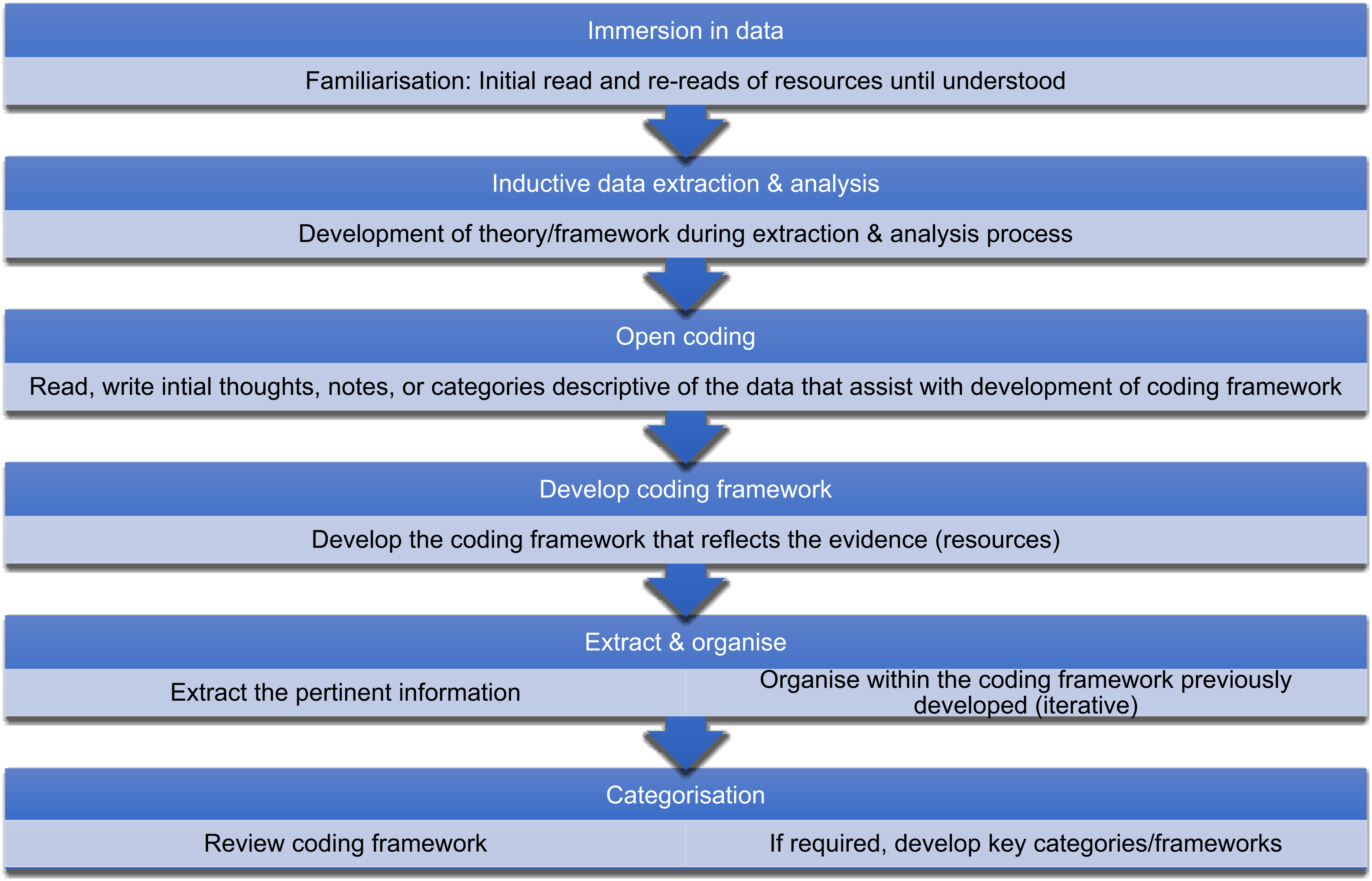
Adapted from Pollock et al.’s (2023, p. 526) process of conducting the analyses of qualitative data within a scoping review.
Findings
Characteristics of included articles
Of the eight resources, three were qualitative studies using the methods of (1) surveys and interviews (#3), (2) analysis of a Facebook group and occupational therapy podcast data (#8), and (3) a scoping review (#4). The other five were resources ranging from (1) discussion or opinion papers published in journals (#1, #2), (2) guest editorial (#5), (3) published Eleanor Clarke Slagle Lecture (#6), and (4) a professional body webpage (#8). All were recently published between 2021 and 2024. Six of the included resources were generated from the USA and two from the UK (#7 and #8). Findings reveal the current limitations of the literature, including how much is comprised of opinion pieces, and less has been produced through research endeavours which can be translated into practice or at least as was found within the scope of this review.
Specifically, extracted statements were coded, with consideration of similarities. Figure 3 presents an example of one such statement. This led to the identification of four distinct categories related to how neurodivergent-affirming (or neuro-inclusive) occupational therapy practice is understood in the literature: (1) paradigm shift and therapeutic practice approaches; (2) advocacy and empowerment; (3) understanding and embracing neurodiversity as part of ethical and collaborative practice, and (4) systemic barriers, external challenges, and social context.

Data synthesis process, adapted from Davies et al., 2023.
Paradigm shift and therapeutic practice approaches
This category captures discussion across the literature of the prevailing need for a paradigm shift from an historical deficit and pathology-based approach that perpetuates marginalisation towards an all-inclusive approach that recognises human neurological diversity is ‘normal’ or to be expected. This shift was reported specifically as moving to the neurodiversity paradigm (#1 and #2) and/or to using strength-based models in practice (#2, #4, #5, #6, #8). For a shift to occur, it was suggested there needs to be a recognition of ableism in occupational therapy and advancement in the inclusion of alternative perspectives (#1, #2, #4, #5, #6, and #8). A paradigm that supports neurodivergent people was reported as being an ethical issue for the occupational therapy profession (#2) that “necessitates respecting others’ traits and behaviors as natural to their neurological makeup” (#8, p.1). This entails “shifting the perception of autism and neurodivergence as a deficit to be fixed, to seeing it as a difference to be accommodated” (#8, p. 238), which was more widely reported as an area of concern for occupational therapy practice (#1, #5, #6, #8).
Therapeutic practice was discussed as encompassing the use of neurodivergent-affirming interventions (rather than those based on neurotypical values), delivered at individual, group, or community levels (#2, #3, #4, #8), with therapeutic goals comprising social participation and inclusion (#1, #2, #3, #4, #5, #6, #8); emotional well-being, meaningfulness, and positive engagement (#1, #2, #3, #4, #5, #6, #8); identifying, addressing, or modifying external and/or environmental barriers (#1, #2, #3, #4, #5, #6, #8); delivering teacher and peer-awareness education (#1, #2, #6, #8); and promoting autonomy and self-advocacy (#1, #2, #4, #5, #6, #8). On therapeutic practice approaches, the topic of (non-affirmative) ABA principles was raised in two of the articles (#2 and #8). Encouragingly, both highlighted the harms of these practice approaches and their place in contemporary occupational therapy: Although it has been suggested that ABA principles are evidence-based, can be client-centered, and should be even more integrated into occupational therapy practice (Welch & Polatajko, 2016), we argue that occupational therapists should shift away from these practices as they are highly controversial in the autistic community (Rosa, 2020), have been questioned by bioethicists for possible violations of human rights (Wilkenfeld & McCarthy, 2020), and do not reflect the core mandates of occupational therapy. Instead, such therapies prioritize compliance and “normalization” over individual meaningfulness, well-being, and promoting capabilities. (#2, p. 4) ABA and behavioral techniques from the field of ABA are emerging to be recognized as ineffective at best and abusive at worst (Sandoval-Norton & Shkedy, 2019), increasing incidence of post-traumatic stress disorder in people with previous ABA treatment (Kupferstein, 2018). (#8, p. 237)
Advocacy and empowerment
Aside from aiming for neurodivergent people's autonomy and self-advocacy as an intervention goal, this category encompasses how – across the majority of the literature – there was a ‘call to action’ for occupational therapy practitioners to engage in advocacy and empowerment (#1, #2, #4, #5, #6, #7, #8) in their practice, throughout people's lifetimes; this was understood to contribute towards improved practice and environments that are inclusive and supportive of neurodivergent people: With knowledge of person-environment relationships and skills of environment evaluation and modification, occupational therapy practitioners are well positioned to address environmental barriers and advocate for better inclusion practice. (#1, p. 4) the role of occupational therapy practitioners in empowering neurodivergent youth and adults continues throughout the lifespan. (#5, p. 5)
Understanding and embracing neurodiversity as part of ethical and collaborative practice
This category reflects discussion of the very concept of neurodiversity, as it applies to consideration of working with neurodivergent people. This included:
(a) Understanding and embracing neurodiversity (#1, #2, #3, #4, #5, #6, #7, #8). The discrepancies around the definition of ‘neurodiversity’ was raised, and there was agreement that the intention of the neurodiversity movement was important to focus on, such as by Dallman et al. (2022, p.1) who stated: ‘at the heart of the neurodiversity movement is the belief that differences in thinking and processing should be considered an integral part of one's personhood’. (b) Understanding the core principles of neurodiversity-affirming practice was seen as integral to more inclusive, collaborative, rights-based, and ethical practice (#2, #4, #6, #8): ‘An ethical and morally just occupational therapy practice must affirm neurodivergent ways of being’ (#2, p. 1), (c) A further way to collaborate in practice involved incorporating autistic voices into practice, as Dallman et al. (2022) assert: the discipline must remain vigilant not to fall back on medical assumptions of disability, and instead focus our goals and priority setting on listening to autistic voices and collaborating with our clients to understand the goals that are meaningful for them. (p. 5)
Incorporating voices into practice also included research endeavours (#2, #4, #6, #8), through means such as using ‘nontraditional research methodologies that center voices’ (#6, p. 5).
(d) Lastly, was promoting acceptance and identity affirmation. As part of an occupational therapist's overall practice approach, this was discussed as needing to be rooted in the aforementioned ethical, just, and collaborative practice, in which reflexivity is practiced. Autonomy and identity were discussed as necessary for collaboration and could be achieved through affirming people's neurodivergent (and other) identity through promoting ways in which they are accepted in practice (#1–8), as illustrated by the following quote:Once therapists shift their ideas of progress away from striving toward a hegemonic normal, we can gain insight into the value of neurodiverse thoughts, ideas, and identities… We celebrate neurodiversity by welcoming autistic styles of behavior, expression, and communication as valid, and therefore important, aspects of their personhood. (#2, p. 3–5)
Systemic barriers, external challenges, and social context
The fourth category was useful in identifying the key barriers, challenges, and needs that must be addressed, with consideration of the social context within which practice occurs (#1, #2, #3, #4, #5, #6, #8), as Dallman et al. (2022) assert: ‘it is also imperative that therapists work toward reducing systemic barriers that prevent recipients from receiving those services in respectful and affirming ways’. Barriers included the lack of resources and opportunities, environmental barriers, and attitudes of others. For instance, one resource discussed micro-aggressions as barriers in, and to, occupational therapy practice, whereby a power imbalance occurs ‘in which the unique strengths of neurodivergent people are overshadowed by the therapist's personal biases and the inability to differentiate between hegemonic, norm-based improvements and meaningful, client-centered care’ (#2, p. 3). Micro-aggressions can take the form of goals set to reduce neurodivergent behaviours (#2, #6), to train in social skills (#1, #2, #6, #8), and to reinforce eye-contact (#2, #6, #8).
When raising the issue of the systemic barriers neurodivergent people can face in their social context (#1, #2, #3, #5 and #6), just one resource highlighted the importance of taking an intersectional approach to address overlapping barriers: it is also essential for occupational therapy to give priority to and center voices of historically marginalized communities at the intersection of disability, race, gender, sexuality, and class—who face ableism and discrimination from systems that create barriers to full participation. (#5, p. 5)
Discussion
Returning to Levac et al.'s (2010) suggestion for the final step in Arksey and O’Malley's (2005) framework, this discussion presents a summary of the meaning of the findings as they relate to the overall study research question and aims, before the implications for future practice, policy, and research are discussed. It is evident within the existing, limited, qualitative literature pertaining to what is known about neurodivergent-affirming (or inclusive) occupational therapy practice; a range of themes within each category are reflected; these are related to the underpinnings and features of neurodivergent-affirming and/or inclusive occupational therapy practice (paradigms, approaches, interventions) and the contextual barriers within which practice takes (or could take) place.
Practice, policy and research implications
The findings show recognition of a need for efforts by occupational therapy practitioners, educators, and researchers to include, invite, centre and listen to neurodivergent people (and their voices). In relation to the second study aim, this was the key characteristic of neurodivergent-affirming occupational therapy practice. This significant change to all practice approaches should guide occupational therapists working across arenas to revisit their approaches to ‘client-centred’ or ‘person-centred’ practice, an effort that requires a shift to move beyond the traditional Western neoliberal and individualist approach of ‘Respect for client values, perspectives, knowledge, abilities, and experiences’ (Restall & Egan, 2021, p. 221) to genuinely collaborative practice that prioritises lived experiences, recognises and positions people as experts of their own experiences, and works for empowerment, allyship and advocacy (Jones et al., 2024; Kirby, 2022). Evidently, this shift requires action, rather than merely performative allyship. Therefore, an ally is an activist who strives to improve neurodivergent people's lived experiences, rather than a gatekeeper, an oppressor, or not acting in the ways neurodivergent people need (Wolbring & Lillywhite, 2023).
For any practitioner (i.e. any profession and whether neurodivergent themselves or not), centring neurodivergent people entails de-centring neurotypicality or neuronormativity (Leong & Graichen, 2024) and destabilising the ‘oppressive systems of ableism and disablism’ (Twinley et al., 2022, p. 20). This means the paradigm shift must involve neurodivergent people steering this, as part of an overall cultural shift to occupational therapy and practice approaches.
Though this review concentrated on qualified/registered occupational therapy practice, for each identified need and suggestion in the findings, there is the underlying prerequisite for better understanding and willingness to embrace neurodivergences. The implication of this for practice is the need to focus on, and develop, education and, in particular, the pre-registration (or entry-level) curriculum content. To register to practice with the title of ‘occupational therapist’ in the UK, people need to complete a degree or a degree-level apprenticeship in occupational therapy. The RCOT learning and development standards for pre-registration education explain the expectations of the profession that providers of occupational therapy (pre-registration) programmes in the UK must meet. There is no mention of neurodivergence or neurodiversity (either specifically to a condition/diagnosis or in general); the standard closest to the practice shift that is called for in this study's findings states: ‘The Educators and practice educators demonstrate the skills and commitment to promote change towards a more inclusive and participatory society’ (2019, p. 39). In line with inclusive practice, neurodivergent people must be included in meaningful roles on teams to work with them (Fletcher-Watson et al., 2021) to develop national curriculum standards like these (Yao et al., 2022).
Specifically, course/programme curriculums need to be developed to incorporate the principles of neurodivergent-affirming occupational therapy practice. This requires training on ableism and ableist language and an overall deviation from the ableist norm of occupational therapy. Like many healthcare professions, as occupational therapy grew as a profession, ‘the professional practice has been subjected to regulations imposed by legislation, policies, and standardisations that shaped how services are delivered and funded. These conditions allow for the concept of ableism to take root’ (Yao et al., 2022, p. 4). Furthermore, in a key paper, Hammell (2023) writes that a call to resist ableism in occupational therapy is part of a wider need to decolonise the profession, which involves contesting its knowledge base, its ableist assessment tools, and practices that focus on classifying people; Hammell explains this is because ‘racism, sexism, gender binarism, heteronormativity, ableism and disablism derive from shared colonial roots, decolonizing our minds requires that we break free from all colonial ideas about which bodies/people are “normal”, acceptable and appropriate; constituents of a “natural” order’ (2023, p. 752).
Despite such contributions regarding ableism in occupational therapy, the lack of commentary regarding neurodivergence/neurodiversity and affirming/inclusive practice is of concern. This is especially so considering the (often) complex and unique needs of neurodivergent individuals (Hamilton & Petty, 2023) and high need for support throughout multiple life transitions (Hotez et al., 2023) and across the lifespan (Turcotte et al., 2016). Though only related to autism, Kirby et al. suggest in their Guest Editorial that occupational therapists need an awareness of autistic/neurodivergent culture and need to be neurodivergent affirming in their practice to best support people. As occupational therapists often work in partnership with multidisciplinary colleagues, this needs to be a coordinated, multidisciplinary approach in collaboration – or co-creation (Yao et al., 2022) – with neurodivergent people (and any relevant others, where required) and upholding of the fundamental principles of the neurodiversity paradigm (Myers, 2022; Sterman et al., 2023).
Here, the policy implications are clear: neurodivergent-affirming principles underpinning occupational therapy education and practice must be ‘reflected in health, housing, social care, work and appropriate education and research policies and practice’ (RCOT, 2024b). The policy work and engagement of professional bodies, internationally, need to incorporate matters related to neurodivergent people and affirming practice. This should involve working with neurodivergent members (occupational therapists) and people who use services (as experts) to ensure experiences, strengths, and needs are reflected in consultations, campaigns, briefings, best practice evidence-based guidance, and professional standards (Breckon et al., 2019, p. 16).
Methodologically, there is a dearth of research using qualitative approaches to uncover meanings and lived experiences of neurodivergent people's encounters with occupational therapists. Arguably, this impedes the aim to thoroughly map out the work in this space. Nevertheless, the findings do reveal that this topic lends itself to qualitative research endeavours that use a methodological range of approaches, from surveys and interviews to analysis of secondary data (Facebook group and occupational therapy podcast) to a scoping literature review. Overall, however, the findings have revealed a gap in the literature as it is evident there is limited qualitative literature pertaining to what is known about neurodivergent-affirming (or neuro-inclusive) occupational therapy practice; without more, voices of neurodivergent people will continue to either minimally or not at all be represented.
The relevance of these findings to neurodivergent people is twofold: firstly, they demonstrate how health and care professionals are realising the need to improve their practice approaches and to include neurodivergent people in decisions about them and practices for them. Secondly, and on that theme, it is encouraging to find that neurodivergent occupational therapists are part of those contributing to the findings of this scoping review. Of the 16 authors or co-authors, two disclose their neurodivergent identity in writing on the publication (Dallman & Robertson). Though in the minority, it is acknowledged this represents a change in fields such as academia, which has: ‘historically medicalized neurodivergence and conducted studies on neurodivergent individuals rather than with or for them’ (eLife, 2023). Increasingly, neurodivergent people are sharing and having control over their own narratives (see, e.g. UK Research & Innovation, 2023). Still, there are barriers to overcome, not least in academia which Azevedo et al. (2022) assert: focuses on productivity and effectiveness, often at the expense of work–life balance, and working more than the contracted hours is seen as standard (Lloyd, 2015). As a result, burnout is common for anyone climbing the academic success ladder (Fernández-Suárez et al., 2021; Rocha et al., 2020; Sabagh et al., 2018), but particularly for neurodivergent academics, as the ladder is designed for survival-of-the-most-abled.
Methodological considerations and limitations
This review sought to explore neurodivergent-affirming practice to provide some deeper insights, ideally capturing the voices/perspectives and experiences of those it relates to (i.e. neurodivergent people who engage in occupational therapy and occupational therapists, of whom some are neurodivergent) (Oranga & Matere, 2023). Hence, the review did not include quantitative studies or numerical data; future reviews could do so in order to identify gaps specifically more fully in the research/evidence base, especially in reviews that, for instance, seek to map neurodivergent-affirming intervention practices by occupational therapists.
While the methodology of included literature was not assessed within the remit of this scoping review, it is apparent there are limited studies, let alone those using high-quality qualitative methodology. However, of the three qualitative studies, two reported on quality criteria strived for/achieved. For instance, Friedman et al. (2023) state they used the PRISMA 2020 methodology (Radua, 2021) in the scoping review, and Sterman et al. (2023) discuss criteria such as trustworthiness, credibility, data triangulation, investigator triangulation, use of an audit trail supported dependability and confirmability, and their engagement in reflexivity.
A fundamental limitation of this review is that it was restricted to English language publications which – while this avoided any errors in interpretation – has likely meant relevant articles from diverse settings could have been excluded. Second, this was a lone pursuit, conducted in the researcher's minimal scholarly time as part of their wider workload. Additionally, the researcher is deemed an ‘insider’ as a neurodivergent person. Consultation with an experienced academic librarian helped to validate the search strategy and inclusion criteria, but involvement of other researchers could help to reduce any subjectivity in the interpretation of these. Finally, as a scoping review seeking to provide a broad overview of the topic by providing a summary of the literature, only the most prominent themes from each resource were reported. These limitations and biases are not to be overlooked; however, debatably, this has not vastly affected the general findings and overall conclusions of this scoping review study, which stays close to data extracted, analysed, and synthesised. Moreover, this is the first scoping review on this topic, and so it contributes to that limited, albeit growing, scope of occupational therapy literature, in addition to being conducted by a neurodivergent person, about neurodivergent people.
Implications for the future
The findings have two major implications for occupational therapy that other professions might also find relevant. First, further descriptive research related to neurodivergent-affirming (or neuro-inclusive) practice is needed for an understanding of multiple and diverse neurodivergent populations, across all practice areas. This could highlight the value of occupational therapy (and, indeed, each profession) as part of multi- and interdisciplinary team approaches; plus it would strengthen the limited evidence base.
Second, this scoping review is confirmation of the commonly declared holistic potential that occupational therapy practice and philosophy holds (Asbjørnslett et al., 2023). The range of (neurodiversity-based and strength-based) paradigms, approaches, and interventions being driven is encouraging in being able to take a holistic approach to neurodivergences. Based on the findings, occupational therapists are (and can become) equipped to (a) assess, provide interventions for, and consult on the strengths and needs of neurodivergent people; (b) facilitate and consult on the ways to adapt tasks and the environment; (c) advocate (as neurodivergent people themselves, or as allies) to improve access, inclusion, and collaboration; and (d) to consult on how to overcome barriers to achieving and actually practicing in neurodivergent-affirming, inclusive ways, embracing the experiences of intersectionality.
Conclusion
In summary, this scoping review addressed the question to capture the nature and breadth of what is known from the existing qualitative and conceptual/theoretical or opinion-based literature about neurodivergent-affirming (or neuro-inclusive) occupational therapy practice. The key characteristics of neurodivergent-affirming occupational therapy practice highlighted in this review are represented by the four distinct categories that were identified through the data analysis, namely, (1) paradigm shift and therapeutic practice approaches – this entails more use of strength-based models in practice; the ethical issue of identifying, challenging, and responding to ableism; and setting therapeutic goals such as social participation and inclusion; (2) advocacy and empowerment – this was reflected as a ‘call to action’ for occupational therapists to engage in; (3) understanding and embracing neurodiversity as part of ethical and collaborative practice, this relies upon the incorporation and centring of neurodivergent people and their knowledge and perspectives into practice; and (4) systemic barriers, external challenges, and social context, these included micro-aggressions and power imbalances in occupational therapy practice.
Future directions for occupational therapy include developing a truly holistic approach to neurodivergences and building the current underdeveloped evidence base. As intended, this is a knowledge synthesis (scoping review) study that can inform and feed into any future research, to include systematic reviews, focusing on contributors’ specific areas of interest, having identified the nature of this (currently limited) field of literature.
Footnotes
Acknowledgements
I am grateful to my neurodivergent friends and colleagues who support and sustain my ethos that is rooted in advocacy and inclusivity and my passion for amplifying marginalised voices or stories.
Declaration of conflicting interests
The author declared no potential conflicts of interest with respect to the research, authorship, and/or publication of this article.
Funding
The author received no financial support for the research, authorship, and/or publication of this article.
