




Abstract
Addressing the disastrous global vulnerabilities posed by climate change underscores the urgent need for climate change adaptation (CCA). Adaptation encompasses proactive measures to address climate change impacts and capitalize on emerging opportunities, while media serve as a critical conduit for disseminating information to evaluate public awareness, perception, and the effectiveness of CCA initiatives. This study utilizes the “Global Database of Events, Language, and Tone (GDELT)”, to develop three indicators including sentiment, concern, and scope. This study employs multiple linear regression (MLR) and quasi-Poisson regression (QPR) models to investigate public recognition of CCA and to analyze how socio-economic, geographic, and demographic indicators influence CCA recognition across 183 countries globally during January to December 2022. We find a disconcerting trend in people’s recognition of CCA: globally the people are less inclined to recognize CCA. The findings reveal that most countries exhibit negative sentiment, low concern, and scope level 5 (moderate) regarding CCA, with sentiment and scope showing gradients across economic development levels and geographic regions. MLR results for the sentiment model reveal that the socio-economic variables such as gross national income per capita, expected years of schooling, and climate zone significantly positively affect the CCA sentiment. In addition, 1 year increase in life expectancy is associated with a 0.018% decrease in concern (p < 0.05). Moreover, climate zone has a negative impact on CCA concern. According to QPR analysis increase in coastline length and population are likely to significantly increase the difference in the logs of scope. Furthermore, countries severely affected by climate change, have a wider scope of CCA, emphasizing the intricate relationship between socio-economic factors, public awareness, and various aspects of CCA. This study offers policymakers a novel approach to assess adaptation gap and initiatives through the lens of news media, providing an up-to-date perspective for measuring progress in addressing climate change around the globe.
Introduction
Climate change has emerged as a paramount environmental concern in the 21st century (Pickson and Boateng, 2022), exacerbating the intensity of prevailing climate hazards and contributing to global disparities in environment (Samuel et al., 2022). The ramifications of climate change extend beyond human populations, leading to significant degradation of natural ecosystems. Climate change has been identified as the underlying cause of multiple environmental vulnerabilities, including the rise in sea levels (Roy et al., 2023), loss of biodiversity (Q Zhao et al., 2023), intensification of heatwaves (Ahmad et al., 2022), increased frequency of droughts (R Zhao et al., 2023), soil erosion (Chakrabortty et al., 2020; Pal and Chakrabortty, 2019), heightened health risks (Cloos et al., 2023; Ma et al., 2023), altered migration patterns (Cattaneo and Foreman, 2023) and has amplified poverty levels (Ahmad et al., 2023). At the same time, the science of climate change itself influences how we recognize and understand these changes (Hulme, 2011). The risk level of environmental vulnerability depends on the trends in vulnerability and exposure, as well as the level of socio-economic development and adaptation. In this context, enhancing public understanding of the consequences of climate change represents a critical prerequisite for fostering adaptation and resilience, as it promotes individual behavioral responses and underpins the formulation and implementation of effective climate policies (Dumitraşcu et al., 2026).
Climate change adaptation (CCA) plays an integral role in reducing exposure and vulnerability to climate change. It refers to taking proactive measures to address the vulnerabilities of climate change, safeguarding the future, and leveraging potential benefits that may arise (Adger et al., 2007). Despite growing awareness and notable progress, a significant gap remains between the current level of adaptation and the level required to effectively reduce climate disaster risks (Tun Oo et al., 2024). Limited public recognition of CCA weakens understanding, reduces support for relevant policies, and ultimately hinders community engagement and participation. As a result, adaptation initiatives are often misunderstood, overlooked, or resisted, leading to underfunding, weak implementation, and increased societal vulnerability to climate related hazards. It is also evident that the CCA recognition is not automatic. It improves with the climatic disaster experience, resources, awareness, and culture etc.
News media is a key medium for reporting global events (Kong and Purves, 2025). It also plays a crucial role in raising climate change awareness and policy decisions (Carvalho, 2010). Media coverage not only influences policy decisions but also reflects and shapes societal attitudes towards environmental problems. Media influences public awareness through agenda-setting and framing of news by selecting what is published, how frequently, and through what frames (Dotson et al., 2012). The news media provide real-time information about ongoing climate change adaptation efforts, allowing the public to stay informed with the latest developments (Ford and King, 2015). Media coverage on climate change adaptation surged significantly after 2006, with notable higher reporting observed in 2007, 2012, and 2013, when 16%, 13%, and 25% of the total analyzed articles were published, respectively (Ford and King, 2015). Despite the increase in media coverage of adaptation in recent years, the overall focus on adaptation remains limited. Recognition of CCA is influenced by a variety of factors globally. Countries with higher socio-economic status tend to have a greater capacity to recognize and address climate change adaptation and are often more effective in advocating for CCA related initiatives. Moreover, education also plays a crucial role in raising awareness and promoting understanding of climate change solutions.
The existing literature on news coverage and news framing primarily focuses on the science of climate change, its impacts, and mitigation efforts (Moser, 2010; Schmidt et al., 2013). The existing literature indicates that only a limited number of studies have specifically examined adaptation news coverage, and these are typically embedded within broader analyses of climate change news reporting, often emphasizing comparisons between adaptation and mitigation coverage (Asplund et al., 2013; Liu et al., 2008; Lyytimäki, 2011). Exceptions included Ford and King (2015) who analyzed coverage and framing of climate change adaptation in four North American newspapers between 1993 and 2013, and Moser (2011), who focused on the number of news articles about CCA in America print media. These studies primarily focus on single-country analyses, with the majority of research on climate change adaptation news coverage relying on primary data. For instance, Persson et al., 2021 investigated attitudes toward CCA in six Swedish municipalities using survey responses from 510 participants. Similarly, Teklay et al. (2025) analyzed small-hold farmers’ perceptions of climate change and the factors influencing their adoption of adaptation measures in Ethiopia, based on survey data from 385 farmers.
Our study addresses a key research gap, as existing studies on climate change adaptation (CCA) have primarily focused on policy evaluation, adaptation practices, or public perception based on surveys, with limited evidence on how CCA is recognized and discussed in news media globally. To fill this gap, we introduce three recognition indicators, sentiment, concern, and scope, derived from the Global Database of Events, Language, and Tone (GDELT). Additionally, we analyze the socio-economic, geographic, and demographic indicators influencing CCA recognition across countries worldwide. This highlights the novel and significant contribution of our study to the existing literature.
This study aims to investigate following two major questions. First, how do the people recognize “climate change adaptation” around the globe? Second, which specific socio-economic, geographic, and demographic variables exert influence over people’s attention to “climate change adaptation”? To address these important questions, data sourced from multiple sources, one of which is the GDELT database, which provides a rich repository for analysis and comprehension of climate-related dynamics. GDELT is an invaluable resource for investigating and understanding global trends, including the discourse surrounding CCA, and has already been used to explore all the sustainable development goals (SDGs) (Czvetkó et al., 2021).
Material and methods
GDELT Project
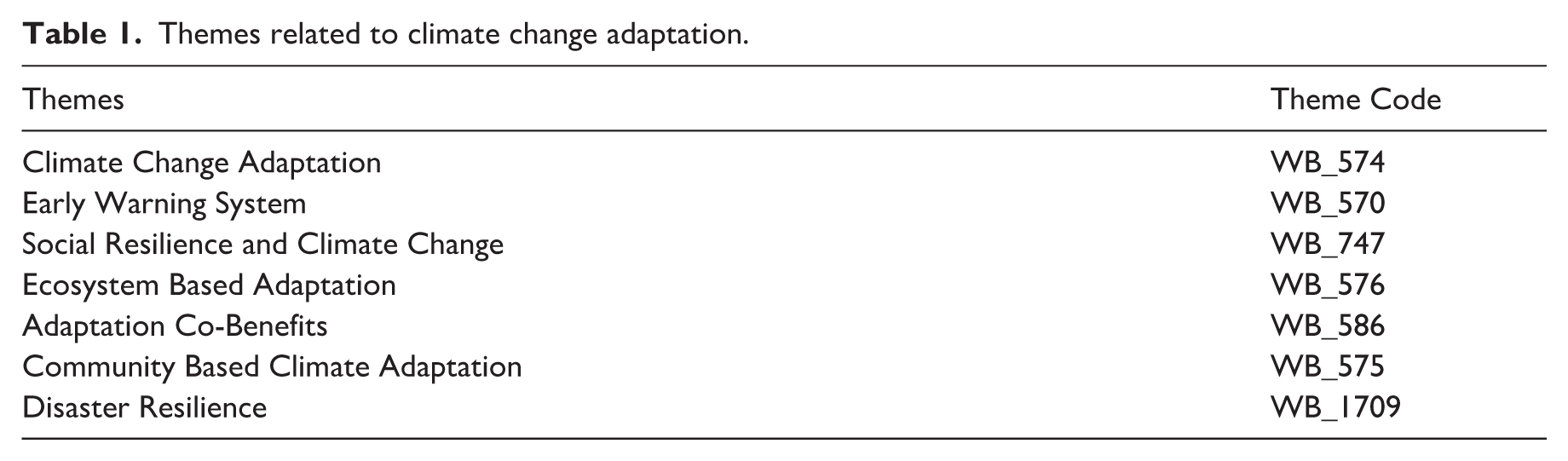
Global Database of Events, Language, and Tone (GDELT) is a comprehensive and dynamic repository of global news coverage, capturing a wide range of events and topics from media sources worldwide. GDELT is a real time open data repository that employs natural language processing (NLP) and machine learning techniques to extract information such as the tone/sentiment, people, organization, time, location and other valuable information from news articles. This allows researchers to explore the various perspectives, narratives, coverage volume and biases reflected in news coverage. There are over 59 thousand themes and 189 thousand news sources in GDELT database (The GDELT Project, 2021). Moreover, GDELT contains multiple datasets like global knowledge graph (GKG), event database, Visual Global Entity Graph etc. By aggregating and analyzing news articles, broadcasts, and other sources, GDELT offers valuable insights into how CCA is portrayed in the media across different regions and countries. Out of over 59 thousand themes seven were manually selected for our analysis which are most relevant to CCA, the selected themes were then reviewed and verified by two GDELT experts. The final list of themes is presented in Table 1.
Themes related to climate change adaptation.
Data collection
To fulfil our objective, we collected the data from multiple sources like GDELT, WDI (world development indicators) and NESSDC (National Earth System Science Data Center). The data collection process involves the systematic extraction and meticulous organization of relevant data obtained from GKG maintained by the GDELT. To ensure the accuracy and integrity of the collected data, a rigorous approach is carried out during the data extraction phase. Careful selection of themes and extraction of structured data from GDELT, via Google BigQuery, relevant to the research focus of CCA is carried out. First, we used Structured Query Language (SQL) on Google BigQuery, following the approach previously applied by Czvetkó et al. (2021), to collect data related to all SDGS goals. Data were retrieved from the GDELT database, covering 217 countries and territories. Additionally, socio-economic, geographic, and demographic variables were collected for 189 countries. After aligning the datasets and addressing missing or inconsistent entries, data from 183 countries were included in the final analysis, covering the period from January 2022 to December 2022.
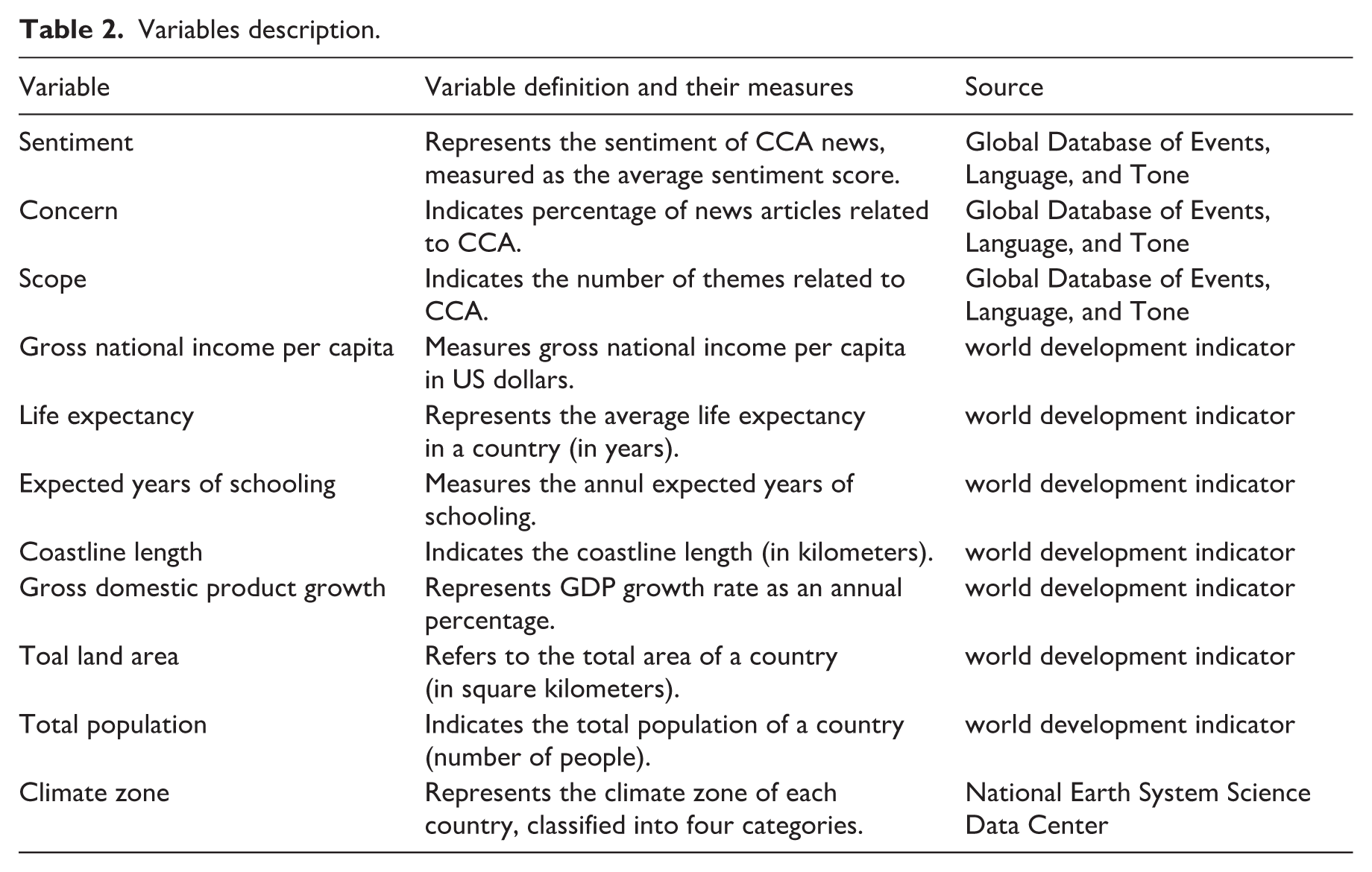
Socio-economic, geographic, and demographic variables, data were collected from world development indicator (WDI) (https://databank.worldbank.org/source/world-development-indicators) and the data on the “Global Köppen climate zones” (http://www.geodata.cn/data/datadetails.html?dataguid=60984931148062&docId=0) is obtained from the “National Earth System Science Data Center (NESSDC)”. For statistical analysis R studio is used to visualize the results on a global scale, Geographical Information System (GIS) is used to analyze the outcomes. Table 2 provide the socioeconomics, geographic and demographic variables description.
Variables description.
The steps of the workflow are summarized in Figure 1, where the blue highlights represent the data sources, the gray highlights indicate the data extraction process, the orange highlights show the final variables, and the yellow highlights correspond to the research questions addressed in this study.
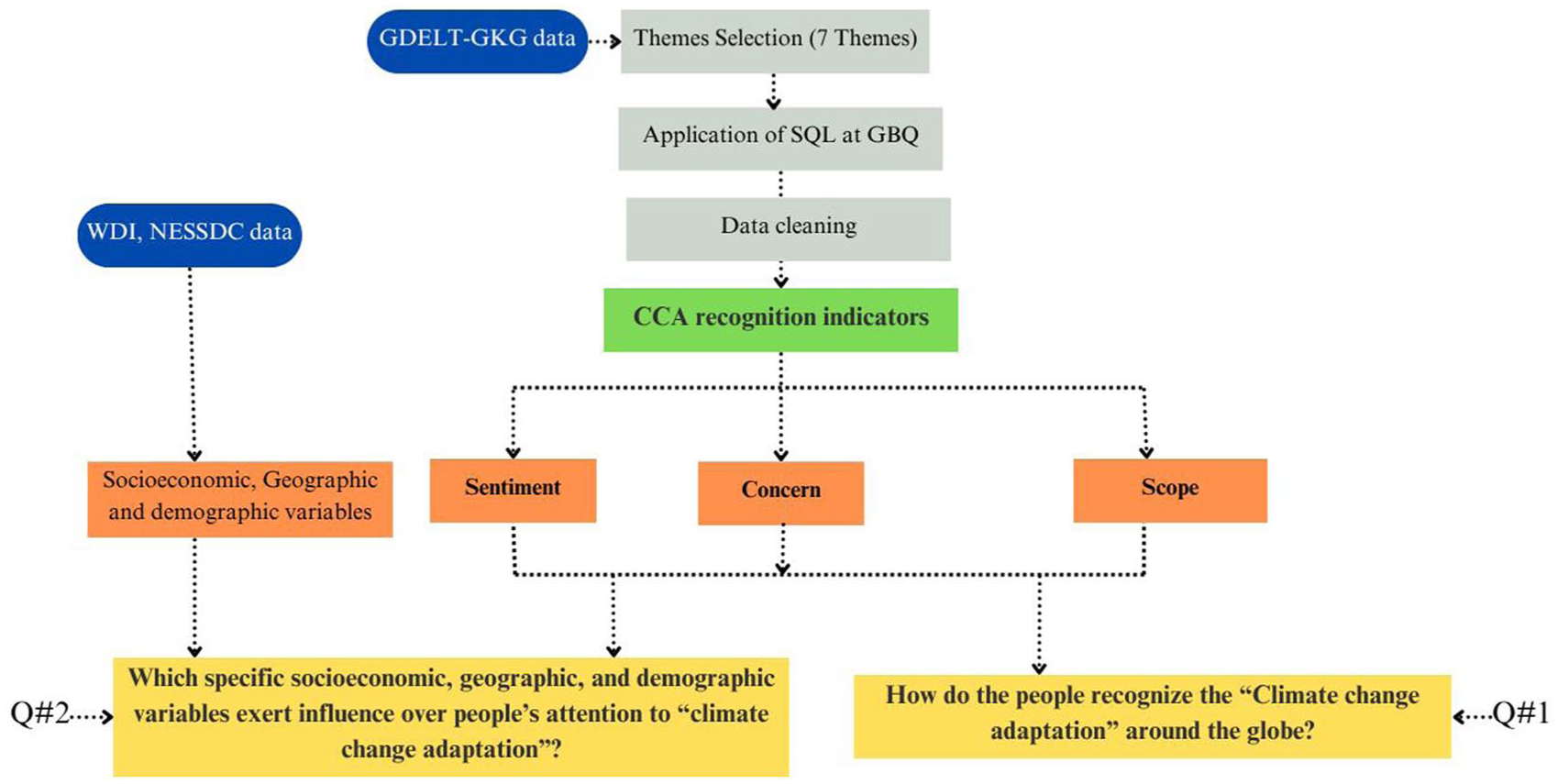
The purposed workflow of the news-based analysis of CCA.
Assessing the public recognition of CCA based on GDELT
We chose sentiment, concern, and scope as recognition indicators because they capture the attentional, discursive, and thematic dimensions of CCA. This approach is unique and provides insights into how CCA is perceived and addressed, even in remote areas where other data might be limited. Other indicators, like policy adoption or surveys, often lack global comparability or availability. Using media data from GDELT allows for a consistent and scalable analysis, making our approach more robust and inclusive for studying CCA recognition globally.
Sentiment indicator
The sentiment expressed in news articles serves as an indicator or reflection of how people perceive or recognize CCA. A positive sentiment suggests that the public recognize and positively engage with CCA efforts and a negative sentiment suggests a less optimistic or skeptical view, potentially indicating challenges or barriers to public recognition of CCA. The GDELT utilizes a method to determine the overall sentiment of news articles by identifying positive and negative words in a news article. The sentiment scale ranges from −100 (extremely negative) to +100 (extremely positive), with values typically falling within the −10 to +10 range and 0 representing neutrality (Leetaru and Schrodt, 2013).
The GDELT employs the following Eq.1 formula to compute the sentiment of news articles.

Where, Sen is sentiment, Wp refers to the number of positive words in an article, Wn refers to the number of negative words in an article and Wt is the number of total words in an article.
In order to effectively filter and retrieve the substantial amount of data, complex structured query language (SQL) is employed on Google BigQuery (Czvetkó et al., 2021). This methodological approach enabled the gathering of a comprehensive dataset designed to analyze the sentiment and news counts associated with CCA and the total number of news articles published in each country globally. There are maximum of seven CCA-related themes, each country covers more than one theme and every country has separate Sen and news count for each theme. Our goal is to obtain a single number that reflects all the Sentiments for each country. We use the weighted average method to combine these into a single, representative value.
Here is the formula of weighted average of sentiment:

Where,
Concern indicator
The variability in the total number of news articles and the number of news related to CCA is influenced by multiple factors like population size, number of media outlets, and the occurrence of climate change-related events etc. To address this, we have calculated the concern indicator, which is the percentage of news articles related to CCA. Concern shows, how much attention and importance are given to the challenges and strategies associated with adapting to the impacts of climate change. A lower percentage of news coverage on CCA may suggest that people are less concerned, and vice versa. We use following simple formula to calculate the concern (Eq.3).

Where C is concern, NC refers to news count related to CCA and TN stands for total number of news published in a country.
Scope indicator
The scope indicator represents the number of CCA themes each country addresses out of seven predefined themes. This metric reflects the breadth and diversity of subjects discussed within each nation’s climate change adaptation discourse. The scope was calculated as the number of CCA themes addressed by each country out of total seven predefined themes. This was determined by either subtracting the number of uncovered themes from seven or directly summing the covered themes, with both methods yielding equivalent results (Eq.4).

Where, S is scope, Tcca is themes related to CCA and Tnc is themes related to CCA which are not covered by a country during this period.
Statistical analysis
In this study Pearson correlation was employed for sentiment and concern indicators to analyze the relationship of these indicators with socio-economic, geographic, and demographic variables. While Spearman correlation tests employed to explore the relationship between S and socio-economic, geographic, and demographic indicators. Pearson correlation was employed because there is a linear relationship between sentiment, concern, and the socio-economic, geographic, and demographic variables. Conversely, Spearman correlation was employed because there is a monotonic relationship between scope and the socio-economic, geographic, and demographic variables. Pearson correlation was advanced by Bravais in 1846 and illustrated by Pearson in 1896 (Spearman, 1987). After the correlation analysis we took only statistically significant variables for our regression analysis.
We also employed the multiple linear regression (MLR) model to investigate how different socio-economic, geographic, and demographic variables influence or effect the CCA recognition in the form of sentiment and concern indicators. Multiple linear regression model is employed in many other studies (Xie et al., 2021; Soava et al., 2021).
Multiple linear regression model is represented as:

Where, Y is the response variable, X1,X2, Xm are the pridictor variables,
The Quasi Poisson regression (QPR) model is employed for S indicator to investigate the influence or effect of different socio-economic, geographic, and demographic variables on CCA scope around the globe. QPR model is employed when there is under dispersion (Harris et al., 2012; Toledo et al., 2022). Underdispersion is characterized by a variance of the count variable that is less than its mean. In this specific context, the mean of the dependent variable S is 5.1, while the variance is 0.85. In practice, under dispersion is much less common (Edmondson et al., 2022). Mathematically, under dispersion is indicated by Var(X) < λ, where Var(X) is the variance of the count variable X, and λ is the mean of X. Quasi Poisson regression model which is a generalized linear regression model is expressed as:


Where, Y represents the response variable, µ is expected or mean value of the response variable,
Expressing the mathematical models for sentiment, concern and scope, we encapsulate the relationships between these variables in a way that facilitates a deeper understanding of their interplay and impact. The mathematical model for sentiment, concern and scope are as follows:



Where, Sen is sentiment (Numeric) of CCA news, C represents concern (percentage), S refers to scope (numeric), GNIPC means gross national income per capita (USD), LE refers to life expectancy (Years), EYS means expected years of schooling (Years), Cl is coastline length (Kilometer), GDPG represents gross domestic product growth (percentage), LA is land area (Sq. Kilometer), P is population (Numeric), CZ 1 is climate zone (Nominal categorical variable), and n is a country.
Results
Global public recognition to climate change adaptation
According to the GDELT analysis, 53.6% (98) countries display negative sentiment while 46.5% (85) countries exhibit positive sentiment about the CCA around the globe. Figure 1 shows the sentiment of CCA news around the globe. In this figure, the classes are based on manually defined break values, as the natural breaks method caused mixing of positive and negative sentiment values. Regionally, majority countries exhibit negative sentiment across all regions however the intensity of negativity is higher in some African and Asian countries compared to the countries from other regions. The highest average sentiment recorded in the Federation of Saint Kitts and Nevis (SC) at 4.92, reflecting the most optimistic media tone regarding CCA. Vietnam (VM) and Dominica (DO) follow closely with average sentiment of 1.96 and 1.90, respectively. In contrast, Ethiopia (ET) and Djibouti (DJ) exhibit a highly negative CCA sentiment, with scores of −3.40 and −3.31, respectively, followed by Sudan (SU) with −3.16 (Figure 2).
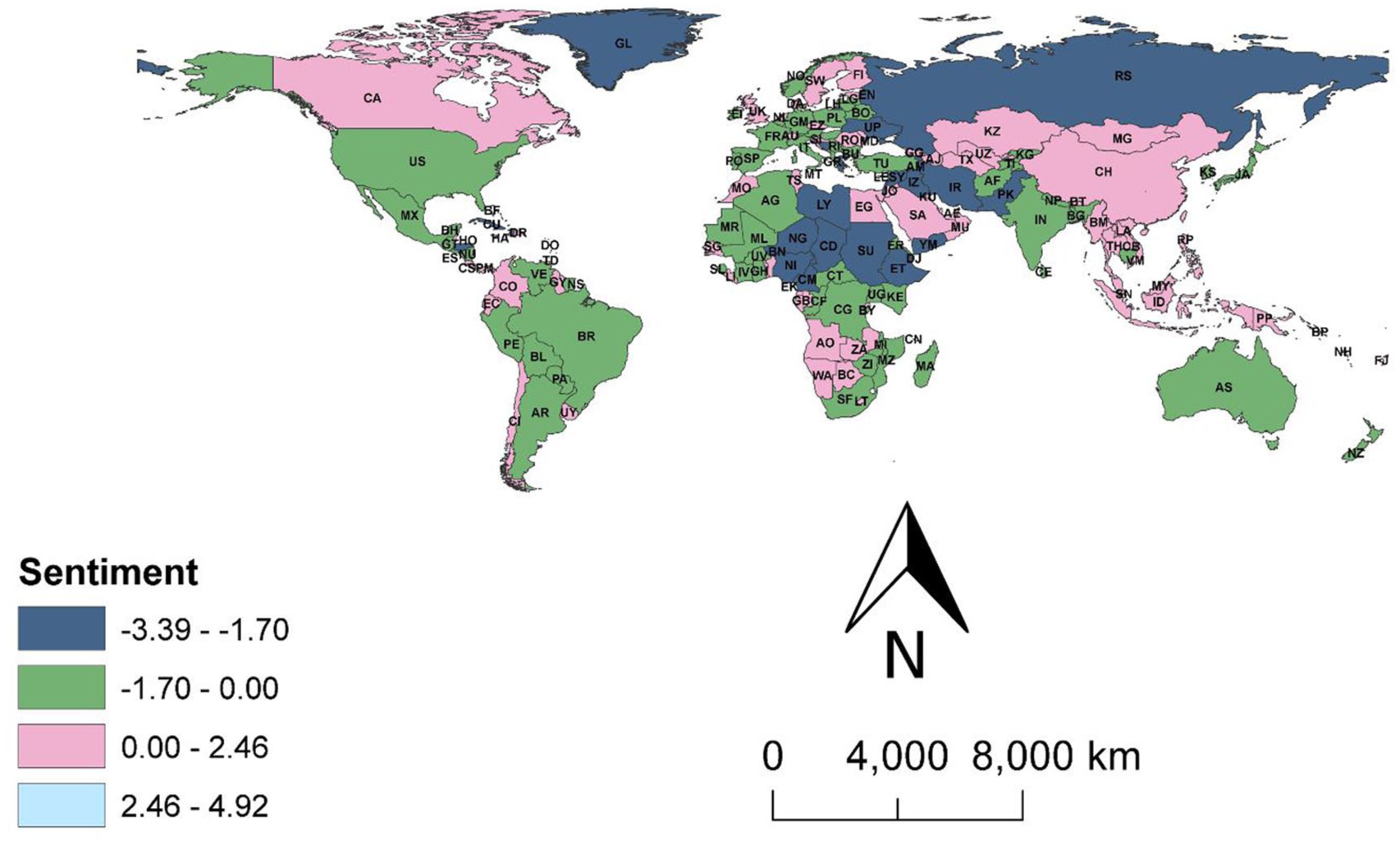
Global sentiment of climate change adaptation based on GDELT.
Countries with struggling economies like Pakistan (PK), Ethiopia (ET), Sudan (SU), Central African Republic (CT) etc. generally exhibit negative sentiment toward CCA, conversely, more prosperous countries including Canada (CA), Kuwait (KU), Qatar (QA), Singapore (SN) etc. demonstrate positive sentiment. Interestingly, several developed countries like United States (US) Germany (GM), France (FR), Australia (AU) Greenland (GL), Italy (IT) also display negative sentiment, however, the intensity of negativity tends to be less pronounced in these countries compared to lower-income countries. Overall, the spatial pattern (Figure 1) reveals that negative media sentiment toward climate change adaptation dominates globally, with notable regional variations in intensity and distribution (Figure 2).
Figure 3 indicates the concern of CCA around the globe, it shows overall, people from the majority of countries around the globe are less concerned about CCA. Concern lies between 0.01% to 4.33% around the globe. The majority of countries lie near to 0% concern. Around 77.6% of countries (142) have a concern level between 0 and 0.67%, while the remaining countries (41) falles between 0.67% and 4.33%. Figure 2 distinctly reveals that African countries are more concerned about CCA relative to other regions. In this figure, the classes are based on natural break values.
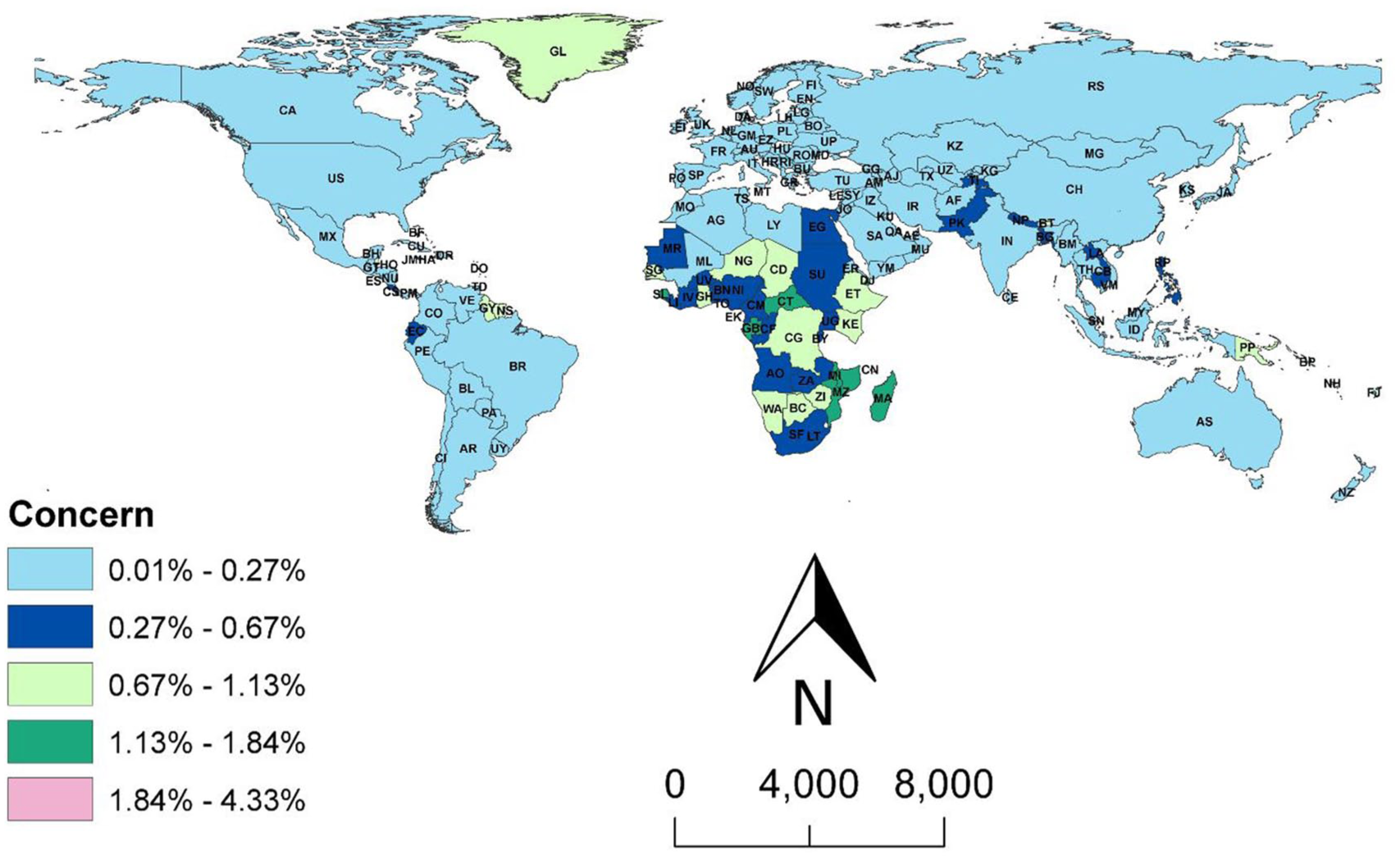
Global concern of climate change adaptation based on GDELT.
Furthermore, it is noteworthy that among the countries examined, Bosnia and Herzegovina (BK) ranks lowest with a mere 0.01% of news articles related to CCA. Moldova (MD) and Serbia (RI) follow closely with 0.02%. Notably, all three of these countries are located in Europe and exhibit relatively low population figures. Conversely, the highly concerned countries are Tuvalu (TV) (4.33%) followed by Vanuatu (NH) (3.11%) and Marshal Island (RM) (2.52%) (Figure 2). An interesting factor is that countries with struggling economies recognize CCA more than countries with better economies. Regionally, overall African countries have higher CCA concern compared to other regions.
Figure 4 depicts the 24% (44) of countries that have the highest scope (6-7) of CCA. 58% of countries (106) have a CCA scope of 5. The remaining 33 countries have scope of CCA between 1-4. The majority of African, countries, such as Nigeria (NI), Algeria (AG), and Angola (AO), predominantly fall within either 1-4 or 5 scope. Moreover, countries in Asia, such as Afghanistan (AF), Iran (IR), and Kazakhstan (KZ), along with certain South American nations like Argentina (AR), Peru (PE), and Colombia (CO), demonstrate a CCA scope of 5. However, other countries in Asia, Europe, and North America tend to fall within the 6-7 scope category, indicating wider coverage of CCA.
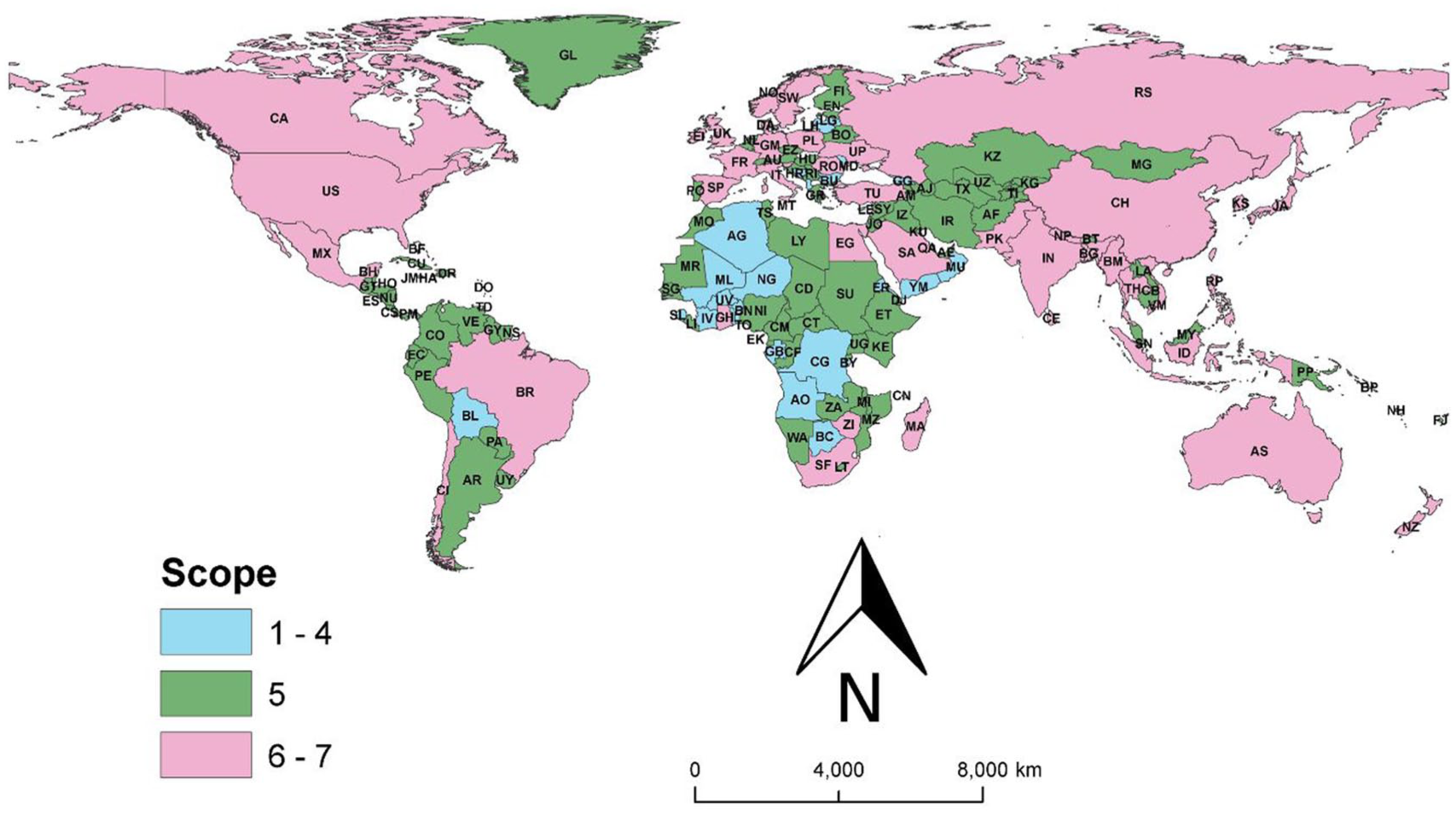
Global scope of climate change adaptation based on GDELT.
Figure 5 shows the relationship between the key indicators Sentiment, Concern and Scope based on GDELT. We used a 3-dimensional scatter plot where each point represents one country, with axes corresponding to the three indicators derived from GDELT data. The color planes in the figure highlight pairwise relationships: the red plane represents the relationship between scope and sentiment, the yellow plane represents concern and sentiment, and the green plane represents scope and concern. The relationship between Sen and S indicates that most countries fall within a scope range of 4–6 themes and a sentiment range of −2 to +2, suggesting a generally neutral relationship between the two variables. The relationship between sentiment and concern shows that as concern increases, sentiment also tends to rise, indicating a positive relationship between the two variables. Moreover, the relationship between scope and concern does not display any specific trend, suggesting a neutral relationship between them.
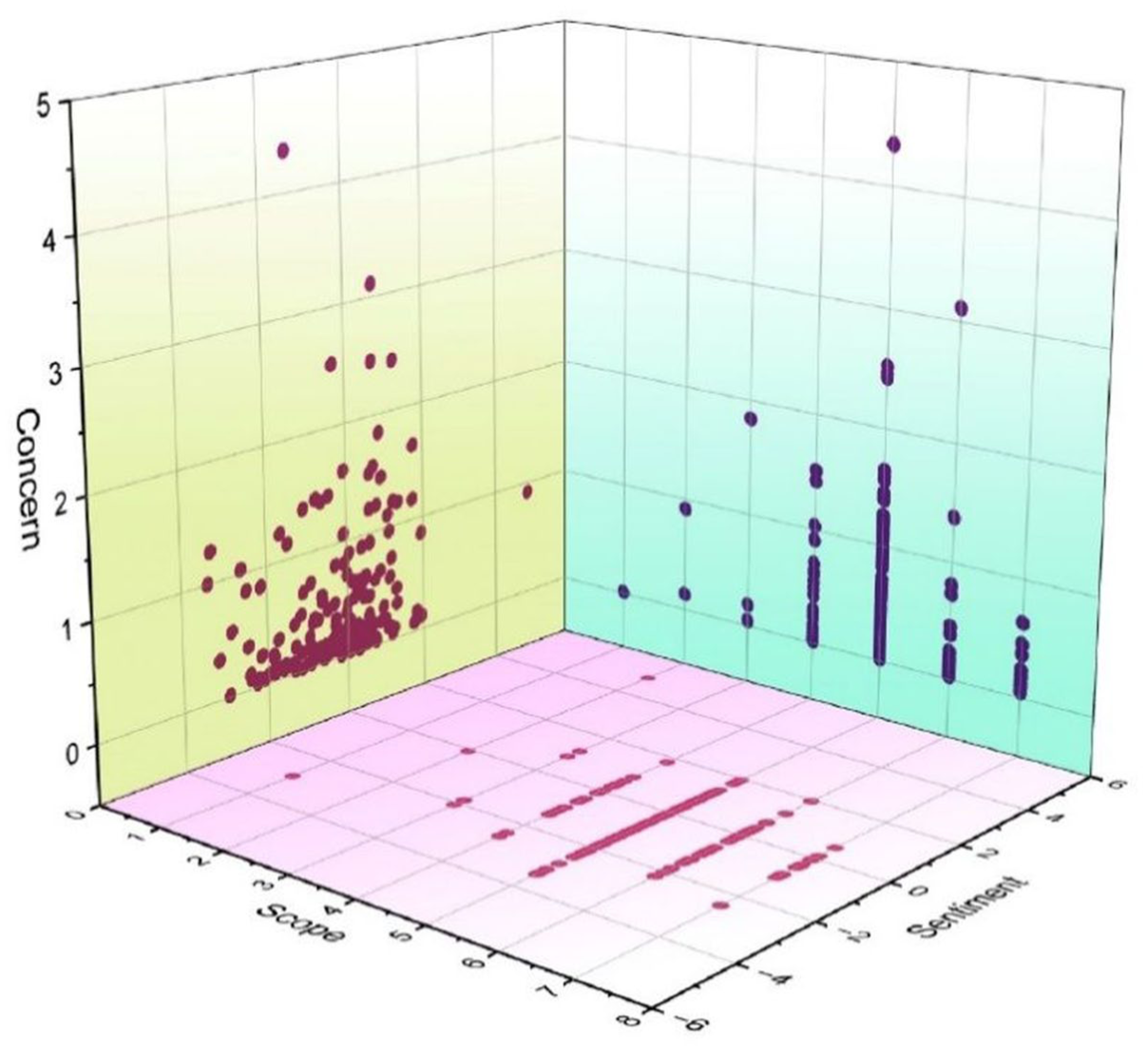
Relationship between the key indicators Sentiment, Concern and Scope based on GDELT.
Influencing factors for global public recognition of CCA
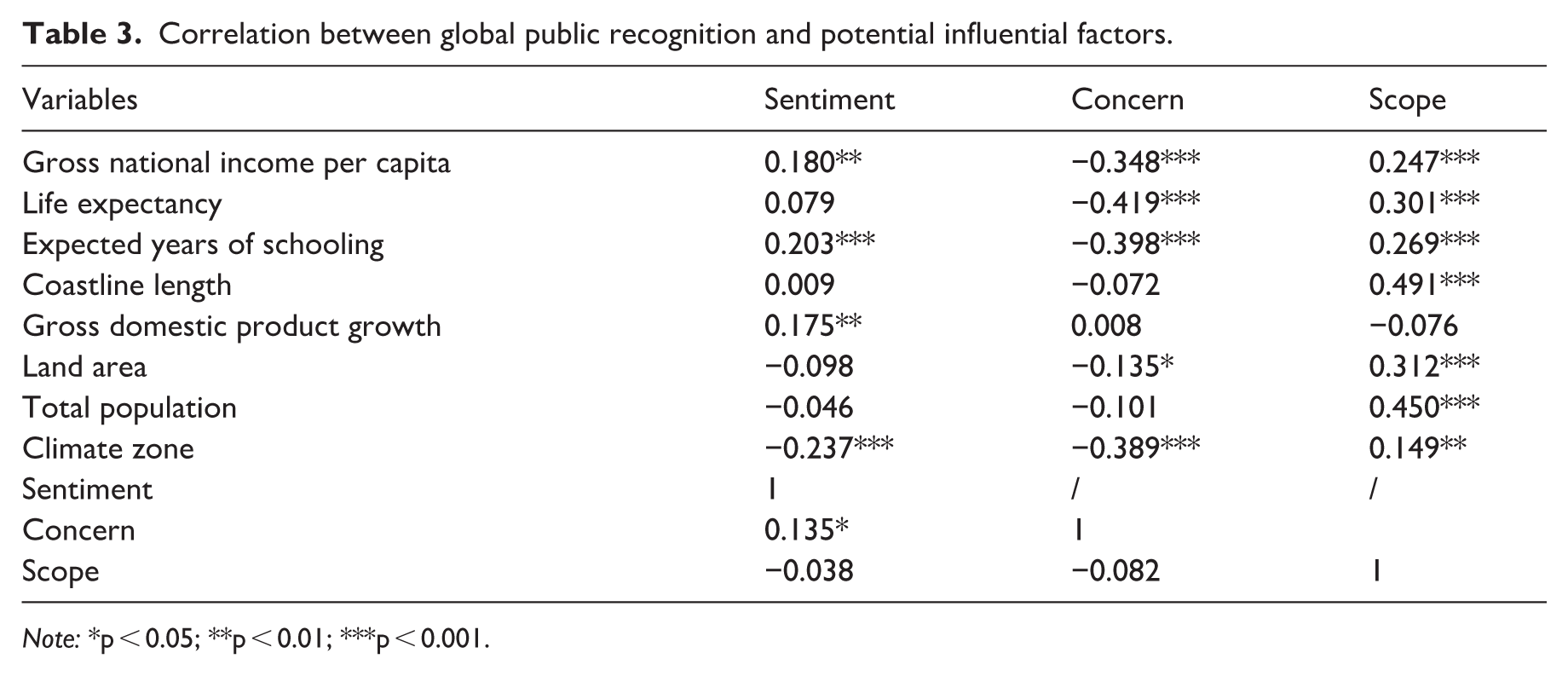
The results of estimating the Pearson and Spearman correlation coefficients are shown in Table 3. Pearson correlation analysis was conducted to assess the relationship between sentiment, concern, and socio-economic, geographic, and demographic variables. Correlation results of the sentiment model shows that countries with higher GNI (gross national income per capita) are more likely to have significantly positive sentiment about CCA (p < 0.01). Expected years of schooling has a significantly positive correlation with sentiment (p < 0.001), indicating the importance of education in relation to climate change. GDP growth shows significantly positive correlation with sentiment of CCA (p < 0.01) indicating that countries with stronger economic growth are better equipped with resources to take effective measures toward climate change adaptation (Bowen et al., 2012) . Climate zone demonstrates negative correlation with sentiment (p < 0.001)
Correlation between global public recognition and potential influential factors.
Note: *p < 0.05; **p < 0.01; ***p < 0.001.
The results show that there is a negative correlation between concern and all socio-economic, geographic, and demographic variables, except GDPG, which is not significant. The correlation between concern and GNI per capita, life expectancy, expected years of schooling and climate zone are significantly negative (p < 0.05). This indicates that in economically developed countries with higher education levels and larger coastlines, the percentage of news coverage related to climate change adaptation is lower, possibly due to differing media priorities or a lower perceived vulnerability to climate impacts resulting from better resources and less dependance on the climate-sensitive sectors (United Nations Conference on Trade and Development, 2013).
Spearman correlation analysis was conducted to assess the relationship between scope, and socio-economic, geographic, and demographic variables. Correlation results of the scope model shows that GNI per capita and scope exhibit a positive and statistically significant relationship (p < 0.001) indicating that economically well-developed countries tend to cover more topics/ themes about CCA in news media. Life expectancy and expected years of schooling are significantly positively correlated with scope (p < 0.001) that aligns with higher educated citizens generally believing in climate science as compared to those with a lower educational attainment. Countries with longer coastline length tend to have significantly higher scope (p < 0.001). Land area and population are also significantly negatively correlated with scope (p < 0.001). Moving from tropical to polar regions leads to significant increase in scope (p < 0.01), reflecting the heightened need for adaptation measures in polar regions. The correlation between recognition indicators shows that concern and sentiment are significantly positively correlated (p < 0.05). scope has insignificantly negative correlation with sentiment and concern (Table 3).
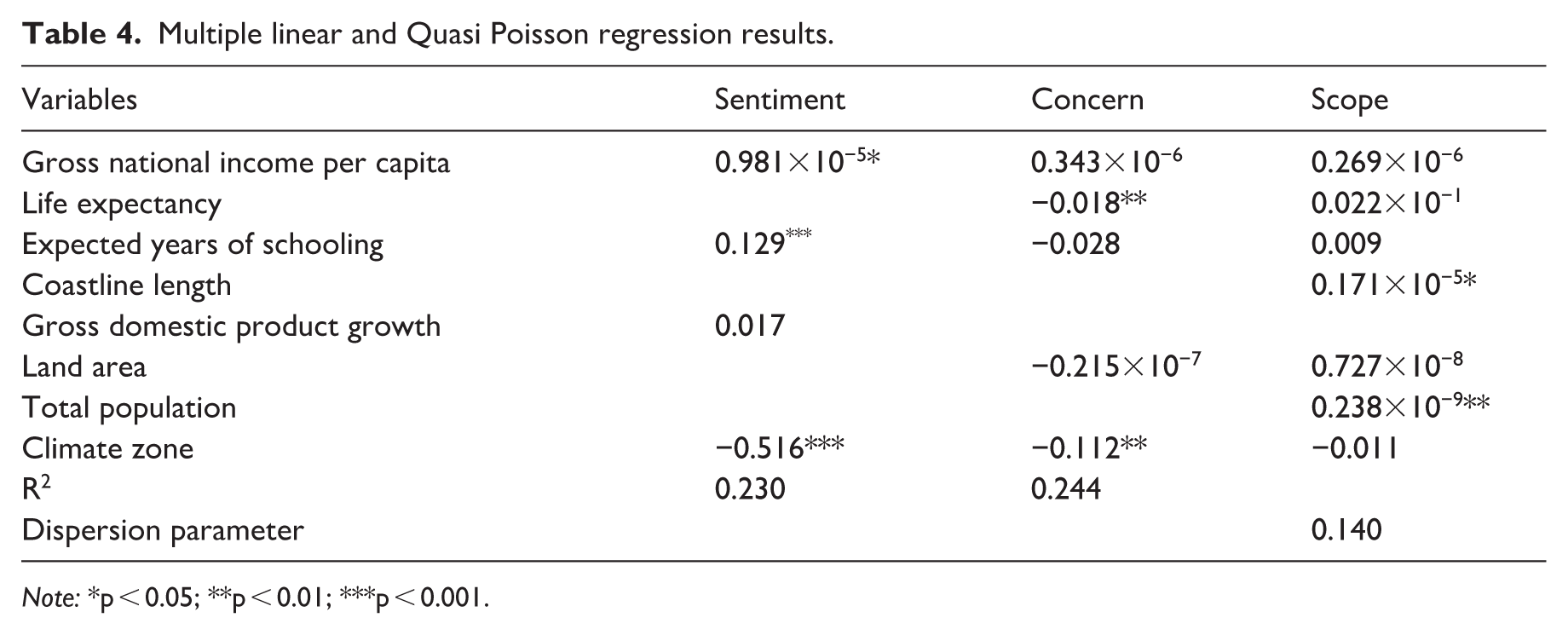
Based on correlation analysis we took only statistically significant variables for regression analysis. Table 4 presents the regression analysis that was conducted to examine the relationship between CCA recognition indicators and socio-economic, geographic and demographic indicators. Three regression analysis were conducted: MLR analysis was applied to sentiment and concern models, while QPR analysis was employed for scope models (Table 4).
Multiple linear and Quasi Poisson regression results.
Note: *p < 0.05; **p < 0.01; ***p < 0.001.
The results of sentiment model exhibit that GNI per capita with a very small coefficient, is positively and statistically significantly associated with the sentiment of CCA news (p < 0.05). Education plays a vital role in educating people about CCA. When the estimated parameter of expected years of schooling increases then the sentiment of CCA also significantly increases by 0.219 units. When moving from tropical regions to polar regions, the sentiment of news tends to shift towards negative (p < 0.001). A value of R2 (0.230) indicates that only 23% of the variation in the sentiment is explained by the independent variables.
The results of concern model reveal that the coefficients of life expectancy and climate zone are negatively associated with CCA concern (p < 0.01). The R-squared value 0.23 and 0.24 indicates that approximately 23% and 24% of the variability in the dependent variable can be explained by the independent variables included in the sentiment and concern model. The remaining 77% and 76% of the variability are not accounted for by the models. This unexplained variability may be due to other factors. A value of R2 (0.244) indicates that 24.4% of the variation in the dependent variable concern is explained by the independent variables.
QPR results show that with the positive change in coastline length, the difference in the logs of scope is likely to increases (p < 0.05). Moreover, increase in the population of a country the difference in the logs of S is likely to increase (p < 0.01). A dispersion parameter of 0.14 in a QPR indicates that there is moderate under dispersion in the data (Table 4).
Discussion
Exploring global perception and recognition of CCA efforts
The recognition of CCA efforts underscores the urgency of addressing environmental challenges. Public recognition significantly influences public participation in climate change actions (Lin et al., 2021). In this study majority countries (98) have negative sentiments about CCA. Majority countries potentially face challenges or barriers to recognition of CCA (Valente and Veloso-Gomes, 2020). The top countries with a negative sentiment are in the eastern region of Africa continent. These findings align with Baarsch et al., (2020) who demonstrated that both western and eastern African countries are exceptionally vulnerable to climate change impacts and most of the African economies are poorly adapting to climate change. Lower CCA sentiment in struggling or weak economies is due to higher vulnerability to environmental disasters because low income countries face high physical exposure, are economically dependent on climate sensitive sector agriculture, furthermore, they have limited human, institutional and financial capacity to anticipate and respond or adapt to climate change and natural disasters (Bowen et al., 2012; United Nations Conference on Trade and Development, 2013), and are more focused on immediate concerns such as poverty and food security. Even in high-income countries, the sentiment toward CCA is mixed, some show positive sentiment, while others show negative. Countries that are effectively meeting their CCA targets tend to have more positive sentiment. In contrast, those whose progress in adaptation remains insufficient compared to the scale of climate risks identified by the intergovernmental panel on climate change (IPCC) often display negative sentiment, reflecting a tone of concern, urgency, and criticism in media coverage.
Carrico et al., (2015) revealed that majority countries exhibit the least concern about CCA because they perceive adaptation as a solution that can be implemented in the distant future, thus leading them to believe that costly preventative actions in the present are unnecessary. Higher concern or more recognition in struggling economies might be due to these countries facing more severe environmental consequences and prioritizing environmental solutions more fervently. Moreover, it might be that the countries with lower economies might have overall less diverse news coverage topics, and potentially lower overall total news volume compared to developed countries. As a result, CCA news might constitute a relatively larger proportion of the total news coverage in these regions that are highly concerned about CCA. Developing countries in Africa, despite contributing less to greenhouse gas emissions, are experiencing a heightened frequency of climate-related events such as floods and droughts, necessitating urgent adaptation measures (CDP, 2020). It is intriguing to note that, Africa’s per capita emissions (1.2 tCO2) is significantly lower than regions such as Asia and the Pacific (4.4 tCO2), Latin America and the Caribbean (2.7 tCO2), and lower than half that of developed countries (9.5 tCO2) (IPCC, 2022). Countries across the globe differ in how and how much they cover climate change (Vu et al., 2019), which may be due to diverse global landscapes with varying degrees of concern.
Overall, the majority of the countries have a CCA scope of 5 around the globe, but African countries exhibit either 1-4 or 5 scope level, and some Asian countries also shows S at level 5. This level of scope might be due to the lower level of environmental education among climate change journalists in low-income countries (Wahyuni, 2017). CCA is inherently complex (Goonesekera and Olazabal, 2022), and influenced by environmental, political, social, cultural and economic dimensions. Moreover, geographic, and temporal variability significantly impact news reporting, as news outlets may prioritize different aspects depending on regional and global considerations. Understanding these patterns is crucial for tailoring effective communication strategies and policy responses to address the diverse needs and concerns of different regions. The multifactorial nature of news reporting, including editorial decisions and word selection, can influence the sentiment, concern and scope of CCA. For example, an event reported such as “one death during flood” may be considered highly significant in one region while relatively less impactful in another, resulting in variations in the wording that causes to change the sentiment of news.
Role of socio-economic, geographic and demographical indicators in CCA
Socioe-conomic, geographic, and demographic indicators encompass a range of factors including a country’s income, education, infrastructural development, access to resources, population, and geographic vulnerability. Globally, climate change disproportionately affects impoverished countries and individuals due to their limited access to resources, which hinders their ability to adapt to climate change and mitigate its effects. This disparity exacerbates vulnerabilities and intensifies the socio-economic challenges faced by impoverished populations (Marino and Ribot, 2012). Adapting to climate change requires social support and investment in resources, which is challenging due to inflation, rising living costs, energy poverty, and economic insecurity, affecting not just low-income countries (Lobo et al., 2023).
We found that a country’s economic condition plays a crucial role in the sentiment of CCA news. Fankhauser and McDermott (2014) argue that the increase in per capita income reduces the impact of extreme events. The countries with better gross national income per capita have more resources, better institutional capacity, so they have more positive CCA news sentiment, but some high-income countries still exhibit negative sentiment toward CCA news because, when the high vulnerability to climate disasters outpaces adaptation measures, it makes them appear less effective. Another contributing factor is that populations in high income countries often have higher expected years of schooling, which fosters a more critically engaged public. Consequently, they tend to be more vocal in discussing CCA, criticizing policies, and questioning their economic viability. We also found that countries with higher expected years of schooling are positively correlated with the sentiment of CCA news, while climate zone category (from Tropical to Polar) is negatively correlated. Education plays a crucial role in societal adaptation to climate change by raising the awareness (Krasny & DuBois, 2019; Lutz & Muttarak, 2014). It is also evident that polar regions are facing threats of melting permafrost, loss of icebergs, seismic risks, and pollution (Aktürk, 2022).
Countries with higher GNI per capita, life expectancy, and expected years of schooling have a negative relationship with the concern of CCA news. This pattern may indicate that in developed or highly educated societies, the news media is more diversified and covers a broader range of topics such as technology, innovation, scientific discoveries, environmental policies, and artificial intelligence. Consequently, the relative share of CCA-related news becomes smaller. Conversely, in countries with lower expected years of schooling, media discussions more commonly focus on access to basic services (e.g., health, water, and electricity), infrastructure, corruption, immediate economic concerns (jobs, inflation, and cost of living), and environmental disasters. While larger land areas can reduce CCA coverage due to population dispersion, resource allocation challenges, and diverse regional priorities. Additionally, more economic resources, higher level of public awareness, research capacity, health, institutional strength, access to information, and global engagement, collectively contribute to higher scope of CCA news. Residential location is associated with environmental attitudes, with poorer environmental conditions leading to higher level of concern (Tremblay and Dunlap, 1978).
Countries with higher GNI per capita exhibit significantly greater scope of CCA. High income countries have a strong institutional base, as well as financial and technical resources to adapt to climate change (Gagnon-Lebrun and Agrawala, 2006). Education serves as a powerful tool that not only imparts knowledge but also fosters critical thinking and awareness. With a well-educated populace, the capacity to adapt to climate change is enhanced in both the short and long term (Feinstein & Mach, 2020; Frankenberg et al., 2013). Countries with better living conditions and longer life expectancy may have better human resources to adapt to climate change, leading to more coverage of CCA in the news media. Conversely, adapting to climate change brings health benefits and lessens expected losses and damages to both human well-being and ecosystems (Kinney et al., 2023). Concerns about CCA are intricately tied to specific climate zones. People transitioning from tropical to polar climate zone exhibit lower recognition for CCA. This phenomenon is linked to a study by Kim and Bae, (2021), which indicates the expansion of tropical regions and the contraction of polar regions, exposing the latter to more climate change effects. Although there is already lower population density in polar regions as compared to tropical regions. This aligns with findings by Amuka et al. (2018), which suggest that climate change exposure tends to rise with higher population density. Countries with a longer coastline and larger population tend to exhibit a significant expansion in the coverage of themes related to CCA. The polar climate zone stands out as one of the areas most profoundly impacted by climate change (Kirby et al., 2021). Population dynamics also play a crucial role in shaping how individuals are impacted by and respond to climate change. The size, distribution, and composition of populations influence vulnerability, adaptive capacity, and the overall resilience of communities in the face of environmental challenges (UNFPA, 2012). The low R-squared values for the sentiment (23%) and concern model (24.4%) can be attributed to the complexity of CCA recognition. This complexity is influenced by numerous factors, such as political will, CCA education, international agreements, and cultural norms, that are difficult to measure consistently across all countries.
The limitation of this study is the use of data from only one year (2022) that might not completely cover the CCA events because adaptation is long term process. This one year focus may miss significant fluctuations in climate events, policy announcements, government priorities, and seasonal variations, potentially leading to an incomplete picture of overall trends and dynamics. Additionally, the findings may be skewed if 2022 had either fewer or more significant events compared to other years, resulting in an underestimation or overestimation of media attention and public engagement with CCA. Future work could be enhanced by utilizing long-term data to gain a broader perspective on CCA recognition. Additionally, separate analyses could be conducted on a regional basis or by income level, employing these three unique CCA recognition indicators. This approach will elucidate the varying levels of public recognition of CCA across different economies.
Conclusion
This is one of the first comprehensive global studies that investigates the recognition of CCA by developing and analyzing three key indicators: sentiment, concern, and scope. This study fills a gap in understanding global CCA recognition by examining how CCA is perceived and discussed in news media worldwide, as well as how the media responds to CCA developments across the globe, utilizing the comprehensive GDELT dataset. This study also contributes to addressing the knowledge gap in CCA discussions within news media and public responses to climate disasters. These insights are crucial for designing targeted adaptation strategies and identifying areas where public awareness and education are needed.
Pearson and Spearman correlation analysis were employed for sentiment, concern and scope to investigate their relationship with socio-economic, geographic, and demographic variables. Moreover, MLR and QPR models were employed to investigate how different socio-economic, geographic, and demographic indicators influence the recognition indicators.
The findings reveal notable differences in CCA recognition across the globe. Majority countries (98) have negative sentiment irrespective of the category of income group but the intensity of negative tone or sentiment is higher in low-income countries like African and Asian countries. There is a gap between the need for adaptation and adaptation progress. Results also shows that globally majority countries are least concerned (concern vlaue near to 0) about climate change adaptation and majority countries in Africa region are highly concerned might be due to the high frequency of disasters, dependency on climate sensitive sector like agriculture and least resources to adapt the CC. Moreover, the findings reveal that socio-economic, geographic, and demographic determinants play a significant role in shaping the recognition of climate change adaptation. Education serves as a critical mechanism for enhancing public awareness and understanding of climate change, thereby fostering adaptive behavior and resilience. Similarly, higher income levels facilitate the implementation of effective adaptation strategies by improving access to resources, technology, and institutional support. Furthermore, countries with higher life expectancy and located in certain climate zones exhibit a lower level of concern and place less emphasis on climate change adaptation. This pattern may reflect their relatively lower exposure to climate-related disasters, higher levels of human capital, or a national focus on other emerging issues such as technology, innovation, and artificial intelligence. Consequently, while the overall volume of news coverage may be high in these countries, the proportion of climate change adaptation related news tends to be comparatively lower. Countries with more favorable socio-economic, geographic, and demographic conditions tend to have populations that are more vocal and engaged in discussions about climate change adaptation. As a result, media in these countries cover a wider range of topics related to climate change adaptation. A multi-faceted approach involving education, economic development, and public health is essential for global CCA recognition.
The findings have several actionable implications for policymakers, governments, and media-driven recognition metrics that can improve CCA strategies globally. Firstly, policymakers can leverage these insights to craft more effective communication strategies that highlight the urgency and importance of CCA. Secondly, countries with negative CCA news sentiment, low concern, and low scope of CCA coverage present critical areas for intervention and policymakers should prioritize efforts to enhance public awareness and engagement in these regions. This can be achieved through targeted educational campaigns, media partnerships, and community outreach programs that emphasize the local impacts of climate change and the benefits of adaptation measures. Thirdly, the conceptual framework of CCA recognition offers a valuable tool for analyzing progress. Policymakers can use this framework to monitor and evaluate the effectiveness of their CCA initiatives. By tracking media sentiment and public concern over time, they can identify trends and adjust their strategies accordingly.
Footnotes

Funding
The authors disclosed receipt of the following financial support for the research, authorship, and/or publication of this article: This work was supported by the National Key R&D Program of China (Grant No. 2023YFF1304700).
Declaration of conflicting interests
The authors declared no potential conflicts of interest with respect to the research, authorship, and/or publication of this article.
Data availability statement
The data that supports the findings of this study are available from correspondent authors upon reasonable request.