




Abstract
In the past 20 years, the ecological risks arising from climate change have attracted increasing attention. Understanding its research progress and the evolution of hot topics is paramount. However, efficient, in-depth, and robust analysis of massive and complex unstructured literature is difficult. This study employs a novel approach integrating data mining, bibliometrics, and systematic review to analyze 9122 interdisciplinary publications from 2000 to 2023. Our findings reveal a consistent annual increase in publications, with a marked acceleration post-2015. The United States and China have emerged as leading contributors to this field. Over time, the theme has traversed three pivotal hotspots and over 100 hot words. We have summarized research progress from the early to late stages into nine aspects: (1) species and population responses; (2) ecosystem impacts; (3) social-ecological system risks; (4) land use/cover change interactions; (5) ecological processes; (6) ecosystem services; (7) sustainable development goals; (8) ecosystem conservation, management, and adaptation; and (9) ecological risk assessment and major models. Additionally, we summarized international policies and efforts to combat climate risks, research gaps, and potential directions for future progress: establish the unified and comparable regional risk assessment framework; strengthen research on ecological processes, multiple sources of pressure, and composite risks; enhance research on the space-time and flow of risks; establish high-precision basic datasets; and improve communication and cooperation among multiple stakeholders. This study provides a systematic and comprehensive review of climate change’s ecological risks, which may inspire researchers interested in this field.
Introduction
Climate change causes ecological risks
The evidence of climate change is already countless (Berrang-Ford et al., 2011; Houghton et al., 2001; Smith et al., 2009). No matter how much progress is slowed down, it cannot prevent significant warming of the earth in the future (Ramanathan and Feng, 2008). Especially in modern times, atmospheric CO2 has increased by 31% since the Industrial Revolution, from 280 ppm to over 400 ppm today (Arnell et al., 2002; Faria et al., 2013), which is widely believed to cause global warming and is considered to have exceeded the limits of natural change (Houghton et al., 2001). It poses significant ecological risks, which is increasingly becoming a focal point of scientific research.
Ecological risk is defined as the probability of adverse ecological impacts occurring (Bartell, 2008; Suter, 2016), and its concept involves ecology, environmental chemistry, environmental toxicology, geochemistry, hydrology, and other basic sciences. Overall, ecological risk assessment research has evolved from experience to theory, from simple analysis to complex systems, and from qualitative description to quantitative model evaluation. The research on ecological risk initially focused on the adverse ecological effects of toxic chemicals. With the development of disciplines, the scope of pressure sources has expanded to include physical, geological, hydrological, and ecological ones (Bartell, 2008). Among others, climate change has been considered the most critical factor leading to ecological risks (Hulme, 2005; Landis et al., 2013). Global climate change, such as rising temperatures and changes in rainfall patterns, affects the physiological functions of organisms (such as growth, reproduction, and migration patterns), impacts the interactions between species in ecosystems, and affects the structure, productivity, and stability of ecosystems.
Climate change leads to significant ecological risks (Landis et al., 2013), and affects national security (Rashid et al., 2011; Schwartz and Randall, 2003). With the rapid development of global climate change, the number of studies related to ecological risk under climate change is constantly increasing, such as the extinction risk and the impact of climate change on terrestrial ecosystems (Lobell and Gourdji, 2012; Olesen and Bindi, 2002). Specifically, higher temperatures can accelerate crop growth, shorten its growth cycle, lead to potential pests and diseases, and result in a decrease in yield (Lobell and Gourdji, 2012). Although the global increase in atmospheric CO2 can increase vegetation productivity, disturbances related to insufficient soil moisture supply and extreme drought may reduce the benefits of such fertilization and pose a high risk to the global carbon cycle (Xu et al., 2019). Climate change also impacts river ecosystems (Palmer et al., 2009; Siddha and Sahu, 2022), such as reducing the local biodiversity and increasing flood risks (Palmer et al., 2008). Changing climate is recognized as having a negative impact on ecosystem services (Costanza et al., 2014; Schröter et al., 2005), undesirable impacts on land use, i.e. sea level rise (Olesen and Bindi, 2002), on biodiversity loss (Bellard et al., 2012; Pecl et al., 2017), on chemical sediments (Noyes et al., 2009), on human health and well-being (D’Amato et al., 2015), as well as causing disasters or hazards such as forest fires, droughts, extreme precipitation, heat waves, the emergence and intensification of virus transmission (Wang et al., 2023a), and more.
Despite extensive research by scholars on ecological risks under climate change, there is still a significant knowledge gap in terms of systematic quantification and synthesis of existing literature. Most studies focus on specific aspects of ecological risks but lack a comprehensive framework to integrate different findings into a coherent understanding. This gap limits the ability to develop overall strategies to mitigate ecological risks caused by climate change. Therefore, this study aims to address the gap by conducting a structured quantitative assessment of the literature on the theme. Our goal is to identify methodological approaches, research priorities, and key trends of the theme to give a potential guide for future research and inform policy decisions.
Literature review method
As a vital method for studying the evolution and trends of research hotspots, bibliometrics provides quantitative descriptions and detection of data, as well as methods and strategies to provide reasonable and objective results (Broadus, 1987; McBurney and Novak, 2002). It specifically refers to a comprehensive knowledge system emphasizing quantification, utilizing mathematical and statistical methods to quantitatively analyze all knowledge carriers in interdisciplinary science. The combination of statistical knowledge and literature scientific graphs is considered an efficient method for describing the development of research fields (Sarkodie and Strezov, 2019; Sun et al., 2024; Yu et al., 2024). Text mining is a method where users interact with a set of documents using various analysis tools to identify and explore patterns of interest (Feldman and Sanger, 2007; Song et al., 2021). It is a complex knowledge-intensive process that focuses on analyzing and modeling unstructured natural language texts (such as scientific research papers, medical documents, etc.), which can improve the efficiency and accuracy of literature reviews while enhancing deep mining of textual data. For instance, Yu et al. (2024) used bibliometric analysis combined with co-occurrence analysis to analyze the research trends of emerging pollutants from 2001 to 2021. Another study conducted bibliometric analysis on olive oil based on 2345 references, and combined network co-occurrence analysis to investigate the participation and cooperation relationships among authors, countries, and journals of publications (George et al., 2021). In order to analyze massive amounts of data, scholars have used topic modeling enhanced text mining to analyze abstracts of over 15,000 papers and analyze trends and differences in research on biodiversity and ecosystem services (Bao et al., 2018). Miao et al. (2024) analyzed the progress and evolution of global hydrological research over the past 40 years based on large-scale language models, bibliometrics, and scientific graphs. In terms of ecological risk overview under climate change, scholars have conducted extensive and beneficial explorations on the theme. However, they mostly focused on a single aspect of ecological risks under climate change, such as ecological risk assessment (Landis et al., 2013), ecological risk management (Aplet and Mckinley, 2017), assessment and management of both (Hope, 2006), freshwater ecosystems (John et al., 2021), assessment and modeling (Barnthouse, 1992), biodiversity (Kienast et al., 1998), species extinction (Maclean and Wilson, 2011), public health (Patz, 2001), and so on. An obvious research gap is that there is almost no comprehensive review of the theme.
Key issues addressed in this study
In this study, we conducted a comprehensive bibliometric and systematic analysis of ecological risk under climate change-related publication data. A total of 9122 papers published on related topics from 2000 to 2023 were collected, the research objectives are as follows: (1) to study the spatiotemporal distribution, countries, institutions, disciplines, and journals of papers published related to ecological risk under climate change; (2) using data mining, bibliometrics, and literature review method to clarify the status, evolution, and trends of research hotspots, and provide a systematic overview of the development of related knowledge discipline systems related to ecological risk under climate change and to summarize international policies and efforts to mitigate climate change risks; (3) to discuss the existing knowledge gaps and future directions of papers related to ecological risk under climate change.
Method
Data retrieval
The method used in this study is similar to other bibliometric studies (Sun et al., 2024; Yu et al., 2024). In the study, the raw data used was from all online databases of the Web of Science. To obtain accurate records, the following parameters were set to retrieve the search: TS (Topic, consisting of title, abstract, and keywords) = (Climate Change AND Ecological Risk). Due to the small number of related publications from before 2000, the date range for literature selection was set from “2000-01-01” to “2023-12-31”. We filtered the records by limiting publication types to “articles” and “review articles”, and limited the language to English or Chinese. A total of 9122 records were collected and exported in a tab-separated file format, which included information such as the title, author, year, keywords, source, and abstract of each article.
Quantitative analysis
The number of published papers is considered a key factor in distinguishing the popularity of publication in this research field (Yu et al., 2024). In this study, we mainly used all online databases collected from Web of Science to calculate the annual published paper data and used Microsoft Excel to summarize, analyze, and reveal the growth of paper publication on the theme of ecological risk under climate change from 2000 to 2023. Information such as the country, institution, research field, and paper publication journal was collected.
Data mining and co-occurrence analysis of terminology
Considering the impact of data export format on software usability, we reviewed 5890 papers on “Science citation index expanded-1900-present” and “Conference Proceedings citation index-science-1991-present” in the core dataset of Web of Science. Initially, due to the powerful text processing capabilities, flexibility, and scalability of the R language “tm” package (Li and Yan, 2018; Li et al., 2017), we used the “tm” package of text data mining to analyze the top 100 hot words with the highest frequency of appearance in nearly 5890 papers. (Preprocessing of data includes removing words such as “a”, “the”, “of” that may interfere with the results, and the workflow includes converting text encoding to UTF-8 to avoid encoding issues; creating a text corpus; creating a word frequency matrix; and retrieving the top 100 keywords with the highest frequency of occurrence). In order to obtain efficient clustering analysis, visualize co-occurrence network diagrams, ensure cross platform compatibility, and ensure robustness of data analysis (Guleria and Kaur, 2021; Kirby, 2023; Van Eck and Waltman, 2010), the co-occurrence network of countries, research institutions, and keywords was constructed and visualized using VOSviewer 1.6.20 (Sun et al., 2024; Yu et al., 2024). Then, the minimum occurrence frequency was set to 30 and we filtered out 270 keywords in the VOSviewer for subsequent analysis. We set the minimum occurrence frequency of ecosystem research to 30 and filtered out 121 keywords for subsequent analysis . The setting of ecosystem services is 30 (44); The content related to the Sustainable Development Goals is set at 5 (29) . The explicit expression of the networked structure of the frequency and time of keyword appearances in research results can help readers understand “keyword clusters” and the relationship between keywords and time evolution. In the settings of the country (104), and research institution (762), a minimum occurrence frequency of 5 was determined for subsequent analysis. The above parameter settings are supported by relevant review papers (Abdelwahab et al., 2023; Martins et al., 2024; Nandiyanto and Al Husaeni, 2022; Xie et al., 2020; Zhang et al., 2022b). Moreover, the top 20 highly cited papers were also selected from 5890 articles (Figure 1).
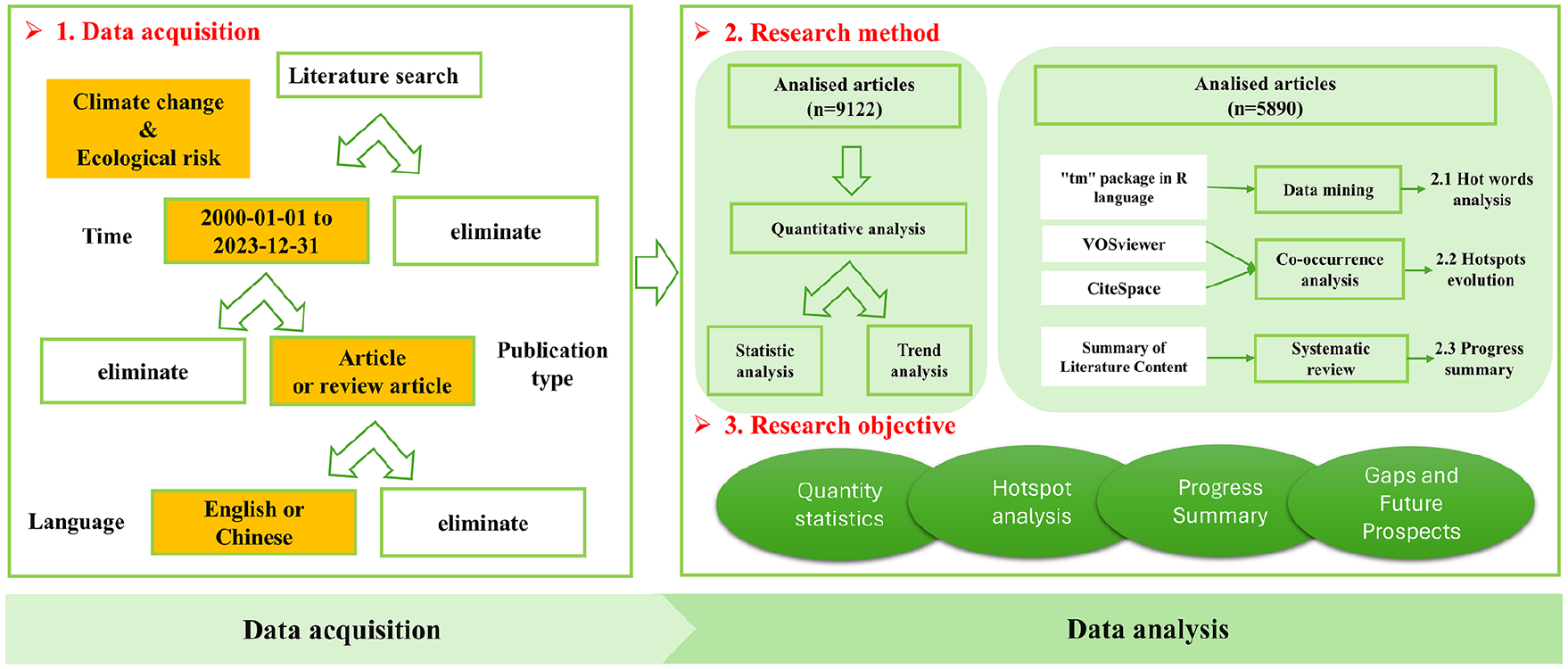
Research flowchart.
Trend analysis
The average growth rate (AGR) of publications can reflect the annual growth of papers related to relevant disciplines and topics. The formula is as follows:

where AGR represents the annual growth rate, and Ys and Ye represent the start and end years of the research period, respectively. Pi and Pi-1 represent the number of publications for the current year and the previous year, respectively. The higher the AGR, the higher the growth rate of the publication.
Results and discussion
The distribution and trend of publications related to climate change and ecological risk
Research has found (Figure 2) that from 2000 to 2023, the annual number of papers in this research field has gradually increased from 21 papers in 2000 to 1020 papers in 2023, and the number of accumulative papers published in the Web of Science database related to climate change and ecological risk has increased in recent years, with an average year-on-year growth rate of 25.66%. By 2023, the total number of published papers has reached 9122, indicating that the popularity and importance of this research field on a global scale are increasing significantly.
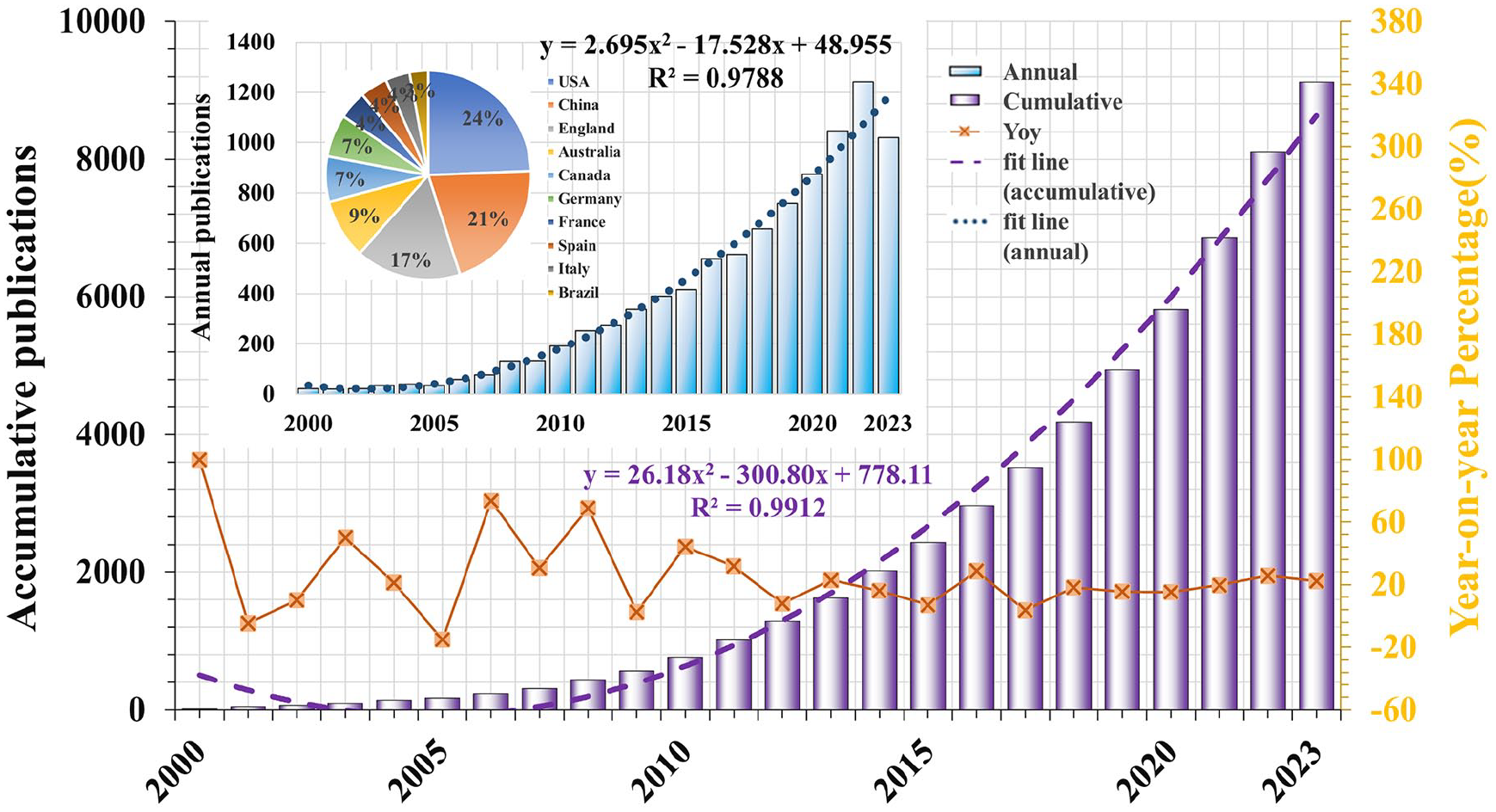
The temporal evolution of publications related to ecological risk under climate change in the Web of Science database from 2000 to 2023. The pie chart is the top 10 countries in the Web of Science database that published the most papers related to the topic.
Among 200 countries and regions, the United States and China have successively published the most relevant publications (Figure 2 and Online Suplementary Figure S1a). The institutions of the Chinese Academy of Sciences and the University of the Chinese Academy of Sciences published the most articles, followed by the US Geological Survey (Online Suplementary Figure S1b). This may be related to the promulgation of relevant laws and policies, such as the Ecological Risk Assessment Framework designated by the US Environmental Protection Agency in 1992 which was the world’s earliest guidance document on ecological risk assessment (Hope, 2006; Norton et al., 1992). This has promoted the promulgation of multiple environmental laws, which is supported by the publication records of relevant papers. The National Security Law of the People’s Republic of China was promulgated in 2015, which has promoted the vigorous development of ecological risk (Rule 30) and related field publications in China since 2015. Similarly, China has implemented a series of national policies emphasizing ecological protection and sustainable development, such as the “Ecological Civilization” strategy and the 14th Five Year Plan. These policies incentivize research institutions to prioritize climate change and ecological risk research. In addition, a large amount of research funding has supported the development of research, such as the National Science Foundation (NSF) and the National Institutes of Health (NIH) funding many projects related to climate change and ecological risks. In China, major funded projects such as the National Natural Science Foundation of China and the Chinese Academy of Sciences strategic key projects have provided plenty of support for relevant research. In the meanwhile, practical needs and environmental challenges are the driving forces behind extensive research work. The United States is facing challenges such as extreme weather events and biodiversity loss (Clark et al., 2013; Dirzo and Raven, 2003; Gao et al., 2012; Greenough et al., 2001); China is striving to address issues such as air pollution, water scarcity, and ecosystem degradation (Akiyama and Kawamura, 2007; Chan and Yao, 2008; Feng et al., 2016; Matus et al., 2012).
In addition, 145 disciplines worldwide have conducted research on ecological risks under climate change, with environmental science and ecology being the most relevant, followed by meteorological atmospheric science and biodiversity conservation (Online Suplementary Table S1). As for the journals (Online Suplementary Figure S2), Science of the Total Environment has published the most papers on related topics, with a cumulative total of 256 over the years, followed by Global Change Biology (218 papers) and Plos One (199 papers). The most influential literature shows that they mainly focus on issues such as biodiversity, extinction, and modeling under climate change (Online Suplementary Table S2).
Hot word statistics and hotspot evolution in ecological risk research under climate change reflected by keyword cluster and typical stages
Figure 3 depicts the statistical results of hot words. Among them, species, change, China, assessment, management, environmental, study, distribution, global, future, water, effects, cases, conservation, potential, impacts, forest, vulnerability, ecosystem, and using are the most popular keywords in ecological risk research under climate change; And conditions, role, fish, area, strategies, southern, food, data, south, predicting, community, system, sea, patterns, vegetation, extinction, scenarios, plant, restoration, and northern are relatively weaker words among the top 100 buzzwords.
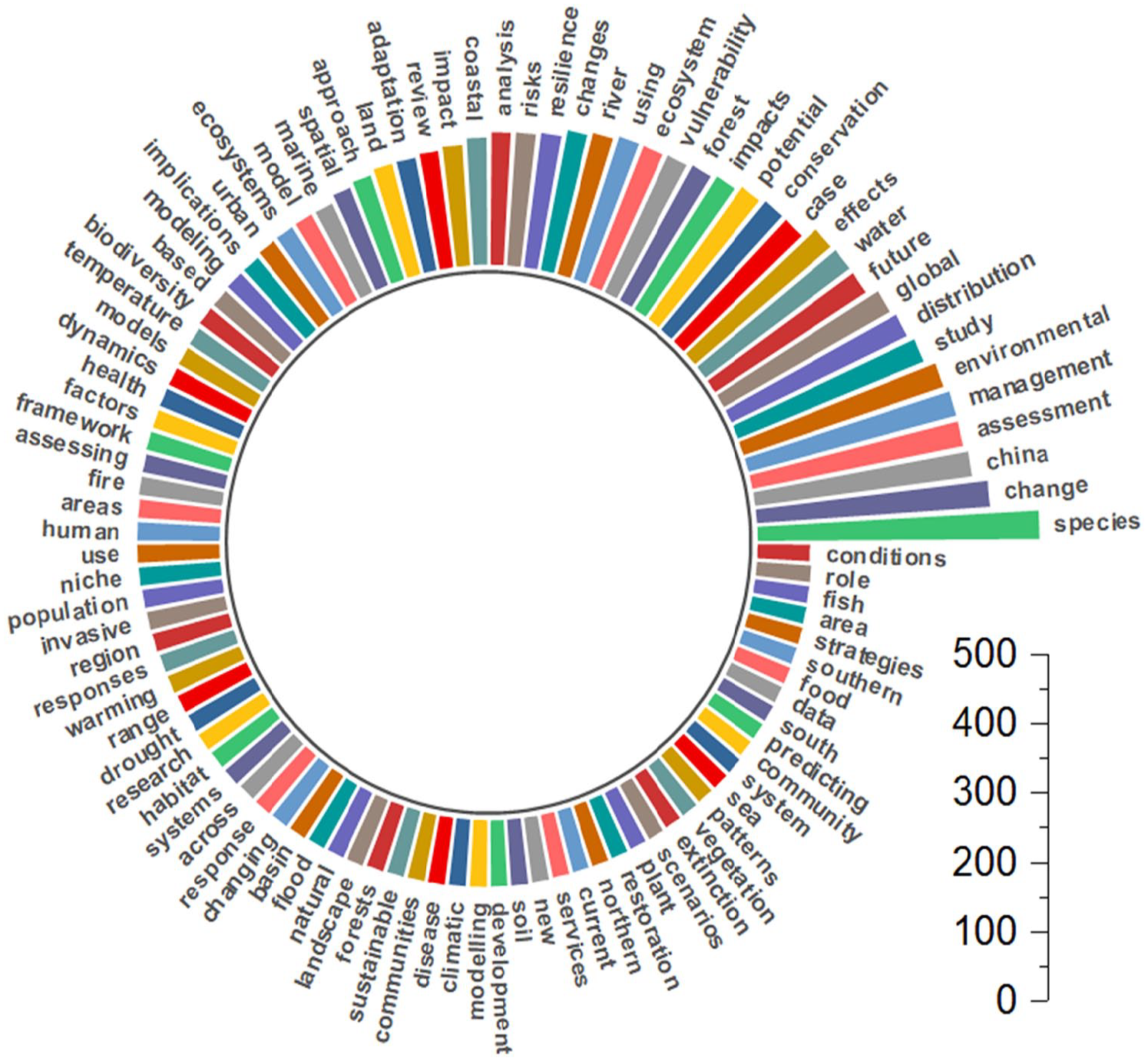
Analysis of key hot words mining based on text corpus (Top 100).
Then, 290 most relevant terms were collected from the titles, keywords, and abstracts of publications, and a co-occurrence network was formed. Identifying the core structure of topics and tracking research hotspots and trends plays an important role in citation analysis and knowledge management. In Figure 4 the size of the bubbles reflects the number of occurrences, and the color represents different clusters classified based on co-occurrence analysis. Among them, the four clusters generated by VOSviewer are shown in Figure 4a, they are displayed in blue, yellow, red, and green, respectively. Cluster 1 is mainly a social system (urban) cluster; Cluster 2 mainly refers to national and intercontinental scales, such as Australia, Africa, etc.; Cluster 3 mainly focuses on biodiversity; Cluster 4 mainly focuses on ecosystems, ecosystem services, and land use related content. The average occurrence time is shown in Figure 4b, which uses the colors for identification (blue-green: lower right cluster; green: middle and upper left cluster; yellow: left cluster). The results showed (Figure 4b) that three typical clusters developed over time (2015-2019), focusing on (1) extinction risk, species, habitat, evolution, and distribution; (2) vulnerability, resilience, ecosystems, socio-ecosystems, land use, sustainable development, response, management, and adaptation; and transition to (3) ecosystem services, indices (such as NDVI), degradation, lakes, soil, runoff, groundwater, and spatial distribution. This can reflect the transformation of ecological risk from the establishment of disciplinary theoretical frameworks in the past five years, focusing on species or population scale research, to ecosystem scale research (including ecosystems and socio-ecological systems), and to higher-level ecosystem services closely related to human well-being, ecological indices, water ecosystems, and soil ecosystems, etc. Moreover, the evolution of research hotspots emphasizes the shift towards a comprehensive and systematic perspective. The possible reasons for this transformation are the gradual deepening of ecological research, the increasingly significant importance of ecosystem services as influencing human well-being and socio-economic activities (Millennium Ecosystem Assessment, 2001), the development of interdisciplinary integration and remote sensing technology with advanced modeling, and so on.
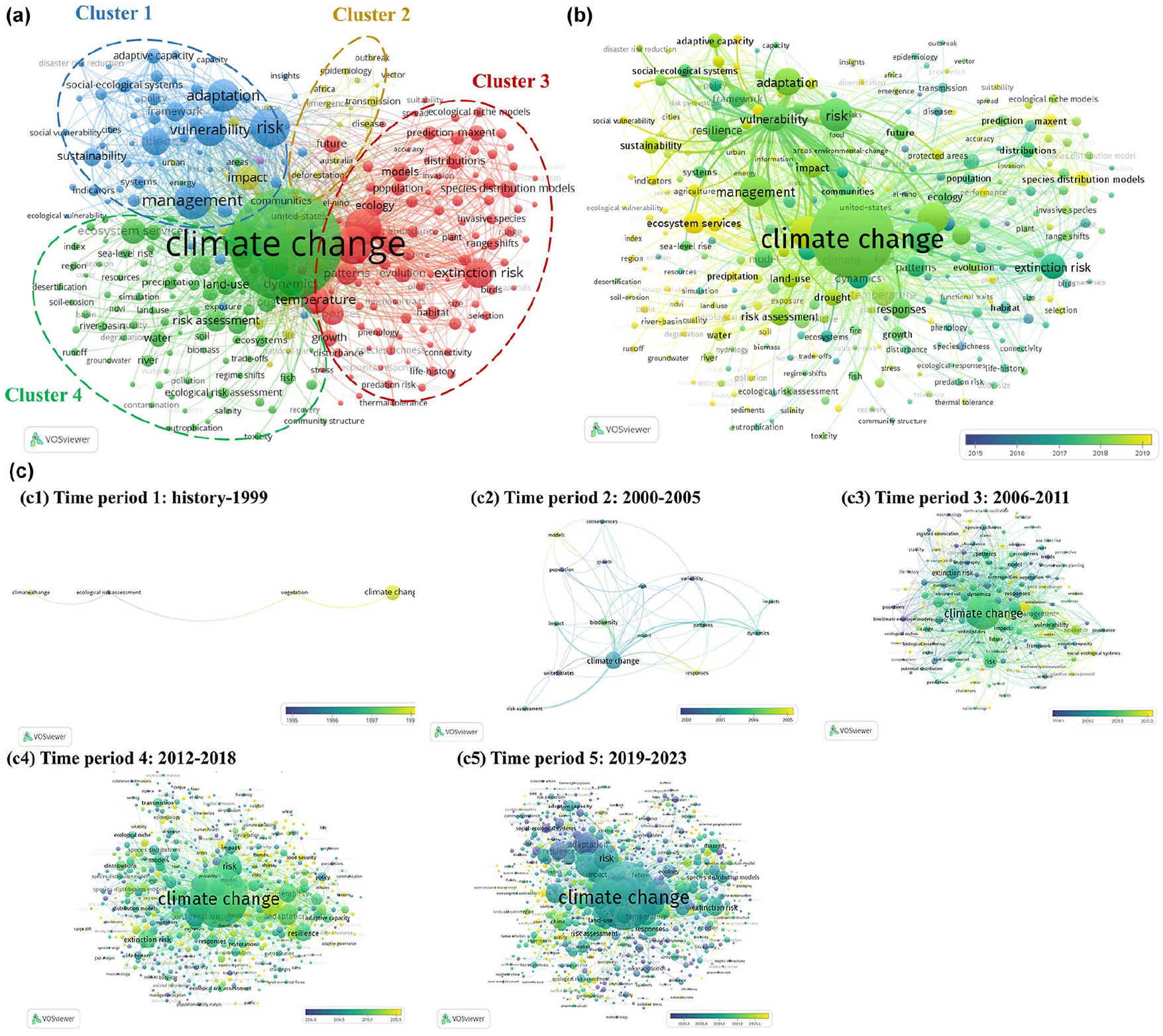
The co-occurrence network diagram of keywords related to the ecological risk of climate change. (a) The overall co-occurrence network clustering diagram under this theme in historical periods; (b) The temporal evolution of the overall co-occurrence network diagram under this theme during historical periods; (c) Co-occurrence network diagram in different time periods; (c1) history-1999; (c2) 2000-2005; (c3) 2006-2011; (c4) 2012-2018; (c5) 2019-2023.
We tried to capture as comprehensive a list of hot keywords as possible. Figure 4c reveals the evolution process of the research keywords.
Before 2000
Research mainly focused on vegetation and ecological risk assessment; This early emphasis likely stemmed from the growing recognition of human impacts on ecosystems, which prompted studies on vegetation dynamics and baseline ecological risk assessments.
2000–2006
The focus shifted to biodiversity (Scholze et al., 2006), population response and consequences to climate change (McCarty, 2001), and related risk assessments and models (Kiker et al., 2005; Thuiller et al., 2005). This period coincided with the publication of the Millennium Ecosystem Assessment (MA) in 2005, which highlighted the critical role of biodiversity in ecosystem functioning and human well-being. Additionally, the adoption of the Kyoto Protocol in 1997 and increasing global awareness of climate change likely spurred research on biodiversity loss and population-level impacts.
2006-2012
The research topic also shifted to patterns, extinction risk (Maclean and Wilson, 2011), vulnerability (Lindner et al., 2010; Preston et al., 2011), resilience (Cannon and Müller-Mahn, 2010; Lavell et al., 2012), and dynamic response (Post et al., 2009; Walther, 2010), and in the early stages of the study, there was also related content on science (Füssel, 2007) and risk assessment. The Intergovernmental Panel on Climate Change (IPCC) Fourth Assessment Report (2007) emphasized the vulnerability of ecosystems to climate change, which likely influenced this trend. Furthermore, the concept of resilience gained traction as researchers sought to understand how ecosystems could adapt to or recover from disturbances.
2012-2018
The themes and content of research were greatly expanded, with a wide range of research topics and keywords, including biodiversity, conservation (Felton et al., 2016; Garcia et al., 2014), management (Bernai, 2013; Field, 2012), vulnerability (Liverman, 2013; Pacifici et al., 2015; Thornton et al., 2014), resilience, extinction risk, response (Bellard et al., 2012; Bulkeley and Betsill, 2013), patterns (Anav et al., 2015; Huang et al., 2016), dynamics, etc. The study on ecosystem services has also been greatly enriched and researched during this stage (Biggs et al., 2012; McPhearson et al., 2015), which may be related to the ecosystem service research boom sparked by MA in 2005 (Millennium Ecosystem Assessment (MEA), 2005). Additionally, the Paris Agreement in 2015 underscored the need for sustainable management practices to mitigate climate change impacts.
2018-2023
Research has focused on management, conservation, biodiversity, adaptive management, ecosystem services, and sustainable development (Cramer et al., 2018; Di Marco et al., 2020; Zhenmin and Espinosa, 2019). The modeling research on climate change impacts, ecosystem responses, patterns, and dynamics (Marsooli et al., 2019; Smith and Mayer, 2018; Trisos et al., 2020; Wang et al., 2019) has flourished during this period, which deserves our attention. In addition, 2018-2023 was the most rapid and extensive stage of research development related to ecological risk under climate change, which is consistent with the results of the previous chapters. This trend reflects the growing urgency to address climate change through evidence-based decision-making, which is alleviated by the IPCC Special Report on Global Warming of 1.5°C (2018). The integration of interdisciplinary approaches—combining ecology, climatology, social sciences, and policy studies—has enabled a more holistic understanding of ecological risks under climate change.
To achieve accurate results, we also used the software CiteSpace to analyze the temporal evolution of hotspots in the literature of ecological risk under climate change. Online Supplementary Figure S3 illustrates the evolution of relevant themes , with the results showing that the initial focus of research was on climate change, individual organisms, populations, and evolution. Subsequently, ecosystem services, land use change, and sustainability became research hotspots. The emergence of hot vocabulary in China in 2015 and Loess Plateau in 2020 is highlighted.
Combining Figure 4 and Online Supplementary Figure S3 with national scale hotspot statistical analysis, the results of the evolution of three hotspots have led to relatively consistent results, that is, the evolution and trend of hotspots are (Figure 5, there are differences in hot research topics among different countries): (1) the response of species and populations; (2) The impacts on ecosystems, such as atmospheric circulation, vegetation ecosystems, soil ecosystems, river ecosystems, and modeling framework establishment for risk assessment including the concepts of exposure and vulnerability; (3) The response of ecosystem services, the consequences for sustainable development, and the management, conservation, and adaptation of ecosystems. Figure 5 also illustrates the differences in research themes between China, the United States, and other countries under the theme. The results show that the United States focuses on protection, management, and adaptation measures, biodiversity, and content such as ecosystem services; China pays more attention to its own region, ecosystem services, models, land use/cover, protection, management, and adaptive measures, while Australia focuses on biodiversity, conservation, management, and adaptation, ecosystem services, and dynamics, etc.
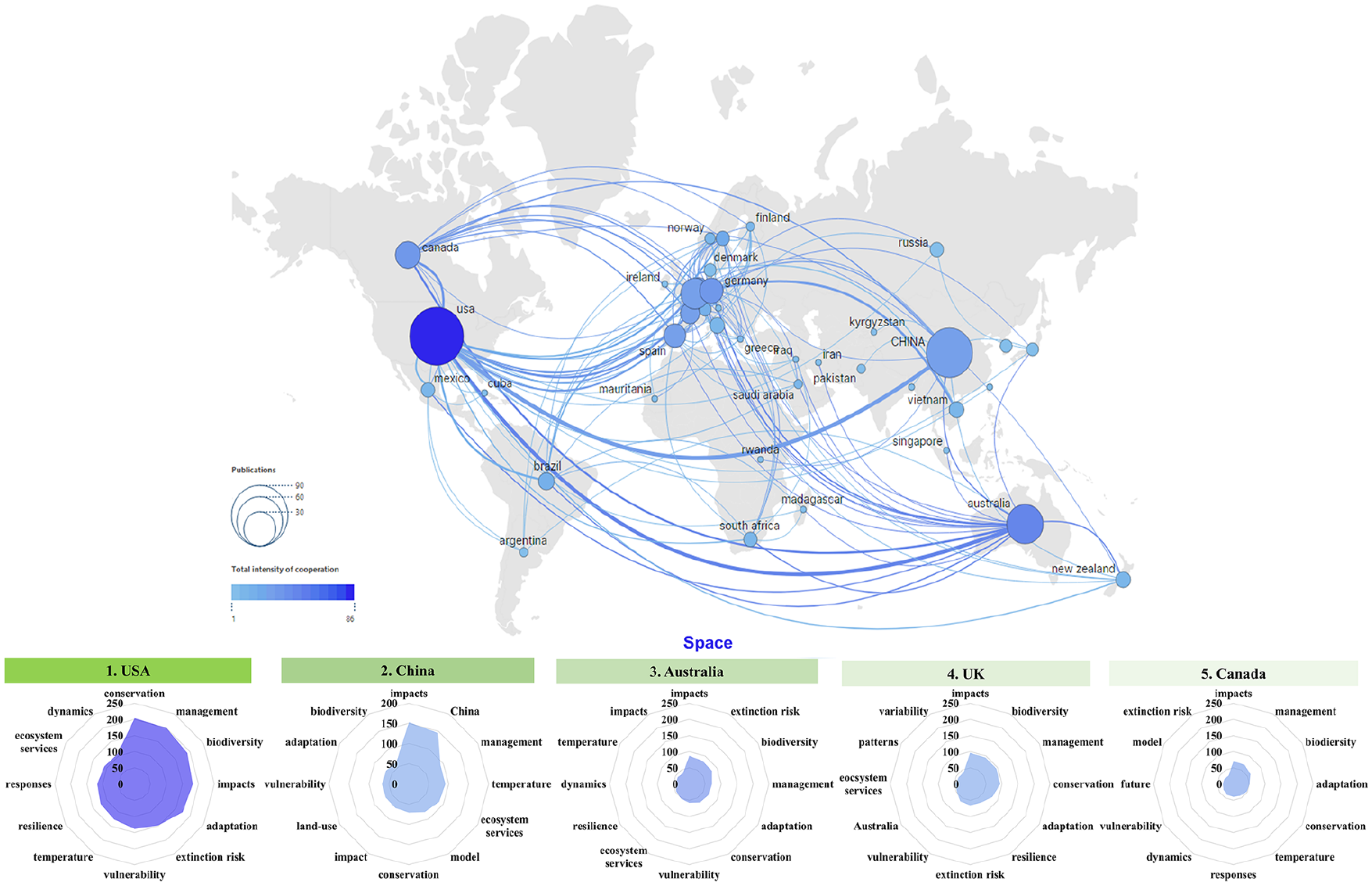
Publication hotspot evolutions and situations of papers related to ecological risk under climate change among time and space. The radar chart indicates the occurrences of the keywords for the five countries with the largest publications in ecological risk under climate change (excluding keywords such as climate change and risk assessment).
International policies and efforts address climate risks
Here, we summarize several key international policy measures. Early climate change policies included the United Nations Framework Convention on Climate Change (UNFCCC) proposed in 1992 (Tompkins and Amundsen, 2008), aimed at addressing climate change through international cooperation and ensuring stable greenhouse gas concentrations at levels that do not pose a threat to the earth system. This laid the foundation for international cooperation and promoted global consensus on mitigating climate change risks. However, its non-binding nature limited its effectiveness in driving concrete actions. The Kyoto Protocol, proposed in 1997 (Oberthür and Ott, 1999), established legally binding emission reduction targets for industrialized countries. While it represented a significant step forward, its limitations were evident. For instance, the United States, one of the largest emitters at the time, did not ratify the protocol, and developing countries were exempt from binding targets. These issues undermined its global impact and highlighted challenges in achieving equitable participation. The 2012 Rio Agenda for Strengthening Action emphasized sustainable development and international cooperation (Dodds et al., 2014). However, its broad scope and lack of enforceable mechanisms limited its ability to drive specific climate actions. The 2015 Paris Agreement marked a turning point by setting a global goal to limit warming to 1.5°C or 2°C above pre-industrial levels (Falkner, 2016). Its strength lies in its inclusivity, as nearly all countries submitted Nationally Determined Contributions (NDCs). However, challenges remain: (1) Ambition Gap: Current NDCs are insufficient to meet the 1.5°C target, requiring more ambitious commitments. (2) Implementation Gaps: Many countries lack the financial resources and technological capacity to achieve their NDCs. (3) Monitoring and Accountability: While the agreement includes transparency frameworks, enforcement mechanisms remain weak. The 2015 Sustainable Development Goals (SDGs) highlight the interdependence of climate action and sustainable development. However, progress has been uneven, with many countries struggling to balance economic growth with environmental protection. The 30 × 30 initiative, from 2019, included in the Kunming-Montreal Global Biodiversity Framework, aims to protect 30% of the world’s terrestrial and marine areas by 2030 (Dinerstein et al., 2019). While ambitious, it faces challenges such as: (1) Coordination between protection and development: Balancing conservation goals with economic interests remains contentious. (2) Lack of standards: The absence of clear guidelines for protected area management hampers effective implementation.
In summary, these international policies have played a crucial role in mitigating climate change risks by fostering global cooperation and setting ambitious targets. However, their effectiveness is constrained by issues such as insufficient funding, technological gaps, uneven participation, and weak enforcement mechanisms. Addressing these challenges requires stronger political will, enhanced financial support, and innovative solutions to bridge implementation gaps.
Here, we summarize several key international policy measures. Early climate change policies included the United Nations Framework Convention on Climate Change (UNFCCC) proposed in 1992 (Tompkins and Amundsen, 2008), aimed at addressing climate change through international cooperation and ensuring stable greenhouse gas concentrations at levels that do not pose a threat to the earth system. It laid the foundation for international cooperation and promoted global consensus on mitigating climate change risks. The Kyoto Protocol was proposed in 1997 (Oberthür and Ott, 1999), with the major goal of addressing climate change risks within a legal framework by reducing greenhouse gas emissions from primarily industrialized countries. The 2012 Rio Agenda for Strengthening Action is a global policy that advocates for strengthening international cooperation to advance the sustainable development agenda (Dodds et al., 2014). The ambitious Paris Agreement (2015) aims to control global warming within 1.5°C or 2 °C through emission reduction targets contributed by global countries (Falkner, 2016). The relationship between SDGs (2015) and mitigating climate change is mainly reflected in the complementary relationship between mitigating climate change and sustainable economic, social, and ecological development. 30 x 30 is a global initiative (2019), which has been included in the Kunming-Montreal Global Biodiversity Framework. Governments of various countries have designated 30% of the world’s land, inland waters, coastal and marine areas as protected areas. The resolution emphasizes the need to expand natural conservation in order to strive for the goal of mitigating global climate change (Dinerstein et al., 2019). These international policies have played a crucial role in mitigating climate change risks, and their fact has made global emission reduction actions more coordinated and orderly, laying a solid foundation for sustainable future development. However, they also have obvious shortcomings, including insufficient funding and technical support, and imperfect execution and supervision mechanisms. As for the Kyoto Protocol, there are still issues of low participation from some countries, which have affected the implementation and effectiveness of the agreement. As for the Paris Agreement, there are still difficulties in achieving its goals and gaps in funding and technology that affect the country’s implementation efforts. The 30 × 30 global goal is facing difficulties in coordinating protection and development, as well as a lack of effective protection and management standards.
Nine major progresses based on hotspot analysis and research gaps
Global climate change is often seen as an urgent protection issue due to its significant influence on ecological risks. According to the results of our literature review, significant achievements have been made in the overall development of related research on ecological risk under climate change from 2000 to 2023 (Figure 2). In order to clarify the annual development of the nine advances, we also plotted Figure 6. The results revealed that during the research period, the publication volume of each process of ecological risks related to climate change was consistent with the overall research topic, with species and populations having the highest publication volume, accounting for 40.88% of all publications (59% for species and 41% for population), followed by research on ecosystems (20.43%), and then content related to ecological processes, accounting for 13.06%. However, research on sustainable development goals, protection, management and adaptation, and social-ecological systems was relatively scarce. In addition, in the following chapters, we will introduce these key developments in chronological order.
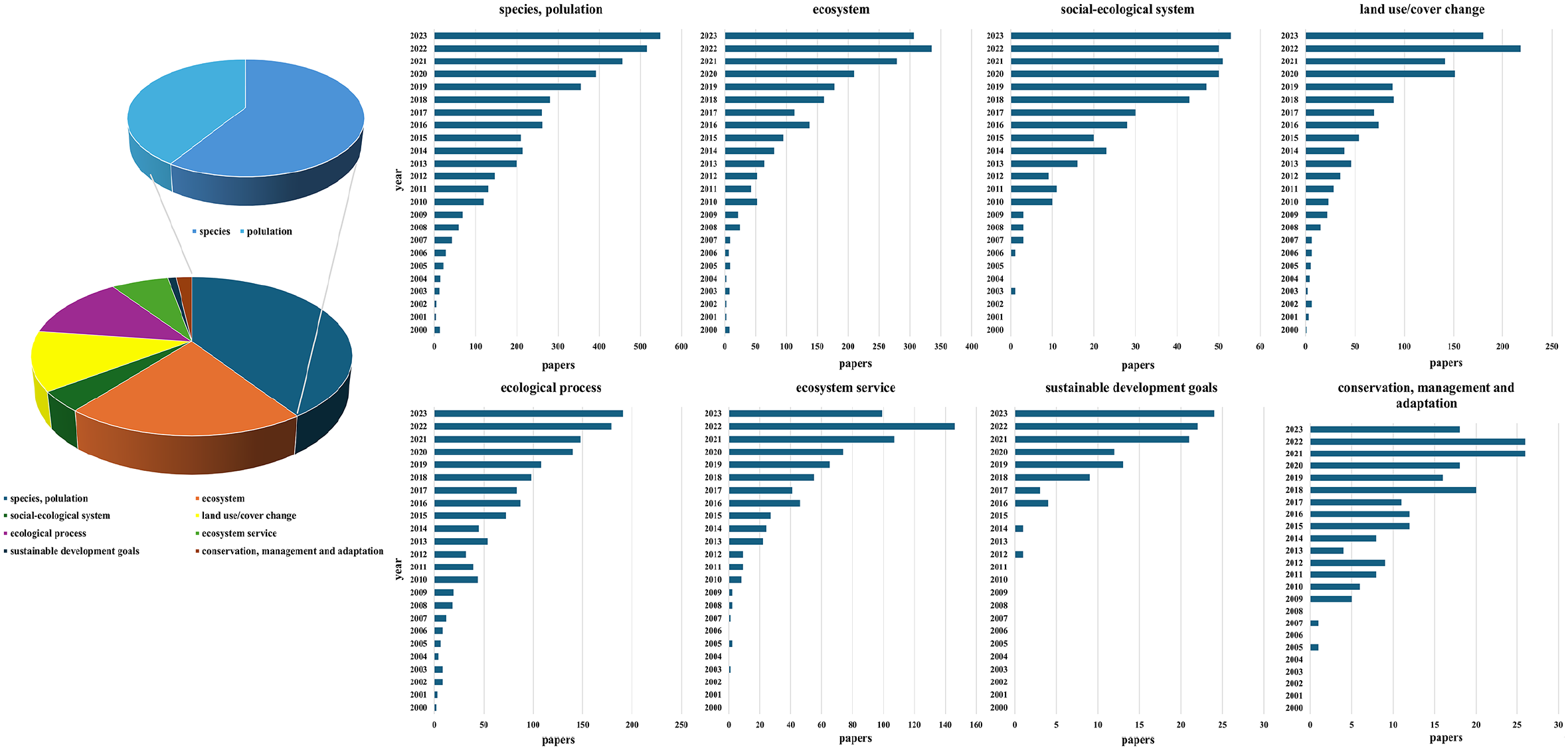
Number of papers published annually under different processes.
Species and population responses
Climate change may become a prominent cause of species extinction in this century (Fischlin et al., 2007; Urban, 2015). The direct non-biological factors leading to species extinction caused by climate change include changes in temperature and precipitation, which involve the physiological tolerance of species. As climate warms, species have shifted their distribution range towards higher latitudes and elevations, and the degree of movement at altitude is higher than that at latitude. However, some species spread slowly, lagging behind the velocity of climate change or encountering diffusion barriers (such as “mountaintop traps”), leading to a shrinking of their suitable habitats, and such species are expected to become extinct (Fischlin et al., 2007; Malcolm et al., 2006; Sekercioglu et al., 2008). Some biological factors include complex interactions between species. The highly cited research also highlights the importance of rapidly implementing technologies to reduce greenhouse gas emissions and carbon sequestration strategies in mitigating species extinction under climate change (Thomas et al., 2004). Climate change can also have a significant impact on population dynamics. Research has shown that fishing communities in all states on the West Coast of the United States are highly vulnerable to the impacts of climate change, affecting residents’ livelihoods and testing the resilience of coastal communities (Koehn et al., 2022). The warming of oceans caused by climate change leads to coral bleaching and death (Baker et al., 2008). The second most severe negative impact is on amphibians (Parmesan, 2006).
Not limited to the extinction risks and adverse effects on populations mentioned above, studies have summarized the impacts of climate change (temperature, precipitation, radiation, etc.) on animal and plant phenology, geographic distribution, population stability, gene evolution, interspecific interactions, nutritional cascades, and mismatches in cross trophic interactions (McCarty, 2001; Parmesan, 2006). Early risk descriptions focused on observational records (Dennis, 1993; Uvarov, 1931; Parmesan, 2006), and later the application of computer models was expanded (McCarty, 2001). In terms of its research location, there is little research on South America, and there is also a knowledge gap in Africa and Asia, except for South Africa and Japan. Research in Australia mainly focuses on coral reef communities. In recent years, a series of studies have also emerged in the Mediterranean/North Africa region (Spain, France, Italy, and Israel) and Antarctica (Parmesan, 2006). Not all of the research is conducted at the continental scale, but usually at the regional or station scale (Both et al., 2004). The progress in summarizing the impact of climate change on biological species and populations is still mainly based on the study of the number and distribution of species at the regional scale, while the development of classical ecological theories such as species/gene evolution is relatively limited.
Impacts on different types of ecosystems
Climate change fundamentally controls the geographic distribution, species range, and process rate of ecosystems on Earth. Firstly, the climate is strongly influenced by atmospheric circulation such as monsoons, rapids, and storm paths (Corti et al., 1999; Shepherd, 2014). El Niño/Southern Oscillation and the Indian monsoon affect global climate distribution and atmospheric chemistry (greenhouse gases, aerosols, etc.), which will have widespread and critical impacts on terrestrial and marine ecosystems. At the ecosystem scale, climate change and CO2 in the atmosphere are widely believed to affect the ecosystem structure, productivity of ecosystems, vegetation phenology, sensitivity of ecosystems, or their ability to process chemical elements (Cramer et al., 2001; Gao et al., 2016; Gonzalez et al., 2010; Grimm et al., 2013; Richardson et al., 2013; Zhang et al., 2007). As expected, semi-arid ecosystems are particularly sensitive to changes in rainfall, where the availability of water largely determines vegetation productivity (Robertson et al., 2001), thereby determining the population dynamics of a range of species. The highly cited classic literature confirms the fact that climate change has affected vegetation ecosystems to move an average of 6.1 kilometers towards the poles every decade (Parmesan and Yohe, 2003). Climate change is widely believed to affect soil microorganisms, soil community composition, soil organic carbon storage, and inorganic carbon storage in soil ecosystems (An et al., 2019; Fantappiè et al., 2011; Jansson and Hofmockel, 2020; Mi et al., 2008; Pugnaire et al., 2019). In addition, rivers provide a special set of goods and ecosystem services that are highly valued by the public, but climate change will increase and amplify existing risks, as it may alter rainfall, temperature, and runoff patterns, damage biological communities, and cut off ecological connections, resulting in ecological risks to river ecosystems (Palmer et al., 2009). In addition, studies confirmed that climate change and variability have directly or indirectly affected the water quantity and quality in groundwater and freshwater ecosystems (Döll and Zhang, 2010; Kløve et al., 2014). There are examples showing that climate change can cause the melting of sea ice in the North and South Poles to affect marine ecosystems (Doney et al., 2012). Overall, the ecological risks of climate change and the research network of ecosystems are highly complex (Figure 7). And related research results are more mature due to the research’s long history. Among them, research on terrestrial ecosystems accounts for the majority, with vegetation ecosystems being the most studied (38.97%). Next is marine ecosystems in aquatic ecosystems (27.09%), followed by river ecosystems (19.49%) and soil ecosystems.
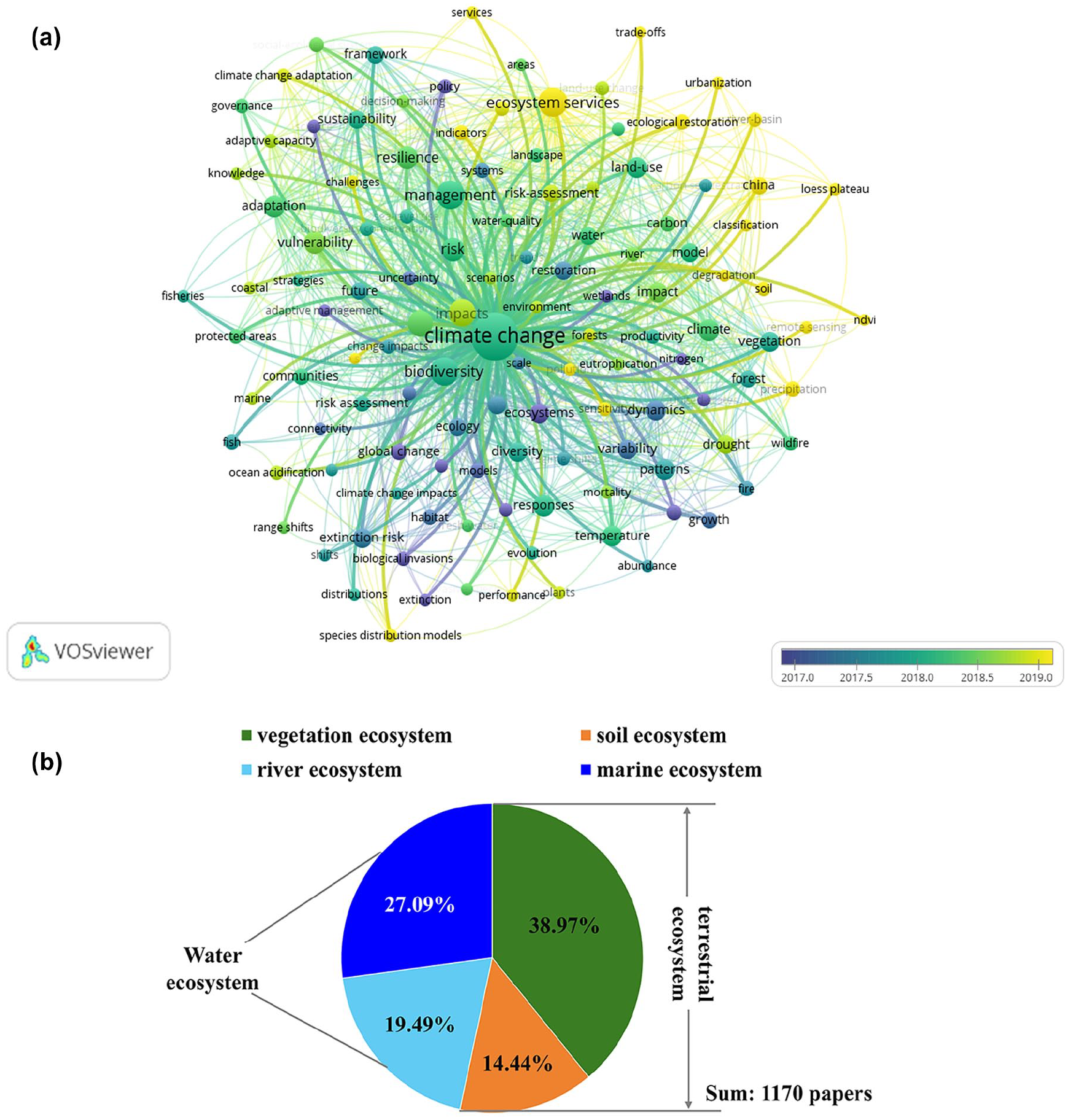
Co-occurrence network diagram of publication keywords related to climate change, ecological risk and ecosystems and proportion of research on different ecosystems.
Ecological risks of social-ecological systems
A social ecosystem is a complex adaptive system characterized by nonlinear dynamics, regime transfer, self-organization, and feedback within or between ecosystems and social systems (Schlueter et al., 2012). The study of social-ecological systems from the perspective of social ecosystems is a hot topic in ecological risk research. More and more research explores the resilience and frailty of physical, social, economic, political, institutional, and cultural aspects, which are considered closely related to sustainable development goals (Depietri, 2020). A historical review of relevant research content shows that this field has mainly developed and evolved from focusing on a single ecosystem to adopt comprehensive methods, and then focusing on social-ecological vulnerability frameworks. Among these, modeling is considered an important tool for studying complex and dynamic systems in natural resource management (Schlueter et al., 2012). Mafi-Gholami et al. (2021) established a vulnerability index assessment framework for regional exposure, sensitivity, and adaptability by combining a series of environmental hazards, vegetation variables, and socio-economic factors; Yao et al. (2024) established a novel comprehensive ecological economic index for assessing thermal health risks, many studies address vulnerability issues based on social and ecological component assessments or ecosystem service assessments (Abson et al., 2012; Islam et al., 2013; Kumar et al., 2016; Peng et al., 2023; Rissman and Gillon, 2017).
The interaction between land use/cover change and climate change
Considering the mutual influence and feedback between land use/cover change (LULCC) and climate change. Here, we discuss it from two perspectives. On the one hand, the distribution and intensity of LULCC are influenced by climate change. Sea level rise is one of the factors that directly affect land use. It is estimated that the global average sea level will rise by 22 to 34 cm between 1990 and the 2080s, posing a threat to the survival and well-being of coastal residents (Nicholls, 2004). Currently, human activities have affected one-third to half of the global land conditions (Heald and Spracklen, 2015; Pielke, 2005), and climate vulnerability and extreme events often force humans to migrate to other regions, leading to more widespread LULCCs. On the other hand, LULCC and the resulting changes in surface features are the main, but not fully understood, driving factors of global long-term climate patterns (National Research Council et al., 2005; Pielke, 2005). Studies have shown that LULCC provides feedback to the global climate system through greenhouse gas (GHG) fluxes, aerosols, and albedo (Dale et al., 2011; Rounsevell and Reay, 2009). In addition, large-scale deforestation leads to a decrease in local transpiration, resulting in a reduction of cloud cover and an increase in surface temperature. Simultaneously reducing precipitation makes the land drier and affects future use (Dickinson, 1991).
Ecological processes involved in ecological risks
The study of ecological processes is becoming a growing focus of climate change impact assessment and basic research (Burkett et al., 2005). Ecological processes need us to consider the entire process of climate change as a risk source and endpoint at the spatiotemporal scale (Hunsaker et al., 1990). For example, data on the impact of standard test species, ecosystem structure, services, functions, or environmental factors are assumed to be the primary or representative receptors throughout the entire risk process and are therefore used as environmental endpoints. The direct or indirect interactions between various ecological factors in the ecosystem and their impact on static or dynamic risk transmission are also a focus of attention (Chen et al., 2011). Nonlinear relationships are common complex interrelationships in ecosystems (Shen et al., 2020; Wang et al., 2024a; Zhang et al., 2022a). The ecological risk flow and nonlinear relationships make the consideration of ecological processes highly complex and stochastic (such as ecosystem mutations caused by extreme weather events). Network environment analysis is a new method for analyzing ecological risk flows, and evaluating interactions and path lengths. It is suitable for analyzing interactions between species, populations, communities, and ecosystems, as well as direct or indirect interactions between ecological factors, which are convenient to calculate ecological risks at the system scale (Li et al., 2021).
Influences on ecosystem services
Research on ecological risk under climate change has expanded to the relevant fields of ecosystem services. Ecosystem services are fundamental benefits provided by nature (Munang et al., 2013). However, research has shown that climate change is having a significant impact on ecosystem services (literature review shows 59% to be negative), and future impacts are more difficult to assess as they typically involve dynamic systems with high uncertainty at different temporal and spatial scales, and are often influenced by other change drivers (Runting et al., 2017). Research cases in South America have shown that climate change leads to the risk of loss of ecosystem services (Asmus et al., 2019). Chinese scholars (Wang et al., 2021) have also incorporated the supply and demand of ecosystem services into the framework of ecological risk assessment and conducted relevant research in the Qinling Mountains of China. Peng et al. (2023) incorporated ecosystem service indicators into the framework of social-ecosystem vulnerability and risk assessment. Scholars have also researched the impact of climate change and land use change on ecosystem services and ecological security patterns in the northwest Hexi region, China (Li et al., 2023). In the research case on the Qinghai-Tibet Plateau, Wang et al. (2024b) quantified the ecological risks of four types of climate change by combining multiple ecosystem services. The findings of Rillig et al. (2023) support the view that the adverse effects of climate change on soil biodiversity, ecosystem services, and functions may be greater than previously anticipated. Figure 8 is a description of the research network on ecosystem services and ecological risks under climate change. The results illustrate the richness of the research content and show close links between research progress, such as services and land use change.
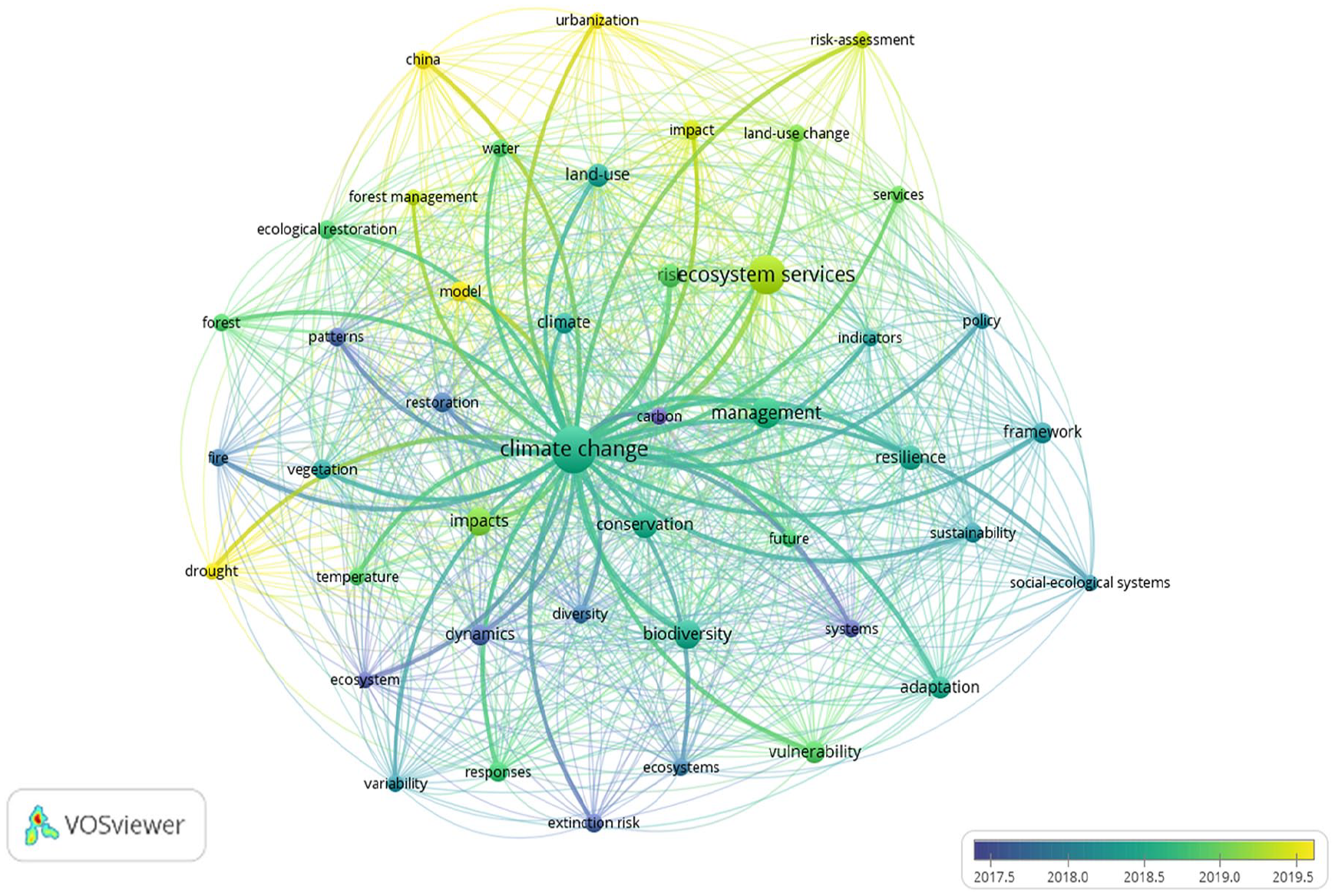
Co-occurrence network diagram of publication keywords related to climate change, ecological risk and ecosystem services.
The sustainable development goals under climate change are destined to be unattainable
The United Nations Sustainable Development Goals (SDGs) is a global strategic agreement signed by 193 United Nations members in 2015, which sets 17 globally agreed-upon goals aimed at eradicating poverty, protecting all habitable things on earth, and ensuring peace and prosperity for all (Henderson and Loreau, 2023; Sachs, 2012). Among them, there are 13 sub-goals related to ecological risks caused by climate change. Thus, they are widely believed to be influenced by climate change (Fuso Nerini et al., 2019; Lim et al., 2018), and it is suggested that when using the SDG target guidance framework, it is necessary to focus on the hotspots of climate change (Szabo et al., 2016). SDG2 (Zero Hunger) requires feeding over 9 billion people by 2050 (Godfray et al., 2010). However, the direct impact of climate change will alter the ability to provide food through agriculture, as global warming leads to changes in the distribution and abundance of pollinators, and plant pathogens and pests become more common or appear in new locations (Bebber et al., 2013; Hegland et al., 2009). Climate change makes SDG3 (Good Health and Wellbeing) more challenging. The success of SDG13 (Climate Action) will depend on the direct or indirect impacts of biological change and related feedback to our biosphere, but these processes and feedback are rarely considered in future climate predictions. Sustainable management and the protection of SDGs 14 and 15 (Underwater and Terrestrial Organisms) are unlikely to be effective unless climate-driven species range changes and their profound impacts on ecosystems are considered (Pecl et al., 2017). Recently, research has emphasized that SDGs provide an important framework for addressing climate change risks and achieving broader public health benefits (Morton et al., 2019). Overall, the study calls for the integration of climate change and SDGs in development governance to maximize the effectiveness of actions in these two areas (Fuso Nerini et al., 2019).
The United Nations has announced that “SDGs will not let anyone fall behind”. However, the current implementation of SDGs is still considered a fantasy, stemming from the instability of the world and unfavorable environments and crises. Some evidence suggests that climate change has reduced access to drinking water (SDG6), had negative impacts on people’s health, and posed a serious threat to food security (SDG2) (Mugambiwa and Tirivangasi, 2017). COVID-19 and all its related impacts have seriously disrupted the efforts of the sustainable development agenda and even led to the regression of some progress made (Leal Filho et al., 2023). During the epidemic, the climate actions related to SDG13 were widely concerned - the epidemic led to a brief halt in economic development, which brought certain ecological and environmental benefits. However, these benefits only lasted for a short period. Once economic activities returned to normal, fossil fuel emissions returned to higher levels (UNE Programme, 2022). In addition, the SDGs have not fully addressed the impact of conflicts, militarization, labor migration, and war-induced displacement on development (SDG16) (El-Zein et al., 2016; Korovkin and Makarin, 2023; Lin et al., 2023; McDoom, 2024; Samuel, 2023). In addition, climate-related “losses, damages and risks” caused by frequent droughts, heat waves, floods, rainstorm events, sea level rise, and other climate change disasters are increasing (UNE Programme, 2022). In summary, SDGs face numerous obstacles, and the promise of “no one left behind” in the 2030 Agenda for Sustainable Development has yet to be realized. Figure 9 shows relevant keywords related to SDGs.
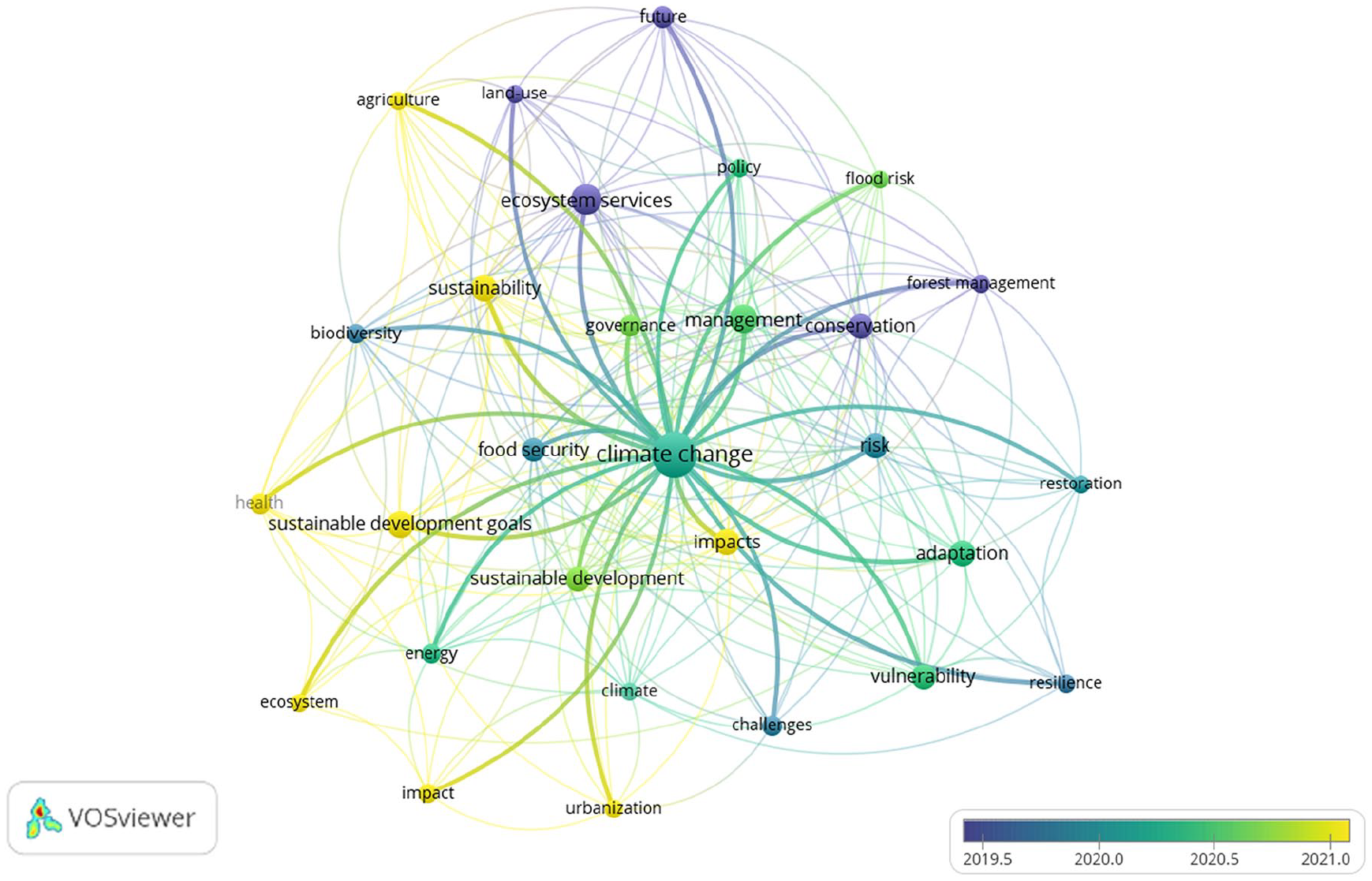
Co-occurrence network diagram of publication keywords related to climate change, ecological risk and Sustainable Development Goals (SDGs).
Ecosystem conservation, management, and adaptation
In a highly cited paper, Loarie et al. (2009) established the concept of climate change rate and emphasized reducing emissions and expanding protected area networks to protect biodiversity. Heller and Zavaleta (2009) suggested expanding the spatiotemporal perspective of protection. In terms of management, the importance of land management in optimizing carbon sequestration and reducing potential climate change impacts is increasingly recognized (Dale et al., 2011; Popp et al., 2014; Sekhri et al., 2020). Adaptation strategies should aim to enhance the flexibility of managing fragile ecosystems, enhance the inherent adaptability of species and ecosystem processes, and reduce trends in environmental and social pressures that increase vulnerability to climate change (Hulme, 2005; Sousa et al., 2024). Gong et al. (2021) conducted a study on incorporating ecosystem services and landscape ecological risks into adaptive management. The core viewpoint proposed by some authors is that combining monitoring models for scenario analysis to establish a technical combination of mitigation and adaptation measures is a strong strategy for addressing climate change (Obersteiner et al., 2001). There are also some studies focusing on nature-based climate change adaptation solutions (NbS) (Chausson et al., 2020). As the ultimate goal of the research, we generally believe that conservation, management, and adaptation of biodiversity and ecosystems are important research outlets for ecological risk under climate change, and it has been confirmed that they have been present throughout the nearly 24 years of research. Although knowledge in this area has developed faster and received widespread attention in the later stages of research (Stein et al., 2013).
Ecological risk assessment and main assessment models
Ecological risk assessment aims to assess the various adverse effects of potential ecological hazards on ecosystems and has been strongly recommended for environmental decision-making (Chen et al., 2013). Here, we briefly review risk assessment frameworks or models under climate change. Originally, risk assessment was primarily carried out through three steps: problem formulation, analysis, and risk description (Ecological Risk Assessment, 1998). In the 1970s, risk assessment was mainly based on empirical assessment, with data relying on on-site investigation data; In the 1990s, research on hazard warning began to develop, focusing on empirical and simulated assessments of potential damage probability and severity prediction and control (Chen et al., 2013). Subsequently, the research framework and model were expanded and developed. For example, (1) Species distribution models (SDMs) are frequently applied for predicting potential future distributions of range-shifting species, i.e., MaxEnt software can achieve modeling of species distribution (Elith et al., 2010, 2011; Phillips et al., 2017). Moreover, people have begun to perform machine learning and deep learning for model integration in the cloud and supercomputers recently (Elith et al., 2006; Huettmann et al., 2024; Steiner et al., 2023). (2) The IPCC mainly focuses on the social-ecological system and proposes a framework for risk assessment, which mainly focuses on the concepts of harm, exposure, and vulnerability (Jurgilevich et al., 2017; O’neill et al., 2017; Pachauri et al., 2014; Smith et al., 2009). (3) Index construction model mostly based on region scale: i.e. (3.1) the biological climate niche model CLIMEX evaluates the degree and frequency of damage by inputting climate data, specific parameters, and other data to characterize specific ecological risk assessment or forecast results (Jung et al., 2017; Pinkard et al., 2010). (3.2) A unified and spatially defined index has been developed to comprehensively assess the risks of climate to marine life, in order to help protect vulnerable species and ecosystems (Boyce et al., 2022). (3.3) Maanan et al. (2015) evaluated heavy metals in the Nazur Lagoon (along the Mediterranean coast) using different environmental indices. (4) There is also a mature risk assessment framework proposed by UNDRO (UNDRO, 1991), which divides ecological risk assessment into three steps: risk source assessment, determination of risk receptors, and quantification of risks. The advantage of this model is that it can utilize spatial analysis techniques to output risk results with spatial expression. The disadvantage of the framework is that it is difficult for the model to capture specific ecological processes and explain clear ecological mechanisms (Wang et al., 2023b). As classic models and methods in this research field, they have important application value in evaluating and predicting the impact of climate change on ecosystems.
Research gaps and perspectives
In the past 24 years, the research topics on ecological risk under climate change have continuously expanded and developed. However, with the development of risk-related research, some interesting and controversial issues have emerged. Although many issues have been extensively discussed in various academic and seminar sessions, in many cases, there is still a significant gap between policy discussions and regulatory and practical applications (Hope, 2006): (1) The risk assessment results at the regional scale are not comparable; (2) Usually, the construction of a risk assessment framework between risk sources and risk receptors lacks a clear understanding of ecological mechanisms and ecological processes. (3) In addition, ecological risk assessment focuses on the impact of a single factor on ecosystems, such as the risk of global warming on the environmental flow and ecological changes of major rivers worldwide (Thompson et al., 2021). Meza et al. (2020) conducted a global drought risk assessment of agricultural ecosystems. However, there is little research on multiple risk assessments under multiple pressure sources in climate change, such as the combination of atmospheric temperature and precipitation changes, despite the need to advance ecological assessments at multiple scales, pressure sources, and endpoints outlined in the USEPA guidelines (Forum USEPARA, 1998). While some studies have attempted to address this gap, they often face significant challenges: Firstly, the complex interactions are difficult to clarify. Secondly, there is usually a lack of comprehensive datasets that capture multiple pressure sources at relevant spatial and temporal scales (Pirotta et al., 2022; Rangwala et al., 2021). Furthermore, there are challenges in terms of methodology: developing models that can accurately simulate the combined effects of multiple pressure sources remains a major obstacle, or there are challenges in parameterization of the models. There are also difficulties in scaling mismatches and translating them into actionable policies. (4) In addition to the existence of hotspots on a spatiotemporal scale, risks may also have spatiotemporal flows, such as the spread, expansion, and accumulation of risks. Research of spatiotemporal dynamics can be combined with existing ecological risk frameworks through the following approaches: conducting long-term field sampling/belt monitoring research; integrating knowledge from multiple fields such as geography, ecology, environmental science, meteorology, and computer science, utilizing remote sensing (RS) and geographic information system (GIS) technology to establish a spatiotemporal dynamic ecological risk assessment model; developing predictive models and decision support systems: by integrating real-time monitoring data, historical data, and future predictions, utilizing machine learning, deep learning, AI, and other technologies to develop more accurate predictive models and decision support systems to guide future environmental management and policy-making. (5) At present, most of the simulation predictions for future ecological risk under climate change are based on various SSPs proposed by IPCC6, but the regional applicability and accuracy of data products under global climate models still need to be considered. And the unclear mechanism of action and ecological response to climate change hinder predictions. (6) A well-designed and well-executed risk assessment can improve the efficiency of limited funds and resource utilization to address substantive risk issues in ecologically important systems. However, the usual situation is that a combination of good science and poor management cannot provide substantial assistance to the real world.
We emphasize the importance of (1) establishing a unified risk assessment framework to ensure comparability of risk levels across different regions, for example, we can refer to the risk assessment frameworks proposed by ERA and IPCC, adjust and apply them to regions and ecosystems. (2) Strengthening research on the interactions, processes, and mechanisms among multiple factors: strengthen on-site research and monitoring, explore how different environmental factors (temperature, humidity, etc.) affect ecosystems, and quantify the interactions between these factors based on statistical models or machine learning or deep learning methods. (3) Assessing and integrating the consequences of multiple sources of pressures, such as strengthening research on multiple risk assessment of the joint effects between multiple climate factors (e.g., temperature, precipitation, radiation intensity) and composite extreme climate events (e.g., drought, extreme precipitation, heatwaves, cold waves); Deploying higher resolution sensor networks and remote sensing technologies to capture small-scale environmental changes; Integrating modeling methods and promote the use of open-source modeling tools; Developing multi-scale modeling frameworks and scale conversion techniques. (4) Strengthening research on the spatiotemporal flow, time lag, and spatial spillover of risks, etc. (5) Building meteorological history and future products with regional suitability and accuracy. (6) Strengthening risk communication not only promotes the rapid and comprehensive development of ecological risk under climate change through communication and cooperation between different countries and regions, research disciplines, institutions, and authors, but also emphasizes the level of communication between decision-makers, scientists, and the general public, for instance, by organizing academic conferences, seminars, public lectures, social media, etc. Only in this way can the development of ecological risk under climate change play an increasingly important and substantial role in future campaigns toward sustainable development across spatiotemporal scales.
Conclusions
The study provides a comprehensive analysis of ecological risk under climate change from 2000 to 2023 using data mining, bibliometrics, and literature review approaches. The results reveal that publications related to the topic exhibit a growth pattern, with the United States and China emerging as the leading contributors. In addition, research has shown a burgeoning trend in multiple disciplines since 2015. Through co-occurrence analysis, the study unveils three typical hotspots and above 100 hot words characterizing ecological risk research vis-a-vis climate change. In addition, we summarize nine major research advances from early to late stages and relevant international efforts. Furthermore, we analyze the existing research gaps and prospects, and we believe that this literature review can help relevant fields understand the dynamic information on ecological risks related to climate change.
Supplemental Material
sj-docx-1-tee-10.1177_2754124X251323691 – Supplemental material for Progress and gaps in ecological risk under climate change research: A bibliometric and literature review approach
Supplemental material, sj-docx-1-tee-10.1177_2754124X251323691 for Progress and gaps in ecological risk under climate change research: A bibliometric and literature review approach by Yi Wang, Yihe Lü, Da Lü, Xing Wu, Junze Zhang, Ting Li and Xiaofeng Wang in Transactions in Earth, Environment, and Sustainability
Footnotes
Declaration of conflicting interests
The author(s) declared no potential conflicts of interest with respect to the research, authorship, and/or publication of this article.
Funding
The author(s) disclosed receipt of the following financial support for the research, authorship, and/or publication of this article: This research was supported by the National Key Research and Development Program of China (No. 2023YFF1305105). The authors are also indebted to their families, teachers, and friends for their continuous support and encouragement.

Supplemental material
Supplemental material for this article is available online.
Author biographies
References
Supplementary Material
Please find the following supplemental material available below.
For Open Access articles published under a Creative Commons License, all supplemental material carries the same license as the article it is associated with.
For non-Open Access articles published, all supplemental material carries a non-exclusive license, and permission requests for re-use of supplemental material or any part of supplemental material shall be sent directly to the copyright owner as specified in the copyright notice associated with the article.
