



Abstract
Shared mobility endures the pandemic, legislative upheaval, and points to a sizable potential market with wider range of shared services. As the shared mobility segment worldwide continually increases, a noticeable trend towards segmentation of shared mobility services, namely, the niche market, is gaining attention. However, the majority of scholarship has mainly focused on early adopters’ transition from conventional transportation modes to shared mobility, with little attention given to the shift towards specialized and niche shared mobility services. To address such gap, this study aims to explore the heterogeneous characteristics of potential early adopters of shared electric bikes among different transportation groups in the existing market. The questionnaire targets 1,034 citizens living in Shenzhen, a mega city in China, from March to April in 2020, before the official launch of the shared electric bikes scheme in the city. Both binary logistic models and text sentiment analysis have been conducted to present a comprehensive analytical framework to understand the group-sensitive identification of potential early adopters. Results reveal that age, car ownership, commute time, and confidence level on the potential scheme are four significant variables to explain all respondents’ willingness to adopt shared electric bikes, regardless of their existing dominant transport mode. However, when it comes to subgroups with different travel preferences, the profile of potential early adopters vary distinctly. Specifically, younger public transport users are interested in adopting shared electric bikes but have price concerns; gender is the most significant variable to predict private vehicle user’s adopt willingness, and female user show strong concerns on safety issue; users who primarily walk or cycle can benefit from shared electric bikes to travel longer distances, and lastly, there are no significant variables to predict electric bike users’ intention to switch from self-owned bikes to shared programmes. Overall, an analytical framework is presented in the study to comprehend the diverse features of prospective early adopters who may utilize shared electric bikes from different transportation groups, and a collection of development strategies for operators is proposed.
Introduction
The diffusion of innovations theory (Rogers, 1964), which proposes and conceptualizes that new ideas, behaviours, or technologies will spread through society over time, has been employed in numerous studies to understand the dynamic spreading processes of adopting new technologies (Min et al., 2021), transport modes (Keller et al., 2018), or lifestyles (Franceschinis et al., 2017), through a population. The theory and empirical studies suggest that early adopters played an important role in promoting the concept, accelerating the adoption rate, and even gaining market leadership (Bianchi et al., 2017; Frattini et al., 2014; Simpson and Clifton, 2017).
In the transport market, shared mobility, which is often defined as the shared use of cars, bicycles or other forms of transport vehicles, is emerging as an innovative strategy for providing mobility services (Shaheen et al., 2016). Shared mobility marks a revolutionary change in people’s tendency to share vehicles rather than owning them. Notably, the shared mobility segment worldwide is projected to continually increase, and the user penetration is expected to reach 92.6% by 2027 (Statista, 2023). With the shared mobility market incrementally becoming saturated, there is a noticeable trend that the market of shared mobility services is tending to be segmented into multiple submarkets, namely, the niche market. These segmented niche markets usually cater to particular groups of customers with special preferences or needs, which may be overlooked by the mainstream services (Nicolaidis et al., 1976). Taking shared bikes as an example, the market has segmented to dockless bike sharing which has been widely adopted, electric bike sharing providing ease and comfort in riding, cargo bike sharing which is designed to carry large or bulky items, adaptive bike sharing for people with disabilities, and peer-to-peer bike sharing allowing individuals to rent out their own bikes to other people in their community. Given the highly saturated nature of the shared mobility market, it is imperative for operators to strategically target early adopters within the existing market in order to secure a greater share of the market.
In addition, a predominant focus in the extant literature has been directed towards examining the process of diffusion from conventional transportation modes to shared mobility modes, with relatively scant attention devoted to exploring the shift from shared mobility modes to a more specialized and niche shared mobility services. For example, several studies demonstrated that electric bike sharing is better positioned to complement or compete with transit and walking trips in urban environments (Guidon et al., 2019; Zhou, 2022), while some compared the nuanced differences between various shared mobility users, for example, e-scooter users are in general younger than e-bike users (Bieliński and Ważna, 2020); similar studies have been done between e-car sharing and e-scooter sharing (Brezovec and Hampl, 2021), bike sharing and ride-hailing (Luo et al., 2018), etc. However, limited scholarly literature has addressed the potential for users to transition between various shared mobility services, while few analytical frameworks exist to enable operators to discern early adopters from pre-existing market segments.
To address the above research gaps, this study aims to zoom into the niche market of the shared bikes system, and take shared electric bikes as a research object to investigate the heterogeneous characteristics of prospective early adopters of the innovative shared mobility service among various transportation groups in the existing market. On the one hand, the study is capable of furnishing operators with a comprehensive analytical framework that facilitates the formulation of tailored strategies for different customer groups. On the other hand, the study has the potential to advance the identification methods of early adopters within the diffusion of innovation theory, and to apply these advancements to the current phase of niche market development of shared mobility services, in a theoretically-informed manner.
By analysing a questionnaire targeted at 1,034 citizens living in Shenzhen, China, which was distributed right before the official launch of one of the leading shared electric bikes schemes in the city, the study presents a framework to understand the heterogeneous characteristics of potential early adopters to use shared electric bikes from various transport groups, and put forward with a set of development strategies for operators. The remainder of this paper is organized as follows. The next section presents a systematic review of the theory, applications, and empirical studies towards the transport behaviours transitions. The following section describes the survey data and research roadmap, and the regression results are then provided and elaborated. Discussions are provided in the fifth section and the final section concludes with a set of strategy recommendations.
Related works
The diffusions of innovations theory and early adopters
Diffusion of innovations is a predictable social process that communicates perceived information about a new idea (Rogers, 1964). According to the theory, the earliest members of the population to acquire the innovation are referred to as innovators and early adopters, who are often seen as opinion leaders or trendsetters, and their adoption behaviour can have a significant impact on the success or failure of an innovation. Identifying early adopters can therefore assist organizations and individuals in tailoring their marketing strategies and efforts, and improve the product or idea before it reaches early majority and other later adopters (Foxall and Goldsmith, 1994: 35–36).
A set of shared commonalities of early adopters are identified, such as higher level of willingness to take risks (Lewis et al., 2015), more advanced social status (Plötz et al., 2014), wealthier financial resources (Worthington et al., 2011), higher education level (Strebinger and Treiblmaier, 2022), and higher connectedness level in community or social networks (Katona et al., 2011). Empirically, a plethora of studies have analysed the importance of identifying early adopters in various contexts ranging from scientific research (Minishi-Majanja and Kiplang’at, 2005), public health (Moseley, 2004), administrative reform (Zhu et al., 2016), and social media behaviours (Chang, 2010). This stream of studies has empirically validated the original theory and presented a comprehensive analytical framework to identify early adopters in various fields.
Niche market development of shared mobility
In the past decade, the shared mobility market has experienced significant growth and development, with the rise of ride-sharing services, bike-sharing programmes, car-sharing services, and the integration of different types of shared mobility services. At the early stage, shared mobility has been considered as a novel type of transport means and numerous studies have investigated the common characteristics of the early adopters and their role in spreading the innovation. Compared with traditional transport mode users, early adopters of shared mobility tend to be younger (Clewlow, 2016), well-educated (Becker et al., 2017; Kawgan-Kagan, 2015), wealthier (Clewlow, 2016; Kawgan-Kagan, 2015), and hold a smaller number of cars per household (Becker et al., 2017; Namazu et al., 2018).
As the shared micromobility market grows and develops, it has been incrementally segmented by more innovative and niche service types. Accordingly, the significance of investigating early adopters’ characteristics between different shared mobility services has been exaggerated. For example, a study conducted in Montreal revealed that women were overrepresented in the dockless bike-sharing schemes, while no significant differences among genders were observed in station-based bike-sharing schemes (Wielinski et al., 2015). Age is another key factor in identifying target customers for various innovative transport means. Specifically, although shared mobility users tend to be younger than traditional transport mode users, dockless bike-sharing users are still significantly younger than station-based bike-sharing scheme users (Becker et al., 2017), and similar findings are validated in car-sharing membership analysis (Clewlow, 2016). In sum, there are both commonalities and differences among early adopters’ preferences and behaviours towards various shared mobility services, but few studies have discussed the switch intention for users from existing shared mobility service to a more innovative service type.
Research gap and research questions
At the early development stage of shared mobility market, major efforts were devoted into how to transfer users from traditional transport modes to innovative shared mobility services. As the mobility service market becomes increasingly saturated, the operators are facing challenges to attract users from both traditional transport modes as well as existing shared mobility services. Furthermore, their hesitations and concerns on the adoption of shared electric bikes are also derived from their current transport preferences, socio-economic status, and confidence level of the captioned transport mode in the city. Therefore, the identification of potential early adopters from existing customer groups constitutes a significant concern for shared micromobility services operators venturing into the present market. Comparative analyses of diverse niche mobility services lack sufficient evidence to facilitate the efficacious identification of potential adopters among extant mobility customers. As such, comprehending the subtle preferences of prospective users within various customer groups is of utmost significance. Nevertheless, the matter in question continues to be inadequately addressed within the current scholarship.
Therefore, two research hypotheses are proposed to fill the research gap and provide a clear analytical framework to assist operators and policy makers with potential implementation.
Hypothesis 1 (H1): Users’ willingness to adopt electric shared bikes varies across groups by their existing transport modes Hypothesis 2 (H2): Users’ concerns about adopting electric shared bikes vary across groups by their existing transport modes
Methodology
Questionnaire design
As discussed, the diffusion process of innovative shared mobility services may vary across different groups (Lewis et al., 2015; Plötz et al., 2014; etc), thus, it is of great importance to identify the early adopters from each groups and understand their different preferences and concerns. In this study, we aim to classify potential users of shared electric bikes by their dominant travel modes, ranging from public transport (metro, buses, etc.), private vehicles, and active travel modes (walking, biking, etc.) to shared micromobility (shared bikes, etc).
Accordingly, the questionnaire consists of four major components, reflecting respondents’ socio-economic status (Liu et al., 2017; Plötz et al., 2014), existing travel preferences (Devika and Harikrishna, 2020; Dijst et al., 2002; Nordfjærn et al., 2019), attitudes towards the potential launch of shared electric bikes in the city (Lewis et al., 2015), and subjective comments on the potential launch. The selection of these components aligns with the prior literature review and aims to corroborate previous findings across diverse research contexts and study sites. It is worth noting that subjective comments have been highlighted as an important component in this questionnaire, as it allows for valuable insights into the perspectives and thoughts of diverse groups involved.
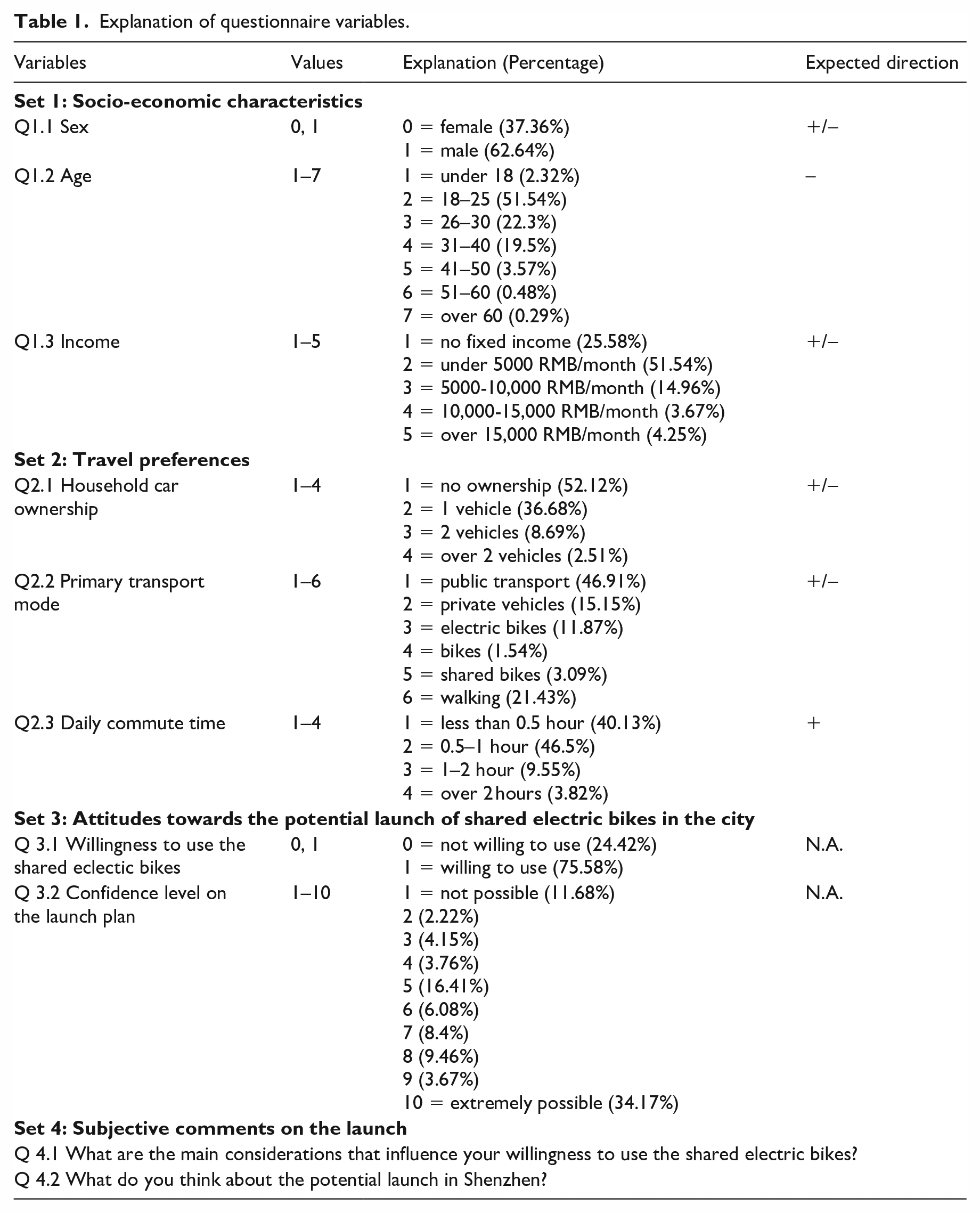
Data for this study was collected from an online questionnaire distributed from March to April, 2020, in Shenzhen, China, before the official launch of the shared electric bikes scheme in the city. In total, the questionnaire collected 1,034 valid responses, and the explanations of the selected questionnaire variables are presented in Table 1.
Explanation of questionnaire variables.
Analytical framework
Aiming to identify the potential early adopters’ characteristics among different travel groups, the study first categorized all respondents into five subgroups by their dominant transport modes, including public transport, private vehicles, electric bikes, shared bikes, and walking. Their responses towards Question 3.1 “Willingness to use the shared electric bikes” in the questionnaire were coded as a binary determination condition for a set of binary logistic models investigating whether users’ willingness to adopt electric shared bikes vary across groups by their existing transport modes, as Figure 1 illustrates. Selected explanatory variables include socio-economic factors, travel preferences, and respondents’ attitudes towards the potential launch of the shared electric bike programme. In this sense, five binary logistics regression were conducted to test the proposed Hypothesis 1. All regressions were conducted on the SPSS 26.0 package.
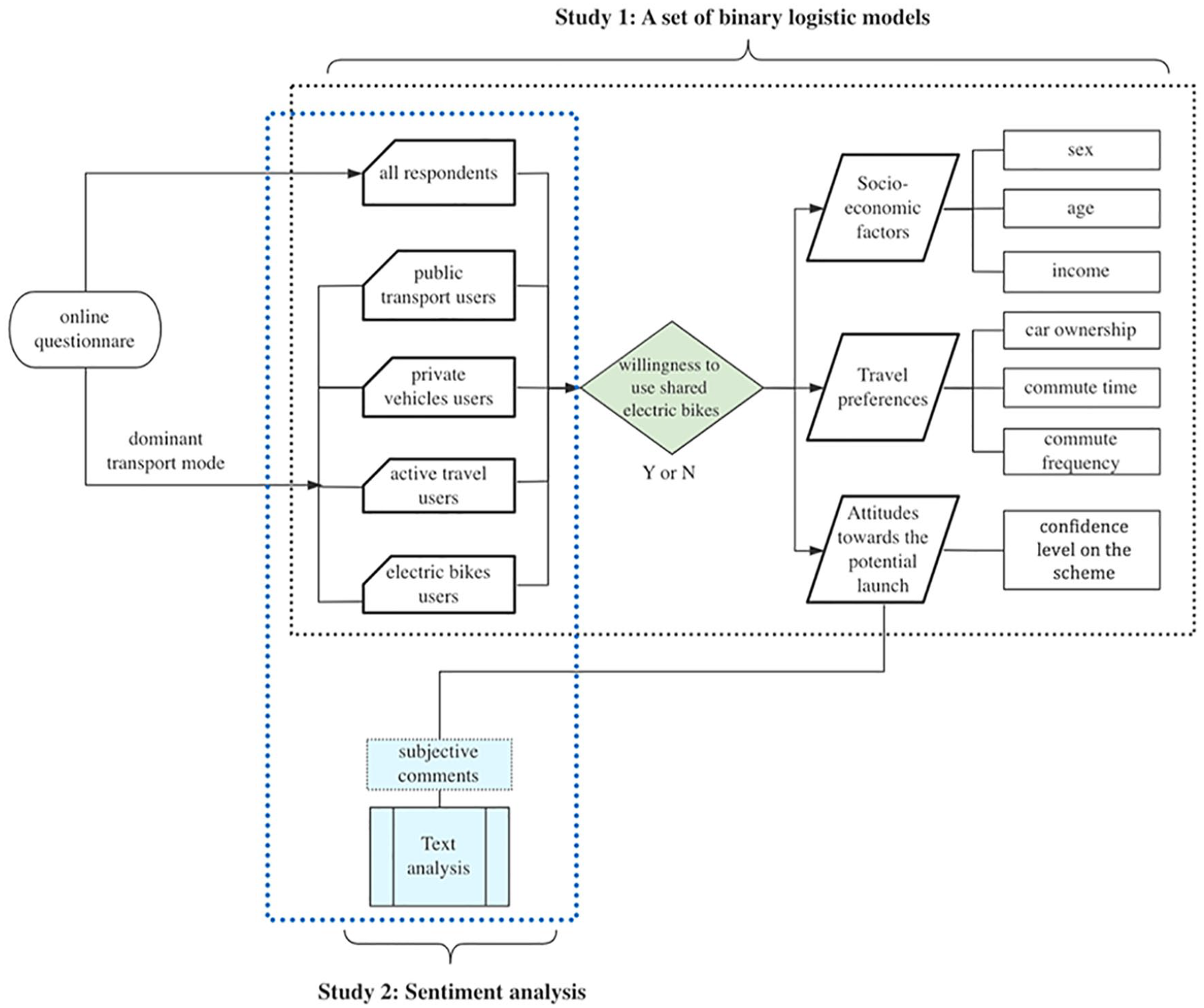
Analytical framework of the study.
Among all the variables, subjective comments from respondents are of great importance to understand their concerns and thoughts on the potential implementation, and allow operators to make tailored improvements to their services to stay ahead of the competition. However, due to the nature of the comments, it cannot be analysed by the regression tools, therefore, study 2 was conducted by using text analysis tools to analyse the data and determine the overall sentiment towards the potential implementation. By utilizing the toolkit of Sentiment Analysis Api C# SDK, a set of deliverables including sentiment scores, frequency of positive and negative sentiment, and word clouds to show the most commonly used positive and negative words were presented to identify different themes and patterns of respondents’ concerns and opinions across different travel groups. Based on the proposed analytical framework, study 2 aims to assist operators to gain insights into how early adopters from various travel groups perceive their service (namely, the proposed Hypothesis 2), and make data-driven decisions to improve their offerings accordingly.
Results
Preliminary analysis
Before logistic model fitting, a preliminary observation on the level of willingness to use shared electric bikes across subgroups has been conducted. According to Table 2, a notable disparity is observed among various user groups. Notably, users of public transport exhibit a significantly higher inclination towards embracing the utilization of shared electric bikes, with an impressive 79% of respondents expressing their willingness to engage with this service as per the questionnaire. Similarly, individuals who rely predominantly on active travel and electric bikes as their primary modes of transportation also exhibit a keen interest, with approximately 74% indicating their readiness to embrace this potential launch. In contrast, users of private vehicles display a much lower level of enthusiasm, with a mere 31% expressing their willingness to partake in this novel and specialized service. Consequently, the crosstab analysis offers valuable insights into the overarching preference pattern concerning the potential introduction of shared electric bikes. However, it is imperative to acknowledge that more comprehensive sociodemographic factors remain unobserved, thereby necessitating the employment of a logistic model in subsequent stages of analysis.
Willingness to use shared electric bikes across subgroups.

Binary logistics: Characteristics of potential early adopters vary by groups
For study 1, we employed SPSS 26.0 to process the binary regression among all respondents and four groups with different dominant transport modes, including public transport, private vehicles, active travel, and electric bikes. Table 3 presents the final fitted results. We employed enter method to include seven explanatory variables into the regression models. For the group with least number of cases (i.e. group whose dominant transport mode is using electric bikes), the total number is 123 and it satisfies the general accepted rule that case number N should be at least 15 times the number of explanatory variables. Among five regression models, the Hosmer–Lemeshow tests reported that the fits index of the five models were all greater than 0.05, indicating that all five models showing good fit for the data, and no significant differences have been detected between the observed and predicted data. Cox–Snell R2 and Nagelkerke R2 of each models were also reported in Table 2, demonstrating a low correlation between the independent and dependent variables.
Binary logistic regression models results for the entire sample and for the sample of each dominant transport mode.
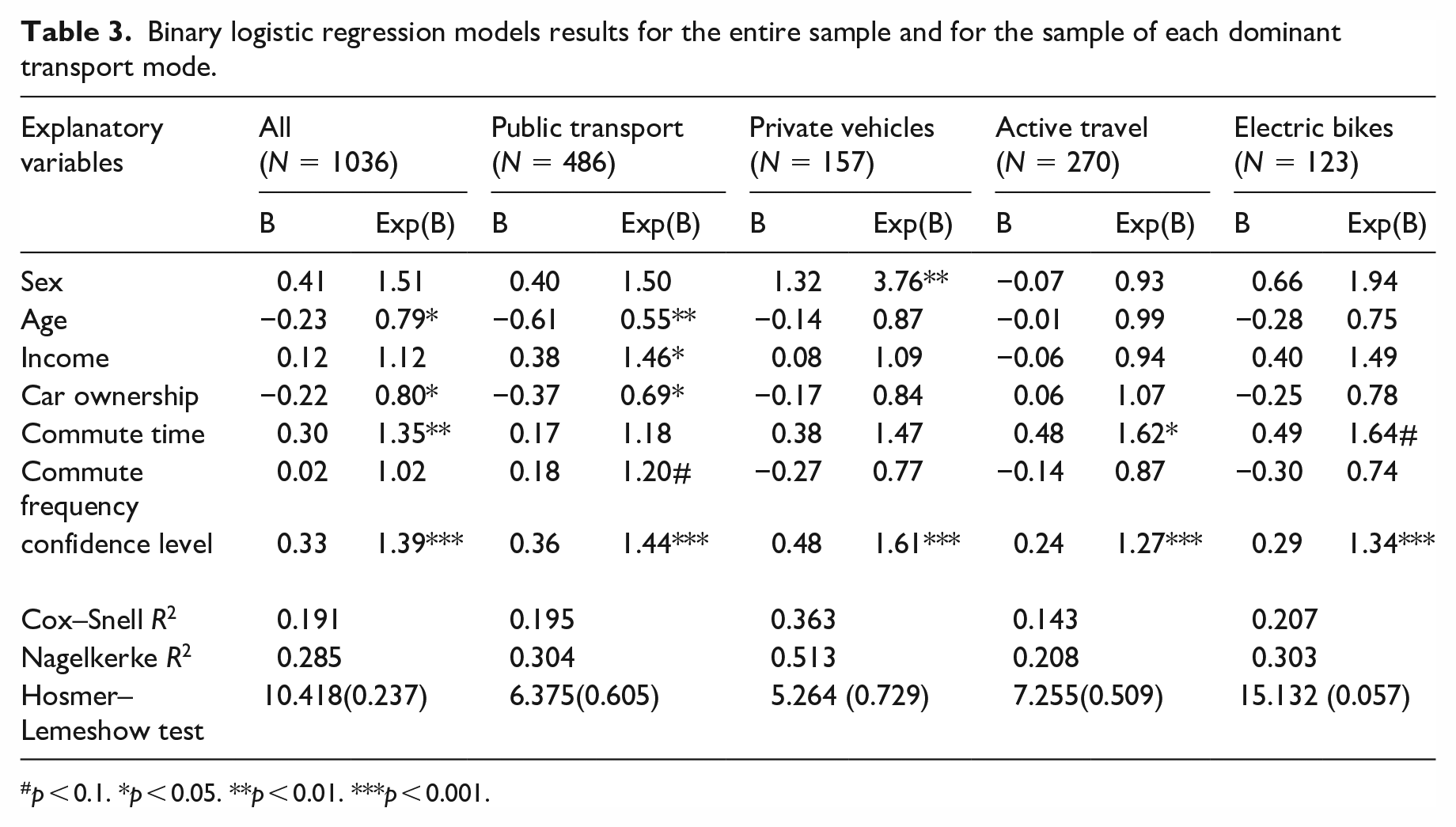
p < 0.1. *p < 0.05. **p < 0.01. ***p < 0.001.
In general, five models all report strong prediction power between users’ confidence level and individual willingness to adopt the innovative shared electric bikes in the case city. Aside from it, all other variables present distinct explanatory power across travel groups, and reflect nuanced and complex preferences of potential early adopters by groups. In-depth analysis and comparison will be introduced under “Discussion”.
Text analysis: Sentiment differences by groups
For study 2, we used the comments collected from open ended question Q 4.2 “What do you think about the potential launch in Shenzhen?” in the questionnaire to conduct the sentiment analysis for groups with different dominant transport modes. All the input comments have been translated from Chinese into English before the analysis, and invalid ones have been eliminated.
In general, text sentiment analysis is a technique that uses natural language processing (NLP) and machine learning algorithms to analyse the sentiment or emotion expressed in a given piece of text. In study 2, the goal of sentiment analysis is to determine the polarity of the respondents’ concern on the potential launch of the electric bike-sharing programme in Shenzhen, whether it is positive, negative, neutral, or reflecting specific concerns derived from their existing transport modes and travel preferences. In mobility behaviour studies, text sentiment analysis has been widely adopted and served as an effective toolkit, with specific focus in congestion monitoring, customer satisfactory analysis, tourism behaviour investigations, etc. (Ali et al., 2017; Aman et al., 2021; Serna and Gasparovic, 2018).
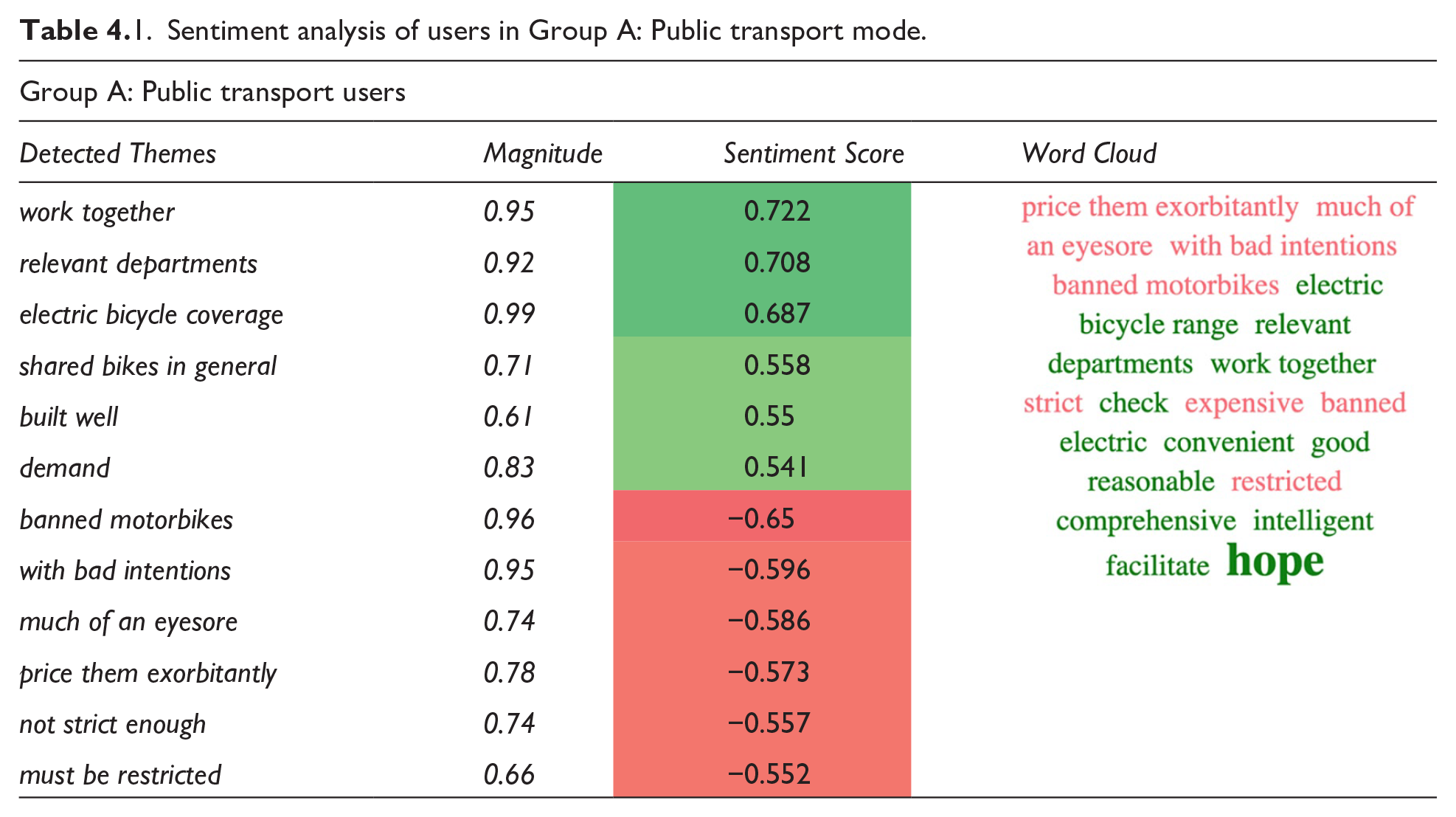
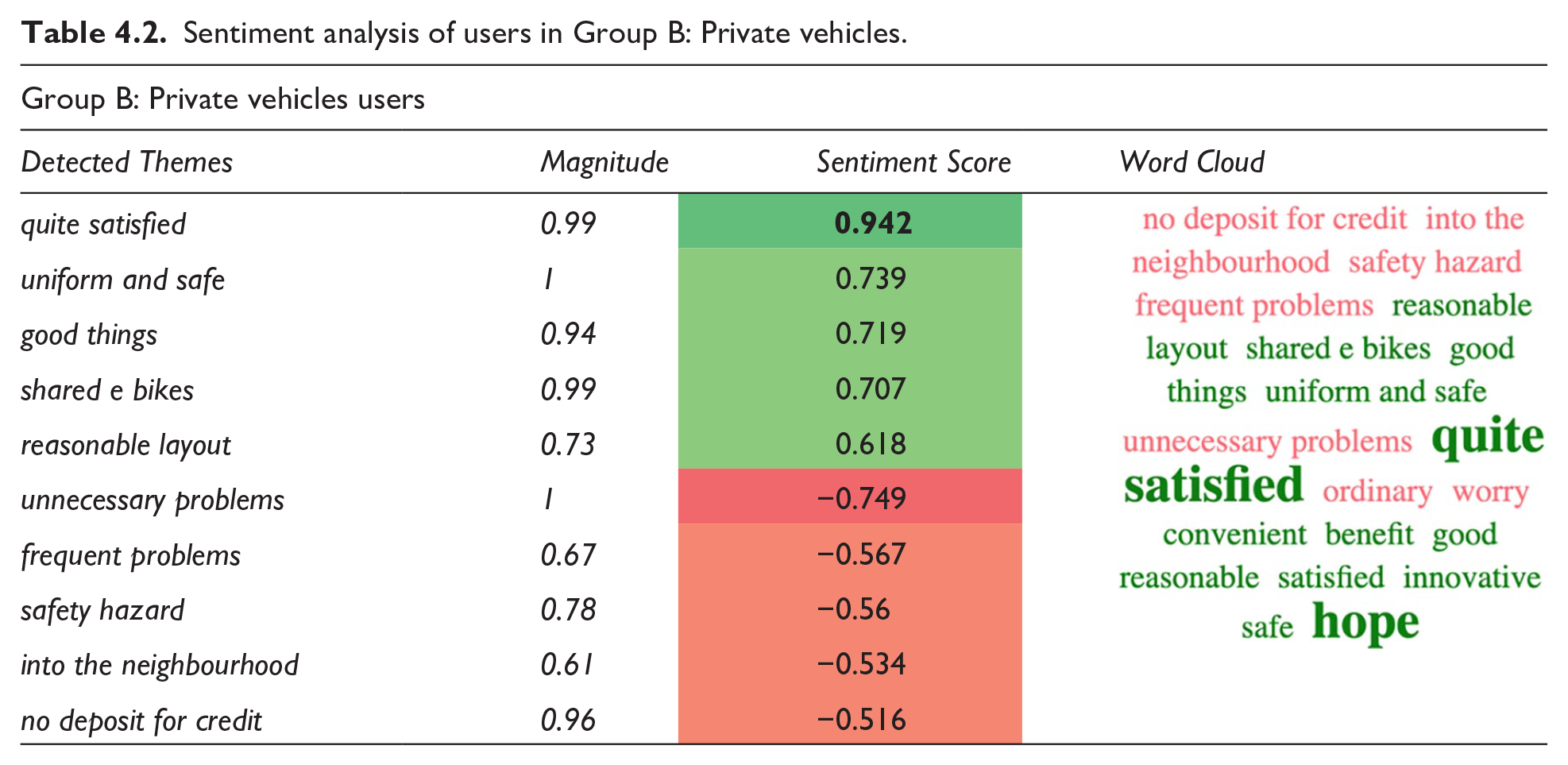
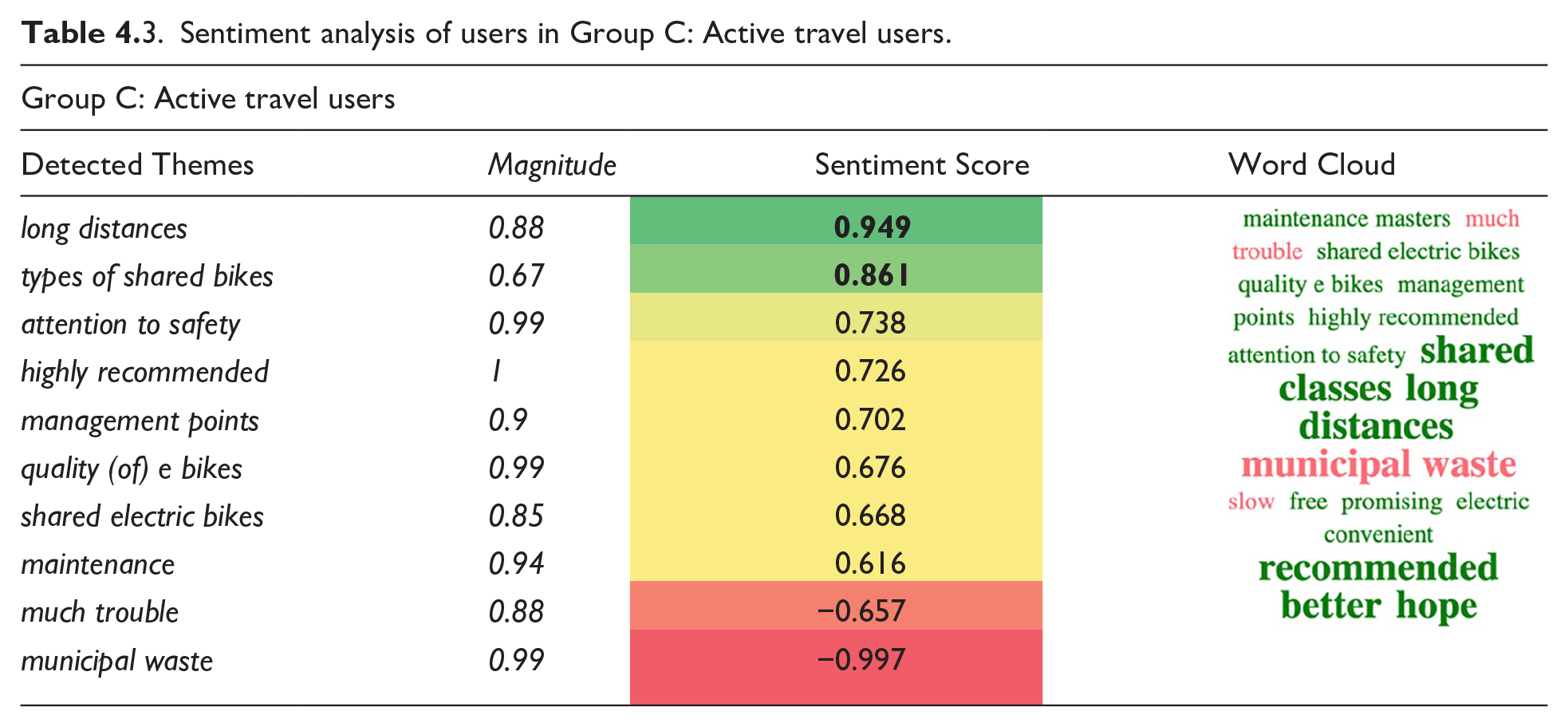
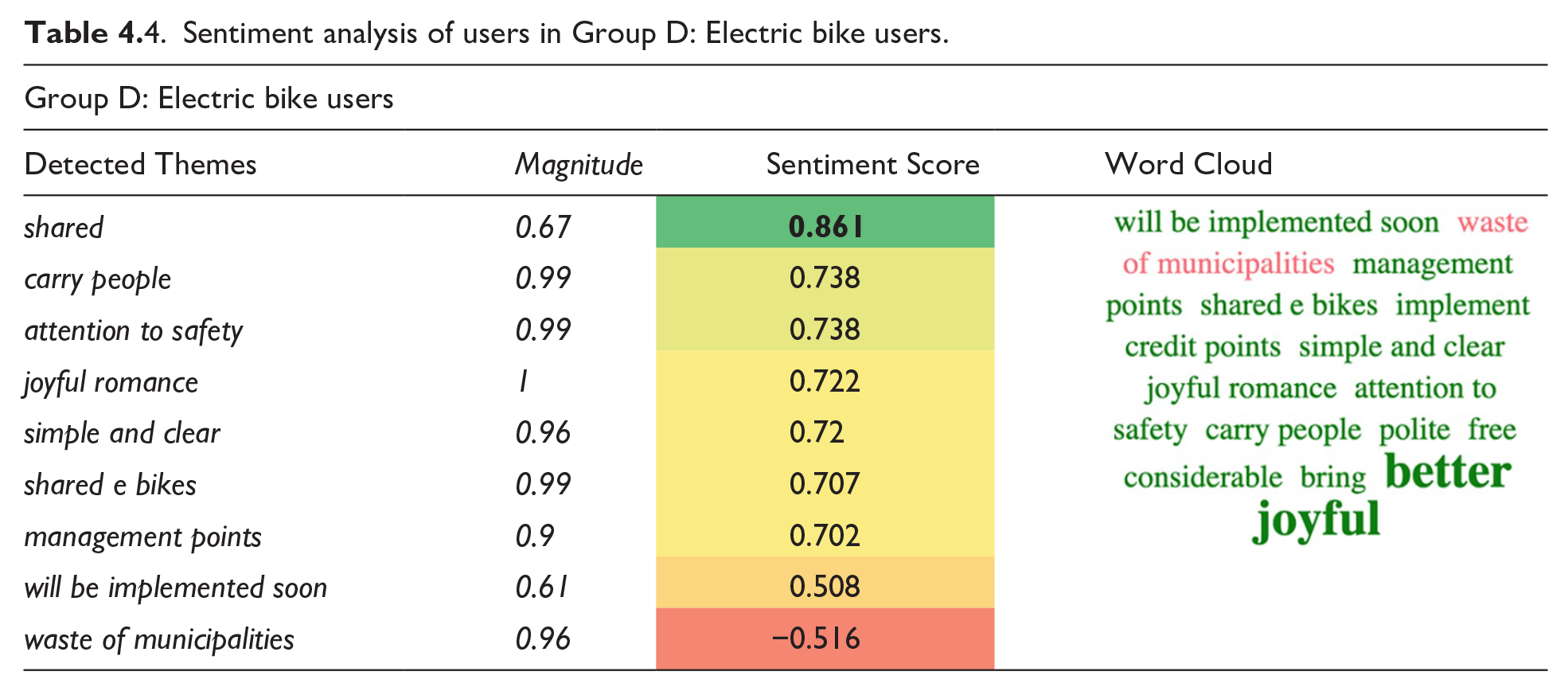
The analysis produced four major components, as Table 4 shows. Detected themes refer to the specific subject or topic that the text is discussing or referring to. It is the underlying topic that the sentiment analysis algorithm uses to determine the sentiment or emotional tone of the text, which serve as the essential component for us to understand various concerns from different group of early adopters. For each detected themes, two values of magnitude and sentiment score are reported accordingly. The value of magnitude is a measure of the degree of emotion conveyed by the words in the detected theme, ranging from 0 to infinity. Sentiment score is a numerical score that represents the overall sentiment or emotional tone conveyed by a piece of text. A colour palette ranging from green, yellow to red represents the sentiment extracted from the detected theme from positive to negative. The darker the colour, the strong sentiment is reflected. Normally, these two values are combined to provide a more nuanced understanding of the sentiment expressed in the text. Last but not least, a word cloud of each group has been visualized to quickly reflect the most common topics or themes in each group. Words expressing positive sentiment are coloured green and those reflecting negative concerns are coloured red. The size of each word is proportional to its frequency of occurrence in the corpus.
Sentiment analysis of users in Group A: Public transport mode.
Sentiment analysis of users in Group B: Private vehicles.
Sentiment analysis of users in Group C: Active travel users.
Sentiment analysis of users in Group D: Electric bike users.
Summary
The above two studies responded to the previously proposed research hypotheses from various perspectives. In study 1, the fitting results of five logistics regression models validated that users’ willingness to adopt electric shared bikes vary distinctly across groups by their existing transport modes. Among different groups, the selected explanatory variables demonstrate significant differences in predicting user’s adoption desires, which provide important evidence to support more targeted implementation plan-making. On top of that, study 2 dived into the subjective comments collected from different travel groups and analysed their overall sentiment orientations as well as detailed theme detections. The combination of the two studies present a comprehensive analytical framework to reveal the nuanced commonalities and differences of potential adopters’ characteristics from various travel groups, and more details on the different features of early adopters from various travel groups will be elaborated in next section.
Discussion
According to Model 1, age, car ownership, commute time, and confidence level of the potential scheme are four significant variables to explain all respondents’ willingness to adopt shared electric bikes, regardless of their existing dominant transport mode. Specifically, commute time and confidence level are two factors with Exp(B) greater than 1, indicating that people with longer daily commute time, or those who have more positive attitude on the potential launch of the scheme, would be more likely to be potential early adopters of shared electric bikes. On the other side, age and car ownership are of significant level with Exp(B) values smaller than 1, reflecting that higher level of private car usage could decrease people’s willingness to transfer to use shared electric bikes. Similarly, young people are more likely to adopt the innovative mobility service when compared with the seniors.
These findings are largely consistent with previous empirical studies conducted across the globe, and reflect some widely recognized characteristics of early adopters of general innovations of mobility services, such as greater curiosity to try newly emerged services among young people (Burghard and Dütschke, 2019; Cartenì et al., 2016), the lower interests of car owners to transfer to shared mobility modes (Efthymiou et al., 2013; Hinkeldein et al., 2015; Ohta et al., 2013), and the strong positive corelation between confidence level and subjective willingness to adopt new products or services which is widely discussed in shared mobility studies (Lou et al., 2021; Paul et al., 2019).
However, such patterns could vary distinctly or be inconsistent when it comes to various social groups or different kinds of shared mobility services. For instance, although young people are generally the main adopters of innovative shared mobility modes, Dill and Rose (2012) discovered that seniors show a higher level of interest in using newly introduced electric bikes. This can be attributed to the ease and comfort of riding of this specific mode of shared mobility service. Furthermore, while car owners are likely to be identified as the group least interested to try on shared mobility services, they could also be attracted to certain niche services. For example, Bösehans et al. (2021) identified two groups expressing the most adoption interest in shared electric mobility hubs, which is the regional hub providing e-scooters, e-bikes, e-cargobikes, and e-cars to the public. The first group comprises highly educated, non-car-owning young people, while the second group consists of car-owning households with children. Therefore, the willingness to adopt newly emerged shared mobility services can be influenced by a combination of interconnected social attributes and transport preferences. Our findings suggest a set of detailed potential early adopters’ identification strategies based on their different preferences, and the analytical framework is also transferrable to be applied in any other niche product or service developments.
Varied profile of potential early adopters from public transport and private vehicle groups
Models 2 and 3 report distinct regression results of respondents’ characteristics who use public transport or private vehicles as dominant transport mode in their daily commuting. For public transport users, age is one of the significant explanatory variables, reflecting the fact that seniors are less likely to adopt shared electric bikes, which is consistent with the population-level estimates resulting from Model 1. The subjective concerns of public transport users mainly focused on two aspects: price and regulations. As Table 4.1 suggests, public transport users express strong concerns on the regulations of potential launch of shared electric bikes, with negative themes detected as “much of an eyesore” and “must be restricted”. Another important finding is the price sensitivity of public transport group. Both text sentiment analysis and binary logistic regression reflect their concerns on the service price. On the one side, the regression results demonstrate public transport users with lower income level would be less likely to adopt the shared electric bikes, although the significant level is validated at 0.1 level. On the other hand, “price them exorbitantly” is detected as a major negative sentiment theme from the subjective comments collected from public transport users. Therefore, age, price, and regulations to limit shared electric bikes’ impact on other transport modes and urban spaces are identified as the main factors in related implementation plans to attract public transport users.
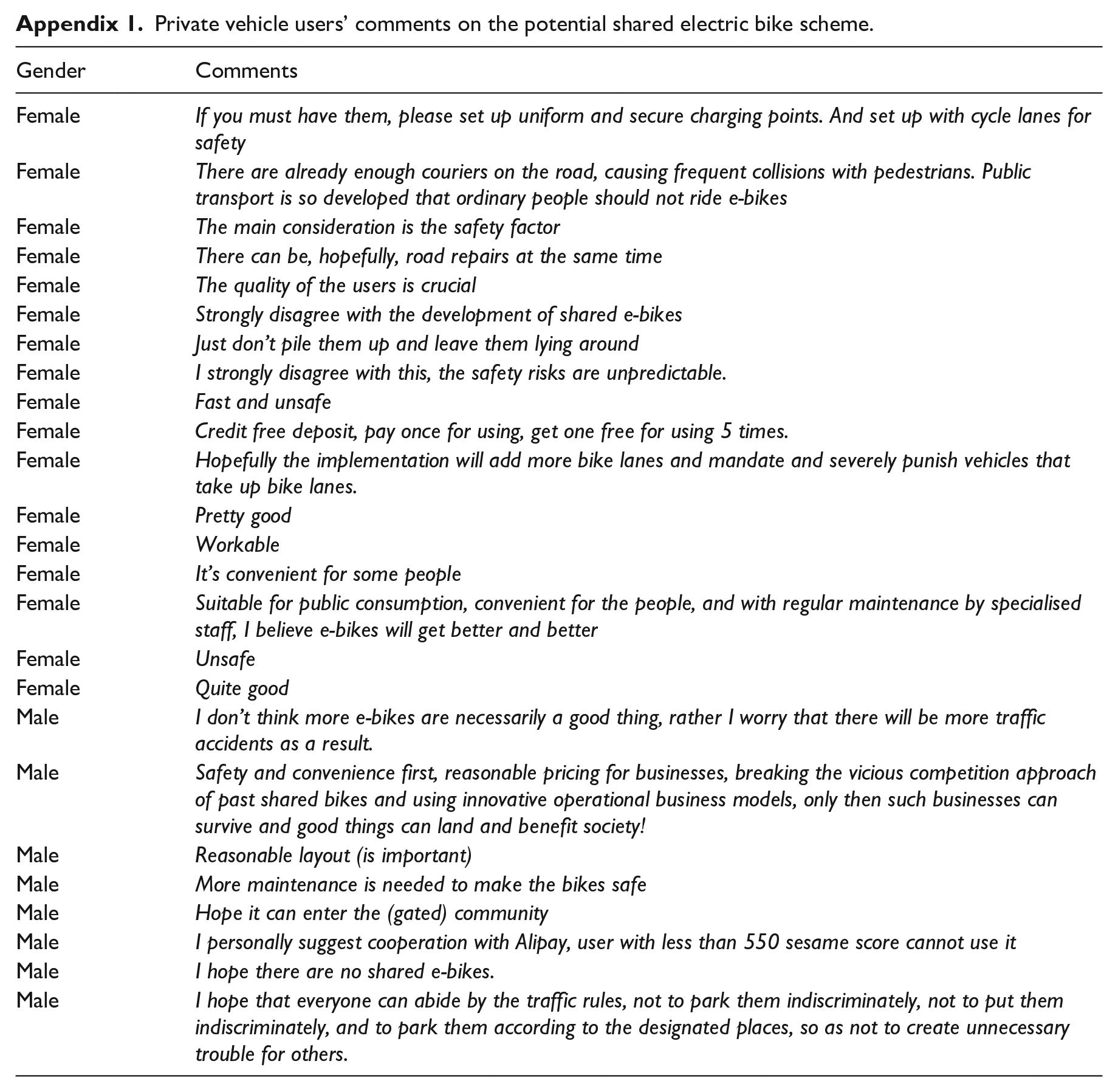
Aside from the confidence level which is significantly important for all subgroups, gender is the only significant explanatory factor to predict adoption willingness for private vehicles users. As the modelling results suggest, the variable sex had the largest value for Exp(B) in 0.05 significant level, indicating that male private vehicle users are much more likely to adopt shared electric bikes than female users. Among all 157 respondents who claimed private vehicles as their daily dominant transport mode, 79.5% of the male respondents (74 out of 93) show adopt willingness, while 54.7% female respondents (35 out of 64) demonstrate their interests on the potential launch of shared electric bikes in the case city. Furthermore, it is worthy of note that gender tests as showing no significance in any other subgroups as well as the all-population group. In line with the regression results for private vehicle users, text sentiment analysis also demonstrate gender-specific differences. Specifically, a total of 26 private vehicle users submitted detailed and valid comments on the potential launch of shared electric bikes in the city. Among them, female users demonstrate a strong concerns on safety issue, with detected keywords of “frequent collisions with pedestrians”, “safety risks are unpredictable”, and “unsafe”. At the same time, male private users expressed a wider range of concerns including “more maintenance is needed”, “enter the (gated) community”, and “park them. . .to the designated spaces”. A full list of comments collected from private vehicle users are provided in Appendix 1. Last but not least, both male and female private users mentioned the credit system of the scheme, with a strong interest in introducing a credit system into the shared mobility services, which could serve as a group-specific marketing strategy for private vehicle users.
Potential early adopters from active travel group: Commuting time matters
Active travel refers to any mode of transportation that involves physical activity. In this study, the subgroup of active travel includes respondents who claim their daily dominant transport mode as cycling (including personal-owned bicycles and shared bicycles) and walking, with the total number of respondents being 270, accounting for 26.0% of the respondents. According to Table 3, daily commute time is the only significant explanatory variables to predict users’ willingness to adopt the shared electric bikes, indicating users who have to travel for long time every day (either walking or cycling) are more likely to use the shared electric bike. Such findings are consistent with several previous empirical studies, and highlight one of the core benefits of electric bikes, namely, the ease of use for longer distance trips.
Although the significance level of the commuting time variable is only valid at 0.1 level, the text sentiment analysis provides similar insights. One of the detected themes with highest magnitude level is the “long distances”, and it ranked as the most compelling positive theme in this group. Active travel users are expressing their strong interests in using electric bikes to travel longer distances and at higher speeds without getting as tired as they would with traditional bikes or walk. In addition, they also care about the safety, maintenance, and possible damage of improper parking and overuse to the cityscape. To sum up, the ease of use in longer-distance trips attracts active travel group users the most, but at the same time, they also worry about the responsible use of electric bikes by its potential users.
From electric bikes to shared electric bikes
Last but not least, the regression results show no significant variables to predict electric bike users’ intention to switch from their self-owned electric bikes to shared programmes. There could be several possible reasons, including convenience, cost, hygiene concerns, and security concerns. According to the text sentiment analysis, current electric bike users are showing an overall positive attitude to the potential launch of the shared electric bike scheme. One of the respondents mentioned his or her switch intention due to the higher accessibility of shared electric bikes: “Although I have an electric bike myself, I feel it is not convenient to use. Also, it’s better to install a sensor on the helmets, otherwise it’s easy to be stolen.” Another user said he or she would like to see more multimodal hubs for all types of shared mobility services, which is in line with the current trends on integrating various types of shared mobility accesses, namely, eHUBs (Bösehans et al., 2021).
In sum, the study did not reveal a statistically significant results to predict current electric bike users’ preferences and switch intentions, but the text analysis does supplement several possible directions for improvement, such as the demand for secured helmets and integrated shared mobility hubs.
Furthermore, the diffusion of innovation theory widely acts as a theoretical foundation for the explanation of the diffusion of innovative ideas or technologies, e.g., shared mobility services. This study provides new evidences on the diffusion process of the new shared electric bikes among potential users. It is highlighted that a new type of shared mobility service is more likely to succeed among users of existing shared mobility services.
Conclusion
According to the diffusion of innovation theory, effectively identifying early adopters is a critical step to accelerate the adoption rate, collect feedback for targeted improvements, generate revenue and profitability, and gain valuable insights into the needs and preferences of their target market. As the shared mobility market constantly evolves, niche product and services start to gain traction in recent years, and shared electric bikes are one of them. For the operators, it is of great importance to make a tailored strategy to attract target audiences from the existing market, and this study provides a comprehensive analytical framework to understand the nuanced demand, preferences, and pain points from different travel groups, in order to better facilitate the identification of early adopters for the potential launch of the shared electric bikes scheme in the case city. The main findings and associated suggestions are listed as follows:
Based on all the sample regressions, users who are younger, commute for longer time every day, do not own a car, and have greater confidence in the share scheme implementation in the city are more likely to adopt the innovative shared electric bikes services. Among all these variables, daily commute time demonstrates the greatest explanatory power, therefore offering incentives such as discounted rides or free passes for commuters with long travel times could be considered a pilot marketing plan.
Among public transport users, younger population demonstrate significantly greater interest in adopting the shared electric bikes, but at the same time, they also express concerns on the price. To attract this groups of potential adopters, the operators could partner with universities to provide on-campus sharing stations. They can also offer special discounts or incentives for students who use the service, such as free or discounted first-time rentals, or loyalty rewards for frequent users.
Given the significance of gender difference in adoption willingness among private vehicle users, marketing efforts should be tailored to address the safety concerns of female users. Emphasizing safety features and highlighting efforts to reduce collisions with pedestrians could help to alleviate their concerns.
Users who take walking or cycling as their dominant transport mode consider shared electric bikes as a solution to travelling longer distances with ease. Therefore, the core benefits of speed, comfort, and ease to use should be emphasized to the targeted audiences through various means, such as social media campaigns, user testimonials, as well as local organization partnerships.
The study found no significant variables to predict electric bike users’ intention to switch from their self-owned bikes to shared programmes, therefore a user with self-owned bikes is not considered as the target audience. But their demand on secure helmets and integrated mobility hubs could serve as an important niche service to differentiate the scheme from competitors.
In addition, this study exhibits a number of research limitations that warrant further investigation. First, roughly half of the respondents are aged from 18 to 25, reflecting a biased sampling in the questionnaires. Therefore, age’s explanatory power across various groups could be affected slightly. Second, the questionnaire was distributed before the official launch of the shared electric bike schemes, and the actual adoption rates could vary from the desired willingness presented in the questionnaire. To overcome such shortage, further study is expected to investigate the differences between the desired willingness level and the actual adoption rate after the scheme launch. Lastly, the case city Shenzhen has a large proportion of young people, good urban infrastructure, and a mild climate for outdoor cycling, therefore, the explanatory variables could be case-sensitive and supported by local experiences.
Footnotes
Appendix
Private vehicle users’ comments on the potential shared electric bike scheme.
| Gender | Comments |
|---|---|
| Female | If you must have them, please set up uniform and secure charging points. And set up with cycle lanes for safety |
| Female | There are already enough couriers on the road, causing frequent collisions with pedestrians. Public transport is so developed that ordinary people should not ride e-bikes |
| Female | The main consideration is the safety factor |
| Female | There can be, hopefully, road repairs at the same time |
| Female | The quality of the users is crucial |
| Female | Strongly disagree with the development of shared e-bikes |
| Female | Just don’t pile them up and leave them lying around |
| Female | I strongly disagree with this, the safety risks are unpredictable. |
| Female | Fast and unsafe |
| Female | Credit free deposit, pay once for using, get one free for using 5 times. |
| Female | Hopefully the implementation will add more bike lanes and mandate and severely punish vehicles that take up bike lanes. |
| Female | Pretty good |
| Female | Workable |
| Female | It’s convenient for some people |
| Female | Suitable for public consumption, convenient for the people, and with regular maintenance by specialised staff, I believe e-bikes will get better and better |
| Female | Unsafe |
| Female | Quite good |
| Male | I don’t think more e-bikes are necessarily a good thing, rather I worry that there will be more traffic accidents as a result. |
| Male | Safety and convenience first, reasonable pricing for businesses, breaking the vicious competition approach of past shared bikes and using innovative operational business models, only then such businesses can survive and good things can land and benefit society! |
| Male | Reasonable layout (is important) |
| Male | More maintenance is needed to make the bikes safe |
| Male | Hope it can enter the (gated) community |
| Male | I personally suggest cooperation with Alipay, user with less than 550 sesame score cannot use it |
| Male | I hope there are no shared e-bikes. |
| Male | I hope that everyone can abide by the traffic rules, not to park them indiscriminately, not to put them indiscriminately, and to park them according to the designated places, so as not to create unnecessary trouble for others. |
Declaration of conflicting interests
The author(s) declared no potential conflicts of interest with respect to the research, authorship, and/or publication of this article.
Funding
The author(s) disclosed receipt of the following financial support for the research, authorship, and/or publication of this article: This research was supported by the National Natural Science Foundation of China (grant no. 42101189), Platform Technology Funding (URC012530226) and Guangdong-Hong Kong-Macau Joint Laboratory Program (Project #: 2020B1212030009).