



Abstract
This study investigates how transnational migrants in Shenzhen, China, navigated their sense of “home” and belonging during the COVID-19 pandemic under the “dynamic Zero-COVID” strategy and its rigorous mobility restrictions. As a prominent immigrant city, Shenzhen provided a specific urban context for examining these experiences. Drawing on the theoretical framework of “mobile forms of belonging,” which suggests belonging is actively constructed through movement rather than being tied to fixed locations, the research explores the impact of altered mobility patterns on the reconstruction of belonging. A qualitative methodology was employed, utilizing semi-structured, in-depth face-to-face interviews and field observations with 40 long-term transnational residents in Shenzhen between May and November 2021. Findings reveal significant changes across international, domestic, and intra-city mobility. These shifts compelled participants to reconstruct and adjust their sense of belonging, leading to an intensified domestic focus and redefinition of “home”. The research also highlights reshaped community ties, local belonging, and an increased reliance on virtual connections to maintain transnational links. Based on observed mobility practices, the study identifies five distinct types of belonging experienced during this period: Regulated Rhythm, Family-Centered; Flexible Rhythm, Multi-Centered; Restricted Mobility, Work-Centered; Selective Mobility, Globally-Centered; and Low Mobility, Detached-Centered. This research empirically demonstrates the dynamic nature of belonging in a crisis context, illustrating how changes in the rhythm, resources, and conditions of mobility reshape migrants’ attachments and identities within a specific urban environment.
Keywords
Introduction
The increasing frequency of population mobility, driven by globalization and urbanization, has challenged traditional notions of belonging, which were often tied to static, fixed locations. Conventional perspectives that viewed mobility as a threat to these stable community ties are increasingly being questioned as individuals actively redefine their identities and sense of place through movement (Farber et al., 2012; Kwan, 2009). The re-territorialization of relationships across and beyond neighborhood boundaries underscores the need to study how mobility interacts with place-based identities in nuanced ways (Gustafson, 2001). This study addresses this paradigm shift, particularly in the context of the unprecedented disruptions to global mobility caused by the COVID-19 pandemic. The study was conducted from May to November 2021, a period when China maintained a stringent “dynamic COVID-Zero” strategy. This approach involved strict international border controls, severely limiting inbound and outbound travel, alongside rapid, localized lockdowns to manage domestic outbreaks. In contrast to many parts of the world then experiencing significant community transmission and varied reopening phases, daily life within much of China (outside of specific outbreak zones) had a semblance of normalcy, though international movement remained heavily curtailed. This unique context profoundly shaped the experiences of transnational migrants in Shenzhen, China, focusing on how their mobility and sense of belonging have been reconfigured during the pandemic. Specifically, this study investigates how the pandemic-induced mobility restrictions led to overall shifts in the belonging experiences of transnational migrants, examines the ways these shifts manifested across multiple scales from the home to transnational connections, and explores how changes in mobility practices and resources acted as mechanisms to reconfigure their multi-scalar sense of belonging.
Drawing on the concept of “mobile forms of belonging” as proposed by Fallov et al. (2013), which posits that belonging is dynamically constructed through movement and interaction rather than being tied to static locations, this study examines how the pandemic has reshaped this dynamic construction. This framework is essential for understanding how, despite limitations on physical mobility, migrants actively reconfigure their sense of belonging through new avenues such as online engagement and community activities. Moreover, this study is informed by the understanding that belonging is a multi-scalar phenomenon, where individuals may experience it simultaneously across different spatial scales, such as the neighborhood, the city, and the nation, and will explore how the pandemic has impacted these multi-scalar experiences.
This study’s theoretical contribution lies in its integration of the pandemic context with the “mobile forms of belonging” framework to provide a more nuanced understanding of the relationship between mobility and belonging. It reveals how belonging is reconstructed and adjusted through new practices under restricted mobility conditions. Furthermore, this study provides empirical evidence for multi-scalar belonging theories and offers insights for urban planning and social integration policies to better serve the diverse needs of mobile populations, thereby promoting more inclusive and resilient urban communities. The subsequent sections of this paper will review the pertinent literature, detail the research methodology, and present the empirical findings, culminating in a discussion of theoretical and practical implications along with future research directions.
Multi-scalar mobility and belonging
Traditional perspectives have often framed belonging as a static attachment to specific places, emphasizing locality and stability (Relph, 1976; Tuan, 1974). Early urban sociological studies, such as those of the Chicago School, positioned neighborhoods as central to understanding social differentiation and integration, where the spatial and social uniqueness of communities was considered essential for fostering social relationships (Van Kempen and Wissink, 2014). However, the dynamics of globalization and intensified mobility have increasingly challenged these static conceptualizations, necessitating a re-evaluation of the relationship between mobility and belonging. The “new mobilities paradigm” (Urry, 2007) suggests that space is no longer the primary determinant of social relations; instead, mobility has become central to contemporary life, disrupting traditional place-based attachments while simultaneously enabling new relational ties across spatial scales. Harvey’s (1996) concept of “time-space compression” further illustrates this tension between local and global connectivity.
Within this evolving landscape, scholars are redefining individual connections to places, particularly for migrant experiences. While related to emotional bonds with specific places, or “place attachment” (Altman & Low, 1992), the concept of “belonging” offers a broader, more relational perspective. Belonging extends beyond ties to a physical location to include social acceptance, recognition, and membership within a group or society (Antonsich, 2010; Yuval-Davis, 2006). It is a multifaceted concept involving shared identities and feeling “at home” within a social fabric. In this context, mobility is not the opposite of fixed belonging, but rather a key mechanism for negotiating and reconfiguring it. This is supported by Cresswell (2004), who argues mobility fosters new forms of belonging, and by Massey’s (1994) relational view of place as fluid and shaped by movement. The concept of “mobilocality” (Yu, 2018) further emphasizes that mobility and locality are not mutually exclusive but are dynamically constructed and intertwined, shaping how belonging is experienced.
The multi-scalar perspective underscores that belonging operate across multiple spatial scales, from local to transnational. At the neighborhood level, a sense of belonging is often cultivated through emotional connections to local communities remain significant for cultivating belonging (Lewicka, 2011). Simultaneously, at the urban scale, identification with a city strengthens urban belonging (Lin et al., 2021; Qian et al., 2011). Transnational belonging emerges as individuals maintain emotional, cultural, and social ties to their homelands, forming relational identities that bridge geographic divides (Marcu, 2014; Ridgway and Kirk, 2021). Furthermore, the socio-cultural dimensions of mobility are also important. The flow of cultural experiences, facilitated by mobility, can promote connections and the formation of cultural identity between different places (Hannerz, 1990), while the flow of social relations impacts community belonging (Forrest, 2008; Forrest et al., 2002). Understanding how mobility reshapes the multifaceted experience of belonging across these scales is crucial, especially for transnational migrants whose lives are inherently defined by movement.
Theoretical perspectives on mobility-related belonging emphasize mobility as a dynamic mechanism for constructing belonging, integrating movement and connection. “Mobile forms of belonging” (Fallov et al., 2013) highlight how individuals establish connections through movement and interaction, emphasizing the fluid and evolving nature of belonging. Social identity theory (Tajfel, 2004) suggests that individuals derive emotional value and meaning from their group memberships, and mobility influences these identifications by reshaping their sense of belonging to different groups. The new mobilities paradigm (Sheller & Urry, 2006) further underscores the necessity of anchors to maintain stability, which can be physical or abstract, for balancing mobility and stability (Jørgensen et al., 2011). Cultural geography emphasizes the dynamic nature of place in mobile societies (Relph, 1976; Tuan, 1977) and introduces the metaphor of “roots and routes” to illustrate the interplay between rootedness and exploration (Gustafson, 2001). Theories on emotional bonds with specific locations (e.g., Altman & Low, 1992) also inform our understanding, highlighting how such affective ties, as a component of belonging, are reconfigured by mobility. Finally, the temporal, resource, and meaning dimensions significantly influence how individuals experience mobility-related belonging (Fallov et al., 2013).
In summary, the literature on mobility and belonging has shifted from binary oppositions to multi-scalar interconnections, focusing on the dynamic relationship between the two. Mobility is not a force that erodes belonging but an essential factor in its construction, offering new perspectives for understanding the relationship between individuals and space in contemporary society (Gustafson, 2009).
Conceptualizing the mobility-belonging framework
To explore the complex interplay of mobility and belonging for transnational migrants, particularly within the context of events like the COVID-9 pandemic, this study is specifically situated in Shenzhen. Shenzhen, a prominent migrant city in Southern China, serves as a unique setting for this investigation. Established as a Special Economic Zone in 1980, Shenzhen has historically drawn significant domestic migration and is now increasingly a major destination for international migrants. In 2023, it hosted approximately 107,000 foreign nationals, representing 0.46% of its total population (Shenzhen Municipal Bureau of Statistics, 2023). This influx of a diverse, highly skilled international workforce is largely attributed to Shenzhen’s strategic proximity to Hong Kong and its concentration of innovative industries. The city’s character as a young “immigrant city,” where local identity is actively constructed rather than inherited, profoundly shapes the experiences of residents, especially transnational migrants for whom movement and adaptation are central. Understanding how belonging is conceptualized and negotiated by migrants in such a dynamic, migrant-dense urban center as Shenzhen offers representative and insightful perspectives, particularly as China adjusts policies to attract foreign talent.
Against this backdrop, this study explores the intricate relationship between mobility and the sense of belonging among transnational migrants in Shenzhen, particularly within the context of the COVID-19 pandemic. Through an analysis of collected data, we identify various ways in which mobility affects belonging, leading to the development of a preliminary mobility-belonging framework (as shown in Table 1). This framework operationalizes the sub-dimensions of belonging—time, resources, and meaning structure—as rhythms of mobility, resources for mobility, and conditions of mobility, respectively. The central argument is that contemporary daily life is not simply defined by movement or stasis but is shaped by how the rhythms of mobility influence the scale and nature of belonging. This framework aims to illustrate the dynamic and complex interplay between mobility and belonging, especially under the unique circumstances of a global pandemic.
Preliminary mobility-belonging framework for transnational migrants in Shenzhen.
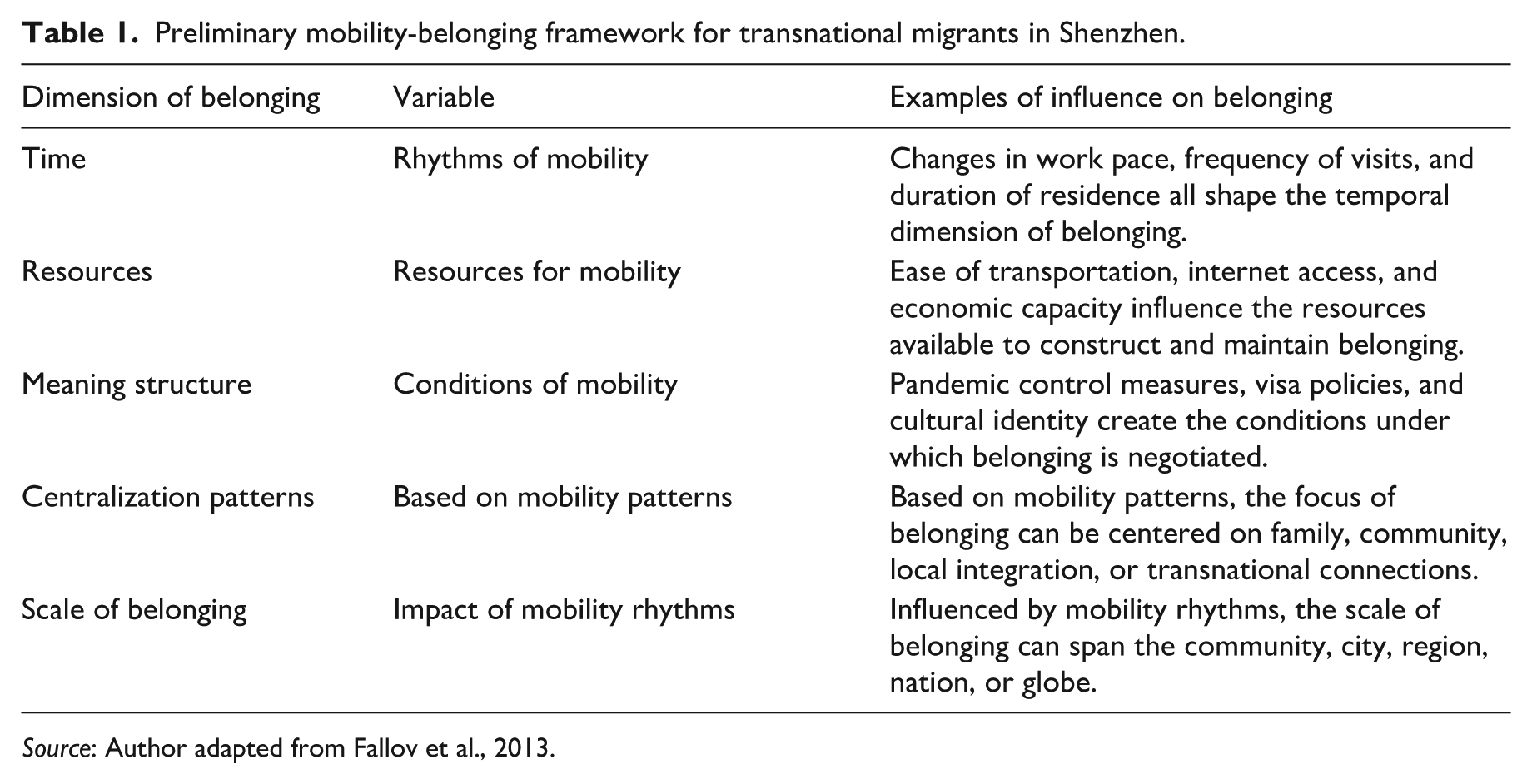
Source: Author adapted from Fallov et al., 2013.
It is crucial to emphasize that this relationship is not a binary opposition but a complex interaction of mutual influence. For instance, during the pandemic, some transnational migrants in Shenzhen may have experienced varied rhythms of mobility due to job changes or international travel restrictions, directly impacting their sense of belonging to the city. Conversely, others who actively engaged in community activities during the pandemic, utilizing limited resources to form new social connections, may have strengthened their sense of belonging to Shenzhen. Furthermore, the availability of resources for mobility, such as easy access to communication with family and friends or the ability to obtain necessities, also affects their sense of belonging.
Therefore, this preliminary framework aims to capture these complexities, underscoring that mobility is not merely physical movement but a social practice shaped by temporal, resource-based, and meaning-related factors. By analyzing these factors, a deeper understanding can be gained regarding how transnational migrants construct and maintain their sense of belonging in Shenzhen. The framework also considers centralization patterns, which are based on mobility patterns, emphasizing family or community, local integration or transnational connections, and reliance on repetitive routines. Additionally, the scale of belonging, influenced by mobility rhythms, is explored across community, city, region, nation, and even global dimensions, encompassing daily activity ranges and emotional connections.
Rhythms of mobility, characterized by the frequency and patterns of movement in daily life, significantly influence how transnational migrants in Shenzhen experience and construct their sense of belonging. These rhythms vary considerably, from rapid and irregular patterns resulting from frequent work-related travel to slower, more regular patterns associated with movements within the city. As noted in the source material, these varying mobility rhythms can lead to different outcomes in terms of social ties and belonging. Individuals with high mobility rhythms may develop fewer social connections within their local community, relying less on neighborhood-based resources. Conversely, those with lower mobility rhythms may depend more heavily on local networks and place-based relationships. The sources emphasize that these mobility patterns are not merely about physical movement but also about the social, cultural, and emotional dimensions of moving. The sense of belonging is thus not just about being present in a place but also about how one moves through and interacts with that place.
The framework of “practices, spaces, and subjects” provides a relational perspective for understanding how mobility practices create spaces and narratives, emphasizing that mobility is not just about moving from one point to another but also about how moving shapes one’s sense of self and place. This concept is further enriched by the notion of “mobile forms of belonging” (Fallov et al., 2013), which posits that belonging is not static but is actively constructed and reshaped through movement and social interactions. This challenges the traditional view that mobility undermines belonging, and underscores that mobility can be a mechanism through which individuals attach to and navigate different places. The idea of centering is also important, as it suggests that individuals engage in a reciprocal process of “home” and “reaching out,” which is shaped by their mobility. The daily mobility of transnational migrants in Shenzhen, within and beyond their neighborhoods, are particularly important for shaping their sense of belonging.
The patterns of movement, especially those which are rhythmic and predictable, can provide stability, while access to mobility resources, such as transportation and digital technologies, can influence individuals’ ability to connect across multiple contexts. In the context of the COVID-19 pandemic, disruptions in global mobility have led some transnational migrants to become more reliant on local communities, while others experienced isolation due to restricted travel and reduced social interaction. This highlights how external events and shifting circumstances can impact rhythms of mobility and the experience of belonging. The multi-scalar nature of belonging also means that individuals may experience a sense of attachment at different levels, including neighborhood, city, and city-region, which are all connected. This interconnectedness underscores the complex ways that people develop their sense of home in a mobile world.
In summary, this framework serves as a tool for understanding how mobility influences the sense of belonging for transnational migrants in Shenzhen. It also emphasizes the need for urban planning and social integration policies to adapt to the dynamic relationships between mobility and belonging, ensuring inclusive and sustainable urban environments.
Methodology and data collection
This study employed a qualitative approach, utilizing semi-structured in-depth, face-to-face interviews and field observations. Data was gathered over six months, from May to November 2021. The research focused on transnational migrants who had moved to China before 2019 and had a substantial residence history in Shenzhen. Initial contact with potential long-term foreign residents was made through the Nanshan District International Exchange Center, yielding a pool of 63 individuals. From this group, a purposive sampling method selected the final 40 participants, ensuring diversity based on their duration of residence in Shenzhen (requiring at least two years before 2019), nationality, and to a lesser extent, residential location. All research procedures were conducted in accordance with established ethical guidelines for social science research. Before each interview, the purpose and nature of the study were fully explained to every individual. All 40 participants were assured that their involvement was completely voluntary and that their identities would be kept confidential. They all provided verbal informed consent to participate and to be recorded before the interviews commenced.
Interviews, each lasting between 50 and 110 minutes, delved into various dimensions of their belonging, including their connections to the local community, their identification with Shenzhen, and their overall sense of being at home. Topics covered included residential history, mobility patterns, and overall sense of place. Interviews were conducted in person, typically in public venues like cafes or open spaces near participants’ homes. These locations also facilitated field observation, providing insights into the neighborhood environment and local interactions, which were documented in field notes to supplement the interview data. The transcribed interviews amounted to approximately 120,000 words, offering a rich source for detailed understanding.
The 40 participants represented a diverse demographic, primarily originating from European and Asian nations (Figure 1). Their ages ranged from their mid-20s to late 50s, with the majority aged 30–45. A key requirement was their residence duration: all had lived in Shenzhen for at least two years preceding 2019, and many had resided there for longer periods, ranging from 5 to over 10 years. This was a highly educated group, with most holding bachelor’s degrees and many possessing postgraduate qualifications. The gender ratio was skewed at 7:3 male to female. Participants were mainly work-motivated migrants, employed in various professions including architecture, teaching, entrepreneurship, IT, management, arts, and consulting; some also cited study, marriage, or personal reasons. Most resided in Nanshan (including Shekou) and Futian districts (Figure 2). Based on their professions and education, their profiles suggested a middle to upper-middle income bracket within Shenzhen’s expatriate community, although specific income data was not collected.
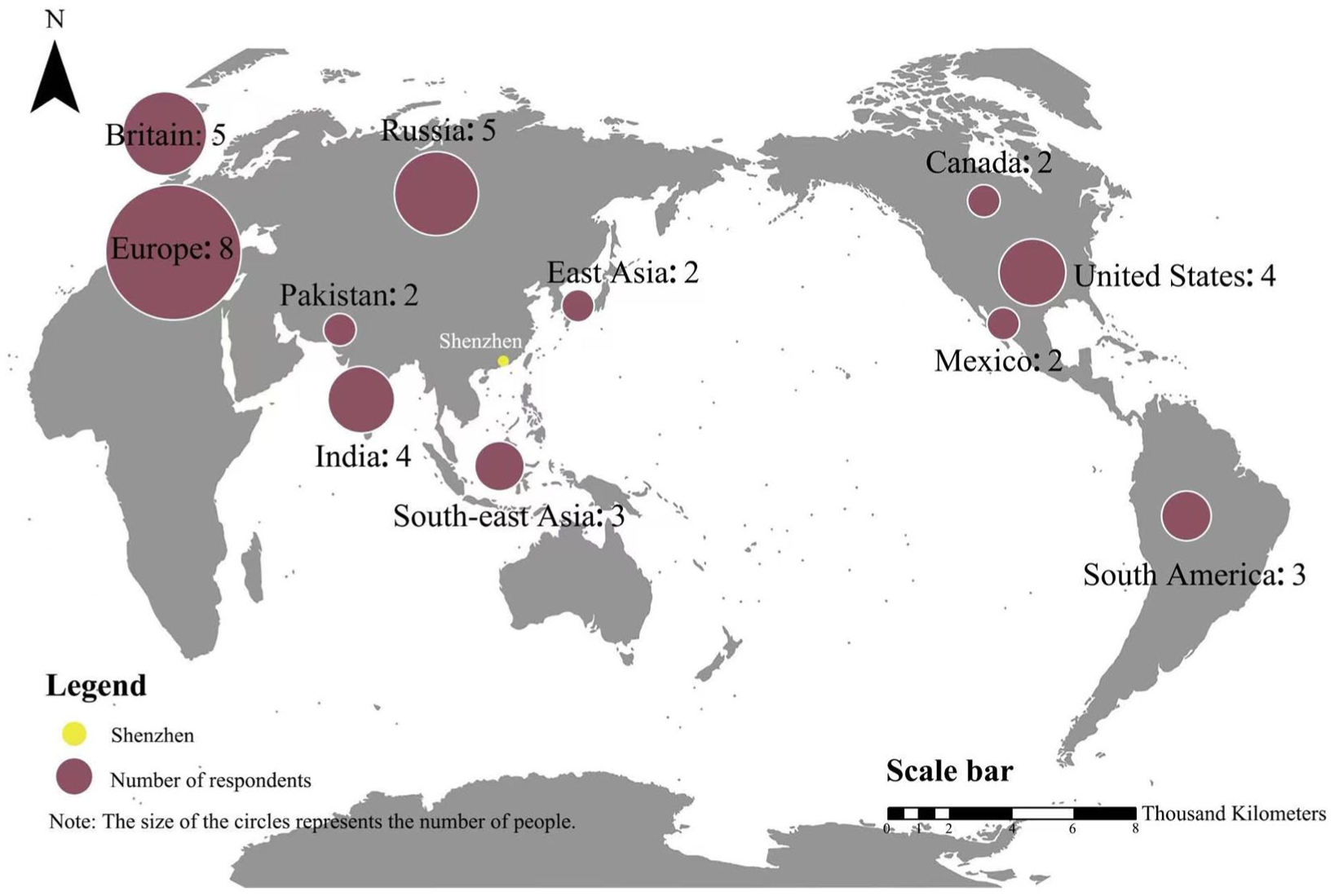
The location of participants’ nationalities.
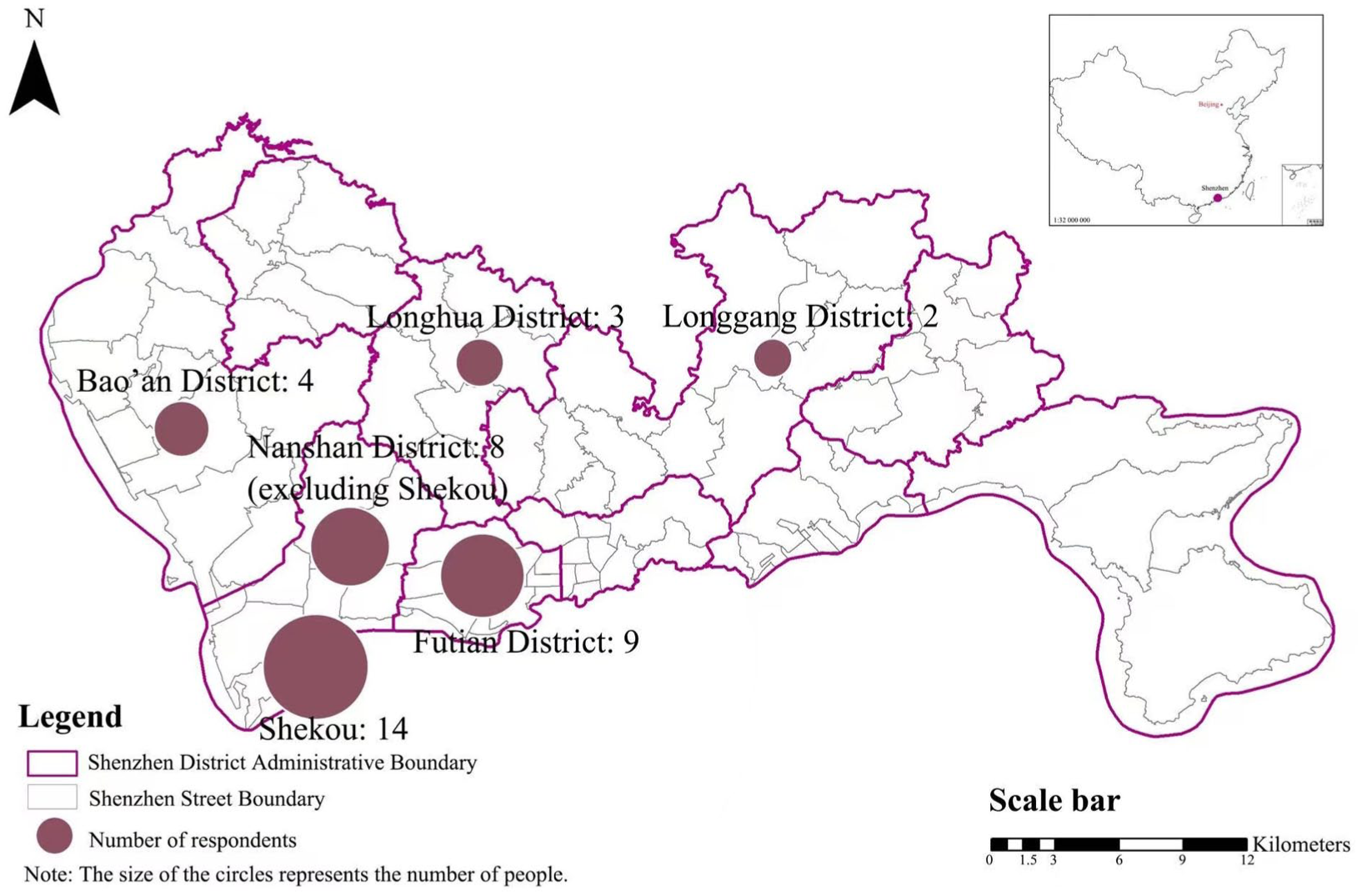
Residential distribution of the participants across Shenzhen.
Mobility was categorized into global, domestic, and intra-city levels. Among the 40 participants, 37 reported a complete cessation of international travel due to the COVID-19 pandemic. For domestic travel, 29 participants indicated a reduction in travel frequency, while 6 reported an increase. Regarding intra-city mobility, 8 participants reported a decrease, 2 reported an increase, and the rest reported no significant change. Global mobility, primarily referring to international travel, was significantly impacted by the pandemic. Except for a few employees of multinational corporations (e.g., Foxconn Technology Group) who maintained necessary international travel, the majority of participants experienced restrictions due to pandemic control measures, visa issues, and flight cancellations. Domestic mobility, which includes travel within China, was reduced for most participants, although a few reported increased travel frequencies. Intra-city mobility, or travel within Shenzhen, remained largely unaffected or increased for some participants.
Results
Based on the analysis of the collected data, it was found that mobility practices, significantly altered by the COVID-19 pandemic, were a key force shaping the sense of belonging among transnational migrants in Shenzhen. The study revealed that altered mobility rhythms, changing access to and use of mobility resources, and restriction conditions did not simply undermine belonging. Instead, they necessitated and facilitated a reconstruction and adjustment of how migrants experienced their sense of home and belonging. This interplay between mobility and individual experience led to distinct patterns and scales of belonging, illustrating the intricate influence of mobility on belonging in a mobile yet increasingly restricted global context.
Social-economic profiles of transnational migrants in Shenzhen
Before analyzing the socio-economic profiles of foreign residents in Shenzhen, key themes from the interviews were extracted and summarized in Table 2. This table outlines various aspects of their experiences, providing a structured overview of the factors influencing their lives in Shenzhen.
Key themes from interviews on transnational migrants’ experiences in Shenzhen.
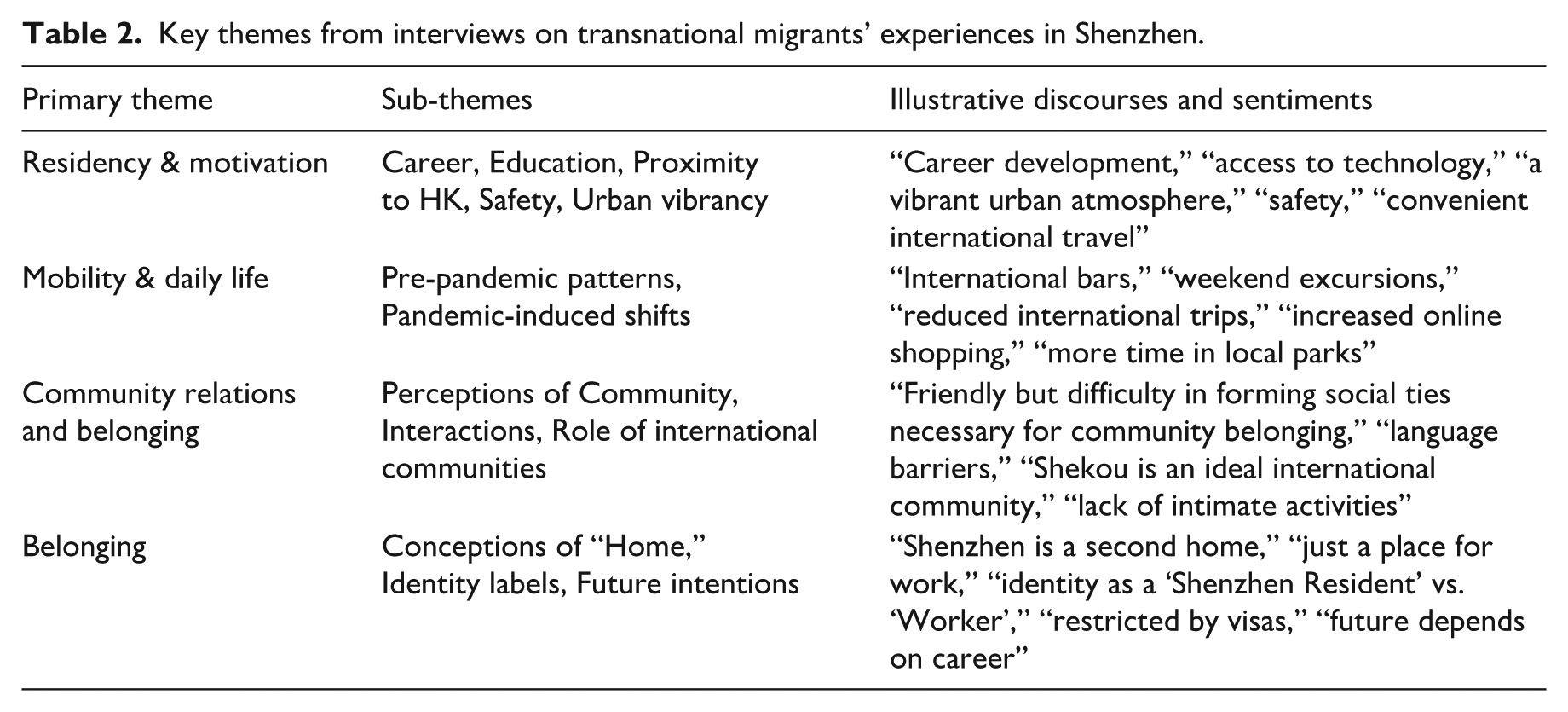
Career advancement and educational prospects are primary motivators for foreign nationals relocating to Shenzhen, indicating personal ambition and a positive view of the city’s future development. Shenzhen’s strategic location, with convenient international air connections and proximity to Hong Kong and Macau, combined with its thriving electronics sector and innovative financial ecosystem, indirectly facilitates foreign migration to the city. The decision to remain in Shenzhen is influenced by in-city experiences, including a high sense of safety and well-being, a pleasant environment, and overall convenience, reflecting acceptance of Shenzhen’s inclusive culture. Due to diverse social, cultural, and religious backgrounds, daily mobility patterns of foreign residents often concentrate in expatriate-oriented venues, such as bars, cafes, and religious institutions.
While COVID-19 restrictions were expected to curb mobility, urban movement remained largely unaffected; instead, travel destinations shifted to localized shopping and e-commerce. Mobility behavior is linked to social practices, contributing to limited community engagement. Cultural disparities, language barriers, and high residential turnover diminish neighborly interactions, hindering close bonds with local communities. International communities bridge Chinese and foreign residents, offering services and activities that foster local social networks and cultivate a sense of belonging, though they may inadvertently neglect traditional local culture. Approximately half of foreign residents are unaware of or have not benefited from international community initiatives, indicating an ongoing developmental phase in Shenzhen’s international community.
The sense of belonging to Shenzhen varies significantly among foreign residents, depending on the nature, purpose, and intensity of their activities. Some long-term residents with family ties identify as “Shenzhen people,” while highly mobile individuals integrate into the city after the pandemic, viewing it as a “second home.” Others, with shorter residency and weaker social ties, grapple with uncertain identities. Some prioritize professional development as “Shenzhen workers,” while those with limited residency due to visa restrictions struggle to form emotional attachments. These elements highlight the intricate interplay between personal, social, and circumstantial factors influencing belonging and integration.
Mobility shifts and the changing multi-scalar belonging during the COVID-19 pandemic
Leveraging theoretical frameworks including “mobile forms of belonging” (Fallov et al., 2013) and the multi-scalar nature of belonging (Lewicka, 2011; Lin et al., 2021), this study analyzes transnational migrants’ experiences in Shenzhen during the COVID-19 pandemic. It empirically examines how pandemic-induced mobility disruptions directly impacted and reconfigured their sense of belonging across various scales. To understand this dynamic interplay, we first examine the observed multi-scalar mobility patterns, differentiating between global mobility (international movement) and local mobility (domestic and intra-city movement).
As detailed in Table 3, the pandemic caused significant impacts on these movements: 37 participants stopped international travel; for domestic mobility, 29 reduced frequency, while 6 increased, and the rest were unchanged; and for intra-city movement within Shenzhen, 8 decreased, 2 increased, and the others reported no significant change. We then link these observed global and local mobility shifts with changes in how migrants experienced home, community ties, and transnational connections to illustrate the dynamic relationship between mobility and belonging under these unprecedented circumstances.
Statistics on the change of respondents’ mobility.

Redefining home: Intensified domestic focus and home-centeredness
The initial pandemic mobility restrictions led many transnational migrants to redirect their focus inward, reassessing the importance of their immediate domestic environments. This shift provides clear evidence that reduced mobility does not necessarily diminish belonging but can, in fact, enhance the sense of home. Increased time spent at home prompted a re-evaluation of its significance, cultivating stronger emotional attachments. This was particularly true for participants with young children, who often cited safety concerns as a reason for significantly reducing travel and centering their activities around the home and immediate neighborhoods.
This new, structured home routine created a rhythm that facilitated a deeper sense of belonging within the domestic sphere. In the context of the pandemic, many foreign residents in Shenzhen exhibited a pattern of “home-centeredness” (Fallov et al., 2013). Home became more than a place of residence; it transformed into a haven providing safety, comfort, and emotional support. For instance, a British male teacher, who had lived in Shenzhen for many years, spent more time decorating his apartment and learning Chinese cuisine. He powerfully summarized this shift by stating: The pandemic made me realize that home is not just a physical space, but also a spiritual sustenance. Now, I feel like this is my home.
This sentiment was echoed by others, who found that the enforced stillness of the pandemic offered a rare opportunity for reflection. A French male entrepreneur, whose pre-pandemic life involved frequent travel, noted that the time at home allowed him to slow down, “experience the pulse of this city, and find my place.” These experiences demonstrate that for many, the home environment became a crucial anchor for redefining their relationship with themselves and their communities amidst the global uncertainty.
Reshaping community ties: Local belonging
With broader mobility curtailed, many transnational migrants began to engage more intently with their immediate residential communities. Participating in local activities and interacting with neighbors helped foster a new, localized sense of belonging. An artist whose pre-pandemic work involved considerable travel found that the enforced stillness allowed him to connect with his local surroundings on a deeper level. He stated: I rarely paid attention to the surroundings before; the pandemic gave me the opportunity to calm down and experience the culture and life here, and now I feel like I belong here.
However, the nature of this local engagement varied significantly. Residential location was a key factor; those in areas with a high concentration of expatriates, such as Shekou, benefited from established support networks. This contrasted with the experiences of residents in more isolated settings, like factory or university dormitories, where social circles were more confined. Furthermore, while new connections were formed, they were predominantly with other expatriates. Deeper interactions with local Chinese residents were often hindered by persistent challenges, most notably language barriers.
Maintaining transnational connections: The rise of virtual belonging
Simultaneously, the impossibility of physical travel intensified emotional connections to home countries, expanding the sense of belonging to a transnational, virtual scale. “Virtual belonging” became an essential survival strategy. Digital technologies were the primary tool for maintaining crucial ties with family and friends abroad. A Japanese male engineer explained how video calls provided significant emotional support: Although I cannot go back, I feel like I am still with them; this virtual connection gave me great comfort.
Online platforms like WeChat were instrumental not just for family contact, but also for fostering communities based on nationality or shared interests. These virtual groups became vital hubs for information exchange and mutual support. This reliance on digital platforms resulted in a multi-layered identity for many participants, who were navigating a physically situated reality in Shenzhen while maintaining a vibrant virtual presence in their home countries. As a German entrepreneur articulated: Now I feel like I have two homes, one here, and one in my hometown. I need to find a balance between the two.
This sentiment captures a central outcome of the pandemic experience. For many, belonging was no longer a simple attachment to a single place but transformed into a dynamic integration of the local and the transnational, actively constructed across physical and virtual spaces.
Types of belonging based on mobility practices
This section presents a typology of belonging observed among interviewees, revealing how specific configurations of mobility practices—characterized by distinct rhythms, resources, and conditions, as well as modes of centering—directly shaped different forms of belonging during the pandemic. These categorizations are an empirical exploration rooted in the theoretical understanding that belonging is dynamically constructed through movement and interaction rather than being tied to static locations (Fallov et al., 2013), and that varying elements of mobility—as outlined in our conceptual framework (Table 1) and informed by the new mobilities paradigm (Sheller & Urry, 2006)—contribute to these constructions. Our findings illustrate the diverse ways in which mobility influenced migrants’ attachments, demonstrating that belonging is dynamically constructed through movement and interaction, even when physical mobility is restricted. Each type highlights a particular relationship where mobility patterns, viewed through this theoretical lens, contribute significantly to how individuals experience and articulate their sense of home and belonging. The key characteristics distinguishing these types, including their dominant mobility rhythms, resources, conditions, and modes of centering, are summarized in Table 4.
Typology of belonging based on mobility practices among transnational migrants in Shenzhen during the pandemic.
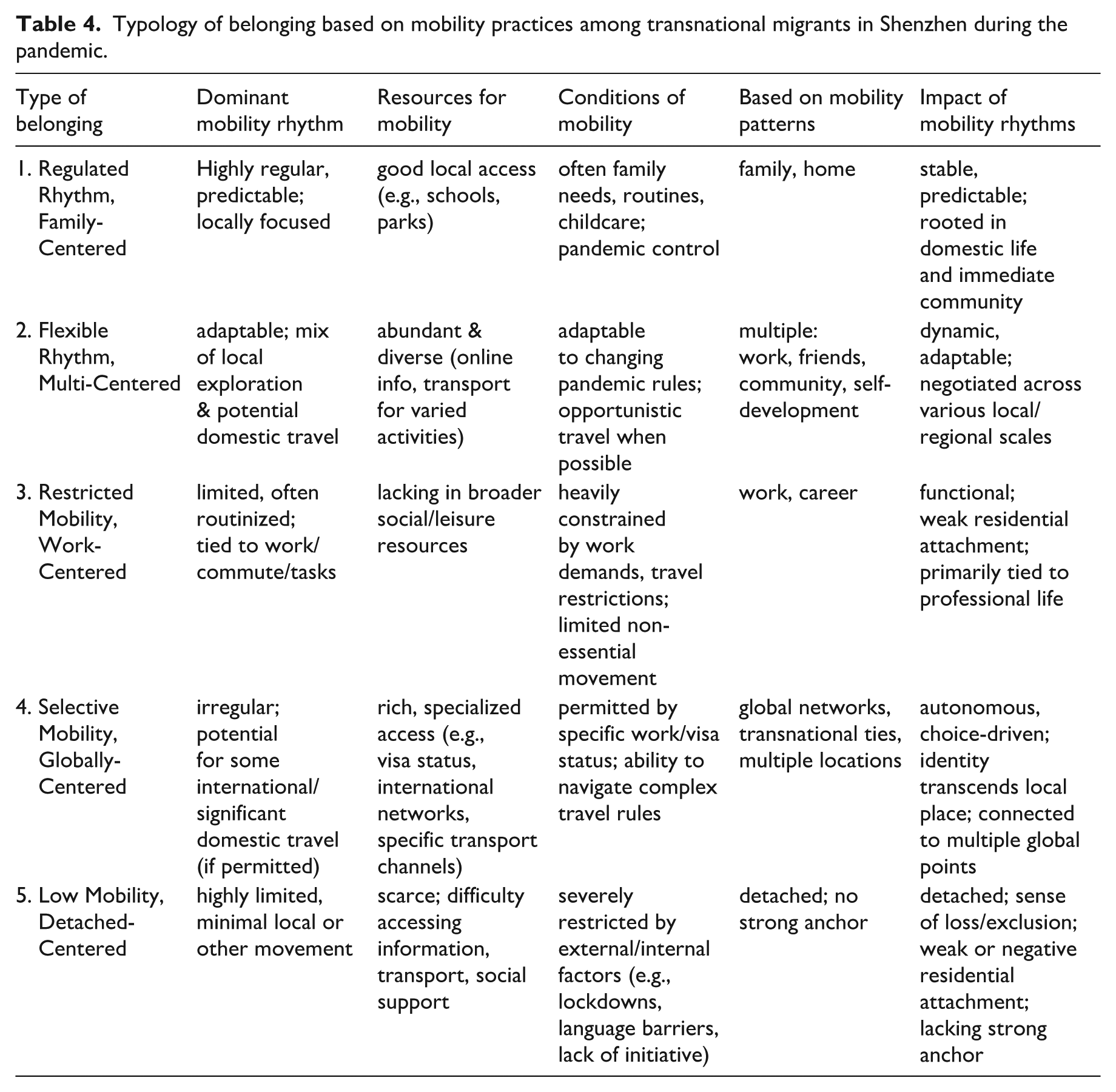
First, the “Regulated Rhythm, Family-Centered” type of belonging is identified. This group exhibits a highly regular mobility rhythm during the pandemic. With work-from-home arrangements or relatively fixed lifestyles, their daily activities predominantly revolve around the family. An interviewee from Belgium stated: Over the past decade, my parents passed away, and my hometown only has my adult brothers. Therefore, I have considered Shenzhen as my home.
This highlights that family is central to their sense of belonging, and mobility resources are primarily utilized for family life. This pattern was also strongly observed among participants with young children, such as the American male teacher and the Japanese male teacher, whose daily routines and mobility choices became highly regulated by family needs and safety concerns during the pandemic, centering their lives significantly around the home and immediate local environment. For these individuals, hile their conditions of mobility might have been restricted during the pandemic, they tend to use family as the core of their emotional and social support. This type of belonging underscores stability and predictability, where their sense of belonging is rooted in the warmth of family and the regularity of daily life.
Second, the “Flexible Rhythm, Multi-Centered” type of belonging is characterized by a flexible mobility rhythm. Before the pandemic, these individuals may have been highly mobile, frequently traveling between Shenzhen and other countries or cities. During the pandemic, while their international mobility was constrained, they actively explored local mobility in Shenzhen, such as increased participation in community activities or engaging in online social interactions. A Russian female participant, who previously had high non-essential mobility needs, now tends to increase her local mobility when global mobility is limited, showing a more positive local identity. This type is also exemplified by several educators, such as an American female teacher who traveled domestically during holidays, and a Mexican female teacher whose work and leisure involved frequent travel between multiple Chinese cities. Their pre-pandemic travel patterns, like those of a British male teacher who enjoyed cross-city hikes or another British male teacher with extensive international travel, were adapted towards domestic options. Their mobility resources are relatively abundant, allowing them to access information online as well as adapt flexibly to local offline activities. Their mode of centering is not singular; family, work, friends, and community could all be sources of belonging, resulting in a dynamic balance. This type of belonging emphasizes adaptability and diversity, seeking belonging in various spaces and flexibly adjusting their lifestyle.
Third, the “Restricted Mobility, Work-Centered” type of belonging is observed. Pandemic-related constraints severely curtailed this group’s mobility. The nature of their employment precluded remote work, while travel restrictions further impeded their freedom of movement. As such, their mobility resources were largely concentrated on work-related necessities such as information and transportation, with access to broader support systems being limited.
For these individuals, employment typically formed the central pillar of their sense of belonging. As one British male participant articulated: But Shenzhen is just a place for work, not my home.
These individuals typically see work as the core of their sense of belonging. They have a weak sense of belonging in their residential space, with a Spanish interviewee describing their residence in Dachong: On one hand, Dachong is a vibrant place: on the other hand, it is really hard to find a belonging within the residential community here.
The desired belonging for such residents typically entailed stable, friendly, and mutually recognized interpersonal relationships within their residential area. This aspiration went beyond perceiving the locality as purely functional or transient—a place where, as one such participant described: people come and go, and it’s nothing more than a place to work.
Despite valuing neighborly interactions, this type of resident often found such connections difficult to establish within their locality. This contrasted with positive experiences in broader social engagements, such as participating in cultural activities (e.g., dumpling making with a local instructor), which offered opportunities for connection outside their immediate residential sphere.
This work-centered orientation, with limited broader community engagement, was also evident in participants like the Malaysian male engineer residing in company dormitories with a strong focus on career advancement and financial goals, and the American male consultant whose social life was largely tied to his work colleagues and activities confined to his home or near his factory-adjacent dormitory during restrictions. They focus on their career development and personal achievements more than their residential experience. This type of belonging emphasizes a career-oriented approach and individual striving, with less participation in local community activities.
The fourth type is the “Selective Mobility, Globally-Centered” belonging. This group maintains a certain degree of mobility during the pandemic, possibly due to special visas or work permits that allow them to travel internationally. Their mobility rhythm may be irregular, but they have rich mobility resources, effectively using various transportation and information channels. For example, a male interviewee from India, who considered India his primary home and Shenzhen his “third home” after previous stays in Beijing and Shanghai, expressed that he planned to settle in Chengdu in the future. While specific reasons for choosing Chengdu were not detailed, his history of living and working in multiple major Chinese cities, alongside his future plans for another, underscores a life trajectory characterized by movement and adaptation across various urban centers. This multi-local orientation, where home and belonging are not fixed to a single point but are dynamically navigated and distributed across significant locations, exemplifies a global perspective. For individuals, belonging is constructed through a network of these key places, reflecting an ability and willingness to make strategic life choices across a global or trans-regional landscape, a hallmark of this “Globally-Centered” type.
Their sense of belonging transcends the local, preferring a global perspective; they may identify with multiple countries or cultures. This globally-centered perspective could also be seen in individuals like the aforementioned British male teacher with a history of extensive international travel, whose primary identity anchors might remain globally dispersed even when physically in Shenzhen, or architects like a Spanish male whose career trajectory involved significant international moves before establishing Shenzhen as a “root.” This type of belonging emphasizes autonomy and choice, pursuing a global lifestyle and actively exploring different possibilities.
Finally, the “Low Mobility, Detached-Centered” type of belonging is observed. This group’s mobility was greatly limited during the pandemic, and they have neither actively adapted to local life nor compensated for the lack of social interaction through online means. Their mobility resources are scarce, making it difficult to obtain information and social support. For example, an interviewee from Canada mentioned that due to language barriers, she rarely communicates with her neighbors and is not considered a friend even when they go out for work at the same time. Similar challenges with language and local social integration leading to a sense of detachment were described by another Canadian female teacher. Even individuals who felt professionally rooted, like a Spanish male architect, could experience social detachment at the neighborhood level due to language barriers and personal social preferences, leading to a more functionally-based rather than deeply socially-embedded sense of belonging in their immediate residential context. They show an obvious negative evaluation of the place of residence and lack a sense of belonging, even desiring to leave. A British male participant stated: I would say Nanjing is my second home (not Shenzhen). People are more friendly in Nanjing, and I feel that people in Shenzhen are more superior.
Their mode of centering is detached; they may not have a sense of belonging anywhere. This type of belonging emphasizes negative experiences and exclusion, feeling a profound sense of loss in social isolation.
In summary, the above five types of belonging are not absolute, but rather different patterns shown by the mobility practices of cross-national migrants in Shenzhen. Different types of migrants form different senses of belonging according to their own mobility rhythms, resources, conditions, and mode of centering. For instance, some establish belonging through regulated daily activities and community participation, while others may depend more on their work or global networks. Therefore, in the construction of international communities, it is essential to fully consider these differences and offer diversified services and support to promote integration and social harmony across different groups.
Our findings support Gustafson’s (2001) argument that the relationship between mobility and belonging is multi-dimensional rather than a simple dichotomy, while also echoing Massey’s (1994) theory that mobility influences not only a sense of place but also cultural identity. Furthermore, this study reveals how mobility practices profoundly impact the sense of belonging of cross-national migrants under the specific context of a pandemic.
The dynamic in navigating home and belonging
Existing studies indicate that the concept of “home” is not static but is dynamically constructed through practices within the context of mobile lives (Winther, 2006). Literature on “homing” portrays it as an ongoing, agentive process through which individuals actively create and maintain a sense of belonging across various mobilities and places (Blunt & Dowling, 2006; Walsh, 2006). These strategies often involve material practices (e.g., decorating spaces), relational practices (e.g., maintaining social ties), and imaginative practices (e.g., recalling memories) to establish feelings of security and belonging in fluid circumstances (Ahmed et al., 2003). Homing strategies are thus diverse, reflecting individuals’ efforts to establish feelings of security, familiarity, and belonging in often fluid and changing circumstances. For transnational migrants in Shenzhen, “home” is a multifaceted concept, and the COVID-19 pandemic significantly reshaped their existing homing strategies for constructing belonging.
For instance, a British male interviewee expressed having homes in England, Colombia, Canada, and China, illustrating the complexity of multi-scalar belonging for highly mobile individuals. An American male interviewee noted that after spending several Spring Festivals in Shenzhen and deepening his understanding of the city, he began to regard Shenzhen as his home, suggesting that a sense of belonging evolves with time and experiences. A Spanish male architect, who considered Argentina his first home, now views Shenzhen as his “root,” citing the city”s vibrancy and the sense of belonging he derives from his community and work. Conversely, a Japanese male interviewee expressed concern that long-term residency in Shenzhen might not constitute “home” due to practical issues like household registration, highlighting how policy can shape the potential to belong. For others, long-term residence and positive local experiences solidify this feeling; a Dutch male retiree, after 13 years in Shekou, strongly identified it as home due to his deep sense of belonging to the environment and community.
The “homing” strategies of transnational migrants significantly shifted in response to the pandemic. With physical mobility, particularly international travel, severely curtailed, participants developed and intensified strategies adapted to these new constraints. Increased time spent within the domestic sphere led many, like a Russian female interviewee, to focus on material and cultural homing within their Shenzhen residences, such as enhancing living spaces and engaging in familiar activities like cooking traditional dishes to evoke a sense of familiarity and comfort. A particularly prominent new homing strategy involved the intensified use of digital technologies for “virtual homing.”
The experience of the Japanese male teacher is illustrative: significantly reduced physical mobility due to having young children and pandemic travel concerns led him to focus locally. However, he actively engaged in virtual homing by maintaining transnational connections through video calls and online groups (e.g., Line) with family and friends in Japan. This digital maintenance of relational ties became a crucial strategy for sustaining belonging and a sense of connection to his origins when physical co-presence was impossible. Similarly, the Canadian male artist, finding his usual travel curtailed, employed a strategy of “local re-homing” by using the enforced stillness to immerse himself in and connect with Shenzhen’s local culture, thereby fostering a new layer of belonging in his place of residence. These adaptive strategies highlight how migrants creatively navigated restrictions to maintain or reconfigure their sense of home.
The construction of belonging is not a unidimensional process; rather, it manifests across multiple scales, including local (community, neighborhood), urban (Shenzhen), and transnational (country of origin) levels. Our findings show that mobility impacts how these different scales of belonging are experienced. For interviewees in Shenzhen, their sense of belonging was a composite of several key dimensions, including: emotional bonds with specific places, the integration of place into their identity, and a functional reliance on the city’s resources. For instance, the emotional bonds that foster belonging were evident in how participants described the comfortable environments in Shekou. The dimension of place identity was clear when one participant began to identify more as a Shenzhen resident due to his experiences there. Finally, functional reliance as a foundation for belonging was highlighted by participants drawn to Shenzhen for its career prospects, safety, and opportunities. These examples show that the functional, emotional, and identity-related dimensions of place are all integral to the broader construction of belonging for transnational migrants.
However, the pandemic has led some migrants to prioritize local belonging, actively engaging in community activities, such as a Brazilian male interviewee, or, like an Indian male interviewee, to strengthen ties to their country of origin with plans to return home or relocate. The sense of belonging is comprised of factors like place dependence, place identity, and place reliance. Place dependence reflects emotional ties to a place. Place identity refers to incorporating a place into self-identification; for example, the American male previously mentioned identifying more as a Shenzhen resident due to reliance on its resources. Place reliance involves depending on a place for resources and services; for example, another Indian male interviewee was drawn to the high salaries in Shenzhen, while a Pakistani male student chose Shenzhen for its opportunities, safety, and international character, and a Malaysian male engineer was drawn by career prospects. These examples show that a city’s functional value is integral to the sense of belonging.
Constructing belonging, however, also presented challenges. Language barriers were a significant hurdle for a Canadian female interviewee and a Canadian female teacher in forming local social ties. The Spanish male architect, despite feeling Shenzhen was his “root,” identified language as his biggest obstacle to neighborhood socializing. Conversely, a British male teacher and a Russian female dance teacher benefited from services like Chinese language courses offered by international community organizations. A Russian female homemaker noted her participation in community events depended on English availability, underscoring the importance of accessible, supportive resources.
The complexity of transnational mobility and local settlement is also seen in the practices of “home” (Yu, 2018). These practices go beyond physical spaces to include emotional connections and social relationships. Individuals construct belonging across different scales, maintaining ties with various places, as exemplified by the British male participant, who stated having five homes, showcasing the complexity of multiple belonging. The pandemic restricted mobility, prompting migrants like Canadian male artist to rethink the meaning of “home,” while maintaining transnational connections through online means, as seen with a Mexican male interviewee, and actively participate in community events to cultivate local attachment, as illustrated by a Pakistani male interviewee. Personal preferences also affect the definition of home; for example, a Filipino male prefers the simple life in Shenzhen.
Conclusion
This study investigated the reconfigurations of mobility and belonging among transnational migrants in Shenzhen amidst the COVID-19 pandemic, drawing upon conceptual frameworks of “mobile forms of belonging” (e.g., Fallov et al., 2013) and multi-scalar belonging (e.g., Antonsich, 2010; Gustafson, 2001). Our research offers a nuanced understanding of these dynamics during a period of unprecedented global disruption. Crucially, this study provides novel empirical evidence demonstrating that belonging is not a static attribute tied to fixed locations but rather a dynamic, ongoing, and actively negotiated process (Fallov et al., 2013), profoundly shaped by mobility rhythms, access to resources, and modes of centering, especially when confronted with severe external shocks like a pandemic. This empirically supports and extends existing theories on the dynamism of belonging by examining it under the acute pressure of a global health crisis, challenging conventional perspectives that often view mobility primarily as a threat to belonging (Gustafson, 2001).
Secondly, a significant empirical contribution of this study is the development of a five-fold typology of belonging, derived from the varied mobility practices observed among participants during the pandemic. This nuanced typology encompasses “Regulated Rhythm, Family-Centered,” “Flexible Rhythm, Multi-Centered,” “Restricted Mobility, Work-Centered,” “Selective Mobility, Globally-Centered,” and “Low Mobility, Detached-Centered.” This typology offers a more granular understanding of the diverse ways belonging is experienced and enacted by transnational migrants under disrupted conditions, moving beyond simplistic dichotomies to capture the complex interplay between individual agency, structural constraints (Sheller & Urry, 2006), and the resultant forms of belonging. Our findings further illuminate how migrants actively reconfigured their sense of home and the various dimensions of their belonging through adaptive “homing” strategies (e.g., Ahmed et al., 2003; Blunt & Dowling, 2006). This included an intensified focus on domestic space and local community engagement, alongside a notable increase in reliance on digital connectivity to maintain transnational ties and foster virtual belonging. These adaptations highlight the resourcefulness and agency of individuals in constructing belonging amidst physical mobility constraints, offering a new empirical perspective on resilience in mobile lives.
Shenzhen, a hyper-modern “instant city” where belonging is actively constructed rather than inherited, provides a distinctive context for studying mobility and belonging. Its inherent fluidity, shaped by its migrant-built nature, makes it particularly insightful for observing the impact of disruption on highly mobile populations. The COVID-19 pandemic severely curtailed international travel from early 2020 due to restrictions, leading to a dramatic drop in the flow of transient foreign populations. Crucially, however, the number of longer-term foreign residents remained relatively stable, comparable to pre-pandemic levels, highlighting a key divergence between temporary and resident populations. Those who remained faced significant challenges, including feeling trapped and navigating potentially less adapted local systems. These experiences underscored the critical need for adaptive strategies to maintain connection and belonging in this disrupted urban environment. Examining how migrants negotiated belonging here offers valuable insights into place-making and identity negotiation in transient cities facing external shocks.
The pandemic, therefore, acted as a catalyst, compelling migrants to recalibrate their conceptualizations and practices of “home” and “belonging.” This involved a complex interplay of deepened engagement with immediate domestic and local environments, the strategic strengthening of virtual transnational connections, and, for some, altered patterns of local community activity. Such adaptations reaffirm “homing” as a dynamic, agentive process (Gustafson, 2001; Pollini, 2005; Yu, 2018). Theoretically, this research substantiates the resilience and adaptability of mobile belonging (Fallov et al., 2013). It also enriches theories of multi-scalar belonging (Gustafson, 2001) by empirically demonstrating how the salience of different spatial scales shifts in response to mobility constraints, and underscores the critical mediating role of “resources for mobility.” These findings have pertinent implications for urban planning and social integration policies. Given Shenzhen’s status as an immigrant city with an extremely high proportion of migrant workers and its ongoing efforts to build “international communities,” fostering inclusive and resilient urban populations requires strategies that specifically acknowledge and support the dynamic and multi-scalar nature of belonging observed in this study (Amin, 2002). Policies should aim to mitigate disparities in access to enabling resources, particularly digital technologies and language support, and promote adaptive urban governance capable of responding effectively to unforeseen mobility disruptions and the specific needs of a diverse, mobile population. Future research should explore the longer-term sequelae of these pandemic-induced socio-spatial reconfigurations and investigate policy interventions that can further shape homing practices and promote cultural integration in a manner that respects both local specificities and transnational realities, thereby contributing to the development of genuinely inclusive cities.
Footnotes

Ethical considerations
Ethical review and approval were not required for this study in accordance with the local legislation and institutional requirements at Shenzhen University at the time the research was conducted. The research involved interviews with adult participants on non-sensitive topics related to their mobility experiences. All participants provided informed verbal consent prior to their participation, fully understanding the research purpose, how their data would be used for academic purposes, and their right to withdraw at any time. All data collected were anonymized to protect participant confidentiality. The study was conducted in accordance with recognized ethical guidelines for social science research, incorporating key ethical principles including voluntary participation, informed consent, anonymity, confidentiality, and the principle of beneficence (maximizing benefits and minimizing harm) throughout the research process.
Consent to participate
Informed verbal consent was obtained from all individual participants included in the study after they were provided with a full explanation of the study’s purpose and procedures. They were assured of anonymity and their right to withdraw at any time.
Consent for publication
Not applicable. All data presented in this manuscript are anonymized, and no identifiable personal information or images are included that would require specific consent for publication beyond the general consent for participation in research.
Author contributions
Yanyan Chen is responsible for the literature review, data analysis, drafting the initial manuscript, and revising the document. Yun Li takes charge of the research design, data collection, and revising the manuscript. Zhewei Chen is mainly responsible for data collection throughout the project.
Funding
The authors disclosed receipt of the following financial support for the research, authorship, and/or publication of this article: The research is supported by the Shenzhen University 2035 Research Excellence Program (NO: 2022B005).
Declaration of conflicting interests
The authors declared no potential conflicts of interest with respect to the research, authorship, and/or publication of this article.
Data availability
The data that support the findings of this study are not openly available due to the protection of participant confidentiality and the sensitive nature of the interview data. Further inquiries can be directed to the corresponding author.