



Abstract
The Zhuhai–Macau cross-border workers (“Macau workers” in short) are a group of people (mostly from Mainland of China) who work in Macau while living in Zhuhai everyday. Thanks to their unique way of life and production, this social imaginary of Macau workers has been regarded as “others” by the government and society of both Macau and Zhuhai. By conducting an extensive architectural anthropological field investigation of the Lingnan Community in Zhuhai, a typical “sleeping community” for Macau workers, this groundbreaking paper endeavors to explore the question of how to address the housing and living needs of Macau workers while improving vitality and diversification of the community. Last but not least, to build upon Tim Cresswell’s six facts of politics of mobility, this paper further examines the spatial representation of Macau workers’ politico-economic and socio-cultural attributes, to “see” the daily life of the hidden imaginary clearer by addressing their motivation, route, rhythm, speed, experience, and identity.
Introduction
According to Macau Special Administrative Region Law No. 21/2009, Law for the Employment of Non-resident Workers, “a ‘non-resident worker’ shall be understood as a person without right of residence in the Macau SAR who is authorized to temporarily provide a professional activity under an employment contract.” Such “non-resident worker” policy was firstly put into effect in 1984 to bridge the huge gap between the needs of labor force to sustain Macau’s economic development and the actual working population of Macau’s permanent residents (Xu, 2003). Thanks to the comparatively much higher wages in Macau, it has drawn a good deal of workers from all over the world, especially from Southeast Asian countries such as Philippine and Indonesia as well as Mainland China (Wang and Zheng, 2014). According to “Statistics Monthly” published by the Statistics and Census Service of Macau in July 2023 (Figure 1), the population of non-resident workers in Macau has reached 167,000, with approximately 116,000 coming from Mainland China. The Macau Employment Survey 2023 has suggested that the total working population in Macau (data collected from July to September 2023) was 378,300, while the Mainland Chinese workers in Macau accounted for one-third (Bureau of Statistics and Census, 2023).
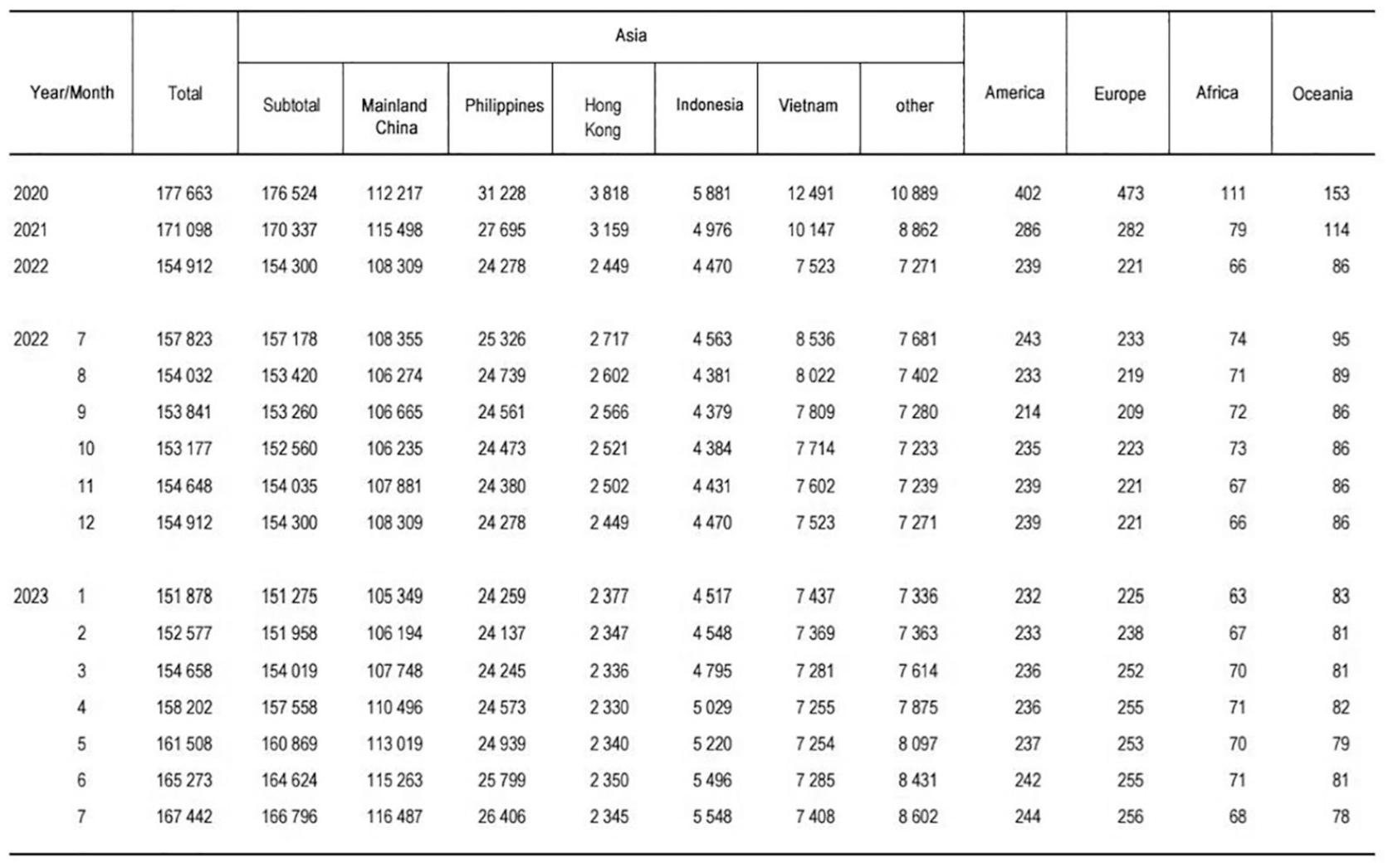
“Non-resident workers by country or territory.”
Literature review
This paper focuses on the group of people who are such a unique and important social group to the development of the city-region of Zhuhai–Macau not only because of their huge population, but also because of their significant impact on the economic and social operations of Macau and Zhuhai (Cao, 2013). Many studies have been conducted from various perspectives to review the “non-resident worker” policy. For example, having analyzed urban development based on temporary workers in Macau between 1992 and 2019, Zhou and Jiang (2022) argue that Macau is actually over-dependent on non-resident workers and suggest that Macau should reduce the cost of city expansion while improving economic diversity to absorb non-local talent for future sustainable urban development. At the same time, sociological and psychological studies about the social status, working condition, and mental health of non-resident workers are also abundant, revealing significant problems and issues that non-resident workers are facing, such as wage discrimination (He and Zhou, 2012), social recognition (Tang, 2013) and work satisfaction (Wang and Zheng, 2014; Zhang et al., 2015). However, the existing studies about Macau’s non-resident workers are either from the macroscopic aspect of the relationship between Macau’s urban development and the non-resident workers’ economic contribution, or from the local employers’ perspective of whether or not the non-resident workers are satisfied with their work and wage, or from the social aspects of the social identity and perception of non-resident workers in Macau. Meanwhile there is an obvious neglect of the unique way of life of the group of people themselves.
Research focus
It is noteworthy that among over 0.1 million Mainland Chinese workers in Macau, most of them do not stay overnight in Macau. Instead, they choose to live in Zhuhai while working in Macau, which means they have to travel across the Zhuhai–Macau border every day. Consequently, the passenger flow of Zhuhai Gongbei Port (the most frequently used border port between Zhuhai and Macau) has surpassed that of Shenzhen Luohu Port (the most frequently used border port between Shenzhen and Hong Kong) since 2011, becoming the busiest land port in China. The statistics of Gongbei Border Inspection Station show that at most times, the annual passenger flow exceeds 100 million (Wu et al., 2020). The reasons they choose to live in Zhuhai are various, while one of the biggest concerns is the higher income in Macau and lower rent in Zhuhai, so that they can save as much money as they can. Thanks to their unique way of life and production, this social group has been regarded as “others” by the government and society of both Macau and Zhuhai. Such “otherness” can be perceived by the following two paradoxes.
The first paradox is that in Macau, where they spend numerous hours working, they are legally defined as “non-resident workers,” which means that they are not Macau residents and are able to work in Macau only with the approval of the Macau SAR under certain conditions (Tang, 2013). Since they do not hold Macau Resident Identity Cards, they are instead issued with Non-resident Worker’s Identification Cards (“Non-resident Worker’s Card” for short) by the Public Security Police Force (CPSP) with valid employment authorization. Functioning as the work permit in Macau, the Non-resident Worker’s Card is so important for those non-resident workers that they have to work hard to earn the renewal of their contracts, otherwise they will have to lose their jobs and leave Macau. Meanwhile, in Zhuhai, where they choose to reside themselves, they are socially defined as “Macau workers,” which means that they are not Zhuhai residents and are living in Zhuhai only because they work in Macau.
The second paradox lies in the fact that on one hand, “non-resident workers” have made a great contribution to the economics of Macau in terms of its industries of tourism, construction, and services, and the cross-border transportation of Macau workers every day has helped the Gongbei Border Port become the busiest one in China; on the other hand, they are almost “invisible” in all socio-political policy-making processes in both sides, as evidenced by the long lack of protection of personal rights, improvement of living environment, well-being of physical and mental health, and building of social identity and sense of belonging. As a result, this large yet “invisible” group of people who work in Macau while living in Zhuhai have formed an imagined community (Anderson, 1991) that is perceived as a hidden imaginary of regional others.
Research area
Nevertheless, this imagined community of “Macau workers” is not untraceable. Following the migratory route of the corps of Macau workers after their entry to Zhuhai crossing Gongbei Border Port, one can easily locate several communities where they stay overnight. Macau workers choose to live in such communities simply because of their lower rent (compared with the living cost in Macau) and proximity to the border port (their way to work) and necessary facilities and amenities (to meet the basic living needs). In turn, as an important part of the demographic composition of Zhuhai, Macau workers have had a significant impact on the economic and social operations of Gongbei area in Zhuhai (Cao, 2013) especially for their communities of residence.
For example, one of the most representative communities of Macau workers, less than two kilometers away from the Gongbei Border Port, is Lingnan Community, which has always been an ideal place for Macau workers to live in. According to a community committee officer’s incomplete statistic, the population of Macau workers used to be nearly 70% of the total population of Lingnan Community before the epidemic outbreak. Since Macau workers come from all over the country with rich diversity and high mobility, it is difficult for the community administration to count and manage such a group of people. Worse, the nature of their way of life – go to work in Macau during daytime and come back to Zhuhai at night – not only makes Lingnan Community a “sleeping community” for Macau workers, but also has a significant impact on the development and vitality of the community itself, as shown by the lack of public service facilities and activity spaces, and the diminishing sense of community vitality and belonging among all residents – so much so that there is a crying need in Lingnan Community for renewal and renovation.
However, as a unique “sleeping community” for an imagined community of Macau workers, the renewal of Lingnan Community cannot achieve complete success if it adopts conventional urban renewal approaches to simply make a master plan (Zhang, 2019) then carry out environment improvement (Tan et al., 2023), land and spatial integration (Li et al., 2019; Zhang and Liu, 2019) and so on. What is really needed for Lingnan Community is a thorough understanding of the daily lives and living condition and needs of its residents, of which Macau workers constitute more than half, before a targeted community renewal.
Research question and methodology
In this regard, this groundbreaking paper endeavors to explore the question of how to address the housing and living needs of Macau workers while improving vitality and diversification of the community in Zhuhai. By conducting an extensive architectural anthropological (Chang, 1992, 2008; Stender, 2017; Zhang, 1999a, 1999b) field investigation of Lingnan Community, this paper tries to fill the research gap to take a close look at Macau workers’ life in Zhuhai. Last but not least, to build upon Tim Cresswell’s (2010) six facts of the politics of mobility, this paper further examines the spatial representation of Macau workers’ politico-economic and socio-cultural attributes, in order to achieve a more in-depth understanding of the imagined community and “see” the hidden imaginary clearer.
Locating Lingnan Community
As one of the earliest Special Economic Zones established in China, Zhuhai became a city in 1979 and was set up as a Special Economic Zone in 1980, together with Shenzhen, Shantou, and Xiamen. In June 1984, with the approval of the State Council, Xiangzhou District was established, which is the central urban area of today’s Zhuhai (Compilation Committee of Zhuhai Chronicles, 2001). After 40 years of rapid development and construction, the central urban area of Zhuhai has gradually reached saturation, shifting from an era of incremental change to inventory optimization (Chen, 2023). Gongbei Street, adjacent to Macao, covers an area of 10.32 square kilometers, with 18 community residents’ committees under its jurisdiction and a permanent population of 127,500 (Xiangzhou District Government, 2020). Due to its superior geographical location, Gongbei has been an important commercial port and a convergent point of Chinese and Western cultures since the late Qing Dynasty, making an indelible contribution to the process of China’s modernization (Compilation Committee of Zhuhai Yearbook, 2021). Today, with the completion of the Hong Kong-Zhuhai–Macau Bridge, the renovation and upgrade of the port commercial center, the interconnectivity between Gongbei Station and Hengqin Station of the Guangzhou-Zhuhai Intercity Railway, and the construction of commercial circles like Fuhuali and Guowei Central Plaza, Gongbei enjoys significant geographical and economic advantages. However, the old communities, outdated infrastructure, and backward facilities within its jurisdiction severely constrain the pace of new development in Gongbei.
Lingnan Community, affiliated with Gongbei Street, covers an area of 0.323 square kilometers. It is approximately 1 kilometer from the Gongbei Border Port, bounded by Yingbin South Road to the east, Yuehai Middle Road to the south, Guihua North Road to the west, and Lingnan Road to the north. Bus stations are scattered around the community, providing convenient transportation to various districts of Zhuhai (Figures 2 and 3). The community currently has a permanent population of 7,789, with 4,203 registered residents, and more than 3,812 floating population. It belongs to the old urban area with a complex structure, comprising 22 residential communities, of which 12 have no property management. Additionally, there are 28 standalone residential buildings, numerous empty-nest households, rental houses, and subdivided units, making management challenging (Figure 4).
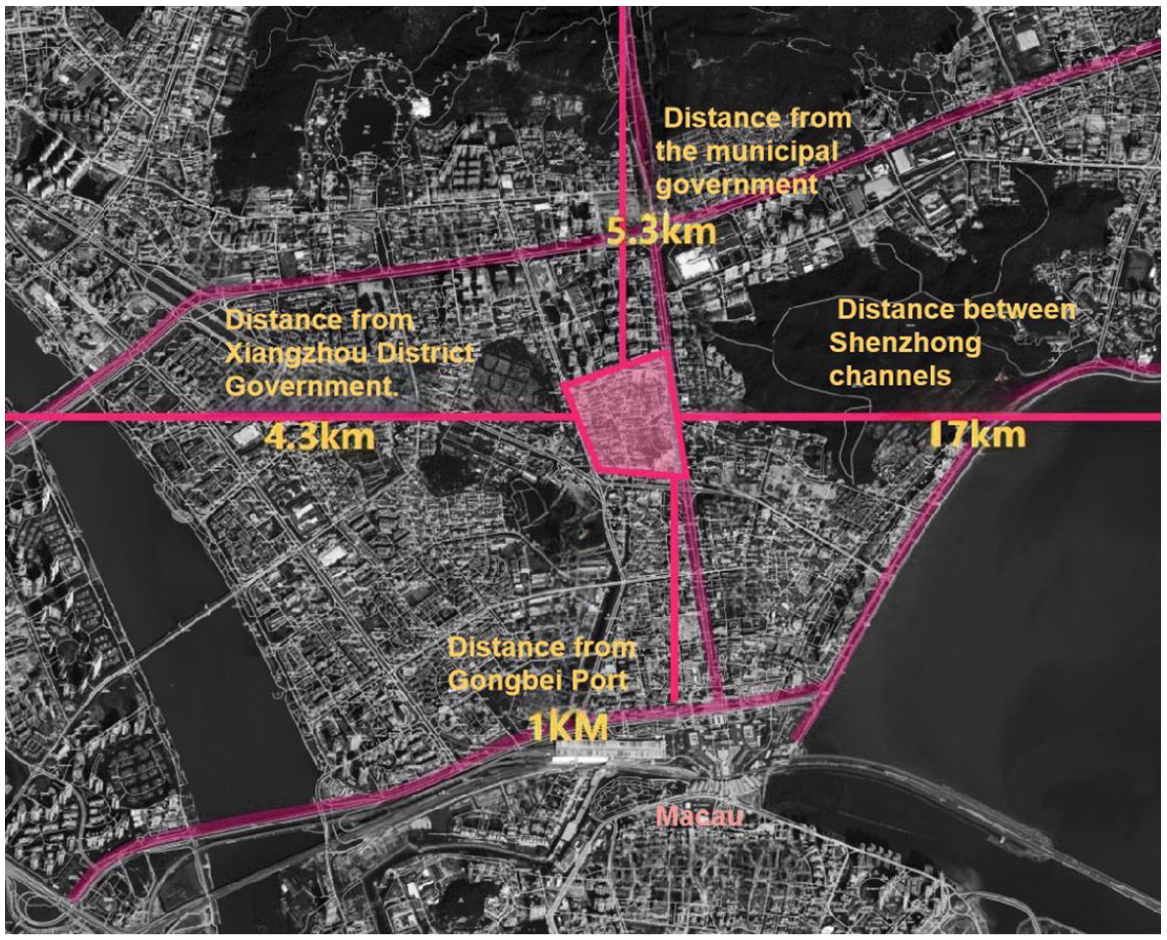
Map of location of Lingnan Community.
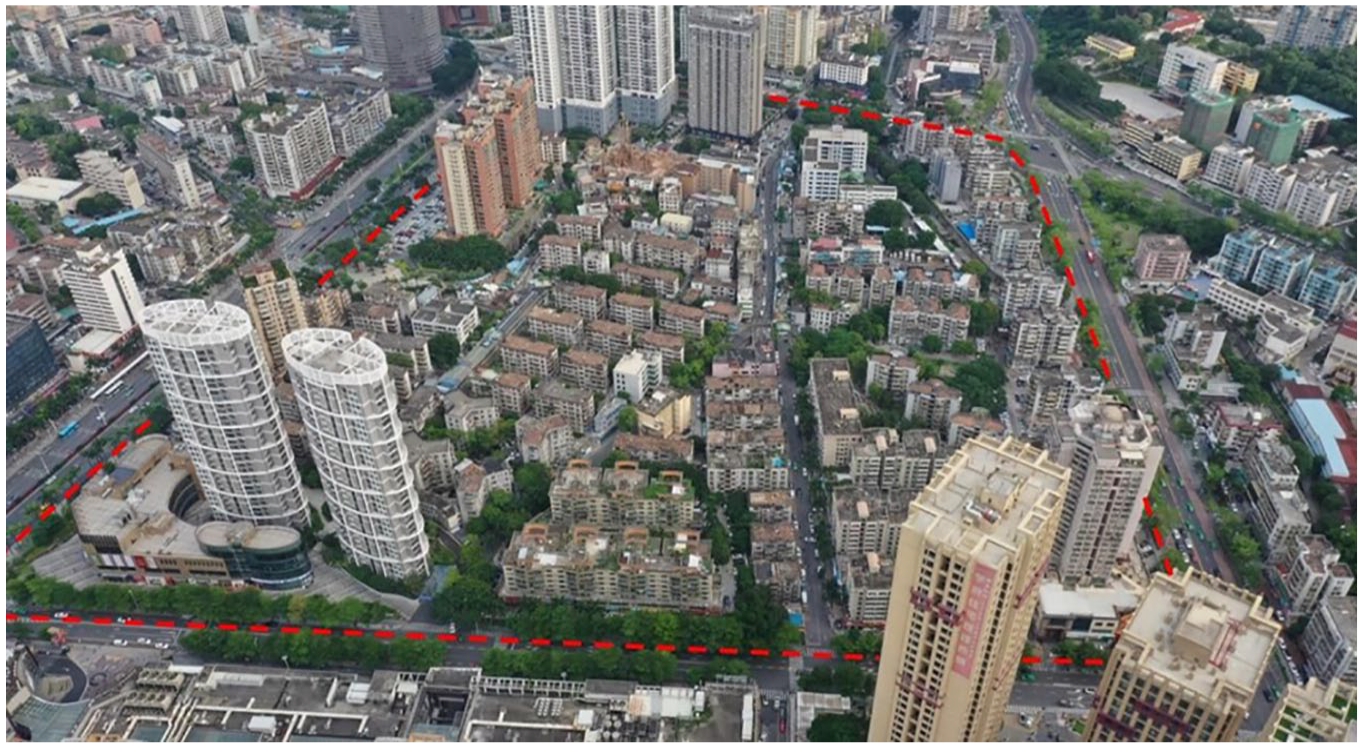
Aerial photo of Lingnan Community.
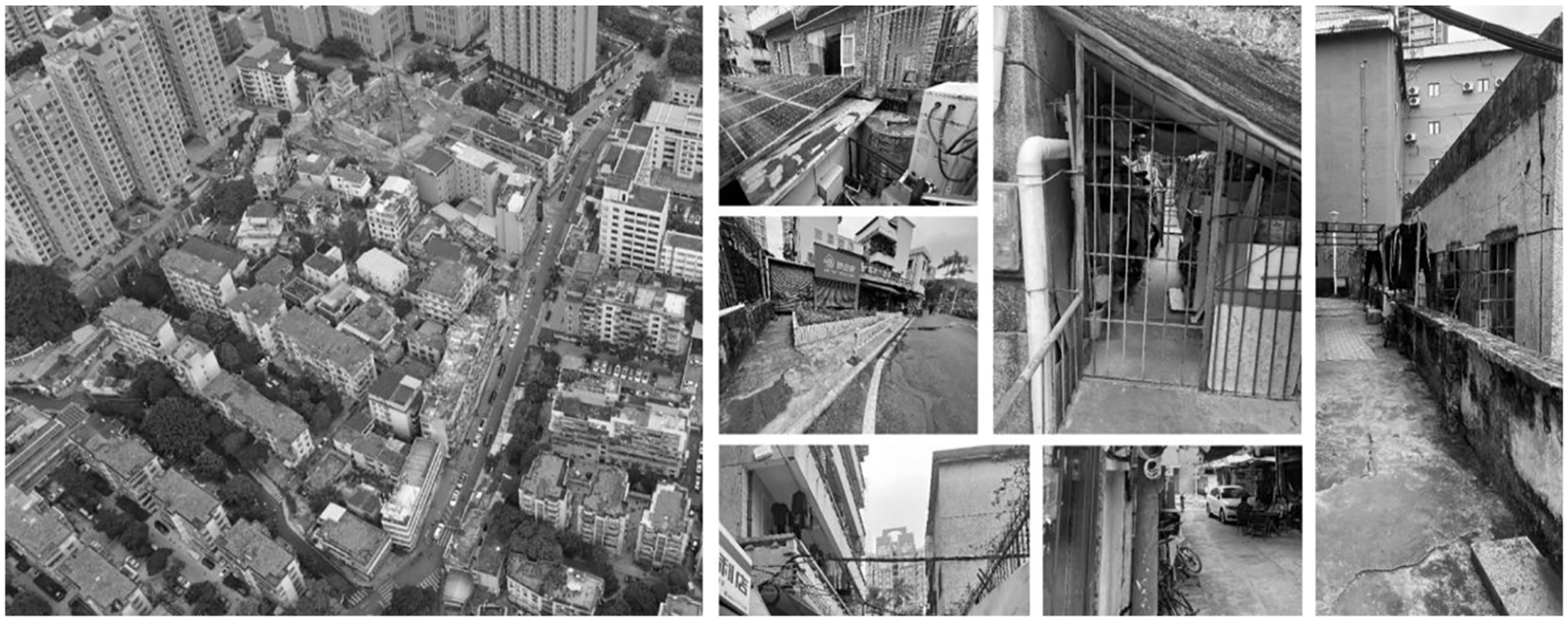
Existing problems in Lingnan Community.
Architectural investigation of Lingnan Community
Roads and buildings
There is a main road running from south to north through the entire Lingnan Community. It is called Qiaoling Street, connecting Yuehai Middle Road in the south with Lingnan Road in the north. Currently, Qiaoling Street does not implement separate lanes for pedestrians and vehicles, and there are parking areas on both sides, which pose certain safety hazards (Figure 5).
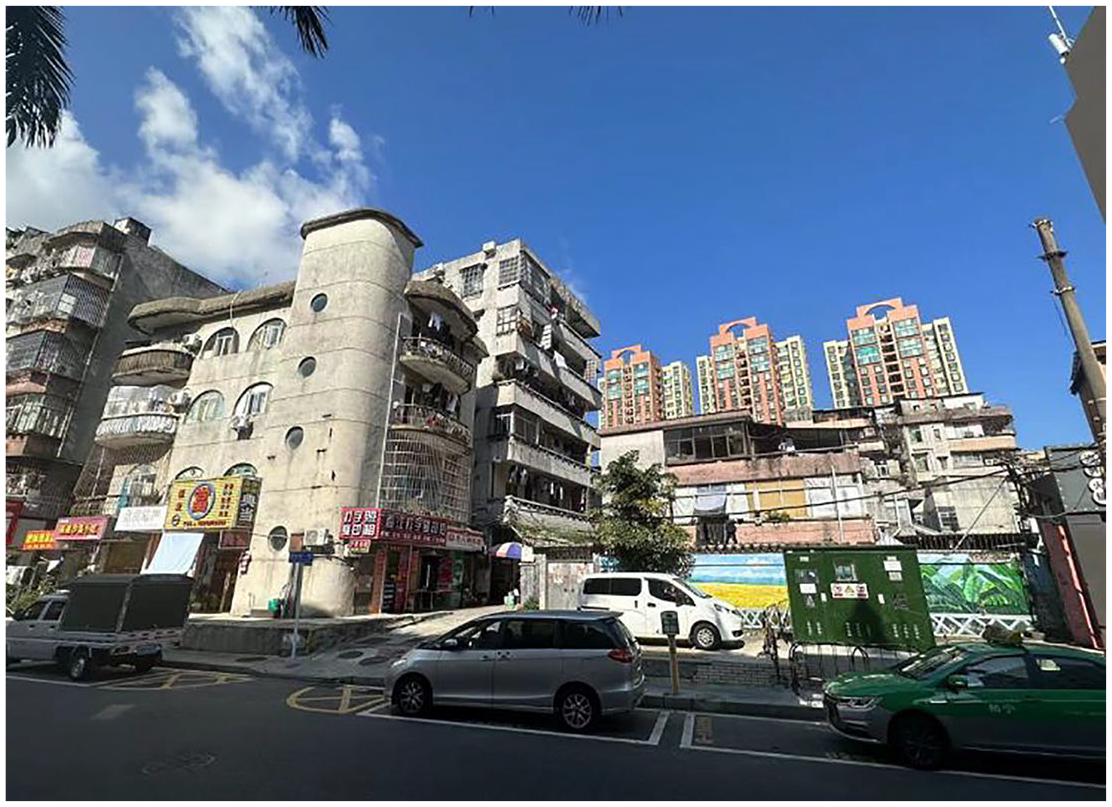
Non-separation of people and vehicles in Lingnan Community.
Qiaonan Street is in the northwestern part of the community, which intersects with Qiaoling Street in the central part, forming a Y-shaped layout. Additionally, there are two secondary roads within the community, named Qiaoling Street First Alley and Second Alley (Figure 6). Located on the south side of the community, Qiaoling Street First Alley extends from the south end of the Royal Garden on Yingbin Road to the community sanitation office. The entrance to this road is relatively concealed, with significant undulations and a winding shape. In contrast, Qiaoling Street Second Alley is broader, with better greenery on both sides. It stretches from the Overseas Chinese Hotel bus stop on Yingbin Road to the intersection of Qiaonan Street and Qiaoling Street. These three roads converge here, forming a unique traffic node (Figure 7).
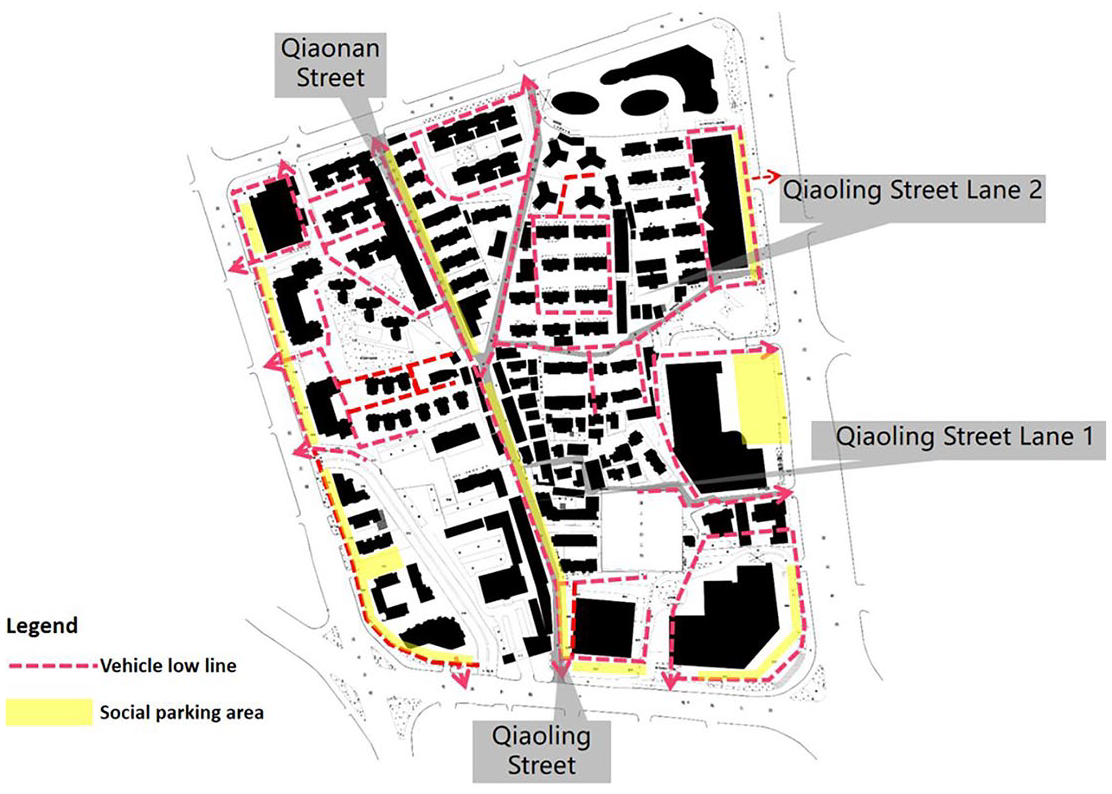
Map of roads in the community.
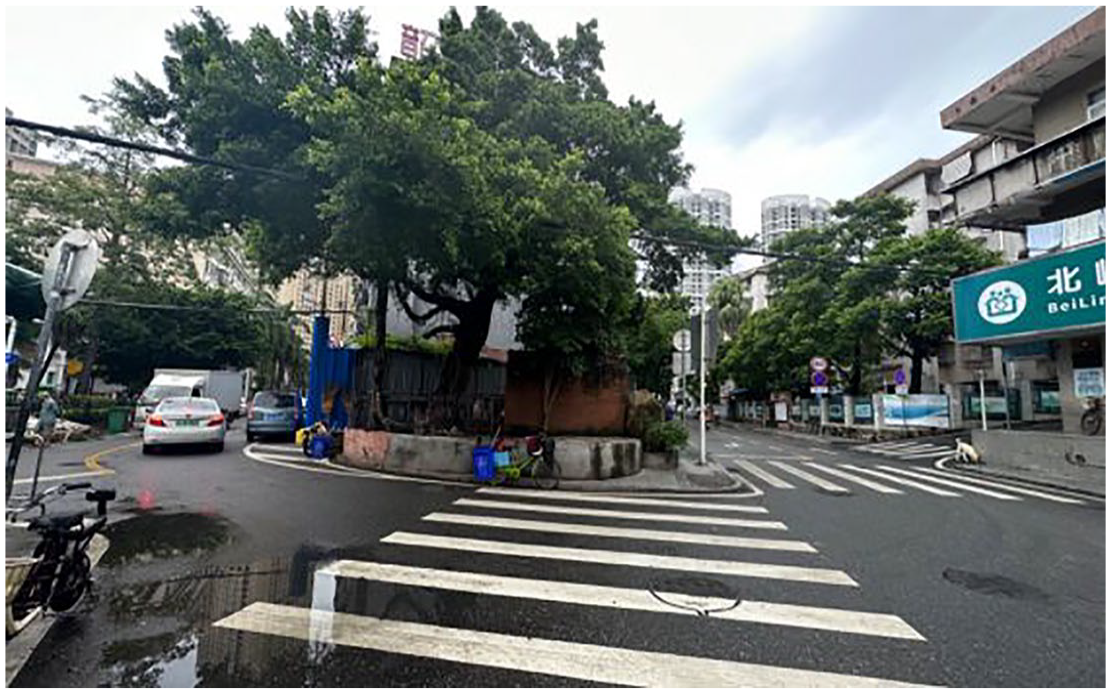
Intersection of Qiaoling St., Qiaonan St., and Qiaoling St. Second Alley.
From the base map of the architectural texture, most areas of the community consist of community clusters, with scattered self-built houses in the central part. The eastern buildings mainly consist of modern community buildings with commercial podiums. Due to the segmentation effect of the river channel, the western buildings are relatively sparse in distribution.
Public resources
There are three parks in Lingnan Community: the largest, Lingnan Community Park, located on the east side of the community, a corner park in the middle of Qiaoling Street Second Alley, and a park in front of Tailai Garden. A water channel crosses the southwestern side of the community, isolating the southwest corner from the rest of the community. Besides this, there is a severe lack of public activity spaces available for renovation within the community. Only small open areas at the entrance of Qiaoling Street First Alley and in front of the sanitation office can be utilized, while most open spaces are used as parking lots. Administrative buildings include the Public Security Bureau, Gongbei Environmental Sanitation Management Office, and the Gongbei Traffic Police Brigade First Squadron. There are four medical service facilities within the community, with the Lingnan Community Health Service Station located at the intersection of the three roads, and the Lingnan Community Party-Mass Service Center located on the north side of Qiaoling Street (Figure 8).
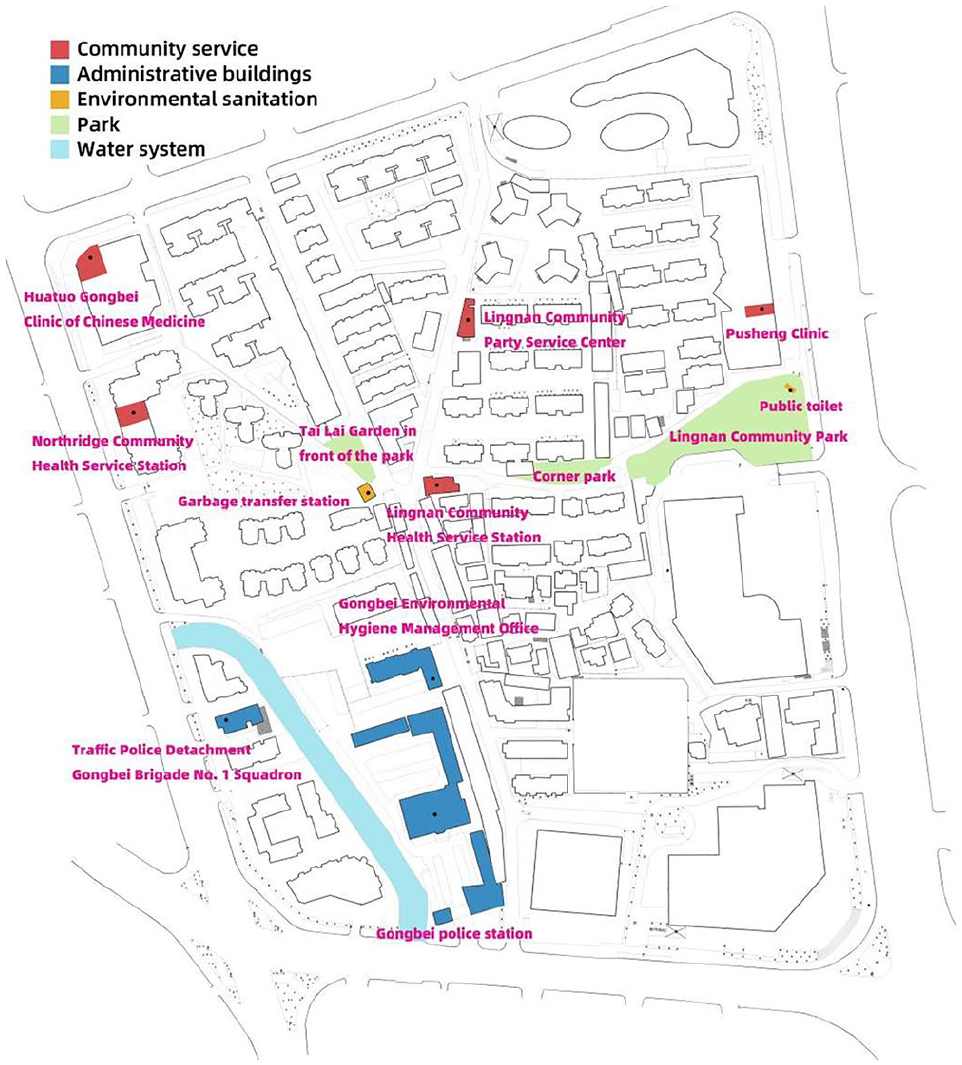
Map of Lingnan Community public resources.
Building construction time
According to the specifications and standards of the Code of Aseismic Buildings Design, the building construction time in the community are divided into four stages (Wang and Dai, 2010): 1980–1995, 1995–2001, 2001–2008, and after 2008. Data shows that most buildings in the community were built between 1980 and 1995, categorizing the majority of the community as old neighborhoods. There are three modern high-rise residential communities within the community: Lingxiucheng No. 1, Royal Garden, and Henghong Century Plaza (Figure 9).
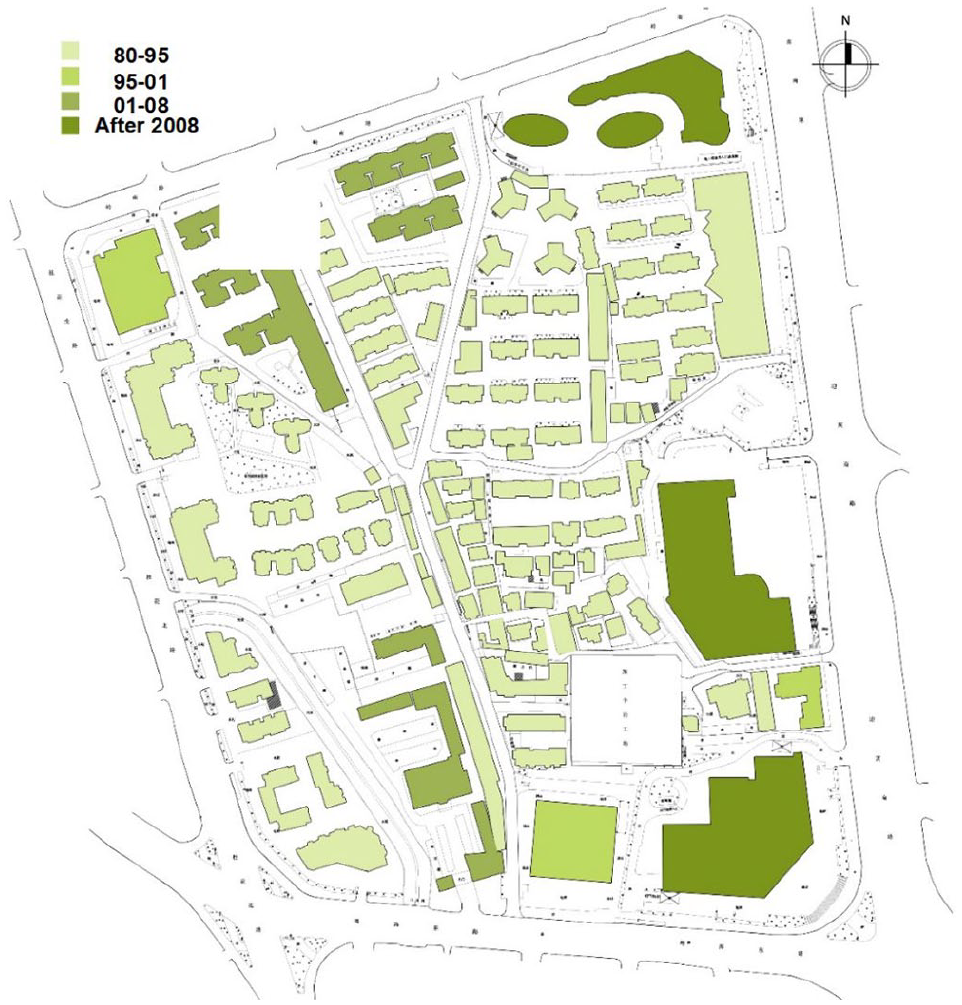
Map of building construction time.
Commercial activities
The community has a diverse range of commercial activities, primarily concentrated on both sides of Qiaoling Street and Qiaonan Street (Figure 10), with the catering industry being the most prominent. However, these dining establishments generally belong to the low-end market, with poor sanitary conditions and unattractive exteriors, necessitating renovation and optimization. Overall, there is substantial room for improvement in the community’s commercial landscape.
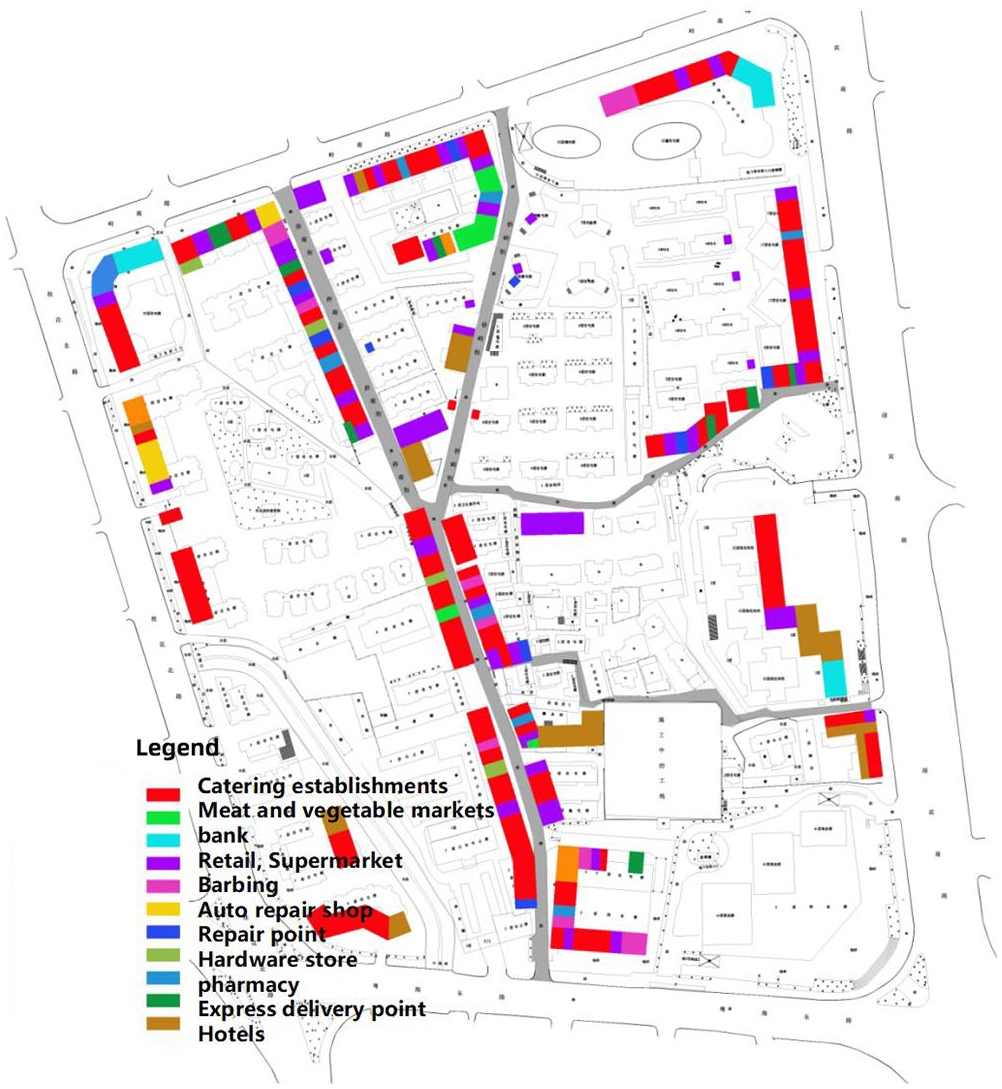
Map of commercial activities.
Building quality
The primary criterion in assessing building quality is the condition of the exterior facade, with the following rating standards: newly constructed modern communities and recently renovated buildings are rated as excellent; buildings constructed more recently with no significant damage to the exterior facade but with minor stains are rated as good; older buildings with severe staining and minor wall detachment are rated as fair; and buildings with large areas of wall detachment or severe structural damage are rated as poor (Figure 11). According to the survey, there are two buildings in the community with very poor quality, featuring severe structural damage and wall cracks. Currently, one of these buildings is uninhabited and awaits further reinforcement, repair, and renovation (Figure 12).
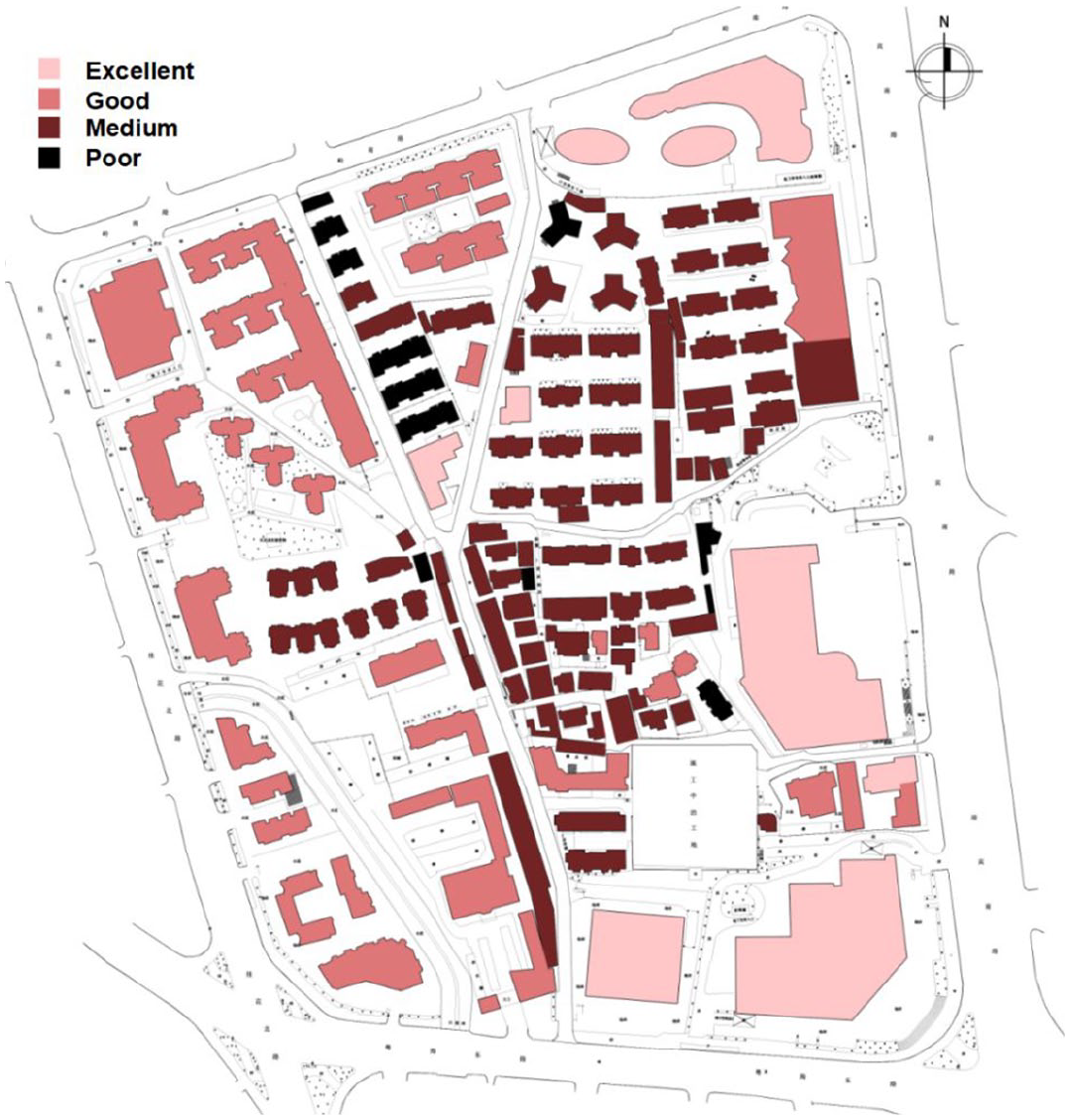
Map of building quality in the community.
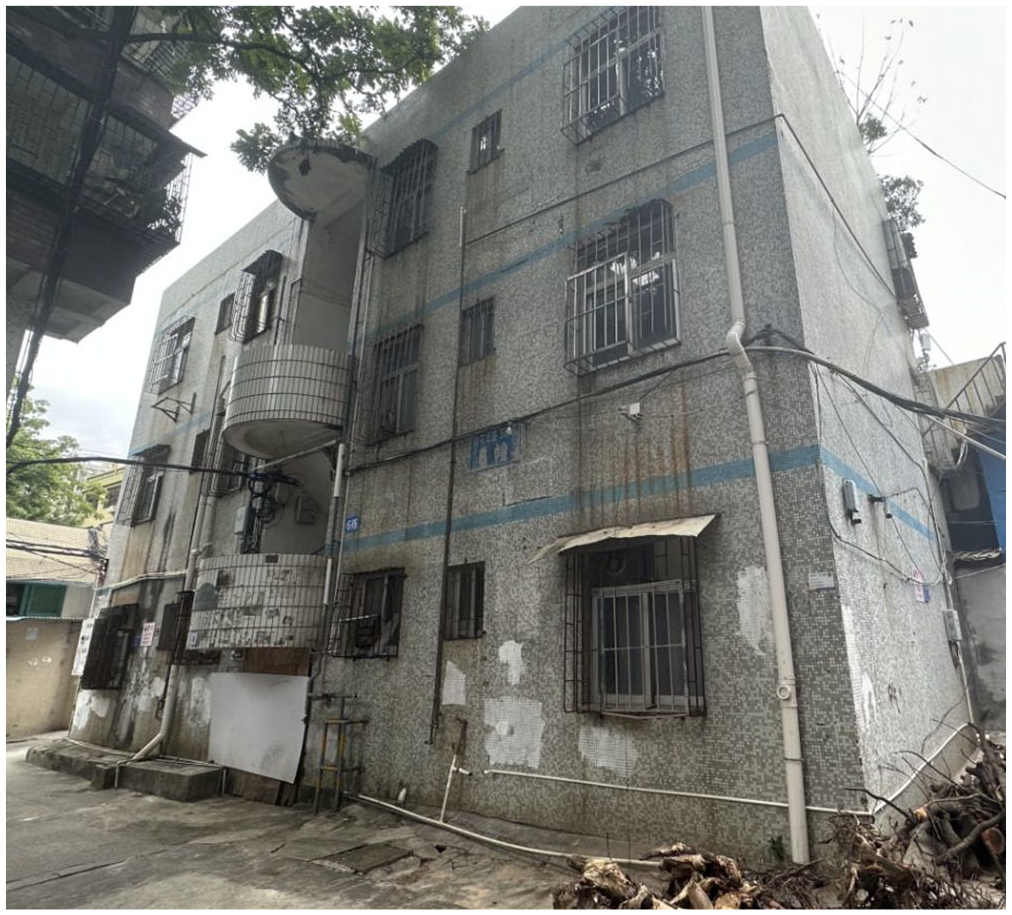
Unoccupied dangerous buildings.
Real estates distribution
The community is primarily composed of planned residential areas, with the self-built housing area in the central part having relatively complex ownership. This may pose certain challenges in future planning and development processes. There is a construction site on the southeastern side where high-rise buildings are expected to be built in the future (Figure 13).
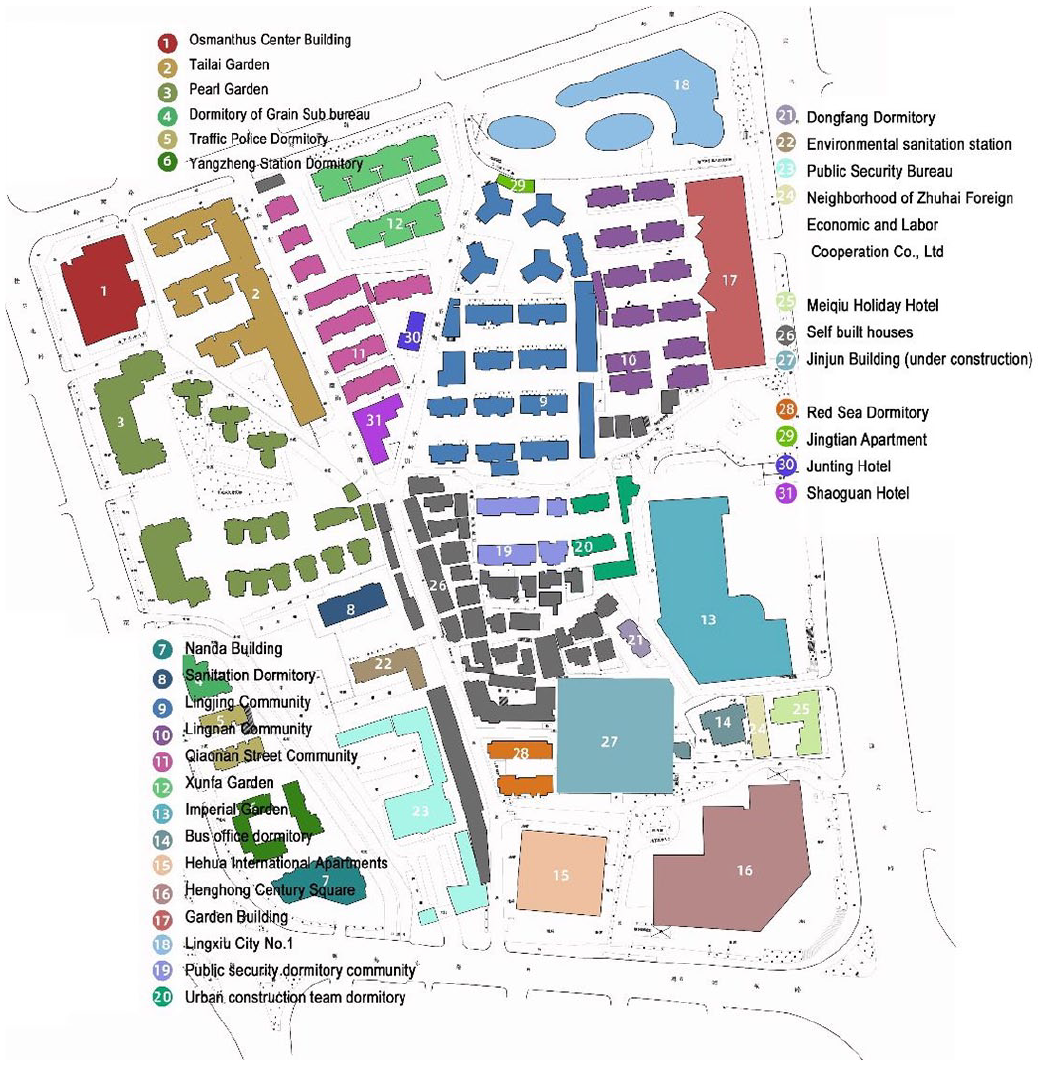
Map of real estates distribution in the community.
Records of key community spaces observation
To gain a deeper understanding of the daily activities of residents within the community, three spatial points were selected for observational research: as shown in Figure 14, the first point is located at the intersection of Qiaoling Street First Alley and Qiaoling Street (Point A); the second point is at the park in front of Tailai Garden (Point B); the third point is at Lingnan Community Park (Point C). The research was conducted from 8:00 am to 10:00 pm, with each hour divided into units and each unit containing a 10-minute recording segment. To ensure data validity, observations were conducted on both weekdays and holidays under clear weather conditions.
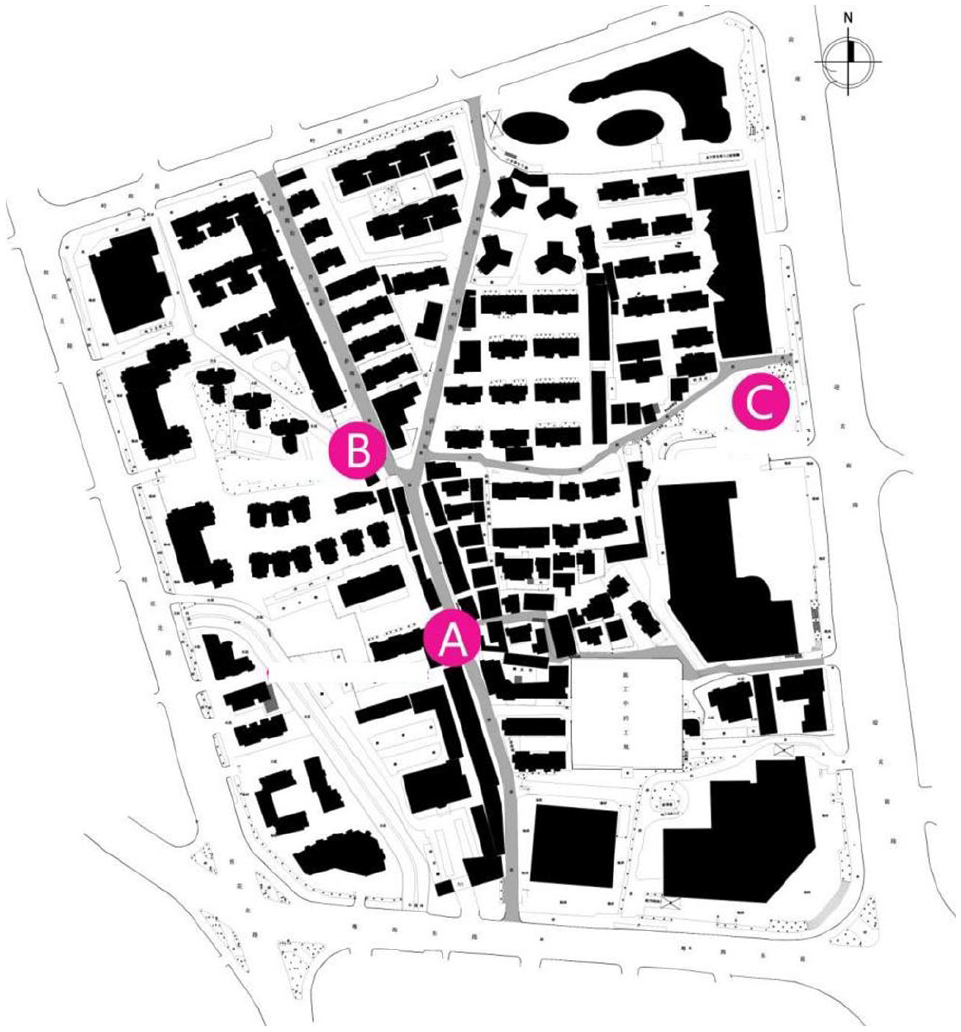
Map of observation nodes.
These three points represent the few public activity spaces within the community. The main observations recorded the types of activities and age composition to assess the vitality of community spaces. Activities were categorized into 13 types: walking, dog walking, waiting, sightseeing, cycling, vending, resting, shopping, dining, childcare, exercising, chatting, and entertainment (Figure 15). Age groups were divided into 0–18 years, 18–30 years, 30–60 years, and over 60 years. In this observation, the focus was not on the pedestrian flow or behaviors on the streets, but rather on the activities taking place on the sidewalks and in the surrounding shops and public spaces.
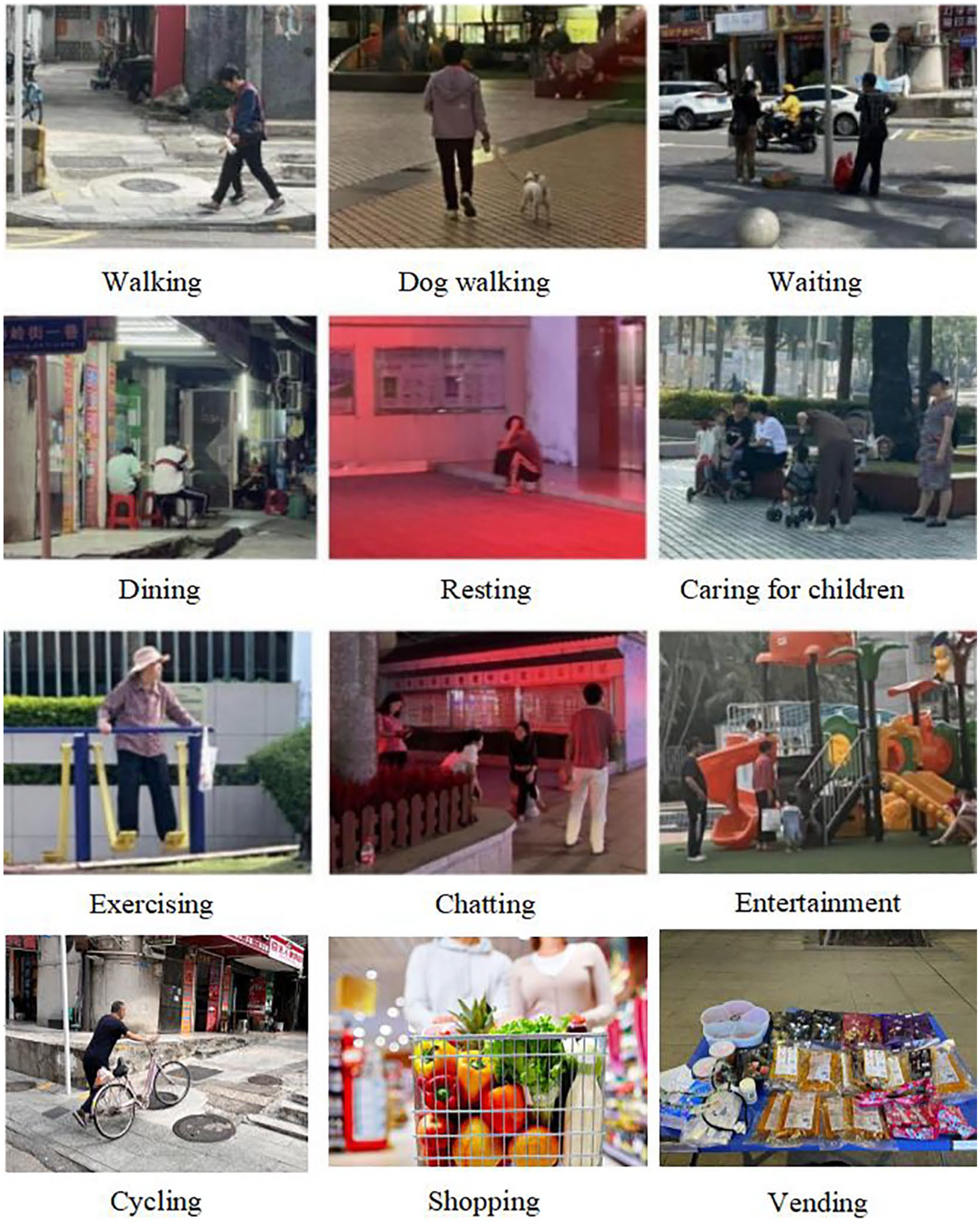
Partial behavior patterns.
By comparing data from weekdays and holidays, the following patterns were observed: as shown in Figure 16, Point A experienced higher pedestrian traffic, primarily composed of middle-aged individuals aged 30–60; Point B showed relatively low spatial vitality, indicating a lower utilization rate of its activity space; Point C demonstrated moderate vitality, with more distinct peak activity periods and a higher number of individuals aged over 60 and 0–18. Additionally, on holidays, the number of individuals aged 18–30 at Point A significantly increased, the pedestrian traffic at Point B remained more stable, and the peak activity periods at Point C became more pronounced, especially with a significant increase in the number of children aged 0–18.
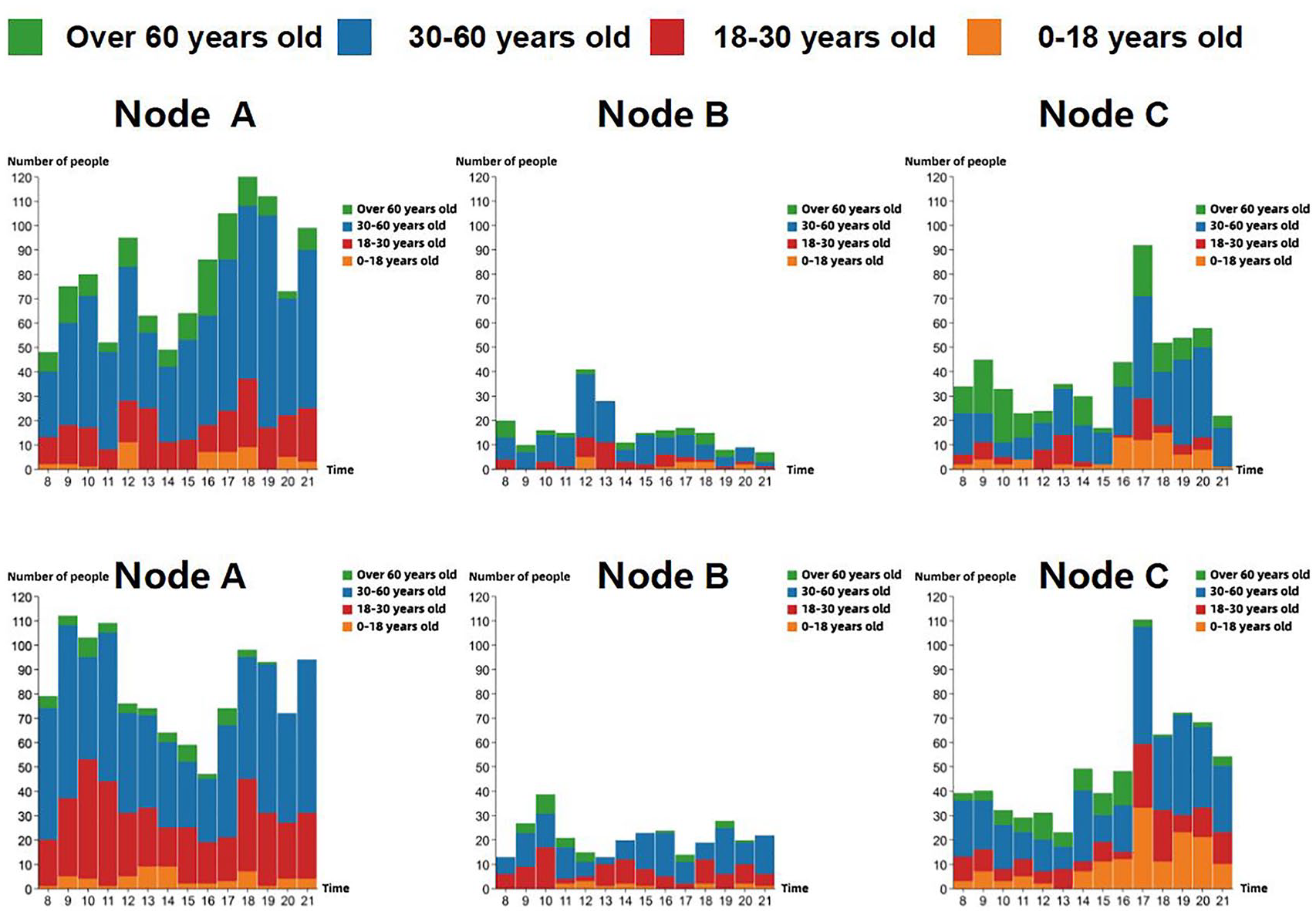
Population flow and age composition.
To visually present the activity heat index of each point, a matrix chart was utilized (Figure 17). In this chart, darker areas represent higher proportions of specific activities at the given points. From the weekday data, Point A is primarily used for walking and transit, followed by dining and shopping needs; Point B is mainly a passage for people with few staying there; Point C is predominantly used for resting. The holiday data show that activities at Point A did not change significantly; at Point B, due to the presence of a supermarket, the proportion of people shopping increased, but other activities remained insufficient; Point C showed significant changes with a noticeable increase in entertainment activities after 5 pm compared to weekdays.
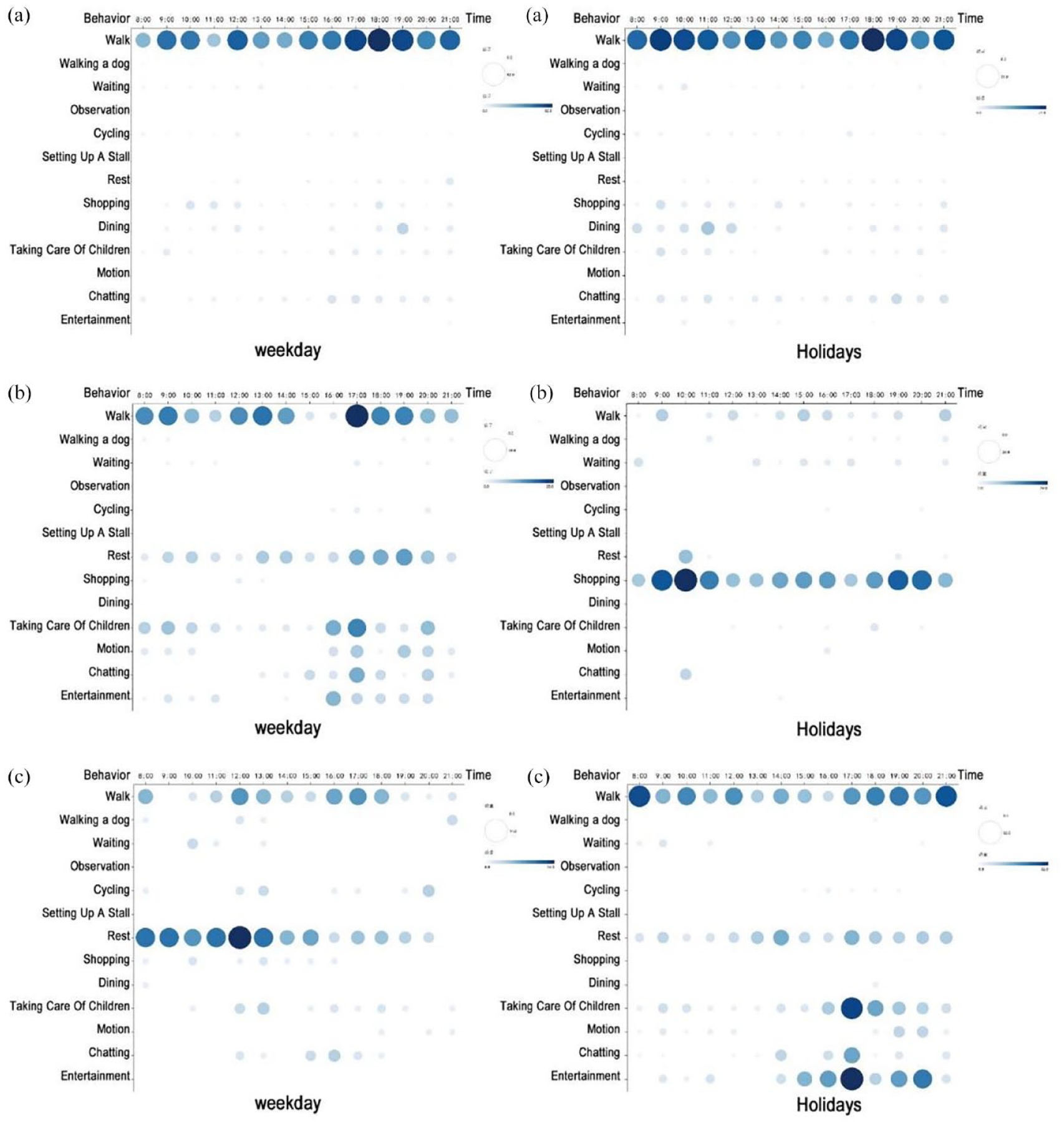
Thermal Index Matrix of activity behavior.
Comprehensive analysis indicates that Point A is mainly used for transit and lacks resting facilities; Point B has more people shopping than engaging in leisure activities, leading to lower space utilization; Point C sees a higher number of individuals resting and caring for children, making its utilization relatively reasonable.
Conclusion
Based on an in-depth observation and systematic study of the current situation of the community, it has been found that the optimization of transportation nodes and increase and enhancement of public spaces are of great significance for the development of the community. However, it is impossible to fully understand the demands of Macau workers and community residents merely by a macroscopic observation of the community. Therefore, it is necessary to adopt the interview and questionnaire survey to further understand the community and ensure that the renovation strategies can effectively address the needs of the residents and improve the quality of community life.
Anthropological investigation of Lingnan Community
Data collection method for Macau workers
The imagined community of Macau workers is relatively dispersed, making data collection extremely challenging. Therefore, when conducting primary data research, in addition to field investigations, communication and collaboration with relevant government departments and partnering companies are necessary. Before starting to collect data of Macau workers, the authors first established some basic criteria to better identify this social imaginary: (a) they must reside within the community; (b) their main identity should be tenants; and (c) priority should be given to those living in the community along Qiaoling Street and in self-built housing areas.
To collect data more efficiently, an initial plan was brought up to leverage existing resources by fully utilizing the role of the Community Residents’ Committee to distribute the designed questionnaires to various neighborhoods. However, in the first batch of 116 returned questionnaires, only 4 Macau workers were identified, far below expectations (see “Community residents questionnaire survey”). To continue collecting data on Macau workers, only two paths were available: either continue to increase the distribution of questionnaires or seek to connect with suitable candidates through the community property. It was evident that due to the limited reach of the residents’ committee, continuing to distribute questionnaires would not quickly connect with more Macau workers in a short time, so the authors had to seek help from property management.
Fortunately, the authors received significant support from the property management of Henghong Century Plaza. However, due to privacy concerns, the property management could not directly provide the contact information of the tenants, but only relevant lists and door numbers. With the assistance of the property security, over 20 households were visited. As it was a weekday afternoon, most residents were not at home. Nonetheless, it was still fortunately possible to interview three residents. However, this door-to-door approach was neither efficient nor effective, prompting the authors to seek other more efficient methods to collect data. Ultimately, a decision was made to adopt a more direct field survey approach: selecting the evening rush hour (6 pm to 9 pm) to conduct random interviews at the intersection of Qiaoling Street and Yuehai Road, and near the Liangfenqiao bus stop. During this three-hour survey, the author successfully interviewed five Macau workers who generally met the preset criteria, and the interview results were quite satisfactory.
Even though ideal interview subjects were found, the interview process was not smooth. The biggest obstacle was undoubtedly the need to gain the consent and trust of the interviewees in the shortest possible time, which is no easy task in today’s society! Not to mention the general public’s defensive and resistant attitude towards strangers; even those willing to participate in interviews were often reluctant to open up due to privacy concerns and emotional barriers, impeding the interview process. The authors attempted to distribute electronic or paper questionnaires, but interviewees seemed to prefer face-to-face communication over scanning QR codes or filling out paper questionnaires. Repeated setbacks had to be learned from to improve the efficiency and quality of the interviews. Ultimately, 50 groups of interviews were successfully conducted, achieving a certain understanding of the Macau workers in the Lingnan Community (see “Community residents interview survey”).
Community residents questionnaire survey
When conducting a systematic questionnaire survey of the Lingnan Community residents, this study adopted both online and offline channels for data collection, with a total of 19 questions designed in the survey questionnaire. Considering the characteristics of the target audience, all questions were in multiple-choice format, with open-ended options added for subjective responses to specific questions.
In the first phase, 116 questionnaires were collected online, with a response rate of 42%. Eighteen questionnaires were collected offline, of which 4 were invalid. However, as mentioned earlier, the current questionnaire distribution mainly relied on the Community Residents’ Committee, whose primary service targets are community owners rather than tenants. Therefore, among the 130 valid questionnaires collected, only 11 were filled out by tenants, with only 4 Macau workers.
In the second phase, the distribution of questionnaires to community tenants was increased, resulting in the collection of 48 more questionnaires, raising the number of tenant participants to 51, accounting for 28.7% of the total questionnaires. The number of Macau worker participants increased to 30, raising the proportion to 16.9%.
In total, 178 questionnaires were collected, with an overall response rate of 52%. In terms of gender distribution, males accounted for 44.4% and females 55.6%. The majority age groups were 31–40 years (25.3%) and 51–60 years (24.7%). Regarding educational background, 36% had a university degree or higher, 42.7% had high school education, and 21.3% had middle school education or lower. Regarding community identity, 62.4% were owner residents (111 people), 28.7% were tenants (51 people), 5.1% worked within the community, and 3.9% had other identities.
Although this study attempted to ensure the comprehensiveness and objectivity of the data through two phases of questionnaire surveys, it is necessary to acknowledge the limitations present in the data collection process. Therefore, the data results should be interpreted and applied with caution.
Community residents interview survey
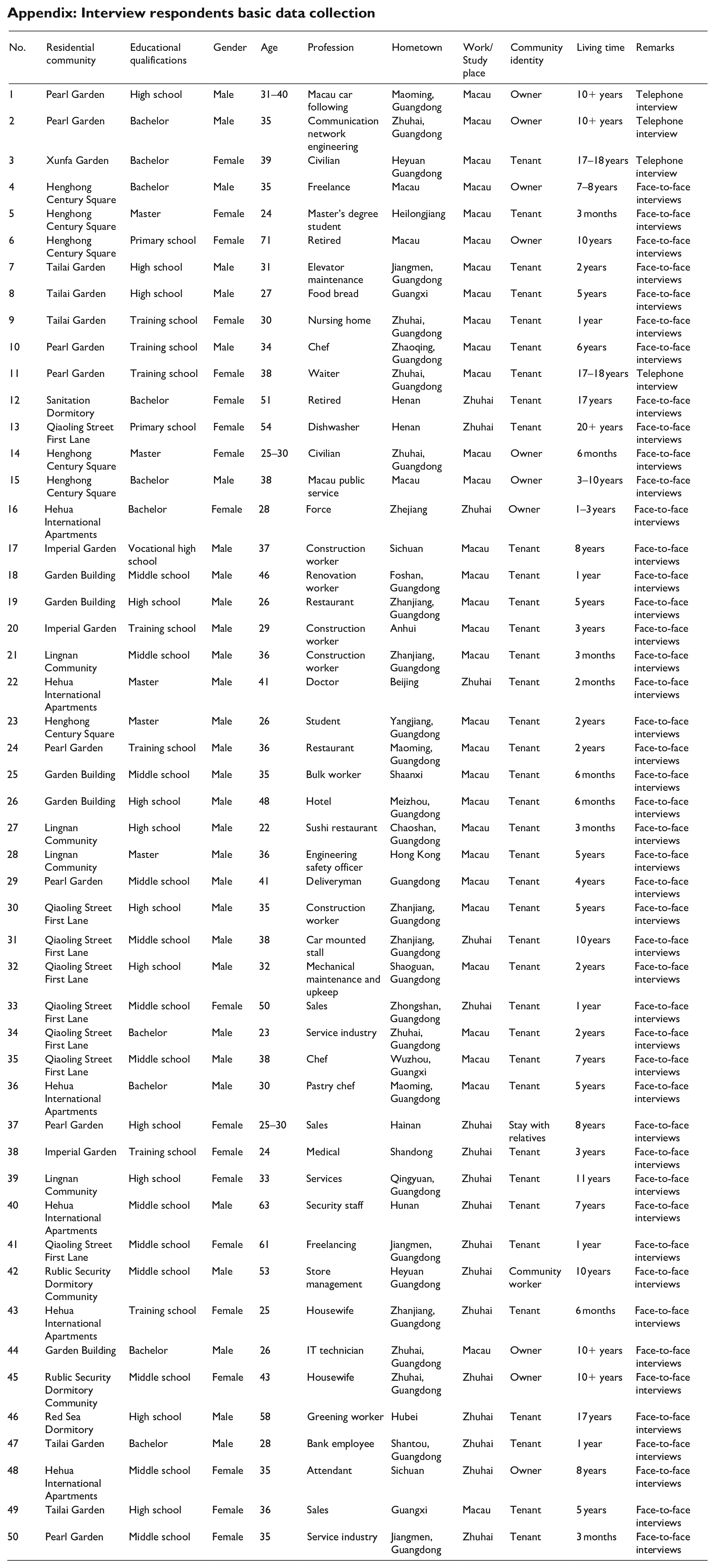
This study conducted interviews with 50 residents of Lingnan Community (see Appendix). The interview formats included 4 online telephone interviews and 46 offline face-to-face interviews. Among the interviewees, 10 were owners, 39 were tenants, and 1 worked within the community; 31 were Macau workers. Overall, the information obtained from the interviews was quite rich, covering a diversity of educational backgrounds, ages, occupations, places of origin, community identities, and lengths of residence. In addition to people primarily working in Macau, the interviewees also included some residents working in Zhuhai while living in the community. More importantly, compared to the aforementioned community questionnaires, a larger proportion of the one-on-one interview subjects were tenants. This, combined with the questionnaire results, helps to better understand the differences in needs between community residents and Macau workers, providing targeted recommendations for community renovation and planning.
Understanding the hidden imaginary of Macau workers through an architectural anthropological analysis
Constructing a mobility model for Macau workers
From the perspective of architectural anthropology, and based on Tim Cresswell’s (2010) “six elements of the politics of mobility” model as a theoretical foundation, this study constructs a six-element model focusing on the mobility of Macau workers, specifically addressing motivation, route, rhythm, speed, experience, and identity. 1
The following text will combine the 50 interviews collected to analyze the connections between Macau workers and their social space, as well as the political and cultural aspects, through the aforementioned six elements. This analysis will provide a more comprehensive understanding of the daily activities and behaviors of Macau workers in Zhuhai.
Motivation
The motivation element is primarily defined by two interview questions: “Why did you choose to live in Lingnan Community?” and “Why did you choose to work in Macau?” Specifically, the reasons provided by the respondents for the former choice can be identified as active or passive motives. Most respondents chose to live in Lingnan Community actively because of its proximity to the Gongbei Border Port and convenience for commuting to Macau, while a small portion of the respondents chose this community passively due to referrals from relatives, intermediaries, or company arrangements.
For the latter choice, most respondents indicated that it was because Macau offers higher wages with relatively lower educational requirements. 2 Some Macau-born respondents felt that the rent and living expenses in Zhuhai are lower than Macau, which was why they chose to work in Macau and live in Zhuhai. Other reasons included company arrangements, referrals from friends, stable income, and the desire to explore opportunities in the outside world. It is interesting to know that for some respondents who work in Zhuhai, they also cited the proximity of the Lingnan Community to their workplace, convenience of living, and relatively cheap rent.
In analysis, the motivation for most people choosing to live in Lingnan Community – whether working in Macau or Zhuhai – is that it is convenient for living and transportation. This also proves that the Lingnan Community is very suitable for living and has great development potential. In addition, although making more money in Macau, most Macau workers tend to spend less to save more for their families in hometowns, while living costs in Lingnan Community are much lower than Macau and it is easier for Mainland Chinese from other parts of China to adapt to the lifestyle in Zhuhai.
Route
The route element refers to the daily commuting routines, modes of transportation, and routes taken by Macau workers. According to the interviews, the travel patterns of Macau workers are consistent. A typical commuting routine is as follows: Lingnan Community → Gongbei or Qingmao Border Port → Cross the border to Macau → Go to work (by public transportation or company provided shuttle bus) → Get off work (by public transportation or company provided shuttle bus) → Gongbei or Qingmao Border Port → Cross the border to Zhuhai → Lingnan Community.
That is to say, border crossing is an inevitable experience for Macau workers, thus making Gongbei Border Port the largest land port in the country. The transportation modes and route choices between the community and border port are various. The most common way is by public transportation, followed by riding bicycles or walking. Some may take taxis or ride-hailing services. In comparison, those who work in Zhuhai have similar modes of transportation but are more inclined to drive, as they do not need to have dual-plate licenses or undergo cumbersome border crossing procedures. In summary, Lingnan Community is a relatively preferred choice for Macau workers in terms of commuting time and economic costs.
Rhythm
The rhythm element simply reflects the pace of life of Lingnan Community. Through observational research, it was found that the periods with the highest human activities are around 8 am in the morning and after 5 pm in the evening, while 12 pm is the time with the least daytime activities. This corresponds to the working hours of Macau workers. In subsequent interviews, the authors inquired about the daily activities of Macau workers within the community. The most common responses were dining and shopping. Some respondents chose to get their hair cut on Qiaoling Street, while a few chose to walk or exercise, which is closely related to the business within the community.
It is interesting to find that compared to Macau workers, those who work in Zhuhai are more inclined to take walks or engage in simple exercises in the community after meals. This is probably because it usually takes at least an hour to commute from their workplaces in Macau back to the community in Zhuhai which is highly time- and energy-consuming, so Macau workers are more likely to rest at home after returning to the community.
Speed
In Cresswell’s six-element model, speed not only pertains to technological and physical movement but also relates to social inequalities, control, and resistance. In this context, the speed element primarily refers to the behavioral activities of Macau workers during their work and rest cycles. Most interviews indicated that they have one day off per week, a few enjoying two days off. Additionally, there are a few older retirees, freelancers, and students among the respondents. When asked “What activities do you engage in during your time off?”, most respondents reported that they rarely participate in community activities and are more inclined to visit nearby shopping districts or coastal attractions in Zhuhai. If the respondents’ hometowns are close to Zhuhai, they might go back home for a day or two, indicating that some Macau workers are separated from their families due to work commuting. Other respondents prefer to rest at home, describing themselves as homebodies. Some choose to stay home to take care of their children, or go out to shopping districts for dining and shopping.
The activity behaviors of those who work in Zhuhai do not significantly differ from those of Macau workers. Due to the abundant surrounding facilities and shopping districts, there are diverse activity options, they can make different choices based on their conditions and needs, while the number of people choosing to participate in activities within the community is relatively low.
Experience
The experience element refers to the feelings of Macau workers living in Lingnan Community. Surprisingly, it was found that this is not closely related to the length of residence in the community, those who have lived there for 3 months may have more insights and feelings than those who have lived there for 3 years. This is closely related to individual personalities and living habits. Most respondents considered convenience in commuting and daily life as the most satisfactory aspects, while dissatisfaction may be related to environmental hygiene or parking issues.
When asked “What environmental improvements or commercial activities would make you more willing to participate in community activities?” Diverse responses were received. Each person proposed corresponding improvement suggestions based on their interests and needs, such as gyms, billiard halls, renovation of old communities, smooth pavements, cafes, internet cafes, etc. This indicates that although residents are relatively satisfied with community life at present, they still hope for improvements to enhance their happiness and sense of belonging within the community. More importantly, those who work in Zhuhai share the same sentiments as Macau workers. These feedbacks are of significant reference value for the subsequent planning of community commercial activities.
Identity
The identity element is this paper is built upon the friction element in Cresswell’s six-element model, where different identities may reflect unequal distribution of social resources, leading to different choices by community residents. The aim is to explore whether residents of Lingnan Community with different identities and occupational backgrounds have different choices regarding their living experiences.
When asked “What are your plans for the future? Will you continue to live in Lingnan Community or move out?”, most respondents chose to continue living in the community. Among those who were unwilling to continue living there, some house owners who were Macau residents might consider going back to Macau in the future, while some residents who came from cities far from Zhuhai were considering moving back to their hometowns. In the face of community renewal and rent rising, most respondents, except for house owners, expressed their willingness to move to better dormitories or apartments. This indicates that Macau workers can bear a moderate increase in living costs and are willing to move to newer apartments or dormitories within the community. However, some expressed anxiety and stress of significant financial pressure, as they need to support their families in addition to their personal expenses.
Moreover, older respondents showed a higher concern for community needs than younger ones. They hope the community can organize more cultural activities to enrich daily life and alleviate monotony. Additionally, they wish for more facilities targeting the elderly to meet their mobility needs within the community.
In analysis, there are differences in terms of identity between house owners and tenants, Zhuhai local residents and non-local residents, people with low and high financial burdens, people with cars or not, as well as older and younger generations. These differences reflect the impact of various identities and the distribution of social resources on living experiences.
In conclusion, through research, it has been found that Macau workers choose to live in Lingnan Community and work in Macau due to convenient commuting and economic factors. Their lives revolve around the ports, and there are diverse modes of transportation. The rhythm of community life coincides with the working hours of Macau workers. There are differences in community activities between Macau workers and residents working in Zhuhai. Moreover, the residents’ living experiences are influenced by their personalities and habits. They are dissatisfied with the environment and parking conditions, and they expect an increase in commercial facilities and cultural activities. There are significant differences in the willingness to live and community needs among residents of different identities. Based on this, in order to improve the quality of life, it is necessary to optimize the transportation between the community and the ports, improve public services, enrich community activities, expand commercial facilities, and enhance living conditions, etc.
Lingnan Community renovation and enhancement suggestions
Due to the scarcity of community activity spaces and the absence of public entertainment spaces, coupled with the fact that daily cross-border commuting is highly time- and energy-consuming, it was found that most of the residents had no interest in experiencing community life after work. Thanks to a deeper understanding of Lingnan Community achieved through the architectural anthropological research, the authors hereby propose a series of suggestions for the community’s potential development and renovation. Drawn from the theories and practices of community design and making (Hu, 2013; Xu, 2021; Xu and Yi, 2019), these suggestions aim to better meet the needs of the community residents and achieve sustainable, humanistic community development.
Community design principles
Sustainable development
To cope with the state policy of carbon peaking and carbon neutrality, any design shall follow green and sustainable principles at every step, such as the use of eco-friendly materials and energy-saving technologies.
Community participation enhancement
To better understand the real needs of the community and to improve accordingly, any design shall fully engage with the residents at any phase in terms of community consultation before, during, and after the design process. This is also crucial to the building of the sense of belonging.
Multifunctional design
Since the space of the community is highly compacted while the public space is extremely valuable, any design shall make the best use of the space to be flexible and efficient.
Community design strategies
Optimization of traffic nodes
To separate pedestrian and vehicle circulations on Qiaoling Street. To plan and construct multi-story or underground parking lots to alleviate parking demands. To install landmark signs at traffic nodes such as the intersections of Qiaonan Street, Qiaoling Street, and Qiaoling Street Second Alley to enhance node activity and add pedestrian directional signs. To repave the roads with more pedestrian-friendly stone pavings.
Renovation of old estates and self-built housing
To add elevators to the old estates, renovate stairwells and facades, install resting facilities, and improve the landscaping. To balance the interests of house owners and tenants during the renovation. To renovate some residential buildings for the Macau workers and tenants with better living environments and improved property management. To add amenities such as cafes and milk tea shops around such renovated residential buildings. To transform the self-built housing area on Qiaoling Street First Alley into an art district with cultural facilities such as libraries and featured cafes. To promote the area online to attract young people to enhance the community vitality.
Enhancement of the commercial environment and cultural activities
To improve the diversity and quality of shops on both sides of Qiaoling Street to meet residents’ needs. To organize more community cultural activities such as holiday celebrations and family activities, to enhance the sense of belonging and interaction among Macau workers and residents living in the community for a long time.
Improvement of green environment and children-and-elderly friendly facilities
To add resting facilities such as pergolas and leisure seats at the entrance of Qiaoling Street First Alley and increase greenery. To redesign the park in front of Tailai Garden, addressing the impact of the odors from garbage rooms. To add greenery along the streets and increase tree shading. To construct a new green park over the southwest corner canal, creating a walking system. To add children’s play facilities and amenities for the elderly in the park.
Improvement of safety management and municipal facilities
To strengthen community safety management to ensure the personal and property safety of residents, thereby enhancing their sense of security. To replace and repair old pipelines for municipal infrastructure such as water supply and drainage with regular maintenance.
Footnotes
Appendix
Appendix: Interview respondents basic data collection
| No. | Residential community | Educational qualifications | Gender | Age | Profession | Hometown | Work/Study place | Community identity | Living time | Remarks |
|---|---|---|---|---|---|---|---|---|---|---|
| 1 | Pearl Garden | High school | Male | 31–40 | Macau car following | Maoming, Guangdong | Macau | Owner | 10+ years | Telephone interview |
| 2 | Pearl Garden | Bachelor | Male | 35 | Communication network engineering | Zhuhai, Guangdong | Macau | Owner | 10+ years | Telephone interview |
| 3 | Xunfa Garden | Bachelor | Female | 39 | Civilian | Heyuan Guangdong |
Macau | Tenant | 17–18 years | Telephone interview |
| 4 | Henghong Century Square | Bachelor | Male | 35 | Freelance | Macau | Macau | Owner | 7–8 years | Face-to-face interviews |
| 5 | Henghong Century Square | Master | Female | 24 | Master’s degree student | Heilongjiang | Macau | Tenant | 3 months | Face-to-face interviews |
| 6 | Henghong Century Square | Primary school | Female | 71 | Retired | Macau | Macau | Owner | 10 years | Face-to-face interviews |
| 7 | Tailai Garden | High school | Male | 31 | Elevator maintenance | Jiangmen, Guangdong | Macau | Tenant | 2 years | Face-to-face interviews |
| 8 | Tailai Garden | High school | Male | 27 | Food bread | Guangxi | Macau | Tenant | 5 years | Face-to-face interviews |
| 9 | Tailai Garden | Training school | Female | 30 | Nursing home | Zhuhai, Guangdong | Macau | Tenant | 1 year | Face-to-face interviews |
| 10 | Pearl Garden | Training school | Male | 34 | Chef | Zhaoqing, Guangdong | Macau | Tenant | 6 years | Face-to-face interviews |
| 11 | Pearl Garden | Training school | Female | 38 | Waiter | Zhuhai, Guangdong | Macau | Tenant | 17–18 years | Telephone interview |
| 12 | Sanitation Dormitory | Bachelor | Female | 51 | Retired | Henan | Zhuhai | Tenant | 17 years | Face-to-face interviews |
| 13 | Qiaoling Street First Lane | Primary school | Female | 54 | Dishwasher | Henan | Zhuhai | Tenant | 20+ years | Face-to-face interviews |
| 14 | Henghong Century Square | Master | Female | 25–30 | Civilian | Zhuhai, Guangdong | Macau | Owner | 6 months | Face-to-face interviews |
| 15 | Henghong Century Square | Bachelor | Male | 38 | Macau public service | Macau | Macau | Owner | 3–10 years | Face-to-face interviews |
| 16 | Hehua International Apartments | Bachelor | Female | 28 | Force | Zhejiang | Zhuhai | Owner | 1–3 years | Face-to-face interviews |
| 17 | Imperial Garden | Vocational high school | Male | 37 | Construction worker | Sichuan | Macau | Tenant | 8 years | Face-to-face interviews |
| 18 | Garden Building | Middle school | Male | 46 | Renovation worker | Foshan, Guangdong | Macau | Tenant | 1 year | Face-to-face interviews |
| 19 | Garden Building | High school | Male | 26 | Restaurant | Zhanjiang, Guangdong | Macau | Tenant | 5 years | Face-to-face interviews |
| 20 | Imperial Garden | Training school | Male | 29 | Construction worker | Anhui | Macau | Tenant | 3 years | Face-to-face interviews |
| 21 | Lingnan Community | Middle school | Male | 36 | Construction worker | Zhanjiang, Guangdong | Macau | Tenant | 3 months | Face-to-face interviews |
| 22 | Hehua International Apartments | Master | Male | 41 | Doctor | Beijing | Zhuhai | Tenant | 2 months | Face-to-face interviews |
| 23 | Henghong Century Square | Master | Male | 26 | Student | Yangjiang, Guangdong | Macau | Tenant | 2 years | Face-to-face interviews |
| 24 | Pearl Garden | Training school | Male | 36 | Restaurant | Maoming, Guangdong | Macau | Tenant | 2 years | Face-to-face interviews |
| 25 | Garden Building | Middle school | Male | 35 | Bulk worker | Shaanxi | Macau | Tenant | 6 months | Face-to-face interviews |
| 26 | Garden Building | High school | Male | 48 | Hotel | Meizhou, Guangdong | Macau | Tenant | 6 months | Face-to-face interviews |
| 27 | Lingnan Community | High school | Male | 22 | Sushi restaurant | Chaoshan, Guangdong | Macau | Tenant | 3 months | Face-to-face interviews |
| 28 | Lingnan Community | Master | Male | 36 | Engineering safety officer | Hong Kong | Macau | Tenant | 5 years | Face-to-face interviews |
| 29 | Pearl Garden | Middle school | Male | 41 | Deliveryman | Guangdong | Macau | Tenant | 4 years | Face-to-face interviews |
| 30 | Qiaoling Street First Lane | High school | Male | 35 | Construction worker | Zhanjiang, Guangdong | Macau | Tenant | 5 years | Face-to-face interviews |
| 31 | Qiaoling Street First Lane | Middle school | Male | 38 | Car mounted stall | Zhanjiang, Guangdong | Zhuhai | Tenant | 10 years | Face-to-face interviews |
| 32 | Qiaoling Street First Lane | High school | Male | 32 | Mechanical maintenance and upkeep | Shaoguan, Guangdong | Macau | Tenant | 2 years | Face-to-face interviews |
| 33 | Qiaoling Street First Lane | Middle school | Female | 50 | Sales | Zhongshan, Guangdong | Zhuhai | Tenant | 1 year | Face-to-face interviews |
| 34 | Qiaoling Street First Lane | Bachelor | Male | 23 | Service industry | Zhuhai, Guangdong | Macau | Tenant | 2 years | Face-to-face interviews |
| 35 | Qiaoling Street First Lane | Middle school | Male | 38 | Chef | Wuzhou, Guangxi | Macau | Tenant | 7 years | Face-to-face interviews |
| 36 | Hehua International Apartments | Bachelor | Male | 30 | Pastry chef | Maoming, Guangdong | Macau | Tenant | 5 years | Face-to-face interviews |
| 37 | Pearl Garden | High school | Female | 25–30 | Sales | Hainan | Zhuhai | Stay with relatives | 8 years | Face-to-face interviews |
| 38 | Imperial Garden | Training school | Female | 24 | Medical | Shandong | Zhuhai | Tenant | 3 years | Face-to-face interviews |
| 39 | Lingnan Community | High school | Female | 33 | Services | Qingyuan, Guangdong | Zhuhai | Tenant | 11 years | Face-to-face interviews |
| 40 | Hehua International Apartments | Middle school | Male | 63 | Security staff | Hunan | Zhuhai | Tenant | 7 years | Face-to-face interviews |
| 41 | Qiaoling Street First Lane | Middle school | Female | 61 | Freelancing | Jiangmen, Guangdong | Zhuhai | Tenant | 1 year | Face-to-face interviews |
| 42 | Rublic Security Dormitory Community | Middle school | Male | 53 | Store management | Heyuan Guangdong |
Zhuhai | Community worker | 10 years | Face-to-face interviews |
| 43 | Hehua International Apartments | Training school | Female | 25 | Housewife | Zhanjiang, Guangdong | Zhuhai | Tenant | 6 months | Face-to-face interviews |
| 44 | Garden Building | Bachelor | Male | 26 | IT technician | Zhuhai, Guangdong | Macau | Owner | 10+ years | Face-to-face interviews |
| 45 | Rublic Security Dormitory Community | Middle school | Female | 43 | Housewife | Zhuhai, Guangdong | Zhuhai | Owner | 10+ years | Face-to-face interviews |
| 46 | Red Sea Dormitory | High school | Male | 58 | Greening worker | Hubei | Zhuhai | Tenant | 17 years | Face-to-face interviews |
| 47 | Tailai Garden | Bachelor | Male | 28 | Bank employee | Shantou, Guangdong | Zhuhai | Tenant | 1 year | Face-to-face interviews |
| 48 | Hehua International Apartments | Middle school | Female | 35 | Attendant | Sichuan | Zhuhai | Owner | 8 years | Face-to-face interviews |
| 49 | Tailai Garden | High school | Female | 36 | Sales | Guangxi | Macau | Tenant | 5 years | Face-to-face interviews |
| 50 | Pearl Garden | Middle school | Female | 35 | Service industry | Jiangmen, Guangdong | Zhuhai | Tenant | 3 months | Face-to-face interviews |
Declaration of conflicting interests
The author(s) declared no potential conflicts of interest with respect to the research, authorship, and/or publication of this article.
Funding
The author(s) received no financial support for the research, authorship, and/or publication of this article.
Ethical considerations
Ethical approval was not applicable in this case because the architectural anthropological study was part of the urban renewal project initiated by the Zhuhai City Architectural Design Institute, which is a state-owned enterprise that does not require ethical approval.
Consent to participate
The consent to participate was verbal because the participants were not comfortable being given a written consent. The verbal consent was recorded by the investigators.
Consent for publication
The consent for publication was verbal because the participants were not comfortable being given a written consent. The verbal consent was recorded by the investigators.

Data availability
Interview data were obtained from field interviews conducted by the authors.
1.
Tim Cresswell is a renowned geographer and sociologist who proposed a six-element model in the realm of the politics of mobility. This model emphasizes how spatial mobility is interconnected with social, cultural, and political dimensions. The six elements include the motivation behind mobility, the speed of mobility, the rhythm of mobility, the routes of mobility, the experience of mobility, and the friction of mobility. Cresswell’s model provides a comprehensive framework for understanding the interrelations between spatial mobility and social, cultural, and political factors. This model highlights the diversity, complexity, and dynamism of mobility and its significance in contemporary society.
2.
This is probably because most Macau workers are working in the service and construction industries in Macau which only require skilled workers such as food and beverage servers, salesclerks, cleaners, and construction workers, while the salaries of such occupations are much higher than that in the Mainland China.