



Abstract
Mega-city regions (MCRs) embody the robust economic growth experienced in Asia in the 21st century. Super MCRs (sMCRs) have developed due to continuous metropolisation extending deep into surrounding hinterlands. This paper examines the suburbanisation and functional specialisation processes in a typical sMCR in China: the Pearl River Delta (PRD). Applying principal component analysis and change importance values, shifting patterns in the socioeconomic structure of the PRD between 2000 and 2020 are analysed and compared using county/district-level occupational data. The nuanced findings show that the suburbanisation process in the PRD during the research period included manufacturing activities and tertiarisation. Sub-central areas have become increasingly important and functionally specific as the location for knowledge-intensive business services and other emerging occupational activities, such as environmental governance. These changes have contributed to the evolution of the PRD from a development pattern dominated by core cities to a polycentric sMCR with a specialised division of labour and cooperation between cities.
Keywords
Introduction
The term ‘metropolisation’ has been used since the beginning of the 20th century to describe urban growth with a simultaneous functional upgrading of cities. Early metropolitan researchers highlighted that metropolises are places with a structural wealth of material and immaterial resources (Mumford, 1961), are large-scale location clusters of high-quality functions (Gottmann, 1957) and, alongside their surrounding areas, are in international competition (Geddes, 1915). While analyses in the 20th century focused on global cities (Sassen, 1991) or global city regions (Scott, 2001), the focus has shifted in the 21st century to ‘megaregions’ (Harrison and Hoyler, 2015; R. Lang and Knox, 2009). Originally introduced by Gottmann (1957) in a United States context, this perspective considers the merging of several metropolitan areas into one large super-agglomeration. Depending on the perspective, the focus has been extended to the polycentric structures of super-agglomerations (referred to as mega-city regions (MCRs)) (Xu and Yeh, 2011), multi-city regions (Wachsmuth, 2017), polycentric metropolises (Hall and Pain, 2006) or the areal convergence of many metropolitan regions into one megaregion through urbanisation processes across the entire region (Soja, 2011) in both European and Asian contexts – particularly in China (Hamnett, 2020; Harrison and Gu, 2021; Su et al., 2017).
The term ‘super mega-city region’ (sMCR) was developed based on the examples of the Chinese agglomerations Beijing-Tianjin-Hebei (BTH), Yangtze River Delta (YRD) and Pearl River Delta (PRD) and refers to polycentric super-agglomerations in which at least one city comprises more than 10 million inhabitants (Yeh and Chen, 2020). However, Yeh and Chen (2020) note that most studies on current Chinese megaregions focus on governance issues (Harrison and Gu, 2021; Su et al., 2017), while economic changes are a lesser focus. The current study aims to contribute to the understanding of socioeconomic changes at such scales.
The consideration of socioeconomic changes has primarily focused on changes in land use and demographic changes (Feng et al., 2022; Wei et al., 2017) and has had an explicit focus on economic aspects (e.g. knowledge-intensive services (Wang et al., 2016), intra-regional business linkages (Yeh et al., 2015; Zhao et al., 2017) or the development of regional structures based on labour divisions (Feng et al., 2020; Schiller et al., 2015)). Literature has also documented rural urbanisation and industrialisation processes in emerging economies over the past few decades (Chen, 1998; Yeh et al., 2017), which have included shifts in land-intensive and labour-intensive factories and manufacturing employees – mainly blue-collar professions, such as product processing and assembly personnel – to the hinterlands of MCRs. In addition, empirical studies have examined the role of these peripheral areas in shaping and refining production and service functions (Henry et al., 1997; Tu et al., 2017). Suburban or transitioning rural areas have become new workspaces for innovation, retail, e-commerce or co-working activities (Glückler et al., 2023; Growe, 2016; Kim et al., 2018; Lin et al., 2023), gathering together knowledge-intensive occupations – mainly white-collar professions, such as technicians, financiers and cultural workers.
When considering the development of hinterlands in sMCRs (Yang et al., 2018), it is important to determine the changes these once peripheral areas are undergoing due to the growth processes in the large core cities (Urso, 2021). The current study addresses the question of how the residential locations of different occupational groups (particularly those in knowledge-intensive business services (KIBS) and manufacturing-related professions) change over time. Specifically, empirical results based on occupational data from Chinese population censuses have been used to draw conclusions on the functional changes in central, sub-central, inner and outer hinterlands in the PRD sMCR.
The paper is organised as follows: the next section presents existing literature on metropolisation and the functional rise of peripheral areas. This is followed by a section introducing the empirical case: the PRD sMCR. We then describe the methods and data used, and the next section presents the empirical results of the study. A final section concludes the study and opens the discussion for future research.
Metropolisation and the emerging super mega-city regions
This paper follows the strands of previous work that deciphers the dynamics of economic development in MCRs (Scott, 2001; Yeh and Chen, 2020) and considers the development of a sMCR in a specific geopolitical and planning context (Brenner, 2004; Y. Li and Jonas, 2019). We discuss two phenomena – suburbanisation and functional specialisation – during the ongoing metropolisation process.
Metropolisation and the making of super mega-city regions in China
Extensive suburbanisation in Western countries during the post-Second World War period has linked cities and suburbs that were previously jurisdictionally separate. Evolving from the ‘city’ and ‘city-region’ scales, the concept of the ‘mega-city region’ of more intensive urbanisation observed in fast-growing regions in Asia and the so-called ‘super mega-city region’ have been intensely defined and discussed:
[A mega-city region] comprises a cluster of highly networked urban settlements anchored by one or more large cities. . . (Yeh and Chen, 2020: 636).
The PRD, YRD and BTH agglomerations are leading sMCRs in China (Yeh and Chen, 2020). The urban agglomeration is also termed ‘chéngshì qún’ in high-level Chinese political documents (Harrison and Gu, 2023). Harrison and Gu (2023: 1) have described a golden ‘age of megaregions’ to illustrate the heated global discussions on these preeminent competitive territories and the 21st-century urban form. Megaregions are recognised as having great potential as the strongest and most resilient urban and economic structures of the present day and are considered vital to China’s future economic growth (Yeh et al., 2020). They are characterised by intensive cross-jurisdictional planning cooperation, dense intra-company and inter-company economic connections, and frequent personnel flows on a regional scale (P. Li et al., 2022; Xu and Yeh, 2013; Yeh et al., 2015). However, this study does not focus on the sMCR from a governance perspective but rather examines the dynamic socioeconomic patterns and complex metropolisation processes at this scale.
Suburbanisation and the associated changes in functional specialisation
During the initial stage of industrialisation, transitioning economies – such as China – mostly relied on labour-intensive and/or capital-intensive industries rather than knowledge-intensive industries (J. Liu et al., 2021). The development of these activities is typically accompanied by significant land consumption and urban sprawl that tends to be spatially dispersed towards lower-cost peripheral areas and small and medium-sized cities (J. Wu et al., 2018), which results in a process of decentralisation and the formation of early polycentric megaregions:
[Land] is the space foothold of industrial development. . . (J. Liu et al., 2021: 1)
Many scholars have noted the suburbanisation and functional development of peripheral areas in these sMCRs (Kim et al., 2018) – referring to these areas as ‘commuter towns/zones’ (cf. Morrill et al., 1999), ‘edge cities’ (cf. Garreau, 1991) with a strong focus on office and retail functions, ‘Boomburb’ (cf. Lang and LeFurgy, 2007) or ‘new towns/cities’ (cf. Shi and Chen, 2016) – which represent sizable suburban districts outside traditional urban centres. Manufacturing activities in the early years after the reform and opening-up in 1978 in China took on the distinctive form of ‘rural industrialisation’, extending industrial development into hinterlands outside large cities to access cheap resources, including raw materials, land and labour (Eng, 1997). However, empirical studies in China have argued that the development of rural industries (often having a low-end nature) has not reduced the importance of large cities and city centres in the development of producer services (Yeh et al., 2017), meaning that it is more difficult for economic tertiarisation to penetrate deeper into the rural areas of these megaregions.
The new forms of hierarchical and network development and functional differentiation between cities in the era of globalisation have become a subject of extensive study in recent decades (Lüthi et al., 2010; Thierstein and Lüthi, 2013). The ‘global shift’ in industrial production has also triggered discussions on flexible specialisation and labour division at the sMCR scale (Beyers and Lindahl, 1997; Coffey, 2000). Functionally polycentric regions demonstrate their functional structure (cf. Nordregio, 2004) through distributed economic activities across many hubs, which can be further grouped into labour-divided regions (e.g. the Randstad region, with the distinct functional focus of its cities) and functionally-balanced regions (e.g. the Ruhr region, with several cities with similar sizes and economic functions) (Growe, 2012).
Based on these considerations, this paper examines the following three questions:
What changes in the patterns of socioeconomic structures can be identified from the dynamics of occupational patterns in megaregions over decades?
Do changes in socioeconomic patterns related to KIBS, manufacturing or other emerging occupations reflect a process of suburbanisation and functional specification in China’s sMCRs?
How have peripheral areas changed their position in the metropolitan functional pattern?
Case study: The Pearl River Delta super mega-city region in China
The industrial transformation in the PRD has been well documented (Feng et al., 2020; Yeh and Chen, 2020). Its unique location, backed by global markets in Hong Kong and Macao, means that the PRD not only carries the industrial upgrading ambitions for mainland China but is also a vital link in the country’s supply chains (via Hong Kong and Macao), supporting its international competitiveness (Wang et al., 2016). Most indicators in the official Chinese statistics for a province, particularly at the local (county/district) scale, typically use standardised years and spatial units. Of the three sMCRs in China, the PRD is the only sMCR located in a single province (Feng et al., 2020), meaning that it benefits from fewer administrative barriers and fewer inconsistencies in its statistical data. Therefore, the PRD is a good example for investigating the location dynamics and specialisations of professions on a regional scale, both in its typicality and statistical completeness and comparability.
The PRD territory encompasses an area of 55,368 km2. In 2020, the region had a population of 77.6 million residents. The population growth rate was 30.6% between 2000 and 2010, which increased to 38.6% between 2010 and 2020. 1 The PRD’s city system consists of various settlement levels that may have influenced its differentiation and the shift in functional patterns. Inspired by classification methods developed by Yeh and Chen (2020), this study divided the PRD into four regional types (RTs) – central to peripheral – based on the urban system identified in the most recent municipal-level plans and the official PRD regional plan (2018), and population density data (inhabitants per sq. mi.) for 2020. This enabled further analysis of the PRD sMCR (Figure 1).
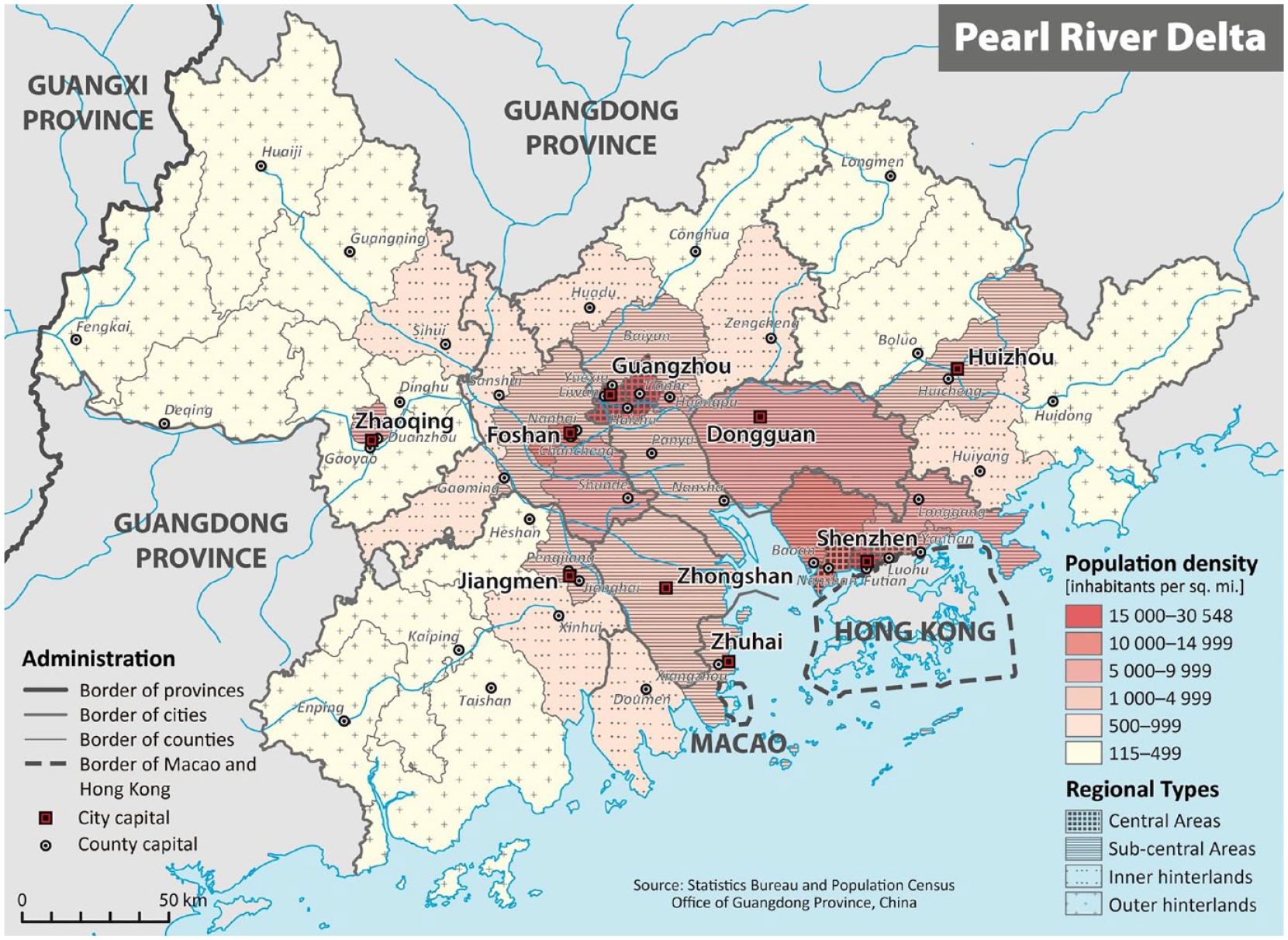
The research area: spatial classifications of the PRD and regional population density in 2020.
Central areas (RT1): the centre of the two megacities – Guangzhou and Shenzhen – in the PRD region, including four districts (Yuexiu, Liwan, Tianhe and Haizhu) in Guangzhou and three districts (Futian, Luohu and Nanshan) in Shenzhen in which the population density exceeded 10,000 per sq. mi. in 2020.
Sub-central areas (RT2): the suburban areas of Guangzhou and Shenzhen (such as the Panyu and Baiyun districts of Guangzhou and the Yantian and Longgang districts of Shenzhen) and the central areas of other large and medium-sized cities (such as Dongguan, Foshan, Huizhou, Jiangmen and Zhaoqing).
Inner hinterlands (RT3): the suburban areas of large and medium-sized cities (other than Guangzhou and Shenzhen).
Outer hinterlands (RT4): counties that are dominated by the agricultural sector, with population densities between 115 and 499 people per sq. mi in 2020.
In summary, there have been structural changes in the distribution of occupations in the PRD over the past two decades (Figure 2). In terms of the absolute sizes of occupations (crosses in Figure 2), the central areas (RT1) experienced a slight decrease in the size and share of manufacturing occupations (blue crosses and columns), while the size and share of KIBS-related occupations (orange crosses and columns) doubled, indicating an industrial upgrading and preference for specialisations in these areas. The sub-central areas (RT2) attracted the largest number of employees in manufacturing and other services (blue and grey crosses) and also developed into favoured areas for KIBS-related occupations (orange crosses), employing more than three times the number of KIBS-related employees as the central areas in 2020. Furthermore, the spatial peripheralisation of manufacturing occupations became more pronounced in both the inner (RT3) and outer (RT4) hinterlands (blue crosses and columns).
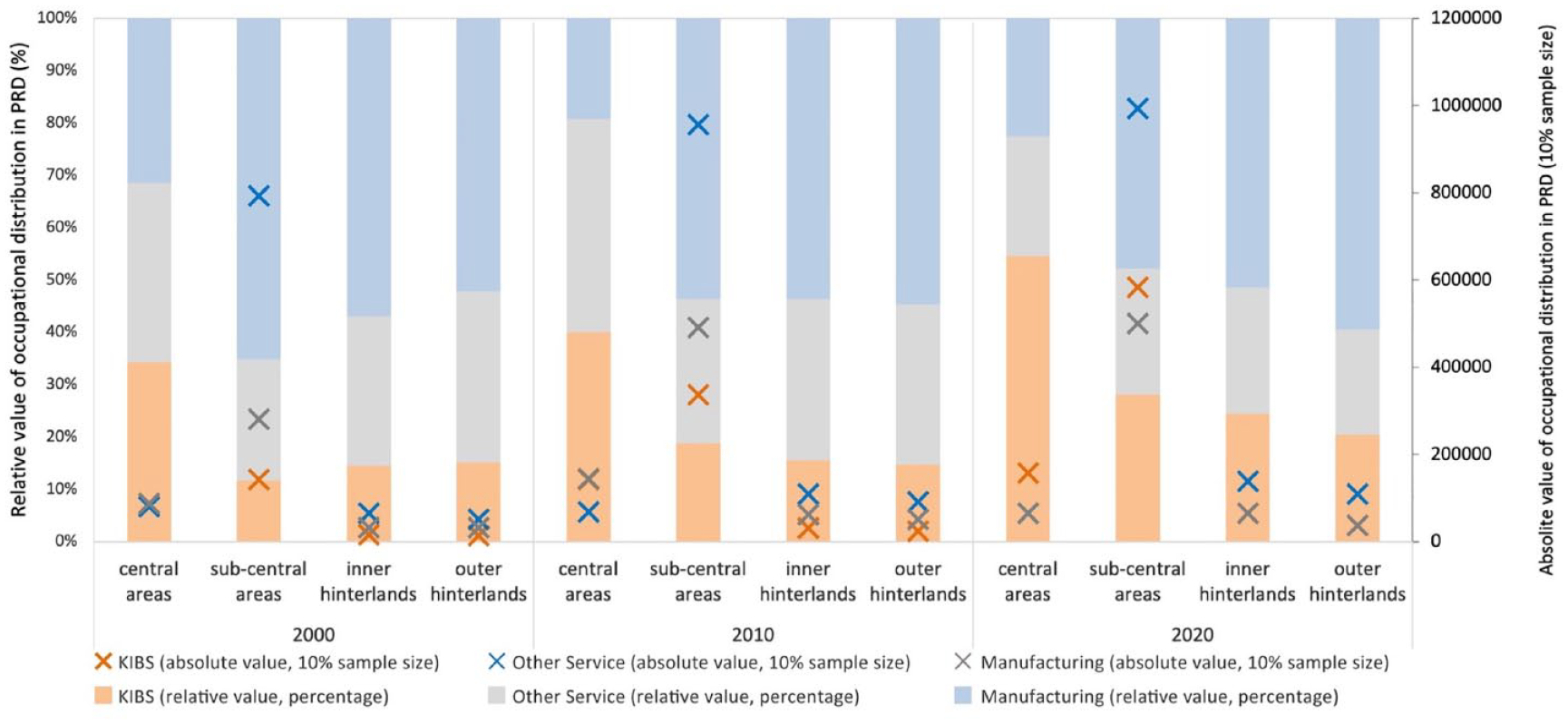
Dynamic occupation sizes and proportions in the four regional types in the PRD. Data for 2000, 2010 and 2020. Source: authors’ calculations, based on data from the Statistics Bureau and Population Census Office of Guangdong Province.
Notably, some of the PRD county borders have changed over the past two decades. We adjusted for these changes in spatial units to enable a comparison of the specialised patterns between 2000 and 2020. In addition, due to institutional differences and non-comparable census data between the PRD area in mainland China and the two special administrative regions (Hong Kong and Macao) (borders shown with a dashed line in Figure 1), we excluded these two regions from our analysis.
Methodology and data
Methodology
This study is a continuation of a previous study (Feng et al., 2020) that used principal component analysis (PCA) to analyse employee engagement in a functionally changing PRD between 2000 and 2010. To ensure the results of the current study were comparable to previous findings, we used the same approach to analyse the period 2000–2020.
Of note, the current study is based on a large dataset (i.e. 35 occupations and 45 spatial units for the three reference years of interest: 2000, 2010, and 2020). PCA can be used to identify structures in data; rather than classifying individual occupations and then examining the concentrations of a broad category of occupations, PCA can identify nuanced patterns of interrelating functions and highlight the shifting positions of cities and regions in the PRD’s city system (Feng et al., 2020: 168). This approach also accords with the present research objective to study the dynamics of suburbanisation and trends in functional specialisation in the PRD through detailed occupational data.
In addition, we examined the ‘change of importance’ (cf. Growe, 2016) in each county in the dynamic PRD, with 35 change importance (CI) values calculated for each county. The average of the z-standardised values was 0, with standard deviations of 1 and −1. The z-standardised change in importance can, therefore, be interpreted as follows:
CI values of between −1 and 1 indicate a small change.
CI values of between −2 and −1 and between 1 and 2 indicate a medium-sized change.
CI values of >2 or < −2 indicate an exceptional change (in statistical terms).
Data and updates from the previous study
Occupational county-level datasets for the whole of the PRD region for 2000, 2010 and 2020 were analysed and compared. The delineation of the counties enabled a distinction to be made between the core cities and their hinterlands, making this data suitable for studying specialisations within the sMCR. The datasets were provided by the SBRCO of Guangdong Province. Aggregated numbers of employees in different occupations were determined by using a sample of 10% of all residents aged over 15 years. 2 Given the significant economic transformation in China in recent years and the growth of new occupations in emerging industries, we combined occupations using 2015 occupational codes (rather than 1999 codes used in the previous study), including manufacturing and service-related occupations (code: GB/T 6565-2015, Chinese Standardisation Administration). As our focus is on manufacturing and service-related occupations, agricultural occupations were excluded.
Before applying a dynamic PCA to the CI values, a structural PCA from the previous study (Feng et al., 2020: 169) was updated based on the more recent (2015) occupational codes to interpret the results of the dynamic analysis using the same method. This analysis provided a basis for verifying whether above-average or below-average changes in the different professions in areas correlated throughout the PRD region (Table 1).
Comparison of the numbers of employees by occupation in the PRD in 2000, 2010 and 2020.
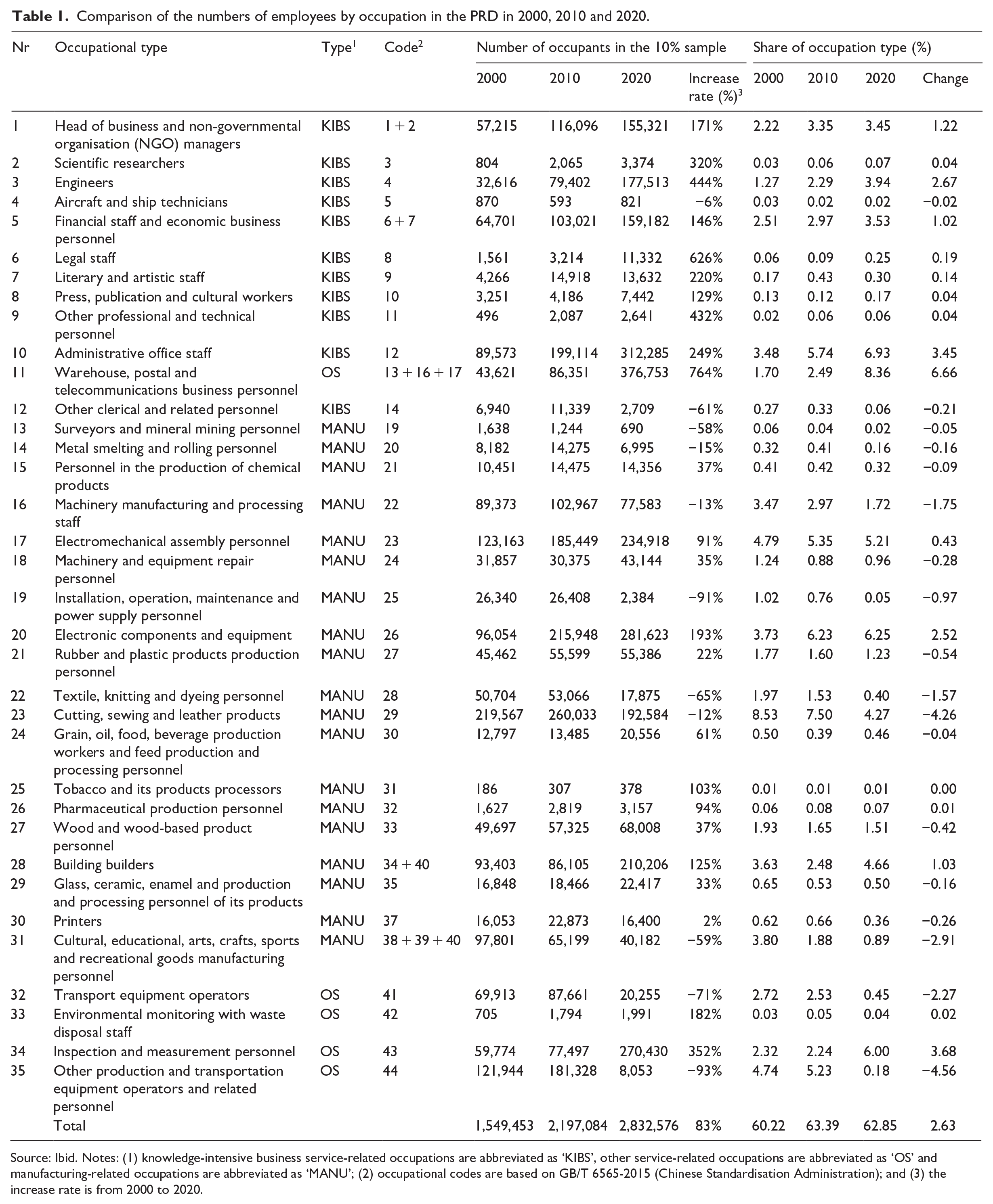
Source: Ibid. Notes: (1) knowledge-intensive business service-related occupations are abbreviated as ‘KIBS’, other service-related occupations are abbreviated as ‘OS’ and manufacturing-related occupations are abbreviated as ‘MANU’; (2) occupational codes are based on GB/T 6565-2015 (Chinese Standardisation Administration); and (3) the increase rate is from 2000 to 2020.
Results for 2000 using the new calculation
As a first step, the PCA previously performed for all occupations in 2000 was recalculated using the new occupational codes. This identified two components (factors) that represented approximately 76% of the variance (Appendix 1). Figure 3 shows the geographical distribution of positive scores for two distinct functional patterns of economic activity: manufacturing and KIBS.
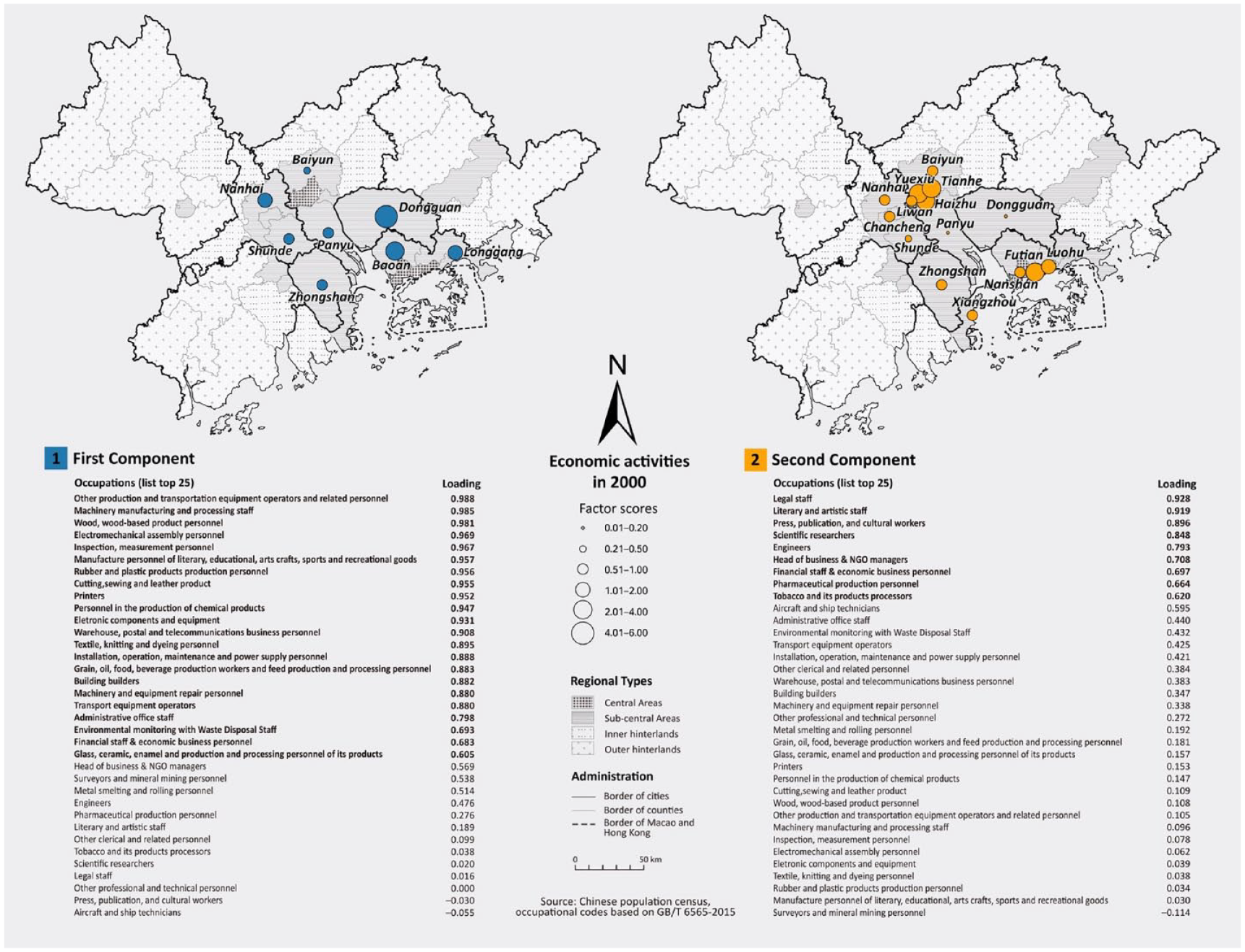
Composition and spatial patterns of the two main components of occupations in 2000 identified by the PCA.
The first component represented the mainly blue-collar occupations, which had a strong concentration in the city of Dongguan – China’s manufacturing centre (and a global centre) for furniture and small household appliances. Sub-central areas, including the Bao’an and Longgang districts of Shenzhen city, also had high values for manufacturing occupations due to their spatial closeness to investors in Hong Kong. Other sub-central areas, such as Nanhai, Shunde and Zhongshan, located outside the two core cities, also had relatively high scores for manufacturing professions. This confirmed the process of rural industrialisation and rural urbanisation in the PRD at the end of the 20th century due in part to low land prices and abundant immigrant labour in these sub-central areas (Feng et al., 2022; Yeh et al., 2017).
The second component represented mainly white-collar professions, except occupations in ‘pharmaceutical production’ and ‘tobacco and its products processing’. 3 Unsurprisingly, the central areas of Guangzhou and Shenzhen – the two economic and administrative cores in the PRD – were the main locations for skilled, knowledge-intensive and often well-paid occupations in 2000. While second-tier urban centres in sub-central areas also had concentrations of KIBS-related occupations, their scores were much lower than those of the central areas. Overall, the observed economic activities in 2000 were mainly concentrated in (sub)central areas of the PRD (i.e. in comparison, the vast hinterland was relatively undeveloped). Moreover, each functional pattern manifested different spatial preferences, indicating a spatial specialisation with manufacturing in more sub-central areas and KIBS-related occupations in central areas in the PRD in 2000.
Results
Changes in spatial and functional patterns between 2000 and 2020
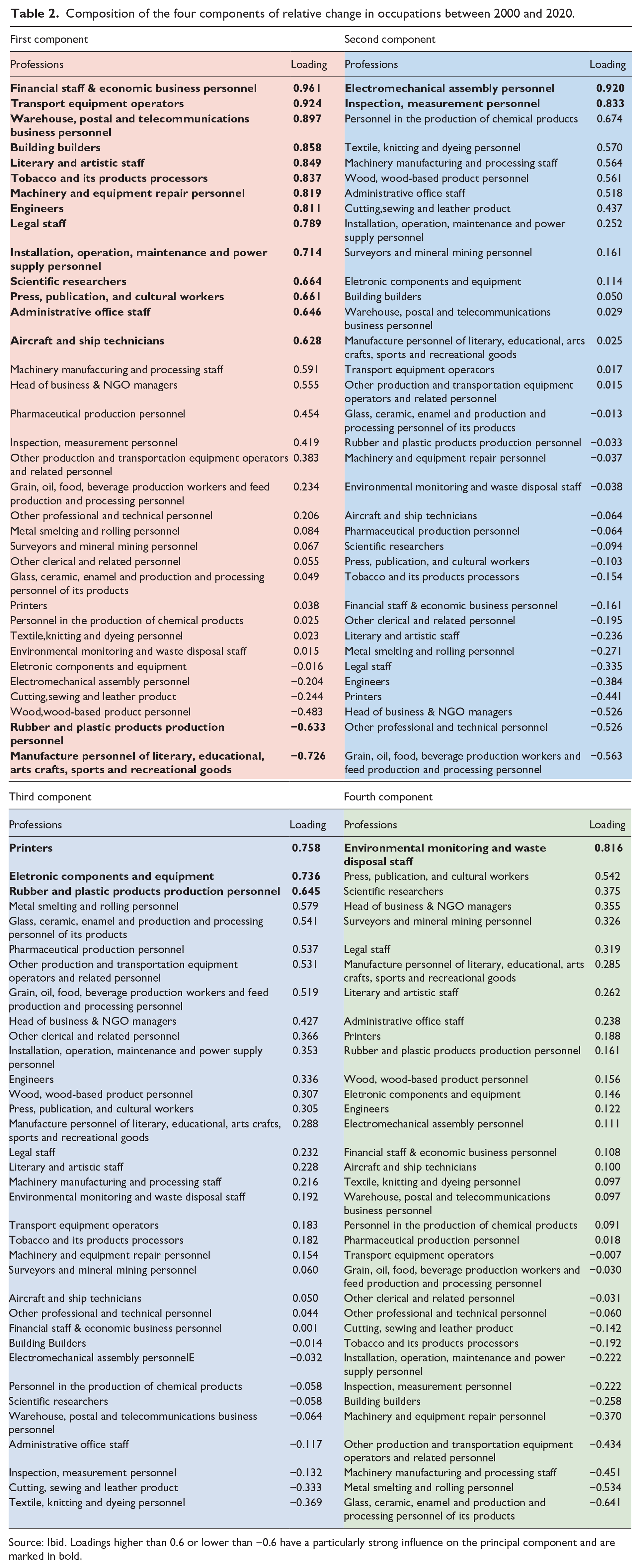
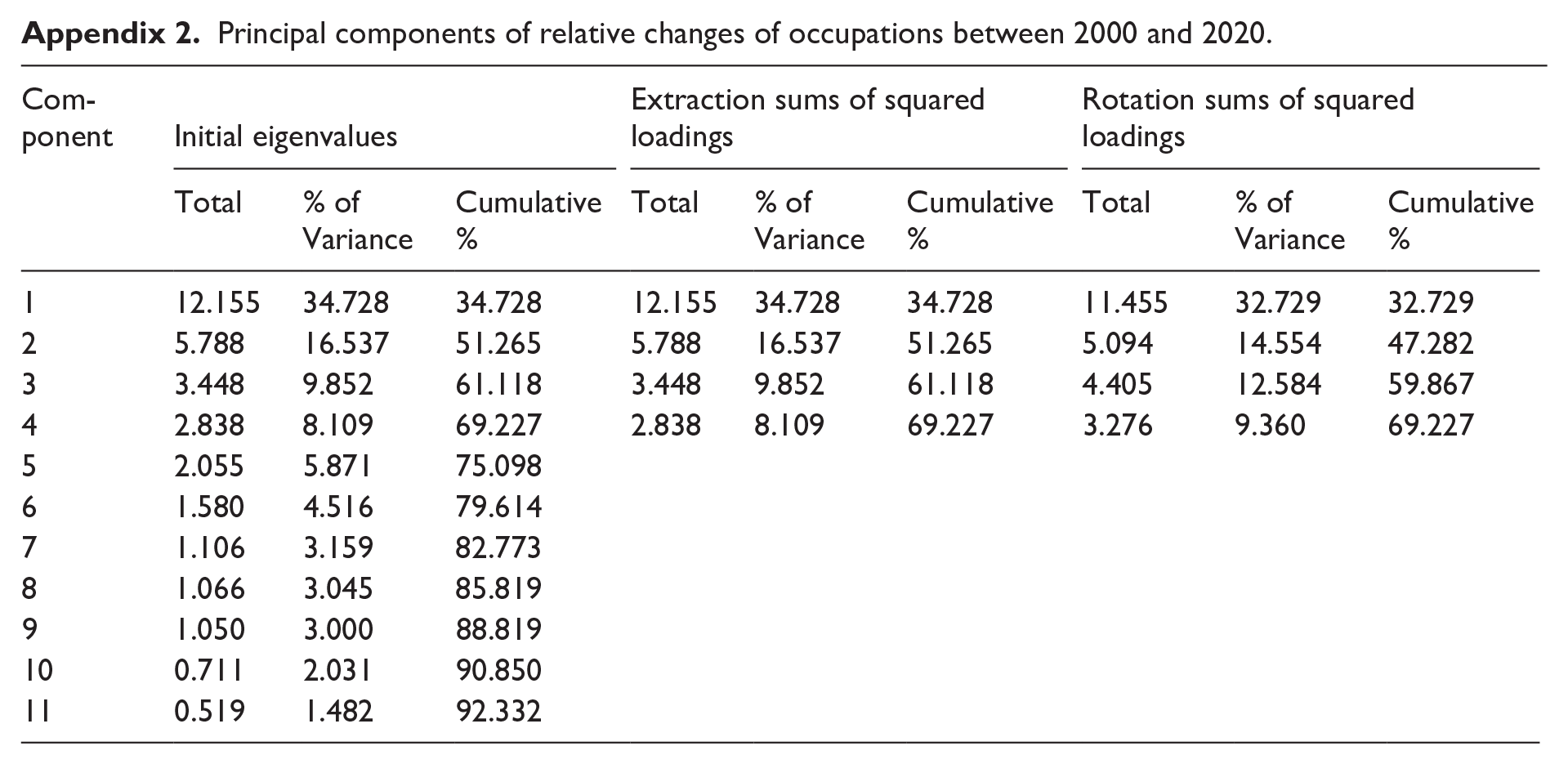
The PCA was performed on the CI values to examine the relative changes in the main occupations in the PRD between 2000 and 2020. Four components (factors) were identified (Table 2) that represented approximately 69% of the variance (Appendix 2), which showed an uneven evolution in the observed occupations in all spatial units (Figure 4).
Composition of the four components of relative change in occupations between 2000 and 2020.
Source: Ibid. Loadings higher than 0.6 or lower than −0.6 have a particularly strong influence on the principal component and are marked in bold.
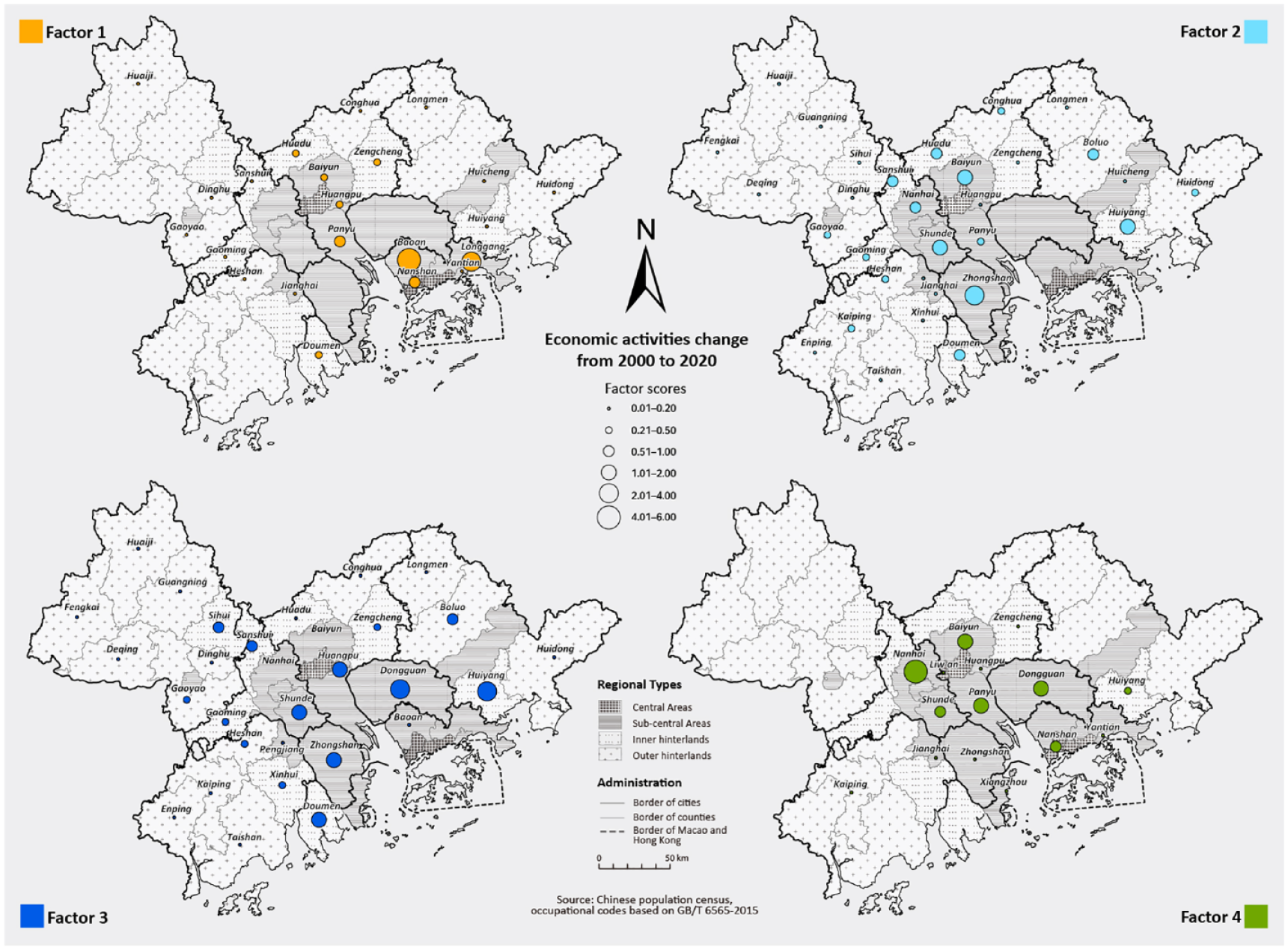
Spatial patterns of the four components of relative change in occupations between 2000 and 2020.
The first component in Table 2 had a positive correlation with a positive change in 14 types of occupations and briefly showed a mixture of two types of profession: KIBS (e.g. financial, cultural and technical occupations) and personnel providing public services for building or maintaining infrastructure (e.g. employees in public transportation, warehouse, postal and telecommunications business personnel, and builders); conversely, this component also had a positive correlation with a negative change in occupations in labour-intensive industries (e.g. manufacture of literary, educational, arts and crafts, sports and recreational goods) and raw/artificial materials-based industries (e.g. production of rubber and plastic products). Figure 4 shows the counties/districts in the PRD with factor scores of >0.01 for each of the four components. The changes to the first component between 2000 and 2020 are most pronounced in the sub-central areas of the PRD’s two cores – Shenzhen and Guangzhou – reflecting tertiarisation trends (industrial upgrading from manufacturing to service-related occupations). Meanwhile, the rapid growth in infrastructure (e.g. rail, electricity, housing, etc.) and, particularly, public services provided by monopoly state-owned enterprises expanded to these peripheral areas, supporting these sub-centres to develop into attractive places for investors in knowledge-intensive sectors. Of note, the factor scores were much higher in the suburbs of Shenzhen than in the suburbs of Guangzhou, particularly in the Bao’an and Longgang districts. The geographic proximity of Hong Kong is more likely to provide opportunities for the development of KIBS-related occupations in Shenzhen, thus differentiating this area from other central areas in terms of functional specialisation.
The second and third components in Table 2 had a positive correlation with a positive change in manufacturing and related professions. The second component is headed by personnel employed in relatively highly-skilled manufacturing activities (such as electromechanical assembly, inspection and management, and the production of chemical products), while the third component is led by employees in more labour-intensive or materials-based industries (e.g. printing, electronic components and equipment, production of rubber and plastic products, etc.). Meanwhile, the third and fourth components in Figure 4 reflect positive changes in the importance of manufacturing-related activities in the peripheral areas. Due to rising land and labour costs and more stringent environmental regulations in the megacities of Guangzhou and Shenzhen, their central districts and many of their sub-central areas are no longer favourable for extensive manufacturing activities. Except sub-central areas and traditional manufacturing cities/counties (e.g. Dongguan, Zhongshan and Shunde), which grew in importance for manufacturing industries during the 2000–2010 period (Feng et al., 2020), emerging hubs in the inner hinterlands (e.g. Huiyang and Doumen) are particularly notable in this 20-year perspective, revealing a process of upgrading and peripheralisation in manufacturing activities throughout the PRD, which has also been guided by the region’s spatial development strategies and industrial policies.
The fourth component had a positive correlation with positive relative changes in occupations related to environmental monitoring and waste disposal; conversely, this component had a positive correlation with a negative relative change in occupations in glass, ceramic, enamel production and processing personnel of its products (Table 2). The fourth component highlights the growth in occupations in areas spatially encircling Guangzhou, the only capital city within the PRD. It appears that areas closer to the provincial administrative centre may experience more stringent environmental regulation, suggesting a geographic attenuation effect of the government’s environmental regulation. Furthermore, the areas where the importance of environmental monitoring and waste disposal activities has grown coincide with areas that have not shown the same relative growth in intensive manufacturing activities over the past two decades. These areas mostly represent traditional industrial bases (e.g. Dongguan and Nanshan in the second component and Nanhai, Baiyun and Panyu in the third component). Some of these areas have attracted higher-paid environmental-related occupations and experienced positive relative changes in KIBS-related activities. Therefore, environmental-related activities have contributed to industrial upgrading in central and sub-central areas, leading to the peripheralisation of manufacturing activities and providing new metropolitan functions to some of the second-tier and third-tier cities/counties. These findings complement the existing understanding of tertiarisation and manufacturing peripheralisation in the PRD.
Overall, in comparison to the spatial patterns identified in 2000 (Figure 3), the relative changes in economic activities between 2000 and 2020 have contributed to the evolution of the PRD from a development pattern dominated by a small number of cities to a polycentric sMCR with more widely distributed socioeconomic activities and a more specialised division of labour among cities. Importantly, the two-core spatial structure in the PRD contrasts with developments in other urbanised areas. Sub-central areas within, rather than outside, the administrative boundaries of Shenzhen and Guangzhou are more likely to experience tertiarisation trends and gain importance as locations for KIBS-related activities. This decentralisation needs to be understood as a limited regionalisation process, which has hardly overcome the competition between the core cities and lower-tier cities: the jurisdictional boundaries that impact tertiarisation trends still exist in this cross-border sMCR.
Suburbanisation and the development of peripheral areas
Further analysis was undertaken to compare the percentage changes in each county’s share of certain occupations (as a share of the whole PRD region) during the two 10-year reference periods (2000–2010 and 2010–2020). This analysis provided a better understanding of the process of functional specialisation in the PRD and the changes in economic activities related to three types of occupations: KIBs, manufacturing and environmental.
Changes in knowledge-intensive business services occupations: oriented toward international markets (near Hong Kong)
Figure 5 shows a concentrated pattern of KIBS-related activity changes along the Shenzhen-Guangzhou axis. First, most of the central areas of these two core cities experienced negative percentage changes in KIBS-related occupations, particularly between 2010 and 2020. Second, a sustained increase in the KIBS-related share occurred in sub-central areas of Shenzhen (e.g. the Bao’an and Longgang districts) between 2000 and 2020; however, this was not always the case in the Guangzhou suburbs. During the 2010–2020 period, similar growth occurred in the southeastern suburbs of Guangzhou – near the coast and towards the markets of Shenzhen and Hong Kong – while the opposite trend occurred in the inland suburbs in the northwest. In addition, the percentage changes in KIBS-related professions were negative in most sub-central areas outside Shenzhen and Guangzhou, particularly during the 2010–2020 period. Following the 2008 global financial crisis, the suburbanisation process in knowledge-intensive activities appeared to be bounded by the ‘fences’ of the administrative divisions of the major cities. This hindered the economic upgrading of sub-central cities/counties when competing with the first-tier cities, supporting our findings in Figure 4 (Factor 1).
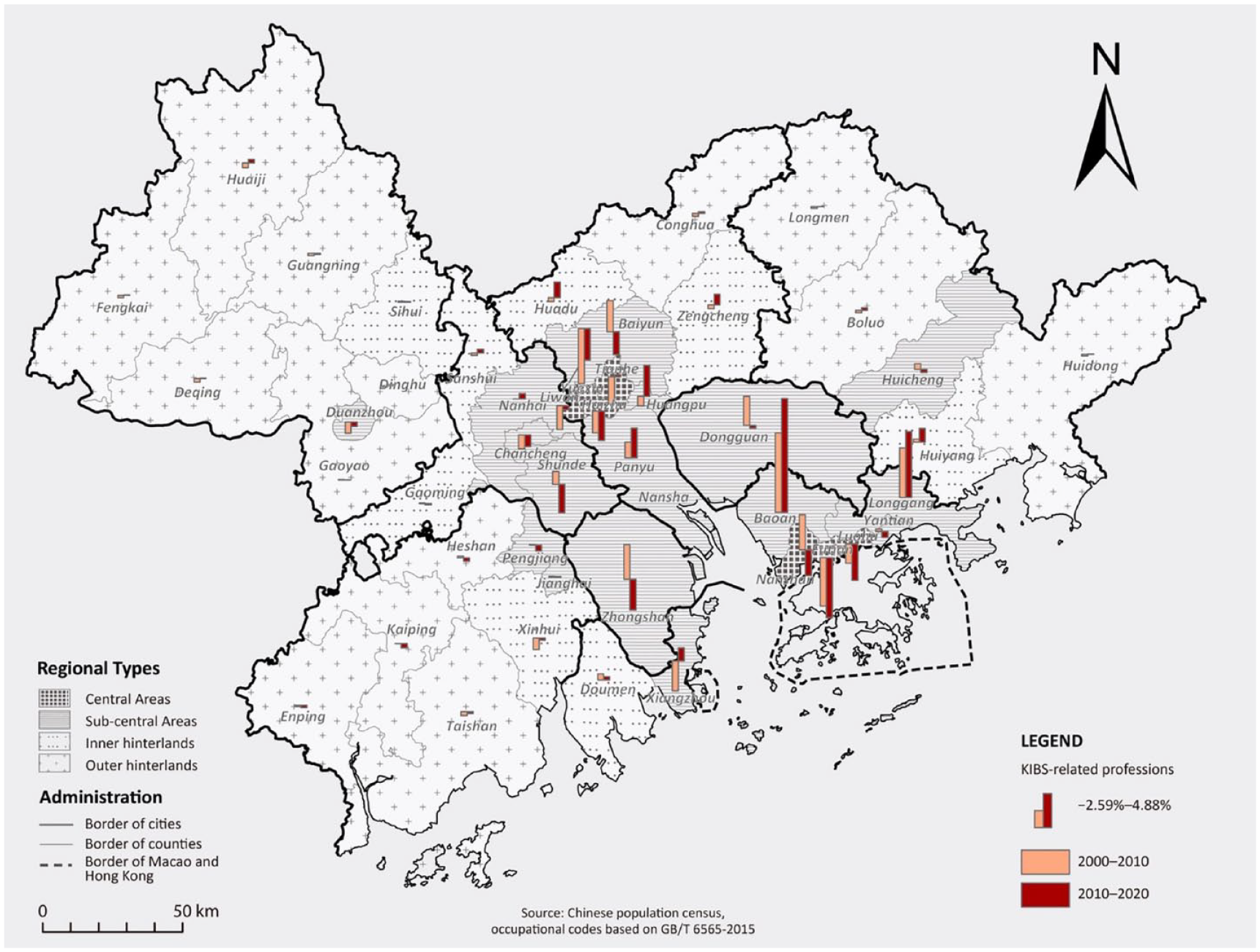
Percentage change in each county’s share of the PRD total of the KIBS-related occupations in the 2000–2010 and 2010–2020 periods.
Changes in manufacturing-related occupations: oriented toward inland and international markets
Figure 6 shows the diffusion of manufacturing-related activities from the metropolitan cores to peripheral areas between 2000 and 2020. The percentage change in manufacturing-related occupations in central areas was mainly negative during the 2000–2010 period, while it fluctuated positively (2000–2010) and then negatively (2010–2020) in sub-central areas. Trends in the inner hinterlands were similar to – but more moderate than – those in the sub-central areas, while the outer hinterlands maintained positive increases. This illustrates the spatial sequence of industrialisation – first central and then peripheral – over time at the sMCR scale.
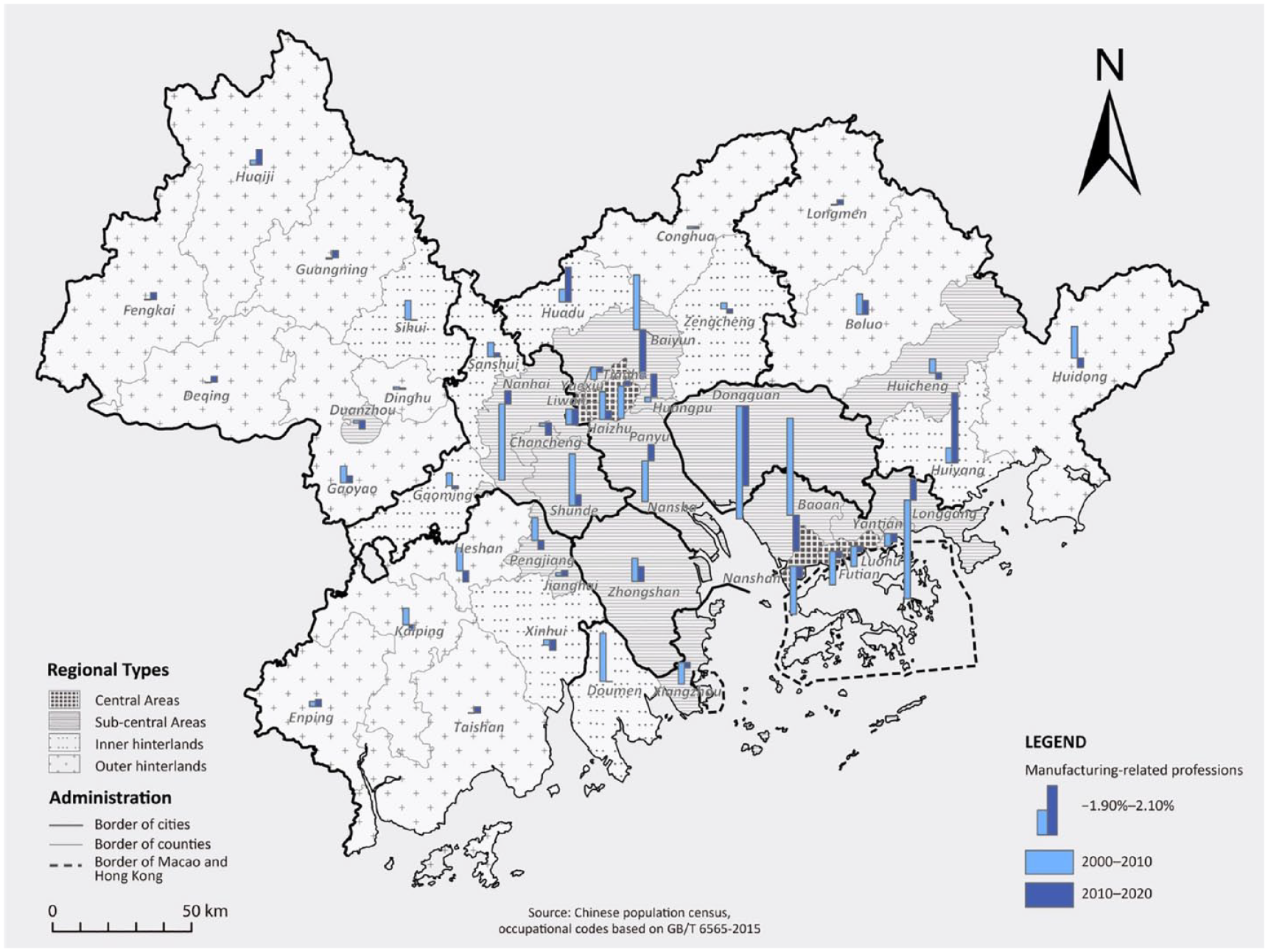
Percentage change in each county’s share of the PRD total of the manufacturing-related occupations in the 2000–2010 and 2010–2020 periods.
In these processes, some peripheral districts/counties successively experienced outstanding positive changes. For example, Huiyang District in the city of Huizhou in the PRD’s eastern hinterland supported its manufacturing function by taking over industrial enterprises or subsidiary factories that had relocated from the neighbouring megacities. In 2009, the leaders of three cities – Shenzhen, Dongguan and Huizhou – signed the joint ‘Integrated Planning Cooperation Agreement’ to foster collaboration, including on infrastructure and industrial development, urban and rural planning, environmental protection, and public services. A series of follow-up initiatives strongly supported the districts in Huizhou to leverage their geographical locations to link into the industrial upgrading process of the core cities. In contrast to cities such as Huiyang, which have relied upon intra-regional industrial transfers for growth, export-oriented manufacturing centres (e.g. Dongguan) have experienced significant negative relative change, as demonstrated by their industrial structural transformation following the 2008 financial crisis.
Changes in environmental-related occupations: oriented toward peripheral areas surrounding the administrative cores
Sub-central areas, such as the Nanhai and Shunde districts in the city of Foshan, the city of Dongguan and the suburban districts of Guangzhou and Shenzhen, have experienced the most significant changes in environmental-related occupations since 2000 (Figure 7). This reflects negative relative changes in occupations related to the production and processing of glass, ceramics and enamel products (Factor 4 in Figure 4). These manufacturing activities often require high-temperature firing and consume large amounts of coal and fuel oil, producing substantial emissions of sulphur dioxide, nitrogen oxides and dust, which, if not appropriately managed, can threaten air quality and human health. However, these industries have long been a pillar for many of the important manufacturing cities in the PRD. For example, the city of Foshan introduced foreign production lines in the early 1980s and developed into one of China’s largest producers of building ceramics. After 2000, due to production expansion, rising costs and new local environmental regulations, Foshan’s ceramics industry gradually moved production capacity into the hinterlands or outside the PRD (L. Liu et al., 2012). Meanwhile, those cities that actively accepted the relocation of industries – and, in some cases, pollution – from Foshan have experienced significantly faster economic growth.
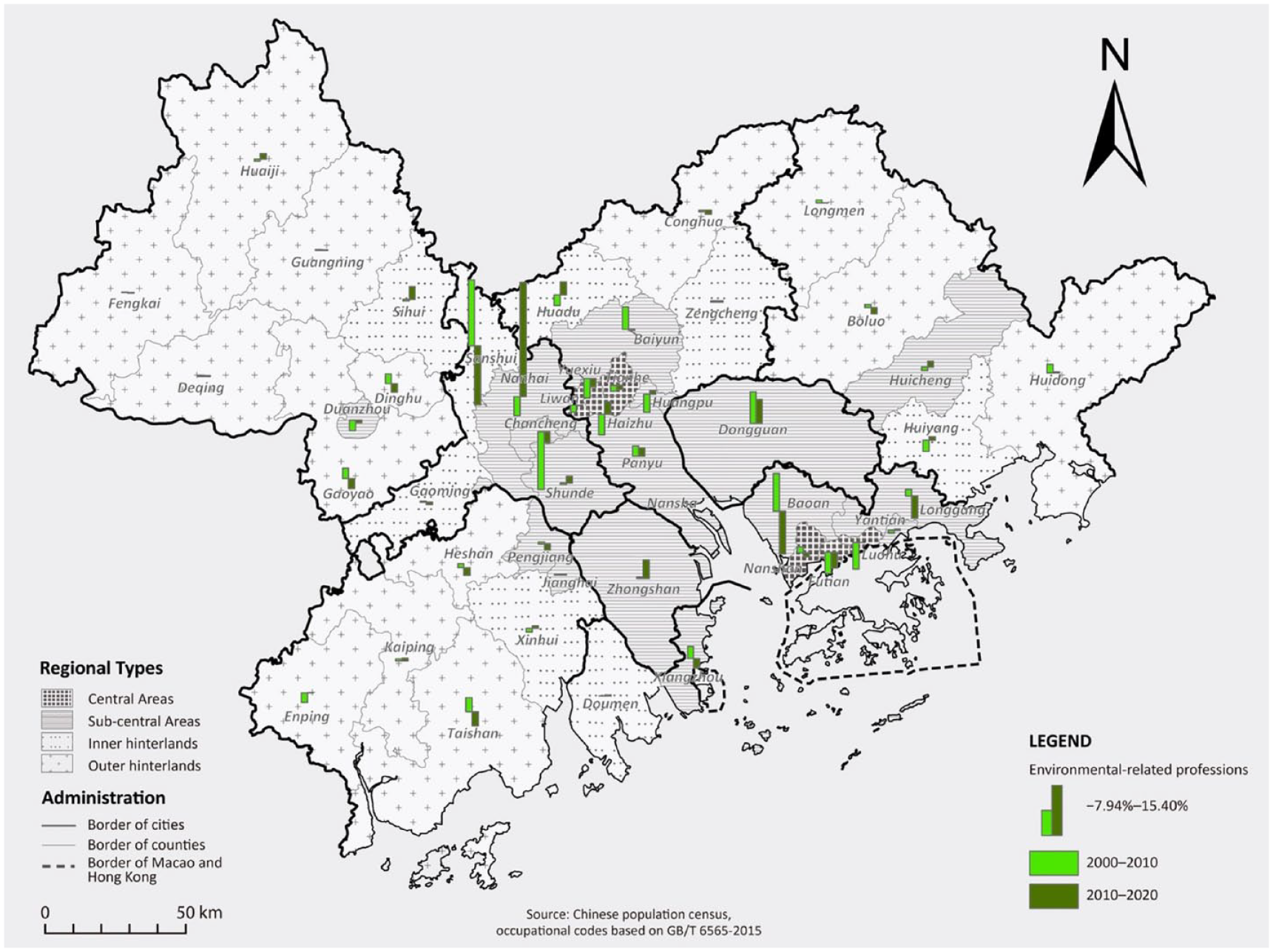
Percentage change in each county’s share of the PRD total of the environmental-related occupations in the 2000–2010 and 2010–2020 periods.
Therefore, we can infer that relatively developed central areas underwent a period of environmental regulation during the first phase (2000–2010) and have now entered a phase of more stable growth/decline in environmental-related activities. However, sub-central areas outside the core cities – particularly the traditional industrial cities – still lack comprehensive environmental governance. Therefore, it is likely that environmental-related occupations will concentrate further in emerging hinterland centres alongside large-scale manufacturing.
Functional specialisation
To measure a region’s industrial specialisation relative to the larger metropolitan area, we calculated the location quotient (LQ) of the shares of the four RTs (central areas, sub-central areas, inner hinterlands and outer hinterlands) relative to the PRD total for both KIBS-related and manufacturing occupations (Table 3). For KIBS-related occupations, the LQ of the central areas declined from 2.21 in 2000 to 1.82 in 2020. Conversely, the LQ of the sub-central areas increased from 0.75 to 0.94 between 2000 and 2020, while an increase also occurred in the inner hinterlands in the 2010–2020 period. In contrast, the outer hinterlands have experienced a decline in KIBS-related occupations throughout the specialisation process. For manufacturing-related occupations, the LQ for the central areas has fluctuated over the past two decades, first declining from 0.54 to 0.39 (2000–2010) and then increasing to 0.49 (2010–2020). The LQ for the sub-central areas declined in both decades, while the LQ for both the inner and outer hinterlands showed significant growth – particularly the outer hinterlands, where the LQ increased from 0.89 in 2000 to 1.28 in 2020. Overall, the functional specialisation at the regional level can be observed through the socioeconomic dynamics of KIBS-related and manufacturing-related occupations.
Location quotient of the four regional types in the PRD.
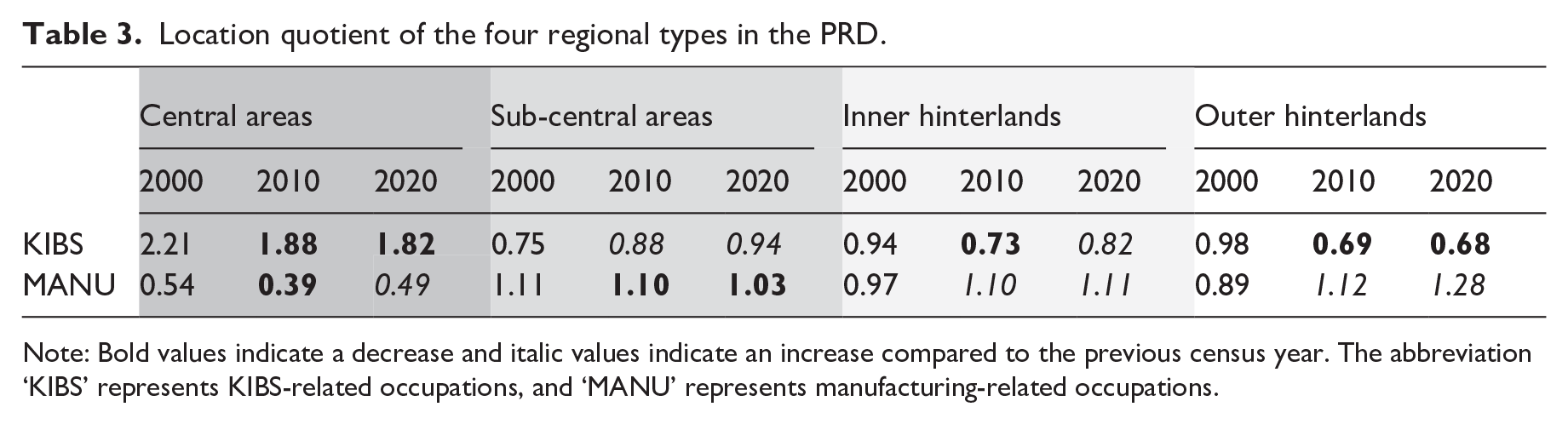
Note: Bold values indicate a decrease and italic values indicate an increase compared to the previous census year. The abbreviation ‘KIBS’ represents KIBS-related occupations, and ‘MANU’ represents manufacturing-related occupations.
Conclusions and discussion
This analysis considers the suburbanisation and functional specialisation of the PRD region. First, the most notable transformation has occurred in former manufacturing-focused sub-central areas, which have gained increasing importance and functional specialisation as locations of KIBS-related activities (particularly the suburbs of Shenzhen, which are oriented to Hong Kong and international markets); there is potential that this trend will extend to the inner hinterlands in the future. Second, peripheral areas rather than central areas have become the favoured locations for manufacturing-related industries during the period to 2020, with a certain amount of functional specialisation in these areas. Lower costs for key resources, such as land, labour and materials, and less stringent environmental regulations in the hinterlands have attracted industries seeking lower production costs. Third, peripheral areas can enhance their functions and shape new socioeconomic structures by clustering emerging occupations, such as environmental management, so that they complement the metropolitan functional pattern, thus encouraging industrial upgrading.
Overall, increased tertiarisation can be seen in Chinese sMCRs – as has occurred in Western urban regions. Improved labour productivity (and an improved education system) and better technology are key factors in tertiarisation, supporting higher production of industrial and agricultural products. Increased productivity leads to higher incomes, which are then spent on services, producing similar socioeconomic structural changes within sMCRs worldwide. However, under different legislative systems, planning cultures, developmental priorities and non-market forces (e.g. multi-level governments) can spatially steer or regulate the functional distribution of industries to meet the demands for new functional spaces and infrastructures, forming distinct spatial systems within individual sMCRs. Therefore, the suburbanisation and functional specialisation in an sMCR are intertwined with global socioeconomic processes and regional planning processes (Jonas and Moisio, 2018; Yan et al., 2024), which require more detailed investigation.
The process of tertiarisation, together with the rapid delivery of urban infrastructure and public services, appears to have been confined to the administrative boundaries of core cities in the PRD in the past decade. Within metropolitan areas, intracity competition and administrative barriers to public investment have re-emerged in an external environment where the pace of globalisation has slowed and international investment has waned due to a rise in trade protectionism worldwide. This environment is not conducive to overall industrial upgrading and the formation of a functional polycentric MCR. In the past decade, cross-jurisdictional planning, intercity cooperation and transregional infrastructure construction have been promoted in China at the national and local levels to eliminate the fragmentation of administrative boundaries and the ‘not in my backyard’ effect (F. Wu, 2016; Xu and Yeh, 2013; Zhang et al., 2021); this has facilitated greater flows of key factors within the expected integrated, competitive and balanced sMCRs.
Moreover, dynamic developments in areas surrounding core cities lead to particular challenges for regional planning and regional governance. The changed socioeconomic structures in the core cities and their surrounding areas alter requirements for infrastructure, the location and facilities of residential and commercial areas and the transport connections between them. These requirements must be managed at the regional level as these new developments extend far into the region, and the socioeconomic transformation must be managed alongside the environmental transformation (Yan and Chen, 2024). Findings from this study contribute to regional planning and governance and will support the identification of areas in sMCRs that are already affected by socioeconomic transformation. There are challenges for governance structures in managing the various processes across administrative boundaries; in addition to city boundaries, the focus is also on developments across provincial borders (such as in the Yangtze River Delta) (Yan and Growe, 2022). Under a strong governmental context, there is a much higher degree of involvement from upper-tier governments. As such, this study reflects other scholars involved in rethinking the importance of government and the rescaling of statehood in the development of sMCRs in China (Evers and de Vries, 2013; Y. Li and Wu, 2012).
In this study, the PCA analysis has interpreted the mixture of functional structuring and global metropolisation and the spatial results of regional practices embedded in certain geopolitical contexts and planning discourse at the same time. Therefore, we consider this paper to be a fundamental source for understanding the dynamics of functional patterns in these sMCRs and call for further research on the mechanisms promoting integrated sMCRs, such as regional policies (cf. F. Wu, 2016; Y. Li and Jonas, 2019), innovation systems (cf. Cooke, 2001, 2007; Yan et al., 2024), and the rescaling of governance perspectives (cf. Brenner, 2003; Gualini, 2006). This paper also provides another important contribution by examining a broader and more recent timeframe when analysing the empirical development of a polycentric sMCR in China. The study incorporates a dataset including the latest Chinese census in 2020 and not only takes account of the opening up of China’s services market following its accession to the World Trade Organisation in 2001 and the global financial crisis in 2008 but, more importantly, the 10th to 13th Five-Year Plan (2001–2020) phase of China’s robust economic growth.
There are certain limitations with the static occupational distribution database used in this study. First, the ‘commuting impact’ was not captured through relational data. Second, we lacked in-depth qualitative analyses from direct interviews with key representatives to further investigate the mechanisms – the institutional and market factors – behind specific changes in the importance of different occupational components. Third, it is essential to consider the impact of the two special administrative regions – Hong Kong and Macau – on the economic structural changes in the PRDs; however, we were unable to include them in this study due to administrative differences and data access limitations. Moreover, in 2019, the PRD region was formally identified as the ‘Guangdong-Hong Kong-Macao Greater Bay Area’ in national policy. 4 Hence, more research is needed to explore the issues of metropolisation, suburbanisation and functional specialisation within this spatial context.
Footnotes
Appendix
Principal components of relative changes of occupations between 2000 and 2020.
| Com- |
Initial eigenvalues | Extraction sums of squared loadings | Rotation sums of squared loadings | ||||||
|---|---|---|---|---|---|---|---|---|---|
| Total | % of Variance | Cumulative % | Total | % of Variance | Cumulative % | Total | % of Variance | Cumulative % | |
| 1 | 12.155 | 34.728 | 34.728 | 12.155 | 34.728 | 34.728 | 11.455 | 32.729 | 32.729 |
| 2 | 5.788 | 16.537 | 51.265 | 5.788 | 16.537 | 51.265 | 5.094 | 14.554 | 47.282 |
| 3 | 3.448 | 9.852 | 61.118 | 3.448 | 9.852 | 61.118 | 4.405 | 12.584 | 59.867 |
| 4 | 2.838 | 8.109 | 69.227 | 2.838 | 8.109 | 69.227 | 3.276 | 9.360 | 69.227 |
| 5 | 2.055 | 5.871 | 75.098 | ||||||
| 6 | 1.580 | 4.516 | 79.614 | ||||||
| 7 | 1.106 | 3.159 | 82.773 | ||||||
| 8 | 1.066 | 3.045 | 85.819 | ||||||
| 9 | 1.050 | 3.000 | 88.819 | ||||||
| 10 | 0.711 | 2.031 | 90.850 | ||||||
| 11 | 0.519 | 1.482 | 92.332 | ||||||
Acknowledgements
The authors would like to thank the anonymous reviewers for their helpful and constructive comments.
Author contributions
Declaration of conflicting interests
The author(s) declared no potential conflicts of interest with respect to the research, authorship, and/or publication of this article.
Funding
This research was funded by the Chinese Scholarship Council (CSC) [grant number 202006260018] and Zentralen Forschungsfonds of the University of Kassel (ZFF Fund 2955).
Ethical considerations
This article does not contain any studies with human or animal participants.
Consent to participate
Not applicable.
Consent for publication
Not applicable.
Grant number
CSC 202006260018 and ZFF Fund 2955

Data availability
The data used in the paper is publicly available by the Statistics Bureau and Population Census Office (SBRCO) of Guangdong Province, China.
1.
Data from the 2021 ‘City Statistics Yearbook’ for cities in Guangdong Province.
2.
The Chinese census contains a short survey (requesting basic information, e.g. gender and age) or a long-table survey (containing detailed information about occupations, family status and living conditions). Due to time and cost savings when conducting surveys of China’s large population, the central government uses a 10% sample for long-table surveys in each province. Surveyors randomly choose 10% of households in each residential community (cf. Feng et al., 2020).
3.
The category ‘pharmaceutical production’ can also include some skilled and knowledgeable producers; the total number of occupations in the category ‘tobacco and its products processing’ is very small and it may be coincidental to include it in this component.
4.
In 2019, the Chinese central government issued the Outline of the Plan for the Development of the Greater Bay Area of Guangdong, Hong Kong and Macao (the Outline), which is a programmatic document guiding the co-operation and development of the Greater Bay Area.