



Abstract
Cities worldwide are facing increasing disturbances due to the long-lasting COVID-19 pandemic, the unpredictable climate change, and the intensifying geopolitical clashes. The uncertainties associated with the future drive a backlash against contemporary planning practices that center on growth-oriented agenda and placemaking to survive neoliberal inter-city competitions. A noticeable paradigm shift towards micro-scale and human-centric planning practices has gained traction. The 15-minute city model (FMC), which was proposed by Carlos Moreno in 2016 and went viral after the pandemic, has become a prominent concept in steering future city development. Interestingly, China has also embarked on a transition from physical-oriented to human-centric planning, which is featured by the concept of the 15-minute life circle (FLC) and its planning guidelines first promulgated in Shanghai in 2016. While both concepts have thrived since then, few scholarly attempts have been made to advance the mutual learning process. This research aims to facilitate a dialogue between the two research communities, starting with a systematic literature review of the FMC. Using a bibliometric analysis, it maps the development and evolution of research on the FMC and identifies four key themes: sustainability, resilience, utopian city models, and technology. Based on the findings, the research discusses the complexity and current trends in the FMC literature. It compares the human-centric and chrono-urbanism planning principles in FMC and FLC cases, highlighting the differences in origins, priorities, and planning principles. The study concludes with three directions for mutual learning: integrating resilient thinking, synthesizing theoretical development and practical accumulation, and adopting a new urban regeneration perspective.
Introduction
Cities worldwide are facing multifarious risks, including the long-lasting socio-economic consequences of the COVID-19 pandemic (the pandemic hereafter), unpredictable climate change and increasing extreme events, and systematic social and economic inequality, to name just a few. The pandemic, in particular, has recentered our attention on accessibility, walkability, equity, social encounters, green-blue infrastructures, and other dimensions of urban livability (Allam et al., 2022a). Specifically, studies show that the pandemic has disrupted urban transportation networks at all levels and in all modes (Serdar et al., 2022), restricted people’s mobility and accessibility to green spaces (D. Liu et al., 2022), incurred mental health issues and other health risks (Leal Filho et al., 2020), and, most importantly, exacerbated existing social inequity (Bowleg, 2020). A backlash against capitalistic and government-led development models has propelled the resurgence of human-centric design, planning, and development ideas. Against this backdrop, a concerted effort to tackle these issues and foster novel and responsive strategies for future cities is urgently needed. The idea of a 15-minute city (FMC), as a manifestation of “chrono-urbanism” and proximity-based planning (Guzman et al., 2024), has aroused the interests of international organizations, such as the C40 Cities, the Organization for Economic Co-operation and Development (OECD), UN-Habitat, and the World Health Organization, among which the C40 recommends the idea as a critical strategy for post-pandemic recovery (Moreno et al., 2021).
The FMC concept was originally proposed by Carlos Moreno in 2016 to address greenhouse gas emissions, following the Paris Climate Change Conference in 2015 (Khavarian-Garmsir, Sharifi, and Sadeghi, 2023). The implementation of this concept in the City of Paris, strongly promoted under the leadership of Mayor Anne Hidalgo, who included a 15-minute city plan in her re-election campaign, has resulted in considerable physical transformations in the city and led to the establishment of a car-free linear park on the right riverbank of the Seine in Paris and more than 1,000 kilometres of cycling routes (Gongadze and Maassen, 2023). The widely cited paper “Introducing the ‘15-Minute City’” (Moreno et al., 2021) has initiated a far-reaching scholarly effort to contribute and disseminate the concept. The FMC is thus championed by its proponents as a panacea for addressing long-distance commuting issues, reducing carbon emissions (Balletto et al., 2022), improving urban sustainability and livability (Allam et al., 2022a), enhancing economic resilience in local communities (Credit and Van Lieshout, 2021), and achieving Sustainable Development Goal 11 (Lobner et al., 2021), so as to facilitate a transition from development-oriented to human-centric planning.
However, the FMC’s conceptual appeal does not render it immune to criticism. The concept’s novelty has been questioned, with some critics dismissing it as “old wine in new bottles.” They argue that it represents not a paradigm shift, but rather a cyclical return to the classic “neighbourhood planning” frameworks, which originally emerged from the critiques of industrial cities (Kissfazekas, 2022). Casarin et al. (2023) harshly challenge the effectiveness of the FMC, arguing that “the 15-minute city would be implemented through de facto social mix actions at the neighbourhood level, which are insufficient to address the deeper structural issues that perpetuate spatial inequality and deprivation” (2015: 1). Moreover, the emphasis on physical proximity risks overlooking the social interactions at some places (D’Onofrio and Trusiani, 2022). Most importantly, as Ratti and Florida (2021) duly note, “urban life is about more than access to amenities” at your local communities, but “requires the broad expanse of entire cities and metro areas.” Stated differently, although FMC is conducive to creating liveable local environments, it may not serve the guiding principles at the city level.
While the FMC has received exponential attention, especially in light of the COVID-19 pandemic, similar ideas, termed “x-minute city” (Logan et al., 2022), actually predate the FMC, such as Portland’s 20-minute neighbourhoods (2010), Copenhagen’s 5-minute city (2016), and Shanghai’s 15-minute life circle (2016). These ideas indicate the heterogeneity of cities’ efforts in revamping their spatial forms to align with urban sustainability and resilient development. China’s path of embracing the planning principle of the 15-minute life circle (FLC) has much to offer to the international community since it is an endogenous work that parallels the progression of FMC studies. Moreover, the handling strategies against the pandemic in China such as grid governance and precise prevention (Y. Li et al., 2023; Wei et al., 2021) significantly depart from its international counterparts and the prioritization of service provision, resilience, and health, as well as community governance, are rather unique to the FLC in the post-pandemic era. In a similar vein, the burgeoning literature on the FMC can shed light on future conceptual evolution and practical implementation of the FLC in China. Our preliminary literature scan based on the CNKI database reveals that the Chinese literature has paid scarce attention to the FMC. In this context, it is imperative to facilitate a mutual learning dialogue between the two strands of knowledge. Being an Euro-centric model, the FMC’s universal applicability has been questioned, especially by scholars based in North American and Australian cities where there is a long tradition of suburbanization and sprawl (Ratti and Florida, 2021). Yet Asian cities, especially Chinese cities, are highly relevant since the high-density urbanism enables the practical implementation of key principles of the FMC, including density, proximity, diversity, digitalization, and so forth. As such, marrying the FMC with Chinese planning practices would come to fruition.
Several terms are used interchangeably to refer to the FLC in China, including the 15-minute living circle, the 15-minute community life circle, and the 15-minute neighbourhood (H. Wu et al., 2021). The FLC was first proposed in 2014 and has been steadily promoted nationwide through hundreds of pilot projects, especially those led by the City of Shanghai, which has since proactively engaged in the planning and implementation of the FLC for a decade (Shanghai Municipal Bureau of Planning and Natural Resources, 2024). Nowadays, these 15-minute spatial units are increasingly recognized as vital elements in organizing polycentric and collaborative metropolitan regions into hierarchical systems in cities (Marchigiani and Bonfantini, 2022). In the Chinese literature, the FLC is often cited with reference to the “life circle composition” theory of Japanese territorial planning, and it is believed that the settlement circle is the prototype of the FLC. Although lacking theoretical consensus, it is argued that the FLC is narrower in scope when compared with the FMC as the former concerns explicitly the spatial planning of public services provision through a top-down manner to address spatial justice issues and spatial deprivation of residential neighbourhoods (Peng et al., 2023), even if it has more statutory weight than the FMC, which is found primarily in strategic planning guidance (Gower and Grodach, 2022).
Worse even, the underdeveloped public participation system has constrained the potential of achieving equitable service provision through a hierarchical urban planning system in China, although there is increasing scholarly and practical attention to community planning (X. Li et al., 2020; Zhao et al., 2023). Being more of a practical framework than a conceptual one, the FLC intends to address contemporary urban challenges in the context of China’s transition to high-quality urban development with the focuses on inventory planning and urban renewal, an aging society, and a society with diversified socio-economic demands. The urban challenges include basic service provision for residents (especially seniors and children), old residential neighbourhood rehabilitation, smart community building, effective disaster prevention, residents’ physical and health improvement, and community governance, to name a few important ones (F. Zhang et al., 2020). These systematic and ambitious goals require long-term and consistent planning efforts, funding sources, and policy supports. In the existing literature, the tangible effects of establishing the FLC in urban China remain unknown and anecdotal evidence suggests the formalistic implementation of the FLC in untypical cities. Therefore, the sustainable development of the FLC planning model in China requires knowledge from the outside, which necessitates a systematic review of the burgeoning FMC literature and efforts to facilitate mutual learning opportunities. The theoretical contributions of this research are thus threefold. It first unravels the complexity and explosive trends of the FMC literature by capturing key thematic domains that consistently drive knowledge building, including urban sustainability, resilience, planning paradigm, and technology. Subsequently, this research builds upon the previous findings and the FLC case analyses to argue that while resting upon the common principle of human-centric and chrono-urbanism planning, the two concepts originate from different settings, prioritize diverse objectives, and have subtle variances regarding the aforementioned four planning themes. Last but not least, the research summarizes three directions for mutual learning: integrating resilient thinking, synthesizing theoretical development and practical accumulation, and proposing a new perspective on urban regeneration.
To better steer our course of exploration, two strands of research questions are proposed: (1) How has the FMC literature developed since the emergence of the concept and what are the key research themes related to future urban planning and development? (2) What are the mutual learning opportunities for the FMC and the FLC, and how can future research make further contributions? The paper is organized as follows. The introduction sets out the background and highlights the necessity for conducting the research, followed by a brief introduction to the methodology, especially on how the bibliometric analysis is performed. The result section provides an overview of the development of the scholarship and summarizes four key research themes, including sustainability, resilience, utopian city model, and technology. In the discussion section, the connections and differences between the FMC and the FLC are analyzed and the opportunities for mutual learning are identified. The paper concludes with the recommendations for future research.
Methodology
Given the exponential growth of the 15-minute city (FMC) literature, bibliometrics is deployed to uncover the emerging trends in article performance, collaboration patterns, research themes, and intellectual structure of different domains in the literature (Donthu et al., 2021). Because of the quantitative nature of the FMC research, bibliometrics provides objective and reliable analyses, and their results can be further interpreted by and combined with scholars’ in-depth knowledge (Aria and Cuccurullo, 2017). This research uses bibliometrix among numerous bibliometric software tools considering that it is written in R, an open-source environment and ecosystem, which makes the analysis reproducible and compatible with other analytical tools in R. The data was retrieved from Scopus because of its large coverage and ease of accessibility in universities worldwide. It is worth noting that although there is a significant gap between Scopus and Web of Science (WOS) databases, it is recommended to use one database since most significant literature is found in only a few journals according to Bradford’s Law (Saïd, 2020).
The search rules TS = (TITLE-ABS-KEY (“15-min* cit*” OR “20-min* cit*” OR “30-min* cit*”) were used to identify relevant English literature for the period from 2016 to 2024. The literature types were limited to journal articles, book chapters, reviews and editorials, excluding conference papers for quality concerns. The list of papers was exported in the BibTeX format, which was then imported into bibiometrix. The tool offers several functions: (1) descriptive analysis of a bibliographic data frame (e.g., most productive authors, top manuscripts in terms of citations, most relevant sources, etc.); (2) network analysis for bibliographic coupling, co-citation, collaboration, and co-occurrence; and (3) data visualization (Aria and Cuccurullo, 2017). These techniques were used to detect the trajectory of FMC’s development and key research themes (or clusters) in the literature. Science mapping has become increasingly important for knowledge building in an era when the number of publications grows exponentially. Based on the quantitative analysis of the existing literature, this research employed an inductive method for the qualitative content analysis of the FMC literature and its relevance to the FLC. The method combines data collection and analysis with discussion building (Khavarian-Garmsir, Sharifi, and Sadeghi, 2023). Built on the state-of-the-art findings generated from the systematic quantitative literature review, a qualitative document analysis was deployed to assess the potential of mutual learning.
Results
Overview
A total of 169 papers were retrieved, and the 10 most relevant sources are listed in Figure 1 (left), including Sustainability, Resilient and Sustainable Cities: Research, Policy and Practice (Book), Cities, Land, Journal of Transport Geography, Journal of Urban Mobility, Energies, European Trasport, ISPRS Internation Journal of Geo-information, and Smart Cities. It is worth noting that the open-access journals contributed significantly to the knowledge dissemination of the FMC as the top three most cited articles were all published in OA journals (i.e., Smart Cities, Sustainability, and Environment International, respectively).
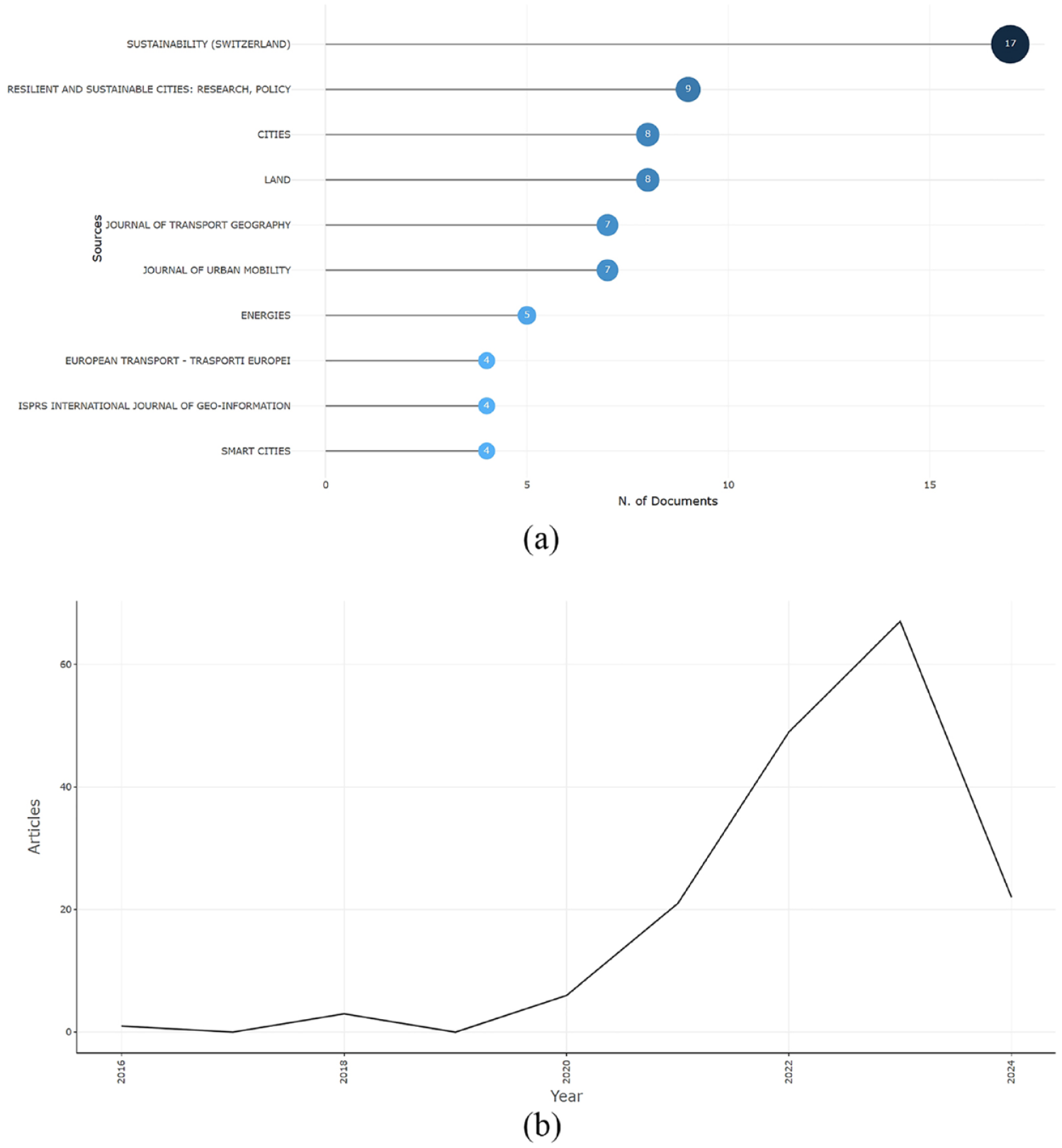
The most relevant sources (a) and the annual production (b).
Among the 169 papers, 139 were articles, followed by book chapters (20), reviews (9), and an editorial (1). Although the concept of the 15-minute city (FMC) was born in 2016 (Moreno et al., 2021), it did not receive extensive attention until 2020 when the pandemic swept across the world (Figure 1, right). The global crises, including the health impacts of the pandemic, climate and ecological emergency, and social-economic inequality, have propelled a transition of urban planning towards a new paradigm.
Countries and regions
There were a total of 48 countries and regions that contributed to the body of literature. Based on the corresponding authors’ countries, the largest number of papers were contributed by authors from Italy, China, Australia, Spain, Germany, Greece, Korea, Poland, the USA, and France. Among them, Spain had the highest inter-country collaboration ratio while China had no inter-country collaboration although it published the second largest number of articles (12). It is therefore safe to infer that there is a lack of scientific dialogues on the FMC while the concept of the “15-minute life circle” (FLC) dominates Chinese scientific and professional discourses. According to the total citation per country, the most influential countries were France (546), Spain (245), Greece (185), Italy (173), USA (83), Colombia (80), China (65), Iran (52), New Zealand (51), and Germany (47). This echoes the fact that the top three most productive authors (Zaheer Allam, Didier Chabaud, and Carlos Moreno) are all from France. The collaboration network reveals intriguing insights: the most influential works were predominantly produced by European scholars, while the two largest scientific communities, the USA and China, were less actively engaged, for different reasons.
As for the most relevant institutions, the Chinese University of Hong Kong (Hong Kong), the University of New South Wales (New Zealand), the University of Seoul (Korea), Aristotle University of Thessaloniki (Greece), and Henan University (China), topped the list. Chinese scholars tended to collaborate with domestic colleagues. Scholars at the College of Geography and Environmental Science, Henan University, published a series of papers focusing on applying the FMC to the analysis of Chinese community planning. However, without input from the international community, those studies remained theoretically underdeveloped with their primary interests in methodological applications.
Authors
Since the scientific community of the FMC is relatively small due to the concept’s recent incipience, the most productive authors form a few circles. For example, Allam Zaheer, Chabaud Didier, Moreno Carlos, and Pratlong Florent have worked closely with each other and co-authored several research articles and co-edited a book, named Resilient and Sustainable Cities Research Policy and Practice (Allam et al., 2022b). In addition, Khavarian-Garmsir, Ayyoob Sharifi, and their collaborators have also made significant contributions to the literature (Khavarian-Garmsir, et al., 2023; Khavarian-Garmsir, Sharifi, and Sadeghi, 2023). Among Chinese scholars, Shanqi Zhang, Feng Zhen, and their research groups at Nanjing University have published several works on the topic (S. Zhang et al., 2023). Genxin Song and his collaborators at the Laboratory of Geospatial Technology for the Middle and Lower Yellow River Regions and Henan University have also contributed to the literature based on Chinese evidence (J. Chen et al., 2023; Luo et al., 2022; Song et al., 2022). However, the absence of inter-country collaboration has limited the knowledge dissemination in China and beyond.
Research themes and new insights
Scientific mapping enables a quick scan of the conceptual and intellectual structure of the literature via visualization techniques. Co-occurrence and thematic analyses were employed to explore the main research topics and trending research themes. Co-occurrence (or co-word) analysis shows how frequently certain terms are used in a field, which deals with knowledge development itself and reveals the conceptual structure of research (Donthu et al., 2021). Thematic analysis builds on the clusters identified by the co-occurrence analysis, and uses density and centrality to classify themes and map them in a two-dimensional diagram (showing development vs relevance degree) (Aria et al., 2022). The co-occurrence analysis based on the keyword plus reveals four research clusters of the existing FMC literature (Figure 2a), including sustainability, human and city, neighbourhood planning, and technology. Further thematic analysis (Figure 2b) suggests that neighbourhood planning is the motor theme (that is important and well-developed); sustainability belongs to the basic and transversal theme (that is important but somehow underdeveloped); planning technology locates between the emerging or declining theme and the niche theme; human and city (from the health perspective) is classified as the niche theme (that is highly developed, isolated, but not important). The following sections explain such themes in detail.
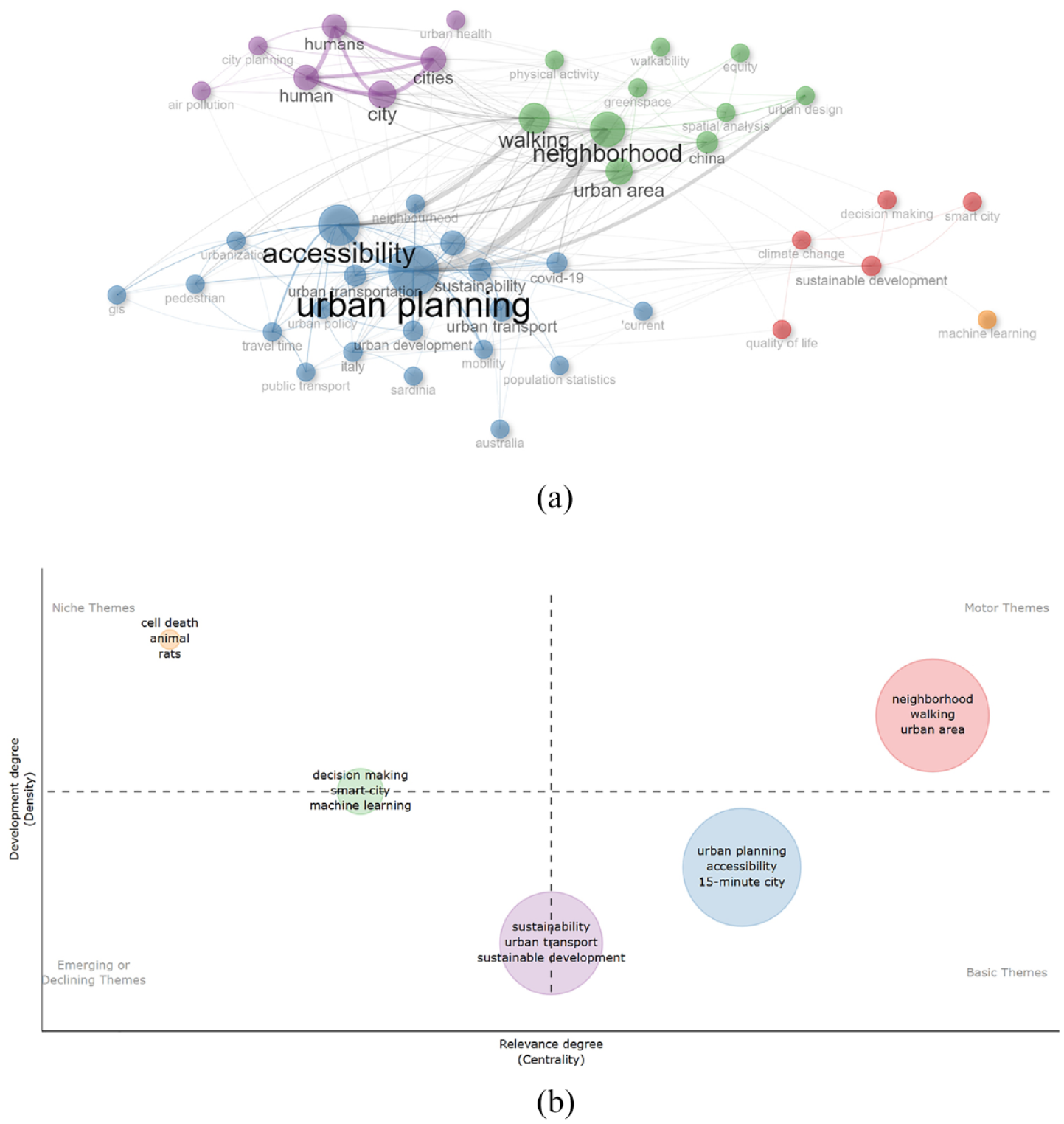
The results of co-occurrence analysis (a) and thematic analysis (b).
Sustainability: accessibility planning
Nowadays, the principles of any planning model have to address sustainability given the global promise to achieve SDGs by 2030, but the practical approaches and focal points may vary. Urban sustainability is an encompassing concept and has multifarious connotations in planning policy design and implementation. The 15-minute city (FMC) offers a new framework for sustainability, especially from the liveability and health perspectives (Allam et al., 2022a). The pandemic is anticipated to boost achieving sustainability in cities as it critically challenges existing urban systems, which compels innovative measures to deal with similar crises (Moreno et al., 2021). One effective measure, as advocated by those who champion the FMC, is accessibility-based planning, where urban opportunities are available for all residents regardless of their travelling modalities and social statuses. Proximity-based planning, which emphasizes walkability, social interactions, and Green-Blue space accessibility (D. Liu et al., 2022), also calls for more sustainable forms of urban land use (D’Onofrio and Trusiani, 2022). Yet proximity should be understood with reference to individual perceptions, as empirical evidence suggests significant disparities among population segments regarding their accessibility to services, which raises the question: “Is proximity enough?” (Guzman et al., 2024).
Accessibility planning concerns not only urban transport planning but also social planning, as accessibility is an important indicator of social equity (Capasso Da Silva et al., 2020). While the original FMC emphasizes the role of active transport (e.g., walking and cycling) as the most sustainable travelling mode (see Moreno et al., 2021), recent studies consider public transportation rides as an essential component for achieving sustainability at the city scale (Poorthuis and Zook, 2023). The FMC and the compact urban form contribute to social sustainability by increasing opportunities for social encounters in public spaces, economic sustainability by encouraging local businesses, and environmental sustainability by reducing unnecessary travels and emissions. However, there exist barriers to the successful FMC implementation, including physical determinism, context-specific (e.g., not feasible for car-dependent and sprawling urbanism), one-size-fits-all approach, ambiguous scale, practical means, and complexities of cities (Khavarian-Garmsir, Sharifi, and Sadeghi, 2023). Moreover, sustainability requires a paradigm shift from physical determinism to sustainability-based pluralism, which necessitates an inclusive platform for participation and decision-making beyond a sole concept (Sharifi, 2016). As an important but underdeveloped theme, more empirical evidence is needed for a better understanding of how the FMC contributes to urban sustainability.
Resilient thinking: human and city
In the aftermath of the pandemic, planning principles tend to reflect on the most affected aspects of urban life and adopt responsive tools to fix the problems under the umbrella idea of resilience. These tools, therefore, are context-specific. The growing interest in the FMC has its root in people’s reflections on human-nature relations after the pandemic dramatically changed people’s lifestyles, which reminds one of the time when modern urban planning was founded to address urban issues surrounding industrial cities and rapid urbanization (Kissfazekas, 2022). While serving as the representative and critical idea of contemporary cities, the FMC aligns with the resilience thinking and calls for a new planning paradigm with the adaptation and bounce-forward strategy for post-pandemic urban development (Moreno et al., 2021). The human-centric planning strategy is integral to urban liveability and health (Allam et al., 2022a). In addition, walkable, high-density, mixed-use districts with high accessibility to amenities enhance economic resilience by providing a physical “habitat” (Lobner et al., 2021). This is made possible by improving Green-Blue space accessibility (D. Liu et al., 2022), creating walkable neighbourhoods (Weng et al., 2019), and planning for heat-resilience in the context of climate change (X. Chen and He, 2024). It is evident that these planning efforts are intricately linked to accessibility planning and active transportation discussed previously. As Zhang and Li (2018) note, urban sustainability and urban resilience often overlap and even compete with each other in planning policy design.
Another important dimension is that the FMC deems the neighbourhood as the minimum unit of resilience (Pede et al., 2023). The heightened attention to neighbourhood planning is not new, as many planning ideas have already highlighted the importance of building community at the neighbourhood scale, such as the Superblocks in Spain, the Doughnut model in the Netherlands (Marchigiani and Bonfantini, 2022), the complete community in Canada (Grant, 2023), and so forth. Empirical evidence suggests that more diverse and walkable built environments are more resilient to the effects of health crises and other emergencies (Credit and Van Lieshout, 2021). During the pandemic, neighbourhoods were at the forefront of service provision conundrums, social disorders, public space appropriations, and urban governance challenges (Allam and Jones, 2020; Batty, 2023; Z. Liu et al., 2021). In this context, the FMC offers an opportunity to address these urban challenges at the local scale.
Utopian city model: neighbourhood planning
It can be asserted that no single planning model can be universally applied and any attempts to replicate successful projects in different geographical, political, and cultural contexts are very likely to result in undesirable outcomes. Planning paradigms are both temporally and geographically sensitive. While the FMC gains momentum in planning discourse, critiques always accompany its development. Commemorators question the innovation and real-world implications of the concept. For example, Kissfazekas (2022) argues that the FMC has its root in neighbourhood unit planning that has existed for almost a hundred years, and believes the growing attention to the FMC reflects the “circle of paradigms,” which proves the adaptability of the classic planning model originated in the 1920s. Casarin et al. (2023) challenge the adoptation of the FMC as a panacea for urban crises and caution that it fails to account for social mix, at least in the long term, and is insufficient to address ingrained structural inequality both within and between neighbourhoods. Others are concerned about the threshold selection for the chrono-urbanism model, reminding one that the x-minute concept pre-dates the FMC and that long-term public skepticism may impact the acceptability of the FMC (Marquet et al., 2024). Recent conspiracy theories relate the FMC to urban “prison camps” where residents’ movements are subject to strict surveillance and control (The New York Times, 2023).
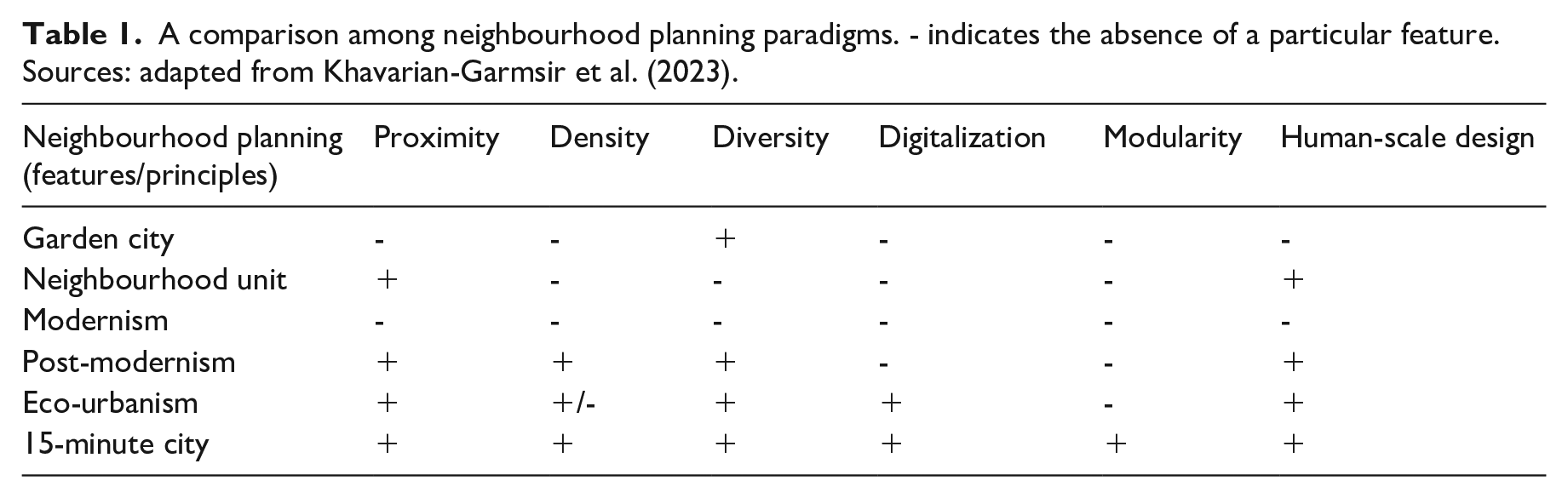
Another critical point is that the fundamental ideas of neighbourhood planning underlying the FMC may not serve city functions. According to Ratti and Florida (2021), the concept provides “a specific spatial scale and suggests a new model for the larger city, which is developed into small, repeating parts” (para. 5). Ratti and Florida point out several limitations of the FMC concept: (1) the concept does not always fit in different contexts, especially in US cities; (2) it does little to alter the existing socio-economic inequality; and (3) it overemphasizes village/neighbourhood life but ignores the dynamism of a real city. Klebl et al. (2022) argue that the FMC is rather a strategy to create a polycentric city. In this sense, the long-term implication of the FMC is still inconclusive. Khavarian-Garmsir et al. (2023) critically comment that the concept follows the physical determinism but the sole physical intervention is less likely to instigate a sustainable transition. Even so, the FMC is the most advanced and comprehensive concept to date (Table 1).
A comparison among neighbourhood planning paradigms. - indicates the absence of a particular feature. Sources: adapted from Khavarian-Garmsir et al. (2023).
Technology: digitalization and measurement
The advancement of technology has often challenged and empowered planning theories and practices. In most cases, technology serves different planning purposes. Among the four pillars of the FMC framework (Moreno et al., 2021), digitalization is less intelligible when it is compared with the other three (i.e., proximity, density, and diversity). This is partially due to the physical determinism and the inaccessibility to technology-based planning approaches for many members of academia and profession. According to Moreno et al. (2021), the digitalization dimension aligns closely with the Smart City concept and digital tools play critical roles in ensuring the resilience and flexibility of urban life, such as remote work during the pandemic. Allam et al. (2022c) connect the FMC with cutting-edge technologies, such as 6G, IoT, and Digital Twins, arguing that new technologies can speed up the implementation and effectiveness of planning models, but only on the condition that citizen-driven and inclusive principles are adopted. The key argument is that the FMC is instrumental in closing the gap between the two concepts when it comes to socially inclusive technologies.
Another dimension of technological advancement pertaining to the FMC is the measurement methods, especially with the growing accessibility of urban data and GIS-based technologies. Zhang et al. (2023) propose a network-based framework that leverages human mobility data to account for people’s spatiotemporal behaviour in planning evaluation. Bartzokas-Tsiompras and Bakogiannis (2023) use an online web portal of statistics and a new urban accessibility framework to construct a 15-minute Walking City index for 121 European metropolitan areas. While robust datasets are integral to urban accessibility measures, governance strategies should also be considered in quantifying accessibility, especially during emergencies.
Discussions
15-minute city: A new paradigm for future cities?
The concept of the 15-minute city has already proven to be revolutionary and forward-looking, as evidenced by the extensive academic debates it has sparked and the increasing number of cities that have adopted the concept. On the list of The 100 Most Influential Urbanists, Past and Present published by Planetizen, Carlos Moreno, who coined the term, is at no. 21, which indicates the prominence of the 15-minute city in contemporary planning discussions. However, the FMC has also been questioned as a panacea for future cities. Sdoukopoulos et al. (2024) are concerned about how the concept’s principles can be translated into implementation measures. Guzman et al. (2024) argue that the FMC risks being a policy and academic rhetoric and falls short of addressing urban inequalities. Logan et al. (2022) question the planner-led approach and call for identifying local population’s tolerance and demands in realizing the FMC. In addition, recent studies link the FMC with urban regeneration and foreground the unintended outcomes of marginalized neighbourhood displacement (Casarin et al., 2023; Marchigiani and Bonfantini, 2022). In addition, the neighbourhood approach has been criticized for overemphasizing local socio-economic activities but neglecting functions that serve city/global scales.
According to the four themes identified by this research, the FMC has the potential to achieve urban sustainability through accessibility planning and urban resilience by return to neighbourhoods. Yet the concept is far from being an established new paradigm for future cities as it suffers from long-standing planning issues, such as scalar conundrum (e.g., city scale vs neighbourhood scale), perpetuating social inequality, and implementation and practical implications. Nevertheless, the concept has benefited from both the worldwide reflections on human-city relations after the pandemic and the technological advancement in urban analytics, management, and everyday human activities (remote work in particular). To realize the FMC’s potential in facilitating sustainable transition worldwide, it is argued that context-specific and vernacular knowledge should be incorporated into the framework. The paper now turns to the 15-minute life circle (FLC) for an illustration of how the Euro-centric concept can be fruitfully applied to the Chinese context.
The 15-minute neighbourhood in China: Connections and differences
As mentioned in the Results section, Chinese scholars are less engaged with the knowledge contribution of the FMC. The concept of the 15-minute life circle (FLC) evolves in parallel with the FMC in China. Globally, Shanghai was the first city that proposed the FLC during the First World City Forum in 2014 with a focus on the accessibility of daily essentials and public services.
Therefore, the FLC was not sparked by the FMC originally raised in the C40 Summit in 2016 but is a vernacular idea that intends to address urban issues confronted by global cities. Since 2016, building FLCs has become a national effort since the FLC requirement was promoted by the State Council and the concept became one of the key principles in the new edition of “National Standards of Planning and Designing Urban Residential Neighbourhoods (GB50180-2018)” (the National Standards hereafter), a mandatory document for architectural and planning education and practice. In Shanghai, the idea of “urban acupuncture” (Lastra and Pojani, 2018) is adopted to systematically promote urban rehabilitation. In 2017, five streets within the inner ring were launched as a group of FLC pilot projects, and the coverage was extended to 36 streets and towns in Pudong New Area in the following year. By the end of 2020, more than 300 projects were completed. The pandemic has led to a surge in demand for accessibility to basic services, such as wet markets, clinics, pharmacies, open spaces, and community services, which are all at the heart of the FLC (Shanghai Municipal Bureau of Planning and Natural Resources, 2024). Although the FLC is an encompassing concept, projects may set different priorities that cater to the demands of local residents. For example, the Nankai district in Tianjin has established a three-level food supply system with more than 900 convenience stores, 31 wet markets, 10 wholesale markets, and one security depot to ensure residents’ “food baskets” (Tianjin Morning Post, 2022). In Beijing, establishing community canteens is one of the primary tasks in building “complete communities.” Local residents, especially seniors, can enjoy a variety of dishes at relatively low prices and order food delivery services via WeChat groups (Beijing Daily, 2022). Nationwide, 30 cities including Beijing, Shanghai, and Guangzhou were designated as the first batch of FLC pilot cities in 2021. By June 2023, there were a total of 2,057 FLCs, serving 42 million population (Huaxia Times, 2023). The successful implementation of the FLC nationwide, at least in terms of its magnitude and coverage, is comparable to the experience of planning superblocks in Barcelona, Spain, and demonstrates the pivotal role of urban governance in facilitating the FLC implementation.
However, the FLC is not free from problems. For example, demographic structure differences among communities and vulnerable groups’ demands, especially the children daycare system, are often neglected (S. Zhang et al., 2023). Furthermore, in most cities, public amenities cater not only to nearby residents but also to all others, making it challenging to balance the supply and demand of facilities. Although the four parts of the FLC planning process are relatively clear: community mapping, community diagnosis, participatory planning, and action implementation, there are challenges associated with them. According to Xu Leiqing, whose research group participated in the FLC planning for Shanghai and Ningbo, there is a mismatch between the National Standards and local needs expected by different stakeholders when implementing the FLC plans remains underdeveloped (F. Zhang et al., 2020). Worse still, the physical boundary delineation of the FLC is theoretically reasonable but practically untenable since community administrative boundaries remain the biggest obstacle to applying spatial analytical results to real implementations (Ma et al., 2023). The potential of sharing FLC services among diverse social groups, for instance, between members of resettlement communities and gated communities, has thus been compromised. Furthermore, what is considered as successful experience in Shanghai may not be applicable to other cities in China and abroad. Yet scholars have reached a consensus on common characteristics of successful FLC projects, including accommodating residents’ demands and subjective perceptions, engaging effective participatory planning approaches, and enhancing local community governance capacities (F. Zhang et al., 2020). A recent survey by China Youth Daily highlights the importance of optimizing management and governance systems to support the FLC initiatives 1 . In this sense, regardless of the techniques and dimensions of the FLC planning, successful experiences always require the human-centric rationality and the synergy between top-down and bottom-up approaches.
Table 2 shows the primary connections and differences between the FMC and the FLC. It is evident that although the two concepts share similar principles related to the chrono-urbanism planning, their backgrounds and settings (e.g., climate change initiatives vs high-quality urban development) mark significantly different origins. While both are concerned with accessible basic facilities, their intervention strategies differ. The FMC advocates active transportation for possible changes, while the FLC relies on top-down planning in governance. For example, as part of the FMC program in Paris, the right riverbank of the Seine, which used to be part of the urban highway system, was converted into a car-free linear park for pedestrians and cyclists. During the pandemic lockdown, Paris expanded its cycling routes to over 1,000 kilometres, with separated bike lanes, painted paths, and converted bus lanes (Gongadze and Maassen, 2023). Such moves intend to reunite people with “proximity” and create social spaces for humans instead of transportation spaces for automobiles. The planning and implementation of the FLC in Shanghai is required to comply with a rather top-down procedure of “two tables and one map” where different types of FLC facilities are assigned to responsible government sectors 2 .
A comparison between the two concepts.
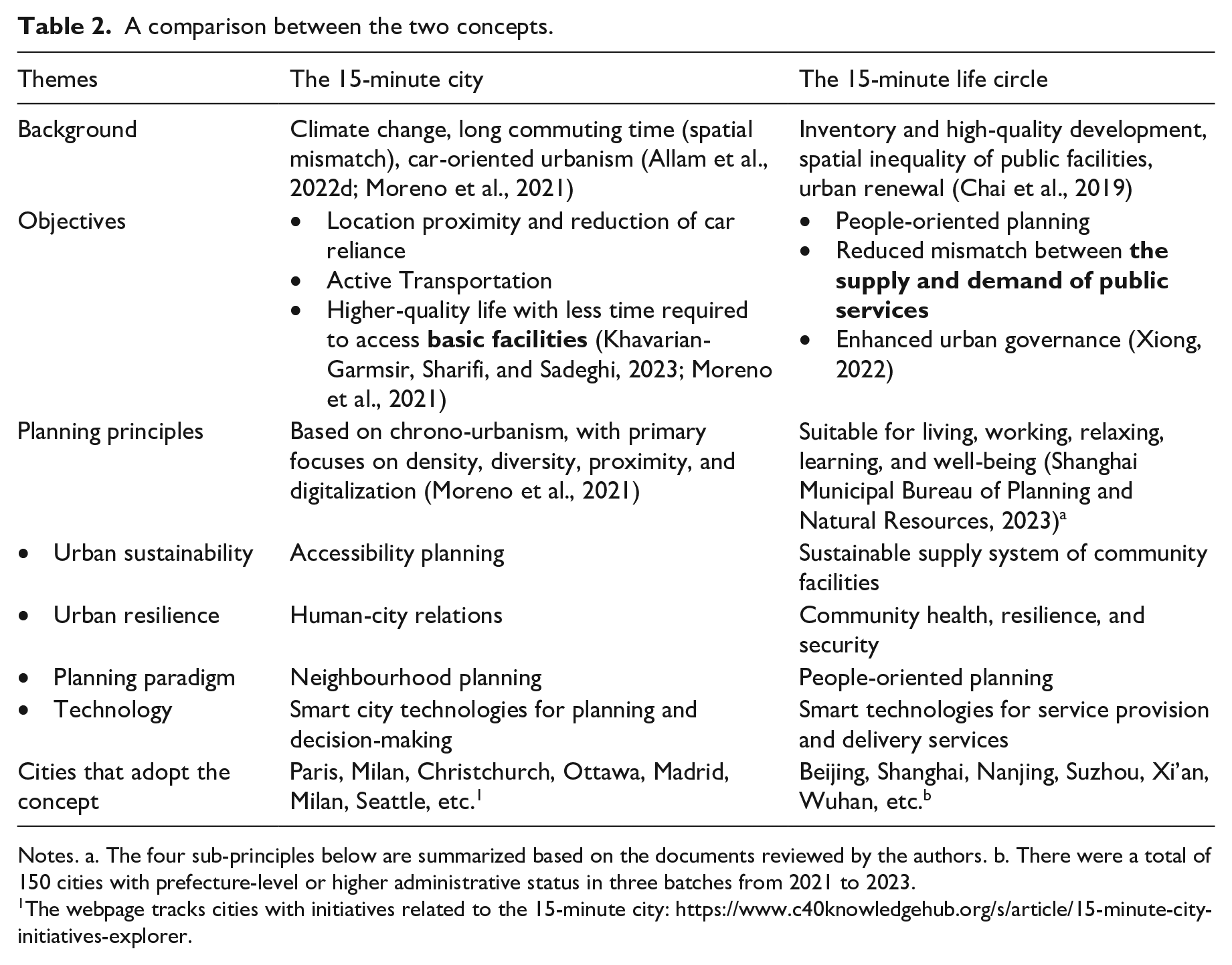
Notes. a. The four sub-principles below are summarized based on the documents reviewed by the authors. b. There were a total of 150 cities with prefecture-level or higher administrative status in three batches from 2021 to 2023.
The webpage tracks cities with initiatives related to the 15-minute city: https://www.c40knowledgehub.org/s/article/15-minute-city-initiatives-explorer.
As for planning principles, the FMC intends to reshape the city through various physical planning efforts supported by recent technological advancement; whereas the FLC focuses on people’s needs and serves urban governance purposes as discussed early. The paradigm shift to the people-oriented planning in China is demonstrated not only by the FLC initiative but also by the recent institutional innovation of the community planner system (Gong et al., 2023; Wang et al., 2021) that has been well adopted in Shanghai, Guangzhou, Beijing, Chengdu, Wuhan, and many other large cities. Community planners are often third-party professionals from design firms and/or higher education institutions who are more extensively involved in the “co-production” model of neighbourhood regeneration projects than traditional urban planners are. While the institution of community planners shows a positive sign of participatory planning, community planners have been criticized as “advocates for and representatives of local governments” (Zhao et al., 2023: 12). In some cases, the government leverages the institution to tacitly sidestep direct conflicts with residents. Similar to the recent observation of the power shift in community-based urban regeneration (F. Wu and Zhang, 2022), the implementation of the FLC is increasingly driven by bottom-up needs and initiatives. Yet, as an initiative that has been promoted nationwide, the FLC implicitly indicates the state’s role in urban governance, which requires further scholarly exploration.
The C40 has compiled an interactive database to keep an up-to-date list of world cities that have adopted the FMC initiatives. Until 2024, 152 cities worldwide are on the list, with Vendargues, France, being the most recent addition. In China, the FLC has been carried out as a key planning program in major cities, especially in Shanghai which just released its 2024 Shanghai 15-minute Community Life Circle Action Plan in April. Over the past decade, Shanghai has established a systematic policy framework for FLC planning and successfully completed 118 pilot projects 3 (Figure 3). It is evident that urban renewal is intricately intertwined with the FLC programs.
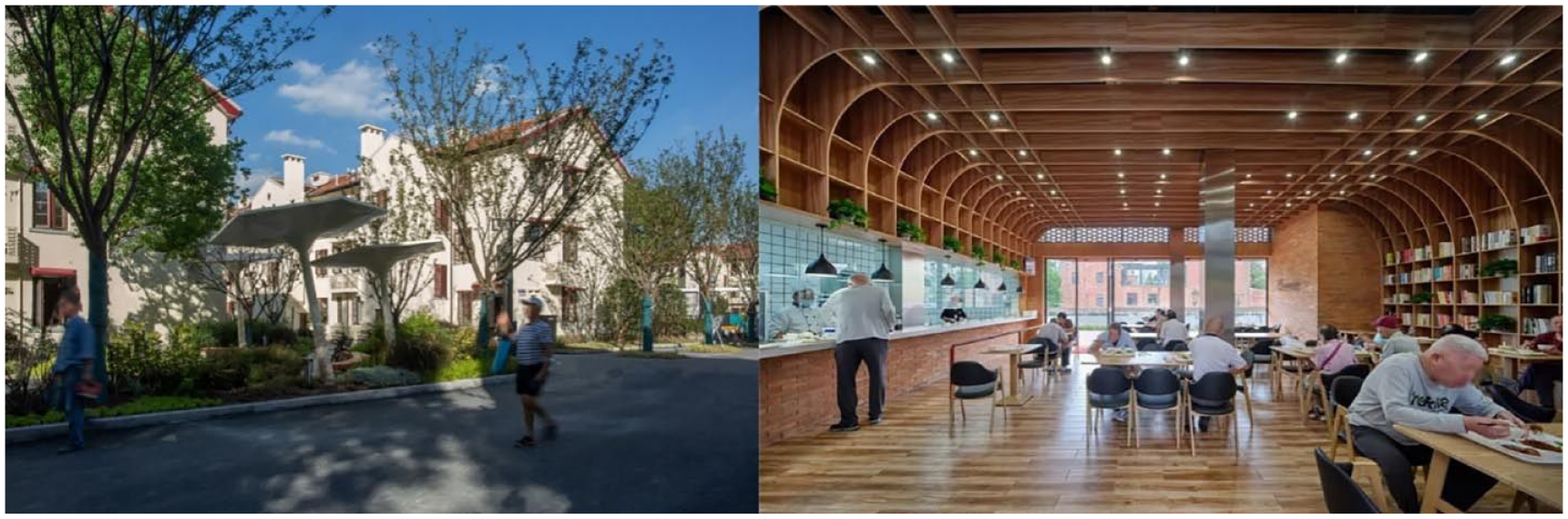
Two excellent examples of Shanghai 15-minute Community Life circle: Caoyang Xincun was originally built in 1951 and was the then largest residential neighbourhood for workers in Shanghai. It now accommodates 1499 households with a total of 2400 residents (left); and a community canteen in Jiangchuan subdistrict is adapted from an abandoned gas station with added facilities such as senior care units, neighbourhood gardens, etc. (right). Sources: Shanghai Municipal Bureau of Planning and Natural Resources, 2024.
The mutual learning opportunities
Since their emergence, the FMC and the FLC have evolved in parallel trajectories, conditioned by different social, economic, and political settings. Whereas both concepts are fruitful, the mutual learning efforts are still limited. There are at least three venues for communication, including resilient thinking, theoretical enrichment and practical accumulation, as well as a new perspective of urban regeneration.
Although both concepts intend to address contemporary urban issues, the FMC builds upon reflections on these issues and calls for a systematic change of urban living to address not only everyday living challenges but also long-term climate change concerns. The FLC advocates the idea of making it convenient for local residents to access various amenities. However, the pandemic has added resilient thinking to both frameworks, posing the question of how chrono-urbanism can remain functioning in the face of emergencies (Y. Li et al., 2023). While the literature scan in this paper points to the rising attention to urban resilience (see “Research themes and new insights”), resilient planning and disaster prevention are scarcely incorporated into planning frameworks. Scholars, planners, and decision-makers are strongly advised to formulate long-term planning policies to deal with latent but critical issues. The Shanghai Action Guidance of 15-Minute Community Life Circle lists Resilience and Security (section 2.6 in the original document) as one of the sub-principles for achieving suitable living conditions by setting up specialized clinics, emergency shelters, and fire stations. Notwithstanding a top-down planning intervention, it is a good start for future policy formulation under both concepts in the international and Chinese contexts.
The theoretical underpinnings and potentials of the FMC have been extensively discussed (Allam et al., 2022d; Allam et al., 2022a; Casarin et al., 2023), and its practical implications are demonstrated by an increasing number of cities that have adopted the concept, as reported by the C40. In contrast, the FLC has its root in the Japanese concept “Daily Life Circle” which emphasizes the principle of prioritizing people’s needs for everyday life in planning. The everyday life planning is then translated into accessible service provision in China. The FLC has been widely promoted but its theoretical foundations, especially those based on the Chinese context, have yet to be established. Most Chinese studies focus on the methodological applications of boundary detection and the evaluation of the FLC from various perspectives by case studies. The lack of theoretical and conceptual efforts to capitalize on the potential of the FLC makes it hard for the concept to be appealing to international communities. In planning implementation, the FLC benefits from its conceptual succinctness with the explicit focus on the quantity and spatial positioning of facilities, whereas the FMC tends to be encompassing and open as its conceptual framework covers versatile aspects of the urban. Until 2022, Paris had developed urban renewal plans involving more than 250 projects, targeting roads, green spaces, heritage, educational institutions, and other public spaces to promote the FMC. Supports from the government are integral to grounding conceptual explorations. In addition, the planning principle of proximity may not be a big challenge for Chinese cities and other Global South cities where high population density and loosely implemented zoning are common (Guzman et al., 2024). Informal urbanism may unintentionally serve the chrono-urbanism planning objectives. As the two concepts are gradually realized in actual urban projects, the accumulation of related practices and the sharing of experiences are indispensable.
Although the FLC pays more heed to basic service provision, it does not necessarily suggest that it is inferior to the FMC or less significant in promoting planning transition. Indeed, both call for a shift towards human-centric planning. The FMC intends to subvert car-oriented urbanism and create open spaces to reunite people with nature and social life. The FLC aims to fill the gap between standardized top-down planning schemes and local residents’ diverse demands. The overarching principle of human-centric planning has rendered it possible for knowledge transfer. It can be argued that while the FMC expands the breadth of neighbourhood planning paradigm by reflecting on contemporary urban issues (Kissfazekas, 2022), the FLC adds to the depth by offering workable plans and numerous cases at striking rates. If we were to make neighbourhoods thrive again, the two concepts should complement each other to foster the transition from theory to practice. Furthermore, both concepts rely heavily on urban regeneration measures in implementation (Casarin et al., 2023; Murgante et al., 2024). Innovative but temporary urban infrastructures have partially delt with challenges brought by the pandemic, but long-term effects and sustainable regeneration strategies are more vital issues that remain unaddressed (Logan et al., 2022). Therefore, a new perspective of urban regeneration based on the chrono-urbanism concepts is urgently needed (Marchigiani and Bonfantini, 2022).
It is worth mentioning that although both concepts, as human-centric planning approaches, enable the creation of liveable local environments, they may not meet guiding principles at the city level and hence cannot replace important institutions that serve city-level public facilities (F. Zhang et al., 2020). Two theoretical discussions are explanatory here, including the emergent/emergence in complex systems (Goldstein, 2011) and the dual system of the generic city (Hillier, 2016). The former argues that in complex systems (i.e., cities), when large enough numbers of individuals interact with each other, special phenomena that cannot be explained by micro-individuals at the macro level will emerge, and the phenomenon is called “emergent.” In this sense, focusing on individual 15-minute units while neglecting interactions among them may downplay the importance of emergent phenomena (e.g., spatial and socio-economic dimensions outside the unit) in urban systems. The latter argues that the city is a dual system made up of two interconnected networks: a foreground network that outlines the urban structure shaped by macro-economic activities and a background network that captures the urban form of the local socio-cultural residential process (Yang and Qian, 2023; Yang et al., 2023). From a temporal-morphological perspective, the foreground is more stable and durable while the background is more subject to change. The chrono-urbanism planning intervention that centers on the background system can have a significant impact in the short term, but concrete transitions at the city level may take long time.
Conclusions and future research agenda
Reviewing the rising interest in the 15-minute city (FMC) in the international community and the ongoing promotion of the 15-minute life circle (FLC) in urban China, this paper intends to facilitate dialogues between the two bodies of knowledge that are derived from very different contexts and evolve in parallel trajectories. The lack of Chinese literature on the FMC and English literature on the FLC makes it hard for researchers and policy makers to exchange ideas about future urban planning and development. This research conducted a bibliometric analysis of the FMC literature and extracted four key themes that represent primary research agendas, including urban sustainability, resilient thinking, utopian city model, and technology. Built on the findings, the connections and disparities between the two concepts were examined. Although the two concepts are derived from very distinct contexts, they share the overarching principle of human-centric planning, which challenges multiple aspects of the contemporary planning system. Given the uncertainties and Black Swan events in cities, neighbourhood planning has returned to the main stage. Yet the new planning paradigm, which is centered on chrono-urbanism, has combined traditional physical planning strategies (such as proximity, density, and regeneration) with smart city technologies (such as Digital Twins and big data) (Allam et al., 2022e). Most importantly, the unforgettable experience of the pandemic has emphasized the importance of health and resilience dimensions, which are crucial for everyone’s well-being.
The existing Chinese scholarship pays insufficient attention to the FMC as evidenced in the ‘Results’ section. This is not surprising due to the FMC’s Euro-centric nature and the dominant role of the FLC in China’s urban planning. Similarly, the existing English literature seldom touches upon the FLC. This research synthesizes the literature and identifies several aspects for improvement, through enhancing resilient thinking and actionable measures of the FMC, systematically theorizing the FLC, and developing a holistic framework that combines the conceptual breadth of the FMC with the practical depth of the FLC for future urban planning. However, as cautioned by numerous commentators, the chrono-urbanism approach may risk providing a baseline in planning while ignoring the dynamics that only exists at the city scale due to agglomeration effects, historical factors, natural determinism, and others. However, some have observed that the growing acceptance of remote work may diminish the significant agglomeration benefits in metropolitan areas (Credit and Van Lieshout, 2021). In this sense, how the two concepts can be married to other planning paradigms is a critical quest. The long-existing dual-city structure (Hillier, 2014) has posed challenges for the concepts to move beyond the neighbourhood scale. In addition, the lack of temporal dimension in measuring spatial accessibility (e.g., social groups and activities) may eclipse significant disparities among spatial units (Bartzokas-Tsiompras and Bakogiannis, 2023). Future research is needed to address these challenges in the following aspects. First, comparative studies are essential to facilitate dialogues between Chinese and international communities. Case studies, policy reviews and analyses, systematic literature reviews, and other forms of original research are imperative to create a multifaceted mutual learning environment. Second, theories related to the FLC in China should be further developed, for both its practicality and its universality and specialty. Similarly, the FMC studies and practices could benefit from the successful experience of the FLC, such as the case of Shanghai where systematic actions have been performed (Shanghai Municipal Bureau of Planning and Natural Resources, 2024). Third, for human-centric planning approaches, more fine-grained demographic data of local communities should be gleaned and used for reference and tailored measurement and planning methods, such as complete community (Grant, 2023), should be explored and devised. Guzman et al. (2024) suggest that people’s preferences and perceptions in the context of the chrono-urbanism concept have yet to be disentangled. Last but not least, to address the criticism of limited neighbourhood planning, more conceptual efforts are needed to connect the dots between different 15-minute spatial units at the city scale.
Footnotes
Acknowledgements
The authors would like to thank Xinyi Huang at the University of Hong Kong for her research assistance to this work during her visit to the School of Planning at the University of Waterloo in the summer of 2023 sponsored by a MITACS Globalink Research Internship in Canada.
Declaration of conflicting interests
The author(s) declared no potential conflicts of interest with respect to the research, authorship, and/or publication of this article.
Funding
The author(s) disclosed receipt of the following financial support for the research, authorship, and/or publication of this article: This research was supported by the Fundamental Research Funds for the Central Universities in China (D5000240157).
