



Abstract
Residential mobility is an important issue within urban and housing studies. However, the existing literature mainly focuses on the pattern and motivation for a move of residential mobility, and seldom examines the location changes before and after migrants’ residential mobility. This study adopts the perspective of life-course and social-psychological theories to depict the residential trajectories of Fuzhou migrants, explores the influencing factors of location change in residential mobility, and conducts a comparative analysis of inter-provincial and intra-provincial migrants. It is found that the majority of migrants just move between urban villages in the same township, and the dominant type of location change is an outward movement across the ring roads, and this trajectory is especially marked among intra-provincial migrants. Changes in neighborhood environment and perception are decisive in explaining the location change of both intra-provincial and inter-provincial migrants. Additionally, younger cohorts, marriage, and having children in the city only significantly affect inter-provincial migrants’ residential location change, while changes in housing conditions are only of great importance to intra-provincial migrants’ residential location change.
Keywords
Introduction
Owing to the reform and opening-up, millions of rural migrants have flooded into China’s urban destinations, which has become the main driving force for urbanization development (Liu et al., 2015). In 2021, the urbanization level in China reached 64.72%, and the number of migrants was 385 million, accounting for over 42% of the national total urban population (National Bureau of Statistics of China [NBSC], 2022). According to Northam’s theory on stages of urbanization (Northam, 1975) and the international experience, China has entered into the late-intermediate stage of urbanization, and therefore urban renewal became the main task at this period (Wang et al., 2019). The key areas of urban renewal are urban villages, old residential areas, old factory areas, and old blocks, and such areas are the main residence of migrants because of their social accessibility and affordability (e.g., Lin and Zhu, 2010; Wang et al., 2019). In this context, migrants have to move away from the urban villages and are then forced to move to other urban villages in the city, which is gradually becoming an integral part of migrants’ residential mobility in urban China (Huang et al., 2019; Yu et al., 2023). More importantly, along with China entering a new phase of urbanization, the focus of migrants’ multilocational livelihoods has been increasingly shifted from their rural places of origin to the destination cities, manifested in family migration and a higher demand for housing conditions in urban society (Lin and Zhu, 2022; Zhu et al., 2018). These new changes will inevitably lead migrants to relocate their residential locations and some corresponding changes in its determinants, and give rise to the necessity to revisit this important topic in China’s urban and housing studies.
However, the existing literature addressing Chinese migrants’ housing issues focuses mainly on the living conditions or housing tenure choices in urban China (e.g., Huang and Tao, 2015; Lin and Zhu, 2010; Tang et al., 2017; Wang et al., 2020), far less attention has been devoted to migrants’ residential mobility. First, while there is growing interest in the study of residential mobility behaviors in urban China, these studies mainly by comparing migrants and local urban residents. Based on surveys in Guangzhou and Beijing, Li and Zhu (2014) found that, compared with local residents, the age and direction of migrants’ residential mobility are more concentrated, and the reasons are mainly concentrated on employment changes and the demolition of urban villages. Cui et al. (2021) and Sun et al. (2021) indicate that, unlike the local population in Shanghai, migrants’ residential mobility is more constrained in terms of the timing of making residential moves and their location choice. In general, most of the existing studies focus on superlarge cities 1 (e.g., Beijing, Shanghai, and Guangzhou), and pay insufficient attention to other types of “ordinary city”. For example, Fuzhou is also the main destination of migrants, and the attributes of migrants, the requirements for access to housing, and the relevant policies are different from Beijing, Shanghai, and Guangzhou, and the population density, housing prices, commute time, and requirements of the migrants regarding living quality are also different. With the resurgence of comparative urban research, which increasingly emphasizes the experience of developing countries and the call for a “worlding city theory” (Roy and Ong, 2011), the experience of other types of Chinese cities needs more attention (Robinson, 2002).
Second, most existing studies on residential location choice are based on cross-sectional data to explore the spatial pattern or intention and its determinants, few use retrospective data to investigate the location choice and its determinants of before and after migrants’ residential mobility (Cui et al., 2021). Additionally, previous studies have rarely made a quantitative comparison between intra-provincial and inter-provincial migrants. Little is known about their differences in the trajectory of mobility and residential outcomes of relocation, and the extent various determinants influence their residence location changes in the residential mobility process. Migration is a highly selective, uneven, and asymmetric process (Shen and Liu, 2017). Demographic and socio-economic characteristics, migration patterns, settlement intention, housing demands, and factors influencing their decision to migrate should be different between intra-provincial and inter-provincial migrants (e.g., Tang et al., 2017; Tian et al., 2015; Wang et al., 2019). Thus there may be some differences in the extent of residential trajectories, location choices in residential mobility, and actors influencing their decisions to housing adjustment between two kinds of migrants. In the meantime, the growth of inter-provincial migration has slowed down or even shown a downward trend, while intra-provincial migration has significantly accelerated in recent years (Lin et al., 2020), and thus it is a necessity to conduct a comparative analysis of intra-provincial and inter-provincial migrants in China’s migration studies.
Finally, the existing studies about the residential mobility behaviors of migrants in China are attributed to two significant determinants: structural factors and socio-economic characteristics. Specifically, hukou status, urban renewal practices, and the disadvantaged socio-economic status of migrants are believed to be vital factors in migrants’ mobility decisions. Given that residential mobility and location choices are types of behaviors, life-course factors, objective environmental characteristics, and subjective factors of personal preference and attitude might also be important determinants. Especially in the context of China’s new stage of urbanization, the focus of migrants’ multilocational livelihoods has shifted to the destination cities. Corresponding to this change, having children in the city, pursuing for better housing conditions, and neighborhood environments are expected to influence migrants’ residential location profoundly. However, existing studies have put an overwhelming emphasis on the above-mentioned life-course and social-psychological factors.
With the importance of migrants’ residential mobility in the context of China’s new stage of urbanization and the existing knowledge gap, we depict the residential trajectories and explore the influencing factors of location choices in migrants’ residential mobility, based on a retrospective survey conducted in Fuzhou City. We are interested in tracing both the trajectory and location change before and after migrants’ residential mobility and the differences between intra-provincial and inter-provincial migrants. Our analytical approach proceeds in two stages. First, we examine the spatial patterns of migrants’ residential mobility and then we identify several types of residential location change. Next, we assess whether and how life-course factors, changes in housing attributes, and neighborhood environment and subjective neighborhood perception mainly brought by urban renewal practices affect migrants’ residential location change.
Literature review
Residential mobility, as the micro-mechanism of urban space differentiation and restructuring, has consistently been a central focus within urban and housing studies (Clark and Huang, 2003; Cui et al., 2015; Li, 2004; Salvati, 2022). It should be made clear that residential mobility refers to the behavior or process of the change of residence location within the urban area (Rossi, 1955). While residence choice refers to the households making decisions when deciding where to live and how to get around (Chatman et al., 2019). Since Rossi proposed the concept of residential mobility, many studies have focused on the characteristics and determinants of residential mobility, and a series of theoretical hypotheses or analytical frameworks have been developed. According to the life course approach, residential mobility is a process of housing adjustment caused by the events in the people’s life cycle, such as partnership formation, births, or separation, as well as developments in education and work careers (Clark and Huang, 2003; Clark and Lisowski, 2017; Clark and Onaka, 1983; Clark and Withers, 2007; Coulter et al., 2016; Findlay et al., 2015; Geist and McManus, 2008). From the neighborhood environment and perceptions perspective, the physical and socio-spatial characteristics of neighborhoods (e.g., poor community infrastructures, limited green space), as well as macro-social factors like the economic growth (Böheim and Taylor, 2002; South and Crowder, 1997), housing and land use systems (Knox and Pinch, 2000; Kull et al., 2016), and housing market conditions (Clark et al., 2000), affect residential mobility. At the same time, the subjective neighbourhood perceptions could influence whether they can remain in their changing neighbourhood or move to a more prosperous one (Clark and Maas, 2016; Dantzler and Rivera, 2019; Kleinhans and Kearns, 2013). For example, Parkes and Kearns (2003) found that individuals who are dissatisfied with and disengaged from their neighborhood are more likely to plan a relocation than those who are content with and actively involved in their community. Jones and Dantzler (2021) observed that neighbourhood perceptions context matter more than the actual neighbourhood setting.
Another body of research has examined the role of housing trajectory and housing condition changes. It underscores the importance of homeownership and housing conditions in shaping residential location change. More generally, homeownership is known to have a negative impact on moving because the desire to buy a home is likely to arise only among people who foresee themselves moving again later (Li and Mao, 2019). Renting households are more likely to be in the initial stage of their housing career, to be setting up families, and having no assets to finance a home. More established households are probably owner-occupiers, although tighter housing market conditions make moving into home ownership increasingly difficult for young couples (Öst, 2012). The space of a dwelling also matters in the relocation decision. For instance, households in smaller dwellings suffer from ‘room stress’ and thus are more likely to make a residential move (Clark and Huang, 2003).
Compared with the studies in Western literature, the study on residential mobility in urban China started in the 1990s and is significantly different in context, given China’s unique institutional factors. In Western countries, residential mobility is a common phenomenon, and is often accompanied by changes in housing ownership and residential location, such as a move from the crowded central city to the spacious suburbs. However, early in the reform era, residential mobility was very low; residential mobility from the inner core to the suburbs was primarily initiated by individual work units or the municipal housing bureau (Li and Mao, 2019; Li and Siu, 2001). Since the launch of housing-market reforms, the privatization of public housing and the promotion of commodity housing have allowed households to choose their preferred dwellings freely. Consequently, residential mobility has gradually increased (Cui et al., 2015; Li and Mao, 2019). Besides housing-market aspects, other institutional aspects including hukou status, CCP membership, and work-unit type are remaining pivotal in shaping individuals’ residential mobility (Huang and Deng, 2006; Li, 2003, 2004; Li and Siu, 2001). For example, hukou has a significantly effect on residential mobility: non-local hukou holders (e.g., migrants) are more mobile in cities than their counterparts (Li, 2003). In recent years, empirical studies emphasize the importance of life cycles and the consequent adjustment of housing demand. Compared with the older cohorts, younger cohorts generally make residential moves at earlier ages, and many of them move from the central areas to the suburbs. Furthermore, housing tenure also significantly affect location choice in making residential moves (Cui et al., 2021; Li and Mao, 2019). At the same time, many families living in the suburbs are relocating to urban centers where educational resources are relatively concentrated when their children approach school age (Sun et al., 2021).
Relatively speaking, migrants’ residential mobility has received scant attention. Articles addressing residential mobility in Chinese cities mainly compare migrants and local urban residents. Some limited studies have found that migrants experience a higher residential mobility rate than local urban residents (e.g., Li and Mao, 2019; Li and Zhu, 2014; Wu, 2006). Hukou status, urban renewal, and the disadvantaged socio-economic status of migrants are believed to be critical factors in migrants’ mobility decisions (Wu, 2006; Zhu et al., 2018). Without a local hukou, migrants have no access to housing assistance, and the common practice is to move into substandard rental housing in urban villages (Huang et al., 2019). At the same time, the migrants’ residential mobility in China is mainly related to the policy of redevelopment of the urban villages, and there are non-negligible disadvantages in location conditions compared with local residents before and after migration. For example, Zhu et al. (2018) observed that migrants have the characteristics of relocating in the neighborhood and transferring among the urban villages. In fact, as for migrants, the role of the urban villages’ demolition and reconstruction on residential location changes is equal to the effect of neighborhood environment changes in a certain area. This is because that urban villages’ renovation can change the original residential density and green space ratio, and may also lead to migrants moving to further marginal urban villages, thereby increasing commuting time and changing commuting time satisfaction.
The above review synthesizes the existing body of research on the residential mobility, particularly in Western literature, with a focus on three interconnected factors: life course, changes in housing attributes, and neighborhood environment and subjective neighborhood perception. However, in China, the existing literature mainly focuses on the residential migration decisions and characteristics, and pays less attention to the location changes before and after residential mobility. More importantly, the migrants’ residential mobility has received scant attention in previous studies. Migrants’ residential moves are mainly attributed to the demolition of urban villages, and rarely involve the analysis of life course, changes in housing attributes and subjective perception of neighborhoods environment. This study adopted the perspective of life course, housing attributes, and neighborhood environment and subjective neighborhood perception factors to develop a comprehensive theoretical framework for understanding migrants’ location choices in residential mobility. We aim to contribute to the literature by offering a holistic, context-specific analysis of migrants’ residential mobility in the experience of Chinese cities, especially “ordinary cities” under the new phase of urbanization, and by underscoring the multi-dimensional challenges faced by migrants in their urban housing careers.
Data and method
Case area and data
Fuzhou was selected as the study areas for this study, a sample Chinese “ordinary city”. As the capital city of Fujian Province and the core city of the Fuzhou metropolitan area, Fuzhou has naturally become the primary migrant destination city in Fujian Province. In 2020, the migrants were about 2.92 million, constituting approximately 35.22% of Fuzhou’s total population. Fuzhou is a Type I large city, that is, a city with a urban population of more than 3 million and less than 5 million. Across the country, the number of cities in the same category reached 84 in 2020, more than a quarter of the country’s total cities. Either these cities have reached the later stage of urbanization like Fuzhou, or they have a similar situation of migrants, or they are also in an active period of urban renewal exploration—with the above analysis, choosing Fuzhou as the case study site is typical and representative for these similar big-sized cities. It is worth mentioning that, unlike superlarge cities, such as Beijing, Shanghai, and Guangzhou, the urban renewal policy of the large cities is relatively imperfect and is still being explored and tested (Yan et al., 2023). In the past decade, Fuzhou has vigorously renovated and demolished urban villages in the suburbs, resulting in a large number of migrants living in urban villages forced to move to more peripheral urban villages.
Through investigation and data analysis, it is found that migrants are mainly concentrated in Gulou, Taijiang, Cangshan, and Jinan districts. Therefore, this paper takes these four districts as the main research areas in order to carry out in-depth research on migrants’ residential migration. The questionnaire data used in the study are based on a survey conducted in 2022 in the above districts based on a multi-stage probability proportionate to size (PPS) sampling strategy. First, three stratified geographic zones were delineated: the inner core, the inner suburbs, and the outer suburbs. Second, four districts were selected in three stratified geographic zones. According to the city road construction process, the first-ring, second-ring, and third-ring roads are almost entirely distributed in these four districts, building a circular radial road network pattern (Figure 1). Second, several township-level units—township(xiang), town (zhen), and urban subdistrict (jiedao)—(in brief, townships) were chosen within each district using interval sampling. Third, within a chosen township, several migrants were recruited based on the migration population size and characteristics of townships in the 2020 census, and a sampling framework with stratification across migrants’ age and occupational categories was developed to guide the sampling process. The respondents were selected randomly from all those migrant aged 15–59 living in each selected township for at least 6 months but who did not hold a local hukou at the time of this survey.
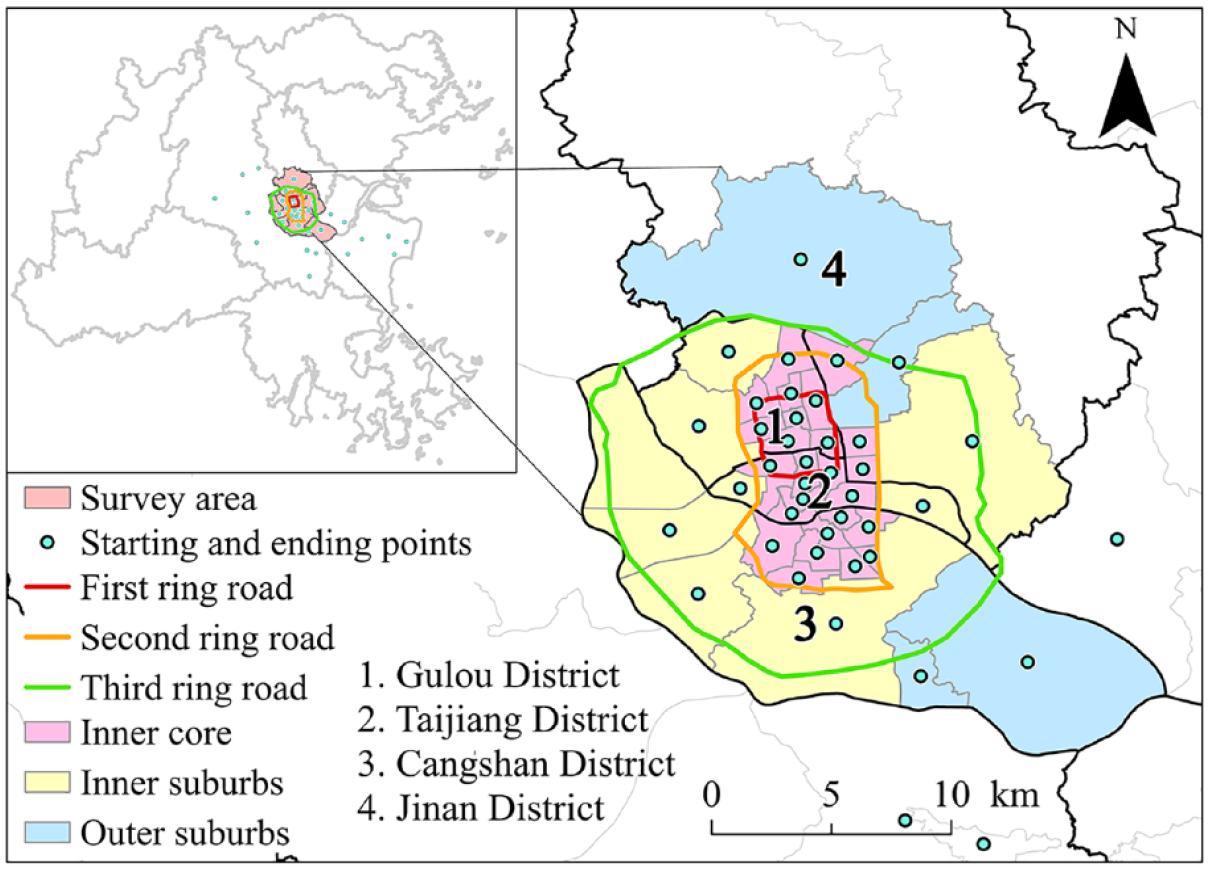
The location map of survey sites in Fuzhou, China.
Data description
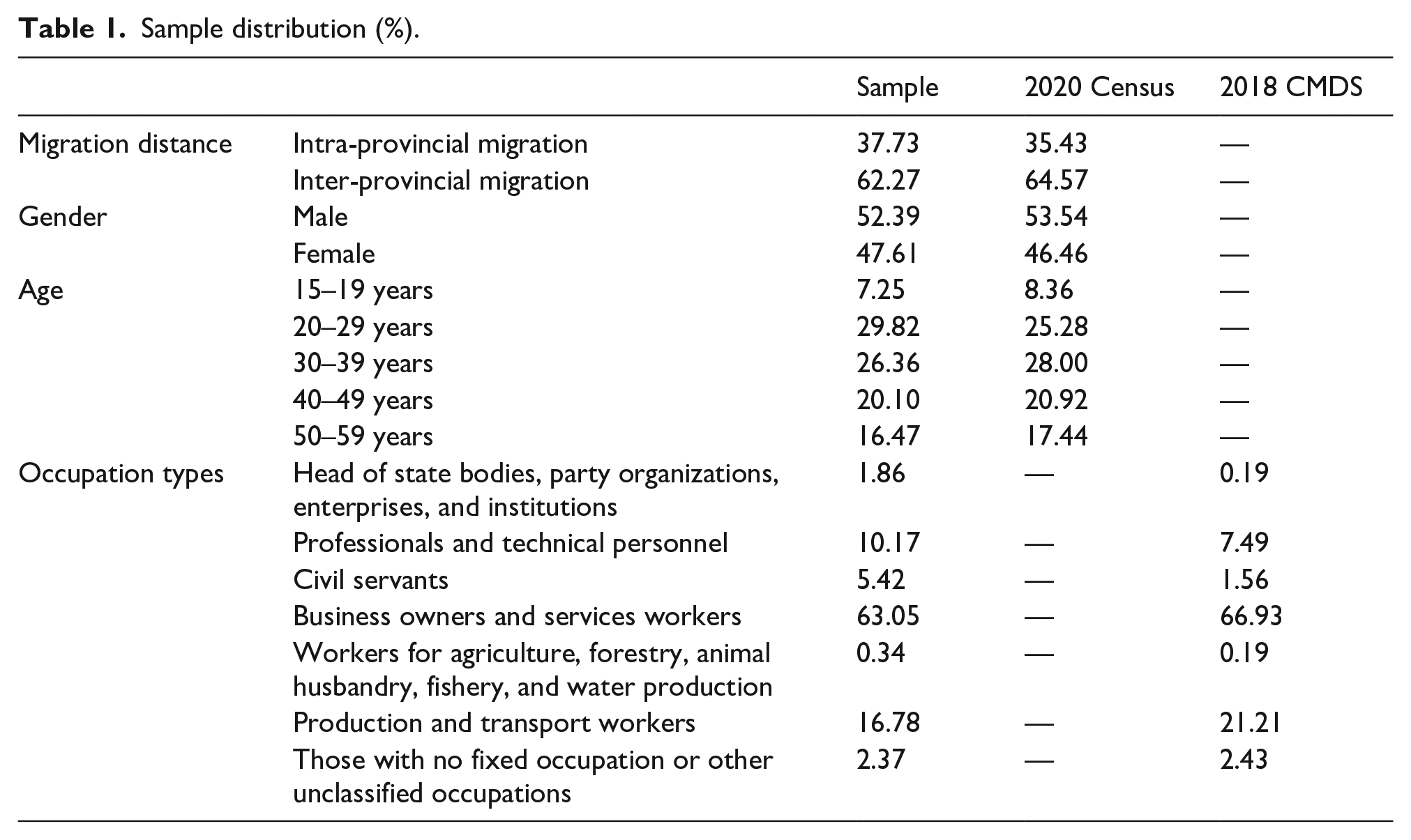
The survey yielded 607 valid respondents, residing in 32 township-level units in four districts. with a coverage rate of 81%, ensuring the proportion of questionnaire coverage in the central city streets. A comparison of the basic characteristics of the sample and that of the population of Fuzhou City as given by the 2020 population census and 2018 CMDS in percentage terms is given in Table 1. The respondents were predominantly young, with 63.43% of respondents aged below 39 years. Male (52.39%) and female (47.61%) migrants were almost equally represented. The most common occupation of the respondents was business owners and services workers, and production workers in manufacturing, transport, and construction. As can be seen in Table 1, these characteristics are generally consistent with those of migrants in Fuzhou City as documented by the 2020 census results, as well as the occupation types of the migrants reported in 2018 CMDS, suggesting that the results of the analysis are of certain reference value for understanding trajectory and location choice of migrants’ residential mobility in China’s big cities, especially Fujian Province.
Sample distribution (%).
In the following analysis, we use retrospective information for the last 10 years, from 2011 to 2022, on the residential histories of individual respondents. The choice of 2011 as the starting year is because, at that time, the urbanization level in China had reached 51.27%, which means China had already entered into the late-intermediate stage of urbanization. The record for each respondent includes residential location, housing conditions, satisfaction with the environment of housing, subjective neighborhood perception, and so on. This residential mobility history data set allows us to retrospectively analyze the location changes and their influencing mechanisms in the residential mobility process of the migrants in Fuzhou City. The 305 respondents (constituting approximately 50.24% of total respondents) in the Fuzhou sample experienced moving between 2011 and 2022, and there are 483 times residential mobility in total. A total of 305 samples with 483 times residential mobility in the final dataset are used for our analysis. In addition, the 30 m annual land cover datasets and their dynamics in Fuzhou City were also used to explore factors influencing location alteration to measure the effect of building density and green space ratio on the location alteration of individuals before and after their relocation.
Variables and model specification
The modeling analysis aims to verify the factors influencing migrants’ residential location change. The dependent variable ‘residential location change’ comprises three categories: (1) relocating inward across the ring road; (2) relocating outward across the ring road; (3) no change in location before and after relocation (both located between the first and second ring roads/between the second and third ring roads/outside the third ring road). Considering that no change in location before and after relocation accounts for most migrants in the sample, no change in location before and after relocation is adopted as the reference category. We use a multinomial logistic regression model to explore the determinants of migrants’ residential location change. The functional form is as follows:

where Pj means the probability that the residential locational changes with type j, P3 is the probability that the residential location is unchanged before and after the residential migration,
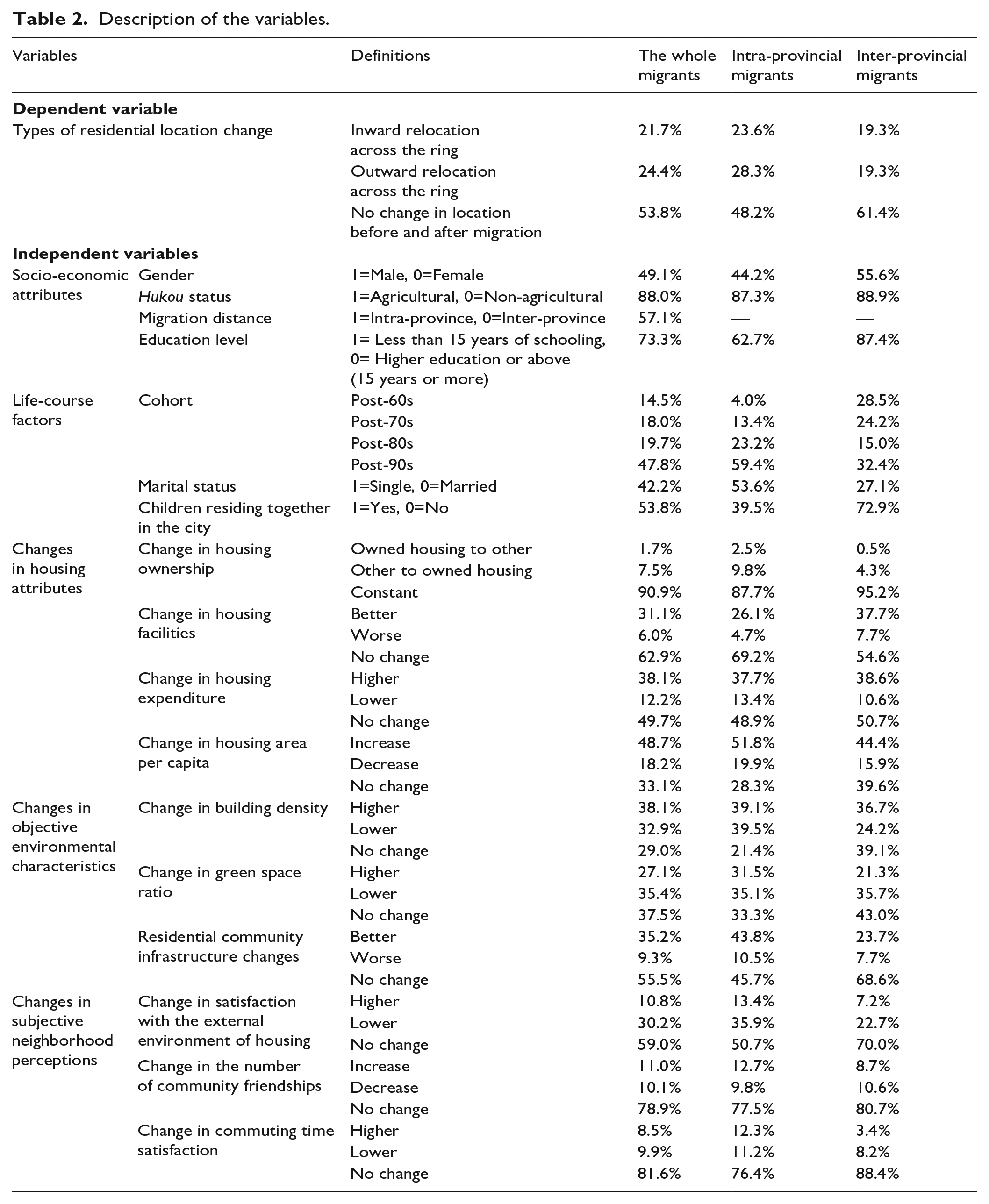
The independent variables include socio-demographics, life course, changes in housing attributes, objective environmental characteristics, and subjective neighborhood perception factors, which are chosen according to the above literature review and the availability of relevant data from the data sources mentioned earlier. Objective environmental characteristics, such as the building density and green space ratio, are mainly used to represent the role of urban renewal. While amenity-based changes caused by urban renewal may result in moving, it is equally important to understand how an individual’s perceived assessment of neighborhood change affects their decision to move (Jones and Dantzler, 2021). Thus, this study explores the effects of community objective environmental change and individual perception of neighborhood change. Table 2 shows the definitions and descriptive statistics of the independent variables. A multicollinearity test reveals that each variable’s VIF values are smaller than 5.5, indicating no collinearity problems.
Description of the variables.
Results and findings
Distance and direction of residential relocation
Table 3 demonstrates the residential mobility of migrants in Fuzhou within the district (including across townships and within the same township). As Table 3 shows, most of the respondents in the Fuzhou survey are more likely to make short-distance residential movements within the same township in Cangshan District and Jinan District. These two districts are the main areas of the demolition of urban villages in Fuzhou City in the past decade. Similar patterns are also reported for Guangzhou, Shanghai, and Beijing (Li and Mao, 2019; Liu et al., 2012; Sun et al., 2021; Wu, 2006). The average residential mobility distance of intra-provincial and inter-provincial migrants is 5770.46 and 4719.33 meters, respectively. This may suggest that most migrants have stayed around the exact general geographic location and tend to make short-distance residential moves and small-range residential spatial adjustments, which is not enough to disrupt the residential spatial structure of the whole city.
The proportion of migrants’ residential mobility within the district (%).
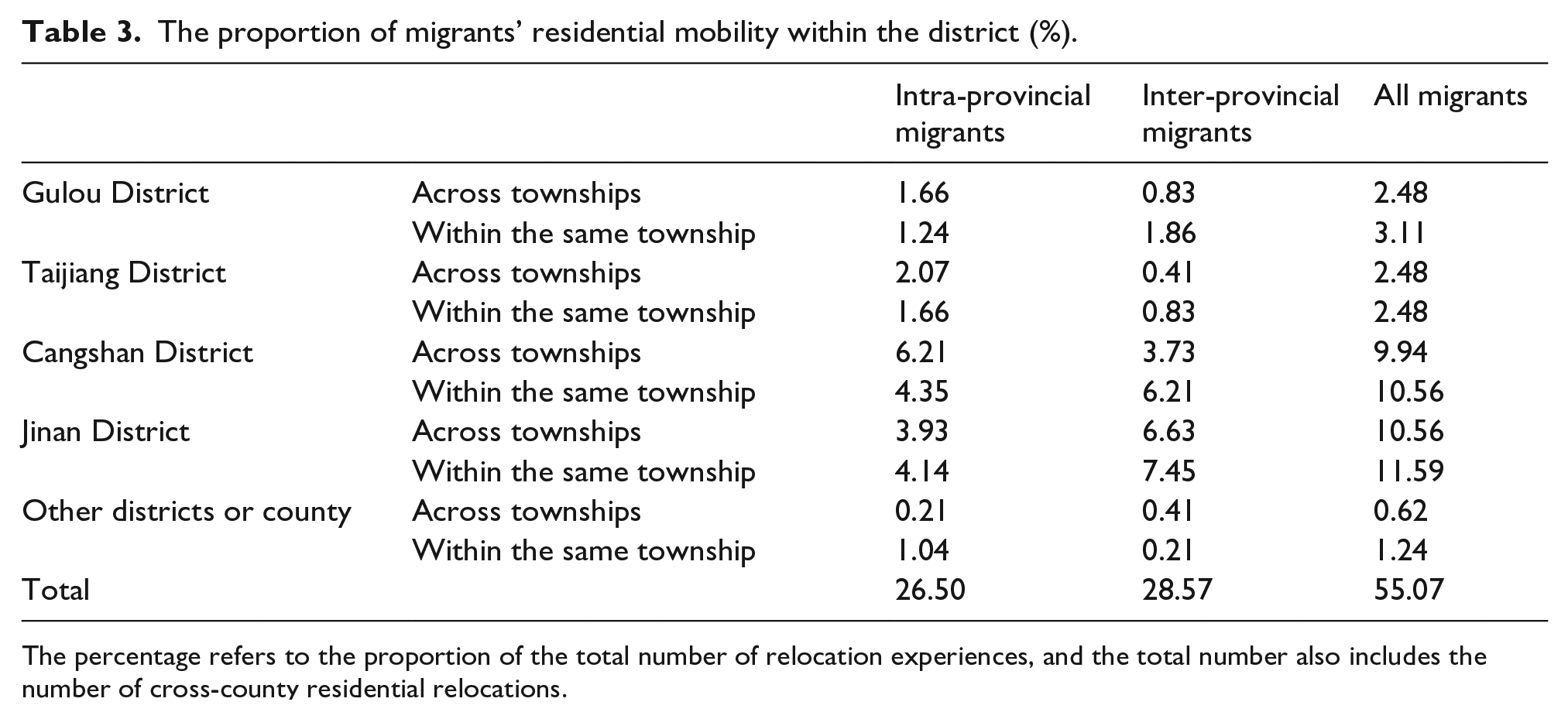
The percentage refers to the proportion of the total number of relocation experiences, and the total number also includes the number of cross-county residential relocations.
As can be seen from Figure 2, in the cross-district residential relocation, Jinan District and Cangshan District are the most important starting and ending points. Overall, the most apparent spatial flow is from Jinan District to Cangshan District, followed by the spatial flows from Taijiang District to Jinan District and Cangshan District, making the two districts both important locations for housing migrants at different durations of residence. Most migrants gravitated toward the suburbs near the third ring road (see Figure 2a). The reason for the relatively large and aggregated mobility flow associated with Jinan District and Cangshan District is closely related to many urban renewal practices, such as the demolition and relocation of urban villages in these two districts in recent years.
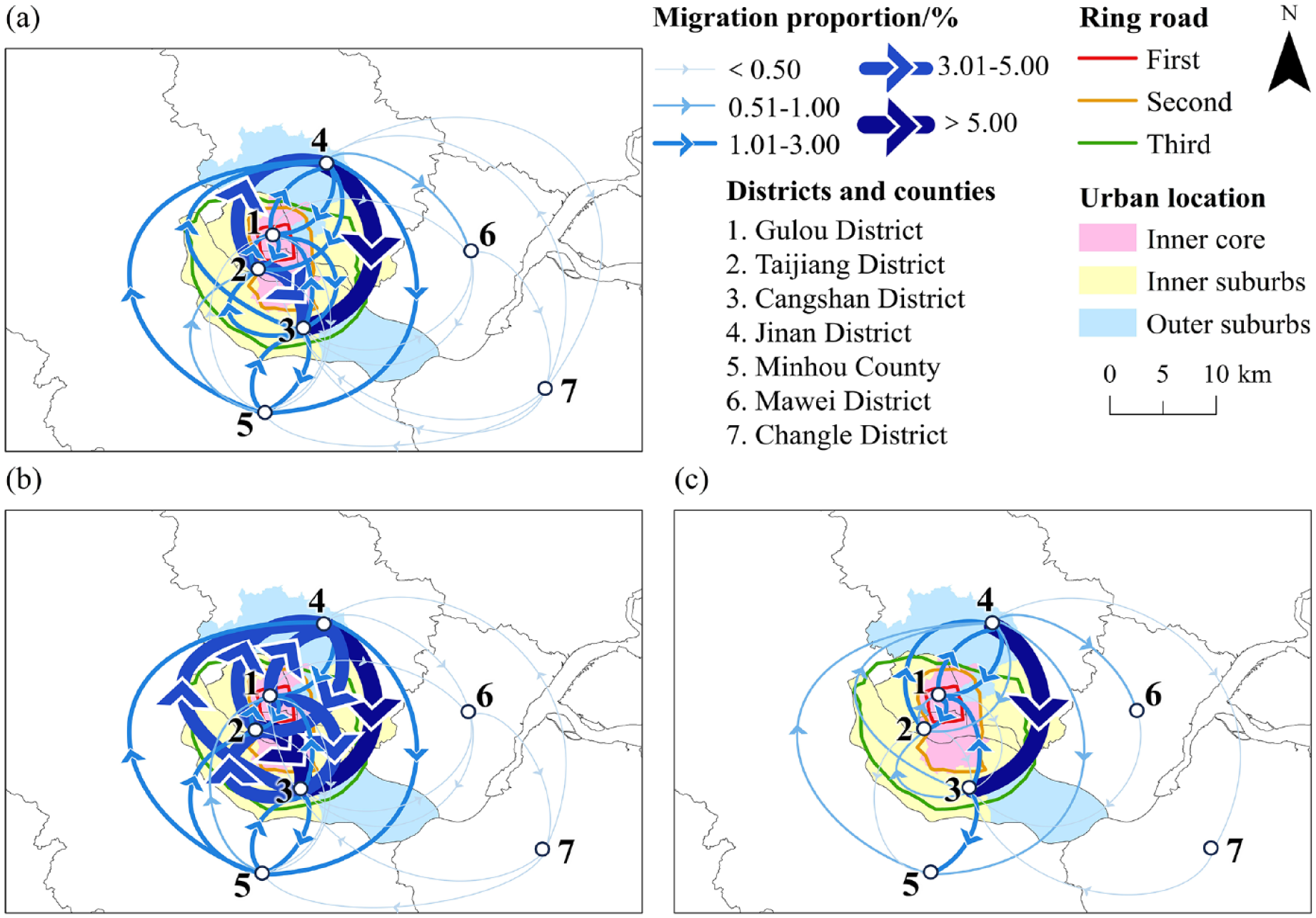
Spatial flows of migrants’ cross-district residential relocation. (a) All migrants. (b) Intra-provincial migrants. (c) Inter-provincial migrants.
As may be expected, the inter-provincial versus intra-provincial migration divide impinges on patterns of migrants’ residential flows (see Figure 2b and c). Compared with the intra-provincial migrants, the inter-provincial migrants have a single and prominent cross-district move flow; the direction of residential relocation is the move from Jinan District to Cangshan District, among which Jinan District is an essential area for their migration back and forth. The percentage of those who start and end their movements in Jinan District is nearly 50% and 40%, respectively. For the intra-provincial migrants, the cross-district migration flow is significantly more diversified and has a broader range of destinations, with more apparent paths between Jinan District and Taijiang District, and tends to spur inner-to-suburb mobility, such as the move from Taijiang District to Cangshan District and Jinan District. This confirms that the inter-provincial migrants have a relatively more concentrated residential location choice than the intra-provincial migrants, and their residential mobility is more restricted to some specific regions. These further suggest that the location choice of these two groups may have different occurrence mechanisms and need to be discussed separately.
Change in residential location before and after residential mobility
In this subsection, we analyze the spatial flows of residential mobility across or within the ring roads. Two observations are evident. First, the results shown in Figure 3a indicate that the movements within the first ring road and between the second and third ring roads are dominant for outward migration, and the movements between the first and second ring roads are roughly balanced. By contrast, the movements outside the third ring road are dominant for inward migration. While both centrifugal and centripetal movements are present, it is clear that many more moves are from the inner core to the inner suburbs, demonstrating an apparent characteristic of the migrants spreading to the city’s suburbs. Second, the results shown in Figure 3b indicate that the frequency of intra-provincial migrants moving across the ring road is roughly balanced rather than concentrated towards the city suburbs. However, the most frequent relocation flow of inter-provincial migrants is a movement between the inner suburbs’ second ring road and third ring road (see Figure 3c). The distribution of relocation movements between the inner core’s first ring road and second ring road is 18.48% and 9.66% for intra-provincial and inter-provincial migrants, respectively.
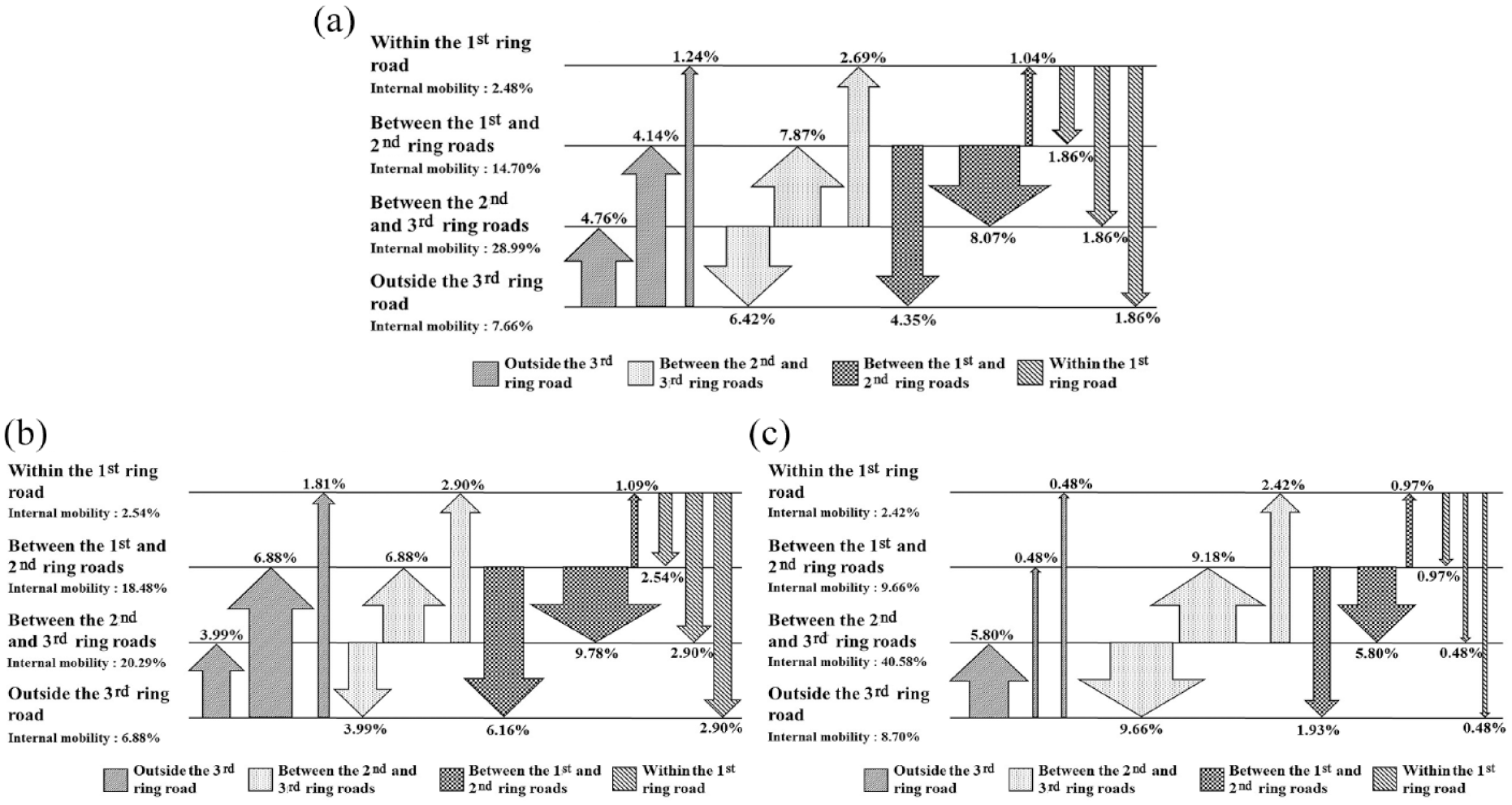
Distribution of migrants’ relocation flows. (a) All migrants. (b) Intra-provincial migrants. (c) Inter-provincial migrants.
Corresponding to the types of residential locational change, it is shown that more than 50% of migrants’ location did not change before and after residential mobility (Figure 4). This demonstrates that most of migrants have stayed around the exact geographic location and tend to make short-distance residential moves. This is consistent with the analysis results above. The percentages of those who migrate inward and outward across the ring roads are both slightly more than 20%. The most significant type of residential locational change is moving between the second and third ring roads both before and after residential migration, and the minor type of residential locational change is moving within the first ring road. Comparing the inter-provincial and intra-provincial migrants, the most significant difference between the two groups is the cross-location migration activity and center bias. The intra-provincial migrants migrate across the ring road, either inward or outward. At the same time, in the situation where the location remains unchanged before and after residential mobility, the proportion between the first and second ring roads is close to that between the second and third ring roads, indicating that the intra-provincial migrants are more concentrated between the first and second ring roads near the city center. On the contrary, inter-provincial migrants’ movements mainly occur within the same ring road, and the proportion of those living on the second and third ring roads before and after migration is as high as 40%, indicating that the residential location of inter-provincial migrants is relatively far from the prosperous areas within the second ring road.
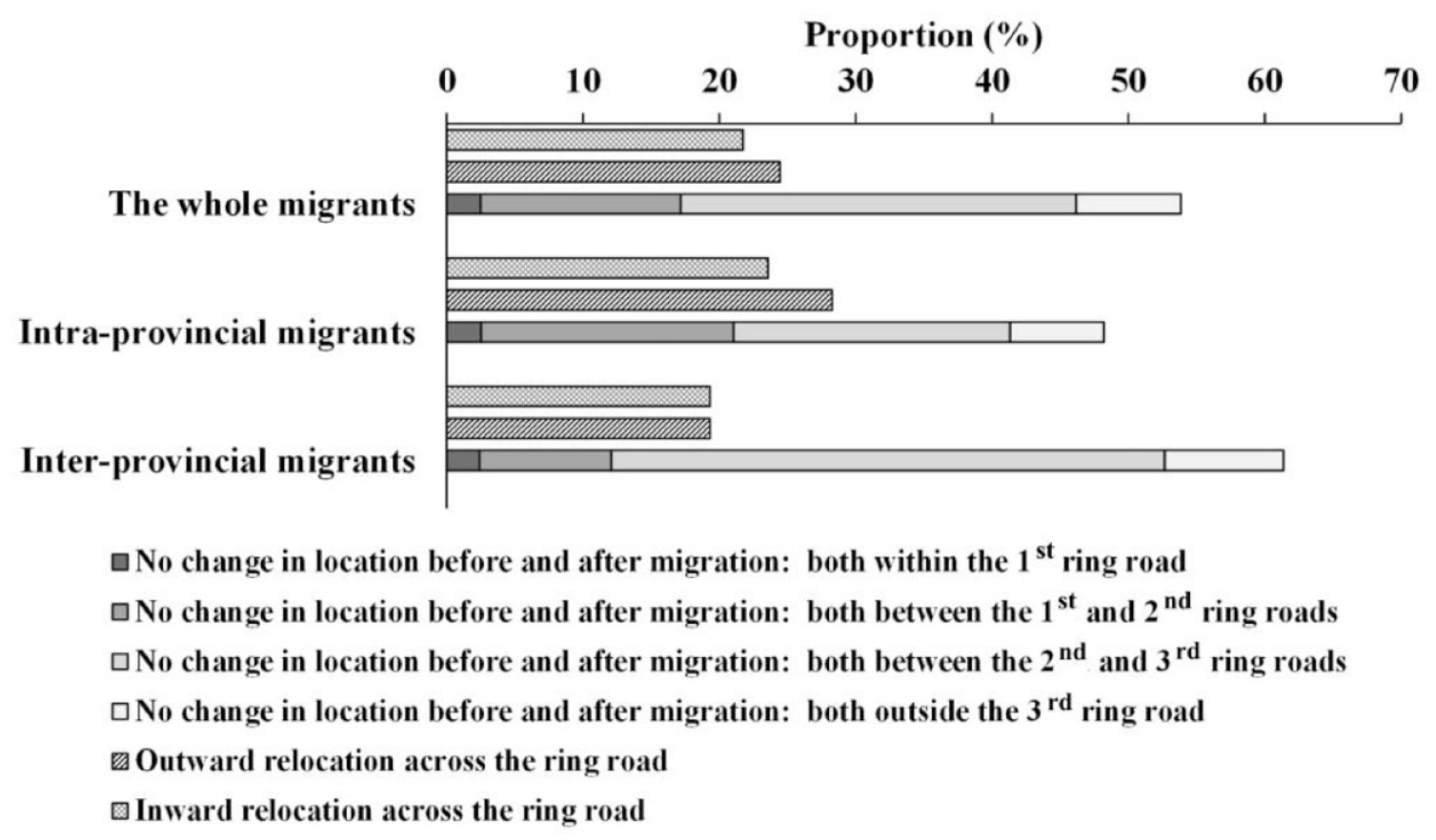
Distribution of residential locational change of migrants’ residential mobility.
Determinants of migrants’ residential location change
To further explore the location choices of migrants in Fuzhou, three multinomial logistic regression models are employed. Model 1 for the whole migrants, model 2 for inter-provincial migrants, and model 3 for intra-provincial migrants were performed to analyze further the effects of the factors highlighted above. Coefficients are demonstrated in the models. The model results are summarized in Table 4. Overall, the independent variables included are reasonably strong predictors, as indicated by the significant −2 log-likelihood statistic and the reasonably high figures for pseudo R2. In general, the results of the multivariate analysis echo the above analysis, shed new light on the determinants of migrants’ residential location change, and contribute to our comprehensive and multi-dimensional understanding of it.
Multinomial logistic regression for residential location changes of migrants.
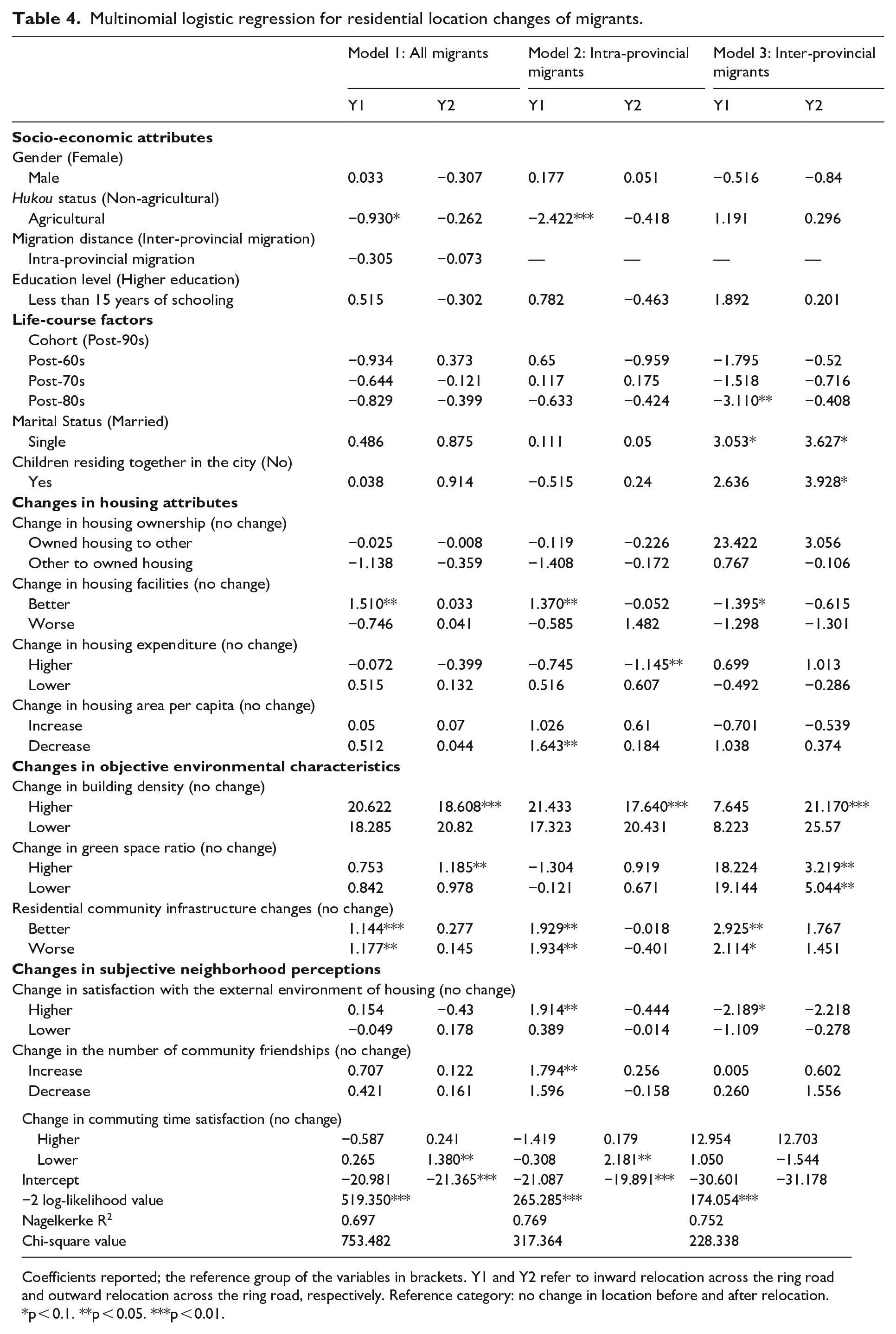
Coefficients reported; the reference group of the variables in brackets. Y1 and Y2 refer to inward relocation across the ring road and outward relocation across the ring road, respectively. Reference category: no change in location before and after relocation.
p < 0.1. **p < 0.05. ***p < 0.01.
First, some common factors resulting in intra-provincial and inter-provincial migrants’ residential location change can be identified. The changes in objective environmental characteristics and subjective neighborhood perceptions factors caused by urban renewal are found to be pivotal in shaping migrants’ residential location change. As shown in Table 4, the change in building density and residential infrastructure is positively related to the location change of both inter-provincial and intra-provincial migrants in the process of residential mobility. Compared with no change in location before and after relocation, whether the community’s infrastructure improves or worsens, it will significantly promote the intra-provincial and inter-provincial migrants to move inward across the ring road. This result indicates that renovating the basic infrastructure of the community can change the homogenization of the migrants’ living space, promote their living space to be no longer limited to the original small areas, but can achieve more considerable changes across the ring road, which to some extent modifies the existing residential structure. Then it reduces the isolation of urban residential space.
Generally, high-density buildings are usually built in the central city. In contrast, low-density buildings are usually built in the suburbs, so if the current residential streets’ density is taller than those in the previous residential streets, the migrants may have already moved inward. However, the result of the model is the opposite, showing that as the building density increases, the migrants move outward across the ring road. This is because, in the past 10 years, the urban renewal areas of Fuzhou City are mainly urban villages located in the suburbs. Consequently, compared with the past, the high density of buildings is not always located in the central city but also in commercial housing communities in the suburbs that urban villages have updated. It indicates that improving the external environment of their migrants’ residential areas is limited to the suburbs.
Although the change in housing facilities and the change in housing external environment satisfaction significantly affect the location change of the two migration groups, the influence direction is opposite. Compared with the unchanged, improving housing facilities and satisfaction with the external environment can promote intra-provincial migrants to relocate inward across the ring road but prohibit them from moving inward across the ring road. This suggests that the inward migration of intra-provincial migrants aims to improve housing conditions. However, it cannot be verified in the inter-provincial migrants. That is to say, the inter-provincial migrants cannot have a superior residential location and good housing conditions simultaneously. To some extent, this reflects the housing and livelihood preferences between the two migrant groups, responding to the necessity and importance of examining migrants’ residential migration from the perspective of group differences mentioned above.
Second, there are obvious distinctions between the determinants of intra-provincial and inter-provincial migrants’ residential location change. For the intra-provincial migrants, those with agricultural hukou find relocation inward across the ring road less conducive, and the higher housing expenditure makes it significantly less likely for them to move outward across the ring road. One possible explanation may be that migrants with agricultural hukou do worse in their living situation and in terms of occupation and income (Wu, 2004), may not be able to afford the high-rent housing in the central city (Huang et al., 2019; Tang et al., 2017), and thus have less incentive to move inward the ring road. At the same time, the decrease in housing area per capita contributes to the inward movement. It is probably because that the housing rent is usually higher in the city center. It indicates that in order to live in an advantageous location, intra-provincial migrants have to sacrifice their housing area per capita. In other words, migrants tend to experience limited improvements before and after residential mobility.
Regarding subjective perceptions factors, the increase in community relatives or friends significantly drives the intra-provincial migrants to move inward across the ring road. The migrants rely heavily on informal social networks for information in their housing searches. Their first city residence is often determined by the location of their relatives or friends who provide substantial assistance. Therefore, the increase in community relatives or friends leaves them to change their residential space and inward movement. People often need to move if they accept a job outside commuting distance (Van Ham and Feijten, 2008). The decrease in commuting time satisfaction has a critical effect on the relocating outward across the ring road. The intra-provincial migrants have higher demands on the quality of life and the comfort of living space. The living space and comfort of the same housing price in the city center are significantly lower than those in the suburbs. Such rental arrangements decrease commuting time satisfaction and lead to relocating outward across the ring road.
For the inter-provincial migrants, compared with the post-90s generation, the post-80s generation does not find inward migration conducive. Compared with marriage, unmarried migrants are more likely to continue moving after they arrive in the cities, relocating inward and outward across the ring road. This indicates that the single migrants without families experienced much more residential instability. Once they set up families, they stabilize in a certain area, referring mainly to the city’s suburbs. This is also illustrated by the role of the child residence variable, as we will see below. Results shown in Table 4 suggest that married migrants with children in the cities are more likely to make outward movements. This indicates that the family migration of the migrants brings about the spread to the outer suburbs. The effect of such events is in line with most findings in the literature (Li, 2004), as for families with young children, the majority of moves resulted in improvements to housing conditions, especially in reducing overcrowding (Clark and Huang, 2003; Gambaro et al., 2017). However, the rent is usually higher in places close to the city center, and the larger the housing space and the better the housing facilities are, the higher the housing rent will undoubtedly be. Thus, for inter-provincial migrants, low housing affordability and high house prices restrict moves into the central city but to the suburban areas, which better suit their needs. Likewise, the more complete the housing facilities, the less likely locational change of inward movement will occur. It can be concluded that for the inter-provincial migrants, the change of residential location caused by the adjustment of housing demand and the pursuit of better housing facilities is not in the direction of the central city. This differs from the results of existing international studies, as studies in Latin American cities suggested that migrants initially living in the central city are more likely to move (Turner, 1968).
Compared with no change, the inter-provincial migrants tend to move outward across the ring road regardless of whether the ratio of green space is higher or lower. This is because once the proportion of green space changes, these spaces are undergoing or have undergone urban renewal, and those migrants move to other urban villages that have not yet been redeveloped. This result is consistent with the spatial patterns for our respondents’ residential mobility, because, as previously noted, the redevelopment of urban villages in Jinan District started earlier than that in Cangshan District and led the migrants to move from Jinan District to Cangshan District. This result further verifies the conclusion that urban renewal actions lead to the outward movement of inter-provincial migrants.
Conclusions and discussion
Migrants’ residential mobility plays an important role in China’s urbanization and urban development (Cui et al., 2021; Sun et al., 2021). Against the specific context of the coexisting of state regulations and market forces, China is a valuable case to contribute to residential mobility theories beyond the contexts of capitalist market economies. Residential location choice is an important issue in the study of residential mobility. In this paper, we argue that there is a trend of differentiation and diversification of inter-provincial and intra-provincial migrants’ residential trajectories and location choice in residential mobility. We conduct a comparative analysis of inter-provincial and intra-provincial migrants in Fuzhou City, China, using retrospective survey data conducted in 2022. It is found that migrants have the characteristics of relocating in the neighborhood within the same streets or towns and transferring among the urban villages. Migrants have a high mobility and instability; when the village they lived in was demolished, most of the migrants had to move to other urban villages. More spatial analysis reveals that long-distance residential relocation generally follows a southward direction to Cangshan District located in the suburbs. This trajectory is especially marked among inter-provincial migrants, as their lesser economic resources make it more challenging to move to the urban center areas. This result shows that their residential mobility is too limited, it indicates entrapment within a highly stratified and segregated housing market, hindering their ability to improve housing and economic opportunities. Consequently, the government should pay great attention to this downward residential mobility in the urban renewal process.
The forces underlying the residential relocation of migrants in Fuzhou are dissimilar to those in market economies and local urban residents in transitional China in that life-course trajectories only play a decisive role in explaining the likelihood of making a location change movement for inter-provincial migrants. On the contrary, our results indicate that for the location change of movers, the changes in the objective environmental and subjective neighborhood perceptions, mainly caused by urban renewal projects, exert the most substantial and common impact. For instance, high levels of building density, green space ratio, and community infrastructure changes tend to spur inward mobility or outward moves. This conforms to the general trend in residential mobility in that urban renewal often plays an important role in migrants’ residential mobility in urban China. More importantly, our findings also point to structural constraints on the residential mobility of migrants. For intra-provincial migrants with an agricultural hukou, moving to a better location was not an option. Such an understanding of migrants’ residential mobility has essential implications for migrants’ housing provision; that is, further hukou reform is needed if urban renewal is not only meant to improve the image of the city but also the migrants’ housing conditions.
Results also highlight notable differences in the determinants of residential location change between the intra-provincial and inter-provincial migrants during the study period. To be specific, the inter-provincial migrants have reacted to the life-course factors, such as marriage and having children in the city, but intra-provincial migrants have not yet taken them into consideration. Housing conditions change—especially housing expenditure and housing area per capita—are only of great importance to intra-provincial migrants’ location change. Changes in the number of community friendships and commuting time satisfaction are also significant factors contributing to the intra-provincial migrants’ location change, consistent with most existing findings.
The main contributions of this paper are reflected in the following three aspects. First of all, it tries to integrate the study of residential mobility and residential location choice together, and expands the study of geographical housing choice behavior. Existing studies on residential mobility focus on analyzing the influencing factors of residential migration decision and its impact on urban spatial structure, but rarely pay attention to the changing characteristics of migrants’ residential location and its influencing factors during residential migration. Secondly, based on the existing literature, this paper constructs an analytical framework which includes life course, changes in housing attributes, and changes in neighborhood environment and its subjective perception to systematically analyze the influencing factors of residential location choice in residential migration. This framework can be used to further study the factors affecting residential location choice in the future. Finally, based on the field survey data, the paper analyzes the characteristics and influencing factors of residential location change in an ordinary Chinese large city—Fuzhou—and finds a conclusion different from the studies in superlarge cities. For example, migrants not only move between urban villages in urban fringe areas, but also move from urban fringe areas to urban center areas, and even move between urban center areas. In addition, the logic behind intra-provincial and inter-provincial migrants is not exactly the same. For the inter-provincial migrants, the residential location change is more due to life-course factors, while for intra-provincial migrants, they can only choose to sacrifice housing space in exchange for inward relocation across the ring road. It can be seen that the findings and conclusions based on ordinary big cities like Fuzhou can modify the existing empirical evidences and theories based on few well-known megacities to a certain extent.
Finally, our study also has some limitations. First, caution is needed in interpreting this outcome, as we did not observe migrants who returned to their hometown, and those who stayed might be a selective group. Second, the survey data was only conducted in Fuzhou and cannot cover more cities. Regional differences might be observed concerning the residential mobility of different groups of migrants due to the variation in tenure structures, housing prices, housing policies, migrant-related policies, and hukou policies. Third, critical life-course events, such as a change in family status, job location and mobility, and age and birth of children in the family, are missing because of the nature of the survey. We cannot investigate how job careers and children’s schooling affects residential outcomes, especially location change. Continuing insights and empirical studies are essential to shed light on the changing pattern of residential mobility in other cities and the future. We plan to extend this study by doing related surveys in other big cities of different types and supplemented by big data such as cell phone signaling to comprehensively analyze the location choice of migrants’ residential mobility and its influence mechanism. We also plan to complement quantitative work by conducting several in-depth interviews in the next round of fieldwork to obtain a more comprehensive and in-depth understanding with a broader representation.
Footnotes
Declaration of conflicting interests
The author(s) declared no potential conflicts of interest with respect to the research, authorship, and/or publication of this article.
Funding
This research is supported by the National Natural Science Foundation of China (NSFC) (No. 41971168). The authors would like to acknowledge with gratitude the support from the NSFC for this research.