



Abstract
In China, the booming platform economy has reshaped the urban labor market, offering entry-level opportunities to urban residents, particularly rural migrant workers. Unlike traditional sectors characterized by occupational segregation between rural migrants and urban locals, platform-based gig jobs, such as food delivery and ride-hailing, have attracted both groups, creating a diverse labor force. This paper utilizes data from a recent questionnaire survey and face-to-face interviews with food delivery workers in Nanjing to investigate socioeconomic disparities among urban locals, urban migrants, and rural migrants all engaged in the same occupation. Among these groups, rural migrant workers have the lowest socioeconomic status and worst living conditions, often perceiving food delivery as a last-resort means of livelihood. Conversely, most urban locals and urban migrants turn to food delivery to supplement their family incomes or as a temporary job while pursuing other career opportunities. Furthermore, both rural and urban migrant workers experience a higher degree of job insecurity compared to urban locals. These disparities in socioeconomic status and subjective well-being among the three groups within the food delivery labor force influence their divergent life prospects in terms of career paths and settlement intentions.
Introduction
Over the past decade, the rise of various online platforms has led to the emergence of a platform economy (Kenney and Zysman, 2020), facilitating the matching and trading between service providers and customers (De Stefano, 2016). These developments have sparked extensive debates regarding the ethics and prospects of platform-based gig work (Goods et al., 2019). Some argue that platform-based work offers flexible employment in a post-Fordist manner (Mulcahy, 2017), expanding employment opportunities and benefiting individuals who are marginalized in traditional labor markets (Graham et al., 2017). Others highlight that the precarious conditions experienced by platform workers undermine their well-being (Goods et al., 2019). In addition, platform-based workers are often hindered from pursuing better employment opportunities and upward social mobility pathways (Goods et al., 2019). Empirical evidence suggests that people who work on labor-exchange platforms often come from disadvantaged groups, while their customers tend to have better socioeconomic backgrounds (Hoang et al., 2020). However, little is known regarding socioeconomic differentiation among individuals who are engaged in the same type of platform-based work.
This study focuses on the increasingly popular food delivery service in China, which has attracted 13 million people from various socioeconomic backgrounds. Three main groups can be identified in China’s food delivery workforce based on their origin and hukou (household registration) status: rural migrants, urban migrants, and urban locals. Rural migrants often belong to the most socially and economically disadvantaged group (Cheng et al., 2013; Meng and Zhang, 2001). Urban migrants, due to their higher educational qualifications and urban roots, have more favorable working and living conditions than rural migrants (Cheng et al., 2013). However, they are also susceptible to discrimination in terms of employment opportunities and occupational mobility (Chen, 2011) and experience more unstable housing conditions than urban locals. Many studies have noted that, when viewed from the perspective of the local-migrant difference, the three subgroups may enter different employment sectors in China’s fragmented labor markets due to their diverse socioeconomic backgrounds (Fan, 2002).
However, within the context of the platform economy, it remains uncertain whether or not there is socioeconomic differentiation among platform-based food delivery workers when all three subgroups participate in the same sector. A comparison of these three groups will reveal patterns of socioeconomic differentiation that may not be observable in other sectors due to selection bias (e.g., manufacturing and construction workers are typically overrepresented by rural migrants). Hence, this paper raises two research questions: (1) Is there a distinct local-migrant gap among food delivery workers? (2) What are the specific disparities in both objective and subjective factors among the three groups of food delivery workers—urban locals, urban migrants, and rural migrants? Using data from a recent questionnaire survey and in-depth interviews conducted in Nanjing, this analysis aims to explore the distinctions among rural migrant workers, urban migrant workers, and local urban workers concerning their socioeconomic attributes, living and working conditions, and future prospects.
The paper is structured into five sections. The next section offers a literature review on the labor force in the platform economy and presents a general comparative introduction to rural migrant, urban migrant, and local urban workers. The third section introduces the study area and data. The fourth section presents the results of the investigation into socioeconomic differentiation among food delivery workers. The final section discusses the findings and concludes with policy implications.
Literature review
The platform economy has recently emerged, driven by advanced computing power and information communication technologies. Companies are developing new services based on digital platforms, sparking a wide range of activities while simultaneously transforming how individuals organize their work, as well as how goods and services are produced and distributed within the economy (Kenney and Zysman, 2020). The platform economy is actively reshaping market structures and the nature of work, creating a plethora of new employment opportunities in urban labor markets (Howcroft and Bergvall-Kareborn, 2019; Veen et al., 2020; Wood et al., 2019). Consequently, an increasing number of individuals are participating in platform work. Workers can in some circumstances enjoy flexibility and autonomy in performing a wide range of tasks, either online or offline, courtesy of digital platforms. The tasks available on these online platforms span a diverse spectrum, encompassing both virtual tasks (intellectual work) and physical or manual services. Notably, some workers choose to engage in the delivery industry, offering consumers on-demand delivery services via app-based platforms (Veen et al., 2020).
Food delivery workers
The development of the platform economy has aroused debates about labor and work. Some argue that the platform economy has created job opportunities, especially for those facing barriers to entry in the urban labor market (Graham et al., 2017). Furthermore, the flexibility of platform work allows individuals to supplement their incomes (Hoang et al., 2020). On the other hand, others highlight the precarious nature of platform work, which includes limited worker rights and labor protection (Goods et al., 2019), as well as digital disparities between the wealthy and the less privileged (Hoang et al., 2020).
Similar to occupational sorting in traditional industries, occupational segregation is also prevalent in platform industries. Platform-based delivery workers belong to the labor-exchange category, often treated as instrumental extensions of the delivery platforms. They typically have more disadvantaged social backgrounds within the platform economy than certain other platform-based workers, such as online salespersons or freelance journalists (Hoang et al., 2020). Sometimes, they are referred to as gig workers, a term defined by four key features: work being scheduled based on customers’ demand, workers providing some or all of the capital, compensation based on a piece-rate basis, and work being arranged and facilitated through platforms (Stewart and Stanford, 2017).
Existing literature argues that platform delivery workers are subject to intense platform control (Jamil, 2020; Wood et al., 2019), unregulated work schedules, and increased competition brought on by platform firms (Defossez, 2021). Additionally, these platform firms do not provide them with adequate labor protections or social insurance, resulting in unstable and even hazardous working conditions (Jamil, 2020; Katta et al., 2020; Veen et al., 2020). However, there are several reasons why many people, not limited to those who would otherwise struggle to enter a local labor market, nevertheless choose to enter the platform-based delivery industry. First, platform-based delivery work meets specific individual needs, providing people with a temporary source of income that aligns with their circumstances (Goods et al., 2019). Moreover, the flexible nature of platform-based delivery jobs allows people to work part-time, benefiting low-wage workers in precarious situations (Hoang et al., 2020). For instance, platform-based delivery work offers individuals a flexible schedule for managing work and life, which is particularly helpful for women who are tied to more domestic responsibilities. Nevertheless, platform-based delivery workers who consider this their long-term profession are hindered by the uncertain future of the platform economy (Lin et al., 2020).
Second, platform delivery employment typically features low entry barriers and minimal skill and material requirements, aligning with labor market demands (Lam and Triandafyllidou, 2021). For example, young, transient international migrants in Australia prefer working in the platform-based food delivery industry due to potential hurdles they might encounter in other local labor market sectors, such as the need for English proficiency (Goods et al., 2019). Likewise, in Canada, immigrants are more likely to be drawn to platform jobs, given the low entrance barriers and limited requirements for social or material resources (Lam and Triandafyllidou, 2021). In the Netherlands, cultural and immigration restrictions have led immigrants to work as platform delivery workers (Timko and van Melik, 2021). Similarly, in Chinese cities both poor locals and migrants are drawn to work in the platform delivery sector because it does not require capital or professional training to enter, so it suits workers with limited employment-related skills and financial resources (Yu, 2018). However the platform economy worldwide continues to face criticism for increasing the prevalence of precarious jobs (De Groen et al., 2017) and for exacerbating significant socioeconomic disparities between the disadvantaged and the affluent (Lutz, 2019; Ravenelle, 2017).
Urban locals, urban migrants, and rural migrants
As it divides urban populations into three subgroups—rural migrants, urban migrants, and urban locals—China’s hukou (household registration) system exacerbates inequities. Despite a gradual relaxation of hukou-engendered restrictions, the system continues to limit migrants’ access to welfare provision in their host cities, including housing, education, and healthcare (Hao and Tang, 2018).
In China, the migrant population in cities consists of migrants from both rural and urban origins. The more vulnerable subset of migrants is typically rural migrants, who experience deeper and more numerous structural disadvantages than urban migrants do. Rural migrants usually encounter greater barriers to employment, especially in higher-quality positions, due to the discriminatory hukou system and to their relatively limited human capital resulting from the rural-urban disparity in educational resources (Cheng et al., 2013; Meng and Zhang, 2001). Evidence suggests that migrants from rural areas frequently work in low-skilled, demanding, and risky jobs that are undervalued by urban residents. In addition, rural migrants often work longer hours but earn less than their urban counterparts (Demurger et al., 2009; Messinis, 2013). Wage disparities between urban locals and rural migrants have persisted over time, and bias against rural migrants has increased (Zhu, 2016).
On the one hand, rural migrants continue to be mostly excluded from affordable housing programs, despite several programs being implemented in recent years to address the needs of low-income residents (Niu and Zhao, 2018; Yu and Cai, 2013). On the other hand, rural migrants’ limited social and financial resources restrict their access to the commodity housing market in urban areas (Yu and Cai, 2013). Most rural migrants reside in rental housing, dormitories, and bungalows with subpar amenities and infrastructure, in contrast to urban locals who often own their homes (Wu, 2004; Xie and Chen, 2018). Additionally, rural migrants are more susceptible than urban locals to experiencing housing instability (Zhou and Guo, 2023). These unfavorable and unpredictable circumstances frequently have a negative impact on the subjective well-being of rural migrants. Moreover, the physical shift to an unfriendly urban environment from a rural home where the soon-to-be migrant enjoyed a full sense of local citizenship and belonging diminishes the happiness of rural migrants, leading them to experience a sense of relative deprivation (Knight and Gunatilaka, 2010).
The disparity between locals and migrants in the job market has been extensively researched. According to the labor market segmentation hypothesis, there are “good” and “bad” occupations, each with its own set of economic characteristics and underlying dynamics (Gordon et al., 1982). Furthermore, there is limited career mobility between these groups of occupations (Doeringer and Piore, 1975). In China, when compared to urban locals, urban migrants are disadvantaged in the job market (Chen, 2011). However, urban migrants are generally in a more advantageous position than rural migrants. Since urban migrants possess urban hukou status in their hometowns and typically have higher educational attainments than those from a rural background, they face significantly less discrimination in the job market compared to rural migrants (Cheng et al., 2013). Additionally, their superior understanding of urban environments and greater urban social capital help mitigate the disadvantages associated with not holding the hukou registration in the city where they live and work (Chen, 2011). For instance, urban migrants are more likely than rural migrants to find employment where they are given formal labor contracts, which enables them to enroll in social security programs in their host city (Cheng et al., 2014). Affordable housing schemes introduced in recent years (Niu and Zhao, 2018) also tend to favor urban migrants, who are more likely to meet application criteria, such as holding professional qualifications and having a stable job (Tang et al., 2023).
Over the last decade, China’s urban labor market has offered a plethora of new job opportunities thanks to the platform economy. The local-migrant gap and segregation that has long existed in traditional urban labor markets seem to be dissolved in the food delivery sector in particular. This manual, low-end employment option appeals to large numbers of rural migrants, urban migrants, and urban locals alike (Yu, 2018). Nevertheless, individuals from different backgrounds may attribute varying meanings to the same low-end job (Scott, 2013). Given that migratory status is associated with different levels of human capital, social and financial resources, and urban welfare provision, it is important to examine whether rural migrant workers, urban migrant workers, and urban local workers differ in terms of socioeconomic characteristics and subjective attitudes regarding food delivery employment.
Based on data gathered through a questionnaire survey and in-depth interviews, this paper aims to investigate the divide between local and migrant food delivery workers in two aspects. First, we compare the socioeconomic characteristics of three subgroups: rural migrant workers, urban migrant workers, and local urban workers. These characteristics include personal attributes, family composition, educational attainments, employment type, and housing status. Second, in order to delve into the underlying mechanisms behind their differences, we further contrast the three subgroups in terms of their working and living conditions and prospects.
Study area and data
Nanjing serves as the primary study area for this research, chosen for two key reasons. First, Nanjing is the capital of Jiangsu Province and a core city within the Yangtze River Delta, one of China’s most developed regions. Rapid industrialization and economic growth have made the city a magnet for migrants from across the country. With a population of 9.31 million (including approximately 2.65 million migrants) and a per capita GDP of RMB 174,520 in 2020, Nanjing is the most prosperous provincial capital in China. Its administrative significance, socioeconomic development, and the sizable migrant population have fostered a thriving platform economy with a substantial pool of platform labor. Second, Nanjing, with its historical legacy of well-established industrial and commercial sectors, provides an ideal case study to explore the emergence of the platform economy in the digital age. It also exemplifies the dramatic transition that an increasing proportion of manual jobs are now platform-based rather than in traditional sectors such as manufacturing and consumer services.
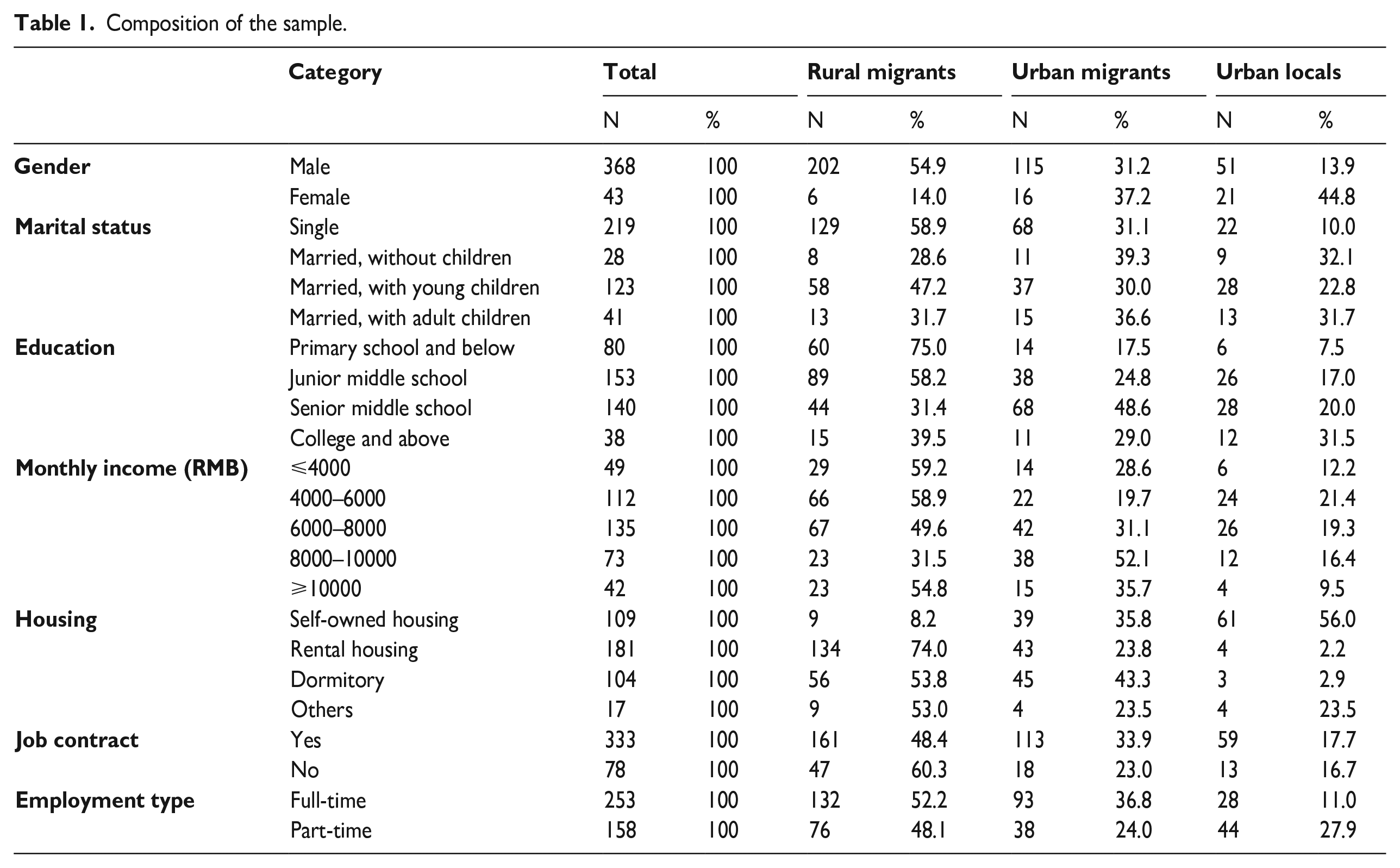
The study collected data through a questionnaire survey conducted in Nanjing from December 2020 to April 2021. The survey targeted platform-based workers, such as express couriers, food delivery personnel, and on-demand drivers. Respondents provided information about their demographic characteristics, living and working conditions, work-related attitudes and aspirations, as well as subjective perceptions of urban life. The survey employed a stratified sampling approach, selecting six urban districts (Gulou, Xuanwu, Jianye, Qinhuai, Yuhuatai, and Qixia) out of the total 11 districts in Nanjing (see Figure 1) as the sample areas. Within each district, participants were randomly chosen from ten locations with high concentrations of platform-based workers, including office buildings, shopping centers, commercial marketplaces, residential neighborhoods, and delivery stations. Up to ten platform-based employees were sampled from each location. For the purposes of this analysis, we specifically focused on the platform-based food delivery workers in the overall dataset. This sub-sample comprised 411 platform-based food delivery workers, encompassing rural migrants, urban migrants, and locals (see Table 1).
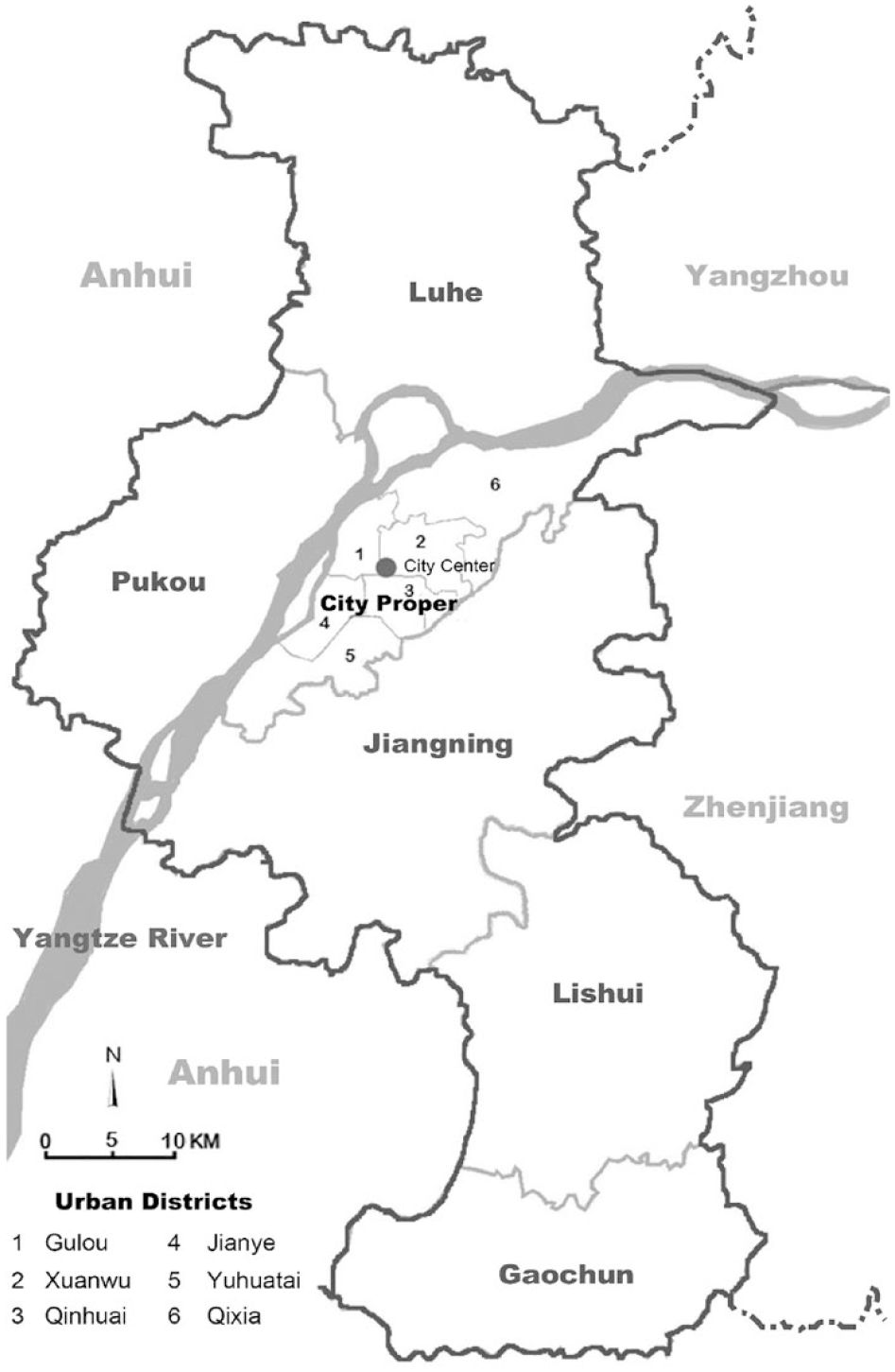
Map of Nanjing.
Composition of the sample.
In addition to the questionnaire survey, we conducted in-depth interviews with a total of 20 food delivery workers in Nanjing. To ensure representativeness, we selected interviewees based on various characteristics, including age, gender, migration and hukou status, and employment type (full- or part-time). These interviews were carried out during the same timeframe as the questionnaire survey, with each interview lasting between 45 and 60 minutes. We recorded the interviews for verbatim transcription and subsequent analysis. The objective of these interviews was to gain insights into participants’ work and life experiences and the reasons they gave for their participation in the platform-based delivery sector.
Socioeconomic divide
Migration status among food delivery workers
The descriptive statistics from the survey are presented in Table 2. Out of the 411 food delivery workers included in the sample, the average age is 31, and 89.5% are male. Just over half the workers are single (53.3%). A majority (72.0%) earn a monthly salary of less than 8,000 yuan, and 80.5% of them have completed at least junior middle school. Regarding housing, 26.5% of the workers are homeowners, while 44.0% and 25.3%, respectively, reside in rental housing and dormitories. The majority of the workers (81.0%) have signed an employment contract, and 61.6% work full-time in this employment.
Socioeconomic features of food delivery workers.
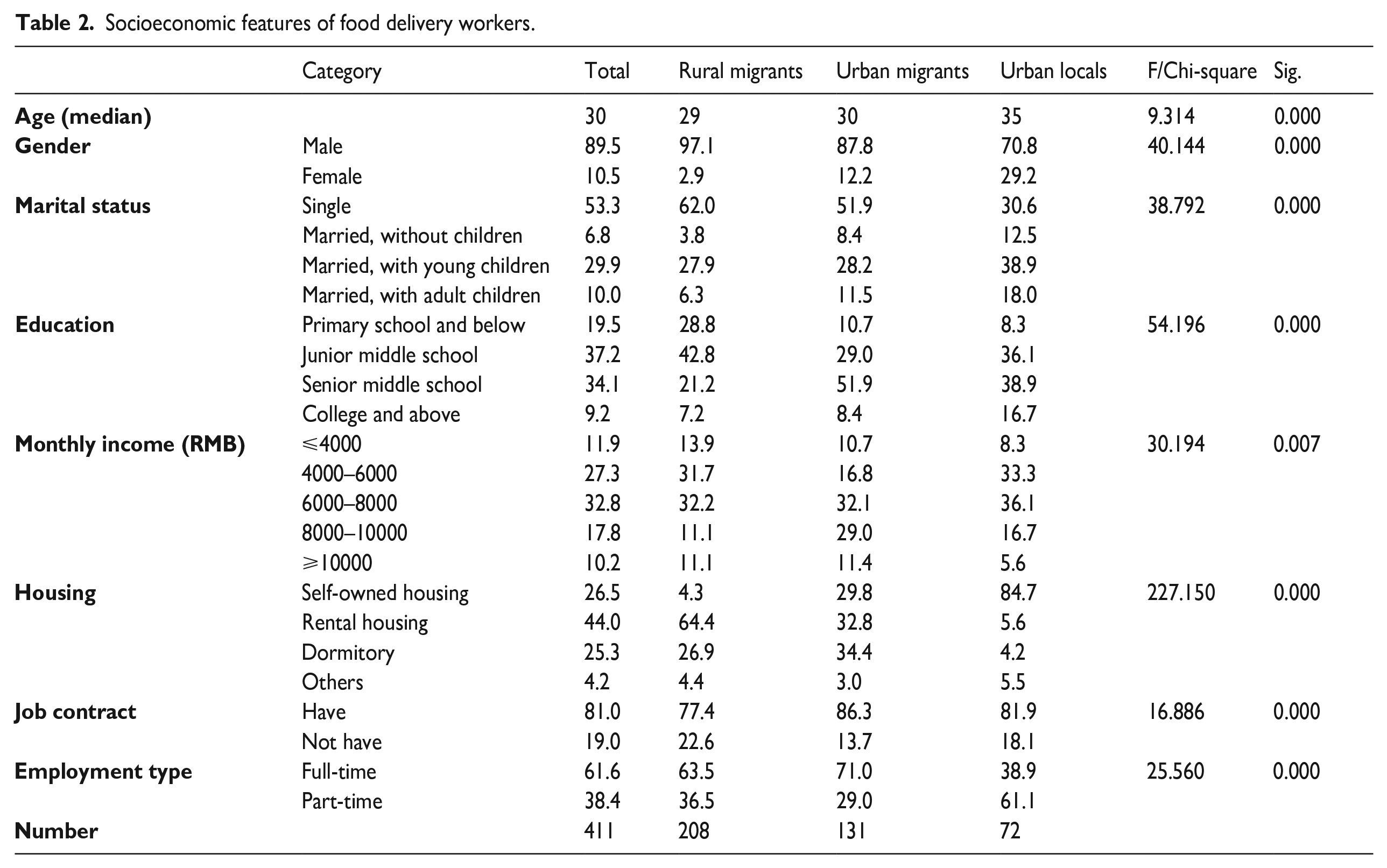
F-tests and Chi-square tests were employed to analyze the disparities among the three subgroups of food delivery workers. Generally, rural migrants (50.6%), urban migrants (31.9%), and urban locals (17.5%) exhibit distinct characteristics across all sociodemographic attributes. Platform delivery companies offer a low-barrier entry point into the local job market, especially for rural migrants who often occupy the lower rungs of urban society (Lam and Triandafyllidou, 2021). Consequently, a higher proportion of rural migrants, as compared to urban migrants, find employment in the food delivery industry. This occupation serves as a lifeline for migrants striving to make ends meet in urban areas, particularly when job opportunities are scarce due to recent economic downturns.
With an average age of 35, local urban workers in this sector are generally older than both rural migrant workers (29) and urban migrant workers (30). Among rural migrant workers, females only constitute 2.9%, while females account for 12.2% of urban migrant workers and 29.2% of urban local workers. Additionally, rural migrant workers are more likely to be single (62.0%) compared to urban migrants (51.9%) and urban local workers (30.6%). Conversely, urban local workers are more likely to be married with young children (38.9%) than rural migrant workers (27.9%) or urban migrant workers (28.2%). This suggests that young single migrants seeking a means to live independently in the host city and married urban locals facing financial stress tend to be drawn to the food delivery industry. For many local housewives, delivering food is the only possible way to combine work and household responsibilities, thanks to the flexibility offered by platform-based delivery jobs.
My husband works in manufacturing, and I had been a housewife for ten years with no income. As our daughters have entered kindergarten, financial pressure is compelling me to work. However, I still need to take care of the girls. Are there any other job options for me besides food delivery? (Mrs. Zhang, 37, urban local)
Compared to urban migrant and local urban workers, rural migrant workers generally have lower levels of education. 71.6% of rural migrant workers have completed only junior middle school or less. In contrast, 16.7% of urban local workers have at least an undergraduate degree, and 60.3% of urban migrant workers have completed high school or higher education. However, it is noteworthy that only 5.6% of local urban workers earn a monthly wage of 10,000 yuan or more, compared to 11.1% of rural migrant workers and 11.4% of urban migrant workers. Presumably, this is because local urban workers generally have less intensive work patterns, and because food delivery does not discriminate against the undereducated and underprivileged. Rural migrants often face challenges in securing higher-paying employment in destination cities due to their limited institutional support and human capital. They tend to work in low-skilled manual sectors and despite their hard work, their earnings are typically modest. However, in the context of the platform economy, they have the opportunity to earn more than they would in traditional manual jobs. As Mr. Miao, a 30-year-old rural migrant, puts it, “Because of my lack of education and skills, I am unable to find a job that pays more than delivering meals.” Although urban-urban migrants reportedly face less discrimination in the job market (Cheng et al., 2013) many of them also consider that food delivery work provides an accessible and relatively well-paying option in large cities, especially when competition for high-paying professional jobs is increasingly fierce. Ms. Wang, a 32-year-old urban migrant, shares her reason for joining food delivery: “Despite having a college degree, I’m still unable to compete for decent, well-paying jobs with my local counterparts. Delivering food is laborious, but it pays better than the average white-collar job.”
In terms of living conditions, the majority of rural migrant workers reside in rental housing (64.4%), whereas the proportions for urban migrant workers and urban local workers are 32.8% and 5.6%, respectively. A significant 84.7% of urban local workers own their homes, while homeownership decreases to 29.8% for urban migrant workers. Regarding working conditions, most food delivery workers have a working contract. Urban migrant workers are more likely to work full-time (71.0%) compared to rural migrant workers (63.5%) and urban local workers (38.9%). Financial constraints and limited access to public services compel rural migrants to take on multiple jobs to boost their incomes, so food delivery is not necessarily a good full-time option for them. Urban locals, while facing fewer survival pressures, still need to cover high living costs in the city. For many of them, food delivery is not their primary source of income but rather a side job to earn extra cash. It is common for one spouse to have a stable full-time job, while the other works full- or part-time delivering food. Ms. Yang, a 28-year-old mother, voices a typical arrangement: “I started delivering food when my son entered kindergarten. I can only work part-time because I must take care of him. I make around 2,000–3,000 RMB per month to supplement my husband’s income.”
Precarious life
Existing literature highlights the precarious conditions faced by platform-based gig workers, who are subject to extensive control by digital platforms while lacking labor protection (Veen et al., 2020). In China, different groups of migrants experience varying levels of precarity. Local urban workers typically enjoy homeownership in the city, secure income sources from family members, and access to urban welfare tied to their local hukou. Despite the demanding nature of food delivery work, the pressures and financial constraints experienced by urban locals are much lower than those experienced by migrants. This reduced sense of precarity softens their views on the challenging working conditions. Furthermore, as many of them engage in food delivery as a part-time job, they appreciate the flexibility and mobility that gig work offers.
I don’t find the work particularly toilsome because I only do it part-time and I can take breaks while waiting for new orders. If I feel tired or have other things to do, I take fewer orders or go home earlier. Compared to many other jobs, this work is quite flexible, and I enjoy it. (Mrs. Yang, 28, urban local)
In contrast, urban migrant workers are often in more precarious conditions and have lower subjective well-being compared to local workers. This is primarily due to their limited social networks in their host cities and the challenges they face in accessing local social security and welfare benefits (Cheng et al., 2013). Additionally, most of them reside in rental housing and dormitories and have to endure high costs of living, which oblige them to take the delivery work more seriously than their local counterparts. According to Mr. Wang (45, urban migrant), “To earn more money, I usually take many orders, especially during peak hours. Sometimes, I deliver food late, and customers complain, resulting in deductions from my earnings. I feel unhappy and helpless.”
Nevertheless, urban migrant workers typically have better employment prospects than rural migrants and thus tend to view gig work as a temporary option. This is due to their relatively higher educational backgrounds and urban upbringing. While striving in their jobs to make ends meet, they generally do not see food delivery as a long-term career choice. For Mrs. Zhang (32, urban migrant), “The job is demanding, and I don’t plan to do it forever. Someday, I’ll change jobs, but for now, I need to earn some money. . . While the pay is good, I’m encouraged to work continuously and find it hard to relax during work.”
For rural migrant workers, food delivery is generally viewed as a reasonably well-paying job. However, Most of them are dissatisfied with their employment conditions. Compared to urban migrant and urban local workers, rural migrant workers are more likely to find themselves trapped in precarious situations due to institutional barriers, limited human capital, and meager financial resources resulting from the wide rural-urban divide (Hao, 2021). They rely more heavily on their earnings to meet basic needs and often strive to maximize work intensity by fulfilling as many orders as possible simultaneously and extending the duration of work, both of which significantly jeopardize work safety as well as physical and mental health. However, despite being entitled to minimal safety precautions and insurance policies, safety and health are often sacrificed for speed and efficiency. Mr. Xie (24, rural migrant) complains, “I’m constantly worried about receiving bad ratings from customers. . . If I get a low rating, I get less money. . . The job is unstable, and I receive little support from the platforms.”
In general, upward social mobility is limited for rural migrants. Many rural migrant workers we interviewed had engaged in other manual work, such as manufacturing or waitressing, before taking up food delivery jobs. Nevertheless, food delivery work has not clarified their futures. Mr. He (31, rural migrant) says, “I’m married with a young child, but I don’t own a home in the city. Life is quite challenging for me. Currently, I make a living by delivering meals, but I’m uncertain about the future.” For most rural migrant workers, who live in substandard conditions, homeownership is an unrealistic dream.
Perspectives and prospects
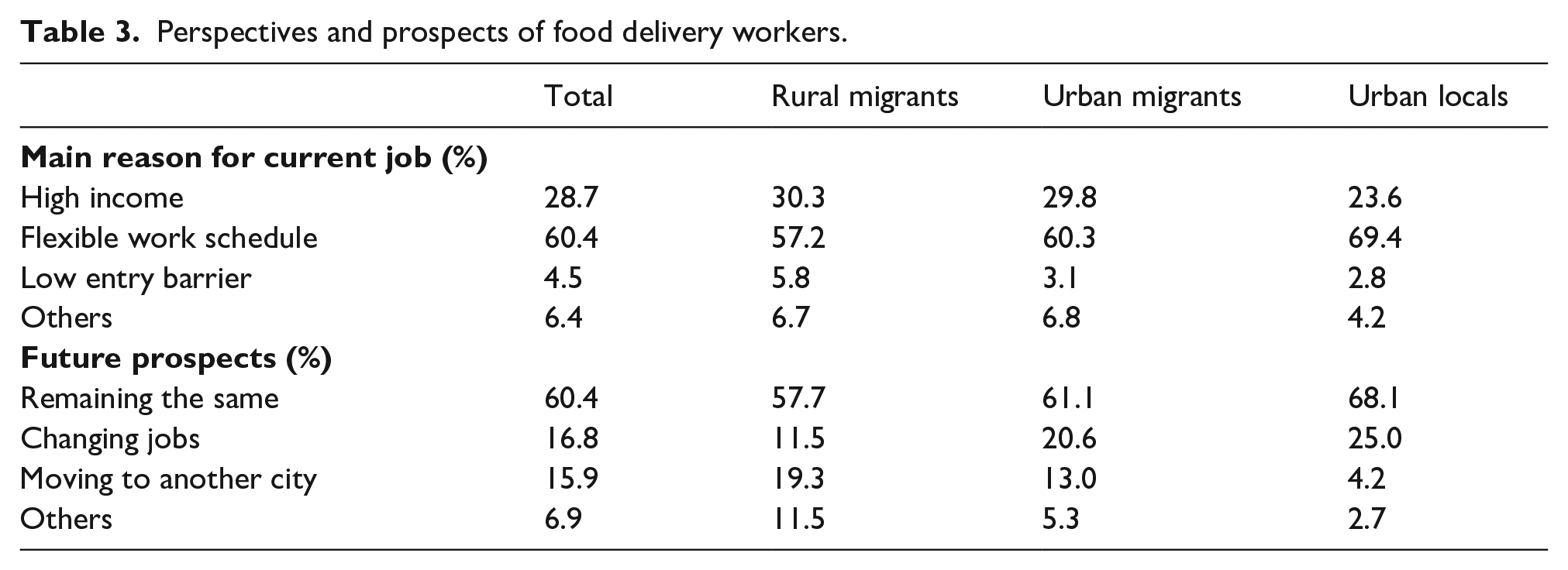
Given their disparities in social status and available options, urban locals, urban migrants, and rural migrants tend to perceive the attractiveness of food delivery jobs differently (Table 3). All three groups appreciate the flexibility food delivery offers. Flexible work schedule is cited by 69.4% of local urban workers, 60.3% of urban migrant workers, and 57.2% of rural migrant workers as the main reason for doing food delivery jobs. This aligns with the fact that a higher proportion of urban local workers take food delivery as a part-time job, while rural and urban migrants are more likely to deliver food as a full-time job. Although the flexibility of the food delivery job allows them to earn money while attending to other family obligations such as childcare and caring for elderly parents (Hoang et al., 2020), it often means sacrificing their leisure time to make up for hours devoted to family responsibilities throughout the day.
Perspectives and prospects of food delivery workers.
The platform requires me to work at least 8 hours; however, I can follow my own schedule. After my son goes to school, I start working. I pick him up at 4:30 pm when he finishes his classes, and then I work for another two hours before going home to prepare dinner. (Mrs. Zhuo, 48, urban migrant)
Another major reason for working as a food delivery rider is the pay. It was the main reason why 23.6% of urban locals, 29.8% of urban migrants, and 30.3% of rural migrants in our sample chose to participate in this sector. Due to low qualifications and institutional discrimination, rural migrants often end up in low-skilled manual labor jobs with low earnings (Cheng et al., 2013; Meng and Zhang, 2001). Consequently, they are willing to endure considerable hardship in food delivery work for relatively high pay. Despite many rural migrants viewing food delivery as a “dead-end” job, they are basically unable to secure alternative employment with a salary comparable to what they can earn by delivering food.
I used to work in a construction company, but the earnings were quite low. So, I came to Nanjing to take up food delivery work. Although I work every day from morning to night, I can earn much more—around 10 thousand yuan per month. I have a son in high school and my wife had to stop working due to illness, we need money badly. (Mr. Xu, 42, rural migrant)
Urban migrants generally experience less social and institutional discrimination. However, they face challenges when competing with urban locals for high-paying jobs (Cheng et al., 2013), partly due to a lack of social capital. The high cost of living and the desire for homeownership in the host city sometimes lead urban migrants to give up white-collar jobs in favor of potentially higher pay in the food delivery sector. Both rural and urban migrants are more likely than urban locals to consider “high income” as the primary reason for taking up a food delivery job.
In terms of future prospects, a higher percentage of local urban workers are willing to continue with the job (68.1%), followed by urban migrant workers (61.1%), and rural migrant workers (57.7%). Meanwhile, 11.5% of rural migrant workers are considering changing jobs and 19.3% are considering moving to another city, while 20.6% and 13.0%, respectively, of urban migrant workers are contemplating the same. Only 4.2% of local urban workers plan to leave the city. In most cases, migrants find it challenging to settle down in the host city. This is especially true for rural migrants, many of whom expressed an intention to return to a small city or town nearer home.
My son has trouble getting into a good public school if I don’t own an apartment in the city, but I can’t afford one. I’ve been thinking about moving back to a small county-level city near home, but I would earn very little there. (Mr. Gao, 33, rural migrant)
For urban migrant workers with relatively higher qualifications, manual labor jobs like food delivery often serve as a steppingstone to settling down in the city before pursuing a more desirable career path. Several of our interviewees mentioned their goals of starting their own businesses or seeking secure white-collar jobs. For instance, Mr. Lu (28, urban migrant) said, “I plan to do this job for just one or two years, because competition is becoming fiercer, and earnings are declining. Eventually, I might return to my hometown to open a snack bar.”
In contrast, many of our local urban interviewees turned to delivery work to fulfill both financial and household obligations, usually for a specific period. For example, several female workers mentioned that they would either change jobs or stop working once their children had grown up. A young mother said, “I choose to do this only because I can take care of my son during the daytime. When my son has grown up, I’ll do something else” (Mrs. Yang, 28, urban local).
Conclusions
As in many developing countries where occupational segregation between locals and migrants is evident (Liu and Meng, 2019), traditional sectors in urban China exhibit a clear urban-rural divide. Urban citizens often secure more decent and higher-paying jobs, while rural migrants are more likely to take on the so-called 3D jobs (dirty, dangerous, and demanding). The emergence of the platform economy has created a job market that attracts people from diverse backgrounds. When both urban and rural citizens, locals as well as migrants participate in jobs on the same food delivery platforms, it provides a unique opportunity to examine how hukou and migration status affect life outcomes and prospects within this labor force. This paper offers insights into the local-migrant gap in a new setting in which the platform economy provides both locals and migrants with new employment opportunities.
This paper has identified significant socioeconomic disparities among food delivery workers in Nanjing. Rural migrants, lacking sufficient human capital and financial capacity, often resort to taking multiple jobs or working long hours as delivery workers. Their substandard housing conditions and lack of welfare coverage worsen their living quality and subjective well-being. In contrast to urban local workers who benefit from home ownership and social welfare, migrant workers are more exposed to and tolerant of exploitation and health and safety hazards. While a small proportion of delivery workers can earn an income much higher than the average salary offered in the manufacturing sector, these workers are sacrificing safety, health, family and leisure time, and even risking their lives to complete as many as 80 orders a day. Despite the extremely precarious conditions, there is no clear career pathway promising stable and certain prospects. Therefore, most migrant workers view food delivery as a temporary means of making a living and do not consider it a long-term job.
Gaps in socioeconomic background and welfare benefits between locals and migrants result in vastly different life outcomes. For migrant workers, especially those from rural origins, limited human capital and institutional constraints largely hinder their upward social mobility. Urban local workers often view food delivery as a convenient option to supplement household incomes. Urban migrants use it as a steppingstone towards settling down and moving up the social ladder. However, for rural migrant workers, it is often their last and only resort for survival in big cities in China. Despite engaging in the same platform-based gig job, these three groups experience different lives and face distinct futures. While the platform economy is generally more inclusive and less discriminatory against migrants, it exposes them, particularly those from rural areas, to more precarious conditions.
We conclude by advocating for regulatory interventions in the platform economy to strengthen labor rights and for policies aimed at reducing rural-urban inequality. Inadequate welfare provision and labor protections have allowed platform giants like Meituan and Eleme to dominate the Chinese market at a low cost and revolutionize the lifestyle of urban citizens. However, this success has come at the expense of workers’ rights and well-being. The power imbalance between platform companies and workers has created a labor market notorious for safety risks, labor exploitation, and unfair compensation. In particular, rural migrant workers not covered by urban welfare, bear a disproportionate burden of the hidden costs of the platform economy.
To address these disparities, urgent policy changes are needed, particularly in insurance and healthcare. First, labor relations between platform companies and delivery workers must be clarified, and a comprehensive insurance scheme shared by both parties should be established to safeguard basic worker rights. Second, platform companies’ rigid algorithms for management and control need to be adapted to allow for truly flexible arrangements and a safe and healthy working environment for delivery workers, especially during peak hours and bad weather conditions. Third, the establishment of a labor union is essential to articulate the demands of delivery workers and to negotiate with platform companies.
Footnotes
Declaration of conflicting interests
The author(s) declared no potential conflicts of interest with respect to the research, authorship, and/or publication of this article.
Funding
The authors appreciate the constructive comments from the editor and anonymous reviewers on the previous version. This research is supported by the Research Grants Council of the Hong Kong SAR, China (Project No.: HKBU 22609018), the National Natural Science Foundation of China (Project No.: 42071179), and the Social Science Foundation of Jiangsu Province (Project No: 23SHB003).