



Abstract
The COVID-19 pandemic combined with lockdown measures fundamentally changed urban family life worldwide. This article compares how different household types—singles, couples, nuclear families, and extended families—experienced the lockdown during the first wave of the COVID-19 pandemic in Beijing. It argues that not only the household responsibilities associated with household types at the household level, but also the family responsibilities on a larger geographical scale must be considered to understand the challenges faced by different households under the COVID-19 lockdown in urban China, where intergenerational supports such as family responsibilities to other generations living apart are prevalent during the pre-pandemic stage due to the collectivist culture. This article contributes the lens of household diversity and geographic distance to understanding everyday lives of families under lockdown and to reflect on family transformation in urban China over the past decades more broadly. Through the study of families, it also has implications for neighborhood planning and management aimed at mitigating a pandemic’s negative impacts.
Keywords
Introduction
The COVID-19 pandemic combined with lockdown measures fundamentally changed urban family life worldwide. Existing scholarship has sought to understand how COVID-19 lockdown is experienced differently by households (Brock and Laifer, 2020; Feinberg et al., 2022). Household type is a factor that needs to be considered. For different household types, there are differences in household responsibilities and demands, mediating the influence of COVID-19 on the individual and family life. Existing research, however, has primarily focused on childcare obligations (Beasy et al., 2021; Holt and Murray, 2022; Manzo and Minello, 2020), mostly in nuclear families, while household responsibilities in other household contexts have received little attention. In this article, we suggest that studying the influences of the COVID-19 lockdown across household types could not only enrich our understanding of household diversity of a pandemic’s effects, but also inspire neighborhood planning and management responding to a pandemic to take the neighborhood’s constitution of household types and the differentiated demands of households into consideration.
Over the past several decades, urban families in China have undergone significant changes as a result of China’s profound socioeconomic and cultural transformations (Whyte, 2005). One of the important changes is reflected in the household type. From 1980 to 2010, the proportion of nuclear families in urban China decreased from 45.9% to 35.3% and extended families changed from 13.2% to 11.5%, while the percentage of couples significantly climbed from 5.7% to 21% and singles increased from 9.2% to 17% (Wang, 2020). These changes are partially attributable to the decision of adult children to no longer reside with their parents (Wang, 2020). Nevertheless, because of the collectivistic culture, they live close to one another to provide care and emotional support (Gan and Fong, 2020; Liu, 2017), which constitutes an important part of their family responsibilities (in addition to household responsibilities). One’s household responsibilities could be shared by intergenerational support across geographical distance. This makes urban family life in China more complex. Therefore, it is within urban China that examining household types combined with household responsibilities at the household level and family responsibilities on a larger geographical scale will lead to a better understanding of the challenges faced by different households and how they deal with them during the pandemic. Nonetheless, it is relatively understudied.
To fill this gap, this article compares how household and family responsibilities are (re)negotiated in different household types—singles, couples, nuclear families, and extended families—and the consequences of individual and family life due to lockdown in the first wave of the COVID-19 pandemic in Beijing. It is based on a case study of 26 participants who completed time-geography diaries and participated in depth interviews. More broadly, this article seeks to reflect on urban family life and the family transformation in recent decades in urban China. As Lebow (2020) contended, “coping with the COVID-19 presents a once in a lifetime international social experiment about family life”. In doing so, this article makes two contributions to existing scholarship on the COVID-19 pandemic. First, this article draws on the comparative method to understand the household diversity of how a pandemic has altered family life. Second, it offers a geographical distance perspective by considering the role of non-resident family members in the allocation of household and family responsibilities, which has received little consideration in the existing COVID-19 studies, but is essential to understanding everyday lives in Chinese society with collectivism (Chen, 2015; Zhao et al., 2016).
In the next section, we review relevant studies and build a conceptual framework for this research. The third section introduces the research background and methods. The fourth section analyses household responsibilities at the household level across household types. Then we discuss how family responsibilities on a wider geographical scale play a role. Conclusions and discussions are provided in the final section.
Literature review and conceptual framework
Daily life of family members within urban context are associated with different levels of space-time constraint since certain activities can only be carried out at particular times or places (Hägerstraand, 1970). Over the past few decades, numerous research in the fields of urban studies, transport studies and geography have focused on the implications of household type on the urban space-time constraints of family members. According to studies, the presence of (young) children distinguishes the household duties of adults in nuclear and extended families from those of singles and couples (Fan, 2017; Johnston-Anumonwo, 1992; Lee and McDonald, 2003; Schwanen, et al., 2007). As a result, they show different pictures of their daily activities. Additionally, the presence of more household members, such as the elderly in extended families, tends to increase intra-household interactions, making coordination and the performance of household tasks more complicated (Feng et al., 2015; Ta et al., 2019).
During the COVID-19 pandemic, a series of lockdown measures posed more space-time constraints on urban mobility (Trasberg and Cheshire, 2021), but they might have had different meanings for different household types. Compared with singles and couples, households with children were significantly influenced by school closures. There have been many studies examining how parents adjusted their daily routines to adopt the children’ transition to home-based learning (Lee et al., 2021). Parents perceived their role as “teaching” and “educating” their children, implying more household burdens (Beasy et al., 2021; Holt and Murray, 2022). Some parents reported that balancing work from home with childcare was difficult (Freeman et al., 2022; Manzo and Minello, 2020). Most of these studies are based on surveys from Western countries, such as those in Western Europe, Australia, and North America. They have an underlying assumption: there is no external help for spouses in household responsibilities.
In fact, sharing household responsibilities by elderly parents of the extended family is quite prevalent in Asian countries in the pre-pandemic period (Chui, 2007), but its changes during the COVID-19 lockdown have been given little attention. Existing literature in the Western context frequently depicts the elderly as vulnerable groups and describes the challenges and difficulties they face during the COVID-19 lockdown (Buffel et al., 2021; Osborne and Meijering, 2021), but it has largely ignored how those in extended families interact with their adult children. It is possible that when the elderly are in poor health or at high health risk during a pandemic, adult children would face more responsibilities for looking after them. Also, the elderly often take care of household tasks in extended families when both spouses are working (Feng et al., 2015; Ta et al., 2016). However, it is not known if household tasks are redistributed between generations during the pandemic, when some young adults work from home and the elderly are seen as more vulnerable.
If we only consider the presence of household members under the same roof, we may overlook the role of kinship on a wider urban context and its meaning for everyday life of family members (Hall, 2019). As Chung (2021) argued, “mutual bonds within kin networks may vary due to the geographical distance between households, but these bonds exist and support family members despite the spatial separation between households”. These supports usually have two forms (Chen et al., 2021). One is where downward intergenerational support-elderly people help their non-coresident adult children in childcare and housework. Another is where upward intergenerational support-young adults offer care and emotional support to their parents who live apart. For caregivers, this support constitutes their family responsibilities, which impact their daily arrangements and emotional experience (Gan and Fong, 2020). Therefore, there is a need to incorporate the external kinship network and family responsibilities into the relationships between household types, household responsibilities, and daily activities.
This perspective is critical for understanding contemporary Chinese people’s daily lives. Historically, in China, collectivism deeply influenced family life. Multigenerational households in general and extended families in particular have been regarded as ideal household types for a very long time, as they enable intergenerational support and joint resistance to potential social risks (Zhou et al., 2022). However, over the past several decades, the traditional family value of collectivism has been gradually impacted by Western values of individualism, as Chinese families have been transformed by economic advancement and cultural globalization (Logan et al., 1998). Therefore, it is common for adult children to live apart from their elderly parents to meet desires for privacy and independence.
Despite rising individualism, Chinese society is still regarded as a relatively collectivist society, and collectivism continues to influence the organization of households and family responsibilities (Chen, 2015). As recent studies reveal, young adults live as close as possible to their parents such that both generations can ensure privacy while maintaining mutual support to address childcare or ageing issues (Chen et al., 2011, 2021). This living arrangement also enables young women in nuclear families to enter the labor market because of the childcare assistance offered by their elderly parents (Huang et al., 2022; Xu and Xia, 2014). All of these are benefits of this living arrangement. Nonetheless, under COVID-19 lockdown, urban mobility was restricted. To what extent is such mutual support between households affected as a result? How do individuals and their families (re)negotiate household and family responsibilities by actively or passively adjusting their daily routines to cope with lockdown? Addressing these issues could enrich our understanding of how a pandemic influences individuals’ everyday lives.
The above discussion of the relationship between lockdown, household type, household and family responsibilities, collectivistic culture, and everyday life can be summarized in Figure 1. In accordance with this conceptual framework, we first examines the changes in household responsibilities across households and how these changes impact the daily lives of families. Then, we discuss how changes in family responsibilities on a larger geographical scale impacted family life under the influence of the COVID-19 lockdown.
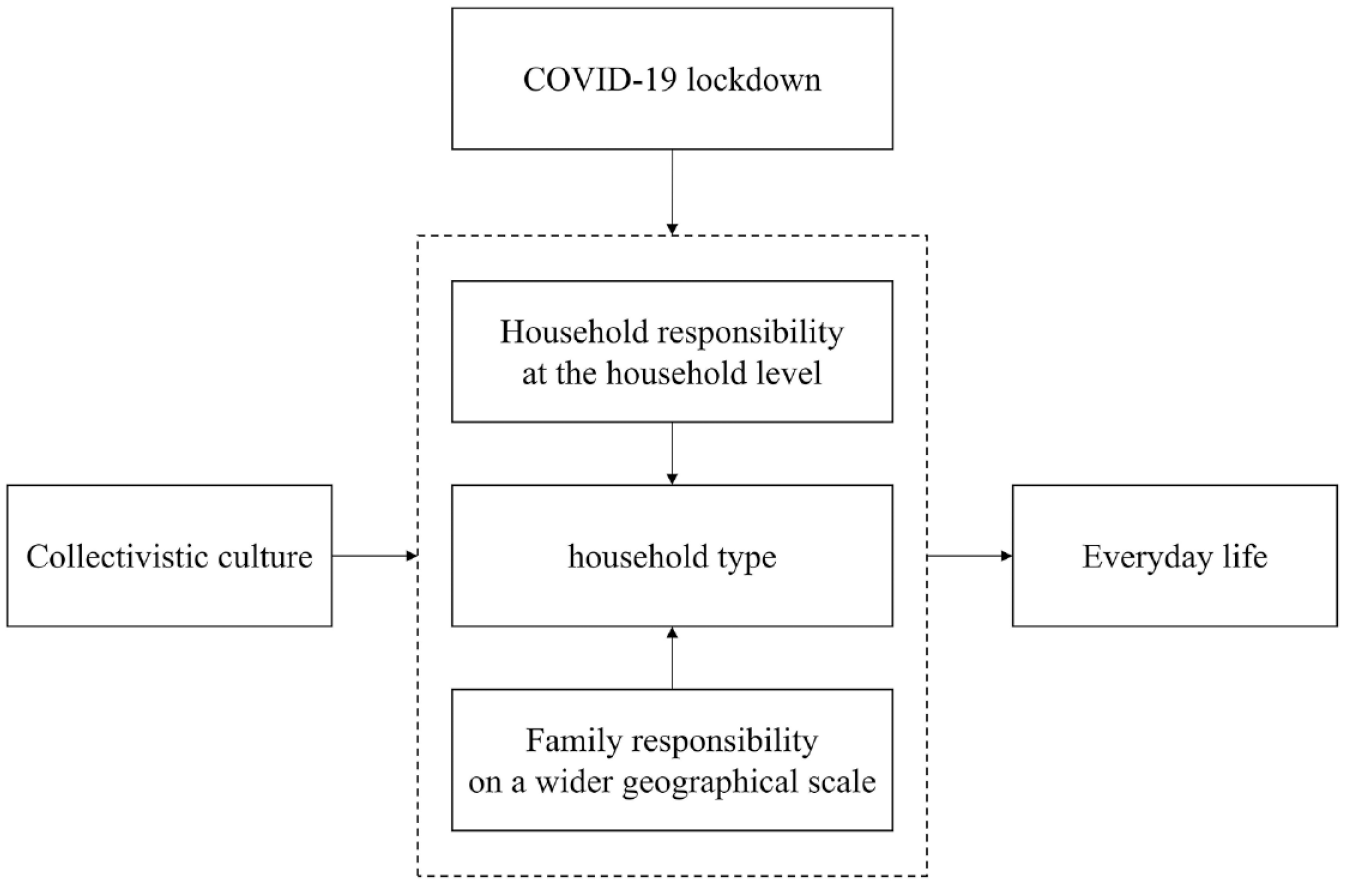
Conceptual framework of this study.
Research design
Research area
Beijing was selected as the studied city because of its representativeness at the beginning stage of the COVID-19 pandemic in terms of both the seriousness of COVID-19 and lockdown measures adopted. From January 20, 2020, when Beijing announced the first confirmed case, to June 8, when the second outbreak began, Beijing reported a total number of 583 cases, the most in China except for cities in Hubei Province, the epicenter of China’s COVID-19 outbreak. On January 24, 2020, Beijing launched a first-level response to the public health emergency and then sequentially issued a series of regulations to ensure the capital’s safety. With strict lockdown measures, Beijing successfully contained the pandemic by late March 2020 and lowered its response level from the first level to the second on April 30, and people’s daily lives returned to some form of normalcy.
The Shuangjing District was selected as the area for this research (Figure 2). It included 12 neighborhoods and approximately 100,000 permanent residents in 2019 within an area of 5.08 km2. Although no confirmed cases were reported in Shuangjing from January to June 2020, the lockdown measures were also applied here, in line with the rest of Beijing, and the daily lives of residents here were affected.
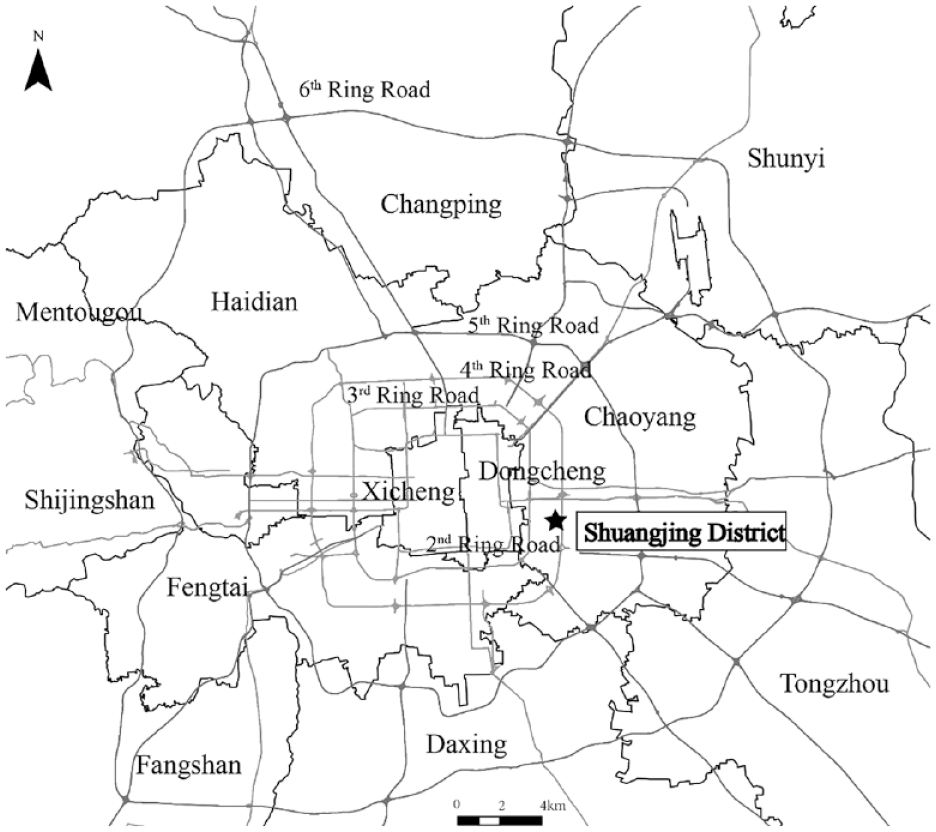
Location of the Shuangjing District in Beijing.
Figure 3 shows the evolution of COVID-19 and lockdown measures in Beijing. Five main measures significantly impacted urban mobility: personnel supervision, community-based prevention and control, management of public venues, working from home, and school closures.
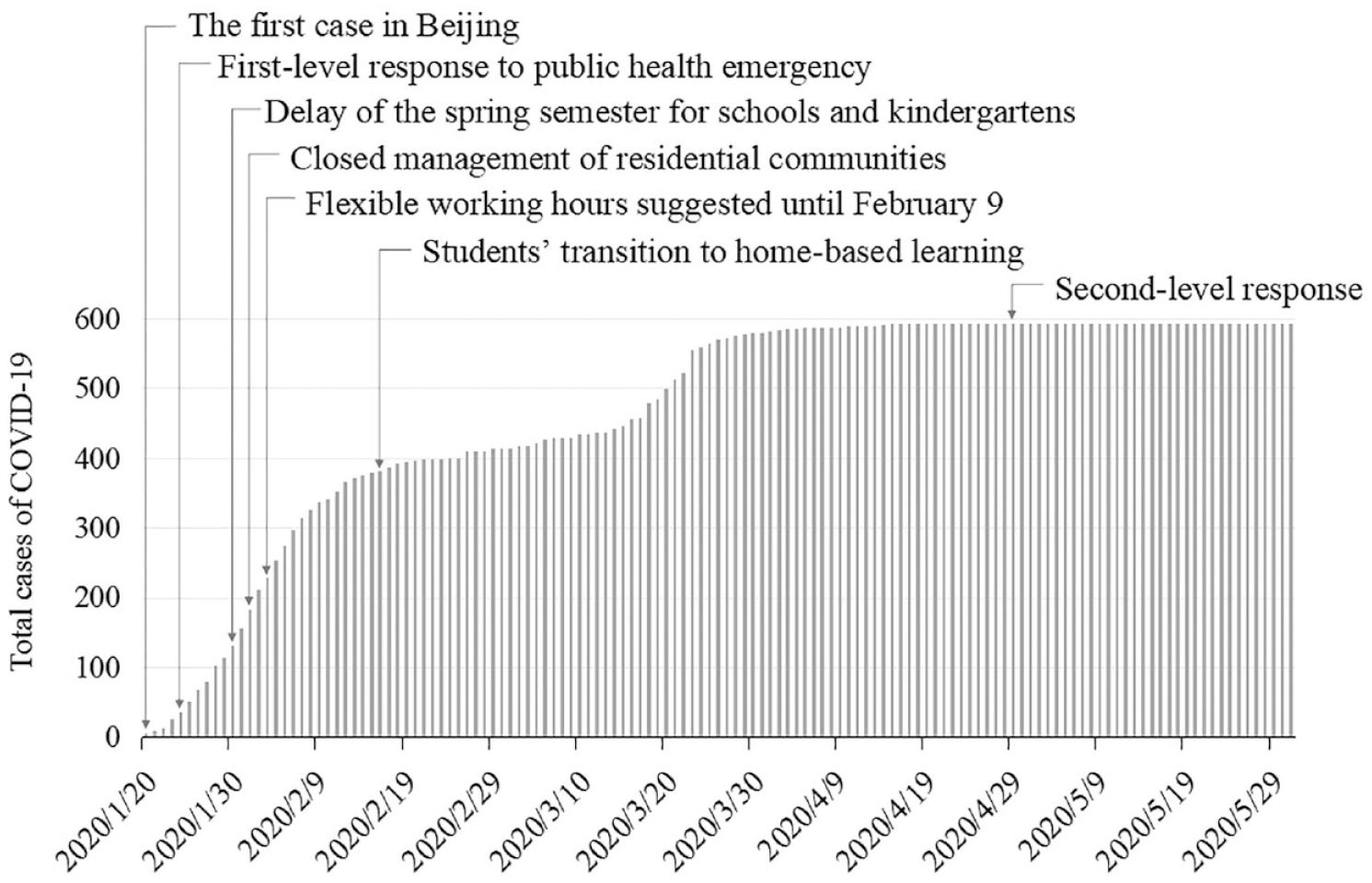
Evolution of COVID-19 and lockdown measures in Beijing.
First, strict supervision of high-risk residents was exercised by the local community committee. This applied to three groups: people from other provinces were to inform the local community of their temperature upon arrival in Beijing; people who had visited high-risk areas within the previous 14 days were to undergo home observation; people who had been in close contact with the infected were to undergo medical observation in a hotel. Although this rule was directed specifically at these three groups, it also warned other residents to reduce travel and out-of-home activities. Otherwise, they risked quarantine if they were regarded as the high-risk group.
Second, all communities conducted closed management from January 30. From then on, residents needed to present their residence cards when entering or exiting the community. Starting March 1, green code status under the Health Codes Mini-program was required to show that individuals had not gone to high- or middle-risk zones over the past 14 days. Nonresidents were not permitted to enter the community. In this case, express deliveries and takeaway food had to be delivered to the gates of the communities for pickup by recipients.
Third, all nonessential public facilities (e.g., parks, libraries, and museums) and nonessential commercial facilities (e.g., cinemas and karaoke clubs) were closed. Other important public facilities, such as shopping malls, supermarkets, and pharmacies, remained open but with limited capacity. When entering these facilities, individuals were required to wear a mask and have their temperature checked. As of March 1, a green health code was also required.
Fourth, unless otherwise specified, businesses were not permitted to resume operations before February 9, and working from home was encouraged during this time. While Beijing resumed normal operations on February 10, the extent of the resumption varied by industry and profession, with some employees continuing to work from home. Finally, Beijing’s primary and middle schools delayed the start of the 2020 spring semester, and students began studying online at home on February 17.
With strict lockdown, Beijing effectively controlled the spread of COVID-19 and lowered its response level from the first level to the second level on April 30. Lockdown measures were adjusted accordingly. First, people from other provinces no longer needed to inform the community committee. Second, while residential communities were still under closed management, nonresidents with a green health code could enter. Third, most outdoor and indoor public facilities reopened. However, cinemas, karaoke clubs, and internet bars remained closed. Finally, students in the twelfth and ninth grades returned to in-person classes on April 27 and May 11, respectively, while other students continued to study online. These measures did not change until June 11, when the second wave of the pandemic occurred in Beijing.
Research participants and methods
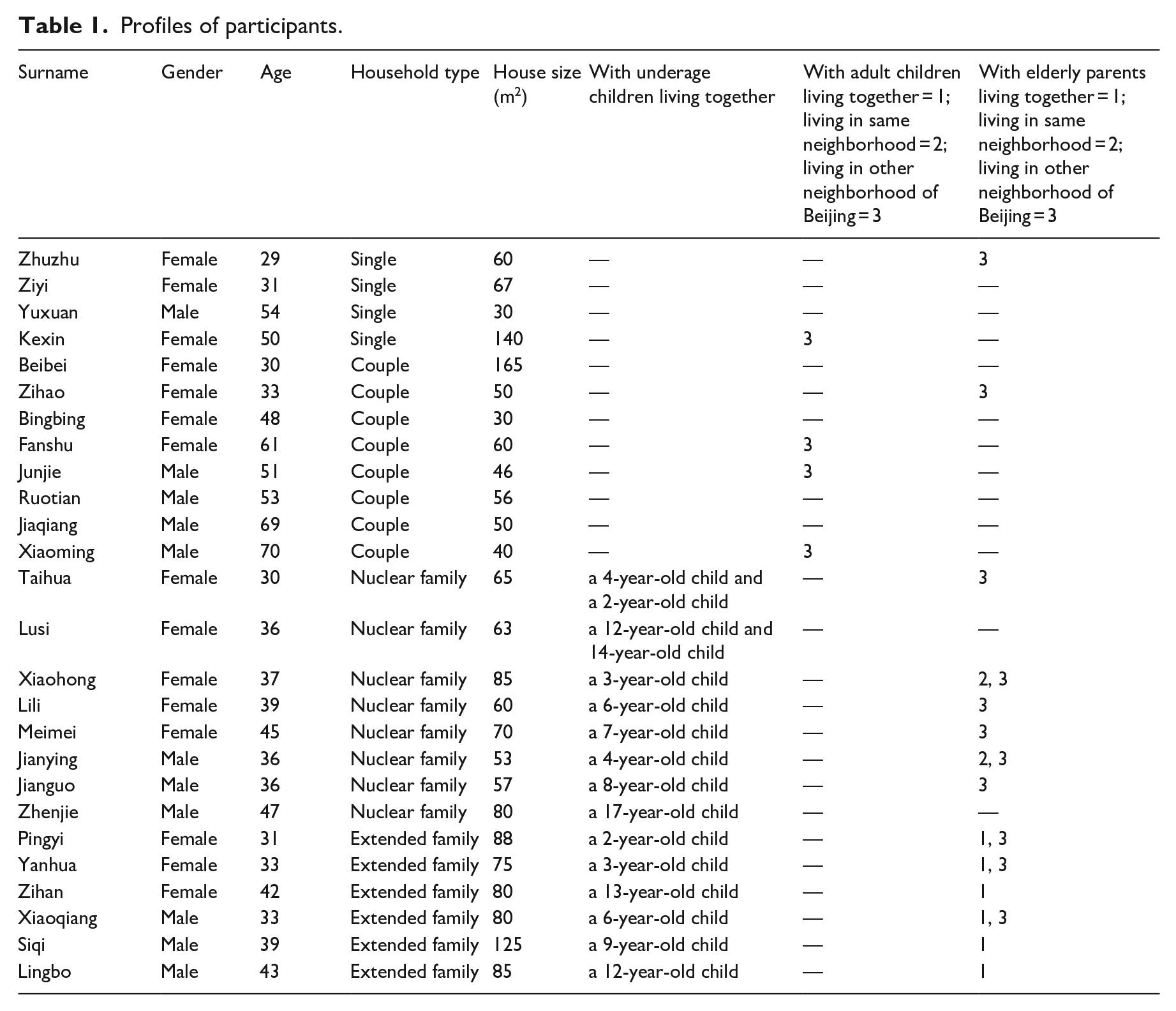
This study is part of a larger project that investigated how COVID-19 changed people’s daily lives in Beijing. For this research, a total of 26 residents in Shuangjing were recruited from June to August 2020. They were from four household types, including single (N = 4), couple (N = 8), nuclear family (N = 8) and extended family (N = 6). Table 1 provides the profiles of participants. To protect the anonymity of the participants, we present their pseudonyms only.
Profiles of participants.
The data collection is based on two methodologies. First, the participants were asked to reflect on past events and then fill out a representative working day diary and a nonworking day diary at the pre, amid- and postpandemic stages. According to the evolution of the pandemic in Beijing, we define the time windows of these three stages: the pre-pandemic period was defined as January 1–15, the midpandemic period ran from January 24 to February 7, and the postpandemic period ran from May 15–30. This definition was informed to all participants. For each diary, each participant was required to provide information about their daily activities in chronological order, including activity content; start and end times; specific locations; companion and emotional states; and the trip related to the activity, including travel times, travel modes, and companions. The activity diaries helped us develop an understanding of how each participant changed their daily routines at the three stages.
Second, based on an analysis of diaries, we conducted interviews with each participant. The interview items were phrased to understand changes in household and family responsibilities as well as daily activities. Moreover, the interviews allowed the participants to discuss the impacts of these changes on their emotional experiences. Given that it was difficult to conduct face-to-face interviews during the COVID-19 pandemic, all interviews were conducted by telephone. Each interview lasted 45 to 90 minutes, and they were audio-recorded and professionally transcribed.
Despite the small number of samples, the rich details provided by our participants are enough for this research. For interview data analysis, we first identified the household and family responsibilities for participants in different household types—single, couple, nuclear family, and extended family—and their changes at three stages of the COVID-19 pandemic. The next step was to compare how the differences in household and family responsibilities resulted in the differences in daily activities. Through selective coding, we employed a narrative strategy to show the voluminous information. This phase continued for several weeks until we reached saturation, which means that the findings of the case study were fully explained and no new information could be added.
Household responsibilities at the household level
Without children: the household responsibilities of single and couple
Individuals living alone or in couples have no children or elderly parents sharing the same house and thus have more flexibility to do things for themselves (Feng et al., 2013). Before the pandemic, their activities were largely outdoor focused because staying at home seemed uninteresting to them, particularly for those living in a small house (Preece et al., 2021). For example, Bingbing (female, 48, couple) told us that before the pandemic, she considered spending time at home boring, as it is only 30 square meters in size. Therefore, she used to travel to the outskirts of Beijing with her husband to experience pastoral life on weekends. Additionally, singles prefer social activities because social connections are a significant emotional resource for them. For instance, Ziyi (female, 31, single) went on weekly park dates with her friends before the pandemic; otherwise, she felt isolated.
However, lockdown measures and fear of infection restricted out-of-home activities during the pandemic (Yang et al., 2021), resulting in a home-based lifestyle. Faced with this sudden change, the majority of singles and couples were puzzled as to how to organize their domestic lives. Yuxuan (male, 54, single) spent his time either sleeping or watching television every day and felt bored. Keeping social distance seems to contradict the human need for social interaction and intimate social relationships. Ziyi (female, 31, single) suffered from loneliness because of the sudden absence of social activities. Substituting physical mobility for virtual mobility, primarily via mobile phones, has become a critical strategy for people to address negative emotions to a certain extent (Pan et al., 2020). As Zhuzhu (female, 29, single) said, I stayed at home during the pandemic. This was for my own safety. However, there was nothing else to do at home. I spent most of my time on my mobile phone, watching videos, chatting with friends, and browsing the news. I am grateful for my mobile phone; otherwise, I don’t know how I would have gotten through the time at home. (Interview in August 2020)
For couples, particularly elderly couples, looking after spouse is an important household responsibility. Unlike young people, the elderly were not good at using electronic products to cope with the monotony of confined life during the pandemic (Liu et al., 2021). Mutual support between spouses was critical. Xiaoming (male, 70, couple) and his wife could no longer exercise in a nearby park with the application of the lockdown rules. To improve their domestic lives and maintain their mental health, they turned their living room into an entertainment venue, where Xiaoming taught his wife to sing while she taught him to dance. His life during the pandemic was not as boring due to the presence of his spouse and their joint activities.
Because of their outgoing lifestyles and lack of care duties for children and elderly parents, singles and couples resumed certain out-of-home activities after the pandemic, but they carefully avoided potential risks through spatial and temporal arrangements. Long-distance travel for leisure activities was avoided. Bingbing did not travel far to the outskirts after the pandemic and instead walked in her gated community, where she felt reasonably safe.
With children: the household responsibilities of nuclear and extended families
Changing parenting responsibilities
Compared to singles and couples, nuclear and extended families are responsible for the children in their household, and lockdown exacerbated their childcare responsibilities. First, parents adopted more protective behaviours to protect their children, who were deemed vulnerable to the highly contagious virus (Freeman et al., 2022; Porter et al., 2022). They were more cautious about the sanitation of domestic items and food. Taihua (female, 30, nuclear family) is the mother of two children. She disinfected her sons’ toys more frequently during the pandemic because her sons played with them more when at home, meaning that they became dirty more often. On the other hand, participants tried to reduce out-of-home activities as much as possible from a fear of the virus spreading to other household members and their children, particularly after infection. Pingyi (female, 31, extended family) stopped walking her dog outside during the pandemic, even though this was her main leisure activity before the pandemic. She told us about why she made this decision as follows: I have a two-year-old son. Although he was at home, I could have transmitted the virus to him if I became infected. In comparison to adults, children have relatively low resistance to viruses. Therefore, I stopped this activity to avoid unnecessary risks, although it was a hobby of mine. I chained the dog to the balcony to prevent my child from touching it. I heard that animals can transmit the virus. While I’m not certain that this is correct, I must be cautious. (Interview in July 2020)
Second, parents viewed themselves as performing an additional role as teachers and as having more education-related responsibilities with their children’s transition to home-based learning (Beasy et al., 2021). Before the pandemic, the majority of participants were mainly responsible for accompanying their children to school. However, during the pandemic, responsibility for supervision was transferred from the school to the family. Parents were required to spend time supervising their children’s online learning, tutoring them, and checking their homework. This change shifted parents’ lives from being work centered before the pandemic to being child-centered during the pandemic. Some children lack self-discipline, especially when there is no parental or teacher supervision, which annoys their parents (Beasy et al., 2021). Meimei (female, 45, nuclear family) told us about her dilemma as follows: My son was asked to watch instructional videos, which were recorded in advance by his teachers. At the beginning, he was relatively focused. However, he eventually found that there was actually no teacher supervising him. Therefore, he gradually lacked self-discipline. Therefore, I needed to supervise him more strictly. His terrible class performance led to poor homework results. I also needed to spend time guiding him through his homework. I felt busier and more tired. However, if I hadn’t done this, he would certainly have lagged behind the other students. (Interview in July 2020)
Some parents continued to work during the pandemic, leaving them unable to supervise their children in person. However, these parents did not neglect their children’s home-based learning. Rather, parents instead became more anxious and tried to seize every opportunity to communicate with their children because they attached great importance to their children’s educational performance and well-being during the crisis. For example, Lingbo (male, 43, extended family) asked his children about learning situations through WeChat. Meimei even brought her son to her workplace, allowing her to care for and supervise him. From the sudden increase in childcare burdens, most participants felt anxious, tired, and helpless.
Finally, closures of urban public venues also exacerbated the burden of childcare (Manzo and Minello, 2020). Similar to singles and couples, participants in nuclear and extended families also enjoyed out-of-home activities on nonworking days before the pandemic. In contrast, they had child-centered characteristics. They usually went to child-friendly places such as zoos and amusement parks. These facilities offer parents more choices for childcare. During the pandemic, however, out-of-home activities were largely restricted. Although being at home provided a sense of security, determining how to care for their children all day at home was a major challenge.
Interestingly, participants from nuclear and extended families relied less on ICTs to avoid boredom because of the negative impact of electronics on their children, not only in terms of the impact on their eyesight but also in terms of potential exposure to unwanted information. After the pandemic, most participants resumed out-of-home activities with their children, as staying at home was not an option. They remained risk-averse, however, and attempted to avoid potential infection by reducing travel time, avoiding crowded places, and avoiding contact with animals. For example, Xiaohong (female, 37, nuclear family) did not take her child to the zoo after the pandemic because she was afraid the animals would spread the virus.
The role of elderly parents in extended families
With the support of elderly parents, young adults in extended families may have also had fewer household responsibilities before the pandemic (Feng et al., 2013). Importantly, when three generations lived together, intergenerational assistance remained sustainable despite COVID-19 lockdown. Xiaoqiang (male, 33, extended family) is a bank receptionist. On the working day before the pandemic, Xiaoqiang and his wife were busy at work. His parents, who live with them, helped this dual-income couple considerably. Xiaoqiang’s mother mainly shared responsibilities over childcare, shopping, cooking, and cleaning the house. Xiaoqiang and his wife were required to work during and after the pandemic due to the nature of their jobs, while his son learned at home. Thus, his weekday routines remained consistent in all three stages. Xiaoqiang felt fortunate for this, especially when he compared himself to his colleagues without external assistance.
One of my colleagues is in a particularly challenging position. She got divorced a year ago and has been looking after her son by herself. Nobody helped her. She was concerned about leaving her son alone at home. During the pandemic, nannies were also unavailable. Therefore, she had to drive with her son to work. In comparison, I am very fortunate. I am grateful to my parents. (Interview in July 2020)
Notably, intergenerational help in extended families did not stay entirely unchanged during the pandemic. We found that because of the Confucian virtue of filial piety, some household responsibilities were transferred from senior parents to young parents when the latter began working from home. For example, when Yanhua (female, 33, extended family) began working from home during the pandemic, she actively took on more household duties and allowed her parents to rest. She told us that she would have felt embarrassed if her parents continued to do household chores under such an arrangement. However, this does not imply that she did not receive any assistance from the elderly during the pandemic. Indeed, in extended families, intergenerational assistance was still most needed when young parents dealt with work-related emergencies. When Yanhua was working on urgent tasks, her parents took care of her son temporarily, allowing Yanhua to work.
Finally, it should be noted that the ability of senior parents in extended families to share household responsibilities is heavily influenced by their health (Ta et al., 2019). Siqi’s (male, 39, extended family) grandmother moved with some difficulty and she could not assist the young couple with difficult tasks such as cleaning, but she could accompany the grandson during all three stages of the pandemic. Therefore, Siqi received little support from his mother in general. Some elderly parents in extended families needed direct care from their adult children. Zihan (female, 42, extended family) not only needed to accompany her sick father to the hospital but also had to care for her home-learning son. She was put under dual pressure and felt exhausted as a result.
In short, this section shows how people in different households were experienced differently by the COVID-19 lockdown because of their household types and the resultant household responsibilities. Home-based lifestyles were experienced as boring for singles and couples, as they did not need to care for other generations under the same roof. In contrast, the closure of school greatly increased child-related household responsibilities for households with children, resulting in a more child-centered life. The presence of the elderly in extended families helped mitigate the constraints of child-related responsibilities for young parents, particularly when schools were closed. However, it increased the household burden when the elderly needed care. In the following section, we will continue to examine changes in family responsibilities and their implications for family life.
Family responsibilities on a wider geographical scale
As stated previously, the collectivist culture of China makes intergenerational support across geographical distance very popular in Chinese families. In our study, 15 participants reported that the COVID-19 lockdown changed the intergenerational support they received or provided to their other generations living apart. In this section, we will elaborate on how these changes affect the daily lives of families.
Upward intergenerational supports
Even though they live apart, adult children have an important familial obligation to provide care and emotional support to their elderly parent (Liu et al., 2021). This could be seen in the four kinds of household types. Zihao (female, 33, couple) lived apart from her parents after marrying. Although her parents could care for themselves, Zihao was aware that they still required her emotional support. Before COVID-19, she used to visit and dine with her parents every weekend. However, she could not visit them during the pandemic due to the community’s closed management, resulting in her anxiety over their well-being. This compelled her to communicate with her parents via WeChat. Additionally, she shopped for her parents online, allowing them to avoid potential infection risks at their local supermarket. However, these efforts did not mitigate her anxiety, as the following quote shows: Digital communication is helpful, but it can only partially make up for the loss of face-to-face interaction. To avoid worrying me, my parents may not have told me about their true difficulties. When permitted to enter the community after the pandemic, I immediately visited them. (Interview in August 2020)
The sudden loss of this upward intergenerational support harms the well-being of elderly parents and exacerbates their sense of loneliness. Xiaoming (male, 70, couple) cares very much about his daughter’s emotional support, as she is his only child. His daughter and grandchildren visited them every weekend regularly before the pandemic. Generally, the entire family ate dinner together, and everyone shared some of their own life stories. Xiaoming had a great time at the family reunion. Nevertheless, the COVID-19 lockdown made it impossible to engage in this family gathering. It was difficult for him to adapt to the sudden change. As he said: Due to my daughter’s frequent visits before the pandemic, the house was filled with a lively and warm atmosphere. During the pandemic, however, the house became deserted and quiet, and my life and I experienced loneliness and a longing for the pre-pandemic family portrait. We had only one thought at the time: that the pandemic should end as soon as possible, so that we could reunite as happily as before the outbreak. (Interview in August 2020)
Downward intergenerational supports
Not only did upward support change during the pandemic, but so did downward intergenerational support. Retired singles and couples may assist their adult children who live apart with childcare and household chores. This practice was viewed as beneficial not only for relieving young parents of household burdens but also for enriching the lives of the retired elderly (Zhou et al., 2022). Before the pandemic, Fanshu (female, 61, couple family) volunteered to help look after her grandson from Monday to Friday. This developed into an integral part of her daily life and made her old life meaningful. However, she could not continue this practice of family responsibility during the pandemic. These unexpected changes made her feel empty.
In fact, the sudden change in downward intergenerational support also reconstructed the household responsibilities of adult parents in nuclear families. In nuclear families with preschool-aged children, dual-income couples cannot take care of their children on their own. In this case, their elderly parents in the same city can help. Taihua (female, 30, nuclear family) has two children. When her youngest child was able to walk, she decided to enter the labor market. Her parents and parents-in-law living in other neighborhoods give her intergenerational support. Her parents-in-law came to her house on the day before the start of the pandemic to care for her youngest child before she left for work as well as sharing other household responsibilities in meal preparation, cleaning, laundry, and food shopping. They left the house when Taihua returned from work. To avoid overburdening her in-laws, she dropped off her oldest son at her own parents’ house on her way to work and picked him up after work. In short, assistance from senior parents reduced her household responsibilities before the pandemic.
Without the intergenerational support during the pandemic, parents in nuclear family had to take over household tasks that their elderly parents had done before, but most of them were unprepared for this sudden change. On the one hand, they were forced to improve their parenting skills. For example, as Taihua’s parents-in-law had cooked for her family before the pandemic, she was less practiced in cooking. During the pandemic, she downloaded an app to improve her cooking skills and prepared meals for her sons by herself. On the other hand, the participants largely felt overwhelmed and helpless due to the sudden increase in childcare responsibilities. Taihua felt fortunate because working from home allowed her to care for her children despite the sudden absence of external support, but she encountered difficulties with balancing work and childcare.
My husband continued to work during the pandemic, and my in-laws were unable to help. No one else could assist me. My sons are so young that they like clinging to me. However, I needed to work from home as well. When work tasks were not pressing, I usually prioritized childcare. However, when my sons urged me to play with them when I had an online meeting to attend, I felt completely helpless in dealing with this situation. (Interview in July 2020)
After the pandemic, nonresidents with a green health code could enter the communities. Therefore, Taihua regained support from her senior parents in the same way she had before the pandemic, greatly relieving her burdens.
In comparison, the presence of three generations in the same community allows door-to-door mobility between two households when a residential community is close to nonresidents. Xiaohong (female, 37, nuclear family) lived with her parents-in-law before becoming pregnant. However, her parents’ house became crowded after she had a child. Therefore, Xiaohong and her husband rented and lived in another house in the same residential community. On working days before COVID-19, her mother-in-law came to her house to help with childcare. She benefited from intergenerational support, similar to Taihua. In contrast, intergenerational support remained available to Xiaohong during the pandemic because her parents-in-law lived in the same community and could continue to visit her. Notably, because of the short travel distance involved, the risk of exposing her elderly parents to the virus was almost negligible for Xiaohong. In total, her working-day routines remained largely consistent in the three stages of the pandemic, and she did not have to worry about the issue of childcare. As she said: The main effect of the pandemic on us is that we cannot enter public spaces. Regarding the allocation of household responsibility, little has changed. My mother-in-law continued to assist as before the pandemic. Because we reside in the same community, it is convenient and secure for her to visit. (Interview in July 2020)
In summary, this section shows how changes in the practice of family responsibility influenced family life during the pandemic. It further emphasizes the importance of living distance between generations in understanding this process. Both upward and downward support across neighborhoods, which aims at addressing the issues of ageing or childcare, became vulnerable because of the close management of residential communities. This change greatly harmed the well-being of both adult children and their elderly parents. Particularly, adult parents in nuclear families had to renegotiated the household responsibilities which taken by the elderly parent. Notably, three generations living in the same communities were less influenced.
Conclusion and discussion
The COVID-19 reinforce the notion of household (Freeman et al., 2022). Household types provide a crucial lens through which to examine how the COVID-19 lockdown is experienced differently by households (Freeman et al., 2022; Ho and Maddrell, 2021). Commonly, household type is viewed as a representation of production or share of household responsibilities at the household level, which influences the space-time constraints of household members (Feng et al., 2015; Johnston-Anumonwo, 1992). The COVID-19 lockdown restructured household responsibilities across all types of households to varying degrees. As we have shown, the presence of children distinguished the impact of COVID-19 lockdown on nuclear and extended families from that on singles and couples, and whether elderly parents lived in the same household further distinguished the impact of the pandemic on adult parents in nuclear families versus those in extended families.
However, only considering household responsibility at the household level could not fully capture how COVID-19 influences family life in urban China, where intergenerational support across geographic distance is prevalent as a result of collectivism (Chen, 2015; Gan and Fong, 2020; Zhao et al., 2016). This article argues that examining household types in conjunction with household responsibilities at the household level and family responsibilities on a larger geographical scale will lead to a better understanding of family life during the pandemic in urban China. As our empirical evidence has revealed, the pre-existing intergenerational support across geographic distance largely became unsustainable under COVID-19 lockdown. It results in an individual’s inability to provide person-to-person care for other generations who do not live together and in emotional dilemmas, such as helplessness experienced when young adults cannot care for their parents (see the example of Zihao) and emptiness experienced when the elderly fail to look after their grandchildren (such as the experience of Fanshu). What is more, the sudden loss of support from elderly parents living at a distance disrupts daily routines and the well-being of young parents in nuclear families. Surprisingly, it seems that lockdown measures have less of an effect on parents and adult children who live in the same neighborhood.
In short, this article uses the lens of household diversity and geographic distance to understand changing everyday lives under lockdown and, more broadly, to reflect on contemporary urban Chinese family life. It rejects the argument that individualization weakens the importance of the family (Beck and Beck-Gernsheim, 2002). In fact, even when family members live separately, intergenerational assistance across spatial distance remains an important aspect of contemporary urban Chinese family life. As other studies have found (Chen et al., 2011, 2021), this living arrangement has the advantages of addressing the issue of ageing or childcare and of meeting desire for privacy. However, our findings interrogate its advantages by revealing the obstacles created by spatial distance in maintaining this practice under lockdown. In reality, this practice heavily relies on urban mobility and is vulnerable under pandemic and lockdown measures, resulting in a negative impact on the well-being of both younger and older generations.
Finally, the findings of this research might have important implications for neighborhood planning practice. It is recommended that neighborhood planning takes the constitution of household types and the differentiated demands of households into consideration. For example, neighborhood daycare facilities would be helpful in temporally addressing the rigid childcare demands of those who must continue to go to work but have no assistance in childcare when schools are closed. Additionally, three-generation neighborhood is also a policy recommendation, as our empirical research shows that they may help meet the desire for intergenerational support under lockdown and minimize the impact of a pandemic. Notably, it is too tentative to make such a practice simply based on the outcomes of this research. Other factors, such as neighborhood house prices, also need to be considered. We recommend that this issue be researched further.
Future research could delve deeper into household diversity and family and into other social responsibilities and their implications for pandemics through research on other household types, such as grandparent families, single-parent families, and LGBT families. In addition, Chinese families are more collectivistic in their orientation, whereas Western families are more individualistic. Future research could examine cultural differences in household and social responsibilities between China and Western countries.
Footnotes
Acknowledgements
The authors are thankful to Chunjiang Li for producing Figure 2, and the anonymous referees for their guidance and constructive comments.
Declaration of conflicting interests
The author(s) declared no potential conflicts of interest with respect to the research, authorship, and/or publication of this article.
Funding
The author(s) disclosed receipt of the following financial support for the research, authorship, and/or publication of this article: This research is supported by the National Natural Science Foundation of China [grant number 42071203] and China Scholarship Council [grant number 202106010127].