



Abstract
Given the chronic lack of qualified professionals in the cybersecurity industry, the present paper seeks to evaluate the current interest in cybersecurity across Southeast Asia nations and then compare it with the available educational offerings of related degrees in each country to identify eventual gaps in the market. The goal is to assess whether there is a need for additional degree programs in cybersecurity and to evaluate the potential for future growth in the industry by providing a solid educational foundation for aspiring professionals. To estimate current interest from prospective students and profesionals in cybersecurity across each country, leaderboards from the popular TryHackMe gamified cybersecurity training platform are referenced. We further discuss issues by considering the related formal education programmes offered by the top universities in each country, identified by their presence in the QS world university rankings. The data are then used to propose two new metrics: the ‘Cybersecurity Education Prospects Index’ (CEPI) and the ‘Cybersecurity Industry Prospects Index’ (CIPI), which show how most of the eleven countries in Southeast Asia do have an unmet demand for cybersecurity education and only a few of them have already developed an educational infrastructure that is ready to support the growing needs of the local and international industry.
Keywords
Introduction
Background
Cybersecurity is a complex and multifaceted issue faced by almost every industry. The proliferation of digital transformation requires a new approach to investing in the teams and resources needed to address this ever-changing landscape (Kuah and Dillon, 2021). We need more professionals from diverse backgrounds to fill cybersecurity roles and increase the availability of security training throughout the global workforce. Yet, it is not new information that the cybersecurity industry has experienced a chronic lack of a qualified workforce. According to the International Information System Security Certification Consortium (ISC2), it is estimated there is a shortage of 3.4 million in the cybersecurity workforce worldwide (ISC2, 2022). Within the tropical region, in particular, the Southeast Asia (SEA) region, such a lack of workforce is even more pronounced (Othman, 2022). What makes the situation more precarious is that while most companies realise the need for business transformation to stay competitive, they fail to realise that migrating to new systems, services, and offerings needs to be done securely. A survey by Trend Micro (2022) further supported this proposition, revealing that 90% of information decision-makers believed their management was willing to compromise cybersecurity in favour of digital transformation, productivity, or other goals. Additionally, the same report highlighted that 82% of IT practitioners have felt pressured to downplay the severity of cyber risks to their board (Trend Micro, 2022). Given these developments, it is not surprising when Othman (2022) highlighted that organisations in Asia are a hotbed of cyber security attacks, and 1.2 million skilled cybersecurity professionals are needed in this region.
By taking all this into account, this paper, through the popular TryHackMe (THM) gamified cybersecurity training platform, aims to define a new way to evaluate the current stance
1
and future prospects in the cybersecurity landscape for each SEA country (i.e., Brunei Darussalam, Cambodia, Indonesia, Laos, Malaysia, Myanmar, Philippines, Singapore, Thailand, Timor-Leste, Vietnam) by answering the following three questions:
Does the industry have a reliable pool of graduates to source talent from? Are the top local universities providing enough courses to train new talent? Is there enough interest among prospective students and workers to learn about cybersecurity and enrol in the degrees being offered?
Literature Review
Overview of the Cybersecurity Workforce Landscape
The lack of expertise in this field was even more evident during and after the COVID-19 pandemic when we witnessed sudden changes in workplace practices that gave cybercriminals many new opportunities to attack unsuspecting workers online (Gillard, 2022). Moreover, it has also been reported that the few qualified people working in the industry are often prone to burnout due to the constant stress they are subjected to, as reported by Hughes (2022). This trend means that the industry is at risk because it cannot find new talents and may lose the few experienced ones it managed to hire.
Simultaneously, there has been a surge in the activities of cybercriminals. According to cyber security companies like Fortinet (2023), Kaspersky (2023), and Imperva (2023), cyber attacks occur continuously across all countries worldwide. Recent reports (see Table 1) have revealed that each country faces thousands or even millions of daily cyber threats in South East Asia, as per available data.
Number of Incoming Cyber Attacks on 14/2/23 Reported for Each Country by Imperva (Data Retrieved on 15/2/23).

Need for Connection with Academia
Hence, for the cybersecurity industry to strive and deliver on its security objectives, it is of paramount importance to establish proper connections with academia and be sure that universities can effectively train young talent to gradually but constantly fill the ranks of white-hat hackers worldwide. To this end, the World Economic Forum (WEF) highlighted two leading skills gaps in developing the cybersecurity workforce – soft skills and cloud computing knowledge (WEF, 2022).
Soft skills training. According to ISACA’s (‘Information Systems Audit and Control Association’) research, soft skills such as communication, flexibility, and leadership represent the most significant skills gap identified by cybersecurity professionals (ISACA, 2022). Therefore, building and filling open cybersecurity roles would require recruiting cybersecurity professionals from diverse backgrounds that can bring these soft skills to the fore. According to Tan and Yeap (2021), organisations should be proactive in reaching out to multiple sources in identifying diverse sets of candidates, setting up engagement strategies that can attract and retain talent from diverse backgrounds, as well as building a collaborative environment that fosters a problem-solving approach that removes traditional barriers of career advancement.
Cloud computing knowledge. The ISACA (2022) survey showed that cloud computing is the second largest gap among cybersecurity professionals after soft skills. Other notable gaps include security controls implementation, coding, software development, data-related, and networking-related topics.
From the above, it is evident that cybersecurity is not an easy subject to learn, as it is highly technical and requires many prerequisites to be adequately understood and applied effectively. The inherent challenges of the topic make this field particularly demanding, and only passionate and fully engaged individuals can successfully commit to a lifelong learning journey involving both formal and continuous education and sustain the constant pressure they will be subjected to once in the workforce.
In the last few years, we have observed the emergence of several cybersecurity-related portals that aim to promote the industry and engage a diverse audience, including students, hobbyists, and professionals. These portals offer a gamified platform for individuals to learn new topics or better understand foundational subjects. Moreover, they allow individuals to apply their newly acquired skills by safely and legally hacking dedicated virtual machines. THM is one of the most popular and free online platforms today, boasting a user base of more than 1.7 million registered members worldwide as of the time of writing (Gillard, 2022).
By providing themed skill paths and breaking down complex topics into bite-sized rooms that can be completed step-by-step, often in less than an hour, THM has been very successful in engaging many users for several years already, so much so that leader boards by country can now give us valuable insights about how popular studying and practicing cybersecurity is in each country. We can then relate such information to the relevant academic offerings and propose possible metrics for evaluating the effectiveness of cybersecurity education and industry ecosystems and their prospects for the future.
Overview of TryHackMe (THM)
Points, badges, and leaderboards have always been a staple in any gamified platform (Werbach and Hunter, 2012). THM is no exception. THM has 50 leaderboards updated regularly since the platform was created. These leaderboards are accessible to the public for each country. By analyzing the competition to reach the top of the leaderboard, we can gauge the level of engagement of end-users in each country. Essentially, we can estimate cybersecurity's popularity in each country. Table 2 provides the relevant data for each Southeast Asian country as of the time of writing. The standard deviation is generally high due to a few top performers and outliers. Hence, to evaluate overall engagement, the median is a more reliable metric that allows us to rank each country, as shown in Table 3.
Summary of Scores for Top 50 Users on THM: Basic Stats for Each SEA Country (Data Retrieved on 29/12/22. Values Rounded to the Closest Integer).
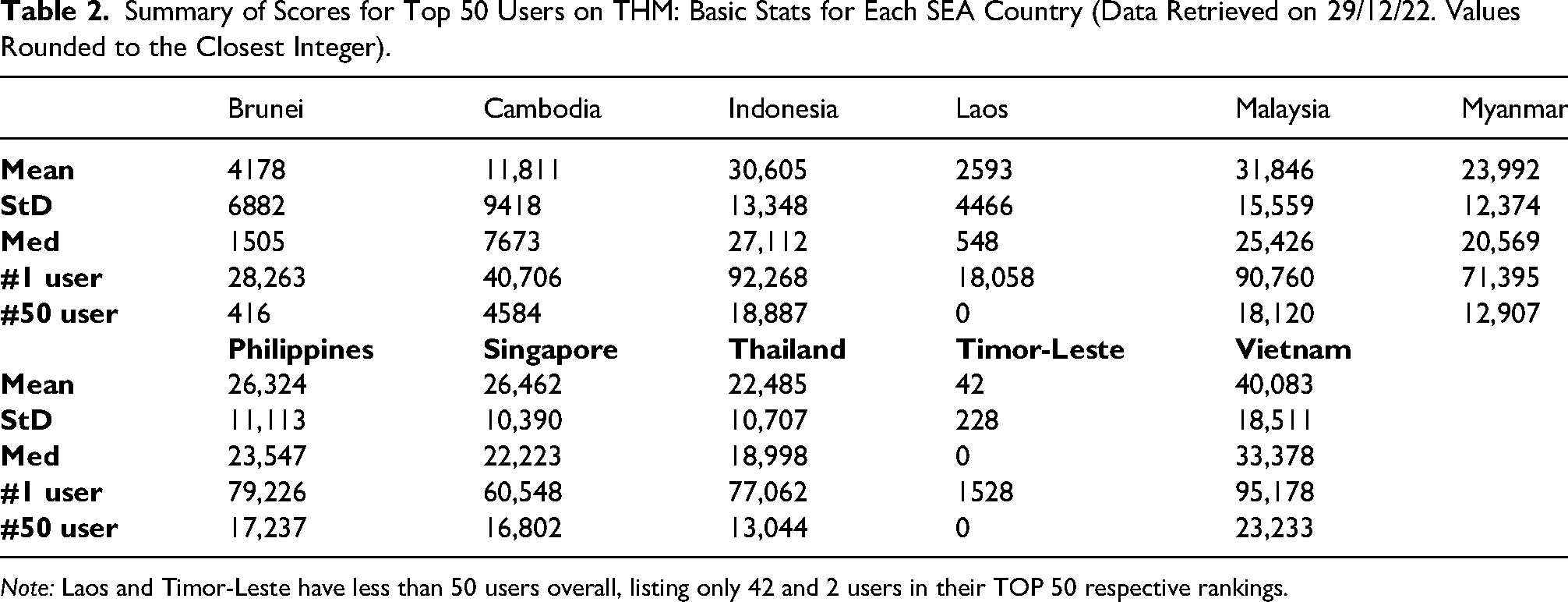
Note: Laos and Timor-Leste have less than 50 users overall, listing only 42 and 2 users in their TOP 50 respective rankings.
The 11 SEA Countries Ranked by Median Score of the Top 50 THM Performers.
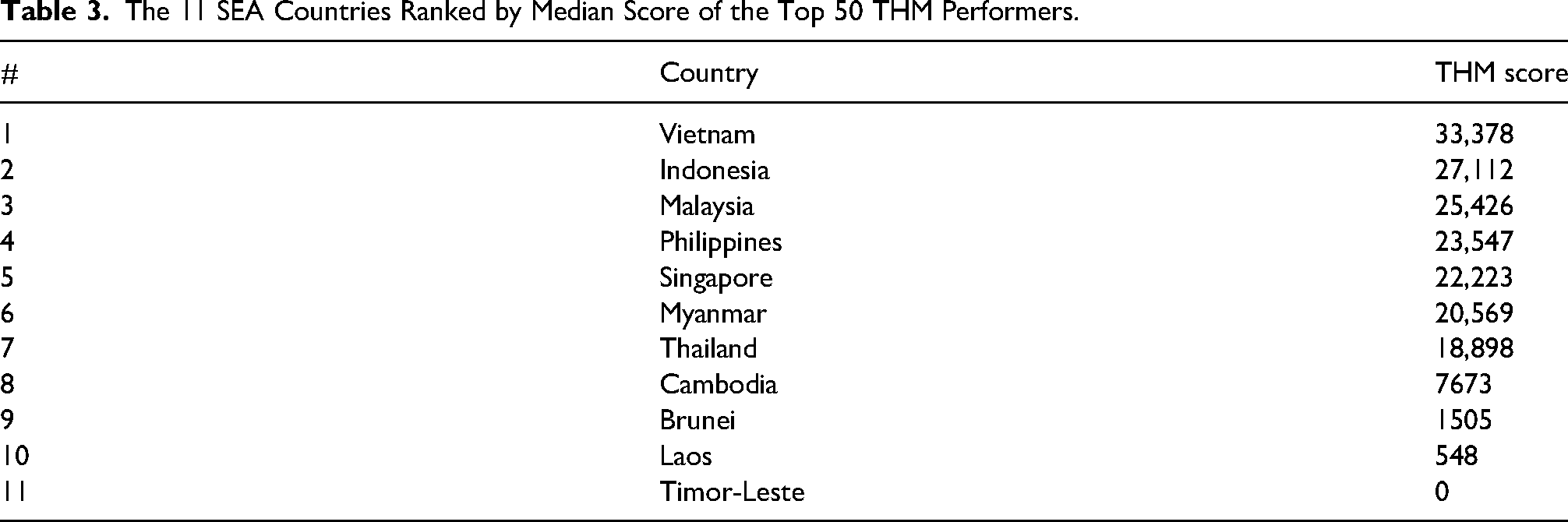
As we can see, Vietnam appears to have the most passionate and engaged user-base in the region, followed by Indonesia and Malaysia. A median score above 30,000 points is a noteworthy indicator since an average user already needs several months of constant and hard work to reach the ultimate grade of ‘God’ set at 20,000 points. This result puts Vietnam above major cybersecurity powerhouses such as Israel (top 50 users median at 30,847) and Russia (median at 32,683), while still significantly behind the top leading country, which is the USA with an outstanding Top 50 median of 68,837 2 .
Factors Encouraging the Adoption of TryHackMe (THM)
While online cybersecurity platforms such as THM are key in making cybersecurity to be accessible to a large crowd of people, more attention should be placed on encouraging its adoption. It is essential to know that making it accessible does not necessarily means adopting the technology. In this regard, this paper argues that consumer psychology in the curriculum provides holistic subject knowledge that encapsulates different aspects of technology adoption. In the same vein, developers of such a system should be mindful of the effect on consumerism. After all, adopting a service or a product goes beyond its pure technicalities. Users’ perception, comprising opinions, feelings, and beliefs, plays a large part in influencing their decision (Leong et al., 2020).
To this end, this section leverages the technology acceptance model (TAM) to shed further insights into different perspectives on adopting a technology. TAM is widely accepted as a model for explaining the phenomenon of adopting new technology. TAM has been anchored against perceived usefulness and perceived ease of use as the determinants of technology adoption (Davis, 1989). However, TAM has also been criticised for its parsimony and should be expanded by including factors particularly relevant to the specific technology under investigation (Schierz et al., 2010). Besides, technological advances have added layers of complexities that influence users’ rate of adoption of new technologies. Specifically, studies have found that users’ adoption rate is also influenced by their perceived security risk (Leong et al., 2020).
Perceived security. In any form of electronic services, privacy invasion has been gaining attention from users (Lwin et al., 2007). Within the cyber-space, there are many points of failure. From entering credit card details to listing delivery addresses, these are vulnerabilities where compromises could occur. Hence, in any transaction, users would need a greater sense of security when performing any online transaction.
Perceived usefulness. It has been recognised that perceived usefulness plays a vital role in influencing the proliferation of innovation (Tan et al., 2019). From TAM's point of view, perceived usefulness is a key construct that influences one's intention of usage, representing users’ belief that innovation provides a unique advantage compared to existing change (Bazelais et al., 2017).
Perceived ease of use. It is described as the degree of belief that a system can be used relatively free of effort (Lew et al., 2020). Essentially, it reflects how a system allows users to perform tasks faster and enhances performance. Therefore, if a user believes that technology is easy to operate, he or she will use it, but not the other way (Leong et al., 2020). In that regard, it is well expected that perceived ease of use will then have an impact on behaviour, namely, the higher a person's perception of the ease of using the system, the higher the level of utilisation of information technology
Perceived compatibility has been explained as the magnitude of an innovation that aligns with the prospective users’ current values, past experiences, and needs (Diatmika et al., 2016). In other words, if the usage of a particular technology is not aligned with the values of the target segment of users, the adoption rate, according to TAM, would be lower than expected.
Other than the technical perceived features of the technology, individual users’ psychological constructs also play a part in enhancing the adoption. While there are many psychological constructs, Leong et al. (2020) arguea that personal innovation is a critical construct influencing new technology adoption. According to the diffusion of innovation theory, highly innovative individuals are the key to new technology as they develop a positive attitude towards it by collecting ample information. According to Nagarajan and Martina (2022), personal innovativeness is the degree to which an individual is relatively proactive in adopting technology over the other counterparts in society. In other words, this is the potential risk-taking ability of an individual to try something new and innovative.
Educational Offerings by QS Ranked Universities Across SEA
Today, most, if not all, technology-based degrees offer students at least elective modules on cybersecurity. Nonetheless, to develop the talents needed by this growing industry, ad-hoc, specific curricula are needed. Therefore, to assess the industry's potential for future growth, it is necessary to examine the present state of academia and determine the number of leading institutions that have created specialised undergraduate or graduate programs; or, at the very least, incorporated a specific major into their broader technology-focused degrees. In this context, we are discussing only institutions with a legally recognised ‘university’ status in the country under discussion and included in the latest QS Global University Rankings (QS, 2022). A review of the current situation in each country follows.
Brunei Darussalam
Despite being the smallest country per population in the SEA region, Brunei can count on a high-quality academic offering. Both its QS-ranked institutions do offer specialised programs (see Table 4). Overall, students in Brunei have access to one specialised major (SM) and three dedicated degrees (DD).
Specialised Cybersecurity Academic Offering in Brunei Darussalam.

Indonesia
In contrast to Brunei, Indonesia, the biggest SEA country in terms of population, has only two institutions offering relevant degrees, despite having several universities listed in the QS rankings (see Table 5). Students studying in Indonesia who want to pursue a degree in cybersecurity can choose between a major in Computing degree and a dedicated masters program.
Specialised Cybersecurity Academic Offering in Indonesia.

Malaysia
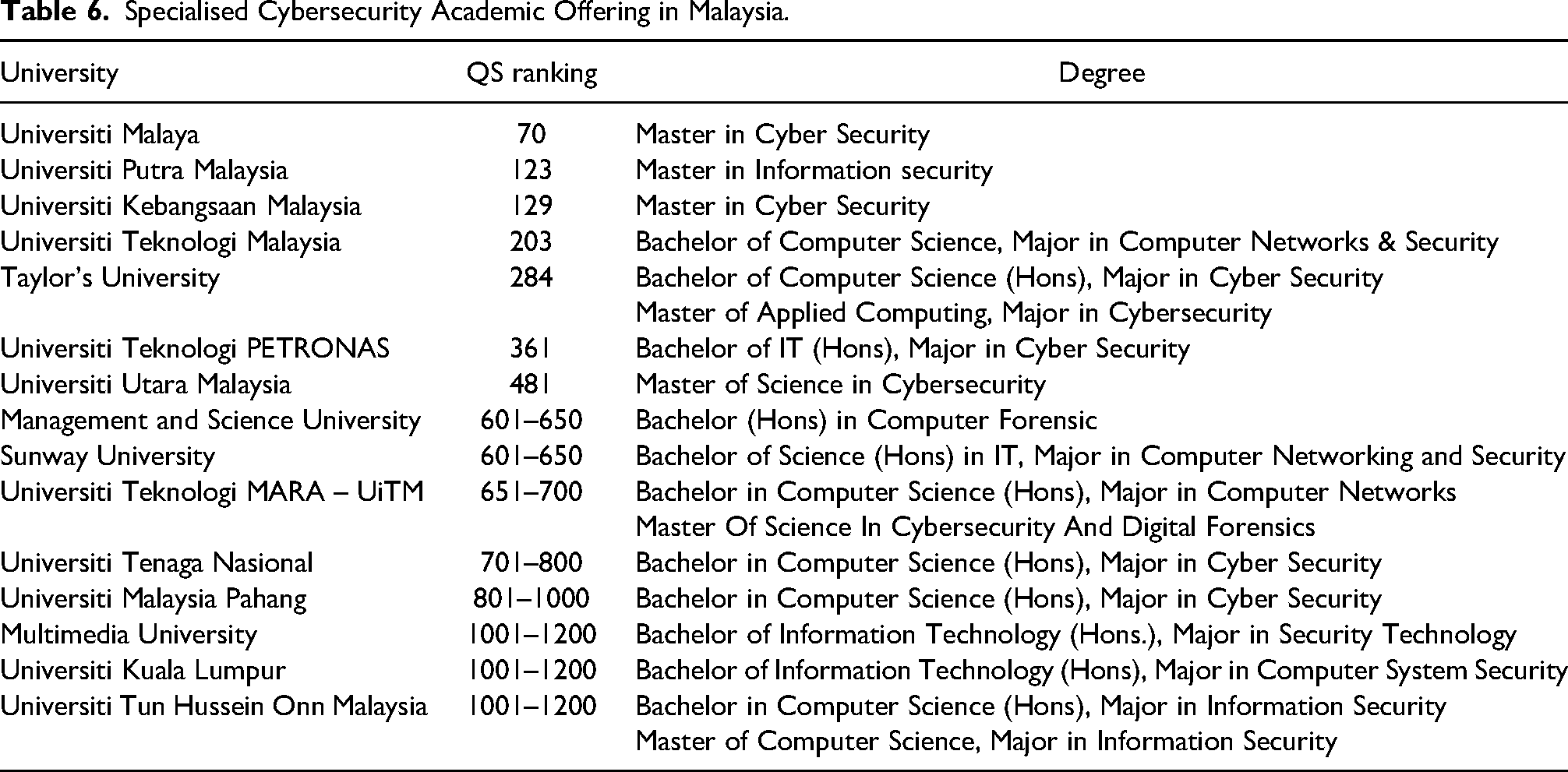
Of all the Southeast Asia countries, Malaysia has the most universities listed in the QS rankings (twenty-five). More than half offer cybersecurity-related programs, making this country the most active in the region regarding educational reach and options for aspiring professionals. As shown in Table 6, Malaysian students have access to six DD (five masters and one bachelor's) plus twelve additional majors across ten bachelor's programs and two masters programs. It is noteworthy to highlight how Malaysian universities offer degrees in Cybersecurity and branch out into even more specialised areas, such as digital forensics.
Specialised Cybersecurity Academic Offering in Malaysia.
Philippines
Only two QS-ranked universities offer cybersecurity-related degrees in the Philippines (Table 7). Both are at the bachelor's level, and no graduate study opportunities exist.
Specialised Cybersecurity Academic Offering in the Philippines.

Singapore
It may come as a surprise that although Singapore has the highest-ranked universities in Southeast Asia, there are limited options for students who wish to pursue a cybersecurity degree from a QS-ranked institution. Specifically, there is only one dedicated undergraduate and graduate program and one major that is part of a more general computing degree (as indicated in Table 8).
Specialised Cybersecurity Academic Offering in Singapore.

Thailand
Among the ten QS-ranked universities in Thailand, only Mahidol University offers a dedicated masters degree. There is no cybersecurity-related bachelor's program (see Table 9).
Specialised Cybersecurity Academic Offering in Thailand.

Vietnam
In Vietnam, only two out of the five QS-ranked Vietnamese universities are offering relevant degrees (see Table 10).
Specialised Cybersecurity Academic Offering in Vietnam.

Others
The remaining countries such as Cambodia, Laos, Myanmar, and Timor-Leste, do not have any universities listed in the QS Rankings in 2023. A summary of the current educational landscape in terms of DD and SM, including both postgraduate and undergraduate programs, is presented in Table 11.
Overall Number of Dedicated Degrees (DD) and Specialised Majors (SM) per Country.

Discussion
Looking at Table 11, especially when considering the results from Table 3, allows us to make some interesting observations.
First, Malaysia is the clear frontrunner when it comes to cybersecurity education, so much so that it may have no room left for further growth in the space as, despite the many degrees offered, fewer people engage in online cybersecurity activities compared to nearby countries, as shown by the THM statistics. The smallest country in the region, Brunei Darussalam, comes a distant second in the number of degrees offered and here, too, there seems to be not much room for additional growth as young people online do not seem mainly engaged. Here, the offer seems to be already exceeding the demand.
Conversely, the level of online participation in cybersecurity in Vietnam and Indonesia is remarkable, as is the participation of users from Myanmar, a country without any QS-ranked institution but with a similar number of users in the THM pool compared to nearby countries that offer specialised programs at prominent institutions. However, to gain a deeper understanding, we must also consider another factor, enrolment percentage (see Table 12), which is the accessibility of education for children in school age, as reported by the UNESCO Institute for Statistics in 2022 (UNESCO Institute for Statistics, 2022).
Tertiary School Enrolment as a Percentage of all Eligible Children (EP).

With this, we can now define a new metric, the ‘Cybersecurity Education Prospects Index’ (CEPI) as:
The purpose of CEPI is to help in pointing out different situations and underlying contexts. For example, if many degrees are already compared to the student pool, a new degree may not be sustainable, which should result in a low score. On the contrary, a country with few degrees and a growing and passionate student population clearly has a much better potential to establish new successful programs and should receive a high CEPI score. Table 13 presents the ranking of the Southeast Asia countries according to CEPI results.
SEA Countries Ranked by CEPI.
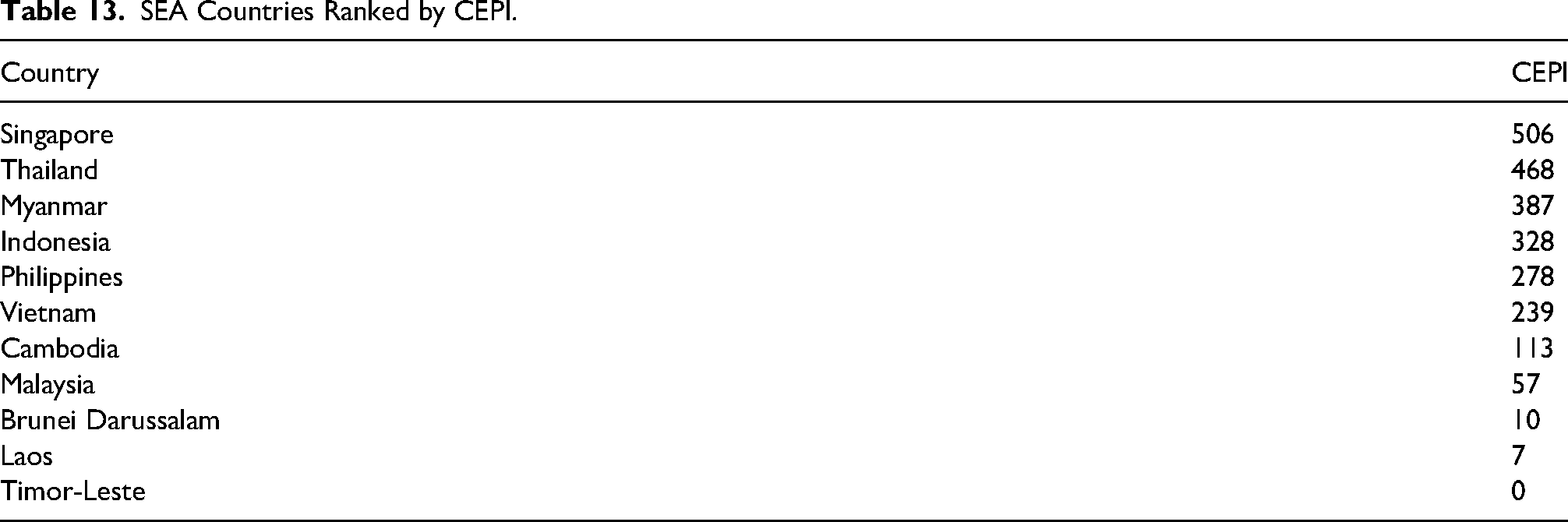
By considering the EP, we realise how Singapore, with an EP of 91%, can sustain further local growth in this space, as confirmed by a CEPI score of 506. Thailand and Myanmar are also countries with excellent growth prospects in the educational space, given that they have highly engaged youth and no or minimal academic offerings in this area provided by internationally ranked institutions. The presence of Myanmar in the third spot is particularly noteworthy, considering its low EP value. On the other hand, the CEPI score for countries such as Malaysia and Brunei confirms that these countries have already implemented a well-diversified offering relative to their student population, and further growth is unlikely. Countries such as Cambodia, Laos, and Timor-Leste must improve their overall access to education before growth in this space can finally happen. Good education is paramount to support the growth the industry so desperately needs, and we can define a similar index, the ‘Cybersecurity Industry Prospects Index’ (CIPI), to evaluate the prospects of industry growth as follows:
SEA Countries Ranked by CIPI.
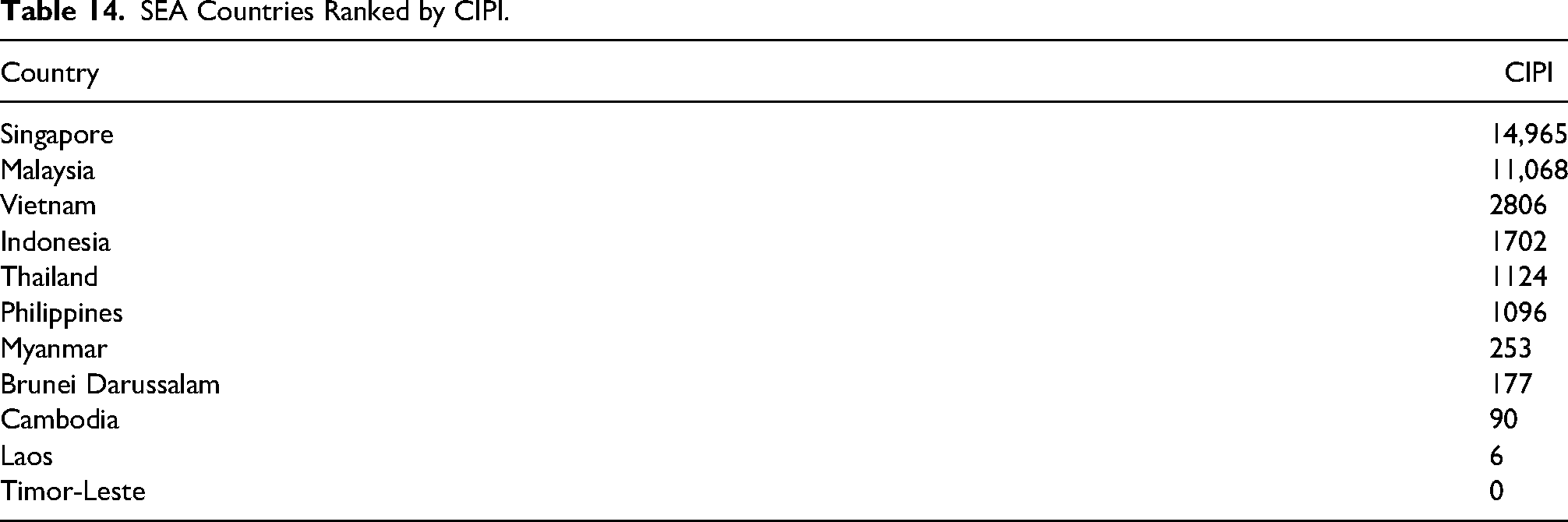
Once again, Singapore tops the ranking thanks to its very high EP value and good THM Score. Together with highly ranked institutions’ dedicated and specialised programs, it should guarantee a constant source of talent for healthy industry growth. Malaysia also scores very highly thanks to its many degrees spread around the country that should quickly push the local industry forward. A group of four countries follows, including Vietnam, Indonesia, Thailand, and the Philippines. These have all excellent potential in terms of young, engaged people who may be suitable candidates to foster industry growth. Still, the current low EP numbers and the scarcity of suitable degrees make it more challenging for the local industry to develop and fulfil its potential. Cambodia, Laos, and Timor-Leste close the ranking, and more fundamental issues must be resolved before the local cybersecurity industry can finally take off.
Conclusions
Online cybersecurity training platforms, such as THM, are essential not only to make cybersecurity accessible to a large number of people but also to gauge how interested and engaged young internet users are with technology and the opportunities it offers, hence providing us with a valuable tool to assess current and prospects for the cybersecurity world.
By factoring in various variables, such as the level of engagement of users on the platform and the availability of quality education and relevant academic programs, we have introduced two distinct indexes, namely CEPI and CIPI. These indexes can help determine which countries are in the most advantageous position to leverage the increasing interest in cybersecurity and channel that growth into the education system initially and subsequently, into the industry.
Singapore tops the rankings in both indices, showing strong prospects in both areas, while Malaysia scores very well in CIPI but poorly in CEPI. This is an interesting result due to the abundance of degrees currently offered, which make it easy to support the local industry but will not make it a good market for further educational expansion.
On the contrary, other countries such as Vietnam, Indonesia, Thailand, the Philippines, and Myanmar are well positioned for rapid educational growth that can, later, support the industry as needed. In these scenarios, Myanmar is particularly noteworthy since there are no QS ranked Universities and hence no DD considered by the metrics, besides a very low tertiary education enrolment percentage. Yet, it can show a very receptive community of cybersecurity enthusiasts, as shown by the TOP 50 THM median score above the ‘God’ level threshold of 20,000 points, making this a place just waiting to emerge.
Taken together with TAM, we argue that the fundamental tenets within the model offer new insights to introduce cybersecurity trainings through online or remote mode, especially for countries that received poor CIPI and CEPI. At the same time, we do not suggest that countries that have performed well, such as Singapore and Malaysia, should ignore TAM. After all, understanding technology acceptance will lead to better prediction of the use of new information resources, even if such systems are optional or an additional conduit in providing cybersecurity training.
In other words, university administrators should not underestimate the psychological factors influencing technology adoption. In this regard, students’ readability to the online learning contents, establishing the needed facilities such as a 24/7 helpline, and ensuring the portal is compatible with the different browsers are essential to minimise students’ irritation in accessing online learning content as well as maneuvering across the different modules. For countries that perform relatively poorly across both CEPI and CIPI, we further advocate that events or roadshows should be organised to facilitate the students in fostering a positive attitude towards online learning. Furthermore, training courses and roadshows can be organised to foster a positive view of students’ perception of the ease and usefulness of online learning could also enhance their positive attitudes and, consequently their behavioural intention.
Despite the interesting insights obtained by the analysis, we should akcnowledge that this study also has limitations. Only one online platform was discussed at a time when there are a few different contenders in the online cybersecurity gamified training space, and the educational space took into consideration only ranked institutions. We will likely miss other institutions that can significantly shape the local educational scene in each country. At the same time, future authors can also consider doing an empirical analysis of drawing relationships between different countries' cybersecurity professionals’ skills, abilities and aptitude, technological acceptance, and other variables that can also be included in the analysis, such as, universities’ cybersecurity educational offerings and graduates.
Footnotes
Declaration of Conflicting Interests
The authors declared no potential conflicts of interest with respect to the research, authorship and/or publication of this article.
Funding
The authors received no financial support for the research, authorship and/or publication of this article.
