



Abstract
Although the air transport industry is recovering from the COVID-19 pandemic, operational challenges remain, including airport congestion due to staff shortages. In response, airports have invested in self-service technologies (SST) to streamline operations, enhance passenger experiences, and address labour shortages. Building on the technology acceptance model and the theory of planned behaviour, this study explores passengers’ acceptance of biometric check-in kiosks. The framework is extended to include the perceived privacy concerns, trust, and risk, which have received little attention in research into aviation SST. In total, 577 valid surveys were collected at two major airports in Thailand. Key findings demonstrate that passengers’ intentions to use biometric check-in kiosks are significantly driven by their attitudes and perceived behavioural control. Importantly, this research reveals that perceived usefulness, ease of use, trust, and privacy concerns are pivotal in shaping passenger attitudes. These insights underscore the necessity for airlines and airports to enhance positive passenger attitudes by ensuring the perceived usefulness and ease of use, while critically addressing privacy concerns and building trust. Such findings are vital for optimizing the design and promotion of biometric check-in kiosks, thereby enhancing operational efficiency and the overall passenger experience.
Keywords
Introduction
Air transport has grown over the past decade. The number of global passengers increased from 3 billion in 2012 to nearly 4.5 billion in 2019 (International Civil Aviation Organization, 2023). However, global air transport faced a downturn caused by the COVID-19 pandemic. Travel restriction policies were enforced by many countries to reduce the infections. The reduction in flight frequencies was inevitable, and 54 airlines ceased their operation (International Air Transport Association, 2022). With travel restrictions lifted, the passenger traffic in 2024 was 3.8% higher than that in 2019, marking a new high (International Air Transport Association, 2025). Airport congestion, however, is still an ongoing issue because of staff shortages resulting from furlough and downsizing during the COVID-19 pandemic (Vance, 2022). Consequently, congestion in the departure lounge is expected to continue.
The aviation sector has invested in technologies to improve passengers’ experience, operational efficiency, and minimize environmental impact (Mattig, 2024). According to the SITA (2023), airlines invested more into information technology for passenger services in 2022 than in 2021, and these services were among airlines’ top three information technology investments. Passengers were offered self-service channels such as mobile ticketing, online check-in, self-check-in kiosks, self-service bag drops, and e-boarding passes. Recently, advanced options like service chatbots, biometric check-in, self-identity verification, and self-boarding have been introduced. These technologies allow passengers to perform some tasks without assistance from airport and airline employees, and are generally known as “self-service technologies (SST)” (Meuter et al., 2000). SST can benefit the companies by reducing costs, increasing customer satisfaction, and strengthening customer loyalty (Bitner et al., 2002). Moreover, when customers expect quick and accessible services, companies equipped with SST can gain a significant advantage (Meuter et al., 2000). However, organisations must carefully decide on the integration of SST into their existing services. The implementation of SST that has not been designed appropriately or requires advanced information technology skills could adversely affect customer satisfaction (Zhu et al., 2007). SST that cannot complete the basic functions or fails to perform the tasks could result in a frequent need for staff assistance and increased labour costs (Hilton et al., 2013).
Biometric kiosks have been widely implemented in tourism and hospitality industry. It is recognized for the potential in streamlining hotel check-in process, and reducing waiting time, which improving overall experience of the guests (Kang et al., 2007). Moreover, it helps enhancing travel experience by providing more secure and personalised services to tourists, for example, using biometric data as a means of authorisation and personalisation for return customers (Neo and Teo, 2022). From the business perspectives, biometric kiosks help reducing operating cost and reducing workload of staffs (Mills et al., 2010). To streamline the passengers’ journey at airports, SST has been upgraded with biometric systems, including biometric check-in, pre-security identification, automated border control, and self-boarding gates (OAG, 2022). Biometric check-in kiosks capture the biometric data of passengers at check-in points and reduce the need to present identification documents and boarding passes at security checkpoints and boarding gates (SITA, 2021). Some airports have introduced biometric check-in kiosks, such as Brisbane Airport, Hamad International Airport, and Sao Paulo International Airport (Negri et al., 2019). In the case of Thailand, THAI Airways was selected to be the pilot airline trialling biometric check-in kiosks on the daily flights to Singapore from February 2023 until the end of May 2023 (THAI Airways, 2023). The trial has been extended to cover all passengers travelling with THAI Airways who wish to try this service. At the time of writing, the project’s results are yet to be published. Hence, this study is crucial, as it provides insights into passengers’ intention to adopt biometric check-in kiosks.
This study offers several contributions to fill some research gaps. First, studies have adopted different theories to investigate users’ adoption of new technology, such as the technology acceptance model (TAM) (Davis, 1986), the theory of planned behaviour (TPB) (Ajzen, 1991), and the unified theory of acceptance and use of technology (Venkatesh et al., 2003). However, only a handful of studies have been conducted on passengers’ usage of biometric technology in aviation until now because of the limited implementation of such technology (e.g., Chi et al., 2025; Kasim et al., 2021; Kim et al., 2020; Kim et al., 2023; Kneale et al., 2014; Morosan, 2016; Untaru et al., 2024). Studies on biometric check-in kiosks are even rarer (Negri et al., 2019). Unlike biometric applications in security or border control, which are often mandatory and driven by compliance, the use of biometric check-in kiosks is voluntary. Thus, the factors that service providers need to consider to increase passenger adoption are different. This allows for an exploration of factors influencing discretionary technology adoption in a high-stakes, service-oriented context such as air travel. Therefore, among the few, this study fills this research gap by investigating passengers’ intentions to use (INTU) biometric check-in kiosks.
Although biometric technology can enhance operational efficiency at airports, it is crucial to address privacy-related concerns, risks, and trust to promote greater adoption of this technology (Khan and Efthymiou, 2021). Previous research suggested that passengers’ INTU biometric technology at airports are significantly affected by their perceived privacy concerns (PC) (Kasim et al., 2021; Morosan, 2016) and perceived risks (PR) (Kim et al., 2020). In addition, perceived trust (PT) also influences passengers’ intentions to adopt such technologies (Thommesen and Andersen, 2009). Despite the importance of these factors, the role of PC, PT, and PR have received little attention in the aviation SST research (Wongyai et al., 2024) and have not been integrated into a cohesive framework. To address this gap, the authors propose an integrated framework that combines these three factors with the TAM and TPB to examine their impacts on passengers’ attitudes toward using (ATT) and INTU biometric check-in kiosks. This integration offers an alternative theoretical lens, illustrating the interplay between security and trust-related perceptions and well-established drivers of technology acceptance. Thus, this study enriches the theoretical understanding of technology adoption in privacy-sensitive contexts. Additionally, this study investigated passengers at two major international airports in Thailand, which recently implemented this system. To the authors’ knowledge, this study is the first to investigate passengers’ INTU biometric check-in kiosks in Association of Southeast Asian Nations (ASEAN) countries. This contextual focus is particularly significant, as the socio-cultural and economic characteristics of ASEAN countries, including rapidly expanding digital economies and evolving privacy perceptions, may lead to unique technology adoption dynamics that differ from those observed in more developed Western markets or even other countries in Asia (e.g., South Korea and Japan). The result of this study, however, could be extended to other emerging countries sharing similar culture and economic characteristics, or by countries aiming to design, implement, and promote biometric solutions in aviation effectively. This can enhance operational efficiency, reduce passenger processing times, and improve the overall passenger service experience, contributing to a more seamless travel experience.
The next section provides a literature review covering the theoretical frameworks and development of the hypotheses. Next, the methodology section describes the survey instrument and data collection process, and a brief explanation of the method used for data analysis is provided. The results of structural equation modelling are then presented, followed by a discussion of the findings. Lastly, the implications and limitations of this study are provided.
Literature review
Theoretical frameworks
Scholars have designed frameworks to study the behavioural intention. The popular frameworks are the TAM and TPB which postulate that before acting, a person’s behavioural intention is formed by a positive attitude (Ajzen, 1991; Davis, 1986). The TAM theorises that an attitude is influenced by two core cognitive variables: perceived ease of use (PEOU) and perceived usefulness (PU). PEOU measures how easy an individual finds the technology to use, whereas PU measures the belief that technology will improve the process. The cognitive variables were influenced by external stimuli, such as the colour and layout of the system (Davis, 1986). The TPB, on the other hand, presumes that behavioural intentions are driven by subjective norms (SN) and perceived behavioural control (PBC). SN refer to the perceived social pressure to either engage in or refrain from a certain behaviour, whereas PBC is the ease or difficulty of carrying out an action, which is believed to be a result of previous experiences and the expected barriers and limitations (Ajzen, 1991). Some studies have integrated the TPB and TAM to achieve more explanatory power (Kasim et al., 2021; Lien et al., 2021; Thamaraiselvan and Thanigaiarul, 2019).
It is crucial to understand the factors that influence the adoption of new technology, as the benefits are realized only when the technology is used (Davis et al., 2024). Previous research has adopted the abovementioned theories to explain the use of SST in aviation (please also refer to Appendix). Studies have supported the positive effect of PEOU and PU on passenger’s attitudes towards SST and, ultimately, intentions to buy air tickets from the websites (Kim et al., 2009a; López-Bonilla and López-Bonilla, 2015) and to use check-in kiosks (Lee et al., 2014). SN and PBC were also found to play significant roles in the use of the aviation SST (Ruiz-Mafe et al., 2013; Thamaraiselvan and Thanigaiarul, 2019). Moreover, performance expectancy in using SST influenced the INTU, while the effect of effort expectancy was not significant (Escobar-Rodríguez and Carvajal-Trujillo, 2013; Melián-González et al., 2021). Other variables were also examined and found to have a positive impact on INTU aviation SST, such as social influence on the adoption of chatbots (Melián-González et al., 2021) and facilitating conditions for e-ticketing adoption (Escobar-Rodríguez and Carvajal-Trujillo, 2013).
Scholars have also included several other variables to better specify the TAM and TPB models to suit their contexts. Extrinsic and intrinsic motivation have positive effects on the INTU aviation SST, whereas passengers’ evaluations of SST mediated both effects (Moon and Lee, 2022). Similarly, the hedonic motivation influenced passengers’ INTU the service chatbot (Melián-González et al., 2021) and airline e-ticketing services (Naruetharadhol et al., 2022). A greater perception that using aviation SST created joy led to a positive attitude of passengers (López-Bonilla and López-Bonilla, 2013) and increased their INTU (Gures et al., 2018). Moreover, passengers intended to use websites and mobile ticketing applications more when they perceived them as trustworthy (Kim et al., 2009a; Mohd Suki and Mohd Suki, 2017). The same relationship was found in the case of self-baggage drops (Shin et al., 2022). Furthermore, the INTU self-check-in kiosks decreased when passengers needed the service from employees (Lee et al., 2014; Lu et al., 2009).
Limited studies have been dedicated to passengers’ adoption of biometric technology at airports. However, there are recent studies in the broader tourism and hospitality industries that explore the adoption of biometric technology. In the restaurant context, a study has shown that customers’ intentions to adopt payment through facial recognition are driven by all factors posited by the TPB, with ATT influenced by consumer innovativeness (Hwang et al., 2024). Moreover, the intention to adopt such a system is formed by the mechanism proposed by the TAM, with ATT shaped by the alignment between consumers’ self-perception and external image (Kim et al., 2025). For business events, performance expectancy and trust impact the guests’ intention to adopt facial recognition check-in (Ciftci et al., 2024). It has been highlighted that tourists’ emotions, trust, and self-efficacy are important factors influencing the intention to adopt biometric technology at any point in their journey (David-Negre and Gutiérrez-Taño, 2024).
In the case of airport biometric security, older passengers tend to use it less and take a longer time to finish than younger passengers, although their PEOU and satisfaction are similar (Kneale et al., 2014). Some other variables have been highlighted as influencing the INTU biometric security at airports, such as effort expectancy, performance expectancy (Morosan, 2016), PC (Kasim et al., 2021; Morosan, 2016), perceived benefits, and PR (Kim et al., 2020). Additionally, PT is vital in accepting biometric technologies (Thommesen and Andersen, 2009), especially trust in privacy protection (Kim et al., 2023). The perception that biometric security helps reducing infection has been shown to drive the adoption intention during COVID-19 pandemic (Untaru et al., 2024). In the case of airport biometric boarding gate, a recent study has shown innovativeness and convenience as the drivers of the adoption intention, while passengers’ anxiety is the barrier (Chi et al., 2025). Regarding airport biometric check-in, Negri et al. (2019) showed that almost 83% of passengers would use this channel, with a higher possibility found for male, leisure, and younger passengers. Therefore, there is a need for more research into the adoption of aviation biometric technology, especially technologies focused on the first step of the journey, such as biometric check-in. In addition, PC, PR, and PT have mostly been investigated separately. Although Lancelot Miltgen et al. (2013) integrated these three factors into their model, they did not consider the role of ATT, which plays a vital role in the relationship between belief and intention (Davis et al., 2024). This study fills this research gap by incorporating these factors into a comprehensive framework to investigate passengers’ INTU biometric check-in kiosks at the airport.
Hypothesis development
TAM posits that the INTU is formed jointly by ATT and PU (Davis et al., 1989). The influence of ATT is grounded on the idea that an intention is partly formed when individuals feel positively about it. Whereas, the influence of PU relies on the idea that individuals develop intentions regarding behaviours that they think will improve their performance, regardless of their feelings (Davis et al., 1989). Studies have shown evidence to support these relationships in the context of aviation SST (Lien et al., 2021; López-Bonilla and López-Bonilla, 2015). In this study, the authors also argue that PEOU could influence INTU, i.e., individuals are likely to use the system that they find it easy to use. This relationship has been supported for the case of airport self-check-in kiosks (Kim et al., 2023; Ko and Park, 2019; Taufik and Hanafiah, 2019).
TAM additionally proposes that PU and PEOU jointly shape ATT, whereas PEOU also influences PU. The favourable outcomes, or better performance, usually enhance an individual’s emotional response towards the methods employed in obtaining those outcomes. Moreover, when the use of system is considered effortless, individuals are more likely to find it useful and reinforce positive attitudes (Davis et al., 1989). Previous aviation SST studies have found evidence supporting these relationships (Lee et al., 2014; López-Bonilla and López-Bonilla, 2015; Lu et al., 2009). Following the literature, therefore, this study investigated these relationships in the context of biometric check-in kiosks at airports and set the following hypotheses:
According to the TPB, SN, and PBC are proposed to have an impact on behavioural intention (Ajzen, 1991). Individuals regularly align their behaviours with the beliefs and expectations of their loved ones, friends, and community (Park, 2000). Therefore, the stronger individuals believe that people around them expect them to engage in a certain behaviour, the stronger the behavioural intention formed. Furthermore, to perform a certain behaviour, individuals have to be confident that they can do it (Ajzen, 1991). Thus, the stronger individuals believe in their abilities, the greater the behavioural intention formed. A recent study in restaurant context has supported the significant role of TPB in explaining customers’ intentions to pay using facial recognition method (Hwang et al., 2024). Evidence from previous studies has shown that passengers’ INTU aviation SST are impacted by an increase in the perception of social pressure (Kasim et al., 2021; Kim et al., 2009a; Ruiz-Mafe et al., 2013) and the perception that passengers have adequate resources to have control over the system (Lien et al., 2021; Lu et al., 2009; Ruiz-Mafe et al., 2013; Thamaraiselvan and Thanigaiarul, 2019). The following hypotheses were also formed:
Information privacy is one of the concerns of passengers about using information technology systems at the airport (Graham, 2023). According to Westin (1967), privacy is defined as the ability of a person, a set of people, or an organisation to determine the accessibility and disclosure of their information by other parties. The survey by InternetSociety showed that 75% of participants were concerned that their personal information would be provided to a third-party organisation without their consent (Internet Society, 2019). Concerns about the privacy of biometric data could also influence a person’s fear of using biometric technology. These concerns included data storage, illegal data acquisition, and locating persons (Labati et al., 2016; Morosan, 2012; Schouten and Jacobs, 2009). Several studies have attempted to understand the role of PC on users’ acceptance of biometric technology (e.g., Breward et al., 2017; Hino, 2015; Morosan, 2011; Morosan, 2016). A study established that increased PC of users could create a negative ATT biometric technology (Breward et al., 2017). Additionally, the INTU biometric technology could increase when the user perceives there is sufficient privacy (Hino, 2015).
According to the systematic literature review by Wongyai et al. (2024), few studies have mentioned the PC in the context of aviation SST. A study on the biometrics used at airport immigration showed that when passenger PC were alleviated, a positive ATT could be formed (Morosan, 2011). Other studies have shown that PC have an impact on passengers’ INTU biometric technology at airports (Kasim et al., 2021; Morosan, 2016). Nevertheless, PC have received little attention in studies on the acceptance of aviation biometric technology. Therefore, this study proposed the following hypotheses:
Trust is the beliefs and the disposition of a person to rely on another person or entity, although a negative outcome could be anticipated (McKnight et al., 1998). Trust is divided into two main constructs. “Trusting intention” is when a person is eager to rely on another person, whereas “trusting beliefs” reflect the belief that another person is good-natured, talented, sincere, or foreseeable in a specific situation (McKnight et al., 1998). Based on this model, the theory of trust transfer was developed (Stewart, 2003). In the context of the internet, this theory suggests that trusting beliefs significantly influence the intention to buy. A study revealed that the higher the PT, the more positive ATT will be (Shaker et al., 2023). Moreover, the positive effects of PT on the INTU are widely supported in different contexts (Choi and Ji, 2015; Dhagarra et al., 2020; Pavlou, 2003; Shaker et al., 2023). Additionally, several studies on biometric technology confirmed the positive relationships between PT and ATT (Moriuchi, 2021; Nakisa et al., 2023) and between PT and INTU (Hino, 2015; Lancelot Miltgen et al., 2013).
PT has been found to play a significant role in research into the adoption of aviation SST. The effects of PT on ATT (Kim et al., 2009a; Lee, 2016; Thamaraiselvan and Thanigaiarul, 2019) and INTU (Kim et al., 2009a; Mohd Suki and Mohd Suki, 2017; Shin et al., 2022) were found to agree with the studies mentioned above. However, the current studies on the use of biometric technology in aviation have paid little attention to the role of PT. This study proposed the following hypotheses:
The belief that the use of products or services could lead to unfavourable outcomes is known as PR (Bauer, 1967). PR was later redefined to fit the context as “the potential for loss in the pursuit of a desired outcome of using an e-service” (Featherman and Pavlou, 2003: 454). This was supported by previous research that higher PR hindered INTU (Featherman and Pavlou, 2003; Pavlou, 2003), and the effect was emphasized in the context of online banking (Bashir and Madhavaiah, 2015; Martins et al., 2014). Moreover, PR was found to negatively shape ATT (Crespo et al., 2009; Van der Heijden et al., 2003).
When using aviation SST, passengers may be concerned that their transactions, such as buying tickets and check-in, could fail, which could cost them time and money. PR was found to be a significant factor in e-ticketing (Lee et al., 2019), online check-in and self-check-in kiosks (Lee, 2016; Lu et al., 2009; Thamaraiselvan and Thanigaiarul, 2019), and biometric security (Kim et al., 2020). The effect of PR on biometric technology remains underexplored in aviation SST research. Hence, this study incorporated the role of PR into the framework and proposed the following hypotheses:
Figure 1 depicts all the hypotheses established in this study. Conceptual framework.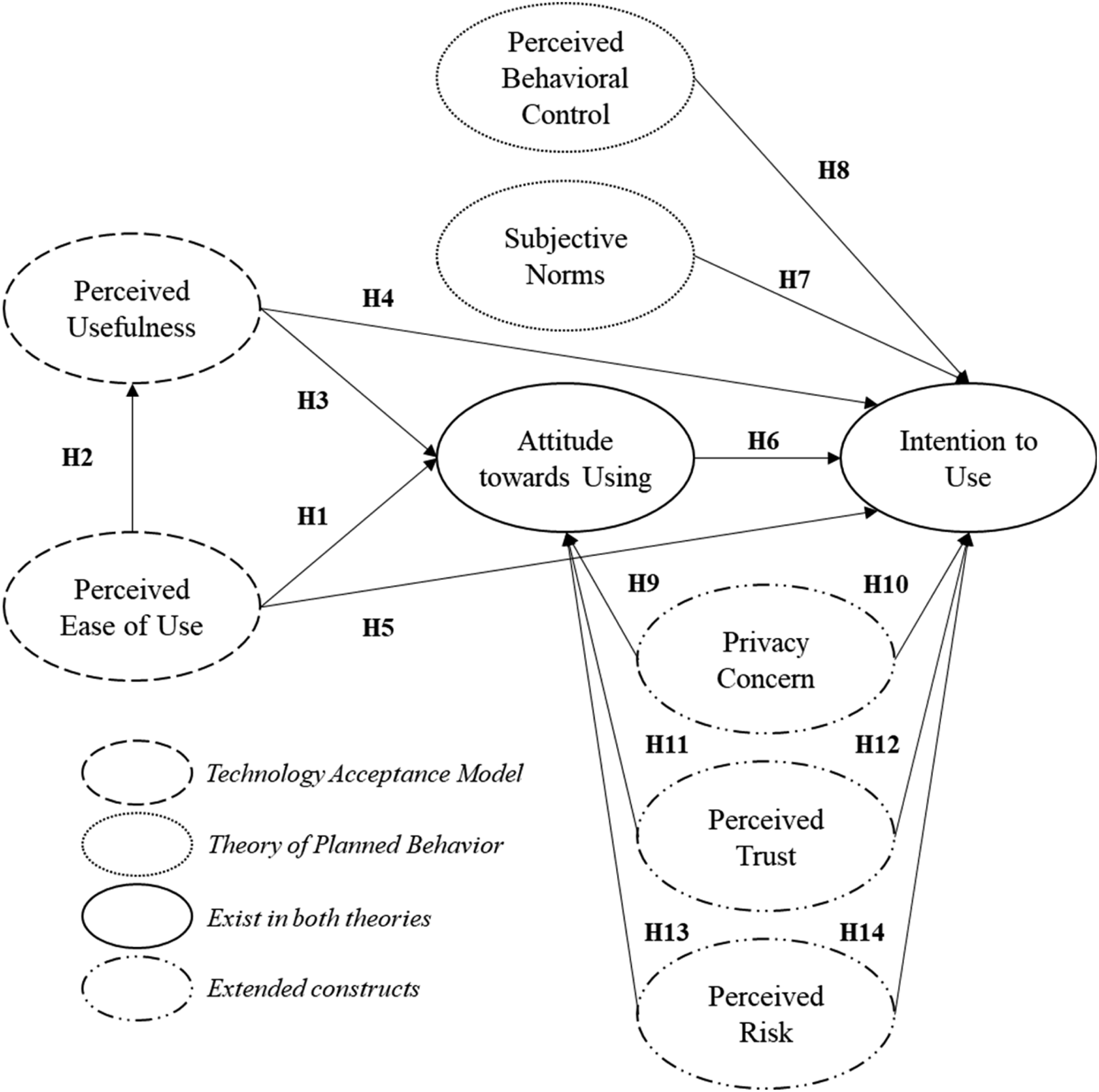
Methodology and data
Survey instrument
Questionnaires were available in English and Thai 1 , and consisted of three parts: (1) an introduction to biometric check-in, (2) participants’ opinion, and (3) participants’ characteristics. This study adopted the TAM (Davis, 1986; Davis et al., 1989) as the main model because of its explanatory power and its popularity as it has been used by a number of previous studies (Kasim et al., 2021; Ko and Park, 2019; Lien et al., 2021; López-Bonilla and López-Bonilla, 2015; Lu et al., 2009; Mohd Suki and Mohd Suki, 2017; Taufik and Hanafiah, 2019), along with the TPB (Ajzen, 1991). Moreover, additional factors were included to specify the model for explaining the adoption of biometric check-in kiosks, namely, PC, PT, and PR.
The measurement items were adopted from the TAM and TPB models and the existing literature. All items are scored using a seven-point Likert-type scale, ranging from 1 (strongly disagree) to 7 (strongly agree).
PEOU and PU are measured using items from Davis (1989) and Venkatesh and Davis (2000). An example on an item for measuring PEOU is “I find the biometric check-in kiosk to be easy to use”, and one for measuring PU is “Using biometric check-in kiosk enhances my convenience on check-in.” To measure ATT, the measurements have been borrowed from Kim et al. (2009a), Ruiz-Mafe et al. (2013), and Kasim et al. (2021), for example, “I think using biometric check-in kiosks is a positive experience.” Measurement items for INTU have been adopted from Venkatesh and Davis (2000) and Dhagarra et al. (2020), for example, “Assuming I have access to a biometric check-in kiosk, I intend to use it.” The items from Kim et al. (2009a), Ruiz-Mafe et al. (2013) and Lee (2016) are used to measure PBC, such as “I have the resources, knowledge, and skills to use a biometric check-in kiosk to process my check-in.” To measure SN, the measurement items from Venkatesh et al. (2003), Mohd Suki and Mohd Suki (2017) and Moriuchi (2021) are used. An example item is “People who are important to me think that I should use a biometric check-in kiosk.” In addition to the core constructs of TAM and TPB, PT is measured with items from Choi and Ji (2015), Mohd Suki and Mohd Suki (2017), and Shin et al. (2022), for example, “I believe biometric check-in kiosk is trustworthy.” The items measuring PC are borrowed from Malhotra et al. (2004), Dinev and Hart (2005) and Kasim et al. (2021). An example item is “I am concerned that my information could be shared or sold with using biometric check-in.” Lastly, PR is measured using items from Featherman and Pavlou (2003), Martins et al. (2014), and Lee (2016), for example, “the biometric check-in kiosk might not perform well and create problems with the check-in process.”
Data collection and descriptions
This study surveyed passengers at Suvarnabhumi Airport and Don Muang International Airport in Thailand between March and April 2024. These two airports served approximately 45 million international and 28 million domestic passengers in 2023, representing over 70% of the traffic at Airports of Thailand-operated airports (Airport of Thailand, 2023). Moreover, Suvarnabhumi Airport was ranked 11th of the top 50 global airport mega-hubs (OAG, 2023). The self-administered questionnaires were hosted on Qualtrics and distributed only within the airport’s departure hall because of airport security. To ensure the anonymity of the participants, identifying details were not collected, such as name, address, phone number, and national identification number.
Demographic details of the respondents (N = 577).
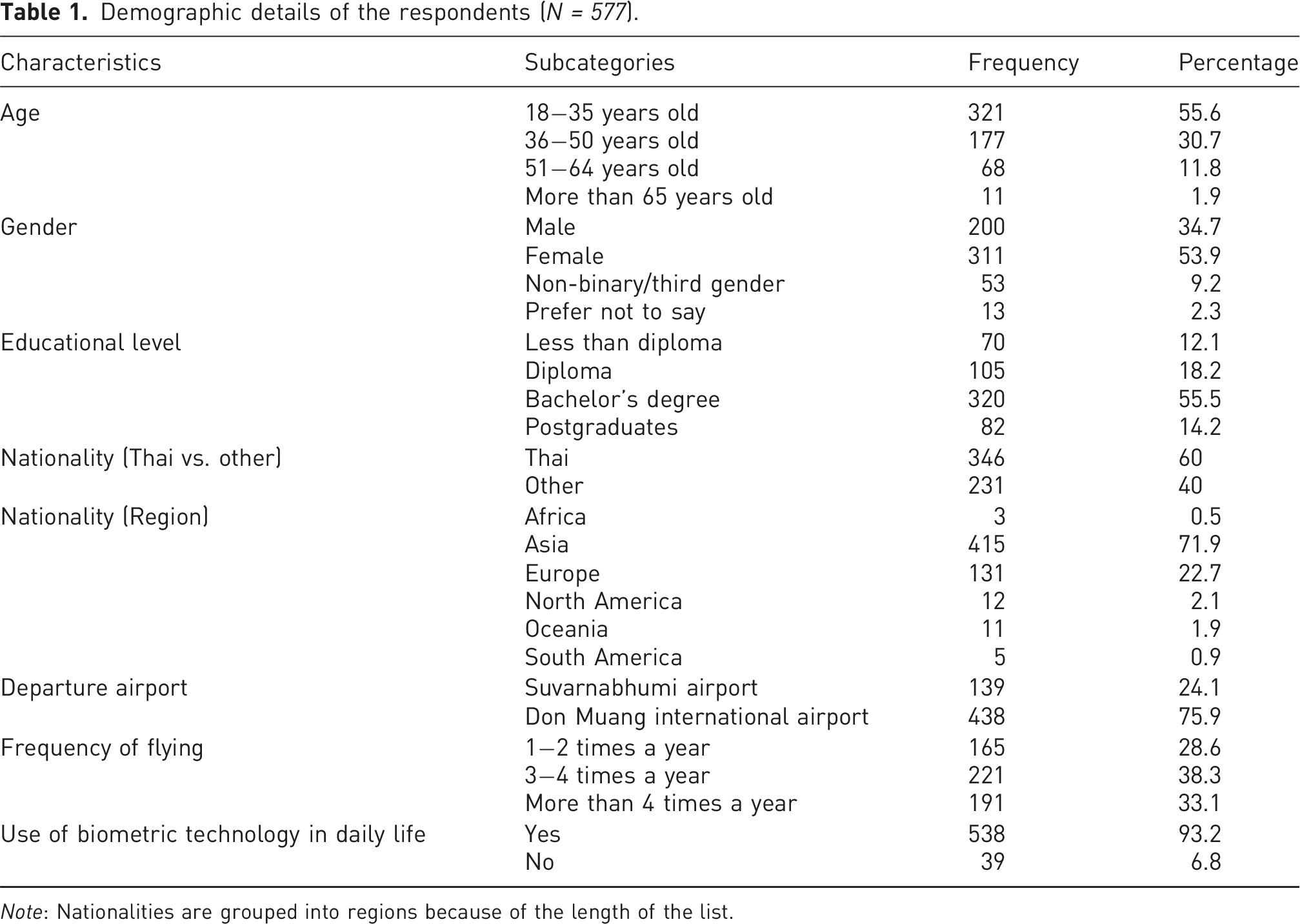
Note: Nationalities are grouped into regions because of the length of the list.
Data analysis
Two-stage data analysis, a recommended approach where the measurement and structural model are analysed separately, was implemented in this study (Anderson and Gerbing, 1988; Kline, 2023). First, the measurement model was analysed using confirmatory factor analysis (CFA) to ensure the fitness of the model and the data. The convergent and discriminant validity of the measurement model were tested. In addition, the common method bias (CMB) was also tested to make sure that survey’s bias was accounted for. Lastly, the structural model was analysed using covariance-based structural equation modelling (CB-SEM).
Empirical results
Assessment of the measurement model
Confirmatory factor analysis.
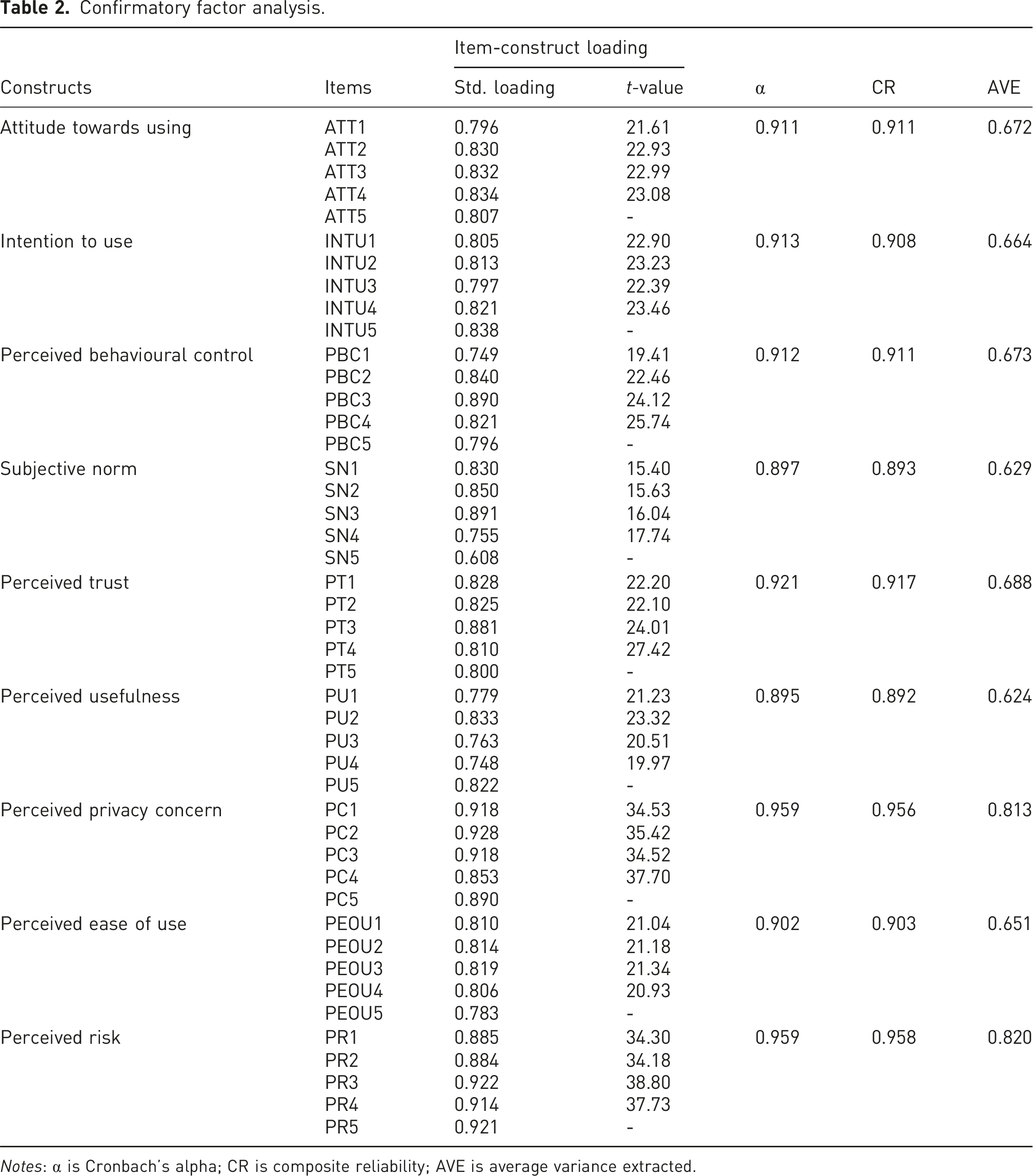
Notes: α is Cronbach’s alpha; CR is composite reliability; AVE is average variance extracted.
Discriminant validity (HTMT).
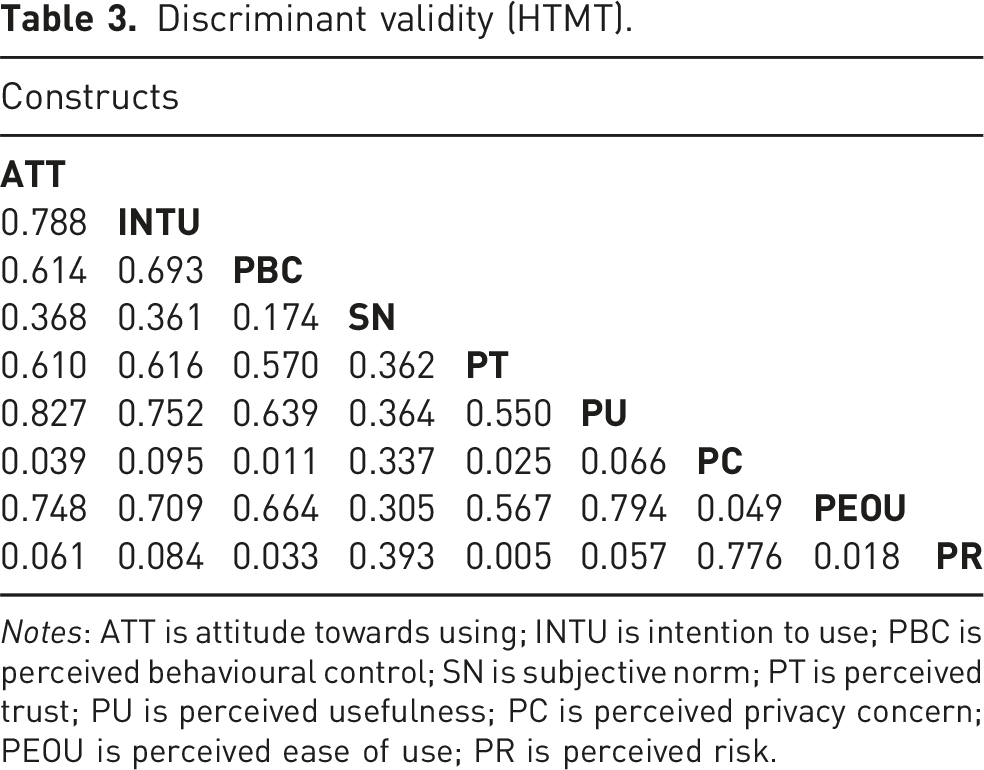
Notes: ATT is attitude towards using; INTU is intention to use; PBC is perceived behavioural control; SN is subjective norm; PT is perceived trust; PU is perceived usefulness; PC is perceived privacy concern; PEOU is perceived ease of use; PR is perceived risk.
Assessing the impact of CMB in survey research is crucial as it can result in measurement error and biased findings. Rather than answering the questions according to their actual feelings, the participants might try to satisfy social expectations or keep their responses consistent, leading to potential CMB (Podsakoff et al., 2003). The Harman’s single-factor method suggests that a single factor accounting for the majority of variance may indicate a significant issue with CMB (Collier, 2020). Other studies are being even stricter in arguing that such single-factor test is simply nondiagnostic and do not account for potential bias, so that this method should be avoided at all costs (Hulland et al., 2018; Podsakoff et al., 2024). Given that the Harman’s result showed that 33.56% of variance was explained by a single unrotated factor, although not dominant, the authors believe that the common latent factor (CLF) method is more appropriate for this study. The CLF is a popular technique (Collier, 2020) and has recently been used by several researchers (e.g., Akgün et al., 2023; Akgunduz et al., 2022; Kumar et al., 2022). To detect the potential CMB, the measurement models with and without CLF were compared to test whether they differed significantly. The results showed that the difference between the initial model (
Structural model and hypothesis testing
The structural model achieved adequate fitness according to the model fit statistics (
Hypothesis testing.
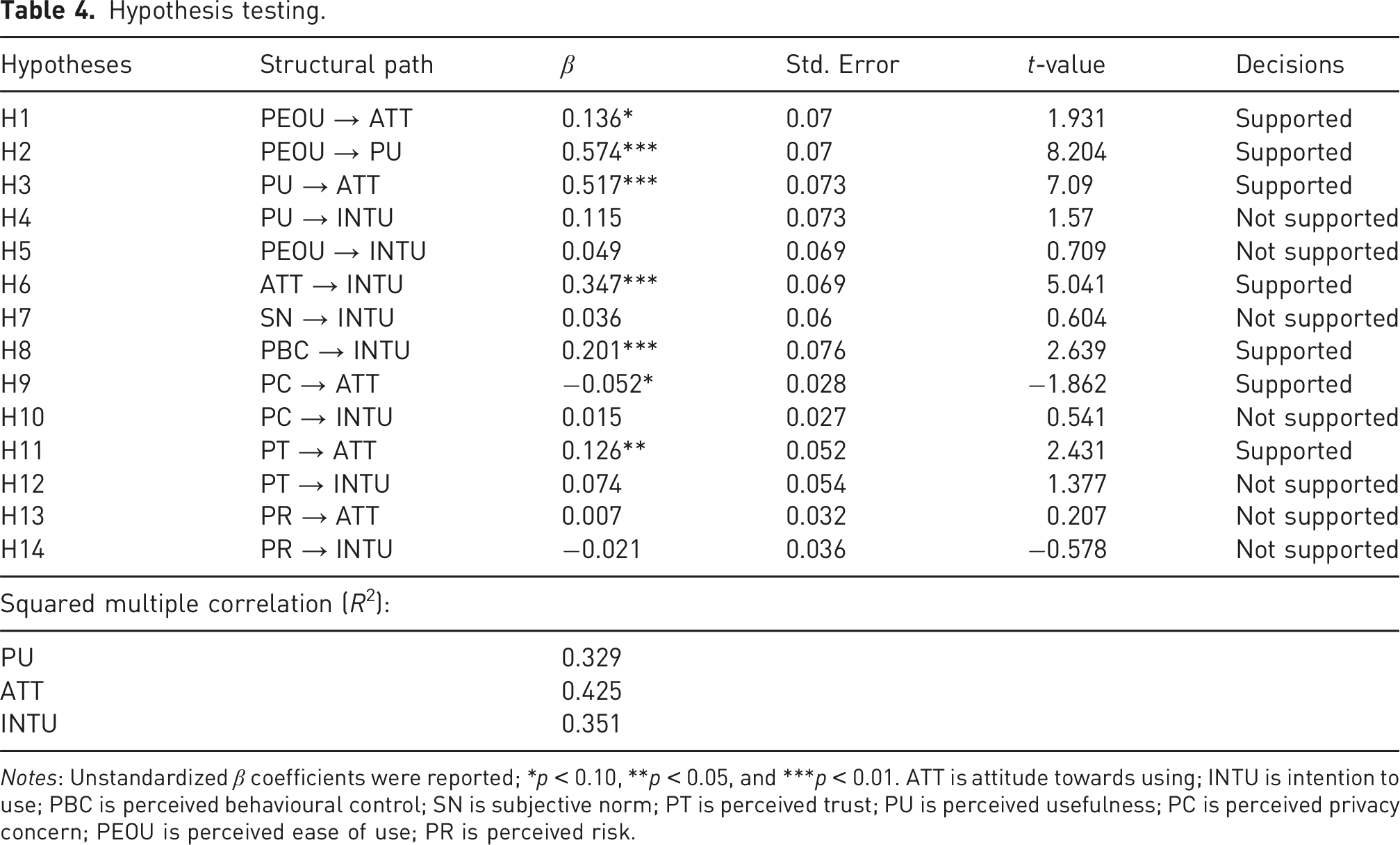
Notes: Unstandardized β coefficients were reported; *p < 0.10, **p < 0.05, and ***p < 0.01. ATT is attitude towards using; INTU is intention to use; PBC is perceived behavioural control; SN is subjective norm; PT is perceived trust; PU is perceived usefulness; PC is perceived privacy concern; PEOU is perceived ease of use; PR is perceived risk.
Importantly, the analysis showed that ATT was positively and significantly shaped by PT and negatively impacted by PC, according to Table 4. However, the PR had an insignificant influence on ATT. Hence, H9 and H11 were supported, although there was insufficient evidence to support H13. Finally, INTU was not affected by PC, PT, or PR, providing insufficient evidence to support H10, H12, and H14.
Mediation tests.
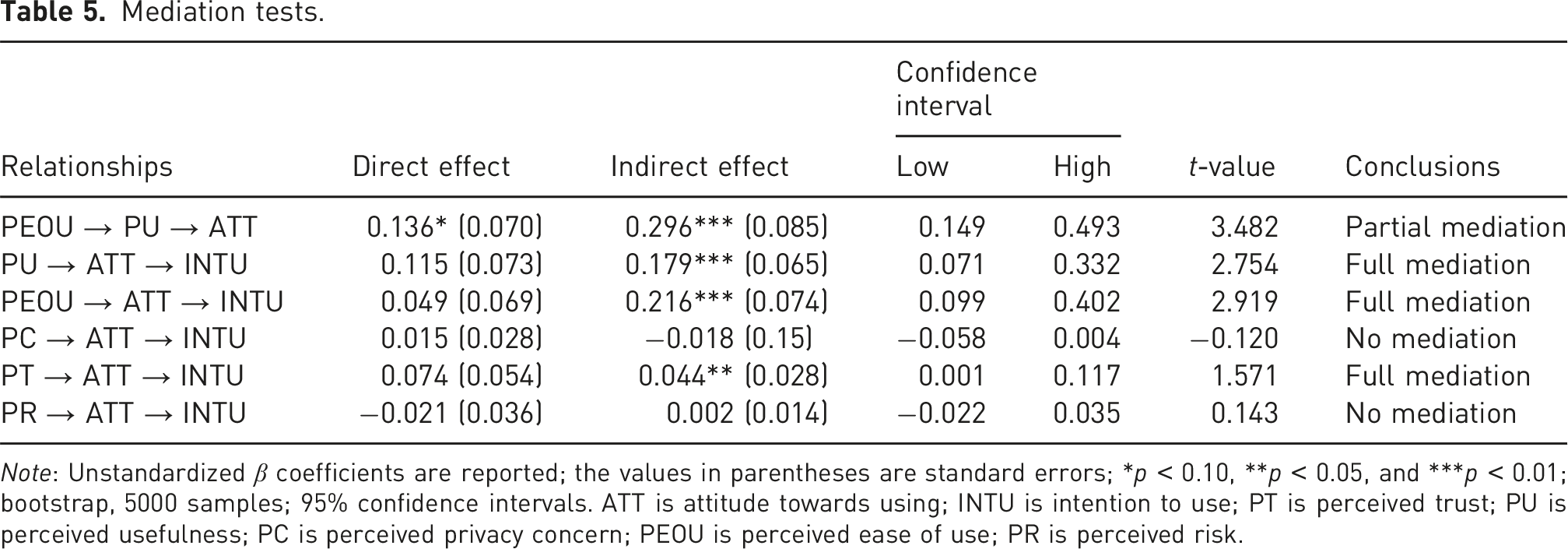
Note: Unstandardized β coefficients are reported; the values in parentheses are standard errors; *p < 0.10, **p < 0.05, and ***p < 0.01; bootstrap, 5000 samples; 95% confidence intervals. ATT is attitude towards using; INTU is intention to use; PT is perceived trust; PU is perceived usefulness; PC is perceived privacy concern; PEOU is perceived ease of use; PR is perceived risk.
Discussion
As Table 4 illustrates, 7 out of 14 hypotheses were supported, mostly aligning with the TAM and TPB (Ajzen, 1991; Davis, 1986). First, PEOU and PU influenced ATT. The effect of PU on ATT was stronger than that of PEOU. These findings aligned with a prior study on self-check-in kiosks (Lee et al., 2014). Although the TAM proposes that INTU is influenced by PU, and several past studies support that it is also influenced by PEOU, the results of this study did not support these relationships. The result aligns with a prior study showing that PEOU and PU do not have significant influence on INTU in the context of adopting biometric security at the airport (Kasim et al., 2021). These show that passengers may realise the easiness and benefits from biometric check-in kiosks, but these may not help forming an adoption intention. The possible explanation could be that air travel is a high-stakes service which could cost passengers time and money when mistakes happened. Therefore, passengers choose the safest and the most familiar check-in channel, traditional check-in counter, regardless of any advantages the biometric check-in kiosks may offer. Another explanation could be that almost 70% of participants have graduated at least bachelor’s degree and more than 80% of participants are 50 years old or younger. These could imply that the participants are relatively familiar with technology usage and realise the advantages of using the technology, therefore, PEOU and PU may no longer be primary factors influencing the usage of the new technology.
After examining the model in more detail, the authors found that PEOU and PU indirectly influenced INTU through ATT (Table 5). This implies that even without direct effects, both perceptions shape passengers’ ATT biometric check-in kiosks, which, in turn, shape their INTU. Although this mediating role of ATT has rarely been tested in aviation SST research, this finding aligns with prior study on the general use of information technology, showing that ATT fully mediates the impacts of PEOU and PU on INTU (Kim et al., 2009b). Additionally, this study also identified the indirect effect of PEOU on ATT through PU. This means that the perception that biometric check-in kiosks are easy to use influences passengers’ perceptions that the kiosks are useful, which, in turn, positively shape their ATT. A previous study also supported a similar partial mediating role of PEOU and ATT in the context of airline e-commerce (Kim et al., 2009a). The results confirmed the influence of PBC on INTU, which aligned with the TPB (Ajzen, 1991) and other studies on the adoption of aviation SST (Lien et al., 2021; Lu et al., 2009; Ruiz-Mafe et al., 2013). Moreover, the results are consistent with previous studies, which showed that SN did not play a significant role in driving INTU (Lien et al., 2021; Mohd Suki and Mohd Suki, 2017; Ruiz-Mafe et al., 2013). This result is surprising as more than 70% of the participants are Asian, which is generally considered to share a collectivism culture. A recent study has concluded that a sense of collectivism in Asian people is fading, given that the political and economic situation are improved (Kim, 2024). Although the study did not show the evidence of complete shift to individualism culture, it may be worth to re-examine the role of subjective norm in the future.
It should be noted that three factors (i.e., PC, PT, PR) that were incorporated into this study’s model have been given less attention in aviation SST adoption research. The results showed that PT significantly impacted ATT, aligning with previous studies (Kim et al., 2009a; Thamaraiselvan and Thanigaiarul, 2019). Although the direct impact of PT on INTU was not significant, its indirect impact through ATT was disclosed, indicating the fully mediating role of ATT. This implies that passengers’ PT of biometric check-in kiosks positively shapes ATT, which, in turn, forms their INTU. This finding confirmed the proposed effect of trust on attitude and, subsequently, on intention (Lee, 2016).
Moreover, higher PC negatively influenced ATT, consistent with previous research on biometrics in banking (Breward et al., 2017) and aviation (Morosan, 2011). Unlike the earlier airport biometrics studies (Kasim et al., 2021; Morosan, 2016), this study did not find a significant influence of PC on INTU. The result also showed an insignificant effect of PR on INTU, which is similar to prior work on the self-check-in kiosks, which found that INTU is not significantly influenced by PR (Lee et al., 2014; Lu et al., 2009). One possible explanation for this finding can be related to cognitive dissonance theory (Harmon-Jones and Mills, 2019), which suggests that passengers might acknowledge concerns about privacy and perceptions of risks associated with using biometric check-in kiosks, yet they may still decide to maintain their initial intention whether or not to use it.
Conclusions
This study investigated passengers’ INTU biometric check-in kiosks at two Thai airports using the TAM and TPB with three additional variables: PC, PR, and PT. The results showed that 7 out of 14 hypotheses are supported. The key findings include the following: (i) the effects of PC and PT on ATT biometric check-in kiosks were significant; (ii) the effects of SN and PC on the intention to adopt biometric check-in kiosks were insignificant; and (iii) the PR did not play an important role in this study; (iv) the indirect effect tests showed that the PU of biometric check-in kiosks mediated the relationship between PEOU and ATT biometric check-in kiosks; and (v) ATT biometric check-in kiosks mediated the impact of PEOU, PU, and PT on adoption intention. To enhance the adoption of biometric check-in kiosks, airports should actively promote the ease of use and benefits of the kiosks, while also addressing privacy-related concern and build trust among passengers. A more integrated layout combining kiosks and baggage drop-off machines could streamline the check-in process, improving the overall passenger experience. The following subsections detail these findings’ implications.
Theoretical implications
This study has several theoretical implications. Although the TAM framework has been implemented widely, their results were not in consensus. Moreover, some perceptions (e.g., PC, PT, and PR) are underexplored in studies on technology acceptance, and are often investigated separately. To fill the gap, the authors established an integrated research framework based on the TAM and TPB with additional variables: PC, PT, and PR to examine passengers’ intentions to adopt biometric check-in kiosks at airports, which is currently lacking. This integrated framework advances former research by providing a more comprehensive and nuanced theoretical lens for understanding technology acceptance, particularly within privacy-sensitive and voluntary contexts. This study also provides more insights to the scarce literature about the passengers acceptance of biometric check-in kiosks, especially in the context of ASEAN countries.
Prior research on the adoption of aviation SST have often ignored the role of attitudes in forming the behavioural INTU the technology. To the authors’ knowledge, this is the first study in the field of aviation SST research to illustrate that the effects of PU and PEOU on INTU are fully mediated by ATT biometric check-in kiosks. This contribution highlights the original TAM’s mechanism and emphasise that the attitude becomes crucial when users interact with systems involving personal biometric data. This study supports the mechanism that ATT biometric check-in kiosks is an important factor forming INTU this technology, and therefore, urging a deeper consideration of affective responses in future aviation SST research.
Lastly, previous research on the acceptance of technology has examined the role of PC, PR, and PT on the acceptance of biometric technology in general (Lancelot Miltgen et al., 2013); however, they did not include the users’ attitude in their analysis. Therefore, this study offers an alternative perspective, emphasizing that PC and PT significantly shape passengers’ ATT biometric technology (in this case, biometric check-in kiosks). This means that high PC among passengers leads to adverse ATT biometric check-in kiosks, whereas positive ATT are more likely for passengers with high PT. However, PR of using biometric check-in kiosks did not have a significant effect on INTU in this study’s results.
Practical implications
This study provides practical implications for aviation stakeholders considering implementing biometric technology. First, PEOU and PU played an essential role in shaping passengers’ favourable attitudes, subsequently driving INTU biometric check-in kiosks. Hence, service providers are suggested to actively communicate how biometric check-in kiosks facilitate passenger processing and that they are useful and easy to use. According to a recent report, approximately 91% of Thailand’s population used Facebook and LINE as social media platforms in 2023 (Pinchuck, 2024). Therefore, posting tutorials on social media demonstrating how to use biometric check-in kiosks could boost public understanding, reshape their attitudes, and increase their awareness and adoption intention. For example, Dubai International Airport and Emirates collaborate on the biometric technology implementation, aiming to quicken the passenger processing and enhance passenger experience (Emirates, 2022). Emirates provides tutorial on the use of biometric technologies, including biometric check-in kiosks, on their websites and Facebook page.
Moreover, the use of biometric check-in at airports should be fully integrated to enhance users’ experience and efficiency, ensuring that passengers can easily access and utilize these systems. In the case of Thailand’s airport operations, biometric check-in kiosks and baggage drop-off machines are separate, which means passengers must queue at two different stations to check in and process their baggage. While this layout is commonly implemented at global airports such as Dubai International Airport, Singapore Changi Airport, and Hong Kong International Airport, this could lead the passengers to think that the kiosks are not useful and could shape negative ATT. To improve this, airports, and airlines should rearrange the layout of check-in and bag drop processes, streamlining the passenger’s journey. One suggestion is to pair the two machines together, allowing passengers to complete the check-in process without having to wait in multiple queues. This would allow the check-in process through biometric check-in kiosks to be much easier for passengers and positively shape their ATT.
Second, this research highlights the importance of addressing concerns about privacy and building trust related to biometric check-in kiosks adoption. Data breaches could cause damage to both organisations and individuals. A recent report from SITA illustrates that airlines are projected to spend $37 billion and airports nearly $9 billion on IT over the next 2 years (SITA, 2024). This investment will be largely allocated to improving cybersecurity, which is a leading concern for most airlines (66%) and airports (73%). However, in January 2024, Thai organisations have faced 14 major data breaches that involved the personal information of its citizens (Resecurity, 2024). This has raised concerns among Thailand’s public about data security. Therefore, airports and airlines should communicate how the passengers’ biometric data are stored and treated. Many airports have considered or implemented new cybersecurity measures, such as the detection of fraud using artificial intelligence and the establishment of centralized security operation center (SITA, 2024). In addition, more than 80% of surveyed airlines have implemented cloud protection, multi-factor authentication (MFA), and single-sign-on (SSO) authentication to enhance cybersecurity (SITA, 2024). Airports and airlines could implement these measures, ensuring the protection of privacy and that other entities will not have unauthorised access to or use the data for illegal purposes. Moreover, it is important for airports and airlines to demonstrate the reliability of biometric check-in kiosks to promote passengers’ trust, thus ensuring that they will deliver the promised outcome. Hence, the continuous improvement and periodical review of the system are necessary to minimize service failures and build confidence among passengers.
As the study on this system is rare, this research provides valuable insights that service providers may find useful in relieving airport congestions, staff shortages, and enhance passenger experience through an increased adoption of biometric check-in kiosks. Specifically, this research is useful for service providers operating in ASEAN countries as they share similar cultures and, to the knowledge of the authors, this is the first study on biometric check-in kiosks in the region. Additionally, this research emphasises the role of passengers’ attitudes, which was often ignored in the previous aviation SST research in forming an adoption intention. Therefore, this research provides different approach to boost passengers’ intentions to adopt biometric check-in kiosks based on the adjustment of passengers’ attitudes.
Limitations and future research
Some limitations of this study have been observed, and these could be opportunities for future research. First, the data used in this study are cross-sectional, limiting the ability to investigate the changes of passengers’ actual use of biometric check-in kiosks over time. Moreover, passengers were asked to complete all the questions in one survey, indicating potential CMB in their answers. Although a statistical remedy was used in this study, it would benefit future research to use a time-lag method if feasible (see Venkatesh and Bala (2008), for example). Furthermore, the questionnaires of this study do not capture sufficient details on the cultural context nor biographical characteristics of the participants; future research may investigate more deeply into those contexts, such as individualism versus collectivism, to gain more insights into how they may affect the use of biometric technology at airports. Lastly, future research could expand the data collection beyond Thai airports, producing more generalizable results regarding the acceptance of biometric technology.
Supplemental Material
Supplemental Material - Passengers’ acceptance of biometric check-in kiosks: The case of Thai airports
Supplemental Material for Passengers’ acceptance of biometric check-in kiosks: The case of Thai airports by Phutawan Ho Wongyai, Thanh Ngo, Hanjun Wu, Kan Wai Hong Tsui in Tourism and Hospitality Research.
Footnotes

Ethical approval
The survey of this study was evaluated and approved by the human ethics committee of Massey University on January 24, 2024, with the approval number 4000028436.
Consent to participate
Participants were informed that taking a survey was voluntary before beginning the main survey. They could stop and withdraw from the study at any time.
Funding
The authors disclosed receipt of the following financial support for the research, authorship, and/or publication of this article: This study received funding from Mae Fah Luang University and Massey University Doctoral Conference Grants.
Declaration of conflicting interests
The authors declared no potential conflicts of interest with respect to the research, authorship, and/or publication of this article.
Data Availability Statement
The datasets generated during and/or analyzed during the current study are available from the corresponding author on reasonable request.
Supplemental Material
Supplemental material for this article is available online.
Note
Author biographies
References
Supplementary Material
Please find the following supplemental material available below.
For Open Access articles published under a Creative Commons License, all supplemental material carries the same license as the article it is associated with.
For non-Open Access articles published, all supplemental material carries a non-exclusive license, and permission requests for re-use of supplemental material or any part of supplemental material shall be sent directly to the copyright owner as specified in the copyright notice associated with the article.
