



Abstract
Participation in lifestyle sports like BMX offers alternative avenues for people of all ages and abilities to experience belonging, self-expression and resilience – particularly in contrast to the performance-focused structures of institutionalised sport. This study investigates how different forms of BMX participation – racing, freestyle, and trail building – relate to riders’ experiences of individual and social wellbeing. Drawing on survey data from over 240 Australian riders aged 15 and above, we analyse patterns of resilience using the Adolescent Resilience Questionnaire (ARQ) alongside self-reported demographic and participation characteristics. Freestyle and trail-building participants were more likely to report feelings of autonomy, connection, and social contribution than those involved in structured racing formats. These findings suggest that informal, DIY-oriented participation in BMX may play a valuable role in promoting psychosocial wellbeing and belonging. The study contributes to growing recognition of lifestyle sports as legitimate and meaningful contexts for youth development.
DIY or institutionalised: Does it matter when it comes to belonging in BMX?
Involvement in sports and physical activities is widely lauded for its wellbeing benefits. Recent evidence indicates a decline in exercise participation rates across all age groups (AUSPLAY, 2023; Stubbs, 2024). Yet not all sports and leisure activities receive equal attention. Youth building DIY jumps in the forest are often devalued when compared with playing football at a local club or chess at the library. DIY is defined as ‘self-made, non-institutionalised cultural production – spanning areas like music, art, literature, and more’ (Bennett and Guerra, 2023, p. 3). Furthermore, DIY practices exemplify subcultural forms of engagement that empower youth to create their own spaces and build supportive communities (Bennett and Guerra 2023; Willing et al. 2023).
The decline in physical activity highlights the importance of identifying and nurturing informal avenues that facilitate individual wellbeing through social connection and physical activity. We frame BMX within the lifestyle sport literature (Wheaton, 2010) to reflect the non-institutional, self-organised and expressive dimensions that characterise much of freestyle BMX. Terms such as ‘alternative sports’, ‘action sports’ and ‘extreme sports’ miss the everyday participatory nature of BMX. Further to this, drawing on Roszak (1995), we use the term ‘counterculture’ as subcultural resistance to dominant, technocratic values through alternative, embodied practices that challenge the instrumental rationality of mainstream institutions. In the context of BMX, this resistance is not only ideological but enacted physically through the creation and use of non-institutionalised spaces. Additionally, Hesmondhalgh and Pratt (2005) positions DIY cultural production, such as unsanctioned or DIY trail-building (Camilleri, 2024), as a form of alternative production that resists commodified forms of culture with trail builders owning the means of production, that is, their shovels and bodies. These theoretical frameworks help frame the cultural significance of BMX participation. With this mind, we explore the following question: How do demographic factors (age, gender), riding contexts (racing, freestyle, trail building), and experiences of institutional conflict relate to riders’ sense of belonging and resilience?
BMX
BMX includes many different styles broadly defined as Racing (BMX SX) and Freestyle. BMX racing is governed by a more structured ruleset, with riders competing against the clock and each other on closed, technical courses featuring various jumps and berms (Cowell et al., 2012; Zabala et al., 2008). Both disciplines require exceptional skill, athleticism and risk management, freestyle has tended to encourage individual artistic flair, improvisation and DIY values, whereas racing demands strict adherence to technique and tactics in a competitive context (Ellmer et al., 2020). This competitive context is shaped by the regulatory framework of the sport's official governing body. The professionalisation of BMX racing and subsequently Freestyle, has coincided with the acceptance of the sport into the Olympics (Honea, 2013). Olympic inclusion offers recognition and resources that validate the sport and attract underrepresented groups such as women and non-westerners (Ding, 2019). With professionalisation comes the development of structured training and support systems, the countercultural ethos of freestyle BMX often clashes with these traditional organisational structures (Ellmer and Rynne, 2018). That said, Matthews et al. (2024) argue that professionalisation and performance orientation of youth sports can lead to issues like physical/emotional abuse, overtraining, lack of autonomy and prioritising performance over wellbeing.
The freestyle discipline is characterised by creative expression, risk-taking, and pushing physical and social boundaries (Camilleri and Katz, 2025). Riders in this discipline often engage in aerial manoeuvres and complex trick combinations over hand-built or adapted obstacles. Stigma and misperceptions around BMX has led to many riders experiencing forms of marginalisation (Camilleri et al., 2025), from exclusion in institutional sport to spatial conflict over riding locations (Camilleri, 2024), however this does not in itself constitute countercultural positioning. Instead, countercultural dimensions emerge when riders actively reject or reconfigure dominant norms through DIY trail building, refusal of adult-led sport structures, or the creation of peer-organised scenes. This distinction is important to avoid conflating structural marginality with intentional cultural resistance (Williams and Hannerz, 2014).
In this subdiscipline, DIY dirt jumps and trail building exemplify these values, functioning as both a technical craft and a subcultural contribution. Such practices foster community respect and subcultural status, particularly for those who take responsibility for designing, maintaining and defending these informal spaces (Camilleri, 2024; Healy, 2024). Lyng (1990) terms this type of voluntary engagement as edgework. In BMX, this is visible not only in physical feats but in social risks, such as constructing unauthorised trails on public land. These activities involve risk in terms of time, financial, emotional and physical, and seek to reassert control and autonomy over their riding spot. Riders who engage in these practices often operate outside institutional frameworks, self-excluding from formal sport environments and sometimes hiding their spaces to avoid enforcement or erasure (Gilchrist and Wheaton, 2017; Healy, 2024; O’Keeffe, 2022).
The sense of empowerment and pride drawn from mastering skills and developing unique competencies within lifestyle sports can bolster self-worth and offset internalised stigma (Jones and Symon, 2001). For example, riders who take on DIY trail building – learning to shape jumps, manage drainage and plan flow lines – often earn deep respect within their local BMX scenes and teach many practical skills (Camilleri, 2024). Within the scene, terms like ‘dry guy’ are used for those who ride without contributing to trail work (Smith, 2024), further illustrating how status and belonging are negotiated through practice. This edgework, embodied autonomy, resistance, and belonging, and creativity, are hidden BMX practices which underpin the culture, countering labels of ‘troublemaker’ or ‘unmotivated’ that some riders may carry (Camilleri et al., 2025).
Trail builders may continue their work well into adulthood, maintaining spaces over decades, even in the face of stigma or limited public support (Camilleri, 2024). These practices embody DIY cultural ideals – self-production, community collaboration and resistance to mainstream norms (Bennett and Guerra, 2023) and exacerbates the gulf between DIY trail builders and traditional sporting cultures (Camilleri, 2024; Healy, 2024), that is, the practice leads to institutional conflict around acceptable uses of public land. Bessant et al. (2024) examined the beginnings of this potential lifelong conflict. They explored how children constructed and used DIY dirt jumps in urban parklands during Melbourne's extended COVID-19 lockdowns, providing them with outdoor social opportunities and an outlet during restrictions. However, children's innovative use of public space is often framed through an ‘adultist’ lens as deviant behaviour, prompting negative responses from local councils and residents who labelled the jumps as vandalism, antisocial behaviour and safety risks – ultimately leading to their demolition. Despite professed commitments to youth participation, authorities excluded children from meaningful decision-making about public space use, highlighting ongoing spatial conflicts and age-based inequalities that marginalise children's autonomous re-purposing of urban environments.
Thornton's (1995) concept of subcultural capital helps explain how status and legitimacy are negotiated within the BMX community – where value is attributed to authenticity, technical skill and contributions to the scene, such as trail building. Extending this, Smith (2021) highlights how such contributions are not only physical but also communicative and relational, shaped through digital and interpersonal interactions that sustain the collective. In his study of trail building communities, Smith shows that trail builders engage in continuous negotiation, information sharing, and informal coordination, particularly through emerging media platforms. These communicative practices reinforce subcultural hierarchies by distinguishing those who are committed to the maintenance and ethics of trail spaces from those who merely consume them. Thus, subcultural capital in BMX is co-constructed through both embodied skill and the communicative labour of sustaining the trail-building scene and BMX trail-building operates as a countercultural act: it embodies resistance, circulates subcultural capital, and fosters a grassroots mode of cultural production outside formal sport structures.
Belonging
Research has consistently shown that connectedness is foundational to a sense of belonging. For example, Baumeister and Leary (1995) argue that humans have an inherent need to form and maintain stable interpersonal bonds which are essential for feeling valued and supported. This fundamental drive shapes our emotions, cognitions and behaviours, as establishing even a minimal level of interpersonal bonds is essential for psychological and physiological wellbeing (Allen et al., 2022; Baumeister, 2012). Similarly, Ryan and Deci (2017) highlight that relatedness is a core psychological need, emphasising that strong social bonds play a critical role in reinforcing individuals’ feelings of inclusion and wellbeing.
A robust sense of belonging, therefore, equips individuals with the psychological resources needed to cope with adversity. Parr et al. (2020) identified belonging as the largest known correlate of depression symptoms and linked to enhanced mental health, emotional wellbeing, academic success, hardiness, social inclusion and life satisfaction (Abdollahi et al., 2020; Allen et al., 2018; Arslan and Allen, 2021; Li and Jiang, 2018; Palikara et al., 2021; Zhang et al., 2018). A strong sense of belonging reduces feelings of alienation and social exclusion and enhance academic performance and self-belief (Arslan and Allen, 2021; Holloway-Friesen, 2019; Palikara et al., 2021) with school belonging notably predicts future employment, education and training outcomes, with effects lasting over 15 years (Allen et al., 2022; Parker et al., 2021).
Mental health research has demonstrated the extensive benefits of being active and social belonging to positive outcomes for youth (Blum et al., 2022; Pascoe et al., 2020). Many young people become involved in organised sports during their early to mid-teens (Sachs and Chu, 2000), making this a crucial stage to examine potential benefits and challenges associated with participating in BMX riding and trail building. Scott and Austin (2016) found, ‘Sport can serve as respite from routine life and BMX is no exception…it more or less helped them escape the troubles or stresses of everyday life” (p. 92). The non-conformist ethos, emphasis on self-expression and distancing from traditional mainstream sport cultures can appeal to those feeling alienated from dominant social structures (Rinehart, 2021).
Marginalised individuals and groups encounter heightened adversity and systemic stressors that can detrimentally impact their mental health and overall wellbeing (Lereya et al., 2024). Seeking out communities that provide a sense of acceptance, value, and identification can serve as a coping mechanism and protective factor against the detrimental effects of marginalisation on mental health (Branscombe et al., 1999; Haslam et al., 2009). The tight-knit communities centred around lifestyle sports provide spaces for forging identities, social support networks and resilience in the face of systemic marginalisation (Wheaton, 2010).
This study investigates individual and social wellbeing among Australian BMX riders aged 15 years and above, focusing on how different participation styles – racing, freestyle and trail building – relate to experiences of belonging and resilience. As a lifestyle sport rooted in DIY cultural values, BMX offers an alternative space for young people to find social connection, recognition and identity outside formal institutions. By examining how demographic and participation-based factors influence wellbeing, this research contributes to emerging understandings of how non-traditional, subcultural sports may support youth development and mental health.
Method
A pragmatic approach set a minimum target of 200 participants based on guidelines for exploratory factor analysis and multi-group comparisons (Comrey and Lee, 2013; VanVoorhis and Morgan, 2007). The final sample of 240 completed surveys exceeded this threshold. Whilst lacking an a priori power analysis, this exploratory study provides initial insights into factor structures and group differences related to the participants. The research design utilised the ecological-transactional model to offer a layered perspective which includes societal/cultural influences and individual factors. The survey data did not ask directly about BMX-related behaviours, this study uses self-reported riding style (racing, freestyle or both) and trail-building involvement as proxy indicators of different practice orientations. These categories reflect known distinctions in BMX culture: racing is typically institutionally structured, while freestyle and trail building are associated with informal, creative and DIY practices. While this approach does not capture the nuances of embodied practice, it provides an initial lens to explore how different BMX cultures relate to perceived wellbeing and resilience.
We acknowledge that this study cannot control for pre-existing individual difference between the groups. Riders may self-select into these BMX disciplines based on personality traits, environmental influences, or prior experiences, which could contribute to systematic differences in resilience and social connectedness, independent of their participation in a specific BMX style. The lead researcher's lifelong involvement in BMX allowed heightened sensitivity and deeper understanding of the community's unique needs and nuances (Snellgrove and Punch, 2022). However, this insider positioning necessitated a reflexive approach to address potential biases. Employing reactive collaboration (Snellgrove and Punch, 2022), the researcher continuously re-evaluated strategies and interactions, ensuring the study remained grounded in rigorous methodological principles while respecting the BMX subculture's complexities. This facilitated an equilibrium between insider knowledge and representation of the community's experiences.
This study forms part of a larger project that also includes qualitative data; however, this article focuses specifically on the quantitative component, addressing a notable gap in the literature on psychological wellbeing among BMX riders. By examining how resilience scores vary across riding disciplines, age and gender, the study offers new insights into how different forms of participation may be associated with belonging and wellbeing in the context of lifestyle sport.
Participants
Participants were recruited over an 8-month period in 2023 and included responses from Australian BMX riders aged 15 years and older (see Table 1). The age distribution of participants included: 88 individuals aged 15 to 29 years, 69 individuals aged 30 to 41 years, and 83 individuals aged 42 years and above. Regarding riding style preferences, 133 participants identified as BMX SX (racing) riders, 56 as Freestyle riders, and 51 participants engaged in a Combination of race and freestyle riding. The sample comprised 181 males, 58 females and 1 non-binary individual.
Survey participant age, level of proficiency and hours per week spent riding with riding style.
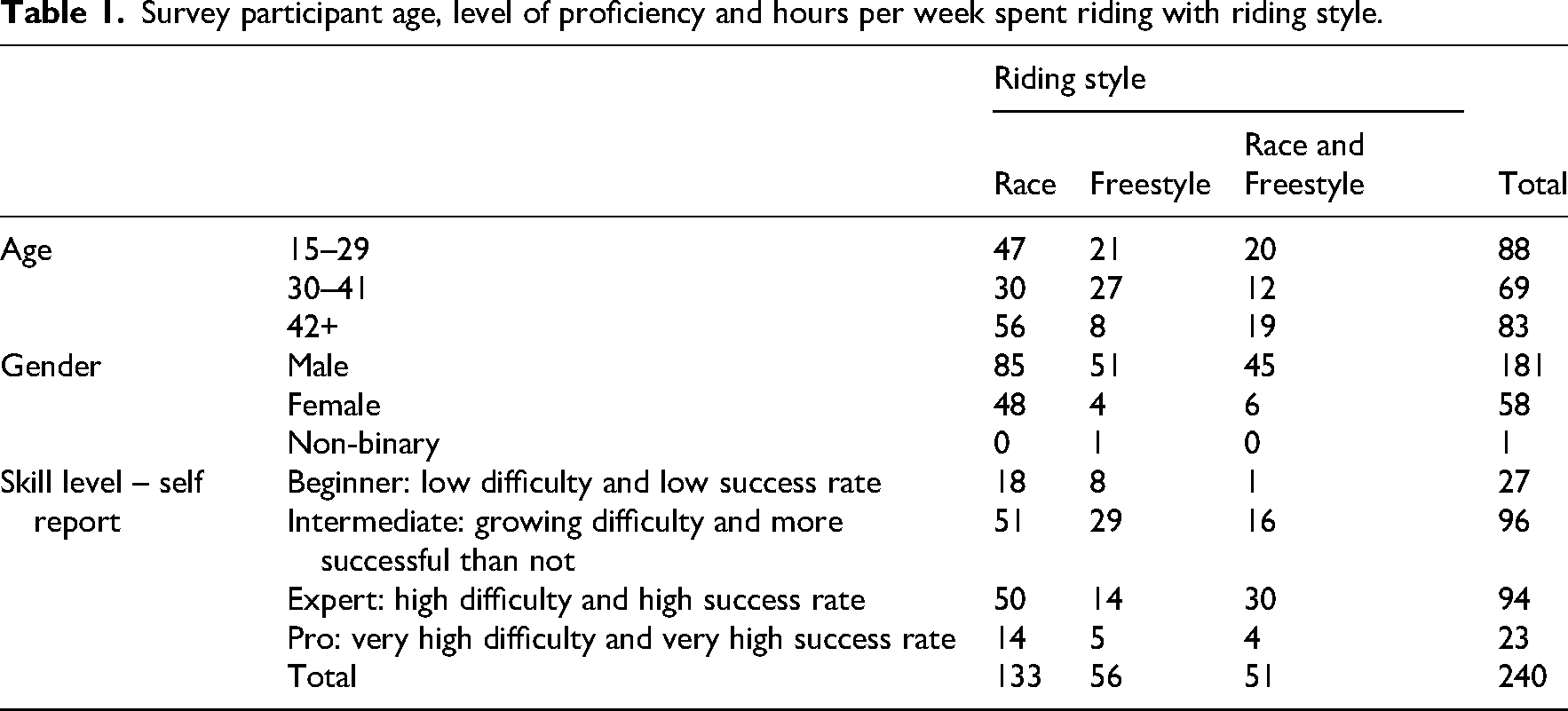
Participants self-identified their primary riding style (racing, freestyle or both) and whether they were actively involved in trail building at the time of the survey. Although these categories are distinct, there is notable overlap – many riders engaged in freestyle also reported active trail-building involvement. This reflects the embeddedness of DIY trail culture within freestyle BMX. To partially account for this, group comparisons were conducted using trail-building status as an independent variable, recognising that these identities are not mutually exclusive.
Including BMX riders aged 15 years and older in the study allowed for insights into a critical developmental period characterised by identity formation, independence exploration and risk-taking behaviour. The 15 to 24 years age range captures significant physical, psychological and social changes, with risk-taking tendencies often peaking during late adolescence and early adulthood (Steinberg, 2008; United Nations, n.d.). BMX technical regulations designate riders aged 30 years and above as ‘masters’ (Auscycling, 2021), likely stemming from the physical demands and risks inherent in disciplines like Freestyle and Racing. Incorporating this age classification into analyses of BMX riders’ wellbeing aligns with norms within the sport. Utilising age groups of 15 to 29 years, 30 to 41 years (masters) and 42 + years allows for meaningful comparisons of wellbeing factors across distinct life stages within the context of BMX riding.
Procedure
Potential participants were informed about the research through various social media platforms, outreach efforts by BMX organisations and community members, and advertisements at BMX retail outlets and racing clubs. Individuals were provided with a URL and QR code to access the survey. This research project received ethical approval.
Materials
Participants completed the Adolescent Resilience Questionnaire (ARQ; Gartland et al., 2011), a validated measure assessing resilience across individual, family, peer, school, and community domains. Though typically used with adolescents, the ARQ was administered to all age groups to compare riding's impact on resilience and wellbeing throughout the lifespan, with those no longer in school answering the School Connectedness items retrospectively. The ARQ does not directly capture participants’ specific sporting practices or behaviours but rather reported resilience scores.
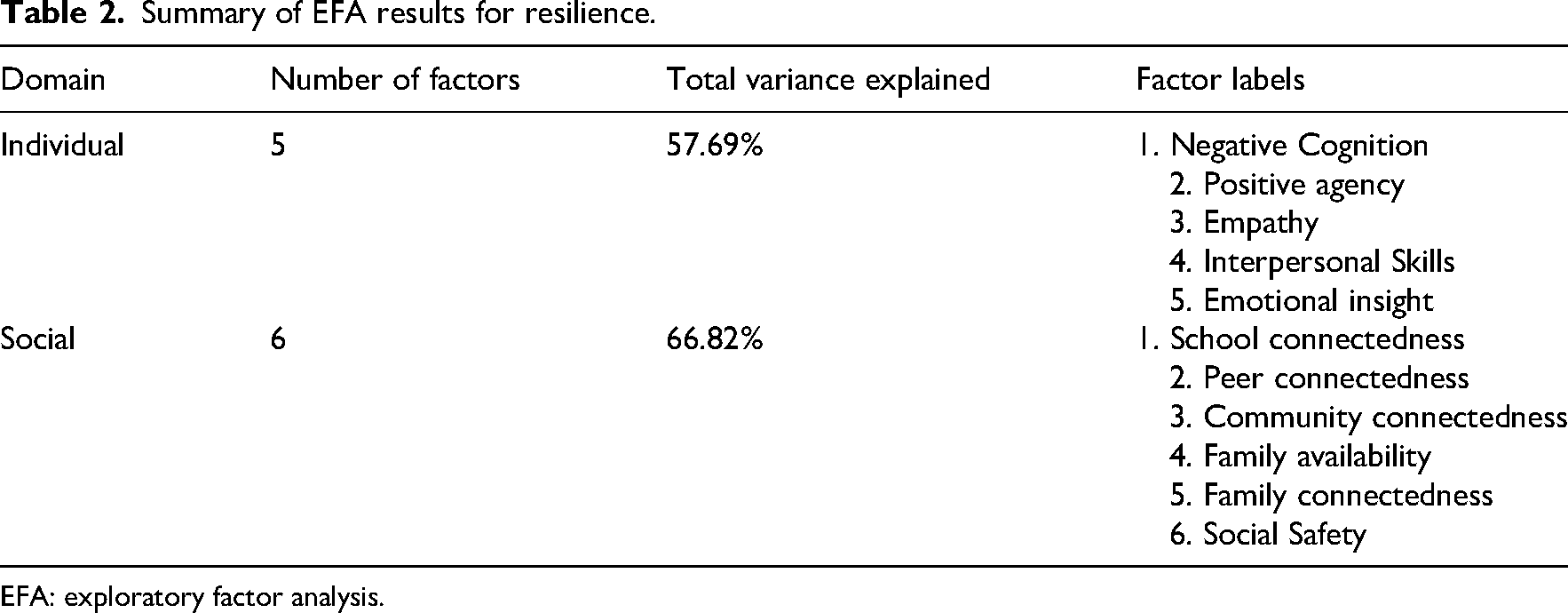
An exploratory factor analysis (EFA) was conducted to uncover the latent structure of items measuring individual and social factors in BMX riding. Data were screened for missing values, outliers, and normality, and factorability was confirmed via KMO (.850 for individual items; .851 for social items) and Bartlett's tests (χ²(231) = 1639.037, p < .001; χ²(300) = 2615.046, p < .001). Using principal component analysis with varimax rotation and retaining factors with eigenvalues >1, a five-factor solution emerged for individual items (57.69% variance) and a six-factor solution for social items (66.82% variance). Items with loadings above .6 were retained, and cross-loadings were removed. All factors demonstrated adequate internal consistency (Cronbach's alpha ≥ .6) and were used in subsequent analyses (Table 2).
Summary of EFA results for resilience.
EFA: exploratory factor analysis.
Data analysis
The analysis incorporated all responses regardless of survey completion status. Demographic data provided by respondents were utilised to segment the dataset into several groups. Statistical analysis was conducted using SPSS 29 (Statistical Package for the Social Sciences). Raw scores from survey responses were converted to T-scores (M = 50, SD = 10) to allow for standardised comparisons across different psychosocial factors measured. Inferential statistical tests, including one-way analysis of variance (ANOVA) and Scheffe's post hoc tests, were performed. The ANOVA and Independent t-tests determined whether statistically significant variations existed in the psychosocial factors between different demographic groups. Scheffe's post hoc tests were conducted to identify which specific groups differed significantly when overall differences were detected by the ANOVA. Linear regression was used to quantify how riding style predicts trouble with authorities. 1 These analyses provided valuable insights into the potential influence of demographic factors on the psychosocial experiences and perceptions of BMX riders. An alpha level of .05 was used to determine statistical significance for all tests.
Results
Responses from 240 participants were analysed, and significant differences were observed across various demographic and practice-related groups using one-way ANOVAs and independent samples t-tests.
Differences by BMX riding style
One-way ANOVAs were conducted to examine differences in four psychosocial factors—School Connectedness, Peer Connectedness, Family Connectedness and Empathy—across three BMX riding style groups: Race, Freestyle and Combined (Race/Freestyle). Table 3 displays the descriptive statistics and ANOVA results.
Descriptive statistics for resilience factors by riding style group.

Riders in the Race group reported the highest levels of School Connectedness, which were significantly greater than those of the Combined group (p = .018). In contrast, the Freestyle group exhibited the highest levels of Empathy, with Race riders showing significantly lower Empathy compared to Freestyle riders (p = .006). Although the ANOVA for Peer Connectedness was significant, none of the pairwise comparisons reached significance, suggesting trends that require further investigation. Finally, the Combined group reported the highest levels of Family Connectedness, with Freestyle riders showing significantly lower values compared to both the Race (p = .005) and Combined groups (p = .004).
Differences in experience of trouble for riding or digging
A separate one-way ANOVA was conducted to assess differences in the experience of trouble (e.g. challenges or conflicts while riding or digging) among the three riding style groups. Table 4 summarises these findings.
Differences in experience of trouble for riding or digging by riding style group.

Freestyle and Combined riders reported significantly higher levels of institutional conflict compared to Race riders. Post hoc analyses confirmed that Race riders experienced fewer issues than both the Freestyle and Combined groups, with no significant difference between Freestyle and Combined riders. Our regression analysis revealed that riding style significantly predicted trouble scores. In model 1 (riding style only), 15% of the variance was explained (R² = .153, β = .391, B = 4.93, p < .001) (Tables 5 and 6).
Model summary for regression predicting trouble scores.

Regression coefficients.

Trail building and resilience-related factors
Independent samples t-tests were used to compare BMX riders who engage in trail/jump building (n = 73) with those who do not (n = 167) on several resilience-related factors. Table 7 presents the descriptive statistics and test results.
Descriptive statistics for factors by trail building Status.
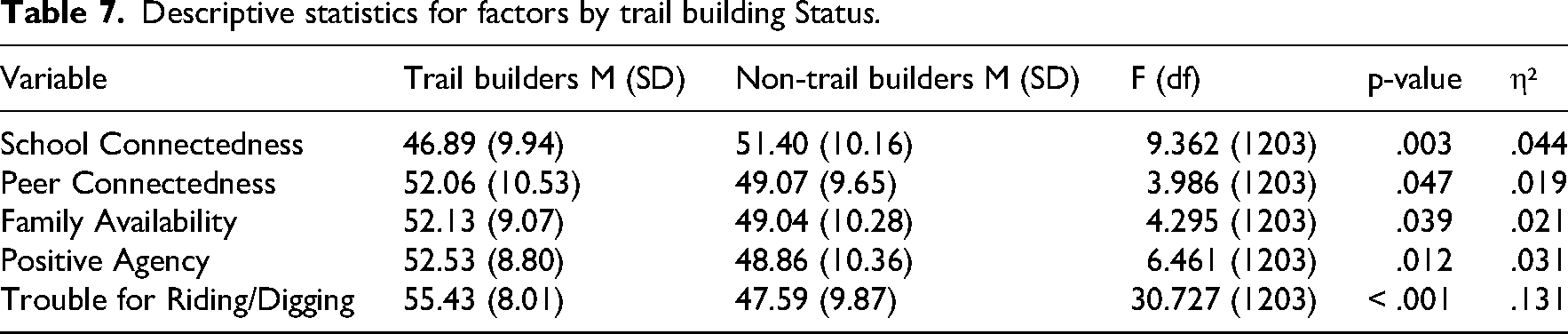
Non-trail builders reported significantly higher School Connectedness, whereas trail builders exhibited significantly higher levels of Peer Connectedness, Family Availability, and Positive Agency. Moreover, trail builders experienced significantly more trouble related to riding or digging. The moderate effect size for trouble (η² = .131) indicates that trail building is associated with greater institutional challenges despite its empowering aspects.
Discussion
The present study revealed distinct resilience profiles among Australian BMX riders. Across the three main riding disciplines of Racing, Freestyle, and a Combined approach, differential patterns emerged in relation to key intrapersonal factors like confidence, emotional insight, cognitive styles, and social skills, as well as interpersonal dimensions such as family availability, peer connections, and community engagement. These findings underscore the nuanced interplay between personal attributes and contextual influences in cultivating resilience within the BMX community (Camilleri et al., 2025).
Racing compared freestyle
The finding that the Freestyle group reported higher Peer Connectedness aligns with resilience research highlighting the importance of close, supportive peer relationships for positive outcomes, especially in adolescence and young adulthood (Bolger et al., 1998; Werner and Smith, 1992). As noted in previous research on BMX, the social and group nature of Freestyle riding fosters a sense of camaraderie and encouragement among riders (Rinehart and Grenfell, 2002), particularly in response to feelings of exclusion and alienation from mainstream society (Camilleri et al., 2025). This strong peer bonding and lack of overt competition likely contributes to the Freestyle group's higher Peer Connectedness. ‘DIY culture fundamentally challenges the profit-driven, performance-centric model of cultural production by valorising self-made, grassroots expressions that prioritise community, creativity, and resilience over commodification’ (Bennett and Guerra, 2023, p. 5).
Peer networks remain valuable sources of support throughout adulthood and complement family ties (Hartling, 2003). The Freestyle group's higher Peer Connectedness connects to BMX fulfilling the basic psychological need of relatedness (Ryan and Deci, 2017) and need-to-belong (Baumeister, 2012). The social, group-oriented nature of Freestyle likely fosters these close peer bonds, sources of support and resilience (Bolger et al., 1998; Rinehart and Grenfell, 2002). Moreover, the strong peer connections within Freestyle BMX align with the concept of edgework, which involves voluntary risk-taking activities that negotiate the boundary between safety and danger (Lyng, 1990; Scott and Austin, 2016). Engaging in such edgework activities fosters a shared sense of identity and belonging among BMX riders, further solidifying the sport's countercultural status (Scott and Austin, 2016). The heightened peer connectedness observed in the Freestyle group, which is predominantly male, may stem from the camaraderie cultivated through collectively pursuing and mastering the inherent risks of BMX freestyle riding. These spaces which are often culturally valorised reinforce male bonding practices and can both support resilience (through mutual support and shared identity) and potentially limit the expression of alternative ways of engaging with the sport that might include a more diverse range of gender identities.
The Race group exhibited less empathy as measured by questionnaire, which aligns with their discipline's structured, rule-focused approach and competitive nature. Empathy when viewed as rigid thinking, is inversely related to the cognitive flexibility linked to resilient outcomes (Jiang et al., 2003). Cognitive flexibility, such as the ability to approach problems from multiple perspectives, facilitates resilience (Cicchetti and Rogosch, 1997). Ellmer and Rynne (2018) found BMX SX riders utilise ‘high-performance coaches, sports scientists, nutritionists and psychologists to assist in their continued development’ (p. 1751). The structured, rule-bound nature of Race riding may reinforce a rigid mindset focused on adhering to established procedures and techniques for the sake of performance, convention, and efficiency, but also offer a competitive advantage through consistent training.
These differences in wellbeing outcomes may reflect the contrasting cultural and social environments of BMX disciplines. Freestyle riders are more likely to participate in unstructured, peer-led environments that emphasise creativity, mutual support and informal mentorship. These settings foster shared problem-solving and mutual appreciation, potentially explaining higher reported empathy levels. In contrast, BMX racing typically occurs in institutionalised club settings with formalised rules and conventions, higher stakes performance pressures, and coach-led instruction, which offers different psychosocial dynamics. Recognising these contextual differences help explain why subcultural participation styles might influence wellbeing and belonging in distinct ways.
Trail building
The trail builders’ elevated peer connectedness may emerge through close peer relationships through shared activities. Trail building fosters bonding among like-minded riders, fulfilling this need through the BMX subculture. The findings align with belongingness needs being met through different relationship spheres (Baumeister, 2012), as trail building's collaborative nature and required support strengthen social connections. As highlighted by Bennett and Guerra (2023), DIY practices involve self-made cultural production over commodified, top-down systems , and Willing et al. (2023) similarly demonstrate that alternative, self-organised practices can redefine traditional structures by celebrating local ingenuity and community-driven efforts.
Interestingly, the group that does not ride jumps/trails reported higher School Connectedness, which speaks to previous findings on the importance of school engagement and positive ties to educational institutions, especially for adolescents (Finn and Rock, 1997; Korpershoek et al., 2020). Light (2008) highlights the centrality of the body and embodied experiences in these practice-oriented domains. Our findings demonstrate how trail building activities were associated with heightened positive agency, mastery over one's environment, and a sense of accomplishment – aligning with the bodily, experiential nature of BMX riding. However, studies have found that youth with an internal locus of control, self-efficacy beliefs and ability to shape their environments (reflecting positive agency) can sometimes experience challenges fitting into traditional school settings (Schoon, 2006; Ungar, 2004). Schools often have rigid, hierarchical structures that may conflict with the self-directed, autonomous nature of students high in positive agency (Ungar, 2004 ). These students’ tendencies toward independent problem-solving and resisting external control can put them at odds with typical school disciplinary approaches. Additionally, schools historically prioritise traits like conformity and rule-following over the creativity and non-traditional thinking patterns often seen in highly agentic youth (Camilleri et al., 2024).
The tension between positive agency and school connectedness exemplifies how the need for belonging can motivate different pathways – embracing non-conformity within a niche community versus integration into mainstream structures. Bessant et al. (2024) observed this tension, noting dirt jumps provided an outlet and escape from pandemic home-schooling frustrations, suggesting trail building met belongingness needs formal schooling could not satisfy during lockdowns. Bessant et al. also found that during COVID-19 lockdowns children who built dirt bike jumps in urban parklands experienced increased competence and confidence from the effort of designing and constructing these jumps. This process enabled them to improvise and solve problems, ultimately fostering a deep sense of accomplishment and connection. The dirt jumps served as a sanctuary where children could escape constraints, shape their environment, and assert their autonomy in ways that met their needs for adventure, physical challenge and a meaningful connection to the BMX subculture beyond mainstream institutions. This aligns with satisfying the need to belong through cultivating a sense of belonging, self-efficacy, and competence beyond traditional institutions (Baumeister and Leary, 1995).
DIY trail building in BMX culture is a powerful example of grassroots agency. Riders are not merely participants – they are active creators who shape their own physical and social environments (Camilleri, 2024). The trail riding/building group's higher Positive Agency connects to resilience concepts around self-efficacy, internal locus of control and goal achievement (Buckner et al., 2003; Cicchetti and Rogosch, 1997). Successfully building and riding trails likely instils key components of resilience such as a sense of accomplishment as well as mastery and control over one's environment (Camilleri, 2024). Grassroots, self-organised practices in BMX freestyle epitomise cultural resistance – where creating one's own space and narrative not only nurtures wellbeing but also serves as a potent critique of mainstream, commodified sports paradigms (Bennett and Guerra, 2023; Willing et al., 2023).
Edgework (Lyng, 2004) frames the practice as voluntary risk-taking but as a kind of alternative pedagogy. Riders engage in iterative problem-solving, learning through embodied experimentation, and community feedback – often without adult supervision. This approach fosters creativity, resilience and autonomy through trial and error and a willingness to fail. Such values stand in contrast to many institutionalised schooling environments which tend to prioritise safety, standardisation and performance over creative risk-taking (Camilleri et al., 2024). This tension is mirrored in BMX itself: the more structured, competitive domain of BMX racing aligns more closely with institutional schooling logics and was associated with greater school connectedness. In contrast, freestyle and trail-building practices – which may offer greater social and developmental benefits – sit uneasily with school structures and are often invisible or undervalued in educational discourse. As Petrone (2023) argues in his study of skateboarding, youth who disengage from school may not be ‘dropping out’ so much as ‘dropping into’ a richer, self-structured learning system. Similarly, BMX trail builders are cultivating a form of learning and belonging that remains largely unrecognised by mainstream education systems. This raises the question of how schools might better support, recognise, or at least respect such alternative youth learning practices.
Implications
The article does not assert that participating in a specific BMX discipline directly causes a particular personality trait or wellbeing profile. Instead, it suggests that individuals with certain pre-existing characteristics may be drawn to environments that align with these tendencies. For example, a person with a predisposition for rigid, rule-bound thinking might be more inclined to join the professionalised BMX racing scene, where structured training and strict performance criteria prevail. Conversely, individuals who value creativity, flexibility and strong social bonds might gravitate towards the countercultural ethos of BMX freestyle, where the emphasis is on self-expression and community-driven trail building. Some like a mix of both and do both.
Moreover, once individuals self-select into these environments, the characteristics of the discipline can further reinforce and amplify these traits over time. In the racing context, the constant exposure to regimented routines and high-performance expectations may cement a more rigid cognitive style. Similarly, the freestyle culture's emphasis on improvisation and peer collaboration could deepen an individual's natural inclination towards adaptability and strong interpersonal relationships.
This study's findings have important implications for promoting resilience and wellbeing among BMX riders and the broader lifestyle sports community. By describing distinct resilience profiles associated with different riding styles, ages and involvement levels, it can inform tailored interventions and support structures for various rider segments. Echoing Matthews et al. (2024), a playful, freely engaged approach rather than a work-like performance orientation should be the goal for youth sporting activities.
Another insight relates resilience-enhancing effects associated with trail building and DIY BMX riding more generally, reemphasising the need to preserve and facilitate access to DIY communal spaces (Olsen, 2021). Collaborative initiatives between policymakers, urban planners, and the BMX community to develop sanctioned trail construction and maintenance areas could foster self-efficacy, physical activity, and a sense of belonging, potentially reducing experiences of marginalisation. Furthermore, the study underscores the importance of community-engaged approaches that authentically incorporate BMX riders’ voices and lived experiences. Interventions should be tailored to the unique cultural contexts and values of each BMX discipline, rather than relying on uniform models, to more effectively nurture resilience and promote thriving within this marginalised subculture.
Gender dynamics highlight the necessity for interventions that are both sensitive to and inclusive of gender diversity. Future efforts should aim to understand and address the specific barriers that might discourage female or non-binary participation in BMX freestyle. Tailoring community-engaged approaches to incorporate diverse gender perspectives could enrich our understanding of resilience within the BMX subculture and promote more equitable access to the benefits associated with both professionalised and countercultural forms of participation. Moreover, there is also a critical need to address the unique challenges faced by young males within these contexts. For many young males, the traditional structures of institutionalised sport can foster feelings of conflict and alienation, particularly when those institutions promote rigid norms that clash with the more flexible, self-expressive nature of BMX freestyle. Interventions designed to reduce institutional conflict among young male riders could focus on creating more supportive, less hierarchical environments. For example, integrating mentorship programmes, flexible training models, and peer-led initiatives may help alleviate the pressures imposed by conventional institutional frameworks, thereby supporting a more resilient and adaptive approach to both professionalised and countercultural practices.
Limitations
This study explored how involvement in different forms of BMX – distinguished by riding style and trail-building participation – correlates with self-reported indicators of resilience and wellbeing. Although this limits the capacity to make definitive claims about the experiential or embodied aspects of practice, the findings offer insight into how cultural distinctions within BMX may align with psychosocial outcomes.
Due to the quantitative nature, the study does not capture subjective experiences or cultural nuances between Freestyle and Racing that could offer a different lens on experiences and outcomes. Enhancing generalisability requires a larger sample size and exploring potential cultural and regional variations within the global BMX community. Cross-cultural studies and comparative analyses across different populations or geographic regions could shed light on how cultural values, norms, attitudes towards risk-taking, individualism/collectivism, gender roles and leisure activities shape the experiences and wellbeing factors associated with BMX riding. We also acknowledge that the potential confounding overlap between riding discipline and active trail-building involvement cannot be fully disentangled through t-tests or ANOVA alone. While these were analysed as separate variables, this may influence psychosocial outcomes.
Conclusion
This study provides novel insights into the interplay of resilience among Australian BMX riders by holistically examining individual psychological dimensions and perceived environmental support systems. In contrast to structured, performance-oriented sporting environments, the DIY ethos embedded in sub-disciplines of BMX encourages creativity, autonomy and community-driven engagement. These practices hold particular significance for those who may feel marginalised in mainstream institutions, providing alternative modes of connection and validation.
Distinct resilience profiles emerged across riding disciplines. Notably, trail building activities were associated with heightened positive agency, peer connections, familial engagement but lowest school connectedness. These nuanced findings highlight how individual traits, social connections and contextual factors collectively shape resilience. The study offers an empirical framework to inform tailored efforts cultivating supportive environments by promoting school engagement, facilitating adaptive peer dynamics, strengthening social cohesion and fostering community integration within this vibrant subculture. This research affirms the importance of recognising and supporting informal, participant-led sport cultures as legitimate and impactful sites for youth development and wellbeing.
Footnotes
Acknowledgements
The authors would like to express our sincere gratitude to all the BMX riders who participated in this study. Their openness and willingness to share their experiences made this research possible. They are also grateful to the local BMX communities for their support and assistance in recruitment efforts.

Funding
The authors disclosed receipt of the following financial support for the research, authorship, and/or publication of this article: This work was supported by the University of Melbourne.
Declaration of conflicting interests
The authors declared no potential conflicts of interest with respect to the research, authorship, and/or publication of this article.
Notes
Appendix
Personal
Confidence (self/future): I feel confident that I can handle whatever comes my way.
Emotional insight:
Negative cognition:
Social skills:
Empathy:
Social
Peer connectedness:
Peer availability:
Family availability:
Family connectedness:
Community connectedness:
School connectedness: