



Abstract
This paper delves into the realm of BMX to investigate the connection between creativity and dirt jump/trails construction. By exploring the perspectives of experienced BMX trail builders, the research reveals that creativity in BMX trail building contains inherent uncertainties associated with working in a natural environment, using tools, and collaborating with others. BMX trail building requires a harmonious blend of form and function making it a prime candidate for understanding hands-on creativity. This paper explores the expert coordination of materials, tools, and the craft, concurrently limiting and augmenting the creative process. By examining the nuances of BMX dirt jump and trail building, this paper advances a novel perspective on creativity and offers insights into a seldom represented creative practice.
Introduction
This paper aims to delve into the underexplored realm of creativity within the BMX trail building, investigating how the interplay of individual expertise and environmental constraints shape the process of trail construction. By examining the perspectives of experienced trail builders, we seek to illuminate the unique blend of aesthetics and functionality in trail construction, and how limitations often serve as catalysts for innovative solutions. This exploration not only advances our understanding of creativity within this specific socio-cultural context but also contributes to the broader discourse on creativity in sport and physical activities.
Bicycle Motocross (BMX) as a sport has evolved to cater to different styles other than racing. Freestyle BMX contains sub-disciplines including flatland which involves performing tricks on flat ground, street for urban riding, park for skatepark infrastructure, and trails (using dirt jumps) which closely resembles elements of racing without the competition and with a focus on fun (Nelson, 2021). Freestyle BMX shares similarities with downhill forms of mountain biking, with adaptations for handling rough landings and performing jumps (Olsen, 2021).
BMX’s distinctive identity within the realm of sport formed out of its unique framework of regulations and principles and pronounced anti-establishment do-it-yourself (DIY) culture (Ellmer et al., 2020). Individuals in subcultures such as BMX, “carve out autonomous space for the development and maintenance of alternative forms of culture alongside, and in interaction with, dominant culture producers” (Honea, 2013, p. 1272). Glăveanu (2018) asserts that “there is a lot of creativity involved in everyday life activities, from cooking to driving and solving mundane problems at home or at work, and yet this kind of creative expression often flies ‘under the radar’ of creativity researchers” (p. 29).It is proposed here that the construction of BMX dirt jumps is one such activity in so far is the topic has received very little attention in academia. Conversely, within the BMX community, digging is highly valued and respected (Nelson, 2021).
The study of creativity in dirt jump building holds significant importance within the broader context of BMX culture given its richness and complexity (Healy, 2023). Dirt jumps, a foundation of this culture, have been a fundamental aspect of BMX since its inception. C. Smith (2019) describes how BMX riders idealize and romanticize spaces that offer opportunities for creativity and freedom: “the space that riders write themselves into, the one that the post-modern city destroys, as riders see it, is a space of opportunities; where a vacant lot can be turned into a do it yourself (DIY) dirt jump track” (p. 48). These specially constructed jumps made of dirt or clay (Figure 1) not only allow riders to flow through the air with rhythm, style, and skill but also provide opportunities and possibilities (Healy, 2024).
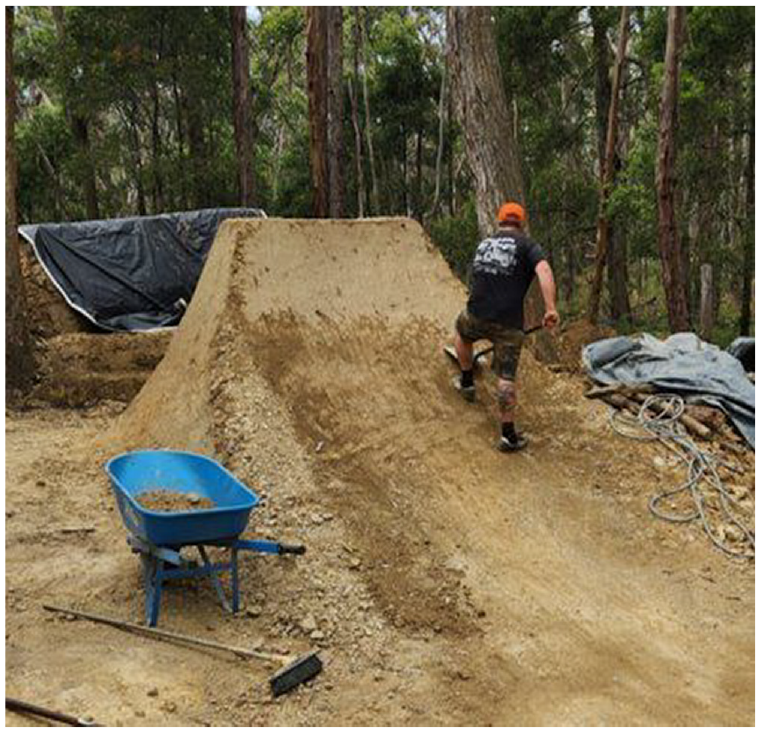
A dirt jump being constructed.
The creation of dirt jumps typically involves a massive amount of shared manual labor using shovels and other handheld tools. In some instances, where access is possible, machinery may be employed to transport and distribute soil or to establish the initial structure of the jump. However, the meticulous detailing and final touches are often executed using shovels and trowels, ensuring precision and refinement in the finished product. Such efforts endow the trail builders with a separate status to their riding ability (Nelson, 2021).
Trail or dirt jump spots can promote social cohesion, stewardship, and creative problem-solving Olsen (2021). BMX trail building requires a harmonious amalgamation of both form and function, rendering it a pivotal subject for comprehending the significance of ingrained learned movements in a pragmatic-informed framework of creativity. These learned movements embody the expert coordination of materials, tools, and craft. Trail building involves using a shovel to dig up chunk of earth, stack them on top of each other, then slap them until they are hard. The creativity of the trail builder enables riders to be creative on their bikes.
These community-driven projects, constructed by BMX riders or dedicated local enthusiasts, play a vital role in responding to the needs and desires of the community (O’Keeffe, 2022). They represent more than just jumps; they are in some ways sites of transformation, offering a deeper connection to local spaces and fostering a sense of belonging (see Figure 2 for example of social interaction). For some, this becomes their life focus with the responsibility of overseeing and managing the construction, maintenance, or development of a trail spot. 1
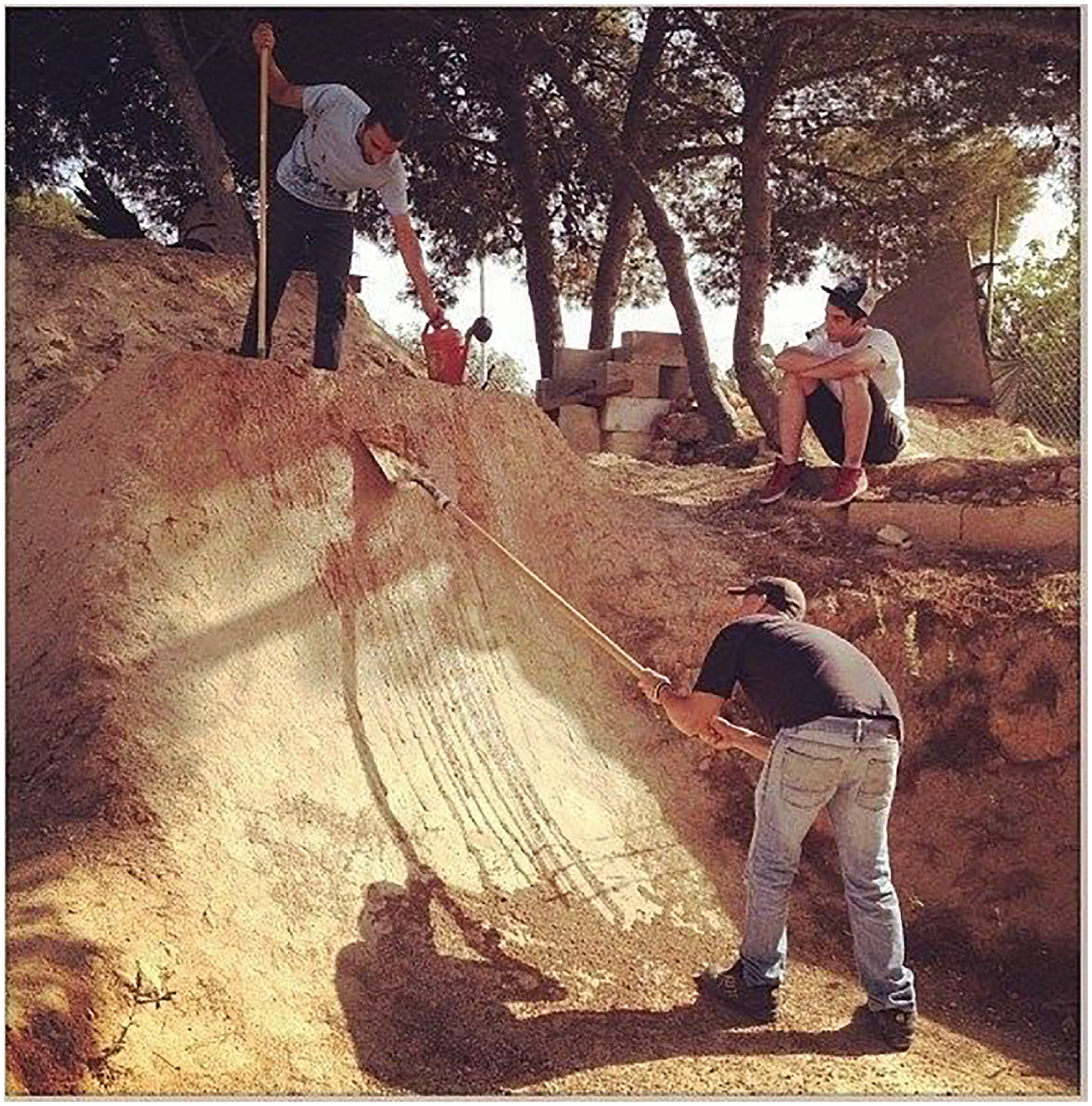
Working as a team.
Despite many government authorities providing riding facilities in the form of skate parks and racetracks, the practice of young people building jumps in their local areas has remained remarkably unchanged. Experienced trail builders often seek secluded spots to protect their jumps from authorities, inadvertently creating barriers to knowledge transmission and community visibility. Consequently, as Healy (2023) argues, this leads to “exclusion as a maintenance practice,” where trail builders move away from visible space to protect their creations from outside threats. Acknowledgement of such threats to dirt jump and trail spots in academic research is growing (Healy, 2023; O’Keeffe, 2022).
Creativity
Ross and Glăveanu (2023) assert that craft work manifests as a rhythmic repetition of movements, finely attuned to the diverse affordances presented by the material and the intricate dynamic between the material and the craftsperson. While trail building involves repetitive craft work, the process of constructing dirt jumps is highly creative.
Traditionally, many theories of creativity have overlooked the role of habit, with very few giving it a central position in the creative process. Glăveanu proposes the concept of “habitual creativity,” drawing on a pragmatist view of habits as actions open to reflection during the course of action, and as the foundation for mastery (Glăveanu, 2012, Ross & Glăveanu, 2023). From a pragmatic viewpoint, behavior is seen as inseparable from the interaction between the individual and their environment. This implies reality is formed and cultural tendencies are influenced by actions and activities. Moreover, because practices are rooted in physical and social settings, they are closely connected to their specific local environments and social circumstances (Rylander et al., 2022). Habit is not seen as automatic repetition, but rather as a sensitivity to one’s surroundings, akin to Bourdieu’s (1990) notion of habitus. Habit is viewed as a social, situated, and open system.
Glăveanu (2012) argues that all forms of creativity stem from a deep understanding of culture or materials, emphasizing the importance of open-ended and indeterminate habits. He describes creativity not as a “thing” but rather as action in and on the world.
According to the Five A’s framework, human action is “embedded within a horizon of possibility” (Glăveanu, 2015, p. 168) . He categorizes creative action into improvisation (in the face of obstacles without known solutions) and innovation (creating something new and useful in response to an obstacle) but notes that both of these are built upon the foundation of habitual creativity. While improvisation and innovation often receive more attention in society and research, they are ultimately rooted in habit, which serves as the foundation for creative cognition.
Glăveanu (2015) states that “we are faced with a relatively predictable future in terms of the things we do and the way we interact with others or use objects; this generates a set of expectations about the social and material reality we inhabit” (p. 167). Understanding habits starts with focusing on action through agency, embodiment, social interaction, materiality, and symbolism. Habits are never entirely static and separate from reflective, intentional action. When obstacles or accidents disrupt habits, it creates opportunities for reflective thinking (Quay et al., 2022). There is not a strict division between habit and reflection given both influence each other.
The research question, “How does creativity manifest in the practice of BMX trail building?” aims to explore the creative processes involved in BMX trail building. By examining the perspectives of experienced BMX trail builders, we seek to unpack the creative aspects often overlooked in this physically demanding activity. Through this exploration, we hope to contribute to a broader understanding of creativity in sport and physical activities.
Methodology
Design
A qualitative exploratory descriptive approach, based on naturalistic inquiry (Lambert & Lambert, 2012) was used to address the aim and objectives. This approach is pragmatic and allows participants’ experiences to be explored in context, without the obligation to explain or theorize (Lambert & Lambert, 2012).
Participants and Recruitment
Nine 2 self-identified BMX trail riders/dirt jump builders across Australia aged 18+ years took part in a 60-min interview (consent given). Based on a previous stage of this project, BMX riders aged 18+ years indicated whether they were amenable to partaking in an interview and/or focus group by providing their email and/or phone number. Researchers contacted potential participants either via phone or email to confirm interest and arrange a suitable time and date for the interview/focus group. Recruitment was also achieved via word-of-mouth from the researchers and community members, via social media platforms including Facebook, Reddit, LinkedIn, and Instagram, and via a major bike organizations’ newsletter mailing list. All interviews were conducted via the Zoom platform and audio recorded.
All participants provided informed consent prior to participation. Data were treated as confidential. Identifiers were removed and individuals are not identified in the reporting of data. If participant stories made the participant potentially identifiable, they were not explicitly reported in the study findings.
Whilst not paid for their participation, all participants were offered a $30 gift card as a gesture of thanks. Research merit was demonstrated through ensuring the research was justified and conducted with integrity (National Health and Medical Research Council [NHMRC], 2018). In terms of beneficence, participants were informed of the skills of the interviewers. To ensure trustworthiness, participants were given the opportunity to review their interview transcript.
Data Collection
Semi-structured, hour-long interviews were conducted between April and October 2023. Data were collected at one time point only. All interviews and focus groups were conducted via video call using the Zoom platform.
Doctorally-qualified, experienced qualitative researchers conducted the interviews. To ensure consistency, one researcher conducted all interviews while the other two took turns to take detailed field notes during the interview/ focus groups. All researchers met regularly for iterative debriefing and peer-to-peer support. Interviews were conducted using an informal conversational approach; a style considered less threatening than formal interview techniques, giving the participant a sense of control over the interview, within broad parameters. BMX interviews continued until saturation was reached.
The interviews covered a range of questions 3 aimed at understanding their experiences and perspectives within the BMX community. Question 1 explored the individual’s introduction to BMX and their favorite aspect of the sport. Question 2 delved into the motivations behind individuals choosing to engage in BMX riding. Question 3 asked for descriptions of the characteristics of the BMX riders they associate with. Question 4 examined how BMX has influenced their relationships, with sub-questions further exploring the impact on social connections and friendships. Question 5 addressed the significance of family support in BMX riding, with sub-questions probing deeper into the individual’s feelings and the impact of family support. Question 6 explored the individual’s sense of belonging and connection to the larger BMX community, with sub-questions investigating specific factors contributing to this connection and any barriers faced. Question 7 aimed to compare the individual’s experience within the BMX community to other settings, considering both the sense of community and place. Question 8 sought to understand the criteria for a satisfying riding session. Question 9 inquired about creativity within BMX, with a sub-question identifying sources of creative inspiration. Lastly, Questions 10 and 11 asked for recommendations on how the government and schools can effectively support BMX riders, respectively.
The interviews were audio-recorded and transcribed, using the in-built recording and voice-to-text function in Zoom. Each transcription was checked by a member of the research team for accuracy. All participants were sent a copy of their transcript to review prior to analysis; no participants made any alterations to their transcript.
Data Analysis
The interview transcripts were de-identified, coded, and analyzed using thematic analysis techniques commonly practiced in qualitative research (Braun & Clarke, 2022). As identified by Braun and Clarke (2022) this consists of six phases. Phases 1 and 2: Transcripts were repeatedly read and re-read, and coded. Phases 3 to 5: Codes were grouped into meaningful categories that described how participants talked about the topics, including contradictions and exceptions. Themes were created, named, and defined in order to explain and interpret the content. Examples of the identified themes were selected in the final phase (Phase 6) and related back to the research objective.
The analysis was conducted by a member of the research team (with 25 years’ experience in BMX trail culture) and interpretations were discussed within the research team until consensus was reached. The analysis was led by one member of the research team using NVivo software (QSR International Pty Ltd., 2020) and interpretations were regularly discussed with other members of the team and presented the initial findings and interpretations at a conference for feedback.
Results
Two key elements characterize creativity in trail building:
Balancing Aesthetics and Functionality.
Limitations as Catalysts for Creative Solutions.
Balancing Aesthetics and Functionality
Most of the BMX trail builders described building trails and jumps as a “work of art.” They likened the process as an opportunity to “dream” something up and then physically create it. All stipulated what was being built had to be functional but there was a definite appreciation for the outcome to also be “aesthetically pleasing.” The process was also described as being an individual expression enabling them to have their “own personal touch.”
You can literally dream up something and then with hard work you can, you can then be riding it sometime later. So yeah, that’s the ultimate to me. (22) There’s always room for, you know, our own personal touch. And my favorite way to get creative…is just trying to make everything look really aesthetically pleasing. So like merging, you know different features together so that everything blends like a work of art essentially. I kind of think like, how can we best work with the landscape that we’re in…through the aesthetic finish, I suppose, but it’s kind of like working with clay, like being a, what’s the word, like a ceramics person like model making or whatever except it’s just on a larger scale… (14) It’s an art. It is purely an art form to be able to build something like that, that like, you know, to build like a stack of dirt that. It’s one thing to be able to build a take-off, but to be able to build a take-off and make it look nice and it’s symmetrical and the walls are nice… You know it’s it is a work of art…If they don’t work, they’re just piles of dirt…So there’s the functionality. And then there’s the artistic side, too. (15) It comes out in almost an architectural like side… you might build an entire line and then you start building a second line and then you you’re thinking of all the possible ways that you can join in to the existing and come out and then all of a sudden you have, like, all of these different rainbow lines… (21)
Architectural symmetry, shapes, curves, and sharp edges were often cited as features incorporated into the “design,” making the end product as a “work of art” that is aesthetically pleasing. Consideration of the materials and environment was mentioned in relation to working with the “terrain” and “topography” that is, it was desirable to add “rocks,” “a path” and other vegetation to make it look “part of the bush” and as if “it’s always been there.”
You know I can shape the jumps how I want. I can make them big as I want…I’m creating something…You want to make them look as perfect as possible. You know, plant trees around them as well or whatever, you know, put some rocks down, make a path or so the jump itself looks like it’s been there. You know, in in the bush like it’s part of it. (13) …building the trails and thinking like in new shapes for the jumps…like curves or sharp edges, or around the edges…I guess that’s creativity for me, like and everyone has your own style. Again, like different perspective too. (17) …you’re using the feedback of the natural area to actually inform how you’re designing and how you’re building a set of a set of jumps or set of trails, and you’ve got terrain and you’ve got topography and you’ve got trees, you use that stuff as feedback on how to create something that’s like an art piece. I guess you could say…there’s all these different curves and it’s and a very artistic expression of a form you can ride across I guess you could say. (20)
It is commonly acknowledged that part of the creative process involves attaining a state of “flow” (Csikszentmihalyi, 1990). This entails being in a meditative state and entering a “zone” of being “100% present” that comes with repetition and focus. Some riders described “flow” as part of the digging process, while others described “flow” as a state of being comfortable with the bike to the extent that you feel “one with the bike.” See Figure 4 for example of a BMX riding Dirt jumps.
I say, it’s a very, it’s a state of flow if that makes sense? (8) I think it’s you just like, kind of just zone out, get in your own world. There’s a lot of repetitive processes that occur like if you’re slapping a jump or something, it’s like the same, like, you kind of get into a rhythm almost of just doing the same thing over and over and get like really focused on, I think it just like really brings you like in the 100% into the present moment. (14) You just have to switch off from the day’s work and putting that through your head, you just you have to be 100% present when you learn that when you’re learning something like that. (11)
Limitations as Catalysts for Creative Solutions
In the qualitative analysis of riders’ perspectives on BMX trail building, a rich tapestry of themes emerged, highlighting the multifaceted nature of creativity and its role in shaping the landscape of BMX spots. Participants expressed a deep sense of individuality and autonomy in their approach to trail building, emphasizing the importance of limitations as Catalysts for Creative Solutions. Central to their creative process was a profound respect for the natural environment, with riders carefully considering factors such as the composition of soil, access to water, and drainage to ensure sustainability of the spot. Participants also acknowledged cultural significance to indigenous peoples should be considered, recognizing this ought to be respected.
The collaborative nature of trail building was also evident, with participants highlighting the significance of crew members in terms of their dedication, skill, experience, and the size of the group, all of which influenced the final outcome of the spot. Additionally, riders stressed the importance of protecting their jumps from both environmental elements and external authorities, utilizing various tools and strategies to ensure the longevity of their creations.
Working Within an Ecology
You can just look at different landscapes and figure out how to ride them in your own personal way… I’ve always been a creative person, but it’s like taught me how to look at things in different ways. (14) You’re using the feedback of the natural area to actually inform how you’re designing and how you’re building a set of a set of jumps or set of trails, and you’ve got terrain and you’ve got topography and you’ve got trees, you use that stuff as feedback on how to create something that’s like an art piece. I guess you could say…there’s all these different curves and it’s and a very artistic expression of a form you can ride across I guess you could say. (20) There’s always room for, you know, our own personal touch. And my favorite way to get creative…is just trying to make everything look really aesthetically pleasing. So like merging, you know different features together so that everything blends like a work of art essentially. I kind of think like, how can we best work with the landscape that we’re in…through the aesthetic finish, I suppose, but it’s kind of like working with clay, like being a, what’s the word, like a ceramics person like model making or whatever except it’s just on a larger scale… (14)
Weather
Winter’s sort of kills it a bit too. (24) I’ve like dug, dug it two spots now that…ended up being like flooded out and stuff like that. Like both of these spots and it kind of breaks your heart when you put in, like so much work and then like the rains come and they get washed away and it takes so much effort to build back and then like (Figure 3). If you have like a couple of wet seasons in a row, it can really kind of like diminish your like your motivation to do it, you know, it’s just like putting in so much work and then just having it destroyed time and time again. (23)
Authority
...realistically, there’s not much that the councils and stuff are doing for us in the way of that. So we got to do it ourselves. (15) there’s just like a major lack of lack of understanding and what trails provide and what the actual benefits are...it’s quite upsetting that that councillors and authority members are willing to go to the links they are to remove spaces that are so positive like these. (20) ...once when we come to the spot and we see they’re flat man, it’s like it’s heartbreaking...you put in all this time and effort...you feel a bit lost...Man, difficult, difficult. (13) it feels pretty, uh, yeah, pretty, pretty shit to be honest with you...you put in a lot of work and then yeah, they’re flattened...that was pretty, pretty emotional. But yeah, seeing [friend], who would’ve spent quite a bit of time on those jumps. He was pretty distraught, you know. (18) That feels terrible. That feels like someone is dying. Some close mates dying pretty much. Even more, like you feel like some part of you, is yeah, if you actually put some hard work there, you definitely died a little bit with the place. (17)
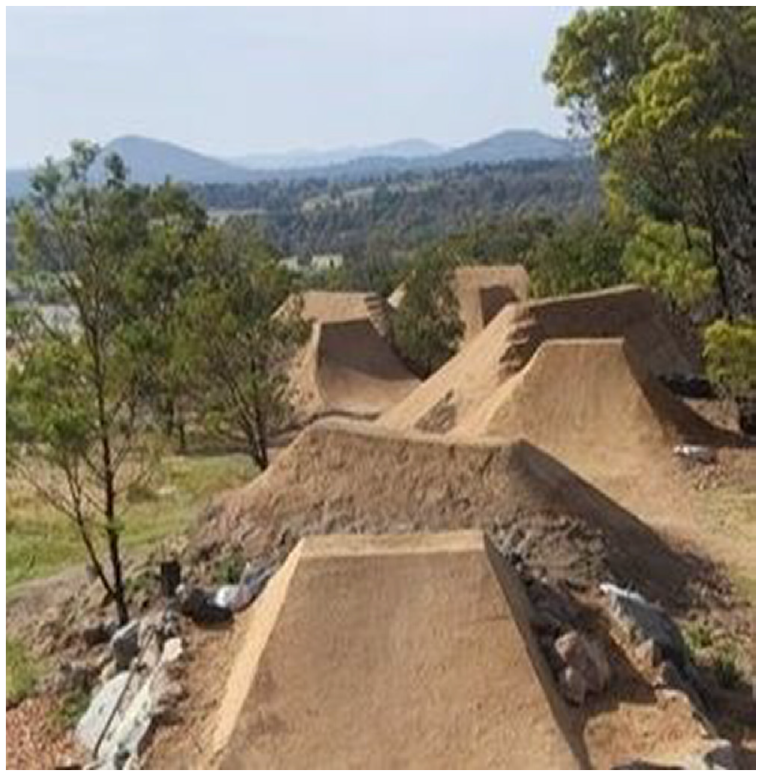
Adapting to constraints.
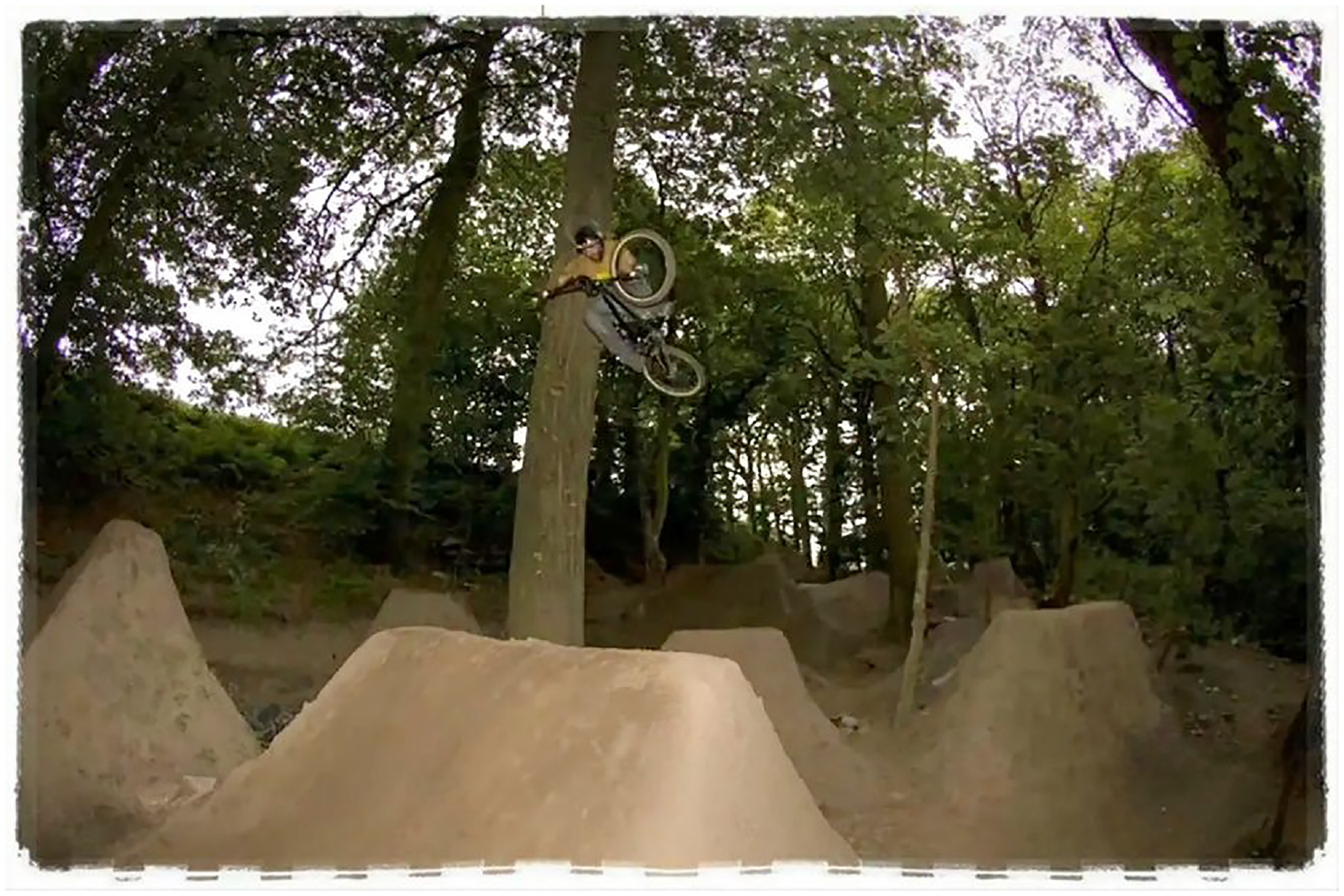
What is possible on a BMX.
Discussion
Creativity in Trail Riding/Dirt jumps in multifaceted and underexplored area of academic research (King & Church, 2020). Firsthand perspectives and practical wisdom sourced from BMX trail builders serve as a valuable source of empirical insight. Interestingly, Rinehart (2021), suggested the alternative ethos of action sports such as BMX aligns closely with the values of avant-garde elements found in art, architecture, and culture. This ethos involves rejecting traditional, mainstream, or dominant norms while paradoxically integrating aspects of them. Studying creativity in trail building is particularly illuminating as it involves habits, repetition, and tradition in everything labelled as “craft.” This kind of research highlights the craft-like quality of creative expression, from science and art to everyday acts (Ross & Glăveanu, 2023).
It is important to note that the interviews conducted have revealed intriguing insights into the creative aspects of BMX and the process of BMX trail creation. The creative nature of BMX riding is a crucial element that feeds into the design of jumps. For instance, the jumps are designed to support the flow of the rider, with the experiences of riders influencing how they want the lines to lead into one another. This creative process is an integral part of the BMX experience.
Two themes emerged from the data:
1.Balancing Aesthetics and Functionality.
2.Limitations as Catalysts for Creative Solutions.
Balancing Aesthetics with Practicality
Trail riding takes place in natural or purpose-built dirt courses, offering a different creative and malleable landscape compared to concrete skateparks. BMX Riders aim to create smooth, fluid sequences of jumps and turns given they do not use suspension to soften their impact upon landing nor pedal when moveing through a jump line. The design must help the rider mantain momentuum all the way to the end of the jump line. Olsen (2021) describes dirt trails and jumps as “not concrete, both literally and figuratively. They are ever flowing, changing. If a jump feels wrong, whether it does not land properly or the geometry is off, riders are able to modify it until it is ‘dialed in’” (p. 55). Jumps, berms, and rollers are adapted to the builder’s style and to the natural environment; these are refined over time; in some instances, participants in the current study had been working at a single location for 25 years.
Most of the BMX trail builders described building trails and jumps as a “work of art.” In some cases, the jumps are similar to large clay sculptures. They likened the process as an opportunity to “dream” something up and then physically create it. The importance of visualization in this creative process reflects research in other domains (Kaufman, 2013). All participants in the current study stipulated what was being built had to be functional but there was a definite appreciation for the outcome to also be “aesthetically pleasing.” The process was also described as being an individual expression enabling them to have their “own personal touch.”
You have to be creative, to know your lines, know when to pass, I guess you know, you’re gonna visualize and that’s part of being creative. (18)
Architectural symmetry, shapes, curves, and sharp edges were often cited as features incorporated into the “design,” making the end product as a “work of art” that is aesthetically pleasing. Consideration of the materials and environment was mentioned in relation to working with the “terrain” and “topography” that is, it was desirable to add “rocks,” “a path” and other vegetation to make it look “part of the bush” and as if “it’s always been there.”
It is commonly acknowledged that part of the creative process involves attaining a state of “flow” (Csikszentmihalyi, 1990). This entails being in a meditative state and entering a “zone” of being “100% present” that comes with repetition and focus. Some riders described “flow” as part of the digging process, while others described “flow” as a state of being comfortable with the bike to the extent that you feel “one with the bike.”
Striking a delicate balance between aesthetics and practicality when designing and constructing trails necessitates creative decision-making to shape the layout and features of the course in relation to relevant constraints. Ross and Glăveanu (2023) offer an insight here whereby they argue “the automaticity of habit can be explained by thinking of it as moving from a cognitive, thought-full consideration to an embodied understanding” (p. 8). Careful consideration of both the visual appeal of the trails and their functional aspects, calls on the embodied knowledge and imagination of the trail builder. Rinehart and Grenfell (2002) found that continued digging at a location involved reconfiguring the world, a highly creative act requiring “social, cognitive, psycho-motor, and affective learning taking place” (p. 311). This reflects the multi-componential nature of creativity is now accepted among prominent researchers (Batey & Furnham, 2008). The creation of a trail spot requires the riders to visualize and embody their design through the creative use of a shovel and other available tools.
Whether through sharing media content, providing feedback and encouragement, or organizing group riding and digging sessions, riders actively contribute to a collective ethos that celebrates collaboration and creativity. In this way, individual aspirations and achievements are intertwined with the collective efforts of the BMX community, creating a dynamic ecosystem where creativity flourishes in individuals and as a collective.
Limitations as Catalysts for Creative Solutions
Many dirt jump spots are “built on squatted land, without permission (at least initially)” (Healy, 2024, p. 12). Because of this, BMX trails are frequently demolished when discovered by municipal authorities (Olsen, 2021). Individuals who lack familiarity with or hold negative attitudes toward BMX may perceive dirt jumps as unappealing, disruptive, and hazardous, thus causing tension between riders and authorities (Olsen, 2021). In response to this constrain, trail builders seek hidden and secluded locations, to ensure spot longevity. Healy (2023) argues that this results in exclusion as a maintenance practice. In these instances, exclusion can be seen as a form of preservation or protection, rather than a negative act of discrimination. However, it is crucial to ensure that such exclusionary practices are not used as a means to perpetuate systemic inequalities or to marginalize certain groups (Healy, 2023).
Interestingly, Olsen (2021) argued that “when kids are no longer responsible for the creation or maintenance of the trails, they miss out on the experience of the build and the joy of the ride afterward, skills and experiences that stay with riders as they age and mature” (p. 72). Moreover, King and Church (2020) found young people seek opportunities for autonomy through mountain biking jump construction thereby challenging normative management practices of green spaces. As with pragmatist thinking that privileges continuity (Rylander et al., 2022), participants in the current study indicated that riding BMX was a lifelong learning process where they could never perfect everything. The trail builders, some in their 30s and 40s, said there is always something to learn or fix despite starting to dig as a teenager.
O’Keeffe (2022) suggested “dirt jumps” can be interpreted as an expression of power and control over place, in an environment where young people have been systematically disempowered. All of the participants in the current study started building jumps as a teenager, with many having accumulated over 25 years of digging experience. They have encountered the same issues over decades and amassed a wealth of knowledge through their practice of sculpting large outdoor spaces. The dedication exhibited by crew members reflects a habitual commitment to the task at hand, akin to the disciplined practice of a skilled artisan honing their technique. Similarly, the accumulation of experience over time enables trail builders to navigate challenges and execute tasks with precision.
Each rider brings their unique skills and perspectives to their digging crew, however, everyone is expected to contribute to the collaborative process that transcends individual achievements. “No Dig No Ride” is the golden rule of BMX trail culture and the entry point for everyone (Healy, 2023). Local riders are expected to autentically participate in shaping and maintaining their trail spot, however there are some within the community who do not contribute to these efforts. These individuals are colloquially referred to as ``dry guys'', they prioritize riding the trails without assisting in their construction or upkeep. this leads to them being seen as inauthentic. Additionally, the size of the group influences the collective capacity of the crew, larger teams necessitate the coordination of efforts and the establishment of habitual routines to optimize productivity and overcome limitations. Thus, the capacity of trail building crews emerges as a foundational element of the trail-building craft, shaping the collaborative process and ultimately influencing the quality of the final outcome.
In a recent study, W. R. Smith (2021) found a flexible organizational setup, where young individuals collectively contribute to constructing a dirt jump site. King and Church (2020) found these structures can change depending on external factors. In the current study, age, size, location (public or private land) and experience of the digging crew, impacted the organizational structure. The collective nature of BMX culture extends beyond the physical act of riding and building. Riders share experiences, knowledge, and resources, fostering a sense of camaraderie and mutual support within the community. They are bound to each other through thousands of hours of work with their tools, repeating the same movements over years when creating and maintaining their trail spot.
Rinehart and Grenfell (2002) suggest “each shovelful is figuratively ‘shared’ with another person” (p. 311). Through collective action, a crew overcomes challenges and innovate new solutions, pushing the boundaries of what is possible in BMX. As found in the current study, this collective endeavor is fueled by a shared passion for the sport and a desire to create and share a place that facilitates creativity, progression, and belonging.
With all the participants in the current study, there was a careful consideration of the natural environment, with riders carefully considering factors such as the composition of soil, access to water, visibility, and drainage to ensure sustainability of the spot. Participants also acknowledged cultural significance to indigenous peoples should be considered, recognizing this ought to be respected. Additionally, riders stressed the importance of protecting their jumps from both environmental elements and external authorities, utilizing various tools and strategies to ensure the longevity of their creations.
By embracing constraints and leveraging them as opportunities for creative problem-solving, trail builders are able to craft jumps that not only meet cultural and environmental demands but also reflect their individual and collective vision for their future riding experiences. In the current study, central to their creative process was a deep understanding of the environment, with riders considering factors such as soil composition, water access, and drainage to maximize the potential of their time and efforts. Participants expressed a strong sense of agency in their creations while still acknowledging the impact of external forces. This underlines the role of agency in relation to responding to challenges. According to Rylander et al. (2022) central to the practice of making is agency in action. This highlights the transformative potential of agency in digging practices within the BMX community.
Riders emphasized the imperative of shielding their jumps from environmental elements by using tarps and plastic to cover special areas. Tarps are taken off when the jumps are ridden and set aside while riding is taking place. Once riding is over, and repairs are undertaken, the jumps and other features are covered. Covering the jumps also helps to “bake” the sculpted dirt/clay. The ritual is a deep cultural practice in BMX trail culture. Importantly, the jumps are not static and grow with the riders and in response to emerging constraints and threats. Participants acknowledged working in an ecology, taking into account the impact of weather conditions and the influence of authority figures on their activities. These considerations highlight the intricate balance between human intervention and environmental stewardship in the BMX trail construction process, underscoring the importance of a holistic approach to spot development.
In the context of BMX trail riding and jump building, creativity and expertise develops over time in structured yet adaptable environments. BMX trail culture challenges the traditional notion of craft practices which have been associated with repetition and adherence to established norms within certain contexts. In the BMX trails community, creativity thrives through dynamic interactions and relations expanding our understanding of creativity in trail building practices. A commitment to mastery through trial and error, riders refine their techniques and experiment with novel ideas, pushing the boundaries of what is considered possible. This iterative process of learning and adaptation contributes to the evolution of digging practices within the community.
Further Research
Further research into creativity within the BMX trail building community holds promise for understanding the dynamics of innovation, collaboration, and environmental engagement in shaping a community. Exploring the factors that influence creative decision-making in trail design and construction, such as individual preferences, environmental constraints, and cultural influences, can provide valuable insights into the creative process. Additionally, investigating the role of community dynamics, social networks, and collective problem-solving in fostering creativity within the trail building community can shed light on the collaborative nature of creative endeavors. Furthermore, examining the long-term impacts of trail spots on community cohesion, sense of place, and recreational experiences can offer valuable evidence for the benefits of investing in creative initiatives within the BMX trail building community.
Limitations
The findings of this study may not be generalizable to all BMX communities worldwide. Variations in cultural context, riding terrain, and community dynamics could impact the transferability of findings to other settings. Replication studies in different cultural contexts would help validate the robustness of the findings.
The study focuses primarily on creativity and expertise within BMX trail riding and jump building, overlooking other aspects of the BMX culture and community. Future research could explore additional dimensions of BMX culture, such as race, gender, and class, to provide a more comprehensive understanding of the community.
One potential limitation of this research is the potential for bias introduced by my personal involvement in the sport as a BMXer and trail builer/rider. While my firsthand experience provides unique insights, it also carries the risk of influencing my interpretation of the data based on preconceived notions, assumptions, or personal preferences related to the sport and its community. Despite employing rigorous research methods and seeking peer feedback to mitigate this, readers should consider this potential bias when interpreting the findings of this study.
Conclusion
This study has provided valuable insights into the dynamics of creativity within BMX trail building. It has highlighted the importance of balancing aesthetics and functionality in trail construction and how limitations often serve as catalysts for innovative solutions. The findings underscore the significance of individual identity, collective effort, and the ability to navigate and overcome challenges in the creative process. Furthermore, the study has illuminated the transformative potential of agency in digging practices, and the role of community in nurturing creativity within an evolving landscape. These insights not only enrich our understanding of creativity within the BMX trail building community but also contribute to the broader discourse on creativity in sport and physical activities. Future research should continue to explore these dynamics in different cultural contexts and investigate the long-term impacts of such creative initiatives on community cohesion, sense of place, and recreational experiences.
Footnotes
Declaration of Conflicting Interests
The author declared no potential conflicts of interest with respect to the research, authorship, and/or publication of this article.
Funding
The author disclosed receipt of the following financial support for the research, authorship, and/or publication of this article: Project was funded by a Seed Grant from the Faculty of Education, The University of Melbourne.
