



Abstract
This paper expands on creativity theories to enhance the understanding of leaders’ psychological resources in effectively adapting themselves and steering their employees to adapt to organisational change. Creativity is an essential skill for effective leadership. Creative leaders can motivate their teams more effectively and can handle novel challenges by being more flexible in going outside the typical routines. Yet, how do leaders understand and act on their creativity in dealing with change? How do leaders recognise their people’s creativity? This paper introduces three personal resources – creative orientation, identity and metacognition – as psychological mechanisms that reflect leaders’ abilities to notice, interpret and act on opportunities to respond to shifting workplaces. I hypothesise that leaders can develop two creative orientations while leading change – focus on strengthening their social network and focus on taking new action. Also, the paper argues for the importance of leaders’ creative identity and hypothesizes that leaders can deliberately enact their creative identities in their roles, based on two ways to understand their creativity: as a way of thinking or as a personality type. Lastly, leaders’ creative metacognition can empower followers’ creativity.
Keywords
Why the need for adaptive individuals in organisations
The post-information society is a theoretical concept which refers to a new societal reality that is characterised by the emergence of digital technologies such as Artificial Intelligence (AI), Virtual Reality (VR), Augmented Reality (AR), Internet of Things (IoT) and Blockchain. As a result, individuals experience a change in the way they access, process and communicate information for work or personal goals. Some of the existing jobs become redundant. Other existing jobs require upskilling. New types of jobs become available. There is an increased importance on the quality of information and knowledge for the transition from manufacturing-based to service-based economies.
Overall, post-information society refers to world economies and societies that become more interconnected and interdependent. At a country level, the digital economy becomes a significant value creator. At a company level, emerging technologies transform businesses and create new business models (Jing, 2023). At the micro level, organisations are organic living systems composed of individuals who experience interpersonal conflicts, cognitive overload, performance anxiety and career crises as they cope with the market changes that affect their professional roles.
At the micro level perspective, a central role of leaders is to mobilise people to face their individual adaptive challenges and come up with solutions. Digital innovations, like ChatGPT, may result in making some professionals whose work is affected, feel incompetent, betrayed or redundant. Most of the adaptation challenges require some degree of learning while maintaining morale to remain relevant on the job market and ensure that the organisation can thrive in the long run.
Extant research shows that adapting to organisational change can offer benefits belonging to one of the three categories: improved individual and team performance, interpersonal effectiveness and higher well-being.
Improved individual and team performance
Adaptable individuals tend to perform better during periods of change. Wang et al. (2017) found that employee adaptability mediates the link between transformational leadership, a leadership style which is change-oriented, and job crafting (seeking resources and challenges). Ingusci et al. (2019) found that employee adaptability moderates the relationship between workload, – the feeling that one has too many things to do in too little time –, and seeking challenges, – the ability to capitalise on opportunities that enhance their skills. Therefore, adaptive individuals are more likely to acquire new skills, adapt to new roles or responsibilities, and align their work with evolving organisational goals. This can lead to seeing unanticipated career growth opportunities enabled by change.
Mumford et al. (1994) investigate adaptability as an important cognitive capacity, next to wisdom, expertise and information processing skills, for maintaining effort in solving problems. In addition, Basadur et al. (2014) find support that employees at higher organisational levels (and therefore with responsibilities for strategic thinking) have stronger preferences for creative problem-solving styles that involve adaptability.
While there may be many reasons for this, a possible explanation is that each level of responsibility is associated with specific cognitive demands and the higher the level, the more important the need for thinking of alternative ways to understand and define a problem or opportunity. People in leadership positions are thus expected to understand the organisation’s strengths and weaknesses, identify the opportunities and threats facing it both in the short and the long run and create strategic plans, including adaptability goals and objectives.
Last, highly adaptable individuals form agile organisations (Crocitto & Youssef, 2003). Adaptable employees can be more inclined to break the silos and communicate with colleagues from other processes, be first adopters of emerging technologies, and anticipate client needs. The combined individual adaptability enhances the organisation’s ability to seize prominent opportunities and stay competitive.
Interpersonal effectiveness
Oliver and Lievens (2014) define interpersonal adaptability as ‘the fit of an individual’s interpersonal behavior, thoughts, and emotions within an interpersonal interaction in order to achieve the goals afforded by the situational demands of the interaction’ (p. 5). Rachmawati et al. (2021) find that adaptability, communication skills and working environment significantly affect teamwork. Highly adaptable employees are more likely to adjust emotions, thoughts and behaviours to the situational demands during interpersonal interactions – work demands, social demands and organisational demands. This fosters effective conflict management during moments of complexity and uncertainty.
Occupational well-being
Parent et al. (2012) found that optimism, role clarity and participation were positively related to adaptability. Adapters are more likely to be more satisfied with their jobs and experience higher performance after the change. Their ability to navigate change may strengthen their sense of mastery, autonomy and belonging.
Moreover, Folke et al. (2010) see adaptability as the core ability of resilience. Adaptable individuals are expected to recover more effectively from disruptions arising from unexpected events at the workplace. After experiencing high levels of stress, it is not enough to bounce back into one’s original state. It is also important to adjust and adapt favourably in response to experienced stressors.
Bartone (2016) discusses the role of leaders in leading by example to help followers cope with stressful experiences. Leaders can show an attitude that reframes perceived stress as a valuable experience that provides the opportunity to learn and grow.
Summing up, individual adaptability is expected to enhance performance in dynamic work environments and improve team dynamics and employee well-being and leaders play an important role in facilitating an adaptability culture.
Having in view that building adaptive capacity as a leader and as a knowledge worker is a practical necessity and desirable competence, leadership scholars have developed frameworks to explain the relationship between leadership, adaptation, systems and change (Heifetz et al., 2009). However, from the psychological point of view, there is room to improve the understanding of what personal resources enable the adaptive capacity within the individual who occupies a particular professional role and is confronted by a specific need to adapt (Baard et al., 2014). In this paper, our focus is to investigate what enables leaders and knowledge workers to stay flexible and open to new experiences to address the shifting job requirements of the digital economies of the 2020s.
The article consists of five sections. First, I’ll discuss the concept of individual adaptability as it has been discussed in organisational behaviour studies. I’ll suggest a new definition to overcome the existing conceptual limitations. Second, I’ll move to organisational psychology studies and elaborate on the new concept of creative adaptability, described as a cognitive, behavioural and emotional ability to react creatively and adaptively to stressful situations. Third, I introduce a new theoretical view on the possible development of the leaders’ creative identity as a personal strategy to lead through change. Fourth, I discuss the importance of leaders’ creative metacognition for enabling the employee’s ability to react creatively and adaptively to their individual challenges. Fifth and last, in the conclusions section, I highlight the relevance and limitations of bringing the concepts of leader and employee adaptive capacity from organisational behaviour to creativity studies.
Defining individual adaptability
The individual’s ability to initiate and or respond to change is an important capability which enables organisational competitiveness (Baard et al., 2014). Over the last two decades, organisational adaptability studies have aimed to understand, identify and measure the employees’ capacity to adapt to changing and new work situations (Van Dam & Meulders, 2020). There seems to be agreement that to be adaptable is a function of motivation and ability. An individual must be both willing and able to adapt their emotions, thinking and behaviours in response to new circumstances. However, there has been more heterogeneity in the way the capacity to adapt has been studied: as a behaviour (performance construct) or as an individual ability (Baard et al., 2014). I refer to some of the findings in the next two sections.
Individual adaptability as a performance construct
The literature which investigates individual adaptability as an adaptive performance, considers it as a dimension of performance, next to the task and contextual performance (Bergman et al., 2008; Griffin et al., 2007; Hamtiaux et al., 2013). Adaptive performance refers to behaviours related to a specific need to adapt, such as the eight behavioural dimensions proposed by Ployhart and Bliese (2006): creative problem-solving, crisis, cultural, interpersonal, learning, physical, uncertainty and work stress. Such papers found evidence for adaptive behaviours being set in motion by motivational states and trait-like characteristics such as metacognition, self-efficacy, positive affect, identity-based motivation, emotional stability and ambition predict adaptive performance (Huang et al., 2014; Jundt et al., 2015; Strauss & Kelly, 2016; Van Dam, 2013).
Individual adaptability studied as an ability
Another literature stream studied the capacity to adapt as an individual’s ability to reply effectively to unfamiliar and ill-defined tasks, emergencies and crises, resulting in task and contextual performance during changes in organisational processes and the nature of the jobs (Schmitt & Chan, 2014). In a 2011 study, the U.S. Defense Science Board defines adaptability as ‘the ability and willingness to anticipate the need for change, to prepare for that change, and to implement changes in a timely and effective manner in response to the surrounding environment’ (Defense Science Board, 2011, p. 1).
Other studies that analysed adaptability as a personal ability looked into individual differences, such as cognitive ability and situational judgement ability, that enable the choice of situations where engagement in adaptive behaviours benefits oneself and the group (Chan, 2006; Ployhart & Bliese, 2006; Sternberg, 1997).
Other research articles that explored the motivational underpinnings of the ability to adapt looked into personality traits and motivation constructs. For instance, Crant (2000) studied individual adaptability as a proactive personality that drives managers to take the initiative in identifying opportunities to improve current circumstances or create favourable situations for task performance, work attitude, role clarity and career success. Chen and Firth (2014) looked at the drivers of employee adaptability through the lens of work motivation theories.
Johnstone and Wilson-Prangley (2018) found that mindfulness affects individual adaptability due to its heightened attention to cognition, emotion and behaviour. The concept of ‘individual adaptability’ was measured with self-reported questions like, ‘I enjoy learning new approaches for conducting work’, which were answered by 198 knowledge workers. Mindfulness is found to be more than a stress-management skill but also a skill that enhances certain aspects of adaptability, such as learning, crisis management, uncertainty and problem-solving adaptability.
While both research streams – adaptability as performance versus adaptability as an individual difference – explore the causes and effects of the capacity to adapt in different contexts, like career transition, task performance and crisis management, they are rather scattered regarding what researchers mean when they study adaptability and there is scarce attention to the underlying psychological mechanisms (Baard et al., 2014; Jundt et al., 2015).
A new definition of adaptability as a self-directed behaviour
There is a need for construct clarity (what) to improve the understanding of the process of adaptability (how) in organisational change context (when). Clarity in defining and operationalising individual adaptability is important for deriving inferences about theory development. I thus define employee adaptability as self-directed behaviours that reflect the ability to relate to the need for workplace change, anticipate the need for new role-related tasks or new roles, and take appropriate actions in a timely and effective manner.
To narrow it down, I consider that adaptive behaviours are shaped by the individual’s sense of identity (Hoyle & Sherrill, 2006; Markus & Wurf, 1987; Oyserman & Destin, 2010). Immersed in socio-cultural interactions, the individual perceives a particular stimulus as an opportunity or threat, which triggers a relevant side of identity – personal, social or collective. The activated side of identity further motivates self-directed behaviours aimed at navigating the change.
Therefore, the assumption of this new definition of the capacity to adapt is that an individual’s creative identity might be a viable source of psychological mechanisms in originating adaptive behaviours to change. Ensuing creative thinking processes enable the individual to pick up situational cues in a dynamic environment, envision new possibilities and enact behaviours expected to lead to creative outcomes.
Moreover, despite the abundance of individual-level papers focused on identifying the drivers and self-regulatory processes of adaptive behaviours in the workplace, the employed theoretical foundations are diverse, such as active learning theory, personality psychology, organisational behaviour, stress and coping theory and theory of performance (Bell & Kozlowski, 2008; Ployhart & Bliese, 2006; Pulakos et al., 2000, 2002).
I believe that creativity theories are useful in providing a theoretical lens through which we can closer investigate the essential psychological resources that enable adaptive leadership behaviours. Therefore, in the remaining sections, I discuss three creativity processes underlying adaptive behaviours in leadership contexts. Differently said, I’ll hypothesise about how leaders’ creative orientations, identities and metacognition shape the ability to notice and interpret the situations that require adaptive behaviours for themselves and the knowledge workers they lead in times of organisational change.
I thus hope to raise excitement among organisational creativity researchers to carry on the examination of how leaders’ creative self-beliefs might breed their and their employees’ adaptability in finding surprising solutions in different contexts – problem-solving, crisis, learning, interpersonal adaptability, handling work stress and uncertainty management.
Creative leadership orientations and adaptive behaviours
On one hand, one can adapt to create. One can be adaptive to the uncertainty and unpredictability of the creative process, by engaging with flexibility with the environment to successfully implement a novel idea. On another hand, one can be creative to adapt and this is what is the focus of this section. One can be creative in the way one notices, interprets and acts on the need to adapt to a changing environment.
Runco (1999) observed that the perceived need for adaptation comes from subjective personal interpretations of experienced tension. Recognising the tension in a change situation may trigger creative thoughts and actions in search of a fit between the person and the new environment. Feist and Barron (2003) define creativity as ‘a specific capacity to not only solve problems but to solve them originally and adaptively’. Adaptability can thus become a desired behaviour once a change event is detected, and such a behaviour assumes internal transformation for which creativity is instrumental.
As a result, I adopt the concept of creative adaptability introduced by Orkibi (2021) which refers to the cognitive, emotional and behavioural ability to respond creatively and adaptively in times of crisis, like the outbreak of Covid-19. Orkibi (2021) found that the association between creative adaptability and well-being was mediated by creative self-efficacy. In addition, over time, creative adaptability predicted lower psychological stress for the sample of 71 Israeli students. These findings suggest that creative adaptability is an effective psychological resource in crisis.
Orkibi et al. (2021) extended the analysis of three personal resources – resilient coping, emotion reappraisal and emotion suppression – that were postulated to mediate the relationship between creative adaptability and emotional well-being. In the USA, the relationship was mediated by creative self-efficacy, whereas in China, Italy and Israel, creative adaptability was associated with a higher positivity ratio through resilient coping.
Overall, the two studies mentioned above show that creative adaptability and creative self-efficacy are important concepts in understanding stress management during the coronavirus pandemic. Yet, the specific mechanisms by which this phenomenon happens need further investigation depending on the nature of the perceived need to adapt.
I consider creative adaptability an instance of mini-c creativity when individuals attempt to make sense of change events and seek to understand how to position themselves and act when coping with a new situation. Kaufman and Beghetto (2009, 2013) and Beghetto and Kaufman (2007) propose the four “C”s model of creativity that distinguishes between the levels of impact of the creative performance. In this paper, I assume that the creative adaptability and the creative orientation concepts fall under the umbrella of mini-c creativity, which is considered to be relevant for the development of an individual capacity to adapt.
At a within-person level, individuals experience mini-c creativity when they identify meaningful observations and new interpretations of triggers of adaptation, which drive them to think and behave creatively. As a result, they come up with new emotions, thoughts and behaviours that they themselves perceive as useful solutions to the need to adapt.
In organisational life, when leaders are in charge of work changes, like motivating employees to embrace the use of generative AI models in their work, there can be two types of problems: technical and adaptive (Heifetz et al., 2009). In such cases, the technical issues, like integrating the existing IT systems with the AI, are undeniably daunting. But when technical problems are solved, the adaptive elements are the ones that threaten the sustainability of the change project. Each person involved, irrespective of the role, must give up some deeply ingrained habits and values to make room for new tasks and ways of working. Therefore, leaders must observe, interpret and act on the critical adaptive challenges faced by key stakeholders so the change project can advance and the change becomes the new status quo for a while.
Moreover, Mumford et al. (2019) propose a model of creative leadership according to which leaders are in charge of three critical activities: lead the people, lead the work and lead the organisation.
Leading the people involves creating a positive peer group and positive leader-follower interactions. To this view, some leaders may prefer to prioritise the creation of positive emotions of authenticity, connection, curiosity, interest and involvement among the people in their immediate social network when dealing with change.
Leading the work may motivate some leaders to prioritise new actions like scanning and gathering information to identify possible themes when dealing with change. Leading the organisation through change means that leaders must ensure that there are sufficient amounts of resources and varied skills and knowledge to respond to the organisation’s needs to adapt. From this perspective, leaders may take new actions that create possibilities for everyone involved in change to learn new skills and ways of working.
Summing up, some leaders may experience creative adaptability when they notice the need to revisit three types of existing goals – personal, interpersonal or organisational. First, leaders may identify the need to embark on personal learning to cope with the change. Second, individuals in leadership positions may reconsider when, to whom and how to communicate the priority of emerging goals. Last and third, leaders may prefer to empower followers to be proactive in the change and anticipate their job demands.
I further theorise on the relationship between creative adaptability and creative orientations, the leaders’ inclinations to think and behave creatively as a response to change stimuli. I propose that the leaders’ creative adaptability is shaped by their creative orientation, which can fit into two broad categories: a tendency to value relationships and/or a tendency to value new actions in a new adaptive situation (see Figure 1).
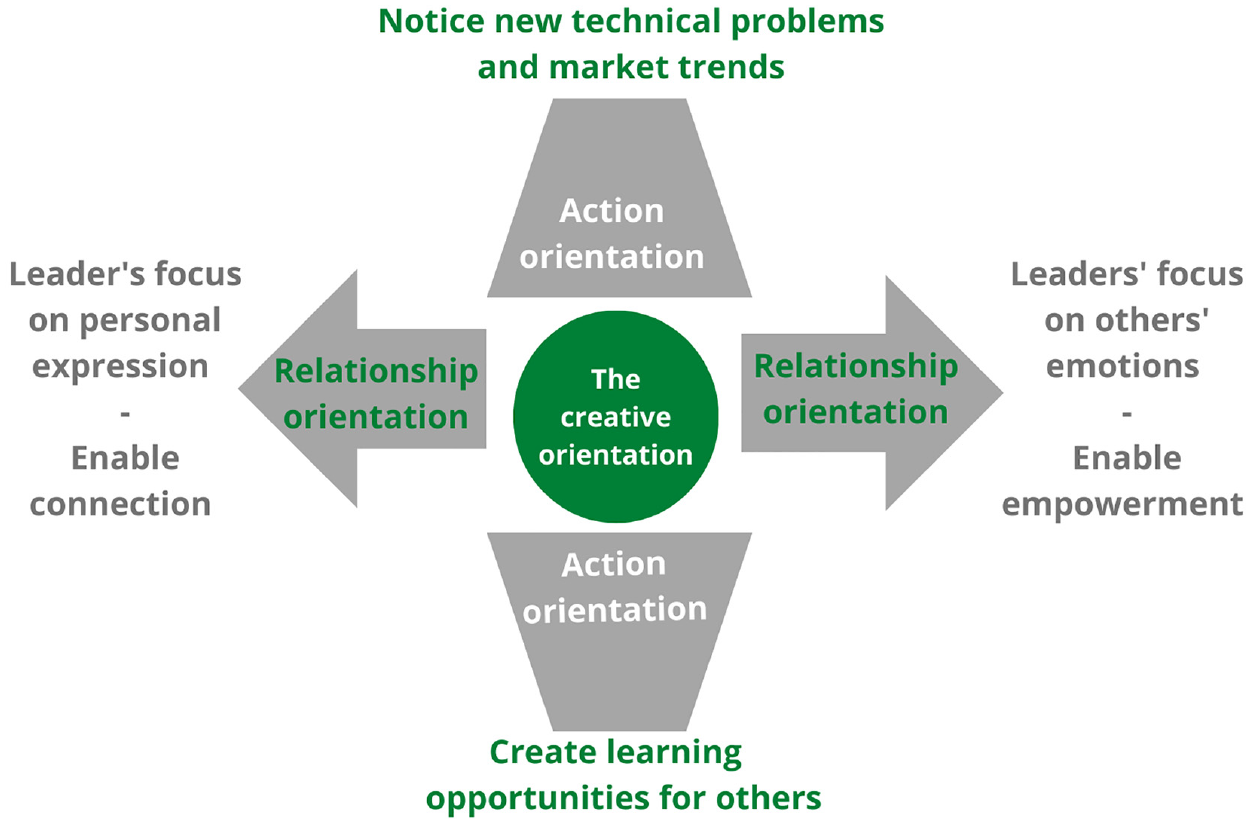
Theorised model – creative leadership orientations.
Defining and solving adaptive challenges may come with external pressure from other players in the organisation to take quick action, but in fact, it requires more reflection when leaders can choose to take time to assess their own skills, their people’s abilities and decide who would be a better fit for addressing a specific adaptive challenge (Heifetz et al., 2009). At any moment of organisational change, a leader may choose to focus on building or maintaining a significant relationship – relationship orientation. At other times, they may take new actions dictated by the conditions of the dynamic environment – action orientation.
The relationship orientation can be manifested through the leader’s prioritisation of one-to-one relations, placing value on their own emotions or the followers’ emotions. The former emphasis is on expressing leaders’ personal experiences to enable trust and authenticity in the relationship with followers. The latter is about choosing to communicate in a way that boosts followers’ creativity in coping with change.
Regarding leaders’ orientation towards new actions, I assume to see it in the leader’s willingness to create opportunities for learning and development in the team or in the leader’s ability to notice new technical problems and set new directions that may arise during change. The former concerns leaders’ willingness to take the initiative and propose new projects and competencies for team members. The latter concerns leaders’ tendency to identify and define technical problems related to change and broaden their own cross-disciplinary knowledge.
Therefore, for future studies, I propose the development of leaders’ creative orientation concept, as follows:
The action orientation – creating learning opportunities for team members:
When coping with a change situation, I take the initiative to propose diversified learning opportunities.
I behave in ways that are new to me to better understand what are the learning needs of my team.
I act in new ways to observe more accurately the adaptation needs of my people.
The action orientation – identifying new technical problems and market trends:
When I deal with an adaptive challenge, I look for opportunities that challenge my thinking.
When leading change, I acquire new skills to better deal with the obstacles along the way.
I think of alternative future scenarios and give new directions so my team can thrive through change.
The emotions orientation – leaders’ focus on personal expression:
I am comfortable to spontaneously share personal experiences that allow connection with my team in difficult moments of change.
I am open to emphasise my emotions through storytelling and create a more authentic relationship with my people.
I am willing to adopt new and constructive emotional responses to better deal with a stressful situation and act as a role model.
The emotions orientation – leaders' focus on others’ emotions:
I take the chance to reward, acknowledge and converse with team members who may struggle to adapt.
I often encourage my people to make time for their well-being.
I organise new group activities to help my people transform their negative emotions during an adaptive challenge.
Creativity in leadership roles is mostly examined in terms of how the leaders influence the creativity of their teams, but there is less focus on how the leaders are creative themselves (Mitchell & Reiter-Palmon, 2017). Investigating the dynamisms between leaders’ creative orientation and the creative adaptability constructs could have two theoretical implications and a practical one on how leaders can be creative to enable adaptability to digital workplaces. First, to advance the theoretical understanding of mini-c creativity, of creativity as a psychological resource in dealing with the need to adapt, it would be worthwhile to explore the creative orientations that leaders enact in their roles. Second, it would be worthwhile to examine how and under what contexts the leaders’ creative orientations shape their employees’ work attitudes and job satisfaction.
Third and last, within the reality of organisational dynamics, it might be possible to educate leaders to enhance their awareness of their innate creative tendencies. They can be then guided to assess which of these orientations could be honed into key strengths to effectively navigate the persistent demands for change in business environments.
The creative identities in the professional role of a leader
If the leaders’ creative orientation is about the discovery of a creative tendency when individuals in leadership roles address adaptive challenges, the exercise of one’s creative identity is about leaders’ awareness of their creativity at the outset of the change project and being deliberate about when and why they use their creativity. Hence, in this section, I discuss how a leader’s creative identity can enable adaptive behaviours.
Creative personal identity is a self-concept factor which consists of an individual’s belief that creativity is valuable and is an important part of their identity (Karwowski, 2012; Karwowski et al., 2018; Zielińska et al., 2022). The Short Scale of the Creative Self was developed by Karwowski et al. (2018) based on a sample of 284 middle and high school students from Warsaw, Poland. One of the sub-scales is the creative personal identity which is measured with the following statements: ‘I think I am a creative person’, ‘My creativity is important for who I am’, ‘Being an important person is important to me’, ‘Creativity is an important part of myself’ and ‘Ingenuity is a characteristic which is important to me’. This scale was found to have high internal consistency. However, this scale does not contain questions about what ‘my creativity’ means for each respondent or questions related to contexts, ‘When is “my creativity” useful for me?’.
The level of awareness about one’s creative personal identity may be higher for individuals who perform in artistic fields or who have creative hobbies. For instance, Pretz and Nelson (2017) found that students in the Arts/Humanities/Social Sciences were more aware of their creativity than students in the Maths/Sciences. This may be explained by implicit beliefs circulating in societies that associate creativity with artistic activities. How do leaders relate to their creativity? What do they think of the value of their personal creativity when the organisational environment undergoes change? How do they manifest the meaning of creativity?
In the leadership literature, the social identity approach argues that leaders make decisions based on a sense of shared group membership in specific situations (i.e. board members, members of a team, special project, organisation, etc.) (van Dick et al., 2018). A central idea of this approach is that the more leaders are seen to reflect the norms, values and goals of the group, the more trusted they are and the more likely to ensure support. This is the prototypical leader.
Moreover, social identity researchers argue that leaders not only represent the groups they lead but also actively manage and shape the identities of those groups (Van Dick & Kerschreiter, 2016). For instance, Haslam et al. (2020) suggested three additional dimensions to prototypical identity leadership as predictors of key leadership behaviours: (1) identity advancement (doing it for us), (2) identity entrepreneurship (crafting a sense of us) and (3) identity impresario-ship (making us matter). This theory is developed based on followers’ perceptions of leaders.
In this paper, I believe that leaders’ capacity to lead effectively depends both on what others think of leaders and what leaders think of themselves (Haslam et al., 2022). Leaders must have a good understanding of who they are as leaders. Therefore, I theorise on how a leader’s understanding of their creative personal identity can shape their adaptive capacity to other people’s needs and unexpected events.
Harding (2010) argues that imagining change requires creative thought and leading change requires creative behaviour. The central role of creative thinking in the workplace has been mentioned in reports of public and private organisations, such as the World Economic Forum’s The Future of Job Report and IBM’s 2010 Global CEO Study (Carr, 2010; World Economic Forum, 2023).
In organisational change and leadership studies, creativity is seen as the introduction of original and useful ideas and as a process that leads to change. Leadership is the catalyst for change (Ashley & Reiter-Palmon, 2009; Dawson & Andriopoulos, 2021; Puccio et al., 2007).
Kotter (2007) is a seminal work for the leading change literature. It provides an eight-step model for leading change, such as establishing a sense of urgency, forming a powerful coalition, creating a vision, communicating the vision and empowering others to act on the vision. These steps are a blend of leadership skills and practices that companies may want to develop if they desire successful transformations. The steps described in Kotter’s model require creative thinking processes in individuals at different levels of leadership and expertise. However, creative thinking is not discussed. This aspect is tackled by organisational creativity studies that provide a better understanding of the cognitive processes underlying creative problem-solving and the strategies through which leaders can facilitate these processes to boost the creative problem-solving of their employees (Reiter-Palmon & Illies, 2004).
In addition, Puccio and Cabra (2010) argue that one of the most prominent variables within the organisational context that either promotes or undermines creativity is leadership behaviour. Yet, to my knowledge, creativity and leadership researchers have not yet discussed what motivates leaders to engage creatively with specific leadership tasks. Therefore, we propose that leaders’ awareness of their creative identities drives them to engage with creativity in solving adaptive challenges.
For my book, ‘How to Develop Your Creative Identity at Work’, I conducted a series of 11 interviews with professional creators in the domains of science, entrepreneurship, arts and engineering (Velcu-Laitinen, 2022). I noticed that they talked about their creativity as a way of thinking and as resourcefulness in dealing with life problems. I extend the examination of this observation in a change leadership context.
I hypothesise that during organisational change, some leaders may become aware of their creativity as a personal resource and its importance in leading the change. From the first signs of request for change, leaders may make sense of their creativity in two ways: (1) as a way of thinking that helps them generate refreshing ideas when dealing with technical or people problems; (2) or as a way of acting, such as curiosity and resourcefulness to navigate a conflict or explore new directions and strategies (see Figure 2).
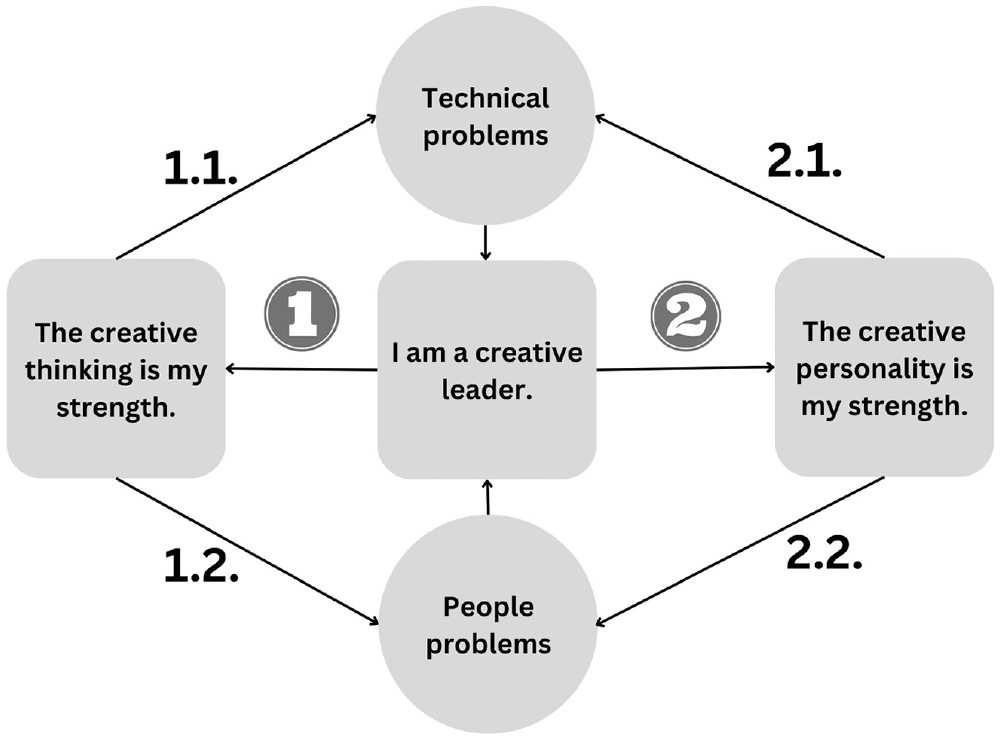
Hypothesised framework – leader’s creative identities.
When leaders value their creative thinking to address a technical problem, they may engage their imaginative thinking to generate alternative solutions or their intuitive thinking to make decisions.
When leaders value their creative thinking in one-to-one relationships or one-to-many relationships, they may employ their imaginative thinking, analogical thinking, metaphorical thinking and empathetic thinking to communicate key messages effectively.
When leaders think of themselves as creative personalities, they may engage in curiosity-driven habits to learn new technical skills and market trends or engage in conversations with new people outside their in-group. In addition, they may be more flexible to challenge the common assumptions on what are the constraints of organisational resources to respond to change events.
Summing up, these two ways of understanding one’s creative identity as a leader, as a way of thinking or as a way of acting, would generate adaptive behaviours to address technical and contextual problems arising from change. These behaviours would influence the experts and other leaders who belong to the adaptive leader’s in-group.
Future research can investigate the following five research questions:
What are the change contexts when leaders think workplace creativity is essential?
What are the contexts when leaders gain insights into their creative identities?
What are the personal, organisational and cultural factors that motivate leaders to consciously manifest their creative identities?
What are the personal, organisational and cultural factors that prevent leaders from becoming aware of their creative identities?
What is the relationship between high, medium and low levels of creative metacognition and adaptive behaviours?
Lastly, I believe ecological momentary assessment (EMA) methods would enable a deeper understanding of how leaders’ creative identities unfold in dynamic workplaces that cope with change.
How leaders’ creative metacognition enables employees’ adaptability
In this last section, I discuss how leaders’ creative metacognition can influence their followers’ motivation to become adaptable to change.
Creative metacognition is the combination of self and contextual knowledge to make decisions about one’s actions and performance (Kaufman et al., 2016). I hypothesise that creative metacognition is important not only for choosing to enact one’s creative identity as a leader at the workplace but also for creating conditions in which followers can use their creativity for adaptability purposes.
Leaders’ ability to create opportunities for employees’ adaptability rests on the assumption that they recognise that creative thinking leads to adaptive behaviours. This means that leaders have a minimum level of awareness about how being creative is reflected in specific behaviours and guide their followers towards situations when their creativity can be beneficial. Hence, through creative meta-awareness, leaders can prime their followers for creative adaptability.
Creativity requires flexibility in letting go of an existing emotion, behaviour or thought and embracing a new one, which is considered new from an internal point of reference by comparison with the individual’s past experiences. For instance, we can expect to see creativity in a spontaneous reaction that reflects curiosity, imagination, inspiration, risk-taking, etc. So, leaders can encourage followers to improvise behaviours as responses to the need to adapt and identify opportunities enabled by change.
Karwowski (2012) found that curiosity, measured as the tendency to explore opportunities for self-development and learning, was positively correlated with creative personal identity in a sample of 284 middle and high school students in Warsaw, Poland. Although correlation doesn’t mean causality, we assume that curiosity-driven behaviours enable the formation and development of one’s creativity. Hence, leaders may want to acknowledge their followers’ curiosity in two ways: (1) by encouraging them to ask questions in dyadic relationships and (2) by offering followers choices in learning new sets of skills.
When it comes to encouraging followers’ creativity through imagination, inspiration and risk-taking, leaders and followers must first develop a shared mental model about creativity at work (Mumford et al., 2019). Leaders must make clear the significance of habits of creativity as a constructive reaction to the need to adapt. Employees must feel psychologically safe to talk about their challenges in being creatively adaptive in the workplace. Leaders and followers must be willing to have regular conversations on facilitators and enablers of habits of creativity to address the change dilemmas.
Conclusions
This article aims to bring the concept of individual adaptability to the creativity theories literature. There are two reasons for which I chose to focus on the capacity to adapt. First, there’s the practical reason, the nudges from the digital transformation of the economies, organisations and societies which require knowledge workers to frequently assess their mastery, skills and competencies.
To get a feeling of the degree of digital transformation, it suffices to look up on the net for companies that generate AI solutions for businesses and read their marketing message, like the following one:
With our help, you can seamlessly and cost-effectively utilize artificial intelligence. We build a customized virtual assistant for you, which is trained to understand the specific needs of your business using its own data.
This intelligent partner works for your company around the clock, without fatigue.
Our mission is to assist you in finding the optimal use for an AI chatbot, training it with your company’s unique information, and overseeing its continuous development to achieve the best possible results.
All this is available for one affordable, fixed monthly price, with no commitments – you can stop using the service at any time.
Create a dynamic and responsible AI solution with our company to revolutionize your business operations and take it to the next level.
This is the post-information society of the 2020s when the economic, social and cultural dynamics evolve faster than before and lead to new structures of knowledge and innovation, new economic sectors, global connectivity and ethical and philosophical considerations.
The second reason for choosing to write a paper on the development of the capacity to adapt is a theoretical one. From the theoretical standpoint, organisational behaviour literature provides diverse frameworks for studying the antecedents, mechanisms and consequences of individual adaptability. Considering that the need to adapt comes with the need to think and behave differently, I believe that the current understandings that creativity researchers have about creative thinking, creative personalities and identities and emotional intelligence could provide valuable insights into what makes leaders and employees to be creatively adaptive. At the same time, the study of individual adaptability through creativity theories might bring about new understandings of creativity as an interface between the individual’s inner experiences and the demands of the environment.
Therefore, I suggest a new definition of individual adaptability as self-directed behaviours that reflect the ability to relate to the need for workplace change, anticipate the need for role-related new tasks or new roles, and take appropriate actions in a timely and effective manner. In addition, I hypothesise how three personal resources – creative orientation, identity and metacognition – might influence adaptive leadership behaviours during organisational change.
When faced with adaptive challenges or changes, traditional solutions or approaches and top-down leadership may not suffice. In such situations, creativity becomes a tool for adaptability and leadership has a paramount role in empowering adaptability. We discussed three contexts when leaders’ adaptive behaviours might unfold: (1) when they follow a surprising creative orientation, (2) when they become deliberate about the role of their creativity in leading change and (3) when they recognise the situations when their followers need to be empowered for creativity.
At the heart of this paper is the taxonomy of four categories of adaptive leader behaviours that may have influence on employees’ willingness to address organisational change: (1) leader’s personal expressions during vulnerable moments of change; (2) leader’s validations of their followers’ wellbeing; (3) leader’s initiatives to create opportunities for individual contributors to learn new skills; and (4) leader’s drive to single out technical problems worth investigating and set new business directions.
Hopefully, this paper raises further interest in exploring and measuring the mechanisms of a leader’s creative self-beliefs to facilitate cultures of adaptability and navigate unfamiliar market conditions.
Last but not least, this study has limitations. For instance, leaders’ creative orientation, identity and metacognition can be affected by other individual factors, – such as personal values, wisdom, expertise and well-being –, organisational factors, – such as power, politics and culture – or cultural heritage. Future studies can provide value by extending the investigation of the development of leaders’ creative adaptability under the influence of mediating constructs. Despite the limitations, I believe that a leader’s creativity is a useful concept for understanding the individual’s and team’s capabilities of thriving through the ambiguity and uncertainty that come with digital transformations.
Footnotes
Declaration of conflicting interests
The author declared no potential conflicts of interest with respect to the research, authorship, and/or publication of this article.
Funding
The author received no financial support for the research, authorship, and/or publication of this article.