



Abstract
The evolving nature of paramedic care has resulted in a growing body of evidence considering service user experience, including the experiences of patients, family members and bystanders. As new areas of research enquiry emerge in paramedicine, it is important to review the methods, methodologies, and quality of evidence in these topic areas. A methodological review was conducted of peer-reviewed empirical studies reporting on family and bystander experiences where emergency ambulance services responded. Descriptive statistics were calculated to describe select study characteristics. Study quality was appraised using the Johanna Briggs Institute Checklist for Qualitative Research and the Mixed Method Appraisal Tool. Service user engagement was evaluated using a newly adapted tool, the Service User Engagement Ladder. After searching five databases, 37 studies of varying research designs were included in this review. While overall study quality was high, there was a notable absence of theoretical discussion, particularly regarding qualitative methodologies. In assessing service user engagement, family and bystanders had very low levels of engagement in the research process. Only one study in this review utilised methods where co-construction of research occurred. Current research is dominated by Western study locations and biomedical paradigms that privilege Westernised populations and ways of considering experience, ignoring the preferences and experiences of Indigenous people and people from minoritised ethnic groups. To further develop paramedicine research involving family and bystanders, transparent reporting around the theoretical underpinnings of research must be strengthened. There is a significant opportunity to increase service user engagement in the research process. Greater attention to cultural and ethnic diversity is needed in researching family and bystander experiences.
Background
Traditionally, paramedicine has been centred around providing emergency medical treatment and transportation to hospital facilities. 1 However, internationally there has been an increasing movement towards paramedics providing community-based care due to the impact of chronic conditions, an ageing population, and a rising demand for healthcare services. 2 As a result, paramedics are more concerned than ever with delivering holistic, patient and family-centred care. 3 This paradigm shift in the remit of paramedicine requires new streams of research that consider the experience of service users to be developed. In considering new areas of enquiry, researchers must adopt methodological approaches which have been under-represented within paramedicine to date, with resultant implications for how research quality is understood. 4 An example where new research methodologies need to be considered is in evidence exploring the experience of service users in emergency ambulance care. Alongside the patient, family and bystanders should be recognised as important service users of emergency ambulance care as they are heavily involved in identifying medical events, calling for help, initiating resuscitation, and witnessing paramedic care. 5 Quantitative biomedical methodologies currently dominating paramedicine research may not be the most appropriate choice for researching family and bystanders as the inquiry focuses on experience rather than clinical outcomes.6,7 Furthermore, methods need to be able to assess social and cultural contexts, which are often given inadequate consideration within the biomedical paradigm.
Conducting research that engages service users in the research process is challenging, in-part due to the time-sensitive and emergent nature of emergency ambulance care. However, as the importance of considering experience grows, new methods regarding the engagement of service users must now be considered. Increasing service user engagement relates to a growing recognition that service users have more to offer as partners in research rather than passive research participants. 8 There are several reasons why healthcare researchers and policymakers view service user engagement as increasingly important. Firstly, there is an inherent ethical aspect to service user engagement with many governing bodies legislating that healthcare consumers should have input systems which are designed for them. 9 Service user engagement has also been used to empower individuals and communities traditionally underrepresented in research. 10 Furthermore, literature has shown that the involvement of service users as research partners can increase public participation and research impact. 11 While engaging service users in paramedicine research and practice has been deemed important it is unknown to what extent methods of service user engagement are used in paramedicine research. 12
Through conducting a methodological review, researchers can examine study design in relation to quality. 13 However, assessing research quality is a highly debated process. 14 While many quality appraisal tools exist, these are often criticised for being reductive checklists, with limited ability to assess quality across differing paradigms, raising the question of how quality can best be evaluated in paramedicine research.15,16 This methodological review aims to examine the methodologies and methods used, and the extent to which service user engagement is deployed, in research with family members and bystanders in paramedicine.
Methods
Research design
Methodological reviews are studies in which research methods are analysed. 17 Alongside analysing methods, methodological reviews can consider a broad range of topics relevant to study design including research question, study quality, and study features. 13 Benefits of conducting methodological reviews include highlighting methodological strengths and weaknesses, assessing study quality and identifying evidence and method gaps for future research. Due to the lack of a consensus on reporting guidelines for methodological reviews 18 , this review is informed by multiple methodology discussion papers.13,17,18
This review was guided by our overarching research aim, which was to understand the methodologies and methods used in paramedicine research with family members and bystanders. We considered study quality, which service users are included in the studies (e.g., next of kin, family, bystander), the ethnicity of service users (if provided), and how service users are engaged in the research process (e.g., as co-authors, advisors, interview participants, survey respondents).
Theoretical framework
There are several factors which influenced our ontological and epistemological lens in conducting this methodological review. Firstly, the study authors have a transdisciplinary approach with backgrounds in nursing, health psychology and health geography. Within nursing and social science paradigms, research methodologies which engage service users in the research process are well established.19,20 Furthermore, all authors in the review are located in Aotearoa New Zealand where Te Tiriti O Waitangi 21 (The Treaty of Waitangi), the founding document of New Zealand, underpins relationships between the indigenous Māori population of Aotearoa and the Crown. This has resulted in health research funders and ethics committees requiring health research to consider the world view of Māori and support Māori involvement in all stages of the research process. 22
Eligibility criteria
Studies were eligible for inclusion where they reported the experience of family or bystanders in out-of-hospital events where emergency ambulance services responded. There is notable variation in nomenclature regarding who is considered a family member versus a bystander, with overlap between populations frequently occurring. As we were often unable to separate family members and bystanders, both populations were included. We consider a ‘family member’ as a person of any relation to the patient. Bystanders were considered using the Utstein definition, which included witnessing an emergency event or CPR attempt ‘by someone who is not part of an organised emergency response system’. 23
Search strategy
This search was conducted in two phases. Prior to this methodological review, an initial search for the purposes of a scoping review 5 was conducted in May 2022. The aim of the scoping review was to identify and synthesise all published, peer-reviewed research describing family and bystanders’ experiences of emergency ambulance care. Results of the scoping review found that there was an urgent need for further research in this area, as well as significant variation in methodologies and methods applied by researchers to explore family and bystander experiences. As such, the need was identified to conduct a methodological review exploring the methodological approaches used in this field of research as a basis for making recommendations as to how to address this evidence gap in future research.
In order to capture any new literature from the time of the scoping review, we repeated our initial search for the purposes of this methodological review in May 2023. Our search strategy was developed in conjunction with a subject librarian to create a comprehensive search. Search terms (see Table 1) were applied using Boolean search operators to the following databases: Medline; CINAHL; Scopus; PsycINFO; ProQuest Dissertations & Theses. Relevant MeSH headings were used where available alongside non-MeSH counterparts. As this search was conducted by New Zealand authors, we also included the commonly used term whānau which is the Māori collective terminology for family, however, inclusion of this search term yielded no further results.
Search terms.
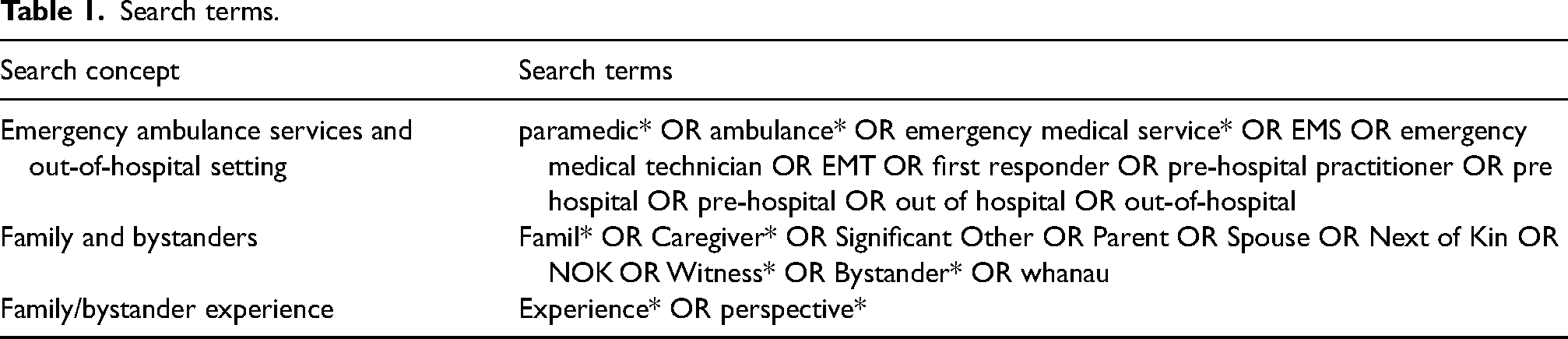
We expected limited results exploring family and bystander perspective and therefore no exclusions based on publication date were applied. Four articles were not available in English – translations were removed in pre-screening due to a lack of resources to translate these articles.
Data extraction and quality appraisal
All retrieved articles were exported into Endnote 20 24 where deduplication and title and abstract screening was conducted. The full-text screening was completed independently by ES and NA. All studies were appraised in full for quality assessment by ES, with consultation from NA.
Selecting a quality appraisal tool was challenging as this review considered studies of qualitative, mixed-methods and quantitative methodologies. There is much debate between researchers regarding what appraisal tools to use and how appraisal should be conducted. 25 Furthermore, there is no single gold-standard quality appraisal tool which can be applied across multiple methodologies. 26 Therefore the authors used a combination of quality assessment tools to assess the different study types in this review.
Quality assessment tools
The Joanna Brigs Institute (JBI) Checklist for Qualitative Research 27 was selected due to the checklist being largely based on the congruency between a study's philosophical perspective, methodology, research question and methods, thus meaning it was well suited to be applied to the heterogenous qualitative studies included in the methodological review. Furthermore, the JBI tool was the only tool that considered the participants’ voices in its appraisal, which we considered an important factor to assess.
The Mixed-Method Appraisal Tool (MMAT) 28 is a validated appraisal tool which is suitable to evaluate primary empirical studies of five methodological approaches: qualitative; quantitative descriptive; randomised controlled trials; non-randomised quantitative; and mixed-method studies. The MMAT was selected to assess mixed-method and quantitative studies of any design in this review.
Service user engagement
Methods of engaging service users in research are varied in timing and activity, which can make assessing levels of engagement challenging. A recent systematic review 8 concluded that while numerous studies guide and promote service user engagement in research, there is a distinct lack of tools available that evaluate the level of engagement in existing studies. While we did not identify an appropriate model to evaluate sources, two seminal models of participant engagement29,30 were identified as useful. However, neither model was directly applicable to the population of interest in this study. However, principles from these models of participation were adapted by the authors to create The Service User Engagement Ladder (see Figure 1).
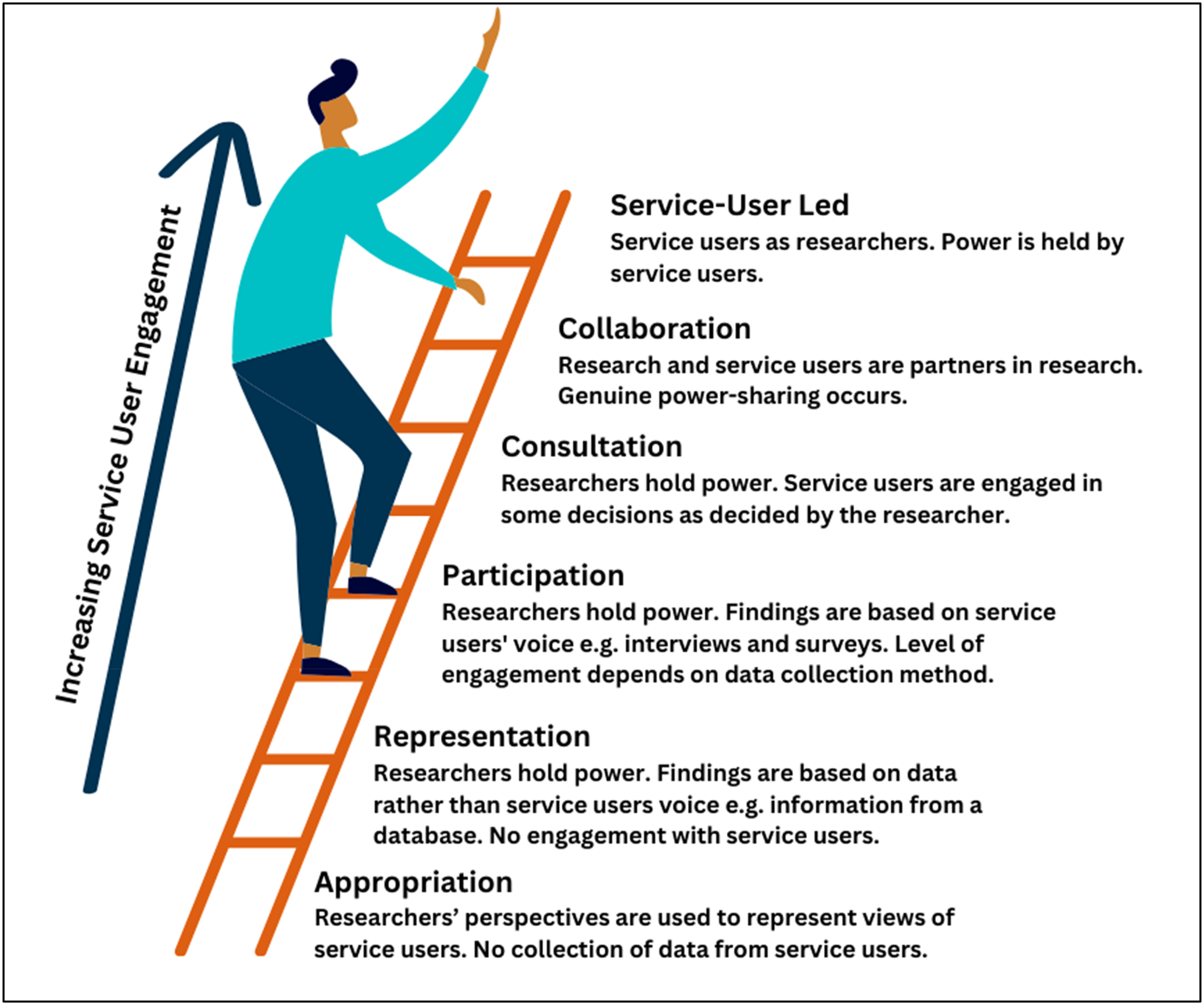
Service user engagement ladder.
The Service User Engagement Ladder provides a framework for reflecting on the differing levels of service user engagement in research and will be used to analyse the differing aspects of service user engagement currently utilised in paramedicine research. This model has been adapted for the purposes of addressing service user engagement in this methodological review. No formal validation of this tool has been completed.
Data analysis
This review focused on reported research designs, methods and underpinning methodologies of included studies. Critical appraisal of methods was guided by the JBI Checklist for Qualitative Research, 27 the MMAT, 28 and the newly developed Service User Engagement Ladder. Limited descriptive statistics (frequencies) were calculated to report study characteristics including methods, locations and participant demographics.
Ethical considerations
This methodological review provides an analysis of existing research. No formal ethics approval was required.
Results
Selection of sources of evidence
Database searching generated 5483 results. After deduplication, and screening 37 articles met the criteria to be included in this methodological review (see Figure 2). Thirty-three studies were included from the initial database search in May 2022, with an additional four studies being included from the updated database search in June 2023.
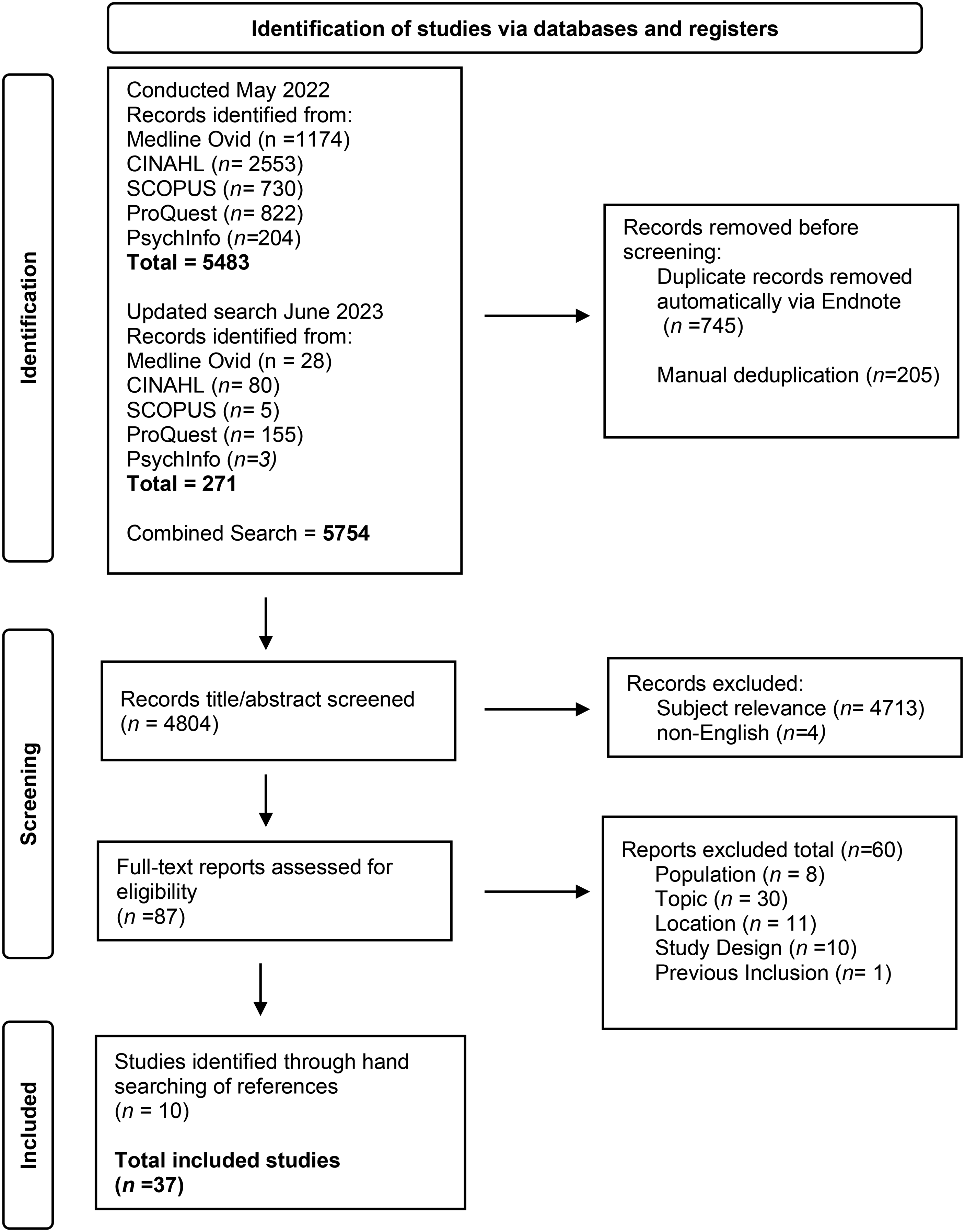
Search strategy.
Study characteristics
Included studies used qualitative methods (n = 24), mixed methods (n = 10), and quantitative methods (n = 3). The publication date range was between 1989 and 2023, with the majority of literature being published in the last 10 years (n = 22). Articles were commonly published in emergency medicine journals or nursing journals, with three included in dedicated pre-hospital journals.
The most prominent study population was family members (n = 30),31–60 followed by bystanders (n = 7).61–67 Several studies also included patients and healthcare professionals. For the purposes of this review, any perspectives not belonging to family or bystanders were excluded from the analysis. The term ‘family member’ was variably applied and rarely defined. Fourteen studies provided no explanation for how family was defined. Where definitions were provided, the family was typically determined based on a Western nuclear family concept of direct kinship, for example, spouse, child, parent, or sibling. 68 However, the degree of kinship eligible for participation varied, some studies allowed for self-nomination as family, while others were limited to primary family members or cohabitants. Several studies included only one specific subset of family members, for example, spouses, fathers, or parents as the study population. As is sometimes a clinical reality, it was difficult to differentiate bystanders from the family in study findings. Of the seven studies exploring bystander perspectives, five included family members in the bystander population,61–65 and the remaining two included friends, colleagues, and neighbours.66,67 Overall, we found that populations were inconsistently defined with significant overlap between family and bystanders occurring.
Almost half of all studies originated from Nordic regions (n = 18),32,42–44,46–48,50,55,57,59–65,67 with other common study locations being North America (n = 9),33,36,37,39–41,53,58,66 Australasia (n = 5)31,34,35,52,56 and Europe (n = 4).38,45,49,51 Only one study included an Asian study location in rural Thailand. 54 The large number of Western locations resulted in populations largely consisting of white participants being the dominant voice in this methodological review. Only two studies reported a non-white population; Soontern et al. 54 explored the experience of Thai in rural Thailand, and Ward et al. 58 reported a majority Black and Hispanic population. Overall reporting of participant demographics such as ethnicity, religion, and cultural beliefs was low across studies. Only six studies reported the ethnicity of the patient31,33,58 or family members/bystanders.41,46,53 Of these studies only Ward et al. 58 explored how ethnicity affected the beliefs/experiences of family members. Similarly, religious beliefs were seldom reported with four studies recording religion.36,38,45,53 Two of these studies38,45 analysed how differing religious practices may affect experience. No studies in the review discussed how cultural practices may influence experience.
Qualitative studies
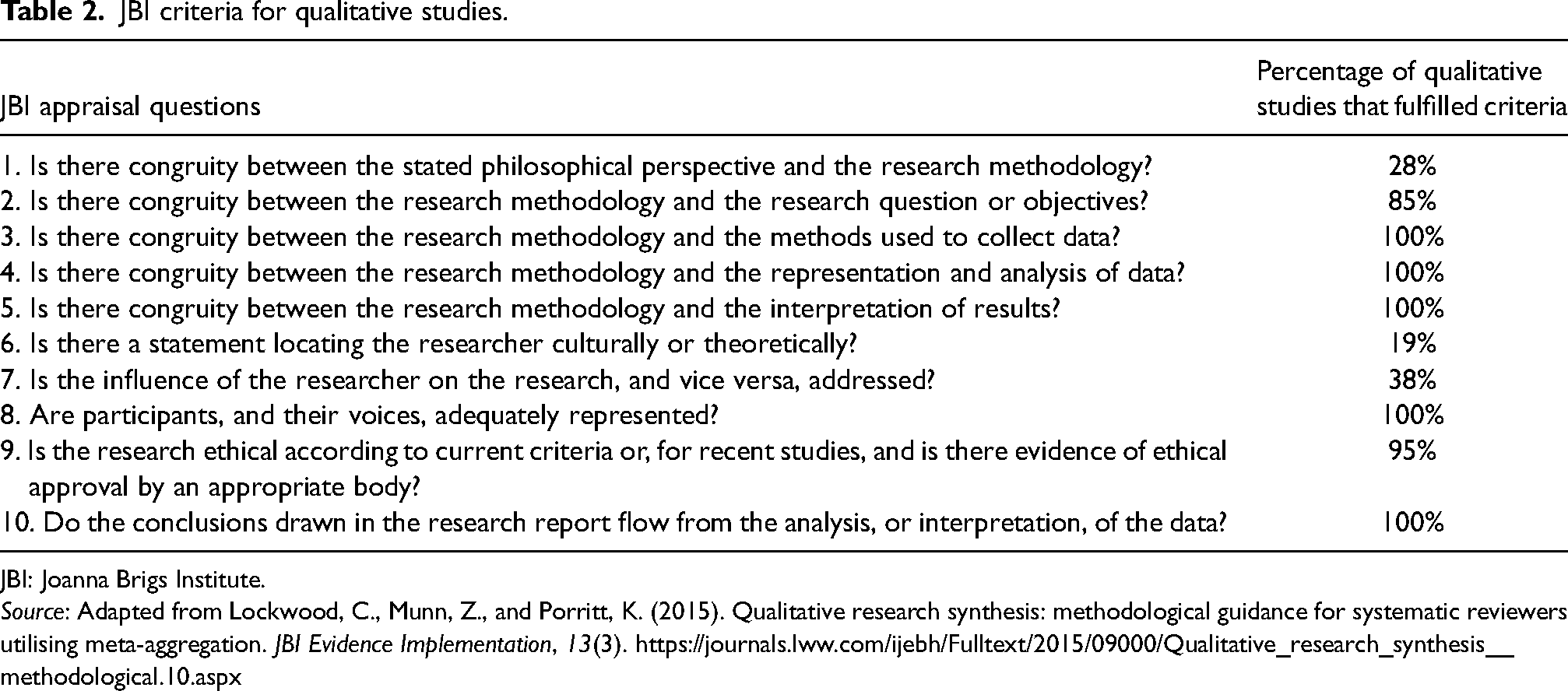
Studies utilising qualitative methodologies contributed to the majority of evidence in this methodological review. In recent years, there has been a significant increase in studies selecting qualitative methodology with over half of all qualitative studies included in this review being published in the past five years. All qualitative studies were appraised following the JBI Checklist for Qualitative Research. A complete summary of the results of this quality appraisal is available in supplementary file one. While the JBI checklist does not provide an overall score ascertaining study quality, we were able to record trends around what criteria commonly was completed across the studies (see Table 2). All studies fulfilled at least six of the 10 quality criteria outlined in the JBI checklist. Only two studies35,66 completed all quality criteria. There is a weak positive correlation (R2 = 0.2998) between the publication date and a number of criteria fulfilled.
JBI criteria for qualitative studies.
JBI: Joanna Brigs Institute.
Source: Adapted from Lockwood, C., Munn, Z., and Porritt, K. (2015). Qualitative research synthesis: methodological guidance for systematic reviewers utilising meta-aggregation. JBI Evidence Implementation, 13(3). https://journals.lww.com/ijebh/Fulltext/2015/09000/Qualitative_research_synthesis__methodological.10.aspx
Qualitative studies commonly lacked clear communication of congruence between philosophical perspectives and the research methodology. Most studies did not provide any information regarding philosophical perspectives or overarching paradigms causing criterion one of the JBI quality appraisal tool to be unmet. Studies performed well in the methods section of the appraisal tool (Questions 3, 4, and 5) with all included studies choosing methods congruent with methodology and research aims. Researcher reflexivity was seldom reported (Questions 6 and 7). Where reflexivity was reported this was regarding how the researcher's professional scope of practice may affect study findings. In order to demonstrate participant representativeness (Question 8) studies were required to provide evidence that findings were based on participants’ voices by displaying quotes. There was no minimum requirement for number of the quotes needed to satisfy this criterion, therefore, all qualitative studies fulfilled this criterion.
Quantitative studies
The MMAT was used to appraise quantitative studies (n = 3). The complete results of this appraisal can be found in supplementary file two. Methodologies included two quantitative descriptive designs39,58 and one randomised controlled trial. 45 All three quantitative studies satisfied all elements of their corresponding MMAT categories, indicating high quality.
Mixed-Method studies
Studies utilising mixed-methods were the second most prominent study type in this methodological review (n = 10). All mixed-method studies in this review were appraised using the MMAT (see Supplemental File 2 for full appraisal). There were several quality trends noted among the mixed-methods papers. While all mixed-method studies satisfactorily completed the quantitative aspects of the MMAT, many did not fulfil the requirements for reporting on qualitative and mixed-methods elements. A common issue for mixed method studies was surrounding qualitative data analysis. Many studies collected qualitative data using appropriate methods but failed to analyse this data according to qualitative methods. There were a few studies that did not report following a mixed-methods approach, however, they did collect and present qualitative and quantitative data. Notably, these studies were published 20 years ago.36,40,49,53,61,63
Service user engagement
The engagement of service users was assessed following the Service User Engagement Ladder. All studies apart from one 37 fell under the category of ‘Participation’. In participation, service users’ voices are represented in research outputs but are not included in any aspects of the research process. One study in this review extensively involved service users by inviting service users to take part in a Delphi study steering committee. 37 This methodology resulted in shared decision-making across the entire study design, thus demonstrating collaboration according to the Service User Engagement Ladder.
Discussion
This review provides an analysis of the methodologies and methods utilised in paramedicine research which explores the experience of family and bystanders during out-of-hospital emergencies. By applying two quality appraisal tools alongside a model of service user engagement, we have identified three overarching trends relating to the quality of paramedicine research in this area. Firstly, current research involving family and bystanders has limited diversity of study settings and populations. Secondly, family and bystanders have low engagement in the research process, resulting in research governed by what is considered important to healthcare professionals and researchers. Finally, studies in this review had limited reporting surrounding theoretical decision making which has implications for overall study quality. We discuss these limitations and their implications for conducting quality research with family and bystanders in the following section.
Mind the cultural gap
Research exploring the experiences of family members and bystanders is currently dominated by European, North American, and Australasian study settings. There is little reporting of experiences from minority populations within these settings, resulting in low representation of service users from diverse cultural backgrounds. Paramedicine research typically follows a Western biomedical paradigm, further diminishing the ability to capture information from differing cultural and social contexts. 69 The limited inclusion of culturally diverse populations raises concerns for equitable research within this field of research. Improving the representation of minority groups is of growing consideration in wider health research. 70 As paramedicine is rapidly developing its own field of evidence, it is important that future research demonstrates a commitment to ensuring equitable research representation.
An example of how Western social contexts are perpetuated within research exploring family and bystander perspectives can be seen in how studies define populations in this review. Studies typically considered ‘family’ following Westernised concepts of kinship where only direct next of kin was considered. This potentially results in the exclusion of differing perspectives of family members who are not defined as direct kin by Westernised heteronormative definitions of family. 71 Many studies in this review did not consider family as a collective unit, but rather as individuals which may also conflict with differing cultural paradigms of family. 72 Choosing methods that allow participants to self-identify as a family will allow for accurate delineation between family and bystanders and promote diverse reporting of different family structures in future paramedicine research. We also recommend that studies improve their reporting on how family and bystanders are defined as there is currently a high variation in eligibility criteria.
Many studies in this review did not gather demographic data or ask families and bystanders about how their cultural beliefs or practices may have affected their experiences. It is unclear why studies did not collect this data; it perhaps reflects the limited cultural diversity of researchers and participants. To improve the understanding of how culture affects the experiences of family members and bystanders more research is needed involving populations of diverse cultural backgrounds. Researchers must also ensure that the methods and methodologies employed do not exclude service users from minoritised backgrounds from participating in future research opportunities.
The structure of emergency ambulance systems, local strategic goals and resources available within wider health systems must be considered when reviewing these results. Non-Western countries, including many low- and middle-income countries are underrepresented in this area of research, a trend which is echoed in wider paramedicine research. 69
Service user engagement
Increasing service user engagement in research has been identified as an important quality improvement tool in wider healthcare research 8 and paramedicine research.73,74 Importantly, service user participation has been demonstrated to be an effective way of improving recruitment and engagement with minoritised cultural groups. 10 As diversity is currently limited in paramedicine research exploring family and bystander experience, incorporating service user engagement methods presents an opportunity for future research.
One method to improve service user engagement noted in this review to further engage service users was involving family and bystanders in research teams. Several studies utilised team-based research methods, however, these groups solely consisted of healthcare professionals and health researchers. By inviting service users to join these decision-making groups, family and bystander would have the opportunity to be engaged in the research process, rather than being passive research participants.
An observation of this review was that traditional quality appraisal tools do not sufficiently assess service user engagement. This is evidenced by studies performing strongly in markers of participant representation in the JBI and MMAT checklists but failing to ‘climb’ the Service User Engagement Ladder. Future research needs to recognise this limitation of commonly used quality appraisal checklists. To improve service user engagement in the research process, researchers must instead implement models of participant involvement, for example by aiming to ascend the Service User Engagement Ladder.
Improving theoretical discussions
A key finding of this review was the lack of theoretical and conceptual frameworks in qualitative and mixed methodology studies. In comparison, studies in this review performed highly when discussing methods, indicating that many qualitative and mixed-method studies prioritise discussing methods rather than methodology. Bibliometric analysis shows that quantitative research remains the dominant methodology published in paramedicine research. 75 High publication numbers following a quantitative worldview may explain why studies generally performed highly in reporting qualitative methods but poorly when discussing theoretical components unique to a qualitative worldview.
It is important that theoretical positioning is discussed because all research is inherently theoretical and is influenced by individual assumptions of ontology and epistemology. 76 Furthermore, reporting theoretical assumptions is an important marker of qualitative research study quality. 77 Therefore, to improve the quality of qualitative paramedicine research involving family and bystanders, reporting on theoretical assumptions and researcher reflexivity must be increased. One contributing factor to the lack of detail surrounding qualitative research is journal editorial limitations. Health research journals commonly have word counts significantly lower than social science journals, limiting the amount of theoretical detail authors can provide. 78 Paramedicine journals have indicated that in order to improve the quality of qualitative research reporting, restrictive word counts need to be revised. 79
Strengths and limitations
This methodological review is the first to explore how research involving service users is conducted in paramedicine. Two critical appraisal tools the JBI and the MMAT and a custom-adapted framework for analysing service-user engagement were applied. Quality discussion was therefore largely guided by points considered in these tools. The Service User Engagement Ladder which was adapted for use in his review has not been validated. Currently, no established protocol provides reporting guidance on methodological reviews. 17 As a result this review has assessed methodologies based on the research aims rather than an established guideline.
Search strategy
Despite a broad search strategy developed in conjunction with a subject librarian, we identified 10 further studies through hand searching of included article reference lists. This indicates that our search strategy may have lacked sensitivity. Low sensitivity within paramedicine research has previously been attributed to a lack of standardised search terms, with MeSH search terms only recently established in this area. 80 Standardisation of search terms within this field would further strengthen the ability of future search to capture all relevant articles.
A key finding of this methodological review was that study results largely come from Western countries and considered Western familial constructs. Our search strategy may have impacted this as we only included papers available in English. However, this impact is small as only four of over 4000 articles were removed in pre-screening due to a lack of English translation. Our search terms were also exclusively English (excluding the inclusion of the Māori term for family whānau). It is possible that including family terms from other languages may have increased relevant findings capturing non-Western cultural groups. We expect this to be minimised as we used MeSH heading searches for family groups where available. As there are no MeSH headings for specific cultural connotations of family, we would expect that relevant articles using these terms would also apply to the relevant English search team. To further minimise the impact of English search terms we included a broad range of familial relations in recognition that many indigenous cultures conceptualise family in ways that extend beyond the concept of a Westernised nuclear family construct.
Conclusion
With greater paramedic involvement in primary care, non-conveyance and advanced care in the community, research involving service user experience – including the experience of family and bystanders – is a growing field in paramedicine. However, as new research topics emerge, methodologies and research designs may need to evolve to best answer new questions. This methodological review has provided an analysis of current trends in research involving family members and bystanders where emergency ambulance services respond. While study quality is generally high, a dominant biomedical paradigm has resulted in low theoretical discussion of qualitative research in this area of research. To further improve the quality of research involving service users, we must conduct research that has transparent methodological underpinnings and meaningfully engages family members and bystanders as research partners. Engaging service users from diverse populations and cultural groups is a promising strategy to enhance the quality and inclusivity of paramedicine research. More research is needed considering service user experience using non-biomedical paradigms, which currently dominate research trends in this area.
Supplemental Material
sj-docx-1-pam-10.1177_27536386241255387 - Supplemental material for Paramedicine research with family and bystanders: A methodological review
Supplemental material, sj-docx-1-pam-10.1177_27536386241255387 for Paramedicine research with family and bystanders: A methodological review by Eillish Satchell, Natalie Anderson and Merryn Gott in Paramedicine
Supplemental Material
sj-docx-2-pam-10.1177_27536386241255387 - Supplemental material for Paramedicine research with family and bystanders: A methodological review
Supplemental material, sj-docx-2-pam-10.1177_27536386241255387 for Paramedicine research with family and bystanders: A methodological review by Eillish Satchell, Natalie Anderson and Merryn Gott in Paramedicine
Supplemental Material
sj-pdf-3-pam-10.1177_27536386241255387 - Supplemental material for Paramedicine research with family and bystanders: A methodological review
Supplemental material, sj-pdf-3-pam-10.1177_27536386241255387 for Paramedicine research with family and bystanders: A methodological review by Eillish Satchell, Natalie Anderson and Merryn Gott in Paramedicine
Footnotes
Author contributions
All authors have made substantial contributions to the conception and design of the review. Database searching and screening were completed by E.S and N.A. Quality assessment was completed by E.S. with consultation from M.G. and N.A. All authors were involved in the preparation of the final manuscript.
Declaration of conflicting interests
The authors declared no potential conflicts of interest with respect to the research, authorship, and/or publication of this article.
Funding
The authors disclosed receipt of the following financial support for the research, authorship, and/or publication of this article: This research was undertaken as part of the Māori Health Clinical Training Fellowship funded by the Health Research Council of New Zealand (Grant No. 23/125/A).

Supplemental material
Supplemental material for this article is available online.
References
Supplementary Material
Please find the following supplemental material available below.
For Open Access articles published under a Creative Commons License, all supplemental material carries the same license as the article it is associated with.
For non-Open Access articles published, all supplemental material carries a non-exclusive license, and permission requests for re-use of supplemental material or any part of supplemental material shall be sent directly to the copyright owner as specified in the copyright notice associated with the article.
