



Abstract
In this viewpoint, we discuss how culturally affirming, community-based interventions grounded in an integrative health equity framework are essential for the advancement of health equity for racial minorities and immigrant communities. Through a case study of Freedom Community Clinic and its initiatives, we demonstrate how culturally affirming, integrative healthcare models can further advance equitable outcomes in physical, mental, emotional, and spiritual health and well-being for individuals and communities. The current landscape of persistent health disparities, particularly in chronic disease and limited healthcare access for racial minorities and immigrant communities, highlights the systemic inequities embedded in current healthcare structures. An integrative health equity approach is critical for addressing these inequities by sharing access to the benefits of complementary and ancestral medicines, particularly as low-risk and low-cost interventions for chronic disease. Cultural humility is critical for informing the practice of integrative health, as many healing practices categorized within integrative health have roots in the cultural traditions of racial and ethnic minorities and immigrant communities. Growing evidence suggests that investments in interventions that strengthen social ties and community networks can positively influence population-level health outcomes, including health behaviors. Freedom Community Clinic exemplifies a culturally affirming, community-based approach to integrative health with its Whole-Person Healing to the People model, which integrates six core components: ancestral and Indigenous healing, Western medicine, community healing, culture, community engagement, and social justice. This example emphasizes how integrative health equity approaches can create paradigm shifts in how we understand and deliver care, moving beyond the confines of a fragmented healthcare system toward one that truly serves communities that are most in need. Freedom Community Clinic and its Whole-Person Healing to the People model offers a promising framework for how healthcare can be re-envisioned as a tool for social justice, providing opportunities for all individuals to achieve optimal health.
Introduction
Integrative health equity aims for “optimal health for all through a whole-person approach” that considers cultural, social, and structural drivers determinants of health. Given the trend towards public decline in trust in healthcare institutions and providers since the COVID-19 pandemic– especially among Black and Latine communities– realizing integrative health equity is crucial to reducing racial health disparities. 1
Community-based approaches to integrative health equity provide a unique opportunity to address health equity challenges faced by racial minorities and immigrant communities. Integrative healthcare models that center and uplift the value of community and cultural healing practices have the potential to build bridges of trust, dialogue, and repair. There is a long, rich tradition of connecting culture and integrative health practices in a community setting. Historical examples, like the Black Panther Party Free Clinics, Asian Health Services, and others from the 1960s social medicine movement, show the importance of culturally-affirming care in the community. 2
In the spirit of past social medicine movements, we must adopt a health equity lens across all levels and disciplines of care, including integrative health. This involves prioritizing the needs of the most marginalized communities, addressing social and structural determinants drivers of health, and integrating culturally-affirming care models that foster collaboration between conventional and complementary healthcare providers.
Western Biomedicine and Racial Health Inequities
Growing health disparities in chronic diseases and healthcare access for racial minorities and immigrants highlight systemic failures in providing equitable healthcare. 3 According to the CDC, chronic and mental health conditions account for 90% of U.S. healthcare spending, emphasizing the strain these issues place on both patients and the system. 4
Western biomedical practices often fall short in addressing the root causes of these disparities. While pharmaceutical treatments help in acute cases, they can lead to side effects, poor adherence, and limited follow-up. The biomedical model’s focus on symptom management too often overlooks the social, emotional, and community factors that influence health outcomes.
Traditional Medicine and Integrative Health Equity
A growing body of research has elucidated the benefits of complementary and ancestral medicines, particularly for low-risk and low-cost interventions for chronic disease, including acupuncture for neuropathic pain, Ayurvedic herbal medicine for gastrointestinal issues, meditation and mindfulness-based therapies for mental health issues, and yoga and strength conditioning for lower back pain.5-8
Trends have shown high utilization of ancestral, complementary, and Indigenous forms of medicine among patients, with many incorporating such practices with modern medicine yet failing to disclose such use to their primary care providers. 9 However, racial minorities and immigrant communities are less likely to use these medicines due to limited access and lack of affordability.
Cultural Humility and Community Healing
The framework of cultural humility is necessary for informing the field of integrative health equity, as many health and healing practices categorized as such have origins in the cultures of racial and ethnic communities. Cultural humility is defined as “a process of self-reflection and discovery to understand oneself and then others in order to build honest and trustworthy relationships”. Transcending cultural competency, cultural humility emphasizes “curiosity and open dialogue to ‘mend, heal, and strengthen the physician-patient relationship”. 10 In this way, cultural humility fosters actions that build trust and engagement with communities that have historical distrust in healthcare systems.
In addition, investments in interventions and policies that strengthen social ties and community networks have been shown to influence an array of health outcomes including health behaviors, mental health, physical health, and mortality. 11 In 2023, Surgeon General Vivek Murthy declared an “epidemic of loneliness and isolation”, calling for greater policies to strengthen social infrastructure and pro-connection public policies. Improved health outcomes through social connection positively affect not only individuals’ health, but also that within their social networks and at a population-health level.
Keen to Surgeon General’s call for a “culture of connection”, interventions that uplift cultural humility and strengthen community networks can amplify the benefits of both, yielding short-term and long-term advantages that impact individual and population health outcomes. 12
Culturally Affirming Community Care Models of Integrative Health Equity: A Case Study of Freedom Community Clinic
Core Components and Values of Freedom Community Clinic (FCC)’s “Whole-Person Healing to the People” Model

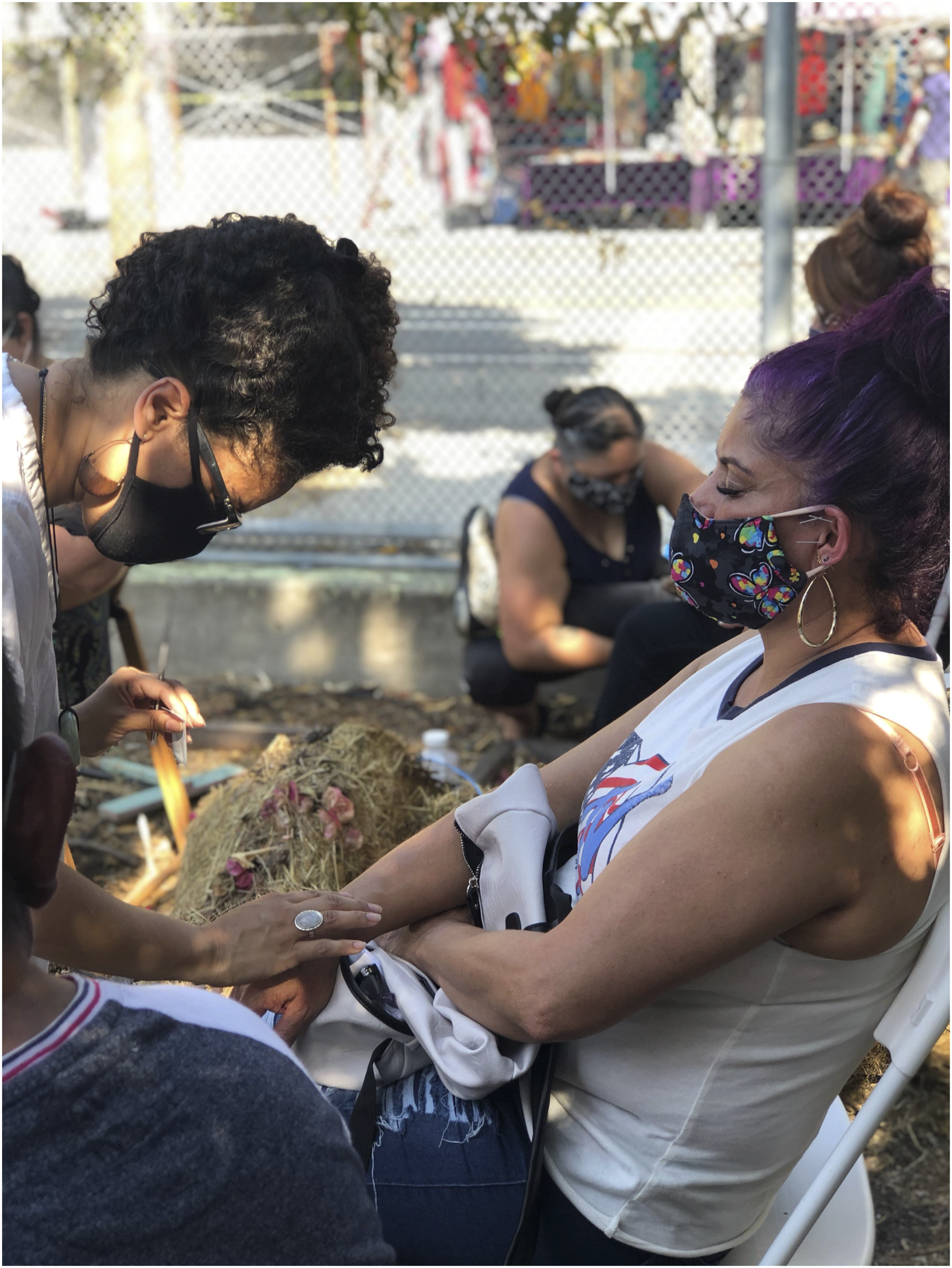
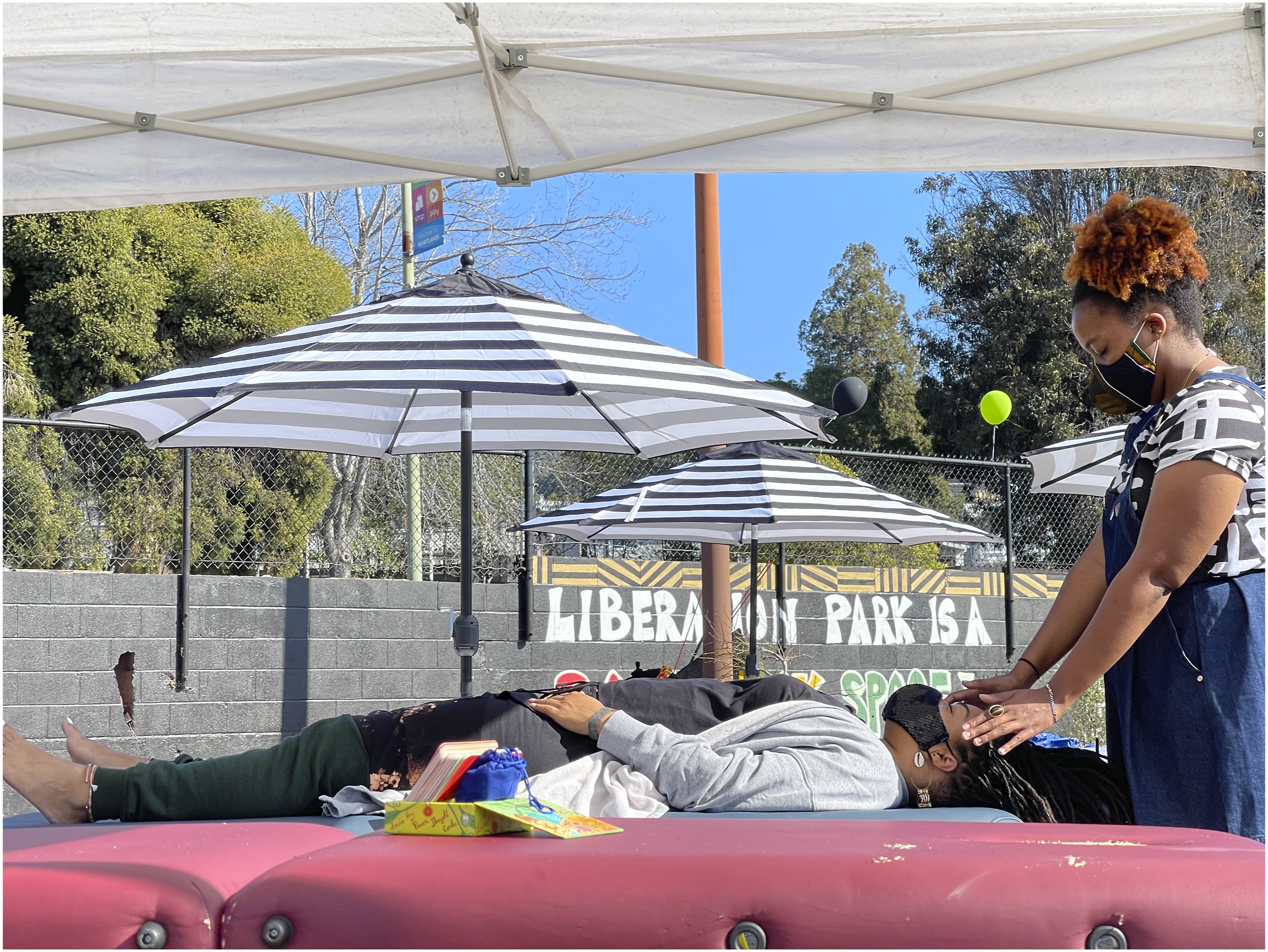
A schematic of the WHTTP care model is demonstrated in Figure 1. Through creating an interdisciplinary leadership collective of community members and alternative medicine integrative health practitioners, and establishing a creative social media presence, FCC grew from a grassroots pop-up model into a community-based integrative health ecosystem fueled and funded by private foundations, fee-for-service contracts, mutual aid, and grassroots donations. By the end of 2023, FCC’s initiatives expanded and consisted of its own community healing centers, integrative medicine pharmacy and apothecary, community healing clinics (see Figures 2 and 3), school-based healing programs, community healer apprenticeship programs, and 1-acre ancestral healing farm (see Figure 4). Freedom Community Clinic’s Whole-Person Healing to the People Model Community Members Receiving Acupuncture and Physical Therapy at Freedom Community Clinic. Source: From Freedom Community Clinic, Used With Permission Community Members Receiving Energy Healing at Freedom Community Clinic. Source: From Freedom Community Clinic, Used With Permission Freedom Community Clinic’s Core Integrative Health Initiatives

Freedom Community Clinic Uplifts Principles of Integrative Health to Address Equity
Freedom Community Clinic’s mission envisions that “successful interventions in integrative health equity must “center the members of society who are most directly and negatively impacted by social injustice”. 13 In all of its initiatives, FCC centers service to racial minorities and immigrant communities. Since 2019, FCC has served over 7500 community members, with 95% of people served identify as a Person of Color and with 85% of services received by Black and/or Latine communities. From initial results of participant evaluations, over 65% of community members served have incorporated integrative and holistic health practices in management of chronic physical and mental health issues. In addition, over 80% noted a decrease in stress, anxiety, and depression after service utilization. Additionally, 75% of clients served have never tried a holistic healing modality before due to financial barriers, racism, and/or distrust. 14
For its satellite and pop-up community clinic services, FCC partners with 70 + institutions, schools, and community initiatives that have strong relationships with and primarily serve racial minorities and immigrant communities including the City of Oakland Department of Violence Prevention, Oakland Unified School District, non-profit organizations, and more. 15 In addition, all FCC sites are centrally located in minority and immigrant communities in Oakland— including West Oakland with the highest number of Black families in the city and the Fruitvale District of East Oakland for Spanish-speaking immigrants. In this way, community members are able to access integrative health services in places where they gather, celebrate, and trust outside of the hospital or clinical setting.
Freedom Community Clinic Promotes Cultural Humility and Integrative Health Equity in Practice
The value of cultural health beliefs and practices in medicine extends beyond understanding a patient’s illness trajectory and treatment. By incorporating tenets of cultural humility within integrative health equity frameworks, healthcare providers can help foster equitable relationships and build bridges among communities that not only face significant health disparities, but also endure strained interactions with the medical system.
Culture is a central principle prominently reflected in FCC’s integrative medicine pharmacy and community apothecary, which carries medicinal herbs from global ancestral healing traditions including Western herbalism, traditional Chinese medicine, Ayurvedic medicine, and ancestral medicines of the Latine, Asian, and African diaspora. 13 Similarly, the 1-acre healing farm grows 30 + varieties of botanical medicines across the global diaspora. Community workshops and individual consultations at both locations allow community members to have hands-on opportunities to learn about herbal medicines from diverse cultural traditions. By functioning as an educational hub for community members of various walks of life, FCC encourages cross-cultural dialogue, promotes health and healing, and supports the well-being of both individuals and the broader community.
Discussion
Specific challenges to the creation and expansion of FCC include funding sustainability, regulatory requirements, and consistent community engagement. Critical factors of success in the midst of these challenges include its interdisciplinary leadership team of integrative health practitioners and community members; engaging social media presence; and extensive public-private partnerships with non-profit organizations, school districts, local governments, cultural associations, and mutual aid groups to address programmatic and operational gaps. Healthcare leaders can apply frameworks of WHTTP and FCC’s interdisciplinary leadership and partnership model to further scale and expand integrative health equity access in local contexts beyond Oakland and the Bay Area.
Conclusion
The future of health and healing for racial minorities and immigrants requires culturally affirming approaches and community-based interventions rooted in integrative health equity. In this way, communities who face significant health disparities are able to receive necessary integrated care and witness how their own cultural practices are invaluable to their health. Investment in community health infrastructure, cultural health, and policies that promote access to holistic, patient-centered care are critical components of this transformation. Freedom Community Clinic is an informative integrative healthcare model that exemplifies how we can work toward a future where healthcare is a vehicle for social justice and where all individuals have the opportunity to achieve optimal health and well-being.
Footnotes
Acknowledgments
The authors thank the staff and community members of the Freedom Community Clinic for their unwavering vision, dedication, and commitment towards health equity and community healing.

Funding
The authors received no financial support for the research, authorship, and/or publication of this article.
Declaration of Conflicting Interests
The authors declared no potential conflicts of interest with respect to the research, authorship, and/or publication of this article.