



Abstract
Background
There is a growing, global awareness and recognition of the important, interdependent relationships between our natural world and human health. Several contemporary health organizations have placed calls to action and emphasize an urgent need for collaboration and interdisciplinary research, education, and clinical work to address the increasing degradation of our planetary and human health. With more research dedicated to nature’s health impacts, health professions schools would benefit by including such training in their programs while also cultivating a comprehensive mind-body health perspective to support both the health of student practitioners and their future patients.
Objective
The present program evaluation investigates a five-day outdoor mini-course covering nature-based health techniques at a medical and dental school in the American Northeast. This unique outdoor course combines nature, creativity, and reflection within the context of modern medicine.
Methods
A concurrent mixed-method design using descriptive statistics, quantitative and qualitative data from students’ anonymous final course evaluations and final reflection projects are evaluated.
Results
Data suggests that students benefitted from their experience during this five-day course. Students provided feedback reinforcing the enjoyment and transformative outcomes gleaned from the course experiences. Students entered the course describing feeling stressed, overwhelmed, and overextended, not uncommon for learners in medical and dental school, and completed the course describing the acquisition of applicable skills, increased attention and mindfulness, creativity, and connection to the natural world.
Conclusions
Students described a positive experience of the course. Several areas of personal and professional development were also described, such as improvements within cognitive domains, enhanced connection with nature, others, and themselves, increased mindfulness, and overall improved well-being. Findings have implications for medical and dental programs on how such innovative training may lean into the work of nature-based care to provide for the whole person.
Keywords
Around the world, people are spending most of their lives indoors, 1 with individuals living up to 93% of their lives inside. 2 The dramatic rise in urban living globally (approximately 55% of the population) 3 indicates that more people are working longer hours away from natural environments (e.g., green open-spaced nature areas and blue water-body spaces) with increased workloads and career-related stress. 4 Being divorced from the outdoors can lead to a plethora of problems, including poor sleep, 5 increased mental distress, 6 and higher exposure to airborne pollutants. 2 Lack of consistent access to nature may ultimately lead to significant declines in the mental and physical health of the general population. Compounding these conditions is the overuse of technology 7 (e.g., technology use at bedtime impacting sleep) which has been further impacted by the COVID-19 pandemic leading to increased internet addition 8 and video game consumption over in-vivo play. 9 All of this is exacerbated by social media’s negative effects on society and healthy development, 10 quickly becoming a recipe for a human health and well-being disaster. Inevitably these individuals will find themselves seeking medical support.
Although our fast-paced and technology-infused modern life makes getting outside and into nature challenging, the population’s current trajectory of increased time indoors can be mitigated. There is a growing, global awareness and recognition of the important, interdependent relationships between our natural world and human health.11,12 In a recent review of the effects of nature exposure on health, Jimenez and colleagues 13 found both protective functions (e.g., mental health, cognitive functioning) and positive outcomes (e.g., improved brain activity and sleep, decreased stress, improved blood pressure and heart rate, decreased anxiety and increased positive affect) associated with nature exposure. As such, several contemporary health organizations have placed urgent calls to action for collaboration and interdisciplinary research, education, and clinical work to address the increasing degradation of our planetary and human health. Such organizations include the Centers for Disease Control and Prevention’s One Health initiative 14 calling for, “… a collaborative, multisectoral, and transdisciplinary approach - working at the local, regional, national, and global levels - with the goal of achieving optimal health outcomes recognizing the interconnection between people, animals, plants, and their shared environment,” 15 and Clinicians for Planetary Health, a group seeking “…to mobilize clinicians and clinicians’ groups around the world, recognizing their importance in protecting our health, their authority as trusted sources of information spanning political and cultural divides, and their reach across geographical contexts, languages, and practice settings.” 38
The inclusion of integrative medicine principles and practices in health professions training and clinical care continues to emerge and reaffirms “…the importance of the relationship between practitioner and patient, focuses on the whole person, is informed by evidence, and makes use of all appropriate therapeutic and lifestyle approaches, healthcare professionals and disciplines to achieve optimal health and healing”. 17 Although the inclusion of nature in this movement is nascent, research is emerging. 16 Various institutions across the country have received funding to examine this novel and important topic: the National Cancer Institute (2016, 2019), the National Heart, Lung, and Blood Institute (2019), and the National Institute for Environmental Sciences (2018, 2019). 16 As more funding is dedicated to studying nature and health, schools have an opportunity to include these findings into their curriculum, educating the next generation of health professionals in ways that address pressing public health needs, as well as student well-being.
The benefits of being outside and in nature are innumerable. From increased attention, 18 enhanced cognitive development, 19 reduced stress, 20 and overall improvement to personal well-being. 21 Positive effects from interacting with nature can be experienced in approximately 120 minutes per week 22 or as little as five minutes a day exercising in a green space, 23 indicating a simple and cost-effective public health prescription. 24 A growing body of research on the health benefits of nature exposure on human well-being is emerging, most notably via practices such as ‘Forest Bathing 1 ,25,26 and other forms of ‘Rewilding. 27 In addition, with the advent of the COVID-19 pandemic in 2020, many people re-discovered the benefits of being outdoors and the mitigating effects that nature connection has on stress and isolation.
Overwhelmingly, current research suggests that medical professionals face high levels of burnout, a trend that includes those currently in training.28-30 Further, recent findings suggest that this high level of burnout may impact the delivery of care, and thus erode patients’ quality of their care. 28 In 2019, the National Academies of Sciences, Engineering, and Medicine, the National Academy of Medicine, and the Committee on Systems Approaches to Improve Patient Care by Supporting Clinician Well-Being, released a comprehensive report targeting how medical systems can tackle clinician burnout, including an entire chapter dedicated to supporting the well-being of medical student trainees. Additional research focusing on the medical student experience discusses the importance of their learning environment in medical school and how positive environments and learning experiences have translated to lower levels of burnout, higher levels of empathy, and less career regret throughout their medical school tenure. 29 Given these findings, especially those focused on creating high-quality, positive school ecosystems, medical schools would be wise to take a vested interest in novel approaches that cultivate their student’s well-being. In doing so, the medical profession would foster a culture of lifelong health and resilience for those committing to a career in medicine, ultimately retaining clinicians and the quality of patient care provided.29,30
Considering the confluence of these events, one of the authors (initials removed for review process) was inspired to create a new, innovative course, making a pivot to the outdoors as a living laboratory and classroom for learners to directly experience the effects of nature on human health. The course also afforded a way to address the ever-growing issues of burnout amongst medical students28-30 and to introduce various practices of mindful nature immersion as a source of resilience and refuge.
Evaluation Purpose
A foundational component of the first stage of the medical and dental training for the University included in the present evaluation is a team-based learning experience focused on current healthcare practice. During five, 10-week blocks first- and second-year medical and dental students participate in a cohort model, learning together in several different courses. Each 10-week block is followed by a 2-week integrated assessment period called the Learning Enhancement and Assessment Period (LEAP). During LEAP, students take an exam and are either required to engage in course content remediation of the previous block’s curriculum or if they pass, participate in an Individualized Learning Opportunity (ILO). ILOs are five-day specialized mini-courses designed to personalize the learning experience. Most students participate in one of the specialized ILOs. ILOs provide the opportunity for students to immerse themselves into unique topics designed by faculty to promote an in-depth exploration of specific curricular content while supporting skill building and considerations for career exploration.
The purpose of this study is to conduct a program evaluation of a new ILO Nature as Medicine: Exploring the Health & Healing Benefits of Rewilding (herein referred to as Nature as Medicine) to better understand medical and dental students’ experiences of the multidimensional aspects of the course, and to share our findings with other educators seeking to develop such programs. Nature as Medicine is an innovative ILO created and launched in 2020 that focuses on the integration of nature and health benefits by offering learners a direct, outdoor experiential approach to nature as a healing force – a nontraditional offering for medical school training. The course foundation is based on learning and practicing Rewilding skills, namely Forest Bathing, as inspired by the Japanese tradition of Shinrin-Yoku. The course also includes an Expressive Art Workshop as a way to explore creativity and to provide students with an example of a therapeutic process where mediums such as drawing, painting, collage, clay work, dance, movement, sound, music, and writing, as well as visualization and body awareness techniques, can be engaged to express emotions. Expressive Art is known to alleviate stress by activating the relaxation response, in turn supporting the immune system functioning. 31
Nature as Medicine provides experiential learning for students in which the following course objectives are covered: 1. Directly experience and learn practices for Rewilding, especially Forest Bathing; 2. Understand the physical and mental benefits that connecting with nature has on human health and healing; 3. Enhance observational skills, which are fundamental to the practice of medicine and dentistry; 4. Learn mindful movement practices known to decrease stress and burnout (e.g., qigong, mindful walking, labyrinth walk); 5. Deepen their appreciation of the natural world; 6. Experience “Expressive Art” as a modality of connecting to and enhancing one’s creativity and intuition; 7. Share their class experiences with course participants.
Together, these direct experiences promote the connection between nature and potential improvements in human health, which may be beneficial to the needs of future patients as well as supporting the health professional student’s well-being. Results from this study may inform other medical and dental school programs, as well as have the potential to be piloted in other health professions schools. Our curricular evaluation answers the following questions: • What do students identify as the strengths and areas for improvement of the course? • What aspects of the course did students identify as providing the greatest benefit? • What outcomes did students describe as a result of the course? • To what extent does the Nature as Medicine ILO demonstrate the importance of integrative care with a specific focus on the healing impacts of nature?
Method
Evaluation Approach and Design
The current curricular evaluation utilized a concurrent mixed-method design to understand medical and dental student perspectives of the Nature as Medicine ILO to examine the course process and effectiveness. Quantitative and qualitative data were collected at the conclusion of the course (offered in the fall/November and spring/June) from five cohorts of students from November 2020 to November 2022. Quantitative data from standard, anonymous ILO course evaluation surveys were collected and analyzed to examine how students rate to what extent the course accomplished stated goals and objectives, suitability of course content, and educational benefits. Qualitative data from course evaluation surveys and final reflection projects were collected and analyzed to identify themes regarding notable course experiences, personal and professional impact, and course feedback on strengths as well as areas for improvement. Of note, the authors who performed the curricular evaluation (SMT, ELW) were not involved with course development or instruction. This study was approved by the University of Connecticut Health Center Institutional Review Board.
Procedures
Upon completion of LEAP, medical and dental students who did not require curricular remediation participated in a five-day ILO. Approximately one week prior to the exam, students selected and ranked their ILO choices, and via a matching process were enrolled in an ILO course. If a student did not select an ILO, they were automatically assigned one. For the Nature as Medicine ILO, class size was set to a maximum of 12 students for the first and second cohorts, then increased to 14 thereafter based on students’ feedback. Students received a syllabus with the course description, objectives, readings and resources, outline of activities, anticipated weekly schedule, assignments, and assessment guidelines. The class met daily in the morning for approximately 3-hours with the exception of the Expressive Art Workshop day where the class met in the morning for approximately two hours and in the afternoon for three hours. All classes were described as experiential and outdoors, with the exception of the Expressive Art Workshop which was conducted indoors. Students were provided recommendations and a checklist for dressing appropriately in the outdoors (e.g., wearing a jacket, sturdy shoes/boots, hat) and were recommended to bring a light day pack to carry items. Walks in nature were on dirt or paved trails. The landscapes explored during the course were local and a short driving distance from the University with access to free parking. Examples of landscapes and walks in nature included a local nature preserve, community walking paths, a labyrinth at a community mindfulness center, and a local museum with hiking trails and outdoor gardens. See Appendix A for supplemental course materials. Upon completion of the course, an optional course evaluation survey was electronically disseminated by the ILO administration staff and completed by 100% of the students in our study. The course evaluation survey was released on the last day of the course and students had up to two weeks to complete the survey. Each student’s 'final course reflection project' was due and emailed to the course instructor on the last day of the course. Final course reflection projects were also presented in person during the final class day. A detailed outline of the class process, aligned with the course objectives follows:
9am – 12pm
• • • • • • •
9am – 12pm
• • • • • • •
9am – 10:30am
• • The class explores the museum grounds which include a sheep flock/pasture, woodland trails (often noting bear scat), and the more built environment of a maintained sunken garden. Depending on the season (Fall or Spring), different flowers and vegetation are present. There is also a pollinator garden, and many times the local Master Gardeners who maintain the plot are present when the class visits and give impromptu lessons on pollinators to interested students. During these activities, students continue the practice of rewilding skills (Objective #3,5). •
Note Afternoon class Also
1:30pm – 4:30pm
•
9am – 12pm
• • Students continue to practice rewilding skills through forest bathing, sit-spot, and mindful walking as practiced by having the experience of walking a large labyrinth. •
9am – 12pm
• • • •
The course was developed and taught by coauthor Dr. Mary P. Guerrera, a Professor Emeritus of Family Medicine who completed fellowship training in Integrative Medicine, as well as training in mind-body medicine and qigong.
Participants
Demographic Information by Class Year for Medical and Dental Students Enrolled in the Nature as Medicine ILO Course, Fall 2020 to Fall 2022.

Data Collection
Course Evaluation Survey
The final course evaluation survey was electronically disseminated to each student in the class through the University to obtain student feedback on course effectiveness. Completion of the survey is optional and 100% of students who participated in the course provided anonymous feedback. The survey included five quantitative questions that were rated on a five-point scale (1 - strongly disagree to 5 - strongly agree). Students were invited to respond to the following five questions: (1) The goals and objectives of the course were clearly stated, (2) The goals and objectives of the course were achieved, (3) The course design was appropriate for the material presented, (4) The lectures/presentations were appropriate for the student level, and (5) The assigned reading was suitable in terms of level and amount. A sixth quantitative question asked about the educational benefit of the final project/paper which was rated on a five-point scale (1 - poor to 5 - excellent). Four qualitative questions were asked to provide anecdotes relating to instruction of the course, course strengths and suggestions for improvement, and course content. Example questions include “Please comment on the quality of instruction in this course. Be sure to specify by name when commenting on a specific preceptor/lecturer” and “Are there topics you would like to see covered in more/less detail?” See Appendix B for the course evaluation survey.
Final Reflection Project
Final course reflection projects provided a summative evaluation of the student’s experience of the course which could be in the format of their choosing. Final reflection projects could include a short exploration or summary of a course topic, essay, poem, artwork of any medium, or other creative venue as discussed with the instructor. Students created a range of types of final reflection projects which included acrylic and watercolor paintings, pencil drawings, collages, photographs, mini-terrariums, needlepoint and cross stitch work, wire sculpture, baked goods, singing of songs, preparation of traditional tea, poems, and essays. See Appendix C for examples of student projects.
Results
The analysis involved using a mixed methodology approach, combining quantitative descriptive statistics and qualitative analysis. Descriptive statistics analysis (means, standard deviations, confidence intervals) for the six, quantitative five-point Likert-type scale questions (strongly agree to strongly disagree) were examined. Qualitative analysis through thematic analysis of the student projects and reflection as well as the four, qualitative open-ended questions from the surveys were conducted. Results are presented by evaluation questions. What do students identify as the strengths and areas for improvement of the course?
On average, students were pleased with the goals and objectives of the course in terms of clearness and accessibility (Question 1; M = 4.78, SD = .48) as well as said goals and objectives being achieved by the end of the course (Question 2; M = 4.78, SD = .48). Students had a strong understanding of what the course would present and were satisfied with the content explored by the end of the course. Further, students were content with the design of the course as related to the presentation of material (Question 3; M = 4.74, SD = .54) as well as the lectures and presentations that were presented by the instructor (Question 4; M = 4.80, SD = .46). Students were pleased with the distribution of material and the way by which the instructor disseminated information (Question 5; M = 4.84, SD = .42). Finally, students were offered a chance to reflect upon their experiences with the final project, which was a hallmark piece of the ILO course, with students noting that on the whole, the project-based learning experience was quite meaningful, (Question 6; M = 4.72, SD = .46). Interestingly, data indicate that over time, students reported higher scores with each semester, revealing that as the course refined and the instructor incorporated student feedback, student satisfaction may have increased (see Figure 1). Nature as Medicine course evaluation data by question type for each cohort class.
Note. 1 = The goals and objectives of the course were clearly stated, 2 = The goals and objectives of the course were achieved, 3 = The course design was appropriate for the material presented, 4 = The lectures/presentations were appropriate for the student level, 5 = The assigned reading was suitable in terms of level and amount, 6 = Please rate the educational benefit of your final project/paper.
Course Strength Themes and Student Quotations.

Note: frequency of mention may exceed the number of students responding.
Course Feedback for Improvement and Student Quotations.
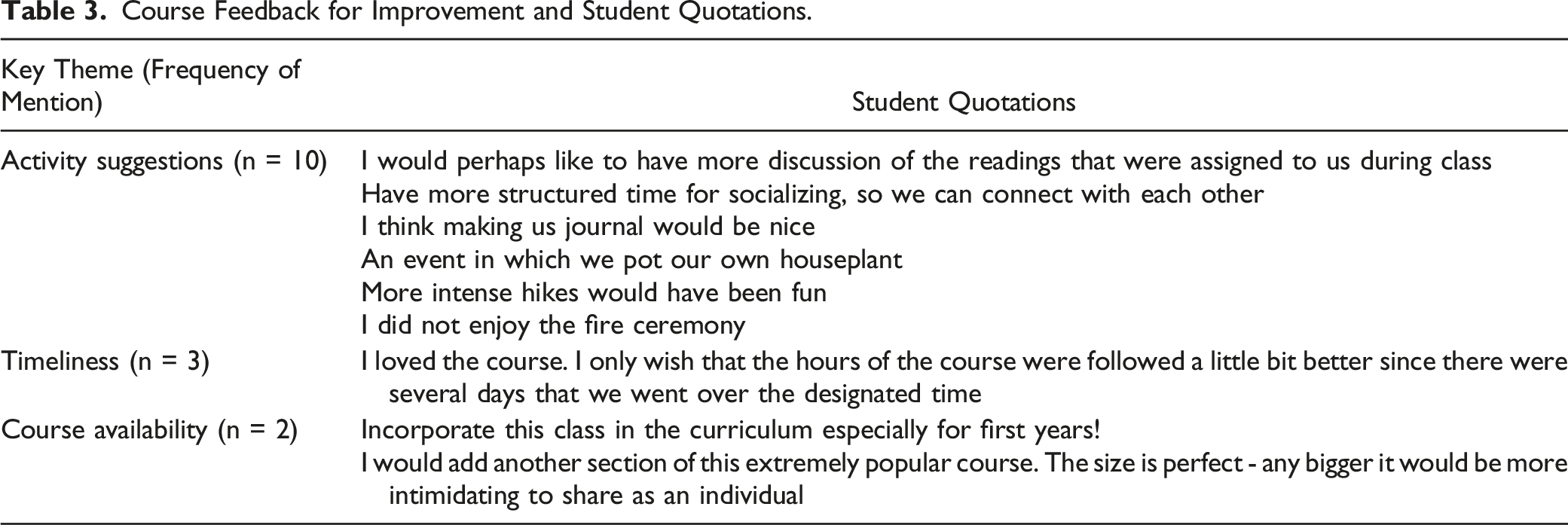
What aspects of the course did students identify as providing the greatest benefit?
Course Experiences and Student Quotations.
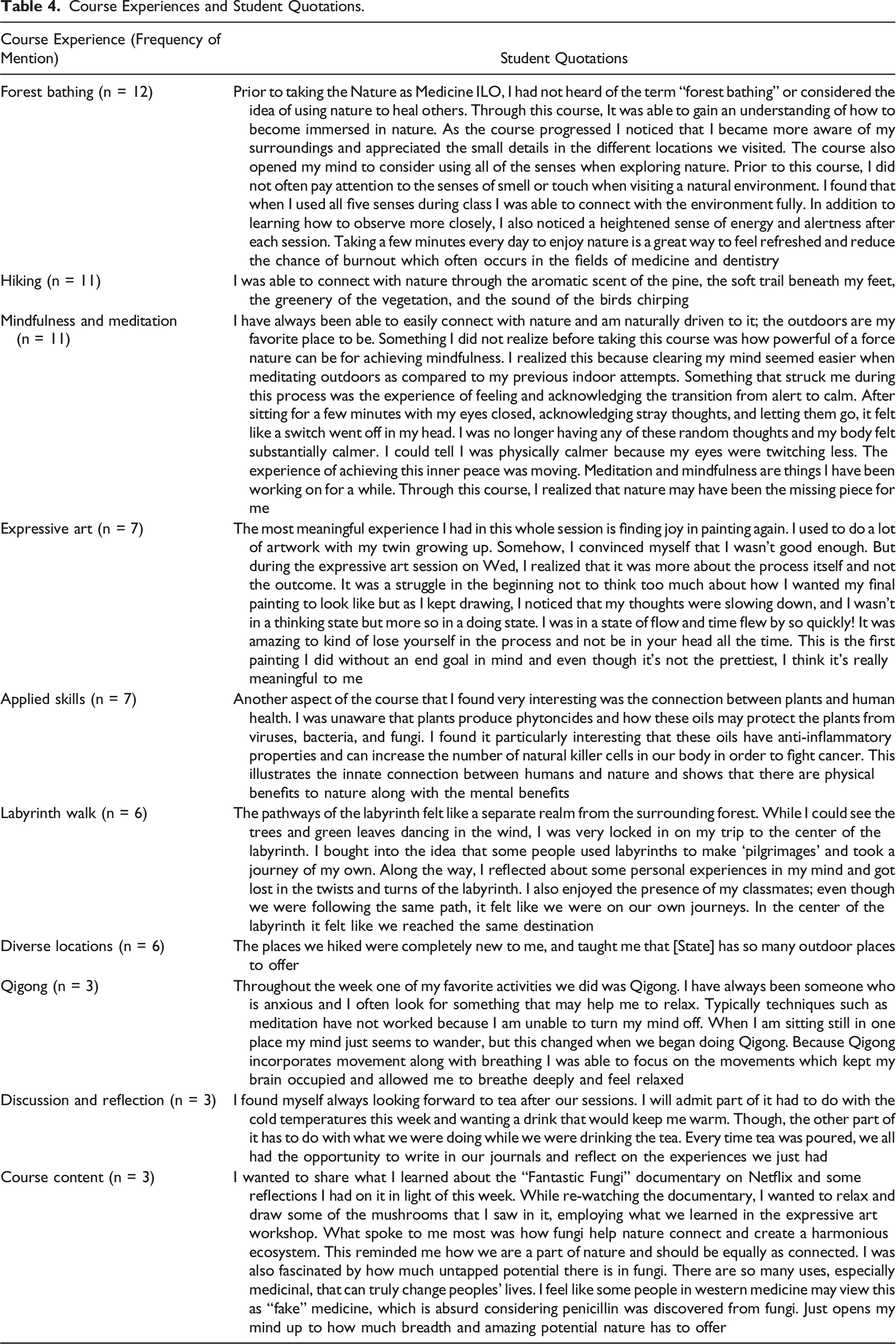
What outcomes did students describe as a result of the course?
Prior to starting the course, student responses revealed two key themes: (a) feelings of stress and overwhelm and (b) feeling overextended and continuously on the go. The rigors of medical and dental school and the completion of their exam period left many students stuck indoors studying, feeling exhausted, and just trying to keep up with demands. Students expressed feeling anxious, that life felt chaotic, and that they were constantly thinking about the future, stuck in tunnel vision – unable to focus on the here and now. After completing the course, students reported impactful outcomes related to connection (n = 53), mindfulness (n = 48), improved cognitive functioning (n = 29), and overall well-being (n = 74).
Course Outcomes and Student Quotations.
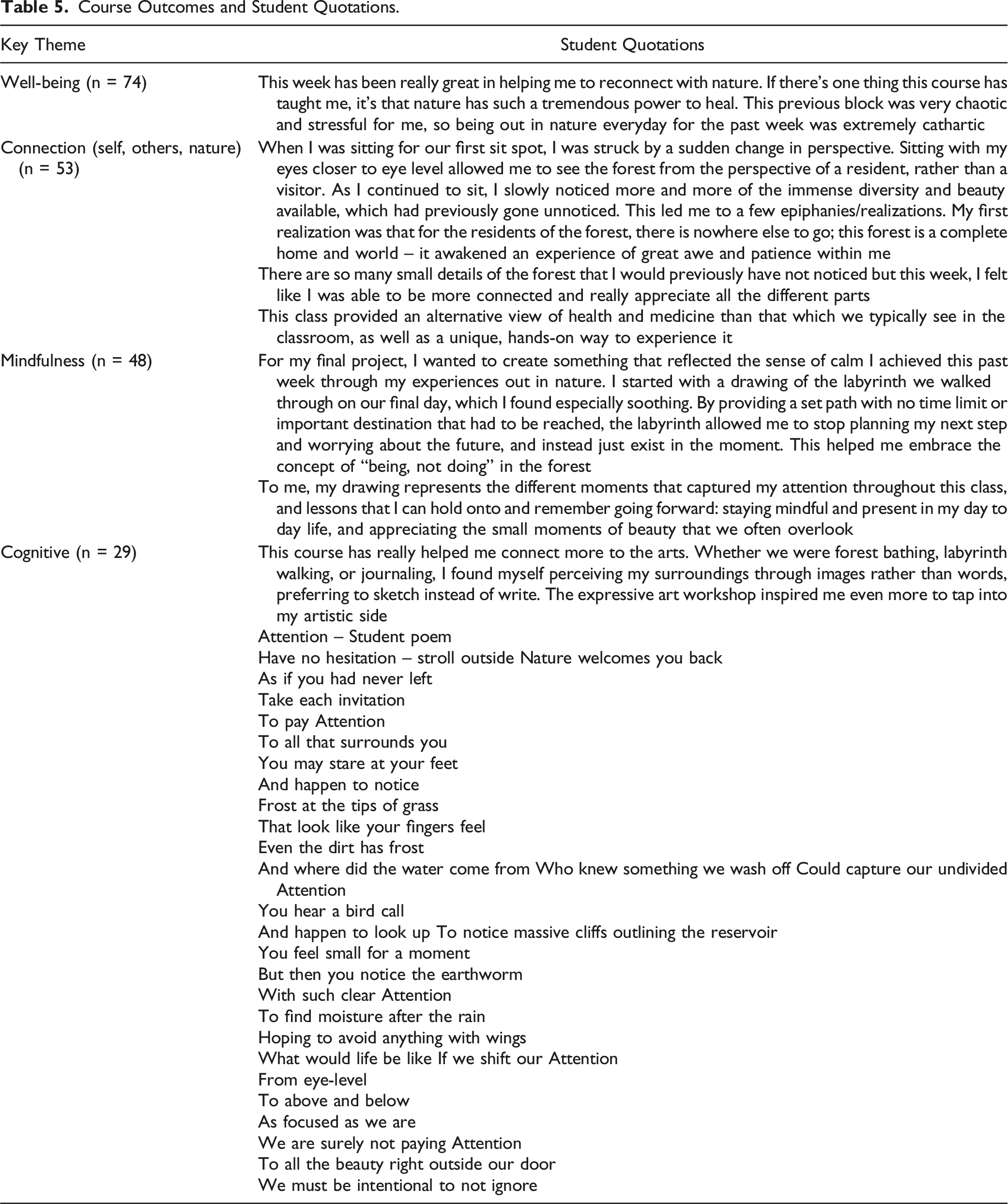
To what extent does the Nature as Medicine ILO demonstrate the importance of integrative care with a specific focus on the healing impacts of nature?
As noted above, students describe applicable skills learned from the course, the personal impact of nature-based experiences, and the importance of including these practices in their practice as medical professionals. Throughout final reflection projects and written responses on the course evaluation survey, students identified the course readings and resources as important links between course experiences and transferring class skills to medical practice. It will be important for future research to address the extent students incorporate nature-based practices into their personal and professional lives after the course ends.
Discussion and Recommendations for Medical, Dental, and Other Health Professions Schools
Data suggest that students benefitted from their course experience during this five-day experience. Given the brevity of the course, the course feedback was highly rated, revealing the impact made over a brief period was quite substantial. Of note, during the study period, ILOs were generally rated high. Aggregated student ILO satisfaction for the research period ranged from 3.40 to 5.00 (n = 1418; m = 4.58) across the six course evaluation questions reported above on 18 different ILO courses. For all questions assessing the content of the course, the way the subject manner was explored and communicated (i.e., interactive) down to the final project (i.e., experiential), students ranked the course highly across all marks. Consistently, students provided feedback reinforcing the enjoyment and transformative outcomes they took from the course experiences. Students entered the course describing feeling stressed, overwhelmed, and overextended, not uncommon for students in medical school,27-29 and left the course describing the acquisition of applicable skills, increased attention and mindfulness, creativity, and connection to the natural world. Medical and dental students are often required to engage in rigorousness and memory-based skills in their training; 32 this is especially true for the students included in this evaluation who are completing the ILO after a 10-week semester and comprehensive exams. Perhaps the integrative, experiential, and reflective nature of the course and assignments provided students with the necessary respite and healing often associated with nature-based healing strategies.18-21
Lessons learned from one of the author’s (MPG) generative experience of offering the course to all five cohort classes over the past three years have led to the following ideas for further development. First, considerations for enhancing the facilitation of the course are provided. The course may benefit from including additional faculty facilitators to expand the breadth and diversity of the learners’ experience as well as expand the capacity to offer more than one course per LEAP period given students self-reporting an increasing desire to enroll. Since students reported high levels of enjoyment in the course, consider inviting near-peer, co-facilitators, i.e., third or fourth-year students who completed the course to return. The addition of student co-facilitators may provide the added benefit of their capacity to share perspectives and methods for maintaining nature connections as part of self-care and well-being strategies. Second, since students expressed interest in incorporating nature-based practices into their medical practice, the course may benefit from explicit guidance on how to prescribe these strategies to future patients. Third, considerations for environments and activities are provided. Exploring new locations to host the course can expand options and the range of biodiversity offered during the classes, such as locating local greenhouses or indoor gardens for options during extreme weather conditions. To bring the expressive art workshop outdoors, locate off-campus and possible outdoor venues to host this workshop. Specifically at our current university, consider collaborating with the University’s “One Health” and/or botanical and environmental faculty to explore curricular synergies and scholarship opportunities. Another activity to consider would be adding an animal-assisted therapy session. Lastly, to understand the long-term impacts of the course, it would be beneficial to develop additional evaluation tools and follow-up assessments (6, 12, or more months) for longitudinal analyses. It will be important to understand to what degree students integrate and prescribe nature-based principles into their professional practice. Additionally, understanding the potential dual-health benefit to both students and their patient’s physical health and mental well-being from engagement with nature-based practices will be critical to capture.
Due to the overall well-received and positive outcomes of the course, the authors wish to share these preliminary findings and course materials with other health professions educators interested in developing or piloting such a program at their schools. We feel such collaboration is especially important in light of the urgent need to implement effective ways of addressing the alarming and rising rates of burnout, compassion fatigue and detrimental effects of moral injury on the next generation of health professionals entrusted to our lineage of healing.33–38
Limitations
Several limitations exist for this course evaluation. Students who participate in the Nature as Medicine ILO are self-selected. The course is not a requirement for all medical and dental students, and this selection bias may lead to inflated satisfaction and perceived outcomes due to the student’s preference for the course. Additionally, the course is not offered to students who need to remediate previous required course content. Students enrolled in the course have demonstrated academic success in their first- or second year of medical or dental school. Though many students described experiencing anxiety, stress, and continuous studying from being in school, this evaluation does not include the perspective of students who are struggling academically and the possible outcomes this course may have on that population of students. A control group of students was also not included. The course curriculum also varied at times across and within each of the five cohorts due to such factors as weather conditions, spontaneous encounters with beings in nature, and students' illness symptoms. For example, class locations varied at times with 1-2 of 5 locations based on weather. Though this is considered a limitation for research purposes, the course’s flexibility is a strength, and differences in environments did not appear to impact course satisfaction. One limitation of the quantitative analysis in this study is the use of descriptive over inferential statistics. This, taken with the relatively small sample size, as well as the specific experience of the medical and dental students from a large, suburban university in the American Northeast may also impact the generalizability of the findings.
Conclusion
In short, medical and dental students who have participated in the Nature as Medicine ILO describe a positive experience of the course. Several areas of personal and professional development were also described. Students noted improvements within cognitive domains such as increased focus, creativity, curiosity, motivation, and perspective; enhanced connection with nature, others, and themselves through appreciation of nature’s benefits, nostalgia for childhood experiences in nature, and connecting benefits of nature to medical practice; increased mindfulness through grounding in sensory experiences within nature and broadly enjoying the process over the outcome; and improved well-being through feelings of calm, gratitude, healing, and notably personal transformation. This preliminary evidence provides a compelling argument for the importance of offering such a course to medical and dental students. Still, it will be important to examine the impacts of the course on medical and dental students across various schools to obtain a representative understanding of course outcomes. Future program evaluations would also benefit from understanding if and how course experiences may vary based on environment (e.g., American South, American Northwest). Additionally, future research would benefit from examining the extent to which students incorporate nature-based practices into their personal lives after the course ends, and to what extent students incorporate nature-based strategies into their professional practice.
Supplemental Material
Supplemental Material - Nature as Medicine and Classroom: Evaluating an Innovative, Outdoor Course for Medical and Dental Students
Supplemental Material for Nature as Medicine and Classroom: Evaluating an Innovative, Outdoor Course for Medical and Dental Students by Sierra M. Trudel, Emily L. Winter and Mary P. Guerrera in Global Advances in Integrative Medicine and Health
Footnotes
Acknowledgements
We would like to express immense gratitude to the First Nations peoples of the Tunxis and Sicaogs tribal communities who have stewarded the land for generations for which this project took place. The authors also thank the following organizations for maintaining open, public access to the natural environments we visited within our local communities: West Hartford Reservoir, Hill-Stead Museum, Copper Beech Institute, McLean Wildlife Refuge, and Avon Fisher Meadows.
Declaration of Conflicting Interests
The author(s) declared no potential conflicts of interest with respect to the research, authorship, and/or publication of this article.
Funding
The authors received no financial support for this research, authorship, and /or publication of this article.

Supplemental Material
Supplemental material for this article is available online.
Note
References
Supplementary Material
Please find the following supplemental material available below.
For Open Access articles published under a Creative Commons License, all supplemental material carries the same license as the article it is associated with.
For non-Open Access articles published, all supplemental material carries a non-exclusive license, and permission requests for re-use of supplemental material or any part of supplemental material shall be sent directly to the copyright owner as specified in the copyright notice associated with the article.
