




Abstract
Regardless of its critical role in driving socio-economic development, Malawi has yet to transition from basic energy access to productive use. Therefore, this study investigated barriers that constrain renewable energy adoption for productive use in Lilongwe, Blantyre, Mzuzu, and Mangochi. The study used a mixed approach to achieve the study objectives by using structured questionnaires, key informant interviews, focus group discussions, and literature review methods. The findings revealed that the country experiences an average global horizontal irradiance of 5.8 kWh/m2/day and 2138 to 3087 h of sunshine annually, hydropower potential of 1670 MW, including 22 small hydro sites with capacities of between 5 and 2, 250 kW, average wind speeds of 4 to 5 m/s, and geothermal resources (<30→70°C). Wood-based biomass is becoming scarce due to deforestation, but the cities of Lilongwe, Blantyre, Mzuzu, and Zomba generate 553 tons/day, 435 tons/day, 60 tons/day and 52.5 tons/day, respectively. Malawi's grid electricity system remains dominated by hydropower (>90%), and regardless of its vulnerability, it accounts for 80.1% of energy used for productive use, while solar and biomass account for 1.7% and 6.2%, respectively. However, some SMEs use multiple energy sources to cope with the unreliability of the energy supply. Awareness of RE resources is skewed toward solar (29%) and solar-hydro combinations (50%), with wind recognised by only 1%, and the awareness of biogas, gensets, geothermal, and battery storage was at 28.6%, 26.5%, 12.2%, and 6.1%, respectively. A review of 32 RE systems shows 74% are small (10–100 kW), only 56% are fully functional, and just 14 support energy-intensive activities. Key constraints include high energy use costs, installation costs, and unreliable supply at 18.4%, 11.7%, and 11.7%, respectively. Strengthening financing, technical capacity, system design, and policy coordination is essential to scale RE-driven PUE, improve reliability, and support SME growth and national development goals.
Introduction
Background to the study: energy access and productive use
It is well understood that energy is a catalyst for socio-economic development, and this has attracted global interest in the concept of productive use of energy (PUE) (Terrapon-Pfaff et al., 2018; Smith et al., 2019; Lukuyu and Stima, 2021). While there is no universally accepted definition for PUE, it is widely understood to refer to the application of energy for commercial, agricultural, and industrial activities that help users generate income and transform lives and local economies (Terrapon-Pfaff et al., 2018; EnDev, 2020; Pueyo and Hanna, 2015; Practical Action, 2019). However, the World Economic Forum, the Global Environment Facility (GEF), and the Food and Agriculture Organization (FAO) definition for PUE emphasises on using clean and renewable energy (RE), especially in developing countries (World Economic Forum, 2025; Cabraal et al., 2005). Therefore, the emphasis of this definition is on RE to drive community economic activities (IEA, 2022). This definition aligns well with developing countries in Sub-Saharan Africa (SSA), such as Malawi, where energy access in rural areas is very low (Ratnayake, 2015; Buckland et al., 2017) but RE resources are available in abundance. In this study, the terms “PUE,” “productive applications,” and “energy income-generating activities” are used interchangeably. PUE can occur at different levels in a community, from household enterprises to large-scale community productive infrastructure, including irrigation schemes and cold storage centers for milk cooling (ESMAP, 2019). The application of energy for productive use hinges not only on the availability of energy but also on its suitability, reliability, and affordability, characteristics that are mostly lacking for power supply in Malawi and many countries in the SSA (ESMAP, 2019; EnDev, 2020; Ratnayake, 2015).
Over the years, countries, Malawi inclusive, were more focused on increasing access to energy, and the term “universal access to energy” was adopted to signify a desired outcome of their policies in line with Sustainable Development Goal Seven (SDG 7) and Sustainable Energy for All (SE4ALL) (Dagnachew et al., 2023; Shell Foundation, 2025; Lukuyu and Stima, 2021; Lecoque and Wiemann, 2015). Malawi is no exception, as successive national energy policies have focused on universal energy access (Eales, 2018; Frame et al., 2019). However, PUE has largely been overlooked in the country (Lukuyu and Stima, 2021; World Bank, 2023; Shell Foundation, 2025). Evidence around the globe indicates that expanding energy access is not enough to support the achievement of the desired economic targets. It is crucial that energy supply contribute to economic growth, and many countries around the globe are shifting in this direction (Dagnachew et al., 2023; Lukuyu and Stima, 2021). For example, energy may support various productive activities, such as irrigation, manufacturing, and refrigeration (Dagnachew et al., 2023; CREEC, 2023; Broto, 2024).
Studies globally, in SSA, have reported that linking energy supply to PUE significantly improves income generation. However, PUE remains underdeveloped in the region due to various limitations, including inadequate power generation capacity, unreliable power supply, and unaffordability of energy to low-income households (Vrba, 2024; Reuben et al., 2021; CREEC, 2023; World Bank, 2023; Buckland et al., 2017). Many of the countries in SSA also lack the technical capacity and strong policies and institutions required to drive the adoption of PUE (Ehimen et al., 2023; CREEC, 2023; Buckland et al., 2017). In East Africa, productive use of energy is gaining recognition, with Kenya adopting integrated development strategies that link renewable energy-based minigrids to innovations, such as agro-processing (Pasqualotto, 2024). In Rwanda, where solar energy is extensively used in the agriculture sector, studies have shown that solar irrigation has a potential three-year payback period (Muza and Thomas, 2024). Studies in Uganda and Tanzania report success stories on the potential of renewable energy-based minigrids and biogas systems in supporting economic activities, such as agriculture, in rural areas (Mugagga and Chamdimba, 2022; Okika et al., 2025; Mkiramweni et al., 2005). In Malawi, while earlier national energy policies did not specifically prioritise PUE, the Government of Malawi (GoM), through the Malawi Growth and Development Strategy (MGDS) and the Malawi 2063 Agenda, has acknowledged the importance of energy in driving socio-economic development. However, the national policies do not adequately support upscaling PUE.
Global RE market growth and dominance of solar photovoltaic energy
The global RE market has undergone unprecedented expansion over the past decade, driven by policy commitments to decarbonisation, technological innovation, and sharply declining costs for renewable technologies (Khaleel et al., 2024; Savio et al., 2025). This growth not only helps to increase the share of RE in the global energy mix but also creates an enabling environment for accelerating productive economic activities in developing countries. Worldwide installed renewable generation capacity more than doubled between 2015 and 2024 as solar photovoltaic (PV) and wind energy emerged as the dominant contributors to new capacity additions (GlobalData, 2025). Renewables accounted for over 92% of all new power capacity added in 2024, with solar PV alone responsible for most of this growth (IRENA, 2025). Total renewable installed capacity is projected to continue its rapid acceleration, with global renewable power capacity forecasted to surge from roughly 3.4 TW in 2024 to over 11 TW by 2035, led by solar PV and wind energy technologies (GlobalData, 2025). This strong upward trajectory reflects a growing global consensus on the economic and environmental benefits of transitioning away from fossil fuel-based generation and decarbonising the energy sector.
Solar PV energy has become the fastest-growing component of the world's electricity mix, significantly outpacing other generation technologies (Savio et al., 2025). In 2024, global solar PV installations reached record levels, with approximately 597 GW of new solar capacity added, a roughly 33% increase over 2023, driving total global PV capacity well beyond 2 TW (SolarPower Europe, 2025). Annual additions in 2025 are expected to be similarly strong, with some projections indicating installed PV capacity could exceed 600 GW, propelled by continued cost reductions, supportive policies, and rapid deployment across both utility-scale and distributed segments (SolarPower Europe, 2025; IEA PVPS, 2025). By the end of 2026, global cumulative PV capacity is forecast to approach 2.8 TW, with longer-term models suggesting a trajectory toward multiple terawatts of installed solar capacity within the next decade. This rapid growth in the development of PV technology presents an opportunity for developing countries, such as Malawi, where limited access to energy continues to constrain economic growth. With PV technology prices declining around the globe, it will become easier to deploy decentralized energy systems to meet the energy needs of productive users located in rural areas. With these developments, developing countries are required to make strategic decisions, either to continue with a grid-focused approach or adopt a decentralised path (Ratnayake, 2015). On the other hand, a decentralised approach for solar development presents opportunities to support productive activities for small and medium enterprises (SMEs) located in rural areas while also strengthening national energy security and reducing the use of imported fossil fuels, which drain the national forex. However, developing countries need to carefully analyse the decentralised approach for solar energy development, considering the past challenges encountered, including sustainability challenges (Frame et al., 2019).
Malawi economy, energy access and productive use situation
Malawi is among the least developed countries globally and has an agro-based economy, with agriculture employing 70% of the population and serving as the main source of forex and contributor to the Gross Development Product (GDP). Despite this, the agriculture sector consumes only 25% of electricity generated (Chipula et al., 2020). Amidst climate change, households in both urban and rural settings are forced to diversify their source of livelihood by, among other things, operating SMEs, informal businesses, and micro-enterprises (World Bank, 2023). However, climate change, apart from affecting agriculture due to droughts and flooding, also severely impacts energy in Malawi, where more than 90% of power generated is hydro, mainly generated from the Shire River (McCauley et al., 2022; Eales, 2018; Gondwe et al., 2021). In Malawi, just like in many other low-income countries, access to electricity remains very low, with less than 25% of the population connected to the grid (McCauley et al., 2022; Reuben et al., 2021). Unreliability of power supply, coupled with unaffordability of power for low-income households, creates an unfavourable environment for business growth (Vrba, 2024; Kaunda, 2013). Businesses have resorted to using diesel generators to mitigate the impact of power outages on their businesses. However, such an alternative is not cheap, and the country periodically experiences oil crises due to a lack of foreign currency (World Bank, 2013). Increased cost of energy usually increases the cost of production and makes their goods and services less competitive on the market. This deters new investment in the country and prevents the existing businesses from expanding.
Malawi's energy sector is characterised by low electricity access, heavy dependence on hydropower, and increasing supply unreliability, which together constrain the ability of energy to support structural economic transformation (GoM, 2019; McCauley et al., 2022; Ehimen et al., 2023; Buckland et al., 2017). While national efforts over the past decade have prioritised expanding electricity connections in line with SDG 7, this access-oriented approach has not translated into widespread PUE, particularly among SMEs (Dagnachew et al., 2023; Lukuyu and Stima, 2021). As a result, energy provision in Malawi largely supports basic household consumption rather than income-generating and value-adding activities that are essential for employment creation and economic growth (Terrapon-Pfaff et al., 2018; Smith et al., 2019). Existing studies and policy frameworks acknowledge the importance of PUE, yet empirical evidence on how energy access, affordability, reliability, and RE options interact to influence productive applications remains limited, especially in low-income and climate-vulnerable contexts (World Bank, 2023; Shell Foundation, 2025).
RE potential and utilisation challenges in Malawi
Malawi is endowed with abundant RE resources, including solar, hydro, and wind (Taulo et al., 2015), which have the potential to significantly enhance the productivity of businesses (Chipula et al., 2020; Reuben et al., 2021). In line with this potential, the GoM and development stakeholders seek to upscale the use of RE technologies to address energy challenges and achieve universal access to energy (Hara, 2021; GoM, 2019). Among other strategies, the 2018 National Energy Policy (NEP) states that the government will promote the development of RE sources to meet the national goal of universal access to affordable, reliable, and sustainable energy (Ehimen et al., 2023; GoM, 2019). Nevertheless, despite this considerable potential, especially for solar energy and hydro, RE remains largely underutilised for productive use. There are many bottlenecks to the adoption of RE sources for productive applications; chief among them are lack of awareness of multiple RE sources, traditional beliefs, lack of technical expertise to develop, operate, and maintain RE systems, and high upfront costs (Lecoque and Wiemann, 2015; Hara, 2021; Lukuyu and Stima, 2021; Dauenhauer et al., 2020). The six solar villages with capacities ranging from 20 to 25 kW were developed in 2004 by the government for community use and provide a critical example of how such bottlenecks hinder RE development (Broto, 2024). Almost all the solar villages failed to reach their lifespan, with some abandoned in less than five years (Frame et al., 2019; Broto, 2024). However, lessons have been learned, with some RE sources, such as solar and small hydro, now gaining prominence. Moreover, the cost of solar is declining (Walwyn and Hanlin, 2022; Frame et al., 2019), making it more attractive to both users and investors. However, the country is still struggling to transition from basic energy access to PUE. This underscores the need to critically examine how the country can move beyond using energy for lighting and household use to supporting critical economic activities. Currently, the literature lacks a context-specific study that examines why abundant RE resources are not effectively being exploited to support productivity in Malawi (Lecoque and Wiemann, 2015; Reuben et al., 2021).
Regulatory environment and other barriers to advancing PUE
Creating a suitable environment for advancing PUE demands adopting the friendly national policies and regulatory frameworks (Smith et al., 2019). The GoM adopted various policies and strategies, recognising that energy access is an enabler for achieving national socio-economic development targets, and some of these are the Malawi 2063 Agenda, the National Energy Policy (2018), the Micro Small, and Medium Enterprises (MSMEs) Policy of 2019, and the RE Strategy of 2017. Through these policy reforms, the GoM is working to improve the market for increased participation of the private sector, which has seen an entry of many IPPs into the power market (JICA, 2021). For instance, ESCOM used to monopolise the power market, but in 2020 the government unbundled it to create EGENCO and ESCOM, with the latter focusing on power transmission distribution, while the former is mainly focused on power generation. Many IPPs have entered the market, and many others have shown willingness to invest in power generation. Regardless of improving the regulatory environment, major challenges that hinder the adoption of PUE still exist. All the policies and strategies do not explicitly define PUE nor provide targets and means for tracking progress. The country also lacks proper regulatory frameworks for governing PUE (Smith et al., 2019); thus, regardless of this potential to generate more revenue, SMEs tend to face the same tariff structures as residential consumers. With a lack of proper regulations, PUE efforts are fragmented and mostly driven by donor-funded projects, leading to limited success. Apart from policy and regulatory challenges, progress towards promoting PUE of energy is challenged by socio-economic barriers, such as high poverty levels (i.e., about 75% of the population), lack of technical and financial skills, and cultural beliefs that hinder the participation of women in energy-intensive and high-capital businesses (Smith et al., 2019; Shell Foundation, 2025; Dauenhauer et al., 2020; Buckland et al., 2017). Additionally, limited access to capital is blamed for constraining the adoption of PUE (Banda-nyirenda et al., 2024; CREEC, 2023). Usually, access to finance remains very low, partly due to high interest rates and the requirement for collateral, which most of the low-income households do not have (Ndala, 2019; Banda-nyirenda et al., 2024; UOMA, 2020).
Aim and scope of the study
Regardless of abundant RE and the unreliability of grid power in Malawi (Buckland et al., 2017), the application of RE sources, especially solar, remains very low. This gap underscores the need for undertaking a systematic investigation regarding opportunities and challenges shaping the adoption of RE-driven productive use. Previous studies in Malawi have investigated RE resources and access but have not managed to systematically analyse why, regardless of the abundant RE, the adoption for productive use remains limited. In addition, previous studies have failed to integrate socio-economic bottlenecks to RE adoption for productive use with technical system issues. Therefore, this study is addressing the gap by linking energy resource availability and technical system issues, SMEs’ awareness, institutional capacity, regulatory environment, and socio-economic factors.
The research was conducted in the districts of Lilongwe, Blantyre, Mzuzu, and Mangochi in Malawi, which provided the required representation mix of urban and rural communities in the country. This geographical coverage enabled the study to capture diverse energy applications based in different settings with varying socio-economic characteristics. Specifically, the study sought to generate empirical evidence on energy accessibility and the associated challenges, the potential for transitioning to RE for productive use, and the perceived barriers, policy coherence, institutional capacity, and PUE financing. By engaging a diverse stakeholder, including productive energy users, equipment suppliers, universities, technical colleges, Non-Governmental Organisations (NGOs), the Malawi Energy Regulatory Authority (MERA), and the Electricity Supply Corporation of Malawi (ESCOM), the paper provides a comprehensive understanding of the status of PUE in Malawi. In addition, the paper draws lessons for advancing PUE in Malawi from other regional countries, which have made some progress in areas such as policy, institutional capacity, and financing mechanisms relevant to advancing PUE.
Literature review
Transitioning from basic energy access to PUE is an important area for developing countries, such as Malawi, which are still struggling to achieve universal access to energy but remain under-researched. Therefore, this literature review is aimed at synthesising the existing literature covering the following domains: The conceptual and empirical connection between the role of PUE driving socio-economic development and energy access; the technical and design innovations that help to optimise the application of RE systems for productive use; and the key bottlenecks to transitioning from basic energy access to PUE in the SSA region and Malawi, specifically.
From basic energy access to productive use as a socio-economic development catalyst
PUE is not properly addressed regardless of its role in driving socio-economic development in developing countries. The concept of PUE proposes moving beyond basic energy access and utilisation but should consider the application of energy for income-generating activities, which eventually helps to drive socio-economic development (Dagnachew et al., 2023; World Bank, 2023). The literature has provided adequate evidence that linking energy access to productive activities, such as irrigation agriculture and manufacturing, helps to create many socio-economic opportunities for the local population (Terrapon-Pfaff et al., 2018; Smith et al., 2019). However, energy access remains a challenge in many SSA countries, and grid and off-grid solutions do not automatically translate into widespread PUE adoption (Lukuyu and Stima, 2021; Shell Foundation, 2025). Currently, the focus of many developing countries is on achieving universal access to energy, a target that most of them will not achieve by the year 2030. Apart from limited grid connectivity and lack of off-grid solutions, this energy access gap is attributed to lack of affordability, reliability, and suitability for productive use. In the SSA region, many studies have reported that SMEs are forced to rely on diesel generators due to the unreliability of the power supply, but this alternative is not cheap, and it contributes to reduced business profitability (Reuben et al., 2021; Vrba, 2024). Therefore, it is very crucial that stakeholders consider the quality and affordability of energy access for productive use.
RE applications, design and system optimisation
Amid grid connection limitations in developing countries, RE sources offer an opportunity for decentralised power generation to meet the energy needs of off-grid communities. Solar energy technology is more abundant globally and, due to its modularity and declining costs, has emerged as the most important renewable technology for this purpose. Studies have reported the viability of using solar energy to drive loads for productive use, such as solar-powered irrigation systems, which have a multiplying effect on agriculture yield (Shehzad et al., 2024). DC solar power systems have also positively impacted productivity through milling, grinding, refrigeration, and manufacturing (El-Khozondar et al., 2023). However, solar and other renewable sources like wind are intermittent and still demand higher initial capital costs (Savio et al., 2025). Therefore, their design and optimisation are critical for achieving a reliable power supply for productive loads.
The literature documents multiple RE systems, which failed partly due to technical issues. This underscores the importance of optimisation of RE systems and intelligent load management, which according to Bilal et al. (2021), refers to managing the load demand by shedding loads in critical situations where the demand is higher than the total generation to avoid system failure. Proper system sizing also demands proper load forecasting, which can be categorised into three: short-term, which focuses on trend extrapolation; medium-term, which applies econometric methods; and long-term, which employs end-use techniques (Saleem and Abas, 2025). Energy systems that are poorly sized usually fail to meet the desired power output; as a result, users complain about unreliability. This is evidenced by the failure of the first six solar energy systems installed in various communities in Malawi by the GoM. Regardless of this outcome, the impact of smart grid technologies on sustainable urban development documented around the globe shows that RE systems can be optimised for application (Khaleel et al., 2024). Careful system design is needed to handle specific demands, such as motor starting currents and daily energy profiles. The design can be aided with various RE models, including the System Advisor Model (SAM) (Alkhazmi et al., 2025).
Intelligent system and load design helps to match the energy system to the productive activities in an area; disregarding this can lead to systems that fail to support local economies. Research shows that opting for DC microgrids or direct current (DC) systems improves efficiency and reduces costs where DC loads dominate, as avoiding power conversions reduces losses (El-Khozondar et al., 2023). A case study on DC off-grid solar PV systems for fishing boats at Gaza Seaport illustrates how systems tailored to the local environment can provide reliable power for productive activities (El-Khozondar et al., 2023). Furthermore, smart load management systems are encouraged to prioritise productive loads during times of inadequate supply or high cost. For example, Butt et al. (2021) propose that a home load management system for managing limited power can prioritise income-generating activities, a principle similar to Malawi's load-shedding schedule that spares vital industries. In under-resourced regions, reliability of power supply can also be enhanced through the development of hybrid energy systems that integrate multiple energy sources and energy storage systems in under-resourced locations (Savio et al., 2025). While in Malawi most areas receive abundant solar resources, during winter, solar PV systems produce inadequate power, and most users complain about system failure to meet daily energy demand. This too is a result of poor system design, where seasonal solar availability is not considered by technicians who lack technical expertise. However, the integration of multiple energy systems may also help to improve the reliability of the power supply.
Globally, research continues to improve solar PV efficiency. One advancement is the development of hybrid photovoltaic/thermal (PV/T) solar collectors, which generate both electricity and useful heat, improving overall energy yield for applications such as crop drying and irrigation (Nassar et al., 2023). However, system performance is also affected by local conditions. For instance, dust accumulation during dry seasons can significantly reduce PV power output (Abdunnur et al., 2023), making periodic panel cleaning a critical maintenance requirement.
Constraints to RE-driven PUE in Malawi and the SSA
Regardless of abundant RE resources, technical potential, and falling prices of RE technologies, the adoption of PUE in SSA remains limited. The literature has documented various barriers that hinder the use of renewable energies for productive use. High upfront capital costs are the most cited barrier that hinders the adoption of RE for productive use (Lecoque and Wiemann, 2015; Dauenhauer et al., 2020). The SMEs lack the financial muscle to purchase these technologies, and lack of access to financing exacerbates the challenge. The regulatory environment is also not conducive for RE investment, as tariff structures sometimes fail to differentiate between basic and productive energy users. With no incentives, it is difficult to attract the investment required to develop the RE resources.
Improving reliability and efficiency requires proper optimisation of RE systems apart from intelligent load management. The literature reveals that integrating two or more RE sources via hybrid energy systems and integrating energy storage and load management systems, among others, also is more critical to achieving the desired reliable power supply from the renewable energies (Savio et al., 2025). This also requires the utilisation of suitable system modelling tools, which requires technical expertise. Unfortunately, lack of local technical expertise required to design, install, maintain, and operate the RE systems is a critical challenge in developing countries, especially SSA, including Malawi. Lack of the required skills is severe in rural and off-grid communities, where the demand for decentralised energy systems is very high (Hara, 2021). For example, the six solar villages developed in Malawi failed (Frame et al., 2019) due to a lack of skills required to maintain and operate the systems, apart from a lack of community ownership. The systems were handed over to the community as a political gift, with little consideration for sustainability. This challenge is exacerbated by a lack of awareness of various RE technologies and how they can meet energy demand for various activities, including power and heat (Lukuyu and Stima, 2021).
National policies have mainly focused on increasing access to energy, the target being 2023. While these policies have mentioned the role of RE in meeting universal energy access and the need for supporting productive activities, they lack specific targets, regulatory frameworks, and implementation strategies for PUE (Smith et al., 2019; Ehimen et al., 2023).
Synthesis and research gap
The literature has documented many success stories confirming that RE has the potential to drive productive activities in developing countries, such as Malawi. However, success also depends on designing efficient systems that support loads for productive use. The literature also highlights socio-economic challenges that hinder the adoption of RE technologies. However, there is a knowledge gap, as many studies have not considered all these issues together in a specific country context. In Malawi, no comprehensive study has been conducted to measure RE awareness, how SMEs use energy for productive use, and the specific challenges they face to transition to RE for productive use. Additionally, lack of technical skills coupled with unavailability of advanced RE models adapted to Malawi's situation makes it difficult to design suitable RE systems for productive use. Studies conducted in other countries, such as Libya, provide useful technical insights on RE and hybrid systems, but their application for productive use by the SMEs is not well researched in Malawi. Therefore, this study fills this gap by examining Malawi's RE resources availability, level of awareness of these energy sources, their applications, and barriers to transitioning. By addressing these challenges, this study will help to improve the understanding of the opportunities and challenges to effective transitioning to RE for productive use in Malawi.
Methodology
Study area
This study was done in Lilongwe, Blantyre, Mangochi, and Mzuzu, targeting community economic hubs in both urban and rural areas. These areas exhibited variable economic activities, including agriculture, irrigation, dairy processing, fishing, and small-scale manufacturing. This helped to capture diverse patterns of PUE while also reflecting the socio-economic realities of energy users. The population considered for this study, among others, included energy users, SMEs, energy equipment suppliers, and other key stakeholders, such as energy suppliers, universities, and government officers from key departments and institutions, such as the Malawi Energy Regulatory Authority (MERA) and the Department of Energy (DoE). Figure 1 shows the study locations in Malawi.

Study areas in Malawi.
Research design
To achieve the objectives, the study adopted an integrated approach, using both quantitative and qualitative data. The collected quantitative data helped to understand energy accessibility, affordability, and usage patterns, and also the socio-economic characteristics of energy users. On the other hand, qualitative data captured important information regarding community perceptions and regulation. Using a mixed approach helped to enhance the reliability of the study results. In addition, the study used secondary data to analyse RE-based decentralised energy systems in Malawi in terms of RE source, system sizes, performance, and functionality. In total, 32 RE systems across the country were analysed and these were Mthembanji, RENAMA Energy Kiosk, Mthengowathenga, ST Gabriel, Mwalija, Chimombo, Illovo Cogeneration, Matandani Adventist Mission Minigrid, Solar PV System, Likoma Minigrid, Nyamvuwu, Chimombo Projects, Bondo Minigrid- Hydro, Kavuzi Pico-Hydro Projects, RENAMA Energy Kiosk 1, Chipopoma Hydropower Project, Mlinda Solar Minigrid Pilot, Community Solar Dryers Project, Thawale Micro-Hydro System, Mchezi Community Hydro Electric Power Project, Nkhotakota Community Micro-Hydro Pilot, Luafwa Minigrid, Lujeri Hydro, Elunyeni Minigrid, Mdyaka, Chigunda, Sitolo Minigrid, Kadambwe Sokola School Micro Grid, Usingini Minihydro, Ruo–Ndiza, and Kasangazi Hydro Power.
Sampling size and sampling strategy
This study used Cochran's formula (Equation 1) to calculate a minimum sample size. Based on this calculation, a target of 362 respondents was set across the four districts in Malawi, and these were Lilongwe, Blantyre, Mzuzu, and Mangochi. Lilongwe, Blantyre, and Mzuzu were selected to capture a diverse socioeconomic profile, as each contains significant urban and rural populations engaged in a wide range of economic activities that this study sought to capture. Mangochi was included to provide specific insights relevant to lakeshore economies, thereby ensuring the sample encompassed the varied economic landscapes targeted by the research. On the other hand, the selection of Mangochi was due to its unique location along Lake Malawi and economic activities, such as fishing and tourism. Therefore, Mangochi mostly represented regions that are dependent on water resources and tourism as a source of livelihood. The number of respondents in Mzuzu, Lilongwe, Mangochi, and Blantyre were 102, 95, 87, and 78, respectively. Initially, it was planned to have almost equal representation in terms of the number of respondents. However, challenges were encountered along the way, including time and logistical challenges, unavailability of the respondents at the last minute, and unwillingness of the respondents to participate. The study employed a purposive random sampling approach to identify respondents.

Where n0 is the required sample size; Z is Z-value, which corresponds to the desired confidence level (95% confidence level, Z = 1.96); p is the estimated population proportion (i.e., 0.5); q is 1 – p; and e is the margin of error.
The study adopted a purposive-random sampling method to identify the respondents to make sure only those that possess relevant knowledge are targeted while ensuring that representation is maintained across stakeholders’ groups. However, KIIs were purposively selected based on their role in their institutions as well as expertise in energy and productive use. Similarly, SMEs and individual energy users engaged in productive activities were identified using a purposive approach based on their experience in energy use and productive use. The large sample size obtained was then subjected to a random sampling approach to reduce bias and improve representativeness. Therefore, the combined approach adopted for this study helped to capture respondents with the required knowledge while also ensuring representativeness of the sample.
Data collection and analysis
The study collected quantitative data through structured questionnaires administered to SMEs to capture information on the socio-economic characteristics of the energy users, sources of energy used for productive use, energy reliability and affordability, monthly energy expenditures, energy-consuming equipment used, and performance in terms of monthly turnover and employment creation. On the other hand, qualitative data were collected through key informant interviews (KIIs) targeting key personnel from MERA, ESCOM, universities, and NGOs. Additional qualitative data was collected using Focus Group Discussions (FGDs), which helped to generate in-depth insights into socio-economic issues, access, affordability, and reliability of energy. Secondary data on the availability of renewability of resources was collected through literature review.
Descriptive statistics were calculated using Microsoft Excel and SPSS, and chi-square tests of independence were conducted to examine the relationships between awareness of various RE sources and their level of utilisation for productive use and the reported barriers and actual adoption of RETs. This helped to understand whether knowledge of the RE sources or the identified bottlenecks was significantly associated with energy use. The results obtained were interpreted at a significance level of α = 0.05, with p-values used as guidance for determining statistically significant relationships. On the other hand, qualitative data collected through KIIs and FGDs were analysed thematically using NVivo 14. All the data collection instruments were tested using a group of data collectors in Blantyre before starting to use them for data collection. Errors observed during the testing were corrected. All data collectors involved in this study were trained to use the data collection tools to reduce incidences of errors.
Results
National RE resource endowment
The findings of this study revealed that the country possesses abundant and diverse RE resources (Table 1). However, the potential is more uneven, suggesting that communities need to take advantage of the locally available RE resources for productive use. Among the energy resources assessed, solar energy has the greatest potential, with an average global horizontal irradiance (GHI) of 5.8 kWh/m2/day and annual sunshine durations exceeding 2100 h. The geographical position of Malawi enables most of the regions to have access to good solar radiation that can be used for productive applications, including in rural and off-grid communities. Hydropower is another important energy resource that can yield up to 1670 MW, and this includes multiple small-scale hydro sites located throughout the country. Wind resources are considered to be moderate, with multiple sites having wind speeds averaging 4–5 m/s. Geothermal potential in the country is manifested by the presence of various hot springs located across the country, with the majority of the sites having temperatures of below 70°C. Biomass is another energy resource that is available in various forms, including MSW, agricultural waste, and wood-based biomass, and its availability is uneven. Biomass derived from forests is becoming more scarce due to deforestation. The country lacks statistics on agricultural waste generated, making it difficult to determine its potential. However, MSW is an important bioenergy resource, especially in the major cities, including Lilongwe, Blantyre, Mzuzu, and Zomba. MSW generation is dominated by organic waste (Allan, 2024), making it suitable for biogas production.
Re resource availability in Malawi.

The results in Table 1 confirm that Malawi has a diverse RE potential, with solar and hydro being the most promising resources for productive use. Solar is widely available, while other resources, such as hydro, biomass, and geothermal, are unevenly distributed across the country. This indicates that there is a need for targeted interventions to take advantage of available local resources for productive use.
Case studies of RE-driven productive use projects in Malawi
Based on a literature review of community energy projects implemented in Malawi, using a sample of 32 across the country, the results show that RE systems supporting productive use are dominated by solar-based systems (i.e., 41%), reflecting that solar energy is more abundant and widely available in the country. Followed closely is hydropower at 38%, while other sources, i.e., solar and wind hybrid (12%), solar and diesel hybrid (6%), and biomass (3%), make a limited contribution. In terms of energy system size, most of the sampled systems (74%) fell in the category of 10–100 kW, and only 13% of them were above 1 MW. An analysis of systems functionality showed that 56% of them are fully functional, but they continue to face financial challenges. An additional 13% of the RE systems are either partially functional or non-functional, and another 13% lack data to ascertain their functionality. Buckland et al. (2017) also report that only 10% of the PV systems in Malawi do not reach their life expectancy due to lack of maintenance, poor initial design, end-user misuse, among others (Frame et al., 2019). In terms of productive use, lighting is the application for most of the RE systems, mentioned in 28 of the 32 systems sampled. About 12 of the energy systems supported phone charging and ICT services, while only 14 energy systems support energy-intensive activities, such as irrigation, milling, and agro-processing (Hara, 2021; Smith et al., 2019; Kaunda, 2013; Eales, 2018).
Levels of awareness and recognition of RE sources
This study assessed respondent awareness of RE sources based on two questions: (1) do respondents recognise specific renewable resources (i.e., a list of RE sources provided), and (2) are the respondents aware of any other RE sources?
When respondents were presented with specific RE resources, which qualified as RE resources and were perceived to be more prominent in Malawi, awareness was heavily skewed, as shown in Figure 2. Solar as a standalone energy resource was recognised by 29% of the respondents. Hydropower alone was recognised by 9% of the respondents. However, combining hydropower and solar increased the awareness level to 50%. In contrast, wind as an energy resource was recognised by only 1% of the respondents, and its inclusion in any resource combination consistently reduced the overall awareness levels of the respondents. A chi-square goodness-of-fit test confirmed a statistically significant difference in awareness levels across the presented RE resource combinations (χ2 (5) = 342.30, p < 0.001).

Awareness of RE resources.
In conclusion, Figure 2 highlights that the awareness of RE resources among SMEs is dominated by those that are currently mostly used to support their income-generating activities. Solar- and hydro-based energy systems are the most recognised RE sources. On the other hand, wind and geothermal, which are not fully developed and significantly used in Malawi, are not widely recognised.
Responses to an open-ended question revealed that there is considerable variation in SMEs’ awareness of various renewable resources; see Figure 3. The results also revealed a knowledge gap, as some were unable to differentiate between renewables and non-renewables. The study applied a chi-square goodness-of-fit test to assess whether awareness of other RE sources was uniformly distributed across categories. The findings showed that respondents who mentioned biogas, bioenergy, genset, battery, geothermal, and cattle manure were 28.57%, 22.45%, 26.53%, 6.12%, 12.24%, and 4.08%, respectively. The chi-square test indicated a statistically significant difference between observed and expected (

SMEs awareness of any other RE resources.
Figure 3 in summary shows that awareness levels of various RE sources by the SMEs vary, with some more recognised than others. The results also show that due to lack of awareness, some SMEs were unable to distinguish between renewable and non-RE sources when asked to identify any other RE resource that they know. A significant number of them (26.53%) indicated diesel or petrol generators as RE sources. These results highlight the need for targeted awareness initiatives to support diversification in energy adoption.
Energy mix and RE contribution for productive use
The study assessed the energy mix for productive use to understand the level of RE utilisation. The findings indicate grid electricity overwhelmingly dominates PUE in Malawi, accounting for 80.1% of the total responses (Table 2). Despite its renewable nature, hydropower remains unreliable due to multiple constraints, including limited generation capacity, aging infrastructure, and increasing climate variability. These challenges contribute to frequent power outages, which adversely affect the continuity and productivity of energy-dependent economic activities. Therefore, it is natural that SMEs adopt other energy resources to reduce the impact of unreliable grid power on their productive activities. Thus, this study sought to understand other sources of energy adopted by the SMEs. However, the findings revealed very limited uptake of other RE sources. It was also observed that regardless of traditional biomass in the form of firewood and charcoal not being suitable for supporting productive activities, it emerged as the second most utilised energy resource, used by 6.2% of the respondents. Other SMEs also resorted to using multiple energy sources to meet energy needs.
Energy mix for productive use.
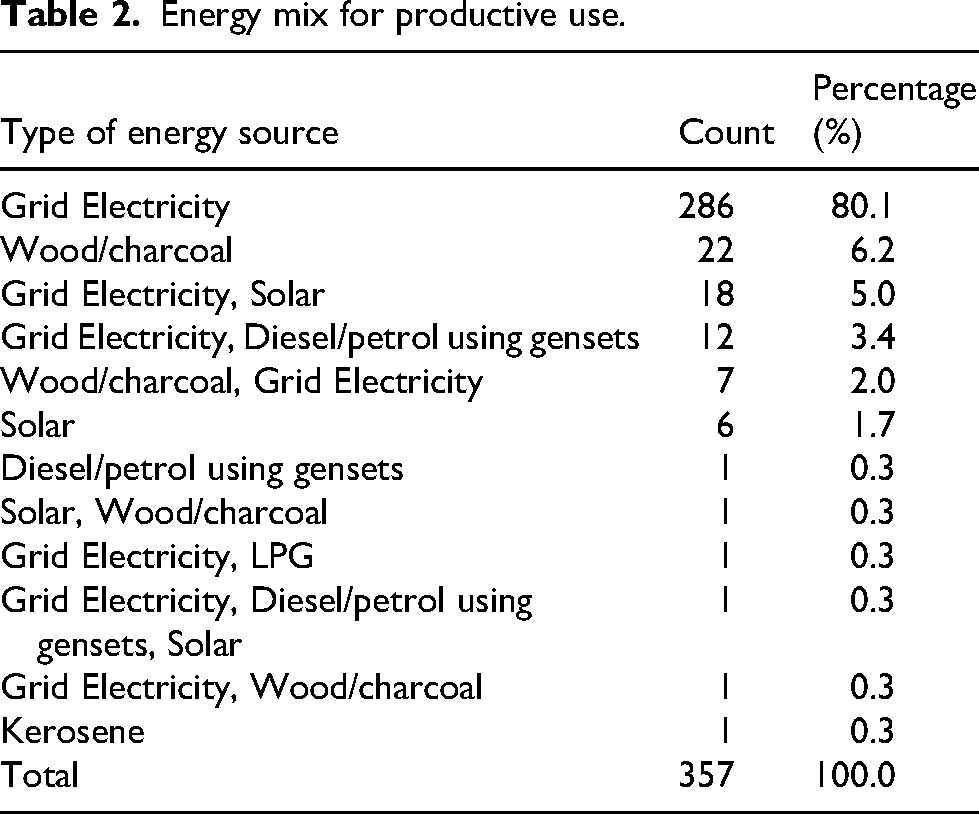
The study findings as outlined in Table 2 show that there is a lack of energy diversification for productive use, with 80.1% of them using grid electricity (i.e., mainly generated from hydro) as a primary energy source. However, some SMEs still use some energy resources, both renewable and non-renewable, to mitigate the impact of unreliable grid power supply on their businesses. These coping mechanisms suggest the need for advancing energy diversification in Malawi to improve power supply reliability. However, there is limited application of other RE resources for productive use, especially solar, which is more abundant in Malawi, underscoring the need for creating an enabling environment through policy reform and investment interventions that help to diversify the productive energy mix.
Characteristics of energy supply and constraints faced by SMEs
The study sought to understand the key energy supply challenges that SMEs face, and the focus was the primary energy source, which is grid power, because 80.1% of the SMEs use it for productive use. This means that the assessment was mostly leaning towards hydropower. However, because of its unreliability, it is natural for businesses to use the available alternative sources of energy. Considering that 80.1% of the SMEs use grid power as their primary source of energy, it was observed that almost all the mentioned energy supply challenges were concerning grid power supply, and the most frequently mentioned constraints were high energy usage costs (18.37%), unreliable power supply (11.73%), and faulty lines (11.22%). Apart from these challenges related to grid power supply, respondents mentioned faulty meters, unavailability of supply, and low voltage. The only challenge mentioned related to other RE supply was high installation costs (11.73%). The findings also reveal that the challenges that SMEs face are not uniformly distributed across categories
The results of this study in Table 3 confirm that regardless of being connected to the grid, electricity access for productive use remains a major barrier for the majority of the SMEs in Malawi. Sometimes these SMEs face multiple challenges at the same time, making the problem more complex. In addition, while some SMEs may have tried to cope with this challenge by diversifying their sources of energy through installation of RE systems, especially solar, their efforts are also hampered by high installation costs, which were cited by 11.73% of the respondents. Multiple overlapping constraints suggest the need for integrated policy and investment measures to improve grid power reliability and affordable RE technologies.
Energy supply challenges that SMEs face.

SMEs’ barriers to RE adoption for productive use
Transitioning to RE technologies for productive use remains limited among the SMEs, with the study revealing several interrelated constraints. The statistical analysis indicates that these are not uniformly distributed across categories, as confirmed by a chi-square goodness-of-fit test (χ2 ≈ 595.5, df = 6, p < 0.001). There is a strong dominance of some constraints, highlighting the need for targeted interventions to improve the uptake of RE for productive use.
The findings revealed that high initial investment, mentioned by 62% of the respondents, is the most significant constraint that hinders the adoption of RE technologies by the SMEs in Malawi. Other prominent challenges were lack of information and inadequate technical expertise. The respondents recognised that sometimes they lack adequate knowledge, including how some RE technologies work and their costs and reliability. On the other hand, some of the users who adopt the RE technologies do lack the technical expertise to install, operate, and maintain the systems. However, cultural and policy and regulatory factors were viewed as very minor constraints by the respondents when compared with financial, technical, and information challenges. Therefore, non-financial and institutional factors play a minor role in influencing SMEs’ adoption of RE technologies. Figure 4 shows the perceived SME barriers to the adoption of RE for productive use.

Barriers to adoption of RE for productive use.
The figure shows that, according to the SMEs, a major barrier to the adoption of RE for productive use is high upfront costs, which was cited by 62% of the SMEs interviewed. This was followed by a lack of technical knowledge and information gaps. However, institutional and policy-related issues were cited by a limited number of respondents, which can be interpreted as an improvement in regulatory improvement or a lack of knowledge about national policies by the SMEs.
SMEs required support for transitioning to RE
The study examined SMEs’ perceptions of the support required to facilitate their transitioning to RE for productive use. The results revealed that there is a substantial level of uncertainty among the SMEs about the required support. It was observed that the majority of SMEs (61.2%) were unable to clearly state any kind of support or specify any form of support, suggesting a lack of awareness of the available RE support mechanisms.
Among the 38.8% of the respondents who identified specific forms of support needed to upscale the adoption of RE, the majority of them (16.1%) mentioned that stakeholders need to support them in acquiring RE technologies, especially solar PV-related technologies (Table 4). This indicates that some respondents believe that diversifying sources of energy is key to addressing energy supply challenges. About 9.4% of the SMEs cited the need for backup power solutions, including generators and hybrid energy systems, reflecting growing concerns of the users about the reliability of the grid power supply as well as RE technologies. Financial support and cost reduction measures, such as subsidies, soft loans, and reduced tariffs, were also frequently mentioned by the SMEs (i.e., 8.9%), underscoring the role of technology affordability in driving RE adoption decisions. A few respondents also mentioned other forms of support needed, and these were grid infrastructure improvements, the need to improve the regulatory environment, and equipping them with knowledge on RE and the environment. These results show that SMEs prioritise technological and cost reduction over institutional and capacity-building interventions. However, the study findings also suggest that SMEs are unable to connect the affordability of RE systems to the regulatory environment.
Support needed to address energy access and transitioning to re for productive use.

In summary, results in Table 4 suggest a knowledge gap as a major challenge to upscaling the adoption of RE for productive use, considering that 61% of the SMEs were unable to suggest potential solutions to the identified constraints. However, it is evident that more support is needed in terms of financing for RE technologies and cost reduction mechanisms. Responses were highly concentrated around uncertainty/no support with policy reform and infrastructure improvements, and knowledge and environment attracted fewer responses. These findings suggest that there is a critical gap between what the respondents know in terms of existing energy challenges and the potential solutions. This underscores the need to promote awareness by, among other things, educating the SMEs about how various RE technologies work and the financing mechanisms available.
Discussion
Energy supply constraints- grid and RE based decentralised systems
Malawi is heavily dependent on hydropower, mainly generated on the Shire River (i.e., more than 90%), which is threatened by climate change globally (Khaleel et al., 2024). The generation capacity is not only inadequate but also unreliable, with only urban and rural population access rates at 57% and 25%, respectively (Walwyn and Hanlin, 2022; McCauley et al., 2022). Additionally, grid connection prioritises trading centres, disadvantaging rural populations and contributing to economic inequality (GoM, 2019). The study findings confirm national energy supply challenges documented in the literature. SMEs continue to face energy supply challenges, which constrains the ability of businesses to grow in Malawi. The SMEs reported that energy supply is characterised by high costs, unreliable supply, and poor infrastructure, which limits access to affordable power for productivity (Hara, 2021; Vrba, 2024). Unreliable power as a result of faulty lines, low voltage, and frequent interruptions also reflects the severity of energy generation and distribution underinvestment. To cope with these challenges, SMEs often rely on diesel generators, which are not cheap to operate, especially during oil supply crises when black-market fuel prices double. Higher cost of energy increases the cost of production, reducing competitiveness and hindering investment required to achieve the Malawi 2063 targets (JICA, 2021). It is natural that SMEs will try to identify alternative sources of energy, such as RE, for productive use to mitigate the impact of unreliable grid power supply. However, high installation and usage costs associated with RE sources limit their adoption by the SMEs, especially in rural areas (Shell Foundation, 2025; GoM, 2019). Energy access alone is inadequate for scaling energy-intensive activities like agroprocessing and welding. Therefore, provision of centralised or decentralised energy solutions needs to consider other key factors such as affordability (CREEC, 2023; Vrba, 2024). For example, Kenya has achieved a 75% electricity access rate (Shell Foundation, 2025), but only 25.2% use it for cooking due to cost, resulting in overreliance on traditional fuels. This shows that transitioning to RE for productive use requires more than mere connection.
RE resource availability and awareness
The findings confirm that Malawi has strong potential for expanding RE development for productive use (Lukuyu and Stima, 2021; World Bank, 2023; Reuben et al., 2021). However, having well-diversified RE resources indicates that it is possible to upscale the development of decentralised and hybrid energy systems, which overcomes the challenge of intermittence associated with RE sources, to support income-generating activities in off-grid and rural areas in the country (Dagnachew et al., 2023; Smith et al., 2019). However, having access to abundant RE resources alone is not enough and may not translate to socio-economic development through productive use. This is evidenced by limited applications of RE sources regardless of limitations associated with grid power in Malawi. There is a mismatch between energy resource availability and application for productive use (Reuben et al., 2021; Lecoque and Wiemann, 2015). Bridging this gap will help to link energy access to the desired socio-economic development targets as outlined in the Malawi 2063 Agenda (Terrapon-Pfaff et al., 2018; Smith et al., 2019). Therefore, these findings underscore the need for creating a supportive environment in terms of financing, capacity building, and regulatory environment (World Bank, 2023; Shell Foundation, 2025; Dagnachew et al., 2023).
Solar is widely available in Malawi, averaging six sunshine hours, and for SMEs is applied from small to large scale in the country (Walwyn and Hanlin, 2022). However, extensive utilisation of solar energy is limited due to different challenges, including high upfront costs, limited technical expertise, and knowledge gaps regarding the potential of solar energy to support energy-intensive activities (Shell Foundation, 2025; Vrba, 2024; Hara, 2021). This limitation is evidenced by the dominance of small-scale solar PV systems utilisation in Malawi (Frame et al., 2019). Usually, small-scale applications of solar energy for productive use are solar lanterns, which mostly are used to extend business hours (Terrapon-Pfaff et al., 2018; Kaunda, 2013). Large-scale solar energy systems of up to 60 MWe have been developed in Malawi, but most of them are grid connected. Decentralised solar energy systems to support off-grid communities have also been developed, but they are dependent on capital; as such, the majority of them are developed with support from development stakeholders (Walwyn and Hanlin, 2022).
Currently, Malawi overrelies on hydropower for the grid, mainly generated on the Shire River (Ehimen et al., 2023; Reuben et al., 2021; GoM, 2019). This overdependence on hydropower for grid electricity could be a contributing factor to increased awareness of hydropower. Recently, the country has experienced increased interest in pico and micro hydropower for off-grid households, with many innovators building small systems using materials and equipment from the junkyard (Ehimen et al., 2023). Biogas is known for small-scale applications, including cooking, heating, and lighting, and its role in reducing deforestation and illnesses resulting from indoor emissions, but distribution and perceptions limit adoption. Awareness of wind and geothermal remains very low among the SMEs, and the misidentification of non-renewables, such as diesel generators, suggests significant knowledge gaps (Taulo et al., 2015; Mohan and Ngwira, 2019).
Awareness plays a key role in transitioning users to modern and RE sources (Lecoque and Wiemann, 2015; Hara, 2021; UOMA, 2020; Dauenhauer et al., 2020). However, awareness of RE by the SMEs in Malawi is strongly biased toward solar and hydropower, which reflects Malawi's energy system, where hydropower is dominating generation while solar is the most visible decentralised solution (GoM, 2019; McCauley et al., 2022). Lack of awareness of other RE sources, such as wind, may suggest knowledge gaps, which eventually constrain the ability of the SMEs to diversify their sources of energy for increased energy supply reliability (Lecoque and Wiemann, 2015; Dauenhauer et al., 2020). Various studies have reported that awareness and technical knowledge are key to the adoption of RE by the SMEs and other users (Hara, 2021; Lukuyu and Stima, 2021). SMEs and individual energy users may not adopt energy sources they are unaware of.
RE system design, performance and application for productive use
A review of 32 community RE systems in Malawi shows both opportunities and challenges associated with transitioning to RE for productive use. The growing utilisation of different RE sources, especially solar and hydro, reflects broader trends in developing countries, especially SSA, where unreliability of grid power drives the deployment of RE-based decentralised energy systems. Evidence from various studies indicates that solar energy systems have the potential to support various loads that help users generate more income (Shehzad et al., 2024; El-Khozondar et al., 2023). Despite these opportunities, deployment of RE for productive use faces many challenges, including intermittency and high upfront costs, which demand careful system design and optimisation to achieve system reliability (Savio et al., 2025).
In the case of Malawi, based on the literature review, most of the RE systems (74%) are not only small in size (i.e., 10–100 kW) but also face technical challenges, with only 56% of them fully functional, underscoring the severity of financial, system sizing, and technical capacity challenges on system reliability. The systems are not properly designed to meet critical loads for productivity, especially in the agriculture sector, which employs more than 70% of the rural areas of Malawi. Additionally, lighting in businesses used to extend business hours remains the dominant application of RE for productive use, with only 14 energy systems powering energy-intensive activities, such as irrigation agriculture and agro-processing. A study by Frame et al. (2019) on the application of PV systems for businesses in Malawi also revealed that the smallest solar products dominate, meaning that they are mostly used for basic applications, such as lighting. This limitation shows that regardless of high potential, RE is only supporting basic energy services, and this confirms that RE availability alone does not guarantee access to energy productive use (Lukuyu and Stima, 2021; Reuben et al., 2021). However, evidence from the literature suggests that RE reliability can be improved through various interventions, including proper system sizing, intelligent load management, and the use of optimisation modelling tools (Khaleel et al., 2024; Alkhazmi et al., 2025). Buckland et al. (2017) and Frame et al. (2019) report that most of the systems (90%) do reach their expected lifespan and are undersized in Malawi and suggest that system design must take into account load growth. This can be addressed by using smart load optimisation helps to improve energy efficiency by, among other things, ensuring that productive loads’ energy demand is met, especially during periods of constrained power supply (El-Khozondar et al., 2023; Butt et al., 2021). The design and development of hybrid systems that integrate energy storage systems also further help to improve the reliability of the power supply.
Barriers to adoption of RE for PUE and support needed
The study revealed that the main barrier to the adoption of RE productive use by the SMEs is high upfront costs, confirming that affordability limits productive energy use (Shell Foundation, 2025; Vrba, 2024; CREEC, 2023). Regardless of falling prices of RE technologies, especially PV technology, initial costs remain high for most of the SMEs in Malawi, and lack of information and technical expertise further constrains adoption (Vrba, 2024; Ehimen et al., 2023; Savio et al., 2025). In addition, due to knowledge gaps, misconceptions about RE technologies also persist. For example, some users are not aware of technology improvements and reducing prices of RE technologies resulting from research and development (R&D) (Walwyn and Hanlin, 2022; Frame et al., 2019). This challenge is also exacerbated by the lack of qualified technicians, especially in rural and off-grid areas. Therefore, SMEs and individual users are unable to get reliable information as well as technical expertise. Therefore, it is common for users to complain about poor performance of solar PV systems and other renewable technologies, leaving users dissatisfied and underscoring the need for capacity-building (Lecoque and Wiemann, 2015; GoM, 2019). This dissatisfaction about the performance of RE technologies is also strongly linked to technical design limitations, system sizing, and capacity constraints, as evidenced by a review of various community energy projects in Malawi. The majority of the systems are small, which means that they cannot handle productive loads that demand more energy, and due to technical challenges, a significant number of these systems are non-functional. With only 10% of the PV systems also not reaching their expected life expectancy, it suggests that the technical bottlenecks reduced the economic viability of the systems (Buckland et al., 2017). Thus there is also a need to address this challenge through capacity building. Currently, universities in Malawi train RE engineers who mainly work in urban areas, while community colleges rarely offer renewable programs, missing opportunities to build the much-needed rural expertise for increased uptake of renewable energies.
Chi-square analysis confirms the importance of awareness, as the outcomes showed that awareness of wind and biogas significantly influences productive use, underscoring the need for targeted awareness. However, the adoption of solar and hydropower is mostly affected by cost, access, and infrastructure challenges. Knowledge gap is also another barrier to RE adoption for productive use (World Bank, 2023; Shell Foundation, 2025; GoM, 2019; JICA, 2021); during this study it was evidenced by the inability of many respondents to identify the specific support required to help the SMEs transition to RE-driven productive use. However, these bottlenecks influence adoption collectively rather than independently, requiring an integrated approach to accelerating RE-driven productive use by, among others, addressing financial, technical, and institutional factors (Buckland et al., 2017).
Implications
The findings of this study reveal that RE has the potential to support productive activities and the growth of SMEs. The dominance of grid power, mainly from hydro, coupled with low adoption of other RE sources, suggests a lack of diversification. To reverse these undesired trends, there is a need for targeted intervention, including providing affordable financing for RE technologies, providing technical trainings, especially in rural areas, where lack of expertise remains very high, and promoting awareness of various RE sources. Therefore, when designing energy access programs, development partners need to consider prioritising cost reduction, improving power supply reliability, technical capacity, and diversification of energy for enhanced reliability of energy supply for productive use.
Limitations and directions for further research
The limitation of this study was the sampling procedure adopted to identify energy users in rural areas, which primarily focused on those located in economic hubs or trading centers in the rural areas, done to reduce the time and costs required to collect data. This may not have fully represented rural or remote communities with varying energy characteristics. Therefore, further research needs to focus on expanding more rural communities other than just economic hubs. Longitudinal studies are needed to assess changes in adoption of RE technologies over time, especially after implementation of programs related to RE. Further research should also focus on assessing the effectiveness of financial mechanisms for supporting the adoption of RE and policy reforms needed to overcome the key barriers, including upfront cost, awareness, and lack of technical skills.
Conclusion
This study provides empirical evidence on RE-driven PUE in Malawi through a mixed-approach method that integrates survey data, interviews, FGDs, and analysis of 32 RE systems in Malawi. The results of this study show that a key challenge to advancing RE for productive use is not resource scarcity but limitations associated with grid power supply, RE system design and affordability, and institutional support. Currently, access to electricity is heavily dependent on hydropower mainly generated on the Shire River, which has become more vulnerable to climate change. Eventually overreliance on hydropower exposes SMEs to power supply disruptions, which constrain enterprise growth and force reliance on costly diesel alternatives. Regardless of abundant RE resources in Malawi, there is a mismatch between resource availability and application for productive use by the SMEs. The study reveals that awareness of RE and other RE sources, especially biogas, hybrid energy systems, and wind, remains very low. Currently, awareness is concentrated on energy sources that are widely used, and these are solar and hydropower. Additionally, the severity of the knowledge gap is evidenced by the inability of some SMEs to distinguish between renewable and non-RE sources, where a significant number of them cited generators powered by fossil fuels as RE sources. This knowledge gap, coupled with high upfront costs and weak technical support, constrains RE diversification for productive use. Evidence from 32 RE-based power systems in Malawi shows that most of the energy systems are small and often not properly sized to meet the energy demand for productive loads. In addition, these systems are frequently experiencing technical and maintenance challenges. Consequently, these systems, apart from just powering basic energy services, such as lighting in business places, never reach their life expectancy. Therefore, this study confirms that availability of RE resources does not guarantee energy access and meaningful productive use. In the case of Malawi, technical and financial constraints and the lack of skilled technicians continue to constrain the ability of SMEs to access the abundant RE resource. This study demonstrates that upscaling RE for productive use demands an integrated approach to address complex challenges. Among others, there is a need to improve system reliability through proper design, capacity building, especially in rural and off-grid communities, expanding affordable financing for SMEs to deploy RE systems, and targeted awareness of RE technologies. In addition, there is a need to promote coordination among departments, institutions, and various stakeholders to ensure that RE deployment aligns well with community economic programmes. This will also enable proper sizing of the RE systems to support current and future productive activities.
Recommendations
This study proposes several strategic recommendations that will play a key role in enabling Malawi to transition from basic energy access to productive use as follows:
The study results revealed that renewable-energy-based decentralised systems are not properly sized to meet the load demand, which can be a result of a lack of coordination between various stakeholders on planned economic activities or interventions in specific areas. Therefore, there is a need to strengthen policy integration and coordination because currently efforts to accelerate the adoption of PUE in Malawi are challenged by fragmented institutional mandates. Energy, agriculture, industry, and SME policies need to be properly integrated to ensure that RE development initiatives are properly incorporated in the national development program Mega Farms, which will not only help to reduce overlaps but also improve coordination between various institutions and departments (World Bank, 2023; Shell Foundation, 2025). This approach is proven to have played a key role in promoting the adoption of energy for productive use in Uganda and Kenya (UOMA, 2020; IRENA, 2021). Based on the study findings, the majority of the SMEs (i.e., 62%) considers high upfront costs a major barrier to adoption of PUE. Though the prices of RE technologies, especially solar PV, are falling, initial capital cost remains very high for most of the SMEs, and a significant number of them are unaware of potential solutions to overcome these barriers. Therefore, apart from increasing awareness, there is a need to establish targeted financing mechanisms, such as including grants, concessional loans, and credit guarantees while also promoting Public Private Partnerships (PPP). These approaches have been adopted in other regional countries, such as Kenya and Tanzania, where they have yielded positive results (ESMAP, 2020; Shell Foundation, 2025). There is a need to promote RE-based decentralised energy systems to improve energy access and reliability for productive use. This study reveals that overreliance on unreliable grid power by 80.1% of the SMEs exposes businesses to greater vulnerability and limited productivity. Solar and hybrid energy systems can play a key role in expanding rural energy access where only 25% have access to electricity while also enhancing resilience to climate variability affecting hydropower generation (Walwyn and Hanlin, 2022; Dauenhauer et al., 2020). Evidence from regional countries, such as Kenya and Uganda, shows that the provision of off-grid solar systems to SMEs significantly supports income-generating activities in off-grid communities (UOMA, 2020; IRENA, 2021). With only 56% of the sampled systems fully functional and only 10% of the systems reaching their life expectancy, it indicates that the country is facing severe technical gaps, including lack of expertise in proper system design, installation, and maintenance, which constrains the uptake of RE for productive use. Addressing this challenge requires building technical capacity, especially in rural areas and off-grid communities, where the challenge is severe yet these energy systems are highly demanded. Training institutions should develop specialized curricula integrating PUE concepts to foster local expertise (FAO, 2020). Evidence from East Africa shows that local capacity building helps to improve system reliability and adoption (ESMAP, 2020; Shell Foundation, 2025).
Footnotes

Ethical Considerations
The study adhered to the research ethical standards by obtaining authorisation from the Malawi University of Science and Technology Research Committee (MUSTREC).
Author contributions
Securing finding for the study- Hope Chamdimba; Conceptualization- Hope Baxter Chamdimba; Methodology-Hope Baxter Chamdimba; Data collection- All the authors; Data analysis- All the authors; Manuscript drafting- Hope Chamdimba; Reviewing the manuscript- All the authors.
Funding
The authors disclosed receipt of the following financial support for the research, authorship, and/or publication of this article: This work was supported by the EnDev under GIZ Malawi, (grant number 01).
Declaration of conflicting interests
The authors declared no potential conflicts of interest with respect to the research, authorship, and/or publication of this article.