



Abstract
Introduction
While it is generally accepted that childhood cancer has a profound impact on the family unit, there has been little focus on the experiences of grandparents who are affected by the diagnosis. When a child is diagnosed with cancer, the entire family feels its effects. The thoughts of the child, parents, siblings, and grandparents are plagued with fear and uncertainty (Feyh et al., 2012; Moules, Laing, et al., 2012). Yet, most research on this topic centers around the experiences of the ill child and their parents (Flury et al., 2021). Grandparents play an integral role throughout the child's illness trajectory as they are called upon to provide support physically, spiritually, emotionally, and at times financially (Dias & Mendes-Castillo, 2021). All the while, there are few efforts targeted to assist grandparents as they navigate this difficult experience (Moules, Laing, et al., 2012).
Although the relationship between familial disruption and childhood cancer diagnosis has been investigated over the last few decades, the specific impact the diagnosis has on grandparents seems to be poorly understood and/or inadequately addressed (Kelada et al., 2019). Understandably, curing the child with cancer is the focal point of the treatment plan; however, healthcare providers and researchers must not overlook the ongoing and unrelenting impact this life-threatening diagnosis has on the functionality of the family unit, individual family members, and familial relationships. The unique psychosocial, emotional, spiritual, and financial challenges grandparents face as a result of the grandchild's cancer diagnosis are important for healthcare providers to acknowledge. Pediatric oncology nurses, known for using a family-centered care approach to patient care, are in a special position to assist families and, specifically, grandparents as they attempt to navigate the difficult childhood cancer journey. A review of the existing literature was conducted to answer the following question: What are the experiences of grandparents of children with cancer? This integrative review examines this question through analysis and synthesis of current research specific to grandparents’ experiences of childhood cancer.
Method
Data Sources and Search Strategy
This literature review used the methodology outlined by Whittemore and Knafl (2005) and includes problem identification, literature search, data evaluation and analysis, and presentation. CINAHL, PubMed, and Web of Science were searched using the following key terms: “grandparent*” AND “experience*” AND “child*” AND “cancer.” The following inclusion criteria were used: electronic full text, peer-reviewed, and English language. Included literature was limited to articles published between 2012 and 2022 to reflect current research findings. Nonresearch-based articles, opinion papers, and literature reviews were excluded. Articles were also excluded if these did not focus on the grandparents as participants or the grandparents’ experiences, or cancer as the child's diagnosis. No restrictions were placed on what point in time the child was in their cancer journey, or if they were alive or deceased at the time of the research.
In total, 47 articles were identified initially. After duplicates were removed, abstracts were reviewed, and nonrelevant articles were excluded. An ancestry search was conducted of reference lists retrieved and two additional articles were identified. Research studies included in this integrative review were conducted in the Midwest region of the United States, Brazil, Israel, Switzerland, Canada, and Australia. Six qualitative, four quantitative, and two mixed-methods studies met the inclusion criteria for this review, resulting in a sample size of 12 primary sources. The PRISMA flow chart diagraming this process can be seen in Figure 1 (Page et al., 2021).
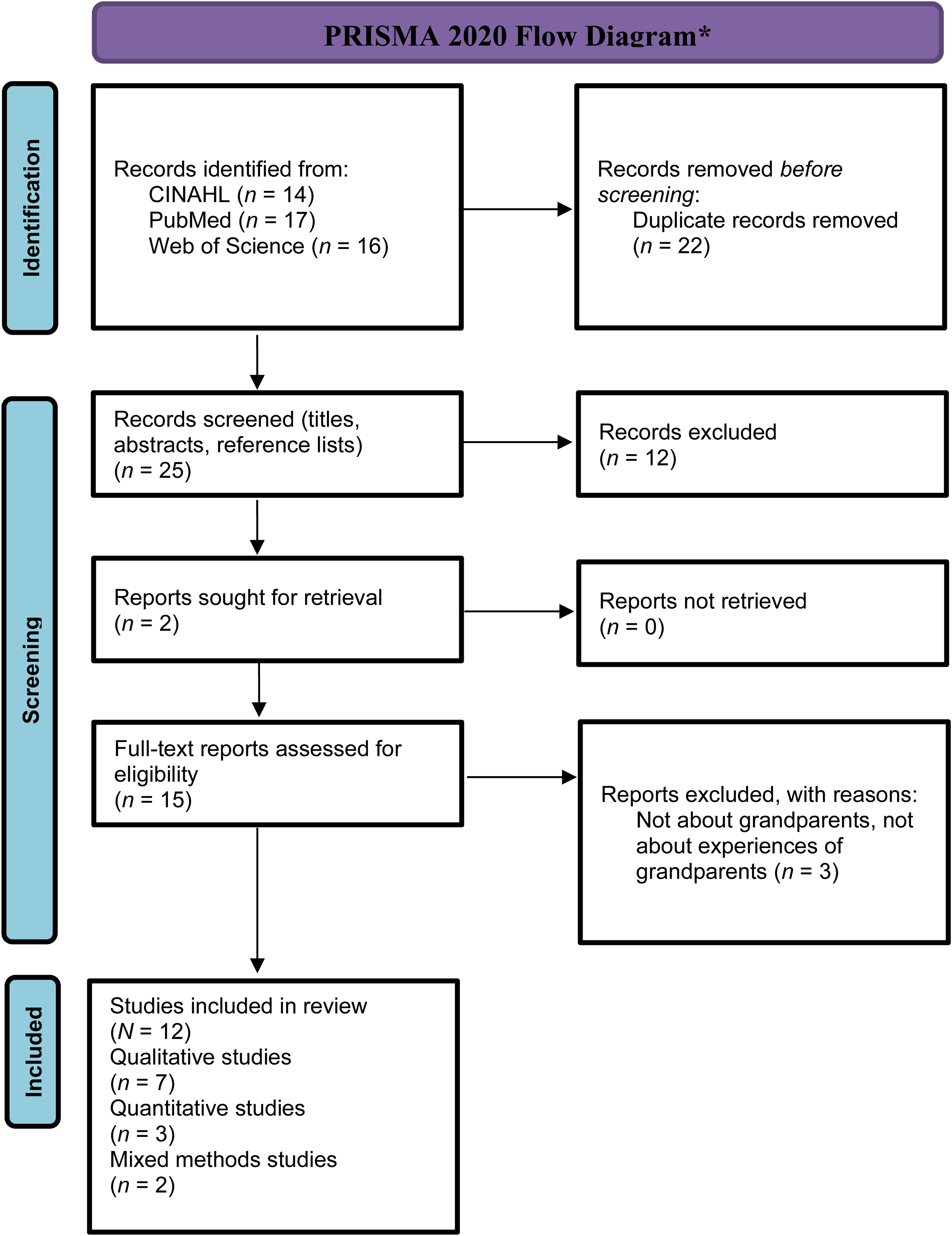
PRISMA 2020 flow diagram.
Analysis
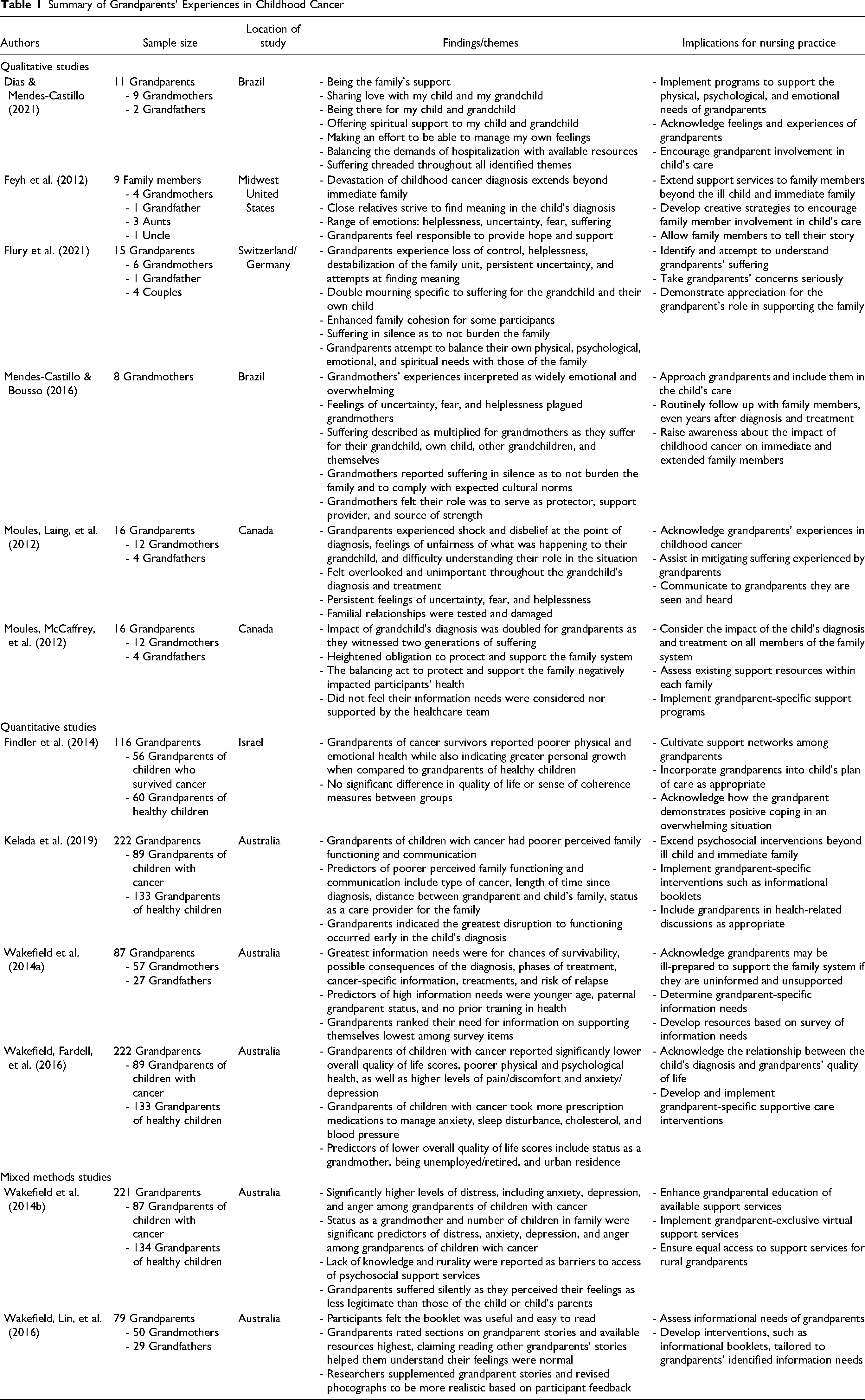
Sources were critically analyzed using a constant comparison method. This type of analysis is recommended when data are varied and diverse research methodologies are used across a sample (Whittemore & Knafl, 2005). An annotated bibliography was generated during the data reduction phase of analysis. Key findings, implications for nursing practice, methodologies, and sample characteristics have also been organized and presented in Table 1 for ease of navigation. Ongoing analysis of recurring concepts, development of the annotated bibliography, and mapping of key features associated with each study facilitated the progression of the constant comparison procedure through the remaining phases of data display, data comparison, and finally, conclusion drawing and verification, which are presented in the current report.
Summary of Grandparents’ Experiences in Childhood Cancer
Findings
Several common themes were identified among the findings of the research studies included in this integrative review. While all the themes were not present in every study, those discussed within this report were highly prevalent across the sample. These themes represent the often-overlooked experiences of grandparents of children diagnosed with cancer.
Emotional Whirlwind
The roller-coaster of emotions experienced by grandparents of children diagnosed with cancer was pervasive throughout the articles reviewed. Grandparents reported feelings of helplessness, fear, uncertainty and experiencing a great deal of suffering (Dias & Mendes-Castillo, 2021; Feyh et al., 2012; Flury et al., 2021; Mendes-Castillo & Bousso, 2016; Wakefield et al., 2014b). Wakefield et al. (2014b) found significantly higher levels of distress, including anxiety, depression, and anger among grandparents of children with cancer when compared with grandparents of healthy children. Flury et al. (2021) outlined the psychological and emotional hardships experienced by grandparents throughout the child's cancer illness trajectory with one participant claiming it was the worst thing that had ever happened to them. Participants detailed experiences of loss of control, helplessness, destabilization of the family unit, and persistent uncertainty (Flury et al., 2021). Feyh et al. (2012) demonstrated that the devastation of a child's cancer diagnosis is not limited to the child, parents, and siblings. Furthermore, the authors synthesized their study findings with existing literature to show that grandparents and other close relatives have similar experiences to those of immediate family members.
In their interviews with grandmothers of children diagnosed with cancer, Mendes-Castillo and Bousso (2016) found that many grandmothers reported suffering in silence so as not to add to the burden of the family and to comply with expected cultural norms. This containment of emotions resulted in poorer mental health outcomes for grandmothers and internal conflict with regard to role expectations. Participants in this study also reported that internalization of feelings of uncertainty, fear, and helplessness plagued them for years after the child's diagnosis. Dias and Mendes-Castillo (2021) reported similar findings, wherein grandparents suffered in silence so as not to add to the emotional burden of other members of the family. The researchers described participants’ interview responses as fraught with suffering. Interestingly, while most participants claimed to keep their emotional struggles to themselves, some grandmothers affirmed that sharing the burden of suffering among family members brought about cohesion and strength (Mendes-Castillo & Bousso, 2016).
Findler et al. (2014) further confirmed the emotional impact of the child's cancer diagnosis on grandparents using hierarchical regression statistical analysis. The researchers demonstrated that grandparents of cancer survivors reported poorer emotional health than grandparents of healthy children. Similarly, grandparents in a study by Moules, Laing, et al. (2012) reported experiences of disbelief and shock at the time of the grandchild's diagnosis, as well as feelings of unfairness of what was happening to their grandchild. Additionally, grandparents felt like they needed to remain emotionally strong for their child and grandchild but ultimately felt a sense of pride in their own child's ability to withstand the circumstances (Moules, Laing, et al., 2012). Grandparents in a study by Wakefield et al. (2014b) claimed they felt their emotions were less legitimate than those of the child or the child's parents. This feeling caused grandparents to withhold their emotional experiences from others. The researchers asserted the grandparents’ capacity to provide support to the child and family is impacted by their own distress.
In a follow-up study, Wakefield, Fardell, et al. (2016) found grandparents of children with cancer reported significantly lower overall quality of life (QOL) scores, poorer physical and psychological health, and higher levels of pain/discomfort and anxiety/depression than grandparents of healthy children. Additionally, grandparents of children with cancer took more prescription medications to manage anxiety, sleep disturbances, cholesterol, and blood pressure.
Double-Whammy Effect
A pervasive phenomenon alluded to in many of the studies was grandparents’ experiences of a double-whammy effect (Flury et al., 2021; Mendes-Castillo & Bousso, 2016; Moules, Laing, et al., 2012; Moules, McCaffrey, et al., 2012). Many grandparents in the study by Moules, McCaffrey, et al. (2012) claimed the impact of the grandchild's diagnosis was doubled for them because they were witnessing two generations of suffering—their grandchild and their own child. Mendes-Castillo and Bousso (2016) spoke to the doubled nature of the grandparents’ experiences with childhood cancer when they described suffering among grandmothers. Grandmothers in their study reported feeling as though their suffering was multiplied as they suffered for their grandchild, their own child, other grandchildren, and themselves. The concept termed “double mourning” was threaded throughout the article by Flury et al. (2021), with grandparents describing feeling like their suffering was magnified by the multiple roles they were playing to the grandchild and their own child. Flury et al. (2021) illustrated these complex and oftentimes hidden aspects of grandparents’ experiences as they offered support and assistance to their own child, the parent of the child with cancer.
Of interest in the article by Dias and Mendes-Castillo (2021) was the emphasis participants placed on their relationships not only with their grandchildren but also with their own children. In this sense, grandparents felt they were dealing with two concurrent burdens as they witnessed their own child struggling to manage the grandchild's illness. Grandparents in the study by Moules, Laing, et al. (2012) reported similar feelings of helplessness, uncertainty, and fear related not only to their grandchild's illness but also to their own child's experience of being the parent of a child with cancer.
Giving and Receiving Support
Grandmothers in the study by Mendes-Castillo and Bousso (2016) felt their role in the family was to serve as a protector, provide support, and demonstrate strength in the face of adversity. Grandparents in the Moules, Laing, et al. (2012) study reported feeling like they were constantly providing support while receiving little to none themselves. In this sense, grandparents suffered in silence in a perceived effort to protect the family, and specifically, their own child, from compounded suffering (Moules, Laing, et al., 2012; Moules, McCaffrey, et al., 2012). Additionally, participants described feeling they were not important and that no one had ever asked them how they were doing with their grandchild's diagnosis (Moules, Laing, et al., 2012). Participants felt a heightened sense of obligation to protect and support the family system. Grandparents felt they were supported and protected by remaining at the ready on the sidelines and buffering difficult conversations and emotions (Moules, McCaffrey, et al., 2012).
Dias and Mendes-Castillo (2021) reported grandparents serving in a variety of supportive roles to the family including, but not limited to, spiritual, emotional, physical, and financial supporters. Many discussed how they would stay with their grandchild at the hospital so their own child could take a break or watch over the other grandchildren while the ill grandchild and their parent stayed at the hospital for extended periods of time. Grandparents described serving in supportive roles as a difficult balancing act that took a toll on them and required self-sacrifice. Participants reported while familial support systems were strengthened throughout the experience, they were at times a source of tension. Overwhelmingly, grandparents did not feel their informational needs were considered nor did they feel included in the support mechanisms provided by the healthcare team (Moules, McCaffrey, et al., 2012).
Interestingly, Wakefield et al. (2014a) also found the greatest unaddressed information needs identified by grandparents were for chances of survivability, possible consequences of the cancer diagnosis, phases of treatment, information about the specific type of cancer their grandchild had, cancer treatments, and risk of relapse. Wakefield et al. ascertain grandparents have different and perhaps higher information needs than other members of the family because they are often left out of medical discussions and only receive information secondhand. An important conclusion drawn by the researchers in this study is grandparents may feel unprepared to support and provide care within the family if they do not have a clear understanding of their grandchild's cancer. Dias and Mendes-Castillo (2021) concurred and added the challenge of a language barrier which further complicates communication and information-sharing between grandparents and the healthcare team.
Wakefield, Lin, et al. (2016) reported the findings of their mixed-methods study involving the development and distribution of an informational booklet for grandparents of children with cancer in Australia. The booklet included information specific to childhood cancer, prognosis, management of relationships, self-care, and available support services, all of which are consistent with areas of concern identified in prior studies of this population. Overall, study participants felt the booklet was useful and easy to read, rating the section on grandparents’ stories and additional resources the highest. Narrative responses were consistent with this section's high rating with participants claiming reading other grandparents’ stories helped them understand their feelings were normal. They also indicated they believed the resource would have been helpful to them when their grandchild was diagnosed with cancer (Wakefield, Lin, et al., 2016).
In terms of access and use of supportive programs, grandparents reported greater use of informal support systems such as religious groups and other family members than formal support services. Lack of knowledge and rurality were commonly reported as barriers to access to formal psychosocial support services (Wakefield et al., 2014b). Utilization of spiritual support services was common among grandparents in the studies reviewed (Dias & Mendes-Castillo, 2021; Feyh et al., 2012; Flury et al., 2021; Mendes-Castillo & Bousso, 2016; Wakefield et al., 2014b).
Balancing Act
Kelada et al. (2019) found grandparents of children with cancer had poorer perceived family functioning and communication than grandparents of healthy children. Factors that predicted poorer perceived family functioning and communication included the child's cancer diagnosis, length of time since the child's diagnosis, the distance between the grandparent and the child's family, and status as a care provider for the family. The authors surmised that social norms wherein grandparents do not involve themselves in the rearing of grandchildren may play a role in the impaired communication and poorer perceived family functioning in their sample. Grandparents in this study indicated the greatest disruption to functioning occurred early in the child's diagnosis and communication was complicated due to uncertainty of roles and duties (Kelada et al., 2019).
Grandparents in the study by Flury et al. (2021) reported trying to find balance in their familial relationships as well as in managing their own personal health during the child's illness. Like those from several other studies, grandparents found it difficult to understand their role in the situation. Grandparents described difficulty in knowing when to step in and when to stay out of things, claiming they often felt silenced due to adherence to social norms for grandparent–parent relationships and at times hurt during interactions with their child (Moules, Laing, et al., 2012). Participants in another study also reported changes in familial relationships that had occurred since their grandchild was diagnosed with cancer. Navigating these changing relationships sometimes resulted in enhanced family cohesion and other times resulted in greater tension (Wakefield, Fardell, et al., 2016).
Dias and Mendes-Castillo (2021) also reported grandparents struggled to navigate their role in the child's cancer diagnosis. Specifically, grandparents wanted to provide as much emotional, spiritual, physical, and financial support to their family as they could manage but wanted to appear not to be doing so. They felt like they were stepping on the toes of their own child if they were to offer too much advice or support. On a personal level, grandparents struggled to manage their own feelings and find a good balance between demands and resources. In addition, grandparents reported interactions with the healthcare team required a balancing act because health-related information was not always shared with them.
Finding Meaning
Noted across several studies, and consistent with the literature on other family members’ experiences in childhood cancer (Wakefield et al., 2014b), was the need for grandparents to assign meaning to the child's cancer diagnosis. In their interviews with grandparents, aunts, and uncles of children diagnosed with cancer, Feyh et al. (2012) found that close relatives needed to find meaning in the diagnosis to hold on to when they felt all control had been lost. Grandparents needed to attribute the child's cancer experience to a larger purpose to help them transcend the diagnosis (Feyh et al., 2012). Interestingly, grandparents in the study by Flury et al. (2021) reported the positive outcome of enhanced family cohesion as a result of the child's diagnosis, which they felt was fostered by their finding meaning in the experience.
Findler et al. (2014) conducted a cross-sectional, quantitative study to compare personal growth and QOL between grandparents of childhood cancer survivors and grandparents of healthy children in Israel. Their analysis demonstrated that grandparents of cancer survivors indicated greater personal growth than their counterparts, revealing that not all outcomes of having a grandchild with cancer are negative, as suggested in most of the literature on this topic. Dias and Mendes-Castillo (2021) had similar findings in their study, with grandparents describing the child's diagnosis as an opportunity to learn and grow as a family.
Discussion and Implications for Practice
It is clear from this review of the literature that a childhood cancer diagnosis is complex as well as impactful in a variety of ways on the child's grandparents (Figure 2). Nurses and other healthcare providers must recognize and acknowledge grandparents as important members of the affected family and include grandparents in the plan of care for the ill child. Grandparents’ involvement in the child's care will foster healing for both grandparents and the family unit as a whole.
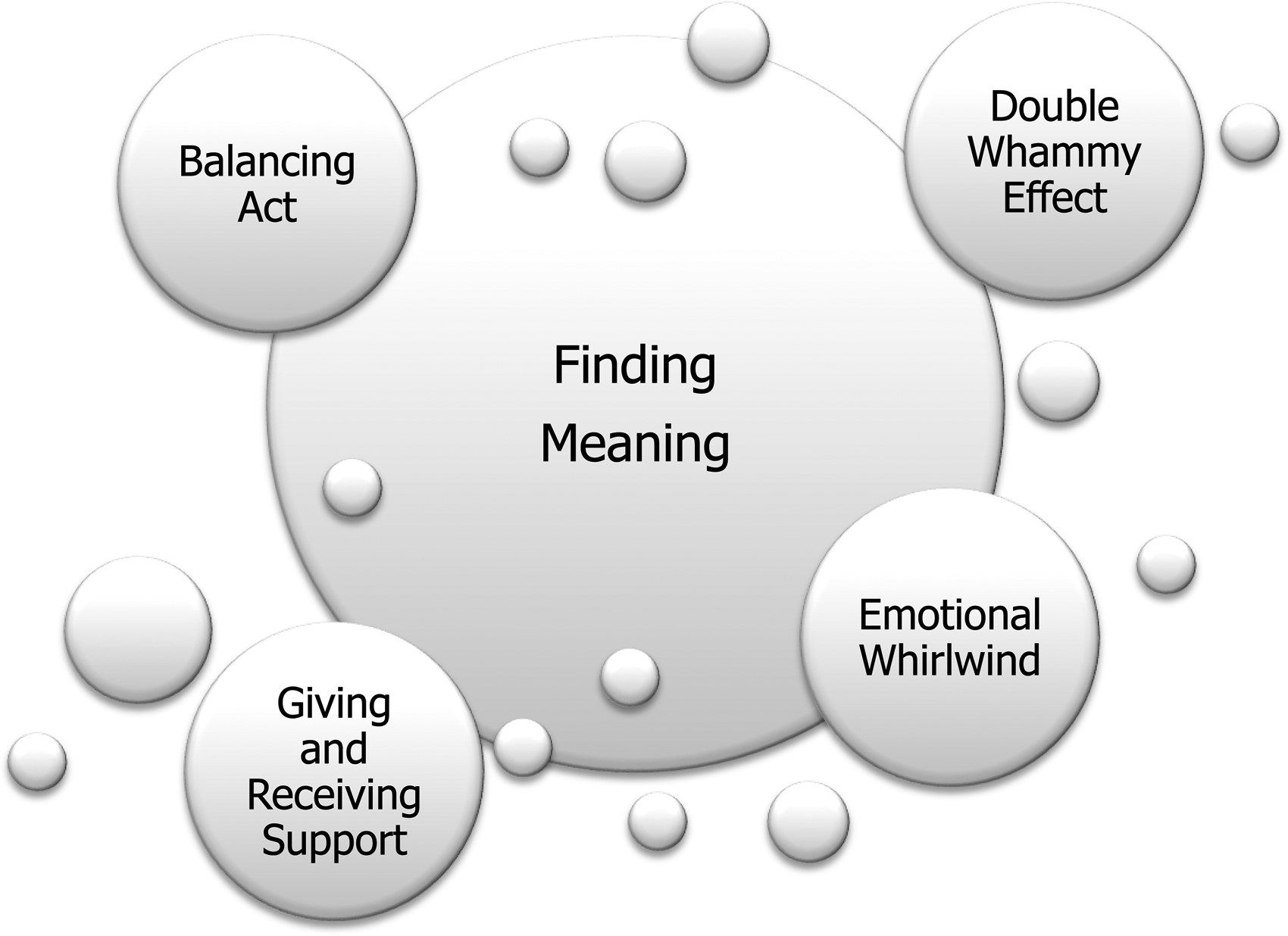
Conceptualization of grandparents’ experiences in childhood cancer.
The depth and breadth of emotional responses experienced by grandparents across studies in this review illuminate just how overwhelming a childhood cancer diagnosis can be for all family members, not just the child and parents. The degree to which grandparents described multiplied suffering, all the while doing it silently so as not to burden other family members is especially heartbreaking. The impact of the child's cancer diagnosis on the grandparents is profound with the majority claiming they did not feel recognized or considered important in the child's care (Moules, Laing, et al., 2012; Wakefield et al., 2014b). This finding should resonate with pediatric oncology nurses who generally approach patient care from a family-centered perspective (Mooney-Doyle et al., 2020). To truly provide family-centered care, nurses must include and address the needs of all family members who are affected by the child's cancer diagnosis (Flury et al., 2021; Wakefield, Fardell, et al., 2016; Wakefield, Lin, et al., 2016). Grandparents describe interactions with healthcare providers as impactful, in both positive and negative ways (Dias & Mendes-Castillo, 2021). Nurses can bolster this knowledge to facilitate positive relationships with the grandparents of children diagnosed with cancer. By assessing their specific needs and designing tailored interventions to address those needs, nurses can help grandparents cope with the situation, which may allow them to serve in their supportive roles more effectively (Feyh et al., 2012; Findler et al., 2014; Wakefield, Fardell, et al., 2016; Wakefield, Lin, et al., 2016).
Nurses and other healthcare providers should consider the psychological, emotional, and physical needs of grandparents of children with cancer through interventions such as support programs (Dias & Mendes-Castillo, 2021; Findler et al., 2014). Improvement in supportive programming in pediatric oncology care through extension of these services to grandparents may abate some of their suffering and assist them to find meaning and perhaps even transcend the child's cancer experience (Feyh et al., 2012). Additionally, nurses can assess existing support resources within each family system and implement individualized support programs for grandparents (Findler et al., 2014; Moules, McCaffrey, et al., 2012). Lastly, the distribution of an informational booklet targeted specifically at supporting grandparents of children diagnosed with cancer may provide this population with the recognition and knowledge they seek (Moules, Laing, et al., 2012; Moules, McCaffrey, et al., 2012). Such a booklet was developed by Wakefield, Lin, et al. (2016) in New South Wales and is publicly available online.
Limitations and Recommendations for Future Research
This review of literature specific to grandparents’ experiences in childhood cancer was extensive but may not have captured all relevant findings for this phenomenon to be understood completely. For example, it is unclear from the demographics provided in each article if any of the grandparents were also designated as legal guardians or primary caregivers of the grandchild. This information is potentially impactful as grandparents who serve as primary caregivers of the grandchild diagnosed with cancer may have varied experiences from grandparents who are not primary caregivers. The use of varied search terms through alternate databases and/or expansion of the time frame for publication may have revealed additional research. It should also be noted that most studies included in this review utilized qualitative methodologies which could pose a potential threat to the credibility of findings if methodological rigor were not maintained by researchers. However, since all research methods have unique biases, threats to the quality of quantitative and mixed method studies such as issues with the operationalization of theoretical concepts should also be considered. Additionally, most studies were conducted outside the United States (U.S.): Australia (4), Brazil (2), and Canada (2). This finding is particularly interesting because it uncovers a gap in the literature as only one study of grandparents’ experiences of childhood cancer has been carried out in the U.S. during the last decade (Feyh et al., 2012). The potential influences of culture, geography, politics, and economics on grandparents’ experiences in childhood cancer prompt the need for additional research in the U.S. and beyond (Kelada et al., 2019; Wakefield, Lin, et al., 2016).
Future research should focus on the assessment of the needs specific to grandparents of children diagnosed with cancer and the implementation of tailored interventions to address these needs. Possible interventions include the distribution of informational pamphlets specifically targeted at helping grandparents (Kelada et al., 2019; Wakefield, Lin, et al., 2016), and the development of grandparent-only web-based support programs (Dias & Mendes-Castillo, 2021; Wakefield et al., 2014a, 2014b). Such efforts may result in grandparents’ enhanced self-efficacy in their ability to serve as a supporter of other family members as well as to balance the demands of the child's diagnosis on their physical, psychological, emotional, and spiritual health. Additionally, future review of the literature in this area should include a quality appraisal system to enhance rigor and confidence in the credibility of study findings.
Conclusion
This integrative review demonstrates the myriad responses grandparents experience when their grandchild is diagnosed with and receives treatment for cancer. It is difficult to deny the emotional and familial impact the child's cancer diagnosis has not only on the child and immediate family but also on extended family members such as grandparents. While the reports from grandparents are consistent across studies, there have been lackluster attempts to mitigate the suffering experienced by this group. Additional research is needed to uncover and meet the specific needs of grandparents of children diagnosed with cancer.
Footnotes
Acknowledgment
The author would like to acknowledge Dr. Joel G. Anderson for his editorial contributions to this manuscript.
Declaration of Conflicting Interests
The authors declared no potential conflicts of interest with respect to the research, authorship, and/or publication of this article.
Funding
The authors received no financial support for the research, authorship, and/or publication of this article.
