



Abstract
Empowering students in mathematics is a key objective of school mathematics education. This study aimed to explore the impact of effective pedagogy, internal evaluation, and student happiness in mathematics learning on student empowerment. A cross-sectional survey design was employed involving 3,734 school students (46.9% at the basic level and 53.1% at the high school level) in Nepal. The data were analyzed using independent samples t-tests and structural equation modeling (SEM). The findings revealed that internal evaluation of students’ mathematics learning affected student empowerment, particularly in public (government supported) and basic schools (in Grade 8). Students’ perceptions of effective pedagogy in mathematics learning influenced student empowerment only in institutional (private) schools. Students’ mathematical happiness could predict student empowerment across the sample, favoring both public and private, and high schools (in Grade 10). Effective pedagogy predicted students’ mathematical happiness when mediated through internal evaluation in the overall sample, favoring public and high schools. Effective pedagogy and student empowerment have a positive relationship mediated through internal evaluation and mathematical happiness, especially in public schools and high schools. Additionally, effective pedagogy and student empowerment had a positive relationship mediated through internal evaluation in the overall sample, favoring public and basic schools. Some recommendations have been suggested.
Keywords
Introduction
Effective math teaching is a significant concern and interest within the mathematics education community. Among various indicators, student empowerment stands out as a key measure of effective mathematics teaching. To achieve the goals of effective teaching and student empowerment, mathematics teachers can utilize continuous assessments as part of the internal evaluation of student learning within the classroom. Another crucial aspect of effective pedagogy is addressing students’ needs and building their confidence in mathematics, which can motivate them to learn and increase their satisfaction with their engagement and performance in the subject. This study aims to explore the importance of internal evaluation and student happiness in mathematics classes for effective pedagogy and student empowerment.
The traditional teacher-centered teaching method, predominantly practiced in the Nepali context for mathematics (Education Review Office, 2013, 2016, 2020, 2022), has been recognized as unpopular and ineffective for many students in Nepal and elsewhere (Çelik, 2018). Learner-centered instruction, which promotes hands-on activities, presentations, discussions, and reflections can facilitate student learning activities (Khadka et al., 2022). The effectiveness of mathematics teaching methods significantly influences students’ interest and retention. Kvam (2000) found that project-based activities and cooperative teaching methods increase retention for students with average or below-average scores. Effective teaching methods, such as hands-on activities, discussions, demonstrations, modeling, and scaffolding, are crucial for learning outcomes.
In this context, Ryan et al. (2021) observed a decline in students’ mathematics achievement as they progress through grades. Similarly, Riley et al. (2017) designed the Encouraging Activity to Stimulate Young Minds (EASY Minds) program to raise physical activity levels in children through a movement-based mathematics program. They found that it is effective for children's enjoyment and engagement. Therefore, if students engage in acceptable and appropriate mathematical activities, they will learn mathematical concepts, procedures, and applications in the classroom (Căprioară, 2015). Thus, various initiatives, including experimental, project, and activity-based learning, have been attempted in different contexts to improve its success in schools. Despite these various initiatives, learning mathematics has remained relatively unchanged, and mathematics achievement in high schools remains consistently low (Mullis et al., 2008; Ottevanger et al., 2007). The achievement of students in mathematics is a major concern for many nations (Samlesh et al., 2021), including Nepal.
Teachers and students are responsible for forming a classroom atmosphere that is unique and distinct from any other (Mazana et al., 2019). Depending on their roles, they can either support or hinder each students’ mathematics achievement (Calogiannakis & Eleftherakis, 2012). Activity-based teaching and learning as an effective pedagogical practice, may increase mathematics achievement more than traditional teaching methods. Learners tend to be more interested in activity-based teaching compared to lecture methods (Anwar, 2019; Çelik, 2018). Additionally, a learner's enjoyment and attitude toward mathematics significantly impact their learning performance (Mazana et al., 2019). Researchers are focusing on the impact of effective pedagogical practices on achievement in formal and informal education (Jansen et al., 2013; Namkung et al., 2019). Effective pedagogy includes teaching methods and strategies that greatly improve student learning and development. It is identified through a blend of research, observation, and hands-on practice. Educators and researchers study different approaches and their results to determine the most effective techniques across various settings (Main, 2021).
Students’ happiness with their learning can significantly influence their continued engagement with mathematics, their ability to relate mathematics to their daily lives, and their appreciation of its values for their careers. Hurst et al. (2013) explored students’ perceptions of the value of social interactions in their learning by having them reflect on their classroom experiences at the end of each class period. They found that students believed that social interaction improved their learning by improving their literacy as well as their critical thinking and problem-solving abilities.
Effective pedagogy can be a relative term, depending on how teachers and students interact, play their roles effectively, and maintain a conducive learning environment. Several factors may impact the classroom environment. For example, the interaction between technological tools, teachers, and peers (Thurm & Barzel, 2022), student-driven evaluation (Gardner, 2022), teachers’ pre-preparation (Kariuki et al., 2018), and students’ socialization in mathematics classrooms (Davis, 2021), all positively impact the mathematics learning environment.
On the other hand, regular classroom or school-level assessments to evaluate students’ learning and progress are crucial for providing timely and authentic feedback, helping students understand their performance. In this sense, internal assessment in the form of formative or diagnostic assessments can help students and teachers grasp the depth and breadth of students’ mathematics learning. Classroom activities tailored with regular internal assessments can develop positive self-esteem in students and promote a positive image of mathematics. Over time, as students succeed in mathematics, they become happy with their hard work, perseverance, and achievements. This happiness can lead to their empowerment, enabling them to apply mathematics from familiar fields to unknown territories, beyond their comfort zones. Students’ participation can expand even in their teacher's absence (Ackermann, 2011), demonstrating their empowerment to use mathematics as a tool for problem-solving in various contexts.
However, many researchers concluded that the educational potential of student interaction in the classroom is often underutilized (Mercer et al., 1999). In this context, literature on how students perceive their empowerment through pedagogy, internal assessment practices, and conditions of happiness in mathematics learning is scarce. The current study aims to fill this gap.
Literature review and theoretical frame
This section lays out the theoretical foundation of the study, structured around four central themes: effective pedagogy, internal evaluation, student happiness in mathematics learning, and student empowerment. These themes form the basis for developing the conceptual model for the research.
Effective pedagogy in mathematics teaching
Effective pedagogy in mathematics is a multidimensional construct. It may include innovative practices and technology integration (Sethi & Jalandharachari, 2022), engaging students in meaningful mathematical tasks encouraging active learning (Anthony & Walshaw, 2009), addressing math anxiety and creating a positive learning environment (Furner, 2024). Effective instruction involves conceptual understanding, developing procedural fluency, and promoting strategic competence through problem-solving (The Education Alliance, 2006). Furthermore, creating inclusive learning environments in mathematics fostering a supportive and encouraging classroom atmosphere underscores the importance of promoting student well-being and happiness (Forgasz & Cheeseman, 2015).
Effective pedagogy through classroom activities offers an engaging and disciplined approach to small-group learning, classroom management, teacher competencies, instructional strategies, valuable learning, and student achievement (Handrianto et al., 2021). According to Burgess et al. (2020), effective pedagogy encompasses pre-class preparation, readiness assurance testing, problem-solving exercises, timely feedback, and student accountability. Likewise, integration of in-class and out-of-classroom activities and participation may foster positive attitudes toward subjects, develop social skills, and understanding in a broader cultural context (Behrendt & Franklin, 2014). Hence, culturally relevant and responsive teaching practices focus on caring, context, cultural competency, high expectations, and mathematics instruction (Thomas & Berry, 2019).
Effective pedagogy also recognizes the uniqueness of each student's learning style for which Abell et al. (2007) emphasizes that different teaching approaches to support different learning styles, such as individual reflection, peer-to-peer interaction, and whole class discussion, and cognitive engagement through content-based tasks (Duarte, 2019). Peer instruction supports struggling students while assisting those who are advanced (Rennie, 2014).
Effective pedagogy is not only a classroom action, but it is about building trust, collaboration, and mutual support among the teachers. Paolini (2015) noted that colleagues’ constructive feedback is crucial in refining pedagogical practices. Lastly, understanding students’ perceptions of teachers’ preparation enhances instructional performance (Jang et al., 2009) by allowing teachers to adapt to students’ thought processes (Tuan et al., 2005). However, there is a need for more research on effective teaching practices in mathematics, as current literature tends to emphasize teachers and their knowledge rather than actual teaching practices (Askew, 2020). Therefore, effective pedagogy should be a framework to design, implement, and reflect effective classroom activities, that empowers students in mathematics learning.
In the current study, we outlined effective pedagogical practices based on the discussed literature. These practices include selecting content that aligns with students’ interests and readiness, teaching concepts and procedures with clarity, providing clear guidelines before students begin working on problems, and using appropriate assessment tools for both formative and summative evaluations.
Internal evaluation of mathematics learning
Internal evaluation of mathematics learning is an essential part of day-to-day teaching and learning of mathematics to promote student self-regulation, accountability, and mathematics achievement (Brown & Hirschfield, 2007). Internal evaluation is an ongoing process in the classroom to empower students through regular feedback and guidance, and improve academic performance (Schrodt et al., 2008). Internal evaluation of student participation in the learning and development serves as a tool for student-centered pedagogy, requiring teachers to balance adaptation to new frameworks with fostering student self-reliance (Kindelán, 2021). Hence, internal evaluation in mathematics learning encompasses classroom formative assessments as well as self-reflections of mathematics teachers about the effectiveness of their teaching activities on student learning. Hence, internal evaluation is not only about student learning, but it is also related to instructional practices and indirectly affects student performance (Marks & Louis, 1997). In one way, it empowers students through positive and appreciative feedback promoting critical thinking (Fetterman, 2017). On the other way, it is a complex interplay between teacher practices, student empowerment, and educational outcomes through collaborative engagement, opportunities for peer learning, and social abilities (Hassi & Laursen, 2015; Kågesten & Engelbrecht, 2007).
Internal evaluation with individual presentations and content-related discussions may promote cognitive empowerment and allow students to voice their ideas (Dhakal, 2022). Personal reports and classroom discussions may contribute to self-empowerment and social empowerment (Hassi & Laursen, 2015). These internal evaluation methods create an environment that supports transformative learning experiences (Hassi & Laursen, 2015). Furthermore, empowered students demonstrate better academic performance, fewer behavioral issues, increased extracurricular participation, and higher educational aspirations (Kirk et al., 2016). Teachers play a crucial role in fostering student empowerment through equitable power use, positive relationships, and creating a sense of community in the classroom (Dhakal, 2022; Kirk et al., 2016).
Internal evaluation may positively influence student engagement and well-being in mathematics (Sasidharan & Kareem, 2023), together with teacher enjoyment and enthusiasm that is positively linked to student enjoyment, emphasizing the role of affective interactions in the classroom (Frenzel et al., 2009). It may impact learner engagement mediating the relationship between teacher, tools, and student learning, and satisfaction (Ramos et al., 2022). Hence, internal evaluation focuses on developing pupils’ well-being and happiness in learning mathematics, while maintaining high standards of learning, and preparing them for future success in society (Isofache, 2019).
Students’ evaluation of knowledge, skills, and attitudes is crucial to mathematics teaching and learning. Göksoy (2017) noted that students’ happiness often correlates with higher grades and positive classroom experiences. Struyven et al. (2005) highlight that students’ perceptions of evaluation methods influence their learning experiences. Therefore, internal evaluation should be tailored to day-to-day classroom activities. While continuous assessment benefits teaching and learning activities as part of the internal evaluation (Hernández, 2012), it also increases academic workload (Trotter, 2006). Effective evaluation-related classroom activities provide valuable feedback for teachers and students (Flórez & Sammons, 2013; Williams & Williams, 2011). Regular internal evaluation fosters deep learning and maintains high-quality outcomes (Entwistle & Ramsden, 2015). Additionally, self-evaluation, the ability to judge the quality of one's work, is essential (Tai et al., 2018) for student empowerment in mathematics learning. However, few students can develop this skill during coursework (Boud et al., 2018). Self-assessment enhances learners’ awareness of their learning (Mok et al., 2006). Portfolio assessment, popular among students, aids in self and peer assessment (Segers & Dochy, 2001; Slater, 1996). Furthermore, weekly logbooks, as found by Fresneda-Portillo and Sagredo-Sánchez (2019), facilitate revision and workload distribution throughout the semester.
Learning in the classroom is influenced by various educational factors, including students’ prior knowledge, classroom environment, instructional methods, formative testing, teaching style, and the tools employed in the teaching and learning process (Fraser, 2012). However, student assessments of instruction must be used cautiously, as they can impact teachers’ grading decisions (Stroebe, 2020). Formative assessments in the classroom has been an important tool to improve student learning, participation, and achievement in mathematics (Özcan & Kurtuluş, 2023). However, solely relying on formative assessments is insufficient for classroom improvements (Mrutu & Kibga, 2023). A balanced approach, integrating both formative and summative assessments, is crucial for addressing individual and group learning goals through internal evaluation that prepares students for external assessment, accountability, and government mandates.
Based on the discussed literature, we integrated four key areas into the internal evaluation of mathematics teaching and learning. These areas include students’ class presentations and discussions, students’ personal notes or assignments, and the content covered in class through guided questions and classroom seminars, along with reflections on assigned problems.
Student happiness in mathematics learning
Student happiness in learning is essential construct in the mathematics classroom that encompasses their well-being, effective engagement, sense of competence, and comfort in sharing their views (Kazepides, 2012; Swaffield, 2008). On one hand, it reflects trust and support motivating students to regularly engage in class (Uslu & Gizir, 2017). This engagement contributes to socialization and emotional well-being, which in turn enhances students’ academic empowerment (Hayes et al., 2017). On the other hand, it involves matching teaching methods to students’ levels, providing regular feedback, maintaining fairness, and fostering a sense of humor (Jang et al., 2009).
Moreover, a sense of belonging—where students feel respected, accepted, and supported—further contributes to student happiness (Ibrahim & Zaatari, 2020), ultimately leading to their empowerment and academic experiences (Agezo, 2010; Amaral et al., 2023; Dolton & Marcenaro-Gutierrez, 2011). Findings from past studies suggest that math anxiety moderates the impact of attitude on student happiness (Kesici, 2023). Hence, student happiness in learning may influence their interest, action, and perseverance in mathematics.
Rather than focusing solely on making students happy, student happiness should be linked to their learning. In mathematics learning, fostering happiness involves engaging students according to their level of understanding, providing regular feedback, offering additional support, maintaining fairness and consistency, and incorporating humor (Jang et al., 2009). The sense of belonging within the classroom community—where students feel individually accepted, respected, included, and supported—plays a crucial role in student happiness (Ibrahim & Zaatari, 2020), leading to empowerment. Teacher-student connections shape this sense of belonging (Uslu & Gizir, 2017).
Students’ impressions of the learning environment and teacher-student interactions significantly impact their learning experiences and happiness with those experiences (Agezo, 2010; Dolton & Marcenaro-Gutierrez, 2011). Casinillo (2023) found a positive correlation between coping, happiness, and self-efficacy, which contributes to academic progress. Casinillo (2023) suggests that teachers should foster student engagement and provide appropriate mathematics activities to further support their learning and well-being. In summary, fostering a supportive and engaging classroom environment characterized by effective communication, shared values, and positive relationships, significantly enhances student happiness and learning outcomes. To explore students’ happiness in mathematics class, we focused on four key areas: their overall learning experience, the mathematics activities in the classroom, their relationships with peers, and their relationships with mathematics teachers.
Student empowerment in mathematics
Student empowerment in mathematics is a multifaceted construct that involves nurturing their confidence in mathematics, enhancing their conceptual and procedural competencies, and engaging them in meaningful mathematical discourse. This empowerment can be understood through cognitive, semiotic, and social dimensions. According to Ernest (2002), empowerment stems from students’ ability to engage with mathematical operations and processes, navigate the cultural aspects of mathematics, and apply learned concepts in real-world contexts. Empowered students can solve problems, model real-life scenarios, and construct mathematical proofs (English & Halford, 1995). Student empowerment also encompasses social factors, such as their ability to critique and apply mathematical knowledge to societal issues (Ernest, 2002).
Teachers play a central role in this empowerment process. According to Yuhasz (2023), crucial strategies for empowering students include motivation, reducing fear, and helping students discover their individual potential. Moreover, student empowerment should extend beyond mere academic achievement to encompass the broader value of learning for personal growth, societal welfare, and lifelong learning (Halloun, 2023). Empowered students continuously assess their learning, develop cognitive control, and maintain positive emotions as they deepen their understanding of mathematics (Halloun, 2023).
There are various approaches to teaching mathematics that can empower students by fostering their self-confidence, self-evaluation, self-direction, and reflective learning. Pokhrel et al. (2024) explored how Self-Directed Learning empowers students in mathematics education through innovative pedagogy. This approach fosters autonomy, motivation, and self-responsibility, encouraging active engagement and critical thinking in the subject. The study emphasizes the need to tailor SDL models for effective implementation in school mathematics, as this approach helps students take charge of their own learning process. Similarly, Ghofur et al. (2023) examined the positive impact of metacognitive strategies on students’ ability to solve mathematical problems effectively. The study found that through problem-based learning (PBL) and the use of metacognitive strategies, students developed reflective thinking competence. These approaches significantly improved both problem-solving skills and critical thinking abilities, eventually contributing to student empowerment in mathematics.
In the current study, we drew upon the literature to identify critical areas for understanding student empowerment. These areas include creating a classroom environment that is safe and open for students to share their problems, ensuring teachers listen to students’ issues in mathematics, and enhancing students’ ability to communicate effectively with their teachers.
Theoretical model
A theoretical model has been conceptualized for this study, connecting four constructs – effective pedagogy, internal evaluation, mathematical happiness, and student empowerment. These connections are associated with the six hypotheses for the study.
According to Ernest (2002), the pedagogical aspect is critical in empowering students’ mathematical experience. When students’ learning is periodically evaluated and accompanied by positive feedback, they are encouraged to learn, persevere, and maintain a positive attitude. Constructivist Theory advocates for teaching methods that engage students in meaningful activities and critical thinking (Piaget, 1970; Thompson, 2020; Von Glasersfeld, 1995; Vygotsky, 1978). Teachers who implement effective pedagogical strategies are more likely to use varied and relevant internal evaluation methods that accurately assess students’ understanding and skills, thereby empower students.
Formative Assessment Theory highlights the importance of student involvement in ongoing assessments to enhance learning (Bennett, 2011; Black & Wiliam, 1998; Lolkus et al., 2022). Internal evaluation of students’ mathematics learning helps them understand their learning status, identify areas for improvement, and develop self-assessment, reflection, and critical thinking (hypothesisH2). According to Self-Determination Theory (SDT), when students’ higher needs for autonomy and relatedness are met, they are more likely to experience intrinsic motivation and positive emotions, including happiness (Deci & Ryan, 2000). Students who feel listened to and valued are more likely to enjoy learning mathematics, experience mathematical happiness, and develop a sense of empowered students.
Effective pedagogy tailored with activities guided by Bloom's Taxonomy emphasizes diverse assessment methods that address different cognitive levels, promoting deeper understanding and satisfaction in learning (Bloom, 1956). When students perceive these internal evaluations as fair and reflective of their efforts, they are more likely to feel competent, enhancing their empowerment. Positive Psychology and the PERMA model (Seligman, 2011) state that effective teaching strategies that make learning enjoyable, engaging, and meaningful can enhance students’ positive emotions and happiness, leading to student empowerment. Internal assessment provides timely feedback to learners to improve their problem-solving, understanding, and application of mathematics concepts and procedures. Such internal assessment can be tailored to students’ self-reflection, independent and collaborative problem-solving, and develop a sense of fulfillment beyond their achievements. This sense of self-fulfillment, coupled with positive emotions, leads to empowerment.
Effective pedagogy is also connected to day-to-day classroom activities, including internal evaluation through formative and diagnostic assessments. Social aspect of mathematics learning emphasizes social practices in the classroom (Rytilä, 2021). The theory of connected learning (social constructivism) embarks upon teaching and learning mathematics, making a connection to the active process of knowledge construction with a suitable task environment, students’ prior knowledge, new knowledge, students’ interests, learning styles, and bridging personal and social worlds (Polman et al., 2020). These connections foster students’ success and happiness. When effective pedagogy is further tailored to student empowerment in mathematics learning, mediated through continuous internal evaluations and feedback, and supported by tools of equity, access, and fairness, it may enhance students’ cognitive and affective happiness. Hence, a conceptual framework of effective pedagogy, internal evaluation, student happiness, and student empowerment has been constructed by connecting them with respective hypotheses (see Figure 1).
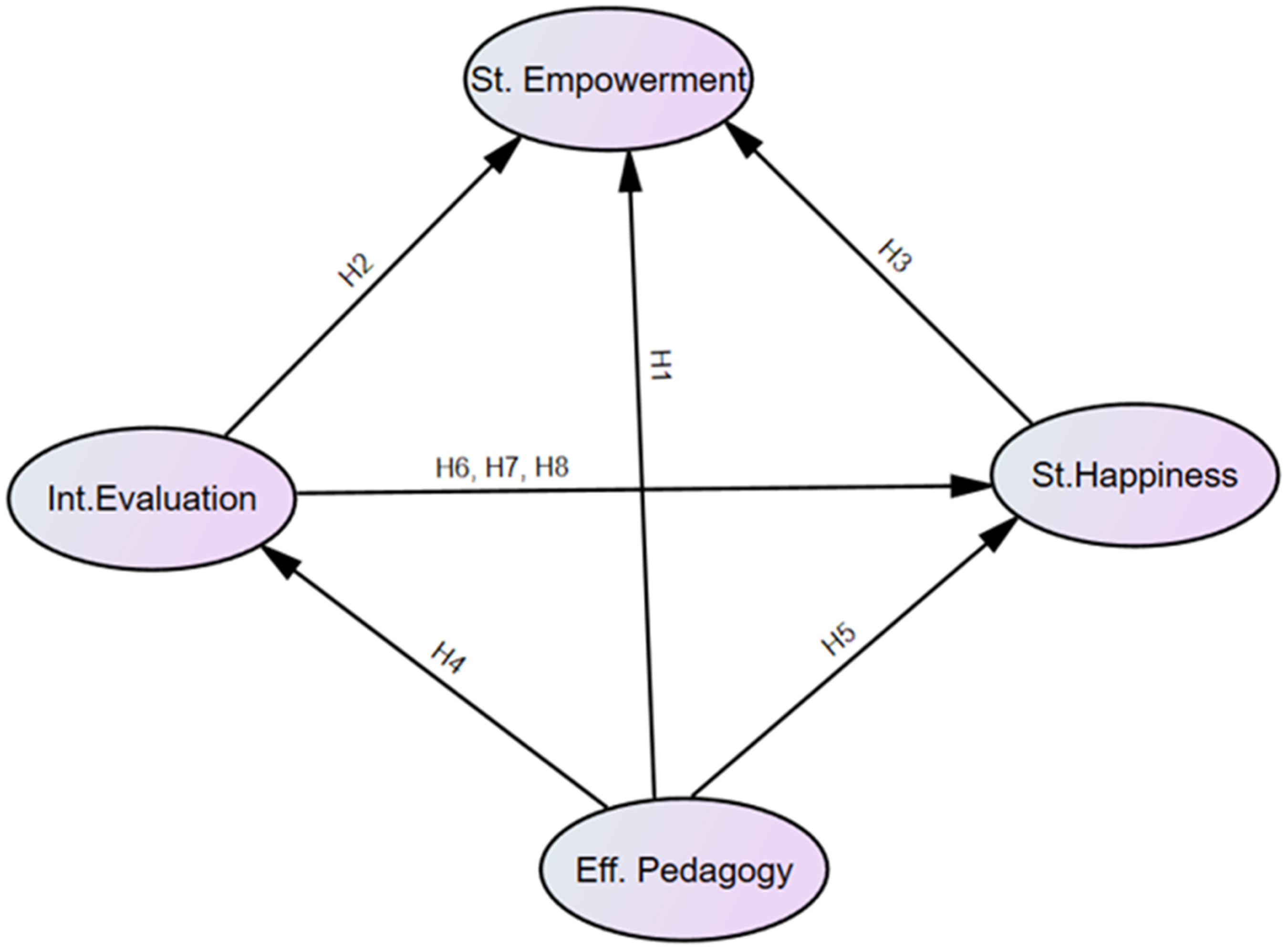
Conceptual framework (hypothesized model).
The present study has the following research questions:
How do effective pedagogy, internal assessment, and student happiness predict students’ perceived empowerment in mathematics learning? How do internal evaluation and students’ happiness mediate the relationship between effective pedagogy with their empowerment? How does student happiness mediate the relationship of effective pedagogy and internal evaluation with students’ sense of empowerment? H1: Effective pedagogy, internal evaluation, and student happiness in mathematics classrooms significantly predict students’ sense of empowerment. H2: Internal evaluation in mathematics classrooms significantly mediates the relationship of effective pedagogy with students’ sense of empowerment and happiness in mathematics learning. H3: Student happiness in mathematics classrooms significantly mediates the relationship of internal evaluation and effective pedagogy with students’ sense of empowerment.
The following research hypotheses supplement these research questions:
Method
Sample
This study employed as a cross-sectional survey research design. The data were collected through 63 schools across various regions of Nepal with the help of 63 M.Phil. scholars of Nepal Open University. All the scholars were instructed on the tools, data collection techniques, and data entry in the prepared data file of SPSS shared by the research team in which all information of variables were prepared.
The study focused on student enrolled in basic and high schools in Nepal during the academic year 2021–2022 covering both public and private schools. The total population included 5,338,953 students in basic level (grades 1–8) and 615,798 were in grade eight, and 1,745,036 at the high school level (Grades 9–12), with 501,240 in grade ten (Ministry of Education, Science and Technology, 2021). Specifically, the study targeted students in grade eight and ten, forming a sub-population of 1,117,038 students. An online sample size calculator (Calculator.net) was used to find out the appropriate sample size for the study. With confidence level of 95%, margin of error 2%, and population proportion 50%, and population size of 1,117,038 students were set in the calculator. The calculator indicated a required sample size of 2,396 students. However, to account for potential bias and non-response, a larger sample size of 3,780 students was randomly selected. This sample size was considered sufficient to ensure the representativeness of the population.
This research considered types of institutions and study levels as the sample characteristics. The types of institutions were categorized into two groups: public schools (82.7%) and private schools (17.3%). The public schools were those schools funded by the government and the private schools represented those run by the private sector as per the rule of the government. The study level had two categories: basic level (46.9%) and high school (53.1%) level. The basic level included students of grades 1–8, and especially focusing grade eight students for this study. The high school level Grades 9–12, with a focus on grade ten students in this study. The school characteristics as basic (Grades 1–8) and high school (Grades 9–12); and public versus private schools are based on school system in Nepal as per the School Sector Reform Plan (SSRP) (Department of Education, 2011).
Procedure
Data collection was conducted with the help of 63 M.Phil. scholars from Nepal Open University, who were in their first semester of 2022. These scholars were from various regions of Nepal, representing different geographical terrains (Himal, Mountain, and Terai) and school types (public and private). They were selected based on their availability and ease of training for survey data collection.
Each scholar randomly selected one school from their neighborhood. Within each selected school, they randomly chose 30 students from grades eight and ten. The number of students in these grades varied depending on class sizes. This mixed sampling technique ensured random selection of both schools and students.
The scholars contacted school principals and mathematics teachers to explain the study's purpose and data collection method. Upon receiving consent from the principals and teachers, the scholars visited the schools. With the assistance of the principals and teachers, they randomly selected 30 students from grades eight and ten and gathered them in a separate room.
The scholars then informed the students about the study's purpose, potential benefits and risks, confidentiality, and the use of data solely for research purposes. After obtaining verbal consent from the students, they distributed the questionnaires. Out of the 3,780 students who participated, 3,734 completed all the questionnaire items.
Measures
The research instrument comprised sixteen items across four categories, developed using exploratory factor analysis (EFA). This section presents the items within four dimensions.
Student empowerment (SE)
This dimension included four statements: having an opportunity to share feelings with teachers and peers (SE1), teachers listening to students’ problems in the classroom (SE2), getting an opportunity to communicate with teachers in the classroom (SE3), and easy access to report problems to teachers (SE4).
Internal evaluation (IE)
Internal evaluation refers to the strategies of mathematics teachers use to assess students’ learning within the classroom. The items included: individual presentations (IE1), group presentations (IE2), personal reports (IE3), and content-related discussions and seminars in the classroom (IE4).
Effective pedagogy (EP)
Effective pedagogy represents the teacher's preparation/strategies for mathematics teaching before or during classroom instruction. The items in this domain were: the mathematics teacher has good strategies to select content based on the interest of the student (EP1), teaching strategies of mathematics teachers always clear (EP2), mathematics teacher always prepares activity guidelines for us before taking classes (EP3), and mathematics teacher has good skills to select suitable assessments based on the content (EP4).
Mathematical happiness (CE)
This dimension measured students’ enjoyment in mathematics class-related activities. The items included: I always feel happy while being in a math class (MH1); the teacher makes us always happy in the class through math activities (MH2); we have good relationships with peers in the institution (MH3); and we have good relationships with teachers and students (MH4).
Data analyses
In this study, two primary statistical techniques were utilized: the independent sample t-test and structural equation modeling in the IBM SPSS and AMOS 29. At first, the validity and reliability of the instrument was ensured by Cronbach's alpha, average variance extracted (AVE), the Heterotrait-Monotrait Ratio (HTMT), and critical ratio (CR). These assessments have been discussed separately. Then independent samples t-test related to student empowerment, internal evaluation, effective pedagogy, and mathematical happiness was performed. Additionally, multi-group structural equation modeling was employed to evaluate the hypothesized model (Figure 1) across the entire sample, different school types, and study levels of the students.
Validity and reliability
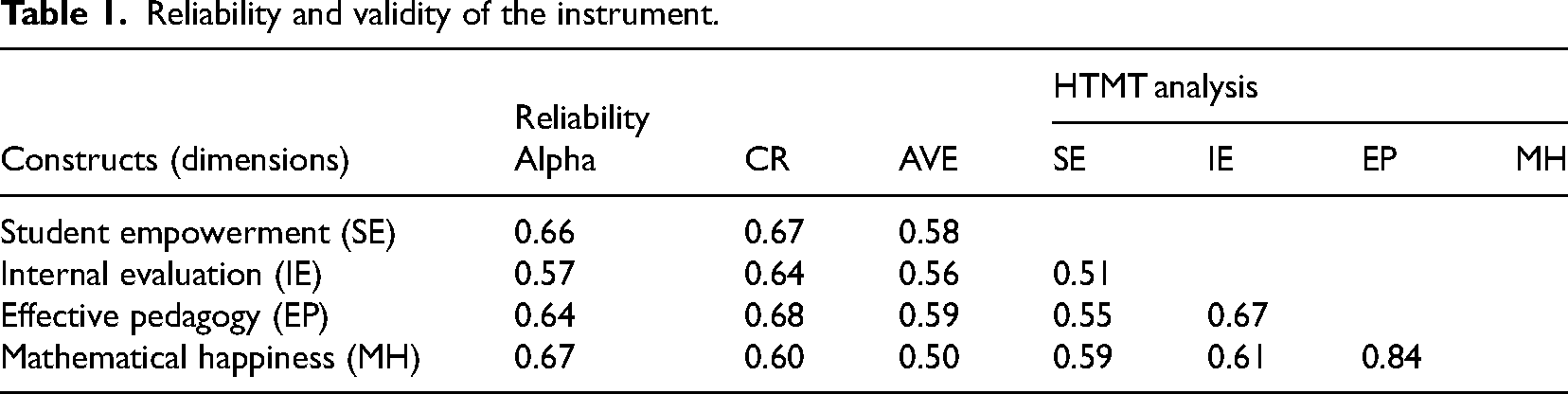
The overall reliability score of the instrument measured by Cronbach's alpha, was 0.81, surpassing the threshold criterion of 0.70 (Cohen et al., 2007). Table 1 presents the reliability and validity metrics for the four constructs: Student Empowerment (SE), Internal Evaluation (IE), Effective Pedagogy (EP), and Mathematical Happiness (MH). The reliability coefficients (Cronbach's alpha) for these constructs ranged from 0.57 to 0.67, with the lowest value for IE and the highest for MH. Although these values are below the ideal threshold, they are still considered acceptable, being close to 0.6. The lower reliability values can be attributed to the fewer items included in each construct (Tavakol & Dennick, 2011). The Construct Reliability (CR) values for these constructs range from 0.60 to 0.68. While these values are slightly below the ideal threshold of 0.70, they still indicate a reasonable level of internal consistency (Sarstedt et al., 2021). This suggests that the items within each construct are fairly consistent in measuring the same underlying concept.
Reliability and validity of the instrument.
Reliability and validity of the instrument.
The Average Variance Extracted (AVE) values for all constructs are above the acceptable threshold of 0.50, indicating that more than half of the variance in the indicators is captured by the constructs. Specifically, SE has an AVE of 0.58, IE has 0.56, EP has 0.59, and MH has 0.50. These values demonstrate that the constructs have good convergent validity, meaning they effectively capture the variance of their respective indicators (Fornell & Larcker, 1981; Huang et al., 2013).
The HTMT analysis shows values ranging from 0.51 to 0.84 for the pairs of constructs. All values are below the threshold of 0.85, indicating good discriminant validity (Henseler et al., 2015; Joshi et al., 2023). This means that the constructs are distinct from each other and measure different concepts. For instance, the HTMT value between SE and IE is 0.51, while between EP and MH, it is 0.84. These results suggest that the instrument is effective in distinguishing between the different constructs it aims to measure.
Overall, the instrument demonstrates reasonable reliability and strong validity. The constructs meet the necessary thresholds for AVE and HTMT, ensuring that they are both convergent and discriminant. Although the CR values are slightly below the ideal, they still indicate a fair level of internal consistency. This analysis supports the use of this instrument for measuring the specified constructs in future research or practical applications.
A confirmatory factor analysis (CFA) with structural equation modeling (SEM) was performed to confirm the alignment of items in the underlying latent factor variables. Table 2 shows CFA's results regarding fit indices and their threshold values. The research sample size is 3,734, adequate for SEM analysis (MacCallum et al., 1996). The Chi-square (CMIN) to degrees of freedom (df) ratio is less than five, indicating a good model fit (Bentler & Bonett, 1980). The Root Mean Square Error of Approximation (RMSEA) is 0.02, below the 0.05 cutoff. Additionally, the Standardized Root Mean Square Residual (SRMR) is 0.03, the Goodness of Fit Index (GFI) is 0.97, the Adjusted Goodness of Fit Index (AGFI) is 0.96, the Normed Fit Index (NFI) is 0.93, the Comparative Fit Index (CFI) is 0.94, the Tucker-Lewis Index (TLI) is 0.93, and the Incremental Fit Index (IFI) is 0.94. All these values exceed the 0.90 threshold, confirming that the alignment of the items in the four underlying grouping variables and the model is a strong fit for the data (Figure 2) (Joshi et al., 2023; Bentler & Bonett, 1980; Byrne, 1989; Hooper et al., 2008; Hu & Bentler, 1999).
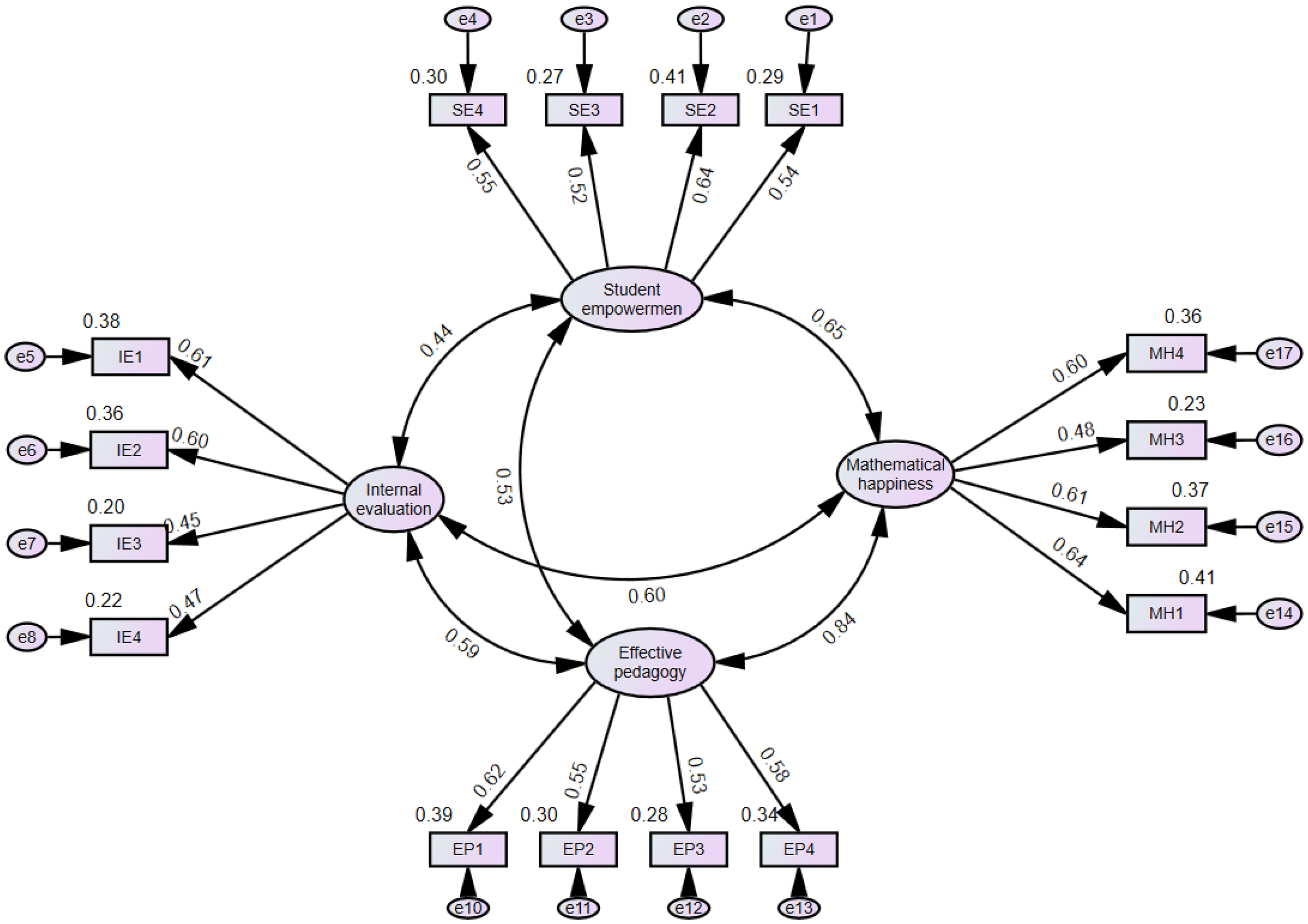
Confirmatory factor analysis of the 16 items to confirm their alignment into four factor components.
Model fit indices of confirmatory factor analysis with structural equation modeling (SEM).

In the results section, we first present the domain-wise descriptive statistics of mean and standard deviation together with t-statistics. Second, we outline the model fit indices for confirmatory factor analysis. Third, we describe the structural equation modeling analysis results for direct and mediating effects.
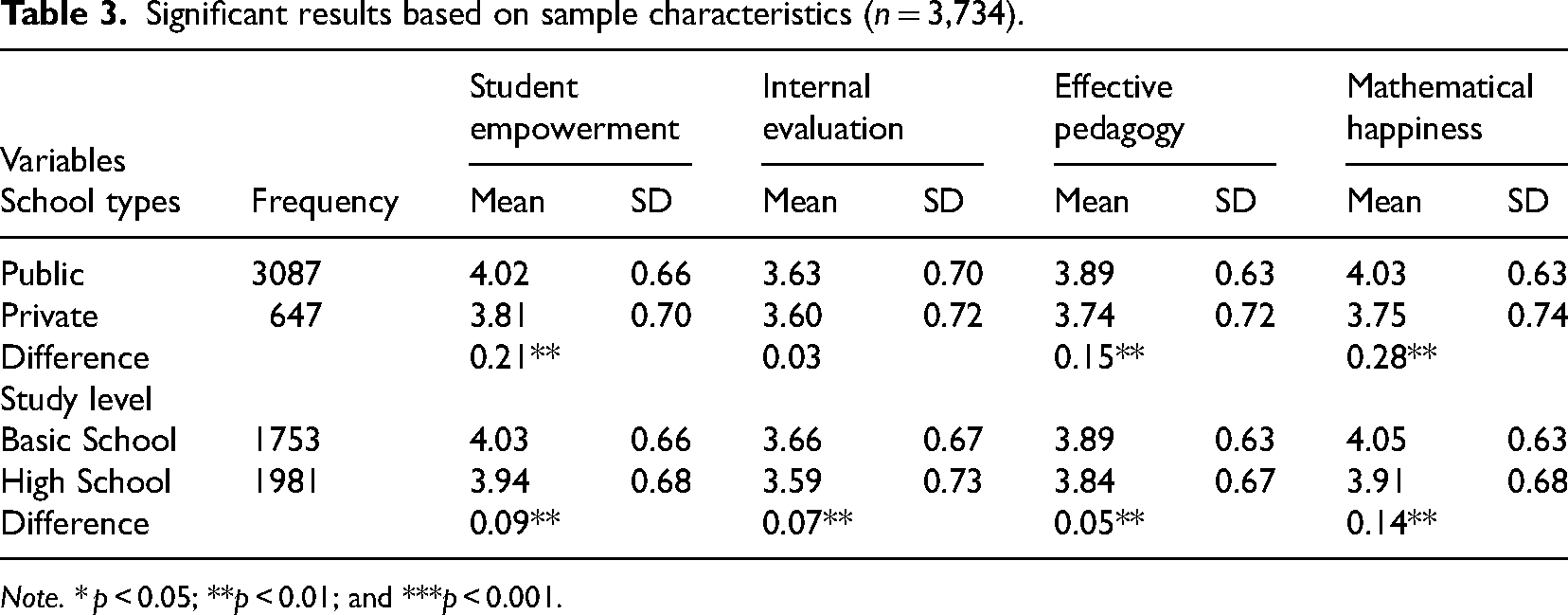
Table 3 provides an analysis of significant results based on sample characteristics for 3,734 participants, focusing on four key variables: Student Empowerment, Internal Evaluation, Effective Pedagogy, and Mathematical Happiness. The data is divided by school types (public and private) and study levels (basic and high school). For school types, public school students reported higher means in Student Empowerment (Mean = 4.02, SD = 0.66), Effective Pedagogy (Mean = 3.89, SD = 0.63), and Mathematical Happiness (Mean = 4.03, SD = 0.63) compared to private school students, who had means of 3.81 (SD = 0.70), 3.74 (SD = 0.72), and 3.75 (SD = 0.74), respectively. The differences in these variables were statistically significant (p < .01). However, there was no significant difference in Internal Evaluation between public (Mean = 3.63, SD = 0.70) and private (Mean = 3.60, SD = 0.72) school students (p = .34).
Significant results based on sample characteristics (n = 3,734).
Significant results based on sample characteristics (n = 3,734).
Note. * p < 0.05; **p < 0.01; and ***p < 0.001.
Regarding the study levels, students at the basic level (in Grade 8) reported higher means across all four variables: Student Empowerment (Mean = 4.03, SD = 0.66), Internal Evaluation (Mean = 3.66, SD = 0.67), Effective Pedagogy (Mean = 3.89, SD = 0.63), and Mathematical Happiness (Mean = 4.05, SD = 0.63) than the high school level (Grade 10) students who had lower means in these variables: 3.94 (SD = 0.68), 3.59 (SD = 0.73), 3.84 (SD = 0.67), and 3.91 (SD = 0.68), respectively. The differences were statistically significant with p-values of <.01 for Student Empowerment and Mathematical Happiness, and p = .01 for Internal Evaluation and Effective Pedagogy.
In summary, the results indicate that public school students and those at the basic study level generally report higher levels of Student Empowerment, Effective Pedagogy, and Mathematical Happiness. These findings highlight significant variations in student experiences based on school type (private versus public schools) and study level (basic Grade 8 vs. high school grade 10), suggesting that these factors play a crucial role in shaping students’ educational outcomes.
After CFA confirmed the good fit of the items with the underlying four latent variables – effective pedagogy, internal evaluation, mathematical happiness, and student empowerment, the first three were treated as independent variables (IV). The last one was treated as the dependent variable (DV) to study the direct effect of IV on the DV. Table 4 and Figure 3(a) to (e) present the results of direct effect analysis.
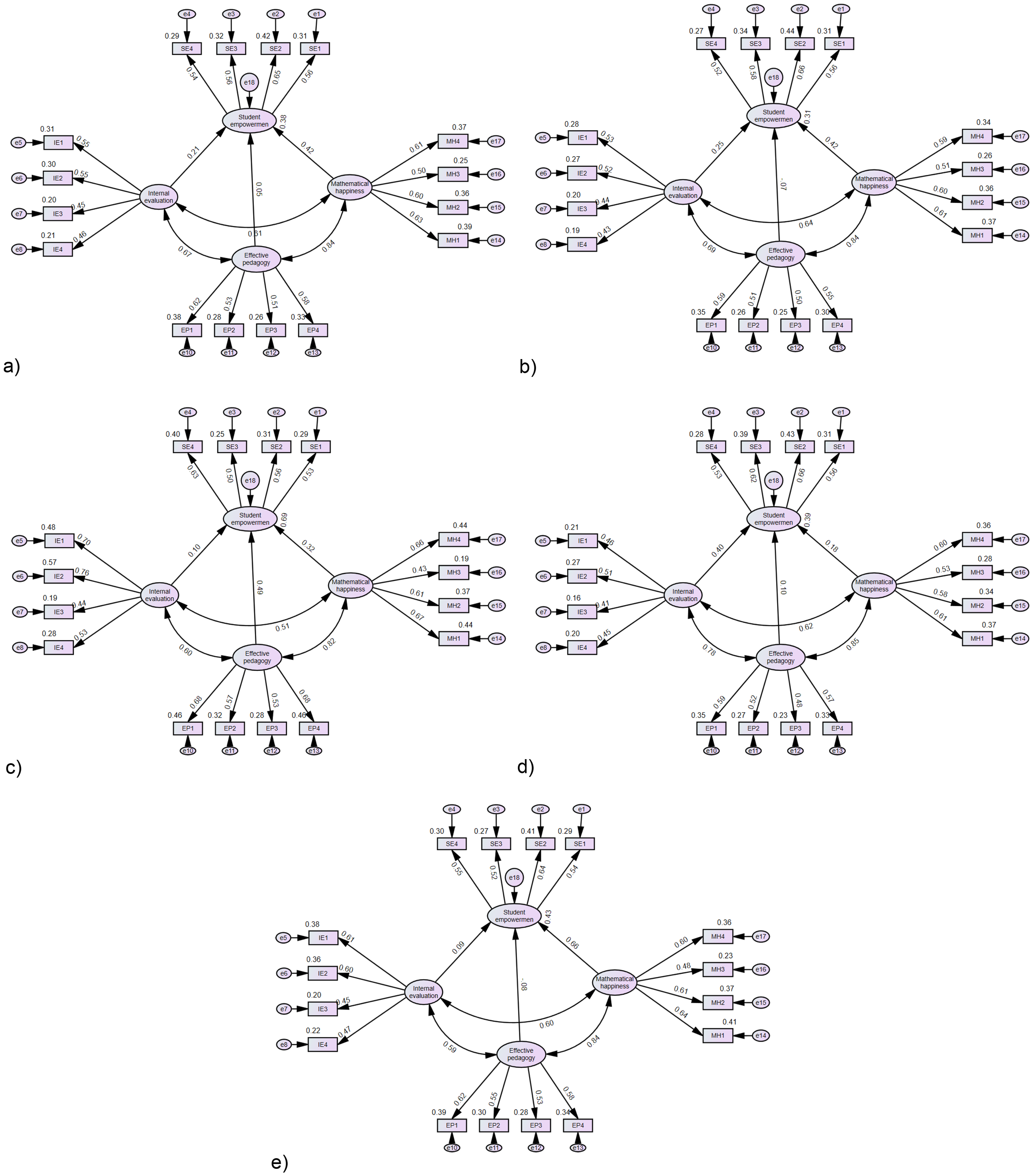
Structural equation modeling (SEM) of the direct effect of independent variables (IE, EP, and MH) on the dependent variable (SE). (a) Direct effect overall, (b) direct effect (public school), (c) direct effect (private school), (d) direct effect (basic school), (e) direct effect (high school).
Regression weights: (total—default unstandardized model).
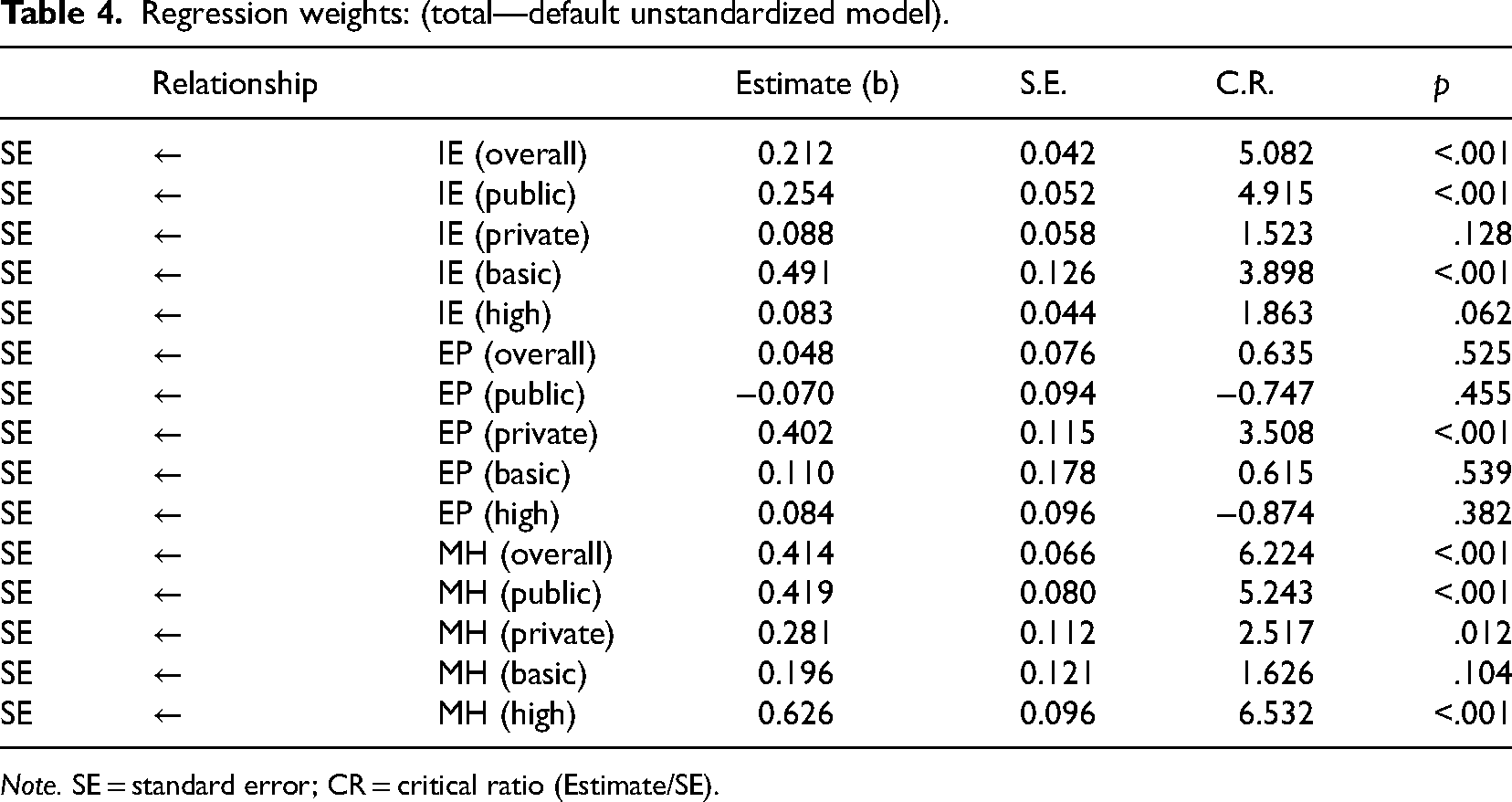
Note. SE = standard error; CR = critical ratio (Estimate/SE).
Effective Pedagogy (EP) does not significantly affect SE in the overall sample (b = 0.048, p = .525) or in public schools (b = −0.070, p = .455). Interestingly, EP has a significant positive effect on SE in private schools (b = 0.402, p < .001). For both basic and high school levels, EP does not show a significant effect on SE (b = 0.110, p = .539 and 0.084, p = .382, respectively).
Regarding Internal Evaluation (IE), the results show a significant positive effect on Student Empowerment (SE) in the overall sample (b = 0.212, p < .001) and within public schools (b = 0.254, p < .001). However, this effect is not significant in private schools (b = 0.088, p = .128). At the basic study level, IE has a strong positive effect on SE (b = 0.491, p < .001), while at the high school, the effect is marginally non-significant (b = 0.083, p = .062).
Mathematical Happiness (MH) consistently shows a significant positive effect on SE across the overall sample (b = 0.414, p < .001), public schools (b = 0.419, p < .001), and private schools (b = 0.281, p = .012). While the effect of MH on SE is not significant at the basic study level (b = 0.196, p = .0104), it is strongly positive at the high school level (b = 0.626, p < .001) (Table 4).
Mediation effects of internal evaluation and mathematical happiness between the relationship of effective pedagogy and student empowerment were analyzed with structural equation modeling in IBM SPSS AMOS 29 (Figure 4(a)–(e), Table 5). Five types of mediation were analyzed – mediation of internal evaluation between effective pedagogy and student empowerment, mediation of student happiness between effective pedagogy and student empowerment, mediation of student mediation of student happiness between internal evaluation and student empowerment, mediation of internal evaluation between effective pedagogy and student happiness, and mediation of internal evaluation and student happiness together between effective pedagogy and student empowerment in mathematics learning.
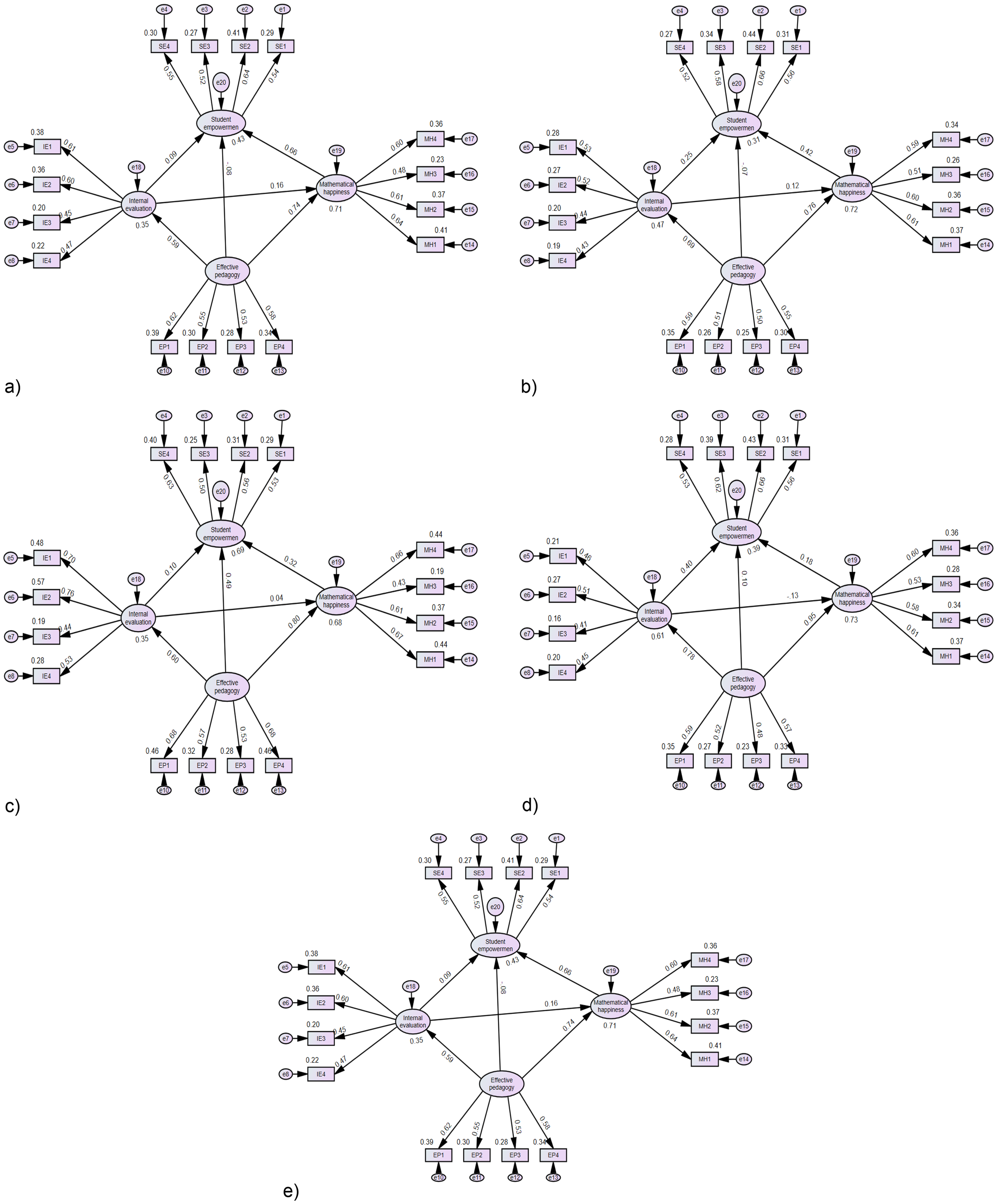
Structural equation modeling (SEM) of the direct effect of independent variables (IE, EP, and MH) on the dependent variable (SE). (a) Results based on total sample, (b) results based on public schools, (c) results based on private schools, (d) results based on basic level, (e) results based on high school level.
Mediating role of internal evaluation and students’ mathematical happiness between effective pedagogy and student empowerment and mediation of students’ mathematical happiness between the relationship of internal evaluation and student empowerment.
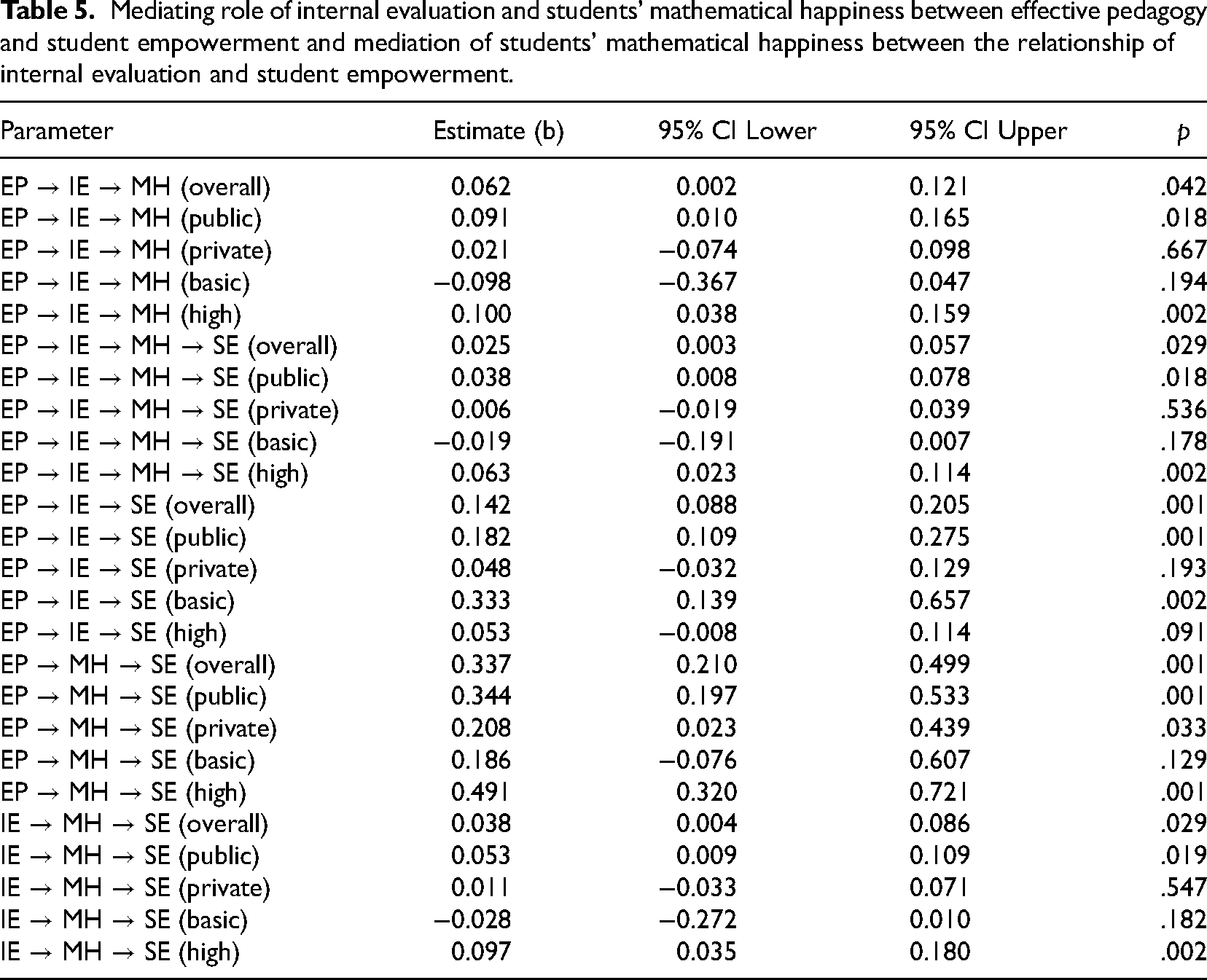
The results of the mediation analysis showed that effective pedagogy and student empowerment had a significant positive relationship when mediated through internal evaluation (b = 0.142, p = .001) in the overall sample, public school (b = 0.182, p = .001), and basic school (b = 0.333, p = .002). The results showed that students’ mathematical happiness in learning significantly mediated the relationship between effective pedagogy and student empowerment (b = 0.337, p = .001) in the overall sample, public schools (b = 0.344, p = .001), private schools (b = 0.208, p = .033), high schools (b = 0.491, p = .001). On the other hand, internal evaluation of students’ mathematics learning significantly predicted student empowerment when mediated through students’ mathematical happiness in the overall sample (b = 0.038, p = .029), public schools (b = 0.053, p = .019), and high schools (b = 0.097, p = .002) (Figure 4(a)–(e) and Table 5).
The results of mediation analysis showed that effective pedagogy predicts students’ mathematical happiness when mediated through internal evaluation in the overall sample (b = 0.062, p = .042), public schools (b = 0.091, p = .018), and high schools (b = 0.100, p = .002), at the 0.05 significance level. Similarly, the result showed that effective pedagogy and student empowerment have a significant positive relationship when mediated through internal evaluation and mathematical happiness, together in that order, in the overall sample (b = 0.025, p = .029), public schools (b = 0.038, p = .018), and high schools (b = 0.063, p = .002) (Figure 4(a) to (e) and Table 5).
One primary research objective was to explore how internal evaluation of students’ mathematics and their happiness in learning mediate the relationship between effective pedagogy and student empowerment. The findings indicate that internal evaluation of mathematics learning significantly impacts student empowerment, particularly in public and basic schools. Effective pedagogy was significantly associated with student empowerment only in private schools. Additionally, student happiness in mathematics learning emerged as a significant predictor of student empowerment. Mediation analyses revealed that internal evaluation significantly mediated the relationship between effective pedagogy and students’ happiness in mathematics learning overall. Similarly, internal evaluation also significantly mediated the relationship between effective pedagogy and student empowerment. Furthermore, students’ happiness in mathematics learning significantly mediated the relationships between effective pedagogy and empowerment, as well as between internal evaluation and empowerment.
Internal assessments at the school and classroom level are important tools to motivate students in mathematics learning, especially those struggling (Zhang et al., 2022). Assessment as an inquiry approach to finding learning difficulties and creating a supporting environment may help develop a positive attitude and empower students in mathematics learning (Ernest, 2002; Jacobs, 2022; Shanker, 2013). The internal assessment aims to empower students through immediate feedback and help them gain control over how they communicate mathematically and how they develop mathematical knowledge, skills, and dispositions to apply in problem-solving (Ernest, 2002). Then, with empowerment, students may feel confident in doing mathematics and communicating mathematically with others in an effective way (Owens & Yates, 2022).
Literature shows that critical pedagogy focusing on learner agency and active role empowers students in mathematics learning (Ernest, 2002). Quality teaching is one of the most important factors in empowering students in terms of self-confidence, self-learning, perseverance, collaboration, effective communication, and transfer of learning (Queensland Department of Education, 2022). Although the literature shows the importance of effective pedagogy to empower students in mathematics learning, the results showed that students’ perceptions of effective pedagogy in mathematics learning had no significant effect on their empowerment in general. However, it was a significant predictor of student empowerment in private schools. This inconsistency between the theory and research outcome may be due to a lack of student-centered activities in Nepali classrooms (Education Review Office, 2020, 2022).
Mathematics learning is key to success in many professional areas and day-to-day life. Therefore, the school curriculum has mandatory mathematics up to certain grade levels. Mathematics is a compulsory subject at the school level until grade ten in Nepal (Curriculum Development Center, 2022). However, many students find it difficult leading to low achievement (Education Review Office, 2020), reflecting students’ low-level happiness and disempowering condition in Nepal. Students’ happiness in learning mathematics is reflected in their emotions, engagement, and attitudes toward mathematics (Clarkson et al., 2019). The findings in the current study revealed that students’ mathematical happiness was a significant predictor of student empowerment in the whole sample, favoring both public and private schools, and high schools. The average happiness level in mathematics is high, favoring public schools. However, student achievement as a means to assess empowerment shows the opposite: low in public schools and high in private schools in Nepal (Education Review Office, 2022).
The mediation analysis results show that effective pedagogy predicted students’ mathematical happiness when mediated through internal evaluation in the overall sample and favoring public schools and high schools. The reason may be that the internal evaluations account for day-to-day and other periodic assessments in the classroom so that students are aware of their learning progression (Curriculum Development Center, 2023). Students’ rating of pedagogy can be high when they are assessed frequently and can see how they are learning mathematics effectively. This impact is more visible in public schools and mostly higher grades. Hence, effective pedagogy and student empowerment have a significant positive relationship when mediated through internal evaluation and students’ mathematical happiness, favoring public schools and high schools. Since achievement in public schools is relatively lower than in private schools, the gap is higher in upper grades (high school level). Hence, effective pedagogy has a higher impact in public schools because many students are struggling with mathematics learning in those schools, and a little support with effective pedagogy is more influential (Education Review Office, 2013, 2016, 2020, 2022).
Other study findings showed that effective pedagogy and student empowerment had a significant positive relationship when mediated through internal evaluation in the overall sample, favoring public schools and basic schools. Likewise, students’ mathematical happiness in learning significantly mediated the relationship between effective pedagogy and student empowerment in the overall sample, favoring public and private schools and high schools. Internal evaluation of students’ mathematics learning significantly predicted student empowerment when mediated through mathematical happiness in the overall sample, favoring public schools and high schools. These findings corroborate the view that self-assessments like individual presentations, group presentations, student portfolios, discussions and seminars, logbooks, and regular attendance can use students to evaluate themselves rather than teaching students how to evaluate the quality of their work (Mok et al., 2006). Hence, internal evaluation may improve the sense of effective pedagogy, leading to high self-esteem and confidence that promotes a sense of empowerment. At the basic level (Grades 1–8), the continuous assessment system is employed as an evaluation system, whereas mathematics teachers of high level (Grades 9–10) have authority to give 25% as per the regular activities, attendance, and discipline of the students (Curriculum Development Center, 2023), which may cause that the finding of this research also shows the level of perception of student found to be high in attendance is considered as a tool of evaluation. This case might be similar to other developing countries context around the globe.
Similarly, the participants highly reported that the learning objectives of the class are always clear. The teacher has good skills to select suitable assessments, which are good practices for effective learning, and showed that teachers in sample schools prepared well before entering the class. The students expected that it should be continued in the future. However, the level of perception towards the preparation of activity guidelines before taking classes was found to be low. Hence, mathematics teacher should improve that behavior in their instruction.
The relationship between teacher and students is found to be good, which is a positive aspect of effective pedagogy. However, the skills of teachers for making their students happy in the classroom were found to be comparatively low and can have a negative impact on learning mathematics (Uslu & Gizir, 2017). Hence, mathematics teachers should be more friendly and comfortable with their students. The results of this study are in line with the findings of Hayes et al. (2017) that the highly specific type of communication, for example, dialog (Swaffield, 2008), should be applied in teaching and learning. The demanding characteristics of teachers, like trust, open-mindedness, and a willingness to listen (Kazepides, 2012), should be developed to make the students happy in mathematics learning. Types of institutions are significant factors in determining the experience, preparation, and socialization in the classroom, and the result is in favor of the students of public schools, which may be the cause that the students of community schools have more freedom in school premises. When it comes to socialization, Hayes et al. (2017) concluded that the positive relationship between teachers and students and students and students is a good predictor of socialization and is likely to help students cultivate a positive attitude toward mathematics, empowering them in mathematics learning.
Conclusions
In summary, the study's findings highlight the crucial role of evaluation methods in shaping student empowerment. Internal evaluation of students’ mathematics learning significantly affected empowerment, while internal evaluation had varying impacts across public and private schools. Interestingly, internal evaluation emerged as a significant predictor of empowerment in basic schools but not high schools. Additionally, students’ mathematical happiness played a key role, significantly predicting empowerment across different school types. Mediation analysis revealed that effective pedagogy influenced students’ mathematical happiness, particularly when mediated through internal evaluation in public school and high school education. These results underscore the importance of self-assessment practices, such as individual presentations, group discussions, and personal portfolios, in fostering student empowerment and confidence. Therefore, internal evaluation serves as a catalyst for enhancing effective pedagogy and promoting empowerment in educational settings.
The empirical implications of the findings of this study are discussed as follows:
Promote Self-Assessment Practices: Schools and institutions should encourage mathematics teachers to incorporate self-assessment methods, such as individual presentations, group discussions, and personal portfolios, into their teaching practices. For this, mathematics teachers should be trained on effective self-assessment techniques and how to guide students in evaluating their work.
Tailor Evaluation Approaches: Schools and institutions should recognize that different evaluation approaches (internal and external) have varying impacts on student empowerment. Therefore, they should consider the context (public vs. private schools, basic versus high school education) when designing evaluation policies.
Emphasize Student Happiness: Schools and educational institutions should acknowledge the role of students’ mathematical happiness in predicting empowerment. They should create a positive and supportive learning environment that fosters students’ well-being and satisfaction.
Support Effective Pedagogy: Schools and educational institutions must invest in professional development for teachers to enhance their pedagogical skills. They should encourage innovative teaching methods that engage students and promote effective learning, which helps in student empowerment.
Policy Implementation: The government and concerned departments must develop clear evaluation policies that align with educational goals and student empowerment. They should regularly review and adapt policies based on empirical evidence and student outcomes.
Limitations
This study has several limitations due to sampling methods and potential differences in experiences between public and private school students. The data collection relied solely on 63M.Phil. students from Nepal Open University, who may have selected schools within their own districts and neighborhoods, limiting the randomness of the sample. The sample included only grade eight and ten students, which may restrict the generalizability of the findings to basic and high school levels. Additionally, the sample was disproportionately composed of public-school students (approximately 83%), with only about 17% from private schools, potentially skewing the results. Given that students in public and private schools may have significantly different learning experiences, these differences might not be fully captured in the data. Future research should employ stratified random sampling across all seven provinces of Nepal, ensuring proportional representation from both public and private schools, and considering various geographical and sociocultural demographic characteristics.
Footnotes
Acknowledgements
The authors would like to thank all MPhil scholars of Nepal Open University who voluntarily supported in data collection and data entry in IBM SPSS for this study.
Contributorship
Dirgha Raj Joshi contributed to conceptualization, tools construction, research administration, data collection, data analysis, contribution in the first draft, and final corrections, and approval; Shashidhar Belbase contributed to conceptualization, data analysis, contribution in the first draft, correction and edit of the subsequent drafts, final correction, and approval; Jeevan Khanal contributed to conceptualization, data collection, contribution in first draft, final correction, and approval; Krishna Prasad Sharma Chapai contributed to conceptualization, contribution in the first draft, final correction, and approval; Krishna Prasad Adhikari contributed to conceptualization, contribution in the first draft, final correction, and approval; Bishnu Maya Joshi contributed to conceptualization, contribution in the first draft, final correction, and approval.
Data availability
The data for the study is not publicly available. However, it can be requested with the corresponding author.
Declaration of conflicting interests
The authors declared no potential conflicts of interest with respect to the research, authorship, and/or publication of this article.
Ethical approval and informed consent
This study was approved by Nepal Open University. Informed consents were obtained from all the participants and their parents for the study.
Funding
The authors received no financial support for the research, authorship, and/or publication of this article.
Informed consent
Informed consents were obtained from all the participant students and their parents for the study.
