



Abstract
The value of ethnomathematics in the process of teaching and learning mathematics is acknowledged on a global scale. In light of this, the majority of nations have argued in favor of its inclusion in the mathematics curriculum. Whereas mathematics teachers in affluent nations receive guidance and support, most mathematics teachers in developing nations are left to their own devices. This review aimed to identify local cultural relics that relate to mathematical principles taught in schools so that mathematics teachers in developing nations might use them as a reference. This review included 61 articles from Scopus, JSTOR, EBSCOhost, and ProQuest. Upon analysis, the articles revealed that cultural games, weaving, cultural dances, symbolic calculations, buildings, meals, and number systems are among the ethnomathematics activities in which school mathematics concepts are embedded. Nonetheless, cultural games and weaving are mentioned in literature the most frequently. Fabric or textiles are popular in weaving. These results imply that ethnomathematics can be used as a pedagogical, learning, or assessment method for teaching and learning mathematics in schools. However, mathematics teachers must engage in strategic and structural planning; the ADDIE model provides direction in this regard. The results of this review give mathematics teachers in developing nations a baseline and now is the right moment for them to begin implementing the suggested methods of integrating ethnomathematics into their instructional practices.
Introduction
On account of its significance and relevance in so many facets of daily life, mathematics is a subject that is taught at every educational level (Golding, 2018; Ziegler & Loos, 2017). However, most mathematics teachers struggle to teach learners the content and rules of mathematics engagingly and successfully (Fouze & Amit, 2018). As a result, learners view mathematics in the classroom as distinct from what they encounter in their daily lives (Benson-O'Connor et al., 2019; Palhares, 2012). Many scholars (e.g., Mauluah & Marsigit, 2019; Utami et al., 2019) agree that in many nations, such as Indonesia (Budiharso & Tarman, 2020), a lack of cultural contexts in the teaching process influences the learners' motivation and achievement in mathematics. According to Altay et al. (2017), learners can develop mathematical process skills such as reasoning, creativity, problem-solving, entrepreneurial and employability skills, analytical thinking, and communication by making connections between abstract concepts in school mathematics and their culture, contextual problems, real-life experiences, and daily lives. These are critical skills for twenty-first-century sustainable development. Furthermore, according to Wilhelm (2020), since these abilities expose students to a range of professions that use mathematics, they aid in the development of a conscious understanding of their future job options.
Magni (2017) argues that indigenous knowledge (IK) can be used to teach mathematics since the subject is socially and culturally structured (Lee & Holden, 1999). According to Hiwasaki et al. (2014), IK encompasses a variety of understandings, skills, and philosophies that have been developed by local communities with long histories and experiences of associations with their natural surroundings. These include terms and expressions, blacksmithing, hunting, farming, traditional dances, stories, music, designs, handcrafts, folk tales, ceremonies, rites, and rituals (Odora Hoppers, 2021; Tabuti & Van Damme, 2012) among others. Through a bridge known as ethnomathematics, these cultural activities can be linked to formal classroom mathematics (Rosa & Orey, 2011). Ethnomathematics is a ‘program in history and epistemology with an intrinsic pedagogical action … .taking into account the cultural differences that have determined the cultural evolution of humankind and political dimensions of mathematics' (D’Ambrosio, 1999, p. 150). Furthermore, D'Ambrosio (1985) refers to ethnomathematics as “the mathematics which is practiced among identifiable cultural groups such as national-tribal societies, labor groups, children of a certain age bracket, professional classes, and so on” (p. 45), that is, other marginalized sectors of the society, as opposed to the mathematics that is taught and learned in schools. Thus, the ethnomathematics program is not limited to the education setting. Nevertheless, the integration of the ethnomathematics program into mathematics education enhances students' cognitive abilities as they become aware that their communities are valued for the things they already know, do, and say (Mawere, 2015). Additionally, it establishes a connection between school mathematical concepts and cultural settings (Chahine, 2020), thereby revealing the role of mathematics in society.
Although the ethnomathematics program greatly aids in poverty alleviation and sustainable development (Madusise, 2022), the literature indicates that there is a lack of consensus worldwide regarding its inclusion in the official school mathematics curriculum. For instance, while the ethnomathematics program started to gain traction and become more mainstream in the United States as early as 2002 (Rowlands & Carson, 2002), mathematicians and mathematics educators in Canada engaged in a fierce debate in 2014 over whether mathematics is a human endeavor that is ingrained in culture or is independent of it (Brandt & Chernoff, 2015). In contrast to ethnomathematics, which values variation, school mathematics has occasionally been criticized for giving the sense that there is only one way to complete a problem (Doumbia et al., 1989). In other cases, it has also been said that development tactics like education minimize cultural influences. For example, Nyerere (1990) stated that they have “often failed to utilize the enormous reserves of traditional wisdom and creativity, and enterprise in the countries of the third world” (p. 46).
Additionally, some contexts stress the significance of relating mathematics to cultural contexts but do not provide instructions on how to do so. For instance, through its National Teacher Policy (NTP) of 2019, the Uganda Ministry of Education and Sports (MoES) promoted the inclusion of IK in the formal school curriculum (MoES, 2019). Unfortunately, teachers were left wondering how and where to begin because the NTP does not provide them with particular IK content to consider for each school subject or guidance on how to implement IK into the curriculum. Other countries' national curricula, such as Indonesia's in 2013 (Budiharso & Tarman, 2020) and Kenya's in 2017 (Jumba & Mwiti, 2022), have comparable situations to Uganda. They did not provide teachers with guidelines for integrating IK, such as ethnomathematics, into their teaching practices. These objections highlight the need for and significance of ethnomathematics research by reflecting on untapped opportunities and promises, such as unveiling the cultural activities that manifest mathematical concepts, that will lead to a global consensus. In other words, it is evident from these that there is still much to learn about the relevance of incorporating the ethnomathematics program into mathematics education and what constitutes an ethnomathematics program in the mathematics classroom. Thus, this review's goal was to identify ethnomathematical activities that can be used to enhance classroom mathematics instruction and student learning, thus, emphasizing the program's applicability in this specific situation. The study question, “Which local cultural relics express their relationship with school mathematical concepts?” in particular served as the basis for this review. As a result, nations that are considering ethnomathematics as an alternate program for teaching and learning mathematics in schools may find the review's conclusions useful.
Method
This review was qualitative (Busetto et al., 2020) in nature. Data were collected through a documentary review (Wills, 2022) of published articles from four databases: ProQuest, EBSCOhost, JSTOR, and Scopus. The initial search terms used were “Ethnomathematics,” “School Mathematics and Ethnomathematics,” “Mathematics and Culture,” “Traditional or Local Mathematics,” and “Mathematics in Culture,” which produced 982 articles. When the search words were narrowed down to “Ethnomathematics” and “Mathematics in Culture,” the number of articles decreased to 393. After screening the articles for the appearance of the word “ethnomathematics” in their titles, 198 articles were retained for additional screening. Theoretical and review papers were then excluded, leaving 103 articles whose abstracts were read. Eighty-seven articles, in which the term ethnomathematics was used in general, or a specific ethnomathematics activity was mentioned, were set aside for a thorough paper review. Finally, the review included 61 articles that showcased an ethnomathematics activity that was carefully investigated.
The data were analyzed using content analysis (Bengtsson, 2016) and categorization (Jacobs, 2018). For content analysis, the ethnomathematical activities described in each article were first identified, and then the mathematics concepts present in each activity were determined. The mathematics concepts were then categorized based on five broad mathematics constructs: measures, number patterns and operations, geometry, algebra, and probability and statistics. The findings were interpreted and discussed concerning how the identified ethnomathematical activities might benefit mathematics education courses, or how they might be applied in a mathematics classroom. Additionally, a paradigm for guidance has been put forth for mathematics teachers.
Findings
This review emphasizes that historically, mathematics has been very close to daily life and was formed by people in reaction to surrounding events, confirming the relationship between ethnomathematics and practical mathematics concepts in cultural life. While there are many varied mathematical experiences from many cultures that foster mathematics, the ones included in this overview include cultural games, weaving, cultural dances, systematic calculations, buildings, meals, and number systems. Following the presentation of an overview of the examined research articles, each of these activities is described in detail in the following sections.
Overview of the reviewed studies
A summary of the examined research articles is provided, broken down by publication year and continent.
Year of publication
Although there is no discernible pattern in the study on ethnomathematics activities across time, Figure 1 indicates that 2021 saw the greatest number of publications.
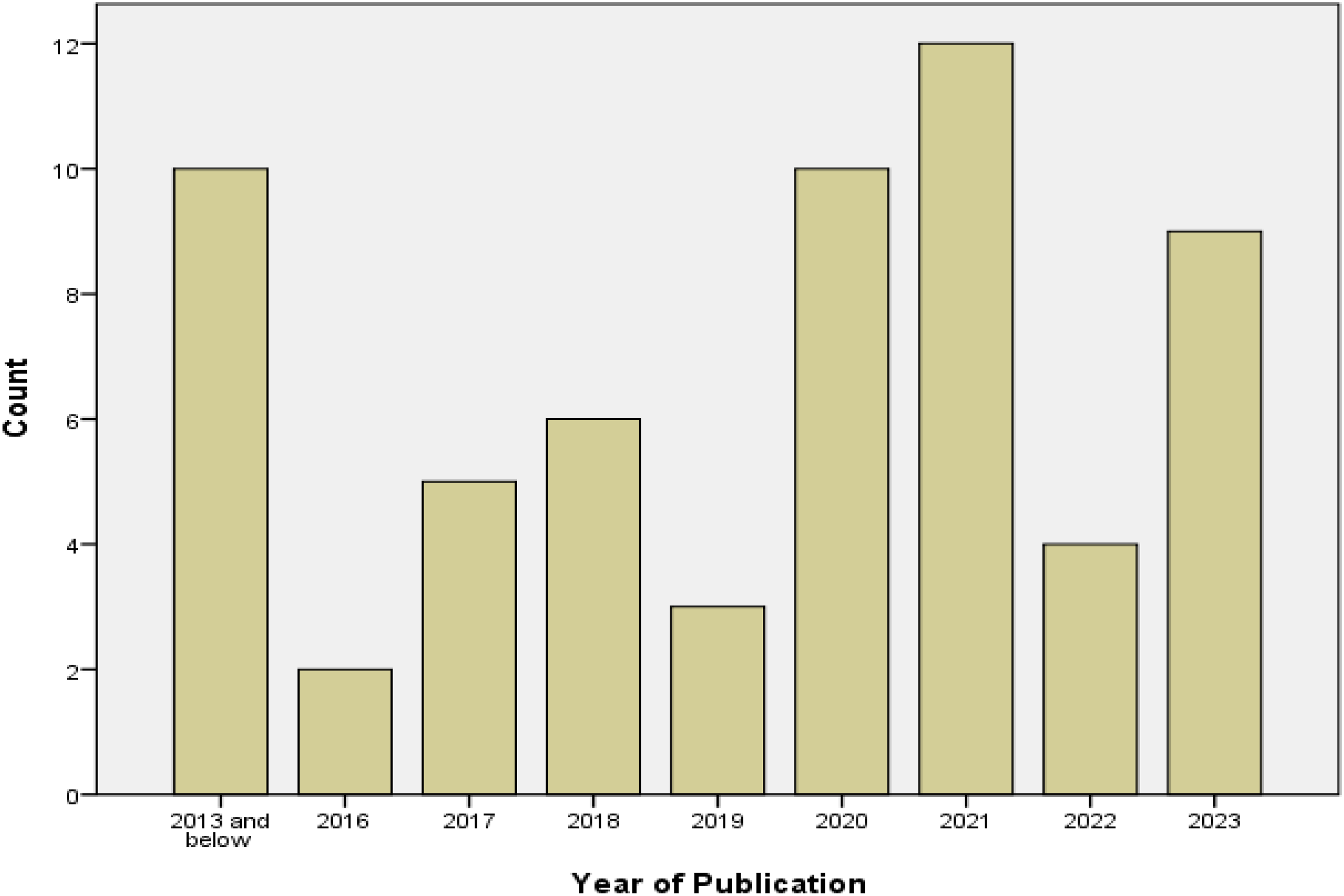
Year of publication.
Out of the seven continents on Earth, which are Asia, Africa, North America, South America, Antarctica, Europe, and Australia, Figure 2 shows that the majority of ethnomathematics research has been conducted in Asia (63.9%). Indonesia has conducted 84.6% of the research conducted in Asia (Figure 3). Despite South America, particularly Brazil, being the birthplace of ethnomathematics, Figure 3 shows that there were no research articles from this continent included in the review. This could be due to their exclusion based on being review papers or because they were not freely accessible in the databases considered for this study.
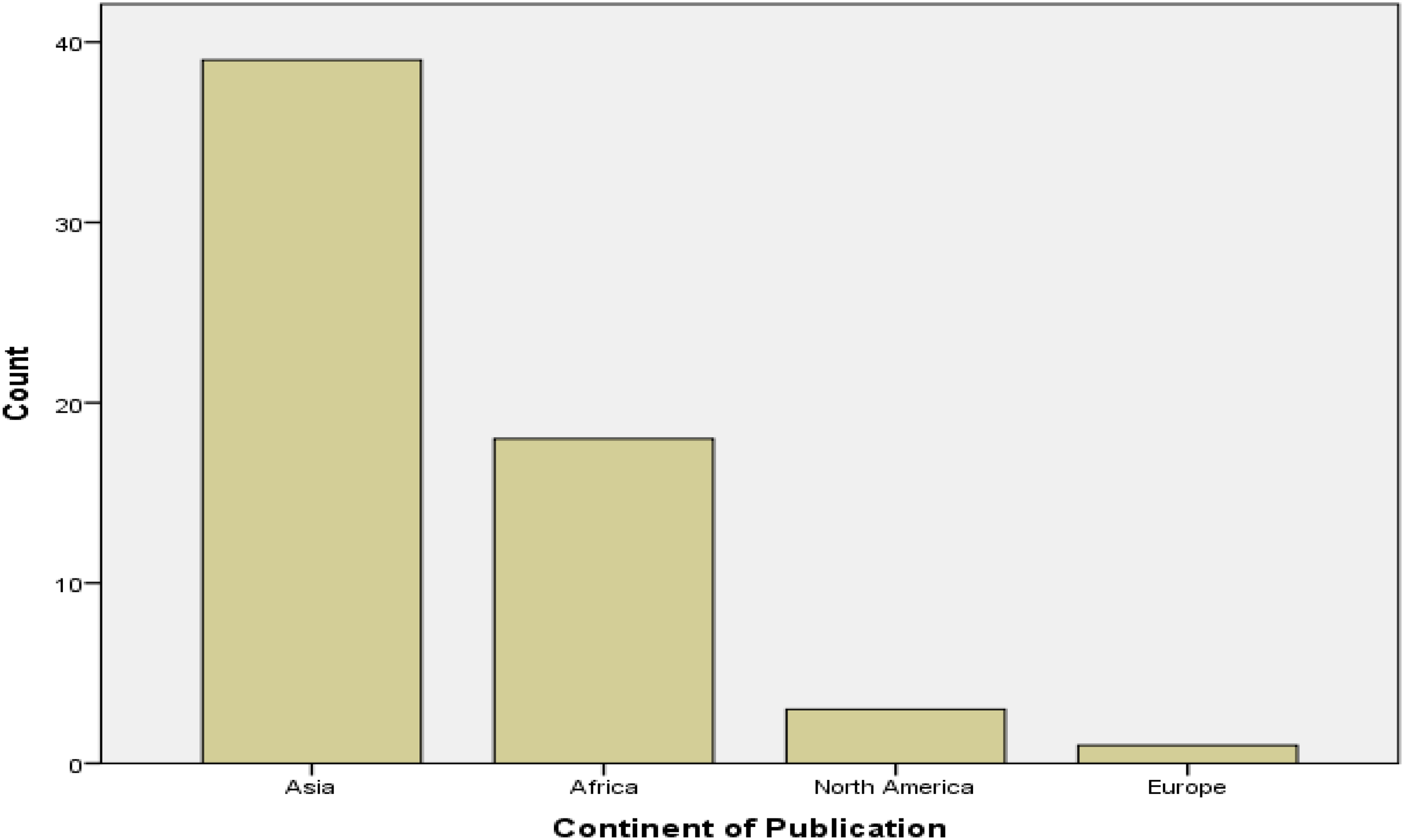
Continent of publication.
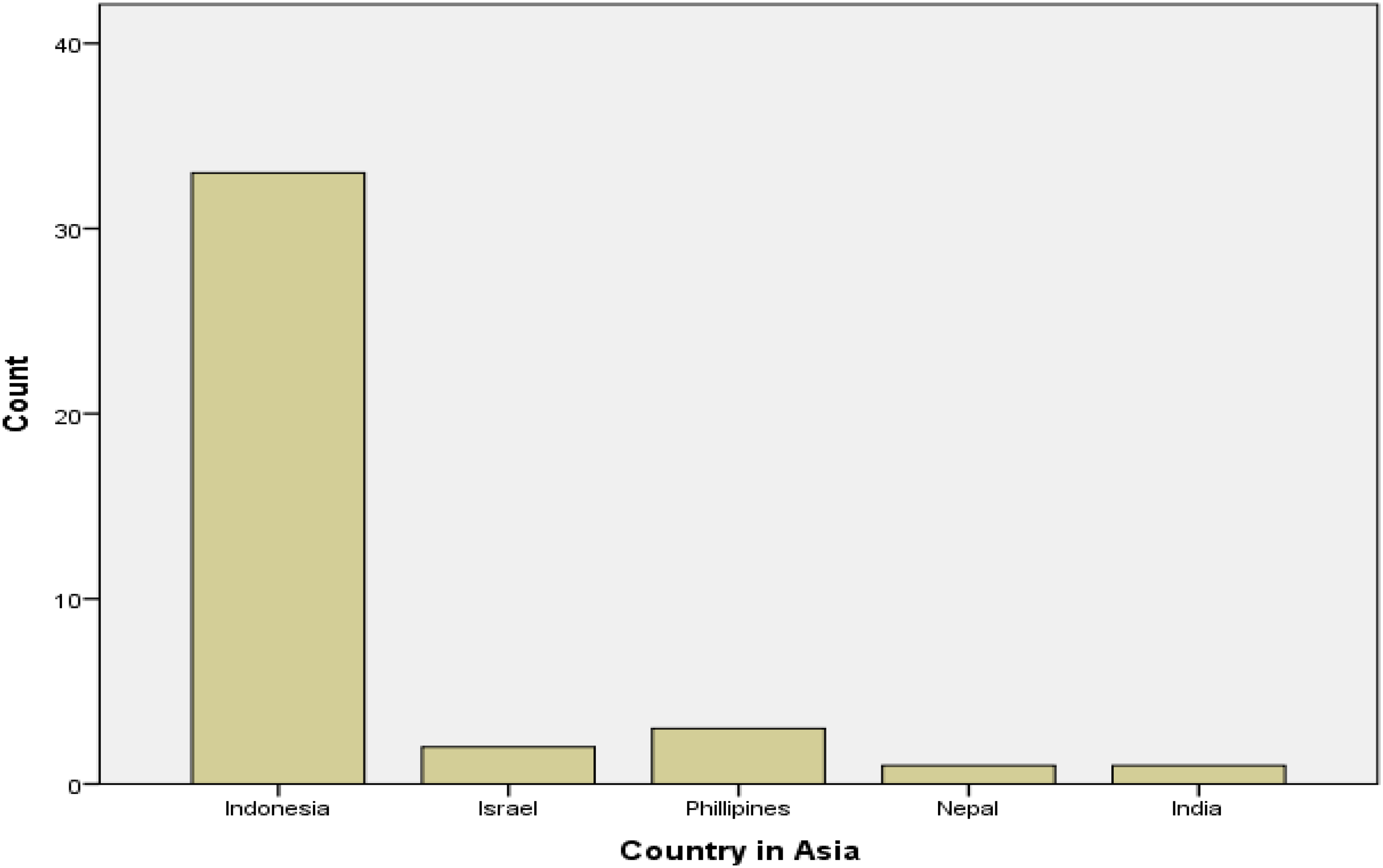
Publications within Asia.
According to Figure 4, there are a variety of ethnomathematics activities that can be incorporated into mathematics lessons in schools, such as cultural games, weaving, cultural dances, symbolic calculations, buildings, meals, and number systems. The two most popular ethnomathematics activities are cultural games (45.9%) and weaving (40.9%). Figure 5 illustrates the many styles of weaving, with the most common being fabric or textile (32.0%), followed by baskets, embroidery and ornamentation, and mats.
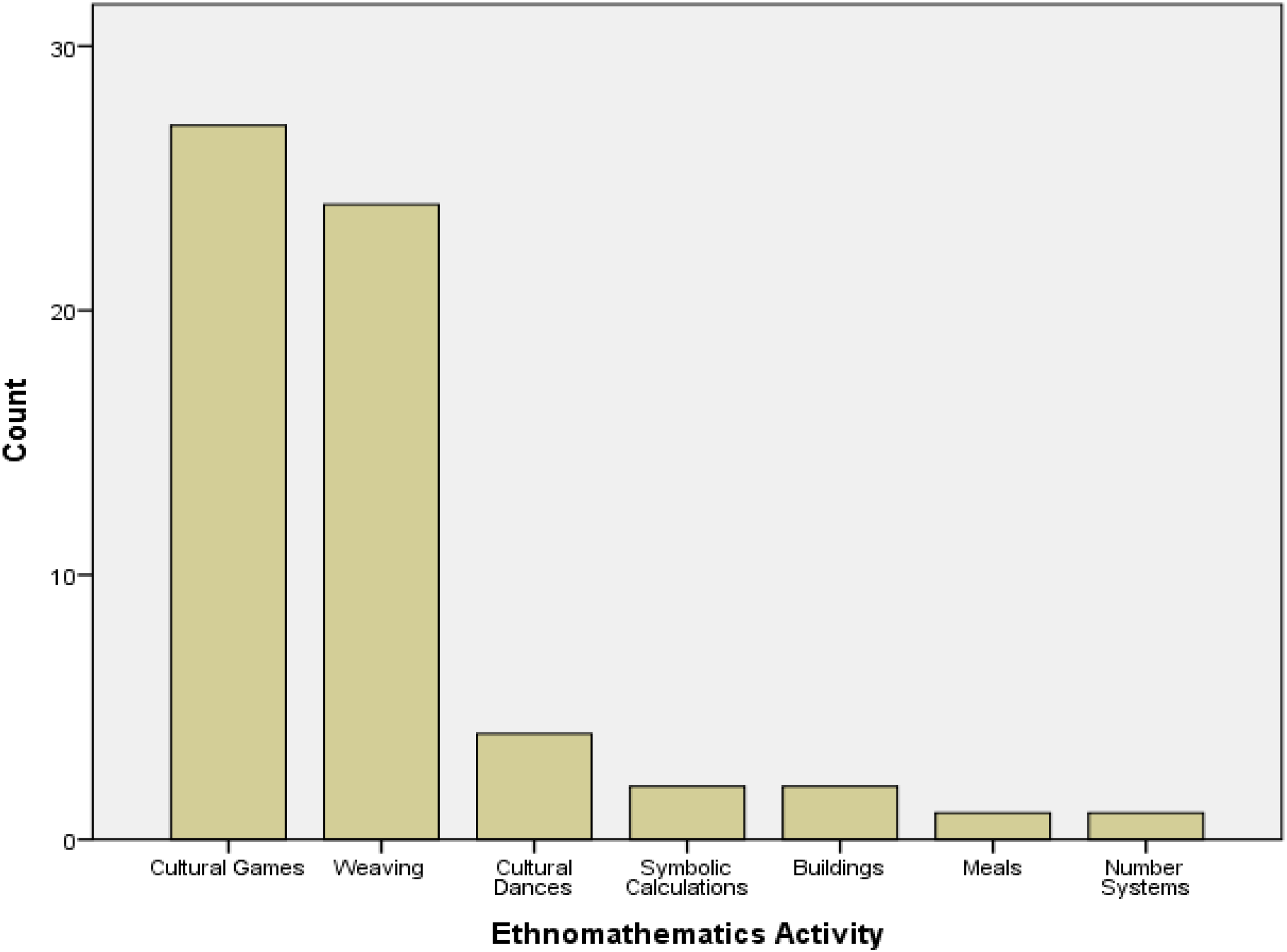
Ethnomathematics activities.
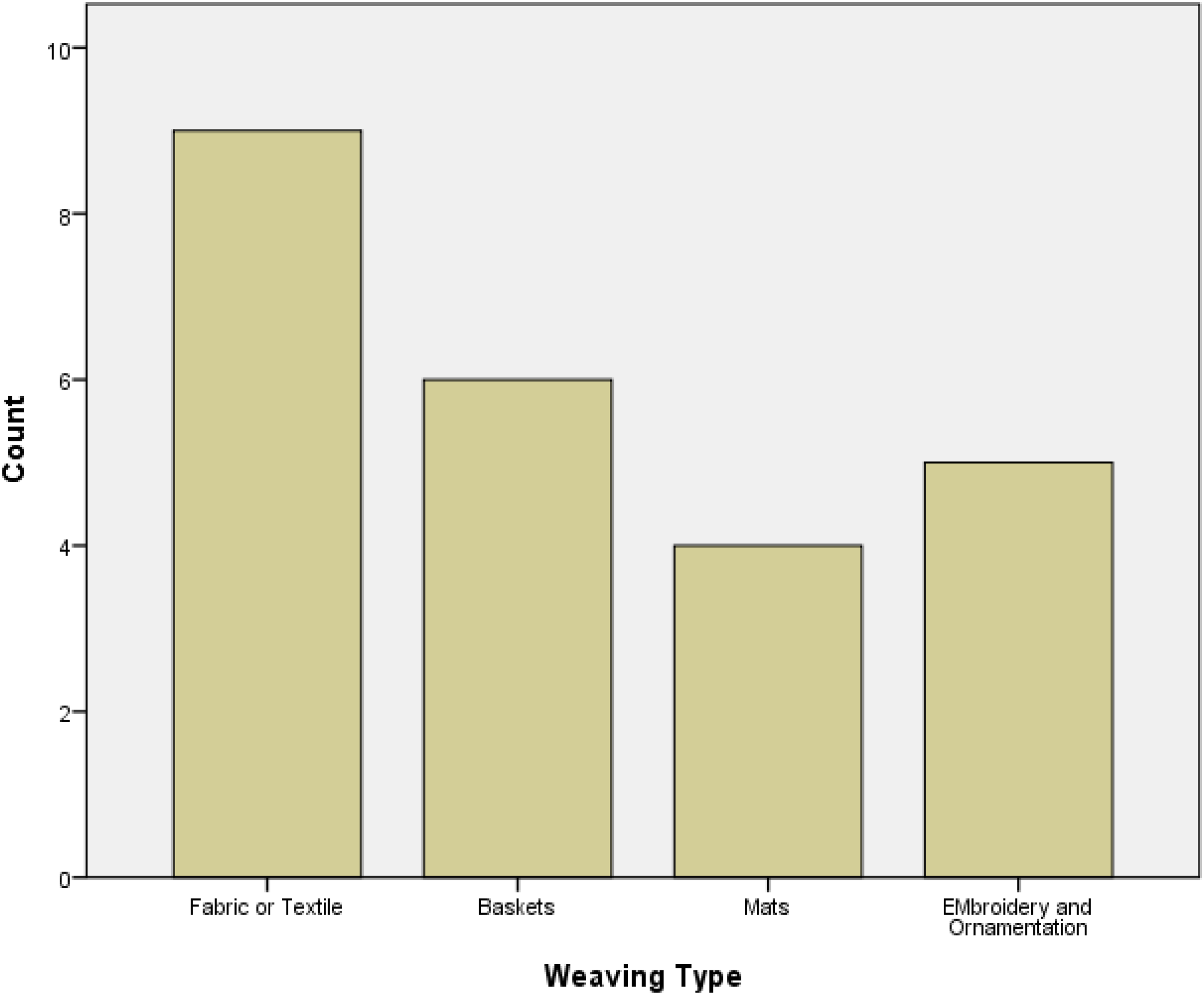
Forms of weaving.
Games with a cultural theme connect players to their cultural background, which is an essential component of the community they call home (Matsekoleng et al., 2024). While most cultural games are played for fun, they can help participants develop a variety of skills, including critical thinking, logical and mathematical analyses (Fouze & Amit, 2018), and analytical thinking (Pradana et al., 2022). To uncover the mathematical concepts ingrained in and acquired while playing cultural games, several scholars have investigated them. For example, the Ghanaian cultural game Alikoto incorporates probability and algebraic ideas (Owusu & Obuo-Addo, 2023). Cote d'Ivoire's traditional cowrie game, Nigbe Alladian, incorporates elements of probability (Ki-Zerbo, 1990). Even though Engklek and Morabaraba are traditional games that are played in Indonesia and Southern Africa, respectively, they share concepts related to geometry, algebra, and number properties and operations (Anisa et al., 2023; Asrial et al., 2020; Mania & Alam, 2021; Mosimege & Ismael, 2004; Munir et al., 2023; Sahara et al., 2023; Setiyadi et al., 2018; Supriadi & Arisetyawan, 2020; Tachie & Galawe, 2021).
All of these games: Mozkat Bedouin, a five-stone game played in Israel; Tong Tong Galitong Ji, also known as Nasi Goreng Kecap, a cultural game played in Malang City, Indonesia; Mancala, an African game; Oware, a Ghanaian game; and Omweso, a Ugandan board game, although in different cultural contexts have concepts related to number properties and operations, and probability (Chahine, 2020; de Voogt et al., 2018; Fouze & Amit, 2018; Kirumira, 2019; Owusu-Mensah & Baffour, 2015; Powell & Temple, 2001; Turmundi et al., 2020; Zaslavsky, 1999). Geometry and algebra are mathematics concepts found in the Egyptian traditional game Seega (Bolton, 1890; Fouze & Amit, 2018). Geometry is a mathematical notion in the games Kgati or Ntimo or Ugqaphu, played in South Africa, and Pacu Jalur, a Riau cultural game played in Indonesia (Fendrik et al., 2020; Moloi et al., 2021). Number properties and operations, and algebra are mathematics concepts found in the cultural games Black Toti (South Africa) and Endog-endogan (Indonesia) played by Sundanese people (Feza, 2018; Supriadi et al., 2023; Supriadi & Arisetyawan, 2020). A cultural game incorporating mathematical ideas of number properties and operations as well as geometry is called Dakon or Congklak (tjongklak) in Indonesia, Congkak in Malaysia and Brunei, and Sungkâ in the Philippines (Cruz et al., 2000; Handayani & Iswantiningtyas, 2020; Melaningsih et al., 2023).
Weaving
One form of art that expresses the maker's individuality is weaving. It is generally known as a medium for self-expression because practicing it induces a calm, meditative state that eases stress and encourages relaxation (Johnson et al., 2021; Morabito, 2022) but it is also full of mathematical concepts that showcase the artist's ingenuity and critical thinking (Harlizius-Klück, 2017). Four types of weaving were identified in this review: baskets, mats, fabric or textile, and embroidery and ornamentation. The specifics of each of these forms are then provided.
Fabric or textile
By weaving threads together, fabric, cloth, or another material is created (Smelik, 2023). Among other things, fabrics are used to make bedding, drapes, and clothing (Enes & Kipöz, 2020). Several scholars have attested to the presence of mathematical concepts in cloth weaving. Examples of textiles with geometric concepts include the Buna woven fabric found on Timor Island in Maritime, Southeast Asia; the Songket, a traditional Minangkabau hand-woven fabric found in Pandai Sikek in Tanah Datar Regency in West Sumatera, Indonesia; the Batik Sidoluhur, a cultural textile design found in Javanese culture in Indonesia; and the batik motifs found in Salatiga and Yogyakarta, Indonesia (Eko, 2017; Hidayat, 2021; Ishartono & Ningtyas, 2021; Prahmana & D'Ambrosio, 2020; Purwanti & Asikin, 2020). Additionally, the Baduy community in Indonesia's Banten Province uses mathematical ideas related to measures, and number properties and operations in their cloth-weaving (Turmudi et al., 2016). Algebra, number properties and operations, and geometry are mathematical ideas that are applied in the preparation, processing, and creation of Karara designs of Maranao weaving in the Philippines (Solaiman & Manalundong, 2017). Comparably, concepts of measures are included in the woven cloth of the Adonara people of Indonesia, in addition to those found in karara designs (Dominikus et al., 2017).
Embroidery and ornamentation
Ornamentation refers to materials or features used for decoration (Ahani et al., 2017), whereas embroidery is the practice of adorning the surface of fabrics with decorative stitching using colorful threads, usually made of silk or cotton (Akinrujomu, 2020). Stitching is rich with mathematical concepts, even though it is a meditative art, and has been utilized as a therapeutic technique to enhance mental and emotional health (von Kürthy et al., 2023). For instance, number properties and operations, geometry, and algebra are mathematical notions found in the handcrafted needlework of the Bedouin folklore culture, which originated in the Arabian Peninsula and eventually expanded to the Middle East and Northern Africa (Fouze & Amit, 2018). Algebra and geometry are concepts found in the ornamentation of sipatsi, the straw-woven handbags made in the Mozambican province of Inhambane; the Sona sand drawings of the Sona tradition, which originated among the Tchokwe of Northeastern Angola and related peoples; and Kasuti, a traditional folk embroidery practiced in the Indian state of Karnataka (Chhabra, 2021; Gerdes, 1996). It is significant to remember that Kasuti has four different stitch types: gavanthi, murgi, negi, and menthi. These particular stitches display both the Eulerian and Hamiltonian graphs. In their needlework, the Tzeltal Mayan Communities in the Mexican state of Chiapas make use of mathematical ideas related to number properties and operations (Mendez, 2013).
Baskets
The art and craft of basketry involves weaving together things, typically baskets, using plastic or other synthetic materials or flexible vegetable fibers such as bamboo and grasses (Turner, 2019). There are many uses for baskets, including harvesting and storing food as well as ceremonial functions (Pourghaderi et al., 2023; Romero-Brugués et al., 2021). Although basketry can convey significant artistic expertise and cultural customs, the act of creating baskets contains intricate mathematical concepts. For instance, geometric concepts can be found in the rattan handicrafts made by the Lhoknga community in Indonesia. These products include fruit baskets (raga), pumpkin baskets (boh labu), onion baskets (raga bawang), parcel baskets (raga hadiah), and food serving covers (tudung saji) (Prastika et al., 2021). Algebra and geometry are two mathematical principles that are used in basket weaving among the Karanga people of Masvingo province in Zimbabwe, the Batak indigenous population in Palawan, Philippines, and Ghana (Balabuch & Rasoarifetra, 2023; De Las Penas et al., 2021; Madusise, 2022). Mathematical notions of spatial and geometric cognition are present in Southeast Asian baskets found in Bloomsbury, Scotland (Bunn et al., 2022). Mathematical notions such as number properties and operations, geometry, algebra, and measures are all included in the process of creating beaded basket crafts in Sungai Tutung, Jambi, Indonesia (Gunawan et al., 2022). The Upper East Region of Ghana's Bolgatanga Municipality's indigenous basket resources are versed in mathematics concepts of geometry, statistics, algebra, and number properties and operations (Ali & Davis, 2017).
Mats
Mats are large, coarsely woven, plaited, or felted fabric pieces that are specifically intended to cover or support floors (Were, 2013). They can be used for a variety of things, such as cleaning shoe soles and adorning living room centers (ShahHoseini & Forushani, 2023). In addition to these conventional uses, the process of creating mats incorporates mathematical concepts. For instance, intricate geometric concepts are used in the mat weaving of several communities in the rural regions of Nepal, South Asia (Pradhan, 2020). Mathematics concepts related to number properties and operations, geometry, and measures are demonstrated by Loce, the Manggarai traditional mats made in Indonesia, and the carpet (a type of mat) weaving culture in Kerman, Iran (Hanim et al., 2019; Rafiepour & Afsaneh, 2022). The Karanga people of Zimbabwe's Masvingo area weave mats using concepts related to mechanics and measures (Madusise, 2022).
Cultural dances
Cultural dances, often known as folk dances in the West, are any local dance customs that are typically closely associated with local musical genres, cultural customs, and/or daily life in a particular nation or area (Georgios, 2018). Cultural dances serve a variety of functions, including leisure, amusement, education, and ceremonial objectives (Nurharini & Ratnaningrum, 2020; Smith, 2018). Studies reveal that traditional and ethnic dances also demonstrate mathematical concepts. For instance, the Tswana traditional dance among the Tshwana people in the North West province of South Africa and the Rapa'i Geleng, a traditional Acehnese dance in Banda Aceh City, Indonesia, both demonstrate mathematical concepts of number patterns that lead to sequences, despite being performed in different contexts (Madusise, 2022; Musawwir & Suryadi, 2021). Additionally, the mathematics values of the Andun dance, which originated in the Indonesian Bengkulu culture, can help to clarify the notion of functions (Herawaty et al., 2020). Furthermore, geometric themes are included in the Rejang people of Indonesia's Kejei dance (Ma’rifah et al., 2019).
Symbolic calculations
Concepts such as mathematical operations, expressions, and statements, as well as the entities or operands on which the operations are conducted, are represented by symbols (Uttal & Yuan, 2014). Different symbols have different meanings in every culture. They convey concepts, emotions, ideas, and more while allowing others to decipher and interpret them (Peterson, 1990; Pizzimenti, 2013; Sigdel, 2018). For instance, while calculating basic quantities such as length, width, area, height, weight, and time, Sundanese people in Indonesia use symbolic mathematical calculations (Abdullah, 2017). In the meantime, the Keraton Kasepuhan Cirebon uses the Aboge calendar to determine holidays since it determines the great days of Islam and traditional ceremonies in Cirebon Kasepuhan Palace in Indonesia (Syahrin et al., 2016).
Buildings
Buildings, like houses, are enclosed constructions with walls and a roof that is often situated permanently in one location (Brown, 1989; Gieryn, 2002). Buildings can be classified as residential, commercial, industrial, or infrastructure structures (Steadman, 1994). They fulfill a variety of societal functions, including housing, which is mostly used for weather protection, gathering places, security, entertainment, and the storage of personal items (Khusaini et al., 2022; Narayanan et al., 2018). In addition to these uses, buildings incorporate mathematical ideas into their design. For instance, geometry and trigonometry are mathematical concepts found in the structures of Masjid Agung Jawa Tengah, Tugu Muda, Vihara Buddhagaya Watugong, and Gereja Blenduk in Indonesia (Medyasari et al., 2021). Additionally, the concept of geometry is found in the stilt dwellings that the Bugis built in the isolated regions of the Karimunjawa and Kemujan Islands, Jepara Regency, Indonesia (Dwidayati & Zaenuri, 2021). Moreover, the top (pammakkang), middle (Kale Balla), and bottom (Siring) of each building's structure illustrate the idea of fractions such as one-third, two-thirds, and three-thirds.
Meals
The food served and consumed at regular intervals is called a meal (Leech et al., 2015). Foods considered traditional are those that have been handed down through the years and have a long history in the local, regional, or national cuisine (Rocillo-Aquino et al., 2021). Lunch and dinner were the two primary meals offered twice a day in the past (Ghosh et al., 2023), but in most modern societies, three main meals are often consumed in the morning, early afternoon, and evening (Lohse et al., 2020). There is evidence in the literature that meals contain mathematical concepts. For instance, the traditional foods of the Buginese culture in Southern Celebes, Indonesia, such as barongko and Tumpi-Tumpi, use geometric notions from mathematics. Specifically, Tumpi-Tumpi has the geometric idea of an equilateral triangle, whereas Barongko has the concept of a triangular prism (Mania & Alam, 2021).
Number systems
A writing system used to convey a number consistently is called a numeral system (Robert, 2022). Put otherwise, it is a system of mathematical notation that uses digits or other symbols to consistently express numbers within a specific set (Rossi & Thuswaldner, 2022). Different numeral systems may use the same set of symbols to denote different numbers. The Hindu-Arabic number system, which has its roots in India and is currently in use all across the world, is the most widely used (Danna, 2021). Since number systems maintain confidentiality, they are used to identify individuals and objects (Nataraj & Thomas, 2009). Given that every culture or tradition has its own, there are various numeration systems. Gerdes (1996) states that spoken and written numeration systems in Africa include, among other things, counting in traditional Ibibio and Efik societies in Nigeria; counting among the Fulbe in Nigeria; counting in Nigeria before the Islamic great days; counting systems in Burundi before colonization; counting instruction in Cote d'Ivoire; counting systems utilized by the main linguistic groups in Guinea; numbers and patterns in Uganda; spoken numeration systems of West African communities and the Mande in Niger-Congo, West Africa; popular counting practices and numeration systems in Mozambique; numeration systems amongst Kenya's several cultural groups; and traditional counting among Botswana's ethnic groups.
Four observations are drawn from these findings. First, mathematics is widely used in culture. There seem to be more IK systems that are ethnomathematical, even though in this review I have identified that cultural games, weaving, cultural dances, symbolic calculations, buildings, meals, and number systems have mathematical concepts that count as school mathematics. These knowledge systems are beyond the purview of this review. Second, the research is not balanced. While cultural games and weaving have received a lot of attention, other cultural activities including cultural dances, meals, buildings, symbolic computations, and number systems that are still considered ethnomathematics activities have attracted less attention.
Third, while mathematics encompasses five primary content areas—number properties and operations, measures, geometry, algebra, and data analysis and probability—every ethnomathematics activity identified in this review, except for symbols, demonstrates a geometric notion. Fourth, and perhaps most crucially, this review aimed to give countries that are planning or will seek to incorporate ethnomathematics in the school mathematics curriculum an overview of what constitutes ethnomathematics in mathematics teaching and learning. Nevertheless, only 9.8% of the studies have indicated the classes, grades, or educational levels where these concepts correspond, although all of them have illustrated the mathematical concepts in the defined cultural activities. For instance, it is excellent to demonstrate how weaving contains numerous geometric concepts that can be used to improve mathematics learning. However, since mathematics content areas cover everything from early childhood education to university education, for example, geometry which is taught with varying depths from kindergarten through university, it is insufficient for a novice mathematics teacher to know which class, grade, or education level, and how, to use the ethnomathematics activities isolated in their teaching practices.
Discussion
This literature review finds substantial evidence to support the claim that various approaches and resources may be used to implement culture in mathematics classrooms (Clivaz & Miyakawa, 2020). Figure 1 shows that there has not been much consistent trend in ethnomathematics studies over the past 10 years; however, most of the research was conducted in 2021. The decline in 2022 may have been influenced by the post-COVID-19 era. However, research has since increased, indicating the growing recognition of ethnomathematics. Nevertheless, the challenges in ethnomathematics might be leading to the fluctuating research trend. For example, Pais (2011) maintains that understanding the social and historical background of different mathematical systems poses a challenge in ethnomathematics. Moreover, studying ethnomathematics requires a critical and introspective mindset about the history, significance, and applications of mathematical ideas and procedures (Alangui, 2020), yet, in addition, many people find it challenging to engage in reflection and this could lead to unnecessary negative thinking (Caporuscio, 2023). For instance, trying to learn mathematics concepts from an unfamiliar culture may be challenging because understanding the culture is necessary before understanding the mathematics concepts. This creates a double problem and can lead to negative thinking. Thus, it is critical to recognize that providing multi-scenario and relatable examples is crucial for effective mathematics learning.
Figure 2 shows the volume of research on ethnomathematics in Asia, indicating that scholars and educators on this continent highly value the contribution of ethnomathematics to improving the teaching and learning of mathematics in the classroom. In worldwide examinations of mathematics achievement, learners in Asian nations such as China, Korea, and Japan often outperform those in other nations, according to the Organization for Economic Co-operation and Development (OECD) (OECD, 2013). We cannot completely rule out ethnomathematics, even though there may be other reasons for this situation. This research also suggests that Asia is a culturally diverse continent. Despite making up only 3.3% of Asia's population, Indonesia has been the subject of the majority of ethnomathematics studies conducted inside the continent. Lidinillah et al. (2022) state that Indonesia has the greatest diversity of linguistic, cultural, and ethnic backgrounds in the world, thus making it an ideal location for the advancement of ethnomathematics research. Specifically, there are 1,340 ethnic groups and over 700 languages in Indonesia (Saputra & Saputra, 2020).
While there are many cultural activities available globally, this review has shown that cultural games, weaving, cultural dances, symbolic calculations, buildings, meals, as well as number systems, have the potential to help learners succeed in mathematics because they contain mathematical concepts that are taught in schools and can therefore be used in classroom instruction (Powell & Frankenstein, 2009). According to Meaney et al. (2021), these cultural activities can offer significant and pertinent settings that promote learning and enhance learners' proficiency in mathematics (Sunzuma et al., 2021). On the one hand, this review emphasizes how crucial ethnomathematics techniques are for incorporating cultural practices that have an impact on learners' everyday lives and cultural backgrounds. However, it dispels and challenges the misconception that mathematics can be taught expressively without reference to the cultures of the learners (Roth et al., 2013).
The constructivist philosophy, which encourages learners to create their understanding, meaning, and knowledge based on their existing knowledge and experiences, is a good fit for ethnomathematics (Vintere, 2018). The majority of countries' curricula place a strong emphasis on a learner-centered approach to education, which holds that learners should be autonomous and engaged learners who use a variety of resources and practical experiences to boost their learning efficacy. For instance, curricula in Kenya (Jumba & Mwiti, 2022), Uganda (Geofrey, 2021; Olema et al., 2021), and Indonesia (Andrian et al., 2018) mandate that learners be able to demonstrate their acquisition of knowledge, skills, and competencies and apply them to real-world scenarios to address social issues. These curricula are not very explicit, but the use of these competencies promotes ethnomathematics.
Research has been conducted on ethnomathematics activities within the classroom instruction setting. For example, Musawwir & Suryadi, 2021 investigated the utilization of the Rapa'i Geleng dance from Banda Aceh City, Indonesia, as a pedagogical tool for the mathematical idea of number patterns. This dance has rhythmic head movements to the left and right that correspond to the beats of the Rapa'i, a traditional musical instrument. The dance was incorporated by the researchers into the sequences they were teaching, allowing learners to acquire mathematical principles by observing the dancers' regular motions. Four steps were engaged in this process: visualization, representation, abstraction, and schematization. During the visualization phase, learners viewed a Rapa’i Geleng dance video and noted any patterns in the moves. Information gathering based on visual observations was part of the representation stage. During the abstraction phase, learners concluded the sequence patterns and built a model or algebraic expression based on their findings. Lastly, during the schematization stage, facilitators checked that the conclusions were accurate and impelled learners to apply the general model or algebraic expression they had created during the abstraction stage to expand the sequences outside of the dance.
In addition, one of the teachers in Mania and Alam's (2021) study taught geometry using Engklek, a traditional game in Indonesia. After providing a theoretical introduction to geometric concepts, the teacher used the game to help the learners understand them. Many mathematical concepts, including congruence, reflection, probability, counting, nets, and flat forms, are incorporated in Engklek. The teacher presented the Engklek shape, which is made up of semicircular and rectangular forms. Learners were asked to sketch the outline of a plot together with its axis of symmetry to determine the constituent parts of reflection. Additionally, the teacher brought attention to the concept of emptiness by having learners look at plots that share the same shape. Still, the game's square progression sequence served to emphasize counting.
Furthermore, using a contextual approach, Zuhra et al. (2021) developed an ethnomathematics-based worksheet for learners based on comparative material to enhance the learning outcomes in mathematics for junior high school students in Indonesia. The worksheet integrated cultural ideals with actual issues that learners faced daily. The worksheet was successfully tested on sixteen students, and the results showed that it was legitimate, useful, and effective because the learners responded well to it and exceeded the minimal requirements for mastery learning on their learning outcome examinations. The ethnomathematics-based worksheet functioned as an assessment tool in the context of this study, drawing attention to the knowledge that the learners had acquired.
In the cited studies by Musawwir & Suryadi, 2021, Mania and Alam (2021), and Zuhra et al. (2021), ethnomathematics activities such as music and games, which were already identified in this review, were used as pedagogical, learning, and assessment tools, respectively. Thus, ethnomathematics activities can be used as learning media (Abdullah et al., 2022), innovative pedagogical tools (Machaba & Dhlamini, 2021), and assessment tools (Suherman & Vidákovich, 2022). As learning media: these are presented by the teacher as tools or resources to enhance learner understanding of mathematics concepts such as geometry in the classroom. In this manner, the teacher presents the concepts of geometry in a theoretical manner first and then uses the tool to help learners better understand the principles they have been taught, as demonstrated by Mania and Alam (2021). Put another way, ethnomathematics serves as a tool or conduit through which learners conceptualize classroom mathematics by helping to concretize it. However, one ethnomathematics activity can be used to learn school mathematics at different educational levels, so teachers must carefully consider the classes or grades that they will be teaching as well as the depth of the content that matches the cognitive level of the learners when choosing a cultural activity as a learning medium. For instance, Hanim et al. (2019) showed that mats may be used to learn fractions in junior high school, despite Madusise (2022) demonstrating that they could be utilized as a learning tool for university mathematics, particularly to learn classical mechanics. When used as a learning tool, ethnomathematics can offer practical experiences in learning mathematics, particularly for concepts that learners struggle with, like probability and statistics (de Oliveira Júnior et al., 2018) and circle geometry concepts (Brijlall & Abakah, 2022).
As innovative pedagogical tools, ethnomathematics activities can be explored by mathematics teachers. This means that the entire mathematics class can be built around the selected ethnomathematics activity, such as music, as demonstrated in the study by Musawwir & Suryadi, 2021. In this instance, the teacher uses ethnomathematics as a method of instruction for school mathematics, serving as a channel or strategy for comprehending school mathematics. This means that to use ethnomathematics activities as pedagogical tools, mathematics teachers must plan logically and structurally and take into account the situations in which they will be used. While ethnomathematics can be used alone as a pedagogical tool because it has been chosen as a teaching strategy for a specific lesson, it can also be utilized in conjunction with other resources like ICT as learning media. Many models can be used to plan for the use of ethnomathematics as a pedagogical tool. Still, I specifically highlight the ADDIE model (Hess & Greer, 2016) to help mathematics teachers organize their classes around the use of ethnomathematics as the teaching strategy.
The ADDIE model was developed by Florida State University in 1975 as a framework for producing military training and instructional materials that are both effective and efficient (Aldoobie, 2015). The abbreviation represents the five stages of design—analysis, design, development, implementation, and evaluation—found in the model's name. Although intended for the military, Lu and Sides (2022) contend that this model's capacity to offer learning solutions makes it a fundamental component of instructional design. Mathematics teachers would benefit from Holden's (2015) thorough understanding of the ADDIE model in the instructional design context for effective teaching. Teachers in the context of ethnomathematics must, among other things, define the instructional problem and further ascertain the learning environment, learners' skills, and instructional goals during the analysis stage. For example, when preparing to use weaving as an ethnomathematics activity, teachers should specify the mathematical concept—such as geometry—that they will be teaching, determine whether learners will need to work in groups in the classroom or if they will need to be outside, ascertain the learners' prior weaving knowledge, and determine what exactly will be learned using weaving.
Teachers must set behavioral goals and evaluation tools, as well as further specify instructional tactics and media choices, during the design phase. Teachers must, for instance, outline how learners will participate in the ethnomathematics class, how they will be assessed and encouraged to participate, the teaching strategies they will use (e.g., think pair share), and the specific weaving projects they will use. Activities, such as weaving, related to ethnomathematics, are applied at this point and this review has already exposed instructors to cultural events that they can take into consideration. Once the behavioral objectives of their mathematics courses have been determined, the teachers need to know whether and how the cultural activities will function as instructional techniques or instructional media. For example, whether and how weaving will function as a pedagogical strategy, a medium for learning, or an assessment tool. It is important to pay close attention to how the teacher will evaluate the learners' learned material and abilities through these cultural activities.
Teachers must create the instructional materials by the design phase blueprint in the third stage of the ADDIE model (Holden, 2015). Teaching the lesson to the target class is the teachers' main responsibility during the implementation phase. To improve the lesson, however, the learners must offer insightful feedback. Before implementing the designed lesson, Dick et al. (2015) suggest pilot testing it. They state that this can be accomplished through one-on-one instruction with a learner, small-group instruction, or field testing, such as having the learners participate in a real-world classroom section. Teachers should gather data on the lesson during and after the pilot to offer feedback on the design. This procedure is a key component of the ADDIE process's last step, evaluation, which can be summative (Ismail et al., 2022) or formative (Menéndez et al., 2019). The teachers will streamline and modify their instruction after the sample lessons are finished and learner feedback is gathered.
Musawwir & Suryadi, 2021 go on to say that using the visualization approach could be helpful when adopting ethnomathematics activities as pedagogical tools in the process of learning mathematics. In the learning process, a visualization approach can be utilized to convey an abstract mathematical concept through four stages: visualization, representation, abstraction, and schema, according to Kusnandi (2020). In the visualization stage, the learners perceive the mathematical concepts intertwined with the cultural item, whereas in the representation stage, they model the observed mathematical concepts without the use of external media. They now gather data regarding the insights they gained from the visualization stage observations. They complete the mathematical notions at this point in the abstraction stage by making a statement reconstruction that applies to all models created from the representation. They verify the accuracy of any findings or broad guidelines they would have drawn during the schema step. According to Pais (2011), if ethnomathematics is not carefully planned for when it is incorporated into the teaching and learning process of school mathematics, there is a chance that it will be seen as coming from a culture where school mathematics is being forced to lose its uniqueness. To put it another way, well-meaning deeds may end up having unintended consequences.
Finally, as demonstrated by Zuhra et al. (2021), ethnomathematics activities such as those identified in this review can be employed as evaluation instruments to determine how well learners apply their knowledge of mathematics to real-world situations. According to Fouze and Amit (2018), learners should master mathematical concepts in theory first, and then use those concepts through culturally appropriate methods and resources. In this way, the concepts are made easier for them to understand, increasing the likelihood that they will do so. They recommend using these cultural activities as an inquiry or project/ investigation work to introduce learners to various viewpoints. According to D’Ambrosio (2001), learners start to recognize the value of diversity in thought and how it can inspire creativity as a result of such exposure. In addition, learners will begin to ask different questions rather than concentrating on the one right answer, which could result in different answers (Hendriyanto et al., 2023). Alternatively, they could still come up with the same answers but come up with unique approaches to sharing and presenting them. In this approach, learners can express themselves in a variety of ways and, with the help of their teachers, develop the creativity to solve problems using a variety of solutions (Putra & Mahmudah, 2021).
Conclusion
There is still much to learn about the relevance of incorporating the ethnomathematics program into mathematics education and what constitutes an ethnomathematics program in the mathematics classroom. This review has revealed that school mathematics concepts of measures, number patterns and operations, geometry, algebra, and data analysis and probability are abundant in ethnomathematics activities namely cultural games, weaving, cultural dances, symbolic calculations, buildings, meals, and number systems. Consequently, the ethnomathematics program can be used as a pedagogical, learning, or assessment tool in mathematics courses. One of the best ways to make mathematics more relatable to learners and help them realize its importance is to have them investigate mathematics within the context of their own cultures. Additionally, ethnomathematics can introduce learners to multicultural views on mathematics that both challenge and reinforce the concepts and methods taught in the mathematics classroom. It follows that, given all of the ways ethnomathematics affords the learning process, the moment is right for all nations to include it in mathematics education. This paper's assessment of the affordances of ethnomathematics is based only on the articles that were studied; if other articles are reviewed, the knowledge may be expanded. However, its findings are especially beneficial for people unsure how to begin integrating the ethnomathematics program into the teaching and learning process.
Footnotes
Contributorship
The sole author of this manuscript conducted the literature review, drafted the manuscript, read and approved the final manuscript.
Data Availability
The data for this published article is all included in the text.
Declaration of conflicting interests
The author declared no potential conflicts of interest with respect to the research, authorship, and/or publication of this article.
Funding
The author received financial support for the research, authorship, and/or publication of this article from Carnegie Cooperation of New York under the Makerere University Directorate of Research and Graduate Training (DRGT) early career academic fellowship.
