




Abstract
The purpose of this study is to review the course syllabus for mathematics teaching methods with a lens to identify topics related to Sustainable Development Goals (SDGs) and develop strategies to promote their understanding among the students. This study involved two phases. Phase 1 used the capacity building model to train teacher educators to review the syllabus, map the curriculum, and identify topics nearest to SDGs. In Phase II, teacher educators developed three teaching mathematics modules on infusing SDGs in the course using the DeCoRe + methodology. The developed modules were implemented in the Teaching Mathematics Methods II course with 39 preservice mathematics teachers over a semester (14 weeks). The students’ concept maps were analyzed by using rubrics which have five categories (excellent, very good, good, fair, and failing) and to relate to SDG understanding as: knowledge representation, interconnectivity, the meaningfulness of links, complexity, contextuality, and transformation. The result from the students’ concept maps showed that students’ understanding for SDGs are good for knowledge representation, interconnectivity, and meaningfulness of links. However, students showed “fair” for complexity, contextuality, and transformation whereby linkage of the different SDGs are given. In conclusion, our exploration of integrating SDGs into a mathematics teaching methods course using DeCoRe+ has demonstrated promising outcomes. Our findings indicate that students not only acquire knowledge but also internalize key concepts, empowering them to contextualize and integrate SDGs within the mathematics curriculum. This preparation equips them with the necessary skills to become future educators capable of seamlessly incorporating sustainability principles into their teaching of mathematics.
Introduction
Over the last decades, humanity has faced the impacts of unsustainable economic development growth driven by profit maximization, resulting in excessive depletion and degradation of natural resources (Makrakis, 2014). Despite the current initiatives for reversing such an unsustainable development process, much must be done. Education systems at all levels, especially Higher Education, bear responsibility for the sustainability crisis we face globally. Education should play a critical role in a radical transformation through an alternative development model emphasizing sustainable well-being.
As active agents of social change, educational practitioners, including policymakers, researchers, lecturers, and students at the higher education institutions level, should develop a proper understanding to implement Education for Sustainable Development (ESD) practices in education now and in the future. This will shape the impact of generating a sustainable culture among university students and community members. Higher Education has a unique opportunity to become a key driver for change and innovation in and for the societies in which it operates. The teaching staff is the agent for change in promoting an Education for Sustainability (EfS) approach to teaching, learning, and curriculum (Biasutti et al., 2016, 2018) and for turning schools sustainable (Kadji-Beltran et al., 2013).
On the other hand, rapid globalization and technological advancement led The World Economic Forum, 2016 to release a list of the twenty-first-century skills most valued today, including creativity, curiosity, communication, collaboration, confidence, critical thinking, grit, leadership, and adaptability. At the heart of twenty-first-century skills is a student's ability to solve problems. Bourn et al. (2017) report that implementing an initiative to infuse the ESD within education faculties differs depending on each institution's understanding of ESD. Therefore, Bourn et al. (2017) propose a systematic integration of ESD in teacher education rather than, in addition to, introducing new courses. There should be a focus on how the relevance, meaningfulness, and quality of existing subjects can be enhanced by including ESD.
One of the challenges of infusing Sustainable Development Goal (SDG) into mathematics is that it is an abstract subject with inherent challenges. For example, The UNESCO Institute for Statistics (UIS), 2017 raised concern that 617 million children and adolescents worldwide—6 out of 10—are not reaching minimum proficiency levels in reading and mathematics. Millions of youths and adults cannot play their part in the social and economic life of their communities and nations because they lack the skills to read, write a simple sentence, or make a simple calculation. Quality education should acquire fundamental skills, such as literacy, numeracy, and higher-level skills. The end of lower secondary school often coincides with the end of compulsory education. By this stage, students should be able to master subject-related knowledge and skills, possess personal and social skills, and have a solid foundation for further learning throughout life. Mathematics is essential to education, empowering people, and opening new job opportunities. Mathematics is used to model global changes and their consequences on biodiversity.
Some works document the introduction of sustainability in subjects such as science or language teaching. However, more research is needed to investigate the fundamental role of mathematical education for students to achieve sustainable development.
Zehetmeier and Krainer (2011) present ways to promote sustainability in the curriculum among mathematics teachers. Cardeñoso et al. (2013) used a sample of students who were studying for a Master's Degree in Teacher Training in Secondary Schools in the specialties of mathematics, physics and chemistry, and biology and geology to find out about their understanding of and approach to sustainability. The usefulness of mathematics sometimes needs to be understood by students; it is even considered a complicated subject by some, which already predisposes them to it. On the other hand, many students perceive mathematics positively because they think it is used in everyday life but consider it problematic. Furthermore, some see mathematics as an isolated set of procedures with no real-life applications, discouraging them from learning. Innovative practices that provide them with a positive experience could improve their performance in mathematics and the perception of its usefulness. Therefore, the purpose of this study is to critically review the syllabus for mathematics teaching methods for preservice teachers. The goal is to identify topics related to SDGs and develop strategies to enhance students’ understanding and appreciation of these goals.
The Mathematics Teaching Methods II course
The mathematics teaching methods II course is the second of the two compulsory teaching method courses offered to prospective mathematics teachers for the bachelor's degree in Mathematics Education at Universiti Sains Malaysia USM. Both mathematics teaching methods I and II are the core courses for students who wish to major in mathematics education and become teachers in Malaysian secondary schools. Both selected courses had the potential to be infused with ICTeEfS based on the relevant topics presented in its instructional plan.
This mathematics teaching method course aims to equip students with the knowledge, skills, and attitudes to become effective and competent mathematics teachers. The course will introduce students to the aims, fundamentals, and theories of mathematics education, curriculum, and planning of mathematics teaching and learning in secondary schools that emphasize higher-order thinking skills and employ the appropriate pedagogy to teach the contents.
Among the main topics are to familiarize students with the aim and objectives of the Malaysian standard mathematics curriculum; to train students and future teachers in planning and prepare suitable mathematics teaching units/lessons for various learning environments that promote higher-order thinking skills; to enhance students’ understanding of different teaching strategies and techniques employed in classroom mathematics teaching (problem-based learning, contextualize learning cooperative learning); to provide opportunities for students to practice simulated teaching with their peers through tutorial sessions, and to develop student's confidence and skills in teaching mathematics in secondary schools.
The course aimed to develop further preservice mathematics teachers’ teaching strategies and skills as well as mastery of mathematics content, especially topics in the upper secondary mathematics curriculum and advanced topics in mathematics such as calculus, trigonometry, algebra, statistics, and probability through group and individual projects that promote higher order thinking skills. Emphasis is placed on developing mathematical thinking and communication, integrating Information and Communication Technology (ICT) in mathematics teaching and learning, identifying and diagnosing misconceptions, and remediation in mathematics. Mathematical thinking and communication and effective teacher qualities are developed through group and individual projects.
The learning activities include lectures and discussions on relevant topics related to the course objectives. The tutorial consists of three different activities aimed at achieving the learning objectives:
Review of journal articles where students are required to read and review selected journal articles related to mathematics education. Project (lesson plan) where students work in pairs, choose a topic from the secondary school mathematics curriculum, and prepare a complete 40-min mathematics lesson plan for teaching. Tutorial presentation (simulated teaching) where every pair of students must teach the assigned topic according to the lesson plan as scheduled.
Planning for mathematics instruction will require incorporating appropriate and relevant pedagogical approaches and tools for teaching mathematical concepts and skills. Issues and topics discussed include Problem-solving in mathematics, misconceptions in mathematics, theories of learning mathematics, and issues and challenges in mathematics teaching and learning. Assessment of and for learning in mathematics is also explored to improve students’ learning and teachers’ teaching. Integration of ICT in mathematics teaching and learning is also given special attention. The course also discusses resource development for the teaching and learning of mathematics. Students actively engage with the course material through discussions, problem-solving, case studies, simulated teaching, role play, and other methods. Opportunities are provided for students to work individually, in pairs, and in groups.
The learning activities consist of a weekly lecture for two hours and a one-hour tutorial for students. While all students attend the lecture simultaneously, students can choose their best tutorial slots. Tutorials are designed for small groups to allow for further engagement between teachers and students. Both lectures and tutorials discuss relevant topics related to the course objectives.
The Erasmus + ICT-enabled education for sustainability ICTeEfS project
The ICTeEfS project is funded by the European Commission Erasmus + Capacity Building Program in the Field of Higher Education for 2019–2023. The ICTeEfs project is an EU-funded project to help teacher educators review their courses on how to integrate ICT and ESD concepts, 10Cs, six learning pillars for sustainable development, and four dimensions of sustainable justice. Thus, being involved in this project will benefit the preservice teachers in experiencing and exploring how sustainability can be embedded in their future teaching.
The elements of the 10Cs that were integrated in this course were:
Constructing knowledge: In this course, students learned not only the teaching theories, teaching approaches, and issues in mathematics learning but also about mathematics education and SDGs, problem-solving, etc. With these topics, students will get knowledge and experience and be ready for the following teaching practicum. Collaboration: In this course, all students worked together in a group. They worked on group assignments for their project, which focused on designing an ESD module. In this project, they must find a solution for the selected issues. They also worked in pairs for their simulated teaching. In this assignment, they need to teach based on their lesson plan. Communication: In doing the assignment, students need to present their project. During a lecture, the lecturer also gave them an “issue to ponder” to discuss. Critical thinking: In the project, they must analyze SDG issues to develop the e-module. Creativity: In designing the e-module, they must be creative to ensure the module is exciting and doable. Cross-cultural understanding: Since the project and simulated teaching were group assignments, their group needs to be composed of students from different races, religions, and cultures. We have three different races in Malaysia: Malay, Indian, and Chinese. Co-responsibility: In doing the project, they will be able to notice how important they are to play an active role in disseminating knowledge about SGDs to schools and the public. Connectivity: In this part, they need to do a simple investigation about issues in SDGs and provide solutions to them. Critical consciousness: By having the project, they analyzed the data, and the findings would raise students’ critical consciousness about the importance of SDGs and the health of our earth. Critical reflection: At the end of simulated teaching, they need to do the reflection. Learning to know: Students learn about the related learning theories, teaching methods, SDGs, etc. They were able to analyze and apply the knowledge to real-world situations. Learning to do: After understanding all the essential concepts in mathematics teaching methods, they could design and conduct interactive learning activities in their presentations and projects, including using ICTs. Learning to be: They could contribute to society by having a project. Thus, they knew how to develop their self-potential. Learning to live together: In doing the assignments, they respect the university's and faculty's rules and regulations. They also realized how to be a good citizen in diverse backgrounds. Learning to transform oneself and society: Students also learn how to build up their positive attitude and personality while having a positive impact and influence on others. Learning to give and share: They could share views and opinions about specific issues, especially in projects and simulated teaching. They respect other's opinions to find the best solutions to solve real-life problems related to their project. Environmental justice: All assignments have been submitted through e-Learning@usm in this course. Social justice: All learning materials are distributed through eLearning@USM and accessible to registered students. Economy Justice: Students are equipped with stable internet infrastructure—Wi-Fi connection. Once they register as USM students, they will be given a username and password to be used throughout their study at USM. Cultural Justice: Active involvement in class discussion and activities is necessary—students are expected to participate in all activities carried out during lectures and tutorials.
The six learning pillars for sustainable development were:
The four dimensions of sustainable justice were also integrated in this course. There were:
Concept map
Concept mapping, developed by Novak (1977, 1990), is a visual representation of a critical concept connecting with other interdependent concepts, which can be divided into four main types: spider maps, hierarchical maps, flow charts, and systemic maps. The following graph illustrates a concept represented in boxes or circles with connecting lines that symbolize their relationships. The relationships are specified using linking words written on the lines as illustrated in Figure 1 as an example of “Carbon Cycle” concept map.
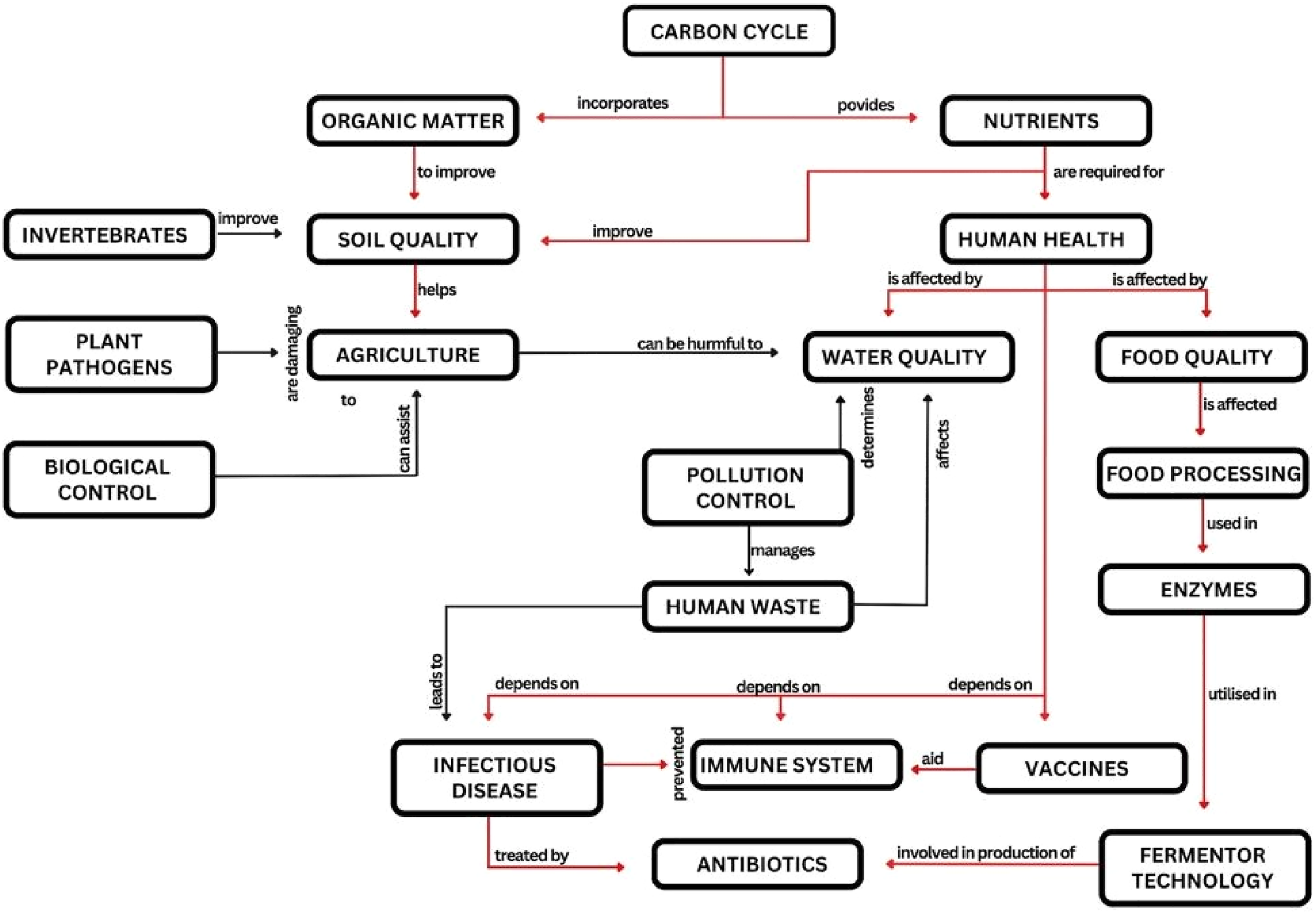
Example of a concept map.
A concept map is a way of discovering ideas, knowledge, and relationships depicted in a diagrammatic way. Arrows connect the key ideas, words, or images with linking words that explain their connection. According to Eggen and Kauchak (1999), constructivism is a view of learning and development that emphasizes the learner's active role in building understanding and making sense of the world. As can be understood from this definition, the learner is active in the constructivist context. In the constructivist theory of learning, information can be acquired, but knowledge is pieced together only by incorporating new information or ideas into the framework of the learner's existing knowledge (Basso & Margarita, 2004). The concept map can be considered a tool that facilitates meaningful learning for individuals. It is observed that many studies (e.g., Berionni and Baldoni, 2004; Brinkmann, 2003; Heinze-Fry, 2004; Lourdel et al., 2007; McGowen and Tall, 1999) have been conducted to study concept maps to evaluate students’ understanding, in recent years (Mandrikas, 2020).
Concept maps have proven to be a powerful tool for highlighting correlations between the 17 SDGs. In addition, using concept maps was an opportunity to experience group work and its quality characteristics, such as participation, exchange of opinions, argumentation, and different perspectives Kostoulas-Makrakis and Makrakis (2020) further elaborated that concept mapping is a theme-based learning approach underpinned by constructivist and transformative learning perspectives, helping learners to shift from passive to active learning.
It helps learners to brainstorm and generate ideas, organize and prioritize information, activate prior knowledge, and construct new knowledge by linking new learning with existing knowledge. It can be thus used as an assessing tool besides fostering meaningful learning. Thus, a concept map of SDGs will help the instructor evaluate whether students understand SDGs and their connectedness.
This study involved two phases, Phase 1 focus on training teacher educators to review the syllabus, map the curriculum, and identify topics nearest to SDGs. In Phase II, teacher educators developed three teaching mathematics modules on SDGs using the DeCoRe+ methodology by infusing 10Cs, six learning pillars, and four dimensions of sustainable justice.
Phase 1
In phase I, a capacity building model proposed by Makrakis (2006) was used. This six-stage capacity-building model is used to train academic staff to embed sustainability in their courses (Makrakis, 2006). The capacity building model is shown in Figure 2.
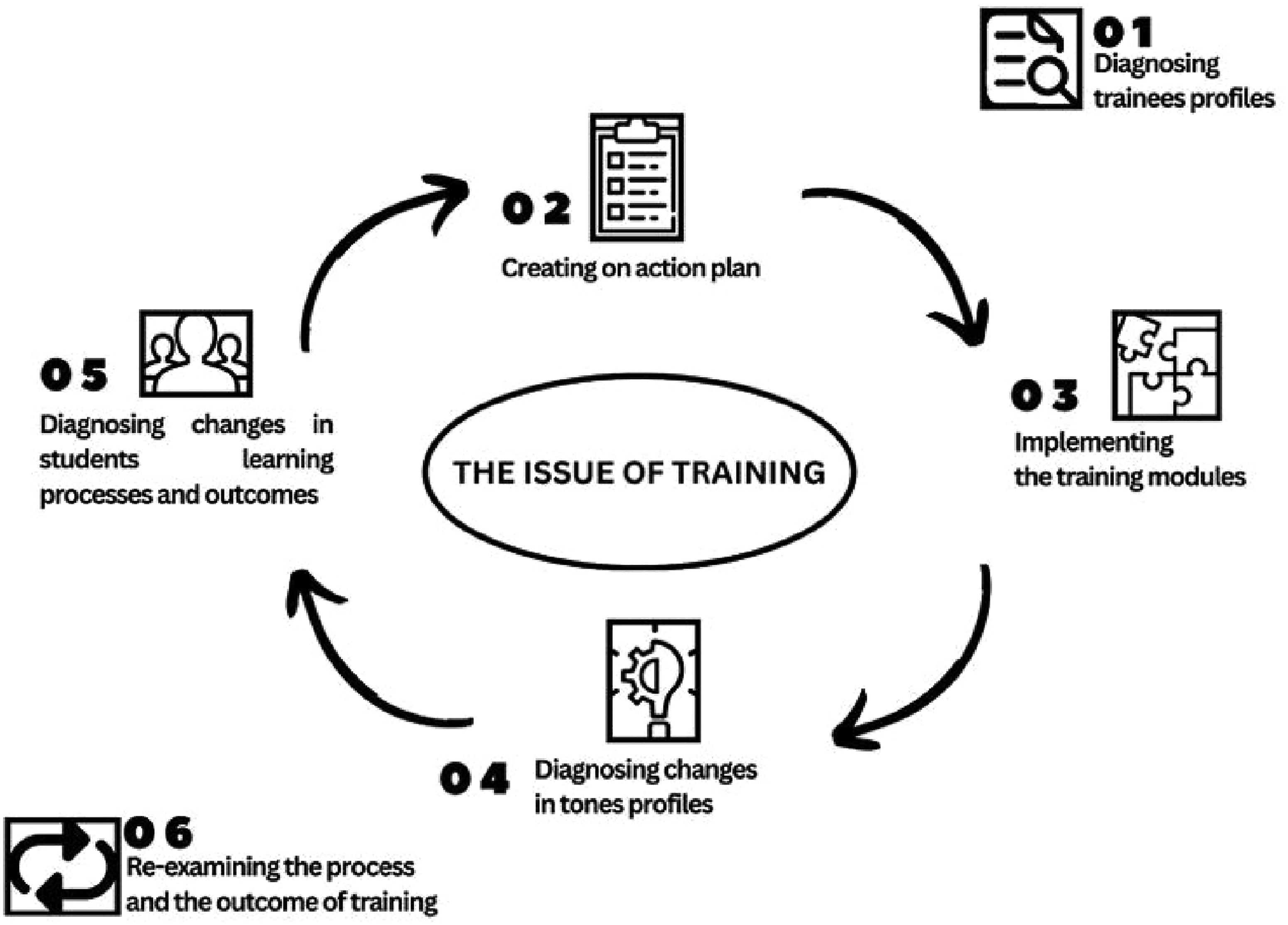
A capacity building model (Makrakis, 2006).
The team mapped the curriculum to identify topics that may be integrated with the sustainability concept. The students were introduced to all the 17 SDGs and they were given the flexibility to choose SDGs that they would like to focus on.
The purpose of doing this was to make sure all sustainability concepts were distinct. Four workshops on infusing ESD enabled by ICT in the university's existing curriculum were conducted. The training also focused on disseminating knowledge about, 10Cs, six learning pillars, four dimensions of sustainable justice, and various types of apps have also been introduced.
The training was conducted online due to the COVID-19 pandemic. Interactivity was incorporated into the online sessions, where discussions on the integration of the 10Cs, six learning pillars, and four dimensions of sustainable justice were undertaken. Numerous questions were raised by the teacher educators as these concepts were relatively new to them. Four workshops were conducted and the ICTeEfS curriculum could be effectively developed, and the teacher educators are now prepared to serve as trainers. The teacher educators demonstrate proficiency in ICTeEfS, including sufficient knowledge and skills.
In phase II, teacher educators developed three teaching mathematics modules on infusing SDGs in the course using the DeCoRe+ methodology to be implemented in the Teaching Mathematics II course.
The DeCoRe + (Deconstruction-Construction-Reconstruction) Makrakis (2017) is an approach that sees curricula as living documents by adopting a design process that focuses on transformative curriculum development. DeCoRe+ consisted of the following processes.
Diagnosing: Reflecting on (a) who we are, (b) what we have (existing knowledge), (c) where we want to go, and (d) why we want to go there. Deconstructing: Critically analyzing the functioning of personal perspectives, habits of mind, and chosen curriculum units/modules. Constructing: Gathering resources, creating ideas, and constructing new meanings (perspectives). Reconstructing: Integrating newly constructed knowledge aligns with the reconstructed frame of reference. Implementing: Carrying out the reconstructed curriculum unit/module supplemented by service learning. Finalizing: Reflecting and evaluating what has been learned and changed.
Using all steps in the DeCoRe+, new elements such as 10Cs, six learning pillars for sustainable development, and four dimensions of sustainable justice were added to this course syllabus (Figure 3).
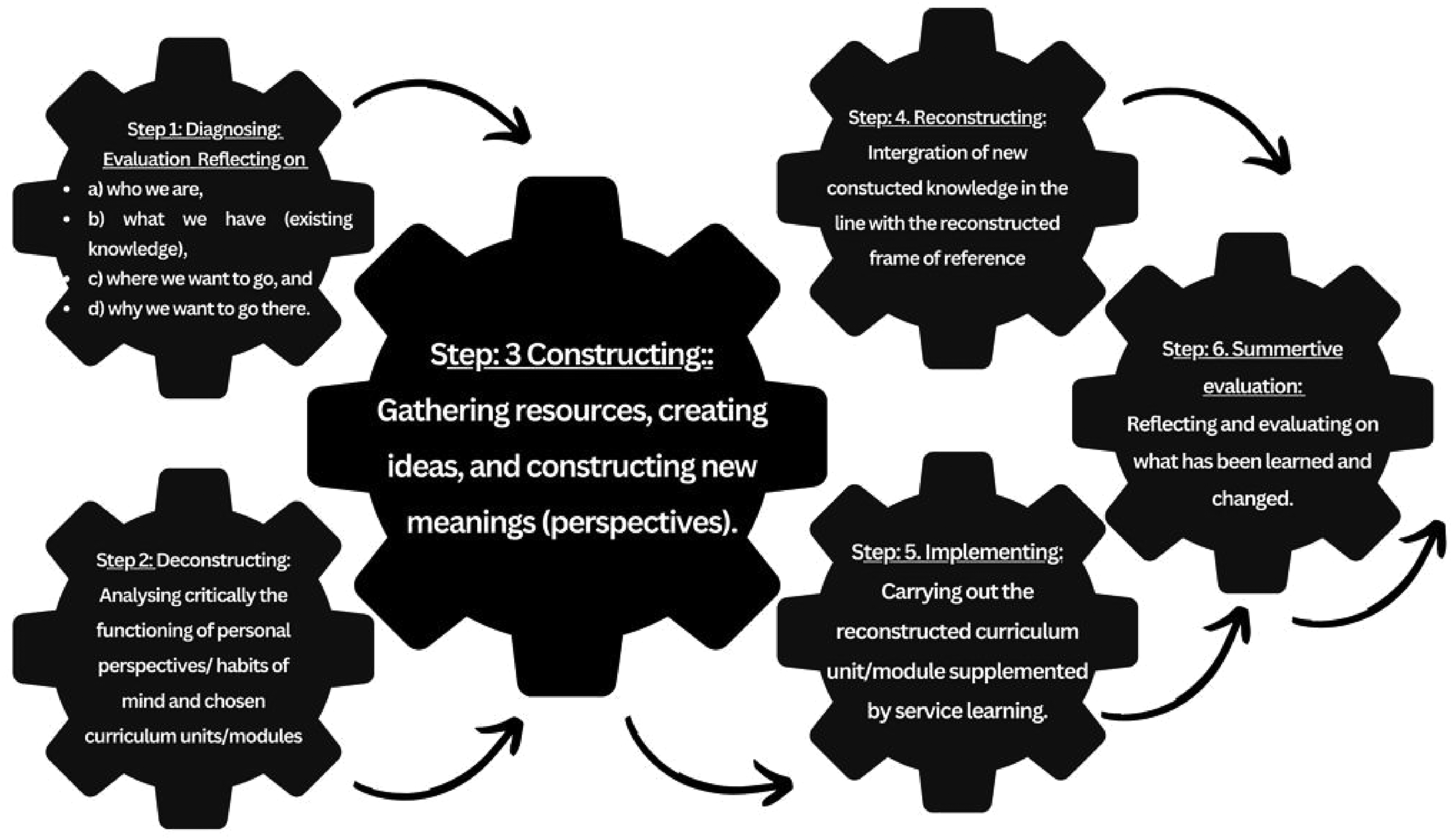
The DeCoRe+ methodology (Makrakis, 2017).
The reviewed course syllabus was internally for quality assurance. through a peer-reviewed evaluation. After feedback was received, certain amendments were made. Subsequently, additional insights were provided by an external evaluator from another university in Malaysia, who is also a member of this research project. Integrating the feedback received, further adjustments were made to produce the final draft of the DeCoRe+ document. As a result, the revised course syllabus for this program now consists of three modules. Module 1: Mathematical Learning Theories and their Implications for Teaching and learning mathematics Module 2: Plan and prepare teaching lessons/units (in groups) emphasizing higher-order thinking skills. Module 3: Execute teaching lessons/units (in groups) emphasizing problem-solving.
Each of the developed modules has a section whereby there is an opportunity to Integrate appropriate SDG goals in planning, preparing, and executing teaching lessons/units.
These modules were implemented in the mathematics teaching methods II course to students using the DREAM (Diagnose, Review/Reflect, Explain, Assess & Manage) methodology advanced by Makrakis (2017) for 14 weeks (one semester).
These processes cover the whole spectrum of the course, that is, what students bring in class before the implementation of the courses (Diagnosing), during the course (Reviewing/reflecting and explaining), and at the end of the course (Assessing and managing). In a way, the DREAM methodology reflects a critical action research process that aims to assess a course and, more importantly, make whatever changes to improve it. Through the parts of the DREAM Methodology, as shown in Figure 4, the student, guided by the course instructor, creates a portfolio that he/she has to give back to the instructor at the end of the course. Consequently, the DREAM Methodology is part of the course requirements.
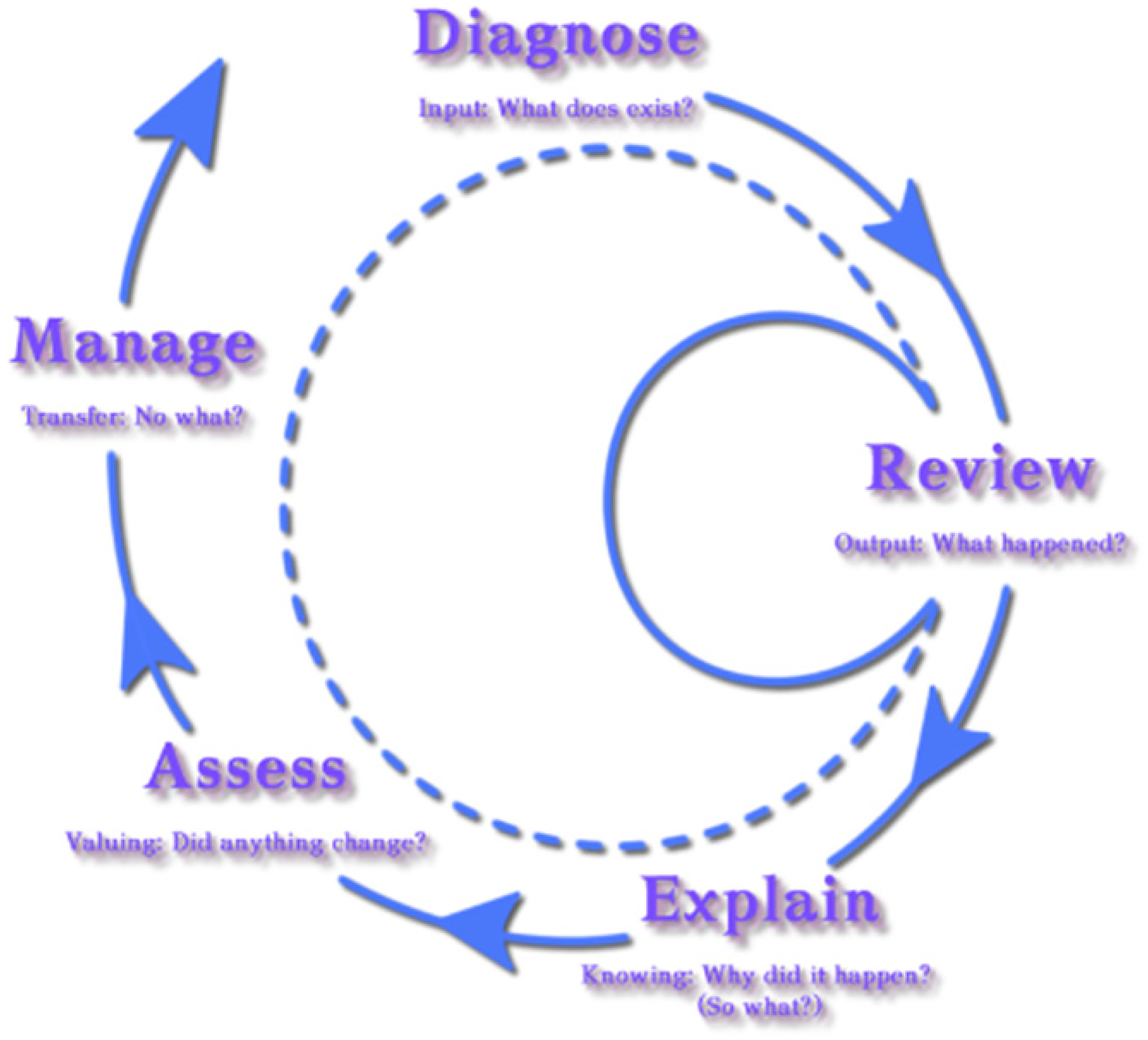
The DREAM methodology.
For example, students were tasked with choosing a particular Mathematical concept and skill within the secondary school syllabus. The students must search online for issues in SDG 2, SDG 4, and SDG 14 related to the chosen concepts and skills. Each group must develop an exciting issue using a pictograph, which they need to share in an online forum. With those issues, students in groups need to present a solution and prepare a short summary of the map between the chosen concepts and skills and the chosen SDGs.
Thirty-nine preservice teachers were involved in this study. Purposive sampling was used since these students were required to take this course. Initially, the students must familiarize themselves with the concept map, primarily using words to link the ideas individually. Then, a group of 3 to 4 students’ needs to develop the concept map on selected SDGs. 12 groups were formed. Students are presented with simple ways to create a concept map with paper and pencil, asking students to brainstorm on an SDG topic together with others. Introduction to concept map by hand is followed by using apps to generate concept map. Based on DREAM 2.0, students need to do a concept map of SDGs since each is connected. Thus, understanding the SDGs concepts and their interconnectivity is essential, especially for young future teachers, since they will disseminate them to future generations. As discussed earlier, there were 5 types of SDGs understanding such as Knowledge Representation, interconnectivity, meaningfulness of links, complexity, contextuality and transformational.
Assignment 1: familiarization and identifying connections among SDGs
Students were introduced to the 17 SDGs in a special workshop as part of the mathematics teaching methods II course. Students work in groups and were asked to generate a list of words, phrases, and ideas about the relationships among the SDGs. At this point of the activity, the goal is to brainstorm without judgment, thus encouraging students to refrain from elaborating on their lists since it is a brainstorming exercise. Once students had finished generating their lists, they were challenged to add one or more ideas to help stretch their thinking.
Secondly, students were asked to use a piece of paper and write the topic “Connecting SDGs” in the center and then to sort the ideas from their lists, graphically organizing them on the page in a way that makes sense to them. For example, students might place ideas central to the topic near the middle of the page and more concrete ideas at the edges. They combine similar ideas or arrange them vertically to suggest a progression.
Once the students had generated and sorted their lists, they were requested to connect ideas with lines and arrows and write a brief explanation above each line that describes their connections. The students are requested to transfer all the paper concept maps in digital format.
Assignment 2: create a concept map for each SDG and discuss its connections with other SDGs
This assignment was given after the students had been familiarized with concept mapping. During this process, students are encouraged to elaborate their maps, adding new ideas that their peers have shared if it expands their thinking. Alternatively, they might elaborate on their own after sharing and returning to their group members.
In this assignment, the same procedure as in the previous one will be followed with the difference that a group of students from 2 to 3 will identify one SDG and start from its crucial label. For example, if a group chooses SDG1, the key concept is “No poverty.” So, in this case, the group of students who have chosen SDG1 has to explore how they will “End poverty in all its forms everywhere.” In other words, they focus on the description of the SDG.
Each group of students should develop its e-concept map focusing on the SDG chosen, and each group should submit its work to the instructor.
The instructor will assess the collected concept maps using the rubric Makrakis and Kostoulas (2024) developed regarding five SDG understanding types: Knowledge Representation, interconnectivity, the meaningfulness of links, complexity, contextuality, and transformational. We evaluated their concept maps using rubrics, which have five categories (excellent, very good, good, fair, and failing) and six criteria developed by Makrakis and Kostoulas (2024). The criteria are as follows:
Knowledge representation—refer to the relationships and concepts that are logical and related to the key theme. Inter-connectivity—refers to the level of understanding and meaning in terms of inter/cross-disciplinarity, connection to the curriculum, and connection with the real-world context. Meaningfulness of links—refer to words, and the links make sense and help develop dialogue, deep learning, critical thinking, and reflection and inference-making. Complexity—refers to the concept map that allows a shared meaning to emerge, generates many complex patterns and results, provides high-level representations of evolving thinking, and makes sense of complex problems requiring connecting ideas and eliciting relations between ideas. Contextuality—refers to the concept map eliciting relations between ideas within and across contexts; provides opportunities to contextualize ICTs with EfS and knowledge construction transferable to other contexts. Transformational—refers to the concept map that encourages learners to raise awareness about the key theme, critical consciousness, generate critical reflection, and empower action.
Results and discussion
Findings showed that 5 groups chose SDG4, 4 groups chose SDG12 and 3 groups chose SDG15. The reason of choosing these SDGs where most students have been exposed to these 17 SDGs in their other courses such Biology Teaching Methods and Chemistry Teaching Methods. In addition, Universiti Sains Malaysia has its own policy on sustainability. They also involved in sustainable activity as their co-curriculum activities.
SDG understanding is categorized based on Knowledge Representation, interconnectivity, the meaningfulness of links, complexity, contextuality, and transformational. The data related to students’ understanding of SDG is given in Table 1.
Crosstabulation of students’ concept map and SDG understanding.
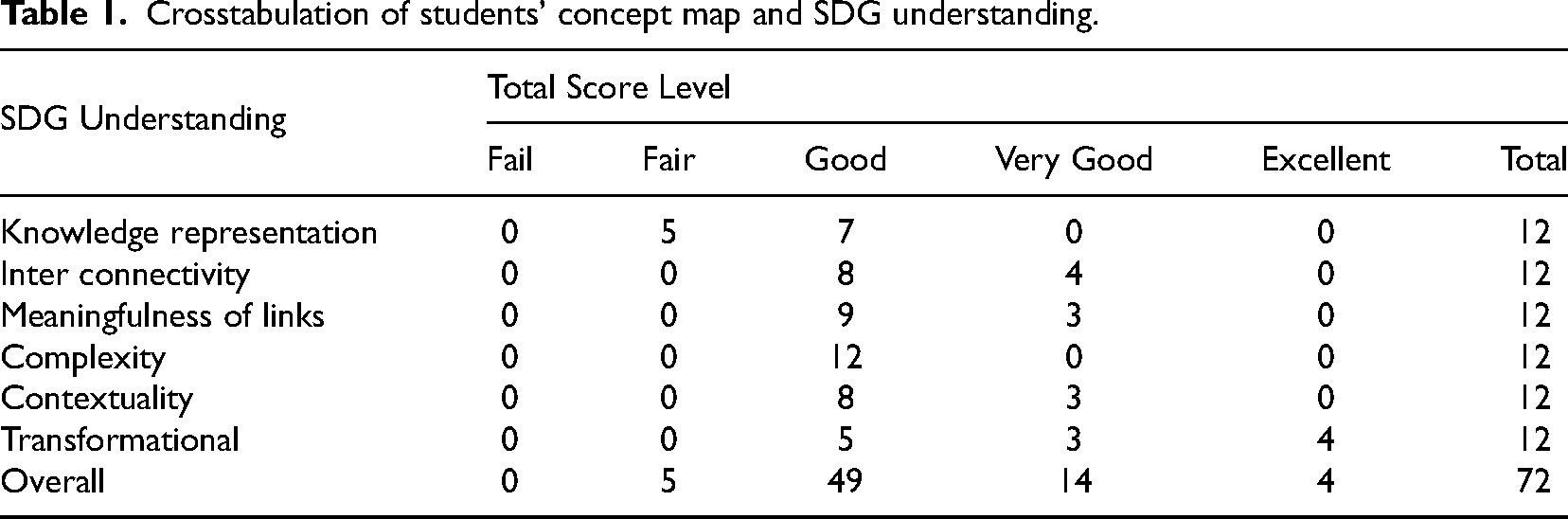
Crosstabulation of students’ concept map and SDG understanding.
Findings from the 12 students groups showed that their knowledge of SDGs were in the level of fair, good, very good and excellent. In terms of knowledge representation, 5 groups have a fair knowledge representation and 7 groups have a good level of knowledge representation. In terms of inter-connectivity, eight groups have a good level of inter-connectivity and 4 groups have a very good inter-connectivity. While for meaningfulness of links, 9 groups have a good level of meaningfulness of links and 3 groups have a very good meaningfulness of links. For complexity, all groups (12) have a good level of complexity. For contextuality, 8 groups have a good level of contextual and 4 groups have a very good level of complexity. For transformational, 5 groups have a good level, 3 groups have a very good level and 4 groups have an excellent of transformational.
Students’ overall understanding of SDGs.
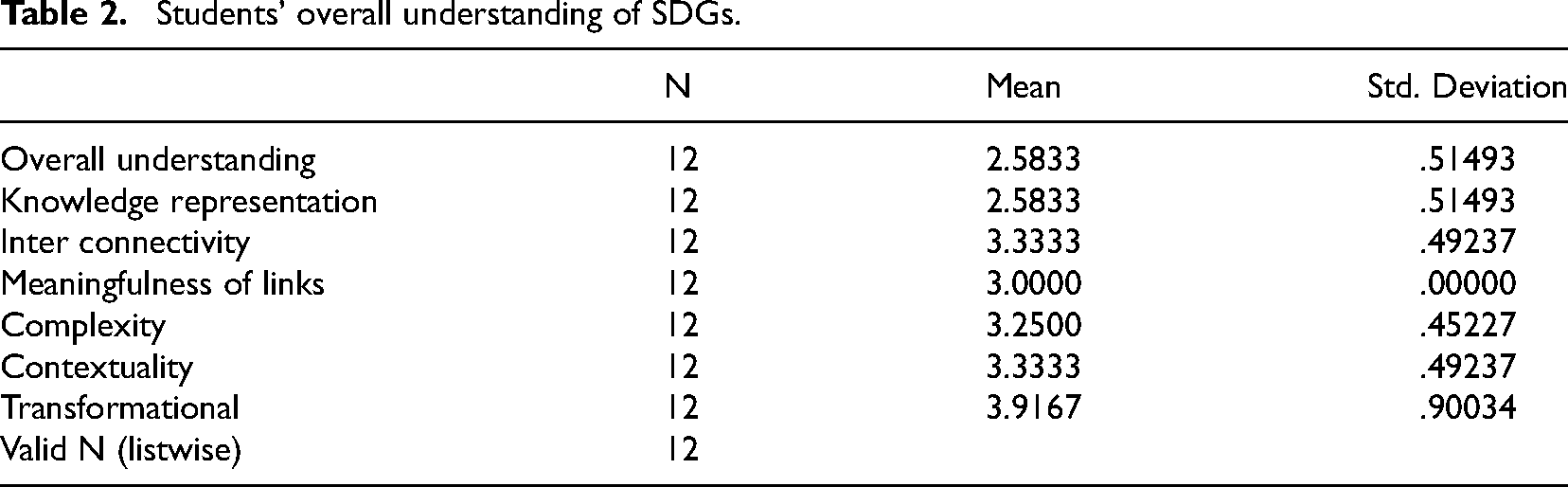
Furthermore, by using mean value, the findings showed that their overall understanding about SDGs (Table 2) were fair. In details, their knowledge representation, they have fair level, while for inter-connectivity, complexity, meaningfulness links, contextuality, and transformational, they have good level. They have highest mean in transformational category and the lowest mean was in knowledge representation. An example of concept map categorized as fair is given in Figure 5 which shows that the concept map has lines connecting the various SDGs, but there needs to be an explanation for why a particular SDG is connected to another SDG and lacks a description.
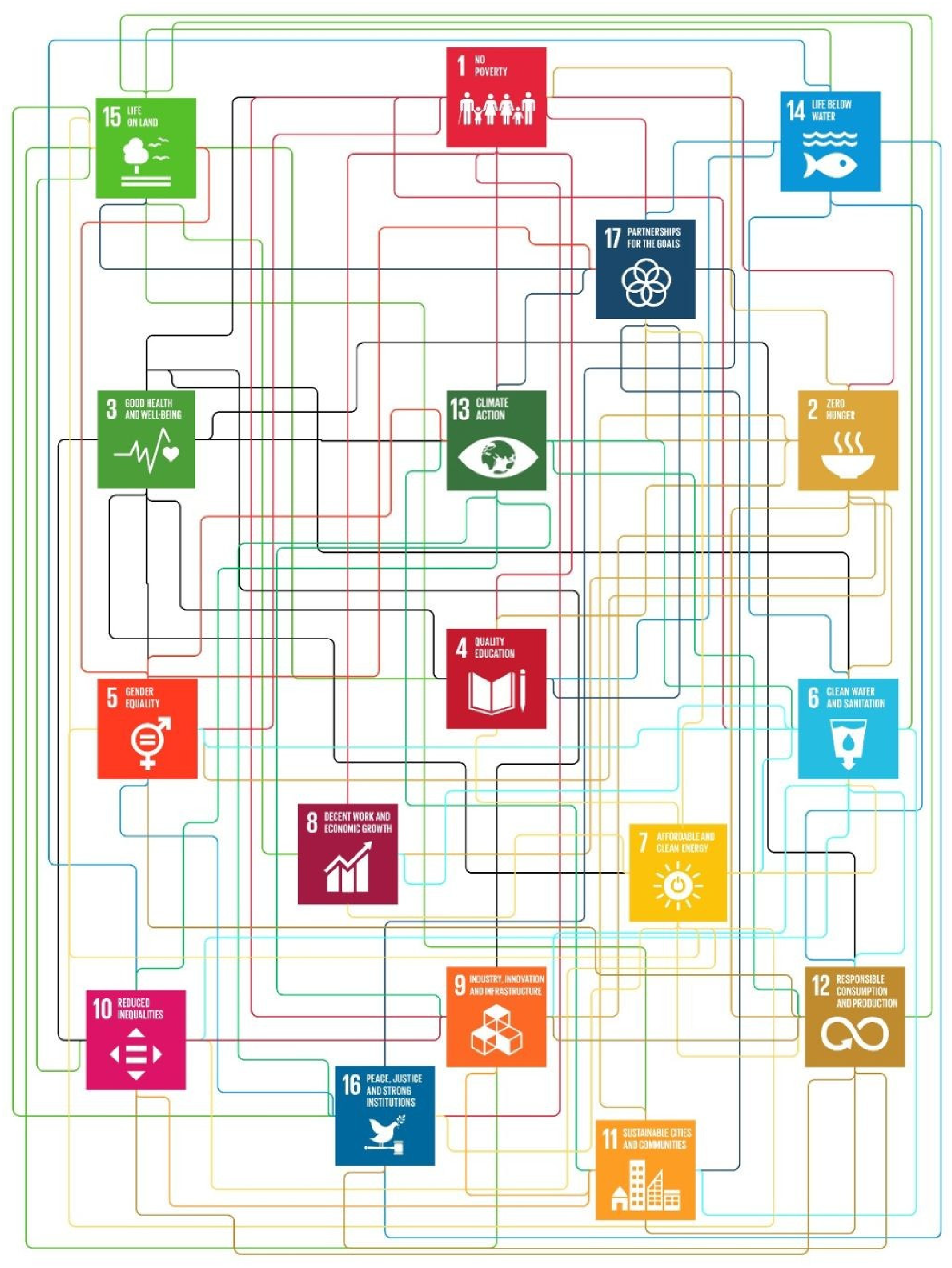
Example of students’ work categorized as fair.
An example of a concept map categorized as good is given in Figure 6. Most of the relationships and concepts in the map are logical and relate to the key theme. For example, SDG 4 quality education can increase decent work and contribute to No Poverty.
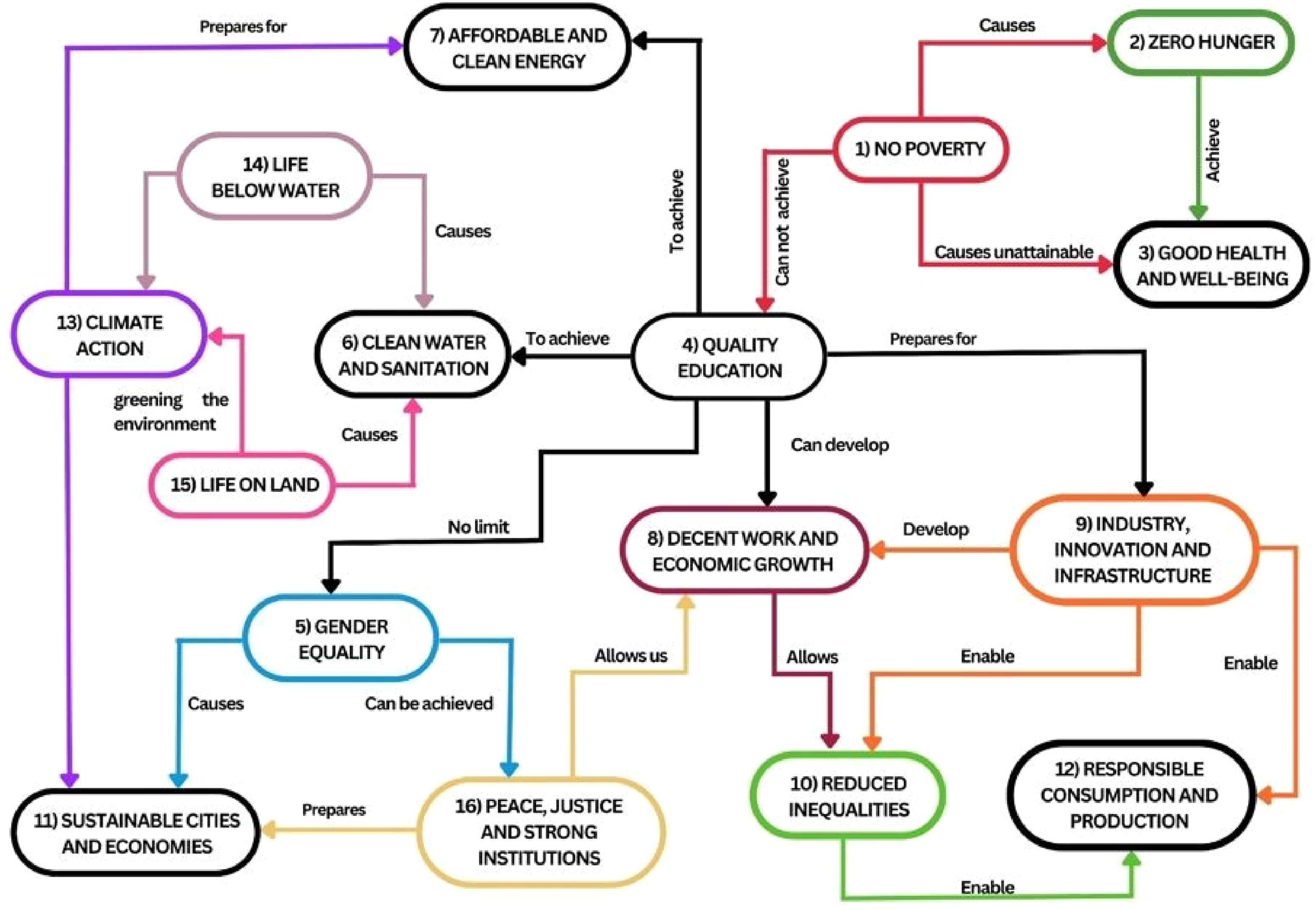
Example of students’ concept map categorized as good.
In conclusion, all students involved in this study had a good criterion of SDG in terms of their knowledge representation, interconnectivity, the meaningfulness of links, complexity, contextuality, and transformational. An example of excellent knowledge representation is given below, whereby relationships and concepts in the map are logical and relate to the key theme. Furthermore, the students could work in groups and propose exciting ideas on their chosen SDG and how to address the related issue. An example from one of the groups for assignment 2, part 2, is given Figure 7.
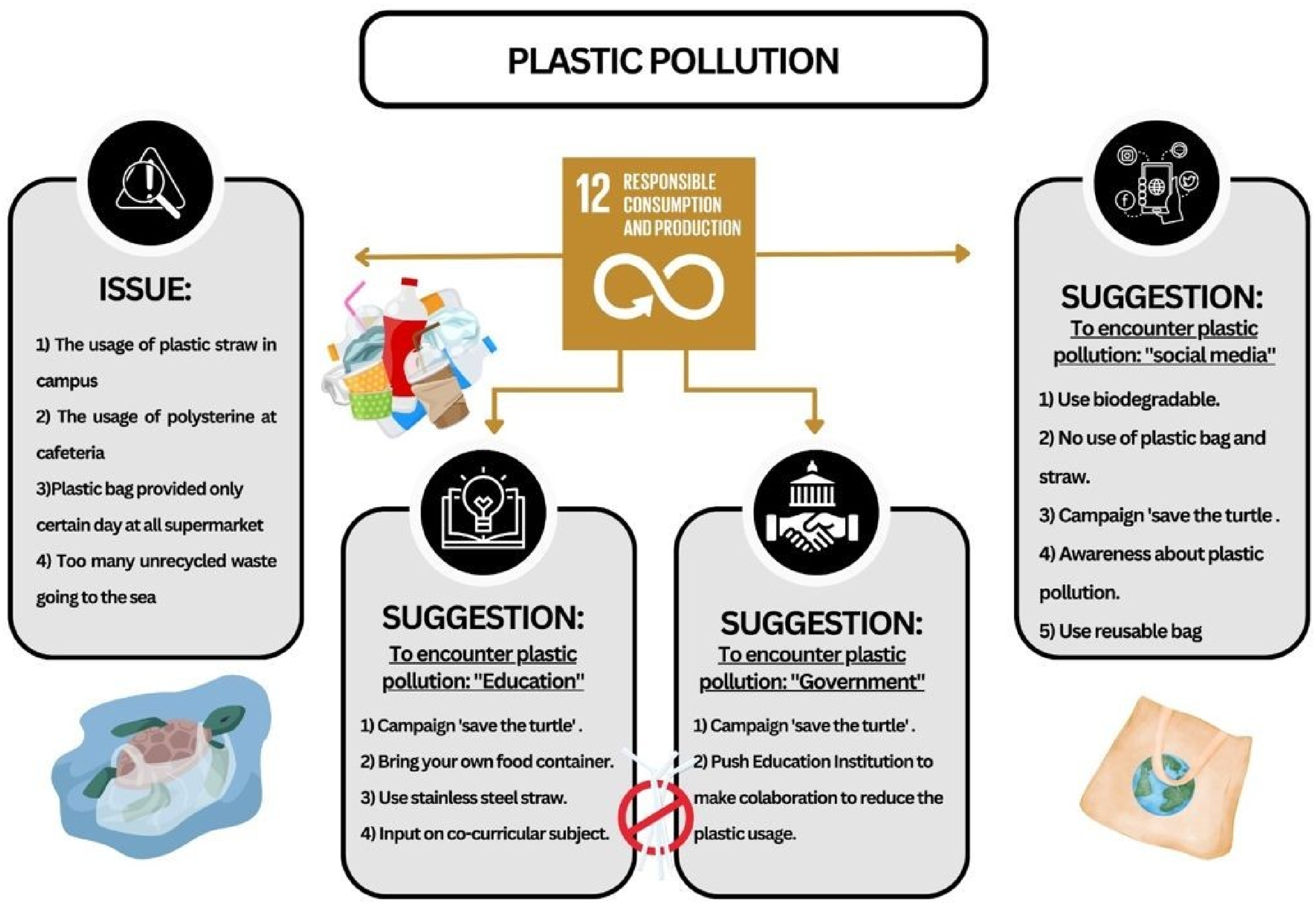
Example of students’ concept map categorized as excellent.
This study reviewed the course syllabus for mathematics teaching methods with a lens to identify topics related to SDGs and develop strategies to promote their understanding among the students through the use of concept maps. This study involved two phases. Phase 1 used the capacity building model to train teacher educators to review the syllabus, map the curriculum, and identify topics nearest to SDGs. In Phase II, teacher educators developed three teaching mathematics modules on infusing SDGs in the course using the DeCoRe+ methodology. Even though new topics about SDGs were added to the course, the students proposed that every subtopic in the course must infuse SDGs concepts to ensure further understanding on SDGs.
We observed that the application of the element of sustainability or any other element as a novelty needs to be carefully planned. It requires sufficient knowledge among lecturers before adjusting the existing curriculum. Not all lecturers are proficient in the elements of sustainability, especially SDGs. So, the first task in revising the curriculum is to have specific workshops related to the SDGs and their relevance to the courses involved. Thus, SDGs can be integrated into the existing curriculum rather than new things or subjects taught to the preservice teacher.
After the course revision, the content of the courses has added value in terms of the SDGs concept and the application of ICT as a teaching tool. Moreover, the incorporation of sustainability or any innovative element necessitates careful planning. Adequate knowledge among lecturers is essential before making adjustments to the existing curriculum. Proficiency in the elements of sustainability, particularly SDGs, may vary among lecturers. Therefore, the initial step in curriculum revision is to conduct targeted workshops focused on SDGs and their relevance to the respective courses. This approach ensures a seamless integration of SDGs into the current curriculum, avoiding the introduction of entirely new concepts or subjects for preservice teachers. Therefore, the initial step in curriculum revision is to conduct targeted workshops focused on SDGs and their relevance to the respective courses. This approach ensures a seamless integration of SDGs into the current curriculum, avoiding the introduction of entirely new concepts or subjects for preservice teachers. The students’ concept maps were analyzed by using rubrics which has five categories (excellent, very good, good, fair, and failing) and to relate to SDG understanding as: Knowledge representation, interconnectivity, the meaningfulness of links, complexity, contextuality, and transformation. Students’ concept maps illustrate a better understanding of the SDGs. All the groups scored either “good,” “very good,” or “excellent” on knowledge representation, interconnectivity and meaningfulness of links. In conclusion, all students involved in this study had a good criterion of SDG in terms of their knowledge representation, interconnectivity, the meaningfulness of links, complexity, contextuality, and transformational.
In conclusion, it is possible to review a mathematics teaching methods course using DeCoRe+ to infuse SDGs. The result also showed that students are able to have knowledge, and then internalize the concepts enabling them to contextualize and transform SDGs in the mathematics curriculum as a preparation for them to be future teachers of mathematics.
Footnotes
Acknowledgements
The European Commission cannot be held responsible for any use which may be made of the information contained therein.
Contributorship
Munirah Ghazali oversee, conducted the research, and drafted the manuscript. Nooraida Yakob conducted the research, drafted the manuscript, and analyzed the data and findings. Muzirah Musa conducted concept map workshops. Nur Syazwana Hamzah organized workshops for teacher training and organized data. Mohammad Zohir Shaari conducted research and workshop on SDGs. Rabiatul Adawiah Ahmad Rashid conducted research and workshop on SDGs. Aidiahmad Dewa and Mazlan Hanafi Basharudin focused on technical aspects of the research.
Declaration of conflicting interests
The authors declared no potential conflicts of interest with respect to the research, authorship, and/or publication of this article.
Funding
The authors disclosed receipt of the following financial support for the research, authorship, and/or publication of this article: This work was supported by the Erasmus+, Universiti Sains Malaysia (grant number No. 598623-EPP-1-2018-1-CY-EPPKA2-CBHE-JP, 304/PGURU/6501020/E120).
Informed consent
The research has been approved by Educational Planning and Research Division (EPRD) of the Malaysian Ministry of Education. The participants provided informed consent to partake in the study and for the results to be published.

Correction (December 2024):
Article updated to add Informed consent section.