



Abstract
Drawing on a technology dispositions framework, this study examined the changes in teachers’ beliefs, attitudes, competence, and behavioral intentions toward the use of technology in the mathematics classroom, following their engagement in professional development (PD) mediated by GeoGebra software. In a case study research design, 11 mathematics teachers from a senior high school in Ghana were purposively selected to engage in a 1-year PD program. They worked in teams to design and enact GeoGebra-based mathematics lessons. A self-report questionnaire, semi-structured interview, and lesson observation were used for data collection. Self-report data were analyzed using mean, SD, paired sample t-test, and Hedges’ g. Interview and lesson observation data were analyzed using a thematic approach. The results indicated that teachers’ pedagogical beliefs, affective attitudes, and competence toward technology changed following the PD. To some extent, they were able to make the goals of their mathematics lessons explicit and sequenced their instructional activities to engage students’ geometric and algebraic thinking. However, their intention to put the new pedagogy into classroom practice in the future depended on multiple contextual factors: administrative support, continual professional training, and provision of adequate technology facilities. These findings have implications for practices in mathematics education, technology dispositions frameworks, and PD.
Keywords
Introduction
Educational reforms in many countries, including Ghana, are ambitious in integrating technology such as graphing software, GeoGebra, and spreadsheets to enhance in-depth mathematical exploration and discourse in the classroom (Ministry of Education, 2020; National Council of Teachers of Mathematics, 2003). However, it is becoming apparent that this integration is not a seamless process free of barriers. Both external and internal barriers fetter the effective use of technologies.
Although teachers have little control over external barriers such as the provision of technology resources (e.g., laboratories, hardware, software, and internet connectivity), their internal dispositions such as knowledge, beliefs, and attitudes are critical determinants of whether they will use the technology in the classroom or not (Ottenbreit-Leftwich et al., 2018; Thurm & Barzel, 2022). The value teachers place on technology determines how much they use it, and their affective attitude influences what technology and how it is used in the classroom (Larbi-Apau & Moseley, 2012).
Mishra and Koehler (2006) espoused that teachers need a well-developed integrative knowledge of technology, pedagogy, and content (TPCK) to integrate technology effectively. Although Mishra and Koehler acknowledged that school environment, teachers’ prior experiences, beliefs, and attitudes are important factors of effective technology integration. However, these contextual issues component is less explored in most of the TPCK research studies (Chai et al., 2013). For teachers to appreciate the constraints and maximize the affordances of technology, it is argued in the current research that teachers’ knowledge of technology and its integration needs to be developed alongside their beliefs and attitudes related to the use of technology (Rienties et al., 2013).
The struggles the teachers go through to accommodate the new technology seemed to abate when they are offered the opportunities to collaboratively design and implement technology-based lessons in the mathematics classroom (Agyei & Voogt, 2012). Furthermore, according to Dwyer et al. (1991), “teachers’ beliefs may be best modified while they are in the thick of change, taking risks and facing uncertainty” (p. 48). Thus, any activity of collaborative and explicit professional development (PD) toward enhancing the knowledge, beliefs and attitudes of teachers could serve the purpose of integrating technology mathematics classrooms (Clark-Wilson et al., 2020).
In the context of Ghana, the Government is committed to achieving the Sustainable Development Goal 4 (SDG 4), which focusses on promoting inclusive and equitable quality education and lifelong learning opportunities for all Ghanaians (United Nations Ghana, 2022). Among other strategies related to that goal, the Government is committed to ensuring that schools and teachers are resourced digitally. For example, the Government initiated a one-teacher-one-laptop computer project in 2021. The distribution of laptop computers is ongoing and over 80% of 62,000 teachers at the senior high level have now received TM1 laptop computers (Kale-Dery, 2021).
While this initiative by the government is lauded, the teachers’ dispositions to productively use computers are brought to a litmus test. A recent report indicates that mathematics teachers at senior high schools have relatively low preparedness and Information and Communications Technology (ICT) skills in using technology in their lessons (Agyei et al., 2022). Thus, the development of the dispositions of teachers is critical in using technology to provide students with an engaging mathematics learning environment (Arthur, 2022).
To promote effective integration of technology in the mathematics classroom, it is important to consider the type of software application adopted for use (McCulloch et al., 2018). GeoGebra is a dynamic mathematics software that has gained popularity in mathematics education because it embodies mathematics contents such as geometry, algebra, calculus, and statistics. It is user-friendly. Users do not require a license to use it. Prior studies have indicated that GeoGebra has the potential to promote teachers’ content and pedagogy of integrating technology in the mathematics classroom, particularly when they are engaged in PD that deconstructs an inquiry-driven pedagogy facilitated with GeoGebra (Bu et al., 2013; Hudson, 2012; Prodromou et al., 2015).
Therefore, the current study set out to examine the changes in teachers’ technology dispositions (beliefs, attitudes, competence, and intentions) as they engaged in PD mediated by GeoGebra software. The research question formulated to guide the study was: How do mathematics teachers’ technology dispositions change following their engagement in PD mediated with GeoGebra?
As earlier indicated, teachers’ disposition is critical in any curricula innovation (Arthur, 2022). Thus, answers to this research question make a modest contribution by providing some insights into how teachers’ technology disposition change when they are engaged in PD that deconstruct an inquiry-driven teaching approach mediated with GeoGebra.
The framework of technology dispositions
Education research has made significant progress in identifying critical factors that hinder the successful adoption of innovative curricula in the classroom (Ottenbreit-Leftwich et al., 2018). Teachers influence how effectively technology is used in teaching and learning mathematics. Many researchers who research technology integration in education have recognized the significance of teachers’ dispositions toward the use of computers in the classroom (Bebell et al., 2004; Ruthven et al., 2005; van Braak et al., 2004).
A disposition is defined as when “summaries of act frequencies or trends in behavior, are contrasted with habits, skills, attitudes, and traits” (Katz & Raths, 1985, p. 301). Thus, behaviors do not necessarily result from dispositions. However, the idea behind dispositions is that they can be used to predict future trends in behavior (Jung et al., 2006). For example, a teacher who possesses a high level of technology disposition in teaching mathematics is more likely to use it in his or her pedagogical decisions. From the framework of technology disposition, four variables are central to effective technology integration: teachers’ beliefs, attitudes, competence, and intentions toward the use of technology (Jung et al., 2006).
Belief is a psychological construct that underlies behavioral intention toward the use of technology (Jung et al., 2006). Attitude is defined as an inclination to respond favorably or unfavorably to things. It includes qualities, beliefs, and feelings one has about something (Vogt, 1997). Teachers’ attitudes and intentions to use technology in their practices are influenced by their beliefs about its value and significance (Arthur, 2022). Ottenbreit-Leftwich et al. (2018) discussed how cultural settings, educational views, and self-efficacy beliefs all affect how technology is used in teaching and learning. They emphasized that the efficient use of technology in teaching and learning is not explained by instructors’ knowledge of technology alone. Teachers should instead feel comfortable applying this knowledge to aid in student learning. Beliefs about the value of technology and beliefs about teaching and learning with technology were crucial in technology integration (Kim et al., 2013). Again, closely related to a teacher's technology disposition are their motivation, willingness, and inclination to approach challenges as well as innovativeness and self-confidence (Jung et al., 2006). Strongly technology-inclined teachers are individuals who are ready to adapt to changes in curriculum innovation, who want to learn more and develop new skills, and who want to use technology wherever it makes sense for their learning and future teaching (Jung et al., 2006).
There is no consensus in the related literature regarding what constitutes technology competence. For instance, being adaptable to change could be a sign of technological proficiency (Jung et al., 2006). Chai et al. (2013) describe technology competence as teachers’ self-efficacy (perceptions of their knowledge and skills). A teacher's level of technology competency can be determined by their comprehensive knowledge of pedagogy, subject matter, and technology (TPACK) (Mishra & Koehler, 2006).
The TPACK framework has seven sub-constructs: technology knowledge (TK), pedagogy knowledge (PK), content knowledge (CK), pedagogy content knowledge (PCK), technology pedagogy knowledge (TPK), technology content knowledge (TCK), and technology pedagogy content knowledge (TPCK). TK is how to operate ICT hardware, software, and related peripherals. PK is teachers’ knowledge of students’ learning, instructional strategies, various educational philosophies, and learning assessments. CK is teachers’ knowledge of the subject matter. PCK is the ability of teachers to use pedagogical techniques to help students grasp the subject matter. TPK refers to teachers’ knowledge of the existence and features of various technologies that support instructional strategies. TCK refers to instructors’ understanding of how to use technology to depict and investigate the subject matter in different ways. TPCK involves being aware of how to use technology to assist students in moving from one learning experience to another and how to use computer programs to assist students who have difficulty with a particular subject matter (Koehler & Mishra, 2009).
Niess et al. (2009) identified five levels of Teachers’ TPACK: recognizing, accepting, adopting, exploring, and advancing. These levels are used to evaluate the progress of teachers’ competence when they use technology in their classroom practices. A teacher who is at the recognizing level is aware of the pedagogical value of technology in the classroom, but he or she does not incorporate technology into his or her classroom practices. A teacher who is at the accepting level has a positive or negative attitude toward the use of technology in teaching and learning. An adapting teacher takes part in activities that lead to a decision about whether to adopt or reject technology for classroom activities. An exploring teacher actively uses technology for classroom activities. A teacher who is at the advancing level can redesign the curriculum and assess the outcomes of incorporating technology into classroom activities. He or she appropriately uses technology to engage students learning.
Despite the divergent views in the literature, there is general acceptance that teachers’ technology competency involves the knowledge and skills required to use technology to alter their teaching methods. It is argued in this study that it is imperative to take into account deeper implications and consequences of digital technologies on persons and society. Technology competence goes beyond technical knowledge and abilities to include a wider sociocultural perspective (Falloon, 2020). Teachers’ technology competence is strongly correlated with prior PD training, and it is a key predictor of adopting technology for classroom activities (Arthur, 2022; Jung et al. 2006).
PD toward technology integration
Questions such as how teachers’ technology dispositions can be nurtured, and how they can design and develop instructional activities that incorporate technology remain important questions in the literature (Getenet, 2020; Koellner et al., 2011). A form of PD intervention is required to change teachers’ beliefs to ensure the effective use of technology in teaching and learning (Jung et al., 2006).
What constitutes effective PD is unresolved in the literature. One-shot workshop training in which teachers are introduced to basic technology skills has received considerable criticism. Such PD is fragmented and lacks follow-up activities, lacks direct classroom application, and is typically out of sync with curriculum innovation (Borko, 2004).
Some authors have proffered design guidelines toward effective PD programs for technology (Garet et al., 2001; Getenet, 2020; Koellner et al., 2011). Such PD is designed to focus on the pedagogical use of technology, and its interplay with mathematics content; strengthen teachers’ positive beliefs related to technology; provide exemplary lesson materials that include technology; and use free mathematics-specific software (Getenet, 2020). It should also foster active teacher participation in the learning process, use teachers’ classroom practices to provide a basis for their learning, and provide a supportive professional community to enhance teachers’ learning (Koellner et al., 2011). Lastly, technology-related PD should also offer opportunities for teachers to work in design teams and share pedagogical experience toward providing solutions to an authentic classroom problem (Kafyulilo et al., 2016).
Many studies have examined how PD affects teachers’ knowledge, attitudes, and beliefs toward integrating technology. Studies like Hixson et al. (2012), Myers and Halpin (2002), Soebari (2012), and Uslu and Bumen (2012) have shown that PD has benefits on teachers’ technology integration, whereas Glazer et al. (2009), McGarr and O’Brien (2007), and Rienties et al. (2013) have demonstrated that PD has minimal influence on teachers’ technology use in the classroom.
Conceptualizing the study
As shown in Figure 1, it is hypothesized in this study that PD in which teachers work in teacher design teams (TDT) to develop and enact GeoGebra-based mathematics lessons can change their dispositions toward technology integration in the classroom. The TDT PD reflects the features of effective PD according to the literature. The TDT approach involves at least two teachers from the same or related disciplines who meet regularly to rethink classroom practices that bring genuine and long-lasting improvement in their students’ learning (Kafyulilo et al., 2016). Thus, having at least two teachers in a PD program allows for collaboration and reflection. According to Becuwe et al. (2016), when teachers collaborate in TDT, they receive support from the facilitator of the PD which promotes their active collaboration in solving classroom problems. The facilitator dynamically provides logistic support, scaffolds the design process, and monitors the design process.
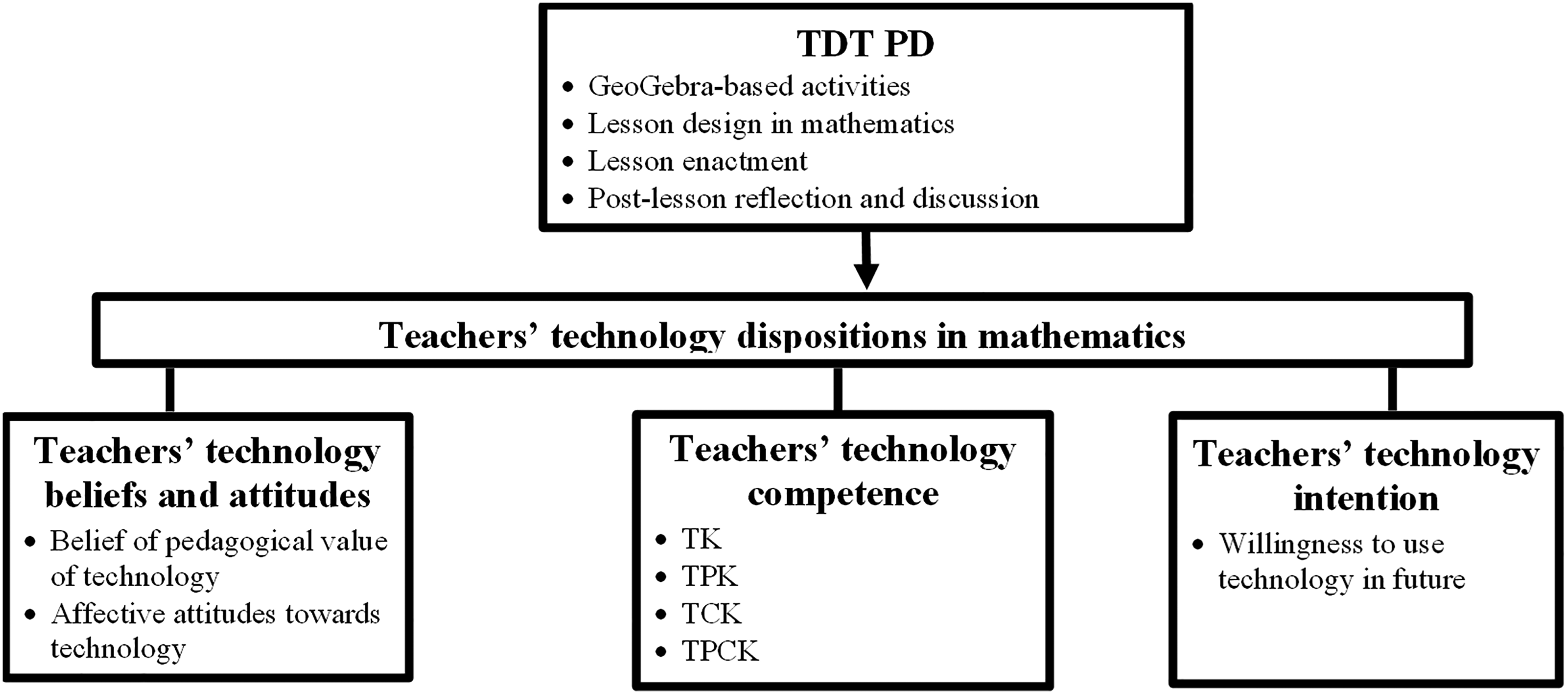
Influence of teacher design teams (TDT) professional development on teachers’ technology dispositions.
Teachers’ technology disposition was operationalized to encompass the teacher's beliefs about the value of the impact of technology on students’ learning, their affective attitudes toward technology, their technology competence, and their intentions toward technology. The belief of pedagogical value is operationalized as teachers’ belief in the usefulness of technology to promote instructional activities in the mathematics classroom. Affective attitude is the teacher's feeling (e.g., like, dislike, happy, and gloomy) toward the use of technology in teaching mathematics. Teachers’ technology competence was explained to align with Mishra and Koehler's (2006) TPACK which involves the knowledge and skills teachers required to use technology productively.
For this study, only the technology-related constructs of the TPACK framework: TK, TCK, TPK, and TPCK will be considered because the current mathematics curriculum for senior high schools in Ghana emphasizes the competence of teachers in including technology in their pedagogy decisions. TK is teachers’ knowledge about how to use technology tools such as laptop computer, projector, and GeoGebra software. TCK is teachers’ knowledge about how to use GeoGebra to represent mathematics content in different ways. TPK is the teachers’ ability to choose a technological tool based on its fitness for the learning activity. TPCK is the teachers’ knowledge of using various technologies (e.g., GeoGebra) to enhance knowledge creation of specific subject content in mathematics. Teachers’ technology intention was operationalized as their willingness to use technology in future.
Research design
A case study research design was used because it offers an empirical enquiry approach to examine how PD changes teachers’ technology dispositions. According to Merriam (1998), a case study approach provides the opportunity to examine a “specific phenomenon such as a program, an event, a person, a process, an institution, or a social group” (p. 7). The current study was set to answer a question preceded with how, so a case study approach is appropriate for obtaining an in-depth understanding of the question through multiple data sources: semi-structured interviews, self-report questionnaires, and lesson plans developed and enacted by the teachers (Yin, 2009).
Case study design has received criticism for being difficult to generalize to other situations. However, we can ensure it is robust by providing an in-depth analysis of a phenomenon, credible results through multiple data sources, and strong evidence that underpins causal relationships between specific interventions and specific outcomes (Yin, 2009).
Research setting, sample, and participants
The population of this study was 13 mathematics teachers in a Senior High School in Ghana. The school is a category C public pre-tertiary education for students aged between 15 and 17 years. In Ghana, senior high schools have been categorized from A to D based on the infrastructure of the school. The school had an enrolment of 1600 students and 73 teaching staff which 13 are mathematics teachers. Some mathematics teachers teach other subjects such as Physics, Chemistry, and Cost Accounting, depending on their academic background. The school had 33 classrooms across the six programs of study: General Science, General Agriculture, Home Economics, Business, Visual Arts, and General Arts.
The school was purposively selected based on familiarity with the school of the first author and access to both human and technology resources such as an ICT laboratory (Yin, 2009). The familiarity with the school and the teachers helped the first author to gain rich understanding of interpreting the changes in the teachers’ technology dispositions explored. Again, the teachers from the school were selected based on the reasons echoed by Garet et al. (2001). They emphasized that effective PD is enhanced when participants are from the same school, teach the same grade level, and teach the same subject. This, in turn, aids teachers in developing a shared understanding of instructional goals, methods, problems, and solutions. In this study, an invitation was sent to all 13 teachers in the school. Eleven teachers agreed to participate in the study. Table 1 is the background information of the participants. The names of the participants are pseudonyms.
Background information of the participants.
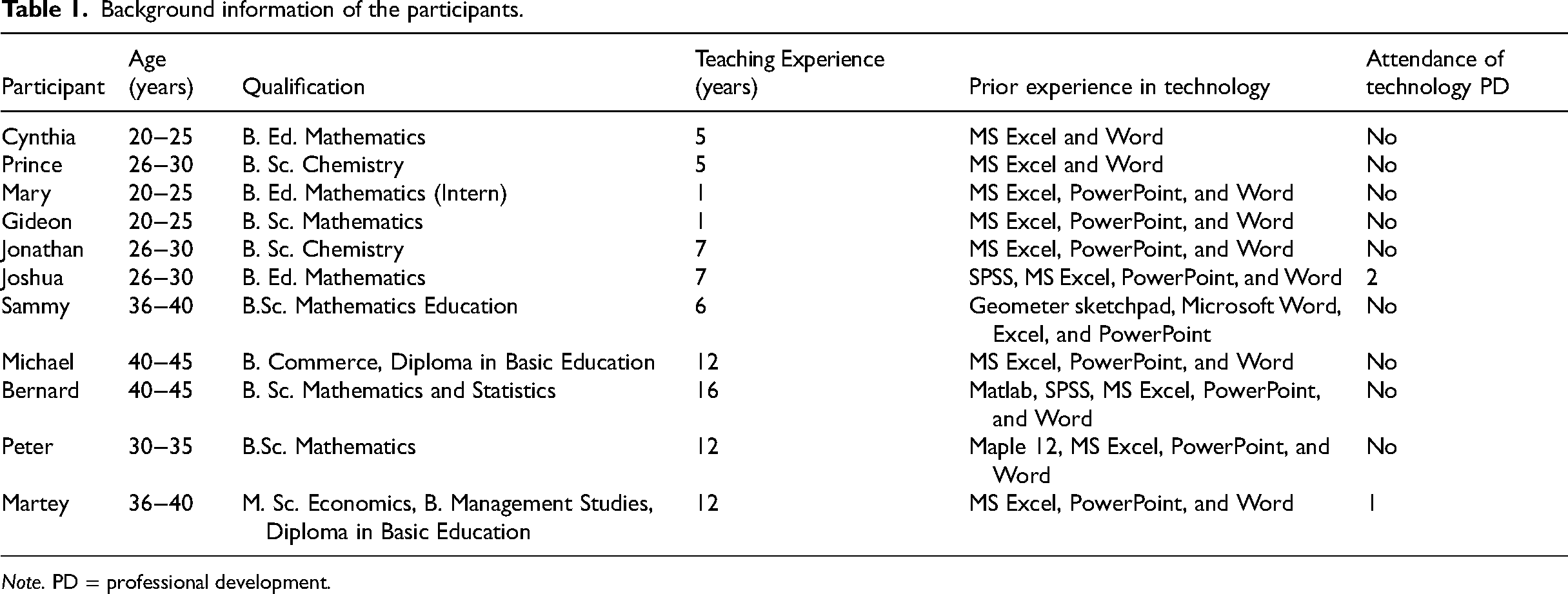
Background information of the participants.
Note. PD = professional development.
A sequence of activities was structured and implemented in this PD. The PD involved three phases: collection of preliminary data, workshop training, and enactment of GeoGebra-based mathematics lessons in actual classrooms. The first phase lasted for 2 months and was involved in the collection of baseline data from the participants (background information, prior technology experience, beliefs, attitudes, and knowledge). Based on the understanding of the baseline data, the second phase started, and it lasted for 6 months. In the second phase, the teachers were introduced to the pedagogical use of the tools (constructing, algebraic and graphic tools as well as the calculator algebra system, CAS) in the GeoGebra window. The teachers then designed GeoGebra-based mathematics lessons. The activities included in phase 2 were cyclic and iterative, and each informed the next. Workshops were provided in cases when teachers had difficulties addressing the prior activity. The teachers used the support offered by the first author who doubled as a facilitator to improve the quality of the lessons they developed (iterative). The final lesson artifacts were repeatedly improved and used by the teachers in the classroom (phase 3).
Methods for data collection
A self-report questionnaire (phases 1 and 3), semi-structured interviews (phases 1 and 3), and lesson observation (phase 3) were used to collect data for the study. The teachers responded to a questionnaire twice before and after the PD. The questionnaire comprised 5-point Likert scale items (1 = strongly disagree, 2 = disagree, 3 = neutral, 4 = agree, and 5 = strongly agree). The items on the questionnaire were grouped into four sections. Section A collected data on teachers’ background information: age, gender, teaching experience, and issues related to their previous experience with technology integration and PD. Section B contained the TPACK survey (Schmidt et al., 2009), pedagogical beliefs (Buabeng-Andoh, 2012; Christensen & Knezek, 2008), and attitude (Albirini, 2006). For the TPACK, the focus was on the technology-related constructs: TK = 9, TCK = 5, TPK = 9, and TPACK = 7 items with Cronbach's alpha reliability coefficients of .82, .80, .86, and .92, respectively. The pedagogical beliefs had nine items with Cronbach's alpha reliability coefficient of .75. The items of affective (seven items) and behavioral attitudes (nine items) with Cronbach's alpha reliability coefficient of 0.9.
A semi-structured interview approach in which both informal conversations and an interview guide were used to allow open-ended questions (Patton, 1990). Each teacher was interviewed twice, before and after the PD. Each interview lasted not more than 60 min and these interviews were audio recorded.
Performance-based assessment focussing on lesson planning has become one of the crucial strategies for assessing teachers’ knowledge and skills of effective technology integration (Fisser et al., 2015). Teachers’ pedagogical beliefs do not always correlate with their classroom practices and therefore triangulating teachers’ external practices together with their self-reports, helps to gain a deeper understanding and make better judgments of how they use technology in the classroom (Harris et al., 2010). In the current study, the lesson plan and lesson enactment were used as evidence to evaluate the progress of the development of the teachers’ knowledge and use of technology in mathematics teaching. The teachers developed and enacted GeoGebra-based mathematics lessons which were observed by the first author, and key moments of the teachers’ actions were hand-written, and video captured.
Data analysis
The mean, SD, paired sample t-test (at an alpha level of 5%), and Hedges’ g (bias-corrected effect size) were used to analyze the self-report questionnaire data. The benchmark for interpreting the values of the effect size is as follows: adverse effect (less than 0.0), no effect (0.0 to 0.1), small effect (0.2 to 0.4), moderate effect (0.5 to 0.7), and large effect (0.8 or higher) (Lenhard & Lenhard, 2016). The Bonferroni adjustment was used to account for the multiple comparisons of variances in the 11 instructors’ technology dispositions where there were significant differences. Thus, the common threshold of 0.05 was adjusted to 0.0045 (0.05/11) to reduce the chance of false positives (Glickman et al., 2014). For Likert scale scores of 1 to 5, a mean score greater or equal to 4.00 was considered as the agreed threshold indicating a positive response for teachers’ technology dispositions (Kul, 2012; Owusu, 2014).
The interview and lesson observation data were analyzed using a thematic approach (Braun & Clarke, 2013). To become familiar with the emerging patterns in the data, the authors listened to the recorded interview several times. The interviews were then transcribed and imported to (HyperRESEARCH 4.5.3) for coding and analysis. The authors met a couple of times to do the coding together. Where there was a disagreement about coding an item, the authors discussed it until they reach a consensus following closely the framework of technology disposition, recurring keywords, and phrases used by the respondents (Merriam, 2009; Miles & Huberman, 1994). The codes were later refined and organized under themes using constructs of beliefs, attitudes, competence, and behavioral intention described in the study.
Results
This section reports on findings related to the changes in the teachers’ dispositions toward technology integration in mathematics following their engagement in PD. Results from the self-report questionnaire, semi-structured interviews, and lesson observations are integrated and presented under the themes of technology dispositions described in this study: beliefs related to the pedagogical value of the technology, affective attitudes, competence, and behavioral intention toward technology.
Changes in teachers’ beliefs in the pedagogical value of technology
The results in Table 2 compare the teachers’ beliefs related to the value of technology in mathematics teaching before and after PD. The mean score for all the items, both before and after the intervention, was higher than the predetermined cut-off point of 4.00. This shows that both at the start and the end of the PD, the teachers strongly believed in the value of technology for teaching and learning mathematics.
Changes in teachers’ beliefs of the pedagogical value of technology.
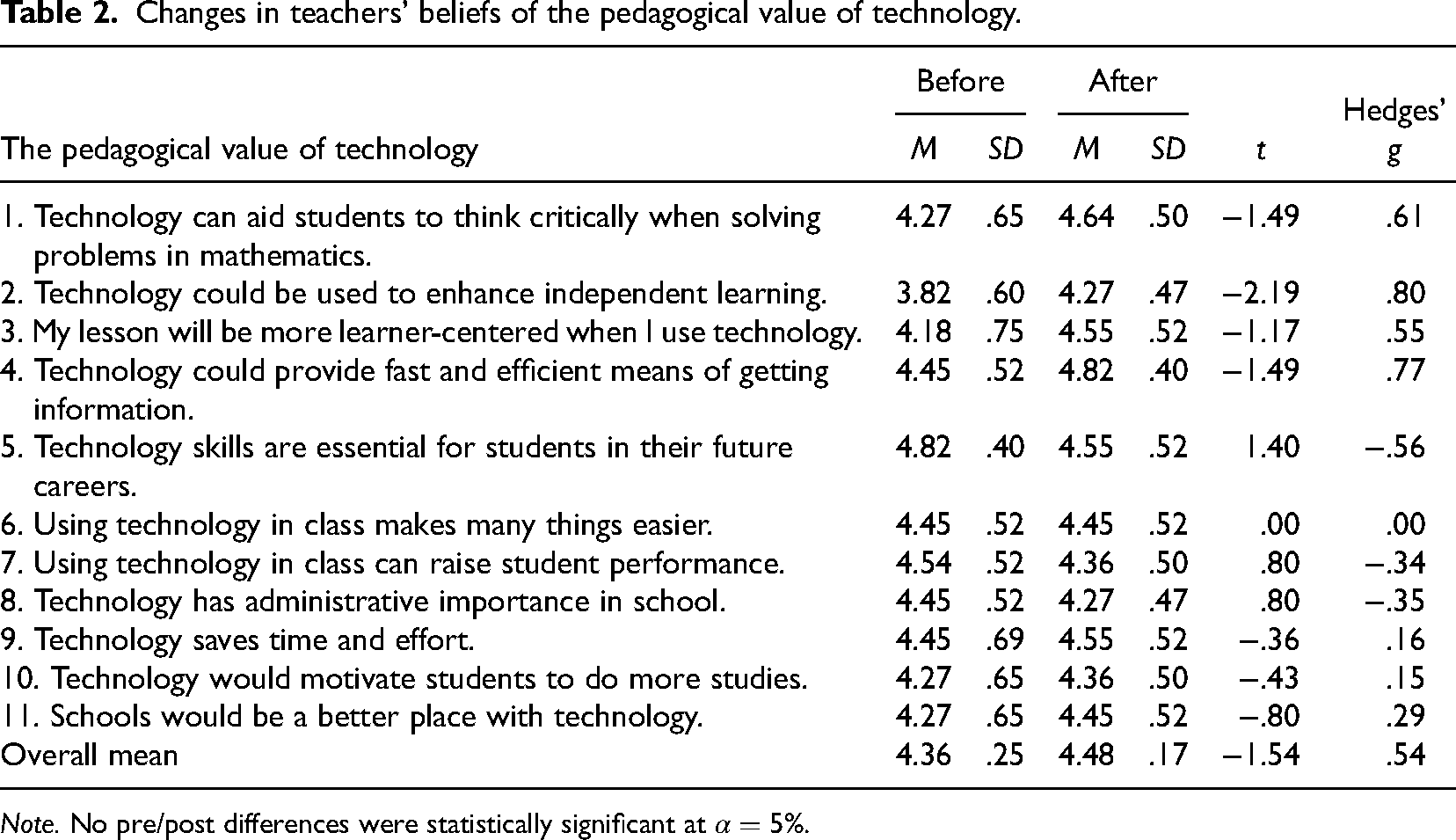
Changes in teachers’ beliefs of the pedagogical value of technology.
Note. No pre/post differences were statistically significant at
After participating in the PD model, teachers’ perceptions of the efficacy of technology in mathematics generally increased slightly (Hedges’ g = .54), but the improvement was not statistically significant (p >.05). It is likely that the teachers overrated the pedagogical benefits of technology in the pre-measurement compared to the post-measurement, which would explain why PD was unable to significantly influence their apparent view about the usefulness of technology.
During the post-interviews, the teachers largely reaffirmed the justifications they provided for the effectiveness of technology in mathematics. A notable difference observed in their post answers was that they provided specific mathematics-related examples to support their arguments regarding the pedagogical value of technology in mathematics classrooms. The reason could be that as teachers utilized GeoGebra in practice, they received experiences that helped them to solidify their opinions about the value of the technology.
At the onset of the PD, Gideon, Sammy, and Bernard were of the view that technology could be used to reduce the abstraction of mathematics by giving students opportunities to visualize mathematics concepts. Before the PD, their opinions on the value of technology reflected a constructivist method of teaching and learning. In the post-interview, they supported this belief with a concrete illustration of mathematics learning in which technology was used. This [approach of using technology] was more interesting. I was able to use the software to show them the pictures. With the cylinder, I was able to get animation which able the students to see the nets of the cylinder. Being able to see how it opens enables the students to understand what we are talking about. That picture was effective for teaching and learning (Bernard).
Teachers’ belief in the genuine importance of technology in teaching and learning was evident in the follow-up interviews. For instance, the teachers were firmly persuaded that technology might help them plan effective mathematics lessons in which their students could pursue independent learning. The remarks made by Sammy and Gideon show how technology could promote students’ learning. A technological setting, according to Sammy, brings elegance to mathematics instruction. It was noted from Sammy's class that the aesthetic nature of the artifacts in GeoGebra caught and sustained the attention of students. Using GeoGebra, according to Gideon, brought excitement to the classroom. For example, students were delighted to see how the parabola,
The results in Table 3 shows that before the PD, the teachers held strong positive feelings toward the use of technology in mathematics (mean ≥ 4.00), and this was substantially enhanced after the PD model (Hedges’ g = 2.08). Both the common threshold (p < .05) and the Bonferroni correction (p < .0045) showed that there had been a statistically significant change in the teachers’ affective attitudes toward technology. This shows that their feelings of comfort and happiness with the use of technology in mathematics teaching and learning were considerably influenced by their PD.
Changes in teachers’ affective attitudes toward technology.
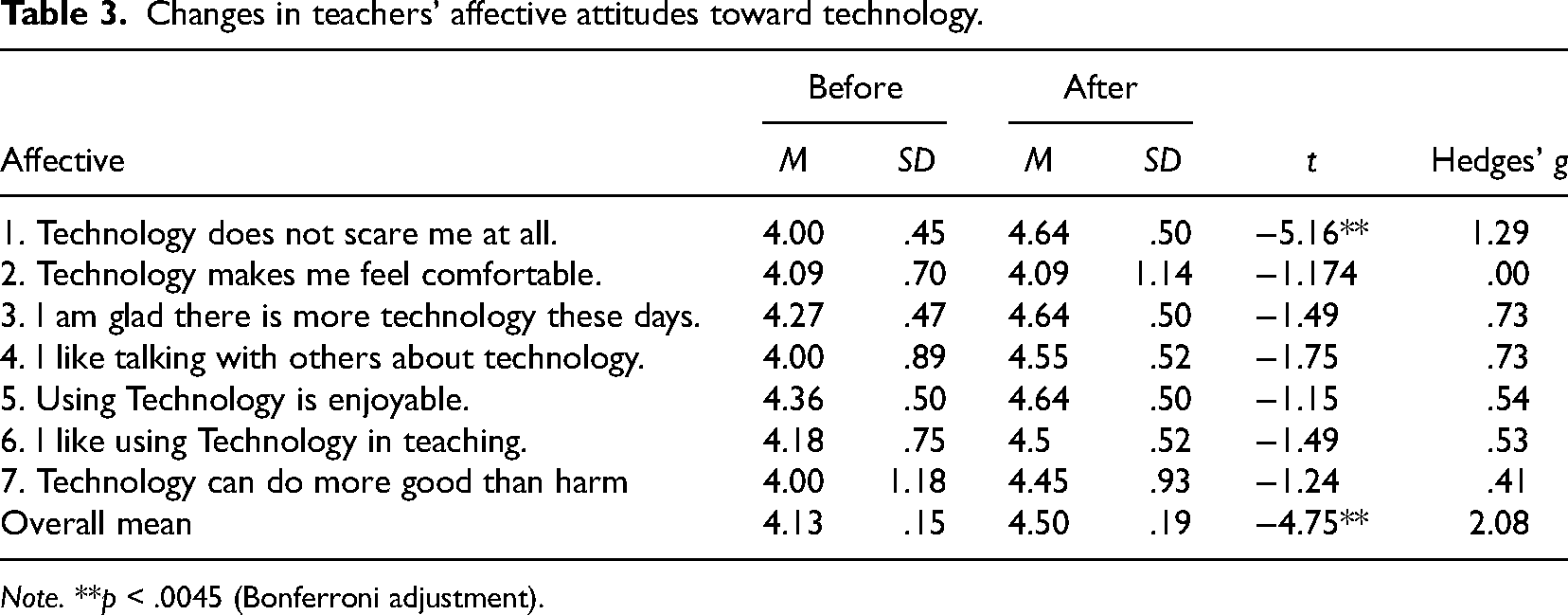
Changes in teachers’ affective attitudes toward technology.
Note. **p < .0045 (Bonferroni adjustment).
Both at the start and the conclusion of the PD, the teachers were less frightened to use technology. For example, the excerpt below demonstrates how Prince and Sammy felt about technology use after completing PD: I feel relaxed because it is the students who are doing most of the job and thinking. Because it is new to them, they feel excited and concentrated. I saw all of them trying to do something from the instruction stated on the worksheet (Prince).
I feel good. I feel I am on another level. I see myself to be moving in the twenty-first century. I see myself enlightened and modernised. It even boosts my morale and confidence (Sammy).
Therefore, exposing teachers to technology use through PD rekindles their enthusiasm for adopting a 21st-century approach to education in which both teachers and students are active interpreters of mathematical concepts.
As shown in Table 4, before the PD, the participant teachers rated themselves low in TK, TCK, TPK, and TPACK. The results in Table 4 show tremendous improvement in the teachers’ TPACK (Hedges’ g = 1.54). At the onset of PD, it was observed the teachers could apply the technology for menial activities such as typing examination questions with MS Word and recording students’ continuous assessments with MS Excel. In the post-interview, the teachers acknowledged that the PD had made a significant contribution to their confidence, competence, and understanding regarding the use of technology in mathematics instruction.
Changes in technology competence.
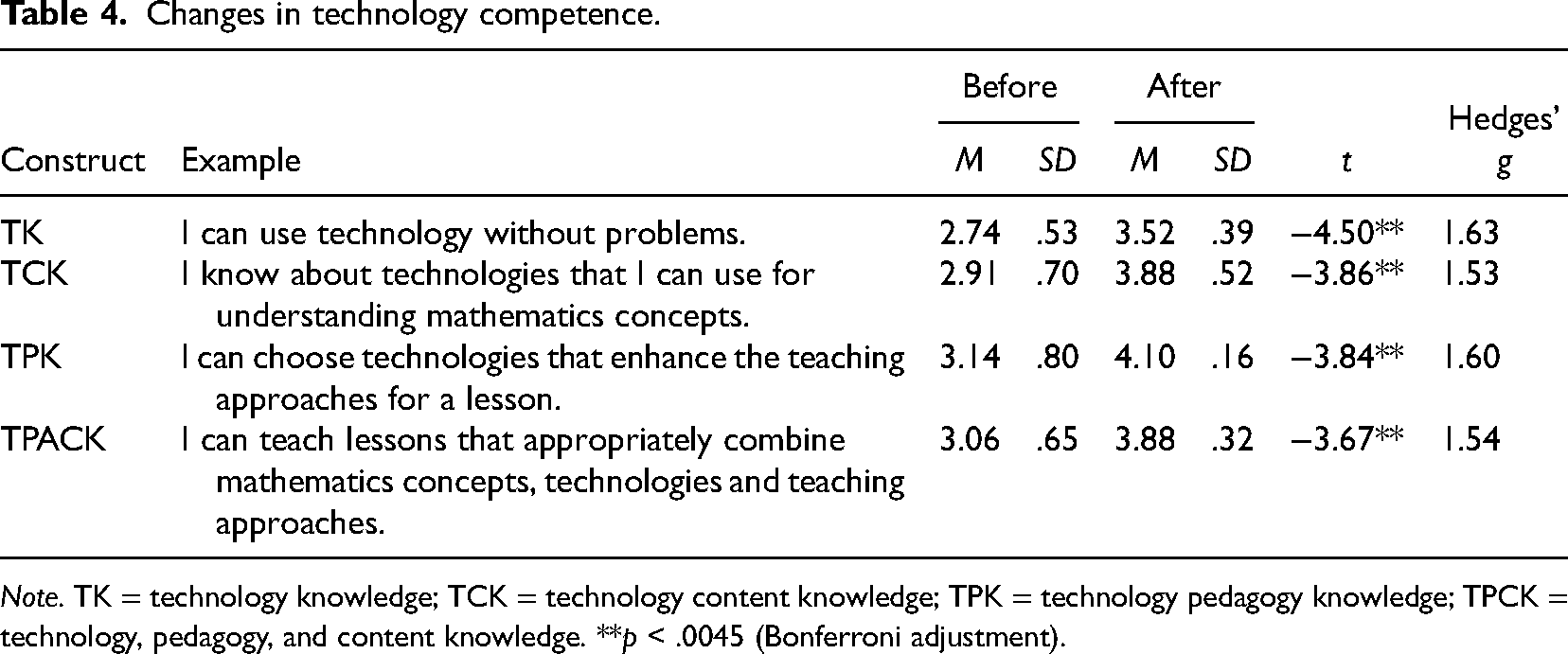
Changes in technology competence.
Note. TK = technology knowledge; TCK = technology content knowledge; TPK = technology pedagogy knowledge; TPCK = technology, pedagogy, and content knowledge. **p < .0045 (Bonferroni adjustment).
For instance, Martey and Joshua noted that their lessons were becoming more engaging and fascinating because they now read extensively for information online to supplement their lesson preparation. This suggests the teachers seemed to have had the reorientation to repurpose technology to suit the topics in the mathematics curriculum. As the instructors advanced through PD, it was observed that they acquired confidence in their ability to facilitate group work assisted by technology and activity-based worksheets. It has tremendously impacted positively the way I teach. For instance, instead of me depending only on textbooks, now I can easily go online to get some stuff to prepare my lesson plan (Martey).
This time you are challenged to look for useful information for your lessons. I have now developed the habit of going online every day for personal study (Joshua).
Although this PD did not explicitly address teachers’ CK of mathematics, they acknowledged that they had an increased conceptual grasp of some of the topics in mathematics. For instance, it was found that teachers were able to manually sketch the trigonometric graph before participating in PD.
However, when teachers were involved in the practical GeoGebra exercise, they valued the related comprehension of the transformation of f(x) = sin(x). As shown in Figure 2, they conceptually learned that f(x) = sin (x + k) is the k units changes of f(x) = sin(x) along the negative x-axis, f(x) = sin (x) + k is the k units changes of f(x) = sin (x) along the positive y-axis, and f(x) = ksin(x) is the stretch of magnitude k along the y-axis with the x-axis invariant.
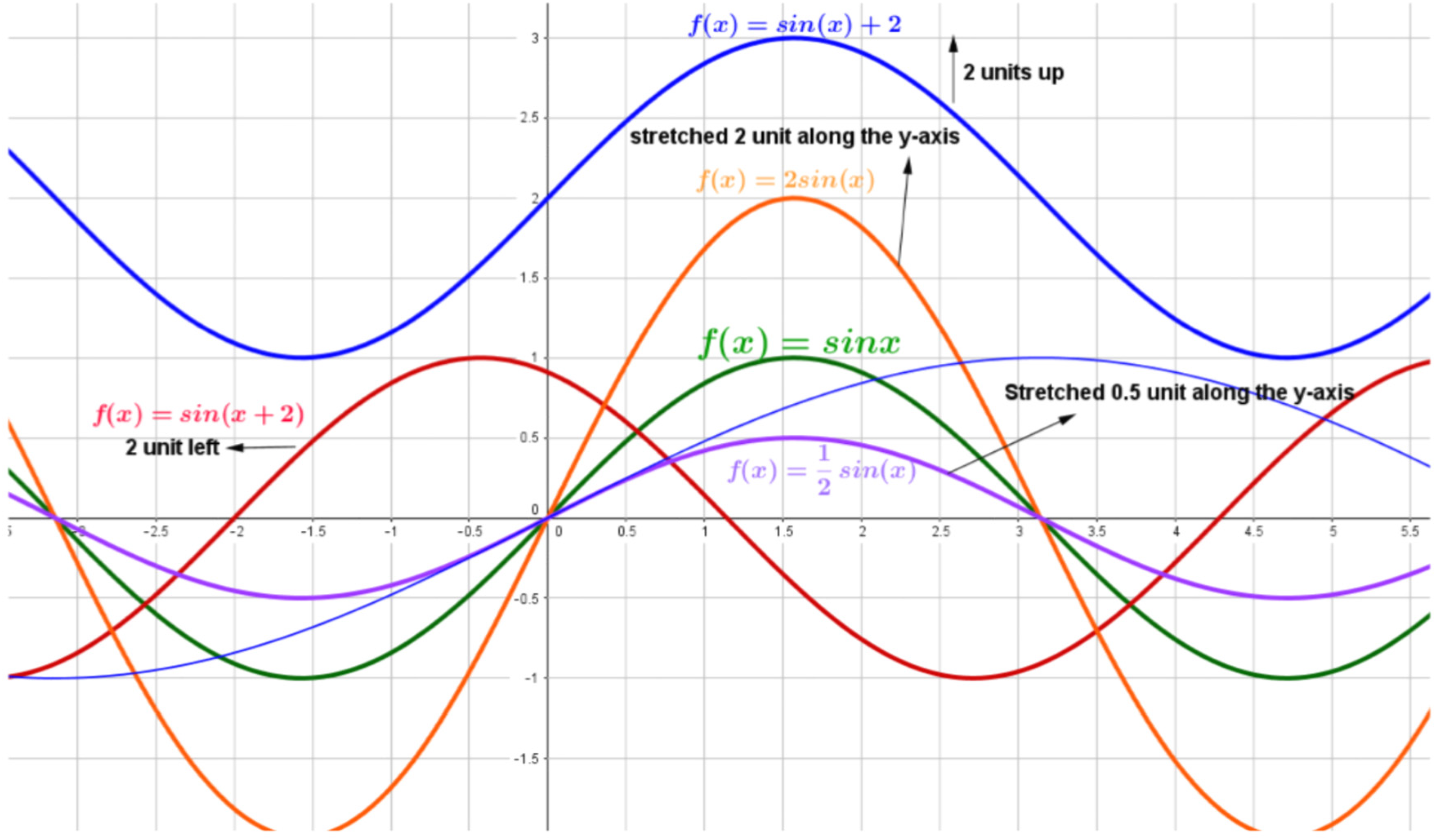
Teachers’ conception of the transformation of trigonometric function.
The affordance of GeoGebra's input bar and visual display features may have helped the teachers to conceptually understand the transformation of f(x) = sin(x). These features enabled the teachers to concurrently observe the variations in the equation and graph of f(x) = sin(x).
As the PD progressed, it was noticed that the teachers significantly incorporated the PD's suggestions into the ensuing lessons they created. In the trigonometric ratios lesson, Michael and his team initially had trouble figuring out how to include a textbox and a checkbox so that the artifact would animate and display the trigonometric ratio values as any of the vertices of the right-angled triangle was moved (Figure 3).
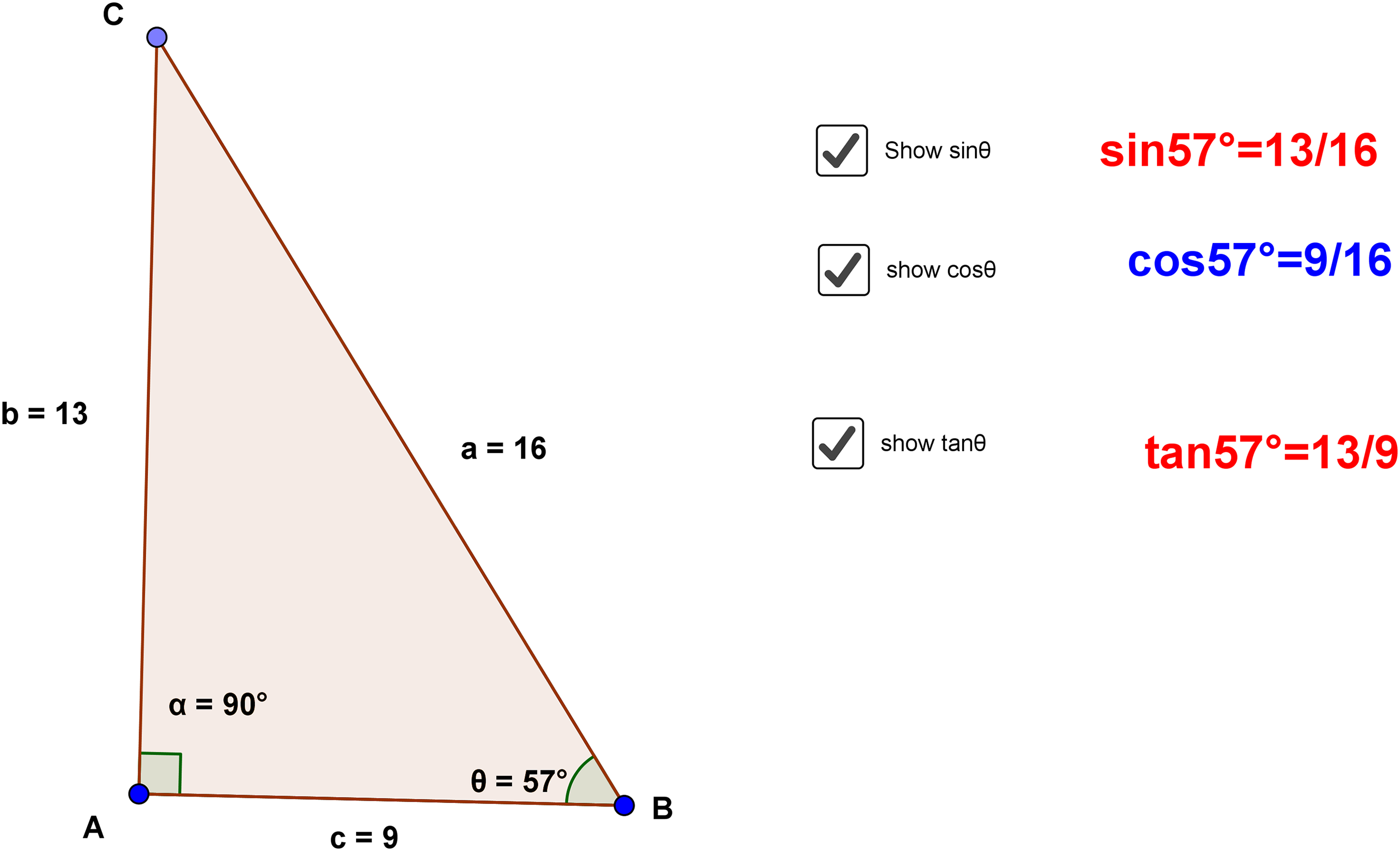
Affordances of the checkbox in GeoGebra for assessment purposes (Michael).
After receiving assistance from the facilitator, the problem was overcome, and they were able to create an artifact to aid students’ understanding of trigonometric ratios. Teachers were able to quickly develop multiple questions for the children using GeoGebra's textbox and checkbox functionalities and this offered the opportunity for the teachers to create multiple questions for their students within a short time. These features also allowed students to share their opinions on their solutions and received rapid feedback on their work.
The teachers demonstrated variability in the way they used their TPACK. For example, Martey used the animated rectangle generated in the GeoGebra window to clarify students’ doubts and misconceptions. Though the lesson could have been conducted without technology, where the students could use graph sheets, he used GeoGebra to simultaneously produce multiple shapes of rectangles and corresponding values of the area and perimeter (Figure 4). This aroused and engaged students’ attention throughout the lesson.
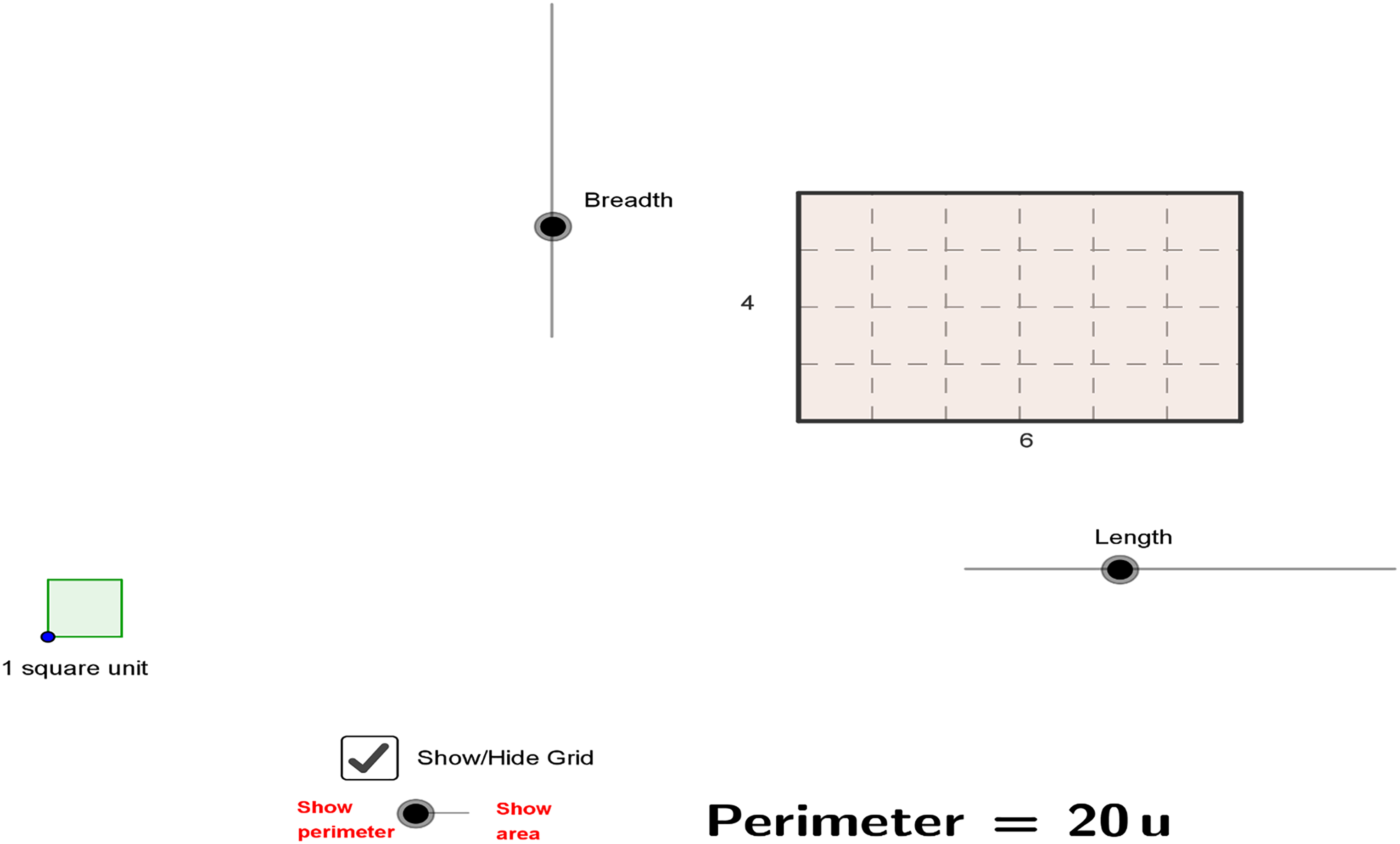
Area and perimeter of the rectangle (Martey). (Source: https://www.geogebra.org/m/wc9admwf)
In another example, Gideon exhibited his developed TPACK as follows. He created different graphs using GeoGebra to let pupils study the characteristics of a quadratic curve. When the PD began, his familiarity with Microsoft Word and Excel was far superior to that of other teachers. As he advanced through PD, he became more adept at navigating the GeoGebra window to organize pupils’ mathematical learning. He was able to address his technical problems concerning the equipment sets for his lesson. However, it was observed during the first teaching trial that Gideon's integrated understanding of PCK with technology skills was largely based on teacher-led instruction. Unsurprisingly, Gideon's difficulty in planning effective cooperative learning with GeoGebra is related to his teaching experience. He was in his first year of the teaching profession and he did not have a degree in Mathematical Education, but a Bachelor of Science in Mathematics. He was probably just starting to broaden his awareness of issues related to student learning, assessment, and classroom management. The use of technology in the classroom is complicated enough on its own. Therefore, it will take him some time to master the ease of fusing his PCK with technology skills. Gideon reflected on some of the improvements he made in his general pedagogy as follows. Before this PD the way sometimes I start the lesson and end it wasn't the best. Now, before I start the topic, I put some questions on the board for the students to solve. I go through with them to identify their weak areas before the main topic for the day. The question I put on the board is based on their previous knowledge (Gideon).
Another unintended finding was how Jonathan enacted his TPACK. Although the PD centered on a specific technology (GeoGebra) and content (mathematics), he was able to apply the knowledge he obtained to teach both mathematics and chemistry. Like many of his colleagues, Jonathan had never used technology in his teaching before the PD. In the pre-interview he perceived technology as an essential tool in mathematics teaching because he believed it can promote visual representation, aid students to have a clear understanding of mathematics concepts, and it can reduce abstract teaching. Among the 11 teachers, he seemed to have evaluated his decision of integrating technology into his lessons after PD. He was noted to use technology in his instructions quite often during the period of this research. He indicated in the second interview that he had seen the benefits of using GeoGebra which had convinced him enough to apply other technologies such as YouTube and Khan Academy in his chemistry teaching. Jonathan's reflection summarizes his experience of how the PD had impacted on him as well as his students: After the training regarding the use of GeoGebra in teaching mathematics, I saw the benefits. So, I said to myself why don't I use it in the chemistry that I am teaching? I went online to look for materials related to the topics I want to teach. I revised some of the materials. The first lesson I employed it, the feedback I got from the students was great. They were very happy. It's enhanced their understanding. I realised the lesson was more student-centred. I fell in love with it, and since then I have been using it. I have used it to teach topics like mass spectrometry, atomic orbitals, periodic chemistry, periodic properties, ionisation, electronegativity, atomic size and bonding (Jonathan).
Although the teachers acknowledged the advantages of the PD, there were some difficulties. It was observed that some teachers take a while to practically master some of the GeoGebra tools: move icon, checkbox, and text formatting. Basic skills in computer windows are needed to enable one to successfully navigate through the various tools in GeoGebra. The teachers indicated also that working in design teams to develop GeoGebra-based lessons required patience and tolerance to reach decisions. Because I wasn't conversant, sometimes I get it very difficult to move the object around it. I was having a problem with the laptop because I was not conversant with it. I was having difficulties but with practice, it will be all right (Cynthia).
The results in Table 5 indicate that, before the PD, the participant teachers were highly positive toward the use of technology in mathematics teaching and learning (mean ≥ 4.00). The overall attitudes of the teachers toward technology may have slightly improved (Hedges’ g = .31). However, item 5 recorded a negative (−0.63) value for Hedges’ g indicating that teachers’ intention to use technology in the future may have declined after their engagement in the PD.
Changes in teachers’ behavioral intention toward technology.
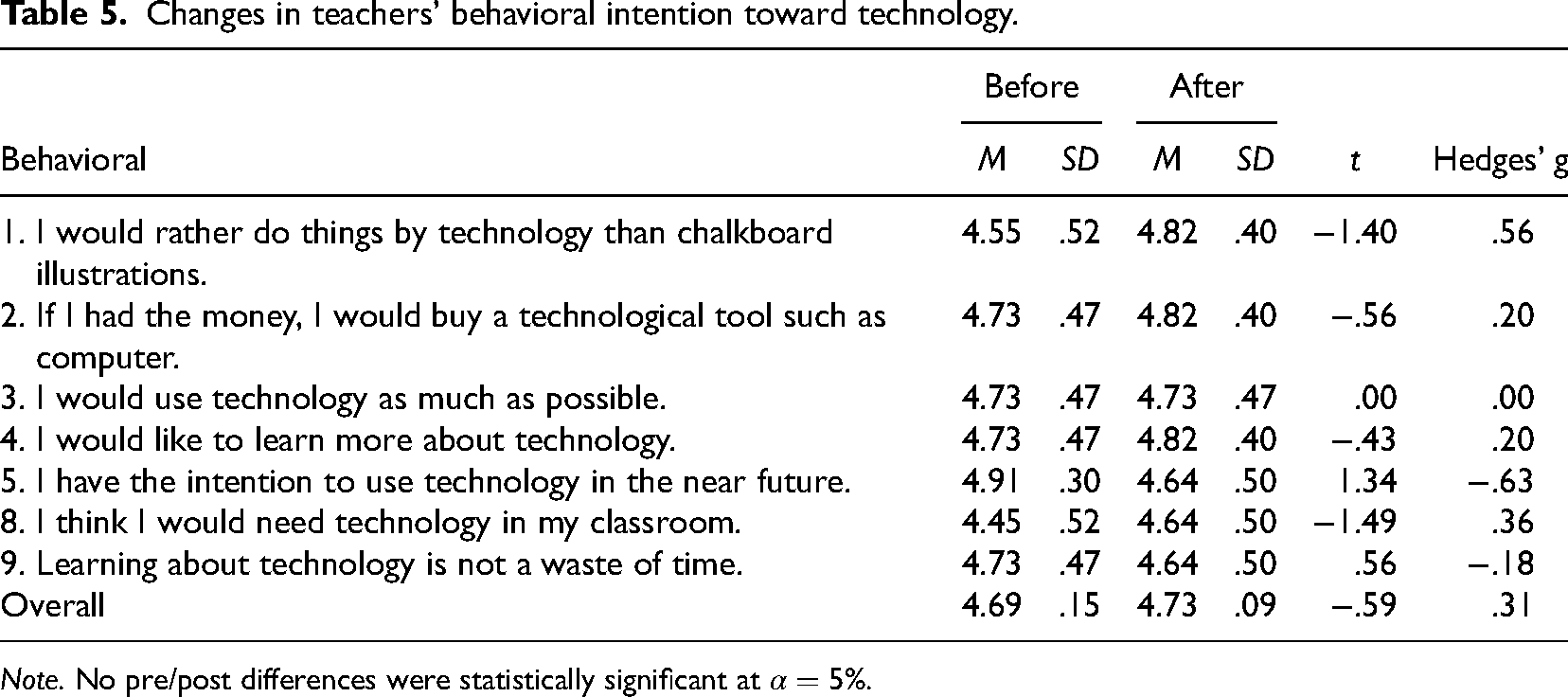
Changes in teachers’ behavioral intention toward technology.
Note. No pre/post differences were statistically significant at
Consistent with the post-interview data, all the teachers expressed their intention to use technology in their future mathematics classroom, but they indicated they could do so when the classrooms are better resourced in terms of their technology. This implies that an activity-oriented PD as illustrated in this study can change teachers’ technology dispositions positively, but limited access to technology resources can reverse such inclination. I wish the equipment will be available always to enable me to use the technology to teach (Martey).
Similarly, although Peter was optimistic to use technology in the future, he anticipated that certain factors could be a hindrance. He shared that there are two factors toward the successful implementation of technology. He termed the factors as internal and external. The internal factor, he implied was professional competence which he believed he had gained through this PD. The external factor, he implied was administrative support and electricity supply. The following is his narration after the PD when he was asked whether he needed assistance before he could use technology in the classroom: Not at all. Once I have gone through this professional training, I have learnt a lot. Now I am quite okay with the use of the tools. But whereby we don't have electricity supply then that one is external, not within my constraint. I cannot do anything about it. So, for that support, it should be provided by the external authorities. But the internal one which I have learnt is not a problem. It will be good if each teacher has a laptop computer to practise whatever we learn in this programme at home as well (Peter).
Despite some of the teachers being less optimistic about the pedagogy they have learned through this PD as a result of external factors, the results showed that two teachers (Sammy and Joshua) had already begun to take the initiative in coordinating the use of technology in teaching and learning before the end of the PD. When asked if they would support other teachers to use technology in the classroom, all of the teachers gave a positive response. Sammy disclosed during a casual conversation that he had suggested the use of technology to one of the Economics teachers in the school. Jonathan continued by saying he had started urging his fellow teachers in Science Department to support the idea of integrating technology into their lessons.
Internal dispositions of teachers, such as their beliefs, attitudes, and knowledge, are crucial factors in their desire to use technology effectively (Mishra & Koehler, 2006; Thurm & Barzel, 2022). Continuous PD is required to enable teachers to develop these dispositions (Arthur, 2022; Mishra & Koehler, 2006). The current study set out to track the changes in teachers’ dispositions (beliefs, attitudes, competence, and intention toward technology following their engagement in PD in which they designed and enacted GeoGebra-based mathematics lessons).
With regards to teachers’ beliefs about technology, the results showed that as teachers engaged in PD to explore the pedagogical use of GeoGebra, their beliefs reflected a student-centered approach to mathematics teaching and learning. Consistent with the literature reviewed for the study, as teachers collaborate to share ideas, design, and enact technology-based lessons, their espoused beliefs become profound (Kafyulilo et al., 2016). While the current study reports a significant change in the pedagogical beliefs of teachers as a result of their engagement in PD, Brinkerhoff (2006) found that very little or no change occurred in the self-assessed technology beliefs of the teachers. The result of the current study was expected because during PD, the pedagogy of constructivism was deconstructed and modeled for the teachers for replication and reflection. Hence, it is not surprising to find that the teachers seemed more convinced of the potential advantages of technology in fostering students’ knowledge formation, critical thinking, problem-solving skills, achievement, engagement, and collaboration in learning mathematics, after the PD.
The result also indicated that the PD substantially improved the affective attitudes of teachers regarding technology. The teachers felt happier and more comfortable about using technology in mathematics teaching following their engagement in the PD. Similar to this, Myers and Halpin (2002) observed that PD training contributed to lowering teachers’ anxiety about using technology in the classroom. Teachers’ affective attitudes toward technology are a critical function in technology integration. It was observed in this study that teachers might respond favorably to curriculum innovation when they felt their old practices were no longer productive. The teachers in this study responded positively toward professional technology development because they felt that their usual instructional approach of using words only to explain concepts seemed less helpful to their students. A crucial aspect of technology integration is teachers’ affective attitudes toward it (Larbi-Apau & Moseley, 2012). Teachers may respond favorably to curricula innovation when they believe their current methods are no longer effective. The teachers in this study expressed positive attitudes toward PD because they believed that their instructional strategy of using only words to explain mathematics concepts which is less effective can be improved. The current study confirms that exposing teachers to technology use through PD reignites their passion for using a 21st-century strategy in which both teachers and students serve as active interpreters in creating mathematical concepts (Hixson et al., 2012).
The study showed a significant positive change in the teachers’ TK, TCK, TPK, and TPCK. As they progressed through the PD, they gradually gained confidence and knowledge to use GeoGebra to repurpose some of the objectives in the curriculum to meet the learning needs of their students. For example, their TPACK in handling quadratic equations and trigonometric ratios/equations became profound. This result is consistent with earlier studies (Kafyulilo et al., 2016; Soebari, 2012). For example, the teachers in Soebari's study had increased knowledge of subject matter and classroom practices after they participated in PD.
Literature is inconsistent about which of the TPACK domains—TK, TCK, or TPK—significantly contributes to teachers’ technology self-efficacy. Due to the small number of participants, the current study was unable to fill this gap using a reliable statistical method. However, this study suggests that the inconsistency can be explained by the sensitivity of the contextual factors related to the development of teachers’ technology self-efficacy (TPACK). It was observed in this study that the increase in the individual knowledge domains (TK, TCK, and TPK) compositely contributed to the teachers’ ability to demonstrate their espoused TPACK in the classroom. For example, when teachers practically use algebraic and graphic tools in GeoGebra to provide multiple representations of trigonometric functions (TCK), they turn to appreciate the related comprehension of the transformation of f(x) = sin(x) which in turn reflects how they the tool to explain the concept to students (TPCK).
Overall, the attitudes of teachers toward technology slightly improved. However, their desire to implement the new pedagogical approach in the classroom depends on contextual factors: administrative support, ongoing PD, and the availability of adequate technology facilities. Coupled with these contextual issues was difficult to navigate tools such as the move icon, checkbox, and text formatting in the GeoGebra window by some teachers, particularly for those who had limited basic skills in computer windows. The teachers in Rienties et al.'s (2013) study did not show much enthusiasm to apply the knowledge obtained after the PD. The teachers felt less convinced about the appropriateness of using technology to orchestrate a student-centered teaching approach. According to Ottenbreit-Leftwich et al. (2018), “intentions are not enough” because external constraints, such as school policies, access to resources, and school culture, might interfere with teachers’ desires (p. 302).
The striking result in this study was the variability in which the teachers developed and applied their TPACK from this PD. The TPACK level of the teachers at the onset of PD could be described as accepting (Niess et al., 2009). That is, the teachers could use technology for menial activities such as typing examination questions with MS Word and recording students’ continuous assessment with MS Excel. Considering the TPACK development pathway, each teacher made progress in the development of their technology. For example, Martey's TPACK after the PD could be aligned with exploring because he was able to apply the idea learned to other technologies such as YouTube and Khan Academy in the classroom. On the other hand, Jonathan's developed TPACK is consistent with advancing level because he was able to transfer the knowledge he gained through PD to another discipline (chemistry). He seemed convinced enough to apply other technologies such as YouTube in not only mathematics lessons but chemistry too.
The major limitations of this study are as follows. The data available for the study could not explain the variability in the TPACK the teachers developed. But it can be speculated that the tenacity and the joy to use technology can motivate an individual to go beyond the suggestions of a PD. Possibly gender, teaching experience, and additional responsibilities may be important variables to account for how teacher develop their TK through PD. Again, it is important to note that the changes in the teachers’ technology dispositions and practices indicated in the data may only be transient given the 12-month PD timeframe. The results, however, give us optimism that at the very least, PD has reawakened the teachers’ dispositions toward the best practices in mathematics classrooms, which may impact students’ learning (Supovitz & Tuner, 2000). Giving teachers enough “time to interact with and support each other as they explore new technology and new pedagogies” is important (Ertmer, 2005, p. 35). Also, which of the TPACK constructs—TK, CK, PK, TCK, PCK, and TPK—most significantly boosts teachers’ TPACK self-efficacy is unclear from the literature. Due to the small number of participants, the current study was unable to clarify this using a robust statistical technique.
Conclusions and implications
The main goal of the current study was to track teachers’ technology dispositions (beliefs, attitudes, competence, and behavioral intention). The most obvious finding to emerge from this study is that, as teachers progressed through the PD their technology dispositions and competence significantly improved. One striking finding to emerge from this study is the variability in which the teachers developed and applied their TPACK from this PD. To some extent, they were able to use GeoGebra to make the goals of their lessons explicit and sequenced their instructional activities to engage students’ geometric and algebraic thinking. However, their intention to put the new pedagogy into classroom practice in future depended on multiple contextual factors: administrative support, continual professional training, and provision of adequate technology facilities. One more significant finding is that teachers with limited basic skills in computer windows struggle to navigate tools such as move icon, checkbox, and text formatting in the GeoGebra window. Taken together, these findings suggest pedagogical implications for using GeoGebra in the classroom, technology dispositions framework, and PD.
Regarding the effective pedagogical use of GeoGebra, this study has demonstrated that as teachers utilized GeoGebra in practice, they received experiences that helped them to solidify their opinions about the value of the technology. Teachers can use GeoGebra as a supplement to their current teaching methods, or as a replacement for traditional teaching tools. Also, as teachers engaged with GeoGebra, they were for instance able to demonstrate the geometric and algebraic representation of trigonometric functions to their students, while also improving their CK in the subject.
This study offers one key contribution to the literature on the effective use of technology in the mathematics classroom. The literature reviewed indicated contention about the constituents of effective PD that shapes the dispositions of teachers toward curriculum innovation. The current study demonstrated varied trajectories in which the teachers developed and enacted their TPACK. This offers a potential pedagogical guideline for effective PD. The study hypothesized that encouraging teachers to pedagogically explore the use of GeoGebra could improve the level of their beliefs, attitudes, and knowledge. Also, deconstructing the pedagogy of constructivism for replication and reflection in a PD could help teachers to develop competence in using technology to scaffold a student-centered teaching approach.
Footnotes
Acknowledgements
The data (self-report questionnaire, interviews, and lesson observation) reported in this study were taken from the first author's PhD thesis, which is archived in the University of Otago repository. I must express my appreciation to the University of Otago for providing me with a PhD scholarship. I also want to thank the school where the study took place for providing me with the resources I needed to carry out my study. The teachers who gave their time freely to participate in this professional development for a full year have my deepest gratitude.
Contributorship
Isaac Benning conceived the present idea, collected data from the field, analyzed the quantitative data, and drafted the manuscript. Chris Linsell and Naomi Ingram were involved in planning and supervising the work. Isaac Benning, Chris Linsell, and Naomi Ingram coded the interview data. All authors provided critical feedback and assisted in the research, analysis, and design of the manuscript. All authors discussed the results and contributed to the final manuscript.
Declaration of Conflicting Interests
The author(s) declared no potential conflicts of interest with respect to the research, authorship, and/or publication of this article.
Funding
The author(s) disclosed receipt of the following financial support for the research, authorship, and/or publication of this article: This work was supported by the University of Otago (grant number Doctoral Scholarship).
