




Abstract
Online learning is a relatively new but emerging approach in Philippine education. The approach's rise in popularity warrants an emphasis on self-regulated learning (SRL). Hence, the current study aimed to propose and assess an intervention using a digital note-taking application as an SRL tool for Business Math. Data collection included the administration of a pre-test and a post-test and weekly ratings of digital notebook usage. Two-way ANCOVA results suggest that skillful self-regulators consistently achieved more than naïve self-regulators. Hierarchal regression analysis results imply that learners with better digital notebooks are likelier to achieve more in the course. These results demonstrate the effectiveness of the SRL intervention used in the study. Furthermore, repeated measures of ANOVA results suggest that different groups of learners use their SRL tools differently. Despite the effect of SRL tools on achievement, higher achievers are not certainly better self-regulators than lower achievers.
Keywords
Introduction
Advances in communication technology have made remote learning possible through online learning – an educational approach where learning experiences take place entirely through the Internet (Nguyen, 2015; Park & Shea, 2020). There has been a steady increase in research on using technology and the Internet in education (Park & Shea, 2020). Several educational studies promote online learning owing to its reported promise in delivering learning experiences (Batu et al., 2018; Chen et al., 2020; Ha & Im, 2020; Seok et al., 2010; Rodriguez & Armellini, 2013; Tekin et al., 2020). The temporary closure of schools brought by the COVID-19 pandemic highlighted the benefits and importance of online learning (Bao, 2020; Basilaia & Kvavadze, 2020; Chick et al., 2020; Crawford et al., 2020; Daniel, 2020; Huang et al., 2020; Schwartz et al., 2020; Zhang et al., 2020). Despite the growing demand for online learning, the approach is still relatively new in Philippine education (Alvarez, 2020). The Programme for International Student Assessment (PISA) 2018 report revealed that among the 79 participating countries, the Philippines is second to the last in terms of access to a quiet learning environment, access to a computer for schoolwork, and access to a link to the Internet (OECD, 2020). The Philippine educational system is not ready for online learning, which will present, if it has not already presented, problems and challenges to its learners (Alvarez, 2020).
As the use of online learning increases, it is essential to note that the approach is only as effective as the learners’ self-regulated learning (SRL) skills (Voils et al., 2019) – the ability to self-generate thoughts, feelings, strategies, and behavior to learn on their own (Schunk & Zimmerman, 1998). The absence of face-to-face interactions in an online learning setup drastically limits a teacher's ability to prompt learners. For learners to achieve in such a learning environment, they need to obtain higher autonomy in their learning. Self-regulation is perhaps a prerequisite before learners can maximize their online learning experience (Calamlam, 2016; Chen & Su, 2019; Im & Kang, 2019; Yeh et al., 2019). It is therefore implied that integrating the development of SRL skills is necessary for the teaching-learning process.
Because of the significance of SRL in online learning, this study aimed to propose an SRL strategy using a digital note-taking application as a tool. Learner-made notes might reflect learners’ SRL skills; one can deduce how the content is learned and understood by observing the organization of the notes and the strategies used on them (Chen & Su, 2019; Hagen et al., 2014). Hence, a structured note-taking exercise using an online application might promote the use and development of SRL skills in an online learning environment. Structured note-taking is a strategy that organizes learners’ note-taking tasks; it helps them focus on essential textual elements. Such note-taking strategies include, but are not limited to, Cornell notes and visual note-taking methods (Robinson, 2018). In a Business Mathematics online course, learners were provided with learning content (pre-recorded lecture or inquiry-based activity) and online quizzes through a learning management system (LMS). As part of the learners’ weekly requirements, they logged goals and schedules, notes from learning content and online quizzes, and weekly reflections in their digital notebooks. In line with the mentioned SRL intervention, the diagnostic purpose of the study was to assess its effect on academic achievement. To accomplish this purpose, the study was framed using these research questions:
Does using a digital note-taking application as an SRL tool significantly affect academic achievement in Business Mathematics? How do higher and lower Business Math achievers differ in using a digital note-taking application as an SRL tool?
The participating school, a Catholic school in the Philippines, implemented its online distance learning (ODL) program in response to the COVID-19 pandemic. Given that it is the first time the school transitioned from a blended learning setup to a fully online learning one, the current study served as a case of a Filipino school's initial attempt at integrating SRL into a complete online learning setup. Because online learning is still emerging in the Philippine educational system (Alvarez, 2020; OECD, 2020), a study on fostering and assessing the use of online applications in enabling SRL in an online setup can contribute to the advancement of online education in the Philippines.
Online distance learning
Online learning is a type of distance education that uses technology to deliver teaching-learning processes entirely through the Internet (Nguyen, 2015; Park & Shea, 2020). There is no physical classroom in a complete online setup. Instead, an online classroom is where learning content and activities are located (Manning-Ouellette & Black, 2017). The steady increase in research on online learning suggests the increasing popularity and utilization of the approach in the educational sector (Park & Shea, 2020). The steady interest in academic research on online learning may be caused by its perceived benefits. A review of existing literature reveals that 92% of all included online distance learning studies suggest that the approach is either as effective as or better than traditional education (Nguyen, 2015).
Constructs of online learning can be divided into several components, although there is no single structure for these constructs. Existing literature presents frameworks to systematize constructs within online learning; some of them are discussed in this section. Student Readiness for Online Learning (SROL) groups the competencies prerequisite to meaningful learning in an online setup. Competencies are grouped into four areas: (1) online student attributes, (2) time management competencies, (3) technical competencies, and (4) communication competencies (Martin et al., 2020). Although not solely used in an online setup, the purposeful interpersonal interaction (PII) framework is likewise applicable in online learning. PII is any high-quality, organic, and valid communication exchange among participants in the teaching-learning process. PII can be divided into three main categories: (1) instructional interaction, (2) social interaction, and (3) support interaction (Mehall, 2020). Like PII, community of inquiry (CoI) is a framework that is not initially directed but is still applicable to online learning. According to CoI, knowledge is constructed socially through integrating alternative viewpoints during the inquiry as enhanced by reflection. In the context of online learning, CoI presents three critical elements of a meaningful learning experience: (1) social presence, (2) teaching presence, and (3) cognitive presence (Krzyszkowska & Mavrommati, 2020). Although focused on blended instead of purely online learning, the twenty-first Century e-Learning Assessment Tool (21CELMAT) provides nine components of learning modules: (1) self-paced learning, (2) out-of-class activities, (3) live events, (4) in-class activities, (5) collaborative activities, (6) diagnostic assessments, (7) summative assessments, (8) flexibility, and (9) personalization (Calamlam, 2021). Despite their overlapping components, each online learning framework has established its own distinct themes. SROL is focused on the intra-personal readiness of learners in an online learning environment, while PII is focused on the interpersonal readiness between learners. Different from SROL and PII, CoI and 21CELMAT are focused on teaching-learning experiences. CoI is focused on the components of a learning experience, while 21CELMAT is focused on the components of a learning plan. The current study, which is focused on an SRL intervention, applied 21CELMAT. However, since the intervention is self-regulated activity implemented in a completely online setup, in-class and collaborative activities were not considered. Note that the study is about using digital note-taking applications as an SRL tool and not on implementing the Business Mathematics online course; hence, components of 21CELMAT are not mentioned in the following sections of this article.
Several studies have attempted to assess online learning as an approach by evaluating how it was implemented in their respective context. Most studies in this review have suggested promise in using online learning in mathematics. A study in a particular institution in Trinidad and Tobago aimed to lobby learners’ experiences as they transitioned from face-to-face to online learning. As online learning was implemented in selected mathematics courses, the findings suggested that online learning was a possible option for teaching these courses. However, the results also emphasized that despite the promise of online learning, face-to-face communication was still necessary for learning mathematics and promoting human interaction (Julien & Dookwah, 2020). In another study, mathematics self-related beliefs of high school students in California were analyzed. Two groups were compared: an online group that took the online mathematics course offered by California virtual academies (CAVA); and a face-to-face group that took the same mathematics course in person. It was found that learners who took their mathematics course online reported higher levels of self-efficacy than those who took the same mathematics course face-to-face. Results also suggest that online learning could be an alternative approach to face-to-face learning if the goal is maintaining the same level of self-concept (Ichinose & Bonsangue, 2016). Like the latter study, research conducted in a private university in North Cyprus compared online learning with other modalities, specifically, face-to-face and blended learning, where an authentic learning approach was integrated into mathematics courses. The results suggested that online learning was on par with face-to-face learning in improving self-efficacy and academic achievement. Nevertheless, despite the potential of online learning, the results indicated that it is still best to blend online and face-to-face instructions instead of implementing them separately (Uzunboylu et al., 2020).
The COVID-19 pandemic provided an educational environment where schools were forced to transition to online learning. Several studies on education conducted during these times gave perspective on the approach's more practical potential and limitations. A study in Australia selected primary schools to analyze learner engagement with mathematics when inquiry-based learning was implemented in an online setup. The findings revealed that effective teachers could still deliver inquiry-based learning experiences with technology despite difficulties in establishing peer support and collaborative work in an online environment. During online learning, students were able to value the quality over the number of learning experiences and opportunities to work asynchronously alongside peers, with teachers providing real-time feedback (Kalogeropoulos et al., 2021). In a study in Spain, a school district scheduled high school students to attend class face-to-face and online on alternate days. The results showed that the number of learners who preferred to watch their mathematics classes live decreased over time, gradually switching to watching the class recordings. Qualitative results showed that the switch from live to recorded class was due to the autonomy recorded videos provided; learners valued the option to pause, skip, and repeat a video (Moliner et al., 2021). Another study from the Philippines analyzed the satisfaction, self-regulation, and academic achievement of senior high school students in an online course on statistical analysis. The results showed subtle dissatisfaction at the beginning of the course but a gradual increase in satisfaction as the course pushed through. However, academic achievement dropped when lessons began to become more complex; this was attributed to the stagnant self-regulation of students throughout the online course. The study recommended that online courses promote self-regulation to maintain the academic achievement of learners (Calamlam et al., 2022). Despite the promises of online learning as a possible alternative to more traditional approaches, studies before and during the COVID-19 pandemic typically reported limitations. Due to these limitations, studies have recommended integrating other education approaches such as, but not limited to, face-to-face, authentic, inquiry-based, and SRL.
Self-Regulation and online learning
SRL refers to learning that mainly transpires from the learner's self-generated thoughts, feelings, strategies, and behaviors to achieve goals (Schunk & Zimmerman, 1998). Hence, promoting self-regulation is the process of developing agency over the learning process and will result in a learner's ability to “learn how to learn” (Taranto & Buchanan, 2020). SRL has three cyclical phases: forethought, performance, and self-reflection (Schunk & Zimmerman, 1998). The forethought phase refers to strategies before the commencement of the learning tasks. It includes self-motivation techniques before the actual teaching-learning processes (Taranto & Buchanan, 2020). The forethought phase is subdivided into five subprocesses: goal setting, strategic planning, self-efficacy beliefs, goal orientation, and intrinsic interest (Schunk & Zimmerman, 1998). Next, the performance phase refers to strategies for promoting concentration and performance during the teaching-learning process. It is divided into subprocesses: attention focusing, self-instruction, and self-monitoring (Schunk & Zimmerman, 1998). Lastly, self-reflection refers to strategies for self-evaluating performance after the actual teaching-learning process (Taranto & Buchanan, 2020). It is further split into four subprocesses: self-evaluation, attributions, self-reactions, and adaptivity (Schunk & Zimmerman, 1998).
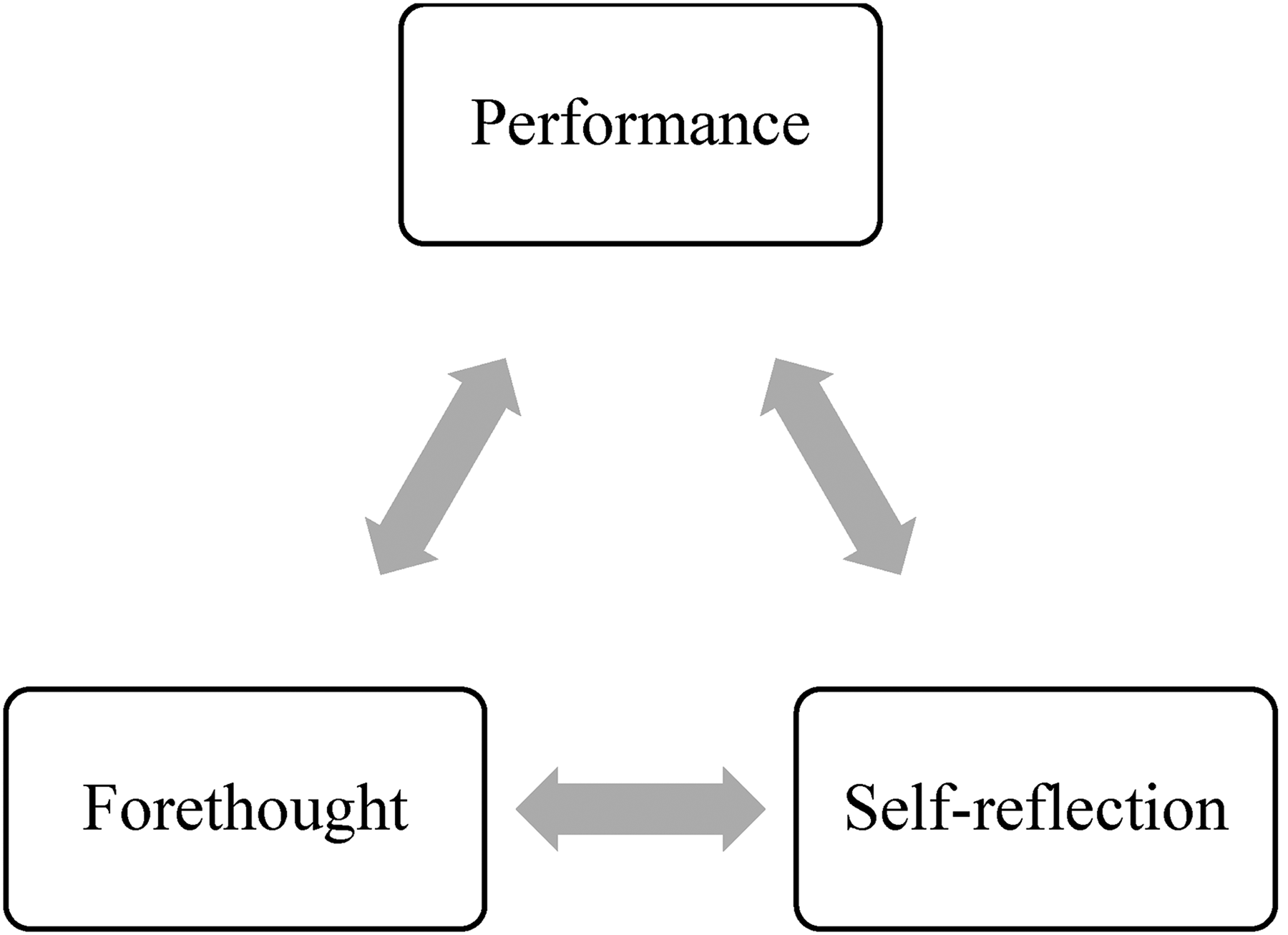
Phases of SRL.
Several studies have adopted the same three cyclical phases of SRL, but each has suggested distinct strategies for promoting self-regulation. SRL strategies, different from cyclical phases, refer to specific actions that involve the self-setting of goals and the self-direction of effort to reach learning goals (Chen & Su, 2019). SRL occurs if SRL strategies are utilized adequately during the different phases of SRL. Existing studies may suggest their categorization of SRL strategies, but these are still aligned with the three phases of SRL. Araka et al. (2020) categorized SRL into two approaches that enable data-driven and personalized learner support; and approaches that gather metacognitive feedback through learner reflection. This categorization refers more to teacher strategies in promoting SRL. Distinctively, Yeh et al. (2019) focused on learner SRL strategies where five categories are considered: (1) metacognition, (2) time management, (3) environmental structuring, (4) help-seeking, and (5) persistence. Broadbent and Fuller-Tyszkiewicz (2018), also referring to learner SRL strategies, adopted three categories: (1) cognitive strategies, (2) metacognitive strategies, and (3) resource management strategies. Magno (2010, 2011a, 2011b), in developing the Academic SRL Scale (A-SRL-S), used factor analysis to categorize learner SRL strategies. The model upon which the scale is based produced seven factors: (1) memory strategy, (2) goal setting, (3) self-evaluation, (4) seeking assistance, (5) environmental structuring, (6) learning responsibility, and (7) planning and organizing.
Interventions to promote SRL are necessary for an online learning environment; failure to provide one is believed to have detrimental effects on academic achievement (Calamlam et al., 2022). Providing learners with adequate resources and opportunities to promote SRL strategies may contribute to the learner's online learning readiness and acceptance (Yeh et al., 2019). Studies have shown an association between the performance of various SRL strategies and academic achievement in learning in an online environment. A field study (Im & Kang, 2019) on identifying structural relationships of factors affecting achievement in online learning found that learners’ achievement goal orientation, self-regulation, test anxiety, and self-efficacy positively affected learning outcomes mediated by participation. A study on the use of the BookRoll e-book System showed that selected self-regulation behaviors such as bookmarking, highlighting, note-taking, and page-turning were correlated to learners’ academic achievement in their online course (Chen & Su, 2019). Research comparing learners of varying SRL skill levels also suggests the academic advantage of learners with higher self-regulation levels compared to those with lower levels. In an evaluation of high and low academic achievers in a trigonometry course, results showed that high achievers benefited more in a flipped class setup compared to low achievers (Calamlam, 2016). Similarly, Broadbent and Fuller-Tyszkiewicz (2018) profiled learners based on their self-regulation and found that super and self-reliant regulators outperformed minimal and restrained regulators regarding their performance in both blended and completely online learning environments. The sudden and necessary shift to an online learning environment due to the COVID-19 pandemic and the association of self-regulation to such an environment supports the relevance of SRL to current educational crises. The current study suggests a novel SRL strategy for using digital note-taking applications. While Schunk and Zimmerman's (1998) three cyclical phases of SRL were used in this study, it did not apply the categorizations of strategies mentioned in this review (Araka et al., 2020; Broadbent & Fuller-Tyszkiewicz, 2018; Magno 2010, 2011a, 2011b; Yeh et al., 2019).
The purpose of the study was to propose and evaluate an SRL strategy in an online environment; the diagnostic objective was to establish the strategy's effectiveness through an assessment of its implementation. Previous studies have suggested the relevance of SRL in an online learning environment (Calamlam, 2016; Chen & Su, 2019; Im & Kang, 2019; Yeh et al., 2019); hence, the current study suggests a strategy based on an online SRL tool – a digital note-taking application. Notes are believed to show how a learner attempted to self-study content (Chen & Su, 2019; Hagen et al., 2014); thus, providing an effective structure for online note-taking can be considered an SRL strategy. A successful SRL strategy follows three cyclical phases: the forethought phase, the performance phase, and the self-reflection phase (Schunk & Zimmerman, 1998). The current study suggested a digital note-taking strategy consisting of seven learner tasks, each corresponding to one of the phases of SRL (see Figure 2).
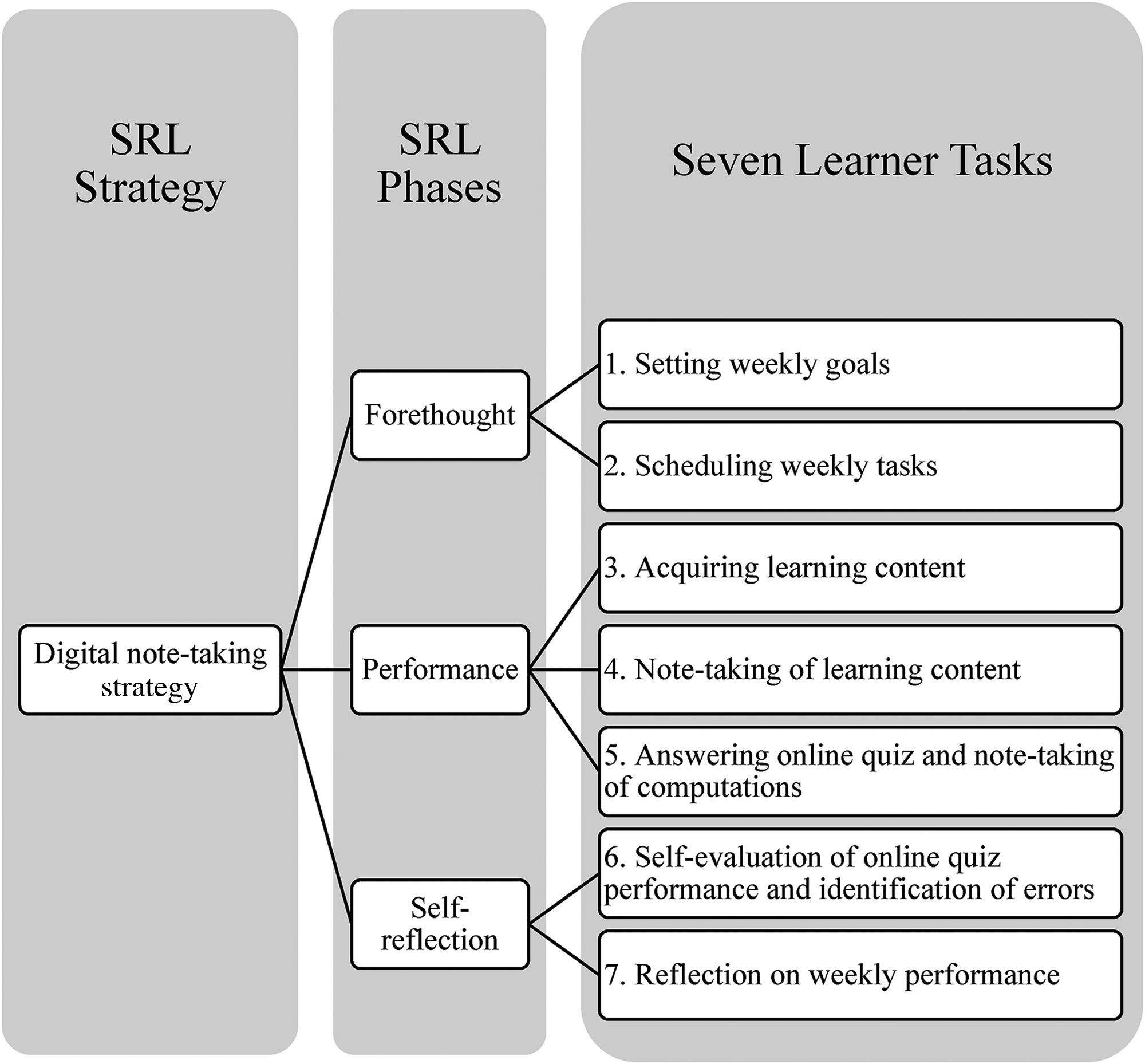
Phases of SRL and seven learner tasks.
Setting weekly goals (learner task 1) and scheduling weekly tasks (learner task 2) are part of the forethought phase. Then, acquiring learning content (learner task 3), note-taking of learning content (learner task 4), and answering online quiz and note-taking of computations (learner task 5) belong to the performance phase. Finally, self-evaluation of online quiz performance and identification of errors (learner task 6) and reflection on weekly performance (learner task 7) are under the self-reflection phase. Specific details of each task are discussed in the Methods section of this article. The effectiveness of the suggested digital note-taking application was determined through its impact on academic achievement – an accepted measure used in establishing the success of SRL interventions (Broadbent & Fuller-Tyszkiewicz, 2018; Calamlam, 2016; Chen & Su, 2019; Im & Kang, 2019).
The study at hand applied a “causal-comparative design” where it sought to find the relationship between the application of SRL strategies (independent variable) and academic achievement (dependent variable) after an online course, Business Mathematics (Salkind, 2012). The study's diagnostic objective was to establish the effectiveness of a strategy in using a digital note-taking application as an SRL tool. Effectiveness was measured through a comparison of Business Mathematics achievement between skillful (those who effectively used the digital notebook) and naïve self-regulators (those who ineffectively used the digital notebook). The participants took an online course where they used digital notebooks. The extent to which participants used the application was measured. Achievement (in business mathematics) was measured through pre-test and post-test. The predictive capability of SRL strategies for academic achievement was established by the relationship between SRL and test scores. In addition, periodic measures of self-regulation between higher and lower achievers, categorized based on pre-test-post-test score increase, were compared to further explore the relationship between SRL and academic achievement.
Setting and participants
The study was conducted in the second terms of AY 2020–2021 (October 2020 to January 2021) and AY 2021–2022 (October 2021 to January 2022). The terms were completely taught through online mode to avoid the dangers of the pandemic. The participants included grade 12 learners of a |Catholic school in the Philippines. The study only involved learners from the accounting, business, and management (ABM) strand because business mathematics was offered only to them. The sample group consisted of 135 learners: 71 from AY 2020–2021 and 64 from AY 2021–2022. The participants’ ages ranged from 16–17 years. Because the learners were minors, their parents/guardians consented to their child/ward's participation by signing the school's data privacy policy forms upon enrollment. The data privacy policy form allowed the school and its faculty to ethically collect learner data to improve educational practices, including research purposes. None of the participants’ identities were revealed.
SRL intervention: digital note-taking strategies in seven learner tasks
In this study, the learners used a digital note-taking application as an online tool in performing selected SRL strategies. Due to the COVID-19 pandemic, the Business Math courses were implemented completely online. The utilization of the aforementioned online application aimed to promote forethought (goal-setting and strategic planning), performance control (self-instruction and self-monitoring), and self-reflection (self-evaluation and attributions) – the cyclical phases and selected subprocesses of self-regulation (Schunk & Zimmerman, 1998). SRL was divided into seven specific learner tasks: (1) setting weekly goals, (2) scheduling weekly tasks, (3) acquiring learning content, (4) note-taking of learning content, (5) answering online quiz and note-taking of computations, (6) self-evaluation of online quiz performance and identification of errors, and (7) reflection on weekly performance. Table 1 summarizes the online application used in each task, the SRL phase, and the subprocess it promoted.
Summary of SRL learner tasks.
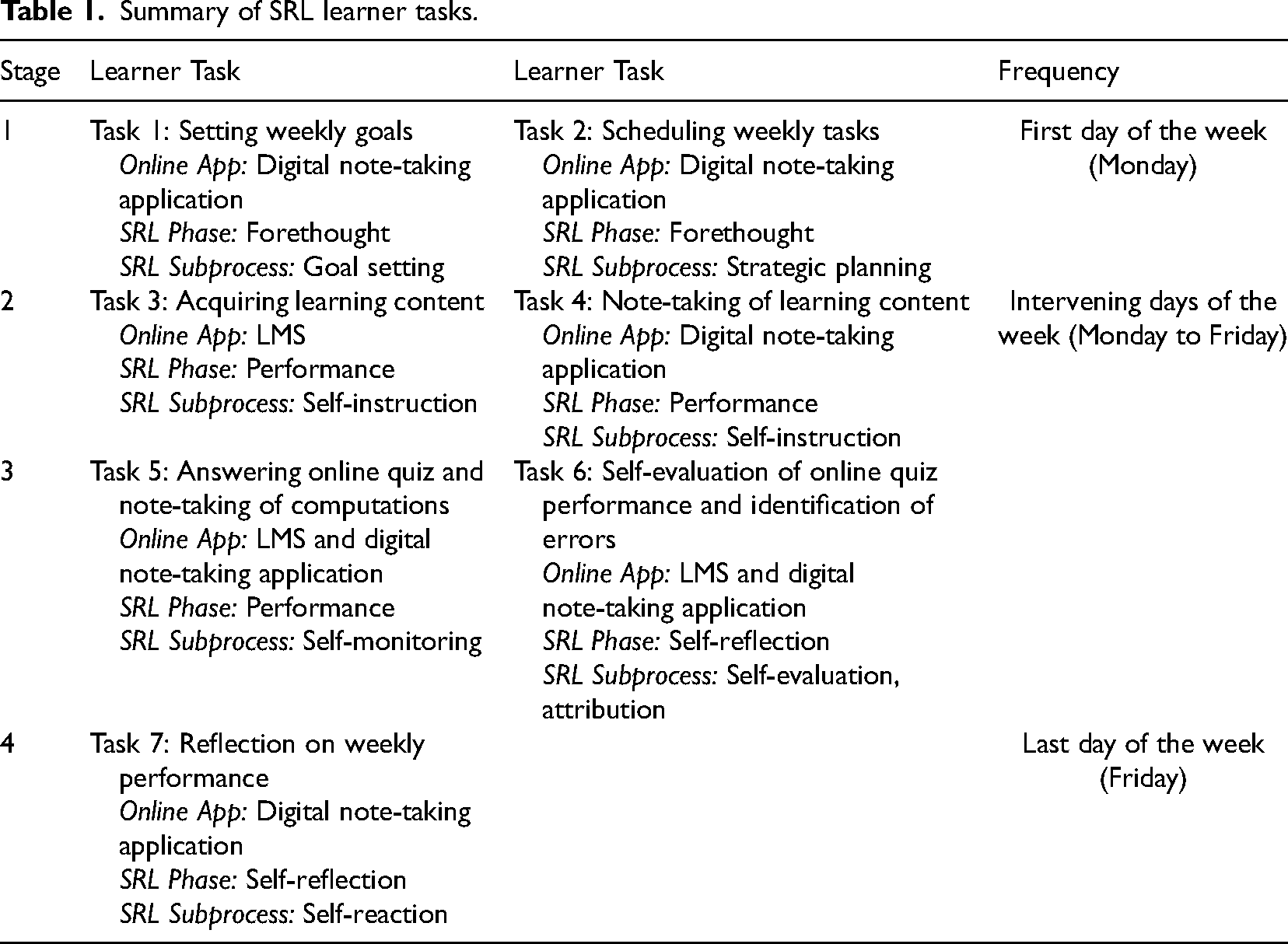
Summary of SRL learner tasks.
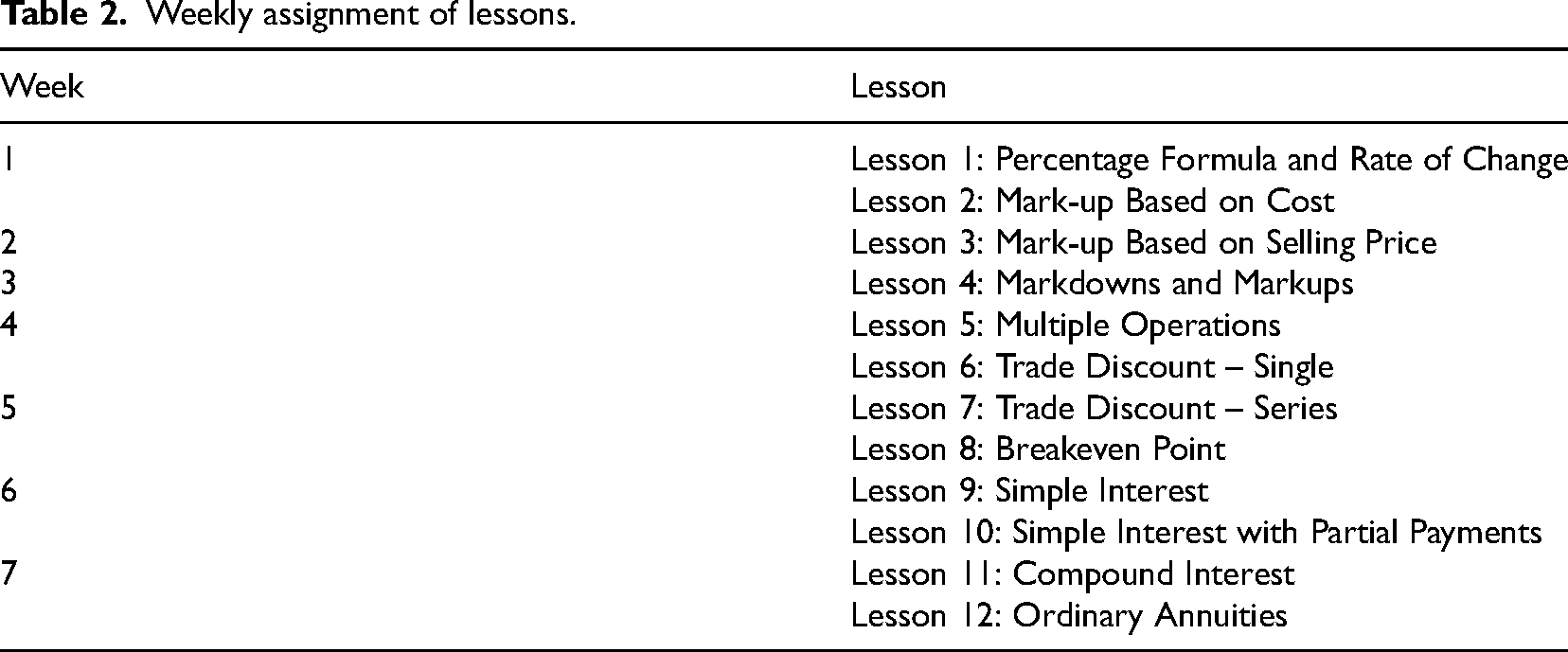
In the Business Mathematics online course, the teaching-learning processes were delivered through learning playlists. A learning playlist included learning content (pre-recorded lectures or inquiry-based activities) and online quizzes. An LMS was used to compile materials into tabulated playlists. Learning playlists were given and labeled per week, where each covered one to two lessons. Table 2 presents how lessons were clustered every week.
Weekly assignment of lessons.
Learner tasks 1 to 7 (see Table 1) were accomplished weekly. Several learner tasks such as goal-setting, scheduling, note-taking (learning content and online quiz computation), error identification, and reflection, were documented using a digital note-taking application. It organized notes by dividing them into sections and pages. A learner's digital notebook was divided into seven sections, one section per week. Then, each section was subdivided into four pages: (1) week n goals and schedule, (2) notes from learning content, (3) notes from online quiz computations, and (4) week n reflection. Figure 3 illustrates how sections and pages of digital notebooks for business mathematics were to be organized.

Digital notebook sections (1st column) and pages (2nd column).
On the first day of the week (Monday), learners performed tasks 1 and 2 (see Table 1). Learner-set goals and schedules were documented in a digital notebook. Learners had freedom in how they organized their goals and schedules (Yu, 2020). However, they were still scored in tasks 1 and 2 based on how their goals and schedule reflected the ideal SRL strategies. The learners’ scores for tasks 1 and 2 served as measurements of their ability for “forethought” – the influential processes that precede efforts to learn and set the stage for such learning (Schunk & Zimmerman, 1998). Figure 4 shows sample SRL tasks 1 and 2 from a learner's digital notebook.
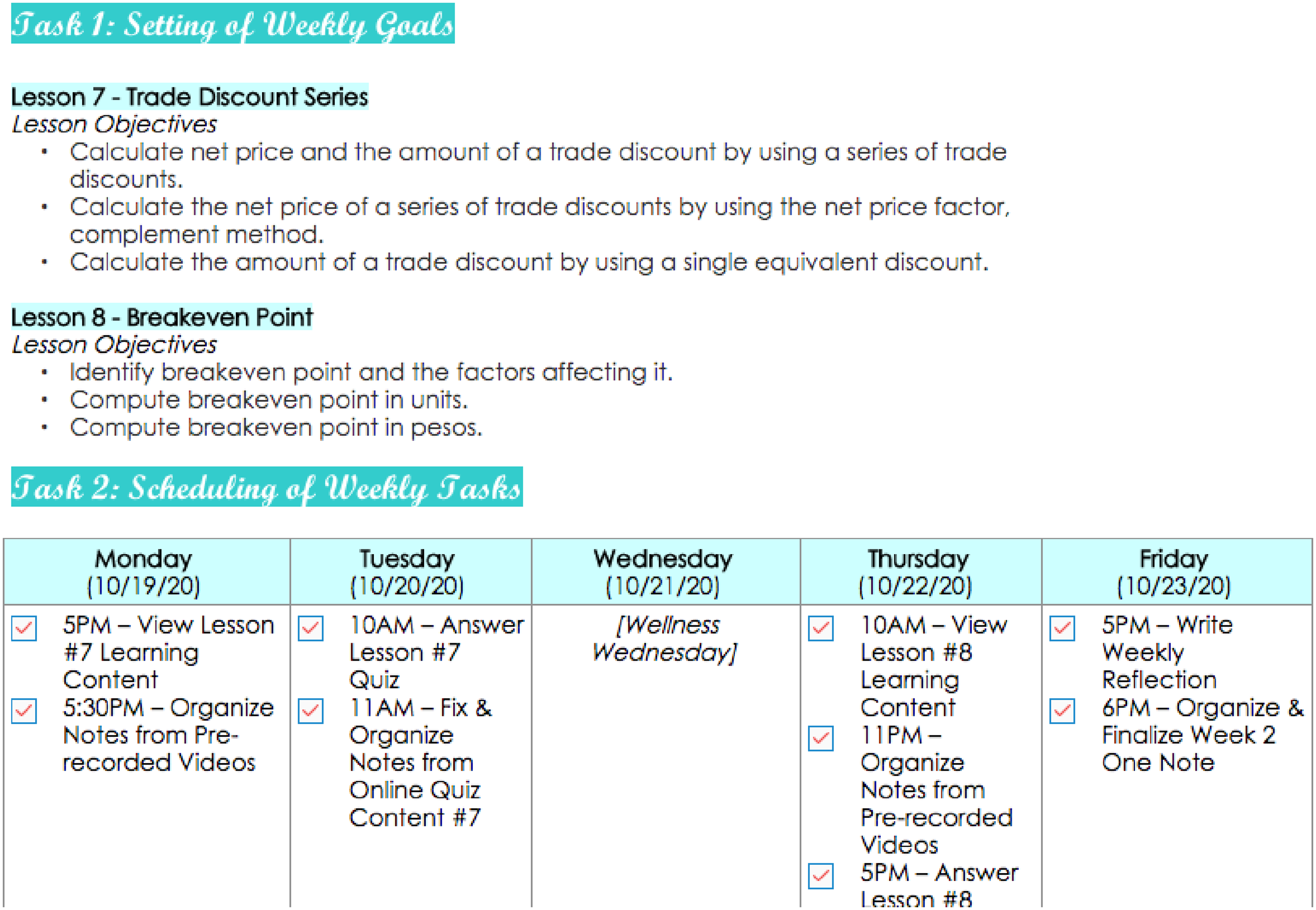
Sample SRL tasks 1 and 2.
During the intervening days of the week (Monday to Friday), the learners performed tasks 3 to 6 (see Table 1). In task 3, they acquired learning content from the playlist assigned for the week. Task 4 was performed simultaneously with task 3, where learners took notes on the assigned pre-recorded lectures or inquiry-based activities. Notes taken during task 4 had to be included in their digital notebooks, specifically the “notes from the learning content” page of the section. Similarly to the goals and schedules, the learners were also free to choose a format for writing their notes (Yu, 2020). Notes could be entries typed directly to digital notebooks or pictures of handwritten entries. Figure 5 shows a sample SRL task 4 from a learner's digital notebook. Following Mayer's select, organize, and integrate (SOI) model, inputs from task 4 were scored based on the level of the strategy used in the note-taking (Follmer & Sperling, 2019). Scores of learners for task 4 measured their SRL skills in the “performance” phase, which involved processes that helped learners focus on the task and optimize their performance (Schunk & Zimmerman, 1998).
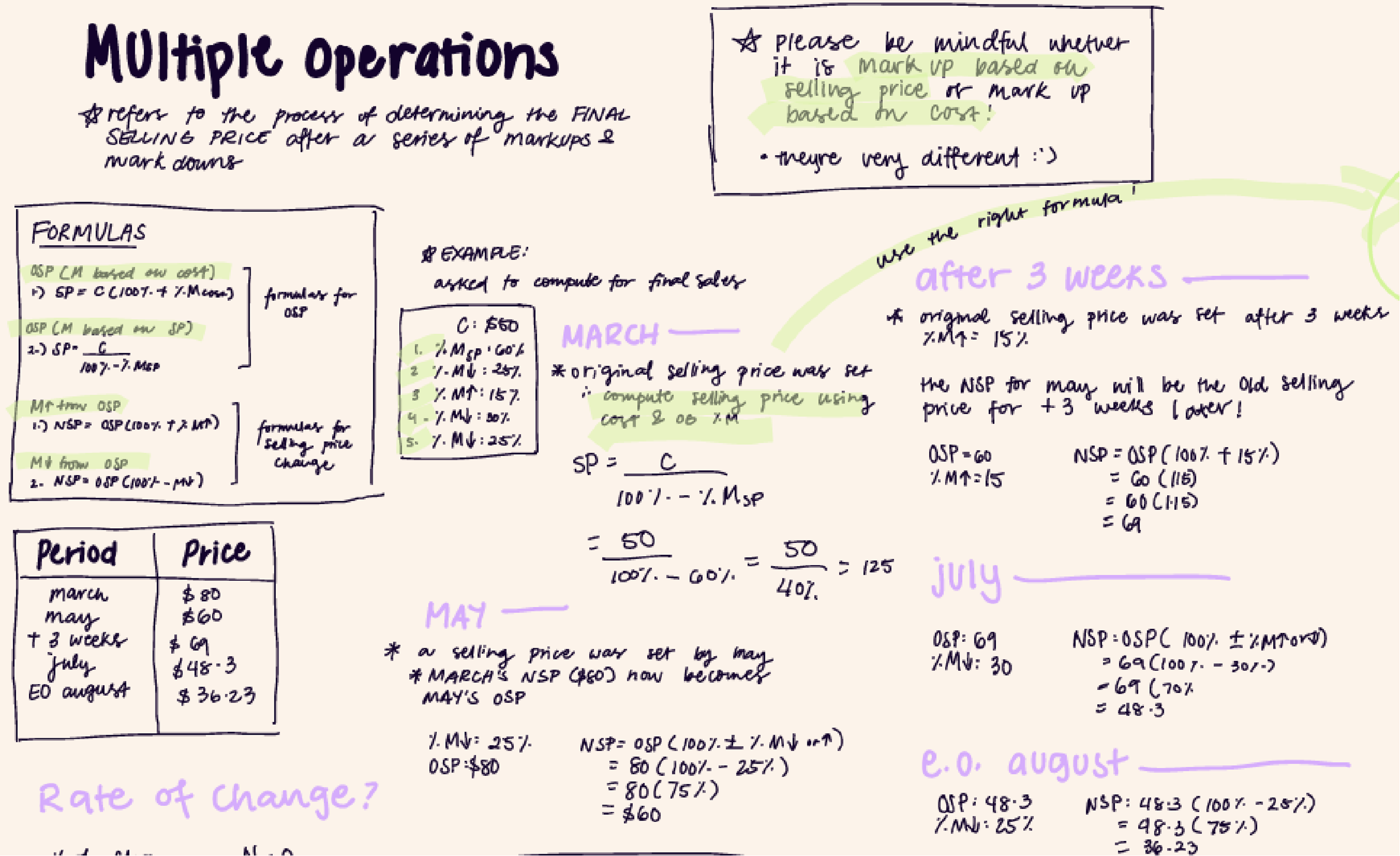
Sample SRL task 4.
After tasks 3 and 4 (see Table 1), the learners proceeded to task 5 where they answered online quiz questions. Simultaneously, mathematical computations done for task 5 had to be recorded in their digital notebooks, specifically on the “notes from online quiz computation” page of the section. As with note-taking from learning content, the notes for online quiz computations could be typed directly into their digital notebooks or posted as pictures of handwritten entries. Online quizzes in the LMS had auto-checking functions; hence, after submitting an online quiz, the learners could immediately check their score. In task 6, learners first self-evaluated their performance by checking the incorrect quiz items. From there, they returned to their notes from online quiz computations to identify the reason behind each error they committed (Chou & Zou, 2020). Identifying the causes of errors is an attribution process (Schunk & Zimmerman, 1998). The learners were expected to use the digital notebook's functions to document the attributes or causes that made their answers correct. They were also expected to categorize the attributes into four (1) a strategy-based attribution, (2) an ability or understanding attribution, (3) an item error or difficulty attribution, or (4) an unknown attribution (Follmer & Sperling, 2019). The learning playlists allowed multiple attempts at all online quizzes; hence, the learners were required to repeat the same quiz until it was perfected. After task 6, if there were still mistakes committed in the online quiz, learners could return to the learning content (task 3), return to their notes from the learning content (task 4), or go straight back to answering the online quiz again (task 5). Figure 6 shows a sample of SRL tasks 5 and 6 from a learner's digital notebook. Notes from task 5 and attributions from task 6 were scored based on their completeness (Follmer & Sperling, 2019). The SRL skill in the “self-reflection” phase, explicitly self-evaluation and attribution, was measured using the scores for tasks 5 and 6.
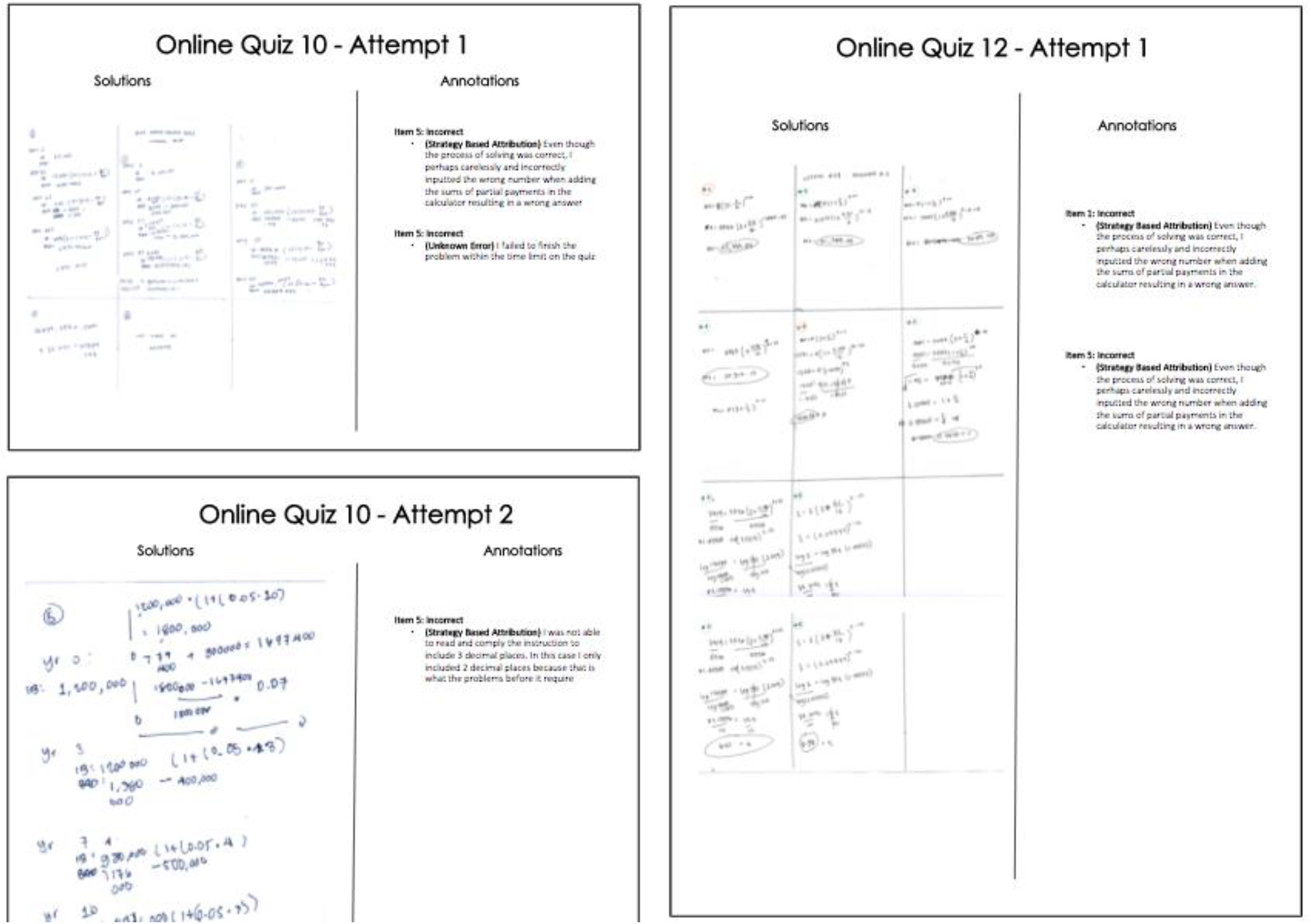
Sample SRL tasks 5 and 6.
On the last day of the school week (Friday), after accomplishing tasks 1–6 (see Table 1), the learners performed task 7, where they wrote a self-reflection of their performances during the week. The learners’ write-ups for this stage were to evaluate their performance vis-à-vis the expectations set during the forethought phase, such as reflecting on whether the goals and schedule set in tasks 1 and 2 were strictly followed (Taranto & Buchanan, 2020). Self-reflection prompts were to be incorporated into the weekly inputs to scaffold the learners’ self-reflection (Fung et al., 2019). Hence, they answered the following questions on the self-reflection page of a section:
From 1–10, how would you rate your performance in achieving your set goals? Why did you come up with that rating? What do you think is the reason behind achieving (or not) your expectations this week? What interventions do you plan to implement next week to improve your performance?
Responses to these weekly reflections had to be directly type-written into their digital notebooks. Figure 7 shows a sample SRL task 7 from a learner's digital notebook.
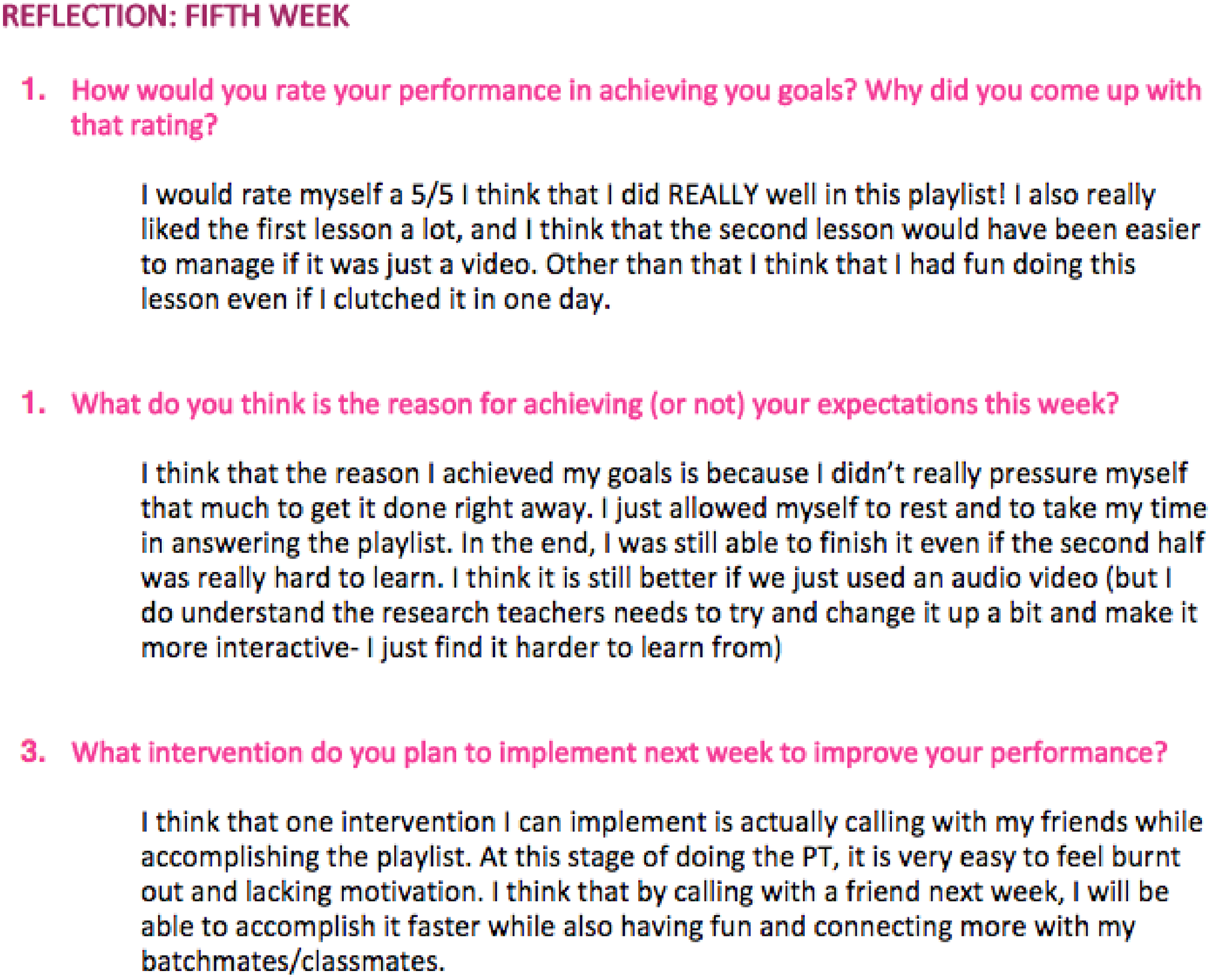
Sample SRL task 7.
Assessing the effects of self-regulation using a digital note-taking application and an LMS required measurement of the use of SRL strategies and academic achievement in business mathematics.
Utilization of SRL strategies
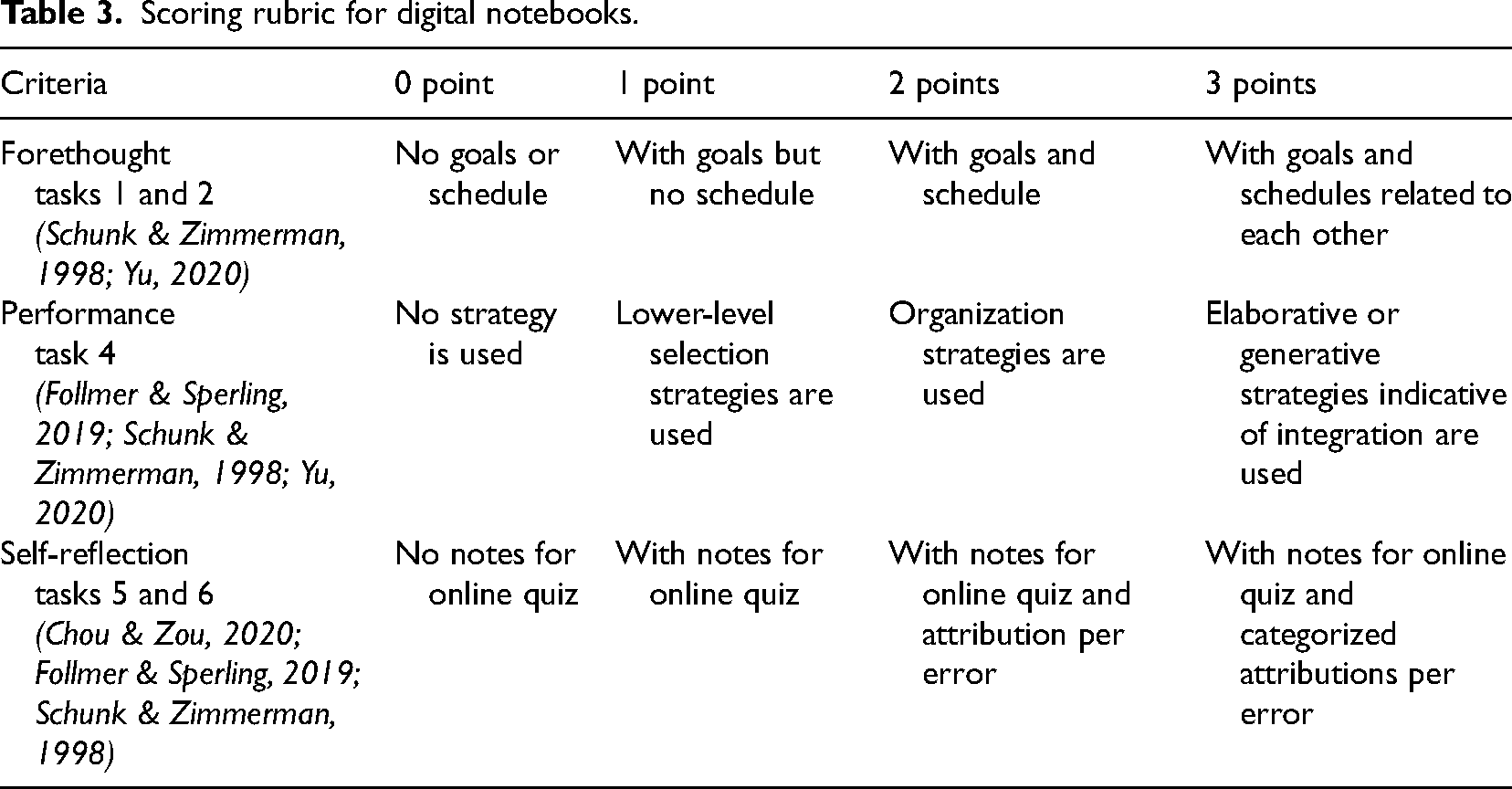
The study measured the quality of the learners’ digital notebook usage and thus how they utilized the SRL strategies. Such learner analytics was used as a tool to measure SRL skills and to promote SRL at the same time (Araka et al., 2020). Specifically, the data collected were the teachers’ ratings of their learners’ self-set goals and schedules, and the notes from learning content and online quizzes. Table 3 shows the scoring rubric for digital notebooks; it measures learner utilization of SRL strategies using a digital note-taking application.
Scoring rubric for digital notebooks.
Scoring rubric for digital notebooks.
The scoring rubric for digital notebooks was face validated by three Business Math teachers and one mathematics coordinator. Cronbach's alpha was performed, wherein the rubric acquired a value of 0.853, showing that it had acceptable reliability (Tavakol & Dennick, 2011). Tasks 1 and 2 were scored zero if the first page of a notebook section had no goals or schedule; one point if the page had at least one goal; two points if it had both goals and a schedule. Learners received a perfect three points if each goal had been scheduled on a daily basis. Figure 4 represents a perfect score, since tasks were scheduled per day (e.g., Monday 5 PM – View lesson #7 Learning Content, Monday 5:30 PM – Organize notes from pre-recorded lecture). Task 3 was not scored since, at this point, the learner watched the pre-recorded lecture or worked on the inquiry-based activity. The evidence of a learner accomplishing task 3 was reflected in task 4. Task 4 was scored zero if the second page of a notebook section was blank; one point if it had notes but was disorganized or incomplete; and two points if notes were organized and complete. Learners got a perfect three points if they added self-made content to improve notes; this could be graphic organizers, study tips, lesson summaries, and other annotations that were not initially included in the lesson videos or hand-outs. Figure 5 represents a perfect score since it included study tips (the one with stars), labeled arrows, highlighted content, and a table of periods and prices, which were not part of the original lesson content. Tasks 5 and 6 were scored zero if the third page had no written solutions; one point if it only had solutions; two points if annotations to correct wrong solutions were present. Learners were awarded a perfect score if annotations for wrong solutions were categorized. Figure 6 represents a perfect score since multiple attempts are present to correct the solution in each wrong item. Each column is an attempt; the last column shows the final and correct solution. In the annotations, errors are reflected on and categorized as strategy-based or unknown errors. Task 7 was not scored, since reflections are considered subjective; scoring could have resulted in unauthentic reflections.
The learner's digital notebooks were rated and recorded for 7 weeks, and the total SRL scores were based on the learner's added weekly ratings. Weekly ratings were used to determine how consistently learners used their digital notebooks as an SRL tool. Total SRL scores were used to measure the overall utilization of the digital note-taking application and as a grouping factor in distinguishing skillful and naïve self-regulators. Learners who obtained a total SRL score higher than the average were considered skillful self-regulators, while those with an average total SRL score or lower were considered naïve self-regulators.
Academic achievement was measured using teacher-made pre- and post-tests. Both tests covered all 12 lessons of the Business Mathematics online course, namely:
Percentage Formula and Rate of Change Mark-up Based on Cost Mark-up Based on Selling Price Markdowns and Markups Multiple Operations Trade Discount – Single Trade Discount – Series Breakeven Point Simple Interest Simple Interest with Partial Payments Compound Interest Ordinary Annuities.
The tests had a total score of 60 points. They consisted of 23 open-ended problem-solving questions, each scoring either 2, 3, or 4 points depending on the difficulty of the concept it covered.
The pre-test and post-test underwent face validation. They were checked by three business math teachers and one mathematics coordinator. The pre-test and post-test obtained Cronbach alpha values of 0.70 and 0.86, respectively, and thereby established acceptable reliability (Tavakol & Dennick, 2011). The pre- and post-tests were administered before and after the Business Mathematics online course, respectively. The same set of tests was given in AY 2020–2021 and AY 2021–2022. The post-test score was used to measure learner achievement at the end of the Business Math course, while the pre-test was used as a covariate to control the effects of initial proficiency in the analysis. The score increase from pre-test to post-test was used to categorize students into higher and lower achievers. Learners with scores increase greater than the average were considered higher achievers, while learners with a score equal to or less than the average were considered lower achievers.
Results
The main purpose of this study was to propose a strategy for using a digital note-taking application as an SRL tool. The diagnostic purpose was to establish the proposed strategy's effectiveness by measuring its impact on Business Mathematics achievement. Data were collected and analyzed to assess the intervention; more specifically: to determine the significance of the difference in mathematics achievement between skillful and naïve self-regulators, and to explore the difference between higher and lower achievers on their use of digital notebooks as an SRL tool.
Effect of digital note-taking on business math achievement
A two-way ANCOVA was conducted to measure the effect of the quality of use of a digital note-taking application as an SRL tool for a business math course. The purpose of this analysis was to statistically test the significance of differences in post-test scores between students with higher and lower SRL scores. Post-test scores were entered as the dependent variable, SRL score (higher and lower groups), and academic year (AY 2020–2021 and AY 2021–2022 groups) as independent variables. Pre-test scores were entered as a covariate. If an academic year obtained a significant interaction effect, two separate one-way ANCOVA would be conducted for AY 2020–2021 and AY 2021–2022 groups.
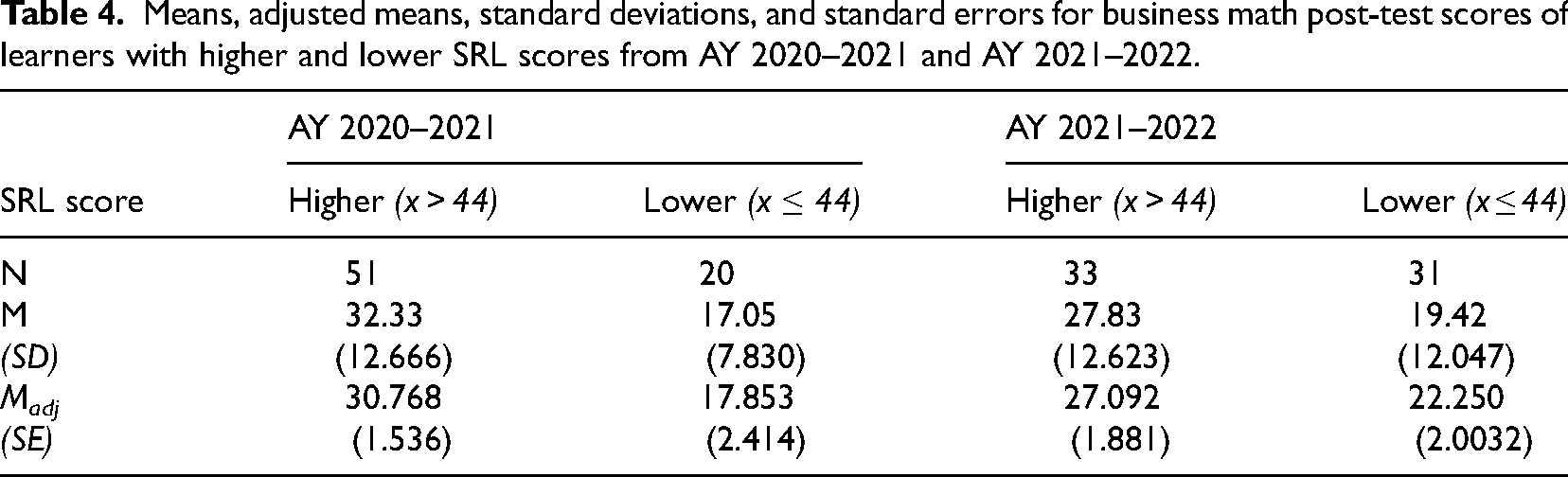
Table 4 shows that for AY 2020–2021, learners with higher SRL scores had higher post-test scores (Mean = 30.768; Std. Error = 1.536) compared to learners with lower SRL scores (Mean = 17.853; Std. Error = 2.414). For AY 2021–2022, learners with higher SRL scores also had higher post-test scores (Mean = 27.092; Std. Error = 1.881) than those with lower SRL scores (Mean = 22.250; Std. Error = 2.003). A descriptive analysis suggests that learners who better used digital notebooks in Business Mathematics obtained higher academic achievement across academic years.
Means, adjusted means, standard deviations, and standard errors for business math post-test scores of learners with higher and lower SRL scores from AY 2020–2021 and AY 2021–2022.
Means, adjusted means, standard deviations, and standard errors for business math post-test scores of learners with higher and lower SRL scores from AY 2020–2021 and AY 2021–2022.
However, Figure 8 illustrates that the gap in post-test scores between learners with higher and lower SRL scores was smaller in AY 2021–2022 compared to AY 2020–2021. The intersecting lines in the profile plots suggest that the academic year might have an interaction effect in having higher or lower SRL scores. Hence, the use of digital notebooks might not be the only factor affecting business math achievement; a consideration is needed in analyzing the intervention's effectiveness. On the flip side, despite the usefulness of profile plots, one cannot determine an interaction from them (Fox, 2008). Thus, a formal statistical test is required to test the presence of an interaction effect.
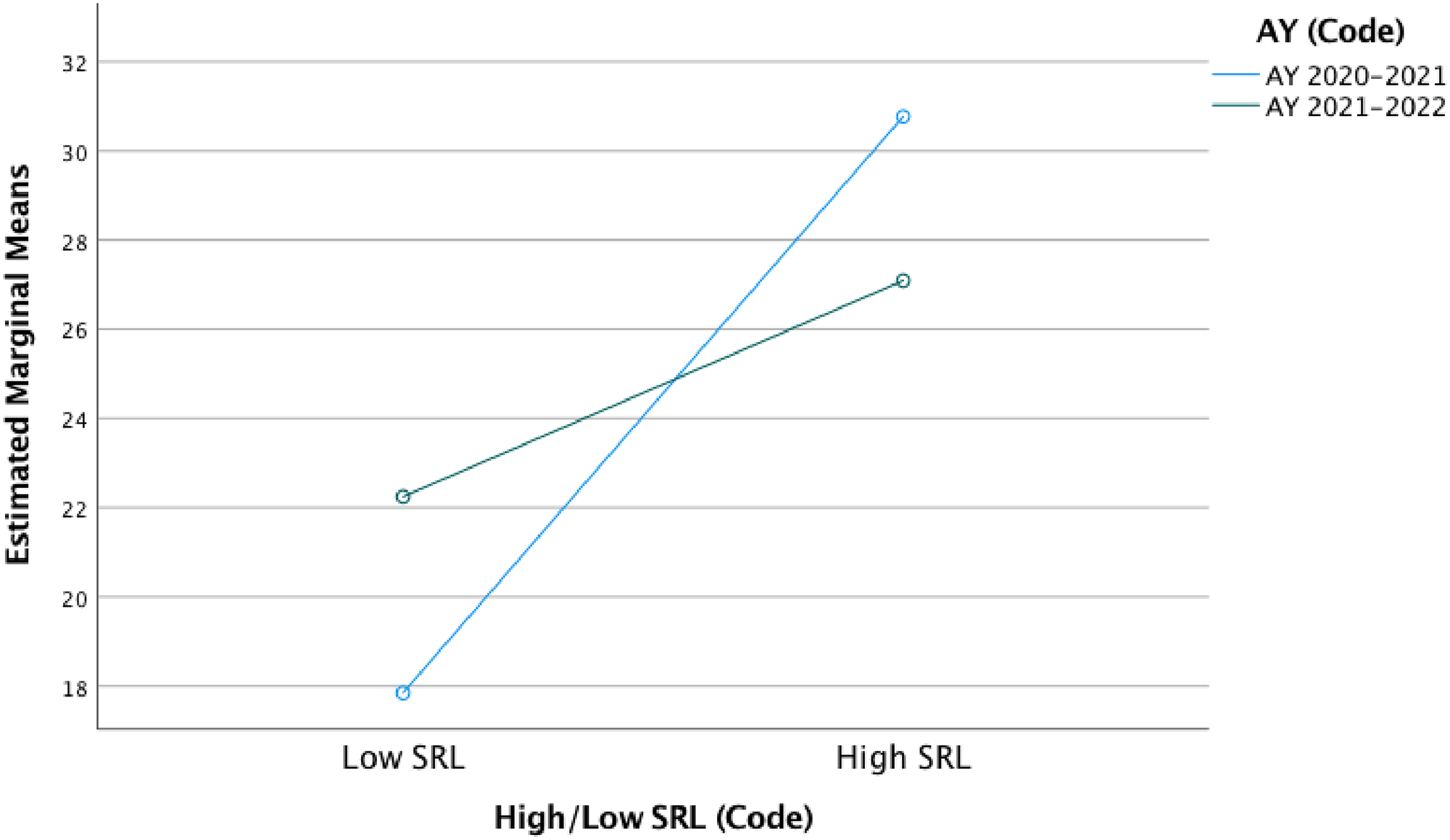
Profile plots of estimated marginal means of post-test scores.
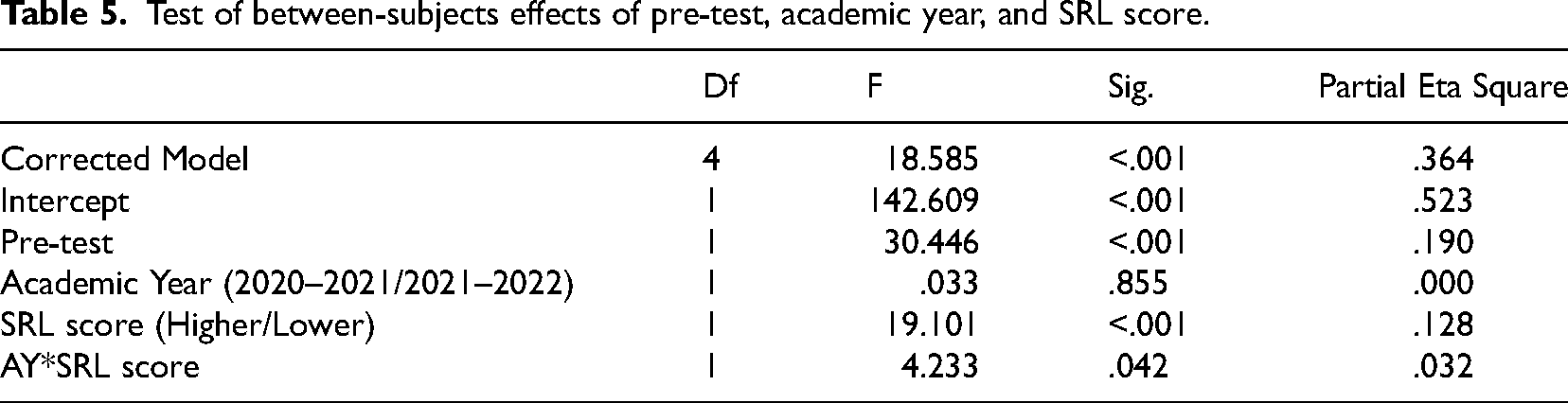
The two-way ANCOVA results show that possessing higher or lower SRL scores has a statistically significant effect on post-test scores, whilst controlling for pre-test scores, F(1,130) = 19.101, p < 0.001, partial η2 = 0.128 (see Table 5). The results suggest that quality use of a digital notebook moderately affected Business Math achievement (Fritz et al., 2012). However, as Figure 7 suggests, the interaction effect between SRL score and academic year was tested. At a 99% level of confidence, the academic year has no statistically significant impact on post-test scores, F(1,130) = 0.033, p = 0.833, partial η2 = 0.000; it also has no significant interaction effect with SRL scores, F(1,130) = 4.233, p = 0.042, partial η2 = 0.032. Unlike the interpretation from Figure 7, the results imply that the difference in an academic year did not influence the learners’ business math achievement. Hence, conducting a separate one-way ANOVA was no longer required. The results suggest that learners who used digital notebooks better as skillful self-regulators had significantly higher academic achievement in business math than naïve self-regulators or learners who poorly used digital notebooks. Furthermore, this difference was true for AY 2020–2021 and AY 2021–2022. These findings prove that skillfully using a digital note-taking application as an SRL tool was consistently effective for two academic years in learning business mathematics.
Test of between-subjects effects of pre-test, academic year, and SRL score.
Regression analysis was used to measure the predictive value of using digital notebooks effectively for academic achievement. Specifically, a three-step hierarchal regression analysis was conducted with post-test scores as the dependent variable. The pre-test scores were entered at step 1, and the SRL scores were added to the pre-test scores at step 2. The R2 change in step 2 measured the predictive value of SRL scores. Academic year was added to pre-test and SRL scores at step 3 to check if the difference in school year could have affected the predictive value of SRL scores for post-test scores. If step 3 obtained a significant F change, then two separate two-step hierarchal regression analyses for AY 2020–2021 group and AY 2021–2022 group would be conducted.
Table 6 shows that at step 1, the pre-test contributed significantly to the regression model, F(1,133) = 43.640, p < 0.001, and accounted for 24.7% of the variation in post-test scores. Introducing the SRL scores explained an additional 19.1% of variation in the post-test scores, and this R2 change was significant, F(1,132) = 44.895, p < 0.001. Adding the academic year to the regression model did not explain any additional variation in post-test scores; this R2 change was not significant, F(1,131) = 0.001, p = 0.978. Step 3 of the regression model shows that SRL score (ß = 0.370, p < 0.001) was a significant predictor of post-test score while the academic year was not (ß = −0.038, p = 0.978). The results imply that SRL score was a moderate predictor of post-test score while removing the predictive value of the pre-test score (Fritz et al., 2012). Furthermore, at a 99% confidence level, the difference in academic year had no significant predictive value on post-test scores. Hence, separate two-step hierarchal regression analyses for the two academic years were no longer needed. The analysis suggests that learners who used a digital note-taking application as an SRL tool more proficiently were also likely to achieve more in Business Mathematics; this relationship was true for both AY 2020–2021 and AY 2021–2022. Findings from the two-way ANCOVA and hierarchal regression analysis results indicate that promoting SRL skills through digital note-taking improved the learning process in the business math course.
Model summary of hierarchal regression analysis.
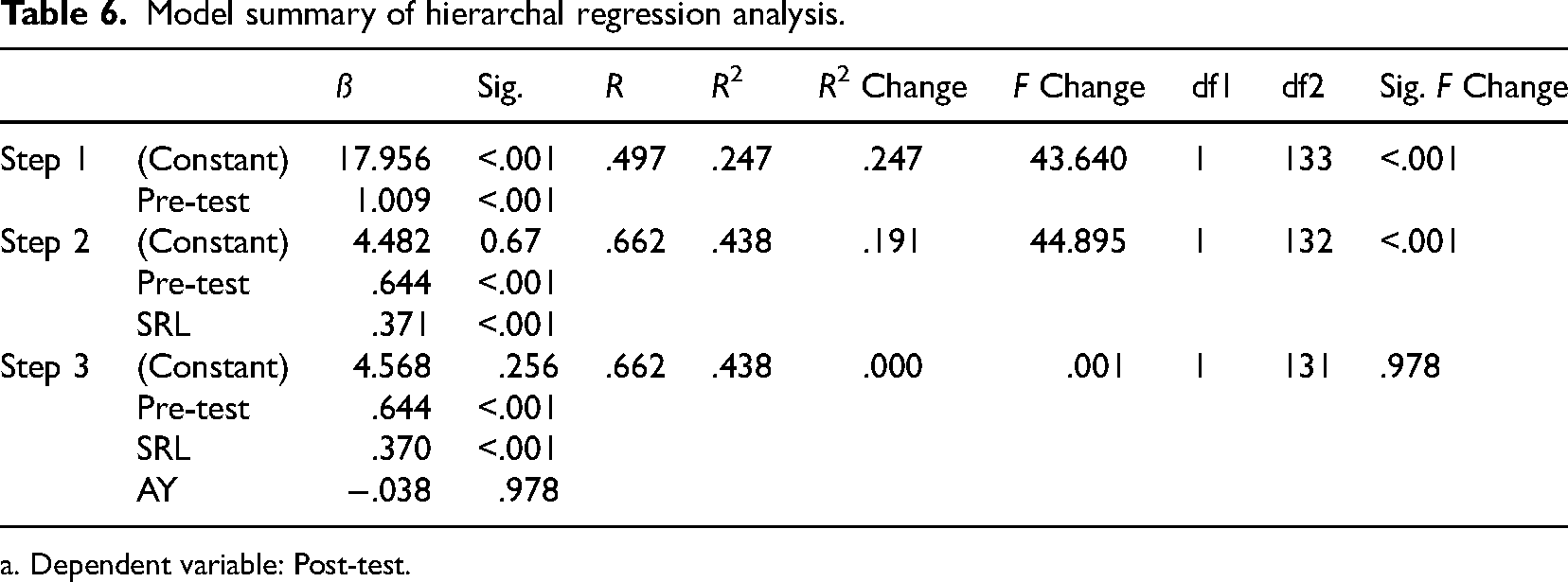
a. Dependent variable: Post-test.
Repeated measures of ANOVA were conducted to investigate the difference in the use of digital notebooks between learners with higher and lower academic achievement during the Business Math course. The quality of use of the digital notebook as an SRL tool was measured weekly for a span of 7 weeks. Pre-test-post-test score increase (higher and lower groups) was entered as the main factor, while academic year (AY 2020–2021 and AY 2021–2022) was included as a factor. If the academic year obtained a significant interaction effect, then two separate repeated measures of ANOVA would be conducted for the AY 2020–2021 and AY 2021–2022 groups.
Table 7 shows the changes in the average SRL score per week. Comparing the means of learners with higher and lower improvements, it is observable that for both AY 2020–2021 and AY 2021–2022, there was no instance when lower achievers had a mean SRL score higher than higher achievers. Apparently, the highest mean score of the less improved learners was still lower than the lowest mean score of their more improved peers. The discrepancy in mean scores is illustrated in Figure 9. The graph for AY 2020–2021 shows that the higher achievers exhibited gradual increases in mean SRL scores as weeks went by, while the lower achievers dramatically dropped in mean SRL scores at the latter parts of the course. For AY 2021–2022, the higher achievers displayed a general upward trend on their mean SRL scores despite the presence of fluctuations. On the other hand, the lower achievers seemed to maintain the same mean SRL score throughout the weeks. However, despite the difference, the SRL scores of both the higher and lower achievers rose and dropped simultaneously, making their trends similar to an extent.
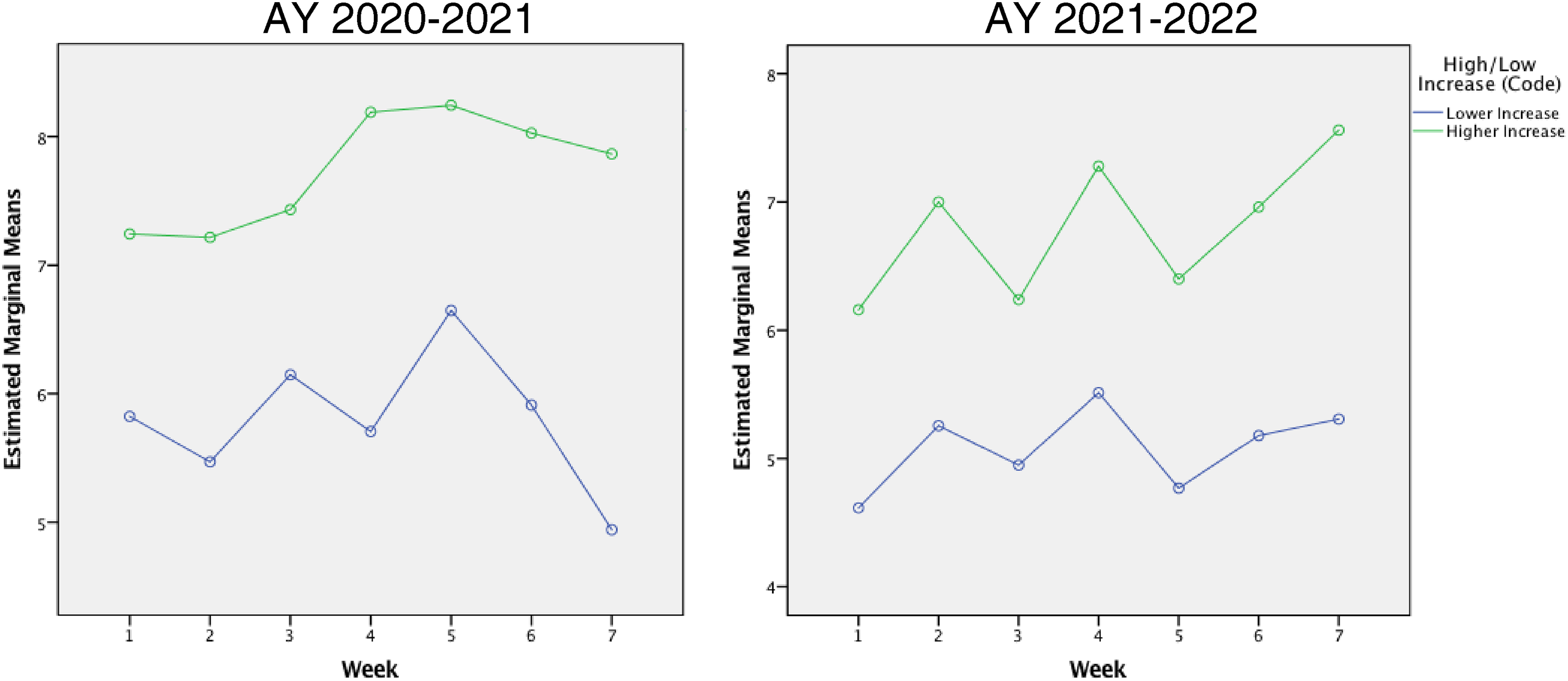
Estimated marginal means of SRL scores per week for AY 2020–2021 and AY 2021–2022.
Means and standard deviations for SRL scores of learners with higher and lower pre- to post-test score increase in AY 2020–2021 and AY 2021–2022.
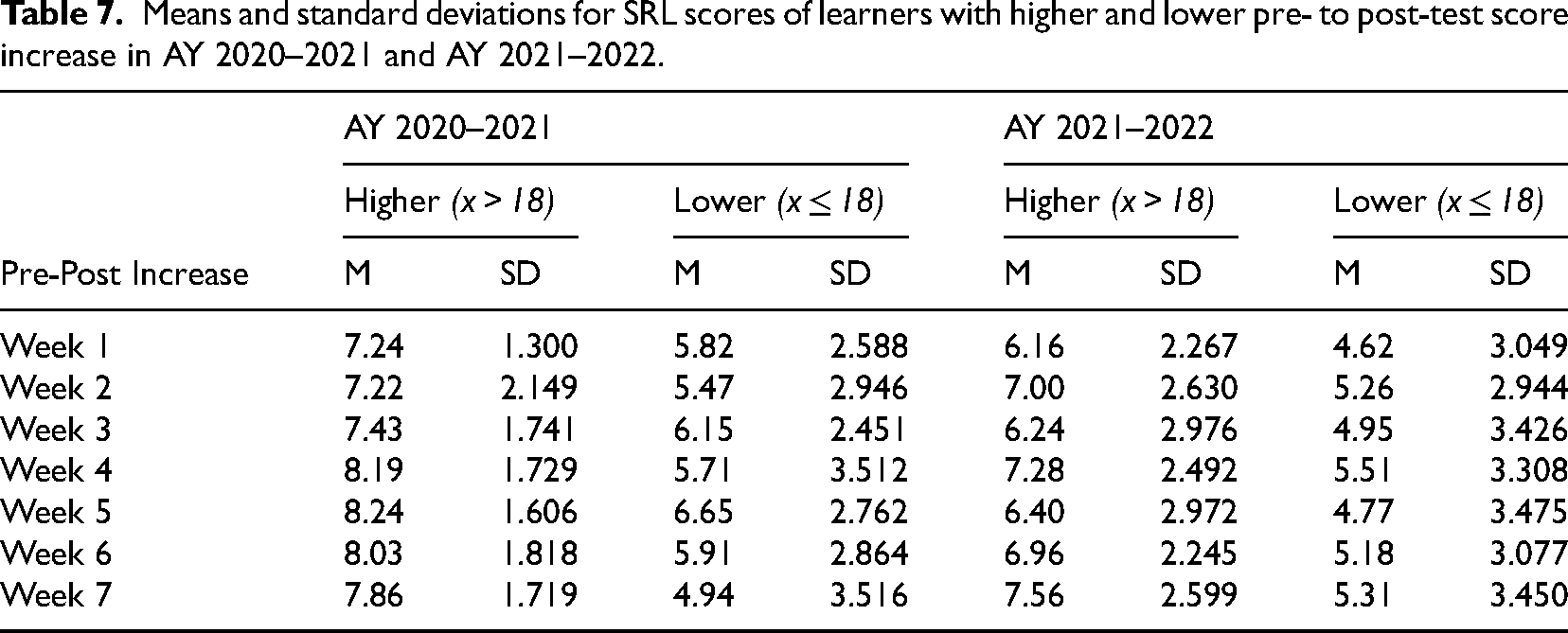
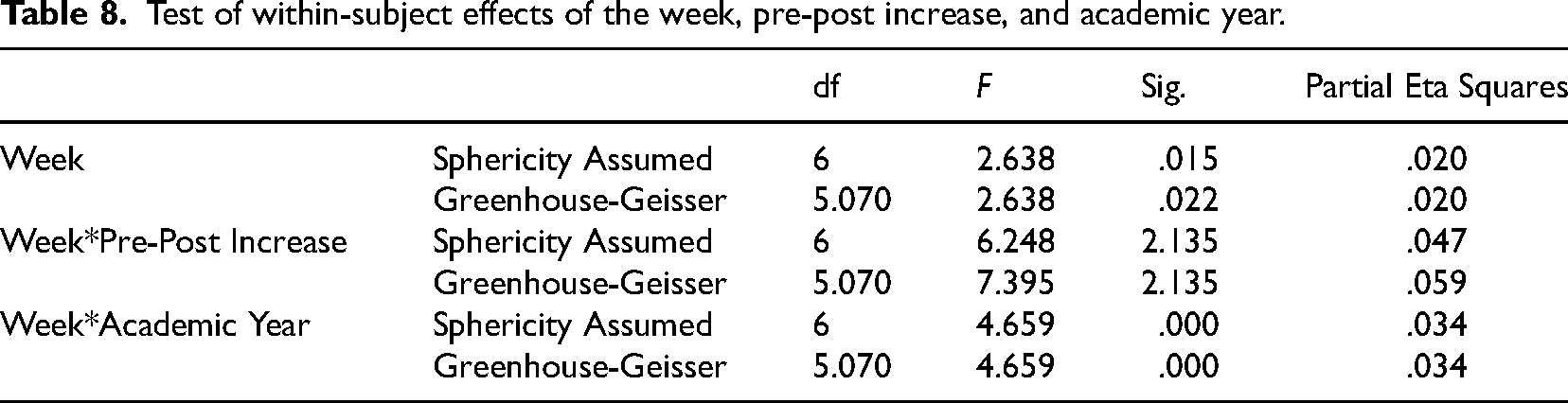
The descriptive statistics and graphs might provide inferences on differences and trends, but they could not be used to test significance. Hence, repeated measures of ANOVA were still conducted. The results of Mauchly's test of sphericity indicated that the assumption of sphericity had been violated, χ2 = 65.291, p < 0.01. Therefore, a Greenhouse–Geiser correction was used. Table 8 shows that at the 99% confidence level, there was no significant difference in the SRL scores between the weeks, F(5.07,664.14) = 2.638, p = 0.022, partial η2 = 0.020. However, this result might be affected by the significant interaction effect of academic year to week, F(5.07,664.14) = 4.659, p = 0.000, partial η2 = 0.034. Perhaps the trends of the mean SRL scores of AY 2020–2021 and AY 2021–2022 were significantly different. Hence, separate repeated measures of ANOVA were conducted for the AY 2020–2021 and AY 2021–2022 groups.
Test of within-subject effects of the week, pre-post increase, and academic year.
The results of Mauchly's test of sphericity indicated that the assumption of sphericity had been violated for AY 2020–2021, χ2 = 101.808, p < 0.01, and AY 2021–2022, χ2 = 49.203, p < 0.01. Therefore, a Greenhouse-Geiser correction was used. Table 9 shows that at a 99% level of confidence, there were statistically significant differences among the SRL scores per week for AY 2020–2021, F(4.10,282.91) = 3.745, p = 0.005, partial η2 = 0.051 and AY 2021–2022, F(5.02,311.19) = 3.544, p = 0.004, partial η2 = 0.054. These imply that small but significant changes in the quality of digital notebook use occurred during the 7-week business math course (Fritz, Morris & Richler, 2012). Specifically, pairwise comparisons suggest that for AY 2020–2021, there was a significant increase in the quality of digital notebook use from week 2 to week 5 (p = 0.003). Still, there was a significant drop from week 5 onwards (p = 0.009). On the other hand, despite the considerable changes among SRL scores during the business math course in AY 2021–2022, there were no separate substantial increases or decreases between weeks. Perhaps learners did not dramatically change how they used the note-taking application between weeks.
Test of within-subject effects for week and pre-post increase (AY 2020–2021 and AY 2021–2022).
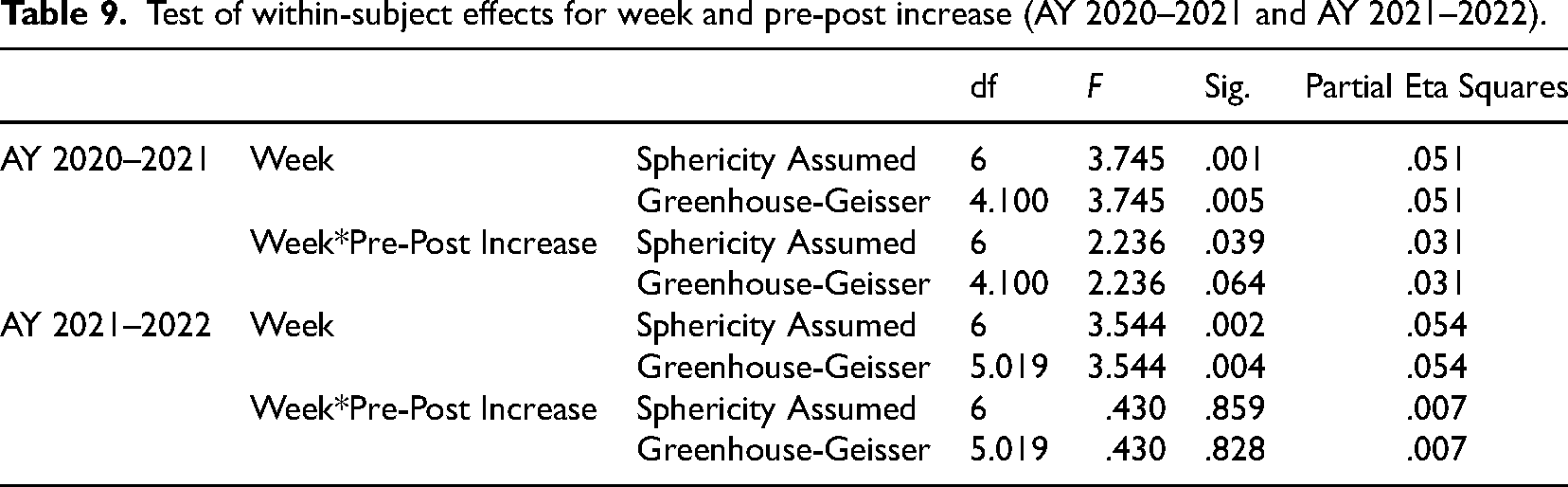
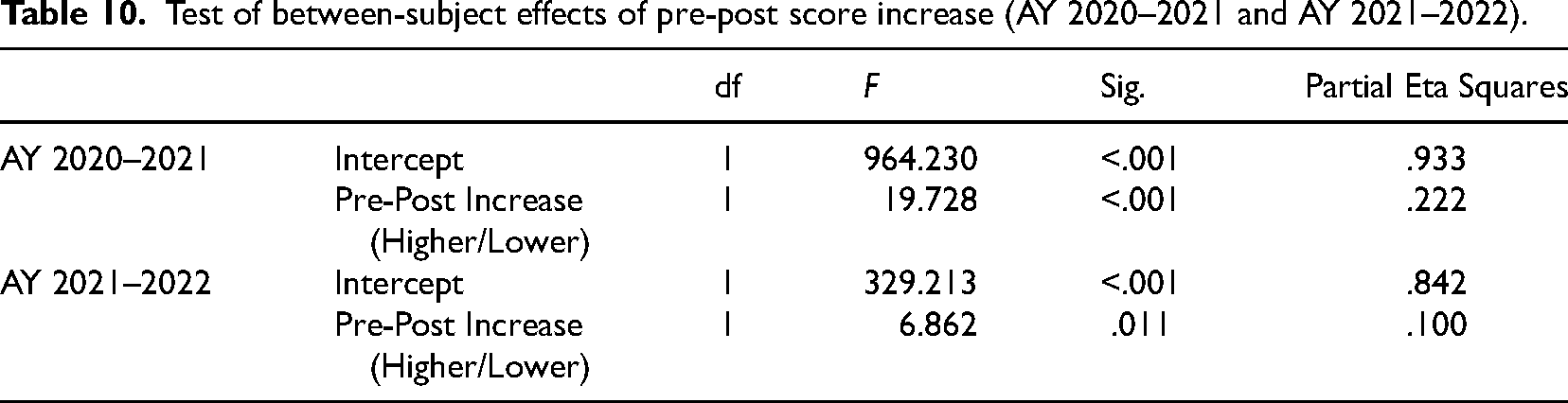
Table 10 shows that at a 99% confidence level, the higher achievers from AY 2020–2021 had significantly higher SRL scores than the lower achievers throughout the 7-week business math course, F(1,69) = 19.728, p > 0.001, partial η2 = 0.222. In contrast, for AY 2021–2022, the SRL scores of higher and lower achievers are statistically the same at a 99% confidence level, F(1,62) = 6.864, p = 0.011, partial η2 = 0.100. Interestingly, the higher achievers used the digital note-taking application much better as an SRL tool than the lower achievers in AY 2020–2021 (Fritz et al., 2012). However, the same is not precisely accurate for AY 2021–2022, where the higher achievers used the application the same way as the lower achievers. In short, as Figure 9 suggests, trends on when SRL skills climbed and plummeted were different between the higher and lower achievers in AY 2020–2021 but identical in AY 2021–2022.
Test of between-subject effects of pre-post score increase (AY 2020–2021 and AY 2021–2022).
The results of the repeated measures of ANOVA imply that the learners in AY 2020–2021 used the digital note-taking application in business math differently than those in AY 2021–2020. Although the SRL scores fluctuated for both academic years, the learners in AY 2020–2021 adapted to the changes more vividly. The quality of digital notebook use in AY 2021–2022 remained practically the same throughout the business math course. Another difference between the two academic years was in how their respective higher and lower achievers used the note-taking application. In AY 2020–2021, the higher achievers used the application better than the lower achievers. On the other hand, in AY 2021–2022, the higher and lower achievers might have had the same SRL skills concerning how well they used their digital notebooks.
Online learning is a relatively new but emerging approach in Philippine education. Its rise in popularity warrants an emphasis on SRL. Hence, the current study aimed to propose and assess a strategy for using a digital note-taking application as an SRL tool in a business math course. The data collection included the administration of a pre-test and a post-test and weekly rating of digital notebook use. Two-way ANCOVA and hierarchal regression analysis were performed to determine the effect of digital note-taking on Business Math achievement. At the same time, repeated measures of ANOVA were conducted to explore the difference in how higher and lower achievers used the application.
The results of the two-way ANCOVA suggest that skillful self-regulators consistently achieved more in Business Math compared to naïve self-regulators. Moreover, the hierarchal regression analysis results imply that learners who displayed better digital notebook use were the ones likely to achieve more in the course. Analyses indicate that using a digital note-taking application as an SRL tool was an effective intervention. These findings support the applicability of Schunk and Zimmerman's (1998) cyclical phases of self-regulation to digital note-taking. Better learning in an online environment could be achieved by performing the seven proposed SRL tasks, namely: setting weekly goals, scheduling weekly tasks, acquiring learning content, note-taking of learning content, answering online quizzes and note-taking of computations, self-evaluation of online quiz performance and identification of errors, and reflection on weekly performance. Therefore, the researcher recommends implementing the digital note-taking strategy used in this study, specifically in online distance learning. Existing studies support the study's findings on the positive effect of digital note-taking. A field study (Horney et al., 2009) on digital note-taking in science texts revealed that learners knew more about the topics covered in the supplementary text booklets after reading and taking digital notes than before. A field result (Eades & Moore, 2007) indicated a similar conclusion: survey results showed that strategic note-taking on developmental mathematics increased learner understanding and motivation. Existing studies on systems for promoting SRL are also aligned with the current study's findings on digital note-taking applications. A study on the BookRoll e-book – a system reported to promote SRL – showed that learners who used the e-book system obtained higher academic achievement than learners who used only an LMS. The paper suggested that a system that promotes SRL effectively increases academic achievement (Chen & Su, 2019). An intelligent computer-assisted learning system called Open Learner Models for Self-Regulated Learning (OLM-SRL) was also reported to benefit learners academically by providing assistance in reflecting on their learning and mastery, identifying unfamiliar concepts, setting their target goals, and correcting previously committed errors (Chou & Zou, 2020). The reported benefits of SRL integration imply the necessity of implementing interventions to promote self-regulation, specifically in online learning. Further, learners get the most out of online learning if they appropriately apply the mentioned SRL skills (Calamlam, 2016; Chen & Su, 2019; Im & Kang, 2019; Yeh et al., 2019).
The repeated measures of ANOVA results imply that different groups of learners use SRL tools differently. Specifically, in this study, learners from two academic years showed contrasting trends in how they used the digital note-taking application. The learners from AY 2020–2021 exhibited differing trends between the higher and lower achievers. The higher achievers gradually improved the quality of their digital notebooks use as the online course progressed, while the lower achievers plummeted in the later parts of the course. On the other hand, the learners from AY 2021–2022 exhibited similar trends between higher and lower achievers. Although the higher achievers consistently had better digital notebook use than the lower achievers, the quality for both climbed and fell concurrently. It is not certain that higher achievers are better self-regulators than lower achievers. Existing studies have suggested several learner-based attributes that might affect how learners perform SRL strategies, which include their use of digital note-taking applications. These attributes may explain why there exists a difference in SRL trends between the academic years. According to Lee et al. (2020), learners’ self-efficacy and task value positively affect their use of SRL strategies in a massive open online course (MOOC). In line with this, in the current study, how learners perceived their ability to learn independently or how interesting and valuable they found the online tasks varied from one learner group to another. The batch for AY 2020–2021 might have consisted of learners with more diverse outlooks on their learning abilities and the value of their online tasks, while the learners from AY 2021–2022 could have more parallel views. Another possible explanation might be the learners’ innate SRL profile. Broadbent and Fuller-Tyszkiewicz (2018) categorized learners into four super-regulators, self-reliant regulators, restrained regulators, and minimal regulators. In their study, prior experiences in performing SRL skills might have increased the gap between the higher and lower regulators. Super and self-reliant regulators continue to use and further develop their SRL skills, while restrained and minimal regulators lose their confidence in performing SRL skills and hinder the learners’ development. Learners with higher SRL skills remain better regulators than their peers with lower SRL skills (Calamlam et al., 2022). Following this explanation, the higher achievers from AY 2020–2021 were possibly better regulators than the higher achievers from AY 2021–2022. In addition, as shown in Table 7, higher achievers from AY 2020–2021 had consistently greater mean SRL scores than the higher achievers from AY 2021–2022. The SRL skills of higher achievers in AY 2020–2021 gradually improved while the lower achievers’ skills plummeted, widening the SRL skill gap between the two groups. On the other hand, the SRL skills of higher achievers in AY 2021–2022, being poorer regulators, stagnated alongside their lower-achieving peers, maintaining the gap between the two groups.
The current study is limited to the measurements of SRL skills and academic achievement; it cannot fully explain how other, covariate variables might have affected the participants’ SRL skills or academic achievement. Schunk and Zimmerman (1998) suggested that self-regulation emerges from two essential sources: social and self-directed experiences. Through observation of how digital notebooks were used, self-directed experiences might already have been covered in the study as a variable. However, it is recognized that the study did not cover social experiences, including teacher support, parental expectations and monitoring, collaboration with peers, and other out-of-school influences. These social influences might have affected the participants’ levels of SRL skill development and academic achievement; hence, it is highly recommended to consider such variables in future research. The current study is also limited to quantitative analysis of collected data; discussion could only provide speculation as to explanations behind the investigation results. A qualitative analysis of learners’ perception of their experience during the online learning course is recommended for future research; this could authentically rationalize quantitative findings (Creswell & Poth, 2016). Finally, due to the limitations of teacher-made classroom research, the study is limited to a single mathematics course – business mathematics. For future research, it is also recommended to assess the effectiveness of digital note-taking applications as SRL tools in other mathematics courses. It could be interesting to observe how the digital note-taking strategy provided in this study could work in teaching branches of mathematics more abstract than business mathematics.
Conclusions and recommendations
Owing to advancements in digital technology, online learning – either in the complete or blended form – is a shift that is both necessary and inevitable. Therefore, educators should equip learners with skills that maximize their learning in this new environment, including self-regulation. The current study proposed and assessed an SRL strategy in a Philippine online learning environment. The proposed digital note-taking strategy effectively improved learning, specifically in business math. The proposed intervention is recommended to be applied to other mathematics courses in larger populations. Evaluating its effectiveness in different contexts could yield more meaningful and conclusive findings on SRL interventions. Moreover, in analyzing the digital notebooks of higher and lower achievers, the study found that how SRL tools were used varied from one learner group to another. Despite the significant effect of SRL tools on academic achievement, higher achievers were only sometimes better self-regulators than their lower-achieving peers. These disparities warrant examination of variables not covered in the current study but that might have affected its results, such as, but not limited to, social and out-of-school influences. Qualitative investigation is also recommended to understand better how learners deal with SRL interventions. To conclude, using SRL tools shows promise in improving online learning; an educator can help learners by exploring, applying, assessing, or improving such tools.
Footnotes
Contribution
Jose Mari M. Calamlam is this paper's corresponding and sole author. Mr. Calamlam designed the study, conducted the research, and drafted the manuscript.
Declaration of Conflicting Interests
The author(s) declared no potential conflicts of interest with respect to the research, authorship, and/or publication of this article.
Funding
The author(s) received no financial support for the research, authorship, and/or publication of this article.
