




Abstract
Taking the importance of spatial reasoning skills, this article aims to identify “core” spatial reasoning skills which are likely to contribute to successful problem-solving in three-dimensional (3D) geometry. “Core” spatial skills are those which might be particularly related to students’ successful problem-solving in 3D geometry. In this article, spatial reasoning skills are malleable and can be improved with teaching/interventions with mental rotation, spatial orientation, spatial visualization, and property-based reasoning. To achieve the study aim, we conducted a survey in total of 2,303 Japanese Grade 4–9 students (10–15 years old). We take the following stages of the procedures in this article: (a) Descriptive statistics; (b) 2 parameter logistic model (2PLM) analysis; and (c) Experiments with the Pearson correlation coefficient. As a result, we identified that a set of a few tasks can be used to check if students have “core” spatial skills in 3D geometry. For both primary and secondary, rotating given representations mentally, and imagining and drawing 3D shapes, are important, and for secondary schools, property-based reasoning is also crucial for further problem-solving skills. Our findings and methodological approach have implications for mathematics education research and practice as our results provide clear, and promising principles for task/units/curriculum design for spatial reasoning in which more robust teaching intervention is necessary.
Introduction
The importance of spatial reasoning skills has been recognized in educational research, as these skills have a robust influence on science, technology, engineering, and mathematics (STEM) subject domains (Wai et al., 2009). Also, they are related to successful problem-solving in geometry (Fujita et al., 2020, 2017), but also in other areas of mathematics (Reinhold et al., 2020). Another important feature of spatial reasoning skills is their malleability. For example, in their meta-analysis of training spatial skills studies, Uttal et al. (2013) concluded that “The results indicate that spatial skills are highly malleable and that training in spatial thinking is effective, durable, and transferable. This conclusion holds true across all the categories of spatial skill that we examined” (p. 365), and there are many studies which report interventional ideas to improve spatial reasoning skills (Lowrie et al., 2021), including the use of technological tools (Albarracín et al., 2022).
As Bruce et al. (2017) pointed out, spatial reasoning has been studied mainly in mathematics, psychology, and mathematics education. Our previous studies (Fujita et al., 2020, 2017) are rooted in mathematics education research studies. This means we are more interested in studying students’ spatial reasoning skills when they solve three-dimensional (3D) geometry. In these studies, we consider the two components in spatial reasoning skills, that is, manipulations of given representations of shapes such as visualization or rotations, and reasoning based on the properties of shapes (see also Pittalis & Christou, 2010, 2013). So far, we classified different responses in their spatial thinking when they solve 3D geometry problems with two-dimensional (2D) representations. For example, while some students’ reasoning was strongly influenced by what the given diagrams “look like”, other students used spatial visualization and reasoning based on the properties of shapes correctly (Fujita et al., 2017). We also found that domain-specific knowledge of geometrical shapes plays an important role to harmonize their spatial reasoning skills (Fujita et al., 2020). Findings from our classroom-based studies suggest that the students who experienced solving challenging 3D geometry problems might improve students’ spatial reasoning skills, as suggested by many previous studies (Lowrie et al., 2018; Uttal et al., 2013).
This article aims to advance these existing studies including ourselves further by identifying “core” spatial reasoning skills which are likely to contribute to successful problem-solving in 3D geometry. We mean “core” spatial skills as those which might be particularly related to students’ successful problem-solving in 3D geometry. To achieve the study aim, in this article, we will explore our research question “What question items might be related to ‘core’ spatial reasoning skills when Japanese students solve 3D geometrical questions?”
Sinclair et al. (2016) stated that more studies in visuospatial reasoning will be necessary, stating that “Given the importance of visuospatial reasoning in geometry, and in mathematics more broadly, we hope to see more research both on how to provide both teachers and students with more opportunities to engage in visuospatial reasoning and how to find ways to adequately assess and value such reasoning” (p. 712; see also Gilligan-Lee et al., 2022). We believe answering these questions enriches our understanding of the importance of spatial reasoning skills as well as instructional design and implementation. Although Bruce and Hawes (2015) show that teachers are capable of designing effective tasks for students to improve their spatial reasoning skills, it is still unknown how we can “pinpoint the mechanism or specific activities that led to improvements” (p. 341). By identifying “core” skills and question items, we can design interventions more effectively by “pinpointing” tasks related to the “core” skills to improve students’ spatial reasoning skills and problem-solving. We explore students’ skills across the grades, as we want to identify what kind of question items might be particularly difficult, or if no progressions can be seen.
In what follows, we first review existing studies on components of spatial reasoning skills in the context of the teaching and learning of 3D geometry. We then describe our survey items, participants and analysis approach. We first present descriptive results of our survey with 2,303 students from Grades (G) 4 to 9. To identify which question items might be particularly related to core skills, we use 2-parameter logistic (2PL) model analysis with the following two parameters, that is, difficulties and discriminations parameters. Our approach will be explained in our Methodology section.
Spatial reasoning skills in 3D geometry
This section clarifies key components of spatial reasoning skills in this article. Geometrical reasoning is characterized by the interaction between these two aspects, the visual (figural) and the conceptual (Duval, 2017, p. 63). For the visual aspect of geometrical shapes, it is important to deal with representations on screen, or in the mind. This is not a new idea; Godfrey, a schoolmaster in the UK in the early 20th century, stated that the “geometrical eye”, described as “the power of seeing geometrical properties detach themselves from a figure” (Godfrey, 1910, p. 197), is essential in geometric reasoning (see also Fujita & Jones, 2003). In Germany, Treutlien designed Geometrical Intuitive Instruction (Der geometrische Anschauungsunterricht als Unterstufe eines zweistufigen geometrischen Unterrichtes an unseren hohen Schulen) in 1911. Treutlein (1911) argued the importance of training students’ “imagination” through studying geometry, and in fact his Geometrical Intuitive Instruction particularly aimed at developing ‘spatial intuitive skills’ (das raumliche Anschauungsvermogen), which he considered as essential skills in geometry as well as in everyday life (p. 82; see also Yamamoto, 2006). Goldenberg et al. (1998) argue that visualizations in geometry are very important when we solve problems and suggest that a prerequisite is the skills and knowledge to “take a figure apart in the mind, see the individual elements, and make sufficiently good conjectures about their relationships to guide the choice of further experimental and analytic tools” (p. 7).
Gilligan-Lee et al. (2022) define spatial thinking “the ability recall, generate, manipulate, and reason about spatial relations” (p. 1). In terms of skills related to 3D geometry, by following previous studies (Battista et al., 2018; Pittalis & Christou, 2013), we defined the two types of reasoning skills which will play important roles in problem-solving, that is, spatial visualization and property-based spatial analytic reasoning. For spatial visualization, we described this as follows: “mental manipulations of visual images of shapes including rotating, transforming the given diagrams to another form, reorienting, drawing nets and adding additional lines” (ibid., p. 237). However, this needs more attention. For example, Lowrie et al. (2018) identify the three distinctive key skills, that is, mental rotation, spatial orientation, and spatial visualization as follows (p. 3):
Mental rotation—the ability to accurately rotate a 2D shape or a 3D object in the “mind's eye” in order to perform a subsequent task. According to Bruce and Hawes (2015), mental rotation is one of the key metrics of spatial skills. Spatial orientation—the ability to an egocentric transformation of imagining a change in one's own perspective. Spatial visualization—the ability to mentally transform or manipulate the visuospatial properties of an object, distinct from rotation of the object (i.e., mental rotation) or varying one's perspective (i.e., spatial orientation).
Property-based reasoning is a skill for interpreting the structural elements of shapes and decomposing objects into their parts using geometric properties for reasoning and decision making (Fujita et al., 2020, p. 237), coordinated by domain subject knowledge which will be useful in problem contexts (e.g., knowledge about properties of a cube).
Let us take examples to describe how these skills are expected to be used. For example, Q1 in Table 1 asks to find a shape from an orthogonal to parallel oblique view. To solve this question, a student might mentally rotate the given orthogonal representation to seek an appropriate shape (a cone in this case), whereas for Q2 in Table 1 she/he might change the given perspective to orthogonal, that is, spatial orientation. This task also requires spatial visualization, creating an image and then actually drawing it. For tasks such as Q11 in Table 2, students not only rotate or change the given perspectives but also add a line to create a triangle BDE. Also using knowledge about the properties of a cube, they need to deduce BDE is an equilateral, and therefore the size will be 60°.
Survey items for primary school students (Grades 4–6).
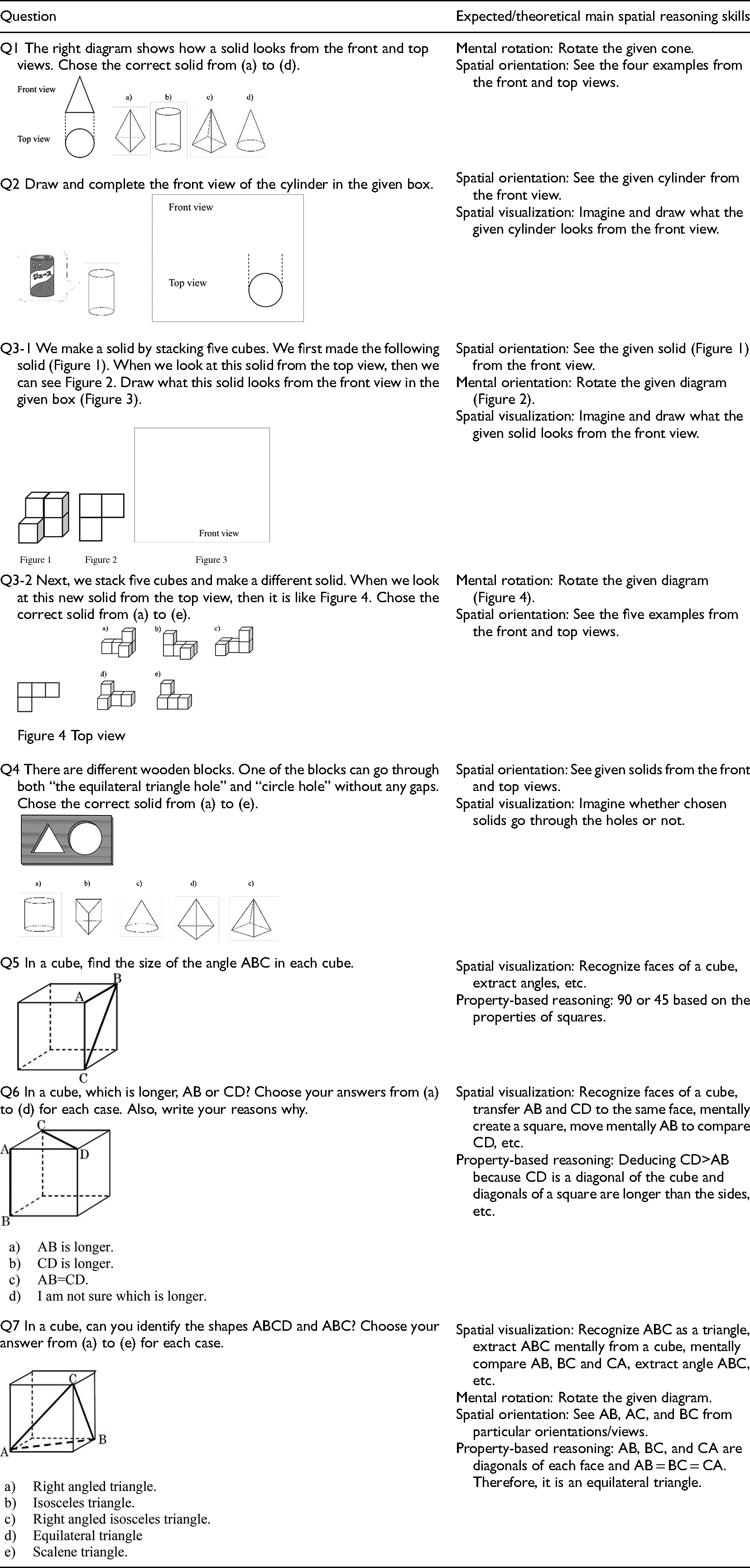
Survey items for primary school students (Grades 4–6).
Survey items for secondary school students (Grades 7–9).
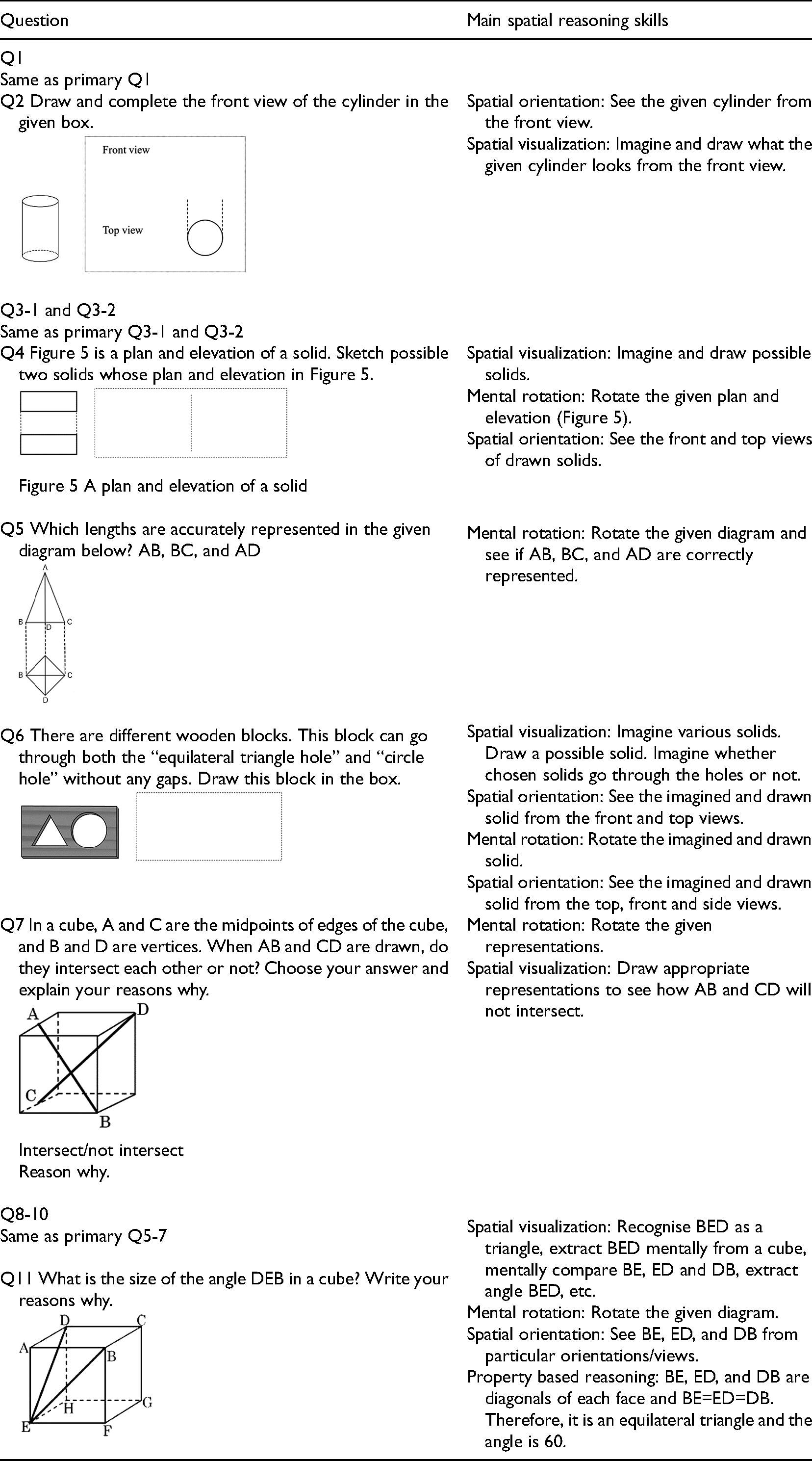
Another important characteristic of spatial reasoning skills is their malleability (Uttal et al., 2013), implying that spatial reasoning skills can be improved using appropriate teaching and training. For example, Bruce and Hawes (2015) focused on mental rotations and implemented various activities requiring mental rotations in a form of daily lessons. Their study found that after 4 months, 42 students aged 4–8 years significantly improved their mental rotation skills. Lowrie et al. (2018) implemented a 10-week intervention program to Grade 3–6 students. The students who experienced various tasks based on mental rotation, spatial orientation, spatial visualization, and their spatial reasoning skills improved significantly compared to the control group. Sinclair et al. (2018) provide a detailed analysis of young children's drawing processes and stated drawing can contribute to developing their spatial reasoning by enriching the use of language and gestures. Haj-Yahya (2021) reports providing more diagrammatic information might help learners’ problem-solving with 3D geometry (e.g., Q11 in this study), indicating different perspectives might minimize the visual perceptions which can be obstacles, but scaffolding their spatial skills such as mental rotation or spatial orientation.
More recently, reviewing the existing studies Gilligan-Lee et al. (2022, pp. 1–2) summaries the following remarks:
Interventions based on concrete material might be more effective than using computers; Interventions should not be limited to early years, but older students also can gain from spatial reasoning interventions; and Even a short-term intervention can be effective to improve spatial thinking skills.
These points are consistent with our previous studies as well. For example, in our previous study, we implemented a research lesson using Q11 for a Japanese G6 classroom (Fujita et al., 2020). We observed the students in the class used various approaches to solve problems, and they stated various answers, for example, 90, 45, 60, etc. After exploring their answers and reasoning in small groups, using practical resources, they started focusing on key geometrical properties (such as properties of diagonals of the face of a cube), and they managed to understand the angle size is 60°. Although the students experienced only one lesson there was a significant difference compared to the posttest conducted 1 month after the research lesson.
In summary, in this article, we regard spatial reasoning skills to be malleable and can be improved with teaching/interventions and the expected skills which students use in their problem-solving in 3D shapes are shown in Figure 1.
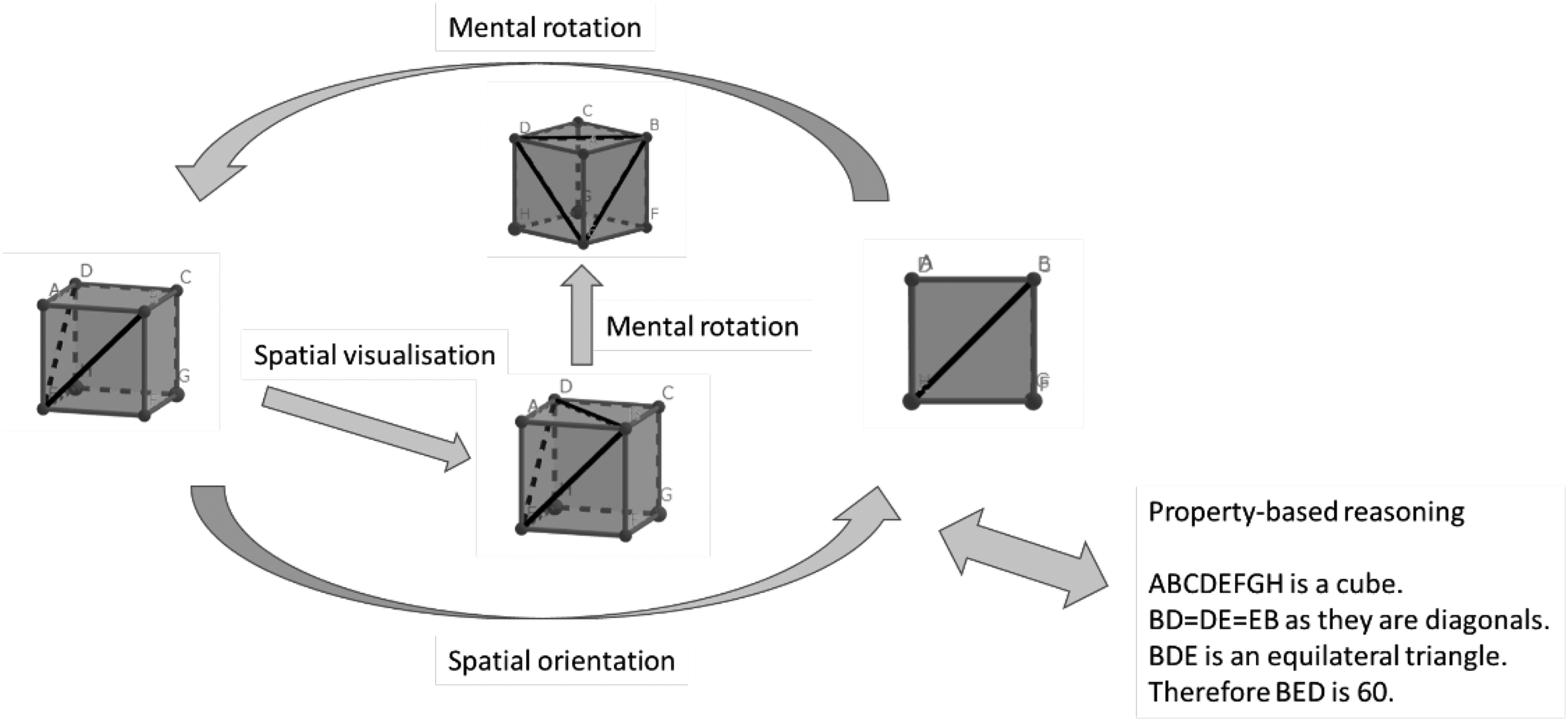
Expected spatial reasoning skills in three-dimensional (3D) geometry.
In this study, we try to identify “core” spatial skills as those which might be particularly related to students’ successful problem-solving in 3D geometry. We achieve this by analyzing the survey data with 2,303 students from G4 to 9, and in the next section we shall describe our methodological approaches.
Context, survey items, and participants
In the previous studies (Fujita et al., 2020, 2017), we mainly investigated students’ problem-solving with oblique parallel projections of cubes. Extending these studies, in this article, we also started investigating students’ understanding of the plan and elevations of 3D shapes as well as 3D geometry problem-solving in Japan. Overall, both orthogonal and oblique parallel views are used. For primary schools, Q1 to Q4 are related to the plan and elevations and the last three questions are problems using oblique parallel projections, taken from Fujita et al. (2020). Primary school students do not learn the plan and elevations, but we expect they would solve these questions using their spatial reasoning skills. Details for the question items and expected/theoretical spatial reasoning skills used to solve each question are listed in Table 1.
Students in secondary schools learn 3D geometry including plans and elevations in mainly G7. G9 students also have opportunities to apply the Pythagoras theorem to problems in 3D contexts. For secondary school students, Q1, Q3-1, and Q3-2 are the same as the primary school question items. For secondary Q2, the diagram is simplified. Also, a few more items are added to examine their spatial reasoning skills (Table 2). For example, Q4 for secondary asks to draw possible two solids from the given side view, expecting to see if students can utilize their visualization and manipulations. In Q5, students are asked to judge which lengths represented in the diagram preserve the actual lengths (e.g., AD is not). Q6 also appears in the primary schools’ survey as their Q4, but secondary students are asked to draw a solid which can go through exactly both holes. Q7 asks if two lines in a cube intersect or not, and we expect that students would draw additional diagrams to explain why. Q8-10 for secondary schools are the same as those in Q5-7. The last question Q11, which asks students to find an angle in a cube is added, is also used in our previous studies (Fujita et al., 2020, 2017).
Participants
From February to March 2021, a survey was conducted with 273 G4, 318 G5, 230 G6, 512 G7, 478 G8, and 492 G9 students (in a total of 2,303) aged from 10 to 15 years from state, nonselective 4 Japanese primary and 4 lower secondary schools in 4 different cities in Japan. These schools were recruited through the authors’ contacts. The study aims and survey procedures were explained to teachers, and then they agreed to participate in the survey. The period from February to March was chosen as students in each grade have experienced the prescribed mathematical curriculum (the Japanese school academic year is from April to March). The survey question items were directly distributed to the students by their class teachers with paper forms, and in general, students completed answering them within 30 min.
Analysis procedure
While we take all survey items are important, we are curious if we could narrow these question items down to a few items which might be related to “core” spatial reasoning skills. We take the following stages of the procedures in this article: (a) Descriptive statistics; (b) 2PLM analysis; and (c) Experiments with the Pearson correlation coefficient.
First, we provide descriptive statistics results from our survey items. These results are useful to know what kind of question items our sample students can solve, and what might be challenging.
Our next step is to identify question items which might be seen as “core”. However, this is not an easy task. For example, suppose we have fifteen question items in our survey. Then theoretically, we can extract 1, 2, … 14 question items, but it is not reasonable to test all cases as there are too many possible combinations to be tested. To cope with this methodological challenge, in our second stage, we create an 821 × 9 matrix for primary and a 1482 × 15 matrix for secondary schools with binary (not correct = 0, correct = 1). Data for both primary and secondary schools can be obtained from https://doi.org/10.6084/m9.figshare.20496906.v1 (primary) and https://doi.org/10.6084/m9.figshare.20496915.v1 (secondary).
Checking unidimensionality with eigenvalues, it was suggested both primary and secondary data can be treated as “uni-dimensional” (in primary schools, the first eigenvalue
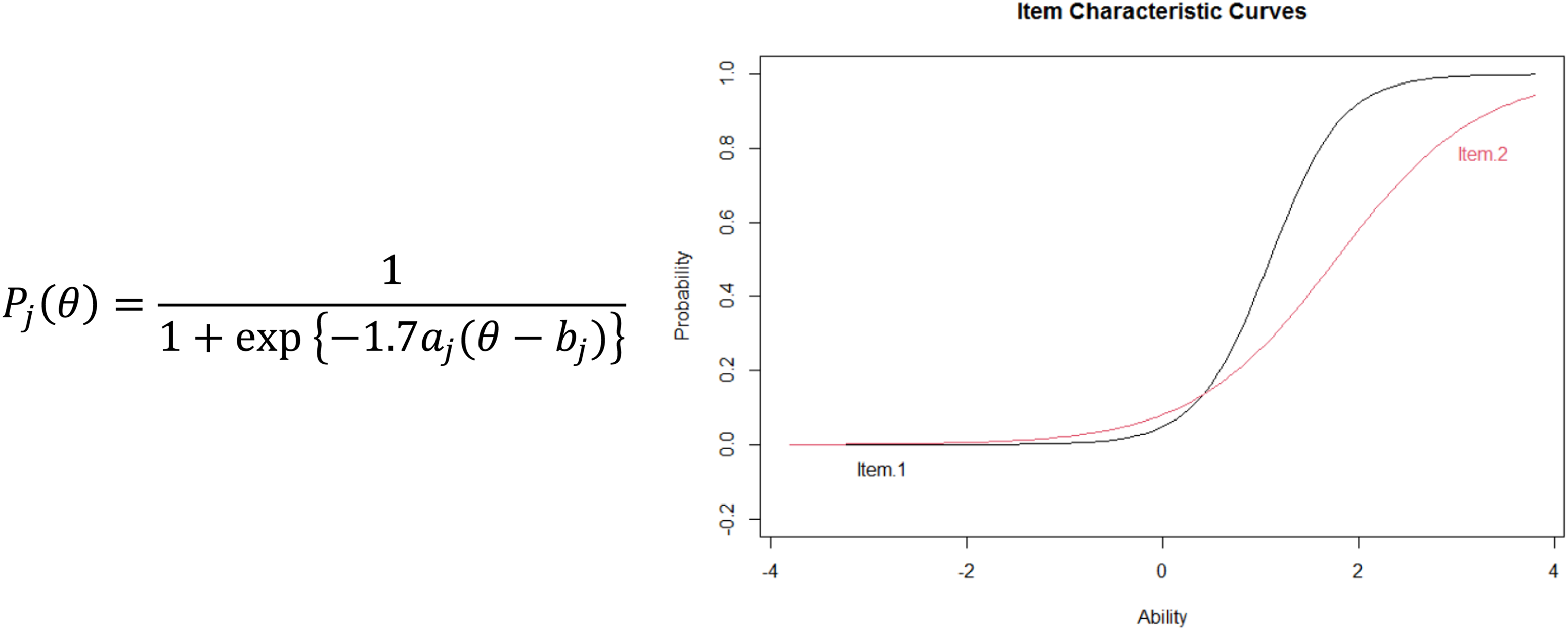
Example of 2-parameter logistic (2PL) model.
In order to extract some items from the whole survey question items, we particularly pay attention to the discrimination parameters aj, and see which items have higher values compared to others. A reason for using aj is that items with higher discrimination values are likely to be used to distinguish able/less able students from the sample.
Although analyses using the 2PL model provide a useful starting point for identifying items which might be “core”, we will also utilize the other value or criteria for our judgment. Thus, in the third stage, we divide the question items (set C) into two groups, set A from the extracted items and set B from the others (i.e., C = A + B), and calculate the Pearson correlation coefficient r between the sum of the scores of sets A and B. In this step, we use the following principles to identify items from our survey questions:
In this article, we apply this approach to our survey items and identify “core” skills and question items. The following sections present our findings, discussions, and implications.
Overall performance from the survey
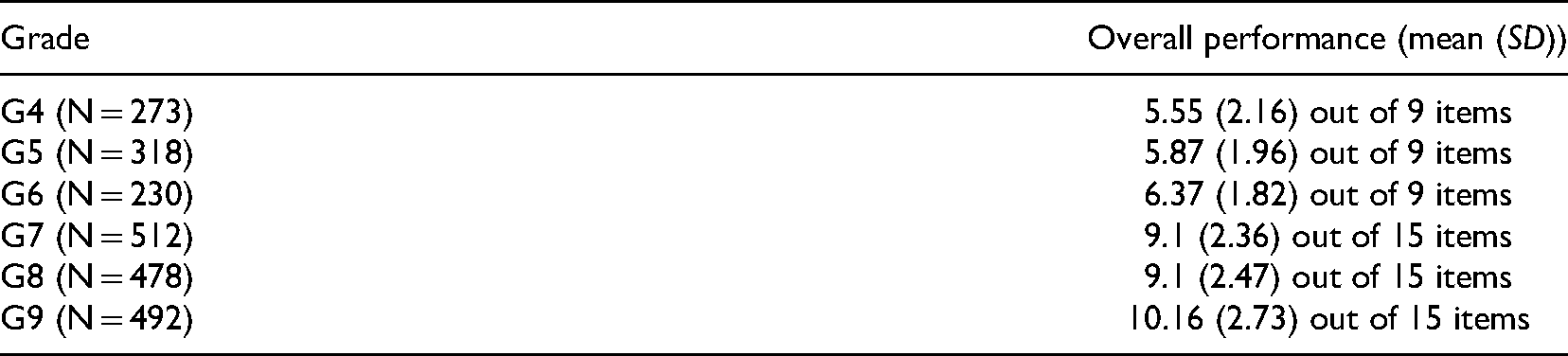
Table 3 summarizes the overall performance for each grade (primary for 9 items and secondary for 15 items).
Overall performance for each grade.
Overall performance for each grade.
These results suggest that the performance for the question items is relatively high, as above 60% out of 9/15 items for both primary and secondary. A one-way ANOVA with post hoc comparisons (Games-Howell) suggests that the score of Japanese G6 is statistically higher than G4 and G5 ([F(2, 818) = 10.867, p = .000, η2 = 0.026]), and similarly G9 is higher than G7 and G8 ([F(2, 1479) = 30.697, p = .000, η2 = 0.04]), indicating learning experience in G6 and G9 might contribute to developing their spatial reasoning skills (e.g., for G6 studying volumes of prisms and cylinders and for G9 applying Pythagoras theorem in 3D contexts).
Next, the results for each question item for primary schools are summarized in Table 4 (%s for correct answers).
Percentage correct for Q1-7 from primary schools.

In Table 4, primary school students generally answered the survey questions well, but they struggle to draw/sketch the front view of a cylinder (Q2) and see which shape would go through the two holes (Q4). In Q3-2 (identifying a block from a top view), it is interesting to see Q3-2c is more difficult than Q3-2d, Also, correct responses for Q6 (determining if CD is longer than AB) and Q7 (identifying triangle ABC) are relatively low, but this was expected from our previous study (Fujita et al., 2020).
The results for each question item for secondary schools are summarized in Tables 5 and 6 (%s for correct answers).
Percentage correct for Q1-7 from secondary schools.

Percentage correct for Q8-11 from secondary schools.

In Table 5, secondary school students demonstrate their skills for solving the first five questions (Q1-Q3-2d), but their performances dropped in Q4 (drawing possible two 3D shapes based on the given view), Q5 (judging actual lengths are correctly represented in the given diagram), and Q6 (drawing a possible 3D shape which goes through two different holes). For these tasks, not many improvements were observed across G7 and G9 students. Q7 is also interesting, and many students in secondary schools could not write reasons why AB and CD do not intersect. In particular, many students struggle to recreate appropriate drawings by rotating the given representation or seeing from a different direction. Q8 to Q11 performances (Table 6) are similar to our past research study (Fujita et al., 2020), and again finding the angle BED seems to be particularly difficult for even G9 students. In summary, our data suggest that both primary and secondary Japanese students could use their spatial reasoning skills to simple problems, but there are still some questions which are difficult for these students to answer correctly, which indicates further considerations are necessary to find ways to improve our students’ spatial reasoning skills.
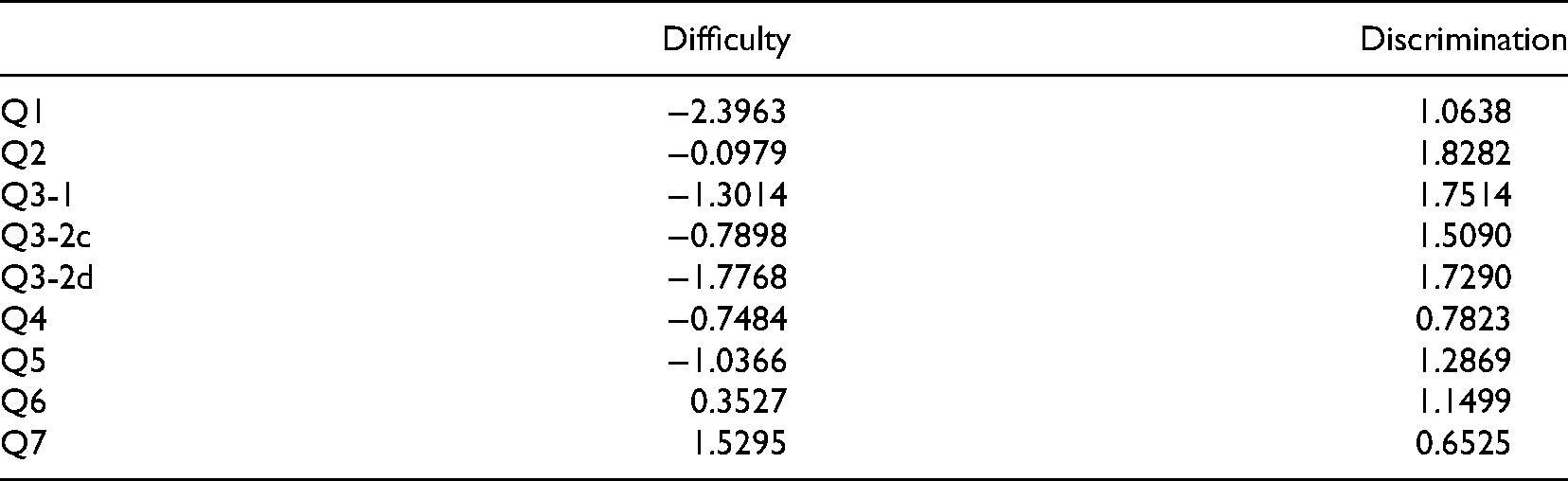
Having described overall performances, let us see which question items might be used to see “core” skills in spatial reasoning in 3D geometry. For primary school, set C consists of 9 items and 15 for secondary. In this section, we show which items are suggested to be related to the “core” in spatial reasoning skills. In order to identify the survey items which might represent the “core” spatial reasoning skills, we examined different combinations of some items based on the 2LPM analysis results (see Tables 7 and 8 which summarize the values for difficulty and discrimination parameters) and the three principles (theory, evidence, and “less is more”) proposed in this article.
Results from 2PLM analysis for primary schools.
Results from 2PLM analysis for primary schools.
Results from 2PLM analysis for secondary schools.
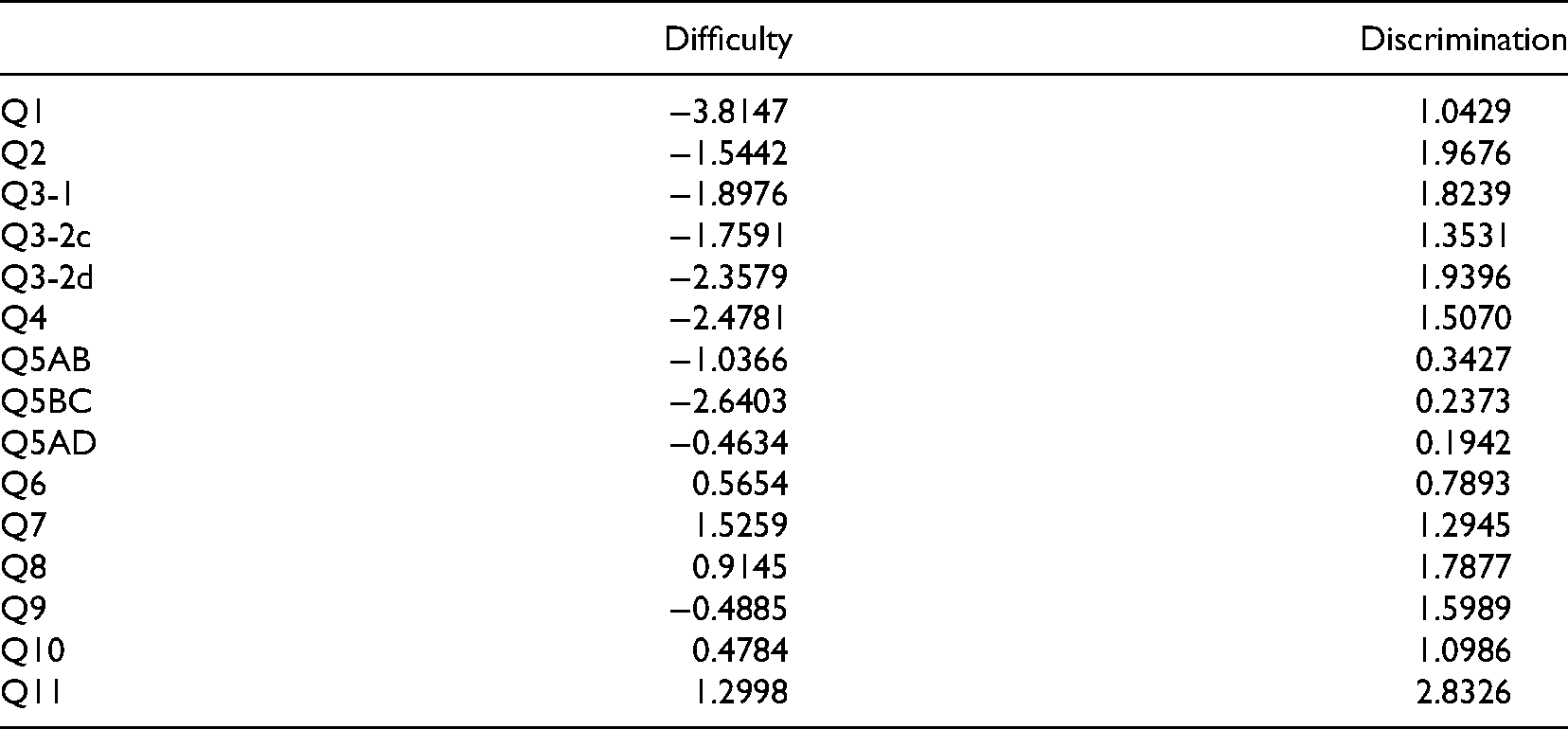
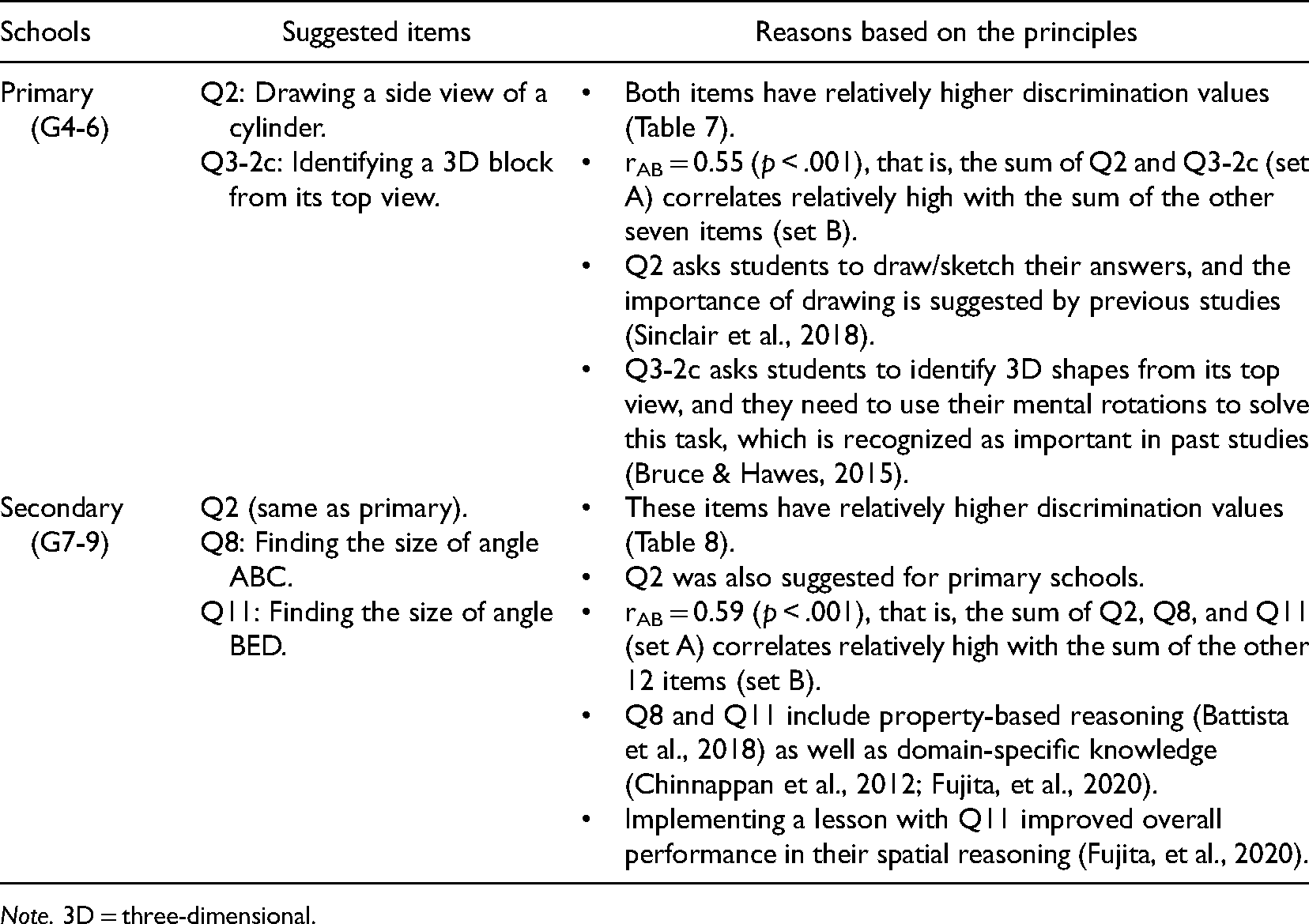
Table 9 summarizes the suggested question items and Figures 3 and 4 represent what our results imply.
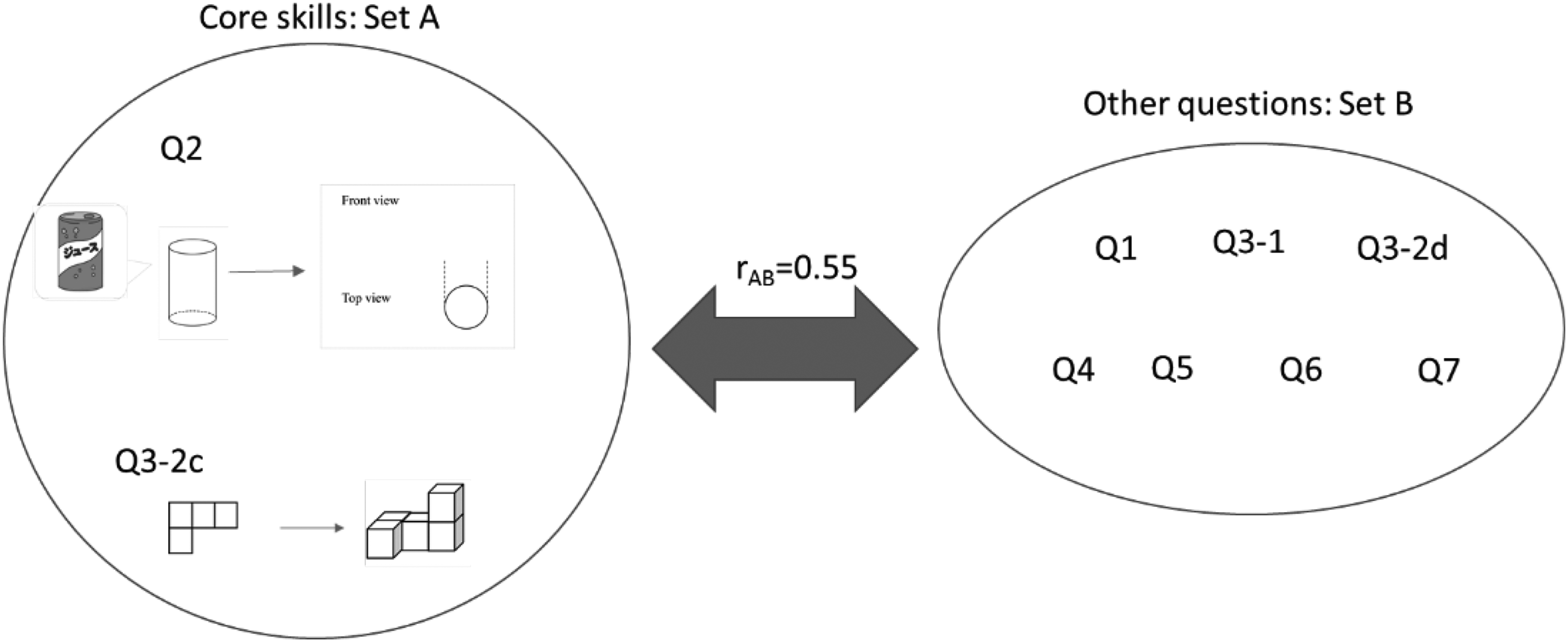
Core skills for primary schools.
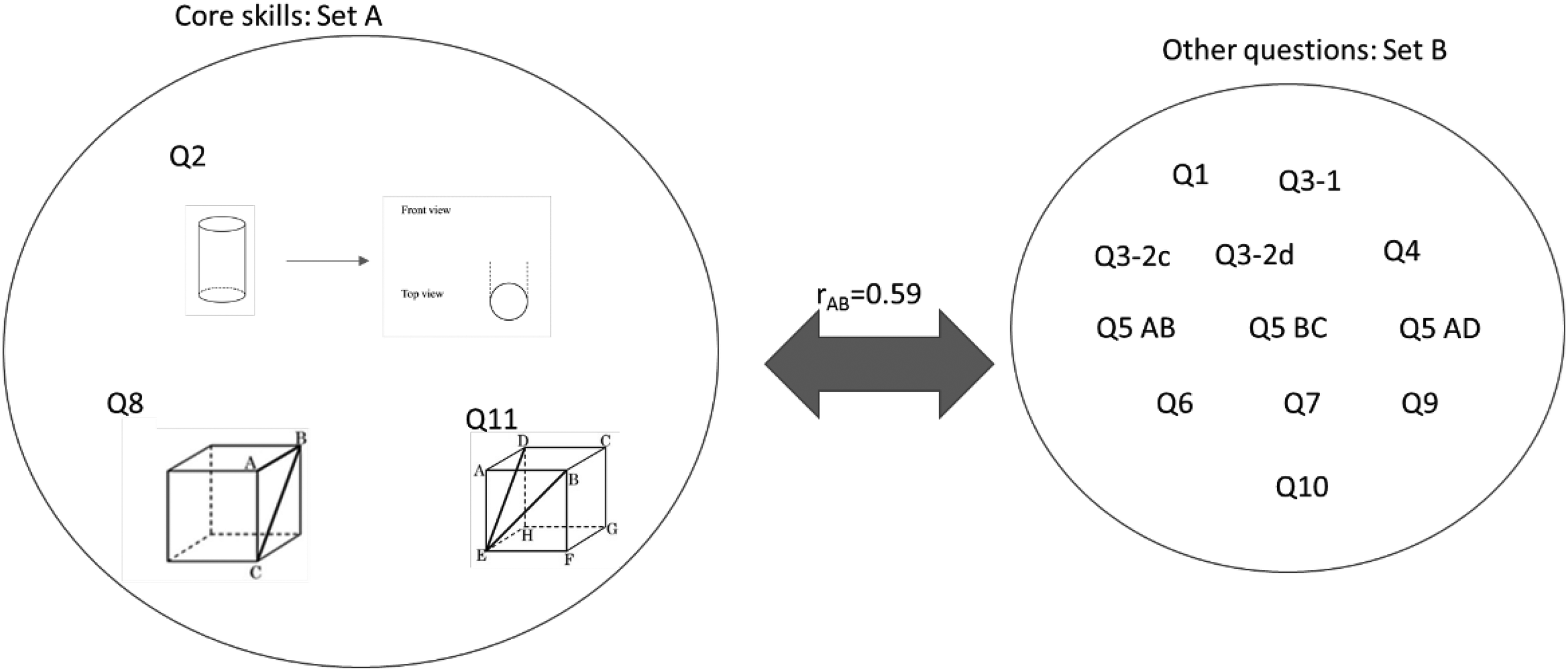
Core skills for secondary schools.
Suggested items which represent the “core” spatial reasoning skills.
Note. 3D = three-dimensional.
The results indicate a few remarks:
For both primary and secondary, Q2 is suggested as one of the items which might represent a core skill. This question asks students to draw a cylinder from a front view. Although this is a simple task, about 40% of G6 could not draw it accurately, and about 10% in secondary. The expected skills might be visualising a cylinder and deciding how it might look like from a front view (spatial orientation/mental rotation), and drawing it, which is suggested as important by Sinclair et al. (2018). Q3-2c is also suggested for primary students, and this requires students to use mental rotation as well as spatial orientation to check, for example, the right-hand side blocks. These skills are mentioned as important in past studies (Bruce & Hawes, 2015, for mental rotation). For secondary Q11 is suggested. This is a difficult task to answer for the students, but as reported in our previous studies (Fujita et al., 2020, 2017), this task contains rich information about how students use their spatial skills such as spatial visualization and mental rotations as well as property-based reasoning. We also have further evidence implementing this task might contribute to improving spatial reasoning skills (Fujita et al., 2020). Therefore, answering this question item correctly might indicate that such students could use their skills more effectively than the others who could not.
Also, relatively high correlation coefficients might suggest that if students could answer these questions correctly, then they might be able to use their spatial reasoning skills well, and as a consequence, they are likely to answer the other questions correctly. What the results are implying is that the spatial reasoning skills to be used for answering these chosen items might be particularly important for successful problem-solving in 3D geometry.
This article aimed to identify “core” spatial reasoning skills which are likely to contribute to successful problem-solving in 3D geometry. Spatial reasoning skills are theorized as spatial visualization, mental orientation/mental rotation, and property-based reasoning (Battista et al., 2018; Lowrie et al., 2018; Pittalis & Christou, 2010, 2013). Based on this, 9/15 survey items were designed and implemented for in total of 2,303 Grade 4–9 students in Japan. To provide answers to our research question “What question items might be related to ‘core’ spatial reasoning skills when students solve 3D geometrical questions?”, we took an explorative approach and identified a few question items from our survey using 2PL approach with the three principles.
By answering our research question, the analysis suggests that a set of a few tasks can be used to check if students have “core” spatial skills in 3D geometry. For both primary and secondary, rotating given representations mentally, and imagining and drawing 3D shapes are important, and for secondary schools, property-based reasoning is also crucial for further problem-solving skills. Previous studies have identified these skills are indeed important (Bruce & Hawes, 2015; Fujita et al., 2020; Lowrie et al., 2018; Sinclair et al., 2018), and the results of this article provide more concrete, tangible ideas for what tasks can be used to develop foundations of spatial reasoning skills in 3D geometry, including some problem-solving tasks.
Our findings and methodological approach have strong implications for mathematics education research and practice (and hopefully beyond), which has been identified as a research area for further studies (Sinclair et al., 2016). Spatial reasoning skills are malleable (Uttal et al., 2013), and our results provide clear, and promising principles for task/units/curriculum design for spatial reasoning in which more robust teaching intervention is necessary (Gilligan-Lee et al., 2022). For example, Bruce and Hawes (2015) found that teachers are capable to design effective tasks in spatial reasoning. However, their study was limited to mental rotations and it is still very difficult how and in what order tasks can be implemented. Advancing this point, we could organize a sequence of a teaching unit for spatial reasoning skills, as shown in Figure 5. In stage I, tasks such as Q2 or Q11 can be used to check to what extent students have or use their spatial reasoning skills, indicating that first and foremost we can check if students could use mental rotations, spatial orientation and spatial visualization for simple problems (e.g., Q2 andQ3). Q11 can be used to provide opportunities to explore not only different spatial reason skills but also use domain-specific knowledge. Considering the studies such as Sinclair et al. (2018) or Gilligan-Lee et al. (2022), practical experience such as drawing, constructing, and making. Then in stage II, their skills can be further consolidated by undertaking tasks such as Q3, Q7 (primary), or Q4 (secondary), which are similar to stage I tasks (and a correlation value is not radically different if we add these questions to Q2 and Q11). Finally, in stage III, students can apply their skills with more challenging questions such as Q6 (secondary) and Q7 (secondary). Considering that even a short time of intervention can be effective (Gilligan-Lee et al., 2022), We could implement an intervention for a period of 1 to 2 weeks for around G6 or 7, in which is a good time to intervene as questions such as performances for Q7 (Q10 secondary) do not make progress for almost 3 years (see, e.g., Tables 4 and 6).
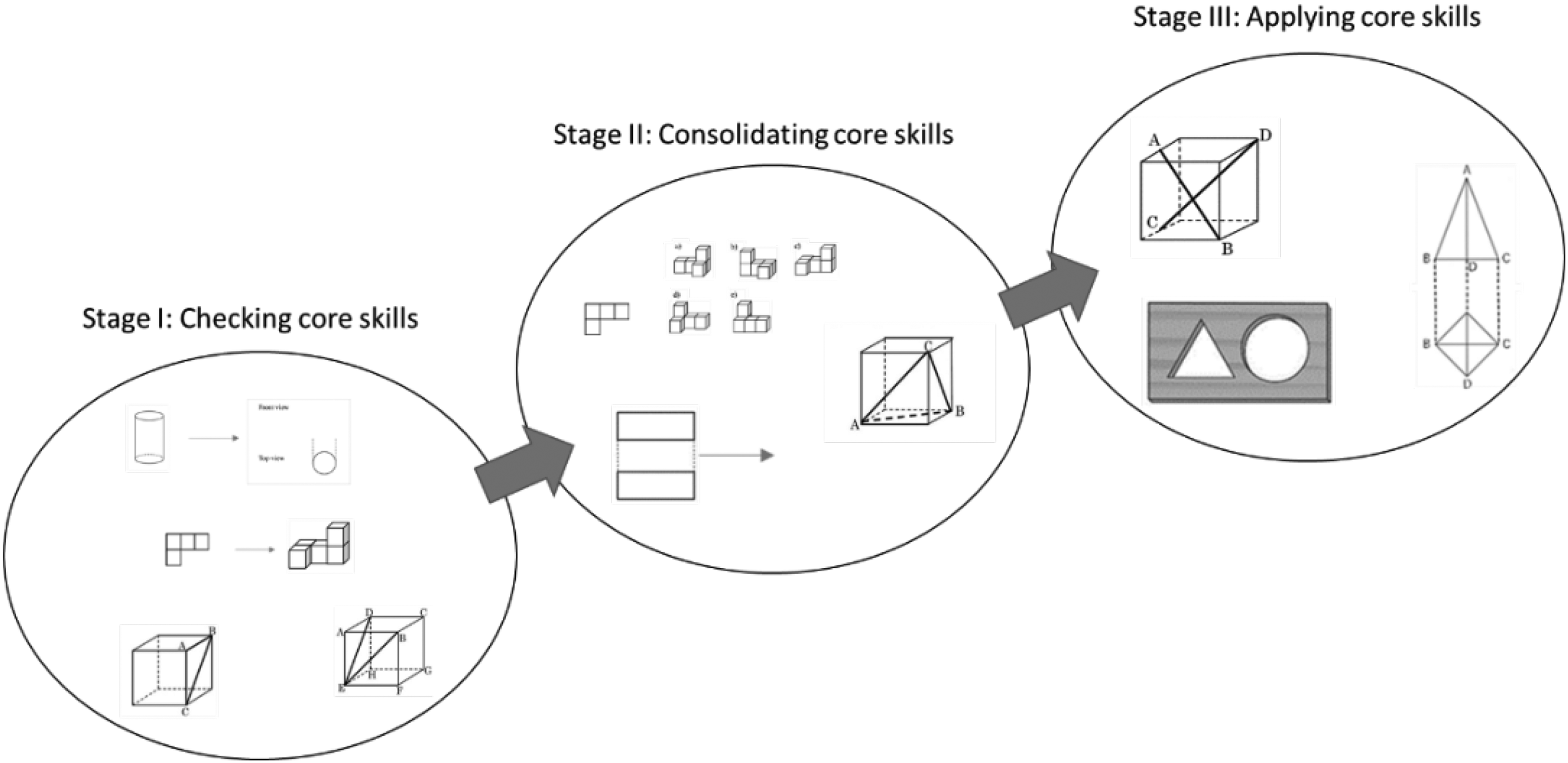
Proposed teaching trajectory for spatial reasoning.
We acknowledge the results and the trajectory are based on our survey items, and this has certain limitations. Also, one might argue that 9–15 questions might not be enough for identifying “core” skills. Also, these results might be particularly appropriate only for Japanese students. While we accept these points, we believe the question items used in our study are not radically different from the previous studies in spatial reasoning, implying we consider the methodological approach and the three principles can be easily applied to a new set of question items and non-Japanese contexts. Indeed, we are open to this further task, which we hope to undertake in our future work. Also, we are very curious about how we can apply our methodological approach to the other areas of mathematics, identify more clearly “core” skills for mathematics, which is another future task.
Contributorship
Taro Fujita: Conceptualization, methodology, data analysis, writing—original draft preparation. Yutaka Kondo: Conceptualization, data collection, and data analysis. Hiroyuki Kumakura: Conceptualization, data collection, and data analysis. Shinichi Miyawaki: Conceptualization, data collection, and data analysis. Susumu Kunimune: Conceptualization, data collection, data analysis, and supervising the project. Kojiro Shojima: Methodology, data analysis, and editing.
Footnotes
Declaration of Conflicting Interests
The author(s) declared no potential conflicts of interest with respect to the research, authorship, and/or publication of this article.
Funding
The author(s) received no financial support for the research, authorship, and/or publication of this article.
