




Abstract
‘Imposter syndrome’ (or ‘imposterism' and ‘imposter feelings') refers to the belief that one’s achievements are a result of luck or fluke, rather than effort or talent. Studies that show up to 70% of university students experience imposter syndrome, which is more pronounced in minoritised students. However, despite research examining racially and ethnically minoritised students, there is currently a lack of literature considering the South Asian population. It is important to explore minoritised groups separately, to understand the unique cultural pressures that groups experience. Therefore, we explored the imposter syndrome experiences of South Asian undergraduate students, using semi-structured interviews (n = 10). Our analysis generated three themes: (1) experiences of ‘academic othering’, whereby students experience prejudice from other students that hinders their academic experiences, (2) feelings of ‘culturally ascribed perfectionism’, which refers to pressures to attain academic excellence, typically from family members, and (3) a perceived need for ‘academic humility’, in which participants detect a cultural need to downplay their academic achievements. These themes are paradoxical; while students reported cultural pressure to perform highly academically, they also noted cultural pressures to minimise their achievements. Implications for equitable practice and policy in Higher Education are discussed.
The phenomenon of “imposter syndrome”, also referred to as imposterism or imposter phenomenon, refers to high-achieving individuals’ internal perception of their inadequacy (Clance and Imes, 1978). People who experience the imposter phenomenon typically do not internalise their own successes, often despite the presence of confirmatory evidence, and instead feel undeserving of their success (Barr-Walker et al., 2020; Calvard, 2018; Regan et al., 2020). Feelings of impostor phenomenon are prevalent in society affect 70% of the general population at least once (Sakulku, 2011) and up to 82% of professionals (Bravata et al., 2020). Importantly, there are vast negative outcomes of feeling like an imposter (e.g. Rivera et al., 2021), including negative mental health outcomes (Bravata et al., 2020; Parkman, 2016). Therefore, it is important to understand the factors that might contribute to feeling imposterism.
Clance and Imes (1978) originally conceptualised ‘imposter syndrome’ as a way to describe the experiences of high-achieving professional women. Since 1978, it has been broadened out to other populations. Imposter phenomenon is well-evidenced in undergraduate students and while reports differ, some studies suggest that up to 70% of all university students experience the imposter phenomenon illustrating its pervasive nature (see also Austin et al., 2009; Bernard et al., 2017; Bravata et al., 2020; Cokley et al., 2018; Jaremka et al., 2020; Joshi and Mangette, 2018). More recently, research has examined how minoritised students are more likely to experience impostor phenomenon and how they may experience exacerbated imposter feelings (e.g. see Cokley et al., 2017, 2013; Mullangi and Jagsi, 2019; Martinez et al., 2009). This has included specific studies that document the experiences of racially minoritised students (e.g. Kilby et al., 2022; Husbands et al., 2024).
However, is it important that researchers examine the unique experience of students who are racially minoritised. There are, for example, vast cultural, religious, social, and psychological differences that impact how minoritised groups may experience imposterism. It is also important that research does not treat minoritised groups as one homogenous group, and instead is attentive to nuances of cultural differences. For example, research suggests that sense of belonging to Black racial groups may be protective against feelings related to imposter feelings (Bernard et al., 2017). However, other research suggests that Black women students experience feelings of being an imposter in a contextualised way in university, which can impact feelings of authenticity (Husbands et al., 2024). A notable lack of research has examined how Asian students may navigate these experiences too. This is important, given the unique stereotypes that Asian students experience, more broadly (Le, 2019).
This study focuses specifically on the experiences of South Asian students to examine the nuances of this specific ethnic group. Indeed, research shows how South Asian students are stereotyped to be academically high performing (Le, 2019; Boyd, 2002, 2008; Boyd and Grieco, 1998; Reitz et al., 2011). Due to this, South Asian students are often referred to as a ‘model minority’ (e.g. Asher 2002; Bhattacharya, 2000; Li, 2005; Shankar 2008). That is, South Asian students represent an idealised academic repertoire for other minoritised communities to use as a reference of optimal standards (Ngo and Lee, 2007). The connotations of success attached to the term ‘model minority’ inevitably instils pressure on South Asian students to uphold such an image, which may contribute to perfectionistic tendances, thus heightening susceptibility to imposter feelings (e.g. see Bhardwaj, 2021; Dang, 2013).
There are unique cultural aspects that may exacerbate imposterism among this population. In South Asian culture, for example, there is a strong emphasis on the importance of education (Klassen, 2004; Purkayastha, 2005), which makes access to higher education highly anticipated (Zhou and Xiong, 2005). Second-generation South Asians, in particular, report facing pressure from their immigrant parents, whose motivation for migrating often centres on providing greater educational opportunities for their children (Bhattacharya and Schoppelrey, 2004; Taylor and Krahn, 2013). As a result, South Asian students are often burdened with navigating the pressures of achieving high academic standards while also pioneering a new way of life for their families. Further, research shows how South Asian students often defer to their parents for crucial career decisions, driven by the need to meet family and community expectations (Somerville and Robinson, 2016). This complex interplay of parental sacrifice, immigration motivation, and the pressure to conform may mean that South Asian students struggle to internalise and take ownership over their academic accomplishments, thus exacerbating vulnerability to the imposter phenomenon (Bravata et al., 2020; Sonnak and Towell, 2001).
There is a lack of research that examines South Asian students’ unique experience of the imposter phenomenon within higher education institutions. A notable exception is a study conducted by Cokley et al. (2013), which concluded that Asian students specifically experienced significantly stronger feelings of imposterism than other minority groups. The authors suggest that cultural drives for academic perfection may fuel these feelings (Cokley et al., 2013; Peng and Wright, 1994; Yoon and Lau, 2008). The relentless pursuit for perfection is driven by familial pressure and fixation on social status to uphold the label of ‘model minority’, exacerbating a sense of inadequacy and anxiety to fulfil such high expectations (Cokley et al., 2013). Despite South Asian students falling under the umbrella term of ‘minority’, there is a notable lack of literature specifically considering the manifestation of the imposter phenomenon in the South Asian population.
Therefore, while there is a plethora of research considering the imposter phenomenon in students, including specifically in minority students, there is a paucity of research that considers South Asian student’s experiences of imposter feelings. Thus, this novel study aims to fill this noticeable gap bridging these two areas, seeking to investigate the experience of the imposter phenomenon within South Asian students navigating higher education.
Method
Design
This exploratory study adopted a qualitative, reflexive research design, facilitated by idiographic, semi-structured 1-to-1 interviews. This allowed for rich, insightful data to be collected, in order to comprehensively understand participant’s experiences of the imposter phenomenon (Luthans and Davis, 1982).
Participants
Ten participants aged 18–22 were recruited, all of whom were South Asian students currently studying at a UK university. The sample comprised nine women and one man. Eight participants identified as British Pakistani, one as British Indian, and one as Indian. Participants were enrolled on a range of degree programmes, including pharmacy, economics, geography, and psychology. All participants attended Russell Group universities: seven were based in universities in the North of England (West Yorkshire), two in the South East of England, and one in the North East.
Ethics and recruitment
The current study obtained ethical approval from the University of Leeds School of Psychology Ethics Committee on the 13/11/2023 (Ethics Reference Number: PSYCETHS-736) and adhered to the BPS code of Human Research Ethics (2021). Recruitment employed volunteer sampling, with advertisements distributed through the University of Leeds participant pool, email listings, social media sites, and word of mouth. Participants were incentivised with a £10 amazon voucher, or four participant pool credits. The ‘participant pool’ is a system whereby students gain online points for participating in online studies within the university.
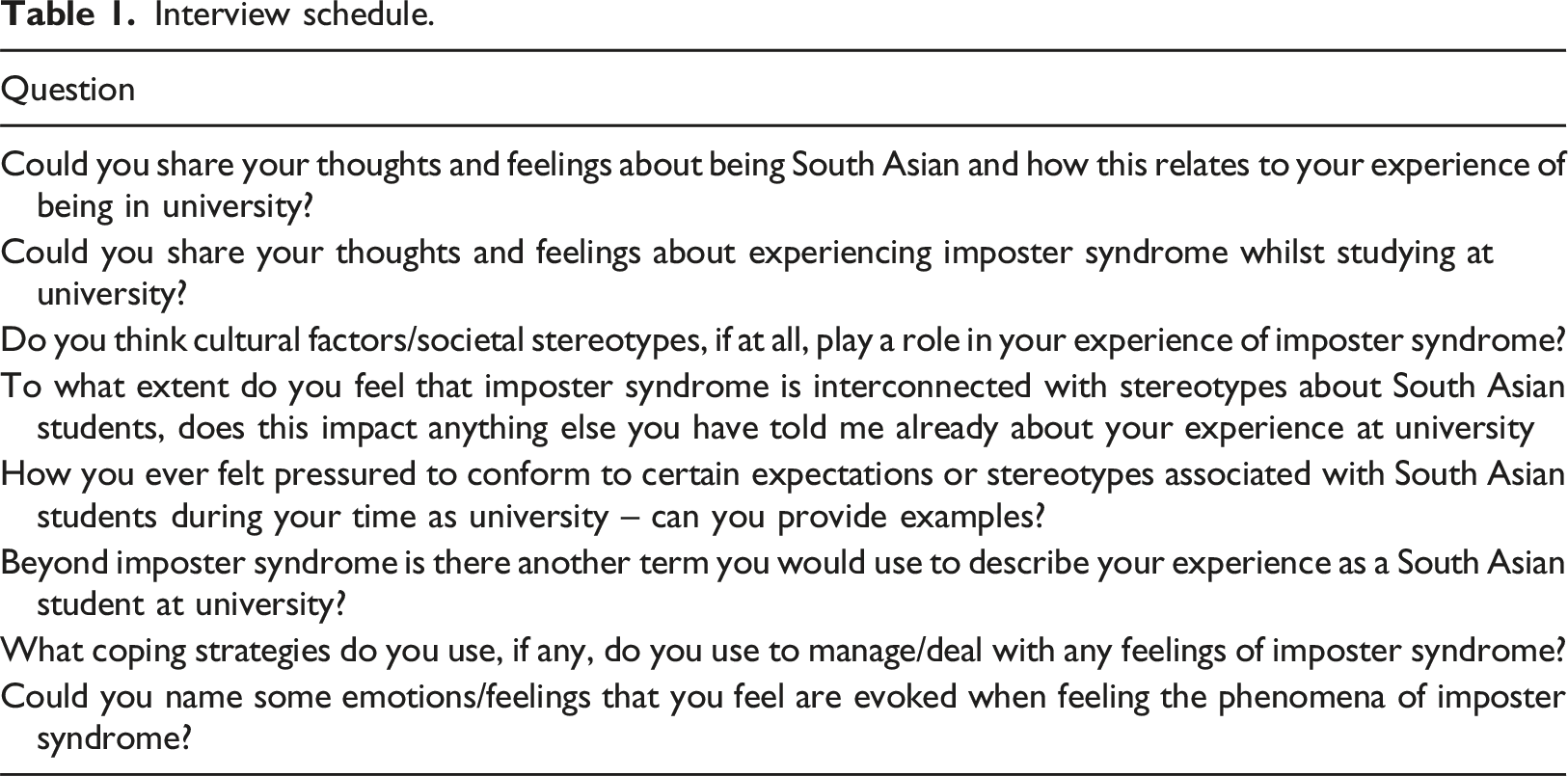
Interview schedule
Interview schedule.
Procedure
The current study employed a semi-structured interview design, the interviews were 1-to-1 and were conducted using the online platform MS Teams, via video call, enabling optimal comfortability, flexibility, and accessibility (Hanna, 2012). No interview was longer than 60 min. The questions aimed to cover variety of aspects of the imposter phenomenon, intending to grasp a comprehensive understanding the unique experiences of South Asian students in higher education.
Data preparation
Interview recordings were converted into orthographic transcription were recorded in a structure reflecting the format of a play-script (Jefferson, 2004), allowing for the recording of verbatim, reflecting authentic articulation of participant responses. This also includes non-verbal cues such as tone, pauses-elicited by (.) and (,), laughter, and gestures-indicated by double brackets – which effectively optimise interpretation of data (Braun and Clarke, 2013). Line numbers and double spacing were also adopted to increase efficiency of the analysis procedure, transcriptions abided by the guidelines proposed by DuBois et al. (1993).
Method of analysis
This study employed reflexive thematic analysis for the analysis (RTA; Braun and Clarke, 2019). Initially, transcripts were read multiple times. This prolonged exposure to participant experiences enhances quality of analysis (Terry and Hayfield, 2020). Following transcript reviewal, key themes were identified. RTA views researcher subjectivity as an analytical research, which allows for researcher's personal positionality to be contextualise and situate the analysis process. Therefore, generated themes are uniquely formulated around our subjective interpretations as the researchers (Braun and Clarke, 2019). These themes do not follow a pre-established framework, they were generated by the researcher, and reflect the findings of a wide, inductive approach emphasising researcher interpretation and inferences. Thus, both semantic and latent themes were identified.
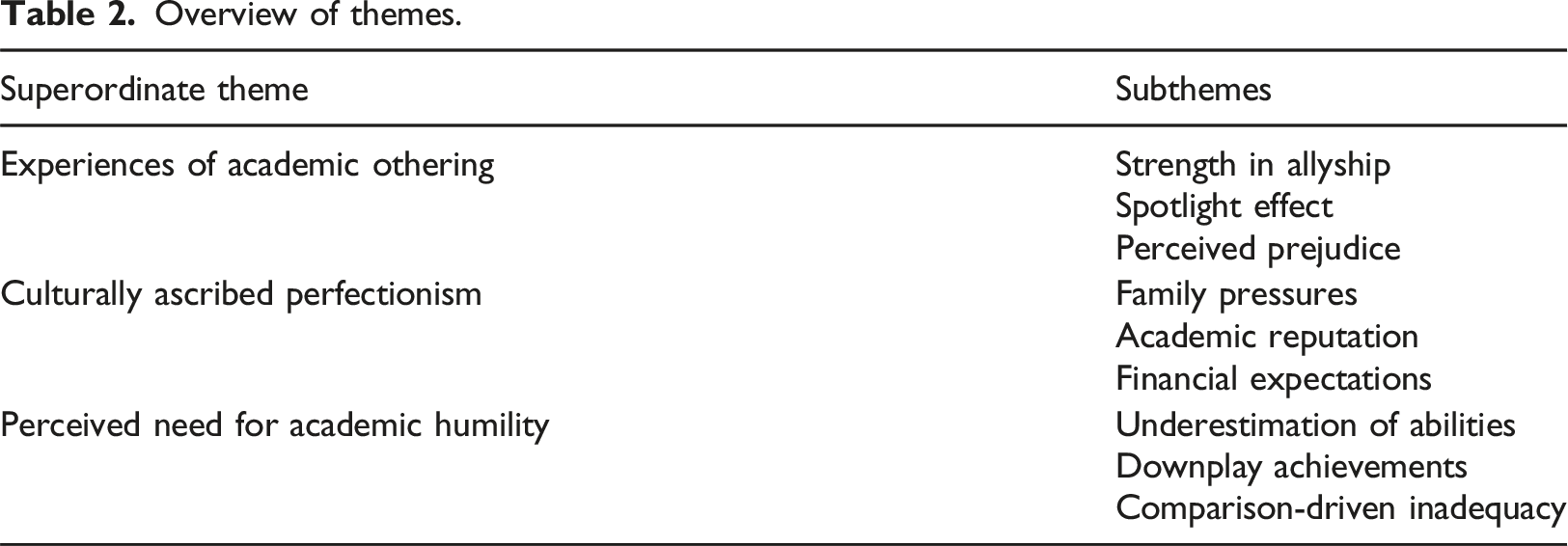
The initial stage of analysis entails open coding, of which, inceptive comments, observations and impressions were recorded and highlighted on the left of transcripts. Preliminary themes were subsequently identified in the right-hand margin of the transcript, reflecting recurring patterns, ideas, and concepts. These observations and associated quotes then facilitated brainstorming to generate core themes relevant to the research question. Further reviewal of transcripts offered clarification of any ambiguity and refined recurring concepts into potential subthemes. Filtration of concepts occurred, with some ideas dismissed if they were not deemed relevant, whilst others were consolidated into more prominent themes. Further brainstorming and mapping occurred ensuring alignment and accuracy between themes and data, preventing premature classification of themes (Terry and Hayfields, 2020). This iterative process led to the establishment of three superordinate themes, each with subthemes.
A note on researcher positionality
Assuming the role as researcher conducting this study, it is important to acknowledge the author’s positionality within the research area, to provide analytical context. The lead author (N.A) is a female PhD researcher who identifies as a British Pakistani, and thus has South Asian heritage. Despite sharing the same ethnicity as many of the participants, her livelihood and upbringing are distinct from typical of South Asian cultural practices, due to her upbringing in a predominantly White area, compounded with a deliberate lack of adoption of Pakistani cultural traditions within her household. Therefore, she considers herself to be neither an in-group nor out-group member, which is a benefit to the study, because it allows her to empathise with and understand the experiences of the participants, through exposure to South Asian traditions via friends and extended family. The second and third authors (M.P and R.H) are White academics who supervised the project. While they do not have direct ‘insiderness’ to the study, they both are curious about the cultural nuances of how imposterism manifests in undergraduate students and are pedagogically critical of the homogeneity of some imposter syndrome research (see Pownall, 2015) and thus brought this lens to the analysis. The first author conducted the analysis and discussed codes and theme generation with the rest of the research team.
Results
Overview of themes.
Theme 1: Experiences of academic othering
The first theme relates to the ‘experiences of academic othering’ that participants reported throughout the interviews. Participants expressed the difficulty of feeling that their contributions were not valued as much as the white majority of the student body, due to the inevitable cultural differences. One participant, for example, articulated that it was easy to feel as though ‘your opinion is not worth as much as say the other student’s opinions’ (Participant 7: 76), illustrating a feeling of dismissal, which led to a compulsion to’quiet down [my] opinions […] so I might not be[ … ]different to other people’s’, due to not wanting to stray away from the ‘normative way of thinking[…] especially in a white class’ (Participant 3: 171–176). This perceived need to dilute contributions in discussions, due to an apprehension to deviate from dominant Western norms amplifies feelings of alienation and disconnect. Shared experiences cultivate a supportive network which can be useful to protect against imposter feelings.
Subtheme 1: Strength in Allyship
Across the interviews, participants explained how academic ‘othering’, or feeling different to the White students on the course, can be attenuated by finding allies. Such allies were typically found in the company of other South Asian students; for example: “Getting other people’s perspectives, that usually helps when someone says you know I’m going through the same sort of things. It makes me feel a bit better” (Participant 5: 627).
This highlights the reassurance provided from the exchanges of experiences. This camaraderie and mutual empathy served as a powerful buffer against the negative effects of the imposter phenomenon, alleviating feelings of isolation and marginalisation. Another participant reinforced this notion: “I also speak to other people and I get a lot of relief when they have the same worries and issues that I’m having” (Participant 6: 151-152).
The ability to share experiences offers a vital sense of support and community, reassuring each other that they are not alone in facing cultural identity-related challenges while studying at university. This can protect against feelings of imposterism and promotes student’s ability to internalise their successes.
Subtheme 2: Spotlight effect
Within the theme of ‘academic othering’, participants frequently expressed feeling like they stood out due to being in the minority, feeling as if they are “the only person there, yeah that that’s probably the best way to describe it. I’m just. It feels like I'm the only one there and have totally different ideas to everybody else.” (Participant 5: 39–41), and consequently “[…] feel out of place especially on the days where I’m kind of attending, like just by myself and my friends aren’t with me” (Participant 10: 49–51).
This experience of standing out was likened to that of a spotlight, overestimating the level of attention directed towards them. This stems from an inability to relate to the White majority cohort as when ‘[…] looking around the room I feel like I don’t fit in here’ (Participant 7: 330).
This lack of relatability led participants to feel a lack of belonging, exacerbating their perception of being the: “only one there” (Participant 5: 40). as they do not “fit the mould, most subjects of conversation feel like they are geared towards like white middle class people or something, I feel like urm I am the only one” (Participant 5: 553–555).
Thus, participants reported feeling like an outsider within their university institution due to a lack of inclusivity. In the same vein, South Asians participants expressed that they “missed seeing more faces like mine during my undergrad, I just wanted more faces like mine” (Participant 6: 120–122)
This would reduce the experience of the imposter phenomenon. This notion is applicable on a student and staff level, with the lack of representation reiterating the sentiment that South Asian participants are ‘not in the right field’ (Participant 7: 452), thus hindering their goals for career progression due there being ‘so few South Asian’s […] in senior leadership roles and as lecturers’ (Participant 6: 119-120). Feeling as though participants are the only South Asian in their cohort and within staff alike heightens feelings of marginalisation on a social level and diffuses into their future career prospects, implicating career trajectories due to the lack modelling that academia is an inclusive, diverse environment.
Subtheme 3: Perceived prejudice
Finally, within the theme of ‘academic othering’, participants also described explicit instances of perceived prejudice at university. The lack of commonality with the white majority of students was particularly felt, through implicit, non-verbal cues interpreted as ‘not [being] what they’re kind of used to and there’s like some sort of like social friction going on with that, yeah’ (Participant 5: 66-67).
Participants throughout the interviews discussed the importance of acknowledging that this is never direct, but rather a more racially-motivated and subliminal “[…]energy that comes around it “of which “ [one] can tell when someone has “a bad vibe against you” (Participant 3- 217–219).
Despite nothing outwardly being said, this perceived prejudice due to being South Asian was inarguably experienced; for example: “nothing was said outwardly, however, you would feel it, especially in person” (Participant 5: 111). This ‘sensing’ of prejudice contributed to feelings of academic othering.
The overarching theme of ‘academic othering’ was common among participant’s experiences of imposter feelings, often discussed as overlapping with related constructs such as perfectionism and self-esteem. These feelings, though distinct, frequently intersect and reinforce one another, suggesting that low self-esteem contributes to feelings of inadequacy, which drives imposter feelings. Participants reported an internal monologue that continually minimised their own achievements, with a persistent sense that their accomplishments were insufficient or undeserving. As a result of this, participants frequently feared evaluation from others, particularly where they anticipated exposure of their perceived inadequacies. They often set exceedingly high standards for success, internalising their achievements only if they were flawless, and linking their self-worth directly to this perfection, ultimately resulting in feelings of imposterism.
Theme 2: Culturally ascribed perfectionism
The second theme revolved around the notion of perfectionism that fuelled imposterism beliefs, that was considered to be culturally ascribed. Participants spoke about how a ‘perfectionistic mindset’ was ingrained within the South Asian culture from childhood, in which they experience high stakes, pressure, and exacting standards across all facets of life, academically or personally. In the interviews, this was referred to as contributing to feelings of inadequacy, feeling undeserving, burnt-out, and a lack of internalisation of achievements. These standards act as a reflection of not only South Asian participants themselves, extending to a familial level, with the pressure to uphold and improve the reputation of their family unit.
Subtheme 1: Family pressures
The pressure from family members to excel in all areas, without complacency, signifies the experience of perfectionism within participants: “The South Asian standard is to be a well-rounded individual, performing well at school,[ …] your job[…]help parents in whatever way, around the house[…]” (Participant 8: 303–305).
Participants conveyed the idea that they cannot complain or struggle due to fact that most participants’ parents are immigrants thus, as one participant described, “it’s always, you know, in the back of my mind that my parents, you know, came here to give me a better life” (Participant 7: 152-153).
The inherent need to please family and meet their standards often preceded that of fulfilling one’s own goals; for example, one participant said that: “I wanna make my parents proud rather than I wanna make myself proud” (Participant 1:233), due to the perception that they have “[…]been handed golden opportunities that our parents, our grandparents would dream of” (Participant 2: 82–85).
Due to this, students reported feeling pressure from the family, for example:
‘South Asians face pressure from our family to excel academically’ (Participant 9: 60). Thus, exacerbating the belief that ‘I should not feel sad about something because of everything I have’ (Participant 2: 205), due to the perception there is no excuse to not achieve perfection due to the educational and opportunistic advantage of being born in the UK; thus succeeding becomes imperative: “I feel like my family are really like... instilled in me have to do the best (pause) like they put it into me that I have to be a high achiever” (Participant 3: 110-111).
Subtheme 2: Academic reputation
This notion of culturally ascribed perfectionism also played out in participant’s plans for their futures. All participants noted that, within South Asian culture specifically, there is a narrow view of career paths that are considered appropriate post-graduation, referring to a “cultural expectation to excel academically pursue certain fields of study, which can sometimes feel like a heavy weight on my shoulders” (Participant 9: 12-13).
This constriction is limited to careers such as: ‘medicine, engineering or law’ (Participant 10: 78-79), with a particular emphasis on healthcare and medicine. Participants recounted that their parents and other family members within the South Asian culture encouraged them ‘to go into, like, a healthcare kind of work’ (Participant 7: 251) as that these jobs are perceived to ‘provide security’ (Participant 2: 292).
This emphasis on healthcare careers is attributed to the lack of stability experienced by their first-generation immigrant parents, who hold the belief that that careers in healthcare assure security, allow for a better quality of life and are thus ‘more rewarding’ (Participant 3: 126-127).
However, imposing such a narrow parameter on participant’s future endeavours contribute another thread of pressure that
‘can become overwhelming and like you don’t know how yeah, you don’t know how to, like, get about it and handle it’ (Participant 3: 376-377), contributing another need to excel extending to, again, ‘uphold[ing] the families reputation and honour’ (Participant 3-116). Consequently, the exploration of other interests and pursuits is stagnated ‘because I’m supposed to follow this predetermined path of success’ (Participant 7: 82-83), if the participant was to deviate they would ‘face criticism’ (Participant 7-257).
Thus, emphasising the fact that adhering to these cultural expectations will allow for societal ease, as within the South Asian culture there is an ongoing dialogue regarding ‘what degrees are better’ (Participant 3: 133-134), and if one does not fit into the conventional career options, ‘you’re seen as a failure’ (Participant 7: 195). Such scrutiny and rigidity inevitably creates an internal conflict between one’s own wants and what the South Asian culture would approve of, creating a
‘struggle to balance [my] cultural identity with [my] own individual aspirations and goals’ (Participant 5: 91-92). A participant went as far as to state that as long as one is pursuing a career that is congruent with South Asian expectations, ‘even if you’re a bad person… you’re still gonna be praised’ (Participant 2: 141-142). This highlights the importance of abiding by South Asian norms regarding profession, arguably superseding that of morality and personal fulfilment.
Subtheme 3: Financial expectation
The pursuit of ‘perfectionism’ also comprised concerns for financial expectations. There was a notion throughout the interviews that the primary incentive of acquiring a university degree is financial security, arguing that ‘the whole point of a career is to earn’ (Participant 3-300-301), with there being an expectation to capacity to ‘…look after your parents, you know, provide financially’ (Participant 7-168).
The pressure to provide upon graduating has negative implications on the South Asian participant’s mental health, expressing that ‘it feels like the weight of the world is on me sometimes, yeah’ (Participant 2-348). Success, in the interviews, was perceived to be synonymous with financial affluency, ‘it’s being able to not just provide for myself, but to provide for others’ (Participant 5- 352). A potential reason for this emphasis on monetary stability has been attributed to the struggles their immigrant parents faced. Their financial hardship made these second-generation South Asian’s feel as though they were “not doing enough because I’ve [we’ve] been handed it” (Participant 2- 395)
Exacerbating the perceived need to be perfect, due to the eased access to education and opportunity. This financial burden is also extended through the pressure to pioneer a lifestyle change for their families, with participants experiencing pressure to not only ensure stability, but to also upgrade the lives of their family: “So I know for also for my other friends who are South Asian as well, for them university is like a really big opportunity for them to change like their who families lives basically” (Participant 8- 270-272)
The theme of perfectionism that was ‘culturally ascribed’ featured prominently in the interviews. South Asian students often reported feeling pressured to excel in every aspect of life, a pressure that is both self-imposed and reinforced by their communities. Perfectionism frequently fuels imposter feelings in these students, as observed in prior studies (Thomas and Bigatti, 2020; Wang et al., 2019). That is, the more students strive for perfection, the more they externalise their accomplishments, and feel undeserving or like ‘flukes’. The stakes of meeting cultural expectations are high and failure to meet these standards often results in both personal shame and potential damage to family reputation. Due to these cultural pressures, participants reported feeling obligated to present a ‘perfect’ image, fuelled by their perception of their parents’ significant sacrifices that facilitated their university place (Lightweis, 2014). This need to protect family honour and maintain a positive image discourages many students from internalising their successes and sharing their challenges, out of fear that it would lower their status or expose an inability to perform well. Research suggests that this reluctance to disclose vulnerabilities negatively affects both academic performance and mental health (Sy et al., 2011; Whitehead and Wright, 2017). Although some studies contend that striving for perfection can prevent dropout (Azmitia et al., 2018), others indicate that the lack of emotional support experienced by minoritised students detracts from academic performance (Jenkins et al., 2013). Future research should pay particular attention to how the constructs of perfectionism and imposter feelings may be culturally interlinked in this population (as per Flett and Hewitt, 2015; Newman et al., 2019).
Theme 3: The need for academic humility
Finally, the third theme that we generated was related to the cultural need to uphold academic humility, which contributes to paradoxical feelings of imposterism. In this sense, participants referred to pressures to minimize the extent of their successes and to mute down achievements, due to fear of being perceived as arrogant or unjustified in their celebration Attributing accomplishment to sources external to the self was also consistently reported, which contributed to imposter feelings
Subtheme 1: Underestimation of abilities
South Asian participants described a tendency to underestimate their abilities, questioning whether their achievements and successes were reflective of their capabilities, often attributing their accomplishments purely to luck, thinking that “I look back and I do think how did I win that award? How did I get that outstanding distinction? I don’t remember putting in all that effort so maybe it was like a fluke, or maybe they were just being nice to me” (Participant 6: 305–307).
The lack of self-actualisation denotes a distorted self-assessment, increasing susceptibility to imposter feelings, questioning themselves as to ‘how did I [even] get here?’ (Participant 6- 309). The feeling of being a ‘fraud’, fearing exposure for not truly deserving a place in university is compounded by
‘constantly second-guessing yourself and worrying that you’ll be found out’ (Participant 9: 115–117). Irrespective of how much success has been achieved, self-esteem prevails as unaffected as ‘Imposter syndrome still manages to creep in and cast doubt’ (Participant 9: 162–164).
This perception of inadequacy fuels a drive to overcompensate, allowing participants to feel as though they are worthy, deserving, and not admitted by assuming the role as the
‘diversity token in the room and that [I] kind of got chosen because I am South Asian and I represent the wider Bradford community’ (Participant 7: 206–210), and not off their own merits. This catalyses a desire to
‘put in a lot more effort, because I’m worries and scared…that if I was to put in a normal amount of effort, I don’t think I’d do well’ (Participant 5: 219–221), leaving participants to be “feeling very burnt out” (Participant 5: 587).
Another motivation to undertake surplus work is not only to feel on par with peers, but to also appease. The innate longing for approval is transferred out of homelife and into academic settings too, so much so that one
‘can’t say no to people if I’m being overburdened by work’ (Participant 7: 220). This inaccurate sense of inadequacy provokes a need to do more and “over-justify what I’m doing because [people might not perceive me as smart” (Participant 8: 92-93),
but also contributes to over-exertion of energy, inevitably leading to burn-out.
Subtheme 2: Downplay achievement
Across the interviews, participants spoke about how their imposter feelings prompted them to instinctively downplay their academic achievements. South Asian participants reinforce the belief that they are undeserving of their successes, by attributing achievements to external sources, that are independent of their own abilities. For example, when receiving a high grade, one participant attributed this to the notion that “it wasn’t challenging enough. I feel like it was just luck, I feel like, yeah” (Participant 2: 177-178).
This reflected an attitude that success was attributable to external factors, rather than individual competence. Participants expressed that South Asian culture encourages modesty, in which you are not supposed to “shout too loud when you win, don’t shout too loudly about it” (Participant 6: 287).
This further contributes to low self-esteem as when such high standards are met, these cannot be celebrated outwardly despite that fact that “you wanna scream but you have to be humble” (Participant 6: 293).
This again, prevents the internalisation of achievements, as validation or affirmation is refused, with it often feeling like “you’re supposed to be seen and not heard” (Participant 6: 328-329).
This mentality derives from childhood, of which it was expressed that, within the culture, it is encouraged to “be as small as possible and less of a problem to people” (Participant 6: 274-274).
This highlights the ideology that to seek support or to be more outspoken is viewed as a hindrance. Despite the pressure to achieve highly, once the expectations have been fulfilled there is a severe lack of acknowledgement and praise. This lack of validation will only feed into the internal monologue of inadequacy, and thus amplify the imposter phenomenon.
Subtheme 3: Comparison-driven inadequacy
Finally, within this theme, participants all articulated feeling undeserving of being at university, catalysed by comparisons with their peers. There is a tendency to put peers on a pedestal, with an ongoing thought that “there’s always other people on my course that seems like they know more than me” (Participant 5: 171-172).
Yet, such assumptions are baseless, formed without any evidence and are perpetuated through the persistent undermining of achievements by both the student themselves and their wider network. Notably, South Asian participants show an awareness of how detrimental constant comparisons can be. One participant, for example, said that such comparisons can “can make you feel depressed… and bogged down a bit” (654-655).
Finally, our analysis showed that despite high levels of academic success, participants’ perceptions of themselves remained distorted, often due to a perceived need to be humble and modest. Many interpreted this cultural need by displaying an inclination to downplay achievements, attributing their success to external factors like luck, which aligns with previous findings on the imposter phenomenon (Alsaleem et al., 2021; Ibrahim et al., 2020). This tendency to discount accomplishments unless they are exceptionally hard-earned further heightens susceptibility to imposterism. The fear of criticism and ‘exposure’ leads many to over-exert themselves in an effort to keep up with peers. Cultural comparisons within South Asian communities compound these issues, as students often present only the most favourable aspects of their lives, fearing rejection if they reveal a more authentic image (e.g., Pákozdy, 2024). Continuous comparisons can also reduce resilience to constructive criticism, as feedback is often interpreted as confirmation of personal inadequacy (Aruguete, 2017; Chapman, 2017). Consequently, participants often struggled to maintain an accurate self-perception, focussing instead on flaws that reinforced their feelings of an imposter. These comparisons were discussed as a fuel to imposter feelings.
Discussion
This study aimed to explore the imposter phenomenon as uniquely experienced by South Asian university students. We generated three dominant themes from the data: (1) experiences of academic othering, (2) culturally ascribed perfectionism, and (3) a perceived need for academic humility. Interestingly, our themes are somewhat paradoxical in nature. That is, while students reported cultural pressure to perform well academically and strive for perfection, they also noted pressures to minimise their achievements and engage in active academic humility. This, when coupled with experiences of academic othering and prejudice, presents a complex series of cultural negotiations that South Asian students must engage with throughout university, and ultimately impacts on their experiences of feeling like an impostor. This research thus contributes critical insights into the nuanced experiences of South Asian students and the culturally specific nature of imposterism, which highlights the need for higher education institutions to consider cultural contexts in supporting undergraduate students during their time at university.
Our analysis noted how concerns for life after graduation impacted South Asian student’s experiences of university. For example, students in our sample spoke explicitly about how there are set careers that are considered esteemed enough to be worthy ventures, which are often in healthcare or medical settings. Prior research supports this, showing that the imposter phenomenon is especially pronounced among healthcare professionals, who often struggle with mental health due to perfectionistic pressures (Henning et al., 1998; Wolf, 1994). For many, healthcare careers offer status, stability, and financial security, factors reinforced by the cultural value placed on academic performance and vocational degrees (Gibson and Bhachu, 1988). However, the expectation to pursue such careers can exacerbate stress, compounding the effects of feeling like an imposter (Acharya, 2003). While some earlier studies (Hickey, 2006) found that South Asian children rely heavily on their parents to make career decisions, more recent findings suggest a desire for autonomy among younger generations. Thus, HE institutions should recognize these culturally rooted career expectations and the stress they impose, tailoring career guidance and mental health support to address these pressures explicitly. For example, culturally sensitive mentoring programs can provide spaces for students to discuss and negotiate career expectations while fostering autonomy (Park-Saltzman et al., 2012).
A sense of relatability and peer connection was identified as crucial protective factors for South Asian participants, to navigate the cultural academic pressures that contribute to feeling like an imposter. Establishing bonds with peers who face similar cultural and academic pressures fosters a feeling of belonging within their institutions, helping to counteract feelings of exclusion often accompanying the imposter phenomenon. When students can connect with others who understand their unique challenges, they are less likely to perceive themselves as ‘outsiders’. Our data suggest the need for HE institutions to incorporate inclusive university environments where South Asian students feel as valued and supported as their white counterparts. Engaging with like-minded peers can be a powerful coping strategy, creating a space for mutual support and empathy through shared experiences. Pedler et al. (2022) found that a sense of belonging increases students’ motivation and enjoyment of their studies, while research by Ulmanen et al. (2016) indicates that students with reduced belonging are more prone to drop out, often due to deteriorating mental health. Relatability, therefore, not only mitigates imposter feelings but also helps students feel more integrated, contributing to both retention and mental well-being. Universities should therefore prioritize initiatives that create inclusive social spaces, such as culturally focused student societies or peer mentoring schemes, to enhance community and counteract imposterism. This approach aligns with literature emphasizing belonging as a fundamental psychological need underpinning academic success and retention (Baumeister and Leary, 2017; Walton and Cohen, 2011).
The study also found that the absence of shared cultural experiences, both among students and with university staff, further complicates South Asian students’ navigation of the ‘hidden curriculum’ (Small, 2020). Attending majority-white institutions intensifies imposter feelings for many, amplified by microaggressions from majority peers. Banks and Landau (2021) report that subliminal microaggressions often go unreported due to a lack of awareness or labelling, yet these acts reinforce a sense of alienation, highlighting structural issues within HE that require institutional attention. Research has long supported the notion that social support is a fundamental need (Fiske, 2018; Maslow, 1968). Just as essentials like food and shelter are crucial, so too is the need to feel valued and included within a community (Baumeister and Leary, 2017). Indeed, literature indicates that students who experience a sense of community within academic environments demonstrate higher motivation, achievement, and engagement, while those who feel excluded often experience decreased confidence and heightened sensitivity to social rejection (Bunce et al., 2021; Walton and Cohen, 2011). To reduce imposter experiences within the South Asian student population, universities must implement anti-racist policies and cultural competency training for staff to create more culturally responsive learning environments. This includes fostering awareness of microaggressions and actively validating diverse student identities, which research shows supports academic confidence and psychological well-being (Bunce et al., 2021; Strayhorn, 2019).
Finding community within their institutions helped the South Asian students in our sample dispel feelings of intellectual fraudulence, promoting psychological and physical health. In addition to improving mental health, belonging can enhance academic performance and active participation (Strayhorn, 2019). Although previous studies often generalise findings to the wider student population without specifically addressing South Asian demographics, this study suggests that relatability and a sense of community provide crucial benefits for South Asian students as well. Therefore, universities should look to creating avenues in which students of the same ethnic origin can meet or should make a more deliberate effort to promote and advertise extra-curricular societies, if such spaces are already existing.
It is also important to acknowledge the gender distribution in our sample, which consisted of nine female participants and one male participant. This imbalance may have shaped the findings in several ways. For example, prior research suggests that women tend to report higher levels of imposter feelings than men (Bravata et al., 2020; Clance and Imes, 1978), potentially due to intersecting social and cultural pressures, including gendered expectations around achievement, modesty, and self-presentation. The predominance of female voices in our data may therefore have amplified particular narratives, such as culturally ascribed perfectionism and the perceived need for academic humility, that are especially salient for South Asian women. Conversely, the relative absence of male perspectives means our analysis may not fully capture how South Asian men experience and navigate imposterism, which could differ in emphasis, expression, or coping strategies. Future research should therefore aim for deliberate gender balance within samples to explore potential similarities and differences in how imposter feelings manifest across genders within South Asian student populations.
In addition, while all participants in this study identified as South Asian, it is important to recognise that ‘South Asian’ is an umbrella term encompassing a variety of ethnic, cultural and religious backgrounds. Our sample was predominantly British Pakistani, with one British Indian and one Indian participant. This composition may have influenced the themes identified, as the experiences of South Asian students are not homogeneous. By necessity, the analysis aggregated these voices to identify themes, but this risks homogenising a group that is inherently diverse. As a result, some nuances specific to particular sub-groups within the South Asian population may not be fully captured. Future research should therefore aim to explore within-group differences to provide insights specific to South Asian sub-groups.
Seven of the 10 participants attended a university in the West Yorkshire region of England, and two attended a university in London, both regions that are considered ethnically diverse. One participant attended a university in the North East, a region that is predominantly white. This socioeconomic information is important to consider, as such contextual factors will inevitably shape participants’ experiences of imposter syndrome, potentially intensifying them when studying in a white-majority region. However, it is also important to acknowledge that even within ethnically diverse regions, HE institutions often remain predominantly white space, which is a factor not to be overlooked regardless of the ethnic diversity of the surrounding area. The majority of participants in this study attended university in an ethnically diverse region, which may have influenced the themes identified. Future research should therefore investigate the student experience of imposter syndrome across universities in different regions of England and explore whether these experiences are mediated by contextual factors such as the ethnic composition of both the institution and its wider community.
In sum, HE research must avoid treating ‘South Asian’ students as one homogenous group, instead adopting nuanced approaches that consider subgroup diversity (e.g. British Indian vs British Pakistani experiences) to develop culturally tailored interventions. This is particularly important given socioeconomic status and regional university context also intersect with ethnicity to influence imposter experiences – factors that future research should investigate further.
Importantly, throughout the interviews, participants in this study often conflated feelings of the imposter phenomenon with other related psychological constructs, such as self-esteem, lack of belonging, and perfectionism. While these constructs are indeed related, they are, in theory, conceptually unique. For example, while feeling a low sense of belonging may indeed be associated with feelings of imposterism, these constructs are different (Pownall, 2015). It is important that research delineates these constructs clearly, particularly in quantitative research where they each have their own psychometric measurement. Conflating constructs in pedagogical research may cause measurement error (Flake and Fried, 2020), which can ultimately lead to concept proliferation, thus reducing the validity and precision of findings. This is important, because a lack of conceptual clarity can impact the effectiveness of proposed interventions. That is, if an intervention is intended to bolster students’ feelings of belongingness, but the measurement is conflated with imposter feelings, this may lead to inaccurate conclusions. It is important, therefore, that efforts to improve student’s feelings of imposterism have an eye to ensuring conceptual clarity in this literature (see Hodson, 2021). HE researchers should be mindful of the complex nature of such overlapping constructs and try to not conflate distinct phenomena when designing assessments or supports, ensuring interventions target the precise psychological mechanisms involved. Moreover, staying informed of published literature regarding such ‘jingle jangle’ fallacies is important.
Addressing the unique cultural and social dynamics influencing South Asian students’ experiences of imposter phenomenon requires tailored interventions that recognize the nuanced interplay of academic pressures, cultural expectations, and institutional climates. By embedding these recommendations within HE settings, institutions can better support South Asian students navigating the unique cultural tensions that exacerbate imposter feelings, thereby promoting equity and mental well-being in increasingly diverse student bodies.
Overall, this study has demonstrated that there are cultural nuances in how South Asian students experience and navigate imposter feelings. Like many students from marginalised backgrounds, South Asian students in our sample reported grappling with stereotypes, social pressures, and limited representation, that both promoted and protected against feelings of being an imposter at university. Our analysis shows the complex interplay between cultural, personal, and social pressures on students from a South Asian background, and highlights how these pressures converge to impact students’ experiences of imposterism. The existence of such cultural nuances are important and demonstrate the need for pedagogical research to avoid treating minoritised students as one homogenous group with one unified experience. Therefore, future research should continue to consider the unique experiences of differently marginalised groups so that intervention to improve the student experience can be appropriately tailored when implemented in HE contexts.
Footnotes
Declaration of conflicting interests
The author(s) declared no potential conflicts of interest with respect to the research, authorship, and/or publication of this article.
Funding
The author(s) received no financial support for the research, authorship, and/or publication of this article.
