




Abstract
Wales’s 2030 ambition of becoming an Anti-Racist nation has resulted in a multi-disciplinary mission for change. The education sector is making significant strides towards this goal through specific resourcing and focus. The revised Curriculum for Wales (2022) supports the aims of the Anti-Racist Wales Action Plan (ARWAP); however, upper tier system/policy leaders and school leaders so far hold varied levels of understanding about how to put this ambition into practice. This small-scale research project sketches professional learning journeys of school leaders and the implementation of anti-racist professional practice. This work evaluates the effectiveness a tailor-made programme which promotes anti-racist leadership and organisational whole-school change to foster an inclusive school environment, and thus, address systemic inequalities. This journal presents evidence from six schools (one secondary school and five primary schools) and one Local Authority representative. This reflective account charts actions the leaders carried out and the demonstrable impact made to systemic change taking place as an example of work within the nationwide professional learning and development in Wales. Educating leaders and practitioners is a fundamental step within schools contributing to the ambition of Wales becoming an anti-racist nation and ensuring racial equity is experienced by all.
Why this, why now?
Personal and professional experience of education systems in the UK, have positioned us in a unique place to carry out this research. Before embarking on my journey as a Senior Lecturer and as someone who facilitates the anti-racist Professional Learning of educational leaders, I was a Deputy Headteacher. I am the daughter of a Headteacher and a granddaughter of Wales’s first and only Headteacher racialised as Black. A third-generation Black Female school senior leader, who has an inherent understanding of how schools operate, the challenges of leadership and, the immense power and influence over learners, families and staff school leaders have. This experience has profoundly impacted how the action research was planned, led and facilitated. Transparent positionality conversations supported leaders we worked with to develop a trusted working relationship with us both leading the research and thus, they adopted courage when encountering challenging concepts and knowledge. The diverse backgrounds of both of us leading the research provided credibility and was a key factor in the trust and engagement of leaders worked with. Horsager (2021) points to participants being resistant to making lasting change in their work and life if trust is absent. Being able to draw on the longevity of lived and personal experience of leadership within education has placed our research carried out in a rare and meaningful position.
As Wales is on its journey of becoming an anti-racist nation by 2030, placing the commitment to change onto those from all sectors, anti-racist Professional Learning has been and is fundamental to this being realised. As a sector, education hasn’t had a sustained Professional Learning programme delivered and as such, DARPL (Diversity Anti-Racist Professional Learning) was formed in 2021 funded by Welsh Government, which adopted a Community of Practice model. It had a focus on the Curriculum for Wales and the Anti-Racist Wales Action Plan (Welsh Government, 2022a), to enable affective and sustained Professional Learning built on lived and professional experience as part of the national approach. The Anti-Racist Wales Action Plan (Welsh Government, 2022b: 117) spotlights the focus for all leaders in schools and the related education system in Wales as follows: (1) To create an anti-racist teaching workforce through embedding anti-racist professional learning. (2) To ensure that Minority Ethnic stories, contributions and histories are taught throughout the revised Curriculum for Wales. (3) To increase recruitment of teachers from Minority Ethnic communities into the Education, childcare and play work sectors with a clear focus on recruitment onto Initial Teacher Education (ITE) programmes. (4) To reduce the negative experience of racism by Gypsies, Roma and Traveller’s negative experience of schooling.
DARPL actively contributes to the national aspiration for the eradication of racism specifically within Education, Childcare and Play-work in the national movement towards an ‘Anti-Racist Wales 2030’. The work described in this research is a bespoke extension established through connections made through DARPL Communities of Practice. This small-scale project was undertaken in a separately funded partnership with a Local Authority and led by Apex Educate.
Gillborn (1990) provided early insight into the need for curriculum reform and to enable Black, Asian and Minority Ethnic Communities, Contributions and Cynefin in the New Curriculum, Welsh Government published a report and upheld all 51 recommendations to support a fairer and more accurate representation of various racialised communities and their contributions in Wales in the Curriculum for Wales (CfW). ‘The attainment of children and young people from some Minority communities is being hampered by a curriculum that has failed to represent their histories, and the contributions of their communities, past and present. They are hampered by the lack of positive role models in an education workforce that does not adequately reflect the ethnically diverse profile of Wales; and they are hampered by experiences of racism in their everyday school life. This must change’, (Welsh Government, 2021: 16). The requirement for mandatory teaching of Black, Asian and Minority Ethnic Histories in Wales and the World for the CfW was announced soon after by Welsh Government and hit global news.
Within Wales, it is against this backdrop, the growth pan-Wales of DARPL and the need for the education workforce to learn about the ‘why’, this small-scale piece of anti-racist action research emerged. Fundamentally, if change is not led from ‘the top’, the extent to which it becomes embedded and lived out in practice varies. ‘...School leaders are undoubtedly the single most important factor in promoting and ensuring equity in their schools and/or in addressing equity imbalances and concerns…’ (Miller, 2023: 48). 2019 statistics (Education Workforce Council, 2019) show that 12% of learners come from Global Majority backgrounds and yet only 3% (35,545) of teachers are from Global Majority backgrounds and according to the (Department for Education DFE, 2021) the representation gap between students and staff remains stark. The representation gap between learner and teacher, or leader, highlights the importance of the workforce to take up the responsibility of anti-racism to better understand barriers and lived experiences faced because of systemic societal racism. The work of DARPL tackles professional learning in upper layers of education leadership for example in government, local authorities, consortia, inspectorate and awarding bodies. Therefore, the impact within Apex’s action research additional project contributes to the pan-Wales movement, partnership provision and bigger picture.
Introduction – the problem
The theory of and theorising about race and racism has grown in interest and popularity more recently, post May 2020, due to the specific context. Lots of people in the UK started to read and develop their own knowledge about anti-racism but very few took their learning(s) and implemented it/them in their practice. In Wales, Senior Leaders of schools wondered how to respond and demonstrate an understanding of racial disparities, with some beginning their journeys of re-learning about the myriad of racism encountered and the systemic historical timeline of how race and education policy have evolved post-Windrush (Mirza, 2022). Leaders felt unsure about how to lead anti-racism in their schools and without this competence and confidence, the Curriculum for Wales would be hard to implement effectively. Consequently, an approach to Professional Learning was developed that was unique to the Welsh context and was underpinned by Miller’s (2018) Dimensions of Leadership and Callwood et al.’s (2022) frameworks through incorporating specific theories about race.
The theories incorporated in the action research: (1) Hall S, Gilroy P and Gilmore RW (2021) states that race is a social and cultural construct. (2) Hall S, Gilroy P and Gilmore RW (2021) advocate that race is one of the most important factors, which offers insight into society dynamics and cautions about it being pushed to the margins. (3) Owen (2007) argues that Critical Whiteness Theory is central to development and understanding.
The research aimed to develop the cultural competence and confidence of leaders, through a sustained professional learning model. Facilitating the professional learning with careful consideration of the theories above, supported school leaders to gain a deep awareness of the complexities faced. Gilroy et al., (2018) highlight how media and cultural narratives continue to construct racial identities and has written extensively about race being socially and culturally constructed and discusses Hall’s referencing of interconnecting structural disadvantages that are experienced by Global Majority communities and Peoples in the UK, stating: ‘…(the) systematic construction and structural configuration of racist discourse in Britain’s media and (mis)representations as well…highlight the reproduction of racism as common sense…’ (Hall et al., 2021: 4).
This ‘everyday’ nature and experience of racism was one where school senior leaders wrestled with initially, as there was a lack of knowledge about how racism functions and impacts us in society. The layered complexities of how racism shows up and impacts the lives of those from Global Majority backgrounds is demonstrated in Stuart Hall’s longstanding work on race and theories of race. Hall (2021) states that ‘…race…is one of the most important keys, not to the margins of society’, but offers insight ‘right into its dynamic…’ (Hall, 2021: 2). The centrality of how racism shows up and has an impact in our everyday lives was of key importance to explore with leaders on this programme. Hall (2021) states: “I do think you have to create an atmosphere which allows people to say unpopular things. I don’t think it is at all valuable to have an atmosphere in the classroom which is so clearly, unmistakeably antiracist that the natural and “commonsense” racism which is part of the ideological air that we all breathe is not allowed to come out and express itself.… That experience has to surface in the classroom even if it is pretty horrendous to hear—better to hear it than not to hear” (Hall, 2021: 17).
Although referring to learners in the classroom, we strongly believe that this is of crucial importance for leaders also. Apprehension about how to speak about race and racism initially surrounded leaders thus, it was essential that the model of the programme supported opportunities for open dialogue to take place.
In Resisting whiteness: Anti-racist leadership and professional learning in majority white senior leadership teams in English schools, Stewart-Hall, C. et al. (2022) discuss the importance of scrutinising Whiteness to better understand the structures within the UK schooling system and as (Dyer, 1997) contends, Whiteness is often rendered invisible while simultaneously centred in education. The research with Senior Leaders highlighted the positive impact an anti-racist leadership programme had on participants. In Owen’s (2007) analysis of Whiteness, three functions are apparent. The first is that it defines a standpoint and shapes the perspective of the self and that of others who are not racialised as White. Secondly, it is positioned as being structurally, economically and socially at an advantageous standpoint. Thirdly, that Whiteness is normalised. Exploring this theory was therefore vital, as participants needed to learn how to be critically aware of their White racialised identities, reflect on how they had benefitted from the structures of Whiteness and the subsequent effect this had on learners and community members from Global Majority backgrounds and communities.
Methods – the creation of the programme and how it was designed
Professional learning models have often focused on providing school leaders with new knowledge, with the desired outcome being a changed approach to practice. However, without the active engagement and involvement of the new knowledge, the practice of leaders doesn’t alter. To frame the development of the programme, we reviewed literature on leadership models and change (Agazu et al., 2022). Callwood’s (2022) model that represents spheres of influence, with the individual sphere at the core, resonates with Miller’s (2018) dimensions, where the personal and relational dimensions are explored. The individual leader and their personal motivation and ability to relate to others, were central considerations to the programme design. Park (2003) notes that those with active engagement and involvement tend to understand more, learn more, remember more, enjoy it more and are more able to appreciate the relevance of what they have learned. The emphasis on this work was set to be cohort centred, that was circular in giving voice and responding to the organic needs of importance, as opposed to vertical developmental approaches which impart knowledge and can be rigid and fixed. (Miller, 2016: 141) states ‘…Successful and effective school leadership is dependent on several discrete yet overlapping components, the most obvious of which may be training…’ and with this in mind, Professional Learning was developed to provide the opportunity for school leaders to develop their understanding of anti-racist school leadership. Miller’s (2018) Educational Leadership and Management Framework was used as a basis of the programme. Miller’s (2018) four dimensions of school leadership: personal, environmental, relational and social (see Figure 1 below), are crucial to leadership effectiveness. All of these dimensions were considered and planned for because ‘…successful and effective [leaders]…exercise their practices through a balance among these factors…’ (Jugessur, 2024: 57). Using the dimensions as the basis of the programme framework was thus, of importance. The specific context of Wales and Welsh Government’s desire to create an anti-racist nation by 2030, provided the environmental steer for the programme, the design so leaders worked collaboratively built on the relational aspect, the gap tasks set supported effective change and the personal connection with the need for this was developed at the start of the programme and reinforced throughout. The relational dimension ensured that conversations and connectivity in both human and professional hats were an important aspect in the approach keeping the learning circles relevant to the growth of the groups whilst we learnt more from researching and reflecting within the journey. The programme was not set-up as an isolated bespoke research project, rather as a piece in the puzzle of the pan-Wales work, impacting unusual change.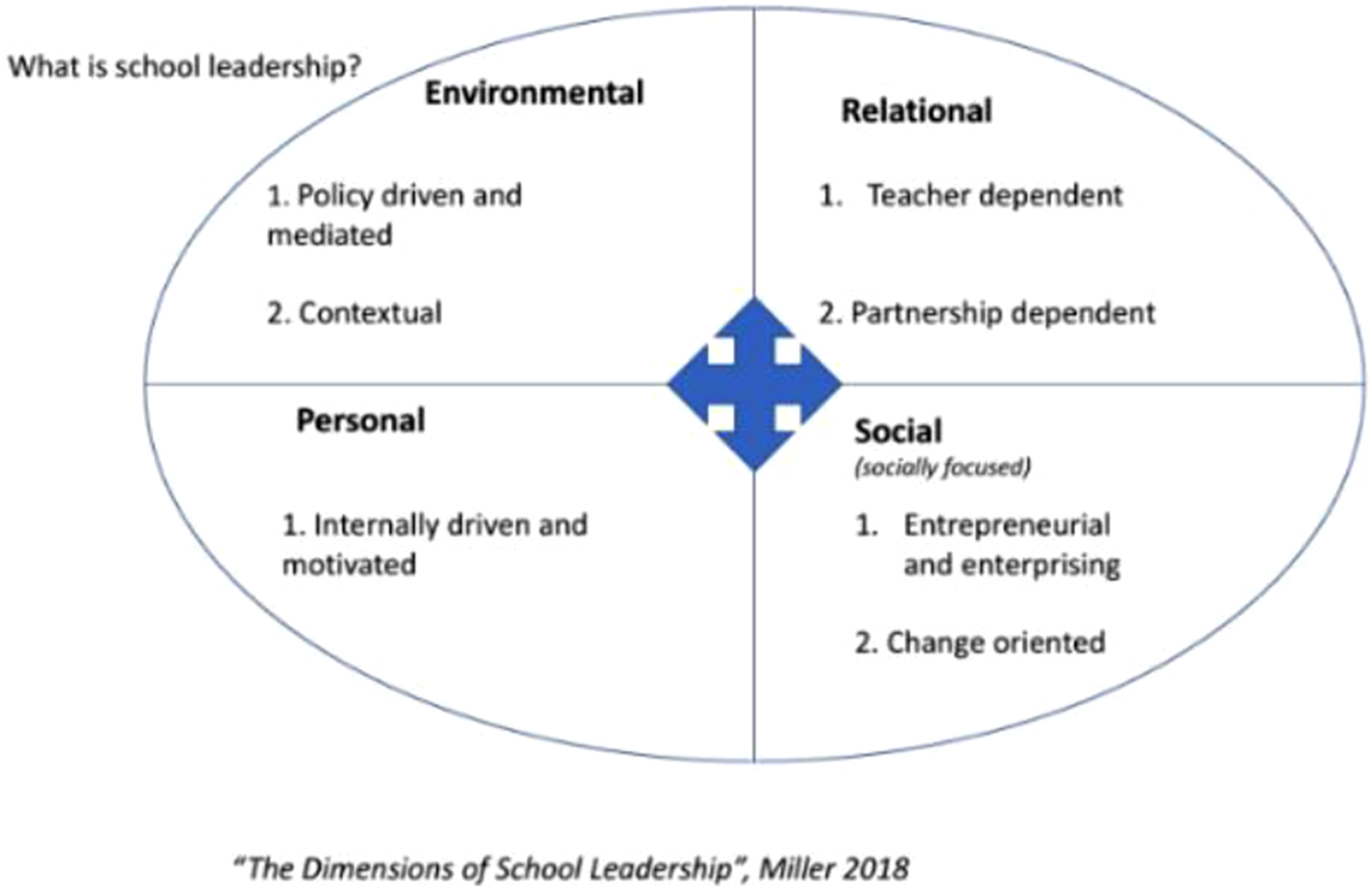
Looking back on the entire process, we can relate to the work of Pollack and Pollack (2015) ‘…Action Research, rather than literature reviews or post-hoc analyses…have the greater potential to contribute to improved execution…’ (Pollack and Pollack, 2015: 2). Thus, affording leaders involved in the programme with the opportunity and new confidence to carry out small pieces of action and reflective enquiry throughout the academic year to affect positive anti-racist change, to review their actions, to re-consider their learning and measure the impact on different planes of their learning communities (self, staff, pupils, families and wider community) subsequently ensured specific and contextualised anti-racist leadership and practice was developed, the impact of which was transformational because of the active participation required on the programme.
The method adopted in forming and evaluating this small-scale programme was dynamic as the work progressed, new to us involved and potentially new to the wider sector affording us opportunity to continue and grow this approach within our work in Wales, UK and beyond. Vygotsky (1962) theorised that we learn through our interactions and communications with others and educators have used this approach to learning with younger learners but not as much with adults, and maybe not with anti-racism as the subject. It was helpful to consider that the approach ‘…demand[s]; a shift in agency – a move ‘away from programs that focus on creating change in teachers’ to activities that focus on ‘providing opportunities for active engagement, influencing teachers to take responsibility for their own learning and to reflect on their practice’ (Drits-Esser and Stark, 2015: 1). Although there is the DARPL Enhanced Leadership Series and DARPL Advocacy Network and the three known programmes in England (Leeds Beckett Anti-racist award/RISL/Institute for Educational and Social Equity), the Apex programme for professional learning provides an unusual intimate approach drawing on the work of Miller (2018), materials and wider provision whilst using hand-made resources drawing on life experience of racism in educational leadership and life-wide experience. Walker et al., (2021) stress the need for deep understanding in leadership development for anti-racist transformation and anti-racism for leaders in Wales’s education system in this way was new and positively challenging. The programme provided school leaders with the opportunity to work as a small group through a Learning Circle Model Moriau et al. (2023), which enhanced the impact within the action research and collective approach.
Actions were set relevant to individual school needs that built upon new knowledge learnt in our professional learning days across an academic year. The design of the costed programme discussed within the context of this paper was funded to Apex, through a Local Authority and the recruitment of the schools took place in conversation and through callouts via local authority leads and contacts established in the growing pan-Wales networks. This initial programme required leaders committing to the programme expectations, pre-course reading, followed by seven professional learning days which started with the exploration of anti-racist concepts and theory through emotional and open conversations in co-constructed safe and brave spaces. This approach resulted in self-led implementation of interventions in their own practice, settings and learning communities, cohort participants carried out actions to make long-lasting change. Meaningful reflection on the impact that change made within themselves as leaders and for the learners, families and wider staff of their schools was central to the commitment of continuous development.
Primary data collection methods were used to collect the data and combined a mixture of semi-structured and unstructured interviews and unstructured research conversations, along with focus groups, where group discussions were facilitated. These collection methods provided us with the opportunity to gain in-depth insights to the thoughts, feelings and actions of leaders along with providing the opportunity for participants to build on each other’s ideas. A Learning Circle (LC) approach was cultivated where uniform actions were designed and set. Adopting a Learning Circle model aligned with recommendations for reflective academic practice (Academia.edu, 2023) was taken because the method of Learning Circles ‘…provide(s) a safe and supportive environment for…staff to reflect on their practices, share their experiences, and engage in ongoing learning. Through regular meetings and activities, participants in a LC…build a supportive network of peers and engage in meaningful dialogue and reflection on their teaching and research practices…’ (Moriau et al., 2023: 256). Miller’s (2018) relational dimension played a crucial role in the effectiveness of the programme and this approach. The support that school leaders provided each other with created opportunities and safe spaces for them to interrogate their own thinking and that of others through group discussion and wider dissemination within their clusters / region. Trust and relational efficacy are essential for professional learning to be impactful (Ladegard and Gjerde, 2014) and our newly formed circles provided the space and peer-to-peer support which enabled new knowledge, openness to continuous new learning across an academic year. Development inter-sessional tasks included reading academic articles about anti-racist educational leadership, reading key research and documentation about Wales’s steer on anti-racism and curriculum design, carrying out diagnostic tasks to better understand school culture, watching programmes that had race as a subject as well as others. Despite the tasks being uniform, schools positively adapted and contextualised them, focussing on interventions that were relevant to their own individual school needs.
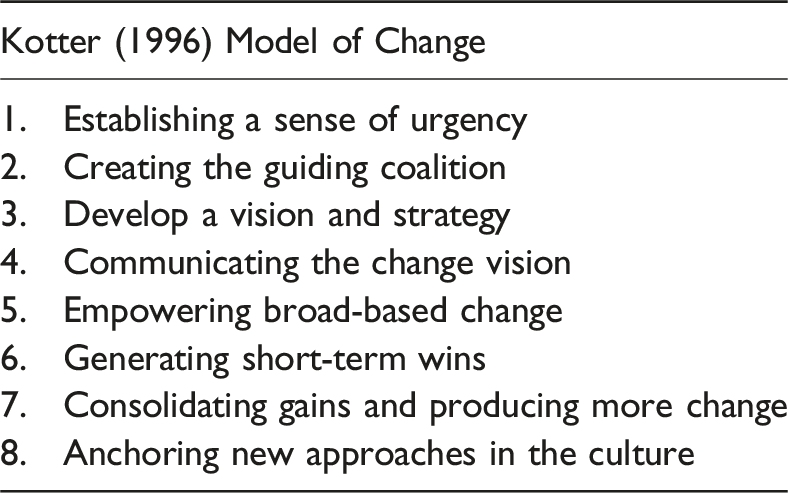
As the programme developed, Kotter’s model was used, culminating in a presentation about how new approaches were anchored into the culture of their schools for embedded change beyond the programme.
Whilst Kotter’s Model for Change to ensure change was secured, the combination of and action research approach coupled with the Learning Circle style, provided leaders of schools an opportunity to lead an area of anti-racist focus that was specific to their school community across an academic year. School senior leaders participated in the programme along with a Local Authority leader and the programme: • Mapped and monitored the progression of anti-racist journeys of school leaders in The Vale of Glamorgan. • Delivered monthly anti-racist Professional Learning sessions to develop participant understanding • Set monthly actions that leaders carried out and reviewed to gather qualitative data. • Included many opportunities for self-enquiry and reflection focus for participating schools throughout • Monthly reporting on progress through research actions as part of wider group reflection Provided opportunities for co-constructed anti-racist leadership practice with leaders across an area of Wales
Research environments
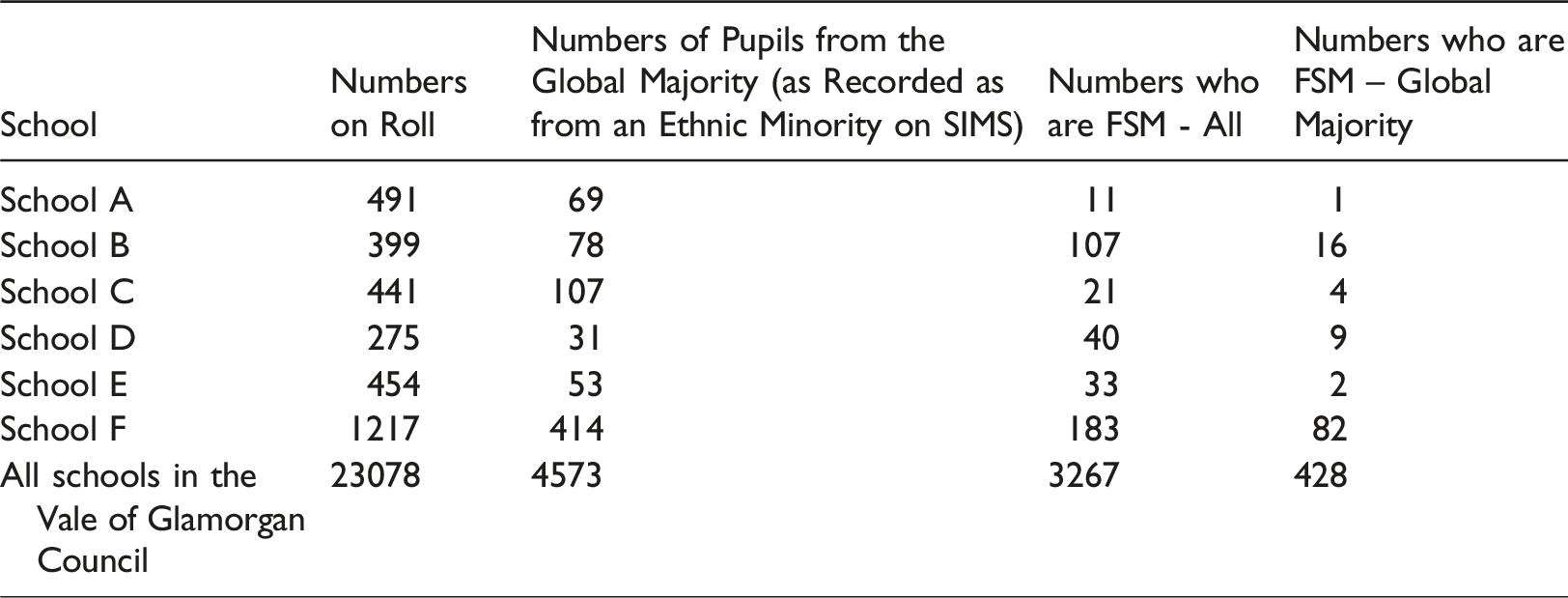
This journal presents evidence from six schools: 1 secondary school and 5 primary schools and 1 Local Authority representative. The data shows the actions they carried out and the demonstrable impact made.
Sample
Ethics
Ethical considerations were upheld and embedded from the outset, taking into account the research approach, as well as the sensitive elements of taking the leaders and facilitators together into new learning territory. BERA (2024) ethical guidance was adhered to within the university ethical approval process. All participants were fully aware and consented to participating in this research. The emotional toll of leading this was challenging at times - as (Kinouani, 2023) suggests, the emotional labour for racialised leaders in anti-racist work is considerable. Working in collaboration with a director of professional learning, who has spearheaded lots of Wales’s anti-racist change in the last few years, and having support from other professionals who work in this space was incredibly supportive and necessary, particularly at the early stage of the programme when preparing for ethics and in developing the knowledge of leaders racialised as White. Ensuring that those participating in the programme felt supported and knew what further support and extended opportunities / resources for wider staff development they could access was an important consideration. All participants were signposted to additional support they could access via the APEX programme, the Local Authority and DARPL. Regular check-ins were made in addition, between professional learning days.
Data collection methods
Through pen portraits, and survey data collected, insights into the benefits of a sustained anti-racist leadership approach to leaders of schools in Wales was gained. This research employed thematic analysis to explore leaders’ experiences of integrating anti-practice in schools. Braun and Clarke’s approaches (Braun, 2006; Braun and Clarke, 2023) were used and the data was initially transcribed and read to ensure familiarity. Responses were then organised into broader themes, using a step-by-step qualitative coding framework (Naeem et al., 2023) and included ‘collaborative practice,’ ‘external expertise' and ‘sustained timeframe of the programme’. The final themes authentically reflected the perspectives of the leaders who took part; for example, the theme ‘collaborative practice’ emerged from multiple accounts of leaders describing their discomfort, yet commitment to personal growth and the support of the group in the programme. This applied thematic analysis not only addressed the research question on leadership transformation but also provided actionable insights for developing supportive professional learning frameworks in educational settings.
Key areas of focus
Each school focused on specific areas of anti-racist action to implement and there were key actions implemented which emerged as having a positive impact on their leadership and strategic planning for their schools and the LA. These were: (1) Reviewing existing policies and creating a Local Authority anti-racist policy. (2) Developing a greater awareness of self and understanding how Whiteness has framed our school system. (3) Developing the competence and confidence of staff in school to discuss race and racism by equipping them with sustained Professional Learning and creating a shared vocabulary to speak. (4) Working directly with learners to find out about the specific impact of the Curriculum for Wales, before starting work on decolonising aspects of it.
Data analysis: considering leadership reflections and actions
Our generation and interpretation of the data is considered through a diverse lens, a view which in itself is unusual in school-based research in Wales. It was fascinating and hopeful to see the leaders racialised as White, adopting new approaches as they prepare for the Curriculum for Wales.
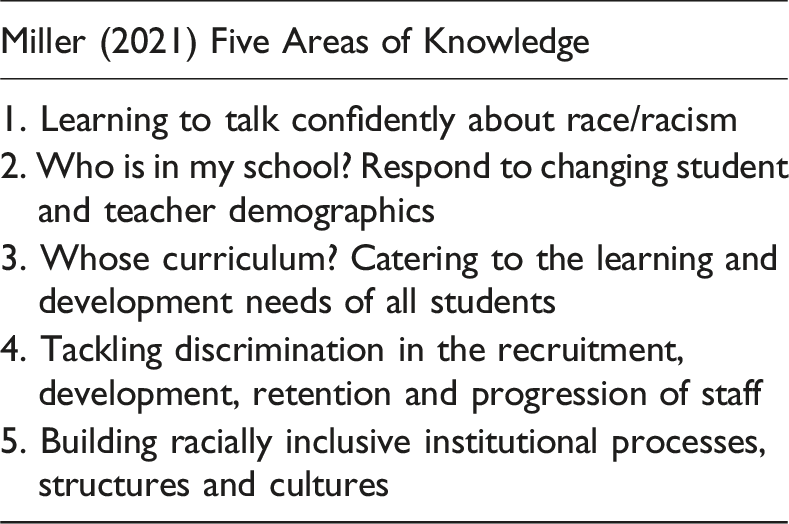
The voices of the participating leaders, highlights the specific direction the individual schools focused on and how the programme impacted their leadership. Fostering inclusivity through policy review, navigating crucial conversations, promoting anti-racist leadership and planned for curriculum change, were all visible outcomes of the leadership development programme. This was important beccuse as Gillborn et al. (2013) argues, racism in education policy is often systematic and institutionalised. Recent policy responses often downplay structural racism in favour of deficit narratives (Tikly, 2022) but the leaders were commited to making structural change. From the outset, leaders demonstrated a genuine personal commitment to change, yet several initially exhibited behaviours highlighted by Jones and Okun (2001) as emblematic of White Supremacy culture – namely, defensiveness, an overemphasis on personal comfort, and a reluctance to engage in conflict. Bhopal (2024) also notes how White Supremacy continues to underpin structures in British education, making this an important aspect to explore in the programme. The development of the leader’s knowledge and confidence over time, supported them to understand the anti-racist theories studied and also supported them to question their prior knowledge drawing on the five areas of knowledge described by Miller (2021) and the DARPL Senior Leaders Introductory Series. This shift echoes the research of Lander (2011), which explored how White educators navigate race equality issues, often undergoing a process of transformation when directly engaged in structured equity-focused learning. Through the underpinning of Miller’s (2018) social and relational dimensions, leaders benefitted from working as a group to extend a shared, collective understanding of how to achieve the Wales specific aims (in terms of the Curriculum for Wales and the Wales, 2030 anti-racist ambition), within the wider environmental dimension.
As the programme progressed, leaders developed the confidence to engage in challenging conversations with a broader range of stakeholders. One participant remarked ‘if I hadn’t had the opportunity to practice conversations about race and racism, I would have continued to try to avoid them professionally and personally. The opportunity provided to challenge remarks and behaviours and handle such interactions within my school has sparked real change’. This aligns with (Britzman, 1991) assertion that uncomfortable truths must surface in professional spaces because leaders felt they were able to share such experiences. Drawing from Gillborn (2008) this critical reflection is essential for understanding and tackling racism in the education system and has led to notable leadership and institutional change within the six schools involved. The leader reflections further indicate those particularly who identify as White questioned their perspectives and moved away from entrenched norms over the course of the programme. Initially marked by a preference for personal comfort and defensiveness, their evolving leadership styles reflected a shift toward more collaborative, inclusive, anti-racist mindset and practices. This aligns with Lander’s (2011) assertion that White teachers often start their professional journey with a limited awareness of racial inequalities but can develop a more nuanced and active stance through structured interventions. The curriculum work that Schools E and F carried out, emphasise how curriculum narratives and marginalised histories can foster empathy among learners. Leaders discovered that this approach builds a deeper, more inclusive understanding of histories and identities among learners and as such, leaders felt better equipped to fulfil the intentions of Curriculum for Wales. The development of the social dimension of Millers’ (2018) framework, ensured that over time, leaders critically examined the curriculum, ensuring year-round visibility of all learners.
All school leaders supported their wider staff teams to engage in group discussions based on a curated list from the programme. The book list comprised: (1) ‘Why I’m No Longer Talking To White People about Race’ Eddo-Lodge (2018) (2) ‘Empireland: How Imperialism Has Shaped Modern Britain’ Sanghera (2021) (3) ‘Natives. Race and Class in the Ruins of Empire’ Akala (2018) (4) ‘Don’t Touch My Hair’ Dabiri (2020) (5) ‘Educational Leadership and the Global Majority: Decolonising Narratives’ Campbell-Stevens (2021)
These texts not only provided diverse perspectives on racism and anti-racism but also supported the notion that race is a social and cultural construct (Gliroy, 2021) while also serving as a critical key to understanding the dynamic nature of society (Hall, 2021). The sustained engagement with these texts encouraged teaching staff in school to challenge the legacy of ‘poor history’ in education, making theoretical insights practical and relevant, through practical relevance of Miller (2018 and 2021) and Callwood et al. (2022). In addition to the reading, core areas of focus for the cohort included: the use of the programme model to support change, policy reviews and reforms in school, reviewing the framing and representation of Global Majority communities in the curriculum and wider Local Authority strategic actions.
Utilising the framework of Paul Miller (2021), leaders enhanced their expertise in: (1) (2) (3) (4) (5)
Three main outcomes of the programme were achieved. The first was that of policy and organisational adjustments that were made. Leaders made deliberate efforts to integrate inclusive principles into policies, safeguarding protocols and wider administrative frameworks. Schools critically reviewed and updated key documents to ensure that equity and diversity were embedded in their operational structures. One of the earliest changes was the revision of behaviour policies. School C updated its Relationships & Behaviour Policy and introduced a Racist and Prejudice-Related Incidents Policy, explicitly recognising racism as a safeguarding issue. These policies ensured that racial incidents were properly documented and addressed with the needs of the affected individuals at the centre. A leader reflected on this shift, stating: “We realised that our previous approach to racist incidents often neglected the experiences of those affected. After a PL session, we met with the mother of a child who had experienced racism. Listening to her perspective was difficult, but it was transformative. That conversation helped us co-construct procedures that are now positively received by staff, families, and learners.”
In addition, drawing on our knowledge of professional learning needs through enquiry in various contexts, we co-constructed the DARPL (2023) Eradicate Practical Guidance available for further reference for school leaders across Wales.
The second main outcome was the development in leadership approaches that took place. At the outset, many leaders displayed resistance and discomfort when engaging in discussions on equity – a reluctance rooted in broader societal conditioning. However, structured learning experiences empowered them to: • • •
The third main outcome was the transformation of curriculum approaches. A significant outcome was the shift in educational content. Schools E and F introduced new curriculum elements that incorporated historically underrepresented narratives, fostering learner engagement and deeper critical thinking. As a result: • • • “At first, we felt uncomfortable about confronting racism within our curriculum. Over time, we realised that discomfort is necessary. Doing nothing about racism is not the same as being anti-racist. We mapped out areas where stereotypes were present and worked with staff to reframe narratives in History and Geography.”
The leaders’ success and the impact of the programme, lay in its emphasis on inter-school collaboration, the infusion of external expertise, and a sustained commitment over time, all of which contributed to a deeper level of self-knowledge and a readiness to implement strategic changes at the institutional level, transforming the leadership styles of those who participated.
Three central themes emerged from the findings: (1) (2) (3)
Applying Callwood et al.’s (2022) systems change framework, the evolution of anti-racist leadership is not confined to individual transformation. The trajectory – from initial personal reflection to the comprehensive re-evaluation of policies at the Local Authority level – demonstrates the potential for systemic change. However, maintaining these advances will depend on ongoing financial support and a continued commitment to an anti-racist agenda, as outlined in the broader Wales ARWAP (2022). In summary, the data suggests that dismantling entrenched practices which sustain racial inequity in education leadership commitment, takes time, effort and a structured, reflective, and a collaborative approach. As Gillborn (2008) notes, racism is not an aberration but a deeply embedded element of how schools operate. Without leaders stepping forward to challenge and change these systemic issues, racial inequities will persist and even intensify. This programme has disrupted those patterns by empowering leaders to re-examine both their personal beliefs and the broader institutional frameworks they oversee.
The Professional Learning undertaken started with the personal reflection of leaders and moved beyond their individual institutions, to considering wider society politics Callwood et al. (2022), through critical review of their school policies and consideration of wider school and Local Authority structures. As a group they debated their allyship and leadership contributions to the national climate to positively impact learners in Wales for generations to come. The commitment and funding support for this extension programme carried out at the Local Authority level impacted wider community change. The deep consideration for how Safeguarding policies and training were to be drafted and undertaken, following the programme was significant. Local Authority leaders of departments started interconnected dialogue about how anti-racism can be at the heart of procedures around reporting and non-reporting of racism, administration and accountability structures and thoughts moving forward, which is transformational. The ongoing challenge for school leaders and Local Authority leaders remains with limitations of funding availability or use as well as anti-racism being a sustained Welsh Government priority within the context of an anti-racist Wales 2030 agenda and beyond.
The research programme’s findings which are also in alignment with Miller’s (2018) dimensions, Gillborn’s (2008) research on educational inequalities and Lander’s (2011) insights on teacher identity and race equality, demonstrate that structured leadership development in anti-racist practice leads to tangible institutional transformation.
Limitations and improvements moving forward
Despite the success of this model and programme, it was small scale. The commitment to anti-racist leadership needs to be sustained long-term by the leader participants, by the local authority and as part of the wider pan-Wales work because leadership engagement is critical to sustained transformation (Hussain et al., 2016). Funding facilitation, time and resources remain core limitations of this work. The Local Authority (LA) funded Apex to lead this project and consequently, moving forward the LA, continues to consider how to work with the leaders who participated to support and disseminate to impact / involve other schools who may be closer to the start of their journey. This small-scale spin-out project feeds into the wider Pan-Wales DARPL and Welsh Government professional learning provision, as have more informal networks of collaboration and support generated through DARPL and associated partnerships. Involvement in Local Authorities to expect, support and challenge anti-racist leadership practice should help mitigate limitations, aiming to secure deep and long-lasting change for learners and staff in school communities through anti-racist focused regional strategic planning and local school development planning across Wales.
Conclusion
Implications for practice
The research showed that on the completion of the programme, the leadership-learners were confident in saying they recognise their need to learn more. De (de Novais and Spencer, 2019) argue that engaging with race in academic settings is key to unlearning ingrained biases and the leader's growing sense of comfort in positive-discomfort of being in untold un-learning and re-learning territory is significant. As described by Miller (2021), individual agency is a fundamental outcome and highly relevant in sustaining the appetite for learning in leadership. For meaningful structural reform within educational settings, it is crucial that leaders are willing to invest the necessary resources and exhibit the courage required for specialised anti-racist learning. Isolated training sessions, however well-intentioned, are much less effective for challenging and dismantling the longstanding structures that perpetuate White Supremacy in education. Implications for practice are: (1) Starting with the personal and the ‘self’ supports sustained change and helps leaders to better understand the long-term work of disruption that needs to take place. (2) Programmes that translate anti-racist theories into concrete, actionable strategies, support leaders to instigate lasting change that truly transform institutions and communities. (3) Building trust through professional and personal lived experience is crucial to the effectiveness of the professional learning.
Implications for learning design
Developing anti-racist leadership demands a sustained, well-structured approach to continuous professional learning (DARPL, 2023) and change (Kotter, 1996). Leaders must be provided with ample time, strong role models, and a supportive environment to effectively drive anti-racist initiatives. In this action research, the programme’s design—grounded in the Dimensions of School Leadership (Miller, 2018), Ecological Model of Professional Development (Miller, 2021) and the Framework to guide authentic, culturally competent, and inclusive SciComm (Callwood et al., 2022)—proved essential. (1) Professional learning programmes need a dedicated focus on anti-racism to allow leaders to engage in critical reading and in-school investigations, deepening their understanding of the issues discussed (2) Professional learning requires a deep-dive approach to be taken that focuses on how learning in leadership is applied to whole learning organisations. (3) Professional learning programmes need to involve wider stakeholders to support wider strategic change.
Across the cohort of participating leaders, there were various applied strategies that demonstrate how theoretical frameworks about race and critical whiteness can be translated into practical, transformative actions in educational settings. They ranged from curating reading programmes and reflective school cultures to targeted policy reforms and curriculum revisions and the support from the external Local Authority, further reinforced these strategies, ensuring that anti-racist practices were embedded not only in individual schools but also across the wider educational landscape. The dedication and commitment of the leaders involved was fundamental to the success of the leadership transformation and the programme itself. As we enter more challenging financial times, it is important to remember our responsibility as leaders in education for noticing and disrupting racism. Shafi and Nagdee (2022) warn against performative approaches to anti-racism that fail to disrupt systemic power and thus, this deep and slow approach needs to be taken. Whilst there is regional and national expectation for systemic and structural change in Wales through the ARWAP (2022) and Curriculum for Wales, without large-scale, relevant and sustained professional learning, this ambition feels uncertain for 2030. In contribution towards the realisation of the Anti-Racist Wales Action Plan (2022), leaders in education need to commit to continuous anti-racist focused professional learning. Anti-racism needs to be a core focus within school development planning and sustained reflective enquiry, through a whole-school approach.
Footnotes
Acknowledgements
We would like to thank all the school leaders who have demonstrated commitment and been courageous in their anti-racist leadership. We’d also like to honour the legacy of Betty Campbell MBE, without whom the anti-racist pathway Wales is on, wouldn’t have been possible.
Declaration of Conflicting Interests
The author(s) declared the following potential conflicts of interest with respect to the research, authorship, and/or publication of this article: Rachel Clarke carried the main body of research, that was funded by the Vale of Glamorgan Local Authority. Rachel Clarke is the director of Apex Educate, which is the organisation that prepared the Professional Learning programme for school leaders.
Funding
The author(s) received no financial support for the research, authorship, and/or publication of this article.
