



Abstract
This paper explores physical affordances – features and practices supporting activity – and scrutinises their accessibility to promote principle-led equity in movement. By examining how being active underpins capabilities essential for living well, a holistic perspective on using ‘self-space’ and surrounding space is presented. In line with the World Health Organization’s (2021) mandate for fairness in physical activity programming, a justice-oriented leadership approach across health and education is emphasised. The application of JEDI principles (justice, equity, diversity, and inclusion) to physical movement highlights constructs of autonomy and agency, enabling individuals to make choices and act to invoke change (Virenque and Mossio, 2024). The concept of ‘constraints’ is extended from therapeutic roots (Taub et al., 1993) to adaptive movement facilitation (Newell, 1986). Constraints-informed pedagogies enhance embodied learning, fostering autonomy through interactive movement generation in physical education (Renshaw and Chow, 2018). Being well is understood as a composite of physical, cognitive, and emotional health. It is recognised as a complex yet integral construct (Spratt, 2016; Ryff, 2014). Physical activity is shown to significantly influence health behaviours, encompassing mental and physical wellbeing (Liu et al., 2024). This paper offers means to facilitate fair ways towards children's healthy active living.
Context
The United Nations positions inequity as the gravest of global educational issues (Scmelkes, 2020). Alongside a collective pursuit of a justice sustaining approach to education in general (Hart, 2019) is that related to movement. Whitfield states that the absence of access to safe and nearby places to be physically active may add to racial and ethnic disparities (2015). One means to attempt to empower students (young citizens) concerning their embodied sense of self, is through physical activity-encompassing pedagogical practices. These can be adapted, for example, where children experience learning in different settings (such as home/community schooled) (World Health Organization’s, 2021; Spratt, 2016; Education Scotland, 2016, 2017, 2023; Liu et al., 2024; Taub et al., 1993; Virenque and Mossio, 2024).
Where leadership informs and inspires a vision-related direction, the JEDI framework is applied to physically active learning (PAL) into school curriculum practice. This further diversifies the ways that PAL is taught and experienced (e.g. through outdoor spaces, different movement groups, knowledge of how the body moves, dance, and other learning opportunities).
Introduction
Movement plays a crucial role in supporting physical, mental, and social health and wellbeing (Jaekel, 2024). With the goal of universal access to some form of movement, movement is acknowledged as a fundamental need and not a privilege (Matias and Piggin, 2022). What hinders the volition for and propensity to be actively engaged is undoubtedly a multi-faceted problem.
The principles of justice, equity, diversity, and inclusion (JEDI) provide explicit and systematic means to plan fair participation opportunities in and around the curriuclum. Effective practices contain all these features. However, there may be times when practitioners remain unaware of what is unseen, and thereby unknown. When educators and learners make the most of what each brings to the learning experience, the (physical) environment can enhance planned and or emergent experiences. Inequality in accessing non-mandatory physical activity is related to available space (Barboza et al., 2024), and the physical literacy to do so (Whitehead, 2010). Where identity is central to human experience (Crocetti et al., 2022), a JEDI dedicated curriculum affirms the creation of relevant safe places (Shields, 2022).
Health equity ensures that this notion stays as fair as possible. Health equity is both a process and an outcome (Braveman et al., 2017). Physical activity aids good health (World Health Organisation, 2020, 2024) with potential to raise child self-esteem (Howells and Bowen, 2016), throughout the lifetime (McAuley et al., 2005). Physical activity is every child’s right (United Nations, 1989). However, this may mean different things for children in differing contexts. Healthwise, amongst a myriad of factors that influence and impact quality of life, such as relationships, activity, place of residence, finance, nutritional habits (ONS, 2022), three main factors emerge; sedentary behaviours, patterns of sleep, and physical activity (Groves et al., 2024). Equitable health and wellbeing draw from factors “deeply rooted in personal and societal values, such as social justice, safety, prosperity, civic engagement, and environmental integrity” (Pronk et al., 2021; 1). The use of space and how it is experienced reflects in part, who is doing/not doing what or where. A JEDI-based approach can help address disparities in access and opportunities. All prevailing practices related to this pursuit are acknowledged.
A social cognitive framework suggests that the interplay of personal, social or environmental, and behavioural factors contributes to the formation of an individual's self-efficacy (Bandura, 1977). Pedagogically, there are ample opportunities to interweave planned through emergent opportunities to build efficacy through the learning. The integration of useful ways to develop content knowledge in parallel with emotional resilience during PAL experiences exemplifies this concept.
There are a variety of methods to incorporate greater elements of our humanity into the learning process. The use of a spiral curriculum (Bruner, 1960) offers a fluid way to integrate the holistic use of learning domains across the experience. Explicit ways to develop one’s voice, using think-aloud (Van Someren et al., 1994) techniques have been found beneficial. The addition of various student formations, from full class into smaller groups, foster group identity and collective agency. The concept of belonging nestles within efficacy as scaffolded through experiences of ‘I’ and ‘Me’ and ‘We’, is practicably and pedagogically feasible. Notions of agency and identity are shown as valued components crossing multiple domains of ‘human social life’ (Shteynberg et al., 2022). In alignment with a self-regulatory perspective, this could include explicit means to do so (Boekarts et al., 2000). Explicit use of JEDI principles (and/or any other means found contextually relevant offers ways to build social identity (Tajfel et al., 1979). Agency transcends ideas around group membership (Shteynberg et al., 2022). This pertains across the breadth of stakeholder perspectives. Preservice educators rated their physical education teaching efficacy higher when provided means to teach across a variety of environments (Murray et al., 2018). Student motivation increases when social and cultural influences are considered in physical education (Gray et al., 2017).
Image 1 depicts a group of preservice teachers within a large indoor learning space. They are working together. Learners are more motivated to share knowledge through collective opportunities (Yilmaz, 2019). In the shared scenario, learners explore self and general space through a variety of movement concepts. The environment has been modified with the addition of a group play parachute to facilitate tangible experiences of movement concepts, such as that of ‘under’, ‘over’, ‘in’, ‘out’, ‘around’, ‘high’, ‘medium’, ‘low’ levels, ‘slow’, ‘fast’, ‘strong’ ‘light’, ‘alone in a mass’, ‘pairs’ and so on. In acknowledging both identity and agency, the shared co-construction of an engagement affirmation serves as an entry toward both ends. For example, “I can participate in collaborative movement challenge activities using the parachute”. Student teachers within a large indoor space build content knowledge around skill themes (non-manipulative, manipulative, and locomotor) pedagogically planned to deepen the learning through movement concepts self and across general space.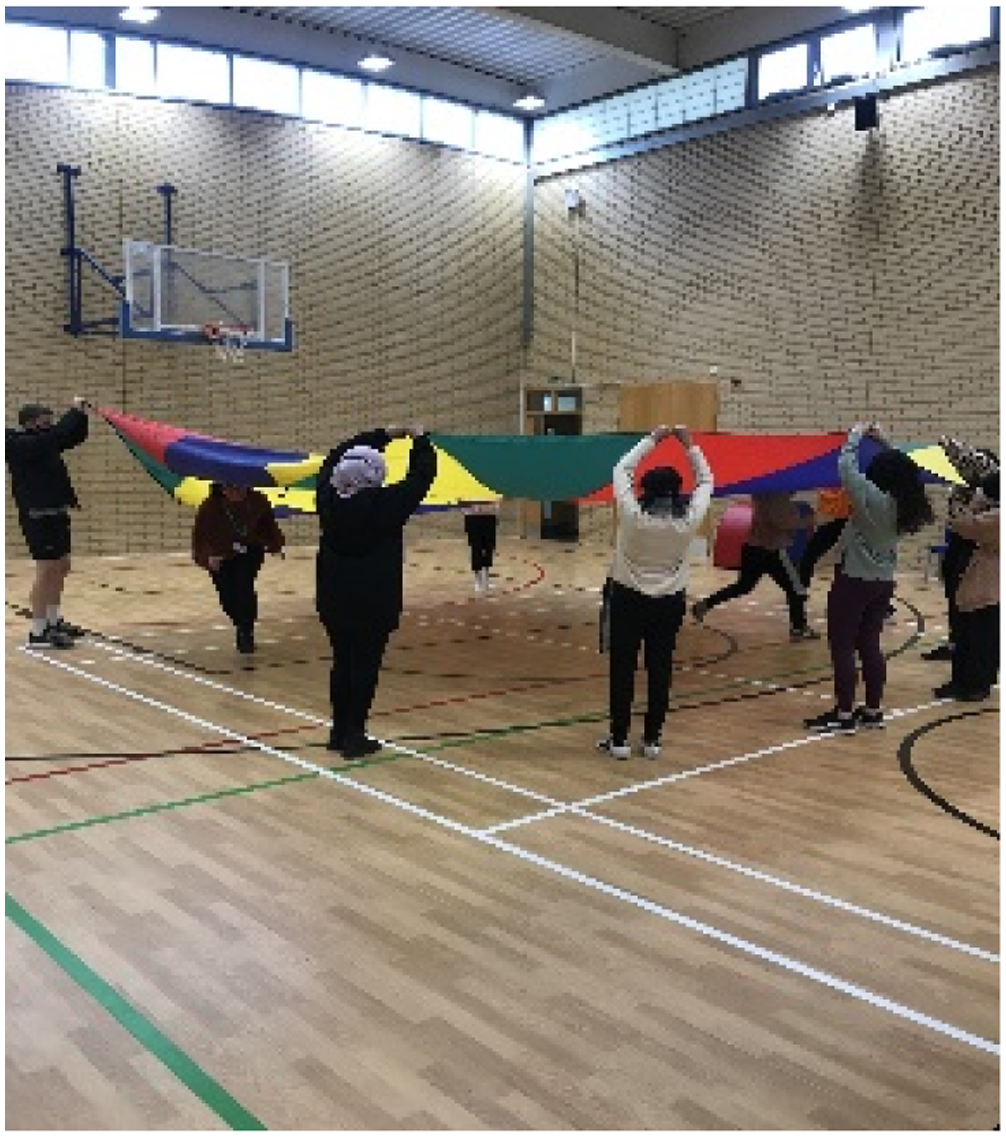
JEDI principled action can be expressed in many ways.
The power and potential of spaces: Those we inhabit and visit
Space is a process-oriented concept. Laban (1966) developed a framework of movement analysis, whereby movement conceptually extends the physicality of movements through psycho-physical notions (Groff, 1995). The space we inhabit will range from free to bound parameters. Within this space, movers ‘gather’ to use the least space as possible and ‘scatter’ to extend their kinesphere (Laban, 1966); where space is experienced (Newlove and Dalby, 2023). The same might be considered for planning. Lesson plans may range from bound (i.e. controlled via time, resources, policies and so on), to freer recreational opportunities across lunchtime, and or near home (i.e. fewer set parameters).
In terms of progression, concepts underpin the understanding and acquisition of fundamental movement skills, (Graham et al., 2020). The concept of space is explored and enjoyed across a variety of predictable, closed, to more open and unpredictable environments (Murray et al., In Press). A reciprocal relationship between self and space serves as a dynamic tool to widen and enhance current physical activity provision and broaden this through community-wide affordances. The benefits of green space are reportedly experienced less in deprived areas than those that are more affluent (Schüle et al., 2019). Space is entangled through the concept of power. Philosophical considerations around ‘potestas’ viewpoint of considering who has the power, authority and control of wider space, as well as the ‘potentia’ viewpoint of the actual force, capacity or impact that the space can have as mediated by one’s capacity, highlights the importance of a justice-oriented approach. Access to spaces, and the wherewithal to move through these, opens further opportunities to healthy, active lifestyles. The entanglement of moving through environmental affordances, exemplifies Sen’s (2002) dual assertion of the reciprocity between health and social equity (Spratt, 2016). Each is reliant upon the other, hence the value in holistic and multi-faceted approaches.
Location of residence across the UK is acknowledged to factor in how healthy lifestyles support positive life expectancy (ONS, 2022). Advocating for space and the affordance and constraints of space, is key in implementing an intersection-informed approach (Crenshaw, 1991). Sustainable means to become motor agentic (self-managing to best use our proficiencies), and to become and stay physically active, is paramount for all (Murray and Napper-Owen, 2021). The universal theory of physical activity, emphasises physical activity for its holistic benefits, alongside the health benefits that often pervade outcomes (Matias and Piggin, 2022). Scaffolding learning in culturally and developmentally appropriate ways engages all stakeholders. Such agency is centred through critical thinking dispositions to build awareness around self-esteem (Deci and Ryan, 2000). Culturally embodied notions around one’s body-worth, develop across wellbeing related experiences, inclusive of physical education. Indeed, cultural competency (Hansen, 2014) and capital develop further through justice-oriented pedagogies to reflect the needs and aspirations of learners. In responding to the call by Khosla and Venkatapuram to ‘pause and reflect’ (2023; e012155) on the fairness of global health, a justice-orientated approach optimises opportunities to make physical activity an equitable part of this.
The implementation of justice-oriented practice matters for both learner and educator. Hernandez and Boitano recommend a systemic leadership approach to ring fence opportunity for wellbeing (2019). Practice implications include supporting teachers, empowering them, and building positive relationships to offset burn out as well as improve job satisfaction and general wellbeing (Karakus et al., 2024). An ‘ecology of leaders’ committed to the creation of a ‘relational space’ built on hopeful trust and reflective learning across organisational boundaries is needed (Bradbury-Huang et al., 2010; 109). The relational and ethical components of leading serve as catalysts for positive change (Komives et al., 2007). These are effectively applicable through physical education (Fitzpatrick and Santamaría, 2015).
JEDI principled practice
A JEDI discourse recognizes the unethical disparity of a ‘silenced dialogue’ around race (Azzarito and Solomon, 2005) intent upon the establishment of equitable practice (Miller, 2020). Across national curricula, a shared responsibility connects readily to the purpose of sustainable goals to reduce inequality toward wellbeing (United Nations, 1989). Access to water-based activities (blue space, see Table 1) – such as swimming, varies. Water based pursuits improve health, lowering stress, and can contribute to improved long-term health benefits. Aquatic activity aids in strength and balance development, developing social, physical and cognitive skills (Swim England, 2017). While school provision is free and systemically implemented, many children exit the educational stage without meeting national guidelines or being able to safely participate in out-of-school water-based opportunities. Furthermore, they may be at more risk when playing in green spaces near blue ones. Children of black or Black British ethnicity are 3.5 times more at risk of drowning than their white counterparts (NCMD, 2023). Physical education is conceptualised differently across UK home nations; however, the importance around and commitment to water competence remains unified (Department for Education, 2013; Education, 2004). A JEDI approach could assist systems and polices in this regard.
Spaces: Potestas and potentia, through and beyond curriculum
Parks and natural areas are increasingly recognised as valuable learning spaces, supporting cognitive development, social interaction, and wellbeing. Research by Potter et al. (2023) highlights that green and blue spaces encourage enjoyable and healthy physical activity. In urban environments, these spaces offer children informal opportunities to learn through exploration and play. The availability and quality of green spaces vary significantly by socioeconomic status, impacting access to outdoor learning environments. Wealthier neighbourhoods tend to have more parks and better-maintained green spaces, while low-income areas often lack such amenities. Ethnicity factors into this regarding negative associations to parks (Wen et al., 2013). These disparities affect not only physical wellbeing but also children’s ability to engage in nature-based learning environments. In Glasgow, Scotland for example, research demonstrates that deprived areas have significantly lower-quality greenspaces, limiting the social and health benefits available to residents (Scottish Government, 2020).
Self- space is a movement concept that offers the chance to explore being still and moving within a smaller space within a wider surrounding (Graham et al., 2020). Through a health perspective, it is a comfortable social distance from which individuals can choose to remain within and from others (Vine, 1982). Through a fundamental movement perspective, children are provided with varied and exciting opportunities to navigate wider spaces. First and foremost, every child needs to be comfortable with personal identity through their movement education (Adams and Murray, 2022). Exploring space in enjoyable ways reflective of personal interests is one strategy. Curriculum gains vitality when an appreciation of identity is featured in content and means to experience this (Marshall, 2014). Using JEDI principles, the geography of space alongside a community-informed approach to and through the curriculum offers means to co-create and implement a culturally representative curricular journey.
Metaphysically, the concept of power is intuitively enticing as a critical thinking tool by which the mind makes sense of what we can think of, how we attribute ideas, and to whom and how we situate these amidst the complex modes (Marshall, 2014). To exercise agentic power (Campbell, 2009), in this instance, learners need equitable space and opportunity to build personal agency through their own physical and metaphysical selves as they extend to connect with other opportunities and possibilities. Space awareness, alongside effort and relationships of movement, is developed by children as they think about spatial considerations through movement (Graham et al., 2020).
Looking to wider spaces, the Greenspace Toolkit from Natural Resources Wales (2022) contends equitable access involves both physical proximities, ensuring green spaces are within 300 metres of homes, and active community involvement. Promoting local ownership and participation in green space design ensures that these areas meet the needs of diverse populations, transforming them into inclusive learning environments. Green spaces also play a critical role in urban resilience, particularly in the context of climate change. As cities face rising temperatures and extreme weather, blue-green infrastructure, like wetlands and rain gardens, serves both ecological and educational functions. Initiatives such as the Central Scotland Green Network (CSGN) restore ecosystems and provide accessible green spaces for communities, enhancing opportunities for outdoor learning and social cohesion (National Improvement Framework, 2020).
Environmental opportunities in, around school locations.
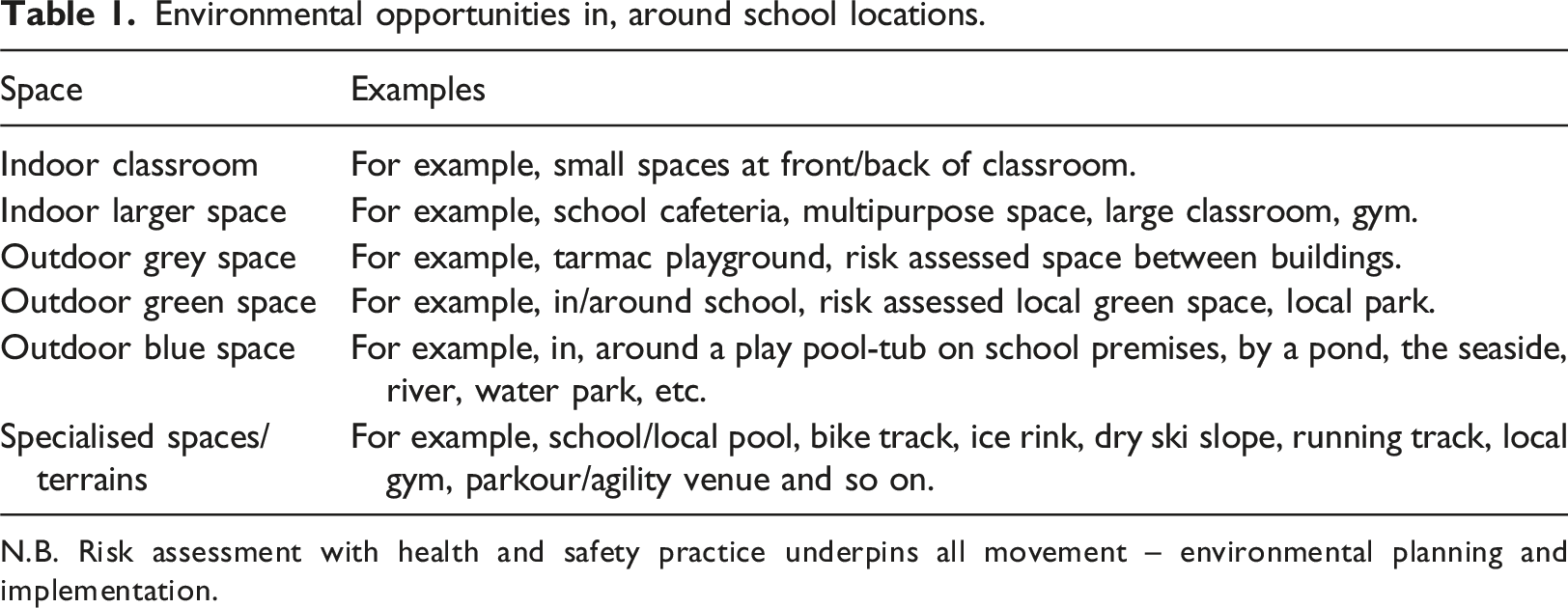
N.B. Risk assessment with health and safety practice underpins all movement – environmental planning and implementation.
This useful environmental framing of planning makes good use of existing spaces across physical activity, from physical education to wider learning opportunities (typifying educational-community settings).
Affordances and constraints as means to create accessible physically active learning
Affordances and constraints theories provide a valuable framework for promoting equality in physical activity, particularly in educational settings. Developed by Gibson (1977), affordance theory describes how environments offer affordances, which are opportunities for actions that create accessibility based on individual needs, abilities, and perceptions, while constraints limit these possibilities. Affordances are things across the environment that can aid development (Gibson, 1977) and can effectively support physical activity and wellbeing (Sandseter et al., 2021). By carefully designing and adjusting environments to maximise affordances more commonly called opportunities and reduce constraints, schools can create inclusive spaces that promote equitable access to physically active learning and wellbeing for all students (Pardali et al., 2024). In early childhood and school settings, physical affordances play a central role in fostering equality. Physical affordances can be features such as pathways, open fields, natural elements, and adaptable playground equipment, these all can enable diverse types of educational experiences, inclusive of play, catering to varied interests and abilities.
Newell’s (1986) triangulation approach to constraints offers the educator and learner explicit means to use constraints to better contextualise the plan around the pupil, effectively using the learning environment to implement an equitable means to experience the learning (Figure 1). Constraints inform stakeholders in what is both manageable and meaningful for each known and emergent context.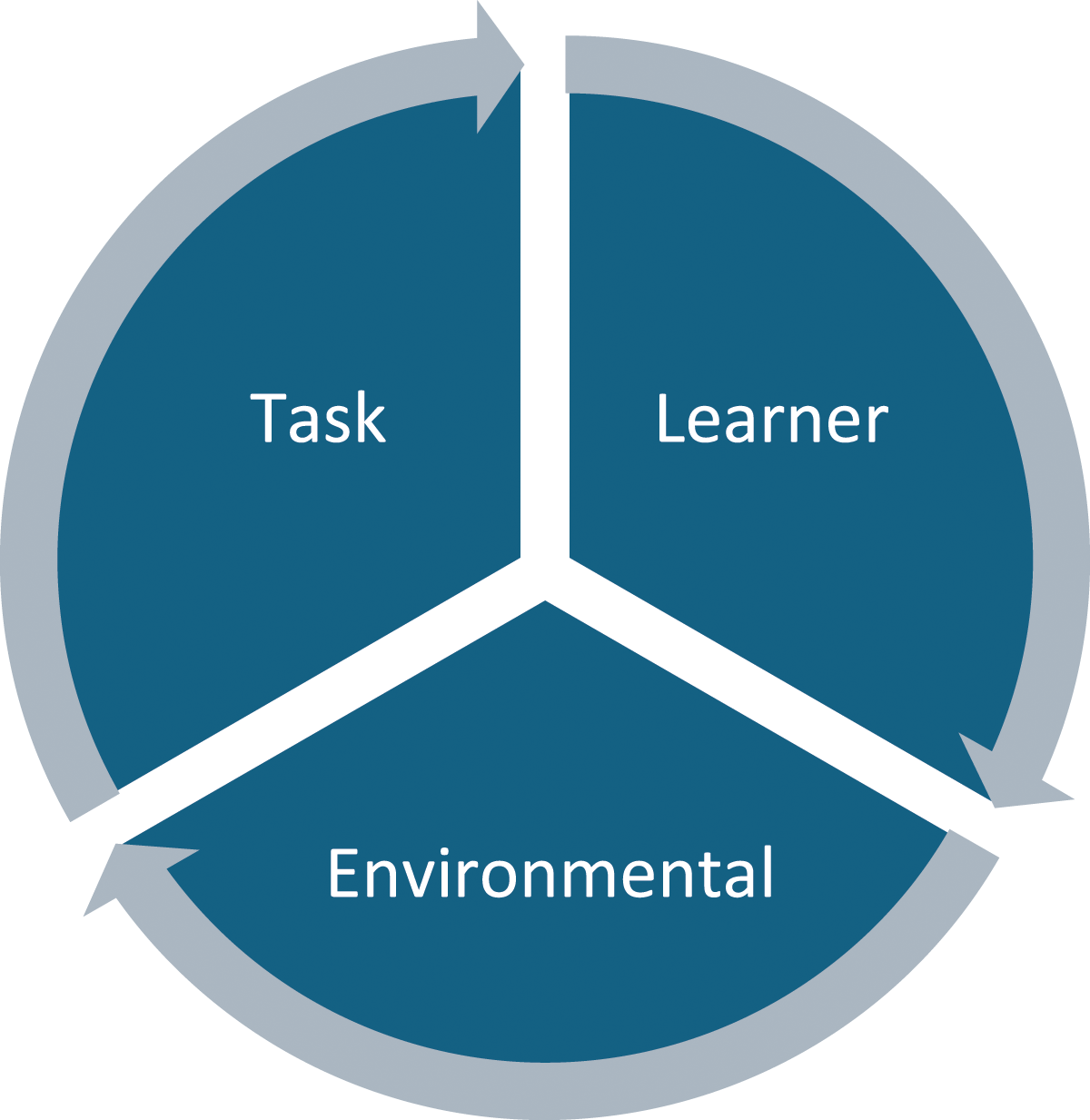
The terminology here speaks to ways the body can translate movement across the given environment. Constraints-led pedagogies sit upon the theoretical premise that, in knowing of learner and environmental constraints, the educator can then effectively plan the learning and teaching sequence (Newell, 1986). PAL is noted for increasing physical activity across the school day (Bacon and Lord, 2021). Certainly, physical activity is associated with wellbeing (Bull et al., 2020; Howells and Bowen, 2016). Equally, academic achievement is touted with improvements in executive thinking and metacognition (Alvarez-Bueno et al., 2017; Murray and Napper-Owen, 2021). Critical thinking (Facione et al., 2000) is therefore a useful bridge for children to develop their ‘being’ and becoming’ in equitable and enjoyable ways. UNESCO’s guidelines around quality physical education recommend inclusive curricula (2015). They illuminate gender, disability, and minority groups, as part of these considerations. More broadly speaking, inclusion, as an ongoing and complex process, encompasses concepts of awareness, respect, and understanding (Rapp et al., 2021).
Affordances are enablers. They permit the facilitation of opportunity (Gibson, 1979). Social affordances, which are opportunities for interaction within a setting, are essential for fostering inclusion and equality, particularly in educational contexts. Social environments shape how children experience the outdoors and interact with each other, which can influence their engagement and wellbeing. Within Norwegian, Estonian and UK school contexts, some students reported enjoying activities like ‘walk and talk’ during recess. This fostered social bonds and inclusion, particularly for adolescents seeking peer interaction (Clark and Uzzell, 2006; Howells et al., 2019). Teachers who actively promoted PAL positively influenced students’ attitudes and enjoyment, making the activities feel inclusive and engaging. Teachers’ involvement also reduced social constraints, as their support helped bridge potential gaps between students with varying levels of experience or interest. Opportunities for children of varied abilities and needs to explore through planned and emergent movement are important for cognitive, social, physical and emotional development. However, these remain inequitable (Smythe et al., 2023). Activity opportunities across wider spaces improve wellbeing outcomes (Fairclough et al., 2023). Undoubtedly, educators play a key facilitator role in these processes (Reeve and Shin, 2020).
JEDI principled pedagogies
JEDI principles serve as a medium to position and acknowledge the value of ‘me, myself and I’, in self-space. This notion extends from self across wider spaces to re-tool what potential opportunities are around us, as a means to enjoy and exert our agentic wellbeing as we gain awareness in the joys of participating with others. Jedi Public Health is a school focused approach from elementary to secondary school phases. It favours notions whereby health equity is sought by adapting features found across daily living (Geronimus et al., 2016). For school practice, this approach embodies the notion of framing the capacity to attain a challenge as learnable and expandable instead of as a fixed capacity.
Case study-teacher education opportunities beyond ‘traditional’ learning spaces
For example, in seeking equitable ways to encourage male and female student teachers varied in aquatic skill competence and confidence, preservice teachers co-constructed the access and use of the water-based learning and teaching environment to suit both their needs and aspirations as informed by educational policies around child water competence (DfE, 2013). This resulted in a variety of pedagogical decisions which remained student-informed and centred, using self-identified contextual constraints (e.g. water/changing environments) as culturally informed and empowered.
Students entered the water at different times (5 minutes apart). Women wishing to enter before their male counterparts did so. At the end, this system worked in reverse. Men and women were allowed to participate separately or alone. The full cohort elected to participate as a mixed group. The implementation of an equitable method to ascertain who wished to do what and how created respectful provision. (1) Students could take one of three roles; participant in the water, dry side assistant, water-based assistant. (2) Game forms remained throwing and catching (fundamental movement skill; FMS based). That eradicated the need for aquatic and or advanced motor skills. These could be used with discretion. (3) The environment was organised so that the floor of the pool remained accessible to students.
Beginning with the premise that participation in the movement is inequitable, affords us space to consider known narratives and hopefully, to use these to better inform a justice, equity, diversity, and inclusion principled practice. Certainly, intersecting factors have been identified for increasing opportunities. Protected characteristics offer an entry point to identify and illuminate the intersections of inequality of health and wellbeing and ways to improve these (PHE, 2021).
Crenshaw's work signposts ways for educators to both illuminate and utilise the existing inequalities toward the advancement of an equitable solution (1989). Inequality worsens with the finding that children more deprived are more sedentary than their less deprived counterparts (Bardid et al., 2022). Across England, children identifying as White British are most likely to participate in physical activity, more so than children identifying as black, other, or Asian (Gov.UK, 2024). Part of this issue relates to motor competence, and the extent to which children have had consistent quality opportunities to develop and then implement their motor competence into a practice when in curricular time, across wider school experience, and after school into community provision. Motor skills, crucial for physical activity engagement (Stodden et al., 2008), develop atypically or typically along a continuum (Gabbard, 2021). With the profound importance of motor competence (Hill et al., 2024), a JEDI lens offers means to redress physical activity inequalities (Public Health England, 2021). It could also support discourse with parties to establish methods for children of limited to no capacity to move physically, equally enriching opportunities to be moved to learn.
In and around physical education and physical activity, notions of social justice have long since been explicated (Fernández-Balboa, 2015; Tinning, 1990) and applied (Landi et al., 2020). Belonging is a crucial requisite for wellbeing (El Zaatari and Maalouf, 2022). Physical activity remains a protective factor for physical and mental health (Englert et al., 2023). A justice orientation seeks to ensure that all children, diverse in psychological, physical, and social differences, are seen and heard, and celebrated for who they are, across their daily lives. Three ideas are shared. These progress from smaller to wider spaces, and from indoors to outdoors.
Example 1: Building physical literacy through space awareness
Biological maturation, power, and overall muscle strength are interrelated in adolescents (Yapici et al., 2022). In essence, this growth period is a crucial time to build strength. Opportunities across primary and secondary educational phases offer useful spaces and places to extend the movement patterns commenced from early years, integrating resistance tasks across learning to build muscle mass across adolescence. Whilst a call has been made to gather greater evidence in regards exercise type, duration, and activity intensity (PHE, 2020), colleagues are contributing to this knowledge research base. Engaging and re-engaging children requires curricular opportunities to be socially and culturally relevant (Gray et al., 2017).
Any lesson plan ‘set’ needs to remain open enough such that it remains developmentally appropriate – accessible for the learners regardless of school stage or learner age. Building physical literacy gets our children comfy and able and excited to get out and about.
Start with the body; their body; your body! Consult with children to draw from their prior experiences, what they enjoy, and what they might like to try. The use of a child’s own bodyweight is a valuable practice known to positively impact many health indices; physical and mental (Faigenbaum, 2000; Murray et al., 2023; Stricker, 2002).
A progression spiral (Bruner, 1960) is used to facilitate the lesson (exemplified through the dynamic and evolving Curriculum for Excellence- Health and Wellbeing, 2023).
At a novice level – Early years: For example, I am learning to move my body well, exploring how to manage and control it, and finding out how to use and share space (HWB 0-21a).
Moving through primary: For example, I am discovering ways that I can link actions and skills to create movement patterns and sequences. This has motivated me to practise and improve my skills to develop control and flow (HWB 1-21a).
Through secondary: As I encounter a variety of challenges and contexts for learning, I am encouraged and supported to demonstrate my ability to select and apply a wide range of complex movement skills and strategies, creatively, accurately, and with consistency and control (HWB 4-21a).
Across any such curricular guidance, basic principles are progressed. Exemplified through a lesson might feature in the following way as positioned with other learning intentions, such as group work cooperation, problem-solving, and taking on differing roles to collaborate, support, follow, and lead peers toward the agreed task.
Lesson plan
Learning objectives:
To be able to enter, hold, and exit a sequence of body resistance moves with control.
To be able to show and describe to a peer a movement sequence that involves lower, core, and upper body strength moves.
To be able to work with a peer and or small group of peers and come up with movement solutions to movement based problems that aim to develop body strength.
‘I can try out a variety of strength building moves and with peers, develop a sequence that develops upper, core and lower body strength’.
Organisation: Flat open space.
Equipment: Body is recognised and valued as a strength building piece of equipment, and anatomical human body posters (optional).
Prior learning/elicitation: Basic movement agility explored through gathering and scattering body moves, when in self-space, and travelling. Comfortable and proficient in moving body into differing levels of low (own body along floor level), medium (own body at waist level) and high (body at full length using usual mode for mobility) set tasks.
Lead in activity: Find a space across the floor. Create a base of support for your starting point. This is your ‘home’ base – start and begin here. Make a star shape to create a space for your own kinesphere (self-space). Show a peer 3-5 different ways to hold your body position for 3–5 counts when facing down, facing upwards, and facing each side. Hold the position and think about what happens to your body as you attempt to hold and show the position with control. What do you need to do to be stable? Where do you feel muscles working? Where are you building stronger muscles?
Progression. From your home base, vary the way you enter and exit the skill. Try and show a basic position, for example, plank in different ways, for example, face down, face up, to side. What other muscles are being engaged? Check the poster. Try it out, share with a partner to check.
Progression. Challenge yourself by changing the contacts on the floor. Think about contacts on the floor, for example, two feet/wheels count as two, one hand/arm counts as one, for example, from 2- to 3-standing star shape on toes to side position star with two feet and one hand contact. What happens to the muscles where the base of support is shifted? What happens to your balance? Start from home base and create a set of challenges that show changes in the contacts in your base of support.
Progression. Vary the level of the positioning. From standing down to a horizontal floor level movement entry point, for example, a lunge from standing into a face down star shape, into floor based 4 contact (hand-hand-foot-foot) scooting along the floor.
Progression. With a partner/small group, choose 4-5 of your movements and create a routine. Aim to hold each move so that your muscles engaged are working and building strength (3–5 counts per move).
Progression: Show another group. Try theirs. Return to your group and think about ways to show and help another group learn your movement challenge set. What can you say? What might you model? How will you keep everyone included and feeling comfortable? Compliment the other group on their efforts and share your favourite movement from their challenge.
Plenary. Why is having strong bones and muscles so important for our general health, for example, our mood, our brain health, our balance, our range of motion? Choose one benefit you find helpful for your health. How might these moves be incorporated into your activities when away from school? Find another pair/group and take one of the large posters. Using the posters, show the areas where you were developing strength. Identify the muscle group names. Share any challenges you experienced and solutions you found to these. (Link forwards to next opportunity).
Applying affordances and constraints theory to educational physically active environments emphasise the importance of inclusivity, flexibility, and social engagement in promoting equality. The following example focuses on how dance is important for inclusivity in bringing the world to the class through the celebration of differing ways to move through rhythm with one another.
Example 2: Progressing agility, balance, and coordination through rhythmical movement with music
Learning about and celebrating different cultures through rhythmical movement
In the OECD review (2021) of Scotland’s Curriculum for Excellence, one of the recommendations was to create a better balance between depth and breadth of learning across the curriculum. Adopting an interdisciplinary (IDL) approach allows learners to make meaningful links between the curriculum and their experiences. It also allows a space for learners of all backgrounds and all abilities to showcase their learning in ways that suit their needs and identities (Education Scotland, 2023).
The Department for Education in England recommends that schools include dance in their PE curriculum to match the breadth and ambition of the national curriculum (2013). Dance can help students develop a variety of skills, including the following: • Coordination: Dance can help students develop their coordination, flexibility, and strength. • Spatial awareness: Dance can help students develop their spatial awareness. • Social interaction: Dance can encourage social interaction and provide a positive outlet for emotions. • Group work: Dance can help students learn to work together in groups.
The Welsh curriculum further reinforces the need to consider movement frameworks, choreographic elements, and performance aspects (Gov.Wales, 2020). Dance is explored through expression, enacting movement concepts for children to experience and a rich series of opportunities in Ireland (Department of Education, 2024a; 2024b).
Here follows an example of teaching fictional storytelling through the medium of dance, which also showcases cultural heritage and identity.
From the Curriculum for Excellence, dance, drama, and writing can be linked:
Dance: I can explore and choose movements to create and present dance, developing my skills and techniques. (EXA 2-08a, Curriculum for Excellence, 2023)
Drama: I have created and presented scripted or improvised drama, beginning to take account of audience and atmosphere. (EXA 2-14a, Curriculum for Excellence, 2023)
Writing: I can convey information, describe events, explain processes or combine ideas in different ways. (LIT 2-28a, Curriculum for Excellence, 2023)
Key Teaching Point: Highlight that Bollywood dance reflects Indian culture, festivals, and storytelling through movement.
Learning Intention: We are learning to tell a story through dance.
Success Criteria: - I can identify the significance of Bollywood dance to cultures in South Asia - I can explain how Bollywood dances are used to tell a story - I can create my own fictional story through Bollywood dancing
PAL focus through movement concepts:
Non-manipulative/Turning, twisting, balancing, transferring weight
With people: Leading/following, groups
Effort: Fast, slow
Direction: Forward/backward, right/left (Figure 2) Lesson plan depicting a dance movement sequence.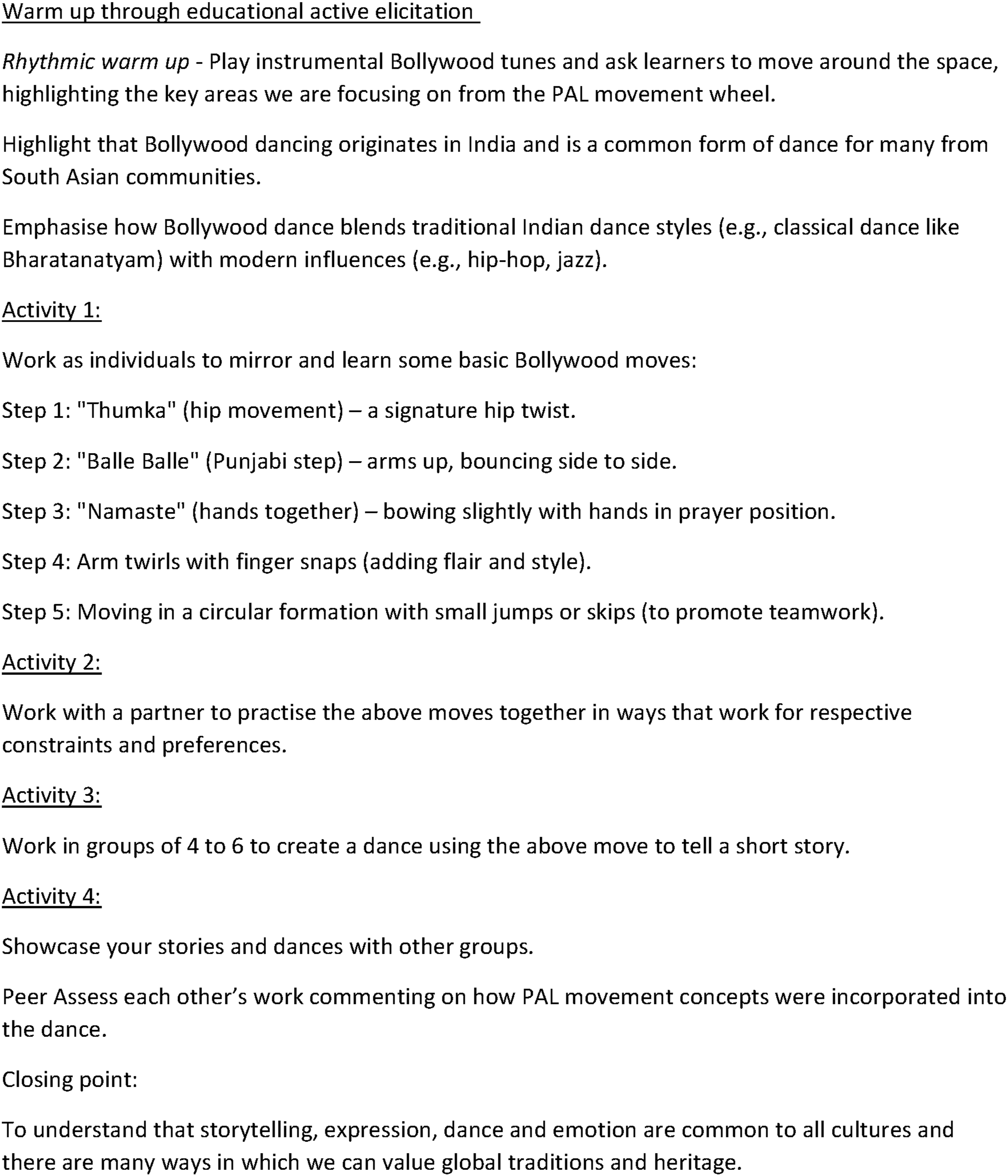
When children have had plenty of varied ways to develop, refine and transfer their acquired movement related skills, it is possible to increase more meaningful activity for other worthy reasons and outcomes. The medium of visual arts is depicted in our final example.
Example 3: Progressing concepts of space to wider practices across the curriculum
Physically active learning (PAL) through visual arts-using space implicitly towards learning outcomes
• PAL in order to get it right for every child; GIRFEC (example from Education Scotland, 2023) • From within the classroom (e.g. connecting with the visual image, perceptions, I see I think I feel, illustrate through a musical count: clap/stamp/stomp) • Other bigger indoor spaces, for example, gym areas (e.g. express movement without equipment making use of space/utilising resources as you progress) • Outside the school building (e.g. extending learning from observing the environment and chalk your own painting) (Figure 3)
Outdoor learning experience
Painted picture of a landscape as inspired by outdoor exploration. • Engage in I see, I think, I feel sharing with colleagues • Consideration to whole environment for learning: from within the classroom • Other areas inside the school • Outside and around the school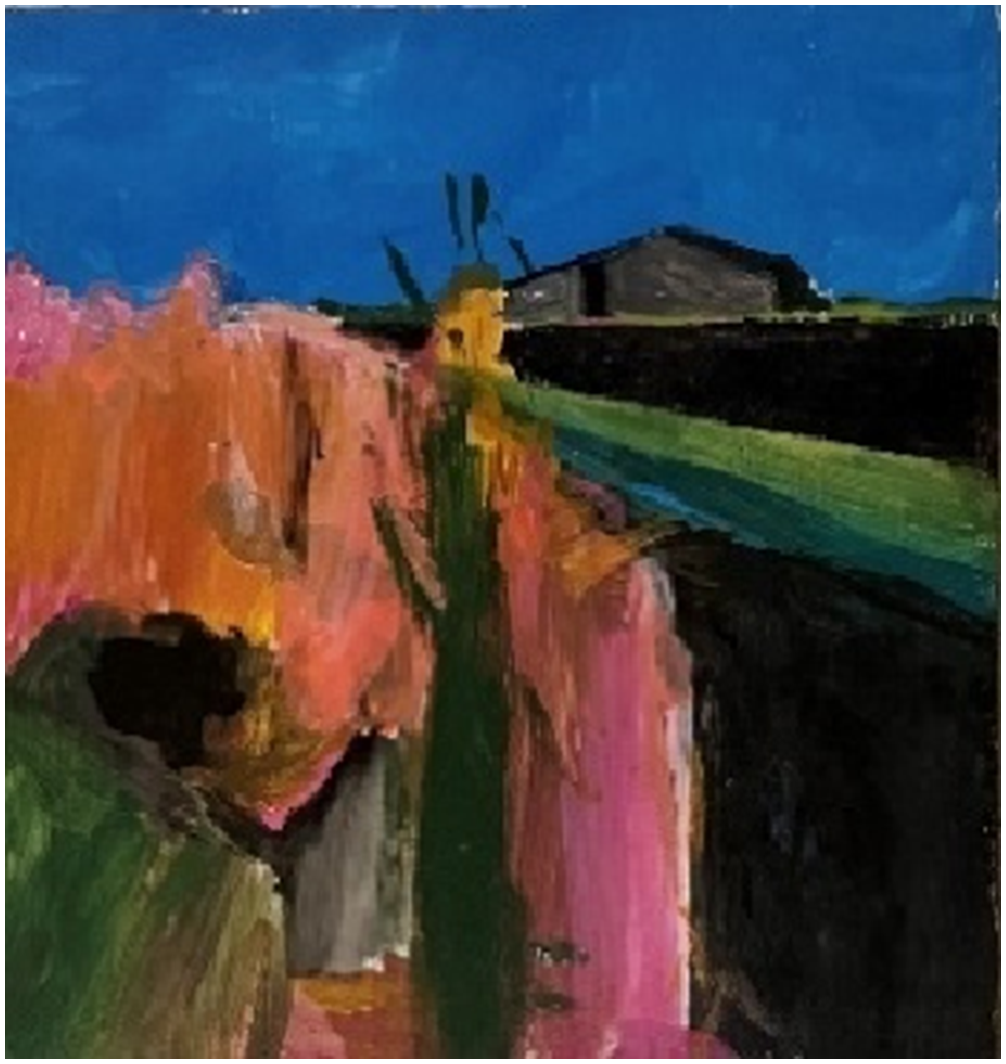
In this example, learning is explored across movement music and literacy.
Movement skills, competencies and concepts: As I encounter new challenges and contexts for learning, I am encouraged and supported to demonstrate my ability to select, adapt and apply movement skills and strategies, creatively, accurately and with control. HWB 2-21a/HWB 3-21a
Music: Inspired by a range of stimuli and working on my own and/or with others, I can express and communicate my ideas, thoughts and feelings through musical activities. EXA 0-18a/EXA 1-18a/EXA 2-18a
Literacy – Enjoyment and choice: I enjoy exploring and playing with the patterns and sounds of language and can use what I learn. LIT 0-01a/LIT 0-11a/LIT 0-20a
Key Teaching Point: Highlight that through the visual arts being used as a stimulus to action democratic pedagogy through movement.
Learning Intention: We are learning to express ourselves through movement.
Success Criteria: • I can identify the significance of the visual arts to demonstrate my ability to select, adapt and apply movement skills. • I can express and communicate my ideas, thoughts and feelings about my painting through musical activities. • I can create my own patterns and sounds of language through what I see, think and wonder about my painting.
PAL focus through movement concepts:
Warm up through educational active elicitation
Rhythmic warm up – Engage with the selected painting and consider what song or piece of music it makes you think about. Play instrumental music and ask learners to move around the space using a variety of travel skills.
Highlight that we are all unique and what we see, hear and wonder when we look at a painting will differ from one person to the next.
Emphasise how our painting may make us think about different musical genres but no answer is incorrect because it is specific to the individual.
Activity 1:
Work as individuals or in small groups:
Share what song your painting made you think about.
Is it a fast song or a slow song?
Can you tap, clap, jump, skip in time to the music?
Activity 2:
Work with a partner can you compare each other’s song and can you think about the lyrics.
Clap out the syllables of the lyrics that make up your chosen song in time to the music.
Activity 3:
Work in groups of 4 to 6 to create your own picture collaboratively.
Create a title for your painting and can you create an accompanying piece of music using materials found around your setting. You can stomp your feet, clap your hands, click your fingers, whistle or use object to tap or drum, etc.
Activity 4:
Showcase your painting and musical creation with other groups.
Peer Assess each other’s work commenting on how movement concepts were incorporated into the task.
Closing point:
To understand that painting can provide a gateway of expression through looking, thinking, wondering, and creating. Acknowledgement that all our creative expressions should be valued, seen and appreciated.
Appreciation of the visual arts can be enriched through embodied pedagogy across the senses and incorporate movement. Using the landscape painting exemplar as a provocation, learners can go for a walk and speak about what environmental elements they have observed. On their nature walk they can sketch and or photograph materials and then create colour montage using art materials such as pencils, crayons, pastels, paints, etc.
The significance of dialogue in drawing out individual expression and demonstrating the practical use of provocations increases participation. Recognising the importance of highlighting creativity in the lives and education of children is vital. Creative approaches enable children to think innovatively, complementing an inclusive, play-based method. This perspective aligns with the view that learning is a social process; children need opportunities to think, wonder, converse, negotiate, and collaborate with their peers and adults (Winsler, 2003). Nearly all children, regardless of their cultural background, engage in play. When play is discussed, movement is implied. This concept can be explored from either a proximal or evolutionary/functional perspective. According to Carruthers and Picciuto (2014), children who participate in pretend play are actively developing their future creative selves as they transition to adulthood. Practitioners play a vital role in this learning approach. One of the initial challenges is that not all practitioners perceive themselves as physically active, leading to a lack of confidence in implementing physically active learning practices. There are numerous crucial components to consider when equipping practitioners with the tools needed for successful PAL implementation. Practitioner autonomy is of paramount importance, as empowering practitioners positively impacts their working environment (Parker, 2015). Holistic opportunities to build embodied practice using PAL through and beyond initial teacher education are encouraged.
Conclusion
Given the ongoing concern for inactivity across childhood (Bardid et al., 2022), and the inevitable interplay between policy and practice, bold leadership is required to redress the marginalisation of children from activity. Leadership that encompasses followership, development and altruism (Ewest, 2018) could serve this ambition well. As social beings, the notion of space for movement also extends to space for social connection. This paradigm is built on the premise that “survival is linked to the ways we connect with others” (Burkhardt and Nagai-Jacobson, 2002, 265). Frankl (2011) attests to the power of being connected for a meaningful life. Recognition of the role space can stipulate, also incorporates development of personal values and associated social progression, extending boundaries of personal space (Martsinkovskaya, 2020). Educational leaders have an advocacy role in social justice (Bogotch and Shields, 2014), and with this backdrop, that role comes into sharp focus.
Equitable means to access and use learning spaces is considered a duty of care, facilitated through inclusive critical school pedagogies and community connecting practices. Sustainable development toward wellbeing for all, across all ages and stages remains a priority (United Nations, 2015). Alongside means to acknowledge, celebrate and integrate cultural and linguistic diversity of children (Holmes, 2023), remains the systematic implementation of ways to construct egalitarian spaces as part of principled inclusive practice. Every day, educators inspire and are inspired by their learners as afforded, in part, by space. One practical way to amplify this, is through PAL using a JEDI framework.
Footnotes
Declaration of conflicting interests
The author(s) declared no potential conflicts of interest concerning the research, authorship, and/or publication of this article.
Funding
The author(s) received no financial support for the research, authorship, and/or publication of this article.
