




Abstract
Intellectual colonisation is defined as the imposition of Western knowledge systems onto non-Western cultures, resulting in the marginalisation and subordination of non-Western beliefs, practices, and technologies. Decolonisation aims to challenge this dominance. Higher Education Institutions play a crucial role in dismantling intellectual colonisation, and sustained efforts are needed to promote diverse perspectives. The authors adopt a critical pedagogy and cyclical improvement approach to develop inclusive and equitable learning environments. They have committed to the process of decolonising the curriculum, acknowledging it as ongoing and multifaceted. A range of staff-led developments have been initiated as understandings of decolonisation have deepened. Alumni have applied review tools related to decolonising the curriculum to identify potential improvement areas. A student workshop was facilitated to overview the initial project developments and gain insight on how to address the issues identified. Feedback from the diverse student cohort indicated this was highly valuable. The potential for student-staff partnerships in driving decolonising efforts has begun to be explored, but key challenges include resource constraints and the need for student upskilling. The project goal is to empower students and staff to acknowledge their positionality, critically engage, and adopt a decolonial lens in both educational and workplace arenas.
Forenote
Within this paper, former colonies are referred to collectively as ‘non-Western’, and colonisers are referred to as ‘Western’. While the use of collective terms to describe diverse geographical and cultural regions is criticised for re-enforcing Eurocentrism (Moosavi, 2020), the authors have been unable to establish alternative acceptable language that concisely distinguishes former colonies from former colonisers in discussions. The adopted terminologies have been engaged to achieve a succinct narrative and are those engaged by respected writers in the field (Bracken et al., 2021; Fernando, 2017).
Colonisation and intellectual colonisation
European or Western colonialism refers to the European expansion of control over foreign territories between the 15th and 20th centuries. Colonialism involved population subjugation, resource and labour exploitation, and the imposition of political, economic, and cultural systems (Kohn and Reddy, 2024). By 1914, most of the world was under European control, and an estimated 10–12 million Africans were enslaved and traded across Europe and the Americas, with devastating humanitarian, cultural, and economic impacts for colonised nations (Lewis, 2024). Colonisers justified their actions by stating they acted in the best interests of those colonised. Through a global ‘civilisation’ project, they aimed to transform conquered territories into a European image (Mamdani, 2019).
During the 18th century, the Enlightenment Movement occurred. It was characterised by the rise of scientific enquiry, faith in reasoning, and attempts to classify the natural and human world. The Enlightenment occurred in the context of colonialism and was led by European intellectuals who centred their perspectives, using them as the benchmark for the rest of the world to be compared against (Lokugamage et al., 2020; Mamdani, 2019). While the Enlightenment challenged superstitions and encouraged methodological research approaches, it contributed to a hierarchical construction of knowledge, where only European epistemologies were considered legitimate.
Intellectual colonisation refers to the process in which the coloniser imposes its beliefs, knowledge systems, languages, and technologies on the colonised people, often at the expense of their identity and autonomy (Littoz-Monnet, 2017; Lokugamage et al., 2020). In the most extreme form, it constitutes cultural genocide (Mosby and Millions, 2021). Despite the dissolution of European colonial territories in the 1940s and 1950s, intellectual colonisation continues (Sharonova et al., 2018). There remains a pervasive discreditation and appropriation of beliefs, ideas, and technologies generated by former colonies (Lokugamage et al., 2020).
Decolonisation and intellectual decolonisation
Higher education institutions (HEI) are recognised as perpetuators of intellectual colonisation through unfair recruitment practices, an unequal distribution of funding and resources for research by Western academics, assessment formats that favour students from White backgrounds over those from ethnic minorities, and the reflection of colonial ideologies in teaching materials and practices (Bhambra et al., 2018; Moosavi, 2020). The legitimisation of Western over non-Western epistemologies arguably reinforces educational attainment inequalities and discrimination experiences (Behari-Leak, 2019). The Higher Education Statistics Agency (HESA) reported that only 67.7% of ethnic minority students were awarded a first- or upper-second-class Honours degree compared to 80.9% of White students (UoG SHW, 2021). Additionally, 50% of surveyed ethnic minority students reported experiencing racial harassment at the University of Glasgow (UoG) (Virdee et al., 2021). This has inspired the UoG, and many other Higher Education Institutions (HEIs), to commit to intellectual decolonisation.
There is no single agreed definition of intellectual decolonisation. However, concepts of increasing representation; creating opportunities for alternative knowledge systems to be created, engaged with, and valued equally; and a critical exploration of dominant schemas and the political motivation(s) behind them are paramount (Bracken et al., 2021; Ferguson et al., 2019; Fernando, 2017). This requires a shift towards a learning culture where the perspective of no single group is more valuable and the provision of opportunities to explore how power relations and cultural exclusion form common knowledge (Keele University, 2018).
Intellectual decolonisation is not a new movement. Recent surges in interest and investment have been inspired by student-led initiatives, including ‘Rhodes Must Fall’, and ‘Why is My Curriculum White?’ (Moosavi, 2020), alongside societal anti-racist campaigns like ‘Black Lives Matter’. Whilst the increased focus on decolonising curricula within HEIs has been largely welcomed by longstanding proponents of intellectual decolonisation, there are concerns the movement is being dominated by Western academics. Critics argue that tokenistic gestures, such as diversifying reading lists, are being mislabelled as acts of decolonisation, and warn that initiatives championed by and benefitting those with power and privilege can translate into neocolonialism and the continued appropriation of funding and research resources (Moosavi, 2020).
Efforts to decolonise curricula using the normal routes of reviewing and modifying teaching materials can result in simply adding more diverse materials, which fails to sufficiently disrupt the curriculum (Behari-Leak, 2019). Intellectual decolonisation encourages academic teams to step back from normal processes, recognise their positionality (especially the power and privilege they hold), and relinquish control over the direction of developments. Students are identified as key collaborators, especially those from ethnic minority groups. Student-led reviews and curriculum modifications put decision-making in their hands, thereby disrupting the status quo and challenging power hierarchies (Bhambra et al., 2018; Hooks, 1996). However, decolonising curricula is time- and resource-intensive, and the labour must not fall on the most disadvantaged. Academic teams must share the workload and provide students with the time and resources they need to inspire change (Arday and Mirza, 2018).
Pedagogical underpinnings: Paulo Freire’s critical pedagogy
Paulo Freire’s critical pedagogy (CP) is recognised as an appropriate framework for enacting intellectual decolonisation within HEIs (Akoleowo, 2021). CP is a pedagogical approach grounded in critical theory which examines how power structures shape society, aiming to challenge systems of oppression and facilitate a shift away from cultural hegemony in education (Matthews, 2014; Uddin, 2019). Within CP, teaching styles shift from a teacher-centred to a student-centred approach. Students and teachers become co-learners and principles of active learning are incorporated by constructing knowledge and opinions through dialogue and problem-solving (Uddin, 2019). When CP is effectively adopted, students are encouraged to question dominant knowledge schemas and power dynamics within and outside the classroom (Matthews, 2014).
Programmatic context: The flipped classroom
The Global Mental Health (GMH) MSc on-campus programme launched in 2012/13 and adopts a flipped classroom approach whereby the core learning content is delivered outside the classroom via a virtual learning environment (VLE) to both on-campus (OC) and online distance learning (ODL) students (Akçayır and Akçayır, 2018; Sharp et al., 2018). The materials, which students independently progress through, are delivered through Articulate Rise 360 and accessed via Moodle. The ODL programme launched in 2016, and the flipped classroom had been fully adopted for OC students by 2020–21. Flipped classrooms are associated with greater student engagement, performance, and satisfaction. They provide opportunities to create flexible, personalised, interactive, immersive, and interdisciplinary learning experiences and enable students to learn at their own pace (Adedoyin and Soykan, 2023; Akçayır and Akçayır, 2018; Evans et al., 2019; Foster and Shah, 2021). The approach also ensures consistency in the core teaching received by OC and ODL students.
GMH student cohort demographics for the 2023–24 academic year.
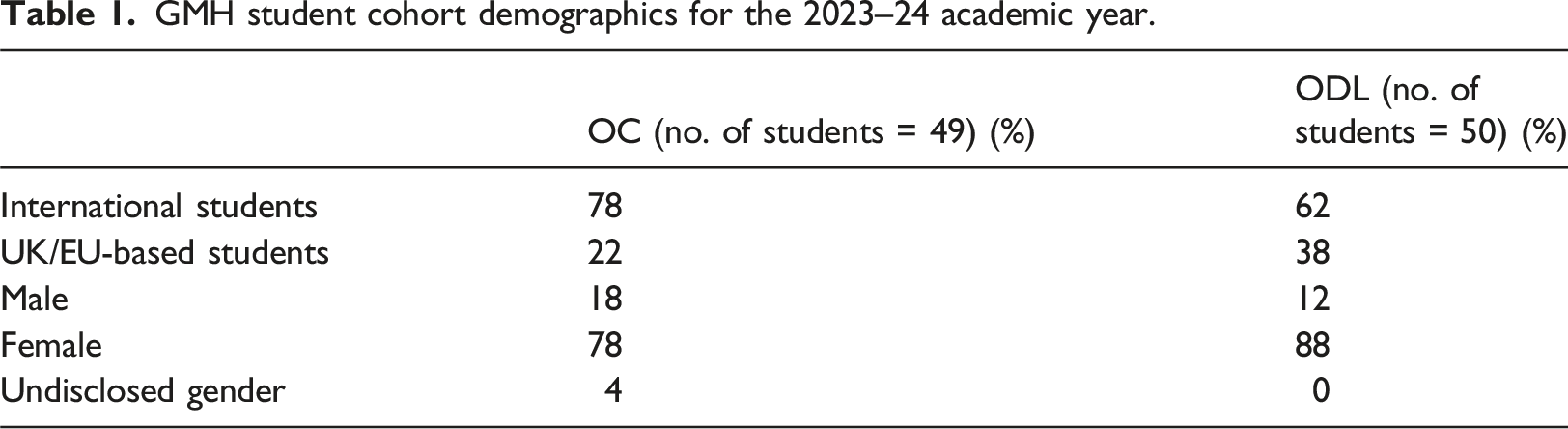
Cyclical improvement approach
The GMH team has implemented a cyclical improvement approach to continually sustain and enhance pedagogically informed teaching approaches (Foley et al., 2024; Sharp et al., 2018, 2022). The projects undertaken range from routine tasks to more substantial scholarship initiatives. Many support decolonisation initiatives by making education more accessible and equitable for marginalised groups. For example, efforts to ensure clear, concise, and consistent use of language across the curriculum are inclusive of students with English as their second language (Wingate, 2015). Additionally, the team’s redesigning of assessments to have authentic formats (Karadzhov et al., 2021) is a recognised methodology for improving degree outcomes for marginalised students (Ajjawi et al., 2023).
Student involvement and feedback are crucial to cyclical improvement (Sharp et al., 2022). Student feedback is collated on an iterative basis, and programme alumni are recruited as teaching assistants (TAs) to support developments. This approach aligns with CP by centring the student in the nature and direction of developments.
Whose W.O.R.D.D. counts? A diversity review
In 2021, as part of the cyclical improvement approach, the teaching team used the Open University’s (2022) Whose W.O.R.D.D. counts? tool to review the diversity of the GMH online learning materials (Foley et al., 2024). The review process identified key strengths of the curriculum, namely, that the materials used inclusive language, represented a range of cultures, and provided multiple opportunities for students to share their prior knowledge and personal experiences.
A summary of the three themes of development resulting from the diversity review.
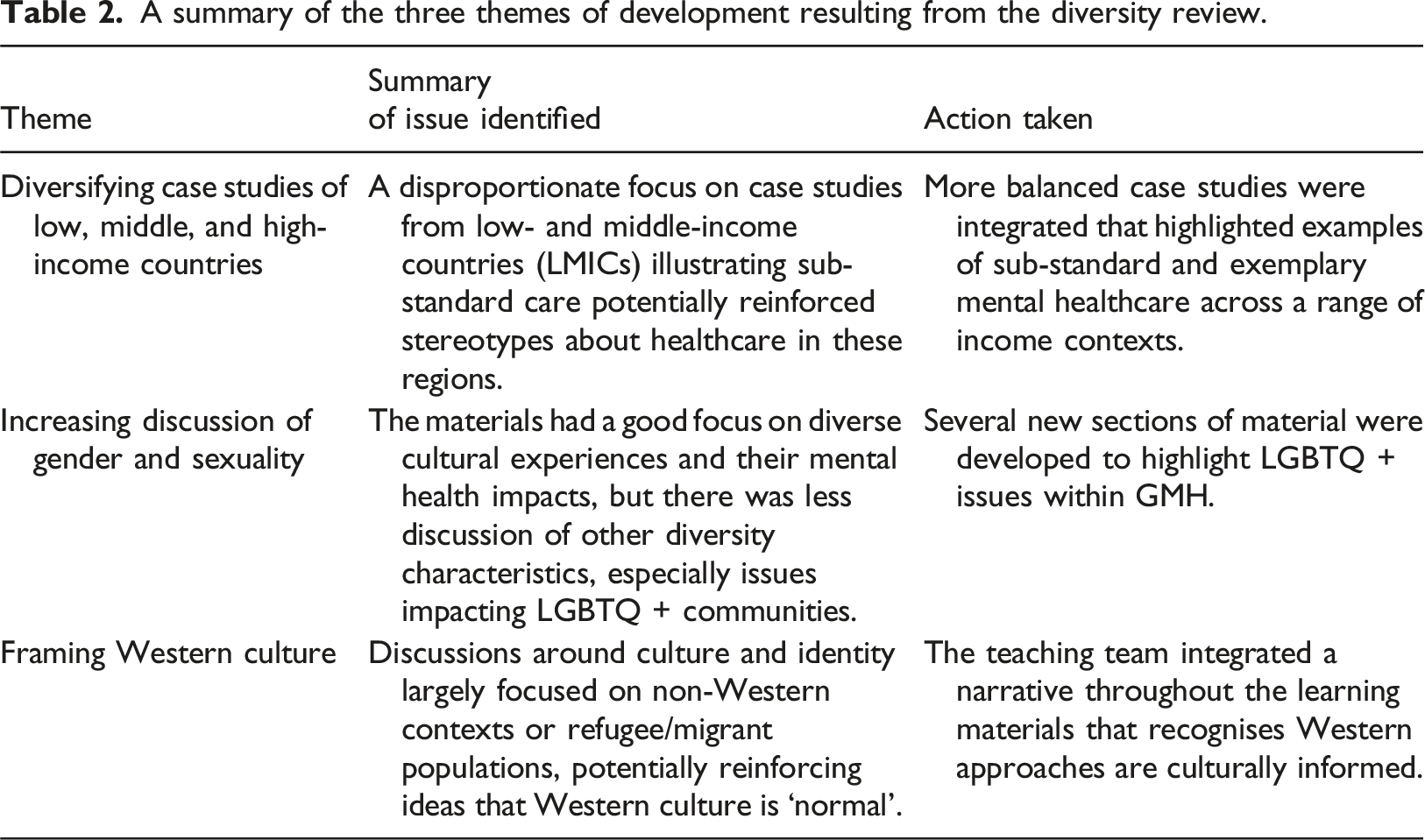
Beyond diversity to decolonisation
The diversity review catalysed the decolonisation of the GMH curricula. CP requires learning materials to include diverse representations so that students can relate the content to their prior knowledge and experiences, and have their presence in and contribution to the field validated (Campbell et al., 2021; Charles, 2019; Foley et al., 2024). However, diversity initiatives are facing increased criticism for failing to address the root causes of systemic inequality. Arguably, they merely accommodate minority groups while still expecting them to conform to Eurocentric frameworks that disadvantage them (Albayrak-Aydemir, 2018; Begum and Saini, 2019). Decolonising the curriculum surpasses diversity projects by acknowledging and challenging colonial constitutions, systems, and practices (University of Essex, 2024).
The importance of decolonising GMH
The psy-disciplines (psychiatry and psychology) emerged during the Enlightenment and were an integral part of the European colonial project (Fernando, 2017). The values and beliefs of that time were White supremacist, heteronormative, ableist, and patriarchal. A well and functioning mind was one that aligned with these ideals, with those who did not conform pathologised and persecuted (Bracken et al., 2021; Fernando, 2017). Given their colonial foundations, the ethics of globally applying the psy-disciplines is questioned. The field of GMH has been criticised for exporting and using the psy-disciplines in non-Western contexts, encouraging cultural blindness amongst practitioners, disregarding local values, and undermining alternative healing systems (Bracken et al., 2021). Furthermore, within mental healthcare presently, racism and other forms of discrimination are prevalent (Fernando, 2017). This contributes to the increased vulnerabilities marginalised communities face in becoming unwell and impedes recovery (Hamed et al., 2022; Michaels et al., 2023; Williams et al., 2019).
To minimise harm, GMH practitioners must understand the historical and socio-political underpinnings of mental health inequalities, know about non-Western knowledge systems, and be able to view mental health experiences and care from diverse perspectives. A decolonised curriculum is essential to achieve this (Meda, 2020).
Initiating the process of decolonising the curriculum
The GMH team have initiated a process of decolonising the curricula underpinned by CP. Within health education, CP stimulates learners to critically question health information, rather than be passive recipients. Students are encouraged to view health as historically embedded and determined by political, economic, socio-cultural, and environmental factors, as well as their interaction (Matthews, 2014). The focus has been on decentering, rather than removing, Western knowledge (Meda, 2020).
Behari-Leak (2019) highlights that intellectual decolonisation cannot be achieved through prescribed, step-by-step guidance. For the GMH team, the endeavour began as we became increasingly familiar with intellectual decolonisation concepts and processes and gained the confidence to initiate changes. As we progressed, the importance of involving others became apparent and is reflected in project directions. Projects can broadly be categorised into staff-led initiatives and collaborative practices. Staff-led initiatives include all projects led and developed by GMH teaching team members. Collaborative practices involve alumni and students.
Staff-led initiatives
Outline of larger staff-led developments.
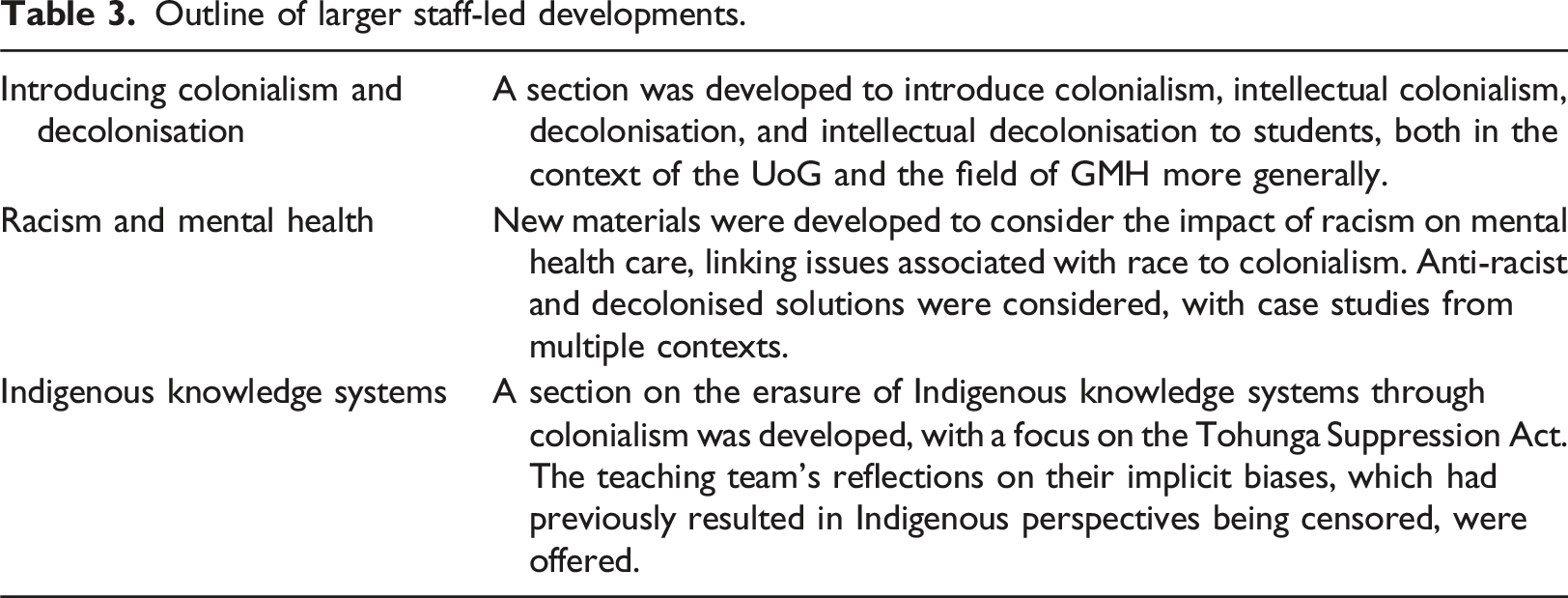
Staff-led changes also included the advent of a new reading list with papers discussing issues of power, difference, and inclusion in GMH care. Many of the cited authors are people with lived experience of mental health difficulties from multiple global contexts. The articles challenge dominant views in psychiatry and health care, giving voice to marginalised communities.
As the curriculum changes and new decolonised materials are embedded, the diversity of scholars and topics across the course reading lists will improve, and the reading list will become surplus to requirement. However, this process is slow, and students should be routinely encouraged to adopt a decolonial stance with access to appropriate materials. This reading list serves as an interim step. Standalone reading lists have been labelled tokenistic when they act to increase the representation of non-Western scholars without meaningful curriculum changes (Moosavi, 2020). However, the GMH team hopes such criticisms do not fully apply to our endeavour, as it is contextualised within several other actions.
Collaborative practices
The Reading review: A question-led approach to decolonising the curriculum
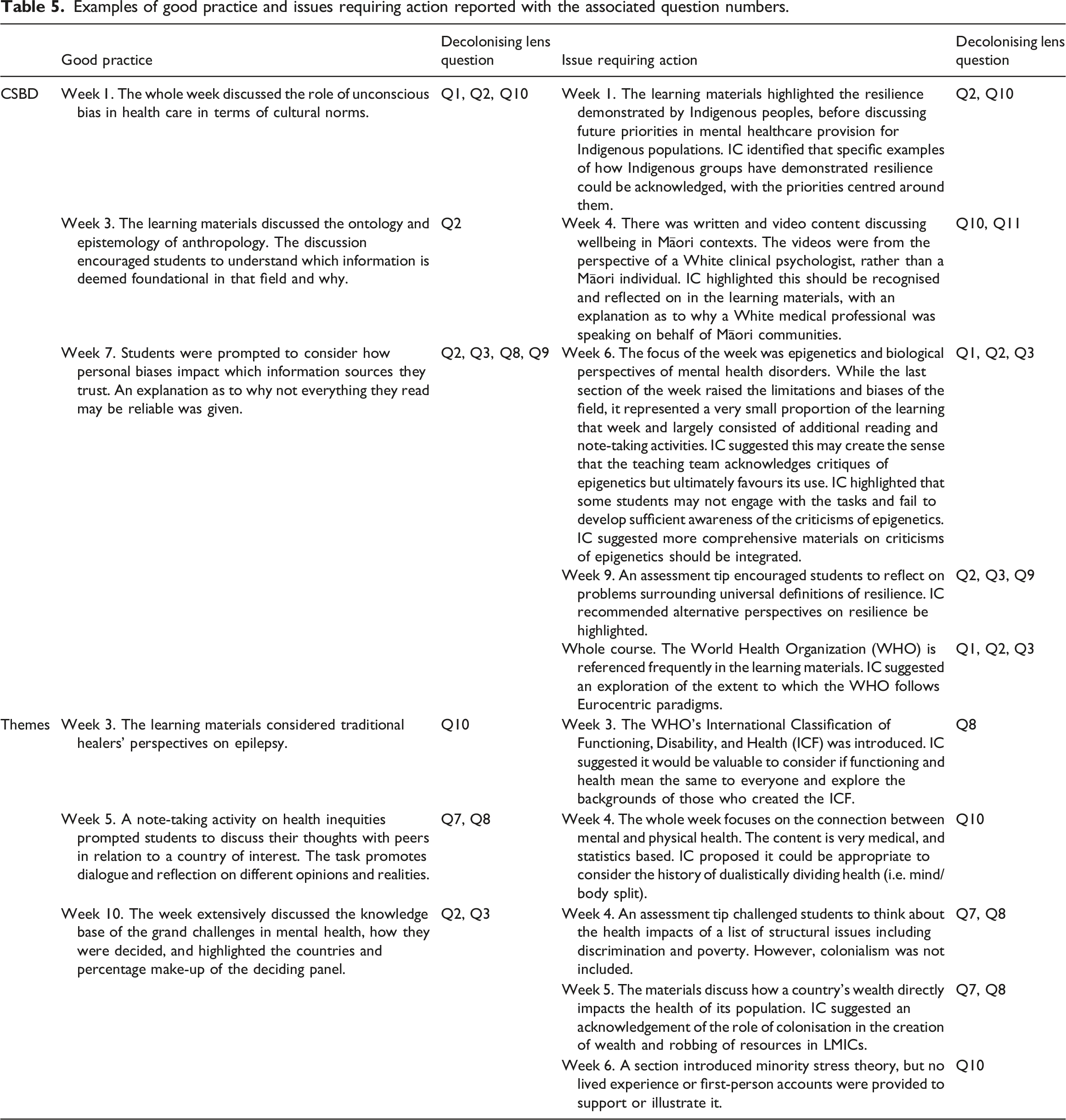
Funding was secured through the UoG’s Learning and Teaching Development Fund (LTDF) to engage an alumna of the GMH MSc for 14 days as a TA to perform a question-led audit of the learning materials with a decolonial focus. This position was open to the OC GMH cohort from 2022–23, with one individual (IC) self-nominating for the position. This approach was adopted based on the success of the diversity review. With support and guidance from colleagues, the TA audited two 20-credit GMH modules: Themes in Global Mental Health (Themes) and Cultural, Social, and Biological Determinants of Mental Health (CSBD).
The University of Reading (n.d.) review tool was used. It consists of 27 questions developed by the university’s Decolonising the Curriculum Working Group. They appointed student inclusion consultants and drew upon diverse student and staff perspectives to inform the development of the questions (University of Reading, n.d.). As this partnership approach is something we wish to emulate, the Reading review tool was deemed valuable for initiating the decolonisation of GMH curricula.
Phase 1. Familiarisation, reflection, and theming
Before commencing, the lead reviewer (IC) familiarised herself with the review tool. She considered her positionality and how it affected her understanding of the questions and recent experiences of the GMH programme as a student. IC is a Caucasian, Scottish, cis-gendered, heterosexual woman. She recognised the need to adopt a critical stance. She considered when her experiences and perspectives were validated or challenged by the review tool questions and learning materials. As she identified discrepancies, she noted these and outlined potential approaches that could be engaged to balance or diversify the issues.
Through this, IC identified that the review questions broadly fell into two categories: (1) Decolonising Lens Questions: These were questions that directly interrogated curriculum content and teaching strategies. (2) Theoretical Questions: These were questions pertaining to the field, rather than the curriculum content.
Decolonising lens and theoretical questions from Reading review tool.
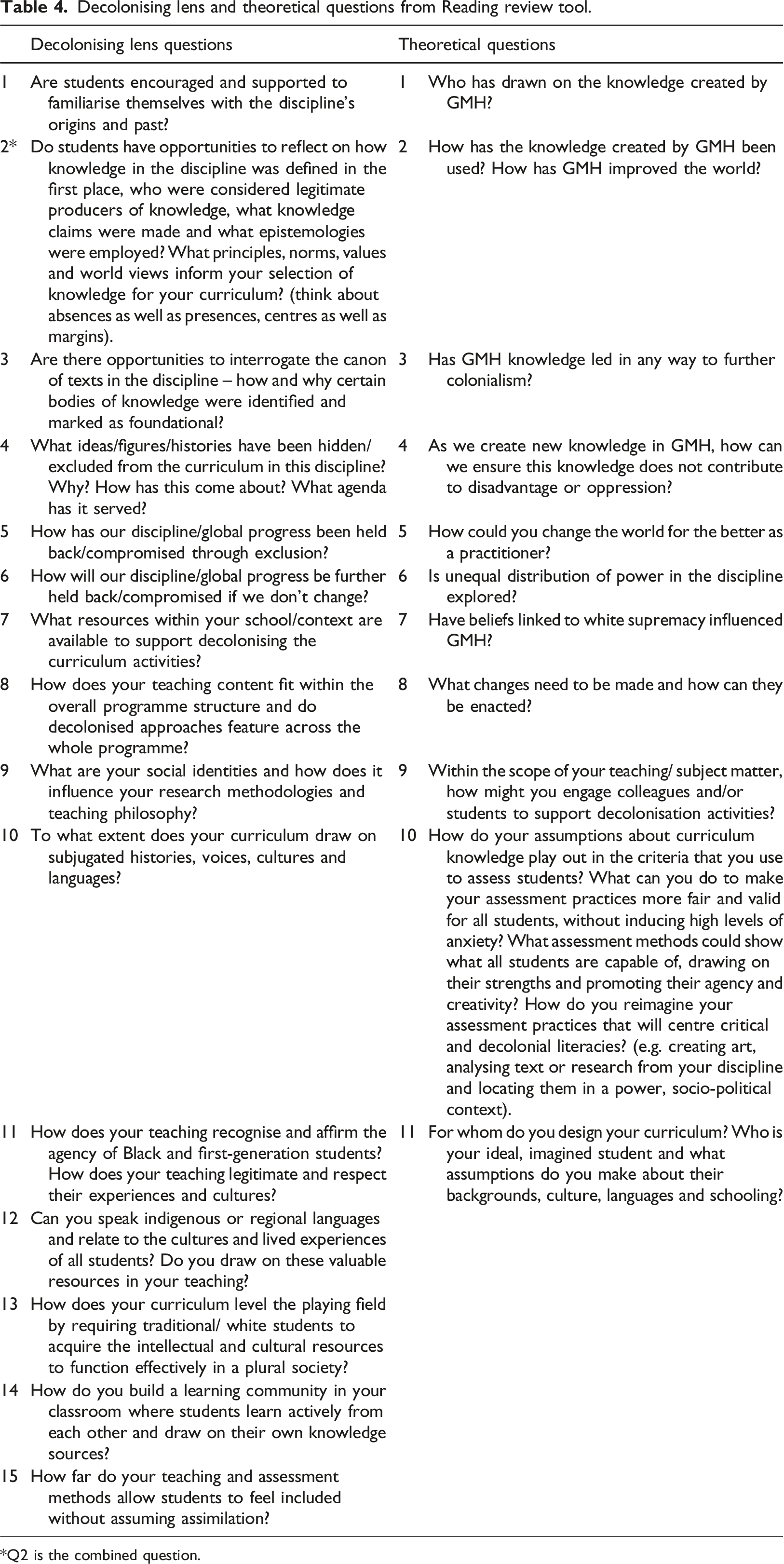
*Q2 is the combined question.
Phase 2. Applying the decolonising lens questions to themes and CSBD
Examples of good practice and issues requiring action reported with the associated question numbers.
Student workshop
A key strength of this project is that the lead reviewer (IC) was a course alumna. However, IC and all authors are White, female, and Scottish-educated. Decolonisation efforts are not targeted at improving the experiences or amplifying the voices of this demographic. Thus, the GMH team reached out to the diverse student body to garner their insights on tackling the issues identified by the Reading review. This was a deviation from normal curriculum development approaches (typically staff-led) that shifted the balance of power from the teaching team to the students. A further rationale for the workshop was that the staff-led developments had not yet been integrated into the live modules. Given the cruciality of decolonisation within GMH, the team considered it vital that this was incorporated into their curriculum.
A two-hour in-person workshop was scheduled for the seventh week of semester one, and all OC GMH students were invited to attend with a month’s notice. In addition to garnering insights, the workshop aimed to educate students about intellectual decolonisation and help them develop a critical lens so they could address related issues throughout their MSc and after graduation.
Twelve out of 49 students attended, three UK and nine international students. The nationalities reported (in alphabetical order) were American, British, Egyptian, Ghanaian, Indian, Indonesian, Irish, Nigerian, Scottish, and South African. Half spoke English as their first language. Other first languages included Arabic, Ghanaian, Hindi/Urdu, Bahasa Malaysia, and Indonesian native. Eight (66.7%) participants identified as female, three (25.0%) as male, and one (8.3%) as non-binary.
The workshop was planned and co-ordinated by LS, AF, and MW. To miminise potential barriers to students critically engaging with the learning materials, the facilitators were not routinely involved in face-to-face teaching. Staff-led developments introducing intellectual decolonisation and its importance for GMH practitioners were presented, and the Reading review was outlined, with good practice examples highlighted. However, beyond this, to align with CP and active learning principles, the time facilitators spent talking was minimal.
A pedagogical technique called repositioning was utilised to dismantle the power dynamics between the facilitators and attendees (Matthews, 2014). Repositioning involves facilitators relinquishing authority on a topic. Throughout the workshop, the facilitators made our team’s positionalities clear and emphasised our knowledge limitations, the novelty of intellectual decolonisation to us, and our need to learn from attendees. Reflective tasks were incorporated that encouraged students to recognise their positionality and the knowledge and ability they possess to help decolonise the curricula (Uddin, 2019). The facilitators also posed authentic questions, which are ones they do not know the answer to. This is another pedagogical technique that helps alter power relations by positioning the facilitators as co-learners (Matthews, 2014). The facilitators employed this technique by asking the attendees to work in groups to identify innovative ways to address some of the issues revealed by the Reading review. Each group was then asked to share their ideas with and receive feedback from the rest of the room.
To further disrupt the balance of power, the workshop was delivered with input from two Masters of Public Health (MPH) students (OO and AG) who had volunteered to support Equality, Diversity and Inclusion (EDI) developments through the School of Health and Wellbeing’s Athena SWAN network (Athena SWAN network, n.d.).
At the end of the workshop, students were invited to develop their ideas with staff support into new learning materials. They were informed that their contribution would be recognised in their university transcript as the EDI Athena SWAN award. Six students registered their interest.
Reflections on the positionality activity – The ideal childhood
One of the positionality activities involved presenting attendees with two hypothetical scenarios. In the first, they were delivered a single infant to raise. In the second, they were given responsibility by the WHO for 10 infants spread across the world. The attendees were instructed to consider how they would ensure each child’s happiness and long-term success. They had time for independent reflection before a group discussion.
Initially, three White students contributed to the discussion. The rest of the class was silent despite engagement prompts from the facilitators. It was noted that the priorities and protections for the 10 infants reported by the contributing students were more basic than those for the single child. The facilitators asked if this may be due to assumptions that the single child was ‘like you’ and the 10 children were from a low- or middle-income environment. Attendees were asked to reflect on why the fundamental needs would be different. It was highlighted that nobody had identified community, land, or spirituality/religion as a priority, yet this may be important to many communities.
At this point, a student who had been quiet expressed that they were from an Indigenous community in Indonesia and that their list had been so different from the contributors’ that they had not felt confident participating in the discussion. They said that it would be important for their child to learn about their culture, religion, and traditions. A second student reiterated this opinion, adding that they were concerned these discussions could homogenise the needs and wants of Indigenous peoples. They asserted also that no matter what they might want for their child to succeed, the impact of imperial powers ensures it is unachievable. These conversations demonstrate the challenges of creating a space where all ideas feel welcome and the difficulties of managing discussions to ensure a minority of voices do not dominate. They also provided the facilitators with first-hand experience of how easily the voices of those impacted by colonialism can be silenced or missed.
Student workshop feedback
Students were presented with a questionnaire at the start of the workshop that collected demographic information and determined their pre-existing knowledge about decolonisation. A second questionnaire at the end (linked by participant number) collected feedback about the workshop and student learning.
Eleven students provided information about their pre-existing knowledge of decolonisation. Before the workshop, four (36.4%) considered themselves to be very familiar, three (27.3%) indicated they had heard of decolonisation but were not overly familiar with it, and four (36.4%) reported being unfamiliar with the concept. The questionnaire prompted students to define decolonisation. Seven students provided a definition. Two definitions (28%) related to traditional ideas of decolonisation such as ‘when a state wants to break away from their colonial master… to gain full control of their legal rights’, and 5 (72%) alluded to processes of intellectual decolonisation in the desire ‘to reconstruct curriculums in a manner that is not euro-centric… account[ing] for cultural influences and alternative ideologies’.
The post-workshop questionnaire was partially completed by 10 attendees. All 10 responded to a question about whether the workshop had highlighted new information or discussed issues they had not previously considered. Of these, 90% indicated it had. Nine attendees responded to a question about the value of the workshop. Of these, 100% specified they found it extremely valuable. Eight participants provided additional written feedback. Common themes included new or deeper understandings of decolonisation, an appreciation of insights into different viewpoints, and opportunities to garner ‘insight into an important topic in education…[and] learn a lot about colonisation and decolonisation [to] challeng[e]… bias and understanding’. A knowledge focused evaluation was chosen as this student cohort had not had any exposure to the newly developed decolonisation materials at that point in their MSc journey. The workshop served as a means of evaluating the staff-led materials by assessing the learning gained, as well as engaging the student body in a novel way to disrupt the power dynamics between student and teacher.
Addressing issues and progressing decolonisation
Definitions and examples of each development type.
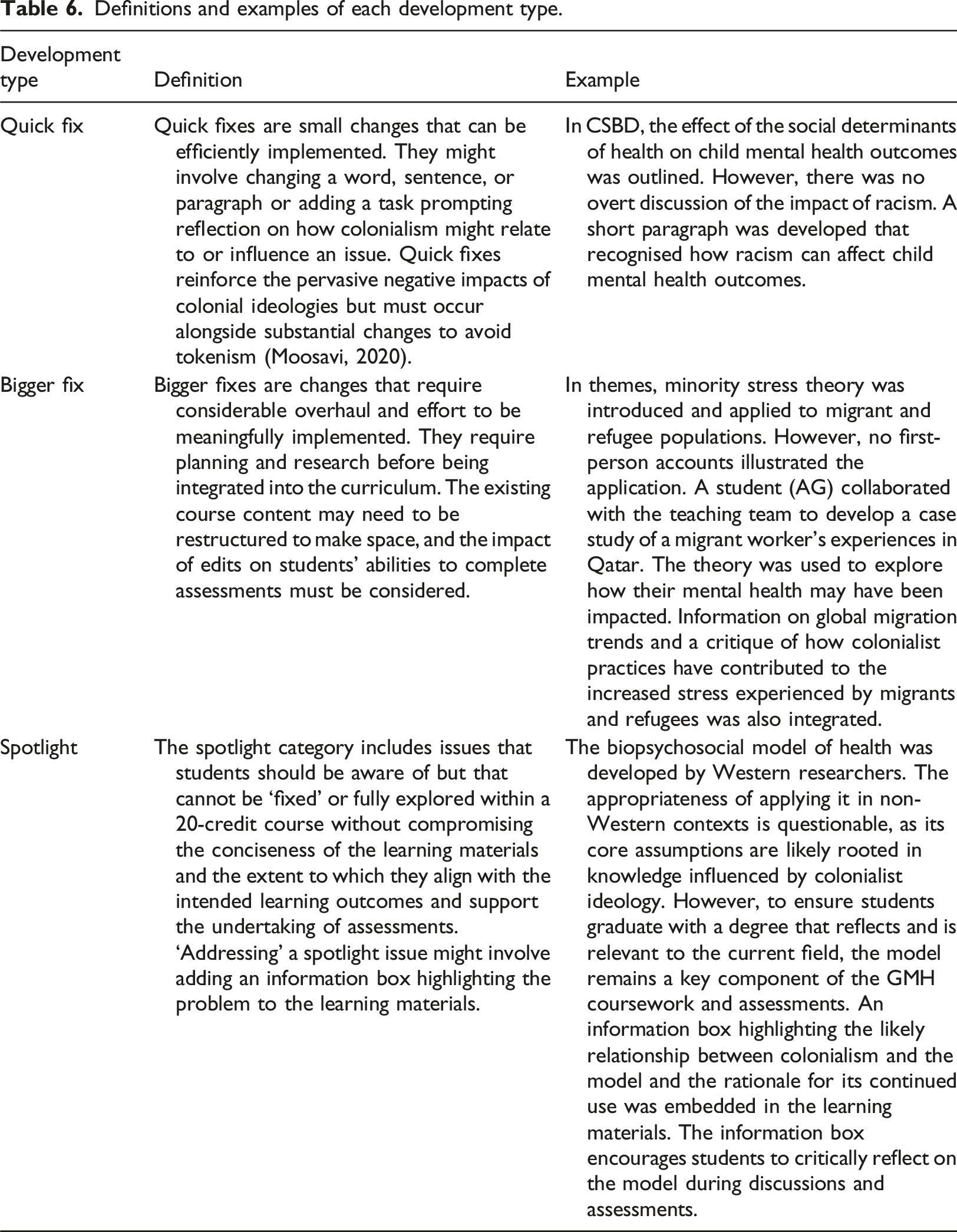
Staff have largely actioned quick fixes and spotlights, while students have contributed to bigger fixes. Student-staff partnerships are time- and resource-intensive. Students require to be upskilled in producing materials appropriate for a Masters programme, which requires staff to provide feedback and support. Ideally, students should also be compensated for their time. Following the workshop, funding for this was reduced and the teaching team’s workload increased, diminishing their mentorship capacity. As a result, only the most motivated students contributed to the reported content developments. This included the MPH students who helped deliver the workshop and one workshop attendee assisted with the creation of videos spotlighting issues with mental health and related care in their home country.
Dissemination and partnership with the MPH programme
Intellectual decolonisation cannot be achieved by a single programme, school, or university. Efforts must spread across HEIs through changes in curriculum and assessment design, as well as research practices (Behari-Leak, 2019; Moosavi, 2020). We have endeavoured to inspire colleagues to initiate their own decolonisation journey. We have presented our work and published summaries internally for colleagues at the UoG (Sharp et al., 2024a, 2024c) and presented at national and international conferences (Sharp et al., 2024b, 2024d). Furthermore, we have supported colleagues and students within the MPH programme to commence a review of their curricula and have collated our learning to date into a good practice guide (Sharp et al., nd). The authors are able to provide additional supplementary material for readers detailing how content discussed in the paper has been applied in practice, please contact them directly if this would be helpful.
Future directions and closing reflections
The staff-led initiatives, Reading review, workshop, and student-staff partnerships have been valuable activities and learning experiences for everyone involved. However, limited funds meant the Reading review was confined to two modules, and a notable proportion of the identified issues remain unresolved (20/26 remaining). Future directions involve addressing these, expanding the review to all GMH courses, reflecting on the theoretical questions set aside at the beginning of the review, and refining and integrating the workshop into the core GMH programme, rather than offering it as an optional event.
Reflections on the workshop indicate several ways it could be improved. It was noted that attendees sat in racialised groups, an informal process referred to as micro-segregation within the classroom. Micro-segregation is argued to impede interracial discussions (Alexander and Tredoux, 2006), something paramount to decolonisation efforts and which may have contributed to the dominance of White voices during the positionality activity. Moving forward, we will explore ways of challenging micro-segregation and creating a platform where everyone feels confident contributing. One methodology to support balanced participation is Matthews’ (2014) three-person rule, where attendees are asked to wait until at least three people have spoken before they contribute further. Future feedback will move away from knowledge assessment and will evaluate the workshops’ ability to empower students and shift the balance of power.
Laville (2023), one of the authors of the Reading review tool, argues that decolonising efforts must expand beyond the tool’s focus on teaching and assessment. They identified three themes for future directions: (1) decolonising teaching and learning spaces, (2) promoting student-staff partnerships, and (3) funding decolonised research. Our team has initiated or is considering several scholarship projects that support the first two themes. These include building an online community for ODL students (1), creating an online equivalent of the workshop for ODL students through student consultation and partnership (1, 2), and piloting an Inspiring Movements for Progressive Action and Change Together (IMPACT) workshop to support students to engage in social justice campaigning (1, 2).
We also endeavour to expand the number and scope of student-staff partnerships as well as our partnerships with academics engaged in teaching and decolonising projects. Based on the required time and resources, we need to identify the most effective way to approach this. Funding is inconsistently available to compensate students, and the rapid and iterative nature of content development can make it challenging to involve them at every step. Ideally, students would contribute to several mini-projects to build pedagogical skills. However, their need to study and establish post-degree employment can make this challenging. Their academic and professional journeys should benefit from the experience, rather than being impeded by increased workloads. Additionally, irrespective of whether students collaborate with us on content development, we are cautious of burdening them by expanding the curriculum beyond the limits of an MSc programme. Following the integration of decolonised curricula, there should be a full review and streamlining of the online materials.
While student-staff partnerships are considered best practice, they are not always feasible for the reasons outlined. However, by integrating decolonised materials and running the workshop, it is hoped students will learn how to apply a decolonial lens throughout and beyond their degree so they can support the decolonisation process regardless.
The process of decolonising our curriculum to date has involved multiple strategies, including staff-led initiatives and collaborative practices such as the Reading review, student workshop, and student-staff partnerships. All have yielded valuable insights, but we remain at the start of the journey and must overcome funding limitations and resource constraints to continue and expand the work. The ultimate goal is to establish inclusive and equitable learning environments that empower students and staff to critically engage with the most pressing global health and societal issues. The approaches taken by the GMH team have been and will remain open to experimentation. We embark on them thoughtfully and reflexively and will continue seeking feedback from colleagues and students to ensure best practice.
Footnotes
Acknowledgements
We appreciate the support of Dr Dimitar Karadzhov, Isla Campbell (IC – lead Reading Reviewer), Dr Samuel Owusu, Oluwatobi Oni (OO), and Asmita Gaire (AG) who have been hugely supportive in progressing components of the project to date.
Declaration of conflicting interests
The author(s) declared no potential conflicts of interest with respect to the research, authorship, and/or publication of this article.
Funding
The author(s) disclosed receipt of the following financial support for the research, authorship, and/or publication of this article: The authors disclose receipt of financial support of £2724.55 from the University of Glasgow’s Learning and Teaching Development Fund to undertake the curriculum review, generation of good practice guide, and dissemination of this project. This was awarded on 18th May 2023.
