



Abstract
Previous research demonstrates the specific wording employed in recruitment materials can impact on an applicants perceived fit with the role being advertised, their inclination to apply and has included analysis of the effect of different text on under-represented groups. However, little research has explored the recruitment materials for specific roles, such as headteachers. A review of job advertisement research was used to synthesis a framework for the critical analysis of UK primary headteacher recruitment materials, a highly relevant area for exploration given the persistent lack of diversity in teaching leadership. This research concludes that primary headteacher recruitment materials are not inclusive as they do not explicitly encourage nor support diversity of appeal or engagement with recruitment processes, and has surfaced considerable scope for enhanced practice. No (0) job advertisements contained: job-sharing/flexible working opportunity; relevant employee benefits, for example, tax-free childcare; or a diversity statement/positive action initiative. Diversity is further undermined via inconsistent and unrealistic expectations in both person specifications and job descriptors. Highly inconsistent applicant packs and wide variation in advertised salary bands were unexpected findings that suggest a ‘cottage industry’ approach to primary headteacher recruitment and underpin recommendations for developing good practice and writing inclusive teaching leadership advertisements.
Introduction
A key strategic decision point in the life of any School is the appointment of a headteacher, with the process of recruitment and selection lying with the School’s Governing Board (GB) (Atton and Fidler, 2003; Huber and Pashiardis, 2009: 176–199; DfE, 2019a). Despite its importance, headteacher appointment is a generally under-researched area and investigation of head teacher job advertisements (ads) has not been extensively researched, which is why we undertook the study reported here. The majority of primary schools are currently maintained by a local authority which has an advisory role in the headteacher appointment process. However, an increasing number of primary schools are academies within a Multi-Academy Trust (MAT), in which the Executive Principal/Chief Executive may hold an advisory role. In addition, a representative of the local diocese may hold an advisory role in primary schools with a religious affiliation (DfE 2016, 2017a; Huber and Pashiardis, 2009: 176–199). Primary headteacher recruitment materials were therefore chosen for this research because of the insight this would allow into one of the most challenging teaching leadership recruitment settings, given that the governance of headteacher recruitment processes in primary schools is diverse and evolving.
The most recent Department for Education (DfE) data demonstrates persistent gender and race inequality in teaching leadership roles (DfE 2021, 2022), alongside School GBs facing increasing recruitment challenges including a shortfall of qualified candidates (Connolly et al., 2018; Draper and McMichael, 2003). Previous research has identified a range of individual factors (e.g. stereotypes) that affect gender and racial disparities at headship alongside institutional mechanisms that sustain these inequalities and influence perceptions and attitudes towards female and ethnic minority headteachers ( e.g. Fuller, 2016, 2017; Miller, 2016; Miller and Callender, 2018). An under-researched institutional mechanism that might contribute to gender and racial disparities at headship is recruitment materials. The overall aim of this study was to critically analyse primary headteacher recruitment materials to determine any consistent features that could make the role seem less or more appealing to prospective candidates from under-represented groups, and thereby effect the diversity of the applicant pool.
In order to achieve this aim, a novel analysis framework was synthesised from a literature review of the previous job ad research that has identified specific features of recruitment materials that attract or deter prospective candidates from under-represented groups. For example, Gaucher et al. (2011) demonstrated that small word changes in job ads can subtly signal who belongs and who does not belong in the role being advertised. This study showed subtle word choice important for gender equity as the appeal of a position could be reduced specifically for women if a job ad used masculine wording (Gaucher et al., 2011).
Our main interest was in identifying any consistent features of primary headteacher recruitment materials that have been shown in the relevant job ad literature to deter or attract people from under-represented groups to the role being advertised and to surface evidence-based recommendations in order to diversify the prospective candidate pool.
Literature review
In this section, we first summarise the literature about diversity in teaching leadership in order to surface problematic trends. We then review the research exploring headteacher recruitment to explain what is already known, to locate our findings and to contribute to that literature. Finally, we provide an analysis of the job ad research literature that has identified features of recruitment materials which increase or decrease the appeal of the role being advertised to prospective candidates from groups which remain under-represented in primary headship. Our rationale for reviewing this literature is that it allowed us to synthesise an evidence-based framework for the systematic analysis of primary headteacher recruitment materials and supports our critical evaluation of their role as an institutional mechanism that perpetuates gender and racial inequalities in teaching leadership. In doing so, we are able to propose evidence-based recommendations for diversifying the prospective candidate pool in this context.
Persistent trends in the diversity of teaching leaders
The 2022 DfE report on school leadership characteristics and trends from 2010–2020 demonstrates persistent gender and race inequality in teaching leadership roles (DfE, 2022). Despite the teaching workforce being predominantly female, there is a clear ‘leaky pipeline’ to headteacher, where women remain under-represented in comparison to the proportion of women who make up the teaching workforce. In primary schools in 2020, 85% of the teaching workforce were female compared with 74% of headteachers. In secondary schools, 63% of the teaching workforce were female compared with 40% of headteachers. Overall, between 2010 and 2020, the proportion of women in leadership roles increased, but only by 3% (from 67% to 70%) (DfE, 2022). These findings are comparable with earlier research analysing DfE workforce census reports from 2005–2015/16, leading to an estimate of 2040 as the earliest date when the proportion of women headteachers may match the proportion of women in the teaching workforce (Fuller, 2016; tes, 2016). Teachers from minority ethnic backgrounds also remain under-represented in teaching leadership roles and those who occupy leadership roles are concentrated in two UK regions. From 2010–2020, there was only a 2% increase in the proportion of people from minority ethnic groups (including white minorities) in teaching leadership roles, from 5% to 7%, and from 7% to 9% in primary and secondary schools, respectively. 37% and 14% of leaders in London and the West Midlands, respectively, were from ethnic minority backgrounds (including white minorities), compared with 42% and 15%, respectively, of teachers (DfE, 2021; DfE, 2022). Disaggregation of this data reveals significant differences between ethnic minority groups in leadership roles. Analysis of data spanning 2015–2019 revealed that teachers from ethnic minorities (excluding people from white minority backgrounds) were 21% less likely to be promoted to headship than their white British counterparts (DfE, 2021; DfE, 2022).
Gender and race inequality in school leadership has been researched extensively and has demonstrated a range of barriers to retention and career progression alongside positive practices which may help address progress of women (e.g. Fuller, 2016, 2017) and teachers from minority ethnic groups (e.g. Miller, 2016, 2019; Miller and Callender, 2018) already in post to leadership positions. However, the role that headteacher recruitment materials may play in perpetuating these disparities has not yet been a research focus.
Headteacher recruitment
Despite its importance to the success of a school, the process of headteacher appointment is not well researched (James et al., 2019). Advice on headteacher recruitment is available from the National Governance Association (NGA) who have authored detailed guidance and a toolkit (2017, 2020). However, little reference or detail about the research underpinning this published advice is available. Studies into headteacher recruitment are typically categorised as ‘supply-side’ or ‘demand-side’, depending on the research focus. The majority of studies have explored supply-side issues, predominantly researching teachers own accounts of incentives and barriers to career progression (Kwan and Walker, 2009). Such research has surfaced a range of factors that deter progression, including workload and work-life balance, increasing managerialism, risk and isolation (e.g. Connolly et al., 2018; Davies et al., 2018; Grummell et al., 2009; James et al., 2019; MacBeath et al., 2009; Tunnadine, 2011). These studies are often contextualised within the headteacher appointment process of specific countries, including in Ireland (Grummell, 2009), Wales (Davies et al., 2018), Scotland (Macbeath et al., 2009) and England (James et al., 2019), but Huber and Pashiardis (2009) provide an informative comparative analysis. The role that recruitment materials play in career progression for people from under-represented groups has not yet been explored from a supply-side perspective.
Demand-side studies constitute a considerably smaller body of literature and have focussed on how selection criteria are defined (Kwan and Walker, 2009: 35). Kwan (2010) demonstrated that recruiters in Hong Kong prioritise managerial and administrative skills, while the analysis of UK headteacher job ads (Kirkham, 2000) and Job Descriptors (JD) (Thomson, 2009) revealed the qualities and expectations articulated in these documents were contrived from the language used by official bodies such as the Teacher Training Agency (Kirkham, 2000) and Ofsted inspectorate (Thomson, 2009). Milton’s (2020) content analysis of Welsh headteacher job descriptors concluded that stakeholders responsible for recruitment lacked agency as there was a lack of occupational contextualisation, with headship instead framed as organisationally orientated.
To date, there is no prior demand-side research which has analysed whether there are any consistent features of headteacher job ads that may attract or deter prospective candidates from under-represented groups.
The impact of the specific features in job advertisements on prospective candidate’s perceptions of the role being advertised
Job ads are often the first point of contact to employers, a ‘shop window’ for potential applicants for the role being advertised. Previous research demonstrates that small and subtle changes to the specific wording employed in recruitment material can impact on the appeal of the position, an applicants’ perceived fit with the role being advertised and their subsequent inclination to apply.
Gaucher et al. (2011) evaluated the effects of gendered wording in recruitment materials on men and women’s perceptions of the role being advertised. This study demonstrated that gendered wording subtly signals who does and who does not belong in a role by affecting perceptions of the gender diversity within the organisation, the job appeal and the anticipated belongingness in the role being advertised. Published lists of stereotypical masculine and feminine trait words (e.g. assertive v.s understanding) were used to generate identical job ads that used subtle masculine wording, feminine wording or were neutrally worded. Masculine-worded job ads were perceived by women and men as roles in which women were under-represented. However, the appeal of the position and the anticipated sense of belonging in that role were only reduced in women. In contrast, there was no significant effect on the appeal of a position to men, or their perception of belonging in that role if the ad used feminine wording (Gaucher et al., 2011). Horvath and Sczesny (2016) also demonstrated the importance of gendered language in leadership job ads and concluded that women are motivated to apply if they are linguistically visible in the text of recruitment materials; for example, use of word pairs (he/she) for pronouns reduced women’s perceived lack of fit with the role being advertised.
Research investigating strategies to increase the diversity of the appeal of public sector jobs has shown that small changes to ads which emphasised challenges and employee benefits (e.g. the opportunity for skills development and CPD) associated with the role being advertised were more effective than traditional messages which utilised appeals to an applicant’s public service motivation (e.g. the potential to impact on community well-being) (Linos, 2018). Advertising utilising either public service messages or emphasising employee benefits were compared and recruitment materials which promoted employee benefits were shown to be three times more effective in increasing applications. The greatest effects of employee benefits were on women and ethnic minority groups and the most effective recruitment messages utilised in this study more than doubled the likelihood of an application (Linos, 2018). These findings are consistent with the research of Lee and Eissenstat (2018) who determined job descriptions containing continuing professional development (CPD) and training opportunities could encourage more women to apply for a position.
Mohr (2014) surveyed male and female professionals about barriers to making a job application and found that 78% of the reasons that women gave for not applying for a job stem from a belief that recruitment processes are inflexible and designed to eliminate candidates who are not fully qualified. Despite men articulating the same general reasons for not making a job application as women, gender-based differences in specific reasons were revealed. Men were significantly less likely than women to indicate both ‘I was following the guidelines about who should apply’ and ‘I didn’t think they would hire me since I didn’t meet the qualifications’ and ‘I didn’t want to put myself out there if I was likely to fail’, as barriers to applying for a role. Thus, women are more unlikely than men to apply for a position if they do not meet all of the qualifications, skills and experience articulated in the recruitment information, as they believe their application would fail to be considered. These findings are consistent with gender-based differences in job searching behaviours revealed in research conducted by LinkedIn (Tockey and Ignatova, 2019). Analysis of data on billions of interactions between ads and candidates show that women and men explore job opportunities similarly; however, on average, women apply for fewer positions than men, and in particular, far fewer senior, or ‘stretch’ positions (Tockey and Ignatova, 2019).
Findings from research investigating the role that organisational messages of diversity in recruitment materials can play a role in attracting minoritised groups are complex. Studies suggest that diversity statements can be effective if they express a value for difference, emphasise scope for autonomy and are aspirational (Carnes et al., 2019). However, some diversity-related messages have been shown to ‘backfire’ and deter candidates. The impact of different types of diversity messages on applicants’ perception of a leadership position and their willingness to apply has been investigated (Nater and Sczesny, 2016). Female applicants reported the lowest inclination to apply if the strongest diversity messages (e.g. affirmative action quotas) in favour of their gender were articulated in the recruitment information (Nater and Sczesny, 2016).
This literature research revealed the critical analysis of ads for specific roles is under-researched and there is no research focussing on the role that job ads may play in the progression of under-represented groups to teaching leadership positions, which is why we conducted the study reported here.
Methodology
Data source
Job ads were sourced from Gov.UK Teaching Vacancies (https://teaching-vacancies.service.gov.uk/) and Tes (https://www.tes.com/jobs/). Positions were retrieved using the search terms: ‘headteacher’, ‘head teacher’, ‘principal’, ‘head of school’, ‘school head’, ‘head of academy’, ‘academy head’, ‘headmaster’ and ‘head master’. Each list of job matches returned were filtered by ‘Primary’ (educational phase) to locate all Primary headteacher advertisements and any duplicates were deleted.
An initial assessment of the range of working patterns available for advertised positions was made by systematically filtering each list of job matches by ‘part time’, ‘flexible’, ‘job-share’ and ‘term time’.
45 permanent primary head teacher job ads were identified and the complete applicant packs for each role were sourced. Verbatim text was used for all subsequent data coding and analysis. Descriptive data (advertised salary band, school postcode, gender of outgoing headteacher and gender of the (co)chair(s) of the Board of Governors) were coded into an excel spreadsheet for descriptive statistics. A school location map was generated using School location postcodes entered into Google Maps (https://www.google.com/maps/). Ofsted inspection reports were retrieved from job advertisements or from Gov.UK Find and compare schools in England (https://www.compare-school-performance.service.gov.uk/). The gender of outgoing heads and (co)Chair(s) of the Board of Governors were retrieved from applicant packs or from School websites. Mean salary was calculated by averaging the mid-point of the advertised salary band. Salary bands quoted as either Leadership group spine points or Group ranges for headteachers were converted to Pounds Stirling using conversion data tables (available at: https://www.nasuwt.org.uk/advice/pay-pensions/pay-scales/england-pay-scales.html).
Job ad critical analysis framework
Job ad critical analysis framework.
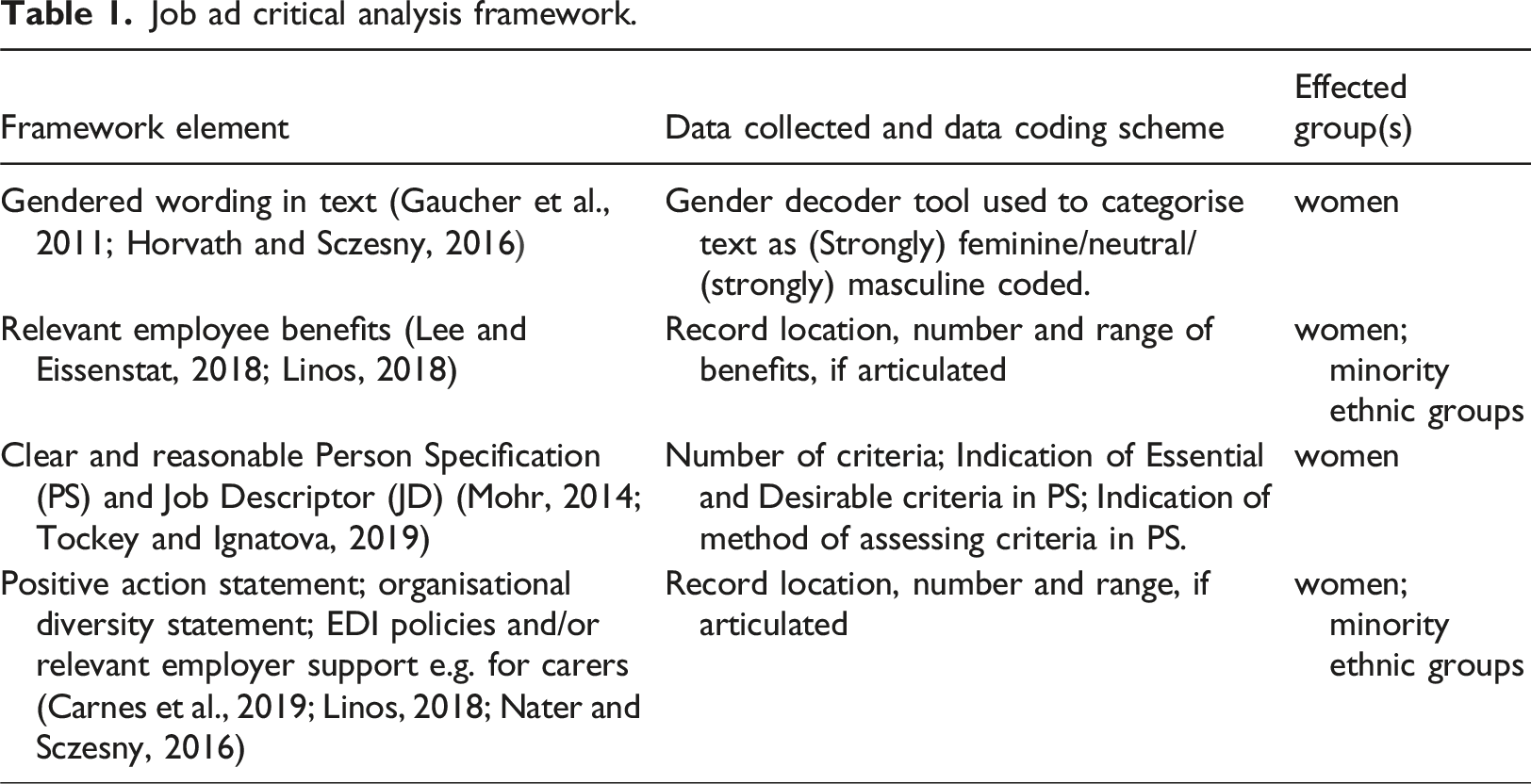
Positive action statements and organisational diversity statements: A positive action statement was defined using the Equality and Human Rights Commission (2019) description: ‘including statements in job adverts to encourage applications from under-represented groups, such as “we welcome female applicants.”’ An organisational diversity statement was defined as text outlining the school’s general commitment to equality of opportunity in the workplace (and do not target candidates from under-represented group(s)) (Carnes et al., 2019; Equality and Human Rights Commission, 2019).
Analysis of gendered wording in text: A pilot comparing 4 publicly available gender decoder tools revealed they are all based on the findings of Gaucher et al. (2011) and there was no difference in the categorisation of submitted text. As the Kat Manfield gender decoder tool (https://gender-decoder.katmatfield.com/) is simple to use and provides a breakdown of all gender-coded words identified in submitted text, it was chosen for this research. Text submitted to this tool is categorised as strongly masculine, masculine, neutral, feminine or strongly feminine (depending on the number and balance between feminine-coded and masculine-coded words in the submitted text). Five documents for each position were analysed (1) job ad, (2) school summary, (3) Person Specification (PS), (4) Job Descriptor (JD) and (5) letter from the (co) Chair(s) of the Board of Governors (when present).
Findings
This section begins with a description of the schools from which headteacher recruitment materials were sourced and progresses to discuss the prevalence of flexible working opportunities. Results and discussion of findings for each element of the analysis framework are then presented: • The lack of transparency in advertised salary is likely to disadvantage women upon appointment and contribute to the teaching gender pay gap. • Inconsistency in teaching leadership applicant packs, job descriptors and person specifications are likely to disadvantage prospective female applicants. • Positions that discriminate against candidates without a specified religious belief are prevalent. • The wording used in recruitment materials is consistently gender inclusive. • (In)Visibility of diversity statements and positive action initiatives in job ads fail to prioritise diverse candidates. • Recruitment materials failed to prioritise employee benefits that could attract diverse candidates.
Recruitment materials from a diverse range of schools were included in the research sample
Headteacher recruitment materials were sourced from primary schools that varied by geographical location, population density and size. The sample included schools in inner-city, urban and rural locations (Figure 1), and the number of children on school roll varied widely, with an average of n = 281 (standard deviation (std dev) 168; range 5–700). 27% (n = 12) of the outgoing headteachers were men and men represented 55% of the (co)chair(s) of the Board of Governors in the sample. The percentage of outgoing male headteachers in the school sample reflects the national proportion of male headteachers recorded in the most recent DfE school workforce census reports (DfE, 2022). However, the proportion of male (co-)chairs of the Board of Governors in the school sample (53%) is higher than that reported by the NGA (40%) (Knights, 2021). The difference may reflect the NGA’s survey-based data collection methodology, as research suggests that women are significantly more likely to complete and return surveys (regardless of survey format) than men and the representation of women as (co-)chairs of Boards of Governors may therefore be over-reported (Cull et al., 2005; Curtin et al., 2000; Smith, 2008). School locations.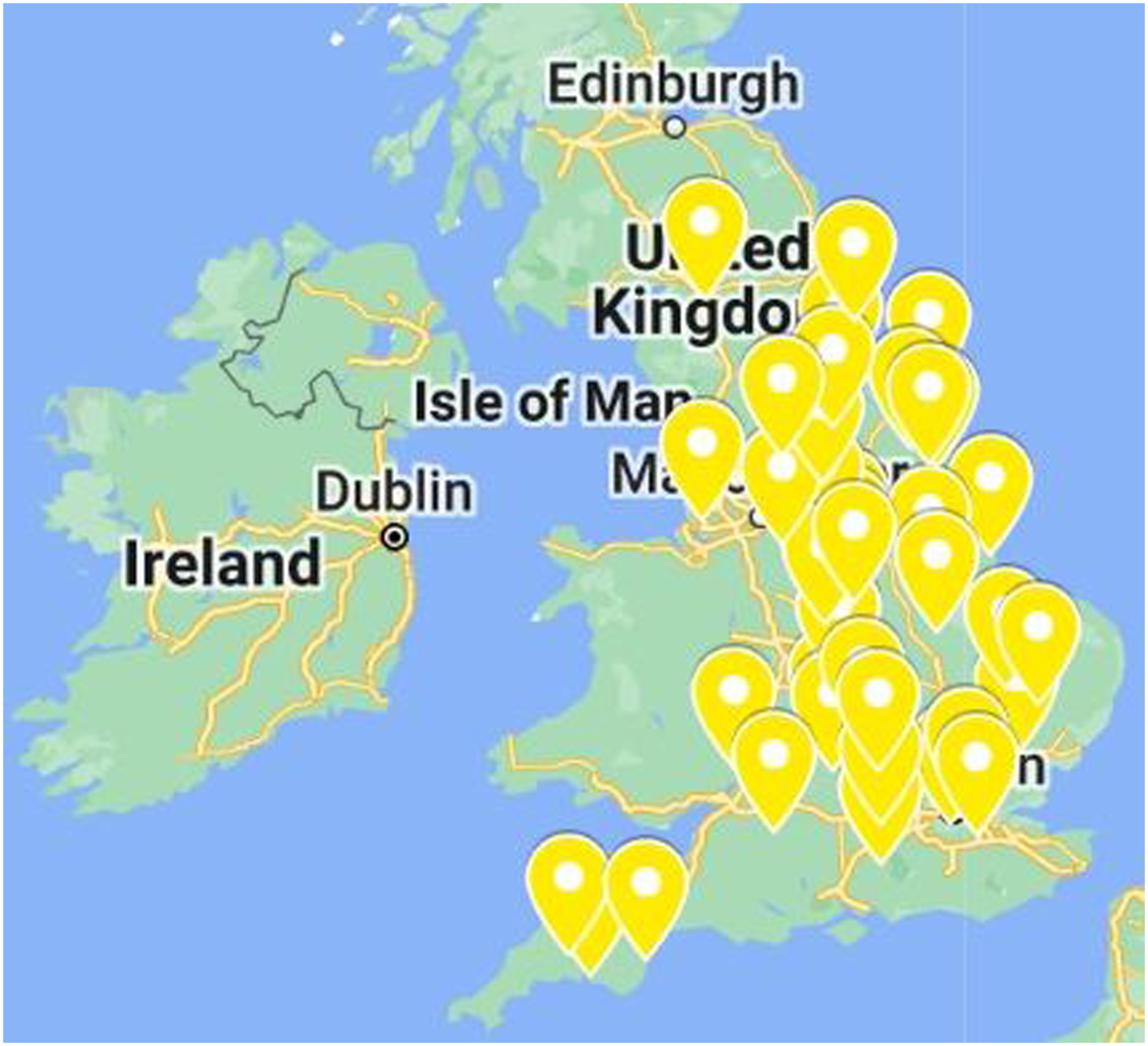
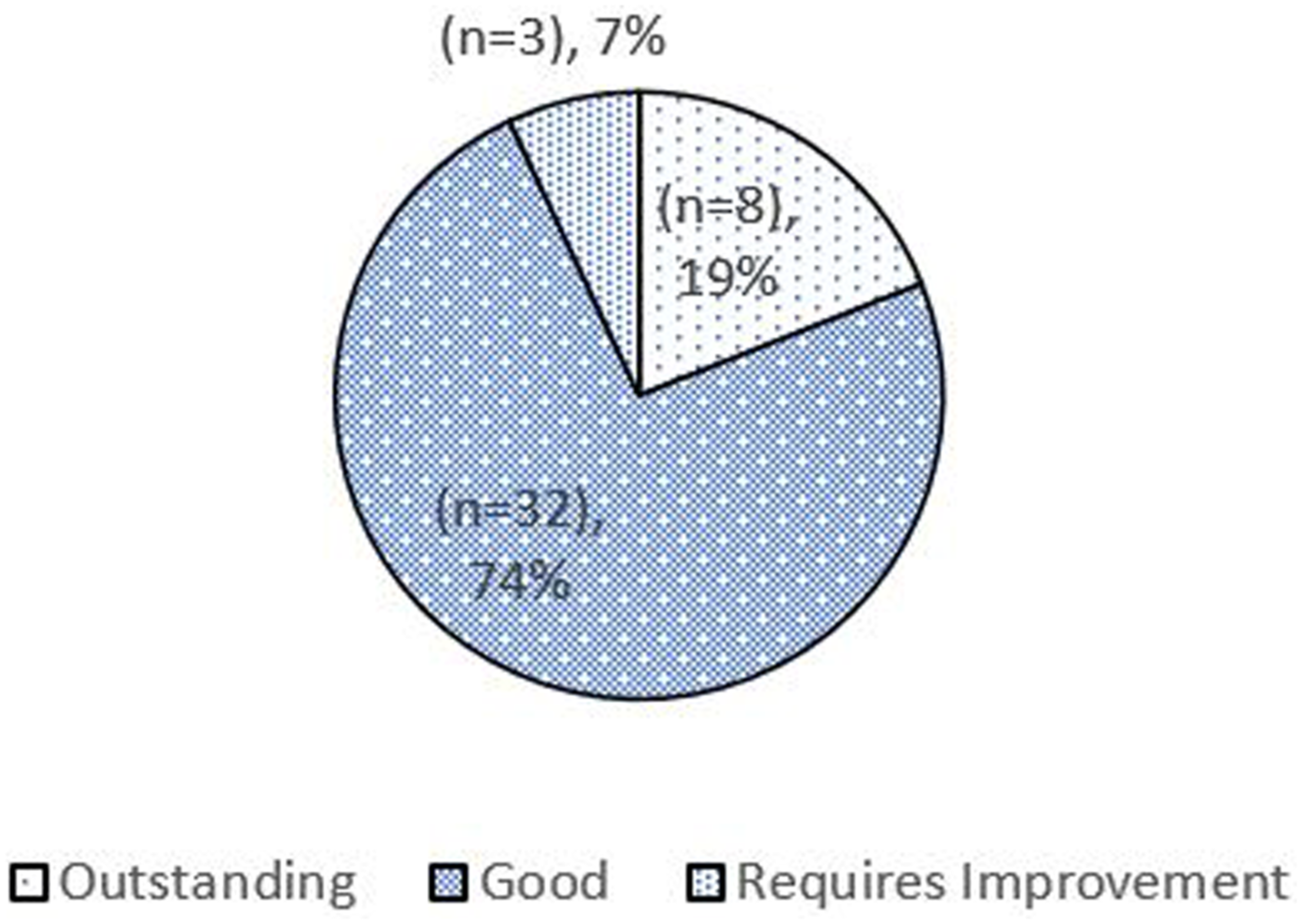
Just over half (58%; n = 26) of schools in the sample were Maintained, with the remaining being evenly split between Academies (20%; n = 10) and Voluntary Controlled (VC) (20%; n = 10) (Figure 2). This data directly reflects the national proportion (40.4%) of primary schools who are Academies or VC (Gov.UK, 2023). A third (31%; n = 14) of schools in the sample had a religious character, with 86% (n = 12) of these associated with the Church of England (CofE) and n = 2 (14%) with the Roman Catholic Church. These data are broadly comparable to proportion of UK schools with a religious character (37%), with the majority (68%) being CofE (Plaister, 2022). Of the 43 Schools in the samples for which an Ofsted inspection report was available, the majority (93%; n = 40) were judged ‘good’ or ‘outstanding’ and only 7% (n = 3) as ‘requires improvement’ (Figure 3). Again these data are comparable with the most recent Ofsted inspections which judged 89% of primary schools good or outstanding (Ofsted, 2022; Gov.UK, 2023). Type of school. School Ofsted inspection status of schools.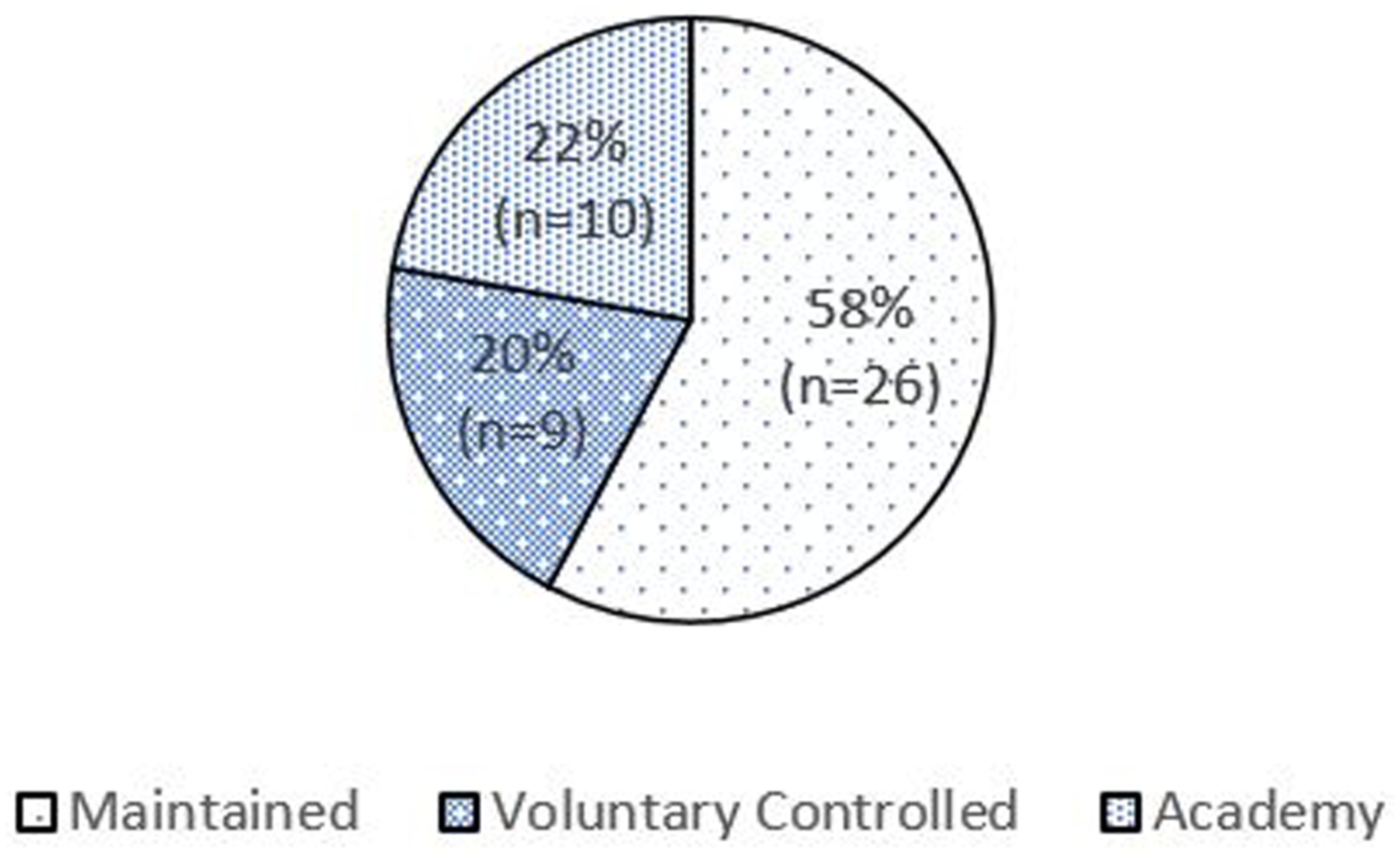
The apparent and actual prevalence of flexible working opportunities for primary headteachers fails to prioritise female candidates with children
None (0%) of the outgoing headteachers were in co-headship positions and all (100%; n = 45) positions were advertised as full time. No (0%) ads were returned if initial job searches were filtered by any working pattern other than full time, that is, there were no (0%) advertised opportunities for ‘part-time’, flexible’, ‘job-share’ or ‘term time’ roles. 1 job ad stated ‘This post is not open to job-share’, despite the Local Authority stating it had ‘Family friendly working policies, including flexible working options’ in the associated applicant pack (PHT11).
The location of flexible working information in head teacher applicant packs.
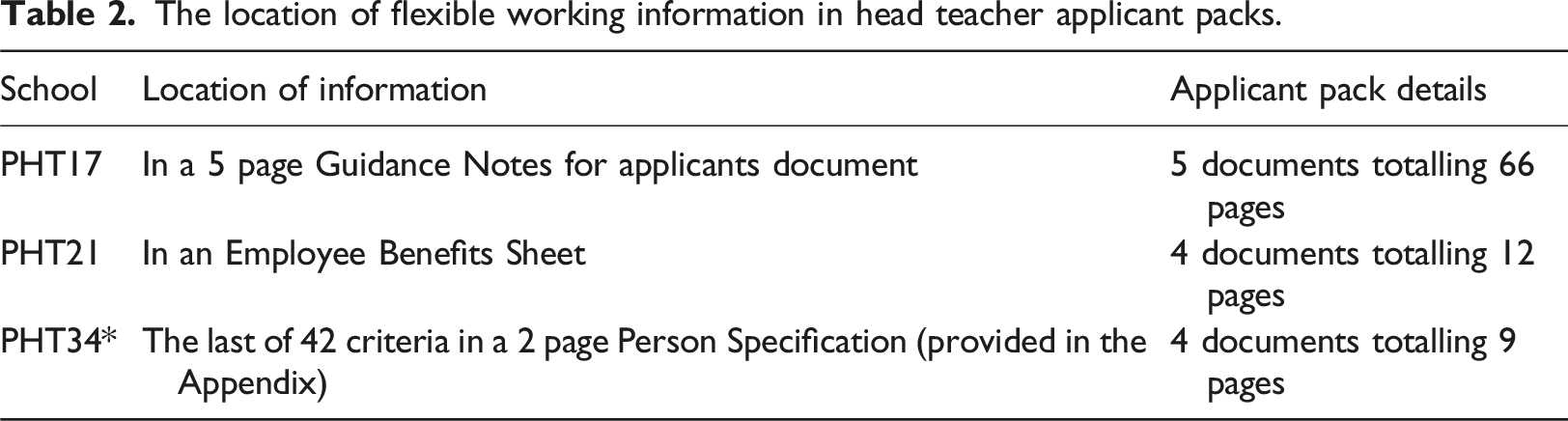
There is general consensus that the availability of flexible working options improves gender equality in the workplace as many more women than men seek to work reduced hours, especially after childbirth (Andrew et al., 2021a; Harkness et al., 2019; Lyonette, 2015) and seeking reduced work hours is irrespective of the mothers salary (Andrew et al., 2021a, 2021b). The lack of flexible working options is therefore more likely to deter female candidates than their male counterparts. The Shared Headship Network was founded in 2017 to promote and support co-headship, and has developed a shared-leadership matching tool and promoted case studies of successful co-headship, however, with emphasis on the retention of experienced headteachers in post, rather than increasing the availability of part-time leadership opportunities to promote gender equality (SHN, 2019). Scope exists in this space for additional guidance and case studies illustrating the impact co-headship on gender equality (Allan, 2008; DfE, 2019b).
The lack of transparency in advertised salary is likely to disadvantage women upon appointment and contribute to the teaching gender pay gap
Variation in primary headteacher advertised salary bands.
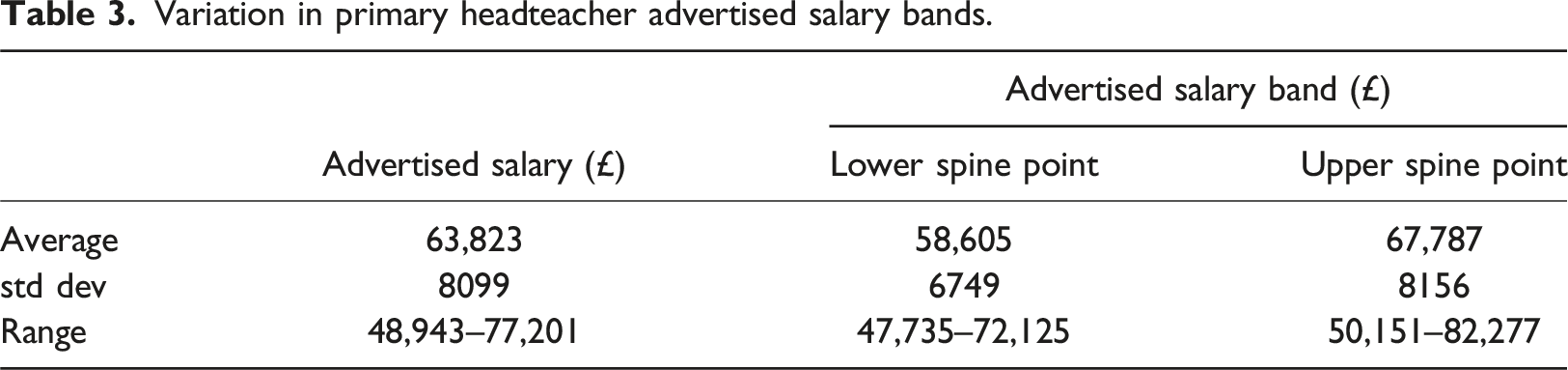
2022 DfE School Workforce data revealed that in 2021/22, the average salary difference between male and female teachers was £3,698, and that at primary and secondary levels, male headteachers earnt on average £2,702 and £2,221 more/year, respectively, than their female counterparts (DfE, 2022).
The use of negotiable and broad salary bands surfaced in this research is likely to disadvantage women upon appointment as research has demonstrated that pay discretion and wage bargaining are determinants of the gender pay gap, including teaching (Biasi and Sarsons, 2022). ‘Secret shopper’ research that utilised identical applications differing by just the gender of the applicant demonstrates that women are likely to be offered a lower starting salary than their male counterpart (Moss-Racusin et al., 2012). This finding was independent of the gender of the person making the salary offer, that is, women, as well as men discriminate against female candidates, meaning female representation in the salary decision-making process is unlikely to redress the issue that female applicants are likely to be offered lower starting salaries than men. Framing salaries as negotiable is also likely to disadvantage female applicants, as there is a well-established gender gap in negotiation performance, with women less likely to be effective at negotiating a higher salary than men (Small et al., 2007). Bowles et al. (2007) highlighted unhelpful self-beliefs such as feeling less entitled to higher salaries, being intimidated and experiencing anxiety during pay negotiations as examples of personal characteristics that inhibit effective negotiation in women. Other research has suggested gendered social norms around what is, and isn’t socially appropriate may discourage women from salary negotiations that could be perceived as deviating from expected gendered behaviour (Babcock and Laschever, 2009; Leibbrandt and List, 2015).
In combination, these findings suggest that women are more likely to be offered a lower starting salary than men and to accept it, which in itself can result in significant pay gaps because subsequent raises are primarily based on initial income levels (Dannals et al., 2021).
Inconsistency in teaching leadership applicant packs, job descriptors and person specifications are likely to disadvantage prospective female applicants
Variation in the organisation and complexity of primary headteacher applicant packs and job descriptors.
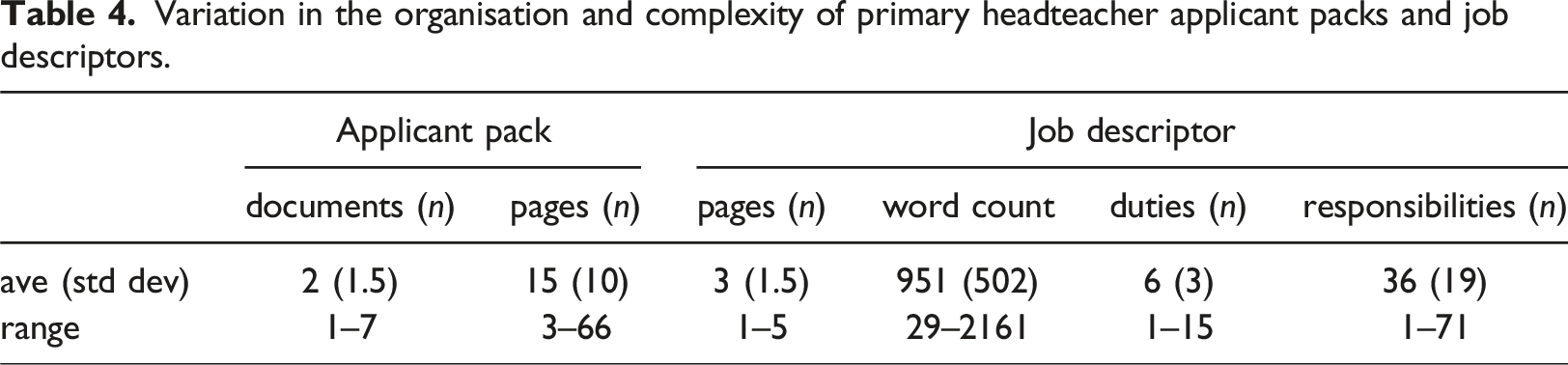
Inconsistency in the organisation of primary headteacher applicant packs.
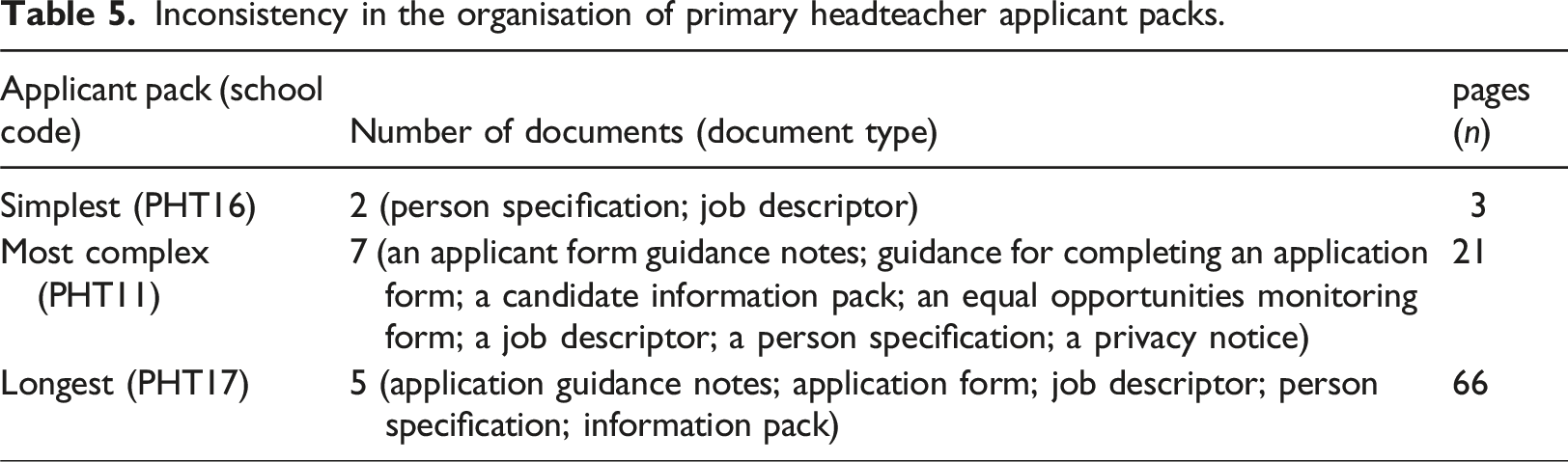
Significant variation in the structure and content of Job Descriptors (JD) was notable and unexpected (Table 4).
The shortest JD was 29 words: ‘To carry out the professional duties of a Headteacher as described in part nine of the school teachers’ pay and conditions document. Candidates must take heed of this information.’ (PHT15).
The longest JD (PHT45) was 8 pages (2161 words) and included citations to additional sources of information the applicant was advised to refer to in support of their application.
Inconsistency in primary headteacher person specifications.

Variation in the complexity and clarity of primary headteacher person specifications.
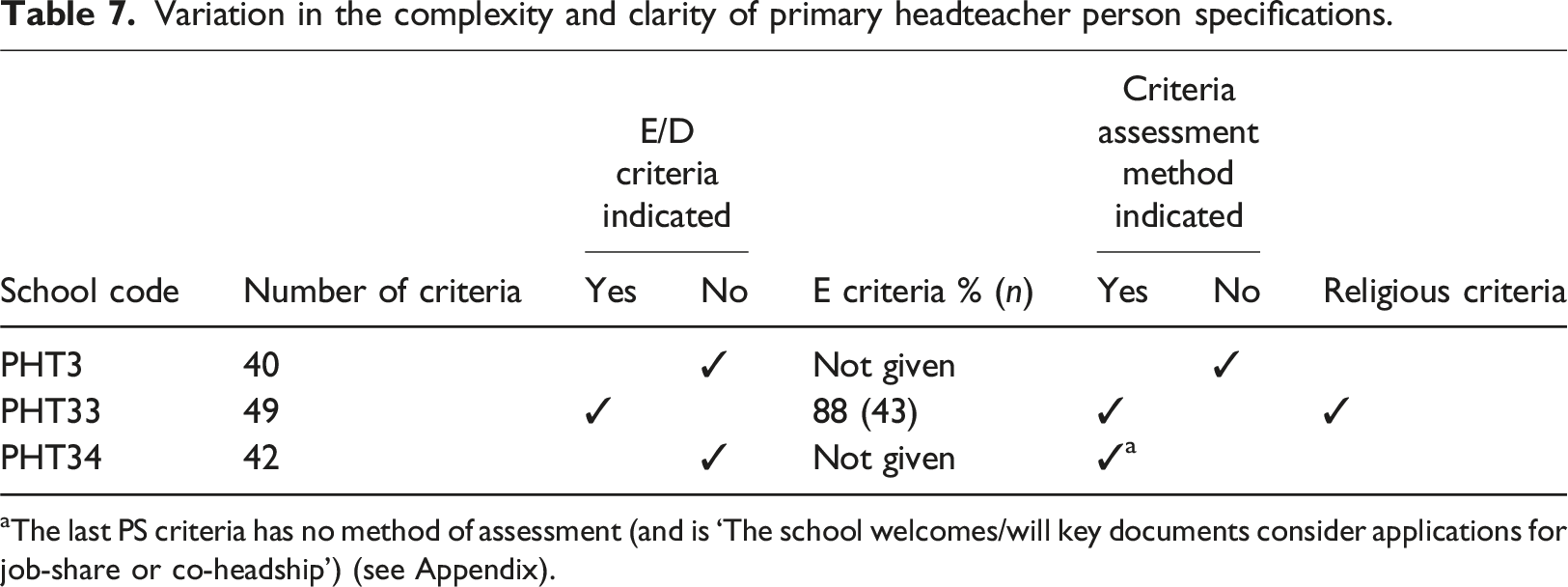
aThe last PS criteria has no method of assessment (and is ‘The school welcomes/will key documents consider applications for job-share or co-headship’) (see Appendix).
Over half (52%; n = 23) of PS did not indicate the method of assessment for listed criteria. 16% (n = 7) of PS did not indicate E/D criteria, but did provide the method of assessment (e.g. see PHT34 in Appendix). One PS (PHT12) did not indicate which criteria were E/D, but provided the assessment methods for all criteria, apart from the criteria ‘A commitment to supporting and promoting the strong Christian ethos of the school’. Where methods of assessment for criteria were indicated, in addition to assessment of evidence by review of the application, covering letter, formal interview and references, undefined ‘interview tasks’, ‘work related testing’ and ‘professional profiling exercise’ were also stated. Examples of PS (summarised in Table 7) are provided in an Appendix.
A ‘cottage industry’ approach to headteacher recruitment materials is illustrated via highly inconsistent packs and the range of problematic aspects surfaced in the analysis of both JD and PS. These findings suggest that in the majority of schools, the stakeholders involved in primary headteacher job design lack adequate training and lack awareness of the available guidance and support that includes an executive leader recruitment toolkit which covers fair recruitment and the production of a job ad, applicant pack, and JD and PS templates (NGA, 2020).
This is an important area for improvement, as overly complex and unclear application packs and definitive documents are more likely to deter female applicants. Research consistently demonstrates women are considerably more time poor than men as women undertake significantly more unpaid labour, especially domestic labour such as childcare and housework (Botey Gaude, 2022; EIGE 2019; Lee, 2011; OfNS, 2018, 2020; U.S. Bureau of Labor Statistics, 2019). Across the EU, women on average undertake 13 h more unpaid work/week than men and resulted in women working 7 h more/week than men overall. Gender disparities were further highlighted when women and men with and without children were compared. Women and men with children spent 29.3 and 14.2 h more, respectively, on unpaid work compared with women and men without children (EIGE, 2023). Put simply, on average, women have less spare time than men, and women with children have the least spare time available.
The unrealistic and ambiguously assessed PS surfaced in this research are also more likely to prove a barrier to female applicants as evidence suggests women are socialised to follow ‘rules’ and perceive the required criteria as less flexible than they often are (Mohr, 2014). Women can be held to higher standards than men, so may perceive the need to fulfil more requirements to be successful (Biernat and Kobrynowicz, 1997; Gorman and Kmec, 2007; Hengel, 2017). Some research suggests that women may lack confidence to apply for a senior role until they are overqualified (Linked in, 2019; Mohr, 2014; Risse et al., 2018). This stands in contrast to men who have been shown to overestimate their capabilities, especially in stereotypically masculine contexts such as leadership roles (Beyer and Bowden, 1997).
These findings highlight scope for improved clarity and consistency in applicant packs, especially in PS, specifically, a realistic number of criteria, indicating E/D criteria, a realistic number of E criteria, how criteria are assessed and (where relevant) defining non-standard assessment tasks, for example, ‘professional profiling exercise’. These recommendations are consistent with Mohr (2014) who suggests that clear recruitment processes and requirements benefit all applicants.
Positions that discriminate against candidates without a specified religious belief are prevalent
Nearly a third (27%; n = 12) of PS required candidates to evidence religious criteria such as: “Promote our distinctive Christian vision, underpinning it with lived out Christian values as set in the context of the Church of England’s vision for education” (PHT37)
Two positions were restricted to practising Roman Catholics and referred prospective applicants to a 14-page document defining what evidences Roman Catholic practice in support of their applications and stipulated previous leadership experience in Catholic schools as a desirable.
UK Equality legislation provides protection against discrimination for individuals holding specific protected characteristics, including their religion or belief. However, schools with a religious character are exempt from the relevant legislation which permits inclusion of religious criteria in appointment and promotion processes, including to headteacher (Vickers, 2009, 2016a, 2016b). Discrimination against suitably qualified teachers on the basis of their religion can be applied to up to 20% of teaching staff in voluntary controlled religious schools (often CofE) and theoretically to all of the teaching staff in voluntary aided religious schools (often Roman Catholic), with the limit on reserved teaching positions in Academies with a religious character dependent on the schools funding agreement (Vickers, 2009, 2016a, 2016b). Persistent and wide-spread discrimination against teachers on religious grounds in Northern Ireland has resulted in the majority of teachers following a career path consistent with their religious community of origin, meaning the majority of pupils are taught exclusively by teachers from their own religious community (Milliken, 2019). The Northern Ireland Assembly (2022) has recognised this as problematic and has passed legislation extending employment protections to teachers by 2024. However, it is still legal to use a teacher's religion or belief to discriminate in appointments in the rest of the UK, meaning inequitable access to headteacher opportunities in a third of UK schools will persist until exemptions from the relevant legislation are revised or removed.
The wording used in recruitment materials is consistently gender inclusive
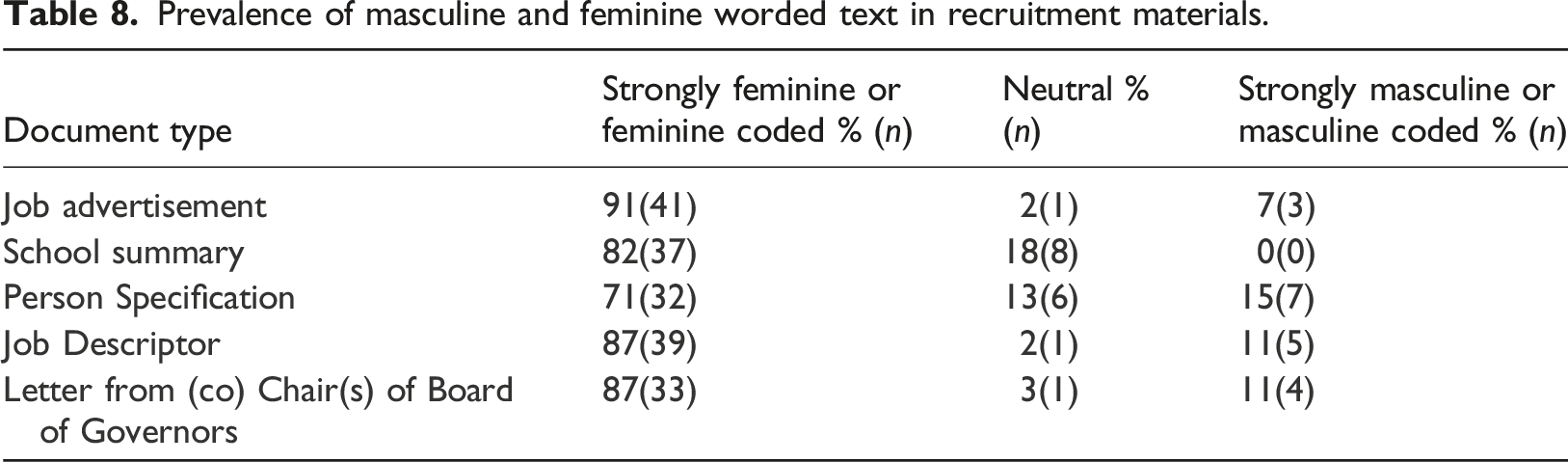
Prevalence of masculine and feminine worded text in recruitment materials.
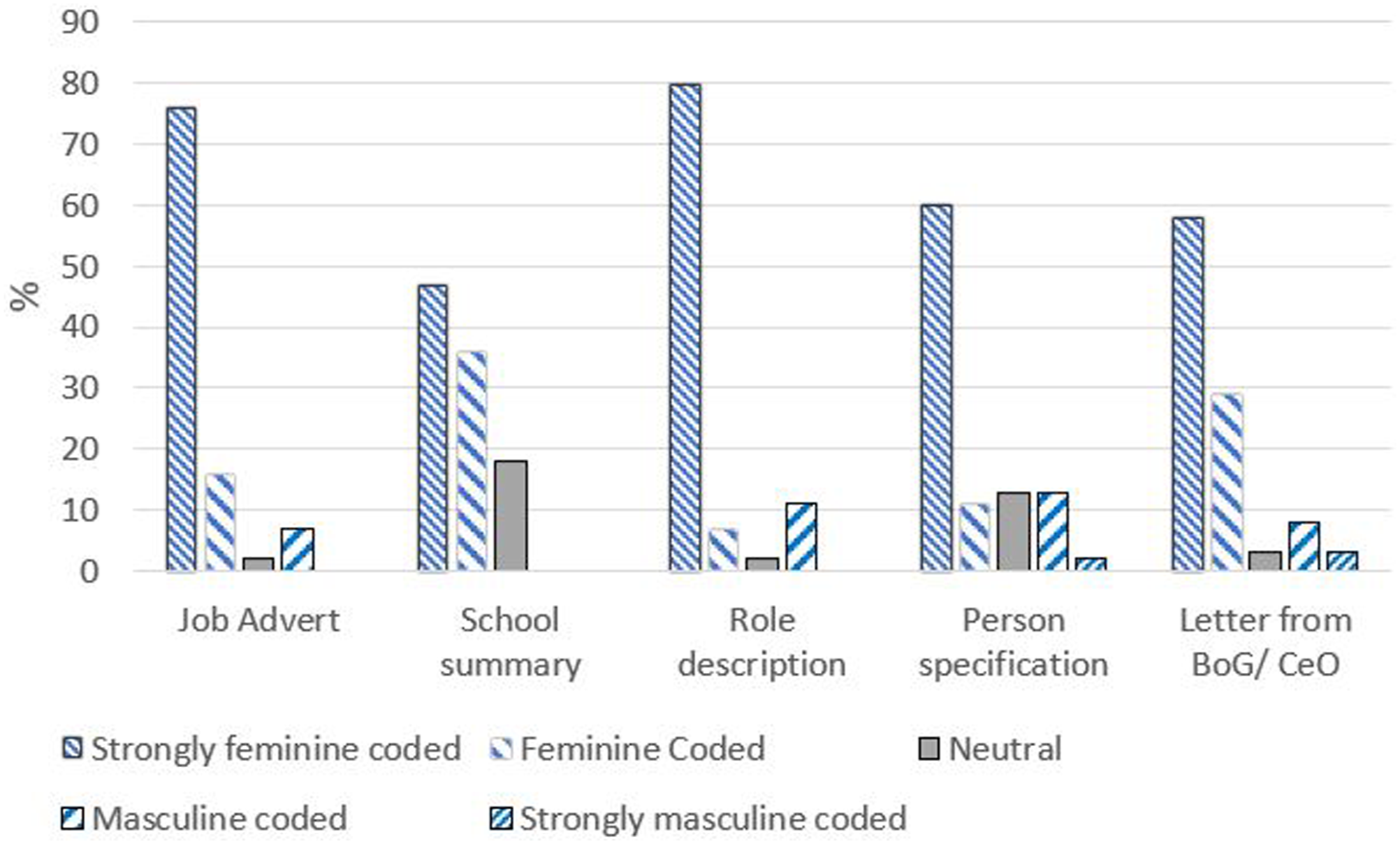
Analysis of subtle gender bias in the wording of recruitment materials.
Gaucher et al. (2011) found that subtle variations in masculine and feminine wording in identical job ads specifically effected women, who were deterred by masculine wording. The majority of recruitment materials were consistently feminine worded is inclusive as these are likely to appeal to both men and women.
(In)Visibility of diversity statements and positive action initiatives in job ads failed to prioritise diverse candidates
No (0%) job ad articulated a positive action statement or initiative targeting prospective applicants from an under-represented group and only 9% (n = 4) contained a diversity statement articulating the Schools’ general commitment to equality of opportunity. However, positive action statements and diversity statements were retrieved from analysis of all documents in 13% (n = 6) and 47% (n = 21) of applicant packs, respectively. 11% (n = 5) positions had Guaranteed Interview Schemes for disabled candidates who met essential criteria and 2% (n = 1) for disabled, care leavers or armed service veterans. This information was not prominent and inconsistently located (found variously in equality monitoring forms, guidance documents and application forms). No (0%) job ads and only 4% (n = 2) applicant packs contained statements inviting disabled applicants to request reasonable adjustments. Of the 6 positions who had Guaranteed Interview Schemes for applicants who met essential criteria, 2 did not specify which criteria were essential on the associated PS.
These data contrast with the finding that 73% (n = 33) of primary headteacher PS or JD include a requirement for applicants to evidence relevant engagement and their leadership on Equality Diversity and Inclusion (EDI).
The paucity of positive action and diversity statements in recruitment materials is an important area for improvement to both avoid potential discrimination and to try to better appeal to under-represented groups (Carnes et al., 2019; Linos, 2018; Nater and Sczesny, 2016). This finding also suggests that in the majority of schools, the stakeholders involved in job design lack adequate awareness and training around relevant EDI issues. In the absence of Government action on meeting this unmet training need, the NGA have taken the lead and initiated an e-learning EDI training programme for Governing Boards (Knights, 2022; NGA, 2022); however, this research suggests there is scope for additional support in this space.
Recruitment materials failed to prioritise employee benefits that could attract diverse candidates
Excluding general pay and conditions (e.g. ‘competitive salary, generous AL and pension scheme’), general statements about the school environment (e.g. ‘well behaved children’) and the school location (e.g. ‘the village has excellent amenities’) no (0%), job ads and the majority (60%; n = 27) of applicant packs did not articulate any specific employee benefits. Academies promoted employee benefits more than other school types, with 60% of the applicant packs for Academy positions articulating employee benefits, compared to 35% and 33% of Maintained and Voluntary Controlled schools, respectively. This finding highlights scope for improved practice as evidence suggests that inclusion of employee benefits in recruitment materials can increase the diversity of the appeal of public sector jobs (Lee and Eissenstat, 2018; Linos, 2018).
Employee benefits articulated in headteacher applicant packs.
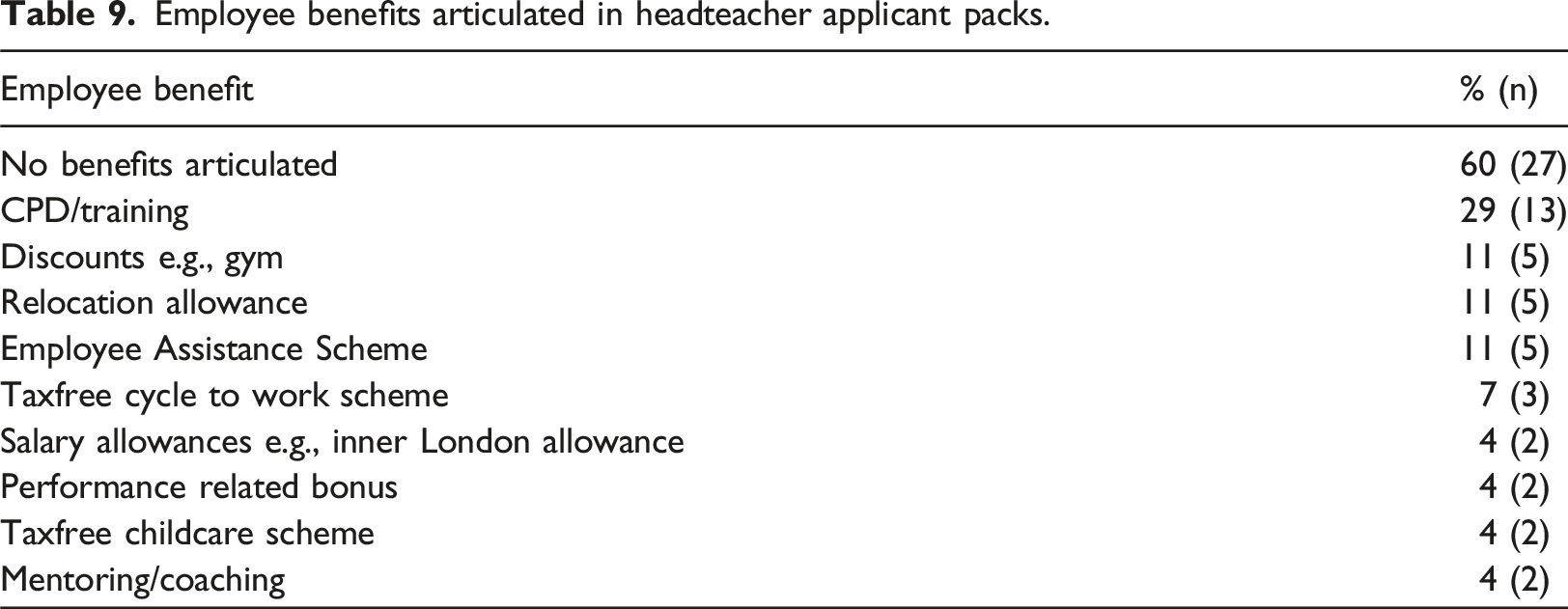
As Lee and Eissenstat (2018) determined, CPD and training opportunities in recruitment materials could encourage more women to apply, their low frequency in headteacher job ads is disappointing.
Despite some evidence which suggests the childcare gender gap has narrowed following the COVID-19 pandemic (Farré et al., 2020; Sevilla and Smith 2020), women still bear disproportionately more responsibility than men (Aguiar and Hurst 2007; Andrew et al., 2021a, 2021b; Del Boca et al., 2020; OfNS, 2020; Schoonbroodt 2018; Zamarro and Prados, 2021). For example, the OfNS (2020) showed, on average, women are responsible for two-thirds more childcare per day than men in UK households with children under 18. Recent evidence from the increased childcare demands on working parents during the COVID-19 pandemic also demonstrate that the responsibility for additional childcare disproportionately affected mothers. This finding was independent of the relative pre-pandemic salary of parents, meaning even when mothers were the primary earner, additional childcare demands were more likely to affect their paid work than their lower-earning partner (Andrew et al., 2021b, 2021c).
The paucity of benefits which support applicants with childcare responsibilities in primary headteacher recruitment materials is discouraging, as such benefits are more likely to appeal to and support female candidates than their male peers.
Discussion of implications of findings
This is the first study that has evaluated headteacher recruitment materials as a possible institutional mechanism that contributes to the lack of diversity in teaching leadership roles. School governors and leaders have made significant efforts to eliminate bias from headteacher interview selection panels (James et al., 2019), but this does not address the issue of diversifying the pool from which candidates are shortlisted for interview selection.
Previous job ad research demonstrates that small changes to recruitment materials can subtly signal who does and does not belong in the role being advertised. Therefore, our main aim was to critically analyse primary headteacher recruitment materials to determine any consistent features that could attract or deter under-represented groups, and thereby surface evidence-based recommendations that could help diversify the gender and ethnicity of the prospective candidate pool.
To achieve this, we first synthesised a novel analysis framework by undertaking a literature review of the previous job ad research, in order to identify and draw together the specific features of recruitment materials that have been shown to attract or deter candidates from under-represented groups. As well this framework allowing systematic analysis of recruitment materials, it could also serve as a toolkit for school governors and leaders who design headteacher job materials.
Following a critical analysis of 45 primary headteacher positions using this framework, we find evidence that suggests primary headteacher recruitment materials constitute an institutional mechanism that could contribute to sustaining gender inequality in headship, as they contain features more likely to deter women and contribute to the headteacher gender pay gap. Further, we found recruitment materials consistently omit features more likely to appeal to and support female and ethnic minority candidates.
Gronn (2002) proposes the concept of ‘designing’ teaching leaders via leadership preparation standards, with leadership preparation standards framed as a leadership ‘customisation’ tool. Taken together, our findings implicitly suggest that recruitment materials could act as a tool that ‘designs out’ particular types of prospective candidates, and thus particular types of leaders.
This is an important finding as designing more inclusive and accessible recruitment materials is relatively straightforward for school governors and leaders. Specifically, this includes headteacher job designers:
• Ensuring the job ad and recruitment documentation is clear, concise, accessible and uses inclusive wording
• Generating a clear and concise Person Specification, with Essential and Desirable criteria indicated alongside their method(s) of assessment
• Targeting candidates from under-represented groups in headteacher job ads via a positive action statement and by prioritising positive action initiatives
• Articulating employee benefits in job ads, especially CPD, mentorship and benefits which support prospective candidates with childcare responsibilities
• Prioritising opportunity for a part-time role in the job ad and ensuring that a part time opportunity is retrievable from job listing platforms when searches are filtered by part time working pattern.
Our research suggest school leaders designing headteacher job lack adequate training and/or awareness of existing guidance and support in fair recruitment and the surrounding EDI issues in order to change practice. This is consistent with James et al. (2019) who explored Chairs of Governing Boards experiences of headteacher recruitment and found they ‘felt daunted’ especially because of ‘the lack of guidance’(p.9). It is notable that the DfE (2017b) do not prioritise headteacher recruitment or selection in their competencies for Governors, instead requiring a general understanding of school staff recruitment and retention (DfE, 2017b: 18). The NGA have initiated an e-learning EDI training programme (Knights, 2022; NGA, 2022) and generated an executive leader recruitment toolkit which covers fair recruitment, production of an applicant pack and templates for definitive documents (NGA, 2020). However, our research highlights scope for additional awareness raising and support in this space.
Our findings suggest the following areas where practice could be enhanced to support diversity. The very low prevalence of headteacher positions with flexible working opportunities suggests school governors and leaders involved in headteacher recruitment may also lack awareness that the availability of flexible working options improves gender equality in the workplace (Andrew et al., 2021a; Harkness et al., 2019; Lyonette, 2015) and/or guidance on how to change practice. We did not expect to find that where flexible working opportunities existed, the relevant job ads could not be retrieved in searches filtered by flexible working patterns. This could be easily rectified by ensuring that where flexible working patterns are available, they are listed as such on job boards by the school administrators who place them.
The negotiable and broad salary bands surfaced in this study are likely to disadvantage women upon appointment as research has demonstrated that pay discretion and wage bargaining are determinants of the gender pay gap, including in teaching (Biasi and Sarsons, 2022). Again, it is within the scope of headteacher job designers to adopt a more precisely defined salary to help address this issue. Teaching leadership training providers could also support prospective female candidates by including wage bargaining as CPD in preparation for leadership (Gronn, 2002).
We found roles which discriminate against suitable qualified applicants on religious grounds were prevalent in schools with a religious character. Despite this discrimination being legally permissible, it has been acknowledged as problematic, including by the devolved Northern Ireland Assembly (2022) which has passed legislation extending employment protections to teachers by 2024. It is within the scope of job designers in schools with a religious character to proactively change existing practice. However, inequitable access to headteacher opportunities are likely to persist until legislation is revised by the UK Government.
Supplemental Material
Supplemental Material - A critical analysis of the inclusivity of primary headteacher job advertisements
Supplemental Material for A critical analysis of the inclusivity of primary headteacher job advertisements by Helen Hooper, Anna Malika and Alexandros Angelopoulos in Equity in Education & Society
Footnotes
Declaration of conflicting interests
The author(s) declared no potential conflicts of interest with respect to the research, authorship, and/or publication of this article.
Funding
The author(s) received no financial support for the research, authorship, and/or publication of this article.

Supplemental Material
Supplemental material for this article is available online.
References
Supplementary Material
Please find the following supplemental material available below.
For Open Access articles published under a Creative Commons License, all supplemental material carries the same license as the article it is associated with.
For non-Open Access articles published, all supplemental material carries a non-exclusive license, and permission requests for re-use of supplemental material or any part of supplemental material shall be sent directly to the copyright owner as specified in the copyright notice associated with the article.
