



Abstract
This article is concerned with considerations for conducting comparative analyses, with a focus on the process of creating a diverse international research team committed to investigating equity issues in education and society. Following brief background information on the International School Leadership Development Network (ISLDN), provided to contextualise the author team and the article’s discussion, the main sections focus on conducting comparative equity research and related methodological considerations. The authors explore the development of specific research methods which they consider to hold significant potential for supporting comparative methodology: the Bacchi approach to policy analysis; and the Delphi method of eliciting the views of groups of respondents. The article offers new perspectives on conducting comparative analyses. The conclusion invites critical reflection on this research team’s development of understandings and methodological approaches to conducting comparative research to critique social justice leadership.
Keywords
Introduction
The authors of this article are members of the International School Leadership Development Network (ISLDN), established in 2008/2009 through collaboration between the British Educational Leadership, Management, and Administration Society (BELMAS) and the University Council on Educational Administration (UCEA). Having celebrated its 10th anniversary year, ISLDN members reflected back and projected forward, exploring what the next 10 years of collaboration might herald. The authors are members of the exploratory subgroup focused on future research, committed to investigating equity issues in education and society, through conducting comparative analyses. This article takes as its focus, the process of creating an international research team from diverse country, policy and education systems. We hope this offers new perspectives.
The article begins by providing a brief overview of the first 10 years of the BELMAS-UCEA ISLDN, its origins and focus, and more specifically, the work of the social justice leadership strand (SJLS) which generated 70 publications, the majority concerned with singular contexts, with 16 publications utilising a cross-comparative approach (Flood et al., 2023). The article then reflects on the 10th anniversary year of the ISLDN and its key publications, an edited book (Barnett and Woods, 2021) and a special journal issue (Potter and Berry, 2021). This situates the work of the network and provides the foundations for moving forward into the next decade, forming exploratory subgroups, including the work of the authors’ subgroup.
The main sections of this article then focus on conducting comparative research which investigates equity issues in education and society, first, giving consideration to the conceptualisation and importance of context, globalisation, the interchange between context and globalisation, and understanding complex contexts. The focus then turns to developing our research methods, to include a discussion around the focus on leaders or leadership, the unit of analysis, building a research methodology, and identifying research methods fit for new purposes. The authors explore the merits of the Bacchi approach to policy analysis, designed to surface contradictions of ‘equity’ in educational policy; and the Delphi method of eliciting the views and experiences of groups of education practitioners. The article’s conclusion invites critical reflection on this research team’s development of understandings and methodological approaches to conducting comparative research into equity issues.
From the inception of this collaborative research endeavour the ‘what’ of our focus has been clear, driven by our longstanding commitment to social justice leadership. What we needed to develop was a collective understanding of the ‘how’: How do you create an international research team that comes from diverse country, policy and education system contexts to conduct comparative analyses of equity issues? This, our first article, charts the process of our initial eighteen months, drawing from meeting notes constructed to chart the evolution of our developmental process, exploring the challenges in generating a truly comparative framework for conducting empirical research, based on shared understandings of equity issues. In so doing, we hope that our learning from that process is helpful to others setting out on a collaborative comparative journey.
Background to the ISLDN: The first 10 years
As discussed in Torrance and Angelle (2019), the BELMAS-UCEA ISLDN, formed through a collaboration between BELMAS and UCEA, was designed to examine the preparation and development of school leaders. The Network developed to form two strands: (1) preparing and developing leaders who advocate for social justice; and (2) preparing and developing leaders for high-need, low-performing schools. The ISLDN research project originally drew from the work of: Cribb and Gewirtz (2005), providing a foundation for understanding social justice; and Lee’s (2010) micro-political toolkit, underscoring the significance of organisational context and issues arising from differences in goals, leading to compromise and accommodation. Cribb and Gewirtz acknowledge that social justice can take multiple forms, recognising inconsistent and conflicting approaches, competing perspectives, creating problems and tensions (Torrance and Angelle, 2019). King and Travers (2017, p: 148) reflect ISLDN understandings of social justice:
Social justice is generally accepted as a set of moral values or beliefs centred around justice, respect, equity, and equal opportunities for all regardless of race, ethnicity, creed, (dis)ability, gender, class, economic status, and other marginalizing circumstances (King and Travers, 2017, p. 148).
The work of the Social Justice Leadership Strand (SJLS)
The SJLS comprised researchers working across diverse education systems, guided by the same research questions and methodological approach, informed by case study with a shared conceptual framework, originally drawn from the work of Dimmock et al. (2005). The ISLDN project developed that framework further (Morrison, 2017), enabling the exploration of school leader (micro), school context (meso) and country-wide context (macro) factors. The framework continues to evolve (Torrance et al, 2023 forthcoming). The SJLS sought to better understand school leaders’ conceptualisations of social justice and how they utilised those understandings to inform actions. More specifically, it sought to better understand the actions of school leaders when they identified a dichotomy between their own sense of social justice and that expressed by others, including policy rhetoric. This work was guided by two overarching areas of inquiry: how school leaders ‘make sense of’ and then ‘do’ social justice.
The SJLS has been prolific in the production of scholarship and promotion of knowledge, with members credited with over 70 publications with explicit links to the aims and goals of the ISLDN. However, the majority of those publications were concerned with singular contexts. As such, to date, there has been little cross-system analysis of the issues and contradictions of ‘equity’ in education policy and practice. A systematic review of the work of the SJLS (Flood et al., 2023) revealed 16 publications utilising a cross-comparative approach, focusing on and juxtaposing two or more countries. In addition, the cross-comparative work leveraged the common, conceptual framework in different ways, responding to authors’ goals to make sense of contextual differences/similarities. The USA was most represented within this collection of articles, with the United Kingdom, Spain, and Turkey also well represented.
Findings from this body of cross-comparative research focused on principal/headteacher behaviours and practices, working for social justice, the core of which leaned heavily on relationships (i.e. with community, teachers, parents and students). The needs of all students were forefront, principals/headteachers working to meet those needs, sometimes confined by resources and policy mandates. Despite barriers, socially just leaders remained committed and undeterred in their work for equity.
The ISLDN 10th anniversary year and its key publications
The 10th anniversary year of the ISLDN was denoted by two key publications: a book edited by Barnett and Woods (2021) and a special journal issue edited by Potter and Berry (2021). All members of the network were invited to submit proposals for contributing to both publications.
The book, entitled Educational Leadership for Social Justice and Improving High-Needs Schools: Findings from 10 Years of International Collaboration (Barnett and Woods, 2021), commemorates 10 years of the ISLDN. It provides the first comprehensive overview of ISLDN studies, conducted by network scholars across 19 countries, over six continents. Several chapters critically examine the project’s contribution to date, suggesting how the network might further develop its research. The book also celebrates the ISLDN representing the second longest operating international leadership research project (after the International Successful School Principalship Project - ISSPP). In the concluding chapter, Barnett and Woods synthesise structural factors, beliefs and values, and contextualised strategies shaping school leaders’ actions, aimed at ensuring best outcomes for students.
The special issue of the journal International Studies in Educational Administration (Potter and Berry, 2021) was designed to complement the book, beginning to look forward to the next 10 years. In their editorial, Potter and Berry highlight the significance of two articles proposing a change in focus: one advocating that the network should extend its lens to focus on middle leadership within schools (Forde et al., 2021); the other advocating parity of esteem between qualitative and quantitative research data (Angelle and Flood, 2021). In their article, Forde et al. argue that the ISLDN should look beyond the social justice leadership of the principal/headteacher, embracing a distributed perspective, to explore how middle leaders consider and contribute to social justice practice. The authors of both articles – along with the other co-authors of this article – elected to form one of the subgroups in the exploratory phase of the ISLDN.
Moving forward into the next decade of the ISLDN
From 2021, the ISLDN moved from being structured around two distinct strands of activity, to exploring how we might choose to collaborate moving forward into the next 10 years of the network.
Planning the next 10 years
During the virtual ISLDN working session at the UCEA 2020 conference, project members considered how the network might be re-energised and restructured. In January 2021, a virtual group was formed to plan the first meeting of ISLDN members in February 2021. The focus was to begin to shape the next 10 years of the ISLDN, maintaining the cohesion of the group, whilst creating space and time for exploration of different ideas. COVID-19 gave us the opportunity to think again, to change established practices and to become more inclusive in the way network development meetings were held. Online network sessions provided the opportunity for all members to attend, without the constraints of visas and budgets, although international time zones endured. By September 2021 the network felt ready to form three special interest subgroups, designed as exploratory and with the potential for fluidity as the network’s understandings developed further.
Forming the subgroups
This re-formation stage provided the opportunity to reenergise the ISLDN and our ways of working. A structure developed, in which opportunities for whole network meetings and smaller group breakout discussions were balanced with separate meetings of three new research interest groups. The new groups focused on: • Building on existing studies by extending the number and location of case studies; • Conducting comparative analyses by using existing or new data sets; • Understanding the context of the global pandemic and its ongoing impact on education.
The initial planning group expanded to become a steering committee, to include the two lead members of each research subgroup and later, the website development leader. The steering group was charged with coordinating, planning, facilitating and most important of all, listening.
Subgroup 2: Conducting comparative analyses by using existing or new data sets
Fourteen meetings of the subgroup Conducting comparative analyses by using existing or new data sets were held between September 2021 and May 2023. Each meeting was designed to be developmental; participative, with group members leading on different aspects. Our learning was cumulative, building on the notes of each network meeting, constructed to chart the evolution of our collective thinking around equity and the study of equity. The intention was, from an early stage, to draw from our learning to write a collaborative article, charting this development and exploring the challenges in generating a truly comparative framework for conducting empirical research, exploring social justice leadership. Two lead members (Torrance and Forde) were charged with steering the strategic and operational aspects of our work, nudging things along, encouraging members to take responsibility for areas of expertise/interest, capturing and sharing our collaborative learning, maintaining cohesion and a direct link with ISLDN steering committee.
By September 2022, we had established a common interest in conducting comparative studies. We identified: ISLDN publications including a comparative element; comparative themes and findings arising from recent ISLDN publications; potential comparative literature to draw from. We had individually read and collectively discussed: a core set of readings on comparative education; a core set of readings on context and methods. Throughout, we reflected on what makes for comparative international education research methods and approaches; engaging in the ongoing development of our research aims/questions. As our thinking developed, so too did our appreciation of the complexities involving: • Developing a comparative social justice leadership perspective that recognises the context specific nature of SJL; • Developing a collective definition of social justice that recognises intersectionality; • Critiquing policy at supra national and national levels, with differentiated concepts and terms; • Acknowledging the challenges of designing a methodology that recognises the enactment of social justice as collective endeavour, premised on shared understandings and mutual will; • Researching social justice leadership embedded in culture and practice.
This raised for us two further considerations discussed in the following sections, in relation to: • How to make this research inclusive, taking account of diversity of contexts and understandings; • How this comparative research could support bridging policy, theory and practice.
Conducting comparative research
In the first 10 years, the focus of our ISLDN research had typically been in the first instance, to investigate leadership for equity in our own systems. Comparative studies tended to come later, involving a small number of systems, often based upon mutual interests or chance collaborations. In taking forward comparative studies, we were curious about other education systems whilst still keen to explore our own contexts, illuminating issues and practice.
Learning from the literature on conducting comparative research
In advance of our January 2022 meeting, everyone read five publications (Anderson et al., 2019; Crossley, 2007; Hayhoe and Mundy, 2008; Rust et al., 2009; Spring, 2008), ensuring we had a common understanding of how to conduct comparative research. Additionally, a critical analysis of another corpus of readings was presented during the meeting, comprising substantive scholars in the field, providing a comprehensive perspective, key challenges, and how ISLDN, and in particular our group, could play a role in advancing the field of comparative international education through the disciplines of social justice and leadership.
We explored several main issues pertaining to comparative studies. Despite the exponential expansion of interest in comparative international research, spanning several phases across the years (Crossley and Jarvis, 2000), the field is not easily defined. Terminology has evolved to bridge comparative perspectives, focusing on comparing various units across nations, with international perspectives highlighting a need for practical involvement through research. Comparative international studies represent a dynamic area, crossing different fields within the wider domain of educational studies (Bray and Thomas, 1995), comprising scholars from various disciplines, qualitative and quantitative approaches. While this diversity is celebrated and encouraged, it does not yield consensus on how to conduct comparative research (Anderson et al., 2019). Additionally, these disciplines whilst implementing different methodological and conceptual frameworks and approaches, each tend to utilise a specific/narrow lens, which Sobe and Kowalczyk (2013) critique. Thus, there is a call for multilevel analyses and an interdisciplinary approach in comparative studies, to achieve multifaceted and holistic analyses of educational phenomena (Vavrus and Bartlett, 2006). For example, Crossley and Vulliamy (1984) believe when focusing on a specific site for comparative research, the study should not be bound by the geography and demography of the site. Research should consider all the factors (e.g. historical background, social structures, governmental policies, national and international forces) shaping processes at the site. Similarly, Bray and Thomas (1995) argue for comparison across various dimensions and units of comparison (e.g. places, systems, times, cultures, policies, values, curricula, ways of learning, educational organisations), to gain better understanding of the values, social and cultural perspectives that play a part in educational processes.
Such understandings provided a basis for taking a cross-comparative approach. Future ISLDN studies could illuminate a useful model of how to engage comparison and international education as a methodological approach, yielding insightful findings to move the field forward. A key issue concerned our underpinning purpose for any comparative study, related to how we sought to utilise interpretive case studies, designed to be informative and directly relevant to policy and practice, directly connecting research with practise experience, taking an equitable approach involving practitioners/subjects in the process, thus highlighting their voices. Consequently, the purpose of future research would be: to learn about other education systems; to have others learn from us within/across our own systems; and/or to learn about ourselves and our own systems, for the advancement of education through addressing contradictions of ‘equality’ in educational policy and educational practice.
The conceptualisation and importance of context
The importance of context in understanding social justice was one of the emerging themes from our readings on comparative research: How do we define social justice in different contexts? The backdrop of globalisation highlights the importance of exploring the influence of supranational policy at national and regional levels. Key policy actors include transnational organisations such as the EU, UNESCO, UNICEF, OECD, World Bank (to name a few), seeking to exert influence on education in different systems, with implications for social justice in education. A key component of social justice in supranational policy revolves around the concept of inclusive education.
An exploration of some key international policies highlighted similarities and differences in language used to describe social justice and inclusion. Policies as far back as the Salamanca Statement (UNESCO, 1994) have used the term ‘equality’ to talk about equality of opportunity and access, education for all and inclusion. Similarly, the UNCRPD (2007) and the European Charter of Fundamental Rights (2009, 2019) talk about equality. More recently, the term ‘equality’ is being replaced with ‘equity’, ensuring everyone gets what they need to achieve their educational potential. For example, equity is the preferred term in: the Report on Equity and Quality in Education (OECD, 2012); Equity and Inclusion in education in World Bank Projects (World Bank, 2020); Education at a Glance (OECD, 2021); International Summit of the Teaching Profession (2022); Education and Training 2020; European Agency for Special Needs and Inclusive Education (EASNIE) (2011a and 2011b); Education 2030 Incheon Declaration and Framework for Action for the implementation of Sustainable Development Goal 4 (UNESCO, 2016). The big challenge facing education is inclusion and equity (UNESCO, 2016; Ainscow, 2020), with a focus on inclusive and equitable quality education (UNICEF): ‘to provide all students…with an equitable and participatory learning experience and environment that best corresponds to their requirements and preferences’ (UNCRPD, 2016, p. 4). Noteworthy, is that equity is typically being measured by outcomes (Lingard et al., 2014) both within and across countries.
While it is very important that all countries ensure a right to education and training in their national legal frameworks and policy documents, we are mindful that ‘conventions are not an integral part of national laws’ (EASNIE, 2021, p. 13). Despite countries ratifying a policy like the UNCRPD which has legal status, this does not mean it will be part of law in that country. For example, in Ireland, the constitution states that for ratifications to have full effect they need to be incorporated into Irish law.
Our understanding and operationalisation of context is set within the wider concept of globalisation, exploring different contexts against that backdrop.
Globalisation
There is much discussion about globalisation and its impact on education. We recognise positive aspects of globalisation, particularly in relation to access to education across and within different systems. This includes access for minority groups and women. There are, however, several issues in relation to globalisation to be explored further as researchers. A concern for issues related to colonialism and dominance is one issue, as is the tendency to idealise American or European educational systems in comparative studies. We can explore some of these issues through a historical frame, with the lens of comparative study enabling the story of individual systems to be explored. In forging equal partnerships, one issue is to underline the need, on all our parts, for respect of cultural differences, with a determination to explore differences in an open and reflective way.
Globalisation has a significant impact on educational thinking, on policy and practice in individual systems as well as across systems. The impact of the role of transnational organisations, their imperatives around economic development and competitiveness have created a context of comparative benchmarking and policy travel, significantly impacting on individual systems. The performance benchmarking strategies used by transnational organisations, have intensified the scrutiny of individual systems and comparison between systems. Such comparisons are used to rank individual systems in international league tables, creating a highly competitive approach. Such comparisons tend to be based on assessment data or surveys, and so findings are not nuanced.
Globalisation, particularly economic globalisation, has increased pressures to adopt neoliberal economic strategies incorporated into many education systems. This benchmarking approach to comparison, based on performance management strategies, has led to skewed understandings of what is meant by an effective system, with pressure exerted to emulate systems deemed successful. Part of our comparative work should be to explore alternative ways of comparing educational systems. A starting point involved how we define globalisation and why we want to define it in that way.
The interchange between context and globalisation
The daily work and lived experiences of school leaders in any system, is contingent on the contexts in which they work. Context here includes the local context, and the intersection of local and global interfaces shaping policy and practice. An important focus in exploring different education systems is therefore how globalisation is mediated at different levels of a system.
We recognise the need to reflect on the relationship between the context of a system, the influence of global trends and drivers on national education policy, increasing globalisation and the interests of transnational organisations. In so doing, this provides opportunities to explore tensions, issues and opportunities created for school leaders. This necessitates exploration and comparison of our understandings of local and global issues. For example, ‘poverty’: what does the issue of poverty mean in different systems?; how are the barriers created by poverty addressed in a system?; and indeed, are such barriers even acknowledged?
Understanding complex contexts
Exploring the intersection of global and local influences in the school context requires understanding the nuances of our own system, seeking to learn from others. Learning from others is not simply about applying strategies deemed to be effective in global comparisons but instead, involves learning to adapt and reshape such strategies as required, reflecting a system’s context.
Rust (2004) identifies the different responses to globalisation providing a useful framework to explore its impact within a system, and a way of charting the mediation of the global at the local level: receptivity; resistance; restoration. Rust et al. (2009) later added reproduction, ‘the forced implementation of educational systems by an external, dominant society’ (p. 133). If we recognise the complex nature of contexts, we perhaps need to re-think or at least appraise the ISLDN approach, to explore multi-scale case study: local; regional; national; international. These broad levels chime with the ISLDN SJLS framework of micro (school leader), meso (school, local/school community and local government or governance structures) and macro (system level - central government, policy communities, socio-political and cultural drivers). We are focused on developing a useful framework to explore these levels within a system and across systems, investigating links between these levels but not necessarily perceiving them as forming one layer on another, or nested. Rather, our interest is in the interactions between different levels and through comparative studies, comparing and contrasting those interactions between education systems.
Developing research methods
We considered different possibilities around the design and conduct of new case studies within different systems. As we framed the research questions and methods, we attempted to maintain an awareness of our own bias within distinctive systems, due to our previous and current positionings within the various local contexts at theory, policy, and practitioner levels. Niesche and Gowlett (2019) argue for the ‘inescapable connection’ between theory and practice, stating that there are hidden theoretical premises in everything, especially in the educational leadership frameworks that espouse ‘what works,’ in our case, leadership of and for social justice. We unpicked our own bias and explored methods for the co-production of knowledge, emphasising research with participants, rather than research on participants. We ‘embrace and admit positionality and subjectivity’ (Mifsud, 2021, p. 80) as co-constructors and co-producers of knowledge with our research ‘participants’ taking an active role. In clarifying our focus, we considered: 1. What is the purpose of us as a group conducting comparative studies? 2. What do we understand by concepts such as context, place, experience, globalisation and comparison? 3. What do we understand about the purpose and approaches to amplifying voices? 4. How might we explore the concept of context and the relationships within contexts? Further, how might we explore the role of these relationships in the development of educational theory, policy and practice? 5. How might we determine the unit of analysis?
A focus on leaders or leadership?
A question we grappled with was whether we are focussing on leaders or leadership, the latter being seen as more inclusive, describing a set of practices and actions enacted by different people in different ways. The term leadership pushes us to consider social justice leadership beyond the role and practice of the principal/headteacher. This broader perspective allows us to move away from ‘leader centrism’ (Fairhurst, 2011, p. 190), focused primarily on leaders’ actions, as well as the often-unchallenged assumption of leadership as a positive phenomenon. We do not seek to construct leadership as something that exists as an ‘exceptional practice’ nor as models dominated by stories of heroic endeavours (Niesche, 2011, p. 2). Exploring social justice leadership involves a discourse-conscious leadership, ‘as a state of being and knowing which might simultaneously enact, de-construct, and disrupt taken-for-granted and dominant discourses’ (Thomson et al., 2013, p. 155).
Previous ISLDN work on the case studies of school principals/headteachers provides an important foundation. However, it would be important to broaden the perspectives on social justice leadership and so our work with principals/headteachers will be augmented by exploring: • different groups of staff perspectives on social justice leadership, including their own role and contribution to social justice as well as their experiences, views, perspectives on the enactment of social justice leadership by leaders/staff in school; • whether the principal’s/headteacher’s perspectives chime with those expressed by other groups of staff and potentially the wider community; • social justice leadership from several different perspectives across the school community.
The unit of analysis
The unit of analysis is central to the design of comparative educational studies, particularly given our specific focus on social justice as constructed in policy documents, perceived by policy subject/actors, and enacted in education systems at various levels across distinct international contexts. Wilkinson (2008) queries the scholarship vacuum with regards to studies that critically examine the role of leadership in constructing and perpetuating structural inequalities, in addition to challenging and interrogating them.
In previous ISLDN comparative studies, the unit of analysis has tended to be at the macro level, with individual case studies mapped on a vertical micro and meso level framework, within the context of the macro level. We grappled with developing the original ISLDN model, considering including the supranational, macro, meso, micro, and nano levels in order to incorporate all stakeholders, from policy makers at the global level (e.g. the OECD) to teachers, and possibly students and their guardians as direct receptors of social justice leadership policy and practice. We also considered looking at the unit of analysis from different perspectives, such as: places, times, culture and values, policies, curricular frameworks, ways of learning, educational achievement, educational organisations, pedagogic innovations. This is an area we are still developing, as we finalise our case study research protocol, exploring the lens of ecological systems theory (King and Travers, 2017).
Building a research methodology
We recognise that every school is unique but in a comparative paradigm, our interest is in how we can learn from comparing practice across schools and across systems. There are possibilities in developing new perspectives. We can recognise the complexity of an individual school setting and at the same time, use the lenses of comparison to think about issues differently. We therefore recognised the need to challenge our preconceptions, asking research participants to engage with us in explorating their own systems. In exploring the place of voice/voices, our interest is in exploring ways of ‘amplifying voices,’ rather than simply looking to give people ‘a voice’ through ‘collecting data.’ In this way, we can begin to work towards the co-construction of knowledge, recognising that amplifying voices even at school level can be challenging. In that regard, we need to create a safe space for participants to explore their practice, to examine specific issues, recognising the complexities, ambiguities and sometimes contradictions to be found in a particular context. In addition, we need to look for ways in which an approach to amplifying voices would directly benefit those involved in the research, and wider groups within a system.
Identifying research methods fit for new purposes
Our learning from the first 10 years of the ISLDN continues to develop, as we consider our collaborative interest in moving forward. Two main areas for new development have been identified. The first, is our interest in social justice policy at supranational level and its impact (if any) on education policy at the macro and meso levels. The second, is our interest in developing a focus on social justice leadership across the school, rather than the original ISLDN focus on the role of the social justice leader (principal/headteacher). Extending our focus has clear implications for the further development of our original ISLDN research methods, for which we have identified the Bacchi approach to critical policy analysis and the Delphi method of eliciting the views of groups of respondents.
The Bacchi approach to policy analysis
The original ISLDN case studies included an account of policy at the macro, national level. However, as a group, we recognise that focus represented only one level of policy analysis. We are now interested in the increasing influence of supranational organisations on national educational policy. In seeking a policy analysis framework to support comparative analysis across systems, a trio of members from the original SJLS, together with an invited international colleague (Torrance et al., 2021), brought experience of using Bacchi’s (2012) policy analysis to critically review social justice leadership preparation and development. Bacchi provides a useful framework - What is the problem represented to be? (WPR) – to critically examine policy across system contexts: • What is the problem represented to be in a specific policy?; • What presuppositions or assumptions underlie this representation of the problem? • How has this representation of the problem come about? • What is left unproblematic in this problem representation? Where are the silences? Can the problem be thought about differently? • What effects are produced by this representation of the problem? • How/where has this representation of the problem been produced, disseminated and defended? How could it be questioned, disrupted and replaced?
This builds on understandings of context from our SJLS work, underpinning our perspective that the problem that social justice leadership is intended to address is dependent on the perspective through which social justice issues are perceived and defined. There are several levels of interest in our critical policy analysis: • the framing/positioning of ‘the problem’ of social justice and equality, and ‘its policy solution(s),’ in supranational policy e.g. OECD, World Bank, EU, European Commission, UN; • the influence of supranational social justice and equality policies/guidelines on national/system education policy problems and solutions; • relevant policies and legal requirements of a specific national/system; • the influence of national/system level policy and governance structures on the school, which might include a local government layer, with sets of interconnecting functions e.g. development, support for implementation, scrutiny of practice and outcomes.
This then feeds through to a focus at school level in two ways: (1) the purposes, values and practice of school leaders in relation to social justice leadership; (2) the school profile. Possible questions to investigate include: • To what extent does education policy at national level reflect social justice and social justice leadership within the school? • What do principals/headteachers understand as the context they have to negotiate, in order to pursue issues of social justice? • What are the tensions between supranational, national and school policy and how do principals/headteachers work within these tensions?
The Delphi method
The new focus on ‘leadership’ rather than ‘leader’ prompted the search for a new research approach which could involve large numbers of staff (across school leadership teams), rather than the original interview schedules conducted with one headteacher/principle. The Delphi method (Forde et al., 2021) was first devised as a tool to enable a group of experts to discuss a key issue and come to some level of consensus. The method is now being used in social science research, including educational research, as a means of gathering data from specific groups. Consequently, the Delphi Method is used variously but its core features include: a group of participants who comprise ‘the panel’ and a series of rounds where initially, panellists respond to set questions. These responses are collated, analysed and then provided as feedback to the panellists for comment and evaluation. This iterative process (see Figure 1) allows participants to reflect on their contributions and also to: understand different standpoints; respond critically; and potentially change their minds. This process continues until the research question(s) has/have been answered, with sufficient data generated. The process may be used to build consensus or map out divergent views. Process of the Delphi method.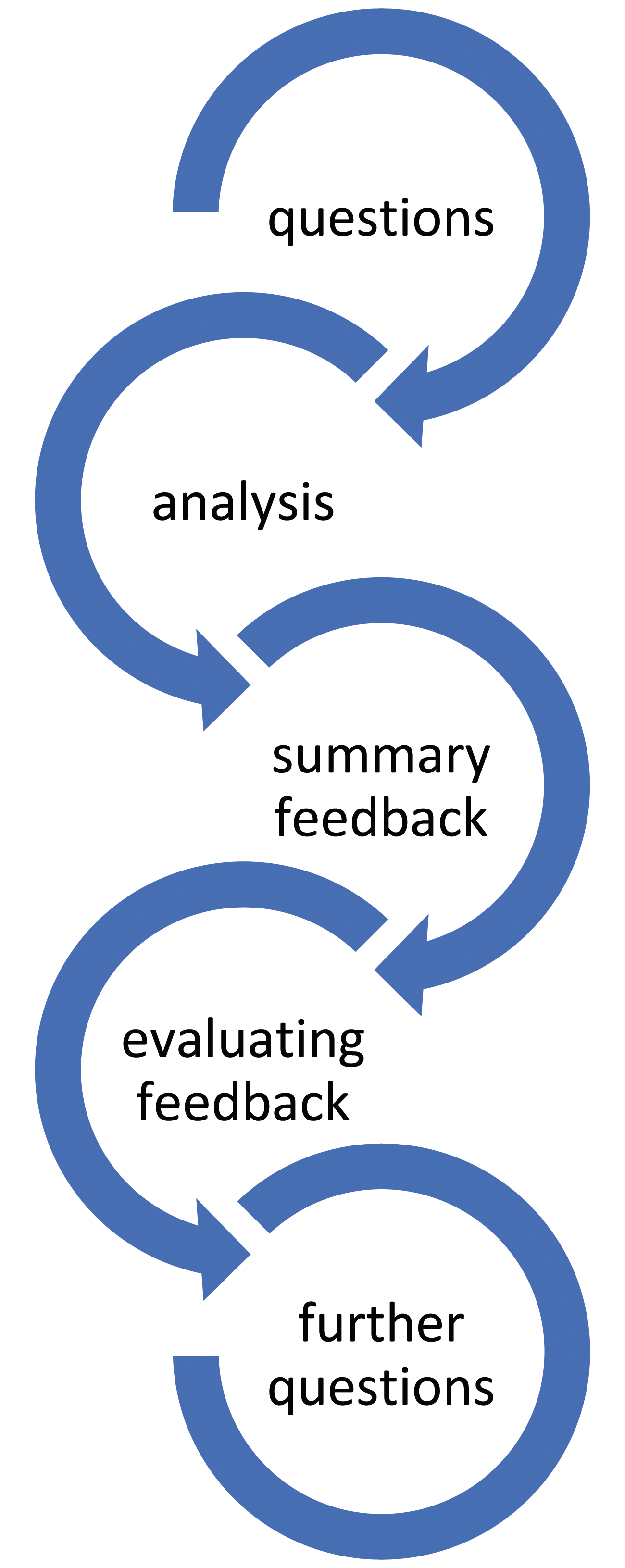
In comparison to focus groups, one of the strengths of the Delphi Method, is that participants can express their views without the pressure of group conformity. Other strengths of this method include: • flexibility in relation to context and number of respondents; • privileging the voice of participants; • providing a forum for dialogue and the exchange of views; • a sheltered way of exploring different perspectives, experiences and views across a specific group in an organisation; • facilitating the co-construction of understandings between researchers and participants; • the potential benefits to participants from insights garnered; • an efficient way of gathering data from a sample of potentially 5–50 participants; • its potential for comparative analysis across datasets (internationally), where a shared protocol is used, framing a common set of research questions
The Scottish ISLDN research team had been piloting the Delphi approach since 2020, through an investigation of ‘social justice leadership across the school,’ examining SJL within the ‘middle leadership space’ of a case study secondary school, with a subsample of middle leaders and a subsample of deputy headteachers (Forde et al., 2021) - middle leadership comprising interactions between the school principal/headteacher and the classroom. In many systems there exists a leadership hierarchy and this middle space might contain more than one level. However, in smaller schools – particularly smaller elementary/primary schools - there may be no formal leadership roles, with this middle space occupied by teachers undertaking informal leadership roles such as with teacher leadership, leadership of collaborative activities, professional learning communities (PLCs).
Developing research aims and research questions
Within the research group, variations in research traditions alongside our different backgrounds contributed to fruitful conversations. Clarity seems to us even more important with an ambition to compare countries, with various understandings and histories of social justice. As our thinking developed, so too did our understandings of what we mean by an ‘international comparative study.’ In developing our over-riding aim(s), we were concerned with the need to constantly consider: • How do we understand social justice? • How do we understand context? • How do we understand comparative research? • Where do we want the focus of our study to be?
An ongoing focus involved the process of constructing our research questions, forming a standing item on each meeting’s agenda. We kept coming back to questions around: • What are the tensions between supranational, national and school policy and how do headteachers work within these tensions? • To what extent does education policy at national level reflect social justice and social justice leadership? • What do principals/headteachers understand as the locus they have to negotiate, in order to pursue issues of social justice?
We broadly settled on a set of aims to guide us, to: • nuance the range of understandings of social justice; • explore understandings of social justice across different groups and perspectives; • explore how school communities make sense of context and its impact on the practice of social justice leadership; • further investigate and understand the construct of context and its impact on leadership for social justice; • examine the practice realities of social justice leaders across a school.
We developed research questions to nuance the range of understandings of social justice, reflecting our discussions of the importance of content, form and policy. Our questions needed to help us understand the realities of social justice leadership practice, between groups and schools within the same national context, as well as between education systems. They needed to capture the local school context and how school principals/headteachers make sense of social justice within their community. That led to a focus on leadership and how leaders – rather than one school leader - are affected (e.g. by policy) and affect (e.g. through practice) social justice. Taken together, this should help us to understand the relationship between policy and priorities at national level and what is happening in school contexts, reflecting the practice realities of social justice leadership. Involving different sets of school leaders creates opportunities to amplify the voices of practitioners and their understandings.
In this ongoing developmental process, we have identified six research questions to design our empirical data generation tools around: 1. How do you [principals/headteachers/other leaders] make sense of social justice leadership? 2. In what way do various ‘contexts’ — school, community, country, global issues—influence your [principals/headteachers/other leaders] perspectives on social justice? 3. Can you provide an example of a situation or issue you [headteachers/principals/other leaders] encountered concerning social justice; how you began to address this; whether this situation or issue is unique or typical? 4. To what extent do you perceive that your views on social justice differ from the views of others? [allowing the participant to determine whom ‘others’ refers to] 5. In your view [principals/headteachers/other leaders], what is required of headteachers/school principals concerning social justice leadership? 6. In what way do societal changes (pandemic, environment, migration, war, … …) influence the work of social justice leadership?
We consider this time well-spent, to understand the various parts of a context dependent complex issue. This process continues to challenge our taken for granted assumptions, generating new understandings of what is generic and what is context specific.
Conclusion
This article critically reflected on the development of a group of researchers’ collective understandings of how to create a diverse comparative international research team committed to investigating equity issues in education and society. The authors are privileged to be members of the ISLDN, an international collaboration of educational scholars. We have learned much from the first 10 years of the network. We seek to extend that learning and methodology to conduct comparative research with a focus on social justice leadership practice. The article explored various challenges in generating a truly comparative framework for conducting empirical research. As we continue to develop our methodology, we shared insights from this process for others to critically reflect upon. In so doing, we encourage others to embark on collaborative ventures, creating international research teams, conducting comparative analyses of equity issues, so that we may all develop understandings from diverse country, policy and education systems.
Footnotes
Declaration of conflicting interests
The author(s) declared no potential conflicts of interest with respect to the research, authorship, and/or publication of this article.
Funding
The author(s) received no financial support for the research, authorship, and/or publication of this article.
