




Abstract
This paper explores the literature on the prevention of exclusions of Black children in English schools which has remained an entrenched problem and persistent concern for many decades. It examines grey literature from projects, as well as tested approaches, and the impact of preventative strategies, identifying patterns of when and where Black pupils are most excluded. This review begins by exploring the combination of systemic and policy changes that may have contributed to increased exclusion levels and triangulates evidence from reviews and academic analysis from experts in the field. The paper then explores projects that have responded to increases in the exclusion of Black girls and presents evidence of the experiences of intersecting identities and discrimination, such as adultification, and how this has been found to contribute to growing disproportionate numbers of exclusions for girls. Qualitative data from multiple Ofsted and DfE reports are reviewed and the effects of using role models, as well as the roles that teachers and leaders play in reducing exclusions as key systemic apparatus. The paper ends with research on different types of interventions to prevent school exclusion and their varied successes.
Introduction
There has been widespread concern in England concerning the exclusion of Black pupils from schools for decades. Despite such concern however, and public opinion, the exclusion of Black children appears to have a continued upward trajectory.
This critical review of the literature identifies strategies to prevent school exclusions for Black pupils in England. It examines grey literature
1
and published articles about 1. approaches used; 2. what has been tested; 3. the impact.
For the purposes of this study ‘Black’ is defined as Black Caribbean, Black African, and Black Other, and ‘Mixed race group’ as defined in the census. The term Black is used to mean pupils who have been systemically racialised as Black and Brown, encompassing ethnicity categories (as used by the Department for Education [DfE]) and referred to in school exclusion statistics of Black African, Caribbean, Black African, and both Black African/Caribbean and White (DfE, 2022).
Context: Black exclusion in English schools
School exclusion disproportionately affects Black children and families (Gillborn and Demack, 2018; Epstein et al., 2017; Gill et al., 2017; Graham, (2019)). Black Caribbean children are educated in pupil referral units (PRUs) at nearly four times (3.9) the rate based on the national pupil population (Gill et al., 2017). Children from ethnicities of both Black Caribbean and white backgrounds are more than twice as likely (2.5) to be educated in a PRU (Gill et al., 2017).
The disproportionate exclusion of Black children from schools is not new. In 2005–06, 41% of Black Caribbean and 36% of White and Black Caribbean children were permanently excluded, more than three times as many White British pupils (13%) with a very similar picture for fixed-term exclusions (Ofsted, 2008; McIntyre et al., 2018). Gathering accurate data from DfE ethnicity tables of school exclusion (see Appendix 1) is challenging (Gillborn and Demack summarise in 2018): the odds of permanent exclusion for Black Caribbeans has rarely been less than three-times more likely and has sometimes been in excess of four-times more likely. (p.1)
Gaffney et al. (2021) note ‘racial bias in exclusion remains even when controlling for other factors in multivariate analysis’ (p.6), suggesting that factors other than the behaviour of the child contribute to the reasons for exclusion. Whilst the Race Disparity Audit from Cabinet Office (2019) and The Timpson Review (2019) further highlight the disproportionate levels of temporary and permanent exclusions of Black pupils, little action has been taken for decades.
There appears to be far more publication (re)affirming school exclusion of Black pupils as a social concern, with reports highlighting it as a precursor for future engagement in perceived criminality, than there is published literature about the prevention of exclusion of Black children in schools. Most research instead focuses on colour-evasive prevention of exclusion whilst ignoring race dimensions.
UK policy comparisons
Policy comparisons to other UK contexts foreground Gillborn’s (2006) insistence and evidence that increases in exclusion of Black pupils run concurrently, and not coincidentally, with systemic and policy changes.
According to McCluskey et al. (2019), national policy changes have also affected the ways exclusion is interpreted, for example, 97.4% of all pupils permanently excluded in the UK in 2016/17 were from schools in England compared to Scotland where in 2014/15 only five pupils were permanently excluded. Whilst Scotland’s focus is on positive relationships, England’s documentation repeatedly mentions behaviour and punishment (McCluskey et al., 2019). Cole (2015) agrees arguing policy changes in England have led to increases in exclusions. Graham (2019) concurs noting variation in school leadership: differences in leadership … leads to too much variation in the culture and standards set within schools and how staff deliver them. Put simply, what will get a child excluded in one school may not be seen as grounds for exclusion in another. (p.11)
There may be in-school variance as well as school-to-school variance based on ‘race'. A large corpus of the literature evidences the role ‘race' plays in spaces, organisations, and in a majority White teaching profession (see, Callender (2020); Allen and Liou (2018); Picower and Kohli (2017); Lander and Santoro (2017); Miller (2016); Matias et al. (2014); Lander (2014); Picower (2009); Ahmed (2007); Puwar (2004)) for further exploration about how majority teachers' understanding of ‘race' affects interactions and outcomes in schools.
Rates of increase
Exclusions have increased in England since 2011 (see rates below, Graham, (2019)), noticeably, at the same point when The Education Act 2011 was introduced. The trend line shows that exclusion to 2016/17 was rising to levels similar to 1999, rapidly 1% year on year from 2013/14 until 2016/17. Permanent exclusion time series for all state-funded primary, secondary and special schools. (changes in methodology marked as dashed lines mean this is not a continous time series).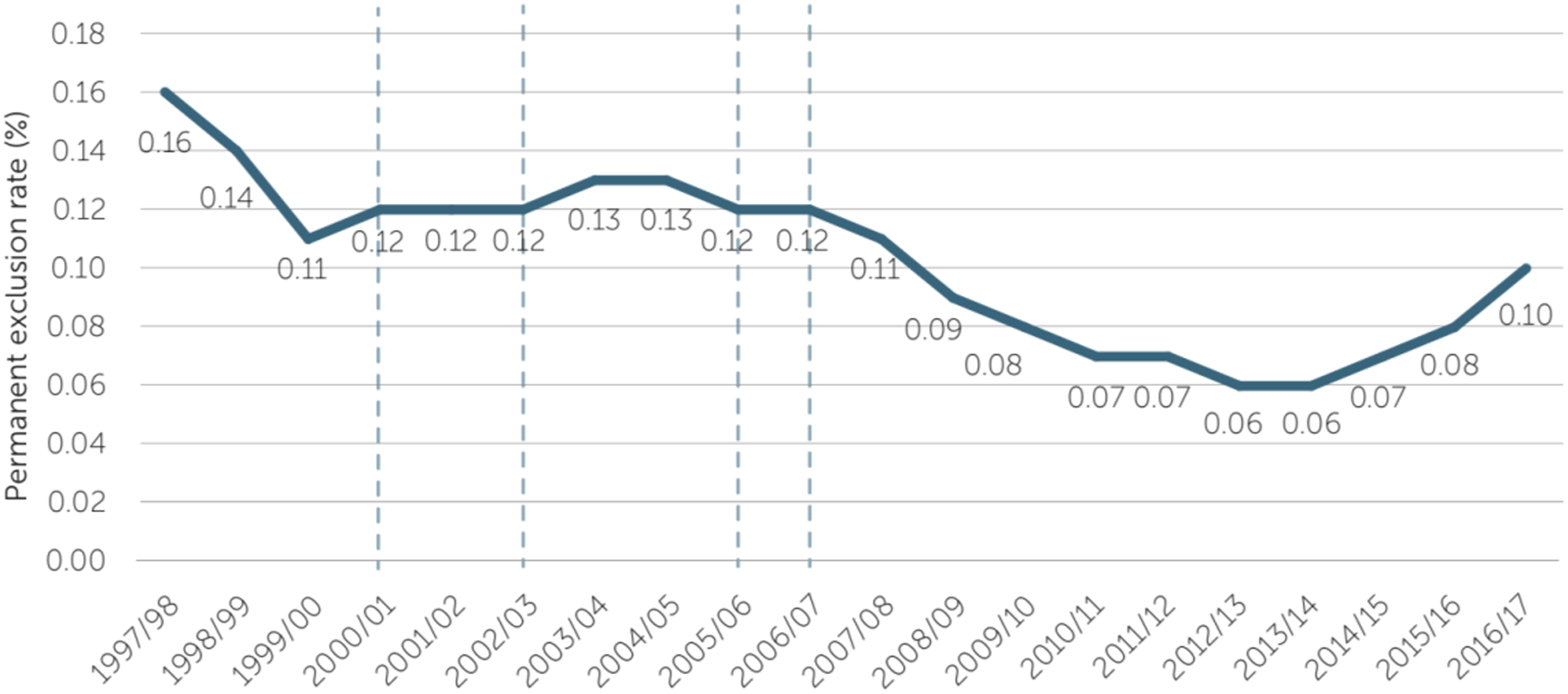
Since this point, the rate of exclusion figure has remained at 10% in 2018/19 (DfE, 2022). Demie (2022) finds the exclusion rate continues to rise and cites factors such as the continued rise in the education market; funding cuts of LA; rising number of children in poverty; fragmentation of the education systems into academy schools; informal off rolling to improve GCSE; lack of diversity in the school workforce (see Demie, 2022). ‘Off rolling’ 2 identified by Gill et al. (2017), Demie (2022), and Graham’s (2019) earlier evidence has negatively impacted on pupils’ exclusion, and the NEU (2022) argued it has disproportionately affected minoritised children.
In addition, Atkinson (2012) argues another factor affecting exclusion of Black children may be the Education Act which was introduced in 2011. This removed: the right of a parent to appeal to an independent panel against the permanent exclusion of their child from school. Independent Appeal Panels have been replaced by Independent Review Panels. Review panels will not be able to require a school to reinstate a pupil they judge was unfairly excluded. (p.14)
Reduction of rights to contest exclusions may be experienced differently for families of pupils who have been racialised as Black who must negotiate majority White settings in unrepresentative appeal panels and majority White senior leadership teams to support and protect their pupils (DfE, 2022). These policy changes arguably contribute to sustained increases in exclusions of all pupils (with Black pupils overrepresented) in England, and therefore contribute to the embedding of systemic racism.
Gillborn and Youdell (2000) and Gazely et al., (2013) advocate for the need to contextualise data on rates of school exclusion arguing: one of the factors limiting recognition of the inequalities experienced by specific groups within education systems is the adoption of an individualised over a systemic perspective. (p.489)
Ainscow et al. (2006) agree proposing an ecological approach to equalities that focus on varied levels: within school; between schools; in relation to wider social structures. Tikly et al. (2006), Gillborn and Demack (2018), and Demie and McLean (2017) who have published extensively on Black achievement and exclusion in English schools repeatedly highlight the role of racism and its damage on children.
Rather than addressing individual factors affecting exclusion as listed above, RSA (2021) suggests by using a ‘systems thinking’ approach to problem-solving exclusion, school leaders can link new interventions with existing ways of working and ‘think about the conditions that can enable their success, considering unintended consequences and interdependencies we may not otherwise recognise or anticipate’ (p.11). The RSA (2021) ‘system’ is defined as: ‘the education landscape of a locality as it pertains to inclusion’ (p.12). Inclusive education in this model is created by interconnecting the interrelated and interdependent elements, and using deliberate methods of seeing and understanding perspectives within the system, dislodging power from one perspective. In this way, interconnectedness is framed as a response to a lack of accountability of schools to the wider community system (families, social services, local specialist providers, local community resources or lack thereof). (RSA 2021, p.14).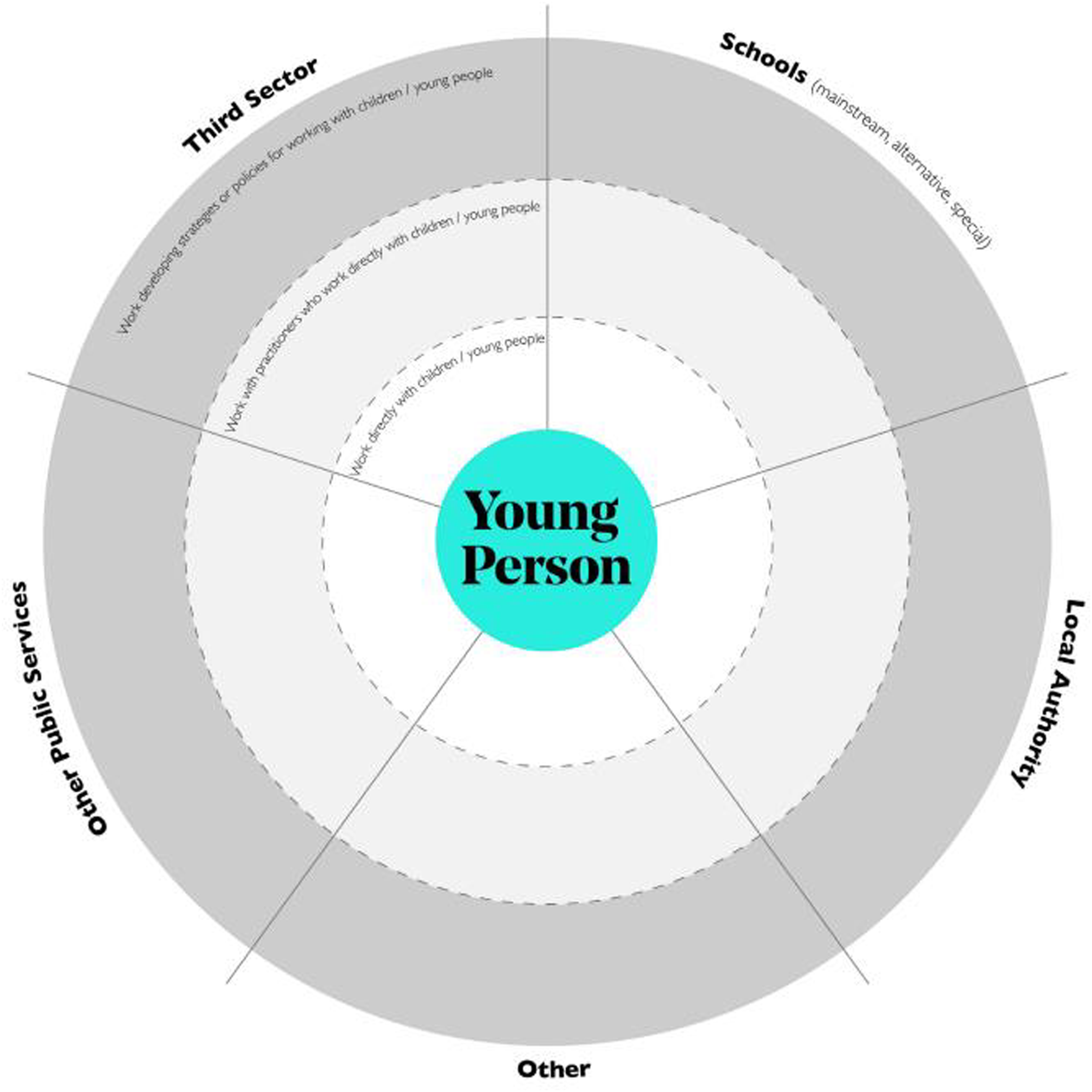
Systemic thinking offers a redistribution of power and a systemic community response as a solution to exclusion and acknowledgement that social structures both contribute to exclusion and can be deployed strategically to prevent it.
Piecing together the evidence
There are useful and interesting findings available in the grey literature concerning Black pupils and exclusion. For example, the Office of the Pupils’ Commissioner (2012) found Black pupils were much more likely to be excluded when in a small minority in their school than when they were a majority of the student population (Graham, (2019)). This is an important observation because funding (and combined pupil premium funding) is likely targeted at schools with more significant numbers of Black pupils when the support might better be targeted at those schools who have a statistical minority of Black pupils.
When and where Black pupils are most excluded
Graham (2019) notes times when increases in exclusions happen, for example: ‘at least 5% of pupils excluded in years 7–11 had never had a fixed period exclusion before this’ (p.72). This suggests that transitions between schools and key stages become significant points, implying pupils may benefit from support at these transitional times.
Gillborn and Demack (2018) authored The Exclusions Review gathering evidence on the Exclusion of Black Caribbean and Mixed (White/Black Caribbean) pupils which is potentially the most recent publication specifically focused on the issue. They observe the influence of education policy: over-representation of Black Caribbean pupils fell dramatically between 1998 and 2001 when there was a government drive to reduce the number of exclusions. The improvement ceased when the pressure to reduce exclusions was lifted. (p.1)
Gillborn and Demack (2018) confirm exclusion affects Black pupils at all ages from early years (aged 4 and 5) through to age 16 and all social classes (Rollock et al., 2015). They highlight that whilst current data are now made less transparent for academies, 2010 data show exclusion is higher in academy schools where Black pupils are permanently excluded at approximately double the rate of Local Authority–maintained secondary schools (Gillborn and Drew, 2010).
Black African Caribbean pupils’ experience of exclusion
Qualitative studies focusing on Black African Caribbean pupils’ experience of being excluded point to a perceived lack of fairness, lack of care, low teacher expectations, and inconsistent application of policies (Bottiani et al., 2017; Demie, 2022; Gregory et al., 2010; Okonofua and Eberhardt, 2015; Skiba, 2000; Tikly et al., 2006). For example, pupils in Warren’s (2005) research felt some teachers were disrespectful and punitive and that their punishments felt disproportionate in comparison to other pupils. Warren’s (2005) draws on Irvine’s (1990) concept of ‘over-monitoring’ where African-Caribbean pupils felt teachers were watching them intently in expectation that they will break the rules (Boyd, 2019). Greater surveillance of Black pupils has been evidenced repeatedly by multiple sources of research (Okonofua and Eberhardt, 2015; Skiba et al., 2014; Artiles, 2011; Skiba et al., 2011).
Gendered racialisation
Gender has been found to play a role in exclusion, and recent publications suggest that racialisation and gender intersect in school exclusion. Research suggests that alternative approaches be used for girls, and so this review includes the literature and findings from reports focusing on racialisation, school exclusion, and Black girls (Agenda, 2021; Morris, 2016; Goff et al., 2014).
Table showing the permanent exclusion numbers and rates of boys and girls from 2014/15 to 2019/20.
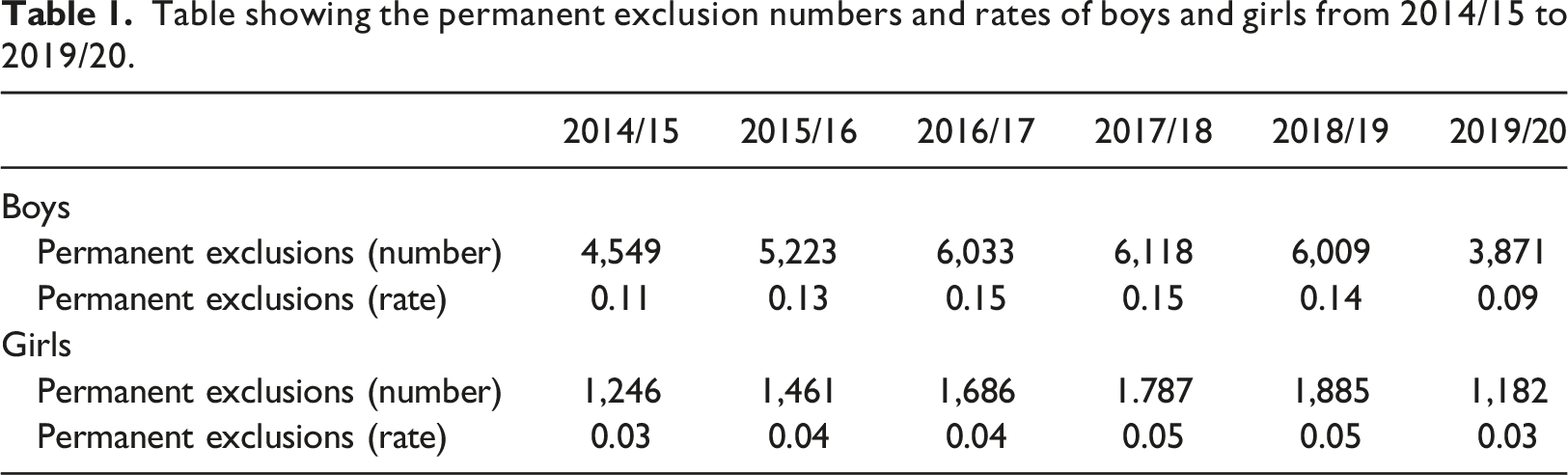
(Agenda, Girls Speak Briefing, 2021, p.4)
The Agenda Report: Girls Speak Briefing (2021) calls for gender specific interventions to prevent girls at risk of exclusion. The report suggests training for safeguarding and senior mental health leads will better equip them to understand the impact of trauma on girls. They suggest local authorities should lead on developing partnerships between schools, women and girls’ organisations, youth services, and voluntary sector and urge the DfE to take a gendered approach to the forthcoming guidance on school suspensions and permanent exclusions.
The briefing refers to different drivers that impact on exclusion of girls and recognise gender-specific experiences on Black and minoritised girls. They find Timpson’s recommendations to build multi-disciplinary teams, including specialist services for women and girls – led by and for Black and minoritised women and girls – will reduce exclusion.
Use of Black role models
Demie (2022) and Demie and McLean (2017; 2020) offer different strategic combinations of actions that together prevent exclusion. Their research and case studies show successful schools that have specifically recruited mature Black Caribbean male behaviour mentors with in-depth understanding of the young people and local community to work with the school to support the staff to better understand the contexts they serve. Acting as both school and community insider, mentors are able to work across the home-school partnership to mitigate problems as they arise and stage feedback points to regularly update, advocate and triangulate data about children’s experiences, draw on contextualised, specialist knowledge and expertise which strengthens bonds and communication between community, home and school.
This echoes earlier examples from REACH which was a project raising the aspirations and attainment of Black boys and young Black men (2007) with an independent report to Government. It is one of a series of project groups set up as successors to the Stephen Lawrence Steering Group (LSG) and the Race Equality Advisory Panel (REAP). Established in 2006, its focus is on ‘raising the aspirations and achievement among Black boys and young Black men, enabling them to achieve their potential’ (p.6).
One recommendation of this report is for more positive Black role models in schools. Role models are defined by REACH as ‘someone you look up to and respect and someone who impacts your life in a positive way’ (p.22). Maylor (2009) explores the literature relating to the impact of role models in her empirical research. She cites Dee (2004) suggesting that in a study over 4 years which randomly matched over 11,600 pupils from 79 schools, ‘same-race teacher was associated with substantive gains in achievement for both Black and White pupils’ (p.196, Dee in Maylor, 2009). Ladson-Billings (1990) notes that although race matching is certainly a benefit for pupils racialised as Black (and White), it is no guarantee for pupils’ achievement.
In successive reports for REACH (Abrams et al., 2009), the impact of role models’ messages for Black boys and Black young men was examined. The reports made three broad conclusions: 1. Role models did have some impact on Black boys, confirming the basic premise of the REACH programme that role models can be a positive influence. 2. Particular types of role models and messages are likely to be more appealing and impressive than others. 3. Some unexpected, potentially negative consequences of hearing about role models, even in the limited and constrained context of this experiment. This suggests that ‘Black role models can potentially have beneficial impacts on Black males’ (p.43).
Black boys and young men consistently reported their positivity about role models being people they would like to emulate; role models should be advised that their work may have a greater impact on Black boys rather than young Black men; they questioned about stereotype reinforcement (the need for a role model in the first place can trigger this). Abrams et al. (2009) suggest ‘a brief encounter with a role model is not likely to have a sustained effect. Role model information is more likely to have a sustained impact if it can be refreshed or added to, e.g. by repeating exposure to the role models; however, this needs to be tested’ (p.42). Lastly, Abrams et al. (2009) found that role models can impact on career aspirations.
Interestingly, Ainscow et al. (2006) agree that employing people from the local community (though they do not refer to ‘race') impacted a local authority’s project to prevent exclusion.
The role of teachers
Some published literature rightly focuses on the impact teachers have on exclusions. Demie (2022) notes low expectations of teachers as a contributing factor to higher school exclusion of Black children. He cites examples of the influence of racism which contributes to Black children experiencing problems with exam entry tiering (Strand, 2012), perceptions and expectations of behaviour of Black children influencing which set children are placed in, and thus what learning they are able to access and specifically anti-Black racism which Demie (2022) finds all impinge on children’s performance. US researchers, Okonofua and Eberhardt (2015) explored this practice further, finding that teachers were more likely to view multiple infractions ‘as a connected pattern’ in Black pupils as opposed to White pupils’ (p.5). First infractions therefore were found to influence/expect the next infraction more readily. Teachers were found to be significantly more likely to imagine themselves suspending a Black student in the future than a White student. Racial disparities are echoed ‘eerily’ in national data (more than one suspension) across ‘race' lines (p.7). The Black escalation effect, with infractions repeated over time, means Black students are treated more harshly than White pupils (p.8). Such systemic entrenchment of institutionalised racism provides further evidence to suggest that interventions to prevent exclusions need not be with the student population only but addressing risk factors in staffing and the salience of the role that ‘race' plays in schools.
Interesting case studies
1. Black Caribbean Underachievement in Schools in England, Demie and McLean (2017).
Alongside 20 recommendations to address factors found to contribute to school exclusion of Black pupils, specific recommendations focus on changes to policy and process, rather than interventions for the pupils, including a change to exclusion guidance from DfE:
Head teachers should: - be advised that pupils should not be excluded unless there are instances of serious offences; - be required to demonstrate that they have made adequate attempts to meet the pupil’s pastoral and learning needs; - provide details of pastoral and academic achievement support plans and records of activities to improve unacceptable behaviour and raise levels of attainment. - set national and regional targets for reducing Black Caribbean permanent and fixed term exclusions; - review provision in PRUs with particular focus on quality and overrepresentation of Black Caribbean pupils and developing a strategy to address the issues (summarised from p.134).
The DfE should:
DfE School exclusion: a literature review on the continued disproportionate exclusion of certain pupils research (2019) by Graham, White, Edwards, Potter, and Street explores disproportionate school exclusion. It cites contributory factors, such as the impact of austerity on schools, evidenced by Gill et al. (2017), which has led to a reduced infrastructure of preventative services and community-based support that could help to prevent school exclusion. Researchers found schools responding to these ‘budgetary pressures’ by reducing pastoral care and support staff who work with vulnerable pupils, leading to ‘higher referral thresholds’ (p.44) and more pupils and families being turned away. Gill et al. (2017) identify teachers’ lack of training and knowledge and how these gaps mean schools often are not resourced enough to support pupils with complex needs. Instead, challenging behaviour is positioned as a moral choice and ‘punished without appropriate intervention’ (p.44). Pressure to raise standards and performance they argue ‘discourage schools from embarking on preventative approaches and provide an incentive to exclude’ (p.44). Gill et al. (2017) underline the incentives directed at school performance/outcomes, arguably increasing motivation for off-rolling. 2. The Aiming High: African Caribbean Achievement Project DfES, Tikly et al (2006). Conditions were as follows: - a whole school approach; - willingness of Governors/senior management to address race equality issues; - commitment to mainstreaming initiatives to raise African Caribbean achievement; - Headteachers’ vision and commitment to address the needs of African Caribbean pupils and implement system of accountability; - recognition of and accountability for use of achievement and inclusion data; - consistent and equitable behaviour management policy and setting/streaming; and - strategic involvement from the LEA. 3. Good Practice report: reducing exclusions of Black pupils from secondary schools, Ofsted (2008). Researchers visited 9 ‘outstanding’ schools and 1 PRU who achieved ‘low exclusion rates’. Pupils identified therapeutic responses of adults, positive role models, mentoring, involvement with parents, and extra-curricular curriculum contributed to reduced exclusions. Findings are as follows: - Firm stance on racism; staff training on racism, body language and cultural awareness. - Discussing difficult issues – community issues actively addressed. - Empowering pupils to take control of their lives and look after each other, and support to mentor others. - Securing diverse role models and representation on governance impacted on decision making and on exclusion panels. 4. Department for Education and Skills (DfES) Priority Review: Exclusion of Black Pupils ‘Getting it. Getting it right’, (2006). This paper calls for the need to use the term institutional racism readily in schools to acknowledge the societal norms that exist in the UK. They identify best school practice as: Strong leadership on race equality and behavioural issues from senior management. Effective use of data to track progress of individual pupils through the disciplinary process. Identify those at risk of exclusion early; analyse trends and identify staff weaknesses in application of behaviour policies. Staff training on race equality in schools and during induction. ‘Restorative’ and ‘preventative’ approaches to mediate root causes of conflict rather than punishment, accompanied by a sense that exclusion is a failure on the part of the school. Active participation of pupils in shaping disciplinary process. Pastoral mentors, counsellors, and advocates so individual pupils use their voice in disciplinary processes. Involvement of Black parents and communities in shaping the school community (summarised from p.17).
Student-focussed work to support pre-exclusion
Whilst the foregoing looks at school, system, and policy approaches to combat exclusion, the remainder of this literature review is on targeted student-focussed approaches used to prevent school exclusion.
Most published research about exclusion focuses on pupils’ diagnosed need, such as emotional and behavioural difficulty (EBD), attention-deficit disorder (ADD), learning difficulty (LD), or specific technique or a technique with specific behaviour and applies a race neutral lens to the study.
In recent years, the DfE’s narrative about behaviour ‘declining’ in schools has led to a number of reports focussed on improving behaviour which has widened the debate about behaviour overall. The following are synthesised findings for ease of reading demonstrating from each review what has been found to be the most effective interventions.
Gaffney et al. (2021) admit the research on interventions to prevent school exclusion is complex with inconsistent results. They researched the cost effectiveness and impact of interventions to prevent school exclusion in both primary and secondary settings. They found the following interventions more impactful on secondary school exclusion rather than suspension and are not as impactful in primary schools. The most impactful interventions working directly with individual pupils were the following: • Activities preventing violence and developing self-regulated responses to conflict. • Support for pupils’ mental health, in-school counselling, and specialised provision. • Interventions pairing pupils with a mentor to act as a role model, supervise academic performance, provide advice or counselling, and help with academic tasks. • Academic support, such as tutoring (summarised from p.4).
It was found that if the prevalence of exclusion is assumed to be 10%, the mean effect sizes from the Valdebenito et al. (2018) review ‘translate to a 39% relative reduction in exclusions immediately and a 22% relative reduction in exclusions 12 months later’ (Gaffney et al., 2021, p.17). Gaffney et al. argue some of the evidence suggests targeted support for individuals was associated with larger reductions in exclusions than whole-school approaches.
They review studies which focused on targeted interventions and incorporated elements of: social-emotional learning, cognitive behavioural therapy, or a combination of both (e.g., Rochester Resilience Project, Positive Action programme, ‘Becoming a Man’ programme; wraparound case management); cognitive behavioural therapeutic techniques to help regulate their behaviour and provide appropriate coping strategies. They reviewed emotional learning interventions targeting a range of different skills, such as self-awareness, self-regulation, social awareness, relationship and communication skills, and decision-making. (p.9, Gaffney, et al., 2021)
Valdebenito et al. (2018) found the following comparisons were statistically significant: - Universal programmes more effective than targeted programmes in preventing suspension. - Interventions significantly more effective in secondary than primary schools. - Programmes designed to reduce school suspension were significantly effective but programmes not specifically designed to reduce school suspension were not. - Evaluations categorised as ‘high’ on the implementation rating were associated with reductions in suspension but evaluations in the ‘low’ category were not. - Evaluations categorised as having a small sample were significantly associated with a reduction in school suspension but evaluations with large sample sizes were not.
Valdebenito et al. (2018) found the most significant moderator was whether or not the evaluation was undertaken and led by the developer of an intervention suggesting that evaluations run by others were associated with smaller effect sizes.
The most effective types of interventions according to Valdebenito et al. (2018) were as follows: 1. violence reduction; 2. mentoring/monitoring; 3. counselling, mental health focus; 4. enhancement of academic skills; *interventions described as ‘violence reduction’ were specifically aimed to increase self-control and reduce violence (p. 62).
This appears to be the most recent and robust of the data explored in terms of targeting exclusion.
Interventions cited as successful in preventing exclusion by The Children’s Society (2018) suggest school-based counselling helped to reduce levels of school exclusion by 31% (Banerjee et al., 2014). School-based counselling needed to be accessible, non-stigmatising, and effective as an approach for pupils and pastoral care staff (Cooper, 2009 cited in Pupils’s Society, 2018), reporting improvements in attainment, attendance, and behaviour of pupils (Cooper and Cromarty, 2012 cited in Graham et al., 2019).
Reducing inequalities in school exclusion: Learning from good practice (2013) was a report to the Office of the Pupils’s Commissioner and University of Sussex Gazeley et al. (2013). They found schools halved permanent exclusion rates by working in partnership, using a tiered system in which they challenge each other. The three-tier system was as follows: Tier 1 Within school strategies and opportunities to share practices and engage in joint training Tier 2 Additional resource or managed move Tier 3 Long term alternative provision. (p.31)
They advise ‘provision needs to be made for the child, rather than locating the problem within the child’ (p.34); they all used different types of spaces, dedicated to meet different types of needs. Pupils had access to staff with whom they developed supportive relationships. Work/college programmes at Key Stage Four were found to increase motivation and reconnect young people at risk of exclusion (p.33). Systems based on restorative justice ‘had an impact in breaking down gangs’ (p.38); using monitoring systems was considered essential for identifying early intervention, but also showing progress (p.38) and good relationships with parents were considered essential (p.36); staff were employed as Heads of House who were said to be ‘available all day every day’ (p.35); strong relationships with specialist professionals outside the school context were also considered to be important in supporting inclusion for pupils with SEND (p.45).
Barnes and Morris (2008) Strategies for the Prevention of Social Exclusion suggests strategies through which the policy was implemented were strongly influenced by the risk/protection discourse. They argue there was a habit of focussing attention on the excluded rather than on those doing the excluding. Service providers did sometimes recognise the significance of attitudinal and other barriers to inclusion but in practice emphasised work with individual pupils to build resilience, confidence, and ‘self-esteem’. Both service providers and pupils and their families recognised positive short- to medium-term benefits but saw little evidence that long-term changes in policies, practices, or broader social relationships were impacting on exclusionary processes.
Specific need interventions
Specific interventions have been studied to identify intersectional impact on pupils with specific needs and with specific strategies. These interventions unfortunately do not discuss race and are not always in the UK context. However, they are worth including considering the proportion of pupils likely to be (un)diagnosed with such conditions who feature in school exclusion statistics and are summarised for reference below: - Daly-Smith et al. (2018) systematically reviewed the impact of physically active learning on cognition, academic performance, and classroom behaviour, specifically acute classroom movement break (CMB) and physically active learning (PAL) interventions on physical activity (PA), cognition, academic performance, and classroom behaviour. - Moore et al. (2018) used a systematic review to research school-based interventions for attention-deficit/hyperactivity disorder. - Effects of classroom management strategies and classroom management programs: Korpershoek et al. (2016) undertook a meta-analysis of the effects of classroom management strategies and classroom management programs on pupils' academic, behavioural, emotional, and motivational outcomes. - Bruhn et al. (2015) published a systematic review of current research on the impact of self-monitoring and self-management strategies.
The impact of race in contributing to exclusion reaches across multiple factors, such as special educational needs where students have been found to be pathologised and over-diagnosed as well as underdiagnosed and misdiagnosed with specific needs.
Post-exclusion support
There are many examples of funded projects targeting post-exclusion, and some are outlined for reference. Not present and not correct: Understanding and preventing school exclusions, Evans/Barnardos (2010) lists four interesting projects with costings. • The Shropshire Project – a school-based preventative approach with interagency specialists. • Leeds Reach Project – a partnership with secondary schools, Barnardo’s, and other agencies to deliver an alternative, inclusive learning programme for one term for young people at risk of exclusion. • Palmersville Training – an intervention combined part-time access to applied vocational learning with social support. • The Late Intervention Service (LIS) – a project working with young people at a later stage of need and those who had already fallen through safety nets with the aim of interrupting the spiral.
Targeted or early intervention?
The benefits of early intervention are well-documented, but Brookes et al. cite question the potential value of identifying and working with pupils from the age of six to prevent exclusions, others such as McAra and McVie, McAra (2013) contest the labelling and stigmatisation of families early. They argue instead for universal targeting providing support mechanisms for all pupils and families in areas in which there are potential factors influencing exclusion rates.
The heart of this discussion is the extent to which the answer lies in systemic factors which increase exclusion, such as teacher approaches to discipline, as demonstrated by Gregory et al. (2010) who argue that disproportionate discipline can contribute to lagging achievement among pupils of colour.
Conclusions
The findings of this critical literature review suggest that the following factors impact upon and prevent exclusion of Black children: • early group intervention with primary aged pupils; • a focus on racialisation and gender which affects exclusion; • strategies such as surveillance are experienced differently across race lines; • increasing research shows that Black girls are adultified a process through which their needs are at risk of being missed; • safe, trained, and supportive adults in and out of class with capacity to listen and support; • strategies that are implemented in secondary pre-entrenchment of the problem (most pupils are excluded aged 14 around year 9); • role models that can exemplify future careers; two projects demonstrated some positive impact of race matching; • teachers who are professionally developed to become cognizant of their own racial biases and become racially literate can impact on their own practice to prevent exclusion; • early stage research shows some evidence that race matters in representation of staffing, but this will not solve academic performance in itself; • systemic factors must be addressed and can be positively changed through investment in anti-racist practice and professional learning for staff; • support must be tailored around the child with specific needs; • it is unknown whether academies exclude more pupils in 2022 but in 2010 research (Gillborn and Demack, 2018) suggest this was the case; • external specialists can impact provided there is no stigma from staff and pupils. • systemic thinking applied to problem solving can overcome structural factors affecting exclusion; • explicitly challenging and exploring strategies that prevent low expectations of teachers can impact on exclusion.
Recommendations for policy, practice and future research Schools
• It is clear from persistent disparities in exclusion of Black children that racism affects racially minoritised students differently in schools. Exploring, coming to terms with, and admitting how racism is presenting in school contexts, specifically amongst the staff body, is pivotal in unpicking expectations, assumptions and interpretations to reverse deficit models of practice in which children and their families bear the brunt of systemic discrimination; • Auditing the confidence and racial literacy of staff, and providing professional development programmes that support a racially literate teaching body, are essential to interrupt patterns of racism currently enabling exclusion. Developing continuous professional development that supports teacher reflexivity with regard to the role whiteness plays in their practice; • Tracking Black children’s achievement is recommended in almost all research, within the knowledge that assessment is likely to be negatively affected by racism and the negative interpretation of teaching staff. Deploying additional resources and community support, therefore, through mentorship, tracking setting patterns, increasing access to additional learning and in class support before children reach key points of secondary school and specifically in Key Stage 3; • Identifying lead roles and responsibilities for preventing racism in the exclusion of Black children as a specific safeguarding risk of schools in Trusts and monitoring the reasons for exclusions.
For Local Authorities and Multi-Academy Trusts:
• Working and connecting systemically with specialist community provision and prevention teams who hold expertise in how to prevent exclusion can combine efforts and resources of schools and communities to support students and families through challenging circumstances and difficult transitions at critical points in their lives; • Trusts and local authorities can combine knowledge, evidence and best practice by spotlighting strategies that are evidenced to prevent exclusions of Black children. Through combining knowledge with strategic intent, Trusts can utilise their power to interrupt structural racism happening on school sites and protect children from it; • Trusts can challenge one another, offer critical feedback and adopt shared systemic accountability for preventing exclusions of Black children across schools as a form of contextual safeguarding for children; • Consider and further explore the importance of role models as part of school prevention strategies.
Footnotes
Declaration of conflicting interests
The author(s) declared the following potential conflicts of interest with respect to the research, authorship, and/or publication of this article: Author Paul Miller is the Editor of Equity in Education and Society. An alternative member of the editorial board and independent expert reviewers were engaged in the peer review process.
Funding
The author(s) received no financial support for the research, authorship, and/or publication of this article.

Notes
Appendix
Ethnicity facts and figures: found at: https://explore-education-statistics.service.gov.uk/data-tables/fast-track/8cc547a1-c430-469b-8800-4605fcf1af24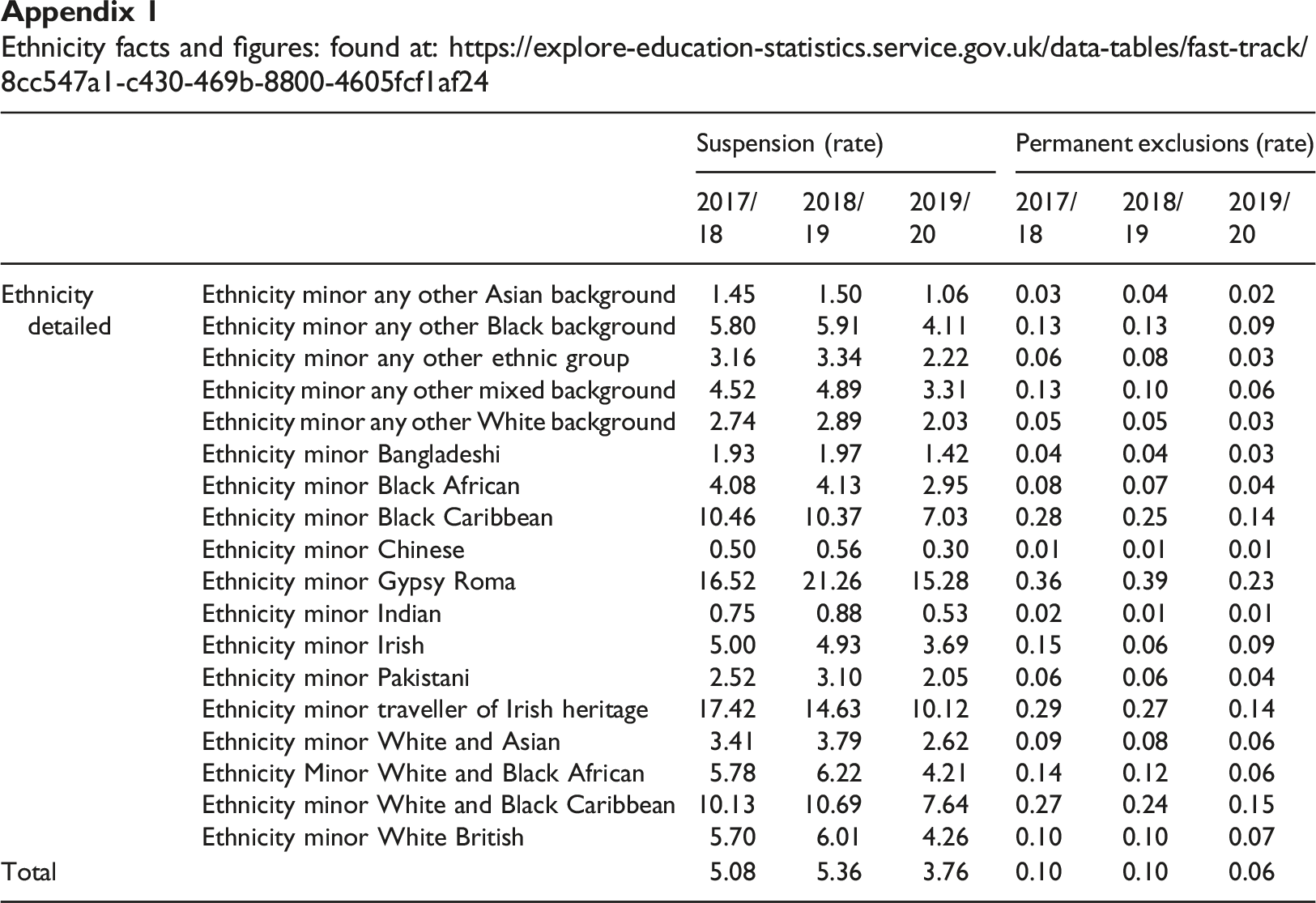
Suspension (rate)
Permanent exclusions (rate)
2017/18
2018/19
2019/20
2017/18
2018/19
2019/20
Ethnicity detailed
Ethnicity minor any other Asian background
1.45
1.50
1.06
0.03
0.04
0.02
Ethnicity minor any other Black background
5.80
5.91
4.11
0.13
0.13
0.09
Ethnicity minor any other ethnic group
3.16
3.34
2.22
0.06
0.08
0.03
Ethnicity minor any other mixed background
4.52
4.89
3.31
0.13
0.10
0.06
Ethnicity minor any other White background
2.74
2.89
2.03
0.05
0.05
0.03
Ethnicity minor Bangladeshi
1.93
1.97
1.42
0.04
0.04
0.03
Ethnicity minor Black African
4.08
4.13
2.95
0.08
0.07
0.04
Ethnicity minor Black Caribbean
10.46
10.37
7.03
0.28
0.25
0.14
Ethnicity minor Chinese
0.50
0.56
0.30
0.01
0.01
0.01
Ethnicity minor Gypsy Roma
16.52
21.26
15.28
0.36
0.39
0.23
Ethnicity minor Indian
0.75
0.88
0.53
0.02
0.01
0.01
Ethnicity minor Irish
5.00
4.93
3.69
0.15
0.06
0.09
Ethnicity minor Pakistani
2.52
3.10
2.05
0.06
0.06
0.04
Ethnicity minor traveller of Irish heritage
17.42
14.63
10.12
0.29
0.27
0.14
Ethnicity minor White and Asian
3.41
3.79
2.62
0.09
0.08
0.06
Ethnicity Minor White and Black African
5.78
6.22
4.21
0.14
0.12
0.06
Ethnicity minor White and Black Caribbean
10.13
10.69
7.64
0.27
0.24
0.15
Ethnicity minor White British
5.70
6.01
4.26
0.10
0.10
0.07
Total
5.08
5.36
3.76
0.10
0.10
0.06