




Abstract
The rise of virtual fan communities and the online social interactions (OSIs) of fans within these communities have contributed to significant advancements in fandom philanthropy in the social media era. However, research on this emerging form of fan engagement from a collective action perspective remains limited, particularly in theorizing psychological and contextual mechanisms. Primarily drawing upon Duncan's collective action model, this study examines the relationship between fans’ OSIs within virtual communities and their intentions to engage in fandom philanthropy. A survey of Chinese fans revealed that group identification significantly mediated the relationship between OSIs and fandom philanthropy intention. Moreover, the direct effect of OSIs on philanthropy intention was significant only among fans exposed to high levels of peer influence, highlighting the moderating role of social context. These findings enhance our understanding of fandom philanthropy as a form of collective action and provide practical insights into how fandom philanthropy can be promoted in the social media age.
Keywords
Introduction
Celebrities and fans have long maintained a connection with charitable causes (Brockington & Henson, 2015). Leveraging their public visibility, brand credibility, and personal wealth, celebrities have historically engaged in charitable activities (Jeffreys & Allatson, 2015; Panis & Van Den Bulck, 2012; Samman et al., 2009). Fans, influenced by the celebrities and media figures they admire, have also increasingly participated in charitable endeavors (Bennett, 2014; Jeffreys & Allatson, 2015). A notable example of this early fan involvement is the Star Trek fan community in the 1970s, when fans organized charity events and blood drives (Fanlore, 2023).
In the digital era, the rise of virtual fan communities and fans’ online social interactions (OSIs) within these communities has further fueled the growth of fandom philanthropy, or “fanthropy,” where fans engage in philanthropic activities on behalf of specific celebrities (Jeffreys & Xu, 2017; Li, 2020; Li et al., 2024). Fanthropy takes many forms, including fundraising campaigns, charity events, and volunteer work (Jeffreys & Xu, 2017). One striking example of fanthropy in the social media era is the international fan response to Bangtan Sonyeondan (BTS), a South Korean boy band. When BTS tweeted support for the Black Lives Matter (BLM) movement to its 26.3 million followers, their fans quickly raised 1 million dollars for BLM within just one day (Turak, 2020). In China, the 2019 Chinese Fan Economy Report revealed that 80% of fans expressed a willingness to engage in fandom philanthropy (SinaWeibo & Aiman, 2020). Furthermore, the prevalence of fan-initiated charitable projects surged from 8% in 2017 to 26.47% in 2021, as documented in the Chinese Celebrity Charity Report (China Foundation for Rural Development, 2022).
As this emerging trend garners increasing attention, a growing body of research has begun to explore the psychological and sociological drivers behind fans’ participation in philanthropic activities. Most existing studies have approached fandom philanthropy from individual perspectives, focusing on factors such as fan's sense of connection to the celebrity (Kim & Walker, 2013), their perception of the celebrity's motives for charitable actions (Park & Cho, 2015), and their motivation to support the celebrity (Jeffreys & Xu, 2017). While these individual-centered perspectives provide valuable insights, they often overlook the collective dynamics inherent in philanthropic endeavors within fan communities. Fandom philanthropy, which involves a group of individuals uniting through shared interests and passions to achieve a common goal that benefits both celebrities and the broader public, can be understood as a form of collective action (Jeffreys & Xu, 2017; Tang et al., 2022). Thus, a more nuanced exploration of fandom philanthropy from the perspective of collective action would contribute to the academic literature and deepen our understanding of this phenomenon within the context of digital society. Although some recent studies have begun to examine fan activities from a collective action perspective (He & Li, 2023; Yang et al., 2024), this line of research remains relatively limited. Further work is needed to more fully theorize and empirically test the key psychological and contextual mechanisms involved.
Social identity theory (SIT) posits that individuals consistently strive to uphold or enhance their self-esteem, which can be achieved by cultivating a positive social identity, often manifested through participation in collective actions (Tajfel, 1978; Tajfel & Turner, 2004). Building on the foundation of SIT, Duncan (1999) introduced a collective action model, which emphasizes that an individual's life experiences and personality traits exert influence over their engagement in collective action. This influence operates both directly and indirectly through the mechanisms of group consciousness and group identification. The model's effectiveness has been demonstrated across diverse contexts, as shown in studies by Duncan and Stewart (2007) and Nelson et al. (2008).
Given the inherently collective nature of fandom philanthropy, we adopt Duncan's collective action model as the foundation of our research. Building upon this model, our aim is to explore the specific relationship between fans’ OSIs and their intention to engage in fandom philanthropy. OSI refers to fans’ digital communication, coordination, and expression within virtual fan communities—activities that are central to shaping collective identity and behavioral norms. The present study contributes to both fan studies and collective action research by empirically extending Duncan's collective action model into the digital fandom context. It does so by conceptualizing OSIs as a form of mobilizing communication, examining group identification as a central motivational mechanism, and introducing peer influence as a contextual moderator given its potential role in shaping collective actions (Irwin & Simpson, 2013; Smith et al., 2021). This integration allows us to better understand how digital social interaction facilitates prosocial engagement within virtual fan communities.
To empirically test these relationships, we conducted an online survey targeting fans actively engaged in virtual fan communities. Theoretically, by incorporating peer influence as a moderating factor, this study extends the explanatory power of Duncan's model in online, fan-driven contexts. Practically, the findings can offer useful implications for educators, fan community leaders, and practitioners seeking to foster prosocial behavior and philanthropic engagement among youth in digital fandom spaces. Overall, this study provides an updated framework for understanding how collective identity, online interaction, and peer norms co-produce philanthropic behavior in digital fan communities. As such, it contributes to a growing body of scholarship that views fan engagement not only as cultural expression, but also as a form of digitally mediated collective action.
Literature Review and Hypotheses
Fandom philanthropy—charitable activities organized and carried out by fan communities—has gained momentum with the rise of social media platforms that facilitate large-scale coordination and participation. Although growing attention has been paid to understanding fan activities as forms of collective action, the existing body of research remains limited in both scope and number. More work is needed to systematically theorize and empirically validate the underlying psychological and contextual mechanisms, as well as to broaden the range of perspectives. For instance, He and Li (2023) adopt a collective action lens to investigate Chinese fans’ online data-making behavior and identify celebrity worship and civic engagement as motivational antecedents. However, their work focuses primarily on data labor rather than philanthropic action and does not incorporate psychological mediators such as group identification or explore the role of peer dynamics. Yang et al. (2024) apply the Social Identity Model of Collective Action (SIMCA) model to examine fan philanthropy, emphasizing the role of fans’ dual identity (as both idol supporters and civic actors) as a mediating factor. While their study sheds light on the civic potential of fandom (data and textual) practices, exploring the role of OSIs in fostering fanthropy in the current study would offer a distinct and valuable contribution to the literature.
Theoretical Framework: Duncan's Collective Action Model
To explore how fandom-based social interactions foster philanthropic intentions, this study primarily draws on Duncan's collective action model, which emphasizes the interplay between psychological and contextual factors in motivating participation in collective behaviors. The model proposes that intrapersonal variables, such as personality traits and life experiences, contribute to the development of group consciousness (path A), which in turn motivates collective action (path B), while also allowing for direct effects on behavior (path C) (Duncan, 1999). Integrating concepts from classic social psychological theories—such as social identity and efficacy beliefs, Duncan's model addresses prior gaps by linking individual differences with psychological motivations for collective participation (Duncan, 2012).
This study applies Duncan's model to the digital context of fandom philanthropy, a relatively underexplored form of collective action. While frameworks like the SIMCA (e.g., Yang et al., 2024) focus on identity as the primary driver, using Duncan's model in the current study enables a dual-pathway analysis of how fans’ OSIs shape fanthropy intentions: it emphasizes group identification as a mediator and peer influence as a contextual moderator. While Duncan's model does not explicitly emphasize communication processes, we extend its application by conceptualizing OSIs as digital interactions that foster group identification and collective consciousness in virtual fan communities. This framing allows us to empirically examine how digital engagement functions within the traditional collective action framework and thus offers a more nuanced understanding of how identity-based motivation and social contextual cues jointly shape philanthropic intentions within virtual fan communities.
OSIs and Fandom Philanthropy Intention
OSIs refer to the active and direct communication among members of virtual communities (Bagozzi et al., 2007; Gerson et al., 2017). In China, OSIs facilitated by social media have become an integral part of daily life for many fans, enabling fans worldwide to connect and communicate regardless of time and distance (Malik & Haidar, 2020; Yin & Xie, 2024). Through features such as comments and direct messaging, fans within these virtual communities can exchange information about the celebrities they adore, express their feelings toward them, and provide emotional support to one another (Kim & Kim, 2017).
Today, digital platforms not only enhance communication and interaction among fans, as well as between fans and the celebrities or idols they follow, but also significantly lower the barrier to participation in charitable activities, making fandom charity increasingly commonplace (Bennett, 2012; Kanozia & Ganghariya, 2021). According to the Chinese Philanthropy List, the past decade has witnessed a notable rise in fandom philanthropy, which, beyond the charitable activities of celebrities themselves, has become a prominent form of celebrity-related charity in China. Within fan communities, individual contributions to both the fan object (the celebrity or idol) and the community are highly valued, constituting a key normative expectation (Yin, 2020). Fans often engage in philanthropy not only to enhance the public image of their idols but also to promote the visibility and reputation of their fan community (Jeffreys & Xu, 2017), aligning with the aforementioned shared values of fan group members.
The link between OSIs and fandom philanthropy can be illuminated through the lens of group socialization. In the context of group socialization, newcomers undergo a process of acquiring essential knowledge, including group norms, culture, and objectives, to integrate seamlessly into the group (Moreland & Levine, 1982). Interaction with experienced members is a key means for newcomers to gain insight into group dynamics and cultural nuances (Kram & Isabella, 1985; Schein, 1972). In terms of virtual fan communities, social media platforms function as spaces where fans form close-knit groups that transcend physical boundaries (Jenkins, 2006; Malik & Haidar, 2020). These digital spaces serve not only as hubs for sharing information about celebrities (Boehmer & Lacy, 2014; Highfield et al., 2013) but also as forums for discussing and internalizing the unique norms and values of fan groups (Yin, 2020). OSIs within these communities enable fans to align with role expectations and adapt their behaviors accordingly. Furthermore, as aforementioned, participating in group philanthropy to enhance the public image of both the idol and the fan group has become so common in Chinese fan groups that it could be considered as a kind of fan norm (Jeffreys & Xu, 2017). Consequently, it is reasonable to infer that fans highly engaged in online interactions within virtual communities are more likely to participate in fandom philanthropy, due to their heightened understanding of and alignment with the prevailing fan norms.
The Mediating Role of Group Identification
Another objective of the current study is to explore the potential psychological mediator of group identification—the positive emotional valuation of the relationship between oneself and an ingroup (Postmes et al., 2013)—in linking OSIs to the intention of fandom philanthropy. Duncan's collective action model posits, and empirically supports, life experiences are significant predictors of group consciousness, which in turn predicts collective action. For instance, the life experience variable of racial oppression contributes to the development of racial consciousness (Cross, 1991, as cited in Duncan, 1999). In the current study, frequent online interactions—such as opinion-sharing, commenting, or exchanging social support—within a fan group foster a shared sense of group membership (Tajfel & Turner, 2004; Vygotsky & Cole, 1978), thereby increasing the likelihood of fans identifying with the group.
In the field of computer-mediated communication (CMC), OSIs have been criticized for potentially lacking the richness of social cues present in offline interaction (Kiesler et al., 1984). However, evidence suggests that individuals can indeed develop social networks and emotional attachments within virtual communities (Cole et al., 2017; Han et al., 2019; Lin & Kishore, 2021). The social identity model of deindividuation effects (SIDE model) offers a useful framework for examining the construction of group membership and group behavior in online environments (Perfumi, 2020; Reicher et al., 1995). Specifically, the model theorizes that the absence of social cues in CMC settings triggers the process of deindividuation, which heightens the cognitive salience of group identity and strengthens individuals’ commitment to group norms (Postmes et al., 2001; Reicher et al., 1995). Empirical studies have consistently validated the assumptions of the SIDE model (Chan, 2010; Kim & Park, 2011; Lee, 2004, 2006, 2007).
Regarding digital fandom, virtual fan communities often operate under conditions of anonymity, where members use screen names and avatars, providing minimal personal information. Additionally, these online fan groups tend to exhibit hierarchical structures and enforce strict regulations, which may further diminish the salience of personal identity (Zhang et al., 2015). In line with the SIDE model, we argue that increased interactions within online fan groups—where such deindividuation mechanisms are present—may induce a stronger sense of group identity, or group identification. A study of an online K-Pop fan club supports this view, showing that anonymous fans can experience a stronger sense of attachment to the fan group through actively sharing information with other group members (Kim & Kim, 2017). Hence, the following hypothesis is proposed:
SIT posits that individuals who strongly identify with their ingroup are more likely to conform to group's core consensus and strive to behave as a “good” members (Tajfel & Turner, 2004). Empirical studies have consistently shown that group identification is positively associated with individuals’ adherence to group norms (Masson & Fritsche, 2014; Miller et al., 2016; Sani et al., 2015). Furthermore, research has demonstrated that group identification can motivate ingroup members to exceed minimal role expectations, even making sacrifices to advocate for group's interests (Lee et al., 2015). For these reasons, group identification has been identified as a significant psychological driver of participation in collective actions (De Weerd & Klandermans, 1999; Simon et al., 1998; Ufkes et al., 2015), a central tenet of Duncan's collective action model (1999).
Specific to the context of fan groups, prior research found that the level of fan group identification positively predicted individuals’ adherence to group norms (Jiang, 2018; Kim & Kim, 2017). As aforementioned, in contemporary Chinese fan communities, fandom philanthropy has emerged as a core value and a prominent form of collective action, which aims at enhancing the social image of both the celebrities and their associated fan groups (Jeffreys & Xu, 2017). Hence, it is reasonable to hypothesize that stronger identification with an online fan group increases fans’ willingness to engage in fandom philanthropy.
The Moderating Role of Peer Influence
Rooted in social learning theory, the concept of peer influence indicates that individuals learn to imitate the behaviors of those around them through observation, imitation, and interaction (Bandura, 1971, 1973). Given its relevance in explaining a wide range of behavioral outcomes, extensive research has been dedicated to understanding the effects of peer influence on people's behavioral patterns. Brechwald and Prinstein (2011) delineated two complementary approaches to explaining the mechanisms of peer influence. First, Bandura's (1971) social learning theories suggest that people in various social contexts learn new behaviors through social rewards, punishment, and the modeling of peers’ behaviors. This modeling effect is particularly pronounced when individuals feel admiration or emotional closeness toward the influencers (Giletta et al., 2021). Second, drawing on SIT (Abrams & Hogg, 1990) and social comparison theory (Festinger, 1954), the imitation of valued peers’ behaviors and adherence to valued social norms can enhance individuals’ self-concept. This favorable sense of self, acting as an intrinsic reward, motivates individuals to adopt certain behaviors. Given the prevalence of and value placed on fandom charity within fan communities, members of today's online fan groups are highly likely to model their peers’ charitable behaviors.
In recent years, a growing body of literature has examined the role of peer influence on fans’ charitable behaviors. For instance, Xie (2021) conceptualized fans’ engagement in charity as a manifestation of celebrity worship, driven by peer influence within fan groups. Similarly, Chadborn et al. (2016) attributed prosocial giving in fandom to group identity and adherence to group norms. Li et al. (2024), drawing on the Theory of Normative Social Behavior, also found that descriptive peer norms positively predict online engagement in fandom philanthropy and mediate through personal attitudes. As reasoned earlier, OSIs with fan community increase fans’ exposure to peer behaviors and group norms. This process enhances fans’ understanding of the group's norms, culture, and goals, potentially motivating them to adopt the collective behavior of fandom charity. However, individual experiences within fan groups can vary significantly. Fans may differ in their exposure to fandom charity depending on the specific fan group they belong to, the duration of their membership, and the extent of their involvement. Therefore, we hypothesize that, given the same level of OSIs, fans who are exposed to more peer charity behaviors are more inclined to emulate such behaviors and adhere to the group norm of engaging in charity.
Based on the above hypotheses, we postulate a conceptual model to examine the relationship between OSIs and fandom philanthropy intention, as well as the underlying mechanism driving this relationship. Specifically, the model positions group identification as a potential mediator and peer influence as a possible moderator (see Figure 1).
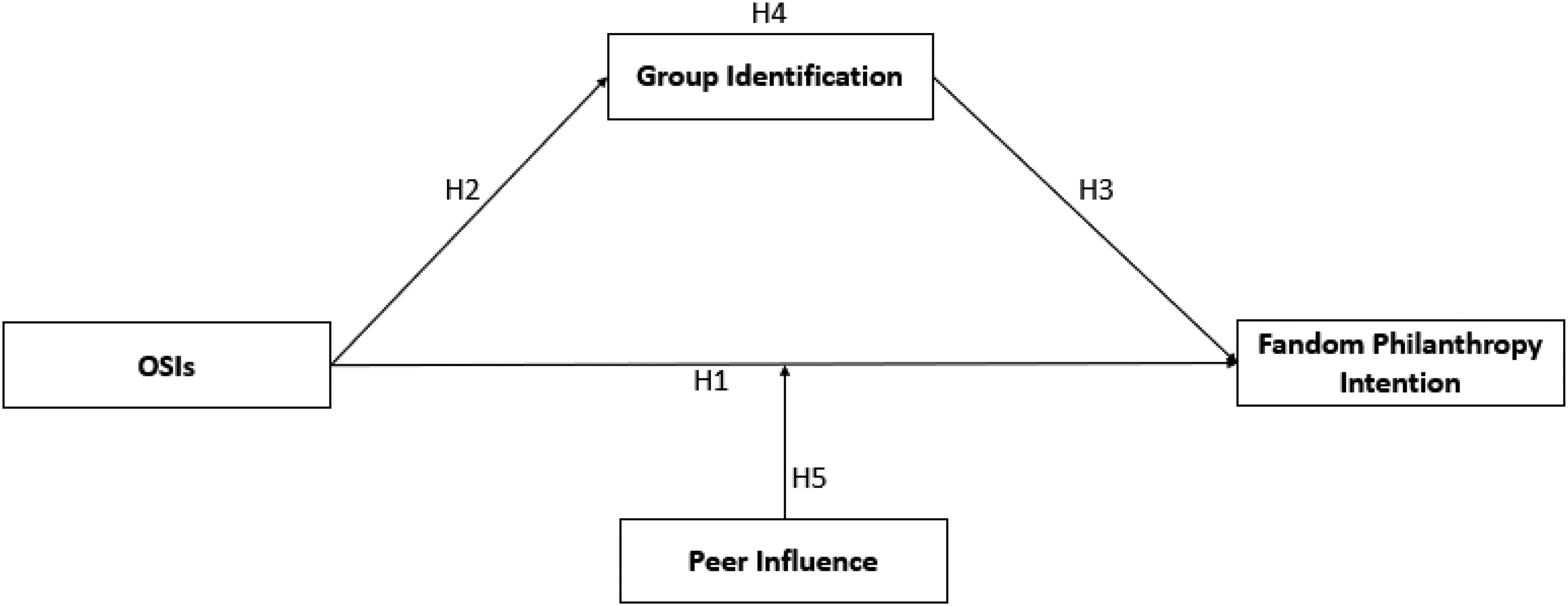
Conceptual Model.
Method
Participants and Procedures
The target population for this study is fans who engage in virtual fan communities. To collect data, we employed an online survey method. The initial questionnaire was developed based in part on previous research (Gerson et al., 2017; Leach et al., 2008; Li & Chen, 2022; Wu & Chen, 2013), and a pilot study with 120 participants was conducted to assess the reliability of the key constructs. The constructs demonstrated satisfied reliability, with all Cronbach's α values exceeding .70. Following this, we made necessary modifications to the initial questionnaire based on the results of the pilot test before proceeding with the formal online survey.
Participants were recruited through an electronic invitation link shared on several major social networking platforms in China, including WeChat and Sina Weibo. To be eligible for the study, participants need to meet two criteria: (a) they must identify as a fan of a celebrity and (b) they must have an active social media account and engage in at least one online fan community. Informed consent was obtained prior to survey participation, and all participants were informed of their right to withdraw from the survey at any time.
The data collection yielded a total of 461 responses. After excluding the unqualified cases who did not engage in any online fan community, 442 valid responses were retained. Each respondent received 3 RMB as compensation for their time. Among the final sample, females accounted for a greater proportion (57.7%) than males (42.3%). The mean age of participants was 25.58 (SD = 5.41), with the majority (91.4%) aged between 18 and 33. Additionally, 68.1% of participants held a bachelor's degree.
Measures
OSIs in Fan Communities
We used four items adapted from Li and Chen (2022) to measure fans’ OSIs with other members in the same fan community. Participants were asked to report their frequency of the following behaviors over the past year within virtual fan communities (i.e., online groups centered around shared admiration for a public figure, where members interact regularly through social media platforms): “Liking or commenting on other members’ posts,” “Replying other members’ comments,” “Chatting with other members in private,” and “Participating in online discussions.” Responses were recorded on a 5-point Likert scale ranging from 1 (never) to 5 (always) (α = .797). A question regarding the type of public figures participants followed showed that the sample primarily consists of fans of entertainment and sports celebrities, which reflects common fandom types in Chinese digital culture.
Group Identification
In this study, group identification was measured using nine items adapted from Leach et al.'s (2008) scale. Participants were asked to indicate the extent to which they agree or disagree with the statements on a 5-point Likert scale from 1 (strongly disagree) to 5 (strongly agree). Sample items included: “I feel a bond with the fan community,” “I am glad to be a member of the fan community,” and “I often think about the fact that I am a member of this fan community” (α = .909).
Fandom Philanthropy Intention
Participants were asked to report their intention to engage in fandom philanthropy in the upcoming year using a 5-point Likert scale from 1 (strongly disagree) to 5 (strongly agree). Four items from Tang et al. (2022) were adopted and showed good reliability (α = .830). Sample items included: “I’m willing to participate in fandom philanthropy endorsed by my favorite celebrity/celebrities.” and “I’m willing to participate in fandom philanthropy organized by fans.”
Peer Influence
Three items were adapted from Wu and Chen (2013) to measure peer influence. On a 5-point Likert scale from 1 (never) to 5 (always), participants were asked to indicate how often they perceived different people in their environment, including other members of the fan community, to engage in fandom philanthropy (α = .734).
Control Variables
The demographic variables of gender, age, education level, and monthly income were treated as control variables, given their potential influence on fandom philanthropy (Lee & Chang, 2007; Manesi et al., 2019).
Data Analyses and Results
Measurement Model and Common Method Biases test
A confirmatory factor analysis (CFA) was conducted using Amos 24.0 to assess the measurement model for the 20 items measuring the four key constructs in this study: OSIs, group identification, fandom philanthropy intention, and peer influence. The measurement model yielded a χ2/df of 2.903, RMSEA of 0.066, RMR of 0.042, GFI of 0.899, CFI of 0.934, and TLI of 0.923. All fit indices fell within acceptable ranges, indicating a satisfactory model fit (Hu & Bentler, 1999; Schreiber, 2017).
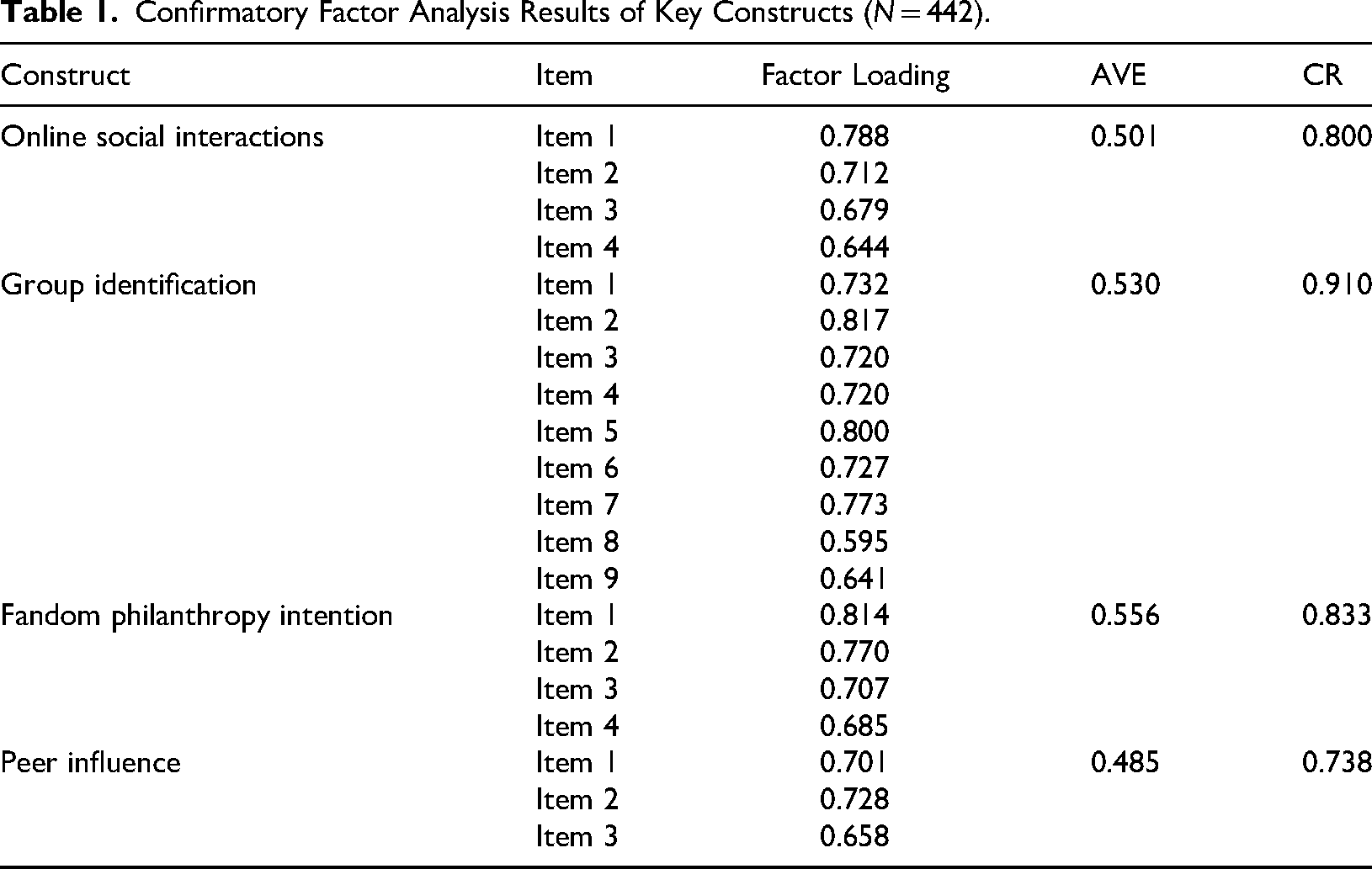
We followed the guidelines of Fornell and Larcker (1981) to access the convergent and discriminant validity of the scales. Table 1 presents the standardized factor loading, composite reliability (CR), and average variance extracted (AVE) for each construct. It was found that the standardized factor loadings for all items exceeded 0.5, the AVE values were predominantly above 0.5, and the CR for each construct was greater than 0.7, indicating adequate convergent validity. Furthermore, as shown in Table 2, the square roots of the AVE values were all greater than the inter-construct correlations, demonstrating good discriminant validity of the measurements.
Confirmatory Factor Analysis Results of Key Constructs (N = 442).
Correlations and Discriminant Validity for Measurement Model (N = 442).
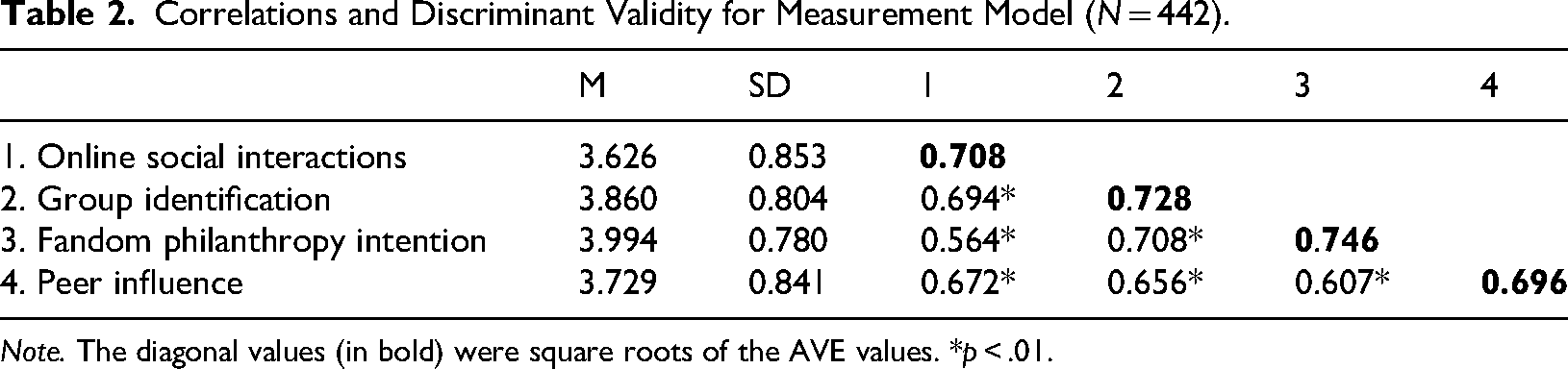
Note. The diagonal values (in bold) were square roots of the AVE values. *p < .01.
To assess common method bias, the unmeasured latent method factor technique was employed in this study (Podsakoff et al., 2003). Specifically, we first examined the original measurement model (M1) and then compared it to a second model (M2) that included a first-order method factor, with each item serving as an indicator. The comparison between M1 and M2 revealed changes in model fit, with Δχ2/df = 0.374, ΔGFI = 0.017, ΔIFI = 0.013, ΔRMSEA = 0.007 and ΔRMR = 0.021. However, the variation in each model fit index did not exceed 0.05 (Bagozzi & Yi, 1990), suggesting that the inclusion of the method factor did not significantly improve the model fit. These results indicate that common method bias was not a significant issue in this study.
Model Testing
Hayes (2022) PROCESS macro 4.0 was employed to test our conceptual model. Specifically, we first used Model 4 to examine the overall (direct, indirect, and total) effects of OSIs on fandom philanthropy intention through group identity (a simple mediation model), while controlling for demographic variables and peer influence. Subsequently, we used Model 5 to assess the effects (a moderated mediation model), with particular focus on the conditional direct effect using peer influence as moderator, while again controlling for the demographic variables. Mean centering was applied to mitigate potential multicollinearity between predictors and the product term prior to the model test (Shieh, 2011).
Simple Mediation Model
Table 3 presents the results of the OLS regression analysis. In support of Hypothesis 2, we found a positive relationship between OSIs and group identification (b = 0.427, p < .001). As expected in hypothesis 3, group identification was significantly associated with fandom philanthropy intention (b = 0.508, p < .001). However, the direct path from OSIs to fandom philanthropy intention was not statistically significant (b = 0.034, p = .461).
Simple Mediation Model: Regression Analysis Results.
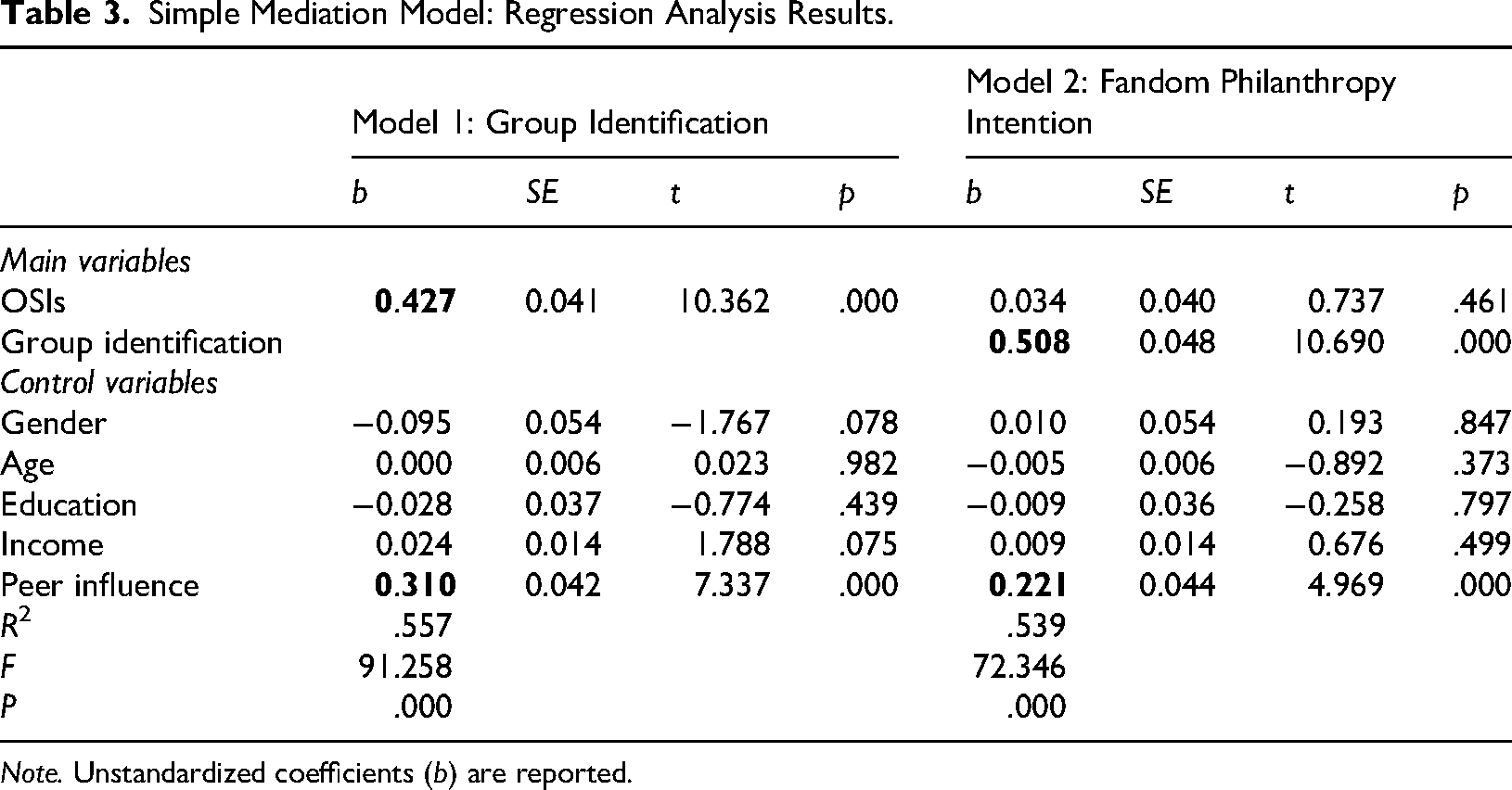
Note. Unstandardized coefficients (b) are reported.
Subsequently, we conducted a mediation analysis using 5000 bias-corrected bootstrap samples to test the indirect effect of group identification in linking OSIs and fandom philanthropy intention. Statistical significance (p < .05) was reached if the 95% confidence interval (CI) did not straddle zero (Preacher & Hayes, 2004). The results showed that group identification significantly mediated the relationship between OSIs and fandom philanthropy intention (point estimate = 0.217, BC 95% CI = [0.139, 0.311]), thus supporting H4. Additionally, the total effect of OSIs on fandom philanthropy intention was significant (point estimate = 0.251, 95% CI = [0.161, 0.341]), whereas the direct effect was not significant (point estimate = 0.034, 95% CI = [‒0.056, 0.123]).
Moderated Mediation Model
H5 posited that peer influence moderates the direct effect of OSIs on fandom philanthropy. The results from regression analysis (see Table 4 for details and Figure 2 for path coefficients) indicate that, after including peer influence as a moderator in the model, OSIs positively predicted group identification (b = 0.625, p < .001) (H2 supported) and group identification significantly predicted fandom philanthropy intention (b = 0.506, p < .001) (H3 supported). Meanwhile, peer influence significantly moderated the relationship between OSIs and fandom philanthropy intention (b = 0.083, p < .05), meaning that the direct effect of OSIs on fandom philanthropy intention was conditioned on the level of peer influence.
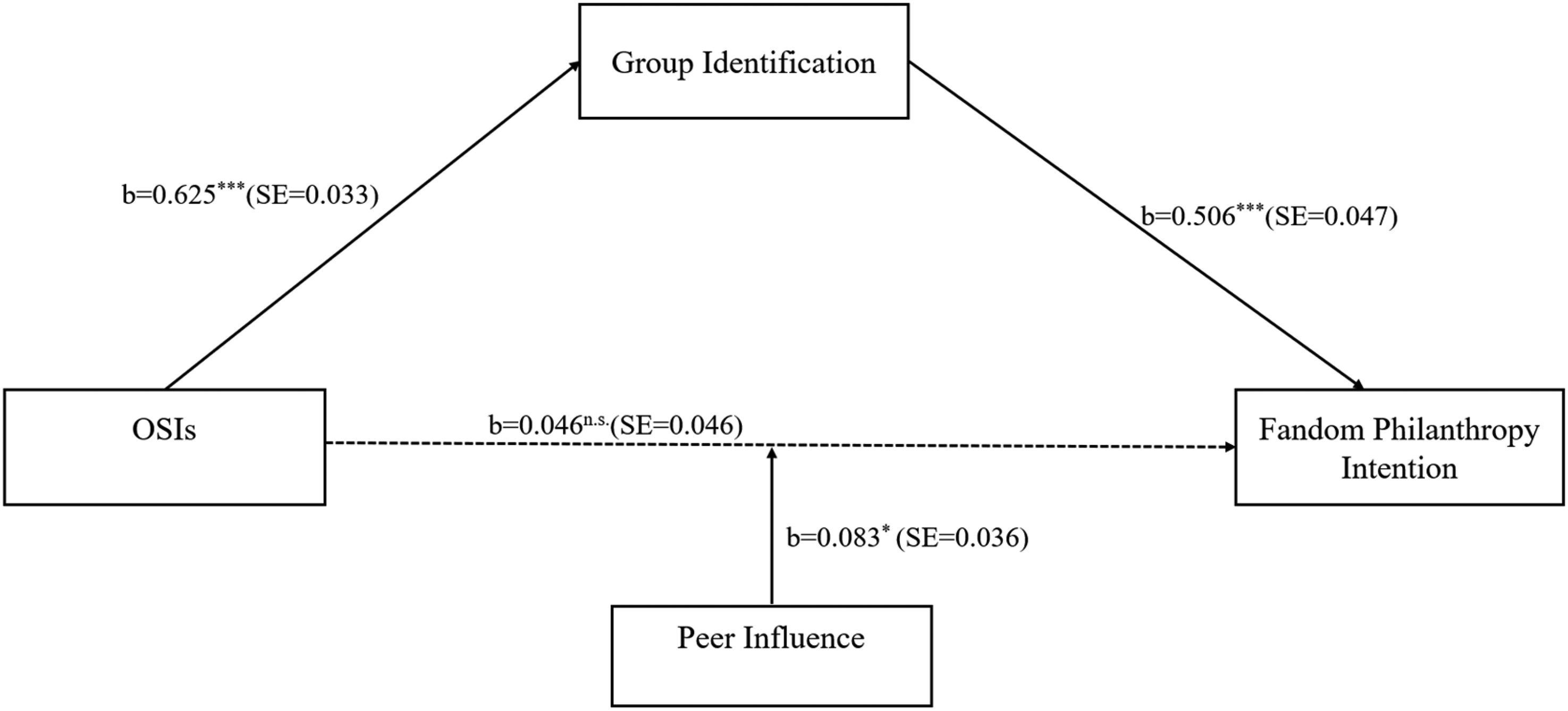
Moderated Mediation Model With Path Coefficients.
Moderated Mediation Model: Regression Analysis Results.
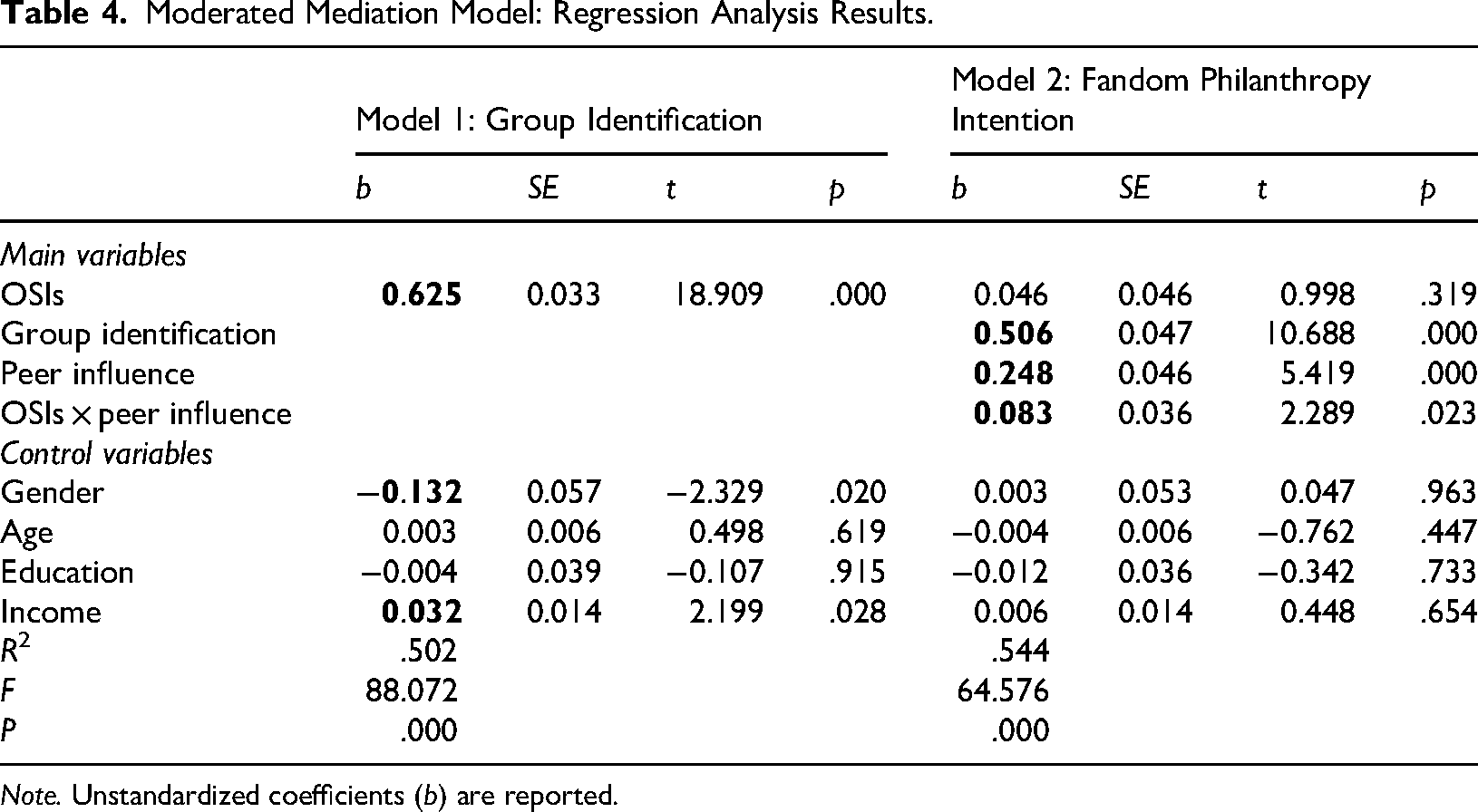
Note. Unstandardized coefficients (b) are reported.
The interaction plots are presented in Figure 3. Specifically, for fans with low (low and moderate) level of peer influence, the direct effect of OSIs on fandom philanthropy was not significant (M ‒ 1SD: b = ‒0.024, p = .641; M: b = 0.046, p = .319). However, for fans experiencing a high level of peer influence, the direct effect was significant (M + 1SD: b = 0.116, p < .05). This suggests that as fans observe more philanthropic behavior from their peers, the relationship between OSIs and fandom philanthropy intention becomes stronger, highlighting that peer influence amplifies the impact of OSIs on individuals’ philanthropic behavior within fan communities.
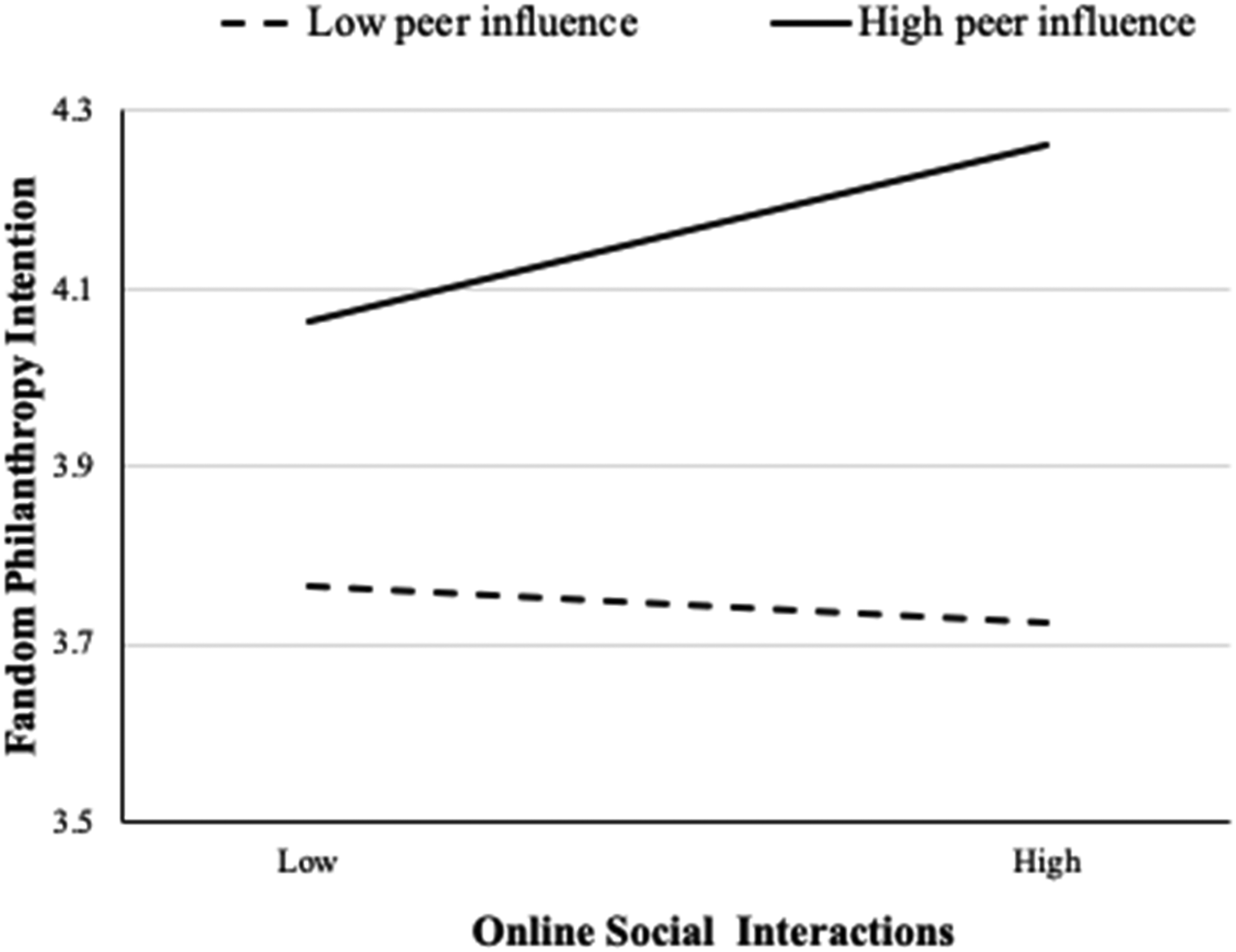
The Interaction Between OSIs and Peer Influence on Fandom Philanthropy Intention.
Discussion
Social media has bridged the gap between fans and idols, driving fans to actively engage in charitable activities to enhance the social reputation and image of both their idols and the collective fan community. In the current study, we shift away from the traditional celebrity-centered perspective (Mehwish et al., 2021; Quan et al., 2022) and adopt a fan-centered approach. Specifically, we explored whether fans’ social media interactions could predict their intention to engage in fandom philanthropy. Drawing primarily on Duncan's collective action model, we examined both direct and indirect (via group identification) pathways linking OSIs in fan communities to fans’ philanthropy intention. Additionally, we investigated the moderating effect of peer influence in the process.
First, we found that OSIs led to increased group identification, which in turn enhanced fans’ intention to engage in fandom philanthropy. This suggests that fans’ daily interactions with other community members can indirectly promote collective activities by fostering a sense of shared identity. This finding aligns with Duncan's collective action model, which posits that group consciousness acts as a psychological mechanism through which individual differences in life experiences can influence collective behavior. Although the critical role of group identification in motivating collective action has been extensively discussed and tested (Duncan, 1999; Priante et al., 2018; van Stekelenburg et al., 2011; van Zomeren et al., 2008), the current study provides further empirical evidence from the context of online fan communities, potentially expanding the application of this theory to other collective contexts. By exploring fandom philanthropy, it highlights how online interactions can foster collective behavior, offering valuable insights for future research on pro-social actions in digital spaces.
Second, we found that the direct effect of OSIs on fandom philanthropy intention was contingent upon the moderator of peer influence. Specifically, only fans who experienced a high level of peer influence showed a direct relationship between their engagement in online fan community interaction and their intention to participate in fandom charity activities. This finding resonates with social learning theory (Bandura, 1971, 1973) and previous empirical studies (Choukas-Bradley et al., 2015; Van Hoorn et al., 2016), highlighting the significant impact of social environment on individual behavior. This extension reveals how peer influence may serve as a catalyst that translates social interactions into actual collective behavior. By adding peer influence as a moderator, the current study enriches Duncan's model by integrating a situational dimension that captures the social environment's amplifying role. This insight into peer influence as a moderating factor deepens our understanding of how environmental conditions shape collective action. It highlights the interaction between individual motivations and external social forces, suggesting that the impact of personal and group factors is contingent on the social context. In the context of Chinese digital fandoms, peer cues are particularly salient due to strong in-group norms and shared expectations, which help reinforce conformity and amplify the effects of online social engagement. Peer influence strengthens the connection between individual behaviors and collective outcomes, offering a more nuanced extension of Duncan's (1999) model and enriching our understanding of collective behavior in online fan communities.
Third, the findings also offer an opportunity to reflect on the unique characteristics of Chinese fan communities and the mechanisms that shape their collective behavior. In China, fan communities are often highly organized, with hierarchical structures and strong normative expectations about supporting idols (He & Li, 2023; Li et al., 2024). Rooted in a collectivist ethos, emotional bonding and shared identity are reinforced through frequent interactions and coordinated activities on online platforms like Weibo and fan forums. In such tightly-knit environments, peer influence operates not merely as individual persuasion but as a normative force, defining acceptable behaviors and shaping the ideal of a “good fan.” This dynamic can intensify the social pressure to align with group-endorsed philanthropic activities, especially when such actions are framed as demonstrations of loyalty and moral responsibility. Additionally, the broader sociopolitical environment in China, which increasingly recognizes and sometimes regulates fandom activities, may heighten fans awareness of their social image and collective responsibility. In this light, fandom philanthropy may become both a display of loyalty and a legitimized form of civic participation. By accounting for these contextual dynamics, this study not only extends the application of collective action theory but also offers a culturally grounded understanding of fan-driven prosocial behavior in the digital era.
Last but not least, the findings of this research have important practical implications. Fans in Asian countries have long been criticized by mainstream media and society for their perceived irrational, extreme, and unproductive behavior (Reinhard, 2018; Tang, 2023). However, this study challenges this view by highlighting how fans’ actions, particularly in the realm of philanthropy, can make a meaningful and positive contribution to society. By exploring the underlying psychological processes that drive philanthropic behavior, the study demonstrates how these actions can lead to tangible societal benefits. This research offers an opportunity for practitioners to recognize and harness the positive behavioral tendencies within fan communities, potentially transforming them into powerful forces for social good. The findings provide valuable insights into how to effectively engage with fans and guide them toward constructive actions that can benefit society as a whole.
Specifically, given the importance of group identification in shaping fans’ behaviors and their desire to enhance the image of their idols and fan communities, it is crucial to focus on fans’ collective identity and fan communities as cohesive units. For instance, teenager fans—who constitute a significant portion of idol fan communities in China—can be encouraged to engage in charitable behavior by educators and parents, thereby creating a positive environmental influence on their peers. Additionally, the charitable actions of fan groups could be publicized to counter the stereotype of fans as chaotic and unproductive, highlighting the potential to cultivate positive collective behavior within online fan communities. Educators, NGO workers, fan organizers, and digital platform designers can also promote social responsibility by offering guidance on how collective action can lead to meaningful change, thus helping fans develop a stronger sense of purpose within their communities. Providing toolkits for organizing charity events, peer-support initiatives, and recognition mechanisms may further enhance the impact of these interventions.
The current study has several limitations. First, we employed self-reported questionnaire to capture the sociopsychological variables and behaviors, which may introduce social desirability bias. Fans may be inclined to report more socially desirable charitable behaviors than they actually engaged in (Graeff, 2005). Second, the sample, drawn from WeChat and Sina Weibo fan groups, may limit generalizability, as active users on these platforms may not represent the broader fan population, potentially biasing the sample toward more socially connected or digitally expressive individuals. Third, this study primarily examined the model from a collective action perspective. While group identification is a crucial psychological driver of fandom philanthropy, other potential variables, such as group efficacy (Klandermans et al., 2008), may also play a role. Fourth, the use of cross-sectional data restricts our ability to make causal inferences. Future studies employing longitudinal or experimental designs could better capture the dynamic processes underlying fandom philanthropy. Additionally, examining the role of the broader cultural context may provide a more nuanced understanding of fandom philanthropy across fan groups in different cultural settings. Future research can expand the research scope to examine how the interplay of more factors promotes participation in fandom philanthropy.
Conclusion
Drawing upon Duncan's (1999) collective action model, the current study examines the effect of fans’ OSIs on their intention to engage in fandom philanthropy, along with the underlying mechanisms. The results of our survey indicate that OSIs predict group identification, which in turn influences fandom philanthropy intention. The direct effect, however, was only observed when fans were exposed to a high level of peer influence. The moderating effect enriches the theoretical model by demonstrating how situational and social-environmental factors can shape the strength and direction of individual pathways to collective behavior. It suggests that collective action models benefit from integrating both internal psychological factors and external social influences. In addition to enhancing our understanding of fandom philanthropy from a collective action perspective, the findings suggest that fan communities, when appropriately guided, can serve as powerful agents for positive social change, particularly in the realm of charitable action. Given the growing influence of social media, these insights can help practitioners, such as community leaders, educators, NGO workers, and fan group organizers, design initiatives that harness the collective power of fan communities for philanthropic purposes.
Footnotes
Acknowledgments
The authors would like to express their sincere gratitude to Ms. Xiaoting Luo for her valuable assistance during the course of this study, particularly in data collection. Her support made a meaningful contribution to the development of this research.

Ethical Statement
The study involving human participants was approved by the Ethics Committee at the first and corresponding authors’ institution (IRB: H2022318I). Informed consent was appropriately obtained from all participants prior to participation. They were informed that their data would be used anonymously, they could withdraw from the study at any time, and no identifiable personal information would be collected or reported.
Author Contributions
Wu Li contributed to conceptualization, methodology, data curation, formal analysis, supervision, writing–original draft, and review and editing. Yuehua Wu contributed to conceptualization, supervision, and writing–review and editing. Jiawen Wu contributed to investigation and writing–original draft.
Funding
The author(s) received no financial support for the research, authorship, and/or publication of this article.
Declaration of Conflicting Interests
The author(s) declared no potential conflicts of interest with respect to the research, authorship, and/or publication of this article.