



Abstract
Drawing on Marxist feminism, this article provides general literature analyses and conducts interviews of Chinese participants to explore woman's historical roles as telephone operators, punched card operators, and artificial intelligence (AI) trainers. This article highlights women's significant but marginalized technical labor across different stages of technological revolutions. It examines how patriarchal and capitalist systems confine women to low-end technical roles, perpetuating their invisibility and vulnerability to technological unemployment. In the end, the study advocates that the state should intervene into platform capitalism and promote gender equity through technical education and long-term opportunities.
Keywords
Introduction
Women have long been marginalized in the history of technological development, with the valorization of masculine traits and rejection of feminine traits leading to the perpetual relegation of women as technologically incompetent. However, in reality, women have played crucial roles in providing technical support during the Second Industrial Revolution, the Third Information Technology Revolution, and the Artificial Intelligence Revolution. Early technical work such as computer programming owes much to female participation and contributions. The development of new technologies often begins with political motives such as war and national security. During the phase of large-scale expansion, a significant amount of human labor is required to help automate the technology, and women have frequently been the chosen participants throughout history. Yet their contributions have been systematically marginalized and obscured by patriarchal and capitalist forces throughout history.
The telephone operators, punched tape operators and artificial intelligence (AI) trainers, these three occupations share some same characteristics. A discernible pattern emerges wherein female employees are disproportionately utilized to support technological iterations, only to face dismissal once the technology achieves autonomous functionality. These occupations are characterized by monotonous work content and exhibit typical deskilling features. This raises questions about the underlying commonalities in these patterns and their nature. Analyzing the cultural metaphors of female technological disadvantage and the non-naturalness of social practices is crucial.
Discourse, materiality and media archaeology
Foucault interprets archaeology of knowledge as “an investigation that seeks to rediscover what the conditions of possibility of knowledge and theories are; on what basis knowledge is constructed; on what historical a priori it is based; in what empirical elements ideas are presented, science is established, experience is reflected in philosophy, and rationality is shaped and perhaps will disappear shortly thereafter” (Foucault, 1969/2003, p. 8). Foucault attempts to uncover the history of knowledge, revealing that knowledge is not inherently truthful, and in this process, focusing on the invisible and unrecorded knowledge is a good method for exploring power relations and their changes.
Media archaeology involves restoring the materiality of old media in history, analyzing their operational mechanisms or power relations through “equipment, systems, programming, platforms, etc.” (Shi, 2019). Kittler was deeply influenced by Foucault's archaeology of knowledge (Guo & Zhao, 2021), focusing on power relations in media technology (Parikka, 2013). Tang (2017) points out that influenced by the German media research tradition, Kittler regarded media as a cultural technology (Kulturtechniken), exploring how media technologies or institutional configurations construct human perception and subjectivity. Erkki Huhtamo and Parikka (2011) suggest that media archaeology needs to identify recurring patterns that transcend specific historical contexts and analyze the cultural logic that these patterns can continue across time and space.
Currently, media archaeology in academia mainly focuses on the audio-visual field (film) and some tangible media (phonograph, projector, etc.). In recent years, the discourse has also become the object of archaeology, with scholars studying the past and present of discourse or culture, analyzing the changing power relations behind different discourses (Zhao, 2013), which is closer to Foucault's category of “archaeology of knowledge (L’archéologie du savoir).” When discussing discourse, Foucault focuses more on the history exhibited by the discourse itself and the “ruptures of knowledge,” without considering the technological backgrounds and communication channels behind the discourse. In contrast, Kittler argues that “the materiality of the medium of discourse is a prerequisite for meaning production” (Wang, 2023) and that difference in discourse should be explained by studying the variations in media technologies.
However, there have been few studies on labor archaeology. Marx believed that labor is the foundation of human social existence and development, the process of producing material goods, which reflects the materiality of human beings. Schiller (1996) points out in “Media Theory History: Return to Labor” that communication studies should re-emphasize the relationship between labor and media. The characteristics of labor indicate that it can and should be included in the scope of media archaeology research.
Media archeology and techno-feminism
Inspired by Foucault's genealogical approach, media archaeology focuses on those counter-histories that are obscured by mainstream historical narratives. Women, as marginalized figures under patriarchy, often have their histories obscured as well. This intrinsic concern for women's history makes media archaeology particularly relevant. Although Kittler, often regarded as a founding figure of media archaeology, is not a feminist, he examines how gender roles and functions are shaped within discourse networks that are materially based on media technologies, and how these contribute to the structure and paradigms of discourse in specific historical periods (Wang, 2023). In his media archaeological analysis of the typewriter, Kittler notes that the typewriter dissolves traditional modes of authorship, thereby providing opportunities for women to enter professional careers and gain a voice in writing (Kittler, 1999). This focus on women's history intertwines media archaeology with techno-feminism, with media archaeology being seen as a crucial means of re-establishing visibility in techno-feminist studies.
Martin (1991), through an analysis of Bell Company archives, re-examines the history of women's entry into telephone switchboard work, highlighting the close relationship between telephone technology and women's participation in social and cultural practices. Frahm (2004), in her media archaeological study of female telephone operators during World War I, points out that women operators are stereotyped as white, single, and well-educated, which obscures the diversity of female workers in this field. Kenneth (Lipartito, 1994) takes a more explicit approach, directly viewing the female body as a switch in the telephone system, thereby showcasing strong material characteristics of media archaeology. In the book Women, Gender, and Computing (Schlombs, 2022), the authors trace women's significant contributions to electronic computing from the 19th century to the late 20th century, revealing that women's current marginalization in computer science is a result of gender discrimination in the field.
However, these narratives fracture in the 21st century, as there is a noticeable lack of research connecting the eras of telephone operators and punched card operators to the age of AI. Some studies depict the exclusion of women from technical work as a continuation of traditional patterns, such as the gender stereotypes surrounding programming from past to present. Others shift away from discussing women's issues within AI technology, opting instead to focus on broader human–machine relationships.
Carmi (2019) conducted media archaeology on telephone operators and content moderators by studying the operation manuals provided by Bell Telephone Company and Facebook. However, her research objects still focus on the auditory aspect, rather than labor systems, labor tools, labor conditions, etc. I hope to restore the materiality of the labor media of three types of workers: telephone operators, punched card operators, and AI trainers, and reveal how women have become exclusive to these laborers, how the nature of these labors and female identities and their class disadvantaged positions are coupled, what their identities and positions are in the history of information technology development, and the disciplinary relationships between them and power.
Media archeology and Marxist
The methodology of Marxism can be better connected with the tradition of media archaeology. Parikka (2012) pointed out that modernity is one of the key themes of media archeology. And “modernity itself as a process of technological, social and economic (capitalism) components has proved to be a key ‘turning point’ in various media-archaeological theories (Parikka, 2012).” One of the key focuses of media archaeology is how capitalism uses new technologies to legitimize a new social hierarchy and modes of labor management. After World War II, media archaeology saw a large-scale study of computer software and hardware, bringing new opportunities for research on the relationship between media and culture. The emergence of computers allowed media to be calculated and processed by algorithms. Communication and labor facilitated by computers act as conduits of power, governance, economy, and the relations between humans and non-humans. The Marxist focus on political economy issues related to capitalism and technological development resonates with the themes of media archaeology.
At the same time, feminist technology studies need to transcend the paradigm of cultural studies and address the material factors underlying the inequalities in women's technological discourse.
Technology has long been associated with masculinity, marginalizing women both culturally and economically. Liu (2002) noted the tight cultural link between masculinity and technology, while Michelle Martin (1991) observed that “researchers seem to have accepted the monopoly of men in the development and use of technology.” This bias reinforces stereotypes that confine women to domestic roles and positions them as “passive witnesses” to technological advancement (Martin, 1991).
Feminist studies have attempted to address this exclusion, yet many critiques overlook class dynamics. Nancy Fraser (2009, p. 40) pointed out that the second wave of feminism's dimensions of “economic, cultural, and political” analysis became disconnected from critiques of capitalism. Marxist feminism highlights the interplay between capitalism and patriarchy, asserting that women's low status in technical labor stems from systemic oppression. Marx (1975) argued that under capitalism, the transition from labor to machines serves to exploit workers, and Engels claimed that “the root cause of women's oppression lies in the economic order and private property system” (Shan, 2017).
Capitalism deifies technology while obscuring women's contributions, rendering their labor invisible and reinforcing their marginalization. Addressing this dual exclusion from both cultural and class perspectives is crucial.
Media archaeology has consistently adopted a critical stance toward the mainstream history of capitalism, and the focus on women's labor media in this study requires a theory that can adequately explain the gender division of labor. Marxism's attention to capitalism, machines, technology, and labor division makes it the most powerful tool for analyzing this issue. This study aims to answer the following questions: Where does the disadvantaged position of women in technical work originate, and how is it perpetuated? In the age of AI, are these polyphonic narratives still being replayed, or have new changes occurred? What roles do individuals, especially women, play in the power systems and human–machine relations?
Research methodology
This article mainly adopts qualitative research methods, including literature review and in-depth interviews. The literature review mainly queries primary and secondary literature to understand the work environment, labor forms, labor tools, etc., of telephone operators and punched card operators, as well as examines their labor technology through old photos, drawings, etc. Since the profession of AI trainers appeared relatively late and specific labor information is limited, the author uses in-depth interviews and collects interview discourse from news materials to obtain sufficient first-hand information and understand the labor forms, platforms, and human–machine interaction of AI trainers.
Introduction of the interviewees
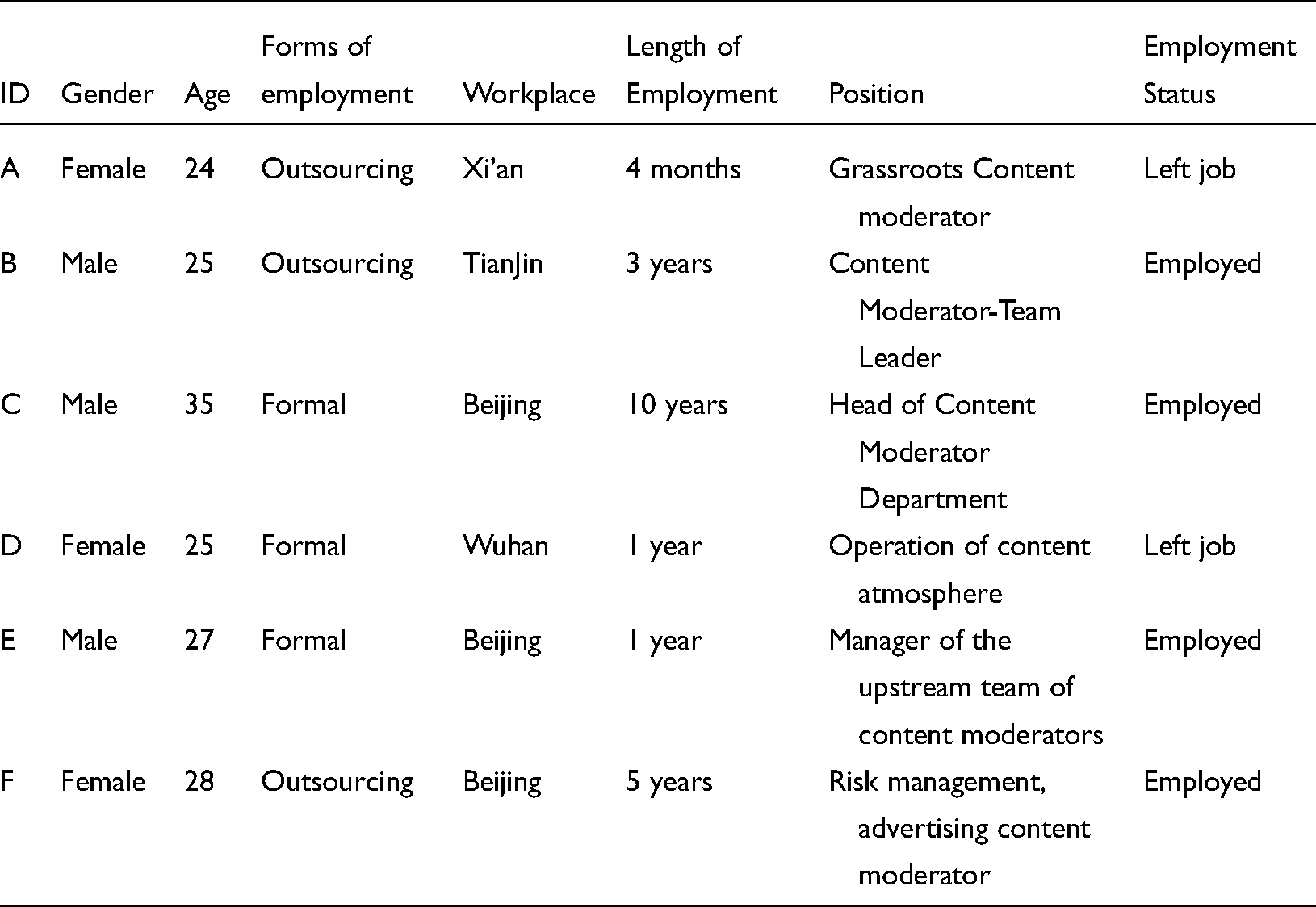
To understand the overall situation while examining female AI trainers, I chose three female AI trainers and two male trainers to investigate their working conditions, relationships with algorithms, and gender issues. The Chinese Ministry of Human Resources defines an AI trainer as “a person who uses intelligent training software to manage databases, set algorithm parameters, design human-computer interactions, track performance testing, and perform other auxiliary tasks during the actual use of AI products.” In this study, I narrow this definition to include digital workers whose core outputs are directly or indirectly used to train AI (regardless of their awareness). Their most significant labor activity is “annotation,” through which they translate human judgment of information into “coding,” thereby helping machines learn in an acceptable manner and enhancing automation in the field.
Interviewee A and B are entry-level content moderators, responsible for judging whether content can be disseminated and in what form, dealing with inappropriate materials such as pornography and violence. C is a managerial staff member in the live streaming moderate department of a platform, overseeing algorithm training and model optimization. D is a risk control manager in the content ecosystem of a platform, responsible for establishing moderation directions and rules, focusing on content quality rather than basic safety issues. E is part of an upstream management team in the live streaming moderation business of a platform, with substantial knowledge of algorithm moderation and model invocation. F has had three prior roles as an AI trainer, all related to annotation, and in the most recent position, was responsible for tagging various elements of advertisement materials to help machines prioritize higher-quality ads for users.
The collision of the Second Industrial Revolution and women: telephone operators
In 1876, Alexander Graham Bell invented the telephone, and on April 4, 1877, Charles Williams strung a telephone line between his residence in Somerville and his office in Boston, marking the birth of the first private telephone in history. The telephone, as a new communication technology, completely changed the way people communicate, representing the ability for people to collaborate conveniently and quickly across separated geographical spaces, greatly enhancing work efficiency. At that time, the telephone was regarded as a “tool to promote the rapid development of civilization and facilitate efficiency and cooperation.”
From “Bad Boys” to “Hello Girls”
At the outset of telephone applications, due to technological limitations, people needed to make calls to a “switchboard” for manual connections. “Connecting a call in the 19th century was surprisingly physically laborious; each one required some two to six people to plug switches into tall switch boards. This generally meant days spent standing and stretching and kneeling” (Liddell, 2021). Initially, capital believed that boys, with their abundant energy and quick reactions, were suitable for the job of operating the switchboard. Moreover, boys, as child laborers, were the cheapest workforce at the time.
Therefore, the earliest telephone operators were actually boys rather than women. However, boys found it difficult to take the job seriously. They engaged in pranks on customers, intentionally hung up calls, and found the monotonous work boring, resulting in fights and cursing among themselves (Liddell, 2021). “In an industrial capitalist society, means of communication are developed primarily as a means of circulation of capital. Thus, the development of a specific means of communication, involving particular skills, is controlled by certain uses” (Martin, 1991, p. 6). In comparison, hiring women was as cheap as hiring boys, and they were considered superior to men in qualities such as focus, interpersonal skills, and empathy, which were deemed necessary for telephone operators (Lipartito, 1994, p. 1085). Consequently, telephone operating became the domain of women, with “hundreds of thousands of high school-educated, middle-class young women, who served as human telephone switches” (Lipartito, 1994, p. 1075), and the demand for female operators increased during wartime communications. Because of the female voice saying “Hello” after each call was connected, they became known as “Hello girls” (Figures 1 to 3).
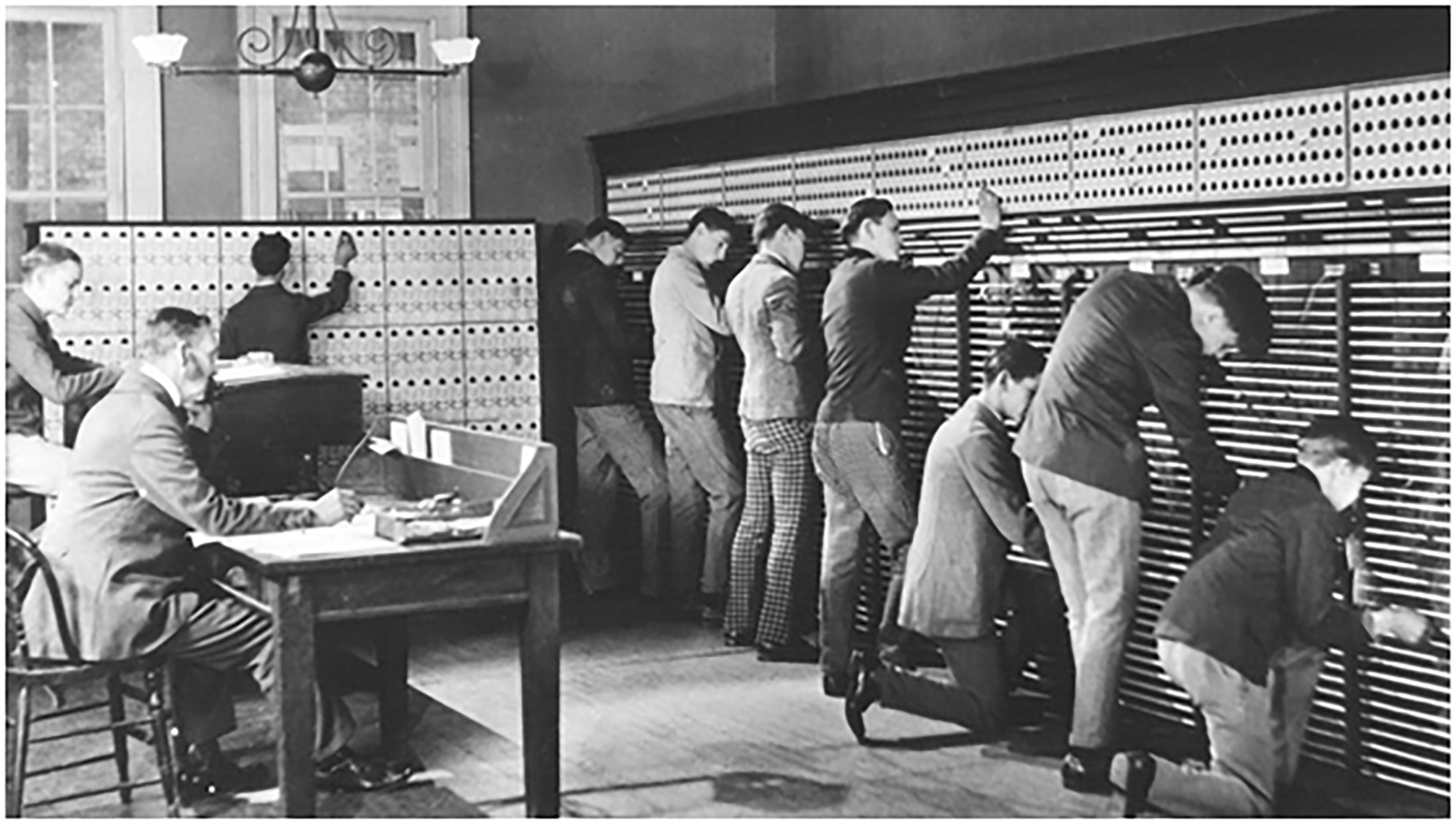
Boys worked as telephone operators, c. 1877 (The Telecommunications History Group). Note. From “When Phone Operators Were Unruly Teenage Boys” by Garber. M, 2014, The Atlantic (https://www.theatlantic.com/technology/archive/2014/09/when-your-friendly-phone-operator-was-a-teenage-boy/380468/).
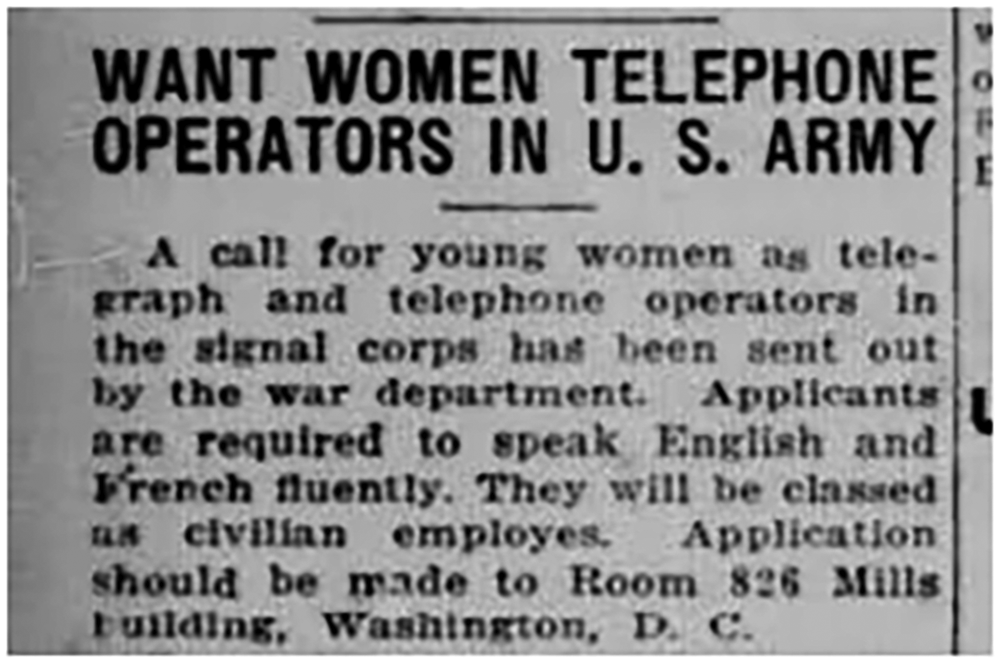
Want women telephone operators in U.S. Army. Note. From South Bend news-times. (South Bend, Ind.), 09 Jan. 1918. Chronicling America: Historic American Newspapers. Lib. of Congress. <https://chroniclingamerica.loc.gov/lccn/sn87055779/1918-01-09/ed-1/seq-4/>.
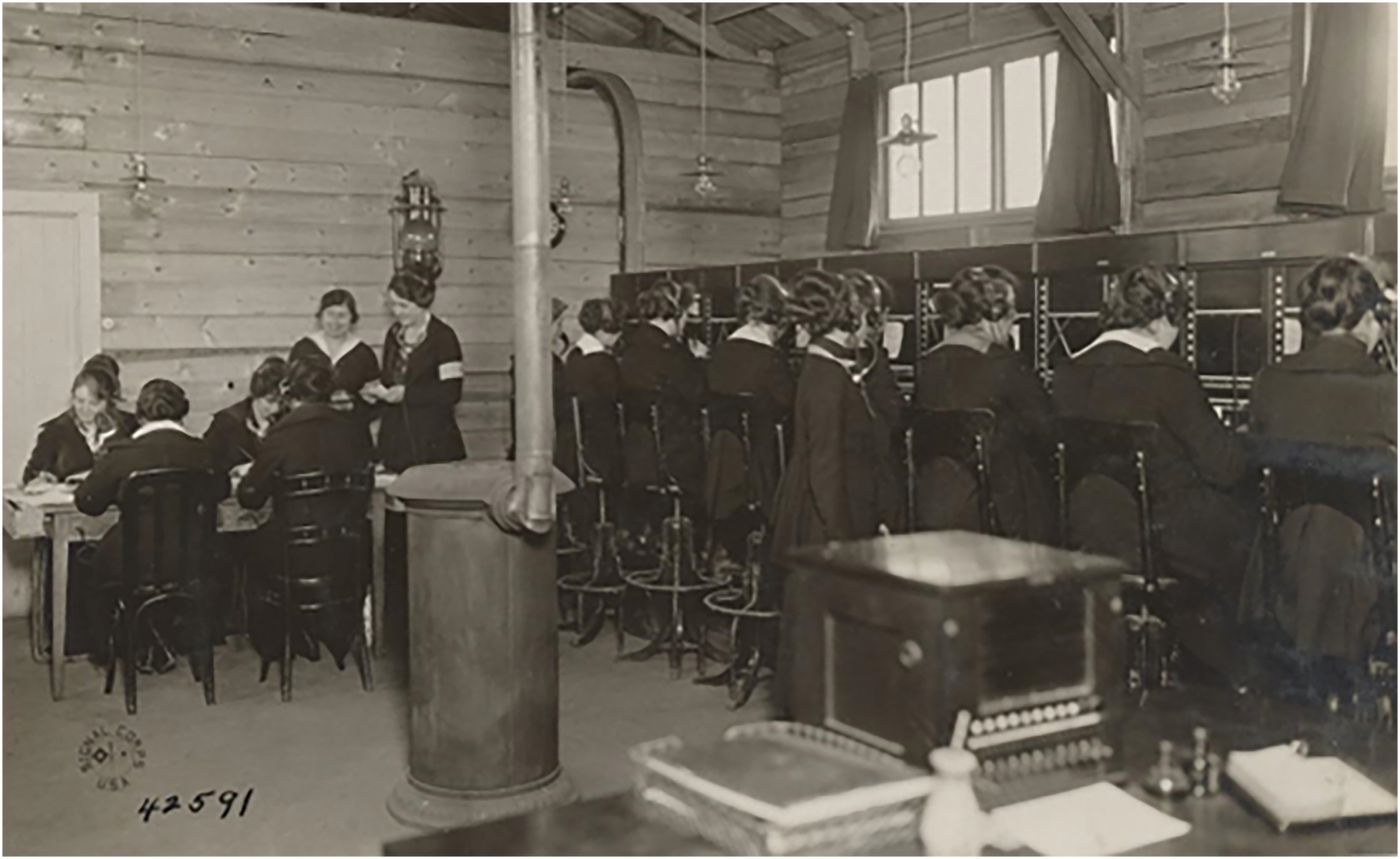
The workplace of telephone operators. Note. From U.S. Army Signal Corps Archives. Copy print from “100 Years On, The ‘Hello Girls’ Are Recognized For World War I Heroics”by Myre. G, 2018, NPR (https://www.npr.org/2018/11/09/659349910/100-years-on-the-hello-girls-are-recognized-for-world-war-i-heroics
Human–machine interaction: Female operators as part of telephone technology
The unprecedented expansion of the telephone network also led to an unprecedented increase in the demand for operators, providing countless women with the opportunity to step out of their homes and into society. For a long time, the creation of numerous jobs for women by the telephone was presented as a positive and progressive phenomenon, closely tied to women's liberation. However, examining the history of telephone operators reveals that women were the lowest common denominator sought by capital in its desires for cheap labor, technological transition, and shaping of commercial cultural values. Phones were not “fixed natural objects; they have no natural edges. They are constructed complexes of habits, beliefs, and procedures embedded in elaborate cultural codes of communication” (Marvin, 1990).
Technically, before the successful implementation of automatic switching technology, operators existed as “human gears” to ensure the smooth operation of the telephone. They were hidden behind enormous switchboards, subjected to emotional labor, and alienated by monotonous work. “Being part of the telephone” meant that female operators became part of the telephone system and thus became invisible. Muller (1999) points out that “this invisibility can be attributed to the tools used to measure operators’ work, which usually runs smoothly.” That is, when the greetings heard during a call are always the same and the experience is always smooth without friction, people gradually perceive operators as “mechanical” and begin to overlook them. Carmi (2019) notes that Bell companies trained operators in repetitive actions, phrases, and the “sound of a smile,” breaking down their labor content through Taylorist methods to standardize and uniformize the services provided by each operator, to the extent that customers find it difficult to identify the humanizing characteristics of operators and to pay attention to and be aware of their labor.
Culturally, operators are also an integral part of the telephone. Employed female operators are often young and pretty, and their gentle etiquette is crucial for ensuring smooth communication with customers. The desire to be served by attractive girls also helps businesses to turn the telephone into a “desirable item” (Carmi, 2015, 2019). From the transformation of operators into a job exclusively for women, customer service personnel, and even the voices of AI virtual assistants, are predominantly female (Huang, 2021). The female voice has become a continuously replicated cultural symbol, labeled with characteristics such as gentleness, politeness, service, and objectification. A report from the Future of Intelligence Research Center at the University of Cambridge points out that the default setting for the voices of the vast majority of virtual personal assistants is female, reinforcing the role of women as helpers and subordinates (Collett & Dillon, 2019). He and Bu (2023) point out that “engineers prefer to use female voices for AI because female voices are more emotionally nourishing, softer and more soothing, and also more suitable for the role of ‘assistant’.” Today, gender bias in media technology still exists and subtly influences people's perceptions.
The replacement of operators by telephone automatic switching technology
Lipartito (1994, p. 2) pointed out that while the United States invented the telephone and maintained a leading position in the telecommunications field from the nineteenth to the 20th century, it lagged behind other industrial economies in telephone switching technology. In 1891, Almon Strowger of Kansas City applied for a patent for a mechanical switching telephone device, which many companies adopted.
However, it was not until 1919 that Bell Telephone Company still relied on manual operators. There are many reasons why Bell Telephone Company took this attitude toward automation technology. Firstly, automation meant mass unemployment for operators, and senior management feared worker culture and resistance movements, so they adopted progressive reforms instead of immediately applying new technology on a large scale (Lipartito, 1994). At the same time, achieving full automation on the basis of a complete operator system and management structure was a slow and friction-filled process. AT&T used a combination of human and machine semi-automation for a long time. However, in any case, the long-term cost of machines was lower, they did not tire or have emotional problems, and they did not argue with customers. Eventually, telephone operators were completely replaced by continuously updated technology (Figure 4).
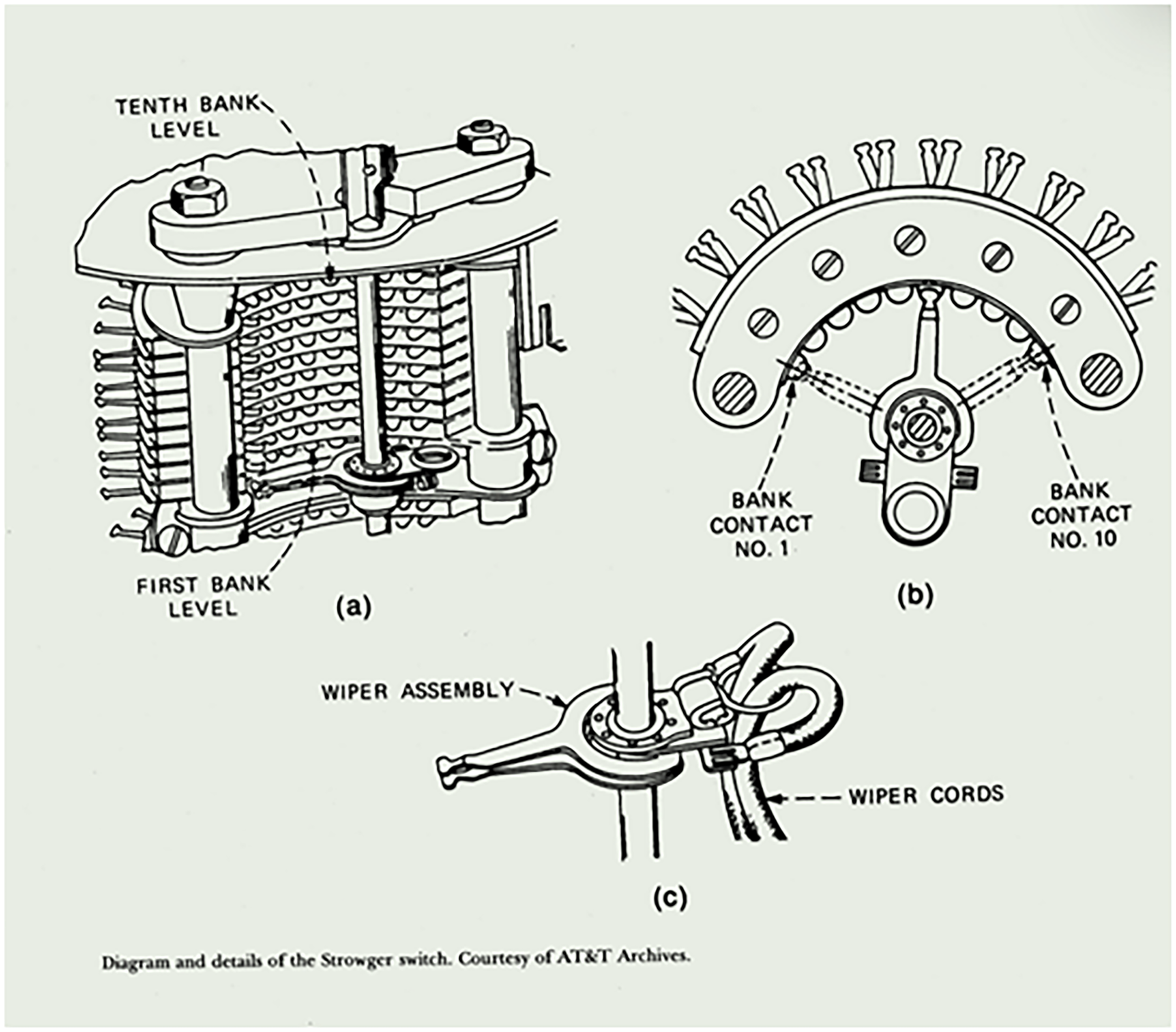
Step-by-step telephone exchange. Note. From A history of modern computing, by Ceruzzi. P. E, 2003, MIT Press.
The emergence of punched tape and the labor of punched tape operators
Computers were not initially fully automated either; they couldn’t think like an “electronic brain” and required a significant amount of labor-intensive work to help maintain their operation, with one important labor-intensive task being the maintenance of “punched tape” effectiveness.
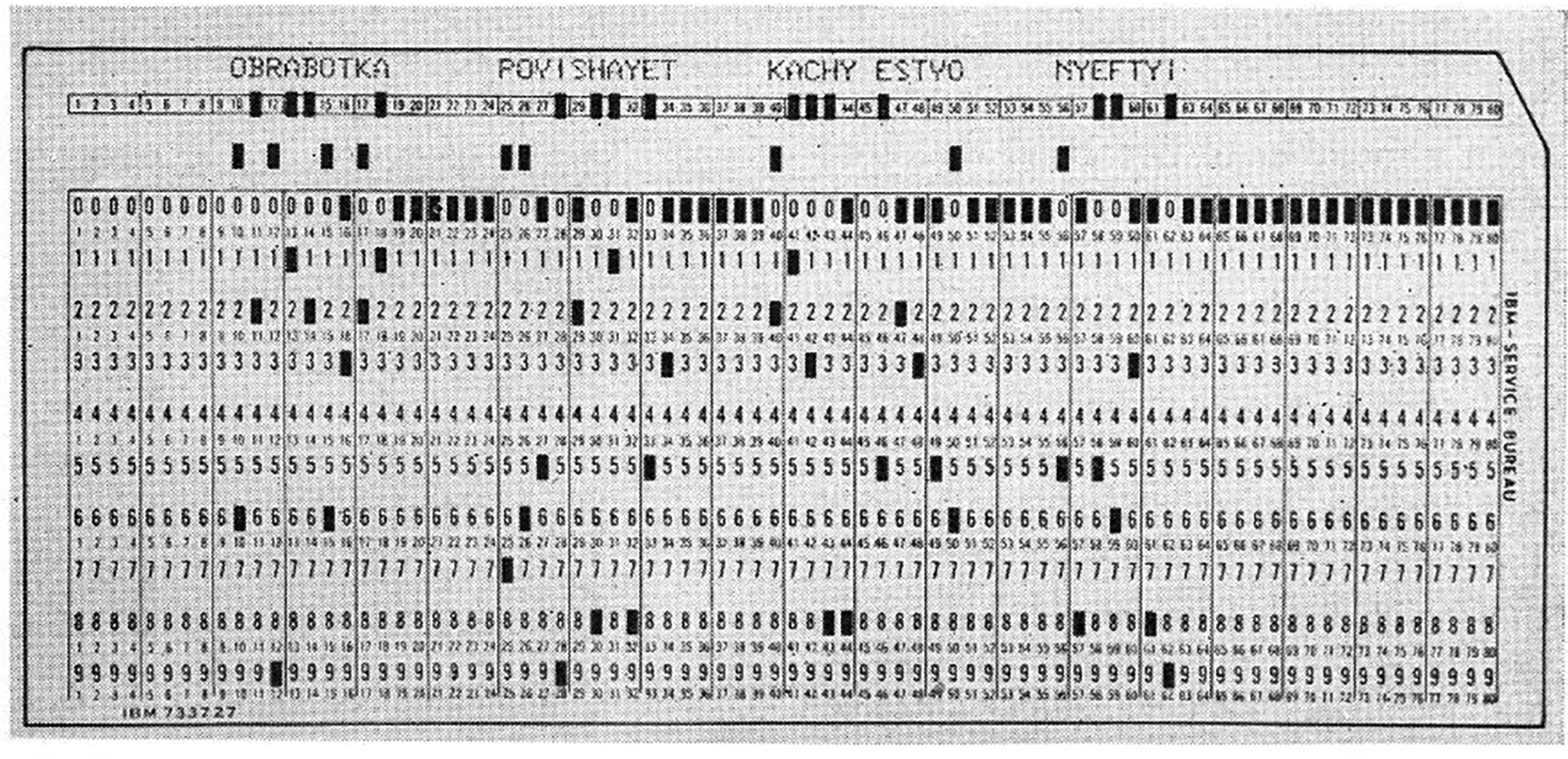
Punched card. Note. From IBM. https://www.ibm.com/history/punched-card
In the 1880s, American inventor Herman Hollerith decided to use punched cards to represent the data collected in the U.S. census, a concept initially inspired by pattern cards used in the textile industry. This later became the precursor to programming. By punching holes in the tape, one could choose whether light passed through or not; a hole represented 1, while no hole represented 0. A strip of tape could carry a certain amount of binary information, helping people input data into computers. Similar to the situation with AI today, the invention of punched tape directly led to the emergence of new occupations, namely operators and coders. The former was responsible for preparing data into standardized binary code, while the latter needed to re-enter the information from the tape into a new computer. The labor of both ensured the output and input of information stored on punched tape. Increasingly, various fields began entering information into computers using punched tape, with the workload for operators being staggering. For instance, in taxation alone, “in 1959 the U.S. Treasury Department authorized the IRS to computerize its operations fully…. over 400 million cards a year, for over 100 million taxpayers, by the mid-1960s” (Ceruzzi, 2003, p. 119) (Figure 5).
The labor conditions of punched tape operators were also highly monotonous and de-skilled, primarily undertaken by women. Girls received pre-drawn coding patterns from technicians, then meticulously punched holes in the tape day in and day out. While this work may seem simple, it required long periods of concentrated attention, careful differentiation of hole positions, and ensuring accurate punching without errors. “Rooms full of mostly women worked at a steady, unflagging pace, each woman's eye focused on a return propped up to her left, her right hand floating over a keypunch” (Ceruzzi, 2003, p. 119). Braverman (1978) mentioned in Labor and Monopoly Capital that the skills required for punched tape operators could be learned in one or two weeks, with speed being considered the most important aspect. The work was so monotonous and boring that resignations were common, and there were few opportunities for promotion, often implementing a shift system. Despite engaging in programming work, the experiences of these girls were vastly different from the engineers drawing programming diagrams in the office (Braverman, 1978) (Figure 6).
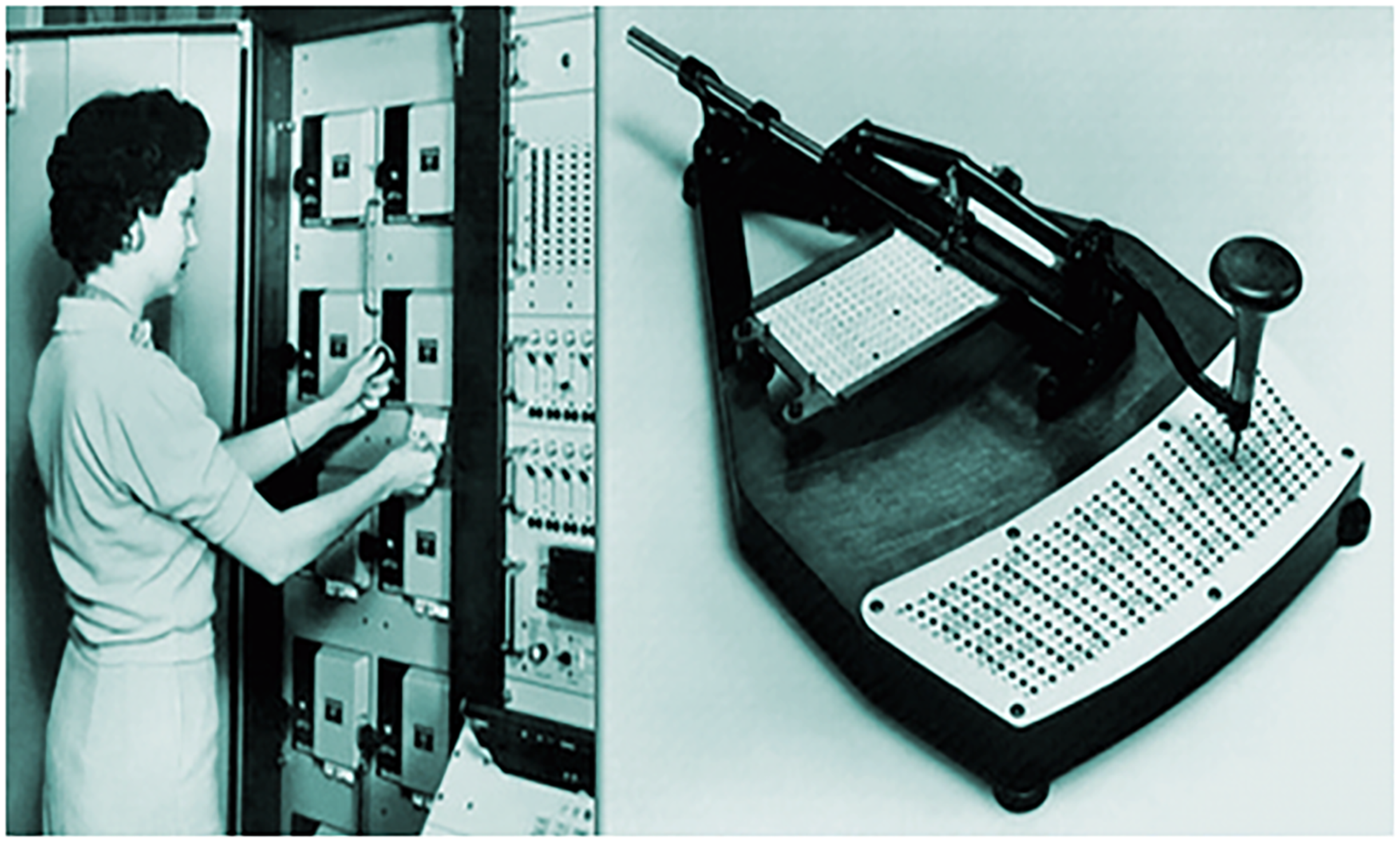
Punched tape machine: the holes are arranged closely together, requiring operators to focus intensely. Note. From Computer History (https://www.sutori.com/en/story/computer-history–eaFqEu4kokQmv6L3BM9iHzeU).
Women excluded from advanced programming work
In order to reduce costs, punched tape machine operators were primarily young women in their twenties. Corinna Schlombs (2022) notes that by 1930, there were over 30,000 female punched tape machine operators, but they were only relegated to the role of data entry clerks afterward, without being able to access or advance into higher-level computing tasks (Misa, 2011, Chapter 4). Marie Hicks points out that because British women dominated pre-war punched tape machine work, they consequently dominated the early installations of government computing in Britain. Computing at that time was feminized work, and it was later gender discrimination in hiring that pushed women out of the computing field (Misa, 2011, Chapter 5). Hicks (2017) notes that the “total war” style of fighting involved conscripting female labor, resulting in a majority of women in wartime intelligence agencies.
However, due to wartime secrecy in Britain and post-war paranoia, thousands of women who engaged in these technical jobs were erased from historical records. Post-war, the government deliberately prevented “clerical” women employees from entering more important and legitimate positions within government agencies. Women were relegated to the bottom rungs of the “machine grades,” performing simple operational tasks in the computing industry, entering a dead end of low pay, feminized, and clerical work. In other words, women could have operated computers indistinguishably from men, but under male-dominated government institutions, their positions were deliberately fixed at low-level operatives rather than entering laboratories with higher wages and social status (Figure 7).
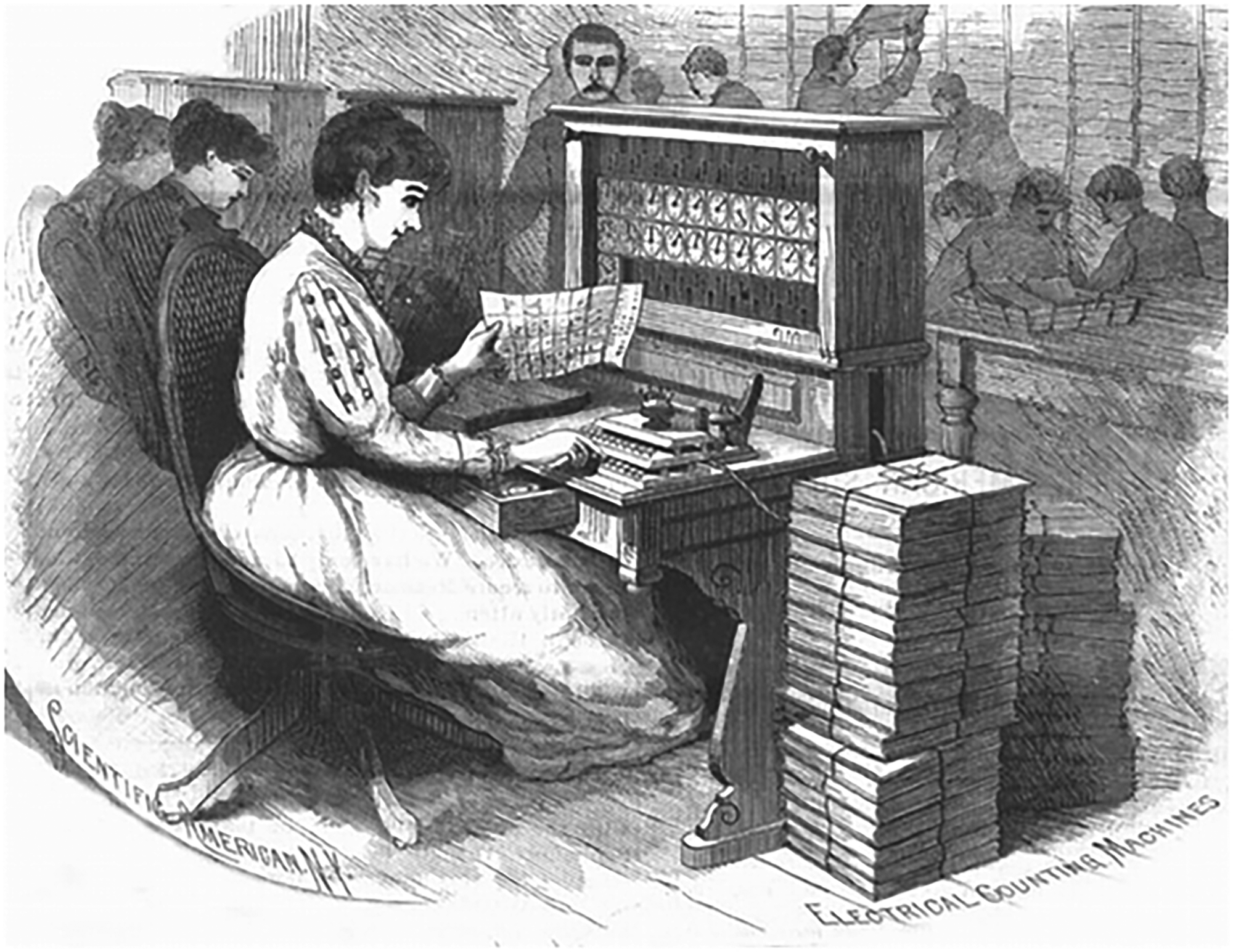
A woman punched tape operator is operating the machine. Note. From 1890 Census Hollerith Electrical Counting Machines Sci Amer.jpg (https://commons.wikimedia.org/wiki/File:1890_Census_Hollerith_Electrical_Counting_Machines_Sci_Amer.jpg).
Automation of programming work and the disappearance of coders
Perforated paper tape had many flaws, resulting in significant human and time costs. “The installation of punched cards requires operators to transport a large number of cards from one card machine to another” (Ceruzzi, 2003, p. 30). Days later, you could receive feedback such as “missing a comma,” and then you had to repeat the process of modification and transportation (Maxfield, 2011). Capital realized a reality—programming needed to be automated, and human operators in job procedures needed to be replaced by machines.
By the mid-1970s, the IRS began to hope to discontinue the use of punched paper tape and manual data entry, replacing it with machines or online access for taxpayers to fill out forms themselves (Ceruzzi, 2003, p. 120). Initially, there were some small technological innovations, such as the tape processing machine (TPM) based on computers, but it only helped people process paper tapes faster and did not completely replace people from the process of operating punched paper tape. The disruptive technology for keypunch operators and coders was UNIVAC (Universal Automatic Computer), the first computer used for commercial purposes. UNIVAC knew where to find the required data on the paper tape and could automatically fix the tape in place, further automatically extracting or recording data—UNIVAC was an automated information processing system, not a calculator used by humans (Ceruzzi, 2003, p. 45). As we know, there are no longer any people using punched paper tape, nor do we need keypunch operators and coders. The disruptive technology replaced them in an instant.
The roles of telephone operators, punched card operators, and AI annotators share inherent similarities that can be understood within a historical continuum. Each of these occupations has involved forms of data processing and information management critical to their respective eras, shaped by the evolving demands of national security, economic development, and technological progress. During wartime, telephone operators were integral to secure communication, while punched card operators contributed to military applications such as ballistic computation, codebreaking, and nuclear research during World War II. This laid the groundwork for the use of such technology in broader civilian applications, including business and government data management.
AI annotation represents the latest stage in this historical trajectory, playing a pivotal role in China's digital economy. As a key element of data production, AI annotators contribute to the infrastructure necessary for the nation's economic transformation. Since the 13th Five-Year Plan, China's strategic emphasis on AI and big data has highlighted the continuity of data-related labor in enhancing productivity and maintaining data sovereignty. At the same time, as China entered the late socialist state phase, the demand for technological development and economic modernization also drove the country to vigorously promote the data annotation industry. Thus, these professions can be collectively interpreted as part of a lineage of information labor, reflecting broader socio-political and economic priorities across different historical periods.
Technology servicers in the AI era: AI trainers
AI trainers and their labor situation
To ensure the normal operation of AI, some human resources are needed for daily maintenance and service work (Daugherty & Wilson, 2018, p. 111). These jobs include “trainers” who train AI systems, “interpreters” who convey and explain AI to clients, and “maintainers” who monitor the performance of AI systems and ensure ethical safety (Acemoglu & Restrepo, 2018, p. 206).
In the development of AI technology, a significant amount of human labor is required to process information into AI-recognizable formats, a process known as “annotation.” The work of annotators is very similar to that of punched card operators. The intelligence of AI lies in its ability to learn, as it can automate information processing after being fed data and trained. Thus, these annotators also take on the role of feeding AI, becoming trainers. It can be said that if a platform labels a certain type of information into a machine-recognizable pattern, it will likely use it for model training to save costs and advance technology.
Like telephone operators and punched tape operators, the labor of data annotators also belongs to what Marx called “serving machines” and bears non-humanized labor. The main job of AI trainers is to provide training data. Taking the example of unmanned driving car trainers, annotators need to annotate a large number of captured road images, draw boxes on the computer to mark different subjects on the road (motor vehicles, pedestrians, non-motor vehicles, etc.), and then algorithms use this data for machine learning to generate models and reduce misjudgment rates.
An annotator needs to annotate thousands of road images a day. In Ghost Work: How to Stop Silicon Valley from Building a New Global Underclass, the authors point out that platforms shift the cost of “market friction” to digital workers, making them increasingly cheap and unstable outsourced workers, temporary workers, and online piece-rate workers (Gray & Suri, 2019). Platform capital deliberately conceals their behind-the-scenes labor, creating an illusion of smooth operation of AI technology and deepening the invisibility of their plight. AI data annotators often engage in piece-rate work on online micro-labor websites (Gray & Suri, 2019; Roberts, 2014) or work on strict Internet auditing and annotation systems. This means that they are in the same situation as telephone operators and keypunch operators under Taylorist management—data annotators are subject to tighter surveillance and are less able to negotiate with employers (Dai & Yuan, 2023; Zhai, 2023).
Rescue or exile: Female artificial intelligence trainers
According to data released by the AI Trainer Certification Center, the data annotation industry has developed rapidly in recent years, with nearly 2 million practitioners nationwide. In 2020, the Ministry of Human Resources and Social Security included data annotators in the national occupational classification directory. In 2021, the market size of the data annotation industry reached 43.3 billion RMB, an increase of approximately 19.2% year-on-year (Sun, 2023). There is a trend of migration of female data annotators to rural areas and small towns in China (CCTV News, 2022; Tianyan News, 2021), among which women have become the focus of training, such as the “Digital Mulan | AI Dou Project” jointly launched by Ant Group and the China Women's Development Foundation.
Rural women, as a productive group among the left-behind population, can care for their families while earning income in a non-mobile way through digital annotation work, which is a more decent job. Digital annotation work often aims to improve the digital literacy of rural women when recruiting and is also endowed with positive discourse such as poverty alleviation and women's liberation. Promoting women to engage in AI training has also been incorporated into China's political design to encourage employment and rural revitalization (Comprehensively promote rural revitalization, ignite digital employment “She Power”, 2023). As a narrative of women's liberation, stories of rural female data annotators balancing childcare duties with substantial income have frequently appeared in Chinese news reports.
Many studies have found that the relationship between women and data annotators is a two-way selection, which becomes an important way for many married women or single mothers to care for their families while trying to earn income and gain recognition for their family status (Gray & Suri, 2019; Sun, 2023). On the other hand, data annotation work also values the meticulous and patient qualities of women (Sun, 2023). Left-behind women are tied to their families and children and cannot freely move geographically like men, and this stability has also become an important reason for both politics and capitalist to choose rural women to engage in data annotation.
However, on the positive side, rural or county-level female data annotators also face difficulties. The development and training costs of AI are high, and currently, only large technology companies besides the state have the ability to develop AI technology, so it is easily manipulated by capital. Secondly, as “an important condition for technology companies to win in digital economic competition, the talent of artificial intelligence training must be cost-effective, and at the same time, it must ensure the high quality of training data” (Zhang, 2023). Therefore, data annotation work has gradually become a labor-intensive industry with low wages, long working hours, and poor working conditions (Sun, 2023). Women's digital labor is often overlooked and undervalued, and they face double exploitation from capital and patriarchy.
When the gender division of labor loses the balancing force of the state, women's disadvantaged position becomes more pronounced (Tong & Long, 2002). In specific practice, promised training seldom focuses on skill improvement, but rather on promoting annotators to complete annotation work faster and better, stringent performance and pass rate requirements always exist (LatePost Team & LatePost, 2022), and the lower bargaining power of rural or county-level women further reduces costs for capital.
According to statistics from “Alipay,” after the deployment of rural data annotation industries, more employment opportunities have been created for rural women, with 62.3% of AI trainers being women. According to the “Deloitte 2023 AI Basic Data Service White Paper,” China's AI basic data services have rapidly developed, reaching a market size of 4.5 billion RMB in 2022. However, according to statistics from Zhiyouji, the average monthly income of female data annotators is 1,000 to 1,500 RMB lower than that of males, hovering around 3,000 RMB.
Tong and Long (2002) pointed out that “in the process of social change, although women may assume some social roles that were previously taken on by men, their inherent principles of interest remain unchanged. Regardless of the changes in the content of gender division of labor, its hierarchical division cannot be changed. Women are not seen as ‘breadwinners,’ and their income is only marginal and non-dominant.” Female AI annotators nurture AI to help it grow, while also being replaced and losing their jobs to AI. This dilemma is intertwined with the difficulties of motherhood, as women take on sacrificial and selfless roles in both society and family.
Looking back at telephone operators and punch card operators, they gained a large amount of work due to the demands of war, only to be heavily laid off after the war ended, returning to their families (Lipartito, 1994; Martin, 1991). They were never recognized as technical workers, but only temporary helpers who were repeatedly called back and then expelled, never truly being accepted as technical laborers. After women helped the country complete the construction of technical infrastructure, how to provide them with long-term technical development capabilities is a problem that has been hidden behind positive discourse.
Rural female annotators also face class disadvantages; lacking access to educational resources, they can only perform the simplest annotation tasks, and their work is considered cheaper. Compared to annotators in urban areas who have received higher education—such as content annotators at a major company, whose monthly salary ranges from 10,000 to 15,000 RMB—the income of rural female annotators is only one-fifth of that. Companies are reluctant to invest effort in training rural female annotators for more complex tasks, and their low wages make it difficult for them to significantly improve their family status.
The supervisor, Feng Zai, gradually grouped the remaining “mom workers” into what he referred to as the “underperforming group.” He tried to avoid assigning high-difficulty tasks to this group in order to minimize their impact on overall business performance. After the regrouping, many time-consuming and low-paying tasks were assigned to the “mom group.”
After being reassigned, Li Yan could only earn 1,400 RMB per month. She rarely bought toys for her child anymore, and her relationship with her husband grew increasingly distant—he worked in another city and was rarely home, bearing the main economic burden. Her mother-in-law, who did not work, leaned against the kitchen door, criticizing Li Yan's actions as she scooped oil with a spoon, and said many harsh words. After the pay cut, Li Yan's status in the family became even more humble.
Moreover, the work of data annotators often lacks clear labor rights protection and social security guarantees. They are classified as “digital workers” or “platform workers,” which means they are excluded from traditional labor law protection (Gray & Suri, 2019). They lack collective bargaining power, making it difficult to negotiate for better working conditions and wages. In addition, the piece-rate payment method exacerbates the uncertainty and instability of their income. This situation is compounded by the lack of comprehensive social security coverage for digital workers, leaving them vulnerable to economic shocks such as illness or unemployment.
In summary, the influx of female data annotators into the AI training industry may provide them with employment opportunities and a source of income. However, it also exposes them to exploitation, precarious working conditions, and a lack of labor rights protection. Efforts to address these issues should include strengthening labor rights protection for digital workers, ensuring fair wages and working conditions, and providing social security coverage to ensure the well-being and dignity of all workers in the digital economy.
The differences between AI and former technologies
First, the dual demand for quantity and quality in AI training makes educational level a dividing line for AI trainers. This study finds that, for basic AI annotation tasks (such as simple object recognition), less-educated women are often seen as ideal workers. However, as educational levels rise, certain higher-level AI annotation tasks do not favor women, sometimes due to physical demands, leading to a preference for men. The bidirectional choice between rural women and AI annotation is closely related to the limited educational opportunities for rural women and their tendency to stay at home.
A: There isn’t a significant gender difference; I think there might be slightly more men because of night shifts.
B: It's about half and half in terms of gender.
C: From my observation, there's generally no difference; there might be a few more women.
For example, in online map moderation work (like delivery and ride-hailing), which involves a lot of travel and business trips, men are often seen as more suitable trainers. Some content moderators responsible for ensuring content safety also tend to consider men more for night shifts.
F: I rarely see women in the map moderation department on the XX platform.
F: (Regarding safety moderation) Women struggle with night shifts; I know one who had a nosebleed after a night shift; there are more men working those shifts.
A: I’ve noticed that there are likely more men on night shifts, while there are a few more women on day shifts.
As AI continues to optimize and develop, the training of AI will require more intellectual labor. For example, in today's internet content moderation, basic filtering of prohibited words and screening for inappropriate content have already been largely automated. Consequently, the technical skill requirements for AI trainers are no longer limited to simple mechanical tasks. Due to political and domain-specific requirements, AI trainers often need to have specialized knowledge in certain areas. For instance, it has become the norm for content moderators to require at least a bachelor's degree. Many graduates from second-tier and “non-985 and non-211 universities 1 ” (shuangfei) universities choose to work in content moderation.
C: Algorithms can now perform large-scale screening for inappropriate content, while human labor mainly serves to verify AI's moderation results.
D: For specialized content, they seek individuals with relevant professional knowledge for moderation. For example, in healthcare, ordinary moderators may not understand that diabetes is not curable; this knowledge requires someone with expertise to moderate.
A: In my friend's cohort, many graduated from vocational schools, but in our batch, nearly all the requirements are for bachelor's degrees.
F: People like me, who graduated from “shuangfei” universities, often can’t directly enter major internet companies for other roles, so we do risk control, earning around 10,000 to 15,000 yuan per month.
From a long-term perspective, the number of AI trainers will stabilize as the industry matures. The rising hiring standards for AI trainers reflect the platforms’ demands for improved content quality, which also widens the labor cost gap in the industry. For safety reasons, human employees serve as the last line of defense for algorithms; tasks such as content moderation, annotation, and AI fact-checking can only be performed by humans, and the demand for these services is substantial. Although internet platforms are accelerating the development of algorithmic moderation and outsourcing simpler, marginal tasks to lower-cost BPO (Business Process Outsourcing) 2 companies, many platforms still choose to “train their own staff” to ensure smooth and normal operation of content or to further ensure content quality.
C: After machine screening, human moderators still need to double-check as a safeguard; at least, I haven't encountered any internet platforms that rely solely on machine moderation.
D: Platform R has both HRO (Human Resources Outsourcing) 3 and BPO (Business Process Outsourcing) moderators; BPOs are outsourced, while HRO moderators are employed directly by the company. As far as I know, Platform B only has HROs and no BPOs.
Therefore, improving women's education levels can help them enter more advanced AI training roles and achieve relatively stable employment and income.
The inherent characteristics of AI as a medium allow for a more harmonious relationship between humans and AI, rather than a confrontational one. AI is a general technology with the ability to learn, reason, and make decisions. It can self-optimize based on data and environmental conditions, and it understands natural language and recognizes images in interactive experiences. In contrast, telephone communication and programming technologies lack self-learning capabilities and intelligent features, relying instead on preset rules and logic for repetitive tasks. AI, however, is always in a dynamic and evolving process.
Moreover, AI interacts with humans, not machines. Whether it's a telephone operator or a punched card operator, their work involves adapting human workflows to fit machine operations. As AI advances, communication between AI and humans will become smoother, allowing AI to take on more of the “dirty work.” Additionally, once AI has enough training data, its accuracy in discerning specific information will far exceed that of human annotators.
E: For example, sometimes we need to annotate whether there are images of national leaders or sensitive figures in the content. How can a person possibly remember so many individuals? We’ve never even heard of them. But if you feed the images to AI, it can identify them.
The demand for trainers in AI largely emerges during the model generation phase. As a particular AI domain is put into practical application, its training data will increasingly come from real user behavior. This means that those engaged in basic AI annotation work will experience high turnover, while AI trainers with a certain knowledge level and skill set will have more stable employment. They serve as mediators who maintain and supervise AI operations, creating a steady demand for labor in the industry. X, after undergoing three phases of risk control moderation work, believes that this type of job has fixed hours, simple content, and relatively good income, allowing for a higher quality of life while arranging daily activities and pursuing hobbies. Moreover, X left the first two annotation jobs voluntarily for personal reasons rather than due to changes in the work itself.
F: It's quite stable, and the income is relatively high. For a girl, it's a friendly option compared to other more strenuous jobs. Although I have a formal position, I haven’t had to work overtime much. My colleagues are slightly older, more stable, and have families. If someone finds a regular position in a large company, most people wouldn’t choose to leave voluntarily.
Therefore, for AI trainers, human–machine confrontation will not be the norm; instead, human–machine collaboration is likely to be the future mode of work. These technical characteristics give AI greater flexibility and communicability than past information technologies, enabling humans to engage more in intellectual rather than physical labor.
The pattern of the technological work for female
Technological incompetence: the production and reproduction of discourse
Across these three types of female technical ghost workers in different historical periods, they share a common pattern. Firstly, when new disruptive technologies emerge, the state requires a large amount of labor to assist in automating technologies still in the semi-automated stage. This creates numerous positions for “serving the machines,” which only require very basic skills. The nature of these jobs is often repetitive and arduous. Under such job requirements, women's perceived docility, low cost, and patience make them the preferred labor force in the eyes of capital.
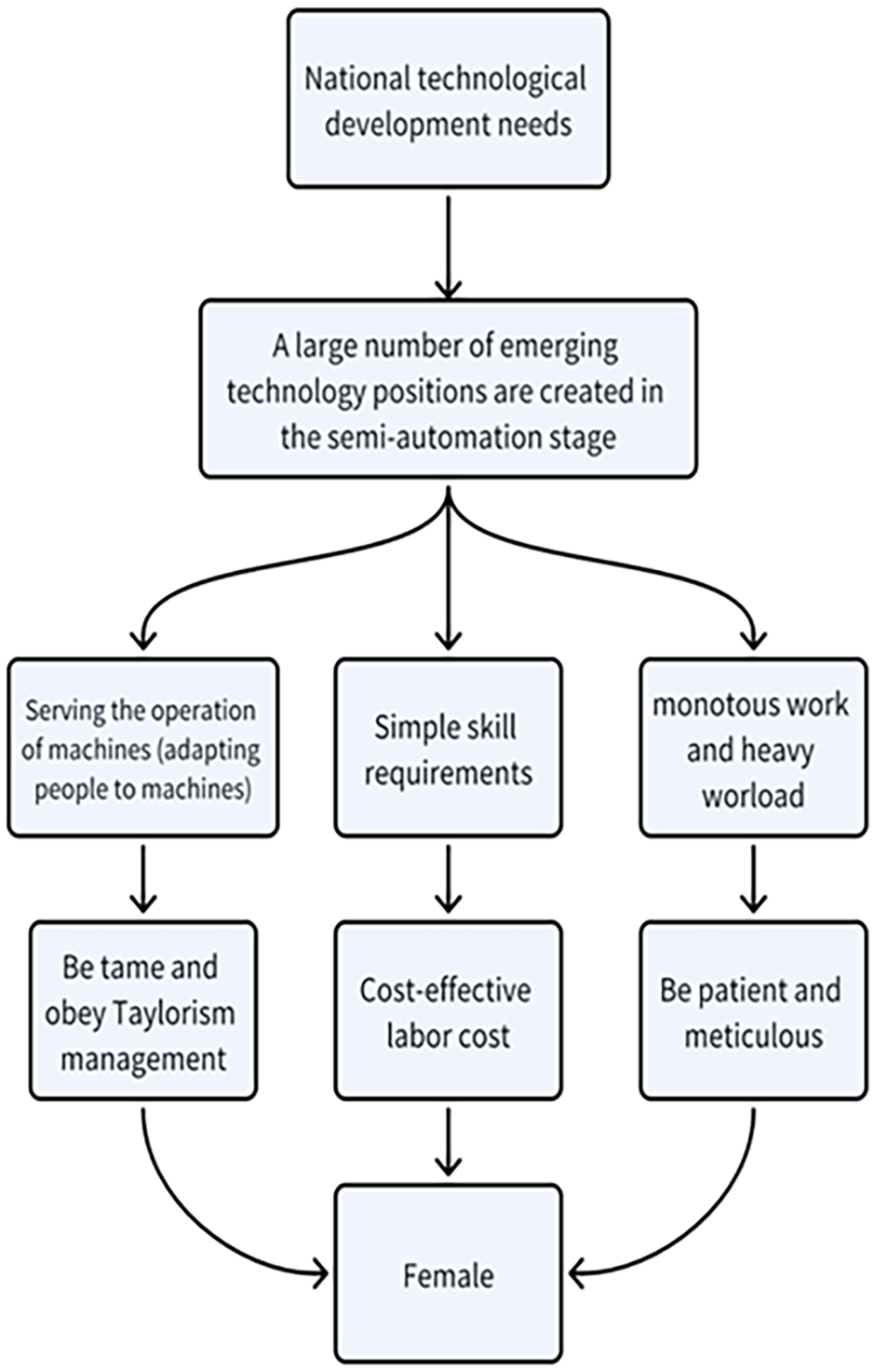
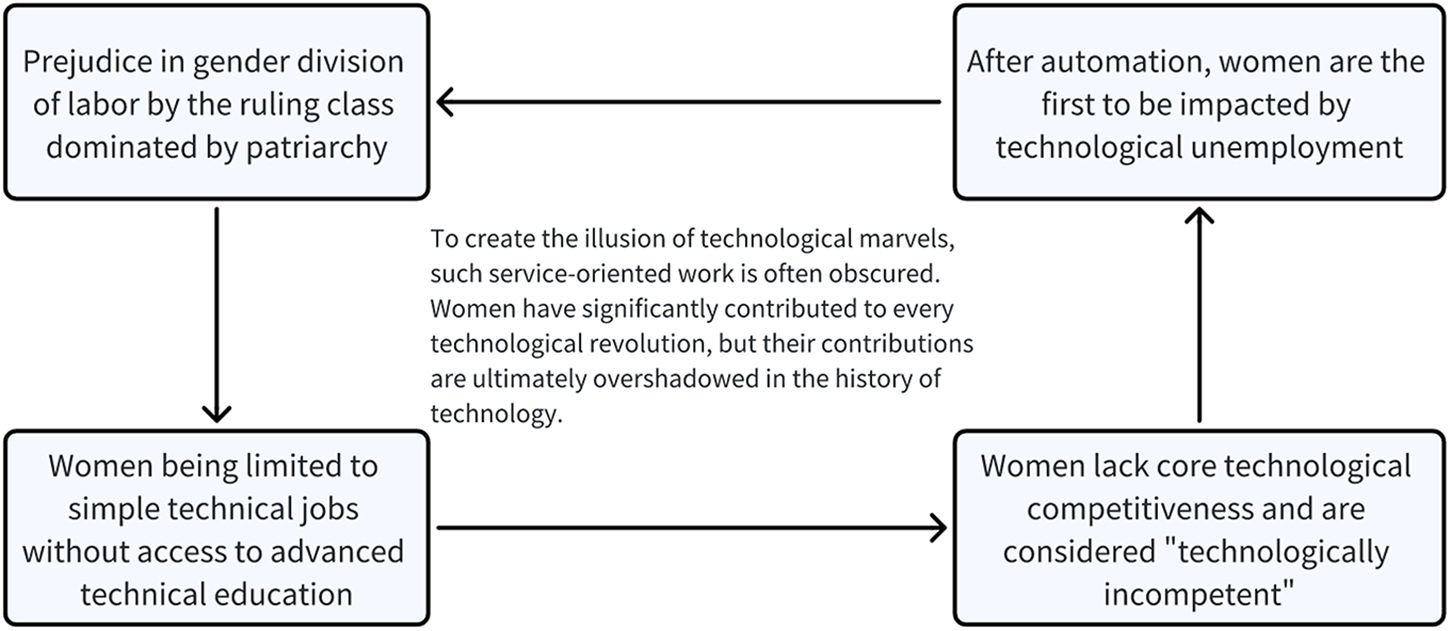
In summary, despite the significant contributions of women to almost every information technology revolution, they have been relegated to mere temporary aides, cheap labor, and disposable tools. Their legitimacy in participating in advanced technical work and acquiring technical skills has been undermined. Due to their dual disadvantages of gender and class, women are always the first to bear the brunt of technological unemployment caused by machine automation.
On one hand, the ruling class dominated by patriarchy holds biases against women's labor division by gender. For example, telephone companies may assume that young female operators will eventually choose marriage and childbirth, thus being unwilling to invest resources in them to develop higher-level technical skills. On the other hand, continuously engaging in de-skilled service work leaves women lacking in core technical competitiveness, trapping them in low-level jobs. At this point, the discourse of “technological incompetence” is produced and further deepened in the cycle. When industries undergo changes, laying off female employees becomes the preferred method for capital to reduce costs. These low-level operational jobs are hidden behind the scenes of technology operations, fueling technological fetishism and endowing technology with the spectacle of “dehumanization” and the attributes of “powerful,” “automated,” and “intelligent,” helping capitalists sell products and reap profits.
Technological spectacle: the media design that obscures women's labor
The rise of communication technology coincided with the emergence of consumerism. By shaping a technocratic value system, technology as a commodity can more effectively penetrate consumer consciousness, encouraging consumers to adopt the latest technological products and believe that technology can enhance their quality of life and social status. Under this belief, telephone switching systems, programming systems, and AI interaction systems are presented to consumers in purely mechanical modes. People only see the media in front of them, unable to recognize the labor of individuals hidden behind these media—this is the intention embedded in the design of technological media.
In the labor process, these workers must also emulate machines and adhere to standardized operational procedures to create stable and reliable consumer perceptions, such as identical telephone greetings or customer service scripts, neatly organized punched cards, and strictly enforced moderating rules. Although AI technology interacts with humans with less friction, the training process for AI remains a hidden black box.
Due to commercial competition, social influence, information confidentiality, and the desire to shape a technological spectacle, platforms tend to obscure the existence of such roles. For instance, platforms often refer to annotators as “risk control specialists,” “experience operations officers,” or “AI editors” during recruitment. They are also cautious about research institutions and news media reporting on these jobs and require employees to sign confidentiality agreements.
E: It's very difficult for management teams like mine to access their moderation base in Tianjin. They all have their own access cards to enter and exit. After some employees previously encountered negative media coverage, they’ve become very vigilant.
Gray and Suri (2019) proposed the existence of “Automation's Last Mile” in Ghost Work, which means that while technological development aims to achieve automation and help liberate human labor, it paradoxically creates more human labor. The invisible labor of telephone operators, punch card operators, and AI trainers is not natural but rather concealed by the beneficiaries of technological progress, portraying these automated service jobs as shameful and unspeakable, concealing the “Last Mile” of technology.
How we restore invisibility and give women sustainable abilities in technological work? With women's education levels improved, gender inequality in technical work has somewhat improved. By analyzing the differences between various education level of AI trainers, the improvement of education can help women to some extent break free from their dual disadvantaged position and gain equal technical competitiveness with men. Therefore, on the one hand, women need to obtain more technical work, and on the other hand, they also need to receive long-term education, which relies on the participation of the state. At this level, for example, China can utilize the state-led forces from the national system for scientific and technological development to assist women in obtaining sustainable opportunities in the technological revolution of AI.
Footnotes
Declaration of conflicting interests
The author declared no potential conflicts of interest with respect to the research, authorship, and/or publication of this article.
Ethical statement
The research has been conducted with due respect for the rights and privacy of individuals and has not compromised the interests of any stakeholders. Furthermore, any potential conflicts of interest have been duly disclosed and appropriately managed throughout the entire research process, in alignment with the ethical standards expected in scholarly publications.
Funding
The author received no financial support for the research, authorship, and/or publication of this article.

