



Abstract
Despite the significant progress in studies on metadiscourse, scarce attention has been paid to it in the digital context. Social media platforms including Twitter have become arenas for the current Sino-U.S. discourse competition. In this regard, Twitter can be used to observe the diverse usage of metadiscourse by different political figures and uncover the underlying mechanisms. Combining computer-aided metadiscourse extraction and critical discourse analysis, the paper explores metadiscourse markers from the Chinese and American spokespersons’ tweets to reveal their rhetoric and social functions based on Foucault's “power discourse theory.” The results show that the American spokespersons are more inclined to use emotional persuasion and define some specific objects, which is part of the division & rejection system. In contrast, utterances of the Chinese spokespersons constitute a semantic terrain to distinguish truth from falsehood, utilizing the opposition system to eliminate their inferior discourse power status.
Keywords
Introduction
Since 2018, the US government, one of the major powers has considered the other one, the government of People's Republic of China (PRC), as its “strategic competitor” (United States, 2018). On one hand, the Trump and Biden administrations explicitly decided to embrace “no exist” strategic competition with China (Tierney, 2024). On the other hand, the COVID-19 pandemic could be regarded as an “Epochal” moment in international politics, signifying a critical juncture or a tipping point that disrupts the existing order, leading to an even more intricate and sophisticated political landscape (Smith & Fallon, 2020). The complex interplay of multifaceted factors has rendered the rivalry between China and the United States profoundly significant, extending its influence to the international system (DiCicco & Onea, 2023; Zhang, 2023). The ubiquitous strategic competition appeals for systematic comparison into politics, economics, and cultures of the two major powers, in order to discover its underpinnings (Mokry, 2023). The contention of discourse power has also become one of the focal points. The mainstream media in the United States and China have adopted various frames to report on Sino-U.S. relations (Zhu, 2022). As the platforms and channels of discourse practice or dissemination are being reconstructed in the Internet era, governments turn more to social media in a bid to impose their own culture and discourse subsequently (Kissas, 2018). Of course, the two major powers have extensive use of social media in international propaganda. China has formulated the “Vision 2035,” which pursues to catch up with and surpass the United States in national strength. In response, the United States also proposed corresponding bills to compete with China. While the United States perceives China as an adversary to the established liberal international order, China rejects the preconceived roles ascribed by the United States and endeavors to redefine them in alignment with its national objectives and perspectives (Priupolina et al., 2024), laying a realistic foundation for the study of the two nations’ international political engagement and diplomatic behavior in the discourse level.
Despite the burgeoning papers that conduct multiple discourse analysis on these two major powers, subjectivity, inherent to this type of research, presents an unavoidable limitation. Therefore, it is necessary to introduce some quantitative methods to reduce the subjectivity of researchers. Because the speaker's stance and ideology is implied in the choice of language, especially the nonpropositional discourse used consciously or unconsciously (Hyland, 2017). Metadiscourse is apposite as a quantitative indicator of discourse research, as it is one of the nonpropositional rhetoric devices. This study extracts metadiscourse markers from the political discourse as the materials for critical discourse analysis. The integration of corpus linguistics with critical discourse analysis serves to mitigate some of the criticisms directed at critical discourse analysis. These criticisms include concerns over the limited scope of sample sizes and the preconceived notion of the representativeness of the examples used (Partington, 2004).
From a conjoint perspective of rhetoric and stylistics, this paper firstly takes stock of current empirical knowledge on metadiscourse and Foucault's theory to explain its role in political persuasion and uncover the underlying systems. The second section presents the taxonomy of metadiscourse refined by this study, the data that constitute our corpus, and the descriptive results. The next section analyses the discrepancies between Chinese and American spokespersons’ metadiscourse markers and discursive strategies with some representative texts. The last part of the paper is dedicated to concluding the persuasive function and political effect of metadiscourse in the emulative context and its underpinning, the discourse exclusion systems.
Metadiscourse: its conception and application
In 1959, Harris first put forth the concept of “metadiscourse,” which refers to the metadiscourse kernel unrelated to the propositional content (i.e., specific information or statements conveyed by a linguistic expression) of a text, but it helps readers/hearers understand the meaning of the text according to the writer/speaker's expectation (Harris, 1959). Scholars haven’t reached a consensus on the connotation and theoretical basis of metadiscourse (Zhang, 2016), so the conceptions of metadiscourse are still fuzzy and broad. Kopple (1985) interprets metadiscourse as “discourse about discourse,” which is a linguistic way to talk about nonpropositional contents. Unlike propositional content, nonpropositional content encompasses a variety of other linguistic elements that contribute to the overall meaning of an utterance but do not describe states of affairs (Khabbazi-Oskouei, 2013). Crismore (1983) regards metadiscourse as the speaker's “invasion” into the text, thus the influence of the speaker's ideology on the discourse must be investigated, too. Metadiscourse is one of the rhetoric devices for stating arguments that are persuasive (Longo, 1994). Hyland posits that the persuasive potency of metadiscourse is distinctly evident through the prism of Aristotle's classical modes of persuasion (Hyland, 1998a, 1998b). Starting from the interpersonal function of Halliday's system functional language (Halliday et al., 2004), he proposes an interactive metadiscourse model, which holds that metadiscourse plays roles in both textual organization and social intercourse (Hyland, 2005, 2018). Metadiscourse can assist in arranging paragraphs and exchanging information, reflects the stance and helps to persuade (Abusalim et al., 2022). The concept of metadiscourse is extended by Kumpf (2000) from the textual to the visual realm, as visual complements to enhance authorial influence. In this study, metadiscourse is defined as an overarching framework of linguistic cues and strategic communicative devices that transcend the propositional content of a text. It encompasses a variety of textual and nontextual expressions that organize discourse, guide the reader or listener through the text, and modulate the persuasive appeal of the message. For instance, in the sentences “Really, it was fabulous” and “It was really fabulous,” the word “really” in the former sentence serves as a metadiscourse marker. It does not carry concrete meaning but intensifies the tone of the statement. Previous studies also find that metadiscourse in a text contributes to coherence and interaction with readers (Herriman, 2022), clarifies the author's stance and identity (Alghazo et al., 2021), and expresses an “authorial presence” (Fuertes-Olivera et al., 2001).
Many studies have already applied this model for discourse analysis (Deng et al., 2021; Fu, 2012; Ho & Li, 2018). In recent years, the research of metadiscourse has focused on corporate annual reports, academic papers, and teaching improvements (Birhan, 2021; Carrió-Pastor, 2021; Hyland et al., 2022; Peng & Zheng, 2021; Tang, 2017). Drawing on a reflexive model, Zhang (2016) explores metadiscourse markers in spoken language and analyses multidimensional metadiscourse variation, which contributes to computer-aided metadiscourse extraction. Taking a step further, she also compares metadiscourse markers across spoken and written registers (Zhang, 2022). In political discourse, it has been explored, too. Albalat-Mascarell and Carrió-Pastor (2019) examine self-mentions used by the candidates of the two US political parties in electoral debates. They clarify how the candidates adopt different rhetoric to convey authority through self-mention nouns and pronouns.
The findings suggest that the orientation of the audience has an overarching influence on an addresser's language choice, reflecting the importance of audience awareness. Manosevitch et al. (2024) find that metadiscourse is a conduit for deliberate democracy discourse, enabling individual to overcome cultural challenges. Despite the surge of papers on metadiscourse analysis, little attention is paid to research on the metadiscourse of political discourse in digital context. Social platforms such as Twitter have already become the front of political discourse, and tweets can reflect the ideology behind discourse. Therefore, from the perspective of digital meaning-making, political figures’ metadiscourse on social media platforms deserves clarification. The rhetoric on Twitter is the written form of spoken language. That's why the classification of metadiscourse from tweets requires constructing appropriate indicators based on the existing interactive model combined with specific behavior on social media. In the context of this paper, the concept of metadiscourse is applied to analyze and reveal the rhetorical mechanisms and social functions employed by two major powers, that is, China and the United States, in their political discourse on Twitter. This examination is grounded in Foucault's theory of power discourse, highlighting how metadiscourse contributes to the construction of truth regimes and the exercise of power through the exclusion systems.
Discourse and power: the exclusion systems
In linguistics, “discourse” refers to languages expressed in written or oral form for communication and interpersonal interaction. It is of vital importance to probe into the discourse of political figures, namely, political discourse (Randour et al., 2020). Metadiscourse has been found in previous literature to contribute to the realization of persuasion in political discourse, as manifested in Aristotle's modes persuasion (i.e., logos, ethos, pathos) (Mai, 2016). The critical discourse analysis paradigm was developed by Fowler, Van Dijk, and Kress et al., to better reveal the underlying logic political discourse. Abusalim et al. (2022) conduct a synthesis of metadiscourse and critical discourse analysis, focusing on the speeches delivered by Hillary Clinton. This approach illuminates the persuasive strategy she utilized in political discourse. With the booming growth of social media platforms, the participatory media context calls for new paradigms to encapsulate the digital meaning-making artifacts (KhosraviNik, 2017). As the Internet and social media increasingly shape our communicative practices, this evolution introduces a myriad of challenges and concurrently, opportunities for critical discourse analysis (Bouvier & Machin, 2018). Consequently, this study applies metadiscourse as a robust quantitative measure within the purview of critical discourse analysis under the three-dimensional analytical framework of Fairclough (2013), a systematic approach, to scrutinize the relation between power operation and the perpetuation social inequalities. Wodak (2006) pointed out that the discourse analysis was based on the premise that “discourse itself has no power, and its power comes from the use of powerful figures.” So far, many scholars have conducted discourse studies on the related topics of Sino-U.S. relations (Chen & Wang, 2022; Yin, 2007), and some scholars also take the discourse of political figures as the research object (Li & McKerrow, 2021). To a large extent, the ascendance of discourse research orientation in communication is attributing to Foucault's inaugural contributions, the power discourse theory, as a matter of course.
The idea at the heart of Foucault's paper is about the rules, systems, procedures, and the link between discourse and power (Young, 1981). Foucault holds that the power has more capacity and resources to define or elucidate the society, people, or things, and the process of definition or elucidation is the process of discourse practice, namely “knowledge/power creates discourse and discourse creates knowledge/power” (Foucault, 1980). For Foucault, discourse is “governed by analyzable rules” (Foucault, 2002) and these rules are a constituent part of “systems of exclusion” that arrange what couldn’t say, who couldn’t say and the stance from which they could speak. Among all the systems, three exclusion systems (or principles) were proposed in Foucault's speech: prohibited, division & rejection, and opposition (Foucault, 1971). The prohibited system is the most common, and it is the privilege and right to speak. Through the division & rejection system, the power distinguishes “abnormal lunatics” by the so-called normal standard and then the society expels or isolates them. The third exclusion system, opposition system means to differentiate between truth and fallacy. In Foucault's early works, he regarded truth as a product of “regimentation of statements” (Besley & Peters, 2007). Based on this theory, metadiscourse can not only organize discourse and promote the interaction between speakers and readers but also achieves the effect of identity shaping and social reality construction through direct or metaphorical expressions of attitudes and opinions (Wodak, 2001). In addition, the exclusion systems will also have a restrictive effect on metadiscourse. Building on the work of Foucault and other prior researchers, this investigation examines how political figures harness metadiscourse to exert influence over their audience, with a focus on the tweets of Chinese and American official spokespersons to uncover the nuances of their persuasive tactics.
Taxonomy of metadiscourse markers
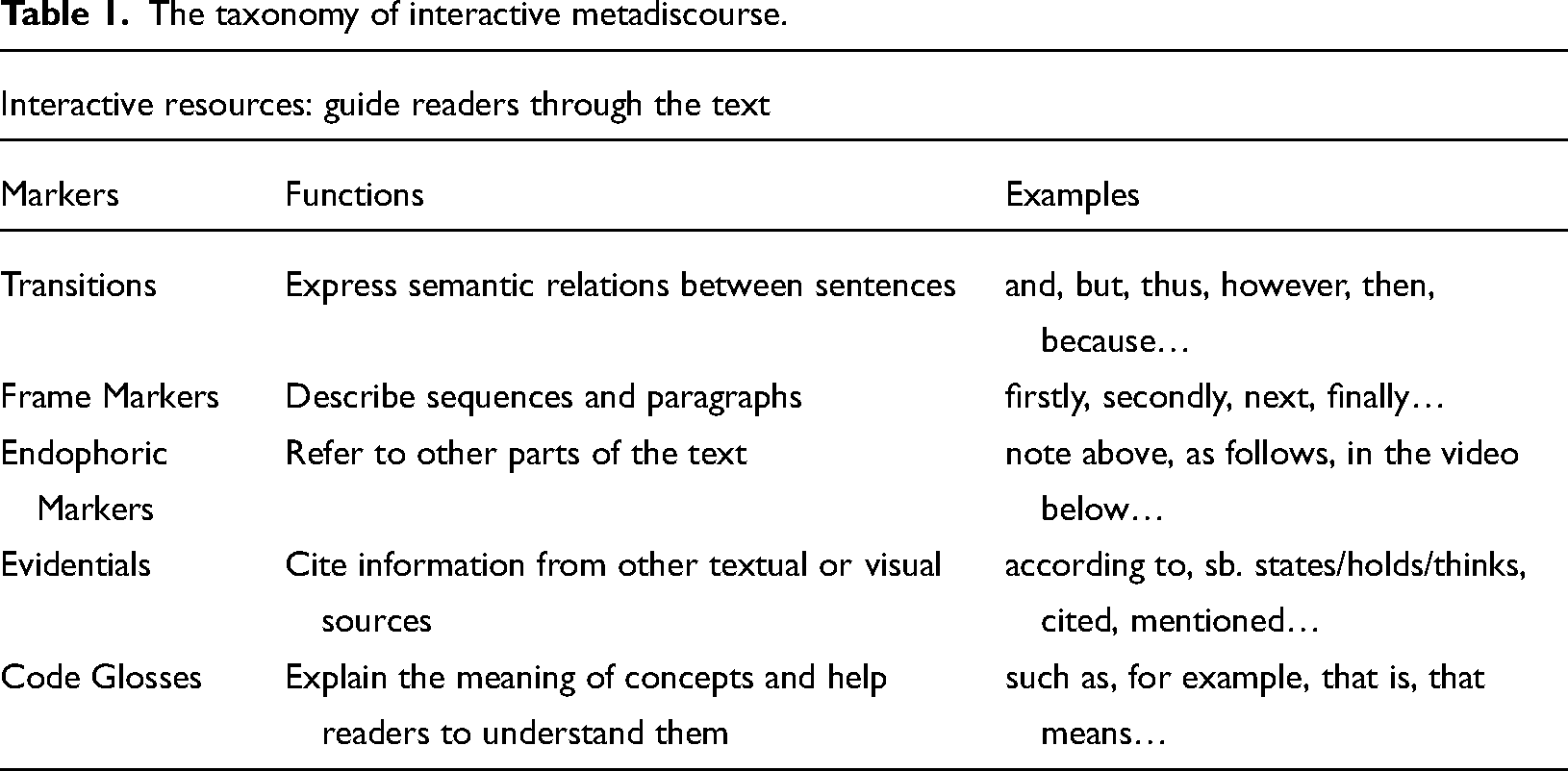
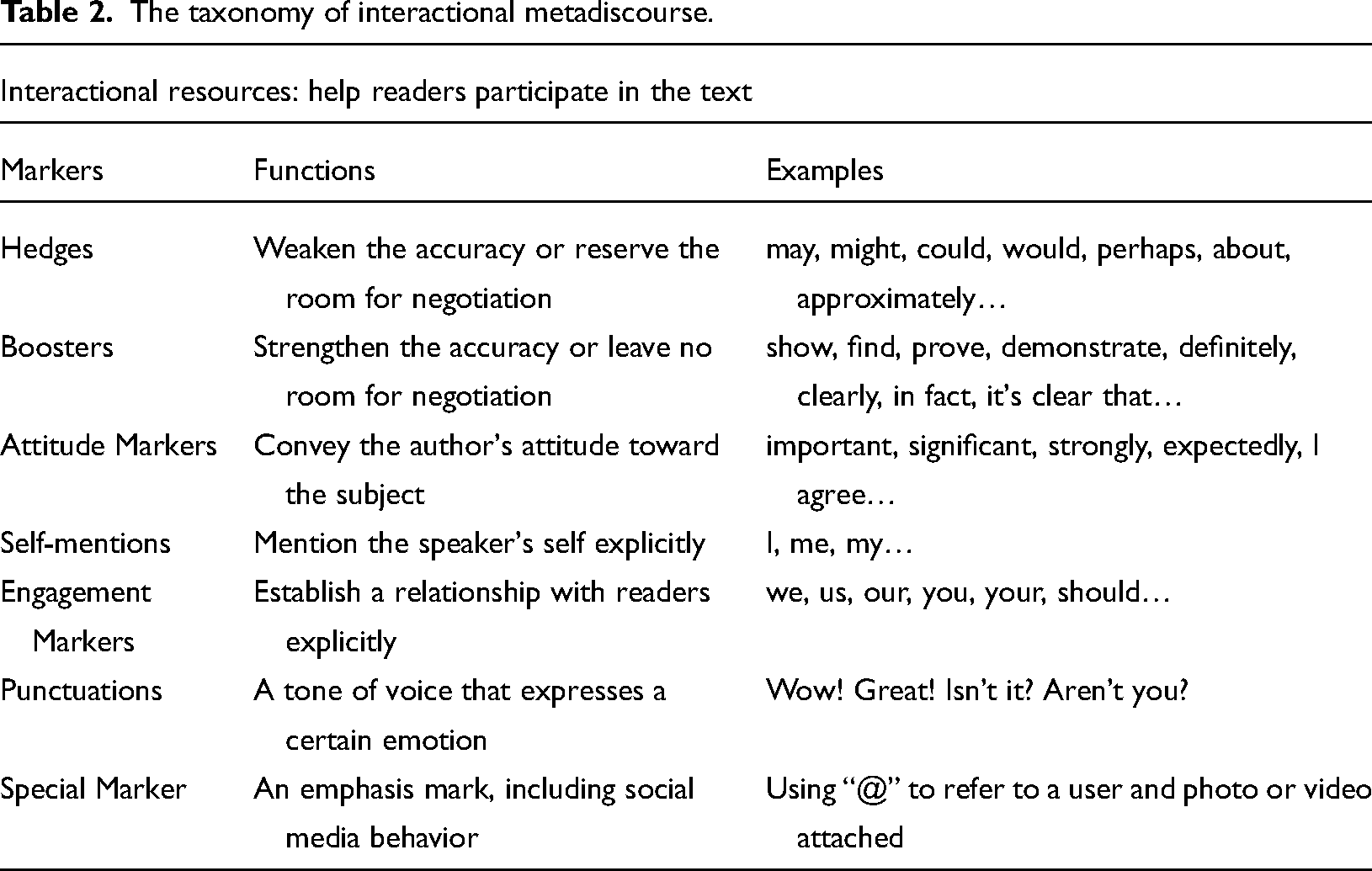
In Hyland's interactional model, metadiscourse markers are categorized into two dimensions: the interactive resources, which facilitate the construction of text and assists readers in comprehension; and the interactional resources, which conveys the writer's perspective and stance on specific propositions, thereby persuading readers to align with the author's intention within a real-world context (Hyland, 2018). This model places more emphasis on the interpersonal function of metadiscourse (Hyland & Tse, 2004). In this study, interactive metadiscourse is further clarified as the language of text construction, while interactional metadiscourse is the language marker that links the speaker and the audience.
Hellmueller et al. (2021) discover that the discourse on social media is influenced by the speaker's nationality: the US discourse culture is more participatory and nondiscursive. In light of this, the original metadiscourse taxonomy is modified and complemented to better reveal the characteristics of the social media platform and different discourse cultures. The reason for the addition of punctuation markers (e.g., “!” and “?”) and special markers (e.g., “@”) in this study is that in the preliminary investigation, these metadiscourse markers appeared frequently in the tweets of the four spokespersons. Furthermore, this paper probes into the discourse prevalent on the social media platform of Twitter, emphasizing the necessity to thoroughly consider the novel forms of interaction facilitated by the technological affordance. We find that Chinese spokespersons often attach videos, which are also a type of visual metadiscourse markers to arouse thinking and resonance. In previous articles, visual metadiscourse has been proved to supplement the text and has a potential impact in the understanding of the audience (De Groot et al., 2016). Thus, after the initial observation, the authors decide to conceive of the videos in the tweets as a kind of visual metadiscourse. So far, the metadiscourse taxonomy and some examples in the dictionary of this study have been determined and are shown in Tables 1 and 2.
The taxonomy of interactive metadiscourse.
The taxonomy of interactional metadiscourse.
Research design
Twitter1 accounts of the Chinese and American spokespersons are selected as data sources. The specific steps of this study are conducted as follows (Figure 1):
Data crawling and preprocessing: Firstly, a Python spider is deployed to crawl the tweets. Then, duplicate, unoriginal, and noise data are removed; Topic modeling and text classification: LDA (Latent Dirichlet Allocation) is used to model the probable topics from the dataset. Next, XGBoost, a supervised machine learning model, is employed to classify all tweets; Metadiscourse extraction: A Python program is used to retrieve and extract the metadiscourse markers from tweets; Discourse analysis: Discourse analysis is conducted to explore the rhetoric and social function of metadiscourse based on the results.
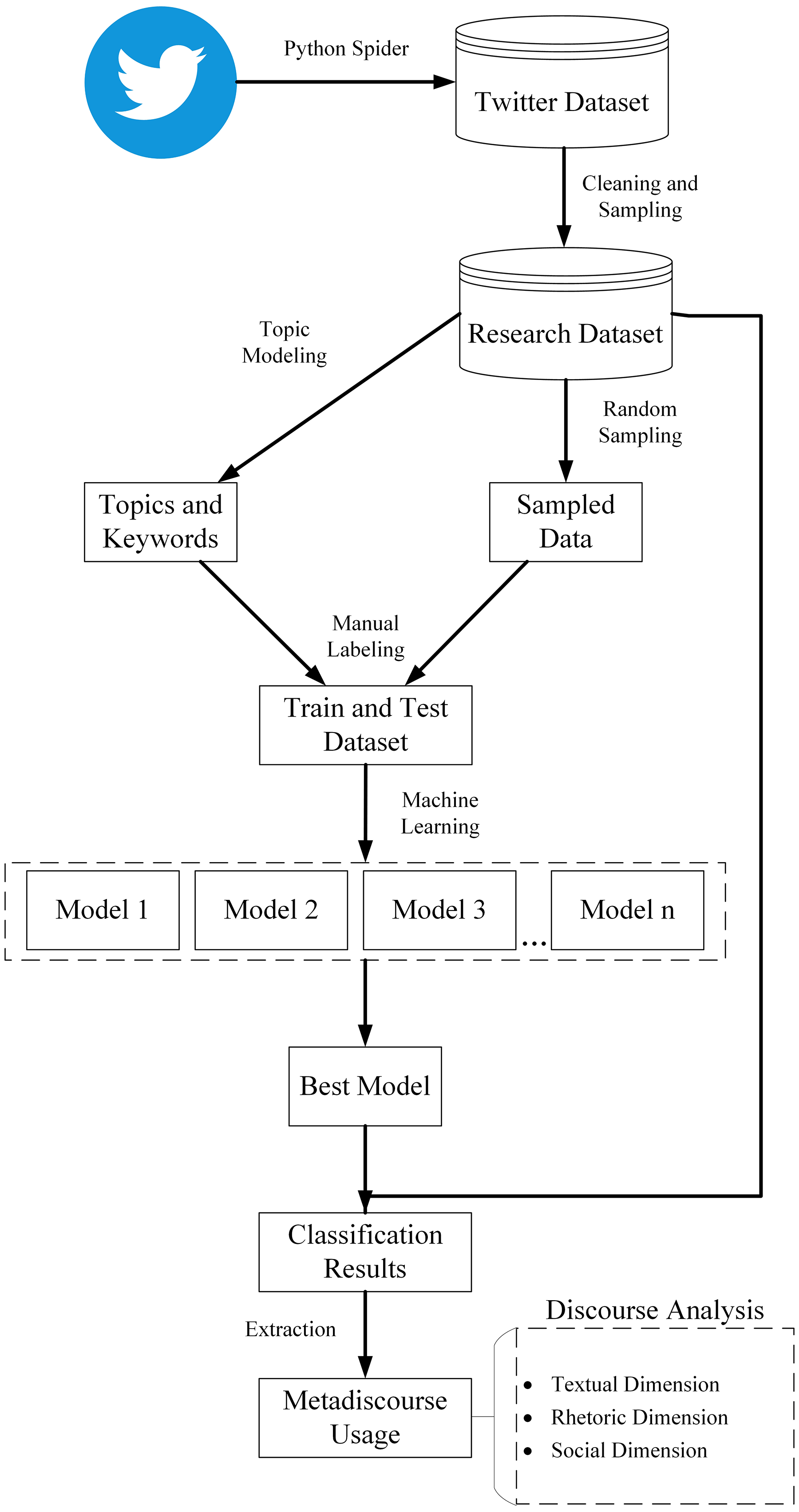
Research design.
Data description
A Python scraper is adopted to crawl all the tweets of Lijian Zhao (@zlj517) and Chunying Hua (@SpokespersonCHN), who are spokespersons of the Ministry of Foreign Affairs of PRC and Ned Price (@StateDeptSpox) and Jalina Porter (@StateDeputySpox), who are the US State Department spokespersons. The procedure results 29,460 tweets in total. Given the different time periods in which the four spokespersons served, some longer and some shorter, it is necessary to select tweets when all of them were in office at the same time for comparative analysis. The authors select the shortest of these tenures (Jalina Porter from January 20, 2021, to June 3, 2022) as the time period for screening the data. After removing duplicate, unoriginal, and nontext tweets, as well as special symbols and URL links, the results are 4390 tweets by Chunying Hua, 1984 by Lijian Zhao, 2963 by Ned Price, and 860 by Jalina Porter. The research corpus contains a cumulative total of 10,197 tweets.
Topic modeling
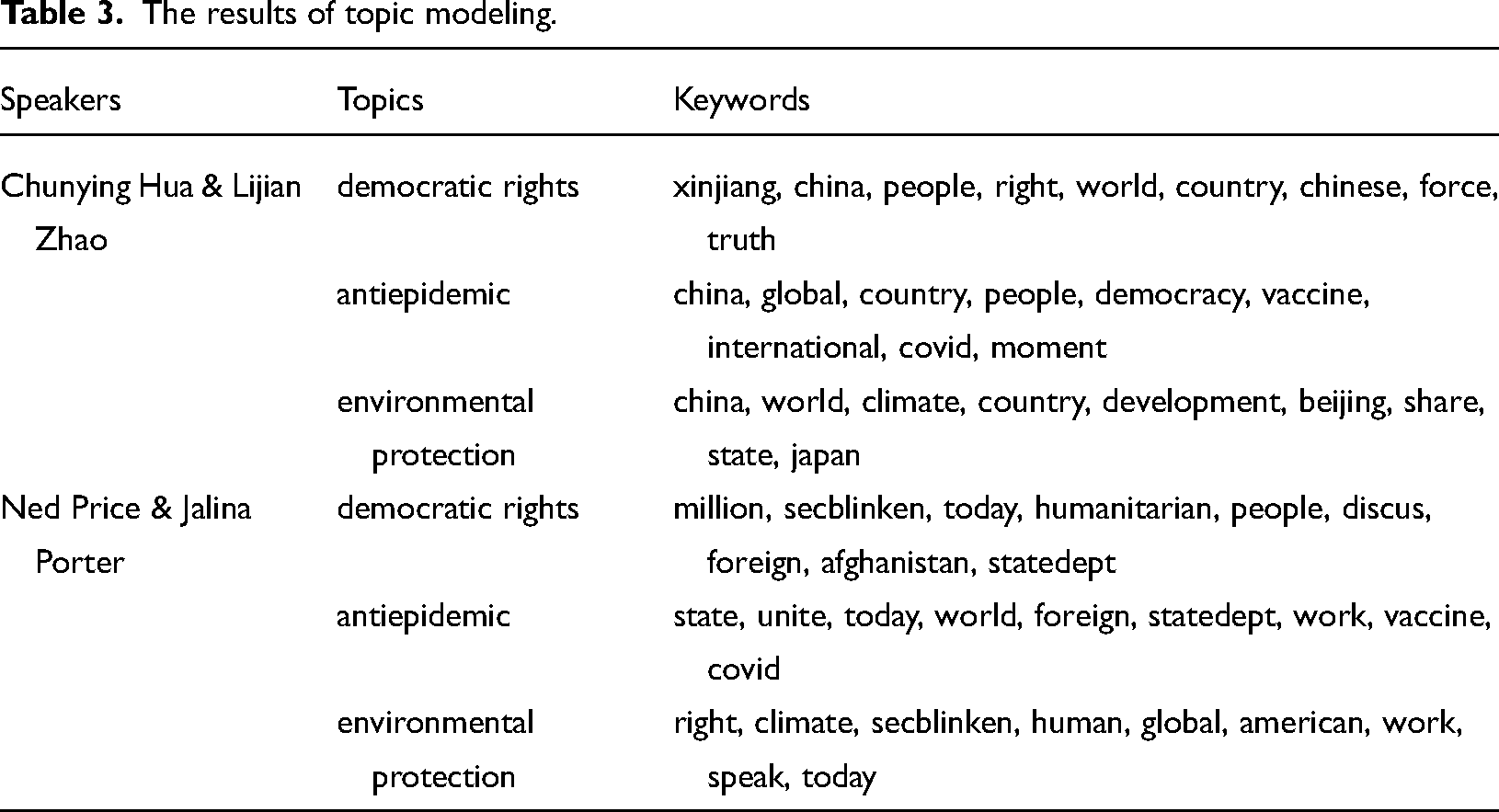
Considering that the use of metadiscourse may vary across topics, the LDA model is employed for topic modeling from all the tweets. The LDA model is an unsupervised topic clustering model, which produces the probability of distribution of keywords and the topics of each document in the document set (Blei et al., 2003). After the segmentation by Python package “Gensim,” stop words are removed in accordance with the “wordnet” of “NLTK” package and custom dictionary, followed by lemmatization of the remaining words. The processed documents are fed into the LDA model to obtain the topics, keywords, and their probability of distribution. The modeling process of LDA model requires two hyperparameters, α and β for Dirichlet distribution. In a comparison, Chin found that when α is 0.005 and β is 0.01, it is optimal for modeling tweets (Chin et al., 2019). This parameter setting is used in our study to find the ideal K, the number of topics. Perplexity is the prevailing evaluation indicator in most current studies. However, coherence is deemed as a more efficient indicator, because it is more stable and interpretable (Stevens et al., 2012). So, in this study, the coherence score is calculated as an indicator to determine the optimal number of topics, and the results show that the ideal K is six for Chinese spokespersons and four for the American spokespersons. Eventually, the distribution is manually interpreted and consolidated into three topics for comparison. Based on the results of the LDA model, three topics and subsidiary keywords are shown in Table: antiepidemic (including COVID-19, vaccine, and other keywords), democratic rights (including democracy, rights, and other keywords), and environmental protection (including climate, environment, and other keywords) (Table 3).
The results of topic modeling.
Text classification
About 10% of the dataset (1020 tweets) are randomly sampled and independently coded for the topic to which they belonged by two trained postgraduate students. The intercoder reliability (Krippendorff's α) is 0.89, which is reasonably favorable (Krippendorff, 2011). Then, 80% of the coded data are randomly selected as the training set and 20% as the testing set. A variety of machine learning classification models are compared, and the XGBoost model shows the best results, achieving a precision of 0.83. Therefore, the XGBoost model is used to classify all the tweets, and the classification results are shown in Figure 2.
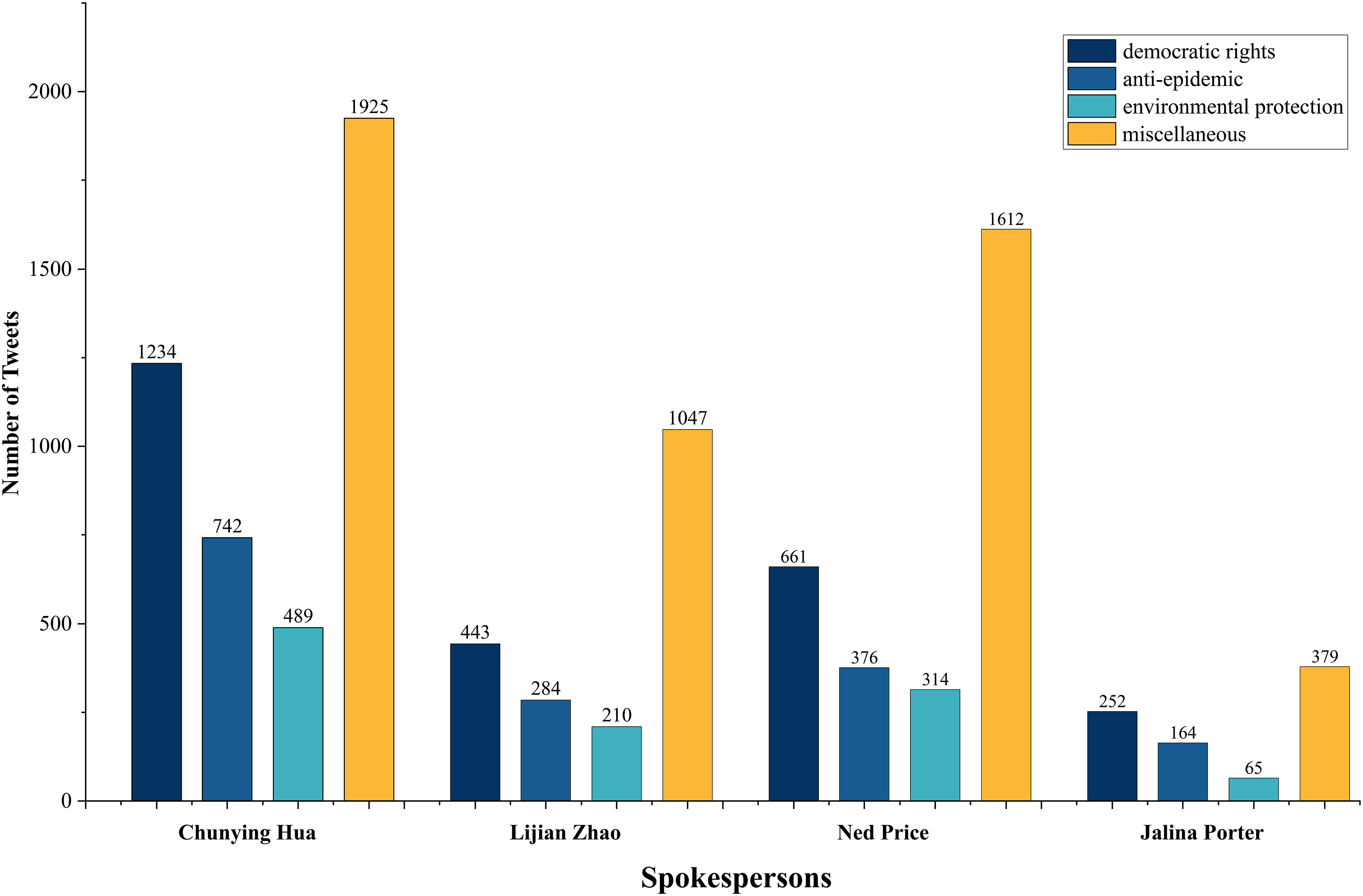
The results of classification.
Metadiscourse extraction and analysis
In previous studies, some corpus software was used to extract metadiscourse markers (e.g., Antconc). To improve the efficiency and accuracy of metadiscourse extraction, we used Python to design and improve the algorithms for automated word retrieval. When an entry from the metadiscourse dictionary is encountered in a sentence, the corresponding tally for that word, phrase, or symbol is incremented by one. Ultimately, the individual counts of various categories of metadiscourse markers across all sentences are aggregated separately. There are great differences in the number of tweets under each topic of these spokespersons. Therefore, for the sake of comparison, one of the authors calculates the occurrence frequency of all metadiscourse markers per thousand words in the text of tweets. Based on these results, qualitative discourse analysis is conducted to uncover the underlying meanings, social practice, and power relations that are reflected in and constructed by metadiscourse.
Results
While metadiscourse does not explicitly construct the propositional content, it is instrumental in sculpting the speaker's stance, shaping the audience's perception, and revealing the speaker's emotional inclination toward a particular topic. Hence, two-way ANOVA is conducted to test whether the usage of metadiscourse is subject to different topics. The results show that there is no substantial divergence between the overall frequency of metadiscourse markers in various topics (Chunying Hua's p = .386, Lijian Zhao's p = .627, Ned Price's p = .347, Jalina Porter's p = .122), indicating that each speaker's habit of metadiscourse usage is relatively stable and robust. As a result, we can compare the average frequency of metadiscourse markers in the three topics.
There are internal similarities in the use of metadiscourse by Chinese and American spokespersons, which reveals the profound influence of distinct historical and social factors on discourse practice. This reflects the manifestation of national images in their respective political systems and ideologies. The frequency of interactive resources used by American spokespersons is slightly higher than that of Chinese spokespersons, while the frequency of interactional resources is observably higher than that of Chinese spokespersons, indicating that the American spokespersons are more inclined to involve and interact with the interlocutors in the text. The comparative frequency of metadiscourse markers between Chinese and American spokespersons produces quite varied persuasive function and rhetorical effect.
Interactive metadiscourse
From the results of interactive resources shown in Table 4, transitions are most frequently used (M = 24.84), illustrating that there is a strong internal correlation between the utterances of tweets and the opinions of spokespersons. The average frequency of transitions by American spokespersons (26.74 per thousand words) is higher than that of Chinese spokespersons (22.94 per thousand words), which reveals that the language of American spokespersons more continually states their opinions.
The results of interactive metadiscourse.
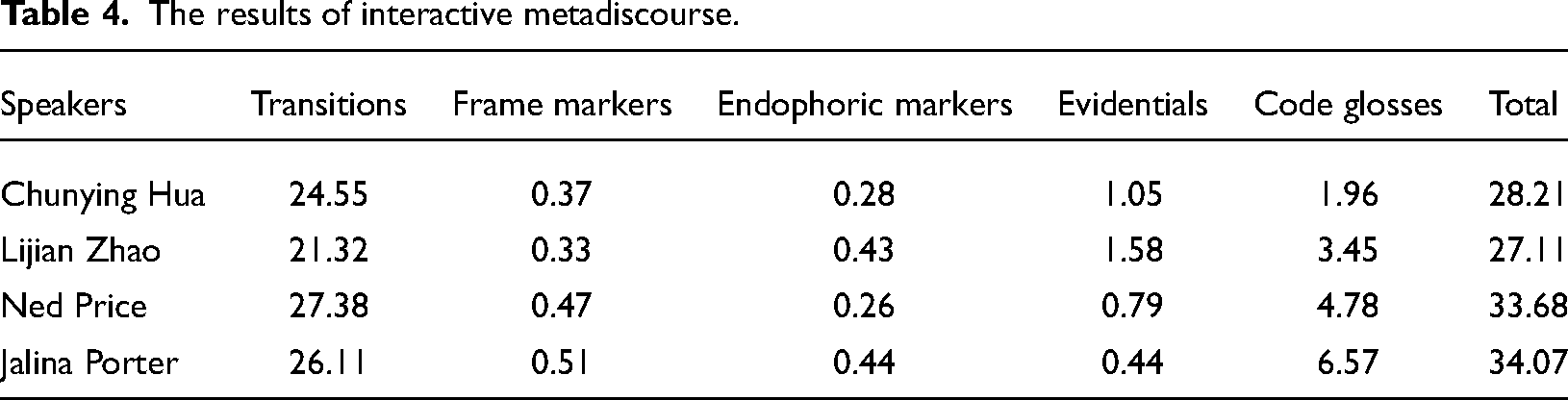
Frame markers (M = 0.42) and endophoric markers (M = 0.35) appear less because of the limited textual length of tweets by Twitter and the lack of coherence between the previous and subsequent tweets. Speakers can’t use frame markers to realize textual frame construction or structural transformation. Meanwhile, it is difficult for speakers to use endophoric markers to quote their previous lines to enhance their views. The rational discourse expression of Chinese spokespersons is embodied in the more frequent use of evidentials (M = 1.32), which support their persuasive demands by citing external materials. For instance, the Extract 1 is the raw content of Hua's tweet that cited the comment from a US athlete about the 2023 Beijing Olympics. Moreover, she used a video to Enhance the effect of “seeing is believing.”2 Extract 1: “I feel very safe going to Beijing.” says a US athlete in an interview before departure for #Beijing2022. With strict anti-COVID measures featuring closed-loop management, athletes can enjoy the games with no safety worries. https://t.co/7hvvUE6sNh2 (Chunying Hua, 2022/01/30 05:32:32)
Price and Porter prefer to use code glosses (M = 5.68) to make detailed explanations and descriptions of people or things, to influence the audience's value judgment on the subjects of discussion. Extract 2: We have warned that individuals
Interactional metadiscourse
From the results of interactional resources shown in Table 5, there are considerable differences between Chinese and American spokespersons. Firstly, Price and Porter use the symbol “@” to denote political entities within the text (5.04 and 16.87, respectively, per thousand words), aiming to bring them into the predesigned semantic field, which forms positive engagement and projects an accessible image to the public. Hua and Zhao apply capital markers, such as “STOP,” as part of the special markers, to emphasize their tough and staunch attitude or emotion (e.g., anger, affirmation and praise). Secondly, the frequency of engagement markers used by American spokespersons (M = 25.57) is also apparently higher than that used by Chinese spokespersons (M = 12.75). Such markers indicate that the speaker attaches importance to audience participation in the text and creates a diversified semantic field so that audiences with different views can help construct their discourse. Self-mentions are also a kind of metadiscourse widely used by Jalina Porter to remind the audience of the “authorial presence,” showing that the speaker projects his/her presence into the discussion of the topic. Hua and Zhao's applications of hedges and boosters are both obvious. Hedges express the speaker's cautious and tentative attitude toward his/her discourse, which can contribute to the creation of an open semantic field of communication between the speaker and the audience. By contrast, boosters highlight the speaker's attitude and stance. In the use of punctuation markers, Hua, Zhao, and Porter show a slightly higher preference, for using rhetorical tone to convey positive views and arouse the audience's reflection.
The results of interactional metadiscourse.
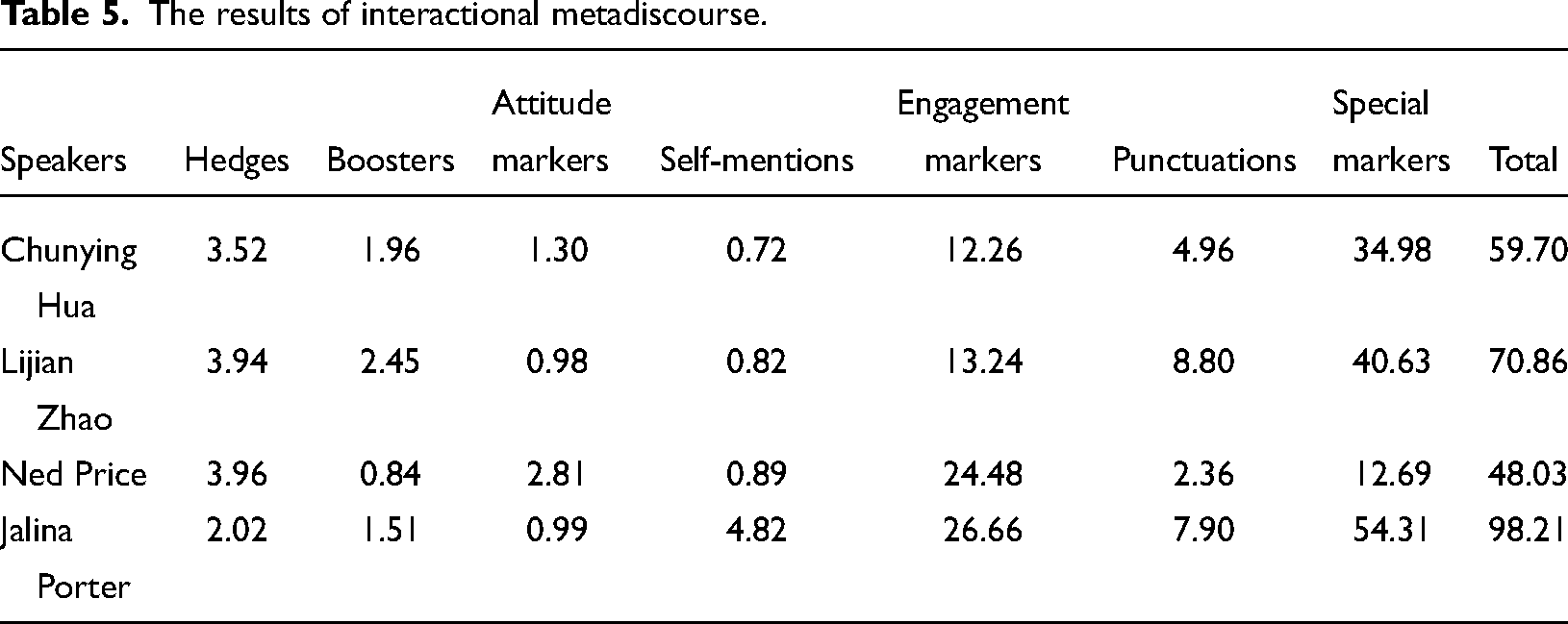
Although the interactional resources such as hedges, boosters, and punctuation markers themselves are associated with emotional persuasion (i.e., pathos), Hua and Zhao usually combine them with approvals to assist the presentation of objective facts and release their firm arguments in multiple semantic fields. Extract 3: #China has joined
Differentiating from the rational expression of Chinese spokespersons, both Price and Porter's tweets are based on the premise of interactivity, interacting with readers and subjects mentioned in the text. As the State Department spokespersons of a superpower, they (especially Porter) frequently substitute the self-mention “I” to the speaker to show their promptness and participation. Because this persona forms the interaction between the audience and “I” and intervenes in issues and controls the initiative of discourse (e.g., recounting the specifics of Secretary of State Antony Blinken's work as a personal “me”). It's special that the reference symbol “@” in Twitter protrudes the digital behavior of specific users, which is thoroughly deployed by Price and Porter. This special metadiscourse marker not only interacts with its audience but also introduces the subject to its audience into the topic discussion, promoting the realization of personality persuasion (i.e., ethos) based on the American authority. Extract 4: Today in Tokyo, Prime Minister
In addition, Price and Porter make much account of the empathy of discourse and use “we,” “us,” and other engagement markers on the media platform to build rapport with the audience. These markers elevate the speakers as representatives of people and mankind and realize emotional persuasion employing perceptual discourse transmission. Extract 5:
In general, the Chinese spokespersons mainly use interactive resources to steer the audience to read the text, thus enhancing their own opinions and attitudes toward some issues. Moreover, they pay attention to the use of facts and arguments to give out China's voice and spread Chinese stories to the readers on Twitter. Therefore, the interactive metadiscourse promotes the realization of logical persuasion (i.e., logos) in their discourse practice. For example, by using exclamation marks to mark the effect, the discourse is further stamped with facts. In brief, Chinese spokespersons attempt to discern the difference between fact and falsehood, which is to say, to act as the opposition system.
The American spokespersons’ tweets reflect a strategic utilization of the US prominence on the global stage, leveraging this position to shape discourse on Twitter. The tweets serve as a platform for the US government to articulate its stance on international matters, employing the nation's authoritative voice to guide public opinion and direct the narrative. This approach activates the division & rejection system, where certain perspectives or actors that deviate from the established norms are marginalized, reinforcing the dominant discourse and its alignment with US interests. The spokespersons’ tweets, therefore, are not merely personal expressions but are indicative of a broader communicative strategy aimed at maintaining the US influence in international dialogues.
Conclusions
In the preceding section, we presented the descriptive findings regarding metadiscourse. Building on this, we will analyze its rhetorical and social functions. The lectures, comments, or speeches of government officials or political figures on political events are typically political discourse (Wodak, 2009). Therefore, the tweets posted by Chinese and American spokespersons on political topics constitute a distinct genre of political discourse, too. Political discourse is an important way for entities in political relations to impose their ideologies and construct social realities. Under the constraint of exclusion systems, politicians’ Twitter discourse forms a power field, in which they use metadiscourse to achieve power demands. The usage of the metadiscourse mentioned above designates the operation mechanism and unveils conflict relationships of major discourse powers. Taking the tweets of four spokespersons as an example, the selective use of metadiscourse markers imparts a layered dimension to their communicative expressions. Metadiscourse interweaves with the propositional content to form complete political discourse, influencing the explicit or implicit attitudes, positions, and emotions.
Essentially, power is the fundamental factor that determines the practice of discourse (Foucault, 2001). Division & rejection and opposition system, two of the exclusion systems, construct a field that constrains the expression of discourse.
Division & rejection system: Discriminate against specific entities
The division & rejection system mainly restrains the metadiscourse referring to the people who could speak, namely, the interactional metadiscourse, which is used by the power holders to distinguish and discriminate against certain people, groups, or organizations. The objects of discrimination include the real audience as well as the subjects mentioned within the discourse. The latter is a common method used by American spokespersons to operate their discourse power. Within the field they construct, metadiscourse possesses an “exclusivity.” Leveraging the potent media machinery and discursive influence of the United States, American spokespersons curtail the narrative from the cognitive entities present in the actual context. Upon the audience's acceptance of the subtle cues embedded within the “otherness” framework and perilous metaphors, the object is marked with an inherent “taboo” that embodies discrimination, leading to a quiet dissolution of their discourse power. In this process, stigmatization is constantly used (e.g., “We will not ignore #ForcedLabor in Xinjiang and call on the People's Republic of China to cease
In the context of temporary global political, cultural, and social realities, globalization is undoubtedly the epitome of ideology and alienation (Cox, 2001), but the western nations still dominate in the field of discourse. These nations frequently resort to the value concepts of “humanitarian intervention” (Hehir, 2013) and “democracy and human rights” in the construction of the international discourse. The higher frequency of interactional resources reflects the fact that the American spokespersons try to control the right to define and establish themselves as the spokespersons of the “people” (e.g., “Hong Kong's strength lies in its freedoms and democratic processes. Everyone in Hong Kong deserves to express themselves through speech, assembly, and association.
The “I” and “we” in the speaker's words are essentially the metaphor for the official of the United States. By placing themselves among the people and mankind, they give legitimacy to their words and actions. In this way, the United States attains the repertoire of manufactured personas, or to say, the nominal “spokesman of mankind” and “Defender of human rights” on Twitter. However, its nature is still the compromise of “America first” in the actual discursive operation. Integration of American ideology and discourse system makes the power discourse of the American spokespersons popular on Twitter.
Opposition system: distinguish truth and falsehood
In contrast to the division and rejection system, the opposition system primarily confines metadiscourse to the realm of permissible discourse, focusing on the interactive resources that facilitate communication. This approach aims to fulfill the quest for authority by elucidating the distinction between veracity and fallacies. In discursive construction, truth is nothing more than a practical metaphor of power per se (Richardson, 1996). Chinese spokespersons also hope to establish their authority and frequently raise their views to collective public opinions, but the discourse structure they rely on is dissimilar. The power operation of Chinese speakers often leans on the opposition system, in which the purpose of metadiscourse is to permeate facts and authority. Within the field of social media, the identity and authority of the speaker are very important. However, the identity of Chinese spokespersons does not align with the demands of discourse power control. Consequently, they endeavor to control a domain of influence that is underpinned by the authority of truth.
The pragmatic tendency accompanying China's rise is deeply rooted in the words, sentences, and discourse of the Chinese spokespersons. In fact, there is a tremendous gap in the economy, military, and culture, so China is still catching up with the United States. As the biggest industrial power in the world, China hopes that science and technology will boost the development of productivity to narrow the gap and achieve transcendence. Such pragmatism is also reflected in foreign affairs. With relatively inferior discourse power, the Chinese spokespersons need the means to support their persuasion. Evidently, they chose the seemingly more persuasive way of distinguishing the truth (e.g., “True responsible governments & politicians don’t make policies upon lies. The #US gov should take concrete actions to save its bankrupt reputation.” by Chunying Hua on 2021/12/28 or “In 2020, 42 million malicious program samples were captured. Among those originating overseas, 53% were from the US. The #US is the true ‘empire of hacking’” by Chunying Hua on 2021/07/21).
It is undeniable that “post-truth” is the result of societal meta-trends nowadays (Lewandowsky et al., 2017). In light of recent political situations across the world, the public is shockingly tolerant of lies, inaccurate accusations, and outright denials (Higgins, 2016). Politicians can lie without being condemned, but not the Chinese spokespersons. Because they are “red peril” (Lewandowsky et al., 2017) or perceived as “out-group members” (Brewer & Kramer, 1985) in the western media coverage. Positive crosscutting contact is significantly more likely to be followed by further positive engagement and moderate intergroup hostility (Marchal, 2022). Hua and Zhao predominantly accentuate potent and explicit truth or nonconflict utterances to mitigate the audience's inherent biases.
Discursive contest of digital meaning-making
Division & rejection and opposition are two antithetical systems. The use of metadiscourse to exclude the unfavorable discourse in their power terrain is essentially the discourse power contest between the Chinese and American spokespersons. In the era of digital communication, the US internet platform giants have influenced the right to speak, which threatens the political structure and ideology of other countries. These companies and platforms are an important constituent of the US “soft power” (Nye, 2008). In particular, with the military and monetary power, the U.S. takes social media such as Twitter as an important component of its media matrix amplifying its global cultural impact. Through the division & rejection system, the U.S. can use its preeminent discourse power to realize ethos and pathos to propagate the US culture, institutions, and ideology.
Due to its growing economic and military strength, China is also seeking to enhance its “soft power” that is more in line with its status as a great power. However, different from traditional political discourse, social media like Twitter is personalized and dialogical, which is contradict to political parties’ conservative communication strategies (Enli & Skogerbø, 2013). This means that the rational opposition system adopted by Chinese spokespersons on Twitter can’t be accepted and empathized with by the audience. Emotional appeals are proved to be effective and routinely cued by politicians to achieve desirable public opinion (Brader, 2005).
According to Mueller et al. (2003), the digital discourse culture is rooted in the discourse tradition of a political system. Hellmueller et al. (2021) have further elaborated that discourse culture is inherently political, emphasizing the intrinsic connection between the ways in which discourse is used in communication and the exercise of power within societal structures. Spokespersons are “political figures” selected by governments to represent their viewpoint and are not neutral parties (Len-Ríos, 2023). Because the political discourse has increasingly become “mediatized” nowadays (Kissas, 2018), these unconscious metadiscourse markers used by official spokespersons tend to offer deeper insights into the underlying political machinery, surpassing the propositional content. The mediation of personal habit of discourse and government propaganda has cultivated distinctive “persona” for the spokespersons. The “persona” embodied by the American spokespersons are notably participatory, with the aspiration to establish a public sphere where the most cogent ideas take precedence over the weak ones (Hellmueller et al., 2021). In contrast, the “persona” embodied by the Chinese spokespersons exhibit a pronounced inclination toward pragmatism, which is derived from “Reform and Opening Up” policy (LU, 1999).
In fact, the two discourse strategies are of different methodologies and reveal distinct features in expressions. But their purposes are identical. In general, this is a way of persuasion on Twitter in the digital context of “soft power” contention. The United States hopes to maintain the existing rules, while China tries to establish a brand-new international system as a challenger. The behavior of the US government can be seen as a concern about the uncertainty of security problems that China may bring. The contradiction of discourse power studied in this paper is only a microcosm of the friction between China and the United States.
Discussions
This research undertakes an examination of the metadiscourse used for persuasion by the Chinese and American spokespersons, through the lens of Foucault's systems of exclusion. The initial sections have involved two of the systems of exclusion, with the prohibited remaining unexamined. Given Foucault's claim of its ubiquity (Foucault, 1971), it is imperative that we engage in a purposeful discussion to provide a comprehensive understanding. There is no discernible presence of the prohibited within the discourse level; however, we contend that both China and the United States employ this system in international discourse competition. Since 1979, China has pursued a strategy of economic, industrial, and technological modernization and notably funneled substantial resources into the information sector, leading to a networked society. While promoting the advancement of new technologies, China also attempted to tightly regulate the Internet, resulting in the “great firewall” infrastructure (Deibert, 2002). China's access blockage effectively prohibited certain foreign traffic from entering its digital sphere and, in turn, nurturing a website cluster of cultural proximity (Taneja & Wu, 2014). The United States, too, has implemented “prohibited system” to some extent. After recognizing the perceived threat that TikTok posed to the US-dominated global platform ecosystem (Jia & Liang, 2021), the Biden administration decisively implemented a full embargo policy against it. The above practices confirm the prevalence of “prohibited system” in the global digital space. This awareness is the inspiration to further investigate the potential reflections of this system within political discourse.
The contributions of this study are twofold. Firstly, given that the notion of metadiscourse remains inconsistent, previous studies investigated metadiscourse markers across different registers and disciplines, for instance, the pedagogy and advertisement. However, its extensive application in the emerging digital meaning-making practices calls for more research. Starting from extending the taxonomy of metadiscourse in both linguistics and communication, this article takes the tweets of Chinese and American spokespersons as the research object, with full consideration of characteristics of the digital public sphere. The findings shed light on discursive power conflicts and the operational mechanism of discourse behind it. The paper attempts to introduce the exclusion system of discourse in Foucault's power discourse theory, in order to provide a new perspective for metadiscourse analysis. Secondly, we use the computer-aided quantitative results of metadiscourse in conjunction with the original text as materials for critical discourse analysis. This approach enhances the interpretability of discourse analysis. The corpus linguistics method extends the practical application of metadiscourse, further introduces it into the research of communication, and verifies the operational feasibility for its interdisciplinary application. All these provide new research indicators and implementation paths for critical discourse analysis.
This study also has some limitations. First, the comparative analysis is descriptive, which is difficult to provide deeper insights. Enriching the analysis with more dimensions of comparison could reveal the persuasive mechanisms beneath the surface. Second, the authors didn’t take the audience engagement or the dynamics of social media communication on Twitter into account. It remains unclear whether these systems sufficient to persuasive purpose or not. A multitheoretical approach could broaden the innovative scope. Therefore, we propose that later scholars can study how the two discourse strategies affect the audience and how effective they are. Moreover, some features of social media that are more unique than traditional media are not within the scope of this study, such as emojis and memes. It is a viable path to continue to extend and refine the taxonomy of metadiscourse in this study.
Footnotes
Acknowledgements
The authors would like to express our sincere thanks to the editors of this article as well as the two anonymous reviewers.
Data availability

Declaration of conflicting interests
The authors declared no potential conflicts of interest with respect to the research, authorship, and/or publication of this article.
Ethical statement
This study does not involve human subjects as participants. All the use of materials and analyses correspond to the protocols of research ethics and the Science Data Bank Data Desensitization Commitment Statement.
Funding
The authors disclosed receipt of the following financial support for the research, authorship, and/or publication of this article: This work was supported by the Humanities and Social Sciences Youth Foundation, Ministry of Education, Hunan Office of Philosophy and Social Science, (grant number 22YJC860007, 21YBQ010).