



Abstract
This study integrates agenda setting and framing theory to explore the transmission of climate change frames between newspapers and Twitter in the US and the UK. A set of computational methods was applied to identify five prevailing climate change frames—cause, impact, action, real, and hoax—in 230,000 tweets and 20,000 news articles from 2016 to 2021. At the cross-national level, a symmetrical relationship was found on Twitter between the US and the UK, which indicates their mutual influence on social-media discussions of climate change. Within each country, the US news media had a stronger agenda-setting influence on public climate change discussions on Twitter, whereas news coverage and social-media discussions in the UK were relatively isolated. The use of the cause frame in the US media coverage often led to the presence of the hoax, action, impact, and cause frames in Twitter conversations, whereas the action frame in the UK media coverage led to the presence of the hoax, real, and impact frames in Twitter discussions. The findings have implications for the dynamics of framing processes that shape public attention and the understanding of climate issues cross-nationally.
Climate change is rooted in complex scientific, social, and psychological foundations (Kahan et al., 2012). The changing climate also often surpasses the public's perception in daily life (Schäfer, 2015). Therefore, people frequently misinterpret climate change messages (Bostrom et al., 1994), and even highly educated individuals exhibit limited knowledge (Sterman & Sweeney, 2007). However, immediate actions to mitigate the severe consequences of global warming require consensus and participation at both the individual and social levels (Lewandowsky et al., 2013). Biased public awareness of climate change could hinder relevant policy implementation and limit pro-environmental behaviors (Jenkins-Smith et al., 2020; Wolf & Moser, 2011). Due to everyday obliviousness, people's perception of climate change is primarily shaped by media portrayal and representation (Moser & Dilling, 2007; Stamm et al., 2000). Consequently, the media serve as critical agents in producing, reproducing, and transforming climate change information for the public (Carvalho, 2010). To understand the interaction between the media and the public, this study adopts intermedia agenda setting (IAS) as a theoretical framework.
Agenda-setting theory examines the flow of issue salience from the media to the public (McCombs & Ghanem, 2001). In the current media landscape, IAS is used to describe the interaction and interlinkage of multiple media actors as well as the transfer of issue prominence (Harder et al., 2017; McCombs, 2004). However, some key issues remain unclear in IAS. First, there is still a dispute concerning the influence of traditional media on social media with regard to climate issues (Djerf-Pierre & Shehata, 2017). Cross-national information flows also remain underexplored, meaning that we ignore which country leads the discussion on climate issues in the hybrid media environment. Furthermore, scholars have not examined how specific climate change frames flow and exert influence in real-world contexts. To address these gaps, we incorporate IAS theory to explore the flow of frames in the transnational hybrid media system. We investigate how climate change frames circulate on Twitter (now branded as X) and are broadcasted by traditional media as well as how they shape each other in the US and the UK. The following paragraphs detail the current theoretical and empirical gaps and our solutions to address them.
First, the complexity of the information flow among countries is underexplored in IAS-related studies. The contemporary hybrid media system complicates the flow of information between the public, the media, and politicians (Thorson & Wells, 2016). This complexity arises from the involvement of multiple actors with diverse motives and logics in the construction of the interconnected media system blending traditional and new media, which results in a web that shares information (Klinger & Svensson, 2015; Wells et al., 2020). While some studies have examined the climate-related information flow within specific regions, few works have investigated the dynamic agenda-setting process of climate issues across countries. Given the growing international impact of news media and the “borderless” nature of social media (Lulle, 2018; Trottier, 2015), cross-national information flow examination is important for a global issue such as climate change. Both the US and the UK are active in climate politics as prominent players in international environmental negotiations (Boykoff, 2010; O’Neill, 2013). In addition, both countries harbor high levels of contrarian and skeptic voices among the media and in public-opinion markets (Boykoff, 2010; Painter & Ashe, 2012). As highlighted by Boykoff and Rajan (2007), researchers could better understand the policies and actions of the US and the UK by analyzing influential factors of climate-science media coverage.
Furthermore, the flow of frames has not been examined in a real-world setting. Frame salience, as defined by De Vreese (2004), refers to the prominence of issues or attributes. By emphasizing certain aspects of a message, frames can affect people's interpretations and understanding of an issue (Druckman, 2001). In climate change discourse, the framing tends to center around the “skeptical” and “convinced” frames under different ideologies (Hoffman, 2011). However, belief in and denial of climate science are often studied in specific cultural and demographic contexts (Björnberg et al., 2017). Different countries typically possess disparate climate change narratives and frame characteristics in their discussions, which are rooted in cultural, social, and political particularities (Lück et al., 2018). We still lack a cross-national examination of the agenda-setting relationship between legacy and new media (Djerf-Pierre & Shehata, 2017), both of which are full of skeptical voices (Merkley & Stecula, 2021; Moernaut et al., 2022; Painter & Gavin, 2016; Schmid-Petri et al., 2017; Williams et al., 2015).
We argue that examining the flow of frames among diverse participants in the hybrid media system is necessary because the contemporary media landscape is constantly evolving through interactions among multiple forces that may shape public opinion (Chadwick, 2017). By integrating agenda setting into hybrid media systems and the framing concept of climate change, we pay attention to the complex interplay of frames across media systems and countries. We capitalize on big data derived from Twitter and newspapers, and we incorporate advanced computational analysis and time series techniques.
Our analysis proceeded in three stages. First, we modeled the prevalence of five climate change frames in Twitter discourses and news coverage in the US and the UK. Second, we examined the information flows across the two countries on the same media platform and the flows between the Twittersphere and the newspapers in the same country while controlling the frames. Third, we tested how one country responded to another in the same media system and how one part of the hybrid media system related to another in the US and the UK.
Asymmetric Climate-Information Flow Across Different Countries
The news flow across nations is unbalanced and hierarchical (Guo & Vargo, 2017; Kim & Barnett, 1996; Segev, 2016). Previous studies have also shown that the international news flow is highly stratified and predicted by a country's economy (Guo & Vargo, 2017; Segev, 2016). Nations that are central to the world system typically determine the orientation of the information flow (Segev, 2016). Specifically, Guo and Vargo (2017) suggested that richer countries are more likely to lead the agenda for peripheral ones and attract the most attention from the global audience. As a ubiquitous phenomenon, climate change disproportionately affects people around the world and creates inequalities among and within countries (Islam & Winkel, 2017; Thomas et al., 2019). We argue that climate inequality is not limited to ecological and policy-making dimensions; it also exists in the competition for attention among international media participants. Media outlets in dominant nations tend to depict climate change in ways that are beneficial to their home countries and influence peripheral ones.
Questions such as how climate issues would flow across countries under various shaping forces, including the media, science, economy, and policy, remain unclear (Boykoff & Rajan, 2007). In this study, we focused on the information flow of climate change issues in the US and the UK. Both countries share a frontier and expansionist mindset as well as a commitment to economic freedom based on the exploitation of nature, which significantly influences their policies (Boykoff & Rajan, 2007). Deeply entrenched cultural skepticism toward climate change along with “climate contrarians” (Boykoff & Boykoff, 2004) could affect public perceptions and attitudes in the US and the UK. Media coverage in the US is more critical of anthropogenic climate change compared to the UK (Boykoff & Rajan, 2007). Boykoff (2007) examined “balanced” reporting in US and UK newspapers concerning climate change and found ongoing and significant divergence in the journalistic norms of the US but not of the UK.
Referring to the differences between US and UK elite media, Nerlich et al. (2012) indicated that the former preferred to present climate change as a controversial issue while the latter primarily portrayed it as a pressing environmental challenge. Given the crucial role that newspapers still play in setting the public agenda for climate change, we combined news articles and tweet data in this study (Su & Borah, 2019). By incorporating intermedia agenda-setting theory, our aim was to reveal how traditional media and Twitter in the US and the UK influence each other regarding climate news and conversations. Thus, the first research question is as follows:
Traditional Versus Social Media: Who Leads the Way in Shaping the Public Debate on Climate Change?
In the new media era, content-curation processes are undertaken by multiple media systems, including traditional media, self-media actors, and computer algorithms (Chadwick, 2017; Thorson & Wells, 2016). Regarding climate change, an ongoing debate revolves around who sets the agenda for this issue. On the one hand, some scholars have suggested that the public heavily relies on elite cues and mass-media coverage for its decision making and subsequent behavioral change concerning climate policy issues (Kirilenko et al., 2015; Tesler, 2017). On the other hand, others have emphasized the power of the public and how diverse climate opinions can quickly emerge and spread without going through gatekeepers (Jang et al., 2019). Given this dual—top-down and bottom-up—flow, we should recognize the complexity of the controversial topic of climate change and reexamine the agenda-setting relationship between traditional media and Twitter from a longitudinal perspective.
Scholars who have gone beyond simple either–or debates have provided more enlightened explanations for identifying the agenda setter (Su & Borah, 2019). X. Wang et al. (2021) demonstrated that the relationship between social-media news and the public's agenda should be depicted as a reciprocal interaction rather than a directed exchange of information. Some scholars have highlighted the role of time in influencing intermedia agenda-setting directions. W. Wang and Guo (2018) showed that the direction of intermedia frame setting between online news media and Twitter can change over time. After looking at Trump's statement concerning the US withdrawal from the Paris Agreement, Su and Borah (2019) concluded that Twitter was more likely to lead traditional media's agenda during breaking news periods while newspapers were more likely to set Twitter's agenda in the absence of breaking news.
Furthermore, social media has expanded into an unlimited space and formed a “borderless” landscape (Lulle, 2018; Trottier, 2015). As a platform that transcends international boundaries, Twitter is a powerful tool for studying how different countries influence each other and compete for visibility in their coverage of climate change (Fownes et al., 2018). Twitter's globalized nature has challenged traditional media systems by blurring intranational and international boundaries (Abdullakkutty, 2018). On Twitter, communications are unrestricted by state boundaries, and transnational activities are observed prominently (Hänska and Bauchowitz, 2019). Grounded in the broad topic of climate change, our study aimed to determine how traditional and social media interact from a longitudinal perspective. Hence, we formulated the following research question:
Climate Change Frames in the US and the UK
The climate change debate is dominated by the skeptical and convinced logics (Hoffman, 2011), and it is rooted in a deeply contested field (Anderson, 2009). Though nearly all climate scientists support the claim that human action causes rapid changes in the climate, more than a third of the Americans do not trust scientists and tend to deny this claim (Motta, 2018; Saad & Jones, 2016). Frames are often employed by journalists, policymakers, and experts to shape the perception of climate crises, highlight key problems related to it, and persuade the public to take a certain stance (Ross & Rivers, 2019). For instance, framing scientific uncertainty in the media's coverage could create the impression of skepticism for the reader and generate discussions about unproven claims (Zehr, 2000).
Given that specific frames can connote various meanings and elicit different levels of public attention in interactive media environments, we investigated the relationships among dominant climate change frames and their ability to direct the public's attention in the US and the UK. We selected the following five common frames used in media discourse on climate change: the presence of risk (real), the credibility of scientific claims (hoax), human activities as the cause of risk (cause), potential consequences (impact), and strategies for addressing risk (action) (Bord et al., 2000; Jang & Hart, 2015; Krosnick et al., 2006). Jang and Hart (2015) demonstrated that the action frame was particularly popular in the UK, which reflects the country's proactive approach to addressing climate issues. Considering the popularity of this frame in the UK and the country's prioritization of climate issues (Nerlich et al., 2012), action frames have a greater potential to capture the public's attention and guide it toward understanding other dimensions of the problem.
While most previous studies have focused on examining who sets the agenda, only a few have explored the relationships among the different frames used by agenda setters. Specifically, how do certain framing strategies elicit specific framing responses? In the realm of climate change communication, instead of solely focusing on attribute salience, it is crucial to understand the transfer process by which agenda setters intertwine attributes and guide the reasoning process. Existing research on climate framing has rarely addressed the logic of transfers among attributes and how frames of climate news are generated within the emerging media system. However, through the lens of IAS, we can not only explain the dynamic process of media framing by uncovering the temporal relationships among different frames but also open the black box of climate news production across various entities (Bach et al., 2013; Zhang et al., 2023). Therefore, we chose the following research question:
Materials and Methods
This section provides a detailed explanation of the study's methods, which are illustrated in Figure 1. First, we describe the process of dataset collection. To prepare the data for analysis, we performed preprocessing on both the tweets and the summarized news. Furthermore, the keywords associated with the five frames (cause, impact, action, real, and hoax) were extended by using semantic shortest distance calculations based on pretrained word representations. This process allows us to generate a more comprehensive set of keywords associated with each frame. Next, we matched each data piece with the dominant story frame by utilizing Sentence Transformers. Finally, we determined the causal relationships of each frame across the media systems and the countries with time series modeling techniques.
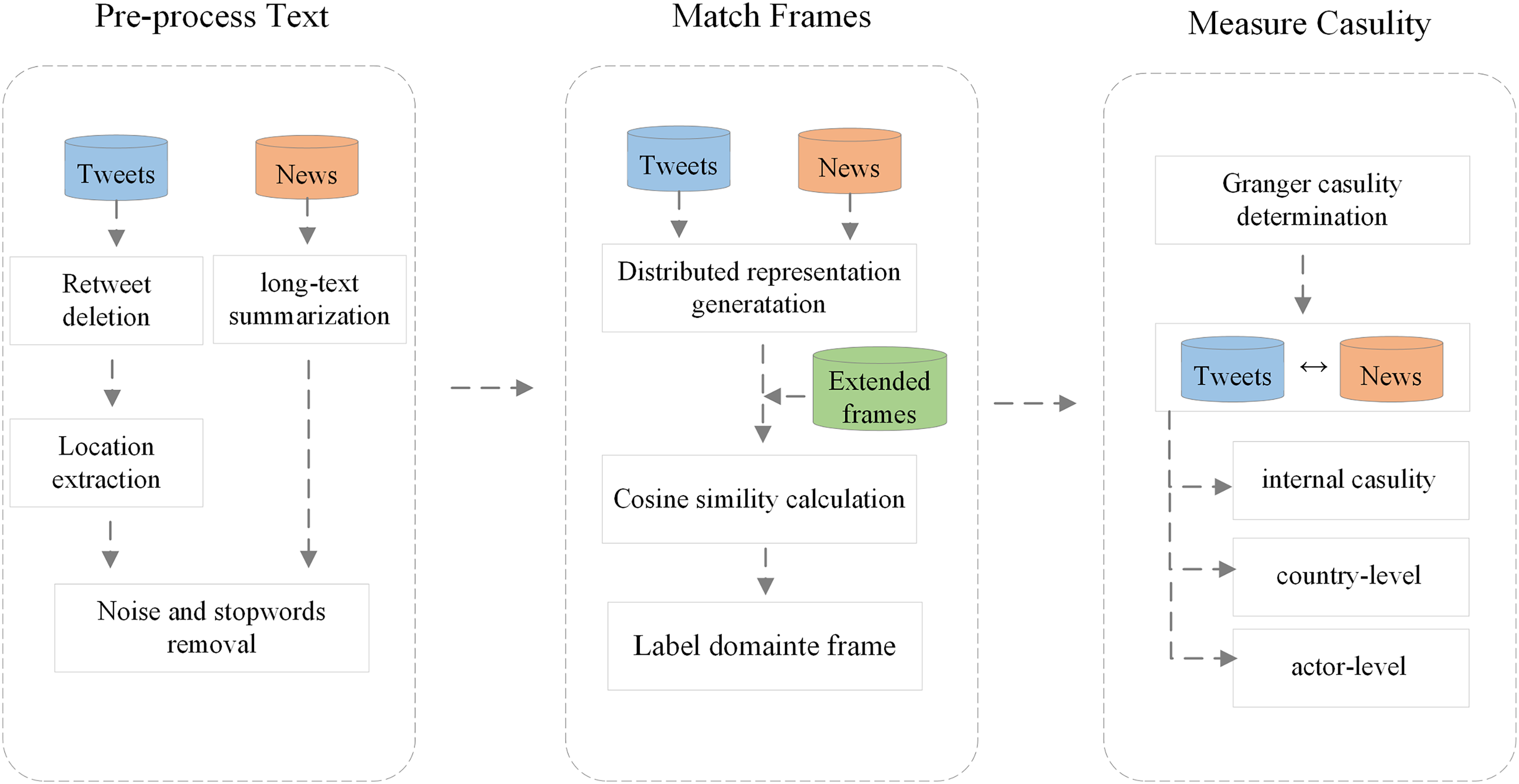
Methodology overflow diagram.
Dataset
This study compiled two datasets: (1) news coverage of climate change from news media with different political orientations and (2) social-media climate change discourse from Twitter with location specifications.
News articles with the keywords “climate change” and “global warming” in the headlines and/or the editorials published in the US and the UK were collected using the LexisNexis newspaper database. News media outlets were chosen based on their political orientations. For the US, liberal outlets such as the New York Times and Los Angeles Times, moderate outlets such as USA Today and Chicago Tribune, and conservative outlets such as the New York Post, Wall Street Journal, Washington Examiner, and Washington Times were chosen. For the UK, liberal outlets such as The Guardian, moderate outlets such as The Financial Times and The Independent, and conservative outlets such as The Times were selected.
Climate change-related Twitter posts were retrieved using the official API, with a random 10% sample of the entire stream. The query search string included the identification of the same keywords (“climate change” and “global warming”), language restriction (English), and a time specification (from January 2016 to December 2021). After obtaining the raw data, preprocessing was carried out to exclude retweets and remove noise, such as emojis, numbers, URLs, and stop words. To obtain location information from the user self-reports, we utilized Nominatim (https://wiki.openstreetmap.org/wiki/Nominatim), a geocoding software. This helped us generate structured and precise user locations from natural languages that could include geographical abbreviations and variations. Previous studies have indicated that self-reported location entries offer wider coverage compared to geotagging inputs on Twitter, and while concerns may arise concerning the reliability of self-reported locations, empirical research has shown that the majority of Twitter users provide accurate location information (Leetaru et al., 2013).
Computational methods
We used advanced computational methods to process the data and obtain the dominant frame of each tweet and news article. The process included three steps. First, we employed the automatic abstractive text-summarization model Text-To-Text Transfer Transformer (T5) to condense the traditional news data. This made the news and tweets more comparable in terms of content presentation and text length. Then, the keywords that characterized each frame were identified based on previous study (Jang & Hart, 2015) and extended with the most similar semantic words using pretrained word vector representations from Global Vectors (GloVe). Next, the dominant frame for each tweet and news piece was determined by assessing the semantic textual similarity (STS) with the five frames based on sentence embeddings from Sentence Transformers.
Automatic News Summarization With the T5 Model
To address the challenges posed by different text lengths and inconsistencies in content coverage between the tweets and the news pieces, we utilized the state-of-the-art T5 model (Raffel et al., 2020). The primary objective of abstractive text summarization is to condense larger pieces of text while preserving their essential information. Compared to extractive summarization, which merely extracts and concatenates text, the T5 model employs a more sophisticated approach. It leverages the transformer architecture, which allows the decoder to generate summary text based on the encoded hidden representations of the original content. This generative capability empowers the model to paraphrase the source text while retaining its semantic meaning.
Determining Frame Keywords With GloVe
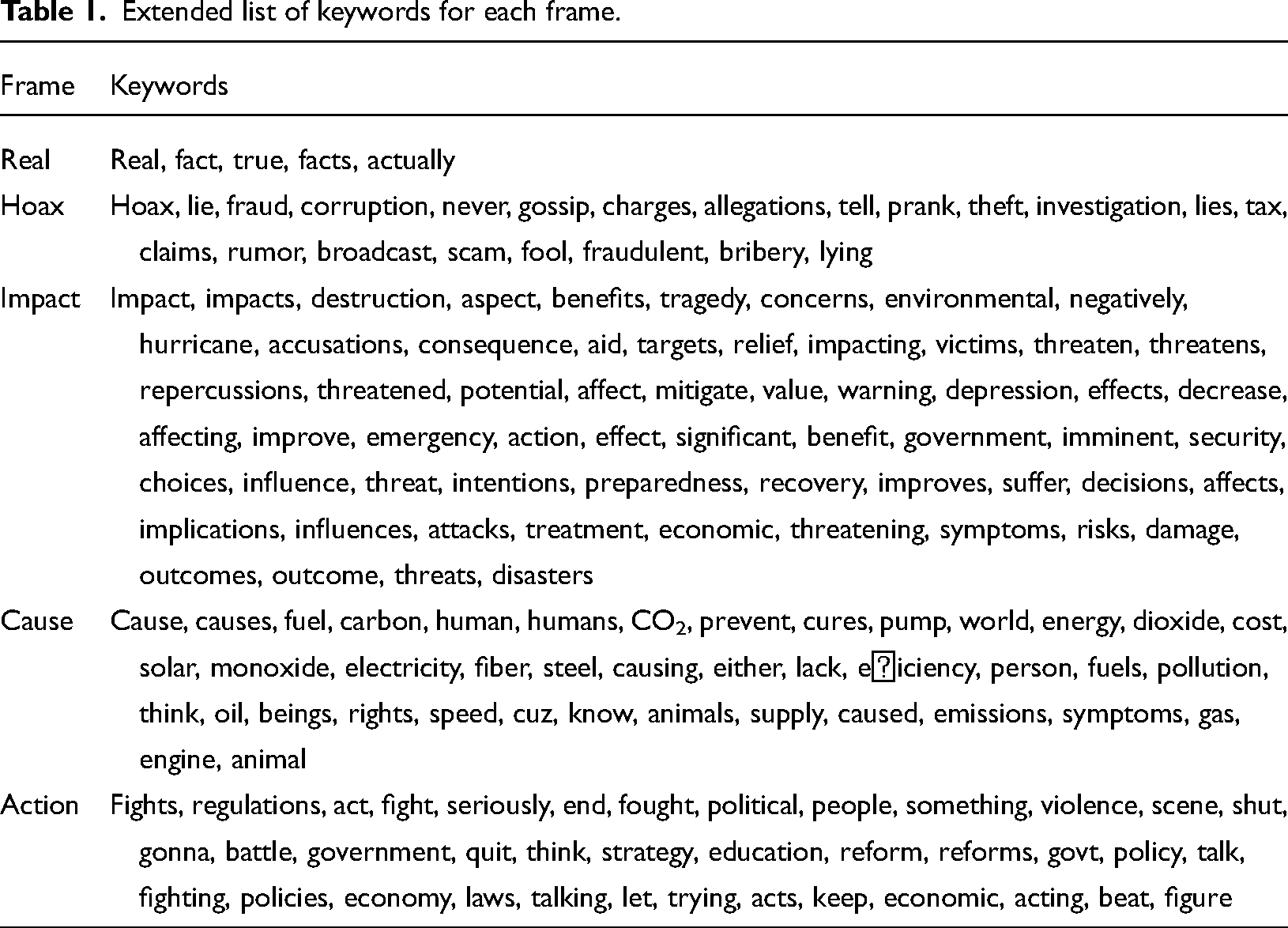
We adopted the five climate change frames introduced by Jang and Hart (2015), namely cause, impact, action, real, and hoax. To identify an extended list of keywords for each frame, we used word–word semantic similarity to locate similar words. Specifically, we utilized the deep learning model GloVe-Twitter-200, which generates vector representations of words. We calculated the shortest distance to identify similar semantic keywords by leveraging the word–word co-occurrence projection space achieved through word vector representations. For each frame, we inputted the original proposed keywords into the model to generate the top 10 most similar words. These generated keywords were then combined to form the extended keyword lists for each frame as shown in Table 1.
Extended list of keywords for each frame.
Matching Frames With Sentence Transformers
To determine the STS between the tweets and news articles and the five frames, we calculated STS scores with Sentence Transformers (Reimers & Gurevych, 2019). This is a transformer-based architecture designed for the efficient computation of vector representations for both texts and images. These vector representations can be leveraged for various downstream tasks, such as semantic text search or paraphrase mining. The STS scores were obtained by measuring the cosine similarity between the vector representations of the tweets/news pieces and the frame keywords. By comparing the embedded vectors, we determined the dominant frame for each tweet or news piece. The highest STS score was stored. This value represents the minimum distance among the embedded vectors, and it maximizes the semantic similarity between a frame and a tweet/news piece. For example, the tweet below has an STS score of 39% for real, 15% for hoax, 25% for impact, 26% for cause, and 29% for action; therefore, real is its dominant frame. Really though, people who think climate change is a hoax are in absolute fucking denial of facts and it's so frustrating because there's no way to explain it to them because they always throw it back in your face like “those scientists are just paid off by the liberal media.”
Time series modeling
To longitudinally assess the reciprocal influence of the frames in the Twitter discourse and the news coverage across the US and the UK, we used the Granger causality statistical hypothesis test. This allowed us to estimate whether one time series could significantly forecast another time series, which provided insights into the interplay between the frames. We considered the five frames in both the Twitter discourse and the news coverage as endogenous variables. The frames are prompted by exogenous factors related to climate change, as they are derived from the subject matter of the climate change issue regime. By examining the relationships between these endogenous variables, we gained a deeper understanding of how they interacted and influenced each other over time.
To ensure the stationary nature of the time series, where the characteristics are not dependent on the observed period and do not exhibit trends or seasonality, we employed an augmented Dickey-Fuller (ADF) test prior to conducting the Granger causality test. If the time series did not pass the ADF test, we implemented additional processes, such as normalization and the removal of annual volatility. Based on this empirical evaluation, a lag of 1 day was used in the Granger causality tests. This choice aligns with the commonly observed phenomenon of rapidly changing news cycles and the relatively short attention spans observed on social-media platforms.
In our study, we specifically modeled the five frames’ endogenous relationships across three general aspects, and we measured eight causal relationships, as indicated by the sum of the numbers in parentheses after each aspect. Aspect 1: the frames’ flows in the same media system across the two countries (2). Aspect 2: the frames’ flows across the two media systems in the same country (2). Aspect 3: each one of the five lead–follow relationship flows in the same media system across the two countries (2) and across the two media systems in the same country (2). This approach allowed us to obtain a comprehensive understanding of the lead–follow relationships in the hybrid media system across the US and the UK. Given the minimal relevance of modeling endogenous relationships across different media systems and countries, such as comparing Twitter discourse in the US to news coverage in the UK, we have not included these comparisons in our study.
Experiment Results
Comparison of frame prevalence
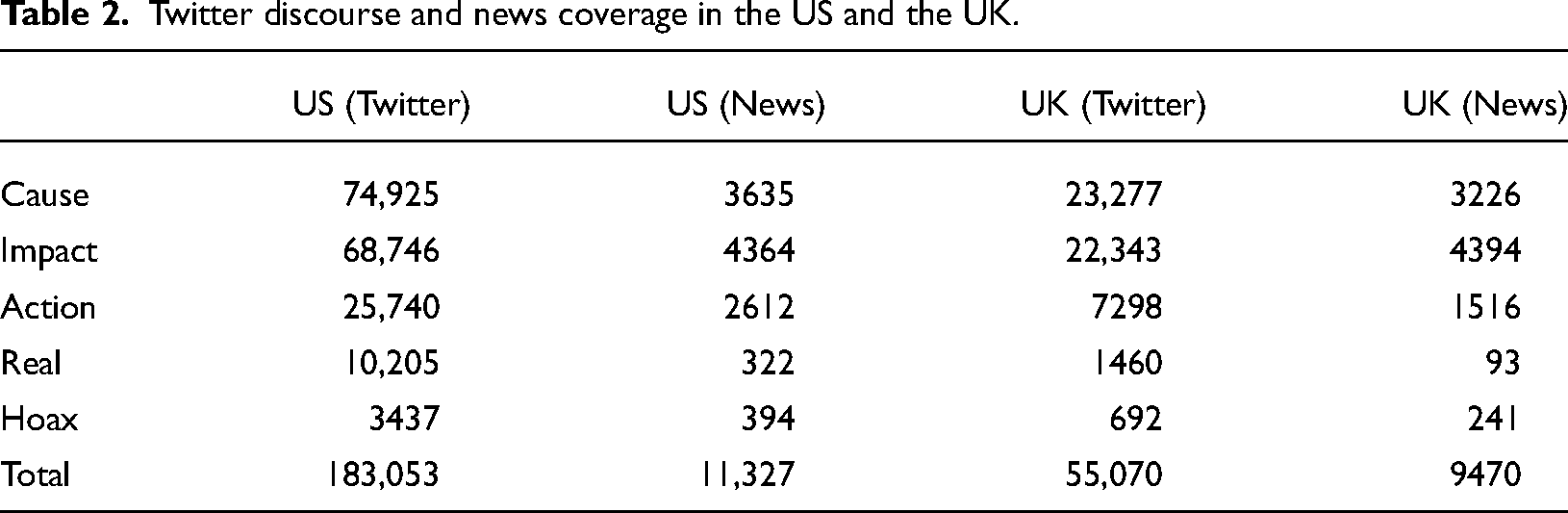
The focus of the frame prevalence comparison was to examine different media systems within the same country and the same media system across the two countries. To assess the relative prevalence of the five frames, the ratio was calculated by dividing the number of occurrences of a particular frame by the total number of occurrences of the five frames within a specific media system and country. This allowed us to determine the proportion of each frame among the five frames in US tweets, US news, UK tweets, and UK news. Notably, both UK and US news coverage exhibited a significant presence of the impact frame, followed by the cause frame. In contrast, the cause frame emerged as the dominant frame on Twitter in both countries, followed by the impact frame. The statistics derived from this selection process are summarized in Table 2. The results of the relative prevalence calculations are plotted in Figure 2.
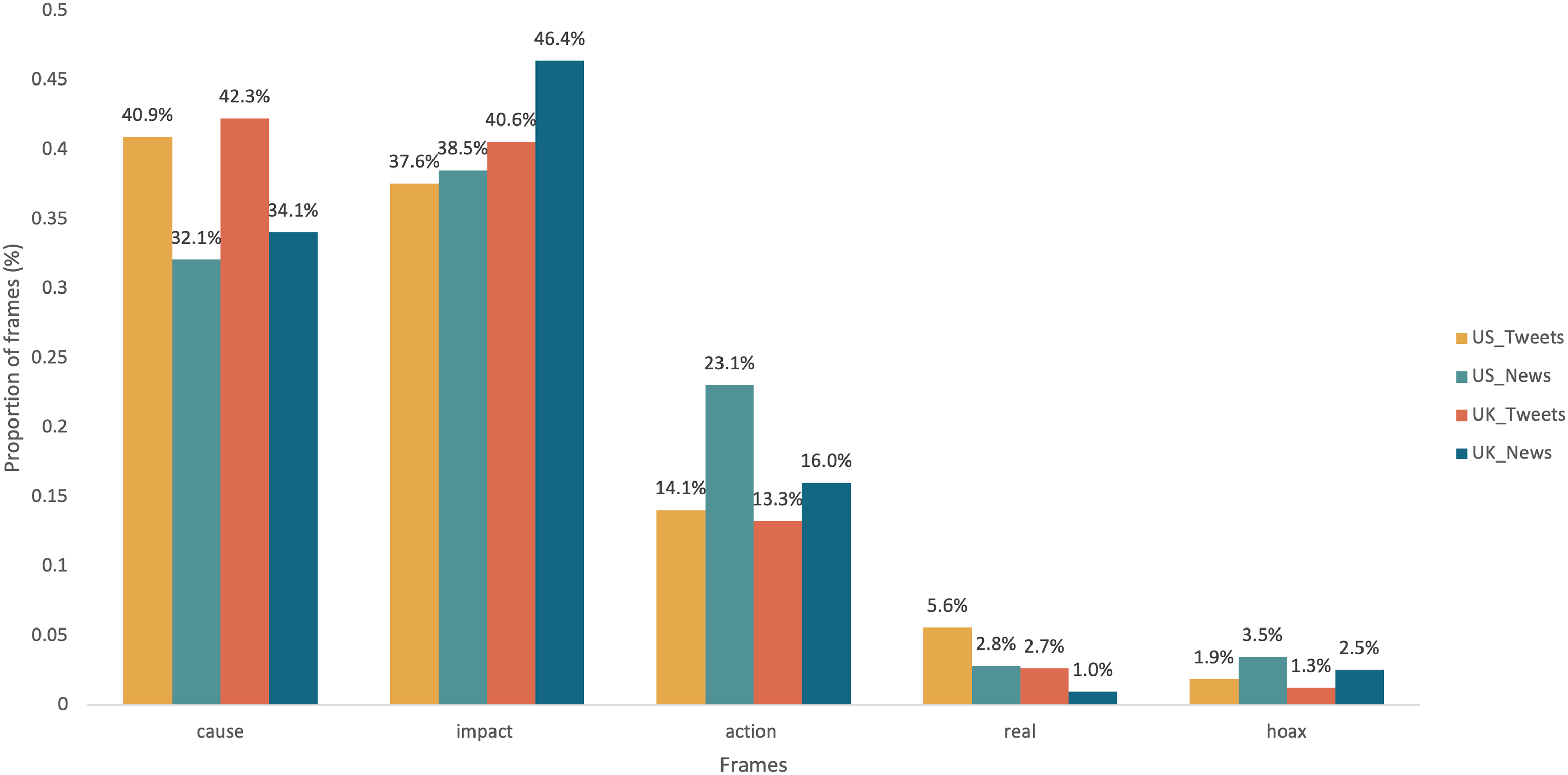
Relative prevalence of tweets and news frames in the US and the UK.
Twitter discourse and news coverage in the US and the UK.
Frames' information flows
In this section, we uncover the Granger causality relationships at three levels: country, actor, and frame. These interactions are visualized through arrows, which depict the Granger causality relationship; for example, an arrow pointing from A to B indicates that B is Granger-caused by A. The thickness of the arrows corresponds to the significance level, with thicker arrows indicating a p value below .001 and thinner ones demonstrating a p value below .01.
Country Level
To address our first research question, which examined the climate change information flow of newspapers and Twitter across the US and the UK, we conducted Granger causality testing across the two media systems. The results of this testing can be found in Table 3 and visualized in Figure 3. We observed the tweets’ symmetrical and reciprocal relationships across the US and the UK, which signaled that climate change discussions in one country influenced and reacted to Twitter discourse in the other country and vice versa. Regarding news coverage, we found a similar reciprocal relationship, albeit with a slight asymmetry, which indicated some differences in the level of influence between the two nations. The information flow went predominantly from the UK to the US, which suggested that news agencies in the US were more influenced by climate change reporting from the UK.

Granger causality relationships of frames between the US and the UK. (a) Tweets between countries. (b) News between countries.
Granger causality relationships of frames between the US and the UK.
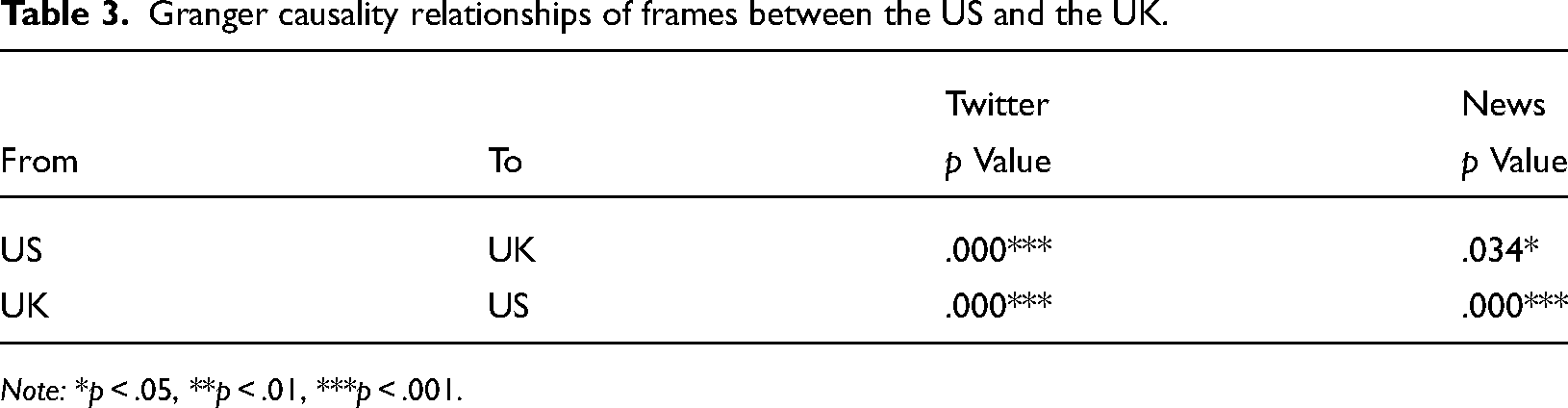
Note: *p < .05, **p < .01, ***p < .001.
Actor Level
To address our second research question concerning the information flow of climate change between traditional media and the Twittersphere, we conducted Granger causality testing in the same media system across the two countries. The results of this testing can be found in Table 4 and visualized in Figure 4. In the US, we observed that US news media exerted a stronger agenda-setting influence on Twitter's climate conversations. This suggested a top-down flow of information, with climate change discussions on Twitter tending to increase after reports by traditional media. However, we did not find a bottom-up flow, which indicated that Twitter discourse did not significantly influence news coverage in the US. In the UK, we found that climate change news coverage and Twitter discourse did not influence each other significantly. This signaled that traditional media and the public on Twitter paid attention to climate change issues in relatively isolated ways in that country.

Granger causality relationships of frames between tweets and news. (a) Tweets and news in the US. (b) Tweets and news in the UK.
Granger causality relationships of frames between tweets and news coverage.
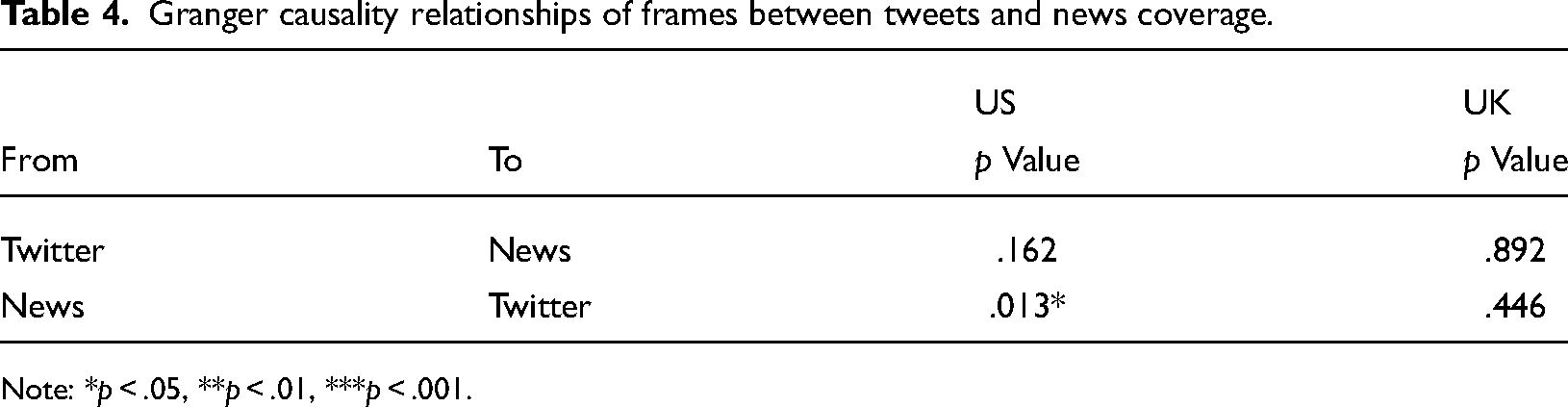
Note: *p < .05, **p < .01, ***p < .001.
Frame Level
To address our third research question regarding how agenda setters communicated climate change issue salience and were related to each other, we conducted Granger causality testing. Each one of the five frames’ lead–follow relationships in the same media system across the two countries as well as across the two media systems in the same country was tested. The complete tables with the test results are shown in the supplemental material (Appendix Tables S1–S4).
Figure 5 illustrates the frame flows in the same media system across the US and the UK for the Twitter discourse and the news coverage. The lead–follow relationships among the five frames were more closely related to each other on Twitter than in the news coverage in both countries. The analysis of climate-related discourse on Twitter (Figure 5(a)) provided insights into how the public perceived and discussed environmental issues in the US and the UK. First, it is evident that the action and cause frames in the US influenced the other four frames in the UK, while the cause and action frames in the UK set the tone for at least three frames in the US. This indicated that Twitter's public discourse revolved around addressing known environmental problems (action, cause, and impact) rather than questioning the legitimacy of climate change (real and hoax). Second, the discussions linked to the real and hoax frames in the UK increased following action frame-related debates in the US, whereas only the hoax conversations rose in the US when the action frame was discussed in the UK. This suggested that skepticism was more prevalent in the US than in the UK (Grundmann & Scott, 2014). When analyzing news coverage (Figure 5(b)), it became apparent that there was less of a reactive pattern than on Twitter. First, in the UK news coverage, the discussions linked to the real and hoax frames were independent of the other narratives. This showed that there was no correlation between environmental skepticism and the confrontation of climate challenges in the UK news media. On the contrary, the hoax discourse in the US news articles increased following coverage of the action frame in the UK. This highlighted the difficulty of implementing climate-related mitigation policies in the US when news media are preoccupied with questioning the reality of the problem (Bord et al., 2000). Second, the cause frame in the UK set the agenda for the action and cause frames in the US, while the impact frame in the UK set the tone for the action and impact frames in the US. The relatively stronger agenda-setting power exhibited by the UK media aligns with previous research indicating that climate policy advancements in the UK receive greater coverage compared to what happens in the US (Boykoff, 2007).
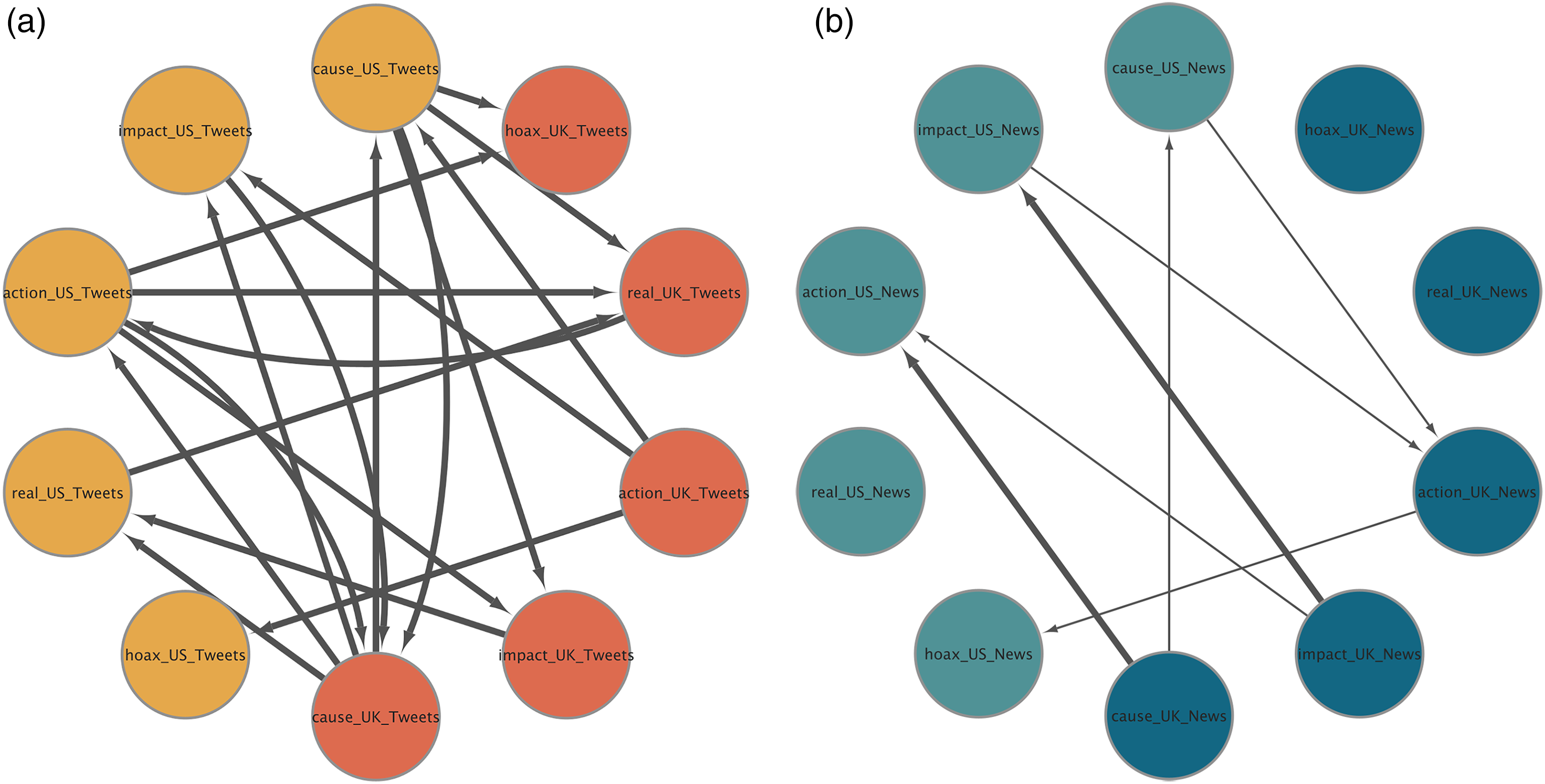
Granger causality relationships of each frame between tweets and between news in both countries. (a) US tweets and UK tweets. (b) US news and UK news.
Figure 6 illustrates the framing decisions' lead–follow relationships between social media and traditional media in the same country. First, the lead–follow relationships of the cause frame were more prominent in the US, while the action frame took center stage in discussions in the UK. For instance, in the US, the presence of the hoax, action, impact, and cause frames in Twitter conversations often followed the cause frame in media coverage. Similarly, the cause frame on Twitter influenced the cause, impact, and action frames in the news pieces. Second, in the US, the hoax and real frames in the news articles were disconnected from the tweets. This indicated that although skepticism toward scientific evidence was deeply ingrained in the US news media, media coverage did not influence or react to public discourse. In contrast, in the UK, the hoax and real frames in news coverage stimulated discussions concerning the action frame among members of the public. This suggested that public attention in the UK focused on taking action toward solving environmental problems when the media legitimized climate change as a social issue. Third, the real frame on Twitter influenced the action frame-related news coverage in both the US and the UK. Furthermore, the action frame in the news pieces often led to the presence of the hoax and real frames in public conversations in the UK. This implied a consistent pattern where climate believers tended to criticize the government's inaction and expressed a strong demand for action (Meyer et al., 2023).
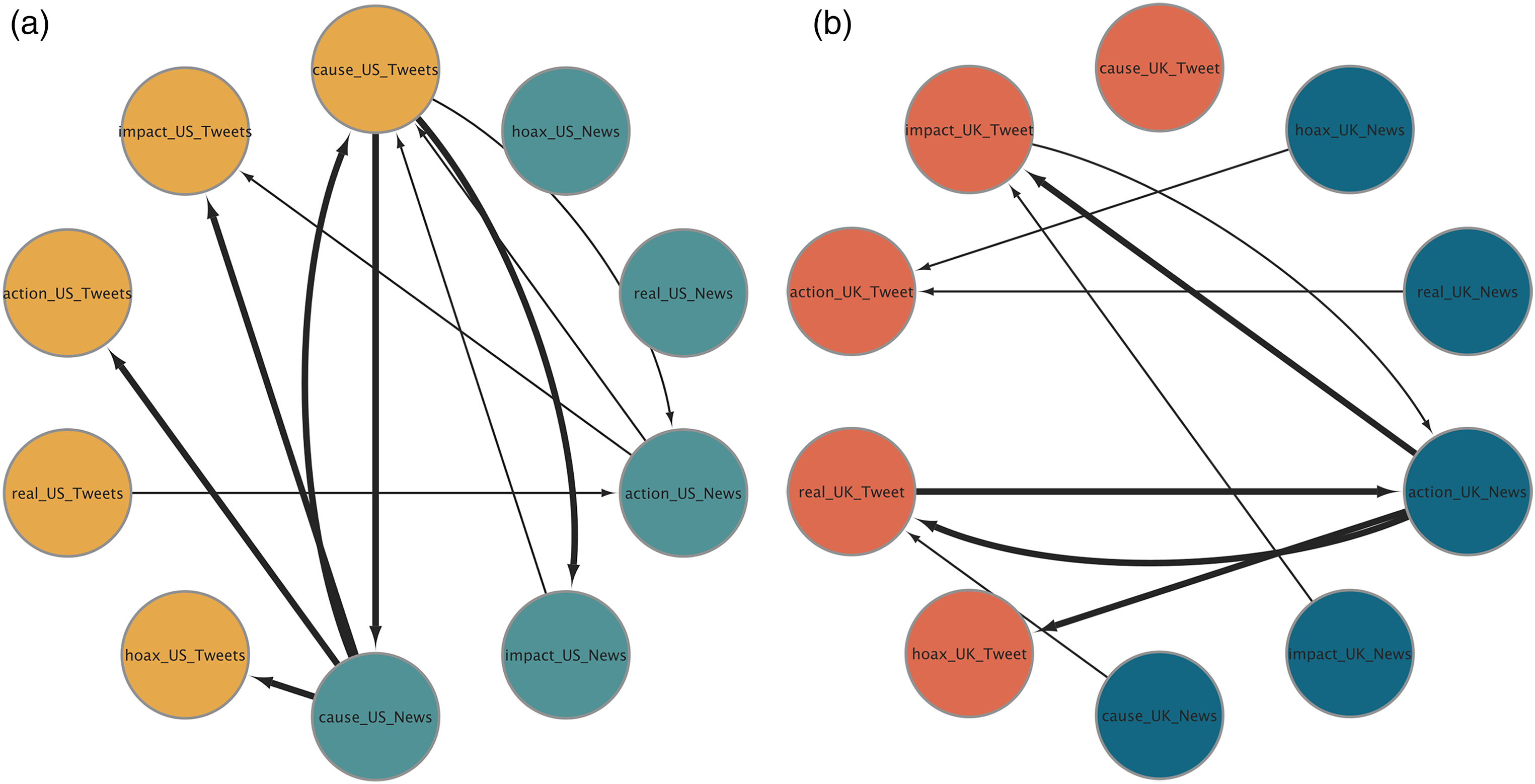
Granger causality relationships of each frame between tweets and news in each country. (a) US tweets and news. (b) UK tweets and news.
Discussion
This study advances the literature on international IAS of climate change issues by focusing on the interaction and transmission of specific frames between social media and traditional media in the US and the UK. Thanks to time series analysis and deep-learning models, we are able to thoroughly examine the interplay between frames. Our investigation delves into the information flows of actors who set and react to the well-established climate change frames of cause, impact, action, real, and hoax (Jang & Hart, 2015). Specifically, the information flows include tweets and news pieces at the national level in the US and the UK, IAS in each country involving Twitter discourse and news coverage, and the dynamics of framing attention trade-offs identified by separately and jointly examining social media and news outlets in the two countries. Based on the analysis of over 230,000 tweets and 20,000 news articles, our findings present significant evidence of the cross-media and cross-country flows of climate change frames, thus contributing to the literature on international IAS and framing.
This study expands the field of IAS and international issue transfer in three ways. First, it identifies how climate change issues transfer between the US and the UK, and it provides empirical evidence for the further exploration of the socioeconomic and political reasons behind this transfer. Second, it investigates the communication-power relations between traditional media and social media, and it extends the application of IAS to the field of climate change. Third, it uncovers the complicated relationships among five climate change frames, and it clarifies their reactive patterns through a complex lead–follow network.
To begin with, we contribute to the international comparison of issue differences in climate change, thus shedding light on country-level differences. As Boykoff and Boykoff (2004) contended two decades ago, if we are to understand the socioeconomic, political, and cultural forces shaping the reporting of climate change, we need more cross-country, comparative studies. However, until today, these studies have remained scarce. Our research shows that frames flow between the US and the UK in a reciprocal way in both media systems (social and traditional media), which is a contextualized empirical observation on the interplay between politics and power in the hybrid media system (Chadwick, 2017). The US–UK media relationship epitomizes the NATO alliance. Though the US is often seen as leading this bilateral connection, our findings show a slight tendency for the UK to set the agenda for the US through its traditional media, which contradicts the general assumption that the stronger and wealthier country will lead the weaker country. This tendency confirms the results of previous studies that found a relatively higher media attention paid to climate-related issues in the UK compared to the US (e.g. Boykoff, 2007; Schmidt et al., 2013). This finding is worth exploring further as it increases the complexity of the media logics pertaining to the coverage of climate change. As Anderson (2009) pointed out, the political economy approach, which is based on the idea that media practice is conditioned by economic power, captures only one of the many processes that shape media production. Another logic is structuralism, which emphasizes the role of ideology and other social factors (e.g. government policy) in media production. This seems more relevant to the present study's context. For instance, Boykoff and Boykoff (2007) observed that the trajectory of climate change coverage is connected to policy developments rather than to the normal media production cycle.
From this perspective, it is understandable why the US seems to have less agenda-setting power than the UK on climate issues. Historically, the US and the UK have played different roles in climate change debates; while the US has been branded a footdragger, “the UK has portrayed itself as a champion of domestic action and international cooperation” (Boykoff, 2007, p. 2). More recently, in 2017, the US even retreated from the Paris Agreement. In this regard, the weaker agenda-setting power of the US media might be attributed to the US less active role in developing public policies for climate change.
Our study's second contribution is that it helps answer a central question in the literature on agenda setting: Who sets the agenda? With the development of information and communication technologies, scholars have been asking to what extent such technologies have changed the power relations between media institutions and the public when it comes to agenda setting. Early research tended to highlight the possibility that the public may secure a more powerful position via the internet and set the media's agenda. For instance, the online sphere may become an important source of information on climate change for news agencies (Anderson, 2009). Recent empirical studies have supported the evidence for this trend of empowerment—to some extent (e.g. Chen et al., 2019; Vu, 2014). However, it is still too early to conclude that agenda setting follows a bottom-up logic in the digital era, as evidence from other fields (e.g. political candidate attributes and election issues) usually demonstrates a top-down logic in which the media's agenda influences public debate (e.g. Vargo et al., 2014; Wu & Guo, 2020). A more relevant study of science and health communication also presents a complicated picture. Jang et al. (2019) found that Twitter set the agenda for news media concerning the link between vaccines and autism, while Reddit was more likely to follow the news. Our results extend these empirical observations to the topic of climate change, and they align more with the top-down logic: issue salience flows from news media to the Twittersphere. However, this finding is not conclusive, as it is only corroborated in the US. In addition, due to our data's granularity, we did not distinguish between different types of users on Twitter, which might have included consumers of online news media. That said, it is clear that voices on Twitter are overwhelmingly produced by the general public. Given that the direction of IAS varies across topics (Russell Neuman et al., 2014), our finding contributes to IAS by providing a point of departure for the empirical examination of the climate change topic.
Third, this study advances agenda-setting theory by untangling five climate change frames and examining their interdependence with agenda setting. By doing so, it aligns with previous research that has called for situating framing in broader sociocultural contexts (McCombs & Ghanem, 2001; Shah et al., 2009). The utilization of deep-learning models enables the extraction of frames from large-scale datasets, including extensive text and time stamps. By employing the Granger causality test, this study disentangles the interdependence of framing at both the domestic and international levels, thus enhancing our understanding of news frames across boundaries. From a practical point of view, the findings reveal prevalent climate change frames in online and news media on a global scale, thereby offering insights into communication strategies that resonate with audiences. Previous research on UK–US climate change discourse has typically focused on newspapers (Grundmann & Krishnamurthy, 2010; Han et al., 2017; Pan et al., 2021) or social-media platforms (Hopke & Hestres, 2018; Jang & Hart, 2015), without investigating the dynamics of frame exchanges between these two actors.
Forth, we also demonstrate that interconnection and interchange play significant roles in the complex lead–follow network of the frames. They facilitate multistep information flows within and across media systems, both at the international level (between countries) and the national level (within countries). Our analysis of the agenda-setting effect on framing in the same media system between the two nations (see Figure 5) shows that frames are more likely to react to one another in the Twittersphere than in news articles. This may be because the communication approach on social media often follows the “publish-then-filter” process rather than the “filter-then-publish” one of legacy media (Shirky, 2010). We find that both tweets and news articles in the US exhibit an increase in the hoax narrative after the presentation of the action frame in the UK. Such deeply entrenched skepticism in the US may hinder the implementation of climate-related mitigation policies (Bord et al., 2000). It should also be noted that the US media frames are more influenced by the UK media frames, such as the cause and impact ones, which demonstrates that British news media receive relatively more attention for their environmental news coverage compared to what is the case in the US (Boykoff, 2007). Furthermore, delineating the relationships among the frames enhances our understanding of intermedia information flows. By examining frame contagion across Twitter and news pieces in the US and the UK (see Figure 6), we reveal the potential for social media to establish a two-way communication channel with legacy media and further diversify the discussion on climate change beyond merely reinforcing or reproducing news frames (Jang et al., 2020; Park, 2018). If we consider the relationships between the real, hoax, and action frames, we observe that attitudes can affect behaviors, especially in the UK, where news coverage of the legitimacy of climate change influences public discussions about taking action on environmental issues. This reactive pattern aligns with attitude–behavior theories, including the theory of planned behavior (Ajzen, 1985) and the theory of reasoned action (Fishbein & Ajzen, 1975). Additionally, regarding the contagion between the cause and impact frames, the reason the US media can set the agenda on Twitter can mainly be attributed to the cause frame. Previous research has found that the cognitive framework, which includes causal discourse, has relatively limited agenda-setting power on social media because hard scientific information can barely attract the public's attention (Shi et al., 2019). However, our results show that the cognitive, analytical discourse created by professional agencies may serve as “food for thought” in online discussions. Various online frames, such as hoax, action, and impact, propagate based on the cause frame found in news media. In this regard, our findings illustrate the following cross-national and intermedia frame-transfer trajectory: the cognitive framework (i.e. frames that analyze causes and consequences) in the UK media was mainly adopted by the US media, which then generated their own frames, especially the cause one, thus triggering various public discussions in the Twittersphere.
This study has certain limitations that should be acknowledged. First, the frames used in this study were extracted from existing research rather than derived from our dataset. This approach may have limited the exploration of other potential frames. For example, previous scholars have shown the prevalence of moral framing in climate change messages and its effectiveness in shaping public opinion and policy support (Wolsko et al., 2016; Yang & Yang, 2023). Future researchers could compare moral framing to the issue frames analyzed here to gain insights into the presence of moral values in climate change discourse in the UK and the US. Second, while computational methods provide valuable insights, it is crucial to validate the identified frame results by incorporating human coding in order to enhance reliability. Third, while the US and the UK serve as salient cases for studying media representations of climate change in cultural politics, further studies could broaden the scope of research by including countries in the Global South where English is not the first language. This expansion would enable a more comprehensive examination from a global politico-economic perspective, thus achieving a balanced analysis. By acknowledging these limitations, future scholars can explore additional frames and conduct cross-validation with human coding in order to strengthen the reliability of frame identification in climate change discourse.
In conclusion, this study explores the interdependence of frames concerning climate change issues in the transnational hybrid media system. It adds to the literature on public discourse about environmental issues and offers empirical insights into agenda-setting theory. Our investigation addresses questions pertaining to the circulation of climate change frames on Twitter and their broadcasting by traditional media, as well as the reciprocal influence of these two media systems in the US and the UK. Our findings have practical implications for the public and environmental organizations. Overall, this study provides valuable information regarding specific areas of media attention, thereby enabling a deeper understanding of the public's focus on nature protection, and it supports environmental organizations’ efforts to advocate for sustainable causes and initiatives.
Supplemental Material
sj-docx-1-emm-10.1177_27523543231218296 - Supplemental material for Tracing the Flow of Climate Change Frames: Intermedia Agenda Setting Between Twitter and News Media in the US and the UK
Supplemental material, sj-docx-1-emm-10.1177_27523543231218296 for Tracing the Flow of Climate Change Frames: Intermedia Agenda Setting Between Twitter and News Media in the US and the UK by Ziwei Wang, Yunya Song and Zhuo Chen in Emerging Media
Footnotes
Acknowledgment
The authors would like to thank Yuhan Li for the helpful discussions.
Declaration of Conflicting Interests
The authors declared no potential conflicts of interest with respect to the research, authorship, and/or publication of this article.
Ethical Statement
This study complies with all relevant ethical regulations and was approved by the institutional review board at Hong Kong Baptist University (REC/20-21/0327).
Data Availability
The data underlying this article will be shared on reasonable request to the corresponding author.
Funding
The author disclosed receipt of the following financial support for the research, authorship, and/or publication of this article: This study was supported by the Humanities and Social Sciences Prestigious Fellowship Scheme (32000921) of Research Grants Council of Hong Kong.

Supplemental Material
Supplemental material for this article is available online.
References
Supplementary Material
Please find the following supplemental material available below.
For Open Access articles published under a Creative Commons License, all supplemental material carries the same license as the article it is associated with.
For non-Open Access articles published, all supplemental material carries a non-exclusive license, and permission requests for re-use of supplemental material or any part of supplemental material shall be sent directly to the copyright owner as specified in the copyright notice associated with the article.
