



Abstract
Virtual stickers—as a newer generation of graphic icons—possess the potential to facilitate online intercultural communication through emotional expression. However, people from different cultural backgrounds rely on varied display and decoding rules, which lead to disagreement on the emotions communicated by stickers. Drawing from the dialect theory of communicating emotion, the current study employs an online survey to examine whether culture-, emotion-, and technology-related factors impact American college students’ recognition accuracy of 6 basic emotions expressed through 36 Chinese animated and static stickers. Results demonstrate that sticker use frequency, intercultural communication competence, and empathy are positively related to cross-cultural sticker emotion recognition accuracy. However, neither prior intercultural experience with Chinese students nor social media use frequency influences cross-cultural sticker emotion recognition accuracy. No gender differences were identified. This study represents one of the first to systematically examine predictors of sticker interpretation accuracy in a cross-cultural context.
Introduction
As mobile messaging supplements face-to-face interaction, more technology affordances—such as graphic icons (i.e., graphicons)—have emerged for users to express emotions and clarify meanings (Konrad et al., 2020). Virtual stickers represent one newer category of graphicons, which feature larger mascot characters with more detailed facial expressions and body language (Wang, 2016), as compared to pioneering emojis and emoticons. Stickers enjoy global popularity, as evidenced by the 389 million stickers exchanged each day (Kim et al., 2019).
The dialectic between universality and cultural specificity has long dominated emotion research (e.g., Eid and Diener, 2009), and nonverbal emotional expression in mobile messaging through stickers is no exception. Specifically, cross-cultural differences are manifest in sticker use, such that American and Chinese college students differ in the quantity of stickers used (Yang et al., 2023) and the interpretation of emotions expressed by stickers (Yang et al., 2022). A dilemma thus arises because stickers sent for uncertainty reduction and clarification (e.g., Liu and Sun, 2020) may prompt misunderstandings (Daniel and Camp, 2020). This challenge highlights the importance of emotion recognition in mobile messaging, because misinterpreting the emotion expressed by a sticker can prompt misunderstanding (Veytia-Bucheli et al., 2020) and intercultural communication barriers (Völkel et al., 2019).
Emotion recognition is integral to intercultural communication competence and emotional intelligence, which influence American students’ selection and interpretation of stickers in conversational contexts (Sun et al., 2022). However, since sticker research remains in its nascent stage, limited studies have examined what predicts the recognition of emotions expressed by stickers, especially in an intercultural context. Research has documented the wide use of graphicons among students from different backgrounds in higher education (Veytia-Bucheli et al., 2020). Given that China ranks as the top country of origin for international students studying in the U.S. (Statista, 2021a), a great amount of intercultural communication occurs daily on mobile messengers between American and Chinese students and thus invites academic attention.
Drawing from the dialect theory of communicating emotion (Elfenbein and Ambady, 2002; Elfenbein et al., 2007), the current study employs an online survey to investigate how (1) culture-related factors (i.e., prior intercultural experience and intercultural communication competence), (2) emotion-related factors (i.e., expressive suppression and empathy), (3) technology-related factors (i.e., sticker use and social media use), and (4) gender may predict American college students’ recognition accuracy of emotions expressed by Chinese stickers. This study extends the boundaries of intercultural emotion recognition research and reveals the facilitating factors of online intercultural communication.
Literature review
Sticker use on social media
Graphicons—such as emoticons, kaomoji, emoji, and stickers invented in multiple waves—have enriched textual computer-mediated communication (CMC) since the 1970s, with more complex and elaborate stickers leading the most recent wave (Konrad et al., 2020). Virtual stickers are oversized, character-driven graphicons (Wang, 2016) that often demonstrate both facial expressions and body language (Konrad et al., 2020). They embody either static or animated icons, feature cartoons or real-life scenes, and must be sent separately from the texts (Zhou et al., 2017). Compared to pioneering graphicons, stickers are employed in closer relationships (Konrad et al., 2020) to help users present a cute (Konrad et al., 2020; Yang et al., 2023), humorous, and polite self-image (Liu and Sun, 2020). Because stickers express more complicated, subtle, and culturally embedded meanings (Zhou et al., 2017), those lacking any textual illustration can easily prompt misunderstandings, especially between users from different cultures.
Cross-cultural differences define the use of graphicons. Yang et al. (2023) demonstrated that Chinese college students use more cute stickers than their American counterparts when mobile messaging. Ugly stickers are also appreciated by a large number of Taiwanese users (Chen and Chen, 2017). Owing to these differences in graphicon use patterns and aesthetic preferences, even South Koreans and Japanese—who share similarities in both national cultures and kaomoji use intensity—failed to correctly decipher the meanings of kaomoji from each other's culture (Karpinska et al., 2019).
Despite differences in graphicon emotion expression and recognition, prior research has not fully explored the cross-cultural recognition of emotion categories rendered by stickers. Only Yang et al. (2022) highlight an in-group advantage in recognizing emotions expressed by Chinese and American stickers. As demonstrated above, stickers are larger in size and often include abundant nonverbal cues, such as body language and animation, which provide either greater detail or distraction for emotion recognition than emojis. Furthermore, given the infancy of research on graphicon emotion recognition, the predictors of recognition accuracy remain understudied. Therefore, the current study fills the remaining gaps by examining predictors of cross-cultural sticker emotion recognition among American college students.
Cross-cultural emotion recognition
Emotion recognition—the ability to interpret internal feelings in others through external expressions—constitutes an important component of emotional intelligence (Mayer et al., 2001), which in turn facilitates intercultural communication. Researchers investigating whether emotional expression is universal or culturally determined (e.g., Eid and Diener, 2009) found that participants from different national contexts delivered above-chance performance in recognizing the six basic emotions expressed through photographs of facial expressions (Ekman et al., 1969). However, later research reveals that cultural variation also affects how people encode and decode different facial expressions (e.g., Jack et al., 2009).
In response to cross-cultural differences in emotion recognition, the dialect theory of communicating emotion contends that, like other languages, the language of emotion is universal; that said, various cultures offer their own dialects, which may render cross-cultural emotion recognition less accurate (Elfenbein et al., 2007). Specifically, different cultures evolve their own dialects of emotional expression in terms of both display and decoding rules (e.g., Dailey et al., 2010). For example, compared to Westerners, Chinese and Japanese subscribe to interdependent self-construal and prioritize group harmony; they tend to suppress negative emotions (Matsumoto, 1989) and thus find it more challenging to categorize negative facial expressions (Biehl et al., 1997).
Regarding decoding rules, East Asian adults rely more on vocal—rather than facial—affective cues, compared to Westerners (Kawahara et al., 2021). Wang (2004) reveals that Americans tend to assign higher intensity to most of the emoticons, relative to their Chinese counterparts. As a result, an in-group advantage persists (Elfenbein and Ambady, 2002), such that emotion recognition accuracy was higher when emotions were both expressed and recognized by members from the same national, cultural, or geographic backgrounds. Taken together, Dailey et al. (2010) concluded that encoder-decoder cultural proximity, display rules, and decoding rules holistically account for the systematic differences in emotion expression and recognition among cultures.
Moreover, even though recognition of facial, vocal, and multimodal expressions are correlated (Laukka et al., 2021), the nonverbal channels through which emotions are conveyed impact cross-cultural emotion recognition accuracy (Elfenbein and Ambady, 2002). Although Takahashi et al. (2017) demonstrated that the emotion recognition of emoticons varies across cultures, prior research has not examined the predictors of emotion recognition in the context of cross-cultural stickers. Based on the theoretical postulations above, the current study fills this remaining void by quantitatively modeling the influence of culture-, emotion-, technology-related predictors.
Specifically, the use of virtual stickers in CMC serves as an adoption factor in the interactive communication technology adoption model (ICTAM) (Lin, 2003; see Figure 1), which has been validated in prior cross-cultural virtual sticker research (Yang et al., 2023). According to Lin (2003), technology adoption is influenced by a collection of factors, including but not limited to use and audience factors. Technology use experience is subject to audience evaluation, which in turn, influences future adoption decisions. Moreover, audience factors involve predisposed personality traits, attitudes and beliefs, and social locators. In the current study, social media and sticker use experiences are analyzed as use factors, while prior intercultural experience, intercultural communication competence, empathy, expressive suppression, and gender are contextualized as audience factors. The selection of said predictors also aligns with the differential-experience perspective (Izard, 1991), which contends that individuals develop different emotional skills based on their varied interactions with their surroundings; such unique life experiences can vary depending on their gender, culture, and other factors. The various micro and macro-level components that help comprise the above model factors are reviewed, in turn, below.
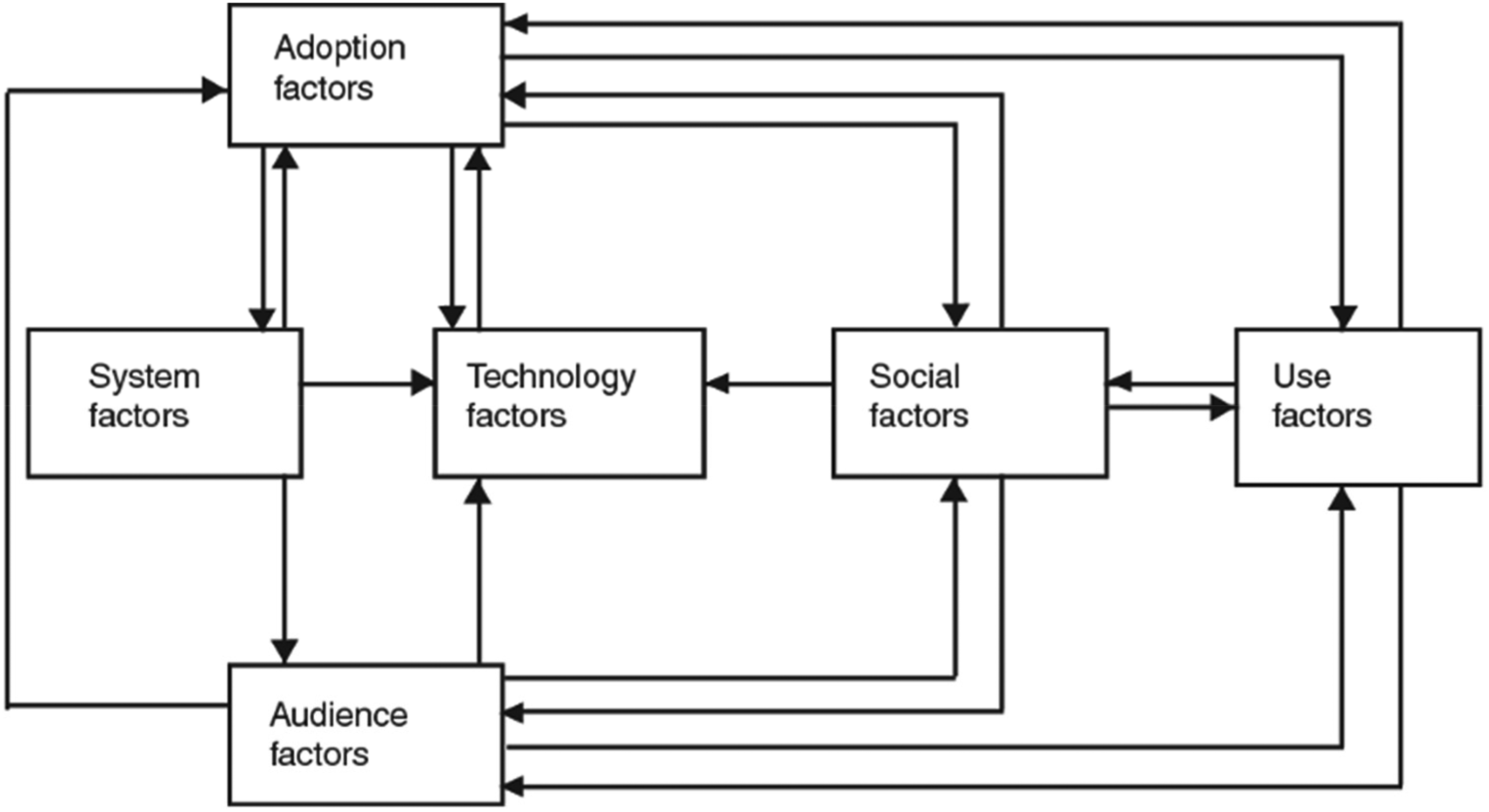
Interactive communication technology adoption model (ICTAM). Source: Lin (2003).
Culture-related predictors of cross-cultural sticker emotion recognition
Prior intercultural experience
Individuals who encounter someone from another culture are uncertain about how to interact because they cannot predict the other person's behavior—including both verbal and nonverbal communication patterns—due to a lack of information about other cultures (Neuliep, 2015). This lack of understanding can lead to discomfort and even miscommunication (e.g., Elfenbein and Ambady, 2002), which might be avoided with greater knowledge about cultural differences. One strategy to acquire such knowledge is to immerse oneself in the target culture, recording the cross-cultural similarities and differences and building a “cultural dictionary” (Matsumoto et al., 2005: 18).
In emotional communication, experience—including prior intercultural experience—shapes emotion recognition (Takahashi et al., 2017). Swenson and Casmir (1998) observed that foreign travel experiences increased the ability to recognize facial expressions of emotions in different ethnic groups. This finding indicates that, when individuals become increasingly familiar with the emotional facial expressions by people from other cultures, they exhibit greater confidence in judging such facial expressions (Beaupré and Hess, 2006). By contrast, Hutchison and Gerstein (2016) found that international travel experience did not impact emotion recognition. The conflicting results here suggest that intercultural contact might be a distal predictor of cross-cultural emotion recognition, compared to intercultural communication competence, which is elaborated in the following section.
Intercultural communication competence
Allport (1954) maintains that positive intergroup contact can reduce prejudice and improve intercultural competence (Meleady et al., 2021). Intercultural communication competence (ICC) involves the knowledge, skills, and motivation of communication in a certain culture (Spitzberg and Cupach, 1984). With the pervasive influence of culture on both verbal and nonverbal communication, ICC should also benefit cross-cultural emotion recognition, as cultural similarities improve accuracy in decoding the nonverbal expression of emotion (Swenson and Casmir, 1998). For instance, decoding facial expressions of outgroups may be influenced by stereotypes, especially for those who are less motivated to respond without prejudice (characteristic of lower ICC; Shapiro et al., 2009).
In the context of cross-cultural stickers, ICC helped American students who are less identified with vertical collectivism (i.e., collectivist cultures emphasizing competition between in-groups and out-groups) identify the correct Korean stickers in the given conversations (Sun et al., 2022). With positive intergroup contact and ICC reducing bias and improving familiarity with the target culture, individuals become more confident in their interpretation of nonverbal behaviors of outgroup members; with greater exposure to other cultures, people's emotion recognition accuracy rises (Elfenbein and Ambady, 2002). Based on the theoretical dynamics outlined above, we posit that:
H1: ICC will be positively related to cross-cultural sticker emotion recognition accuracy.
In addition, the differing national cultural influences prompt us to inquire:
RQ1: Is there a positive relationship between prior intercultural experience with Chinese students and the recognition accuracy of emotions expressed by Chinese stickers?
Emotion-related predictors of cross-cultural sticker emotion recognition
Empathy
Empathy—an important component of emotional intelligence (Goleman, 1995)—is defined as “the act of coming to experience the world as you think someone else does” (Bloom, 2016: 16); the concept encompasses both a cognitive and an emotional dimension (Davis, 1983). Emotional empathy embodies feeling another person's emotion while maintaining an other-focused perspective, whereas cognitive empathy represents the ability to imagine and comprehend another person's feelings and actions (Besel and Yuille, 2010). Although several intercultural communication models have connected emotional skills with intercultural skills and included empathy as a crucial element of intercultural communication competence (e.g., Spitzberg and Cupach, 1984), the relationship between self-reported empathy and cross-cultural emotion recognition remains understudied. To address this gap, the present study examines whether empathy contributes to cross-cultural sticker emotion recognition on top of the aforementioned culture-related predictors.
Emotion recognition research within a given culture demonstrates that both empathic concern and empathy quotient were associated with the recognition accuracy of six basic emotions expressed in pictures (Besel and Yuille, 2010). Being able to correctly recognize emotions expressed in audio-only, video-only, and audio-video clips positively correlated with empathy and emotional understanding (Laukka et al., 2021). Moreover, highly empathetic people were better able to recognize emotions of masked faces, where emotions were displayed through eyes-only pictures (Ramachandra and Longacre, 2022). Given that emotional intelligence (closely related to empathy) helped less idiocentric American students choose more culturally appropriate stickers in a collectivist culture (Sun et al., 2022), it is hypothesized that:
H2: Empathy will be positively related to cross-cultural sticker emotion recognition accuracy.
Expressive suppression
Expressive suppression is defined by Gross (1998) as “conscious inhibition of ongoing emotion-expressive behavior” (p. 226). Expressive suppression may cause interpersonal impairments, because those who engage in such suppression continuously have to focus their attention on the self—rather than others—to prevent the activation of expressive responses (Gross, 2015). Consequently, it is difficult to simultaneously mask one's real inner feelings while accurately interpreting others’ facial expressions (Schneider et al., 2013). Similarly, habitual emotion suppression was found negatively related to recognizing emotions from stimuli that only presented eyes (Sun and Lau, 2018).
Mirroring other differences in nonverbal communication patterns, people from different cultures suppress their emotions to varying degrees. For example, Chinese are more used to and can practice expressive suppression with less effort than European Americans (Soto et al., 2011). When it comes to emotion recognition, both individual confidence (Beaupré and Hess, 2006) and actual accuracy in facial expression recognition are associated with the occurrence of said expressions in real life (Biehl et al., 1997). Therefore, Matsumoto (1989) attributed Easterners’ lower accuracy—in recognizing negative emotions than Westerners—to the fact that collectivist cultures encourage the suppression of such emotions for group harmony.
However, emotional expression on social media is different from offline interpersonal communication, as Chinese college students favor stickers in mobile messaging compared to their American counterparts (Yang et al., 2023). So, graphicons have created a new avenue for emotional expression that circumvents the culture's traditional emotion suppression—in China during face-to-face interactions and in the U.S. through mobile messaging. This dynamic has complicated cross-cultural sticker emotion recognition research and led to the following research question:
RQ2: Is there a negative relationship between expressive suppression and the recognition accuracy of emotions expressed by Chinese stickers?
Technology use
Herring (1996) maintains that the interplay of contextual, social, and technological factors determines online language practices. As a special type of web language, graphicons are used in more diverse ways (Ge & Herring, 2018) and at a higher frequency in China than in the U.S., partly because Chinese perceive stickers to be easier to use compared to their American counterparts (Yang et al., 2023). The more graphicons are used, the greater is the familiarity gained by users, which in turn impacts their ratings of graphicon valence (Jones et al., 2020).
Although direct evidence is lacking, Takahashi et al. (2017) found that Cameroonian and Tanzanian users—who remained less familiar with graphicons—could hardly read emotions from emoticons. Meanwhile Japanese—who used more graphicons—displayed higher sensitivity to emoticon emotions. In general, the neural processing of emoji faces is similar to that involving human faces (Gantiva et al., 2020). However, individuals may have more trouble identifying sticker emotions if they use emoticons less frequently (Takahashi et al., 2017), just as they do with less-frequently encountered facial expressions (Biehl et al., 1997). Additionally, with stickers becoming an integral part of social media, those who spend more time on social media are more likely to understand the nuances of sticker emotions. Therefore, it is postulated that:
H3a: Sticker use will be positively related to cross-cultural sticker emotion recognition accuracy.
H3b: Social media use will be positively related to cross-cultural sticker emotion recognition accuracy.
Gender
Lastly, gender influences both graphicon use and emotion recognition. Buck's (1985) hypothesis, derived from evolutionary theory, suggests that females can more accurately send and detect certain facial emotions. Kapitanovic et al. (2023), for instance, found support for the proposition that male and female observers differ in speed and accuracy of recognition of negative emotions from facial expressions (e.g., females recognize fear and sadness more accurately and quickly than males).
Research also underscores the challenges faced by those who are used to concealing their true inner feelings to accurately read others’ facial expressions (Schneider et al., 2013). Along the same lines, women—who are ideologically associated with emotional expression (Eckert and McConnell-Ginet, 2013)—generally outperform men in terms of emotion recognition (Hutchison and Gerstein, 2016; Laukka et al., 2021), especially with negative facial expressions (Connolly et al., 2019). In the context of graphicon use, studies in multi-national contexts demonstrated that women use more emoticons and emojis than men (Chen et al., 2017; Prada et al., 2018). Furthermore, women perceive stickers to be more useful compared to men and use stickers more habitually rather than instrumentally (Yang et al., 2023). Given the parallels of neural processing between emoji faces and human faces (Gantiva et al., 2020), we draw from Buck's (1986) perspective on facial emotion detection to posit that females can more accurately detect facial emotions from stickers. More formally,
H4: Women will outperform men in cross-cultural sticker emotion recognition accuracy.
Method
Procedure
The present study employed an online survey to collect data. Utilizing college students from a large northeastern university in the U.S., the current sample is both convenient and purposive. In particular, young adults use more graphicons and hold more positive attitudes toward graphicon use than do older generations; gender differences in graphicon use are also more pronounced among younger people (Prada et al., 2018). Sampling of this sort has been widely used in cross-cultural sticker studies (e.g., Sun et al., 2022; Yang et al., 2023).
Consented participants first answered close-ended questions about which one of the six basic emotions (i.e., anger, disgust, fear, happiness, sadness, and surprise; Ekman, 1972) most strongly corresponds to each of the 36 stickers selected from Chinese social media platforms (e.g., WeChat). Sticker selection was implemented according to Ekman and Friesen's (1976) Facial Action Coding System (FACS). FACS is a coding system that breaks facial expressions into a series of facial muscle movements (i.e., action unit) for emotion description and analysis. For example, Action Unit 15—lip corner depressor—is considered a crucial sign of sadness. In Table 1, S3–S6 all feature lip corner depressors, suggesting consistency between selected stickers and our intended emotion.
Stickers.
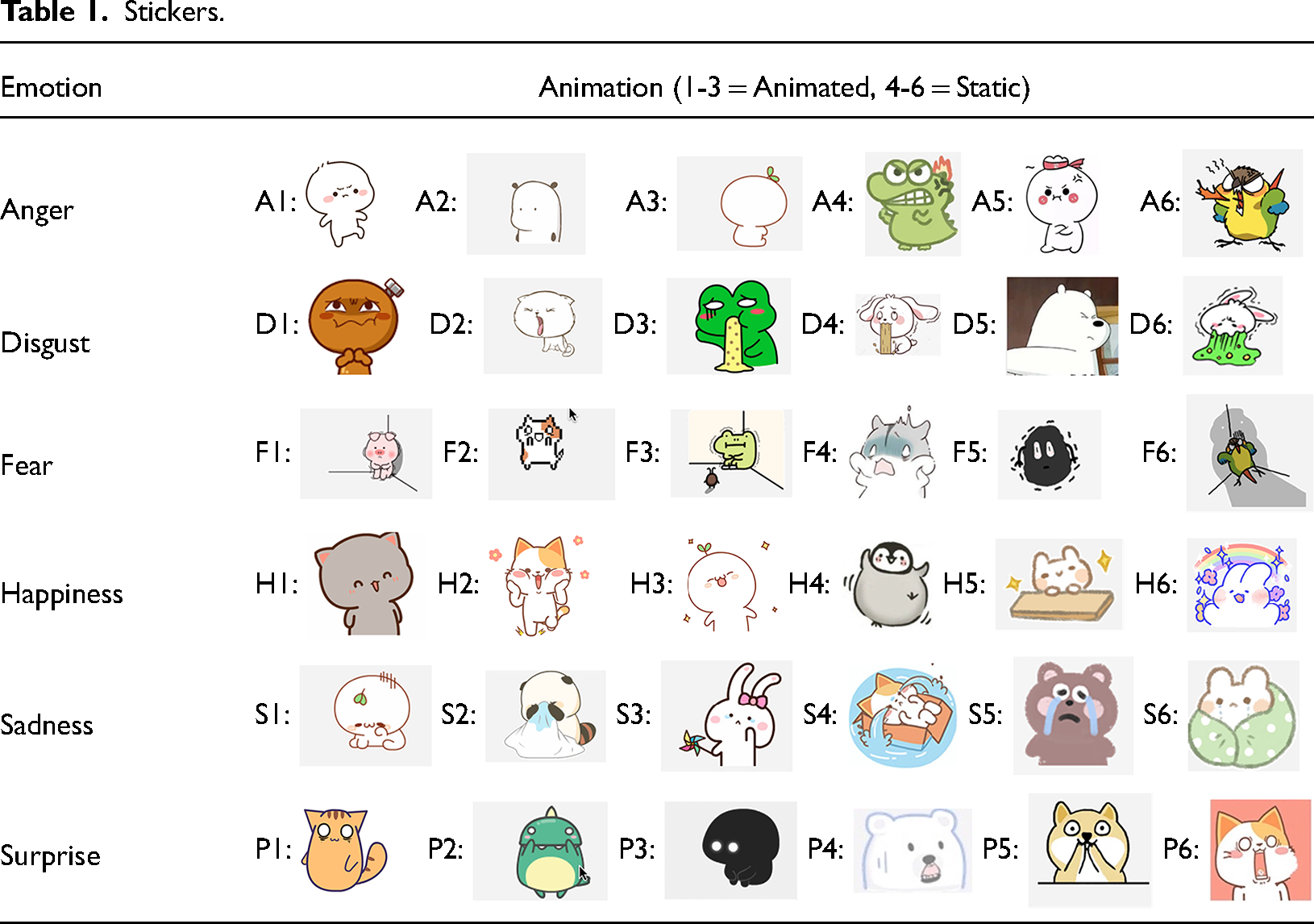
For each of the basic emotions, six stickers were presented. Half of the stickers are static, while the other half are animated. One Chinese researcher and two American researchers with intercultural communication expertise collaborated to ensure the cross-cultural reliability of each sticker. All stickers were resized to 250 × 250 pixels in order to control for the effects of size on interpretation. Stickers were also presented to all participants in a random order, to minimize the influence of presentation order on emotion recognition accuracy. For a full list of the stickers used in the survey, see Table 1.
After completing the cross-cultural sticker emotion recognition questions, participants reported their sticker use frequency, social media use frequency, expressive suppression, empathy, ICC, and prior intercultural experience using seven-point Likert-type scales. The survey concluded with demographic questions.
A total of 276 college students started the survey. Only those who reported having been born in the U.S. and living in the U.S. for their entire lives were included. Those who failed the attention check questions were also excluded from later analysis. Among the 193 usable responses after data cleaning, 129 (66.8%) are women, and 62 (32.1%) are men. The average age of respondents is 19.10 (SD = .91).
Measures
Cross-cultural sticker emotion recognition accuracy
For each of the stickers presented in Table 1, participants received one point for correctly recognizing the emotion expressed. Participants received zero points for incorrectly identifying the underlying emotion. Cross-cultural sticker emotion recognition accuracy was computed as the percentage of accurate answers (i.e., points received divided by 36). The average accuracy is .86 (SD = .08).
Sticker use frequency
Four items were created to measure student sticker use frequency on a seven-point Likert-type scale. Participants reported how often they (1) use stickers in their daily life, (2) save stickers on their messengers, (3) use animated stickers when communicating with others on social media, and (4) use static stickers when communicating with others on social media. (α = .88, M = 3.15, SD = 1.37).
Social media use frequency
Adapted from Przybylski et al. (2013), respondents were asked to reflect on how they used social media (e.g., Facebook, Twitter, Snapchat, WhatsApp, etc.) in the past week and report the number of times (1 = never, 7 = always) they used it under different circumstances (α = .86, M = 5.16, SD = 1.42).
Expressive suppression
Three seven-point items from Gross and John (2003) were adopted to measure expressive suppression. Sample items include “I control my emotions by not expressing them” and “I keep my emotions to myself” (α = .83, M = 4.29, SD = 1.41).
Empathy
The Basic Empathy Scale (Jolliffe and Farrington, 2006) was adapted to measure participant empathy. Participants rated on a seven-point Likert-type scale their agreement with a few statements, such as “After being with a friend who is sad about something, I usually feel sad” (α = .86, M = 5.27, SD = .66).
Intercultural communication competency
Three seven-point items adapted from Arasaratnam (2009) were employed to measure ICC. Items include “I feel more comfortable with people from my own culture than with people from other cultures,” “I usually feel closer to people who are from my own culture because I can relate to them better,” and “Most of my friends are from my own culture” (α = .71, M = 3.67, SD = 1.26).
Prior intercultural experience
Utilizing a scale adapted from Spencer-Rodgers and McGovern (2002), participants evaluated their frequency of interacting with Chinese students in a number of offline and online scenarios (0 = never, 7 = always). Sample items include such items as: “How often do you talk to and engage in informal conversations with Chinese students?” (α = .90, M = 1.99, SD = .98).
Demographics
Information on gender (0 = Woman, 1 = Man), age, primary country of residency, and time spent living in the primary country of residence was also collected.
Results
Pearson correlations were first computed to assess interrelations among study variables and are summarized alongside descriptive statistics (Table 2). Collinearity diagnostics under the linear regression procedure of IBM SPSS 26.0 were conducted on all the dependent, independent, and control variables. The results showed that the variance inflation factor (VIF) values were all under 1.23, indicating that collinearity was not a problem.
Correlations among study variables.
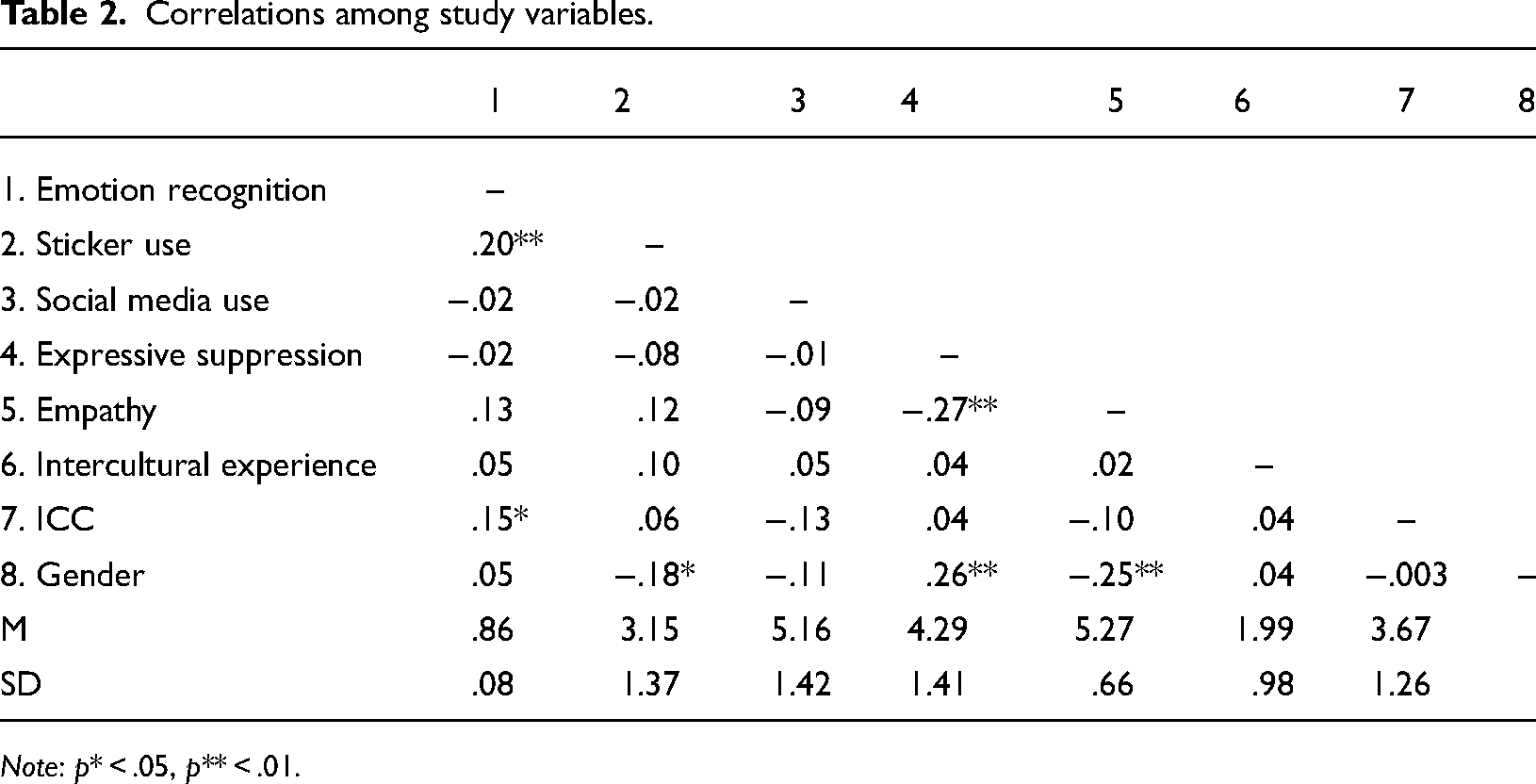
Note: p* < .05, p** < .01.
Consistent with the proposed theoretical model, hierarchical regression analysis was conducted to test all hypotheses concurrently. In Block 1, demographic factors—including gender and age—were entered alongside social media use, sticker use, and prior intercultural experience with Chinese citizens. These background measures were followed by emotion-related variables (i.e., empathy and expressive suppression) from the proposed model, as Block 2. ICC was entered in Block 3. The results of the regression indicated that the prediction model explained 9% of the variation in cross-cultural sticker recognition, F(8, 182) = 2.24, p = .026.
H1 predicted that ICC would be positively related to cross-cultural sticker emotion recognition accuracy. The multiple regression model lent support to this hypothesis: β = .15, p = .039. H2 proposed that empathy would be positively related to the emotion recognition accuracy of cross-cultural stickers. This hypothesis was validated (β = .16, p = .045). H3a, which posited that sticker use would be positively related to cross-cultural sticker emotion recognition accuracy, was also supported (β = .20, p = .006) (Table 3).
Multiple regression predicting cross-cultural sticker emotion recognition.
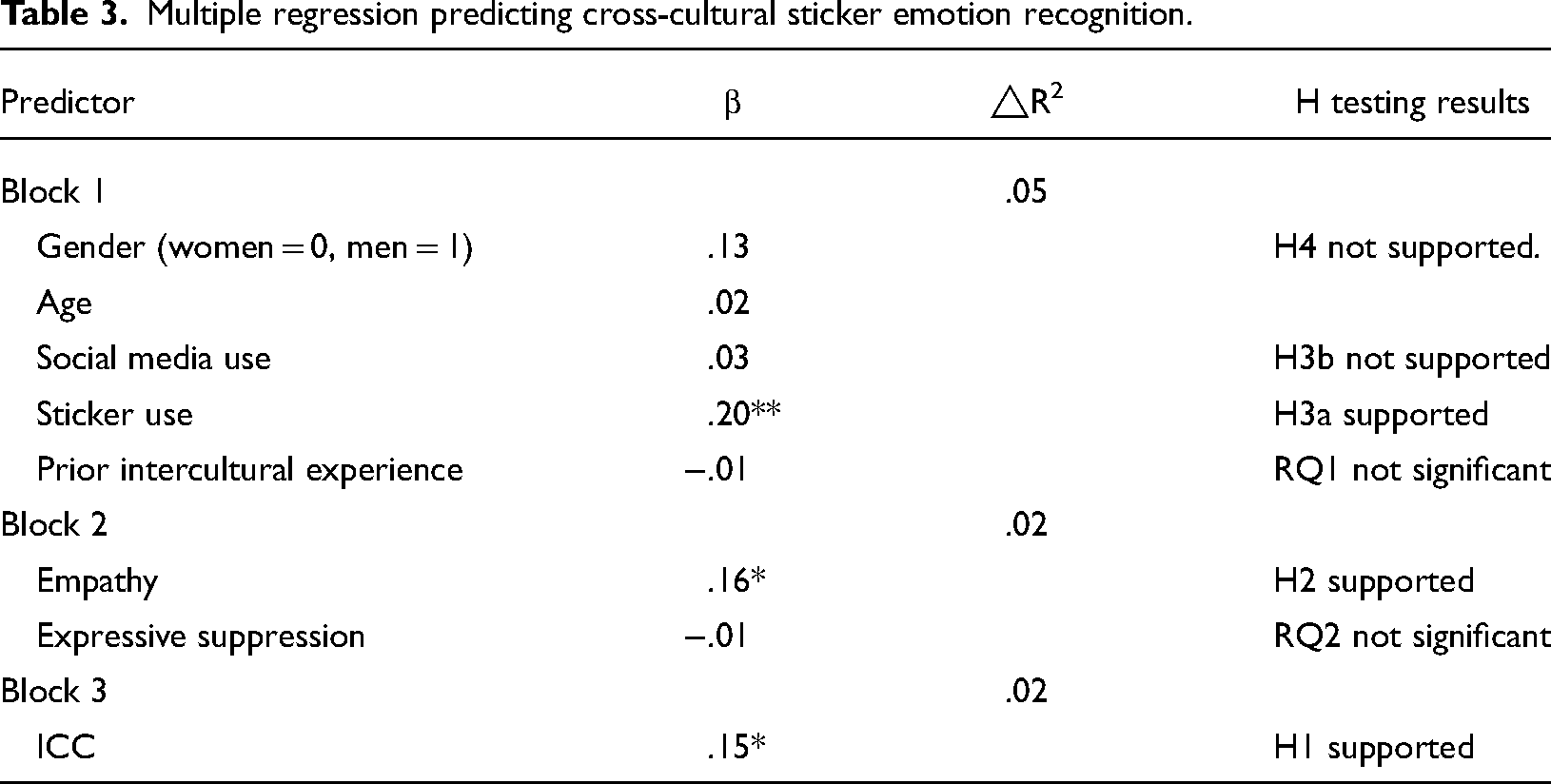
In contrast, H3b—which predicted that social media use would increase cross-cultural sticker emotion recognition accuracy—failed to gain support (β = .03, p = .657). H4 proposed that women would perform better in cross-cultural sticker emotion recognition accuracy than men. However, contrary to expectations, no gender differences in sticker emotion recognition accuracy were identified (β = .13, p = .112).
Finally, two research questions inquired whether there would be (a) a positive relationship between prior intercultural experience with Chinese students and the recognition accuracy of emotions expressed by Chinese stickers (RQ1) and (b) a negative relationship between expressive suppression and the recognition accuracy of emotions expressed by Chinese stickers. Results indicate that neither prior intercultural experience with Chinese students (β = −.01, p = .938) nor expressive suppression (β = −.01, p = .911) was significantly related to the recognition accuracy of emotions expressed by Chinese stickers.
Discussion
The current study represents one of the first studies to systematically examine the predictors of sticker interpretation accuracy in a cross-cultural context. Compared to prior cross-cultural examinations of verbal meanings of cross-cultural stickers in conversational scenarios (e.g., Sun et al., 2022), this study focuses exclusively on emotion recognition accuracy; we thus extend cross-cultural emotional expression channels from pictures, videos, and voices (Elfenbein and Ambady, 2002) to a new digital arena. Study findings provide support to the dialect theory of communicating emotion (Elfenbein et al., 2007) and highlight both the universality and cultural specificity of emotion. Moreover, study results shed light on the question posed by Takahashi et al. (2017) regarding the extent to which the frequency of exposure to graphicons influences emotion recognition, compared to “other cultural factors, such as cultural practices, beliefs, and values” (p. 1584).
First, sticker use frequency emerged as the strongest predictor of cross-cultural sticker emotion recognition. In line with the differential-experience conception (Izard, 1991), individual differences in their sticker emotion recognition may partially result from their sticker use experiences. This finding demonstrates the universality of emotional expression through stickers. As Yang et al. (2023) discovered, the mobile messengers favored by American and Chinese college students rarely overlapped. So, our American participants should be less familiar with the stickers in Table 1, which were all selected from Chinese messengers. Even so, general sticker use improved cross-cultural sticker emotion recognition, underscoring the potential for stickers to serve as a universal web language for nonverbal communication. Therefore, sticker literacy should be incorporated into intercultural communication training programs.
However, social media use did not affect cross-cultural sticker emotion recognition. As suggested in Table 2, social media use frequency is not significantly related to sticker use. Unlike earlier generations of graphicons, such as emoticons and emojis, stickers are primarily sent on instant messengers during private online chats involving participants with strong ties (Konrad et al., 2020; Liu and Sun, 2020); stickers also have to be used independently from a given text message, rather than serve as punctuation in a sentence (Zhou et al., 2017). Therefore, the use of social media that features open discussion with strangers or weak ties (e.g., Twitter) may not necessarily increase exposure to and familiarity with stickers. Further differentiation between instant messengers and social networking sites is needed to more accurately evaluate the influence of social media use on cross-cultural sticker emotion recognition.
In addition to sticker use frequency, empathy also enhanced the recognition of emotions expressed by cross-cultural stickers. This finding empirically verifies that empathy facilitates intercultural communication through emotional exchange (e.g., Spitzberg and Cupach, 1984). While prior research found that empathy helped users choose appropriate stickers in cross-cultural conversations (Sun et al., 2022), we have further demonstrated that highly empathetic individuals can also more accurately interpret emotions from stand-alone stickers, even in the absence of conversational contexts. This, again, foregrounds the culture-independent expression of emotions through stickers.
Although graphicons are universal to a certain extent, they are also—like so many other concepts—culture-specific products (Karpinska et al., 2019). Thus, it is unsurprising that ICC boosted American students’ recognition accuracy for emotions expressed by Chinese stickers. In line with the cross-cultural differences in emoticon designs—such that eye-oriented emoticons (e.g., ^_^) are prevalent in East Asia, whereas mouth-oriented emoticons (e.g., :-)) enjoy greater popularity in the U.S. (Park et al., 2014)—the stickers in Table 1 mostly rely on eyes to convey fear, sadness, and surprise.
Yuki et al. (2007) established that when interpreting facial expressions, Easterners focus more on cues around the eye region, while Westerners allocate their attention more evenly across different parts of the face. Therefore, it is likely that participants with higher ICC grasped more knowledge about online emotional expression by people from another culture; they might also express stronger motivations to holistically process the emotions (Spitzberg and Cupach, 1984) expressed by the Chinese stickers and intentionally focus on the stickers’ eye areas. In this sense, developing an open mind to different cultures may be as important as building culture-specific knowledge, when it comes to improving ICC.
However, neither prior intercultural experience with Chinese students nor expressive suppression significantly impacted the accuracy of cross-cultural sticker emotion recognition. This may be because people have different emotional expression and suppression patterns, when shifting from online to offline modalities. For instance, introverts are more likely to disclose more personal details and present their real selves on the Internet, compared to in-person social interactions (Amichai-Hamburger et al., 2002). Similarly, even though Chinese users employ more stickers mainly to express emotions online (Yang et al., 2023), they are more accustomed to expressive suppression in real life (Soto et al., 2011). Therefore, prior intercultural contact with Chinese students may not help study participants improve their recognition accuracy for emotions expressed by Chinese stickers, unless it occurred on mobile messengers where stickers were exchanged. Additionally, those who tend to suppress their emotions in the real world may opt for stickers in lieu of verbal or facial expressions. So, future research should heed emotional expression and suppression differences between offline and online scenarios.
Furthermore, no gender differences were found in cross-cultural sticker recognition accuracy, despite the hypothesis that women would outperform men. This non-significant finding might result from a self-selection bias, since men failed to turn out in our sample, in numbers commensurate with women. Because prior research consistently shows that men use fewer emoticons, emojis, and stickers than women (Chen et al., 2017; Prada et al., 2018; Yang et al., 2023), men who were not proficient with sticker emotion recognition might fail to take an interest in the study and decide not to participate after viewing the study information sheet.
Another explanation might lie in the fact that women are more sensitive to negative emotions than men (Connolly et al., 2019; Jones et al., 2020). Since fear and surprise are frequently confused (Roy-Charland et al., 2014), women might be more susceptible to the scary components in stickers that express surprise and thus incorrectly identify the emotion. Additionally, Connolly et al. (2019) found that men were better at recognizing bodily happiness than women. Given that body movement and contextual elements are also displayed in the stickers presented in Table 1, such nonverbal cues—in addition to facial expressions—might have influenced women’s and men's emotion recognition accuracy differently.
Limitations and future directions
The current study has a few limitations, which should be addressed in future research. First, as in many other graphicon studies (e.g., Gao and VanderLaan, 2020), our sample is biased against women. Stickers that expressed six basic emotions were used as a composite scale to measure emotion recognition accuracy in this study, but women in general display higher sensitivity to negative emotions than men (Connolly et al., 2019; Jones et al., 2020). Thus, future studies should examine potential gender differences in the recognition of each discrete emotion expressed by stickers in more comparable samples. Second, only active sticker use (i.e., sending) is considered in the current study. By contrast, Jones et al. (2020) maintained that by receiving graphicons from others, social media users can also improve their familiarity with and change their perceived valence of said graphicons. So, future research should refine the definition of social media use and sticker use.
Third, while prior research has demonstrated that the neural responses to emoji faces resemble those of humans (Gantiva et al., 2020), the extent to which the neural processing of stickers—especially body language—emulates human faces remains unclear. This question is important, because these newer graphicons are primarily used by younger people (Chen and Siu, 2017), while older users may still prefer emoticons or emojis. As observed by Oberwinkler (2019), generational differences in some cases may be more prominent than gender in graphicon use, with certain graphicons being adopted exclusively by individuals under the age of 30. Since emotion perception abilities decline after the age of 30 (Olderback et al., 2019), later work should study whether emoji use boosts senior's accuracy of cross-cultural sticker emotion recognition. Future research should increase the sample size and reach understudied populations to establish the generalizability of study findings. Later work could also extend this research by considering social processes involved in the generation and circulation of cultural forms—and shared meanings—accompanying the diffusion of virtual stickers.
Finally, our regression model—which focused on use and audience components of the ICTAM (Lin, 2003)—only explains a modest portion of variance. This may also reflect the limited set of explicit emotions expressed by the stickers intentionally utilized in the survey. Participants could more easily recognize the emotions, rendering a higher average performance and lower standard deviation in emotion recognition accuracy which implicate a potential celing effect. Future research could profitably use stickers that are more difficult to interpret and investigate other predictors (e.g., personality) of emotion recognition.
Conclusion
This study extended past work on cross-cultural graphicon use in CMC by examining culture-, emotion-, and technology-related predictors of Chinese sticker emotion recognition accuracy among American college students. The fact that sticker use frequency, intercultural communication competence, and empathy can improve cross-cultural sticker emotion recognition accuracy provides support for the dialect theory of communicating emotion, highlighting both the universality and cultural specificity of emotional expression via virtual stickers. By contrast, neither prior intercultural experience with Chinese students nor social media use frequency influences cross-cultural sticker emotion recognition accuracy, so further differentiation between social media platforms and online versus offline modalities in cross-cultural communication research is needed. Study findings also call for more nuanced research on gender differences in recognizing negative emotions expressed by cross-cultural stickers.
Footnotes
Declaration of conflicting interests
The authors declared no potential conflicts of interest with respect to the research, authorship, and/or publication of this article.
Funding
The authors received no financial support for the research, authorship, and/or publication of this article.
